Thursday, November 12, 2026
Home Blog Page 105

Ben & Jerry’s alleges Unilever fired its CEO over activism : NPR

0

A Ben & Jerry’s storefront in San Francisco, pictured Wednesday. The ice cream company says in a legal filing that Unilever unlawfully and abruptly ousted its CEO earlier this month.

Justin Sullivan/Getty Images


hide caption

toggle caption

Justin Sullivan/Getty Images

Ben & Jerry’s is accusing parent company Unilever of ousting its CEO in retaliation for its social media activism, the latest escalation in a long-running battle over the ice cream maker’s independence.

The Vermont-based company and five directors of its independent board originally sued Unilever and its U.S. subsidiary, Conopco, in federal court in November 2024, alleging the companies had silenced its attempts to show public support for Palestinian refugees, among other causes.

Ben & Jerry’s said those actions violate its 2000 merger agreement, which created the independent board and gave it “primary responsibility for Social Mission Priorities and the Essential Integrity of the Brand.” The company has a well-documented history of outspoken advocacy, supporting causes from racial and climate justice to campaign finance reform through what it calls its “progressive, nonpartisan social mission.”

In an amended complaint filed in the Southern District of New York on Tuesday, Ben & Jerry’s accused Unilever of continuing to censor its social media posts — including about Black History Month and free speech — and waging a “campaign of professional reprisals” culminating in the abrupt removal of its CEO.

“Contrary to their obligations under Section 6.14, Unilever has repeatedly threatened Ben & Jerry’s personnel, including CEO David Stever, should they fail to comply with Unilever’s efforts to silence the Social Mission,” it reads. “This month … Unilever followed through with their threats.”

Ben & Jerry’s said Unilever executives announced Stever’s removal on March 3, for reasons unrelated to his job performance and without following the steps outlined in the merger agreement.

A spokesperson for Unilever told NPR in a statement that “decisions on the appointment, compensation and removal of the Ben & Jerry’s CEO will be made by Unilever after good faith consultation and discussion with the B&J’s Independent Board,” in line with the merger agreement.

“Regrettably, despite repeated attempts to engage the Board and follow the correct process, we are disappointed that the confidentiality of an employee career conversation has been made public,” the company added. “We hope that the B&J Independent Board will engage as per the original, agreed process.”

Ben & Jerry’s says Unilever ignored the merger agreement’s stipulation that it consult with an advisory committee from the board before making any decisions about the removal of a CEO.

“Unilever announced their decision before the committee had even been appointed and attempted to force the Independent Board into rubberstamping the decision by unilaterally dictating artificial and hasty deadlines,” it wrote, accusing Unilever of giving the board only four days to respond and refusing its request for access to materials.

Stever was named CEO in May 2023, more than three decades after joining the company as a tour guide. Ben and Jerry’s says that under his tenure, it “outperformed Unilever’s ice cream portfolio” and was ranked #2 on the Brand 500 Authenticity Index two years in a row.

Even so, the lawsuit alleges that Unilever executives chastised Stever in his January 2025 performance review for “repeatedly acquiesce[ing] to the demands of the Independent Social Mission Board” by permitting certain social media posts.

“On information and belief, Unilever’s motive for removing Mr. Stever is his commitment to Ben & Jerry’s Social Mission and Essential Brand Integrity and his willingness to collaborate in good faith with the Independent Board, rather than any genuine concerns regarding his performance history,” the complaint reads.

In response, Unilever has filed a motion to dismiss Ben and Jerry’s complaint, saying its claims are without merit because independent board members do not have the right to bring lawsuits on behalf of the company and also did not specify the damages that resulted from Unilever’s alleged actions.

It says the current dispute is the “direct result” of the board’s decision to opine on the Israeli-Palestinian conflict “without any regard to the negative impact” on both companies.

“Unilever continues to support B&J’s and its social advocacy work,” it wrote in its response. “Over time, the social mission of B&J’s shifted, but in recent years it has come to a head as B&J’s seeks to advocate for one-sided, highly controversial, and polarizing topics that put Unilever, B&J’s, and their employees at risk.”

When did the feud begin? 

The last few years have been a rocky road for Ben & Jerry’s and Unilever.

In 2021, Ben & Jerry’s announced it would stop selling its ice cream in the Israeli-occupied Palestinian territories, calling that practice “inconsistent with our values.”

That decision prompted multiple lawsuits in the U.S. and Israel, accusations of antisemitism and the divestment of “hundreds of millions of dollars” in Unilever’s stock, Unilever said in its Wednesday court filing.

Unilever said in this week’s legal filing that it continues to suffer the consequences of Ben & Jerry’s decision “to this day,” saying it remains on anti-boycott lists in at least nine states and is under a fatwah in Indonesia.

In 2022, Unilever sold its intellectual property rights to its Israeli distributor, which then put the products (with Hebrew and Arabic labeling only) back on shelves in the West Bank.

Ben & Jerry’s then sued Unilever, accusing it of bypassing its board with business decisions. The 2022 lawsuit ended with a settlement, about which details have been scarce — until Ben & Jerry’s filed its November 2024 lawsuit.

That lawsuit says the 2022 settlement agreement requires Unilever to “[r]espect and acknowledge the Ben & Jerry’s Independent Board’s primary responsibility over Ben & Jerry’s Social Mission and Essential Brand Integrity” and “work in good faith with the Independent Board to ensure that both are protected and furthered.”

And it accuses Unilever of failing to do so in the years since, citing “various threats, reprisals, and censorship.”

What are the social media posts at issue? 

Ben & Jerry’s alleges that Unilever has silenced its social media activism in direct violation of the settlement on multiple occasions.

It says Unilever blocked four posts “in support of peace and human rights” about the Israel-Hamas war and ensuing humanitarian crisis in Gaza in the span of six months.

The first example was a post calling for peace and a permanent ceasefire in December 2023.

“Unilever threatened to dismantle the Independent Board and sue the board members individually if Ben & Jerry’s — with its decades-long motto of ‘peace, love, & ice cream’ —issued the statement supporting ‘peace’ and a ‘ceasefire,'” the lawsuit says.

It says Unilever also stopped Ben & Jerry’s social media managers from posting in support of Palestinian refugees in May 2024. The lawsuit says Unilever executives took issue with the statement because it “coincided with the Iranian missile attack on Israel.”

“When the matter was escalated to me, I expressed concerns about the continued perception of antisemitism that is a persistent issue,” Peter ter Kelve, Unilever’s president of ice cream, wrote to the board, according to its lawsuit. “It was my judgment that in light of the timing and nature of the post, it was not an appropriate message at this time.”

Another example, Ben & Jerry’s says, was a blocked post supporting campus protesters’ First Amendment rights in June 2024. Unilever said in its legal filing that it had “raised reasonable concerns about the need to condemn the violence associated with the protests and support rights of Jewish students as well.”

Ben & Jerry’s lawsuit accuses Unilever of censoring posts on other topics, including one for Inauguration Day that “identified several social issues Ben & Jerry’s believed would be challenged” under President Trump, including minimum wage, universal healthcare, abortion and climate change. The company alleges that Unilever blocked it, after weeks of work, because it mentioned Trump by name.

It says in recent weeks, Unilever prevented it from issuing a post commemorating Black History Month, and another supporting free speech and linking to a petition for the release of Mahmoud Khalil, the Columbia University graduate detained by U.S. immigration authorities over his role in pro-Palestinian campus protests.

Unilever has denied “muzzling” the board, writing in its motion that members “have hardly been silent.”

It listed instances in which board members released statements — such as calling for a ceasefire and supporting campus protesters — to media outlets, including Reuters and the Financial Times, and on their personal social media accounts.

What happens next? 

Ben & Jerry’s also accuses Unilever of blocking its donations to two organizations, Jewish Voice for Peace and the Council on American Islamic Relations.

Unilever says it “exercised its right to withhold consent to donate” after researching the organizations and finding that they had “made inflammatory comments” about Hamas’ Oct. 7 attack on Israel.

Ben & Jerry’s is asking the court to order Unilever to release funds to those organizations, in addition to unspecified damages.

It also asks the court to order Unilever to “prospectively respect and acknowledge” the independent board’s authority and comply with the merger agreement’s rules around appointing and removing a CEO.

It also hopes the court will ensure that “any restructuring of Ben & Jerry’s or its parents does not eliminate or diminish the authority” of the board. That restructuring is not hypothetical.

Unilever announced last May that it would separate its ice cream unit — including Ben & Jerry’s — into a separate business as part of a restructuring expected to be completed by the end of 2025.

Ben & Jerry’s lawsuit says Unilever told the board on March 5 that the restructuring was “imminent.”
Kirsty Coventry Is Elected President of International Olympic Committee

0

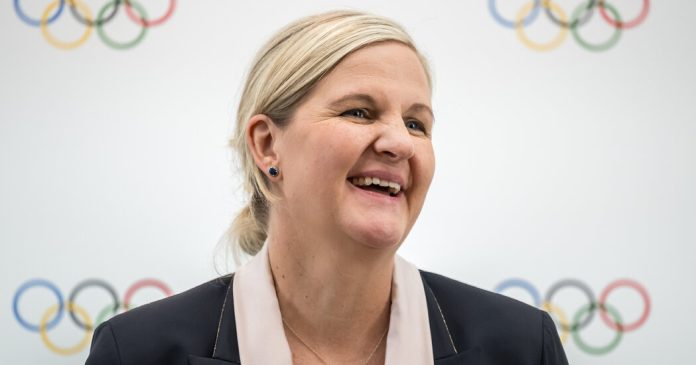
Kirsty Coventry was elected on Thursday as the 10th president of the International Olympic Committee, becoming the first woman and the first African to hold the most powerful role in sports.

Ms. Coventry, 41, from Zimbabwe, was the only woman among the seven candidates in the monthslong election battle and will be the committee’s youngest president since Baron Pierre de Coubertin, its co-founder in the late 19th century. As a swimmer, she holds seven of her country’s eight Olympic medals, including golds at the 2004 and 2008 Games.

The election, which has been described in similar language to a papal conclave, was settled — to gasps by onlookers — in the very first round of secret voting by the International Olympic Committee. Its membership is an eclectic group that features not only sports leaders but also royals, business moguls and even Hollywood stars.

With her decisive victory, Ms. Coventry vaults to the very top of global sports, into a position that requires diplomatic, financial and management acumen as well as sports knowledge. The I.O.C. president must manage an institution responsible for awarding and staging Games every two years that generate billions of dollars and are coveted by politicians around the world as they seek to bolster their own and their nation’s profiles.

“It’s a signal that we are truly global and that we have evolved into an organization that is truly open to diversity and we are going to continue walking that road in the next eight years,” said Ms. Coventry, who gave birth to her second child while campaigning for the post.

The role is not for the faint of heart.

The departing leader, Thomas Bach of Germany, a former gold medal-winning fencer, served a 12-year presidency marked by a series of crises: revelations that Russia had corrupted international sports for at least half a decade through a state-backed doping program, a revolt among some Western democracies over the cost of hosting the Olympics and a pandemic that upended the movement, forcing the Tokyo Olympics to be held without spectators a year later than scheduled.

Ms. Coventry has urgent issues to deal with right at the start. The next Summer Olympics will take place in Los Angeles in 2028, at a time when American leadership around the world is under scrutiny. There are also significant decisions to be made about the rights of transgender athletes as well as about the challenges posed by the climate crisis.

“The next president will have a different set of problems,” said Michael Payne, a former marketing director of the I.O.C., which, he added, is an “organization like no other.”

“It is a balancing act to be able to lead a global semi-governmental organization and at the same time run it as if you’re leading a Fortune 500 company because you have to make the business work.”

Asked about having to deal with President Trump in preparation for the Los Angeles Games, Ms. Coventry quipped that she had decades of experience of handling “difficult men in high positions.”

Ms. Coventry, who has been sports minister in the Zimbabwe government for seven years, said she would lean on the other candidates to discuss ways to move the I.O.C. forward. Her manifesto was perhaps the least revolutionary, short of policy ideas, but with a commitment to listen to members, who had complained about being sidelined under the powerful Mr. Bach.

“We might not always agree but we have to be able to come together for the benefit of the movement,” she said.

The election itself was hotly contested and featured a byzantine set of rules and regulations that the candidates chafed at and sometimes openly criticized. Access to voters during the election period was strictly controlled and there were even warnings over what to include in publicity materials, leading one member to use photographs generated by artificial intelligence after a restriction on the representation of any individuals other than the candidates themselves.

In the final days and hours before the vote, at a secluded luxury holiday resort in southern Greece, rumors of rule-breaking and paranoia gripped many of the campaign teams. That followed smear campaigns targeting some of the candidates — including Ms. Coventry — that had appeared online, and an anonymous complaint listing a range of potential election rule breaches that was sent anonymously to the I.O.C.’s ethics chief.

Many of the candidates chafed against the strict rules that enveloped the election, giving the vote an air of opacity and secrecy. The only gathering where candidates were able to pitch to the committee members was held behind closed doors in February, with members forced to turn in cellphones before entering. A strict 15-minute time limit was enforced and voters were barred from asking questions.

Still, for some members, those rules — and others — did not go far enough.

In this view, any form of campaigning should have been barred because, according to Syed Shahid Ali, a longtime delegate from Pakistan, the I.O.C. is more akin to “your old gentlemen’s club” than the top global sporting organization. “In normal club behavior you’re not allowed to do that,” Mr. Khan, an I.O.C. member for almost 30 years, said before the vote. “By doing this you are telling people we are not close enough, we don’t know each other enough.”

The largess on show in Greece illustrated the I.O.C.’s enormous wealth and the status its members enjoy. Golf carts ferried officials around the sprawling resort where rooms can cost more than $2,500 per night; recent guests have included the actor Bill Murray and the soccer superstar Cristiano Ronaldo.

The power of the organization was also clear. The presence of the Olympic movement disrupted the filming of the director Christopher Nolan’s big-budget recreation of “The Odyssey,” taking place nearby, after local officials grounded a helicopter crew until the Olympic circus had left town.

During the vote, armed patrols, drones and sniffer dogs roamed the facility, while members were forced to hand over their cellphones before being allowed to enter the auditorium where the election was being held.

There, they faced even more rules. Members from countries represented by the candidates were not allowed to cast votes until their compatriot had been eliminated.

In the end it was over almost as soon as it had begun, with Mr. Bach and the I.O.C.’s top administrator, Christophe de Kepper, looking stunned when a scrutineer handed over the first-round results. “You have elected a new I.O.C. president,” a wide-eyed Mr. de Kepper said.

The victory was also immediately hailed as one for the outgoing Mr. Bach, who did much to ensure Ms. Coventry was considered a legitimate contender to replace him, working the phones and pressing members to pick the one candidate who had his backing. The voters listened, delivering Ms. Coventry the minimum 49 votes she required to secure a majority.

Mr. Bach had made clear what he thought was the best profile for the next president — “Olympic champion, non-European, different generation” — said one of her defeated rivals, Juan Antonio Samaranch Jr. Mr. Samaranch had been bidding to follow in the footsteps of his father, who transformed the Olympic movement in his two decades at its helm.

“The vast majority of I.O.C. members voted for Kirsty Coventry,” he said. “And that meant they had an idea they wanted a generational change, opening the I.O.C. to another continent, to another generation and to another gender.”

Fired FTC commissioner warns of a Trump ‘power grab’ : NPR

0

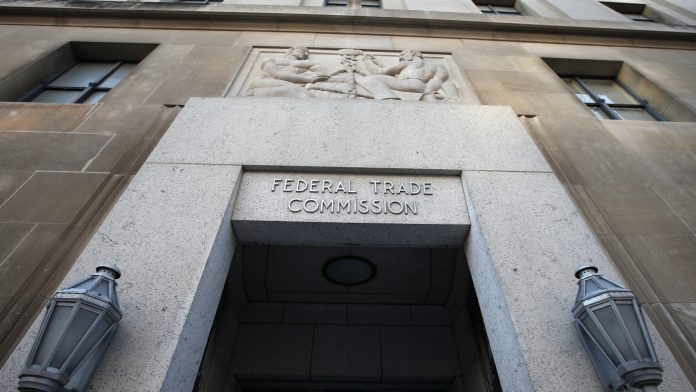
The Federal Trade Commission building in Washington on Jan. 28, 2015.

Alex Brandon/AP


hide caption

toggle caption

Alex Brandon/AP

An attorney appointed by former President Joe Biden to serve on the Federal Trade Commission warns that his firing is a win for President Trump’s wealthiest supporters.

The Trump administration this week fired Alvaro Bedoya and Rebecca Kelly Slaughter, both Democratic commissioners on the FTC, before their seven-year terms were up. Both plan to sue, alleging their firings are illegal. Slaughter was appointed in 2018, during Trump’s first term; Bedoya was appointed in 2022.

In 1935, the U.S. Supreme Court ruled unanimously that the president cannot fire appointed leaders of federal agencies without cause. The FTC is an independent government agency responsible for policing corporate America and enforcing consumer protection laws.

White House Press Secretary Karoline Leavitt defended the president’s actions, saying “the time was right to let these people go and the president absolutely has the authority to do it.” When asked if the Trump administration’s goal was to overturn the 1935 decision, Leavitt said “the goal was to let these individuals go. If we have to fight it all the way to the Supreme Court, we certainly will.”

Bedoya told Morning Edition‘s Leila Fadel that the administration provided no justification for his termination. He also called the president’s action “a naked power grab.”

This interview has been edited for length and clarity.

Leila Fadel: On Wednesday we heard the White House press secretary say the president has the authority to fire FTC commissioners. What do you say to that?

Alvaro Bedoya: What’s really interesting about that is the press secretary gives no reason whatsoever for why we’re fired. No cause. And yet the Supreme Court has said, in a case that remains good law today, we can only be removed for neglect, malfeasance or inefficiency. This is a naked power grab on behalf of the president, and it’s going to open the door for corruption and corporate giveaways, I think, for his top donors.

Federal Trade Commission Commissioners Rebecca Kelly Slaughter (left) chats with Alvaro Bedoya before former FTC Chair Lina Khan testifies during a House Judiciary Committee hearing in the Rayburn House Office Building on Capitol Hill in Washington, DC on July 13, 2023.

Federal Trade Commission Commissioners Rebecca Kelly Slaughter (left) chats with Alvaro Bedoya before former FTC Chair Lina Khan testifies during a House Judiciary Committee hearing in the Rayburn House Office Building on Capitol Hill in Washington, DC on July 13, 2023.

Shuran Huang/The Washington Post via Getty Images


hide caption

toggle caption

Shuran Huang/The Washington Post via Getty Images

Fadel: How were you told you were fired?

Bedoya: It was just after work. I arrived at my daughter’s gymnastics class and I got a call from my colleague, Commissioner Slaughter, telling me to check my email, that she’d just been fired or allegedly fired. And sure enough, there was an email from the president’s staff claiming to fire me. No reason given whatsoever.

Fadel: The FTC historically has five members, no more than three from the same political party. Mark Meador, who is Trump’s pick to fill a third Republican spot, has not yet been confirmed by the Senate. Can the commission function with just two members, both from the same party as the president?

Bedoya: It absolutely can. And I think that’s what folks are missing here. Right now we’re suing the largest provider of multifamily rental units in the country for packing their rent bills with hidden junk fees. We are trying to ban subscription traps that keep people from being able to unsubscribe from something unless they call, like, every other Tuesday between 10 a.m. and noon. We’re suing John Deere for screwing over ranchers and farmers, preventing them from fixing their tractors, making them take it to the dealership. Any one of those cases, any one of those rules, can be withdrawn by the current commissioners, who the president says are on the commission, although I would say I’m still there myself.

Note: Real estate company Greystar called the FTC’s suit “headline-grabbing litigation in the waning days of the [Biden] administration.” John Deere said in a statement that the FTC’s January 2025 lawsuit was based on a “flagrant misrepresentation of the facts and fatally flawed legal theories,” adding that it “punishes innovation and procompetitive product design.”

Fadel: You’ve said billionaires and Trump associates will benefit. Specifically who could benefit, how and why, with just two people from the same party on this commission?

Bedoya: Think about the billionaires who are over President Trump’s shoulder at the inauguration. Elon Musk. Mark Zuckerberg. Jeff Bezos. I am currently suing or enforcing court orders against each of their companies. Amazon we’re suing for ripping off small business sellers on their site such that the company pockets up to $0.50 of every dollar they make on that site and makes it nearly impossible for them to offer consumers lower prices off the site. I’m also sitting as a judge in a matter where staff is alleging that pharmacy middlemen are jacking up the price of insulin illegally. Any one of these actions could be withdrawn by the folks who the president says are currently at the commission.

And here’s the thing — even if they oppose that, it doesn’t matter. In a world where the president can fire anyone, at any time, they have a choice. They can either obey, or if they say no, what will happen to them is what has just happened to me.

Note: In response to the FTC’s September 2023 lawsuit, Amazon called the complaint “misguided” and that the lawsuit revealed “the Commission’s fundamental misunderstanding of retail.”

Fadel: Some Trump allies would say the president has the right to put his own people in place and get rid of those he doesn’t want. What do you say to those Americans?

Bedoya: I say that this is about corruption and corporate pardons. Let’s go back to Amazon. We’re already seeing this kind of conduct happen. One of the last public statements I made about Amazon was calling out how they treated their warehouse workers. These folks work so fast, so hard, that their hands stop working. Their shoulders tear. Their backs bulge and break. And yet, Amazon has cut a deal with the First Lady that will flow $28 million into her pockets. And now the person nominated to lead the Occupational Safety and Health Administration is a former Amazon executive.

There is every reason to think that these billionaires are going to use their power to shut down the lawsuits they don’t like, that hurt small business sellers, that hurt people who are struggling to pay for their medicine. So this is not about a unitary executive. This is about corporate pardons and corruption for these folks who have sent hundreds of millions of dollars into the president’s pockets.

Note: The Wall Street Journal reported in February that Melania Trump stands to earn “more than 70% of the $40 million” Amazon is paying to license a film about the First Lady. NPR has not independently confirmed the reporting.

Fadel: You talked about your concern that these firings will set a precedent, that anybody can be fired at any time. Are you optimistic that you’ll be reinstated if you sue?

Bedoya: I am optimistic — and people need to understand if I can be removed for any reason at any time, so can Jerome Powell at the Fed. And so it’s not just about small businesses and consumers. It’s also about retirees and investors and

Ally Schweitzer edited this story. The radio version was edited by Lisa Thomson and produced by Destinee Adams.

Renewed Israeli Strikes Force Gazans to Flee Their Homes

0

The truce between Israel and Hamas collapsed early on Tuesday when Israel launched a deadly round of airstrikes on Gaza, forcing a new wave of displacement. Hamas retaliated on Thursday, firing the first barrage of rockets toward Israel in months.

As young male voters shift Right, can the Left compete in the 'battle for the bros'?

0

Popular podcasts in the “manosphere” helped sway young men to go MAGA in the 2024 election. New Yorker writer Andrew Marantz explains how Democrats can win them back.

Russian Public Is Ready to End War but Skeptical of Concessions, Analysis Finds

0

An analysis made this week of Russian attitudes toward a possible cease-fire with Ukraine suggests that the Russian public is ready to end the war but skeptical of any concessions Moscow may have to make.

Combined with new polling in Ukraine, the analysis by a Massachusetts-based company, FilterLabs, shows how difficult selling the terms of a U.S.-brokered peace settlement will be to both the Russian and Ukrainian public.

While the two countries are war-weary, there is little appetite for major concessions to either government’s war aims — such as Russia’s demands for territorial concessions or Ukraine’s desire to integrate with the West.

“As with all things Ukraine/Russia-related, the picture is complicated, though from the borderlands to the big cities, one through line exists: Russians feel it’s time to end the war, but on Russia’s terms,” the company found in its analysis.

In a phone call with President Trump on Wednesday, Ukraine’s president, Volodymyr Zelensky, agreed to pause attacks on energy targets as long as Russia did the same. The Trump administration sees the limited agreement as a step to a broader cease-fire.

FilterLabs, which scrapes social media and internet posts to measure public sentiment in Russia and other parts of the world, has been analyzing the shifts in Russian attitudes toward the war since President Vladimir V. Putin’s full-scale invasion of Ukraine in February 2022.

The new analysis, written on Wednesday, focused on internet posts in recent days from Russia’s two largest cities, Moscow and St. Petersburg, and Russian regions that border Ukraine.

“Our analysis shows that skepticism about a potential cease-fire agreement was widespread, as was general weariness with the war,” the company said.

The FilterLabs work showed the public there reacting negatively to the news that the United States had resumed intelligence sharing and arms sales to Ukraine. While a month ago sentiment in Russia toward Mr. Trump was rising, recent commentators were more skeptical.

“You can’t trust the Americans, including Trump,” one Russian wrote in a Telegram post that was reviewed by FilterLabs. “Under the talk of peace, they have already resumed arms supplies. Their words are a complete deception. We are winning and we don’t need any truces.”

Jonathan Teubner, chief executive of FilterLabs, said skepticism toward the United States was behind much of the Russian public’s attitudes.

“Many in Russia are reading the proposal as another way for America and the West to take advantage of Russia,” he said. “This underlying skepticism likely gives Putin the ability to reject a cease-fire that many people want.”

Based on FilterLabs’ analysis, a minority of Russians want to keep fighting until Mr. Zelensky is overthrown.

“Why do we need a truce if we are crushing the Ukrainian Armed Forces on all fronts?” one person wrote on Telegram. “So that during this time the enemy can lick its wounds and strike with renewed vigor? Only Kyiv’s capitulation will satisfy us!”

Polling in Ukraine has also shown skepticism about ceding territory or making large concessions to Moscow. Russia has demanded that Ukraine withdraw its forces from the Ukrainian provinces that Moscow annexed after its invasion: Donetsk, Luhansk, Kherson and Zaporizhzhia. The annexation was broadly denounced at the time as illegitimate by the West.

A poll conducted in late February and early March by the Razumkov Center, a research institute in Kyiv, the Ukrainian capital, found that 78 percent of respondents opposed the withdrawal of forces from the contested regions.

An even larger majority opposed recognizing the illegal Russian annexation. Only a small minority, 8 percent, favored withdrawal from the regions, the poll found.

The survey also showed a strong majority were against lifting Western sanctions on Moscow. Opinions on whether Ukraine should become a neutral state, a key demand of the Russians, were more divided, with 56 percent opposing neutrality and 22 percent supporting it.

Pentagon restores webpages of Black veterans, Navajo Code Talkers and others after outcry : NPR

0

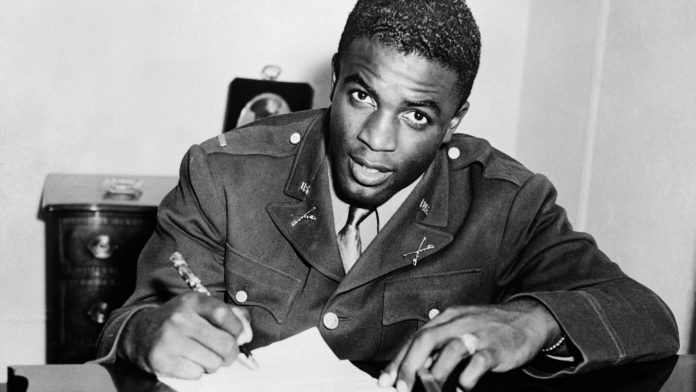
Jackie Robinson, shown here in military uniform signing a contract with a farm team for the Brooklyn Dodgers, is among the veterans whose Department of Defense webpages were removed — and then restored — as part of the Trump administration’s scrubbing of references to DEI material.

Bettmann/Bettmann Archive/Bettmann Archive


hide caption

toggle caption

Bettmann/Bettmann Archive/Bettmann Archive

The Pentagon has restored some of its webpages that highlighted Black veterans such as Jackie Robinson, the Tuskegee Airmen and Vietnam-era Medal of Honor recipient Major Gen. Charles Calvin Rogers as well as the Navajo Code Talkers from World War II and the Japanese-American 442nd Combat Regiment.

Two Defense Department officials not authorized to speak publicly told NPR that these and others were taken down through a review of thousands of stories, photos and videos meant to remove diversity, equity and inclusion material in line with Trump administration policy guidance.

Earlier, Pentagon spokesman John Ullyot had said in a statement:

“Everyone at the Defense Department loves Jackie Robinson, as well as the Navajo Code Talkers, the Tuskegee airmen, the Marines at Iwo Jima and so many others — we salute them for their strong and in many cases heroic service to our country, full stop. We do not view or highlight them through the prism of immutable characteristics, such as race, ethnicity, or sex. We do so only by recognizing their patriotism and dedication to the warfighting mission like ever other American who has worn the uniform.

DEI — Discriminatory Equity Ideology does the opposite. It Divides the force, Erodes unit cohesion and Interferes with the services’ core warfighting mission.

We are pleased by the rapid compliance across the Department with the directive removing DEI content from all platforms. In the rare cases that content is removed — either deliberately or by mistake — that is out of the clearly outlined scope of the directive, we instruct the components and they correct the content so it recognizes our heroes for their dedicated service alongside their fellow Americans, period.”

Regardless, one of the Pentagon officials said the ongoing review was too hasty in some respects and used search terms such as “gender” and “gay,” which also led to the flagging of images of the Enola Gay, the aircraft that dropped the Atomic bomb on Japan during World War II. “The review is ongoing and meant to comply with the policy and not erase history,” the official said.

Hamas Fires Rockets at Tel Aviv as Israel Expands Gaza Ground Operations

0

Hamas fired its first barrage of rockets in months into Israeli territory on Thursday as Israeli troops expanded their ground raids in northern Gaza in what looked increasingly like a slide back into full-scale war.

There were no reports of casualties from the rockets, which were fired at Tel Aviv. The Israeli military said they were either intercepted or fell in open areas. But the barrage served as a show of resilience from the Palestinian armed group despite more than a year of war with Israel.

A two-month cease-fire collapsed this week with an Israeli aerial bombardment of Gaza, which the military said had targeted Hamas. Israel argued that the truce could not continue unless Hamas released more hostages, while Hamas accused Israel of violating the cease-fire agreement.

Israel’s renewed assault has killed more than 500 people in Gaza in three days, including scores of children, the Gaza health ministry said on Thursday. Those figures do not distinguish between civilians and combatants.

Earlier on Thursday, the Israeli military said its forces had begun conducting “ground activity” near Beit Lahia, in northern Gaza. That came less than a day after Israel announced that it had recaptured part of the Netzarim corridor in central Gaza, which divides the north of the territory from the south. Israel had withdrawn from the corridor as part of the truce.

Hamas said at least five of its top leaders in Gaza were among about 400 people killed by Israel on Tuesday in a heavy bombardment, according to Gaza officials. Hamas rarely provides information as to whether those killed in Israeli attacks were members of the armed group.

Benjamin Netanyahu, the Israeli prime minister, has vowed to step up pressure on Hamas until the group capitulates and releases the dozens of Israeli and foreign hostages still being held in Gaza.

Hamas officials say Israel will not gain more favorable terms for a cease-fire by resuming the war.

The first phase of the January cease-fire ended in early March. Mediators like the United States were trying to broker a deal between Israel and Hamas on the next steps in the truce, including a permanent end to the war and the release of the remaining living hostages in Gaza.

But Israel has been unwilling to end the conflict permanently as long as Hamas remains in power in Gaza. Hamas is refusing to disband its armed battalions, send its leaders in Gaza into exile or release many more hostages unless Israel commits to a permanent end to the war.

About 24 living Israeli and foreign hostages — as well as the remains of more than 30 others — are believed to still be in Gaza, according to the Israeli government.

Hamas and its allies abducted about 250 people during the Oct. 7, 2023, attack on Israel that ignited the war.

Do you feel you can exercise your right to free speech? : NPR

0

In his recent address to Congress, President Trump declared that he had “stopped all government censorship and brought back free speech in America.” Days later, immigration agents arrested Mahmoud Khalil, a Palestinian Columbia University graduate student for his participation in campus protests against Israel’s war in Gaza.

We want to know who feels freer to speak in this moment, who feels they’re being forced into silence, and the extent to which the right to free speech, as protected by the U.S. Constitution, might be changing for different people, for better or worse.

Fill out the form below and an NPR journalist may reach out for an upcoming story.

Ukraine Attacks Air Base Deep Inside Russia

0

Ukraine attacked an airfield deep inside Russian territory overnight, officials said on Thursday, as the two sides traded strikes amid efforts by the Trump administration to hammer out details of a partial cease-fire.

The attack on the Russian airfield came hours after President Volodymyr Zelensky of Ukraine spoke to President Trump and accepted the Kremlin’s offer to mutually pause attacks on energy targets for 30 days as a step toward a broader cease-fire.

Russia’s defense ministry said that it had shot down 54 Ukrainian drones in the Saratov region overnight. The region is home to the Engels airfield, which hosts some of Russia’s long-range, nuclear-capable bombers.

While the ministry did not say how many drones had evaded air defenses, The New York Times confirmed that at least one strike targeted the airfield in Engels shortly after sunrise on Thursday.

Videos and photographs shared by witnesses on social media and verified by The Times showed an explosion and a large plume of dark smoke rising from the base, and loud secondary explosions after the strike. The strike appeared to target a part of the airfield with several warehouses, which is described online as a weapons storage area.

The governor of the Saratov region, Roman Busargin, said on Thursday that civilians living near the airfield were being evacuated “for safety reasons” because of a fire on the base. About 30 houses were damaged overnight, he added in a post on the Telegram messaging app.

Ukraine’s military confirmed in a statement that had attacked the airfield. Kyiv has previously targeted the base, which it calls a staging ground for Russia’s long-running attacks on Ukrainian energy infrastructure.

Russian forces also carried out further strikes on Ukraine overnight. Ukraine’s air force said on Thursday that Russia had launched 171 drones, 63 of which were shot down by air defenses. At least five people were killed and injured across the country, according to local authorities.

While both Russia and Ukraine have agreed to temporarily stop targeting each other’s energy infrastructure, how and when that pause will go into effect remains unclear. Those details were expected to be discussed at upcoming talks in Saudi Arabia — and Mr. Zelensky said on Wednesday night that “everything will continue to fly” until “there is an appropriate document” negotiating terms.

On Thursday, the Kremlin said that Russian and U.S. officials were hammering out the details for a new round of bilateral talks. Those talks will be held on Monday in Saudi Arabia’s capital, Riyadh, President Vladimir V. Putin’s foreign policy adviser, Yuri Ushakov, told Russian news agencies.

Mr. Zelensky has characterized some of the Kremlin’s proposals as stalling tactics to maneuver for military advantage and a better deal from Mr. Trump. On Thursday morning, he suggested the same in noting that Russian attacks had not stopped.

“Every day and every night up to a hundred drones and missile attacks also do not stop,” he wrote on Telegram. “With every such strike Russia shows the world its real attitude to peace.”

Nataliia Novosolova, Nataliya Vasilyeva and Malachy Browne contributed reporting.