Friday, November 13, 2026
Home Blog Page 240

Trump pardons disgraced former Illinois Gov. Rod Blagojevich : NPR

0

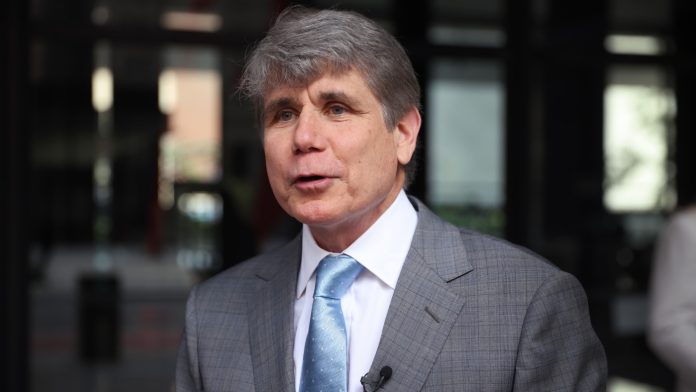
Former Illinois Gov. and convicted felon Rod Blagojevich speaks to the press outside of the Dirksen Federal Courthouse in August 2021 in Chicago.

Scott Olson/Getty Images


hide caption

toggle caption

Scott Olson/Getty Images

President Trump has pardoned former Illinois Gov. Rod Blagojevich, who was convicted of corruption-related crimes, including trying to sell a U.S. Senate seat vacated by former President Barack Obama.

Blagojevich served as the state’s governor from 2003-’09. It was a political saga toward the end of his time in office.

In 2008, federal prosecutors accused Blagojevich of turning Illinois’ government into a moneymaking operation for himself by trying to, among other things, shake down a children’s hospital and racetrack owners. When prosecutors charged Blagojevich with corruption over the Senate seat, they presented as evidence a profanity-filled telephone conversation he had that was secretly recorded by the FBI.

“I mean, I’ve got this thing, and it’s [expletive] golden. And I’m just not giving it up for [expletive] nothing,” Blagojevich said.

He argued that he simply engaged in political horse-trading, and he went on a national publicity tour to proclaim his innocence.

Blagojevich was impeached and ousted as governor in January 2009 and then indicted that March. The following year, he appeared and was booted off Donald Trump’s reality TV show, Celebrity Apprentice.

Blagojevich was convicted in 2011 and later sentenced to 14 years in prison. He served eight years, his time behind bars cut short after President Trump commuted Blagojevich’s sentence during his first term in office.

Many leading Illinois Democrats and Republicans criticized the move. The then-chairman of Illinois’ Republican Party said in a statement that in a state where corrupt machine style politics is all too common, it’s important that those found guilty serve their prison sentence in its entirety.

After he was released from prison, Blagojevich and his wife, Patti, held a news conference. He was a freed political prisoner, calling the criminal justice system both broken and unfair.

“We want to express our most profound and everlasting gratitude to President Trump,” Blagojevich said. “How do you properly thank someone who has given you back the freedom that was stolen from you?”

The former Democratic governor also declared himself a “Trump-ocrat.”

President Trump said he was granting Blagojevich a full pardon. He called Blagojevich’s sentence a “terrible injustice” and he called the former Illinois governor, a nice man.

Eagles captain Lane Johnson says it will be ‘team decision’ to go to White House if Trump extends invite

0

With the Philadelphia Eagles winning Super Bowl LIX over the Kansas City Chiefs, the celebration has begun. 

Whether it will be at the White House – President Donald Trump has yet to announce a formal invitation – will be a “team decision,” says veteran offensive lineman Lane Johnson. 

“I’d be honored to go, regardless of who the president is, but we’ll see,” Johnson said via Sportico’s Eric Jackson. “It’s ultimately a team decision. I’ll do what’s best for the team.”

CLICK HERE FOR MORE SPORTS COVERAGE ON FOXNEWS.COM

Philadelphia Eagles offensive tackle Lane Johnson during a press conference in advance of Super Bowl LIX (Stephen Lew-Imagn Images)

Johnson is a team captain with the Eagles, having spent all 12 of his NFL seasons with the franchise. 

He was there in 2018 when controversy came back after their Super Bowl victory over Tom Brady and the New England Patriots. 

Trump was in office when he rescinded his invitation to the Eagles to celebrate their Super Bowl LII victory, as some players said they would not visit the White House due to Trump’s criticism of those who kneeled or raised their fists during the national anthem to protest racial injustice and police brutality. 

EAGLES’ JALEN HURTS CELEBRATES SUPER BOWL LIX VICOTYR, MVP AT DISNEY’S MAGIC KINGDOM

Trump released a statement at the time regarding his invitation cancellation, saying “the 1,000 fans planning to attend the event deserve better.”

“They disagree with their President because he insists that they proudly stand for the National Anthem, hand on heart, in honor of the great men and women of our military and the people of our country,” Trump’s statement read seven years ago. 

Lane Johnson speaks to Jalen Hurts

Philadelphia Eagles offensive tackle Lane Johnson (65) shakes hands with quarterback Jalen Hurts during the second half of Super Bowl LIX. (Geoff Burke-Imagn Images)

Eagles owner Jeffrey Lurie was asked before Super Bowl LIX if he would head to the White House if his team won. 

“I just want to win Sunday,” he responded, via Front Office Sports. 

Josh Sweat, an Eagle with a crucial performance on Sunday with 2.5 sacks on Chiefs quarterback Patrick Mahomes, added, “It’s a great honor, but I’m looking forward to this parade more than anything.”

Lane Johnson speaks to reporters

Philadelphia Eagles offensive tackle Lane Johnson speaks with the media during a press conference at Hilton New Orleans Riverside. (Bill Streicher-Imagn Images)

CLICK HERE TO GET THE FOX NEWS APP

The Eagles will have their championship parade in Philadelphia on Friday.

Follow Fox News Digital’s sports coverage on X, and subscribe to the Fox News Sports Huddle newsletter.

Israeli Hostages’ Accounts of Abuse Raise Alarms for Remaining Captives

0

Bound. Starved. Wounded. Tortured. These are the conditions that some hostages being held in Gaza still face, according to information their families said they had received from Israeli military and security officials after Hamas released three captives on Saturday as part of a cease-fire agreement.

The emaciated appearance of three hostages released in a ceremony in Gaza staged by Hamas last weekend — Eli Sharabi, 52; Or Levy, 34; and Ohad Ben-Ami, 56 — and the details of their captivity have relatives of the remaining captives sounding the alarm about the urgent need for the continuation of the phased cease-fire deal. The urgency comes as the militant group said on Monday it would indefinitely postpone the next hostage releases, set for Saturday, citing Israeli cease-fire violations.

Before they were handed over to Red Cross officials in exchange for 183 Palestinian prisoners on Saturday, the frail, painfully thin hostages were paraded onstage before a crowd in the city of Deir al-Balah, Gaza, each holding a Hamas-issued “release certificate,” and made to recite words written for them — including thanks to the militants who had held them for 16 months.

A doctor in charge of overseeing the treatment of two of the freed Israeli hostages later said they were in poor condition. The third was in a “severe nutritional state,” according to an official at the hospital where he was being treated.

Hamas has said it treats its captives benevolently.

Under the first phases of the cease-fire deal, the armed Palestinian group agreed to free 25 living hostages and the bodies of eight who were killed, in exchange for about 1,500 Palestinian prisoners. So far, about half of those exchanges have been carried out.

Hamas on Saturday denounced “the brutal treatment of our prisoners” by Israeli officials. “This includes ongoing assaults, torture, and disregard for age or the severe health conditions suffered by many prisoners,” it said in a statement, highlighting what it said was the difference in treatment between the hostages and the prisoners.

Idit Ohel, whose son Alon Ohel turned 24 on Monday and was spending his second birthday in captivity in Gaza, told reporters at a news briefing that she had learned from military sources who had spoken with the most recently released hostages that her son was receiving very little food and no medical care for multiple injuries, including an eye injury that has left him partially blinded.

Mr. Ohel, who was captured at the Nova Music Festival during the Hamas-led attack on Oct. 7, 2023, has been held bound for much of the time and was tortured, she said she had learned from Israeli military officials. “It was not easy to hear,” Ms. Ohel said. “I must say that I even fainted.”

“I don’t think there’s a mother in this world that would even be able to sleep,” knowing their child was enduring such suffering, she added.

Similarly, Sigi Cohen, the mother of another hostage, Eliya Cohen, who was 26 when captured, said by phone on Monday that she had learned from Israeli security forces that her son — who was shot in the leg during the 2023 attack on Israel — has also not received treatment for his injuries.

Her son reportedly sees almost no sunshine and has been bound throughout most of his nearly 500 days in captivity, she added.

The New York Times could not independently confirm the information. A spokesman for the Israeli military, reached by phone, declined to comment on Monday, citing the sensitivity of the topic.

The recently freed hostages’ reports about what they and others have endured align with the accounts of some of the other captives freed since the first phase of the cease-fire agreement went into effect last month.

And Dr. Hagai Levine, who leads the medical team for the Hostage Family Forum, an umbrella group, told reporters on Monday that the hostages had been “starved” and endured “intentional torture,” and that many had returned home with infections that could become a threat, as well as emotional damage.

“The findings are clear and deeply alarming,” he said. “They are subject to deliberate starvation and severe water deprivation” and “are undergoing extreme physical and emotional abuse.”

“There is a clear and present danger to all of the hostages’ lives,” Dr. Levine added. He said that any delay in the release of hostages would “probably cost lives.”

The relatives of some of those recently released have also described details of the hostages’ experiences — and the dire state they are in now.

“Yesterday, my brother Or returned to us after 491 days of hell,” Michael Levy said in a statement on Sunday. His bother had been held in Hamas tunnels and returned to Israel a shadow of the man he once was, his brother said.

“I hugged him, but he wasn’t the same Or who left home on October 7th,” Mr. Levy said, noting that his brother had returned in poor physical condition and spent 16 months “hungry, barefoot and in constant fear” that every day could be his last.

But the “hardest blow” came on Saturday, he said, when his brother learned that his wife, Einav Levy, had not survived the attack at the Nova music festival.

The latest details about the conditions under which some of the hostages were held came as the fragile truce appeared to be fraying.

Ofer Calderon, who was released earlier this month, said in a statement on Monday, “I was held in tunnels without seeing daylight, had no access to media, experienced severe hunger conditions, went entire months without showering or receiving proper care.”

He called for a continuation of the cease-fire and noted that after the first temporary deal of the war was struck between Israel and Hamas, in November 2023, the conditions during his and other hostages’ captivity had “severely deteriorated and became brutal.”

“We must not stop the current deal and must continue working to free all the hostages,” Mr. Calderon said. “Hamas is a cruel enemy who will not hesitate to harm the hostages left behind.”

Some hospitals are complying with Trump’s order on transgender teens : Shots

0

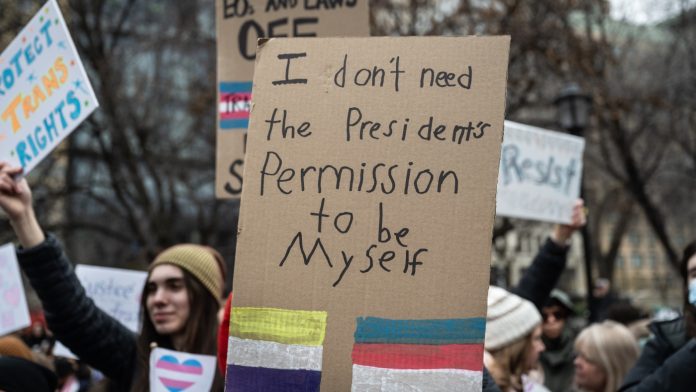
A homemade sign at a rally in Union Square in New York City on Saturday. Various hospitals across the country curbed gender-affirming care for people under 19 after President Trump’s executive order.

Stephanie Keith/Bloomberg via Getty Images


hide caption

toggle caption

Stephanie Keith/Bloomberg via Getty Images

Kristen Chapman had already moved her family from Tennessee to Virginia to try to find a state that would be more welcoming to her transgender daughter, Willow.

After months waiting for an appointment at the gender-affirming care clinic at VCU Health in Richmond, Willow had one on the calendar on Jan. 29. President Trump’s executive order limiting transgender health care for youth came out in the afternoon of Jan. 28.

“Just a few hours before our appointment, VCU told us they would not be able to provide Willow with care,” Chapman says.

Chapman is a plaintiff in a lawsuit against the Trump administration brought by the ACLU and Lambda Legal. The suit seeks to block the order from taking effect, but even before a formal policy was enacted, the order began to be enforced. The White House issued a press release pointing to hospitals that had immediately canceled appointments: NYU Langone in New York City, UCHealth in Denver, Children’s National in Washington, D.C., and others.

“I thought Virginia would be a safe place for me and my daughter. Instead I am heartbroken, tired and scared,” Chapman says on a press call announcing the lawsuit last week.

Conflicting directives

ACLU senior counsel Joshua Block, who was also on the call, says Congress has passed laws prohibiting hospitals and health centers that receive federal funds from discriminating against patients on the basis of sex, and courts have found that those protections extend to transgender patients. “President Trump’s executive orders attempt to direct grant recipients to do precisely what Congress has prohibited them from doing,” Block says. “Congress said don’t discriminate, and President Trump is saying you have to discriminate.”

The day after the lawsuit was filed, 15 attorneys general including from California, Maine, and Wisconsin issued a statement warning hospitals they must not cancel appointments or they would be violating state anti-discrimination laws.

So what is a hospital to do?

The American Hospital Association told NPR they are not providing guidance to hospitals right now about how to navigate this. The Children’s Hospital Association told NPR they are reviewing the order.

The care at issue includes puberty blockers and cross-sex hormone therapy — medications that help transgender teens develop characteristics that align with their gender identity. Use of these treatments is supported by major American medical groups including the American Academy of Pediatrics.

Major funding at risk

The stakes are high for hospitals because Trump’s executive order directs the government to take actions to end transgender care for people under age 19 through “regulatory and sub-regulatory actions.” At the top of the list of laws and programs that might be involved in such actions is “Medicare or Medicaid conditions of participation or conditions for coverage.”

The order is not tremendously clear, but Medicare and Medicaid are huge funding streams in nearly every hospital in the country, which could explain why the executive order appears to have had a chilling effect on care even while it’s challenged in court. Seattle, New York City, Los Angeles and Washington, D.C. all had protests outside children’s hospitals that decided to cancel appointments.

Some hospital systems continued to provide care, including Mass General Brigham in Boston and Oregon Health & Science University in Portland, Or. (At least one hospital that initially canceled an appointment, Children’s Wisconsin, ended up rescheduling that patient amid the legal uncertainty.)

Hailed by conservative think tank

For those who support Trump on restricting health care for transgender youth, it’s a victory.

“I think this is fantastic what President Trump has done to protect children in this country,” says Terry Schilling, president of the American Principles Project, which has urged states and the federal government to limit access to what he calls “sex trait modification procedures.”

Schilling says that “this is a real problem — gender dysphoria exists,” but that medical treatments like hormones and puberty blockers shouldn’t be given to minors.

People gather with signs that say "Stop Transing Gay Kids" and "Trans Medicine Identifies as Safe" in front of the Supreme Court building in Washington, D.C.

People who support state bans on gender-affirming care for young people gathered outside the U.S. Supreme Court on Dec. 4, when a case brought against Tennessee’s ban was heard.

Al Drago/Bloomberg via Getty Images


hide caption

toggle caption

Al Drago/Bloomberg via Getty Images

“The compromise that the American people have made and [President] Donald Trump has made is that we will allow adults to go through these procedures, but when it comes to children, we’re not going to allow it,” he says.

Still, Schilling acknowledges that the executive order is not sufficient to end gender-affirming care for youth on its own. “I think it’s got a little bit more to play out,” he says.

The Supreme Court is set to rule in the coming months on whether a state gender-affirming care ban for youth constitutes sex discrimination, he notes, and he would like to see Congress act. “We have to get votes in Congress,” he says. “We have to hold senators and members of Congress accountable for these procedures.”

About half of states have gender-affirming care bans for minors on the books; not all of them are in force at the moment.

Legal issues ahead?

With the executive order, the president is trying to attach new conditions to federal grants to hospitals and clinics, explains Katie Eyer, a professor of law at Rutgers University in New Jersey.

“The president doesn’t have any unilateral authority to do this,” she says. That’s a key distinction between this effort and the Hyde Amendment, which limits federal spending on abortion.

Jon Schweppe, policy director at Schilling’s organization, told NPR in November that a Hyde Amendment for gender-affirming care was a goal he hoped the Trump administration would pursue. This executive order is considerably more sweeping than the amendment because it could implicate all federal funding going to a hospital or clinic, not just funding for this particular kind of care.

There’s another difference, Eyer points out. The Hyde Amendment “was established by Congress, went through constitutional challenges and was affirmed,” she says. None of that process has happened in this case.

In ordinary times, she says, hospitals could simply take an order like this to court and trust they would win. But now, there’s a lot of uncertainty about how the courts and Congress are going to respond to this order and other executive orders from the White House, and federal funding could theoretically be cut off to hospitals in the interim. Some recipients of federal health grants have reported intermittent problems receiving reimbursement. The office involved has said it is due to “technical issues,” but it has grantees on edge.

“So that really does put regulated entities [like hospitals] in a predicament,” Eyer says.

The ACLU lawsuit is asking the court for a temporary restraining order while the legal process plays out. In the meantime, hospitals and clinics are making their best guesses on how to proceed, and families and trans young people are waiting.


Trump budget bill standoff prompts GOP rebels to mutiny House leaders

0

Join Fox News for access to this content

Plus special access to select articles and other premium content with your account – free of charge.

By entering your email and pushing continue, you are agreeing to Fox News’ Terms of Use and Privacy Policy, which includes our Notice of Financial Incentive.

Please enter a valid email address.

The hard-line conservative House Freedom Caucus has released its own proposal to enact President Donald Trump’s agenda via the budget reconciliation process.

The plan would pair a debt ceiling increase and increased border security funding with deep spending cuts through welfare work requirements and rollbacks on progressive Biden administration initiatives.

It’s a sign that House GOP leaders have still not found consensus within the conference on a path forward, despite ambitious plans to get a bill through the chamber at the end of the month.

House and Senate Republicans are aiming to use their congressional majorities to pass a massive conservative policy overhaul via the budget reconciliation process.

SCOOP: KEY CONSERVATIVE CAUCUS DRAWS RED LINE ON HOUSE BUDGET PLAN

The House Freedom Caucus during the 118th Congress (Bill Clark/CQ-Roll Call via Getty Images)

By reducing the Senate’s threshold for passage from one-third to a simple majority, where the House already operates, Republicans will be able to enact Trump’s plans while entirely skirting Democratic opposition, provided the items included relate to budgetary and other fiscal matters.

GOP lawmakers want to include a wide swath of Trump priorities from more funding for border security to eliminating taxes on tipped and overtime wages.

But fiscal hawks have also demanded the package be deficit-neutral or deficit-reducing. Congressional leaders can afford little dissent with their razor-thin majorities and guaranteed lack of Democratic support.

The Freedom Caucus’s plan would follow through on conservatives’ pleas for deep spending cuts, pairing $200 billion in annual new spending for the border and national defense with $486 billion in spending cuts for the same 10-year period.

It would also include a $4 trillion increase in the debt ceiling, something Trump demanded be part of Republicans’ fiscal negotiations.

Spending cuts would be found in codifying rollbacks to the Biden administration’s electric vehicle mandates and imposing Clinton administration-era work requirements for certain federal benefits, among other measures.

US-POLITICS-TRUMP-DEPARTURE

Republicans are working to pass President Trump’s agenda via reconciliation. (ROBERTO SCHMIDT/AFP via Getty Images)

The legislation leaves out one critical component of Trump’s reconciliation goals – the extension of his 2017-era Tax Cuts and Jobs Act.

House GOP leaders and Republicans on the Ways & Means Committee had pushed for them to be included alongside border security, debt ceiling, defense and energy measures in one massive reconciliation bill. 

They argued that leaving them for a second bill, which the House Freedom Caucus plan would do, will allow Trump’s tax cuts to expire at the end of this year before Congress has time to act.

The two-track approach is also favored by Senate Republicans, who are moving forward with their own plan this week.

Conservatives on the House Budget Committee pushed back against GOP leaders’ initial proposals for baseline spending cuts to offset new spending in the reconciliation plan, forcing the House to punt on plans to advance a resolution through the House Budget Committee last week.

Senate Budget Committee Chair Lindsey Graham, R-S.C., later announced plans to advance his own proposal through his committee by Thursday.

BLACK CAUCUS CHAIR ACCUSES TRUMP OF ‘PURGE’ OF ‘MINORITY’ FEDERAL WORKERS

“”The biggest loser this weekend wasn’t at the Super Bowl, but rather the American people,” Rep. Andy Ogles, R-Tenn., told Fox News Digital. “The clock is ticking, and we are no closer to a budget deal, which is why the House Freedom Caucus released our Emergency Border Control Resolution Budget to secure our border and address Trump’s America First Agenda.”

CLICK HERE TO GET THE FOX NEWS APP

House Freedom Caucus Chair Andy Harris, R-Md., said in a statement, “Given the current delay in the House on moving a comprehensive reconciliation bill, moving a smaller targeted bill now makes the most sense to deliver a win for the President and the American people.”

Rep. Michael Cloud, R-Texas, said, “The American people voted for Donald Trump to see action – not for Congress to sit on its hands while our short window to pass his America-First agenda closes.”

Supporters of the two-bill approach have said it would secure early wins on issues Republicans agree most on while leaving more complex matters like tax cuts for the latter half of the year.

U.N. Suspends Humanitarian Work in Yemeni Area Over Houthi Hold More Staff

0

The United Nations announced on Monday that it was suspending all humanitarian operations in a large Houthi-controlled area in northern Yemen in response to the arbitrary detention of its staff, which it said created hostile conditions for aid work.

The U.N. secretary general, António Guterres, made the decision because the Houthis detained eight more U.N. staff members in late January, bringing the total arrested since 2021 to 24, said Farhan Haq, a U.N. spokesman.

Mr. Haq said the Houthis had violated an agreement reached in December with the U.N. to stop detaining the global agency’s staff and to find a pathway to releasing those in their custody. Less than a month later, the group arrested eight more workers on murky charges of espionage and foreign intervention.

“This extraordinary and temporary measure seeks to balance the imperative to stay and deliver with the need to have the safety and security of the U.N. personnel and its partners guaranteed,” the U.N. said in a statement.

The U.N. also said it had stopped all staff travel to Houthi-controlled areas after the detentions.

The Houthis, the de facto rulers of parts of Yemen including the capital, Sana, are backed by Iran. They have been engaged in a campaign of kidnappings and detention of hundreds of people who work for the U.N. and foreign nongovernment agencies, along with dozens of current and former Yemenis employed by the U.S. government, according to the U.N.

The U.N. did not clarify how many Yemenis were affected by the suspension of its humanitarian aid operation, which it said included providing food, clean water and medical kits. But the U.N. identifies Yemen as having the world’s largest humanitarian crisis, with 80 percent of its 24.1 million people in need of essential aid and three million displaced.

Saada, the area where the U.N. suspended operations, is north of Sana and has a population of about one million people. Several U.N. agencies operate in Saada, including the World Food Program, the World Health Organization, UNICEF and other aid groups.

Mr. Haq, the U.N. spokesman, said the decision to stop operations did not come easily and was heavily debated within the organization. “This is not a normal procedure or something we do frequently,” he said, adding that the decision reflected the gravity of the safety concerns for the U.N.’s operations in Yemen.

The U.N. operates in war zones around the world, including Gaza, Myanmar, Sudan and Ukraine, and its staff faces high risks and duress, but it seldom shuts down its operations. In the war in Gaza, for example, the U.N. has said that nearly 300 of its staff members have been killed in the Israel-Hamas war in Gaza — the highest number of U.N. employees killed in any conflict — but the work continued.

Mr. Haq said that U.N. staff members have diplomatic immunity and must be protected. The hope was, he added, that a pause in operations in Yemen would provide space for negotiations with Houthis to guarantee safe conditions for the U.N. to resume its work.

The Trump administration has stopped work at the CFPB. Here’s what the agency does : NPR

0

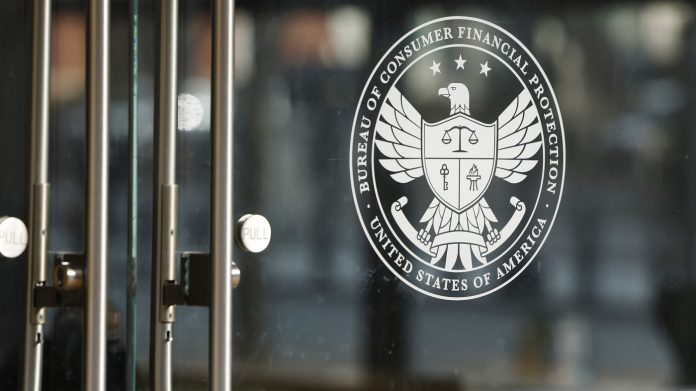
The exterior of the Consumer Financial Protection Bureau — or CFPB — headquarters in Washington, D.C. is seen on Monday, Feb. 10.

Anna Moneymaker/Getty Images North America


hide caption

toggle caption

Anna Moneymaker/Getty Images North America

The main U.S. agency tasked with overseeing the financial products and services used by everyday Americans — from credit cards to checking accounts to home loans — is the latest target of the Trump administration’s effort to remake the federal government.

The Consumer Financial Protection Bureau’s new leader has shuttered the agency’s headquarters and told staffers to stay at home and refrain from doing any work.

The Trump administration team run by tech billionaire Elon Musk is also focusing some of its efforts on the CFPB. The Department of Government Efficiency — or DOGE — has accessed the CFPB’s internal computer systems and deleted its public-facing social media accounts. In recent weeks Musk has criticized the CFPB in posts on X, the social media site he owns, at one point posting: “CFPB RIP.”

Here’s what to know about the CFPB.

It was created in response to the 2008 financial crisis

Washington was looking for solutions after the devastating collapse of the U.S. banking system in 2008, which left many Americans with financial losses and raised questions about the operations of the country’s financial institutions.

One year later, then-President Obama proposed creating a new federal agency focused exclusively on protecting consumers from dubious financial products.

Backers of the idea argued that because several federal agencies were regulating the consumer banking system, there were gaps in oversight that left consumers vulnerable or confused. The new agency would consolidate those regulatory responsibilities in one place.

Some Republicans and banks opposed the idea, but its creation was included in the Dodd-Frank Wall Street Reform and Consumer Protection Act, which was passed by Congress and signed by Obama in 2010.

What does the CFPB do?

An independent bureau within the Federal Reserve, the CFPB’s job is to ensure that the financial products and services offered to American consumers are fair and transparent.

It implements U.S. consumer finance laws and issues new rules for lenders and other financial institutions, such as one announced last year to wipe medical debt from credit reports. The CFPB also goes after companies it suspects of dishonest or illegal activity.

“At its core, it’s a law enforcement agency,” Rohit Chopra, the former director of the CFPB appointed by President Biden, told NPR on Monday. “It takes big financial institutions to court who cheat consumers, whether it’s a credit reporting agency or a large bank or a credit card giant.”

In December, the CFPB sued Bank of America, JPMorgan Chase and Wells Fargo for allegedly failing to protect customers from fraud on the payment app Zelle. Last month it sued Capitol One for failing to pay more than $2 billion in interest to its customers for advertising a high-yield checking account that actually paid an interest rate close to zero.

The agency says that, since its inception, it’s helped consumers to the tune of $21 billion through monetary compensation, loan principal reductions, canceled debt and more.

The CFPB had a budget of $823 million in the 2025 fiscal year. Its funding comes through quarterly transfers from the Fed itself, which the CFPB requests.

The CFPB has faced criticism for years — including from Trump

The agency has long faced pushback from the banking industry and some Republicans, including Trump himself.

During Trump’s first term, his administration took steps to weaken the CFPB, after the Republican vowed during his 2016 presidential campaign that he would “get rid” of Dodd-Frank.

Office of Management and Budget director Mick Mulvaney said in 2018 that the administration would “fulfill the Bureau’s statutory responsibilities, but go no further.”

Kathy Kraninger, one of the CFPB directors during Trump’s first term, was criticized for relaxing certain rules for financial institutions. Trump also proposed slashing CFPB’s funding.

In a post on X on Sunday, acting CFPB director Russell Vought said the CFPB had been “a woke & weaponized agency against disfavored industries and individuals for a long time. This must end.”

What’s next for the CFPB?

In addition to shuttering CFPB offices and telling staff to remain at home, Vought said in a post on X over the weekend that the agency would “not be taking its next draw of unappropriated funding because it is not ‘reasonably necessary’ to carry out its duties.”

For now, CFPB can use the money it has in its reserve fund to continue to pay salaries and operating expenses.

The Republican staff of the U.S. Senate Committee on Banking, Housing, and Urban Affairs said in a post on X that “[a]ccountability at the CFPB is long overdue” and that Vought would “bring responsibility back to the CFPB & refocus its mission to serve the American people.”

Democratic Sen. Elizabeth Warren of Massachusetts, who helped launch the CFPB, said in a series of posts on X that the CFPB was created by Congress and that no one in the Trump administration “can illegally shut down its work.”

Warren warned that gutting the CFPB would mean that “CEOs on Wall Street will once again be free to cheat you out of your savings.”

Illegal alien charged in Massachusetts shop owner murder released under Biden

0

The suspect in the grisly murder of a Massachusetts sandwich shop owner is a 25-year-old illegal alien from the Dominican Republic who was released into the U.S. after he was stopped near the border in Texas under then-President Joe Biden in September 2022, according to Immigration and Customs Enforcement.

Eric Dionida German-Pena is charged with the murder of Ilias Mavros, better known as Louie and the owner of Crazy Buzzy’s Roast Beef and Seafood in Lynn.

“Eric Dionida German-Pena will have his day in court, but he stands accused of a very serious and disturbing crime against a member of our Massachusetts community,” Patricia Hyde, the acting field director of ICE’s Boston Enforcement and Removal Operations office, said in a statement. “ICE Boston takes its public safety mission extremely seriously — which is why we’ve lodged an immigration detainer against him with Lynn police.”

BOSTON LAWYER FOUND DEAD ON HOUSEBOAT AS MYSTERY WOMAN FACES MURDER CHARGE

Eric Dionida German-Pena pictured in a still image from video. The 25-year-old Dominican national is charged with murder in Lynn, Massachusetts in connection with the home invasion death of sandwich shop owner Ilias “Louie” Mavros. (WFXT)

German-Pena was ordered held without bail pending trial.

“The Commonwealth of Massachusetts has charged him with murder, and with the cooperation of the Lynn District Court, we intend to take him into ICE custody after he has paid his debt to society,” Hyde added. “ICE Boston will continue our mission of arresting and removing egregious alien offenders from New England.”

Along with his father, Mavros had also previously owned Christina’s Pizza in Salem, according to an online obituary.

TRUMP ADMINISTRATION CARRIES OUT MULTIPLE RAIDS TARGETING ‘CRIMINAL ALIENS’ IN FIRST WEEKEND

Louie Mavros, second from left, poses in a group hoto

Ilias “Louie” Mavros, second from left, pictured in an undated photo. The owner of Crazy Buzzy’s sandwich shop in Lynn, Massachusetts, was found dead in his home on Feb. 3, 2025. (WFXT)

Mavros was an American citizen who police found tied up in his own basement – with his skull bashed in, in an apparent home invasion robbery, according to a federal law enforcement source. 

An online obituary described Mavros as a lifelong Lynn resident who graduated from the local high school in 1994 and had a “heart of gold,” caring for his sick mother for nearly a decade until her death last year. 

A member of ICE and ERO Fugitive Operations teams is pictured during an operation in San Jose

A member of Immigration and Customs Enforcement (ICE) and Removal Operations (ERO) (San Francisco and Northern California) Fugitive Operations teams is pictured during an operation in San Jose, California, U.S. September 25, 2019.   (REUTERS/Kate Munsch)

CLICK HERE TO GET THE FOX NEWS APP 

“Louie was an extraordinary individual, and his absence will be profoundly felt,” reads a post on Crazy Buzzy’s Facebook page. “In tribute to his legacy, Crazy Buzzy’s will remain open.”

The slaying comes amid a crackdown on thousands of known criminal aliens across the U.S. ordered late last month when President Donald Trump returned to office.

Bus Plunges off Bridge in Guatemala City, Killing at Least 53

0

A bus crash in Guatemala City killed at least 53 people and injured several more after the vehicle fell off a bridge and plunged into a ravine early Monday morning, according to government officials.

The bus was lodged in a hard-to-reach ravine and submerged in a river of sewage, according to footage from the scene. Luggage and personal belongings were scattered across the waters’ banks. The number of dead was expected to rise from the crash, officials said, which occurred at about 4:30 a.m. local time.

The public prosecutor’s office, which released the death toll in a statement, said it was investigating the crash.

The bus driver may have lost control of the vehicle because of a mechanical failure, causing it to collide with two other vehicles, said Carlos Hernández, a spokesman for Guatemala City’s fire department. Mr. Hernández, however, cautioned that an investigation into the accident was still ongoing. Local media outlets published security-camera footage of the bus, which appeared to be speeding right before the collision.

President Bernardo Arévalo of Guatemala declared a day of national mourning and ordered the army to mobilize and support rescue efforts.

“I stand in solidarity with the families of the victims who today woke up to heartbreaking news,” Mr. Arévalo said in a televised address to the nation. “Their pain is my pain.”

Judge says Trump administration is not in full compliance with order on spending : NPR

0

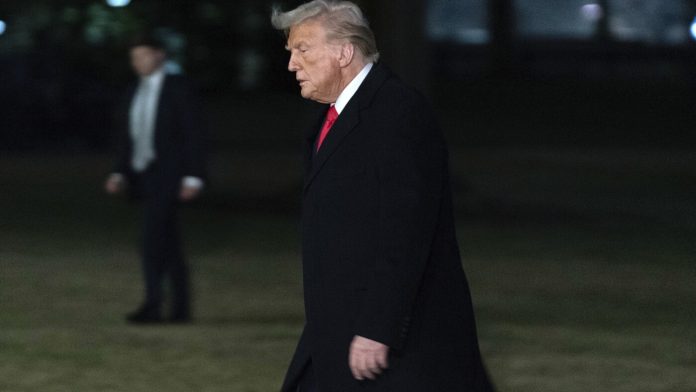
President Trump arrives back at the White House after visiting New Orleans to attend the Super Bowl. A federal judge on Monday found that the administration has not fully followed his order to unfreeze federal spending.

Jose Luis Magana/FR159526 AP


hide caption

toggle caption

Jose Luis Magana/FR159526 AP

A federal judge in Rhode Island has found that the Trump administration has continued to improperly freeze some federal funds, despite a temporary restraining order issued late last month blocking its efforts to pause payments for grants and other federal programs.

In a five-page order issued Monday, U.S. District Court Judge John McConnell, Jr. wrote that the administration, in several instances, has continued “to improperly freeze federal funds and refused to resume disbursement of appropriated federal funds.”

The Trump administration has said the freeze is necessary in order to review federal funding to make sure it aligns with the president’s agenda. But in his order, McConnell said the freeze was “likely unconstitutional and has caused and continues to cause irreparable harm to a vast portion of this country.”

Monday’s order came in response to a lawsuit brought by attorneys general in 22 states and the District of Columbia. In his decision, McConnell ordered the administration to “immediately restore frozen funding” and “immediately end any federal funding pause” that affects the challengers.

The case is one of two lawsuits filed against the administration in response to the attempted funding pause, originally detailed in a memo by the Office of Management and Budget in late January.

In addition to the order in Rhode Island, a federal judge in Washington, D.C. has also issued a temporary restraining order against the administration — blocking the memo from taking effect and barring the administration from carrying it out “under a different name.”