Friday, November 13, 2026
Home Blog Page 242

UnitedHealthcare CEO murder suspect Luigi Mangione accepts $300k in donations

0

Join Fox News for access to this content

Plus special access to select articles and other premium content with your account – free of charge.

By entering your email and pushing continue, you are agreeing to Fox News’ Terms of Use and Privacy Policy, which includes our Notice of Financial Incentive.

Please enter a valid email address.

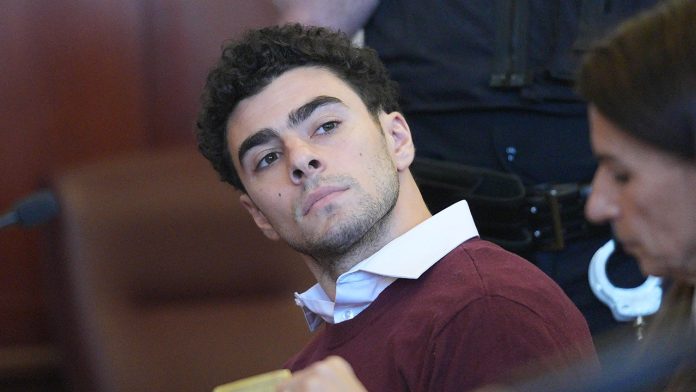
Luigi Mangione, the suspect accused of killing UnitedHealthcare CEO Brian Thompson in Manhattan on Dec. 4, 2024, has accepted nearly $300,000 in donations for his criminal defense.

Mangione is charged with first-degree murder in furtherance of an act of terrorism, stalking and a slew of other state and federal charges in both New York and Pennsylvania, for allegedly gunning down Thompson, a married father of two from Minnesota.

“Luigi is aware of the fund and very much appreciates the outpouring of support. My client plans on utilizing it to fight all three of the unprecedented cases against him,” Karen Friedman Agnifilo, Mangione’s lead defense attorney, said in a Monday statement, according to the December 4 Legal Committee, which created the fund.

The fundraiser garnered more than $290,000 from more than 10,000 individual donations, according to a press release.

LUIGI MANGIONE’S TERROR CASE: WAS THE SUSPECTED UNITEDHEALTHCARE CEO ASSASSIN ‘OVERCHARGED’? 

Luigi Mangione departs the courtroom following his arraignment in New York City Criminal Court on Monday, Dec. 23, 2024. (Rashid Umar Abbasi for Fox News Digital)

“It’s shocking that anybody would raise money for a person [accused of killing] someone in broad daylight in cold blood. There are so many other causes in this country that a person could raise money for,” former Washington, D.C., homicide detective, criminal trial attorney and Fox News contributor Ted Williams told Fox News Digital. “Mangione, by the way, came from a very well-off family…raising money for him is like applauding murder.”

“There are so many other causes in this country that a person could raise money for.”

— Ted Williams

Williams questioned the “mental stability” of anyone who would raise money for a murder suspect, calling the act “sick.”

SUSPECTED UNITEDHEALTHCARE ASSASSIN LUIGI MANGIONE’S PLAN TO ‘WACK’ CEO REVEALED IN JOURNAL ENTRIES: AFFIDAVIT

UnitedHealthcare CEO Brian Thompson and the alleged killer

UnitedHealthcare CEO Brian Thompson was shot and killed in midtown Manhattan on Dec. 4, 2024. (Businesswire | NYPD Crimestoppers)

“I find it sad in America where we can witness one man murdering another man and amplify the murderer. It is appalling to me that anybody would raise even a dollar for a person who killed another person in cold blood,” Williams said. “Yes, a person is innocent until proven guilty beyond a reasonable doubt. However, given everything we know about Luigi…all the evidence points directly to him. I am just shocked that because of a person’s status, i.e. being a health care executive, that anybody in America could be cheering the death of a human being.”

The December 4 [D4] Legal Committee describes itself as “a team of 15 volunteers around the United States” that was “created independently by Mangione’s supporters on his behalf.” The D4 committee’s spokespeople, Sam Beard and Jamie Peck, also host a podcast “about communism and gossip” called “Party Girls.”

UNITEDHEALTHCARE CEO MURDER SUSPECT LUIGI MANGIONE FACING NEW CHARGES IN NEW YORK

Luigi Mangione is escorted by NYPD into a van after being extradited from Pennsylvania for the murder of United Healthcare CEO, Brian Thompson.

Luigi Mangione is escorted from an NYPD helicopter in New York City, NY, Thursday, Dec. 19, 2024. (Rashid Umar Abbasi for Fox News Digital)

“We’re thrilled that Luigi is accepting these funds so that he can mount the strongest defense possible,” Beard said in a statement. “The American private health insurance industry has ruined countless lives by denying people access to basic care and burying families in medical debt. It’s no surprise that Luigi’s alleged actions are understood and supported by tens of millions of hard-working Americans.”

Mangione allegedly shot Thompson outside the Manhattan hotel where UnitedHealthcare’s annual shareholder conference was being held, in an act prosecutors believe was meant to send a message to the health care insurance industry. 

UNITEDHEALTHCARE CEO BRIAN THOMPSON’S ASSASSINATION: A TIMELINE OF EVENTS

Luigi Mangione is escorted by NYPD into a van after being extradited from Pennsylvania for the murder of United Healthcare CEO, Brian Thompson.

Luigi Mangione is escorted from an NYPD helicopter in New York City, NY, Thursday, Dec. 19, 2024. He is charged in the murder of UnitedHealthcare CEO Brian Thompson. (Rashid Umar Abbasi for Fox News Digital)

Police found a manifesto on the suspect when he was arrested days later in Altoona, Pennsylvania, where he traveled by bus from New York after the alleged killing.

CLICK HERE TO GET THE FOX NEWS APP

“Luigi Mangione allegedly conducted the carefully premeditated and targeted execution of Brian Thompson to incite national debates,” James Dennehy, assistant director in charge of the FBI’s New York field office, said in a statement after Mangione’s extradition to New York. “This alleged plot demonstrates a cavalier attitude towards humanity — deeming murder an appropriate recourse to satiate personal grievances.”

The 26-year-old Mangione is originally from Maryland and has recently lived in California and Hawaii. He graduated valedictorian from the Gilman School, a private, all-boys high school in Baltimore, in 2016. Mangione went on to receive his bachelor’s and master’s degrees in computer science from the University of Pennsylvania in 2020.

Famous Palestinian Bookshop in Jerusalem Reopens After Israeli Raid

0

new video loaded: Famous Palestinian Bookshop in Jerusalem Reopens After Israeli Raid

transcript

transcript

Famous Palestinian Bookshop in Jerusalem Reopens After Israeli Raid

Murad Muna, a brother of one of the bookshop owners detained in an Israeli police raid on the famous Educational Bookshop store in Jerusalem, said he was surprised by the crowd that showed up in solidarity after he reopened the store.

“Is it usually this busy?” “No, today is over-busy.” “And why do you think that is?” “We were surprised from the solidarity of the people from all over the world and the local people.”

Recent episodes in News Clips: Middle East

California small plane crashes upside down, 2 occupants survive and refuse medical treatment

0

Two people walked away from a small plane crash in south central California after the aircraft landed upside down.

First responders were called to the scene Sunday morning on the south side of East Lerdo Highway in Shafter, California, near the Minton Field Airport, the Kern County Fire Department said on Facebook. 

The plane was located upside down “in the middle of a vegetable field with no smoke or fire visible,” the department said. 

“Firefighters quickly gathered tools and medical equipment and made their way to the wreckage. Arriving at the plane, they were relieved to find both occupants safely out of the aircraft and refusing any medical treatment,” the department’s post added.

ALASKA CREWS RECOVER REMAINS OF ALL 10 PLANE CRASH VICTIMS, AUTHORITIES SAY

Kern County Fire Department said they responded to the small plane crash at 11:17 a.m. on Feb. 9, 2025. (Kern County Fire Department/Facebook)

The scene was handed over to the Shafter Police Department after it was determined there were no additional passengers to assist and no immediate hazards.

The Federal Aviation Administration is investigating the cause of the crash. 

FIGURE SKATING MOM STARTS SKATES OF HOPE TO HONOR DC PLANE CRASH VICTIMS

Small plane crash near Minter Field Airport in California

Two people inside the plane that landed upside down got out safely and refused medical treatment, the Kern County Fire Department said. (Kern County Fire Department/Facebook)

Several aviation incidents have occurred around the globe in recent weeks. 

Just days ago, a small plane crashed in São Paulo and claimed two lives. Last week, the remains of 10 people who were in a commuter plane that crashed off the coast of Alaska were recovered.

On Jan. 31, an ambulance plane transporting a young girl who had just received life-saving treatment crashed on a street near the Roosevelt Mall in Philadelphia, killing all six people on board and one person in a car while injuring others. 

Minter Field Airport map

Sunday’s small plane crash occurred near Minter Field Airport in California, fire officials said. (Google Maps)

CLICK HERE TO GET THE FOX NEWS APP

A midair collision on Jan. 29 in Washington, D.C., between an American Airlines plane and an Army Black Hawk helicopter claimed 67 lives. 

Fox News Digital’s Alexandra Koch and Landon Mion contributed to this report. 

Did Venezuelan President Nicolás Maduro Order a Murder in Chile?

0

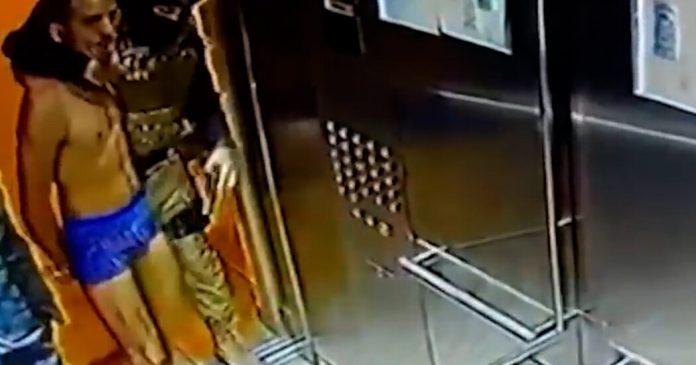
Shortly after 3 a.m., a battering ram burst open the door to a 14th-floor apartment and three men dressed in the black tactical gear of the Chilean police rushed in. Brandishing guns, they grabbed Ronald Ojeda in front of his wife and 6-year-old son and dragged him away in his underwear.

Mr. Ojeda, a 32-year-old former Venezuelan Army officer, was a political dissident living under asylum in a middle-class neighborhood of Chile’s capital, Santiago. He had tried to organize plots to topple Nicolás Maduro, Venezuela’s autocratic leader, and weeks earlier, Mr. Maduro’s government had publicly labeled him a traitor.

When his wife called the Chilean authorities, she told them that at least one of her husband’s captors had a Venezuelan accent.

Across town nine days later, the authorities, acting on a tip, discovered a carry-on suitcase buried under nearly five feet of concrete. Inside, packed amid quicklime to speed up the decomposition, was Mr. Ojeda’s folded body.

Now, after a year of investigation, Chilean authorities are confirming the fears of Venezuelan dissidents hiding out around the world: The evidence, the Chileans said, indicates that Mr. Maduro’s government ordered Mr. Ojeda’s assassination.

The Maduro government has vehemently denied that.

If true, the case represents a dark escalation in Mr. Maduro’s efforts to crush any threats to his authoritarian rule — and the accusations arrive just as President Trump opens a new dialogue with the autocrat in hopes of deporting undocumented Venezuelans.

For years, Mr. Maduro has maintained his grip on Venezuela by jailing political opponents at home. But the murder in Chile suggests the Venezuelan leader has also adopted the tactics of his close ally, President Vladimir V. Putin of Russia, to reach into foreign nations to assassinate political rivals.

“Everyone is terrified. No one says where they are, how they took refuge, what country they arrived in,” said Zair Mundaray, a former top Venezuelan prosecutor who recently fled exile in Colombia to a country he would not identify after facing threats from people he believes are Venezuelan agents. “Ojeda was a turning point for everyone.”

Chile has been holding hearings to charge 19 people whom the authorities said took part in some aspect of Mr. Ojeda’s murder, including planning the killing, carrying it out and hiding the body, according to court documents viewed by The New York Times. Chilean prosecutors said most of the 19 accused are members of the Chilean branch of Tren de Aragua, a Venezuelan crime group that Mr. Trump wants to designate a terrorist organization.

Carolina Tohá, Chile’s interior and public security minister, said in an interview that three people have testified that the Venezuelan government hired Tren de Aragua to assassinate Mr. Ojeda. One of those people said Mr. Maduro’s top deputy and interior minister, Diosdado Cabello, personally ordered the killing, she said.

She said investigators had eliminated two other hypotheses: extortion and gang infighting. As for the third hypothesis — a political assassination — she said: “It’s still not proven. But we can say that the probabilities are very worrying.”

The Maduro government, including Mr. Cabello, has repeatedly denied involvement in the killing. Mr. Cabello has joked that the Venezuelan government would not be capable of pulling off such a crime. Tarek William Saab, Venezuela’s attorney general, said the murder was actually “a false flag operation that the Chilean State itself covered up.”

Mr. Maduro’s spokesman declined to comment for this article, while Mr. Cabello’s spokesman also did not respond to a request for comment.

Chilean investigators believe Venezuelan counterintelligence agents have worked out of Venezuela’s embassy in Santiago, according to a senior official close to the investigation, who spoke on the condition of anonymity to discuss findings that had not yet been made public.

The accusations from Chile come as Mr. Trump has made overtures to Mr. Maduro. He dispatched Richard Grenell, a U.S. special envoy, to meet Mr. Maduro in Caracas, the capital, and he returned with six Americans who had been held in Venezuela.

The White House press secretary, Karoline Leavitt, said the meeting did not mean the United States recognized Mr. Maduro as the legitimate Venezuelan president. Instead, Mr. Grenell wants Mr. Maduro to agree to take back several hundred Tren de Aragua members detained in the United States and release U.S. citizens detained in Venezuela.

The United States pulled diplomats from Venezuela in 2019. Mr. Maduro’s government called the meeting “a new beginning in bilateral relations.”

Last week, the new U.S. border czar, Tom Holman, told The Times that deportation flights to Venezuela would begin within a month.

Many international observers — including Secretary of State Marco Rubio when he was a senator — have said sending Venezuelans back to Venezuela under Mr. Maduro would be a death sentence.

Mr. Maduro’s government has a long history of human rights abuses inside Venezuela. But the government has also been tracking down dissidents abroad for years, according to former Venezuelan officials, security experts and dissidents themselves.

To do so, Mr. Maduro has relied on a network of Venezuelan agents, criminal gangs and allied rebel groups to surveil, intimidate and, in some cases, kidnap dissidents outside Venezuela, according to the former officials and experts.

In 2021, members of a Colombian guerrilla group, the National Liberation Army, or ELN, kidnapped a former Venezuelan Army lieutenant, Franklin Caldera, who was hiding in Colombia after helping attack a Venezuelan military base, according to his father and the Inter-American Commission on Human Rights.

The ELN brought Mr. Caldera to Venezuela, where he was imprisoned and tortured. In November, the commission moved to protect more of his family outside Venezuela because of increasing threats.

In December 2023, Mr. Ojeda traveled to the Colombian border to plot a potential uprising against Mr. Maduro with other dissidents, according to a lawyer for Mr. Ojeda’s family. There, the ELN captured the dissidents’ effective leader — a former military officer named Anyelo Heredia — and brought him back to Venezuela, according to Mr. Mundaray and Pablo Parada, a dissident close to Mr. Heredia. Mr. Ojeda escaped.

A month later, the Venezuelan government published a list of 33 military members it said had turned on the nation. “Zero tolerance for traitors!” the document said. The names were taken from Mr. Heredia’s phone, Mr. Mundaray said, and many of those in Venezuela were imprisoned.

Mr. Ojeda was also on the list. Less than a month later, he was murdered.

Court documents show the planning of the murder among members of Tren de Aragua, one of Latin America’s most violent and notorious criminal organizations. Messages from confiscated phones showed that a Tren de Aragua boss told the gang’s leader in Chile that they would be paid a large sum to kidnap and kill Mr. Ojeda. That set off a flurry of activity — all laid out in a WhatsApp group — in which gang members obtained Chilean police uniforms, weapons and vehicles, according to the documents.

At 3:05 a.m. on Feb. 21, 2024, five men disguised as police officers arrived at Mr. Ojeda’s building in a Nissan Versa with police lights on top. One stayed in the car, one gave the doorman a false warrant and the other three kidnapped Mr. Ojeda.

Days later, in a poor neighborhood controlled by the gang, the police were tipped off when neighbors reported suspicious activity in a shack where men were seen wheeling cement in and dirt out. An autopsy concluded that Mr. Ojeda was killed by asphyxiation, according to the documents.

As evidence began to point to the Maduro government, the Chilean prosecutor leading the case said so on television. Venezuela responded angrily, denying involvement. Last month, Venezuela ordered Chile to close its consulates in Venezuela and said diplomatic ties had been suspended.

President Gabriel Boric of Chile said that if Venezuela is shown to have ordered Mr. Ojeda’s killing, “it is not only a violation of our sovereignty, it is a violation of human rights and it has the worst precedents, which we know in our history,” referring to Chile’s own murderous dictatorship.

Building surveillance footage showing the kidnapping spread across Chile and beyond. Ms. Tohá said the criminals could have destroyed the cameras but chose not to. “Mr. Ojeda could have been killed in a much simpler, much less conspicuous way,” she said. “There is a reason they chose this strategy of making it visible.”

Mr. Parada, the Venezuelan dissident in Colombia, said that days after authorities found Mr. Ojeda’s body, mysterious men showed up to a meeting of dissidents in Colombia and chased him through the streets. He spent a night in a sewage pipe to evade them. Now he is in hiding again.

“It’s not easy to know that they’re looking for you to kill you. It’s not easy to know that you can’t even return to your country,” Mr. Parada said. “It’s not easy to know that, at any moment, I could suffer the fate that Ronald suffered.”

Amazon’s Baby Sale: Save big on these strollers and car seats

0

Navigating the world with a new baby can feel like an expedition, where every outing requires meticulous planning and the right gear. You can transform those stressful moments into a fun adventure when you have the right car seat and stroller combo.

Amazon’s Baby Sale is here (now through the end of February) to make that dream a reality. With a curated selection of top-rated strollers and car seats now available at unbeatable prices, the sale offers the perfect opportunity to equip yourself and your baby with a comfortable place to nap or view the world.

These strollers, car seats and additional accessories are great options whether you’re planning a quick trip to the grocery store or a leisurely stroll in the park.

Prepare for your baby’s first year with essentials like strollers and car seats by adding them to your Amazon baby registry. You can find these selections on Amazon and have them delivered to your door in 24 hours if you’re an Amazon Prime member. You can join or start a 30-day free trial to shop.

Original price: $399.99

A lightweight, easy-to-store stroller. 

A lightweight, easy-to-store stroller.  (Amazon)

The UPPAbaby Minu V2 stroller is designed with travel in mind. It weighs just 17 lbs and folds in and out with a single, one-hand motion, making it ideal for cars, planes, trains and any other small storage spaces. The stroller also has a built-in zip-out canopy that’ll protect your baby even on the sunniest days.

23 FIRST-YEAR ESSENTIALS TO GRAB DURING AMAZON’S FEBRUARY BABY SALE

Original price: $469.99

Get a car seat and stroller in one. 

Get a car seat and stroller in one.  (Amazon )

Get an all-in-one stroller and car seat combo with the Britax Willow Brook travel system. The stroller is suitable for babies and toddlers up to 50 lbs. The car seat is reversible, so you can safely travel with your baby and take the car seat out quickly when needed.

Original price: $399.99

Take this stroller with you anywhere. 

Take this stroller with you anywhere.  (Amazon )

Need a stroller that does it all? The Evenflo Pivot Xplore stroller is an all-terrain model that’s great on pavement, the beach or even some trails. The stroller comes with a comfortable bassinet insert, ideal for helping your baby get to sleep and stay asleep. Plus, the UPF 50+ canopy expands from two to three panels to help protect against the sun.

Original price: $229.99

This stroller grows with your baby. 

This stroller grows with your baby.  (Amazon)

A compact, convertible baby stroller, the Mompush Wiz, is a great option for keeping your baby comfortable. The stroller grows with your baby. You can convert it into a bassinet in minutes or use it as a regular stroller that you can face towards yourself or face out towards the road. You also get a large storage area underneath, ideal for all-day outings.

Original price: $279.95

An affordable and lightweight stroller.

An affordable and lightweight stroller. (Amazon )

The gb Pockit+ all-terrain travel stroller is an affordable, lightweight stroller. It easily collapses while still being durable. The front swivel wheels make navigating busy streets and trails easy and the sun canopy helps protect your baby during sunny walks.

Original price: $229.99

This stroller and car seat combo is easy to lift. 

This stroller and car seat combo is easy to lift.  (Amazon )

The Baby Trend Passport Switch has six different modes of use, including an infant car seat that faces you or swivels to face forward, a bassinet that also faces you or forward and a toddler seat that faces two ways. It also has a built-in cell phone holder and a cup holder for added convenience.

Original price: $549.99

A car seat with fold-out wheels. 

A car seat with fold-out wheels.  (Amazon )

Get a car seat stroller combo when you choose the Shyft DualRide. It transitions from a car seat to a stroller in just one step. The wheels fold up when not in use, making it easy to carry the car seat when you need to. The car seat accommodates babies as small as three lbs and up to 35 lbs.

The Shyft DualRide also comes with a unique feature: SensorSafe alerts. When you connect to the Bluetooth app, you’ll be alerted to unsafe ambient temperature, unexpected chest clip unbuckling and when your child has been buckled too long.

Original price: $159.99

A rear-facing and front-facing car seat.

A rear-facing and front-facing car seat. (Amazon )

Your child won’t outgrow the Safety 1st Grow and Go car seat. It’s designed for newborns who need to be rear-facing and accomodates toddlers and bigger kids as well. The car seat is designed to be easy to use, and it has a QuickFit harness that makes it easy to adjust.

Original price: $349.99

Swivel this car seat 360 degrees as needed. 

Swivel this car seat 360 degrees as needed.  (Amazon )

Looking for a car seat that’s finally easy to get your child in and out of? The Evenflo Revolve 360 car seat can be used with one hand and rotates 360 degrees. The seat offers rear-facing mode for children weighing from four to 50 lbs.

Original price: $118.99

Protect your baby from the sun with a car seat that has a sun shade. 

Protect your baby from the sun with a car seat that has a sun shade.  (Amazon )

The Baby Trend Cover Me car seat has four different modes, including front and rear-facing capabilities for newborns through big kids. It also has an adjustable canopy for in-car UV protection.

Original price: $15.99

Stay cool with a portable stroller fan. 

Stay cool with a portable stroller fan.  (Amazon )

On hot summer days, a mini portable fan that attaches to your baby’s stroller or car seat can help them stay cool. The fan wraps around the handle of the stroller and is battery-operated, so it’ll run for hours.

Original price: $24.99

Keep your baby entertained with this stroller and car seat attachment. 

Keep your baby entertained with this stroller and car seat attachment.  (Amazon )

For on-the-go entertainment, an Itzy Ritzy activity toy has everything you need to keep your baby entertained in their stroller or car seat. You can engage your baby’s senses with the soft moon toy, and the quilted rainbow toy adds fun visuals that encourage reaching.

KEEP YOUR KIDS ENTERTAINED ON LONG ROAD TRIPS WITH THESE 12 FINDS

Original price: $29.99

A handy stroller organizer gives you a place to store your phone, keys, drinks and more. 

A handy stroller organizer gives you a place to store your phone, keys, drinks and more.  (Amazon )

Stay organized on the go with the Momcozy stroller organizer. It has a spot for your cell phone, multiple pockets for all your essentials and two insulated cup holders to keep your drinks hot or cold.

For more Deals, visit www.foxnews.com/category/deals

Original price: $12.98

An affordable storage option to add to your stroller. 

An affordable storage option to add to your stroller.  (Amazon )

A set of stroller hooks provides a place to hang your bags, keys and other belongings without taking up a lot of space. The universal fit means you can attach the hooks to any stroller or car seat.

Trump Is Freezing Money for Clean Energy. Republican States Have the Most to Lose.

0

In less than three weeks, President Trump has thrown the U.S. clean energy industry into chaos, with much of the economic damage hitting Republican states and districts.

In a quest to eliminate any funding linked to climate change, the Trump administration has frozen federal grants for everything from battery factories to electric school buses and issued executive orders that have halted federal approvals for wind and solar projects.

Mr. Trump and Republicans in Congress are also working to repeal the 2022 Inflation Reduction Act, which is projected to pour hundreds of billions of dollars over the next decade into low-carbon energy technologies through tax credits, loans and grants.

So far, Republican-voting communities have benefited the most from that law. In the nearly three years since it was passed, private companies chasing the law’s tax breaks have announced plans to spend $165.8 billion to build factories that make solar panels, wind turbines, electric vehicles and more, according to new data from Atlas Public Policy, a research firm. Roughly 80 percent of those investments are in Republican congressional districts, where they are creating a once-in-a-generation manufacturing boom.

The Inflation Reduction Act, along with a separate 2021 bipartisan infrastructure law, also provided tens of billions of dollars in grants that have since been awarded by the federal government to private companies, states and nonprofit organizations. These are legally binding obligations that have allowed companies to make investments, sign leases and hire workers, with the expectation that they would be reimbursed by the government.

Two federal judges have ordered the Trump administration to end its freeze and release money from programs authorized by Congress, but there is evidence that several agencies are still blocking funding.

The uncertainty is delaying projects and halting investments in areas that voted for Mr. Trump. In Montana, a biofuels plant did not receive on time a $782 million payment it was owed, the first part of a $1.67 billion federal loan guarantee. In Georgia, $1 billion in projects to modernize the power grid are on hold. In Nevada, a half-dozen large solar projects on federal lands are caught in a permitting freeze.

The upheaval has put Republicans in the tricky position of defending a White House that deems money for clean energy a “waste of taxpayer dollars” while working behind the scenes to protect their towns from the loss of new manufacturing jobs.

“This is where we get a test of whether the Republican Party is a real political party serving its constituents, or a personality cult,” said Jason Walsh, executive director of the BlueGreen Alliance, a coalition of labor unions and environmental advocacy groups.

“I expect thousands of people to be laid off, I expect workers to be furloughed, and I expect construction projects to halt,” Mr. Walsh said.

The political turmoil could put planned manufacturing projects at risk, analysts said. Of the nearly $30 billion in clean technology factories that were scheduled to come online in 2025 — including manufacturing facilities for solar, wind, batteries and electric vehicles — more than half are now predicted to face delays or cancellations, according to a new report by BloombergNEF, a research firm.

That’s not solely because of Mr. Trump. Some factories were already struggling with weaker-than-expected demand for electric vehicles, rising costs or foreign competition.

But many manufacturers now face “significant political uncertainty” on top of that, as companies wonder whether the Trump administration will repeal or modify federal loans and tax incentives, said Antoine Vagneur-Jones, head of trade and supply chains at BloombergNEF.

“Bringing a lot of this manufacturing back to the United States would be tricky even in the best case,” Mr. Vagneur-Jones said. “You need massive amounts of political determination and policy clarity to pull this off. And when that’s lacking, things start to get very messy.”

At the Environmental Protection Agency, programs funded through the Inflation Reduction Act remain paused despite the recent court orders, according to internal emails. That included grants to states for reducing air pollution at ports and schools, monitoring pollution levels in neighborhoods next to industrial facilities and installing solar panels in low-income communities. And at the Energy Department, employees said money for various grants and awards was still frozen.

The Interior Department has stopped permitting for solar and wind projects on public lands and waters for at least 60 days, saying it was conducting a review. At the Army Corps of Engineers, permitting for 168 renewable energy projects was paused last week. On Thursday that pause was lifted, but not for wind power projects, said Doug Garman, an agency spokesman.

The White House declined to comment. Neither the E.P.A. nor the Department of Energy responded to requests to explain why they halted legally binding contracts despite the judge’s order.

The uncertainty over whether Republicans might repeal major clean-energy incentives to pay for Mr. Trump’s tax cuts and immigration policies is also making investors nervous.

In the Midwest, a Canadian solar manufacturer called Heliene that has already built one factory in Minnesota has held off on deciding whether to build a larger solar cell factory in the region, citing the possibility that Congress might modify key manufacturing tax credits.

In the Northeast, offshore wind companies are pulling back plans for multibillion-dollar investments after Mr. Trump issued a sweeping executive order halting approvals for turbines in the ocean. On Monday, New Jersey abandoned plans to award new offshore wind contracts after Shell withdrew from the most promising project.

While many planned offshore wind farms would be in Democratic-led states like New York and Massachusetts, the projects themselves support a $25 billion supply chain that includes steel mills, shipbuilders and other manufacturers across 40 states, including Ohio, Louisiana and Texas, according to a report by the Oceanic Network, a nonprofit group that represents the offshore wind industry and its suppliers.

“When a big, multibillion dollar project doesn’t move forward, there are so many downstream investments that are affected,” said Stephanie Francoeur, a spokeswoman for Oceantic.

The freeze has put Democrats in the unusual position of insisting that money continue to flow to their political rivals.

“It is illegal and we’re not going to stand for it,” said Representative Kathy Castor, a Florida Democrat. “We’re going to fight back to make sure that these dollars get to where they are supposed to go.”

Democrats passed the Inflation Reduction Act on a party-line vote in order to fight climate change. But many of the economic benefits ended up flowing to Republican districts, which often have more available land, a skilled manufacturing work force and friendlier permitting processes. The Biden administration also strategically directed grant money to Republican states, hoping to make the law more durable.

Yet Republicans whose districts have projects that are now on the chopping block have refrained from publicly criticizing Mr. Trump’s actions.

“There might be some things in there that are worth saving,” said Representative Michael Rulli, Republican of Ohio, whose district has $415 million in private investment spurred by federal incentives, including a $230 million auto parts manufacturing facility in Dover that is expected to create 650 new jobs. “That’s going to take a little time to figure out.”

Some have supported Mr. Trump’s spending freeze. Representative Rick Allen, Republican of Georgia, represents a district that has received $1.6 billion in private investments since the law’s passage, with one company receiving a $670.6 million loan from the Energy Department for a new facility that makes equipment to reduce the risk of electrical-vehicle fires. Asked about the spending freeze, Mr. Allen claimed without evidence that the Biden administration had doled out money improperly.

“All we want to do is know where the money is going, how the grants were applied for and whether they were applied for lawfully,” Mr. Allen said. “Don’t you think when you apply for a grant it should be a lawful application?”

On Wednesday, more than 160 solar energy executives met with Republican and Democratic lawmakers to pitch them on the economic benefits of maintaining federal tax credits for solar projects as well as for the factories that produce them.

“We got a very receptive hearing on the Republican side,” said Abigail Hopper, the chief executive of the Solar Energy Industries Association, a trade group. “We talked about how electricity demand is growing and we need more energy for energy security and national security. And solar and storage is one of the fastest resources we can develop.”

Other companies hope to persuade the administration that their projects fit the theme of “energy dominance,” one of Mr. Trump’s goals.

Take KORE Power, a battery cell developer. During the Biden administration, the company won a conditional commitment for an $850-million loan from the Energy Department to build a factory in Arizona that could produce lithium-ion cells for batteries on the electric grid. Batteries can help store electricity for times when power demand spikes, sometimes reducing the need to burn natural gas.

But the loan wasn’t finalized before Mr. Trump took office, and this month the company canceled plans for the Arizona plant, citing rising construction costs.

Jay Bellows, the chief executive of KORE Power, said that the company would instead try to expand battery production elsewhere in the country at a lower cost by retooling older factories. The company hopes to finalize its loan with the Trump administration, though it will need to renegotiate the terms.

“Even if we’re shifting the mind-set away from renewables, we’re still going to need energy storage on the grid,” Mr. Bellows said. “And we’re a U.S. company with U.S. products, right? I think this falls perfectly in line with what this administration is looking to achieve.”

Behind the scenes, energy lobbyists said Republican lawmakers were aware of the damage that a halt in clean energy investments could do to their hometowns.

“We just met with more than a dozen key Republican offices, and I can tell you nobody wants to kill jobs,” said Bob Keefe, executive director of E2, a nonpartisan group of business leaders and investors. “They don’t want to have to go back and face constituents and tell them that the factory I just cut the ribbon on might not be coming. That’s going to put them in a hard place.”

Trump says he’ll put tariffs on aluminum and steel imports : NPR

0

President Trump boards Air Force One in Louisiana as he returns to Washington after attending Super Bowl LIX.

Roberto Schmidt/AFP via Getty Images


hide caption

toggle caption

Roberto Schmidt/AFP via Getty Images

President Trump told reporters he will issue a 25% tariff on aluminum and steel imports on Monday. He made the announcement on Sunday while flying on Air Force One to watch the Super Bowl in New Orleans.

Additionally, he plans to announce reciprocal tariffs on “everyone” on Tuesday or Wednesday: “If they charge us, we charge them. That’s all,” he said. “Every country will be reciprocal.”

It’s not clear if they’ll be implemented immediately or later. “Any steel coming into the United States is going to have a 25% tariff. Aluminum too,” Trump said.

He also said that no other country should have a majority stake in U.S. Steel, but he encouraged Nippon Steel to make a major “investment” in the company.

He confirmed he would be meeting with Saudi Arabia’s Prime Minister Mohammed bin Salman Al Saud and Egypt’s President Abdel Fattah El-Sisi.

He also said he plans to meet with Russian President Vladimir Putin “at the right time,” but declined to detail when and how often he has spoken to Putin already.

Trump meets Patrick Mahomes’ family in Super Bowl LIX suite amid prior support

0

Members of the Mahomes family were vocal about their support for President Donald Trump.

Amid becoming the first sitting president to attend a Super Bowl, he paid his fans a visit. The Mahomes family, sitting in a suite, was spotted taking a photo with the president while watching Patrick Mahomes on the field in his fifth Super Bowl contest.

CLICK HERE FOR MORE SPORTS COVERAGE ON FOXNEWS.COM

President Donald Trump waves to the fans during Super Bowl LIX between the Philadelphia Eagles and the Kansas City Chiefs on Feb. 9, 2025 at the Caesars Superdome in New Orleans. (Bob Kupbens/Icon Sportswire via Getty Images)

Mahomes’ mother, Randi, wore a red “Make America Great Again” hat with a Chiefs sweatshirt when K.C. hosted the Tampa Bay Buccaneers on the eve of the election.

“I think for a president of our country, of the United States, I think it’s amazing,” she told Fox News Digital in New Orleans this week. “I think whoever the president is, to support the teams, to support America’s best sport. … I think it’s really neat for a president to be able to support it. You know what, let’s do it.”

Randi Mahomes in MAGA hat

Randi Mahomes, the mother of Chiefs star Patrick Mahomes, wears a MAGA hat at game. (OutKick)

In his Super Bowl interview with Bret Baier, Trump also praised Patrick’s wife, Brittney, who first indicated her support for Trump on Aug. 13, when she liked Trump’s Instagram post that outlined the “2024 GOP platform.”

“She’s a Trump fan. She’s a MAGA fan, so I happened to love her, but she’s a great person,” Trump said in the interview.

Donald Trump and Brittany Mahomes

President Donald Trump praised Brittany Mahomes on Truth Social. (IMAGN)

TRUMP GREETS CHIEFS STAR ON FIELD AT SUPER BOWL LIX AFTER PICKING THEM TO WIN LOMBARDI TROPHY

Trump was also spotted shaking hands with Chiefs star pass rusher Chris Jones on the field ahead of the game.

However, there was no Trump magic to rub off on Kansas City, as they suffered a 40-22 loss to the Philadelphia Eagles.

The Chiefs, one of the best offenses in the NFL this season, and a team that has obvious history in this game over the past two years, had just 34 total yards of offense in the first half as the Eagles defense was thriving against the offensive line. 

Jalen Hurts and DeVonta Smith celebrate

Philadelphia Eagles quarterback Jalen Hurts, #1, celebrates with wide receiver DeVonta Smith, #6, after a touchdown by wide receiver A.J. Brown during the first half of the NFL Super Bowl LIX football game against the Kansas City Chiefs on Sunday, Feb. 9, 2025 in New Orleans. (AP Photo/Matt Slocum)

CLICK HERE TO GET THE FOX NEWS APP

Patrick Mahomes was never comfortable, and it showed as they punted their first three possessions. Mahomes threw two picks, one of which was taken to the house by rookie Cooper DeJean. The Eagles defense sacked Mahomes six times.

Fox News’ Scott Thompson contributed to this report.

Follow Fox News Digital’s sports coverage on X, and subscribe to the Fox News Sports Huddle newsletter.

Trump Calls Gaza a ‘Big Real Estate Site,’ Reiterating Plan for U.S. Takeover

0

President Trump again reiterated his proposal for the United States to take over Gaza, telling reporters on Air Force One on Sunday that the strip of land was “a big real estate site” that the United States was “going to own.”

He also mentioned building “some beautiful sites for the people, the Palestinians, to live in.” The location of such sites was not clear. Mr. Trump has repeatedly suggested that the two million Palestinians from the enclave be relocated.

Mr. Trump’s comments added even more confusion around the proposal, which he first announced last week at a news conference at the White House alongside Prime Minister Benjamin Netanyahu of Israel. The idea has drawn widespread international condemnation, with some critics likening it to ethnic cleansing. The forced deportation or transfer of a civilian population is a violation of international law and a war crime, according to experts.

Top officials in the Trump administration attempted to walk back the president’s comments on Wednesday, a day after he first announced the idea. They insisted President Trump had not committed to sending American troops to Gaza and that any relocation of Palestinians would be temporary.

On Sunday, as Mr. Trump was traveling to attend the Super Bowl in New Orleans, he raised the proposal again.

“Think of it as a big real estate site, and the United States is going to own it,” he said of Gaza, according to an audio recording from Air Force One that was shared with reporters.

“There won’t be anybody there,” Mr. Trump added. “Hamas won’t be there,” he said, referring to the militant group that led the assault on Israel on Oct. 7, 2023, that touched off the war in Gaza. “We’ll be building through other of the very rich countries in the Middle East; they’ll be building some beautiful sites for the people, the Palestinians, to live in,” he said.

Mr. Netanyahu, at a government meeting in Israel on Sunday, praised Mr. Trump’s vision for the region following the war. “There are opportunities for possibilities that I think we never dreamed of, or at least a few months ago they did not seem possible — but they are possible,” he said.

“President Trump came with a completely different vision,” for the future of Gaza, Mr. Netanyahu said, “much better for the State of Israel, a revolutionary and creative vision, which we are discussing. He is very determined to carry it out.”

When Mr. Trump introduced the proposal at the White House last week, his administration had not done even the most basic planning to examine the feasibility of the idea, according to people with knowledge of the discussions. It would involve displacing two million Palestinians from Gaza; Mr. Trump suggested they should be relocated to countries like Egypt and Jordan, both of which swiftly rejected the idea.

At that news conference, Mr. Trump said that the United States would take over the Gaza Strip, “and we will do a job with it too.” He said the U.S. would be responsible for disposing of unexploded munitions and rebuilding Gaza, ultimately turning it into what he called, “the Riviera of the Middle East.”

Hiba Yazbek and Ephrat Livni contributed reporting.

Republicans want to shrink Medicaid. Here’s what’s behind that : Shots

0

From left: U.S. Vice President JD Vance, Senator Tom Cotton, a Republican from Arkansas, Senator John Barrasso, a Republican from Wyoming, President Donald Trump, Senator Shelley Moore Capito, a Republican from West Virginia, and Senate Majority Leader John Thune, a Republican from South Dakota, speak to the media on Jan. 8, 2025.

Valerie Plesch/Bloomberg/Getty Images


hide caption

toggle caption

Valerie Plesch/Bloomberg/Getty Images

Congressional leaders are looking to make big reductions to federal spending to pay for President Trump’s priorities, and they’ve singled out Medicaid as a program where they could find significant savings.

Trump said last month that he would not make cuts to the country’s public health insurance program for low-income and disabled Americans. But the White House and Republicans in Congress are considering a menu of options that could add up to $2.3 trillion in potential cuts to Medicaid over the next decade.

Conservative Medicaid experts noted that some of the cuts would likely overlap, making it misleading to simply add them all up. Other experts said some of the proposals could reduce Medicaid spending even more than congressional leaders estimate, meaning they could still amount to more than $2 trillion in cuts — and could potentially push millions of people off the program.

Medicaid provides health insurance to 80 million low-income and disabled Americans and, in 2023, cost taxpayers $870 billion in 2023.

Many conservatives and libertarians have long believed that a smaller Medicaid program that covers fewer people would be a better Medicaid program.

“Medicaid is not working for Americans,” said Robert F. Kennedy Jr. last week at his confirmation hearings to become Trump’s secretary of health and human services.

“We’re spending $900 billion and our people are getting sicker every single year,” he added later. (In other parts of the hearings, Kennedy showed minimal understanding of the basics of Medicaid.)

The health podcast Tradeoffs interviewed 13 experts who collectively have decades of experience working on Medicaid for conservative think tanks, Republican presidents, members of Congress or state Medicaid programs. They did not agree on everything, but a few themes emerged that illustrate why many Republicans want to shrink the program.

Questioning whether Medicaid makes people healthier

Some conservatives cite the highly regarded Oregon Medicaid Experiment that found Medicaid does little to improve people’s physical health.

“Every member of Congress should be asking questions on both sides of the aisle about, hey, we’re spending hundreds of billions of dollars [on Medicaid]. What are we getting for it?” said Josh Archambault, a senior fellow at the Cicero Institute.

Archambault and others place a lot of value on the Oregon experiment because it’s the only randomized study (the gold standard in research) of the impacts of Medicaid.

In 2008, Oregon used a lottery to expand its Medicaid program, which allowed researchers to compare outcomes after two years for people who received Medicaid and those who didn’t.

They found that people on Medicaid were more likely than those without health insurance to get preventive care and to report being in better health. Those on Medicaid were also less likely to be depressed or get hit with big medical bills. But the researchers turned up no differences between the two groups on three specific measures of physical health: cholesterol levels, blood pressure and keeping diabetes under control.

“I think that should raise some very big questions in our mind about the effectiveness of Medicaid,” Archambault said.

Many Medicaid experts — including several who served as state Medicaid directors under Republican governors — told Tradeoffs Medicaid is effective, pointing to the many studies that have found significant health benefits to the program, including saving lives. One study showed a 5% reduction in childhood mortality for kids on Medicaid, and another showed a 9% reduction in adult mortality over the first four years of Medicaid expansion after the Affordable Care Act.

“Medicaid can help people be healthier,” said Kevin Bagley, who ran Nebraska’s Medicaid program from 2020 to 2023. “A lot of kids especially have better access to care and better health outcomes as a result [of being on Medicaid].”

‘It’s almost free money’ for states

The most common concern conservative experts brought up was that states have a strong financial incentive to grow their Medicaid programs.

States and the federal government share program costs, with the federal government matching between 50 and 90 cents of every dollar states spend, depending on several factors including the wealth of the state.

Tom Scully, who ran the Centers for Medicare and Medicaid Services for President George W. Bush, said it’s too easy for states to draw down federal dollars.

“It’s almost free money for the states, and there’s no accountability for it,” he said.

Scully compared the dynamic to an allowance: If you give your kid $20 a week, they’re going to be more thoughtful about spending it than if you give them your credit card.

In particular, Scully and other conservatives take issue with what’s known as a provider tax which allows states to raise revenue from hospitals and nursing homes for their programs.

Under this provision, for example, if a state wants to increase Medicaid spending by $1 million, it could assess a $500,000 tax on hospitals, and then spend that money on Medicaid services. The federal government would, in response, cut a $500,000 check to match.

Critics like Scully deride provider taxes as “money laundering” because states often return those provider tax dollars to the hospitals in the form of higher reimbursement rates. As a result, hospitals break even or better, and the states, like the kid with the credit card, have more money and can spend it with less fiscal responsibility.

These arrangements are legal, and many experts note they are particularly useful to states during tough economic times when other state funds dry up; losing the provider tax would require states to find other ways to fund their programs or shrink them.

Some Medicaid recipients could get health insurance elsewhere

Several conservative Medicaid experts shared the belief that some people on Medicaid could afford private insurance.

“Medicaid is forcing taxpayers to pay for things that people could provide for themselves,” said Cannon, from the libertarian Cato Institute.

Health economists generally agree that some people on Medicaid could get coverage through their employer or via the Obamacare exchanges, but how many is less clear. Some studies suggest that it could be as many as several million people.

Some experts worry that efforts to remove people with other coverage options from the program would inevitably lead to many people without other insurance choices also losing coverage and ending up uninsured.

Most conservative reforms would cut federal Medicaid funding 

Republicans have floated numerous proposals to reform Medicaid. While they have yet to release any detailed proposals, they almost all pursue the same goal.

“Ultimately, you have to cap the amount of federal funding that states are able to get,” said Chris Pope, a senior fellow at the conservative Manhattan Institute.

One option would be for Washington to pay states less to cover the 21 million people added to Medicaid under Obamacare. The federal government currently picks up 90% of the costs to cover low-income adults who make up to $45,000 in a family of four.

A proposal by the conservative Paragon Health Institute would gradually reduce the federal government’s share over the next decade to the rate Washington pays for traditional Medicaid enrollees — between 50% and 77%, depending on each state’s per capita income. Paragon estimates the move would save the federal government $250 billion over the next decade, though it would increase the uninsured population by 3 million people.

The nonpartisan Congressional Budget Office estimated that a similar proposal would save the federal government $561 billion over 10 years; the CBO assumes some states would choose to “un-expand” their Medicaid programs, potentially kicking millions of people out of the program. At least nine states have so-called trigger laws that would quickly end their expansions if the federal contribution to Medicaid funding was reduced, though the states could change those laws.

A few other ideas conservatives mentioned to Tradeoffs: requiring some people to work to receive Medicaid, limiting or banning provider taxes, setting a cap on how much the federal government would send states for each person enrolled in Medicaid, or giving a state a lump sum of federal dollars each year for its entire Medicaid program, known as a block grant. The CBO estimates these proposals would cut hundreds of billions from the federal budget over the next 10 years and cause states to reduce enrollment and the services provided to patients, and shrink payments to providers.

Cutting Medicaid spending comes with tradeoffs

Many conservatives agree that shrinking federal spending on Medicaid will have two major benefits. One is cost savings — less Medicaid spending could free up cash to spend on other priorities like schools, public safety or curbing the national debt.

Liz Matney, who ran Iowa’s Medicaid program from 2021 to 2024, also argues that sending states less money would encourage them to narrow their focus to the original Medicaid population.

“Medicaid’s original purpose was to provide medical services to individuals with disabilities and low-income families,” Matney said. “It’s a challenge for states to focus on making solid improvements in these areas when their focus is continuously shifted to shinier priorities.”

Many studies show expanding Medicaid has improved access to care for low-income people. But some conservatives point to a handful of papers showing people on Medicaid had to wait longer to get appointments, ambulances took longer to respond to medical emergencies, and spending on kids and seniors grew more slowly than in non-expansion states.

Several former state Medicaid directors from Republican-led states said they would welcome the increased flexibility to run their programs as they see fit — a flexibility that is often a part of proposals that would reduce federal Medicaid spending. But several are also concerned about the potential health and financial consequences to patients if Washington imposes severe cuts and millions of people lose their Medicaid coverage.

Barbara Roshon Sears, who ran Ohio’s Medicaid program from 2016 to 2018, said state Medicaid programs and hospitals are incredibly reliant on federal funding. She said she worries especially about older Americans, who rely on Medicaid to pay for things Medicare doesn’t like nursing home care, and people with disabilities. These two groups account for most of Medicaid spending.

“Those are the populations that get hit if I run out of [federal] dollars,” Sears said.

Brian Blase, a former top health policy advisor to President Trump and current president of the Paragon Health Institute, said he believes most coverage losses from the Republican proposals would hit low-income adults who were added to the program by the Obamacare expansion. He sees few downsides to this group losing Medicaid.

Blase believes some would find coverage through their work or via the Obamacare exchanges. For those who would end up uninsured, he refers back to the Oregon experiment and questions how much of a difference it would make to people’s physical health. Any state worried about people losing Medicaid, Blase said, can keep people enrolled by using state funds.

“States will have to make decisions. States will have to engage in tradeoffs,” he said. “We want states to have programs that provide value.”

Can Republicans get any of these cuts passed? 

Even many Republicans eager to cut Medicaid believe it will be difficult to make sizable changes to the program in 2025, despite full control of Congress and the White House.

Democrats are expected to oppose any Medicaid reductions, and hospitals have historically done the same because Medicaid payments make up one-fifth of hospital revenue in the U.S. Some congressional Republicans are already pushing back.

“It’s very easy to propose these fixes. It is very hard to get them passed,” said Tom Scully, whose efforts to reform Medicaid date back 35 years.

Case in point, Republicans failed to pass similar Medicaid fixes during President Trump’s first administration, the last time the party had full control in Washington.

The Trump administration, on its own, could encourage states to add work requirements or turn their federal subsidies into block grants. Any executive action, however, would have far less impact than if Congress passed changes to the fundamental shape of the program.

“Something should have been done to fix this 40 years ago. And 30 years ago and 20 years ago and 10 years ago,” Scully said. “But it’s never happened because the local and state politics are too brutal, and it’s too complicated — people back off and surrender.”

Ryan Levi is a reporter and producer for Tradeoffs, a nonprofit news organization that reports on health care’s toughest choices. You can also sign up for Tradeoffs’ weekly newsletter to get the latest stories in your inbox each Thursday morning.