Friday, November 13, 2026
Home Blog Page 246

A Sweeping Ban on D.E.I. Language Roils the Sciences

0

The National Academies of Sciences, Engineering and Medicine is an independent, 162-year-old nongovernmental agency tasked with investigating and reporting on a wide range of subjects. In recent years, diversity, equity and inclusion — collectively known as D.E.I. — have been central to its agenda.

But the Academies’ priorities changed abruptly on Jan. 31. Shortly after receiving a “stop work” order from the Trump administration, the institute closed its Office of Diversity and Inclusion, removed prominent links to its work on D.E.I. from its website’s homepage and paused projects on related themes.

Now the website highlights the Academies’ interest in artificial intelligence and “our work to build a robust economy.”

The quick about-face reflects the widespread impact that President Trump’s executive order on D.E.I. is having on scientific institutions across the nation, both governmental and private. The crackdown is altering scientific exploration and research agendas across a broad swath of fields.

NASA cut requirements for inclusivity from several of its programs. The National Institutes of Health removed the application for its new Environmental Justice Scholars Program. National laboratories under the Department of Energy took down web pages that had expressed a commitment to diversity, while the department suspended its promotion of inclusive and equitable research.

None of these federal agencies responded to requests for comment.

Many organizations initiated D.E.I. programs as a way to correct historical underrepresentation in the sciences. According to one report, in 2021, just 35 percent of STEM employees were women, 9 percent were Black and less than 1 percent were Indigenous.

“If we want to be the best country for the world in terms of science, we need to leverage our entire population to do so,” said Julie Posselt, an associate dean at the University of Southern California. D.E.I. programs, she added, “have ensured that the diverse population we have can make its way into the scientific work force.”

One NASA program affected is FarmFlux, a research initiative on agricultural emissions that redacted plans to recruit from “diverse student groups” for its team. Mentions of another, called Here to Observe, which partners with smaller academic institutions to expose historically underrepresented students to planetary science, have been removed from the space agency’s website.

Peter Eley, a dean at Alabama Agricultural and Mechanical University who, in 2023, worked as a liaison for minority-serving institutions in NASA’s Office of STEM, noted that such programs often support students from lower-income rural communities, regardless of their racial background.

Many of these students “don’t know what’s out there,” Dr. Eley said. “They don’t have the opportunity to see what is possible.”

At the National Science Foundation, or N.S.F., an agencywide review of current awards supporting D.E.I. initiatives is underway. Part of the agency’s grant criteria includes “broader impacts,” defined as the potential to benefit society. That encompasses, but is not limited to, efforts to broaden participation of underrepresented groups in science.

According to a program director at the foundation, who asked not to be named for fear of retaliation, a software algorithm flagged grants that included words and phrases often associated with D.E.I., including “activism” and “equal opportunity.” Other words it searched for were more nebulous — “institutional,” “underappreciated” and “women” — or can mean something else in scientific research, like “bias” and “polarization.”

N.S.F. officials were instructed to manually review grants flagged by the algorithm. Some staff members, including the N.S.F. program director, made a point of removing the flag from most awards. “I’ll probably get in trouble for doing that,” she said. “But I’m not in the business of McCarthyism.”

The N.S.F. did not answer questions sent by The New York Times regarding its ongoing review of awards. Scientists funded by the agency whose research has D.E.I. components said that they had not received enough information about how to comply with the executive order.

“Do you drop what you’re supposed to do as part of your N.S.F. proposal, or do you risk being noncompliant with this very vague guidance?” asked Adrian Fraser, a physicist at the University of Colorado Boulder.

Diana Macias, an N.S.F.-funded forest ecologist at the University of California, Berkeley, worried that her involvement in recruiting people from tribal communities to manage the local environment would end. Threats to the forest “require a broad coalition of people” to mitigate, she said, adding that the executive order would have ramifications on the landscape.

Several scientists expressed concern that organizations within the federal sphere seem to be overcomplying, prompting confusion and resentment.

“They’re obeying in advance, they’re going beyond what the executive order says,” said Christine Nattrass, a physicist at the University of Tennessee, Knoxville, who conducts research at Brookhaven National Laboratory and emphasized that she was not speaking on behalf of her institutions.

According to Dr. Nattrass, internal documents at the lab are being scrubbed of references related to D.E.I. efforts. At least one code of conduct, which outlines expected professional behavior within research collaborations — such as treating others with respect and being mindful of cultural differences — has been taken down.

The community of people involved with the Vera C. Rubin Observatory — a worldwide group that includes independent scientists, data managers and other workers — noticed last week that private Slack channels set up for L.G.B.T.Q. members were quietly being retired. At Fermi National Accelerator Laboratory in Illinois, researchers noticed that a prominent rainbow Pride flag had been removed from inside the lab’s main building. Scientists at all three federal facilities were left uncertain whether the executive order actually extended to internal documents, internal communication channels or flags.

“It was devastating,” said Samantha Abbott, a physics graduate student who conducts research at Fermilab. To Ms. Abbott, who is transgender, the flag represented years’ worth of advocacy efforts at the lab. “And it’s just all gone in a matter of days.”

Neither the observatory nor the labs responded to requests for comment.

That sense of compliance appeared to extend beyond federal institutions. Two decades ago, the National Academies of Sciences, Engineering and Medicine, or NASEM, helped to highlight the issue of racial disparities in health care, with a landmark report recommending that minorities be better represented in health professions. More recently, NASEM participated in an ambitious effort to root out the use of race in clinical algorithms that guide medical treatment.

The quick retreat this week from a core mission stunned many NASEM employees. “D.E.I. has been at the center of what the institution has focused on for the last decade,” said one staff member, who asked not to be identified for fear of retribution. “It shows up in everything we do.”

The Academies are privately operated, but they receive a majority of their support from government contracts. Fifty-eight percent of their program expenditures came from federal government contracts last year, according to Dana Korsen, a spokesperson for the institute.

The independent Howard Hughes Medical Institute, one of the largest basic biomedical research philanthropies in the world, recently canceled a $60 million program called Inclusive Excellence that aimed to boost inclusivity in STEM education.

A spokeswoman for the institute, Alyssa Tomlinson, said the institute “remains committed to supporting outstanding scientists and talented students training to become scientists” through other programs. Ms. Tomlinson declined to explain why the institution had cut off the funding.

Scientists abroad also worried about the D.E.I. rollbacks. One American working in Canada was concerned how his grant applications, which describe research that will be conducted on U.S. soil, would be received by Canadian funding agencies in light of the federal changes.

“With tariff threats, America first and no more D.E.I., there’s a lot less incentive for the Canadian feds to fund anything in the U.S.,” said the scientist, who asked not to be identified. “And then there goes 95 percent of my research program.”

Johan Bonilla Castro, a nonbinary Latinx physicist at Northeastern University who emphasized that they were not speaking for their employer, has decided to continue their D.E.I. initiatives, which involve promoting particle physics research in Costa Rica. They also have chosen to continue writing about their racial and gender identity in grant proposals, even if it ultimately results in being denied funding.

“I will continue to say it and have it rejected,” Dr. Bonilla Castro said. “I can sterilize my research, sure. But that impacts my dignity.”
Bass reneges Los Angeles wildfire czar’s $500K paycheck after criticism

0

Los Angeles Mayor Karen Bass backtracked on Saturday amid reports that her wildfire recovery czar, Steve Soboroff, would be compensated $500,000 for 90 days of work. 

The Los Angeles Times first reported Saturday morning that Soboroff, a real estate developer and longtime civic official, would be paid $500,000 over the course of three months for working as the city’s “chief recovery officer.” 

His compensation was to come from charity organizations, but Bass, who first tapped Soboroff for the job on Jan. 17, quickly reversed course by Saturday evening. She said Soboroff would now manage the rebuilding of the city free of charge. 

“Steve is always there for LA. I spoke to him today and asked him to modify his agreement and work for free. He said yes,” Bass said, according to the Times. “We agree that we don’t need anything distracting from the recovery work we’re doing.”

LOS ANGELES FIRE VICTIMS TO BE BOOTED FROM RED CROSS SHELTER TO MAKE SPACE FOR FILM CREWS, EVENTS

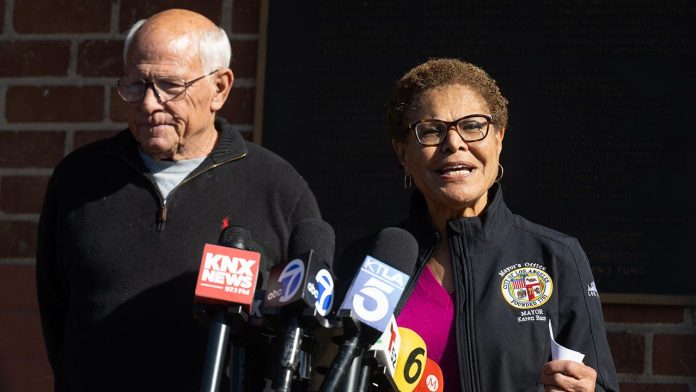
Mayor Karen Bass and Steve Soboroff discuss recovery efforts during a press conference in Pacific Palisades on Jan. 27, 2025. (Drew A. Kelley/MediaNews Group/Long Beach Press-Telegram via Getty Images)

Another person, longtime real estate executive Randy Johnson, was to be compensated $250,000 from philanthropic groups for assisting Soboroff, but he too would now do the job for free, Bass said. 

On Johnson, Bass said she was “grateful for his generosity and expertise,” but the mayor’s office declined to name the charity organizations or clarify how the funding was raised, according to the Times. 

Los Angeles City Councilwoman Monica Rodriguez, a member of the five-person committee tasked with recovery, told the Times it was “infuriating” that philanthropic groups would pay two people $750,000, calling the amount “obscene.” 

“He’s getting paid $500,000 for 3 months of work?” President Donald Trump’s envoy for special missions, Ric Grenell, wrote on X of Soboroff. “And they call this a charity. Gross. Offensive.” 

Palisades fire with helicopter in sky

A helicopter drops water as the Palisades fire grows near the Mandeville Canyon neighborhood and Encino, California, on Jan. 11, 2025. (Patrick T. Fallon/AFP via Getty Images)

Grenell, who was seated next to Trump during a round table discussion in the Pacific Palisades last month, added: “I’m getting paid $0 – as are many people. It’s a good thing there will be strings on the Federal money for California.” 

Larry Vein, a Pacific Palisades resident whose home suffered smoke damage, condemned Soboroff’s reported $500,000 compensation, saying no one should handle recovery efforts for “financial gain.” 

SEN. SCHIFF URGES TRUMP ADMIN TO EXCLUDE FIREFIGHTERS FROM FEDERAL HIRING FREEZE

Steve Danton, who resides in a temporary apartment in Marina del Rey after his home was destroyed in the Palisades Fire, said Soboroff’s compensation is a “money grab,” adding that the city is experiencing a “crisis of leadership.” 

Soboroff, who previously served in volunteer roles on the Board of Police Commissioners and on the commission that oversees the Department of Recreation and Parks, defended the $500,000 amount to the Times earlier Saturday.

Charred homes in Pacific Palisades

Charred homes and burnt cars in the fire-ravaged Pacific Palisades Bowl Mobile Estates in Los Angeles on Jan. 13, 2025. (Agustin Paullier/AFP via Getty Images)

He said he has specialized expertise, is taking on sweeping responsibilities, including communicating with federal agencies, and is giving up other real estate and environmental consulting work to become the wildfire recovery czar. 

“I’ve been doing this for 35 years for free on some of the biggest civic projects for the city of Los Angeles. But nobody ever asked me to drop everything. This time they did,” Soboroff told the Times. “And I said OK, under the condition that my pay not be taken out of city money, or from any wildfire survivors who would otherwise benefit from that money.”

Soboroff said he has taken questions from “thousands of residents,” made recommendations on the city permitting process and advised the mayor to hire an outside project manager to lead city agencies in replacing damaged infrastructure. 

CLICK HERE TO GET THE FOX NEWS APP

“At the end of the day, I’m doing the stuff that all these other people are just studying,” he said. “I’m implementing to help people reach their goals of getting back in their houses and getting their jobs back.”

Angela Merkel Is Retired. But She’s Still on the Ballot.

0

A chorus of criticism greeted Friedrich Merz, the favorite to become Germany’s chancellor, last month when he broke a taboo against working with a hard-right party to pass legislation. But it was a lone voice of dissent that rocked the country’s political scene: Angela Merkel, the once-beloved former chancellor, who called Mr. Merz’s decision simply “wrong.”

Ms. Merkel and Mr. Merz have famously jockeyed to lead Germany’s Christian Democrats for much of this century. Ms. Merkel won the early rounds, served 16 years as chancellor, and retired in 2021. Mr. Merz finally has a chance to win her old job in elections this month.

But Ms. Merkel is complicating his efforts — both with her open critiques and, more important, with a policy legacy that German voters have soured on.

The German election is animated by concerns over a stagnant economy, a decade-long surge of immigration, high energy prices and tenuous national security, with Russia waging war to the east and President Trump threatening to upend NATO from the West. The problems have led to a reconsideration of Ms. Merkel and how she steered Germany.

It was Ms. Merkel who kept Germany’s borders open starting in 2015, allowing what became millions of refugees from Syria, Afghanistan and elsewhere to settle. That move has spurred a backlash among German voters. Many political leaders blame it for the rise of the hard-right party Alternative for Germany, or AfD, which has campaigned relentlessly on deporting certain immigrants and sits second behind the Christian Democrats in national polls.

It was Ms. Merkel who agreed to shut down the country’s nuclear power plants and increase Germany’s reliance on imported natural gas from Russia, helping to create an electricity price spike and a security crisis years later, after Moscow decided to turn off the taps following its full-scale invasion of Ukraine in 2022.

And it was Ms. Merkel who, economists say, underinvested in revitalizing Germany’s critical infrastructure, contributing to what German business leaders often call a competitiveness crisis. She also pushed for deepened trade with China and the rest of the world. That bet on a globalized business model that has gone bad in a new age of populist protectionism by countries like the United States and increased competition from low-cost Chinese imports for Germany manufacturers.

In the waning weeks of the campaign, Ms. Merkel is taking criticism from all sides of the contest. Her memoir did not make the splash many analysts expected when it was released last fall. A poll released last week by the Bild news organization, conducted by the research agency INSA, found 43 percent of Germans now say Ms. Merkel’s policies were bad for the country, compared with 31 percent who say they were good.

In many ways, Ms. Merkel finds herself in a similar historical position to that of President Bill Clinton in America. She was once the most popular leader of her generation, on the strength of overseeing an economic boom. Now, like Mr. Clinton, who has seen public opinion turn strongly against his moves to sign NAFTA and throw open trade with China, she finds her legacy under attack.

She is responding with few regrets, and, with the election looming, by criticizing Mr. Merz.

That criticism has drawn a backlash, and a renewed focus on Ms. Merkel, even though she is not running for a parliamentary seat this month.

“Merkel’s book and her recent public statement are, unfortunately, more about insisting on being right than about providing working solutions to people’s current problems,” said Nico Lange, a former chief of staff to one of Ms. Merkel’s defense ministers. Her actions, he added, were “therefore perceived negatively, even by most of her former supporters.”

No single policy action is driving German voters in this election more than Ms. Merkel’s refugee decision in 2015.

At the time, Ms. Merkel praised the German public for embracing downtrodden migrants, even those who did not qualify for official refugee status. But German society has been strained by a decade-long influx of migrants who arrived with little or no German language knowledge, and who have often received significant social assistance.

A series of seemingly unrelated deadly attacks, carried out by immigrants in Germany cities over the last year, has vaulted migration to the top of voter concerns along with the economy.

Analysts roundly agree that attention has helped the AfD, parts of which have been classified as extremist by German intelligence.

Mr. Merz was attempting to address voters’ migration concerns when he pushed a package of tough-on-migration measures in Parliament late last month, breaking a postwar consensus against working to pass laws with parties deemed extreme.

Ms. Merkel’s decision to allow refugees to flow freely into the country “was just a big shock to Germany that we’re still grappling with, that explains some of the politics today,” said Cornelia Woll, a political scientist who is the president of the Hertie School, a private university in Berlin. “I think it’s fair to say, did we bite off more than we could chew?”

Economic research has generally found immigrants boosted the size of Germany’s economy over the past decade, by working and by spending money. By some measures, the nation has been more successful than many of its peers in helping immigrants integrate and learn the local language.

A report last year from the Organization for Economic Cooperation and Development found that the employment rate for immigrants in Germany hit 70 percent in 2022, a record and much higher than most other European Union countries.

Still, polls have shown rising voter unease with migration and crimes committed by immigrants. Politicians, including a wide range of chancellor candidates in this election, have increasingly responded by denouncing Ms. Merkel’s policies of welcome.

Alice Weidel, the chancellor candidate for the AfD, repeatedly raised and disparaged Ms. Merkel last month in an interview with the billionaire Elon Musk on his social media platform X.

Christian Lindner, the chancellor candidate for the pro-business Free Democrats, said in an interview that some German parties “have still not recognized what the overriding interest of the people in this country is — namely, a break with Merkel’s policies.”

Even Mr. Merz has piled on. “We find ourselves left with the tatters of 10 years of misguided asylum and migration policy in this country,” he said last month, impugning both Chancellor Olaf Scholz and Ms. Merkel.

Mr. Merz and his Christian Democrats joined the AfD to pass a mostly symbolic migration measure late last month; a second vote, aiming to toughen the migration law, ultimately failed amid some defections by party members.

Mr. Merkel’s criticism of Mr. Merz came just before the final vote and further strained her relationship with the party they share. Ms. Merkel declined to take an honorary party position after her retirement, as is often customary, and rarely appears at party events.

It also contributed to an image of stubbornness that has defined Ms. Merkel’s time out of office.

“She really does not recognize her mistakes,” said Stefan Meister, the head of the Center for Order and Governance in Eastern Europe, Russia and Central Asia at the German Council on Foreign Relations. “I think this is, for me, really crucial.”

In her autobiography, “Freedom,” Ms. Merkel seemingly blamed her successors in Germany’s mainstream political parties for aiding the rise of the AfD, by tacking to the right on its signature issue.

“The democratic parties have considerable influence over how strong AfD can become in practice,” Ms. Merkel wrote. “I am convinced that, if they assume they can keep it down by appropriating its pet topics and even trying to outdo it in rhetoric without offering any real solutions to existing problems, they will fail.”

And while she conceded few major errors on policy issues, Ms. Merkel’s book contained some broad admissions of fallibility.

“I know that I am not perfect and make mistakes,” she wrote, about halfway through its nearly 700 pages.

Near the end, she added, “A chancellor should never have to apologize too often, but neither should they shy away from doing so when unavoidable, for fear that it could be interpreted as weakness.”

Melissa Eddy contributed reporting.

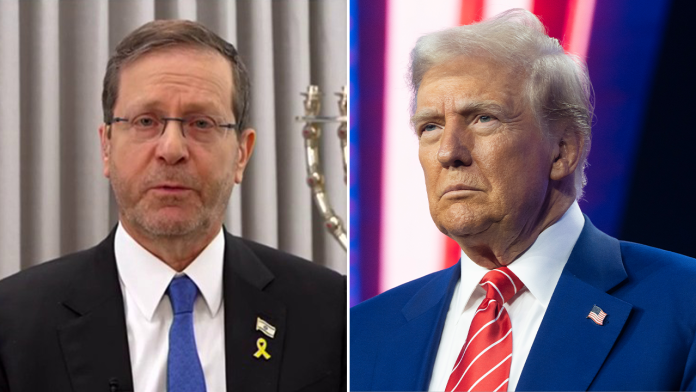
Israeli president praises Trump’s leadership, challenges neighboring leaders to present better ideas for Gaza

0

Israeli President Isaac Herzog issued a challenge to regional neighbors to propose a “better idea” regarding Gaza. His comments came during an interview on “Sunday Morning Futures” following President Donald Trump’s meeting with Prime Minister Benjamin Netanyahu. The Israeli leader praised Trump while also touching on Gaza’s future.

MARIA BARTIROMO: So, Mr. President, do you support President Trump’s idea that the U.S. will take over the Gaza Strip?

BENJAMIN NETANYAHU PRAISES TRUMP’S ‘REMARKABLE IDEA’ ABOUT A US TAKEOVER OF GAZA

ISAAC HERZOG: So President Trump made clear later on, also in his words and through his spokespeople, that he is not talking about taking over Gaza militarily and, of course, there’s a new timeline. President Trump is due to meet with major, major Arab leaders, first and foremost, the king of Jordan and the president of Egypt, and I think also the crown prince of Saudi Arabia as well, and so forth and so on. And, of course, in both Jordan and Egypt and the Abraham Accords, partners of ours, the accords that were brought about by President Trump in his first administration. They are partners that must be listened to, must be discussed with. We have to know their fields as well and see how we build a plan that is sustainable for the future. 

But the whole idea of making sure that Gaza changes ownership — that these terrorists, these thugs, these barbaric people — do not repeat the same old control, that they are creating such huge suffering for their own people… There has to be a future for the children of Gaza and the children of Israel and the children for the entire region, and only under the leadership of President Trump do we see now a new idea come forward. And I say to all our neighbors, you have any better idea? Please, present it.

CLICK HERE TO GET THE FOX NEWS APP

An American Teacher Went to Ukraine. Now He’s in a Russian Prison.

0

Stephen James Hubbard left America behind decades ago, first for Japan, then Cyprus and finally Ukraine. He didn’t like the government — any government, really.

He was a wanderer, growing up in a small town in Michigan and traveling the world before ending up alone in the eastern Ukrainian town of Izium when the Russians invaded on Feb. 24, 2022.

Now Mr. Hubbard, a retired English teacher who turns 73 on Thursday, has become an unlikely pawn in an international war. The Russians arrested him shortly after invading and accused him of fighting for Ukraine. They moved him to at least five different Russian detention centers before putting him on trial on a charge of being a mercenary.

In October, a Moscow court convicted him and sentenced him to almost seven years in a penal colony.

His case has remained mostly under the radar. But last month the State Department said Mr. Hubbard was “wrongfully detained” — elevating his case and indicating that the United States believes that the charges are fabricated.

A State Department spokesman said he never should have been taken captive or moved to a Russian prison.

Mr. Hubbard’s sister and three former Ukrainian prisoners of war held with Mr. Hubbard dispute that he fought for Ukraine. The former prisoners say they believe he will die if he is not freed. They say he endured the same torture they did: repeatedly beaten, terrorized by dogs, forced to stand all day, every day, even stripped naked for more than a month.

“They’d beat our ankles and force us into the splits, tearing ligaments in the process,” said Ihor Shyshko, 41, who said he shared a cell with Mr. Hubbard. “Many of the men were injured, some permanently. The conditions were beyond inhumane.

“The same thing happened to Stephen, but it was even worse for him because he’s an American,” added Mr. Shyshko, who was freed in a prisoner exchange last summer. “They stormed in, shouting in the hallway: ‘We know you’re an American. You’re dead here!’”

The United States has accused Russia of inflating and inventing criminal charges against Americans so they can be traded for Russians held elsewhere or used as international bargaining chips. After a major prisoner exchange in August, Mr. Hubbard is one of 13 Americans now known to be held in Russian prisons. Mr. Hubbard is the oldest. He is also the only American known to be imprisoned in Russia after being taken from Ukraine.

Only one other American now being held has been publicly designated as wrongfully detained in Russia.

Mr. Hubbard’s family has not been able to find his prison. The Russian judge removed his case file, including even basic information like his lawyer’s name, from public view. The New York Times also could not locate him.

The U.S. Embassy in Moscow has not seen Mr. Hubbard, despite Russia’s obligation to grant access, a State Department spokesman said. The embassy said it would not comment on his case because of privacy concerns.

Mr. Shyshko said he tried to ask the U.S. Embassy in Kyiv for help, but he could not get past the front door.

Patricia Hubbard Fox, 71, Mr. Hubbard’s only sibling, said, “It’s just really very upsetting,” adding, “And now they’ve taken everything from him, even his glasses.”

Mr. Hubbard had always been a solitary man. He liked his privacy. He didn’t like email and social media. He was suspicious of government agencies that might be spying on internet posts and of what the government spent taxes on.

He and his sister grew up in Big Rapids, a very small Michigan city. Their single mother sometimes abused them. “We grew up at the end of a bullwhip,” Ms. Hubbard Fox recalled.

As an adult, Mr. Hubbard always seemed to be searching: He enrolled in a Bible college in Tulsa, Okla., but lasted only a year. He married young, at 20.

Mr. Hubbard enlisted in the Air Force, but he left after three years of active duty and two in the National Guard, mainly in Sacramento, records show. He worked as an educational assistant with the local veterans affairs department and studied at a nearby business college. His marriage fell apart and Mr. Hubbard’s wife won custody of their three children.

Mr. Hubbard in a high school graduation photo from 1970.Credit…via Patricia Hubbard Fox

Mr. Hubbard landed in Seattle, where he earned a master’s degree in English and met the Japanese woman who became his second wife, Ms. Hubbard Fox said.

In the mid-1980s, the couple moved to Japan, where Mr. Hubbard taught English and joined the Eastern Orthodox Church. The couple had a son before divorcing. After his son grew up, Mr. Hubbard moved to Cyprus, where a son from his first marriage lived and where he fell in love with another woman, Inna. She was Ukrainian.

In 2014, they moved to Izium. When he needed money, he told his sister, he taught English online. He spoke no Ukrainian, no Russian.

Ms. Hubbard Fox said she last spoke to her brother on Skype in September 2021, as he sat down to eat some porridge.

It’s not clear whether the couple had separated or whether Inna was on vacation. But when the Russians invaded in February 2022, Mr. Hubbard was alone.

Weeks later, the Russians captured Izium. The following day, April 2, 2022, Mr. Hubbard was detained, the RIA Novosti state news agency later reported.

The circumstances are murky. The Russian authorities said Mr. Hubbard had signed up that February — the month he turned 70 — for the regional territorial defense unit to defend Ukraine and received training, weapons, ammunition and $1,000 a month. They said he was arrested while manning military checkpoints.

That was unlikely, said Alyona Hryban, a civil servant in Izium. She said the territorial defense unit had few weapons. No one was paid. “There were no old men there,” she added.

Mr. Shyshko recalled that Mr. Hubbard said he was detained at a checkpoint while fleeing.

“He wanted to get out of there, but he couldn’t,” Mr. Shyshko said.

Mr. Hubbard’s first detention camp was five miles over the Russian border. Andrii Stratulat, another prisoner of war, said the Russians gave Mr. Hubbard two English books: “The Egg and I,” a 1945 memoir by a young wife on a chicken farm, and “The Lovely Bones,” a 2002 novel about a young girl whose spirit comes to terms with her rape and murder. He read them over and over.

Mr. Stratulat, who spoke English, was put in Mr. Hubbard’s tent in June 2022.

“He said that day he started to smile,” recalled Mr. Stratulat, 30.

They spent 42 days together, Mr. Stratulat said. Mr. Hubbard talked about his life: A trip he took to the Grand Canyon. His baptism into the Eastern Orthodox Church. His Japanese wife, Sumi. Their son, Hisashi. His partner, Inna.

Throughout his imprisonment, Mr. Stratulat would recite those names to himself: Hisashi. Sumi. Inna. When he was freed, he wanted to tell someone about the American he had met.

In late July 2022, Mr. Hubbard was transferred, Mr. Stratulat recalled.

A captured Ukrainian special forces officer with the call sign of Hacker met Mr. Hubbard in the Stary Oskol prison in Belgorod, about 80 miles northeast of the detention camp, in early September. After an interrogation that was more like torture, Hacker said, he was taken to a cell with Mr. Hubbard, who gave him water and prayed for him.

“It’s the first time some guy, an old guy, a wise guy, prayed for me,” said Hacker, 33, whom The Times is identifying by his military call sign because he is still fighting Russia.

Hacker said he met Mr. Hubbard again about a month later, in Novozybkov prison. For two months, they were housed in nearby cells. “I heard everything that was happening to him,” recalled Hacker, who was freed last spring.

Mr. Hubbard had problems with his kidneys, stomach and rectal tract, Hacker said. He was bleeding. The Russian guards beat him and forced him to learn Russian words, Russian poets, the Russian national anthem.

“The soldiers, guards and special forces looked at him as an archenemy,” Hacker said. “Because Stephen, he’s the American. He’s the American spider. He’s the American from Michigan. He’s every American.”

Because Russian officials have disclosed no information about Mr. Hubbard, the former prisoners’ accounts are impossible to verify. But they aligned with one another and with those of other Ukrainian prisoners of war.

In 2023, Mr. Hubbard was moved to a prison in Pakino, about 170 miles east of Moscow, where he shared a cell with Mr. Shyshko and 13 other men, Mr. Shyshko said.

There, prisoners were interrogated, often tortured, shocked with electricity, beaten and burned, Hacker and Mr. Shyshko said.

After the Russians found scabies on prisoners, they were all stripped and taken to a cold basement, where they were forced to walk naked in circles wearing only slippers for a month and a half, Mr. Shyshko said.

Mr. Shyshko said the doctor told him “‘the scabies mite can’t reproduce in the cold, it’ll die along with you.’”

Lunch was often boiled water with a few cabbage leaves; dinner, leftovers from Russian inmates, blended together. Mr. Shyshko’s weight dropped to less than 130 pounds from about 240.

“Stephen, though, he never gave in,” Mr. Shyshko said. “He kept telling us: ‘These people aren’t human. Don’t lose hope.’ He stood up to them and encouraged us to hold on.”

One day, Mr. Hubbard said he thought his sister might be looking for him.

Ms. Hubbard Fox worried about her brother when the war started. But she couldn’t reach him. Eventually she found out the Russians had him: She saw an interview on Russian TV in which he echoed Russian talking points — prisoners of war often are told what to say — and another video, posted briefly on X, where guards hit Mr. Hubbard with a sandal.

She said she tried to talk to the American authorities, but got little help. And she wasn’t sure whom to call.

In mid-May 2024, Mr. Hubbard disappeared from the prison in Pakino and later surfaced in court proceedings in Moscow. At one hearing, before the judge closed the trial to the public, RIA Novosti reported that Mr. Hubbard had pleaded guilty to being a mercenary, saying from the dock, “Yes, I agree with the indictment.”

Early last October, Mr. Hubbard — bent over, his hair and beard roughly chopped, his glasses gone — was sentenced to six years and 10 months in a prison colony.

Ms. Hubbard Fox said she hoped President Trump could deal with the Russians. “He’s a doer, and they know that he’s not going to put up with their crap,” Ms. Hubbard Fox said.

She said that seeing her brother beaten with a sandal reminded her of seeing him abused as a child. She plans to sell her home in Colorado and buy one in Oklahoma, so her brother can live with her when he gets out.

“I love my home, but my brother’s lost everything,” she said. “So I’m doing this. I’m going to provide him a home.”

Reporting was contributed by Hisako Ueno from Tokyo; Dzvinka Pinchuk, Yurii Shyvala and Oleksandra Mykolyshyn from Kyiv; and Shawn Hubler from Sacramento. Susan Beachy contributed research.

Speaker Johnson says House will match Trump’s pace as Democrats are left ‘flailing’

0

House Speaker Mike Johnson poked fun at “flailing” Democrats on Sunday and vowed that the House of Representatives would be just as aggressive in pushing legislation as President Donald Trump has been with executive orders.

Johnson made the statement during an appearance on “Fox News Sunday” with host Shannon Bream. Johnson said House Republicans are working to compile the massive legislative package Trump has requested.

“We’re going to secure the border, we’re going to make sure that American communities are safe. We’re going to get American energy dominance going again in the economy and restore common sense,” Johnson said.

“But to do all that in one big bill takes a little bit of time. So we’re working through that process very productively. We’ve been building on this for a year, Shannon. All through last year, we had our committees of jurisdiction working on the ideas to put it together,” he added.

SCOOP: KEY CONSERVATIVE CAUCUS DRAWS RED LINE ON HOUSE BUDGET PLAN

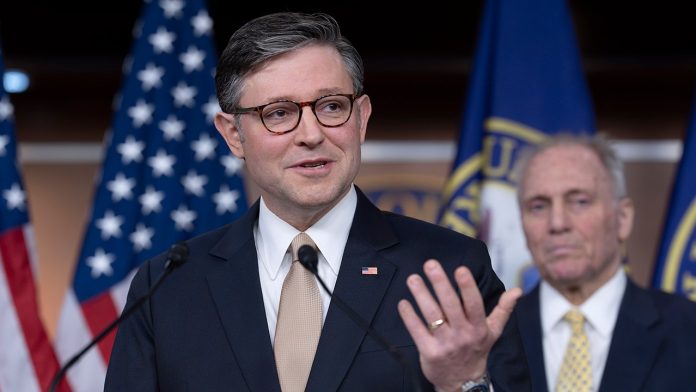
House Speaker Mike Johnson says his Democratic colleagues are “flailing.” (AP Photo/J. Scott Applewhite, File)

“We were going to do a budget committee markup next week. We might push it a little bit further because the details really matter. Remember that I have the smallest margin in history, about a two vote margin currently. So I’ve got to make sure everyone agrees before we bring the project forward, that final product, and we’ve got a few more boxes to check, but we’re getting very, very close,” he continued.

NONCITIZEN VOTER CRACKDOWN LED BY GOP AHEAD OF 2026 MIDTERMS

The budget bill process has not been without its share of in-fighting, however. Republican spending hawks are pushing leaders to include at least $2.5 trillion in spending cuts in the massive legislative package.

Trump at Washington Hilton prayer breakfast

President Donald Trump is pushing Congress to move forward with a massive legislative package. (AP Photo/Evan Vucci)

One GOP lawmaker said that tension bubbled up in a closed-door meeting last week with several “heated exchanges,” with conservatives demanding a concrete plan and minimum spending cuts at significantly higher levels than what was initially proposed.

“I think there’s a lot of frustration right now,” the lawmaker told Fox News Digital. “They’ve been trying to be inclusive, but not every open forum they’ve offered is giving members the ability to say, ‘I feel like people are listening to me,’ because I don’t know that’s the case right now.”

Speaker Johnson and Leader Jeffries

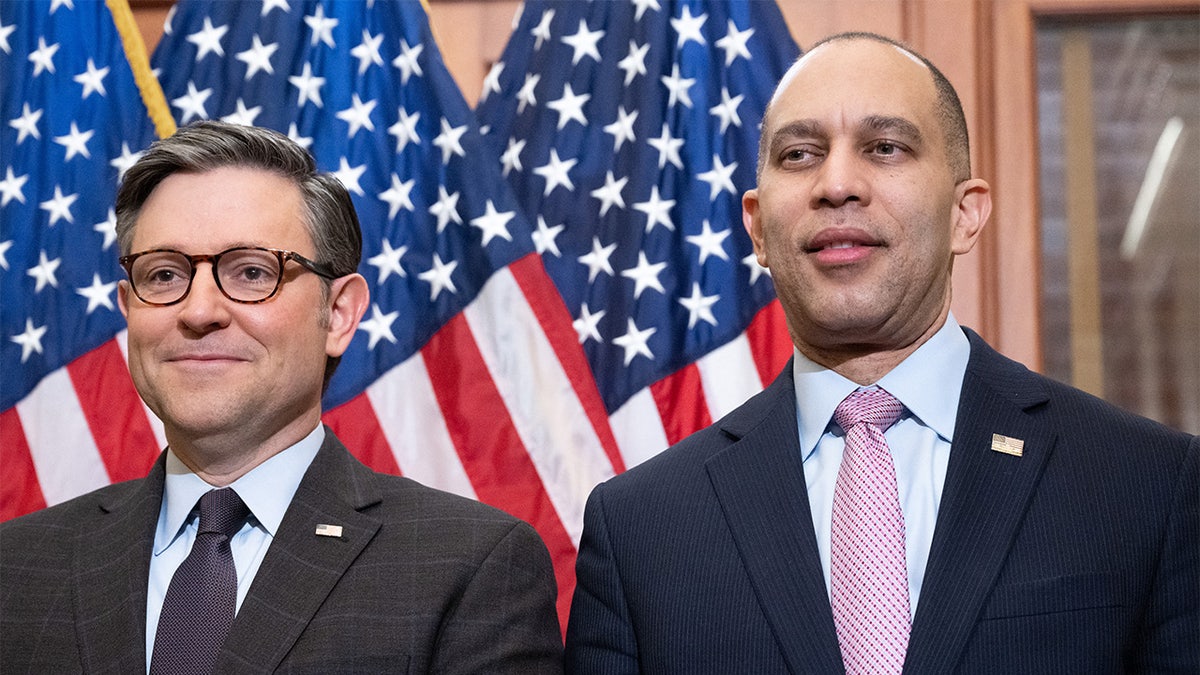
Speaker Mike Johnson and Minority Leader Hakeem Jeffries. (Getty Images)

CLICK HERE TO GET THE FOX NEWS APP

Reps. Chip Roy, R-Texas, and Ralph Norman, R-S.C., two conservative members of the House Budget Committee, both told reporters they wanted to see the baseline for spending cuts set at roughly $2.5 trillion.

Fox News’ Elizabeth Elkind contributed to this report.

Gyalo Thondup, Political Operator and Brother of the Dalai Lama, Dies at 97

0

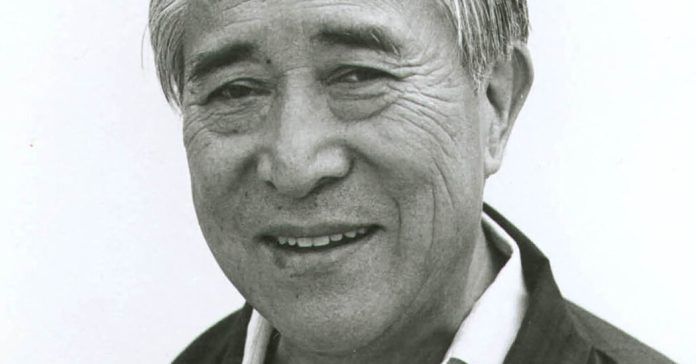
Gyalo Thondup, the eldest brother of the Dalai Lama and a political operator in Tibet and the greater region, has died, the Dalai Lama’s office confirmed in a statement. He died on Sunday in Kalimpong in West Bengal, India, according to Tibetan media. He was 97.

“He was a good man who did his best for the Tibetan cause,” the Dalai Lama said in the statement. “I pray that he will take a good rebirth as a Tibetan again and that he will be able to serve the Tibetan administration that is a combination of spirituality and politics once more,” he said, referring to the Buddhist belief in the cycle of rebirth.

A prominent figure in Tibetan society and politics, Mr. Thondup has been called the second-most influential person in the small Himalayan territory, eclipsed only by his brother, Tenzin Gyatso, the 14th Dalai Lama and head of Tibetan Buddhism.

Together, the brothers defined a political era in Tibet, the increasingly isolated territory nestled in the Himalayas that has long battled Chinese influence and control. While the Dalai Lama has often been more public-facing, courting worldwide attention and accolades, Mr. Thondup was seen as a reserved, geopolitical operator who was more comfortable away from the spotlight.

For decades, Mr. Thondup advocated for paths to allow his brother — exiled since 1959 — to return to the territory. He kept the company of international leaders, hoping to leverage various stakeholders in the service of Tibetan independence.

One of six children born to farmers in the Chinese town of Takster, Mr. Thondup served as a lifelong adviser and advocate for his younger brother. Sent abroad to study, he was the only one of his siblings not destined for religious life.

Freed from spiritual obligations, Mr. Thondup spent his life working for Tibetan autonomy, sometimes more aggressively than others.

Mr. Thondup settled in India in 1952 and was an early mediator when the Dalai Lama fled there after the failed 1959 Tibetan uprising against Chinese rule. Mr. Thondup would later call his brother’s safe passage to India one of his greatest achievements.

Mr. Thondup would go on to cultivate some of the first official Tibetan contacts with Indian and American authorities in the 1950s and 1960s, asking for their support. In the 1950s, he aided the C.I.A. in an ill-fated attempt to arm Tibetan separatists against the Communist Chinese government.

Mr. Thondup periodically met with Chinese leaders in efforts to ease Chinese influence over Tibet. Even as talks broke down in recent years, he urged Tibetans to stay engaged.

“It’s essential for Tibetan people not to lose hope in pleading for our rights to the Chinese government,” Mr. Thondup said at a news conference in 2008. He published an autobiography in 2015, “The Noodlemaker of Kalimpong,” about his life of activism and the Tibetan struggle against Chinese rule.

The Dalai Lama led a prayer service on Sunday for his brother, his office said.

After the service, as the recitation concluded, the Dalai Lama rose from his seat, saluted a photo of his late brother and returned to his living space, the statement from his office said.

Mujib Mashal contributed reporting.

Philly mayor warns Eagles fans over post-Super Bowl LIX antics: ‘Do not climb light poles or anything else’

0

Philadelphia Mayor Cherelle Parker warned Eagles fans about their post-Super Bowl LIX celebrations after their last one left at least one person dead and several injured in separate incidents.

The Eagles are set to take on the Kansas City Chiefs on Sunday night in a rematch of Super Bowl LVII. Philadelphia officials have made clear they were ready for revelers to take to the streets after the game. Parker warned fans not to climb on the city’s light poles.

SIGN UP FOR TUBI AND STREAM SUPER BOWL LIX FOR FREE

Eagles fans cheer during the NFC Championship game against the Washington Commanders, Jan. 26, 2025, in Philadelphia. (AP Photo/Derik Hamilton)

“Don’t climb light poles or anything else,” she said Friday, via FOX 29 Philadelphia. “Please, Philadelphia, I implore you as your mayor, do not climb light poles or anything else.”

She added the climbing on any type of structure or fixture could “lead to tragedy.”

Tyler Sabapathy, an 18-year-old Temple University student-athlete, died after falling from the pole and landing on his head while celebrating the Eagles’ NFC Championship win, Philadelphia police told FOX 29 Philadelphia. The teen was taken to the hospital and was in very critical condition before he eventually died.

HOW TO WATCH SUPER BOWL LIX BETWEEN CHIEFS, EAGLES STREAMED ON TUBI

Eagles fans support Saquon

Eagles fans hold a sign that reads “Go Saquon Go” during the Dallas Cowboys game, Dec. 29, 2024, in Philadelphia. (AP Photo/Terrance Williams, File)

At least three other people were injured when a driver drove into a crowd of pedestrians after the playoff game at Lincoln Financial Field.

“The Philadelphia Police Department is on an all-hands-on-deck approach to ensure everyone’s safety,” Police Commissioner Kevin J. Bethel said Friday. “Our officers will be out in full force across the city, ready to keep the festivities running smoothly.”

CLICK HERE TO GET THE FOX NEWS APP

Tubi promo

Stream Super Bowl LIX coverage on Tubi for free. (Tubi)

The Eagles and Chiefs’ game will be broadcast on FOX. Coverage begins at 1 p.m. ET and can be streamed live for free on Tubi.

Follow Fox News Digital’s sports coverage on X and subscribe to the Fox News Sports Huddle newsletter.

Map: 7.6-Magnitude Earthquake Strikes the Caribbean

0

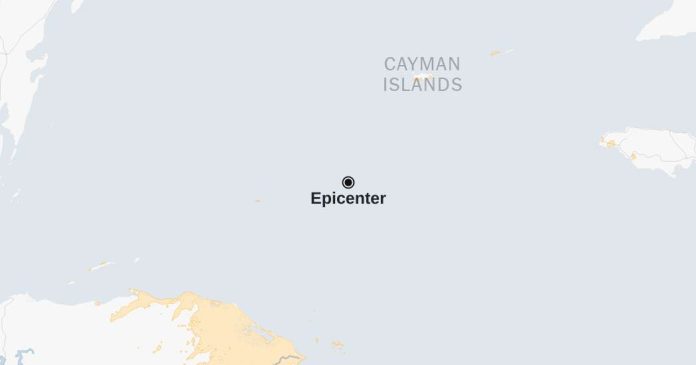
Note: Map shows the area with a shake intensity of 4 or greater, which U.S.G.S. defines as “light,” though the earthquake may be felt outside the areas shown. Source: U.S.G.S. By William B. Davis and John Keefe

A major, 7.6-magnitude earthquake struck in the Caribbean Sea on Saturday and triggered a tsunami advisory in Puerto Rico and the U.S. Virgin Islands, according to the United States Geological Survey.

The temblor happened at 7:23 p.m. Atlantic time about 130 miles southwest of George Town, Cayman Islands, data from the agency shows.

U.S.G.S. data earlier reported that the magnitude was 8.

As seismologists review available data, they may revise the earthquake’s reported magnitude. Additional information collected about the earthquake may also prompt U.S.G.S. scientists to update the shake-severity map.

Quakes and aftershocks within 100 miles

Source: United States Geological Survey By William B. Davis and John Keefe

Aftershocks can occur days, weeks or even years after the first earthquake. These events can be of equal or larger magnitude to the initial earthquake, and they can continue to affect already damaged locations.

When quakes and aftershocks occured

Source: United States Geological Survey | Notes: Shaking categories are based on the Modified Mercalli Intensity scale. When aftershock data is available, the corresponding maps and charts include earthquakes within 100 miles and seven days of the initial quake. All times above are Atlantic time. Shake data is as of Saturday, Feb. 8 at 7:42 p.m. Atlantic time. Aftershocks data is as of Sunday, Feb. 9 at 11:38 a.m. Atlantic time.

Maps: Daylight (urban areas); MapLibre (map rendering); Natural Earth (roads, labels, terrain); Protomaps (map tiles)

Bill Maher says Democratic Party lost because people just don’t like the message

0

HBO host Bill Maher got real about the Democratic Party’s new leadership on Friday, saying it doesn’t reflect the party moving to give voters what they want. 

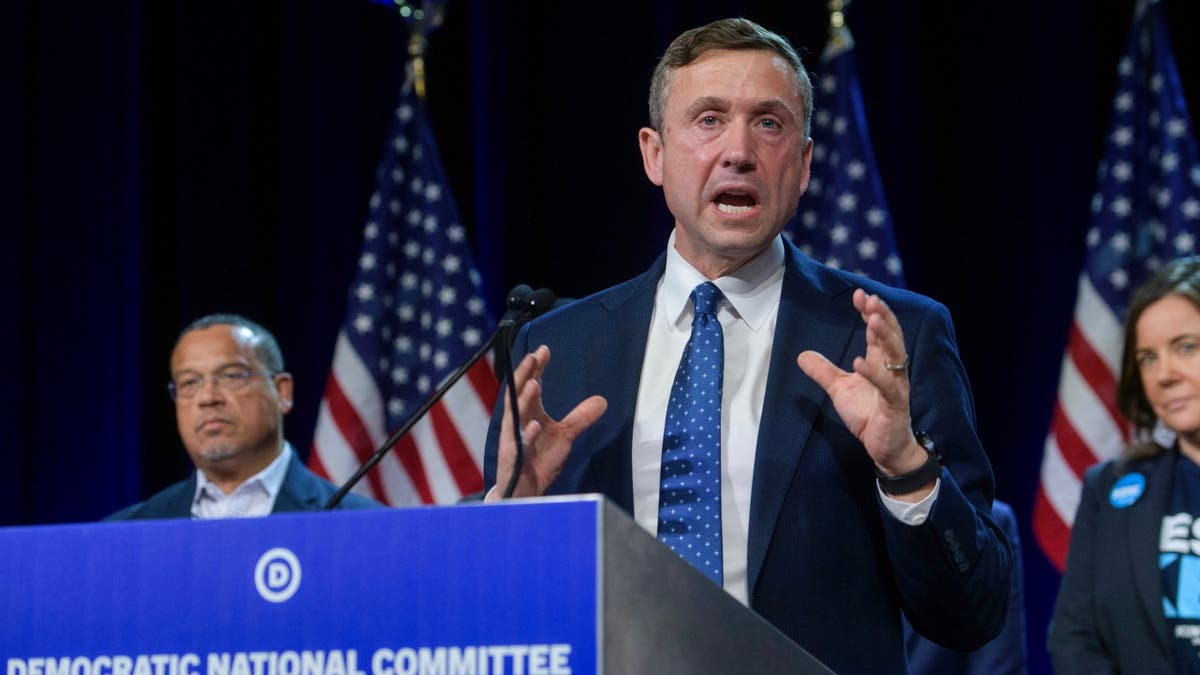
The “Real Time” host torched the newly elected Democratic National Committee Chair Ken Martin, stating his election does not reflect that the party is making the changes it needs to win back voters.

“I was not aware of who he was before. I did not think it got off to a great start because I think they need to completely reroute themselves, and I don’t think they did it,” Maher told his guest, MSNBC anchor Chris Hayes.

JOURNALISTS SOUND ALARM OVER TRUMP’S ‘PREPOSTEROUS’ GAZA COMMENTS, WARN OF ‘ETHNIC CLEANSING’

“Real Time” host Bill Maher expressed he has little confidence that new DNC chair means the Democratic Party is listening to the voters. 

The DNC elected Ken Martin, the Minnesota party leader, to the position last Saturday, beating out Martin O’Malley, the former two-term Maryland governor. 

Following his victory, he said, “We have one team, one team, the Democratic Party. The fight is for our values. The fight is for working people. The fight right now is against Donald Trump and the billionaires who bought this country.” 

During his program, Maher didn’t hide his frustrations with the new leader, accusing him of relaying the same tired talking point that the party employed up until their defeat last November.

“I mean, this Ken Martin guy, he said something I’ve heard Democrats say a lot, ‘We didn’t get our message out’ – And maybe I’m paraphrasing… And I’ve said this before to Democrats – No, you did. That’s the problem.”

“You did get your message out and people don’t like the message,” he declared.

Maher reinforced his point later in the episode when talking to Rep. Byron Donalds, R-Fla., and reporter Tara Palmeri. He paraphrased a line from a recent New York Times article, stating, “Many Americans say they do not believe the Democratic Party is focused on the issues that matter most to them.”

CLICK HERE FOR MORE COVERAGE OF MEDIA AND CULTURE

Ken Martin

Maher said to Democrats: “You did get your message out and people don’t like the message.” (AP Photo/Rod Lamkey, Jr.) (AP Photo/Rod Lamkey, Jr.)

Adding his own thought, he said, “So, if you think all this Trump stuff is going to go away because the other party is going to come in, well that may not be the case.”

Continuing to read from The Times piece, Maher said, “Here’s what people think is important to the Democrats, ‘abortion, L.G.B.T.Q. rights and climate change.’”

The host pointed out that the party hasn’t prioritized the issues voters care about. 

“To me, as a voter, my issues were democracy and the environment,” he said, noting those weren’t focused on by the party. “And now I have no one who’s a champion of those issues in the government, and I blame the Democrats for that.”

“The people do not feel they’re representing them, and they’re losing,” he said, adding that The Times reported how voters saw “the economy, inflation, healthcare and immigration” as the main issues in the last election. 

CLICK HERE TO GET THE FOX NEWS APP