Friday, November 13, 2026
Home Blog Page 254

Rumors about Politico led Trump administration to cancel subscriptions : NPR

0

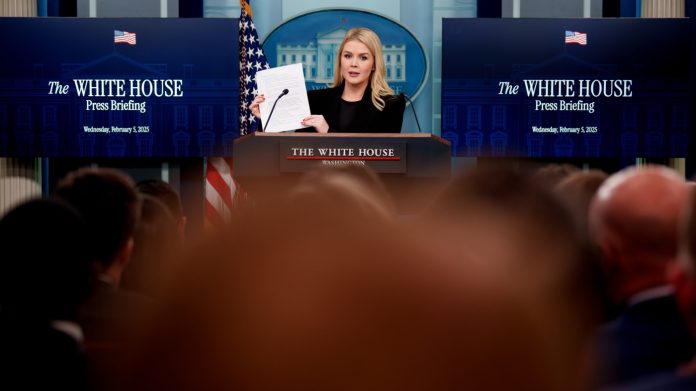
White House Press Secretary Karoline Leavitt holds up a document as she reads off line items of government spending during a news conference Wednesday in the Brady Press Briefing Room at the White House in Washington, D.C.

Andrew Harnik/Getty Images


hide caption

toggle caption

Andrew Harnik/Getty Images

Less than 24 hours after misleading and false claims about the politics-and-policy focused Politico news outlet started circulating on the social media site X earlier this week, the White House press secretary promised action. By the next day, the White House had directed the federal agency in charge of contracts to “pull” government subscriptions to two Politico services, as well as some other media outlets, according to Axios.

President Trump’s first term was marked by hostility toward journalists, and in his second term, right-wing social media influencers are declaring “we are the media now.”

Conspiracy theories flourish on X

On Tuesday, Semafor reported that Politico had trouble with its payroll system. Within hours, pro-Trump influencers started speculating and asserting that the payroll issue was related to the recent funding freeze at U.S. Agency for International Development, the federal foreign aid agency.

False claims on X lead to an attack on news media

X users shared screenshots from USASpending.gov, a website that tracks federal contracts, to bolster misleading claims that Politico was getting government subsidies, a framing White House Press Secretary Karoline Leavitt repeated at a press conference on Wednesday.

“I was made aware of the funding from USAID to media outlets, including Politico, who I know has a seat in this room,” Leavitt said. “I can confirm that the more than 8 million taxpayer dollars that have gone to essentially subsidize subscriptions to Politico on the American taxpayers’ dime will no longer be happening.”

In a statement, Politico said it has not taken “a dime” of subsidies or grants from the federal government. Rather, federal agencies use the procurement process to subscribe to Politico Pro, a service that tracks legislation and other policy minutiae. The service made over $100 million in 2023, which made up over half of the company’s revenue that year, according to Vanity Fair.

Across the federal government, subscriptions for Politico services totaled more than $8 million last year, according to USA Spending. USAID paid $24,000 to Politico in 2024 for a subscription to E&E, an energy and environmental news service owned by the company, according to the same site.

USAID gives aid to organizations to do work abroad, including to some foreign media outlets. But the agency does not “give money to any organization to provide news on, in, or about the U.S.,” said a former USAID official who asked to remain anonymous for fear of retribution. Spurred by X owner Elon Musk’s cost-cutting team, the Trump administration is trying to dismantle the agency.

Subscriptions for information services should not be confused with grants, said Nicole Darnall, an expert in government procurement who teaches at American University.

“The key difference with a grant is that it is an assistance program,” said Darnall. “Gaining access to knowledge networks, electronic news, and print media is not — in any way — a form of assistance. Rather, it involves a contractual arrangement for the purchase of the good or service.”

President Trump nonetheless leveled unfounded accusations about the media via Truth Social on Thursday morning: “LOOKS LIKE BILLIONS OF DOLLARS HAVE BEEN STOLLEN (sic) AT USAID, AND OTHER AGENCIES,” he wrote, “MUCH OF IT GOING TO THE FAKE NEWS MEDIA AS A ‘PAYOFF’ FOR CREATING GOOD STORIES ABOUT THE DEMOCRATS.”

Soon Politico was not the only media organization in the crosshairs. X users circulated similar screenshots showing government payments to The Associated Press and The New York Times.

“The U.S. government has long been an AP customer — through both Democratic and Republican administrations,” AP spokesperson Lauren Easton told NPR in an email. “It’s quite common for governments to have contracts with news organizations for their content.”

The New York Times said in a similar statement that no federal grants were made to the company.

“Federal funds received by The Times are payments for subscriptions that government offices and agencies have purchased to better understand the world.”

What began as a misleading nugget had turned into an anti-media campaign within days.

“At what point do we start pulling the press credentials of journalists?” right-wing influencer Benny Johnson asked in a livestream.

Last year, the Justice Department discovered that Johnson and several other right-wing influencers were indirectly receiving funds through lucrative contracts from operatives of the Russian government. Johnson said he didn’t know Russia was the source of the money.

Canceling contracts

Axios reported on Thursday that the White House asked the General Services Administration to “pull” all contracts for Politico, BBC, E&E and Bloomberg, as well as “cancel every single media contract” expensed by the GSA.

Bloomberg and Reuters declined to comment. The BBC has not responded to a request for comment.

The U.S. Department of Agriculture told NPR on Friday in a statement that it had “completed a review of our media contracts and effective February 5 canceled the Politico subscriptions across the Department.”

Musk wrote on X, “My guess is that ~20% of legacy media funding is from the government in one form or another,” without indicating how he came to that estimate. In a second post he wrote, “And it should be zero.”
Musk has voiced support for ending federal funding for public broadcasting, which is used by public media stations to pay for NPR and PBS content.

People working in the federal government need access to specialized information to do their jobs, including to effectively support the private sector, said Chris Mohr, president of the Software Information Industry Association, a trade group that represents subscription-based, business-to-business publications.

“If you are partnering with the sector or trying to promote it,” said Mohr, “You need information about the state of play of the industry and the state of play of the relationships of different governments with that industry and the policies they’re enacting.”

Bloomberg and Thomson Reuters are SIIA members, Mohr said.

“This isn’t political. This is really just sort of what’s going on. If you don’t have that, it can be quite a big blind spot,” Mohr said.
Hegseth to look into ‘what went wrong’ in Afghanistan

0

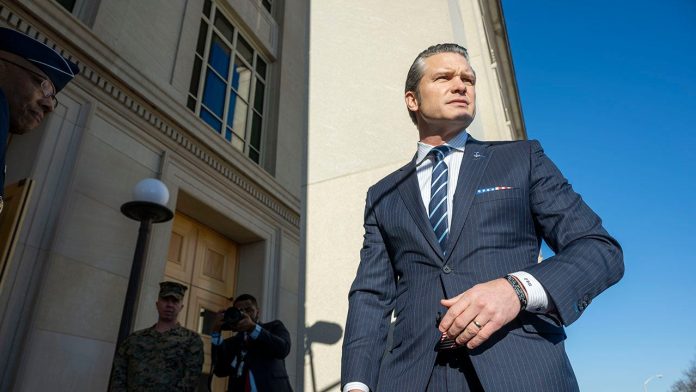
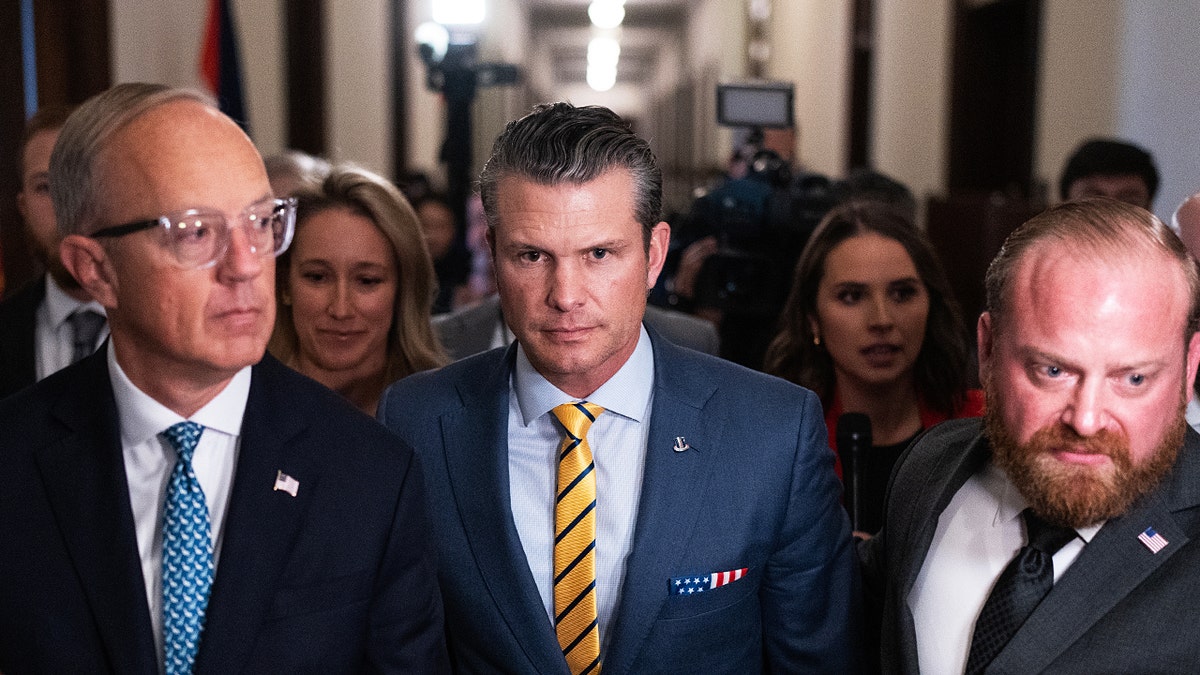
Defense Secretary Pete Hegseth on Friday addressed events in Afghanistan, saying they created the perception of “American weakness.”

While speaking to the Department of Defense and Pentagon workforce during a town hall on Friday, Hegseth said America “deserves to take accountability for” events in Afghanistan, the Oct. 7 Hamas-led attack on Israel, and the war that was unleashed in Ukraine. 

“Chaos happens when the perception of American strength is not complete,” Hegseth said. “We aim to re-establish that deterrence.”

President-elect Donald Trump’s nominee for Secretary of Defense Pete Hegseth testifies during his Senate Armed Services confirmation hearing on Capitol Hill on Jan. 14 in Washington, D.C.  ( (Photo by Andrew Harnik/Getty Images))

PETE HEGSETH CONFIRMED TO LEAD PENTAGON AFTER VP VANCE CASTS TIE-BREAKING VOTE

He discussed the three pillars he will focus on during his term – reviving the warrior ethos, restoring trust in the military and rebuilding it by matching threats to capabilities, and reestablishing deterrence by defending the homeland.

Hegseth also spoke about the broken windows theory in policing, explaining that disregarding the small things in the military can create large problems.

“I think the same thing exists inside our services – making sure at every level, there [are] standards and accountability, and that we live it at the highest levels,” he said.

Pete Hegseth

UNITED STATES – DECEMBER 3: Pete Hegseth, President-elect Donald Trump’s nominee to be defense secretary, makes his way to a meeting with Sen. Ted Budd, R-N.C., in Russell building on Tuesday, December 3, 2024. (Tom Williams/CQ-Roll Call, Inc via Getty Images) (Tom Williams)

That is why, Hegseth said, the U.S. will look back at what happened in Afghanistan.

He added the department will hold people accountable.

“Not to be retrospective, not for retribution, but to understand what went wrong and why there was no accountability for it,” Hegseth said.

U.S. Army Fort Leonard Wood

Sec. Hegseth said he will focus on rebuilding the military. (U.S. Army Fort Leonard Wood)

Going forward, the military will find strength in unity, not diversity, according to Hegseth.

“I think the single dumbest phrase in military history is ‘our diversity is our strength,’” he said. “Our strength is our shared purpose – regardless of our background, regardless of how we grew up, regardless of our gender, regardless of our race. 

WHITE HOUSE OPM ORDERS ALL DEI OFFICES TO BEGIN CLOSING BY END OF DAY WEDNESDAY

In the department, Hegseth said everyone will be treated equally.

“We will treat everyone with fairness,” he said. “We will treat everyone with respect.”

CLICK HERE TO GET THE FOX NEWS APP

Service members and department civilian employees will be judged by their merit, commitment to the team, and the mission, according to Hegseth.

Ecuador’s Leader Has Had a Year of Chaos. He Is Still Favored to Win Sunday’s Election.

0

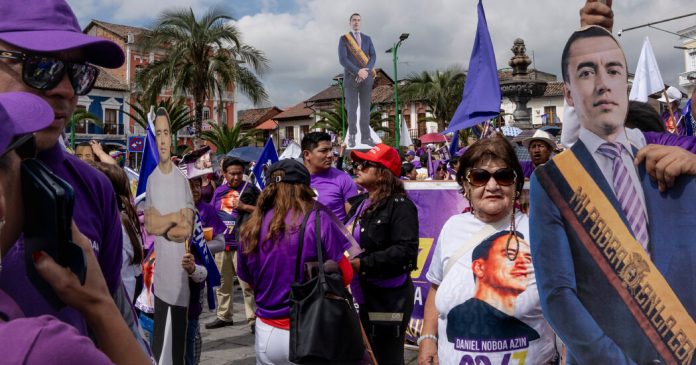
Daniel Noboa was nowhere to be seen. And, yet, he was everywhere.

On balconies. In the arms of various supporters. In the back of a truck. Cardboard cutouts of Mr. Noboa, Ecuador’s president, were ubiquitous at an election rally in a suburb of Quito, the capital, on Wednesday, as they are in many parts of the country.

They even appear in different outfits — a suit and presidential sash, a T-shirt and jeans, a tank top and gym shorts.

The posters are part of the president’s successful communication strategy ahead of Sunday’s election: short on specific policy proposals but strong on mastery of social media and viral trends to project an image of youth and vigor to Ecuador’s voters, the majority of whom are younger than 44.

Supporters and detractors alike have even taken to saying, “The cardboard is going to win.”

Mr. Noboa, 37, took office just 15 months ago, after his predecessor called for early elections amid the threat of impeachment over embezzlement accusations.

In his short term, he has faced a slew of national and international controversies, an energy crisis, a feud with his vice president, persistent drug-related violence and unemployment.

He has also been criticized by opponents and analysts for what they describe as strongman tendencies, including abusing his presidential powers in the name of combating violence and corruption.

And, yet, polls show, Mr. Noboa, a center-right politician, is the leading candidate in Sunday’s election, and could win enough votes to avoid a runoff.

His popularity, experts say, is buoyed by his branding as a hip and forceful leader, as well as by his truncated term — many voters don’t blame him for the country’s ills and say he needs more time.

His main opponent is Luisa González, a leftist establishment candidate handpicked by a powerful former president, Rafael Correa, who served from 2007 to 2017. She has drawn support from Mr. Correa’s base of voters, who are eager to return to the prosperity and low homicide rates during his tenure.

But it also hurts her among other Ecuadoreans who remember Mr. Correa’s repressive tactics and corruption scandals. Many Noboa supporters put it simply: Ms. González represents the past, while Mr. Noboa represents the future.

Mr. Noboa’s party, which was created less than a year ago, is predicted to win about a third of the seats in the legislature — the same as Mr. Correa’s party.

For years Ecuador has been defined by Mr. Correa’s movement, but some say Mr. Noboa has the potential to create a political force of his own.

This is the first time since the Correa years that Ecuador has seen a relatively popular president seeking re-election, and it “creates the possibility for a type of political stability that Ecuador hasn’t seen really since Correa left office,” said Risa Grais-Targow, the Latin America director for Eurasia Group, a political risk consultancy.

Ecuadorean presidential elections typically feature two rounds of voting, with the two top candidates in the first round facing off in the second. To win the first round outright, a candidate must win more than 50 percent of the votes, or win 40 percent of the votes with a 10-point margin over the nearest rival.

Just five years ago, Mr. Noboa was a political unknown. After one term as a legislator, he rose unexpectedly from the bottom of the polls to a second-place finish in the first round of presidential elections in 2023, helped, in part, by a strong debate performance.

Mr. Noboa, a Harvard Kennedy School graduate, comes from one of Ecuador’s wealthiest families. His father, Álvaro Noboa, who owns an economic empire that includes Bonita Bananas, also ran for president five times, unsuccessfully.

The younger man has been leading the country of nearly 18 million through a particularly bloody period.

Over the past five years, the drug-trafficking industry has expanded in Ecuador, drawing in international criminal groups, unleashing violence in the once-peaceful nation and sending tens of thousands of migrants fleeing to the United States.

Two months after taking office, Mr. Noboa declared a state of internal armed conflict after several prison riots and an on-air siege of a TV station.

The drastic step, which allowed the military to patrol prisons and streets, was seen as a turning point. Some Ecuadoreans felt the measure was necessary to crack down on gang violence, while others worried it threatened civil liberties.

The move initially brought down violence in cities like Guayaquil, but the sense of safety did not last. January saw more violent deaths than any month in the past three years, according to police data.

In April, Mr. Noboa dispatched police officers to the Mexican Embassy to arrest a politician who had taken refuge there to escape a prison sentence for corruption. Experts called the action a violation of international law on the sanctity of diplomatic missions, and the arrest drew global condemnation.

But in Ecuador, the moves boosted Mr. Noboa’s image as a tough-on-crime leader, and Ecuadoreans endorsed his hard-line approach later that month, when they approved a referendum enshrining the increased military presence into law and lengthening prison terms for certain offenses linked to organized crime.

“I think he is authoritarian,” said Cristina Guevara, 45, who cares full time for her disabled son. “But we want him to win because it is the only solution that there is going to be right now.”

Still, Mr. Noboa’s approach has been polarizing, and his approval ratings have been carved in half.

Many blamed his harsh strategy for the disappearance in December of four children who were forced into a military patrol car after they were seen playing soccer in the western province of Guayas. Their charred remains were found weeks later, and the case set off outrage and protests against the military.

A judge ordered the detention of 16 military members involved in the disappearance.

When it comes to his plans for the country, Mr. Noboa has provided little in the way of concrete promises, instead speaking vaguely about throwing “the old Ecuador” in the trash.

His success has been in creating a “character,” said Caroline Ávila, an Ecuadorean political analyst. “This character still does not tell the voter what country he wants to give you.”

Verónica Díaz, the national coordinator of Mr. Noboa’s party, said one of his top plans was to change the Constitution to lift a ban on foreign military bases.

Mr. Correa instituted the ban in 2008, pushing out a U.S. military presence that critics say was crucial for fighting international criminal groups.

Mr. Noboa is also openly feuding with his vice president, Verónica Abad, a right-wing business coach. Ecuadorean law requires presidents to cede their duties to the vice president while campaigning, but Mr. Noboa has refused to do so, citing an electoral law that he claimed allowed him to govern and campaign at the same time.

The constitutional court rejected that claim on Monday, so Mr. Noboa stopped officially campaigning.

Experts say some of Mr. Noboa’s actions are an overreach of executive authority that could be seen as authoritarian.

“He’s tended to push the limit in terms of both international and domestic constitutional norms,” said Ms. Grais-Targow. “But it’s always been done with the banner of security measures or transparency, which I think has helped to contain the political fallout for him.”

His supporters see him as a fearless leader willing to make bold decisions for the sake of the country.

But Ledy Zúñiga, a former justice minister who is running for the National Assembly with Ms. González’s party, said weakening the country’s democratic norms only makes it harder to address the country’s violence.

“As long as the institutional framework of the security system is not strengthened, it is very difficult,” she said.

Mr. Noboa is also one of the few leaders in Latin America who seem to be on good terms with President Trump. He attended his inauguration and has accepted deportation flights.

Mr. Noboa’s decision not to actively campaign, following the court’s ruling, makes for an unusual scene on the trail.

On Wednesday, the plaza in suburban Quito was packed with thousands of people waiting to hear him speak. Because of the court’s decision, he never did.

So he ate lunch in a food market while chatting with local vendors. Spectators quickly surrounded him, standing on chairs, snapping selfies and chanting campaign slogans.

“It was exciting because no president has ever come to this market before,” said Soledad Medina, 60, who sold the president juice. “He is very young and he is intelligent and would like our Ecuador to change. What we need is a change.”

José María León Cabrera contributed reporting.

Trump plans to be Kennedy Center chair, fire board members : NPR

0

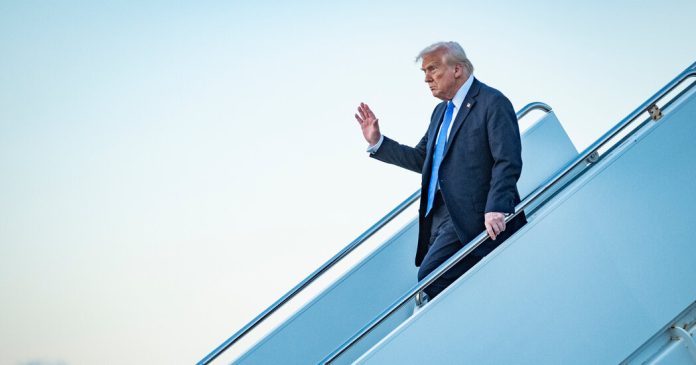
President Trump announced Friday that he planned to take over as chair of the Kennedy Center in Washington, D.C.

Hulton Archive/Getty Images


hide caption

toggle caption

Hulton Archive/Getty Images

President Trump says he is taking over leadership of the John F. Kennedy Center for Performing Arts. He declared himself chairman of Washington D.C.’s long-celebrated cultural institution on Friday. In doing so, he’ll replace billionaire philanthropist David Rubenstein, an ally of former President Joe Biden who was set to chair until 2026.

Posting on Truth Social, Trump wrote he was immediately terminating “multiple individuals” from the center’s Board of Trustees “who do not share our vision for a Golden Age in Arts and Culture.”

Trump said he would soon announce a new board, “with an amazing Chairman, DONALD J. TRUMP!” He also called out the center’s programming.

“Just last year, the Kennedy Center featured Drag Shows specifically targeting our youth — THIS WILL STOP. The Kennedy Center is an American Jewel, and must reflect the brightest STARS on its stage from all across our Nation. For the Kennedy Center, THE BEST IS YET TO COME!”

A representative for Rubenstein, co-founder and co-chairman of private equity giant Carlyle, said he had “no comment” about the news. But a statement from the Kennedy Center said they had received no official communications from the White House regarding changes to the board of trustees, though they were aware that board members received termination notices.

“There is nothing in the Center’s statute that would prevent a new administration from replacing board members,” read the statement. “However, this would be the first time such action has been taken with the Kennedy Center’s board.”

The statement also referred to the “strong support” the center had received throughout its history “from members of Congress and their staffs—Republicans, Democrats, and Independents.” The Center has had “a collaborative relationship with every presidential administration,” the statement elaborated, with “a bi-partisan board of trustees that has supported the arts in a non-partisan fashion.”

During his first term as president, Trump did not attend the Kennedy Center’s annual gala; performing artists protested his administration and threatened to boycott Kennedy Center events at the White House.

It wasn’t immediately clear which Kennedy Center board members Trump would oust. During his presidency, Biden appointed several members to the center’s board, including former White House press secretary Karine Jean-Pierre and Democratic National Committee finance chair Chris Korge. TV producer Shonda Rhimes is the board’s treasurer, and musician Jon Batiste is also on the board.

According to the center’s website, President Dwight D. Eisenhower conceived of an “artistic mecca” in the nation’s capital in 1955. Eisenhower signed a law establishing the National Cultural Center, and President Kennedy then led fundraising efforts to build it. In 1964, two months after Kennedy was assassinated, the cultural center opened in his name as a “living memorial” to present classical and contemporary music, opera, dance, and other performing arts from the U.S. and around the world.

Over the years, the Center has showcased and honored many performing artists, including Fred Astaire and Marian Anderson, in 1981 to last year’s honorees, The Grateful Dead, Frances Ford Coppola, Bonnie Raitt, Arturo Sandoval and the Apollo Theater.

Among those performing at the Kennedy Center this weekend are the Alvin Ailey American Dance Theater and a staging of the musical Schmigadoon.

Puka Nacua ‘hoping for the best’ after Cooper Kupp said Rams will try to trade him

0

Cooper Kupp earlier this week broke the news that he had been informed he is now on the trade block.

Apparently, it is a matter of when, not if, the Los Angeles Rams will trade the 2021 receiving Triple Crown winner, as Kupp said the team will look to trade him “immediately.”

After his OPOY-winning season, Kupp has been riddled with injuries, having yet to play more than 12 games in his last three seasons and not crossing the 1,000-yard threshold.

SIGN UP FOR TUBI AND STREAM SUPER BOWL LIX FOR FREE

Puka Nacua #17 of the Los Angeles Rams and Cooper Kupp #10 before a game against the Minnesota Vikings at SoFi Stadium on October 24, 2024 in Inglewood, California.  (Harry How/Getty Images)

Kupp was a third-round pick by the Rams in 2017, so it’s surely odd to think of him elsewhere, but that appears to be the likelihood.

The Rams may be just fine with the emergence of Puka Nacua, but the 2023 Offensive Rookie of the Year would still be losing his counterpart.

“I love that guy Coop. I’m blessed to be around him the past two years for the start of my career,” Nacus told Fox News Digital down in New Orleans. “I’ll be super excited to watch Cooper Kupp back out there on the field and play the game of football. He does that at such a high level and does it the right way. I love that guy and hoping for the best.”

Cooper Kupp celebrates touchdown with Tyler Johnson

Los Angeles Rams wide receiver Cooper Kupp (10) celebrates a touchdown against with wide receiver Tyler Johnson (18) during the second half at Ford Field in Detroit on Sunday, September 8, 2024. (IMAGN)

HOW TO WATCH SUPER BOWL LIX BETWEEN CHIEFS, EAGLES STREAMED ON TUBI

Kupp made the announcement on social media earlier this week.

“I was informed that the team will be seeking a trade immediately and will be working with me and my family to find the right place to continue competing for championships. I don’t agree with the decision and always believed it was going to begin and end in LA.,” he wrote.

“Still, if there’s one thing that I have learned over the years: there are so many things that are out of your control, but it is how you respond to these things that you will look back on and remember.

Tubi promo

Super Bowl LIX will be streamed on Tubi. (Tubi)

CLICK HERE TO GET THE FOX NEWS APP

I have taken so much pride in playing alongside my teammates for the LA community, so thank you for embracing my family and making this such a special place for us. 2024 began with one of the best training camps of my career. Preparations start now for 2025. Highly motivated, as healthy as ever, and looking forward to playing elite football for years to come. Love you guys… But coming for it all.”

Follow Fox News Digital’s sports coverage on X, and subscribe to the Fox News Sports Huddle newsletter.

Deportation Flights to Venezuela to Begin Within Next 30 Days, Trump Border Czar Says

0

President Trump’s border czar, Tom Homan, made plainly clear how a Latin American nation — considered a U.S. adversary — will help the president deliver on a promise that carried him to the White House.

Mr. Homan expected flights carrying Venezuelan migrants in the United States back to Venezuela to begin “within the next 30 days,” he said in an interview with The New York Times.

It was the first indication of a timeline for the plan to send people back to Venezuela after Mr. Trump’s announcement that his government had struck a deal with the country’s autocratic leader, Nicolás Maduro.

Last week, the Trump administration said that it had secured the freedom of six Americans in Venezuelan custody and convinced Mr. Maduro to receive deportation flights that would carry “all Venezuela illegal aliens” living in the United States.

In return, Mr. Maduro, who is accused of stealing a recent election and committing major human rights violations, received a very public visit from a top Trump adviser, Richard Grenell.

The two shook hands, smiling, as Venezuela’s top legislator, Jorge Rodríguez, beamed in the background. Later, Mr. Maduro’s government released an announcement affirming its commitment to “dialogue among equals.”

Just days after the meeting with Mr. Grenell, Mr. Maduro proposed implementing a loan program for returning migrants that would have an initial budget of $10 million.

For Mr. Maduro, who is increasingly isolated on the global stage, the Grenell meeting was a major win. U.S. diplomats left Venezuela in 2019. Since then, there have been only a few, very private meetings between United States and Venezuelan officials.

The Venezuelan government has not yet confirmed that it will take deportees. But if the deal goes through, it has the potential to mark a significant shift in the U.S.-Venezuela relationship.

During the first Trump administration, Mr. Trump did everything he could to try to oust Mr. Maduro, issuing crushing economic sanctions, throwing his weight behind an opposition leader, Juan Guaidó, and even placing a $15 million bounty on Mr. Maduro’s head, accusing him of narco-terrorism.

As a growing number of Venezuelans fled to the United States, the Venezuelan government in turn refused to take deportation flights.

Now, the dynamic has changed. Mr. Trump needs Mr. Maduro to accomplish one of his signature campaign pledges: deporting hundreds of thousands of Venezuelans who have arrived on U.S. soil in recent years.

And it seems that Mr. Maduro knows that, and it’s not the only advantage he holds.

At least five other Americans and two foreigners with U.S. residency status remain in detention in Venezuela, according to the human rights group Foro Penal, giving the Venezuelan government significant leverage over the Trump administration.

Further U.S. policy changes could involve the lifting of sanctions on Venezuela’s vital oil sector and the return of direct commercial flights between the United States and Caracas.

Such moves are likely to anger the Venezuelan opposition led by María Corina Machado and Edmundo González, the man widely believed to have won a July presidential vote. Ms. Machado has argued that Mr. Maduro is weak and that global leaders should continue a policy of isolation to push him out.

Any actions by the United States seen as beneficial to Venezuela could also put Mr. Trump and Mr. Grenell, who is Mr. Trump’s envoy for special missions, at odds with Secretary of State Marco Rubio.

Mr. Rubio, the son of Cuban immigrants, has long argued for a more hard-line approach against Mr. Maduro, and in 2022, he even said that deporting Venezuelans back home would be a “very real death sentence.”

In his interview with The Times, Mr. Homan, the border czar, said that deportation flights to Venezuela were likely to take off soon.

“It’s going to happen within the next 30 days, and I can’t tell you how many — we’re still working on all those details,” he said.

“It’s huge. It’s a great thing that President Trump got,” Mr. Homan added. His hope is that there is a regular cadence of deportation flights.

“I don’t think President Trump is going to accept anything less,” he said.

Hundreds of thousands of Venezuelans live in the United States, many with short-term protections that Mr. Trump has recently revoked, making them vulnerable to deportation in the coming months.

Under Mr. Maduro’s leadership, the country has experienced one of the worst economic and humanitarian crises in recent history, spurring roughly eight million people to flee in the last decade. Initially, most went to other countries in Latin America. But since the pandemic, many have gone to the United States, often trudging thousands of miles on foot and by bus to get to the southern border.

At the end of his first term, Mr. Trump shielded vulnerable Venezuelans from deportation, saying it was too dangerous for many of them to return.

Since then, the economic situation in Venezuela has not improved to any significant degree, while the political situation in the country has only worsened, with Mr. Maduro rounding up those he considers political opponents — and sometimes mere bystanders — following the contested election.

His government, however, has argued that conditions have improved, paving the way for people to be sent home.

“There is no factual basis to say that Venezuela is in better shape,” said Tamara Taraciuk Broner, a Venezuela expert at the Inter-American Dialogue in Washington. “This is a political decision.”

In an interview, Juan González, who served as President Biden’s top adviser on Latin America, said that for years, U.S. policy toward Venezuela has been hamstrung by hard-liners in Florida who criticize any kind of dialogue with Mr. Maduro, asserting that isolation was the route to restoring Venezuelan democracy.

Mr. González said he thought that Mr. Grenell, in his role as liaison to Venezuela, might be opting for a more realistic approach, focused on achieving U.S. national security goals — at first, that might include getting Mr. Maduro to accept deportees, but it could also include other U.S. priorities, like pushing Venezuela away from China.

And if that was the case, Mr. González, a Democrat, supported Mr. Grenell’s efforts.

“I don’t agree with Ric Grenell on a whole lot,” he said. “But I’m rooting for him. In the Rubio-Grenell competition, I think he’s really the best option.”

Lists ranking CDC employees as noncritical create fear and confusion at the agency : Shots

0

Agency staff were notified that lists of employees have designated some as noncritical.

Anadolu/Anadolu Agency/Getty Images


hide caption

toggle caption

Anadolu/Anadolu Agency/Getty Images

Staff at the Centers for Disease Control and Prevention are on edge this week, as rumors of job cuts circulate. Employees are bracing for a significant reduction in the work force that appears to be targeting those with the fewest worker protections.

Agency staff were notified in emails that all the centers, institutes and offices received a list of their staff members who are in probationary or temporary status, according to a senior CDC official who requested anonymity because they were not authorized to speak on this topic for the agency.

Senior leaders were asked to designate who on the list were mission critical and not mission critical, the source who has direct knowledge of the actions told NPR.

Those considered temporary or probationary employees would include new supervisors, fellows and others with Title 42 appointments hired for being highly skilled. This represents a broad range of employees — from recent hires who represent the pipeline of new talent to senior scientists with many years of experience.

Losing even half of these workers would be “devastating” for the agency’s current disease outbreak responses, which includes H5N1 bird flu, measles and mpox, the source said.

The action has sent chills throughout those at the agency who’ve watched the Trump administration’s efforts to dismantle USAID and its broader push to downsize the federal workforce.

It’s the latest in a series of actions taken by the Trump Administration in the name of efficiency and ideological alignment, including a freeze on external communications and a purge of the CDC’s website and datasets to comply with Trump’s executive orders on gender and diversity, equity and inclusion.

The data purge initiated late last week has left some scientists in the agency relying on archives of CDC data preserved by external groups, the CDC source confirmed.

All of this has made the agency less effective at monitoring for disease risks and conveying potential dangers, and would be exacerbated by the “imminent, probable loss of valuable staff,” the person said, “Americans are already at increased risk compared to just a few weeks ago.”

Staff who’ve experienced other administration changes at CDC say the transition has been unlike anything they’ve experienced before, with “fewer meetings, fewer requests for information,” and little attempt to understand how things work, says a former CDC employee with experience through several administrations who resigned in the last few weeks.

Another senior CDC official who recently resigned was dismayed at the prospect of mass layoffs, given the legal protections that exist for agency employees, even staff who are in their probationary period.

“It is extremely difficult and traumatizing for federal staff to see reporting on this as if it is doable and legal,” the former employee who requested anonymity told NPR.

“The CDC staff I know and have worked with for more than 25 years are dedicated public servants and don’t deserve to be mistreated in this way.”

Edited by Jane Greenhalgh

Trump freezes aid to South Africa, promotes resettlement of refugees facing race discrimination

0

President Donald Trump on Friday signed an executive order cutting all foreign aid to South Africa, citing concerns about the country “seizing” ethnic minority Afrikaners’ agricultural property without compensation.

Trump alleged South Africa‘s recently enacted Expropriation Act 13 of 2024 “dismantles equal opportunity in employment, education, and business.”

The order notes “hateful rhetoric” and government actions have been “fueling disproportionate violence against racially disfavored landowners.”

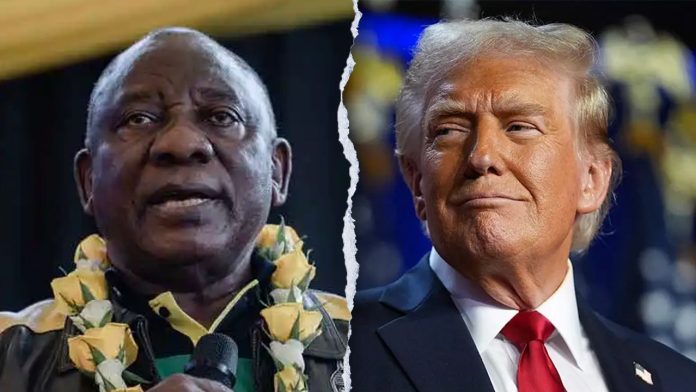
South Africa President Cyril Ramaphosa, left, and U.S. President Donald Trump. Trump has criticized South Africa’s new land laws. (Evan Vucci/AP/RAJESH JANTILAL/AFP via Getty Images)

SOUTH AFRICAN PRESIDENT SIGNS CONTROVERSIAL LAND SEIZURE BILL, ERODING PRIVATE PROPERTY RIGHTS 

South African President Cyril Ramaphosa previously released a statement arguing that no land was confiscated.

“We look forward to engaging with the Trump administration over our land reform policy and issues of bilateral interest,” according to the statement. “We are certain that out of those engagements, we will share a better and common understanding over these matters.”

The act permits the country to take land for a public purpose or in the public interest, while offering just and equitable compensation. 

However, Fox News Digital previously reported expropriation has yet to happen.

Cyril Ramaphosa

Cyril Ramaphosa waves as he arrives ahead of his inauguration as President, at the Union Buildings in Tshwane, South Africa, Wednesday, June 19, 2024. (Kim Ludbrook/Pool Photo via AP)

Elon Musk, leader of the DOGE team, publicly commented on the matter, accusing Ramaphosa of having “openly racist ownership laws.

The executive order also claims South Africa has taken “aggressive” positions toward the U.S. by accusing Israel of genocide – instead of Hamas, and “reinvigorating” its relationship with Iran to develop commercial, military, and nuclear arrangements.

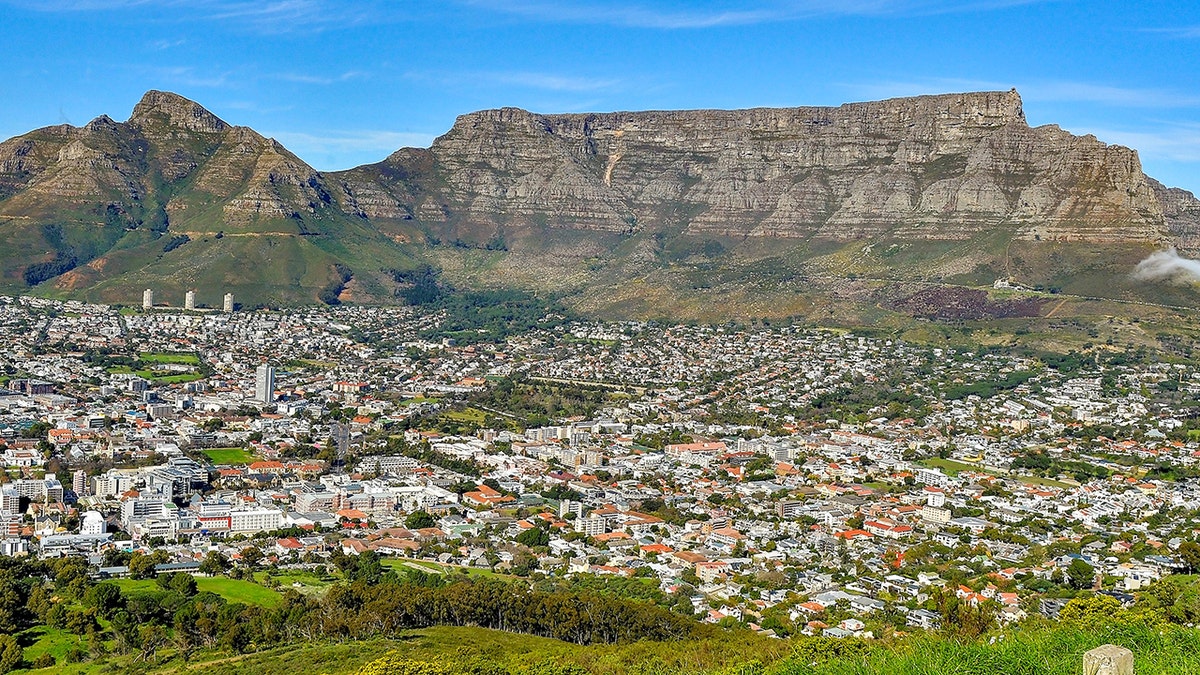
Table Mountain in South Africa

Table Mountain in Cape Town, South Africa, is pictured in July 2023. (Xabiso Mkhabela/Xinhua via Getty Images)

INCOMING TRUMP ADMIN, CONGRESS SHOWDOWN LOOMS WITH SOUTH AFRICA OVER SUPPORT FOR RUSSIA, US FOES

Pointing to those concerns, the executive order states the U.S. cannot support the South African government’s alleged commission of rights violations.

In addition to eliminating aid and assistance, the order notes the U.S. will promote the resettlement of Afrikaner refugees escaping government-sponsored, race-based discrimination -which includes racially discriminatory property confiscation.

The Secretary of State and the Secretary of Homeland Security will prioritize humanitarian relief, including admission and resettlement through the United States Refugee Admissions Program, according to the order.

CLICK HERE TO GET THE FOX NEWS APP 

Fox News Digital’s Paul Tilsley contributed to this story.

Trump Orders Halt to Aid to South Africa, Claiming Mistreatment of White Landowners

0

President Trump on Friday ordered that all foreign assistance to South Africa be halted and said his administration would prioritize the resettling of white, “Afrikaner refugees” into the United States because of what he called actions by the country’s government that “racially disfavored landowners.”

In the order, Mr. Trump said that “the United States shall not provide aid or assistance to South Africa” and that American officials should do everything possible to help “Afrikaners in South Africa who are victims of unjust racial discrimination.”

It follows Mr. Trump’s accusation on his social media site on Sunday that the South African government was engaged in a “massive Human Rights VIOLATION, at a minimum.” He vowed a full investigation and promised to cut off aid.

“South Africa is confiscating land, and treating certain classes of people VERY BADLY,” the president wrote in the post. “It is a bad situation that the Radical Left Media doesn’t want to so much as mention.”

The order was stunning in providing official American backing to long-held conspiracy theories about the mistreatment of white South Africans in the post-apartheid era.

Mr. Trump has made repeated claims without evidence that echoed those conspiracy theories. In 2018, he ordered his secretary of state to look into “the large scale killing of farmers” — a claim disputed by official figures and the country’s biggest farmers’ group.

Mr. Trump’s recent comments were in reference to a policy that President Cyril Ramaphosa of South Africa signed into law last month.

The law, known as the Expropriation Act, repeals an apartheid-era law and allows the government in certain instances to acquire privately held land in the public interest without paying compensation — something that can be done only after a justification process subject to judicial review.

The order from Mr. Trump came a day after Mr. Ramaphosa delivered his State of the Nation address with a defiance that appeared to be a reference to the American president’s accusations.

“We will not be bullied,” he said. The South African leader vowed to stand united in the face of what he called “the rise of nationalism and protectionism.”

“We will speak with one voice in defense of our national interest, our sovereignty and our constitutional democracy,” he said.

In addition to the halt in foreign aid, Mr. Trump ordered officials to provide “humanitarian” assistance to Afrikaners and to allow members of the white South African minority to seek refuge in the United States through the American refugee program.

Since the transition to democracy in 1994, the South African government has taken a willing-seller approach to try to transfer the ownership of more land to the country’s Black majority. The new law, with limited exceptions to that approach, came as many Black South Africans have argued that Nelson Mandela and other leaders did not do enough to force the white minority to give up wealth that had been accrued during apartheid.

South Africa’s colonial regimes were particularly brutal in dispossessing Black people of their land and forcefully removing them. Despite the efforts of postcolonial governments, the result remains clear to this day: White South Africans, who make up 7 percent of the population, own farmland that covers the majority of the country’s territory.

In an earlier executive order, Mr. Trump had demanded a three-month pause in the United States’ refugee program, blocking the admission of desperate people fleeing war, economic strife, natural disasters or political persecution. Friday’s order appeared to make white South Africans an exception to the broader halt.

While it is not clear whether he had an influence on the president’s order, Elon Musk, the billionaire who has become a close adviser to the president, is from South Africa. In 2023, Mr. Musk posted similar far-right conspiracy claims about South Africa on X, the social media platform he owns.

“They are openly pushing for genocide of white people in South Africa,” Mr. Musk wrote.

Mr. Ramaphosa and Mr. Musk spoke by phone after that social media post, with the South African president trying to clarify what his administration has called “misinformation” peddled by Mr. Trump.

In much of South Africa, Mr. Trump’s attacks in recent days inspired a rare bit of political unity, with leftist, centrist and even some far-right activists all saying that the American president’s characterization of the land transfer law was wrong.

His comments amplified a long-held grievance among some white South Africans who claim they have been discriminated against by the Black-led government after apartheid. But Mr. Trump’s comments also angered many South Africans, who saw the law as a necessary means of redressing historical injustice.

Since 1994, when South Africa became a democracy, the country has enjoyed a close relationship with the United States. Barack Obama visited there several times during his presidency, including when he attended the memorial service for Mr. Mandela, who had been imprisoned for 27 years before becoming the country’s president.

But Mr. Trump’s actions on Friday made it clear that he does not view the relationship in the same way.

South Africa received more than $400 million in aid from the United States in 2023, almost all of which went to funding efforts to fight H.I.V. and AIDS. The government has said that American funding makes up about 17 percent of its budget for battling H.I.V.

Far-right white Afrikaners applauded Mr. Trump’s attacks on South Africa’s government in recent days.

Ernst Roets, the executive director of the Afrikaner Foundation, which lobbies for international support of the interests of Afrikaners, said that while the government was not seizing land, it was trying to create a legal and policy framework to be able to do so.

The expropriation law opens the door to abuse, Mr. Roets said, because the government “can justify a lot of things under the banner of public interest.” But even Mr. Roets and his group had not called on Mr. Trump to broadly cut aid to South Africa, instead seeking targeted actions against government leaders.

After Mr. Trump first commented about land confiscation, the South African government tried to broker a conversation between its foreign minister and Marco Rubio, the secretary of state, according to Ebrahim Rasool, South Africa’s ambassador to the United States. But the Trump administration did not respond, he said.

Musk’s team takes control of key systems at Consumer Financial Protection Bureau : NPR

0

WASHINGTON, DC – JANUARY 9: U.S. President-elect Donald Trump’s nominee to be US Treasury Secretary, Scott Bessent, founder and chief executive officer of Key Square Group LP, walks to a meeting on Capitol Hill on January 9, 2025 in Washington, DC. Trump’s nominees for his incoming administration continue to meet with senators on Capitol Hill, weeks before his inauguration. (Photo by Jon Cherry/Getty Images)

Jon Cherry/Getty Images/Getty Images North America


hide caption

toggle caption

Jon Cherry/Getty Images/Getty Images North America

Representatives of Elon Musk’s cost-cutting team have entered the Consumer Financial Protection Bureau and gained access to internal computer systems that manage the agency’s human resources, procurement, and finance systems, according to a source familiar with the group’s actions who was not authorized to speak publicly. They have also taken control of the bureau’s social media accounts, locking out career staff.

In recent weeks, Musk has been hammering the CFPB, the watchdog agency that oversees consumer finance. In late November, he wrote on his site X: “Delete CFPB.” On Friday, Musk posted: “CFPB RIP,” though it is not clear there have been any reductions or changes to the agency’s staff yet.

Three Musk deputies who are part of the effort known as the Department of Government Efficiency or DOGE — Chris Young, Nikhil Rajpal and Gavin Kliger — were added to CFPB’s internal staff directory on Friday, according to the union representing CFPB workers, NTEU 335.

In a statement, the CFPB union said Musk’s lieutenants entering the agency was “a clear attempt to attack union workers and defang the only agency that checks the greed of payment providers, as well as auto lenders like Tesla.”

Musk is CEO of Tesla and runs five other companies.

DOGE’s actions inside the bureau are stirring fears that Musk could try to virtually dismantle the agency, as he has says he wants to do at the Education Department and the U.S. Agency for International Development. The gutting of USAID was temporarily paused by a federal judge on Friday.

The CFPB and a representative for DOGE did not return requests for comment.

Earlier this week, Treasury Secretary Scott Bessent was confirmed as CFPB’s acting director following the firing of former head Rohit Chopra.

When Bessent took over earlier this week, staff members were told to stop all of the agency’s work “unless expressly approved by the Acting Director or required by law,” according to an internal email shared with NPR. The email instructed CFPB staff not to launch or settle any enforcement actions.

The CFPB has long been a punching bag among Republicans, the banking sector, and some in Silicon Valley for its investigations, enforcement actions and fines in consumer protection cases.

Wells Fargo agreed, in 2022, to a $3.7 billion settlement with the CFPB for allegedly taking advantage of customers on their auto and mortgage loans. CFPB fined Equifax $15 million over errors tied to millions of peoples’ consumer credit reports. And last year, the agency sued Capital One claiming the bank misled customers by not paying them the savings account interest rate it was advertising.

The bureau ordered Apple and Goldman Sachs to pay $89 million in penalties for mishandling consumers’ disputed transactions.

Since its creation in the wake of the 2008 financial crisis, the bureau has returned more than $17 billion to consumers it determined had been wronged by financial firms.

Whether Facebook and Instagram owner Meta misused financial data obtained from third parties has come under the microscope of the CFPB.

The agency also proposed new rules to oversee digital payment platforms, which would include Apple Pay and Google Pay. Musk’s X is working with Visa to launch its own “X Money” payment system, according to the company, which would place the platform’s financial services under the CFPB’s oversight.

In Trump’s first term, his acting director Mick Mulvaney called the agency a “sick sad joke,” and drafted legislation to abolish it.

Since Trump took office for the second time, his billionaire supporters in the tech world have been ramping up calls for CFPB to be eliminated. Prominent venture capitalist Marc Andreessen blamed the bureau for “terrorizing financial institutions.” Andreessen is a Trump backer who is helping to advise Musk’s efforts in using DOGE to reshape the federal government.