Thursday, November 12, 2026
Home Blog Page 290

Justin Baldoni launches website with amended lawsuit, ‘timeline of relevant events’ in Blake Lively feud

0

Justin Baldoni’s team has launched a new website amid his ongoing legal battle with “It Ends With Us” co-star Blake Lively.

The website, thelawsuitinfo.com, which was published Saturday, featured a landing page with links to two PDF files, including a copy of a newly amended complaint that the 41-year-old actor filed against the 37-year-old actress and her husband, Ryan Reynolds, and another document with a 168-page “timeline of relevant events” that showcased new emails and texts related to the case. 

Both documents were filed Friday in New York federal court ahead of the case’s first hearing, which is scheduled for Monday.

Justin Baldoni has launched a website amid his ongoing legal battle with Blake Lively. (Getty)

Lively has claimed she was sexually harassed on the set of “It Ends With Us” and filed a lawsuit against Baldoni, his Wayfarer studio and former PR representatives in December. The same day Lively filed her suit, Baldoni filed a $250 million suit against The New York Times for a December article about Lively’s lawsuit and the alleged smear campaign Baldoni attempted to run against his co-star.

Weeks later, Baldoni then named Lively and Reynolds in a separate $400 million defamation lawsuit in which he accused the Hollywood power couple of attempting to hijack “It Ends With Us” and create their own narrative. 

Baldoni’s amended complaint alleged Lively had been working with The New York Times weeks before the article was published in December. 

Blake Lively and Ryan Reynolds at the premiere of "It Ends with Us."

Baldoni is suing Lively and her husband, Ryan Reynolds, for $400 million. (Cindy Ord)

The documents stated that metadata embedded within The New York Times article indicated the outlet “had already begun building its defamatory Article no later than October 31, 2024.” 

The lawsuit claimed that “careful observers reported that viewing the HTML source code for the Article revealed references to a ‘message-embed-generator’ that referred [to a] date of ‘2024-10-31.’” 

LIKE WHAT YOU’RE READING? CLICK HERE FOR MORE ENTERTAINMENT NEWS

According to the documents, The New York Times created a tool to display Lively’s texts in the article Oct. 31, which Baldoni’s legal team suggested was evidence the story was first generated on or before that date.

“It may seem unsurprising and even respectable that a news organization should work for weeks or months before publishing a purported investigative report,” the documents say. 

“But the significance of the timing of these elements of the defamatory Article is that they strip away the legal shields that Lively, the Times, and the other Lively Parties were likely relying on to protect their malicious acts of defamation, such as the litigation privilege and the fair reporting privilege.”
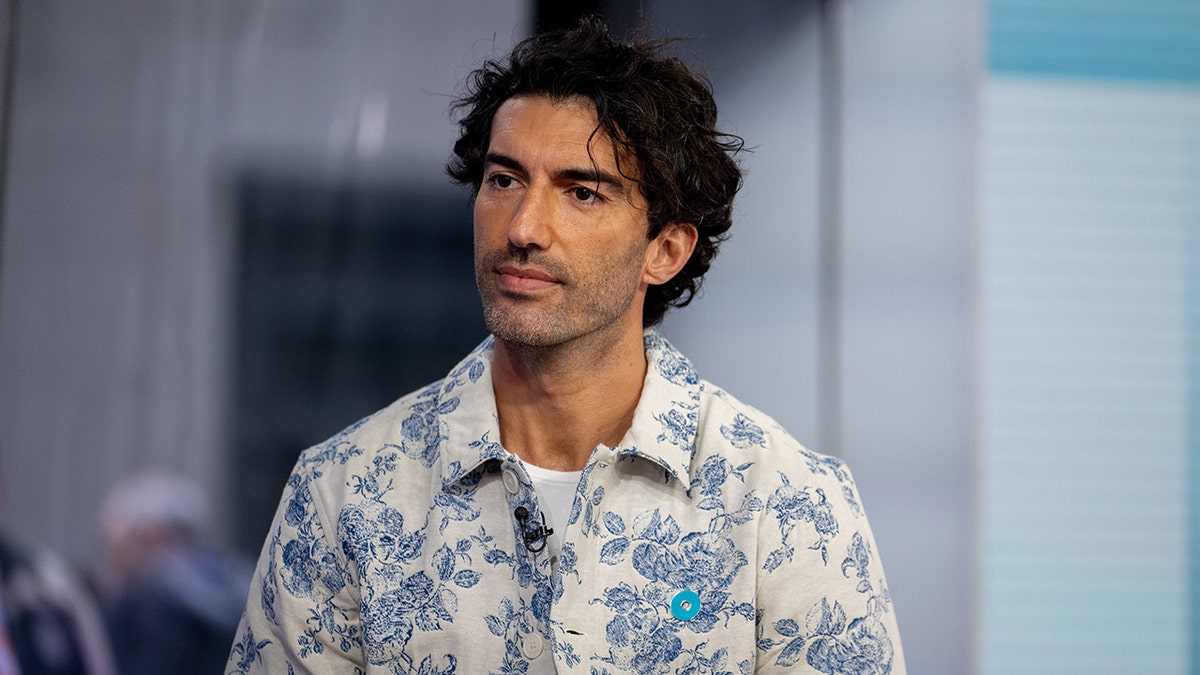
Justin Baldoni wears a floral jacket

Baldoni’s new website includes his amended lawsuit and a “timeline of relevant events.” (Nathan Congleton)

In a statement to Fox News Digital, Baldoni’s lawyer, Bryan Freedman, addressed the amended complaint. 

“The decision to amend our lawsuit was a logical next step due to the overwhelming amount of new proof that has come to light,” Freedman said.

“This fresh evidence corroborates what we knew all along, that due to a blind pursuit of power, Ms. Lively and her entire team colluded for months to destroy reputations through a complex web of lies, false accusations and the manipulation of illicitly received communications.

CLICK HERE TO SIGN UP FOR THE ENTERTAINMENT NEWSLETTER

“The ongoing public interest in this case online has ironically shed light on the undeniable facts pertaining to The New York Times and how heavily Ms. Lively and her representatives were not only deeply involved in the attempted takedown and smear campaign of Mr. Baldoni, Wayfarer Studios and their teams but that they themselves initiated it.”

Blake Lively and Justin Baldoni film on Jan. 12, 2024

The case heads to court Monday. (Jose Perez/Bauer-Griffin/GC Images)

In a statement to Fox News Digital, The New York Times Company’s representative, Danielle Rhoades Ha, pushed back against claims made in the amended lawsuit.

“The Baldoni/Wayfarer legal filings are rife with inaccuracies about The New York Times, including, for example, the bogus claim that The Times had early access to Ms. Lively’s state civil rights complaint,” she said.

CLICK HERE TO GET THE FOX NEWS APP

“Mr. Baldoni’s lawyers base their erroneous claim on postings by amateur internet sleuths, who, not surprisingly, are wrong. The sleuths have noted that a version of the Lively state complaint published by The Times carries the date ‘December 10’ even though the complaint wasn’t filed until more than a week later. The problem: that date is generated by Google software and is unrelated to the date when The Times received it and posted it.”

Representatives for Lively did not immediately respond to Fox News Digital’s request for comment.

Fox News Digital’s Tracy Wright contributed to this report.

Obama Center subcontractor files $40 discrimination lawsuit against engineering firm

0

A Chicago-based subcontractor is suing one of the firms involved in managing the construction of the Obama Presidential Center for $40 million, claiming racial discriminatory practices forced the firm to do extra work that left it at risk of bankruptcy, according to a lawsuit.

Robert McGee, the owner of II in One, which provided concrete and rebar services for the center starting in 2021, filed the lawsuit in federal court last month against New York-based Thornton Tomasetti, which oversees structural engineering and design services for the $830 million project.

McGee claims that Thornton Tomasetti changed standards and imposed new rules around rebar spacing and tolerance requirements that differed from the American Concrete Institute standards, which resulted in “excessively rigorous and unnecessary inspection” and massive overruns.

Former President Obama and his presidential center (Victor J. Blue/Bloomberg, left, and Eileen T. Meslar/Chicago Tribune/Tribune News Service via Getty Images, right.)

OBAMA BREAKS GROUND IN CHICAGO FOR MASSIVE PRESIDENTIAL CENTER PROJECT

This, McGee, claims, incurred extensive paperwork that impacted productivity and resulted in millions in losses, according to the lawsuit. 

However, Thornton Tomasetti defended its actions nearly a year ago, writing in a memo to the lawsuit that the subcontractors were “questionably qualified,” and the delays were due to their own shortcomings.

The Obama Presidential Center is being built near Jackson Park in Chicago, and will consist of a planned museum, library, community and conference facilities. The center will house the nonprofit Obama Foundation, which is overseeing the center’s development and operates a scholarship program through the University of Chicago’s Harris School of Public Policy.

McGee claims Thornton Tomasetti falsely accused II in One of lacking sufficient qualifications and experience to perform its work, while stating that non-minority-owned contractors were sufficiently qualified.

He is seeking to be paid back for roughly $40 million in construction costs the firm covered itself along with its joint venture partner, Concrete Collective.

“In a shocking and disheartening turn of events, the African American owner of a local construction company finds himself and his company on the brink of forced closure because of racial discrimination by the structural engineer,” the lawsuit reads. 

Cracking of a slab pour

In a memo, Thornton Tomasetti shared images of cracked slab and exposed rebar. (Lasuit)

“II in One and its joint venture partners… was subjected to baseless criticisms and defamatory and discriminatory accusations by the Obama Foundation’s structural engineer, Thornton Tomasetti.

However, Thornton Tomasetti claimed in an attached February 2024 memo that construction costs and delays “were all unequivocally driven by the underperformance and inexperience” of that subcontractor, II in One.

In a memo, Thornton Tomasetti shared images of cracked slab and exposed rebar.

In the memo, Thornton Tomasetti tells Obama Foundation leadership that it spent hundreds of hours reviewing, analyzing, re-designing and responding to corrective work and that contractors caused “a multitude of problems in the field.”

CHICAGO SOUTH SIDE RESIDENTS SAY THEY’RE BEING DISPLACED BY OBAMA CENTER: CAUSING ‘HARM TO BLACK FAMILIES’

Thornton Tomasetti said the challenges with the concrete were due solely to the performance of the contractors.

“We cannot stand by while contractors attempt to blame their own shortcomings on the design team,” the memo states.

The memo goes on to state that Thornton Tomasetti and an architectural firm “bent over backwards to assist what everyone knows was a questionably qualified subcontractor team in areas where more qualified subcontractor would not have required it.”

Obama Presidential Center being built

The Obama Presidential Center under construction in the 6000 block of South Stony Island Avenue on Aug. 10, 2023. (Chicago Tribune / Contributor)

The project has faced problems in the past. Construction was initially anticipated to get underway in 2018, but it was kicked back to 2021. It is scheduled to open sometime in 2026.

Some community activists claim the new center will cause prices for homes and rent to increase and may price many of those who live in the area. Environmental activists have also been critical of the project, arguing that it would remove too many trees and destroy some bird habitats.

Activists threatened to sue to block developments, but the plan to build the center was approved shortly after a lawsuit was filed, according to Newsweek. The Supreme Court denied the request to hear the case in 2021.

Pritzker and the Obamas

Illinois Governor J.B. Pritzker, left, joins former President Barack Obama and former first lady Michelle Obama in a ceremonial groundbreaking at the Obama Presidential Center in Jackson Park on Sept. 28, 2021, in Chicago, Illinois. ( Scott Olson/Getty Images)

CLICK HERE TO GET THE FOX NEWS APP

Obama has said he hopes the center would help promote the city’s South Side and bring Chicagoans together.

The Democrat downplayed those controversies during his 2021 groundbreaking speech at the site saying that the center will “plant new trees” and “provide new habitats for birds and wildlife.”

Fox News Digital contacted the Obama Foundation, Thornton Tomasetti and II in One for comment but did not receive responses before publication.

Fox News’ Michael Lew contributed to this report. 
READ THE LAWSUIT: APP USERS CLICK HERE:

Trump’s Halt on Climate Spending Freezes Jobs and Stalls Projects

0

When marble-size hail fell on Alabama in 2023, it devastated Camp Hill, a town of 1,000 where nearly half the residents live below the poverty line. Decks were demolished, cars shattered, roofs destroyed, and few people had insurance.

The community was expecting to get help this month in the form of a $20 million federal grant to help homeowners make repairs — money that came from a Biden-era law to tackle climate change.

But those funds have now been held up by President Trump’s order that all federal climate spending be paused. Even though the White House this week rescinded a sweeping directive that would have stopped trillions of dollars in grants across the federal government, a separate executive order is still in effect that halts tens of billions of dollars in energy and environmental spending.

That pause is paralyzing federal agencies, causing confusion in states and cities, delaying construction projects and forcing some companies to furlough workers.

“These are real human beings,” said Warren Tidwell, director of the Alabama Center for Rural Organizing and Systemic Solutions, which is leading the effort to repair Camp Hill’s many damaged, leaky roofs. “We have one woman in her 80s who lives alone, and if she does not get her roof fixed, well, we’re going to have a senior in her late 80s who is homeless,” Mr. Tidwell said.

The day he was sworn in, Mr. Trump issued an executive order on “Terminating the Green New Deal,” his catchall term for climate policies. The White House told federal agencies to pause and review all funding authorized by the Inflation Reduction Act and a bipartisan infrastructure law — two bills signed by former President Joseph R. Biden Jr. that invested hundreds of billions of dollars in wind and solar projects, electric vehicles and other low-carbon energy technologies.

Agencies like the Environmental Protection Agency and the Department of Energy complied by halting grants, loans and other spending.

The pause has affected a wide range of programs.

States have been blocked from receiving funds from a $7 billion program to help low-income communities install solar panels. School districts in Virginia, New York City and rural Nevada are unsure if the electric school buses they had signed contracts for will arrive. Ports in South Carolina and Tampa, Fla., had been awarded nearly $2 million apiece to clean up pollution, funds that now could be frozen. Battery companies that received federal grants to build factories don’t know when they might get paid.

White House officials declined to comment on the record.

Although the Inflation Reduction Act was passed by Democrats, 80 percent of the law’s investments so far have gone to Republican congressional districts. So far, however, many Republicans have refrained from criticizing the spending freeze. Democrats are pressing the agencies for answers and demanding a legal justification for the action.

“It’s been chaotic and confusing,” said Maren Mahoney, the director of the Arizona governor’s office of resiliency. The state received a $156 million grant last year through the E.P.A. to deploy 61 megawatts of solar energy throughout the state, with a focus on low-income and tribal communities.

Ms. Mahoney said she had been just about to make her first four hires when Mr. Trump was inaugurated and her group was unable to gain access to its money through the government’s automated system. Calls to the E.P.A. went unreturned, Ms. Mahoney said.

Jeff Landis, a spokesman at the E.P.A., said the agency was implementing Mr. Trump’s executive order.

This week in Washington State, a company called Zero Emissions Northwest, which helps rural communities secure federal grants to save energy costs, had to furlough three employees after the government halted reimbursements.

David Funk, the company’s president, said that the farmers and business owners he had been working with currently had $1.9 million in projects under construction after signing up for the Rural Energy for American Program. Participants often dip into their own savings or borrow money to do things like insulate their buildings, upgrade pizza ovens or install solar panels to offset irrigation costs. They then expect that the federal government will honor its promise to repay them for a portion of the costs.

But on Tuesday, when Mr. Funk went to submit invoices for his clients, the Department of Agriculture told him reimbursements had been paused. His clients are currently owed at least $250,000, he said.

“Farmers are losing money every day,” Mr. Funk said in an interview. He added that the program was “advancing the goals of the new administration — we are working on lowering operating costs, we are generating energy locally, and we are buying American products.”

It’s normal for a new administration to slow down agency actions briefly while it sets its priorities. “What is different is the scope and depth of these executive orders,” said Emily Hammond, a law professor at George Washington University who previously served as deputy general counsel for environment and litigation at the Energy Department.

For instance, an internal E.P.A. memo orders a halt to disbursing funds for which the government has already signed a contract to deliver the money. That means the government could be sued if it breaches its commitments.

On Friday, a federal judge ordered the Trump administration to stop blocking federal funding to 22 states for all congressionally authorized programs. It remained unclear if or when agencies might resume spending.

Under the Biden administration, the Department of Energy awarded tens of billions of dollars in grants and loans to companies that were upgrading transmission lines, building battery factories, reviving a shuttered nuclear plant and more. Some companies and contractors say that they began making investments with the expectation that they would be reimbursed but that they now don’t know when that will be.

Under Mr. Trump’s executive order, agencies have 90 days to review the paused spending, and it can move forward only after approval from key political officials. The White House says that doing so will ensure that all spending aligns with its policy priorities.

Critics say the result could be paralysis. “If that sounds insanely inefficient, that’s because it is,” said Ryan Fitzpatrick, senior director of domestic policy at Third Way, a center-left think tank. “That process could take months. We’re talking about thousands of contracts and hundreds of thousands of jobs delayed and possibly canceled.”

Some experts worried about the effects of prolonged uncertainty. Since the Inflation Reduction Act passed, companies have announced plans to invest more than $167 billion in U.S. factories to build solar panels, batteries, electric vehicles and other clean-energy technologies, according to data from Atlas Public Policy, a research firm. In addition to tax credits, some of those factories were awarded federal loans or grants.

“We’re in the middle of a very significant investment cycle,” said Mike Carr, executive director of the Solar Energy Manufacturers for America Coalition. “But there’s a risk of losing that momentum if uncertainty is introduced.”

Other federal climate grants go to poor or rural areas.

Representative Jennifer McClellan, Democrat of Virginia, said the Henrico County public school system was still waiting to hear whether a $1.3 million grant for electric school buses that the E.P.A. approved during the Biden administration would be honored.

And in central Illinois, a coalition of 13 rural school districts that won a $15 million Energy Department grant to install micro grids and buy at least one electric school bus is now worried that the districts won’t have the new equipment in place for another year, if ever.

“We’ve just kind of been ghosted,” said Tim Farquer, the superintendent of the Mercer County school district in Illinois, who is running the program.

TCU star whose brother was killed in New Orleans terror attack catches game-winning touchdown in Senior Bowl

0

A month to the day that Tiger Bech was killed in the New Orleans terror attack, his brother etched his name in Senior Bowl history.

Jack Bech, a wide receiver at TCU, caught the game-winning touchdown in Saturday’s Senior Bowl as time expired and was named the game’s MVP.

“My brother has some wings on me. He gave them to me, and he let that all take place. Our Lord and Savior Jesus Christ, Tiger, nothing else but them. They’re the reason I did what I did today. I attribute it all to them,” Jack said after the game.

SIGN UP FOR TUBI AND STREAM SUPER BOWL LIX FOR FREE

Jack Bech of TCU during Senior Bowl practice at Hancock Whitney Stadium Jan. 29, 2025, in Mobile, Ala.  (Derick E. Hingle/Getty Images)

Tiger, who played college football at Princeton, was one of the 14 victims killed in the early hours of New Year’s Day on Bourbon Street. 

CLICK HERE FOR MORE SPORTS COVERAGE ON FOXNEWS.COM

The New Orleans native played for Princeton from 2016-2018 and was an All-Ivy League kick returner. During his three-year career, he caught 53 passes for 825 yards with three touchdowns. He graduated from the university in 2021 and pursued a career in finance. 

He was working as a stockbroker in New York City but traveled back home to Louisiana for the holidays. 

Tiger Bech

Former Princeton football player Tiger Bech, 27, was killed in the Bourbon Street attack. (2018 Beverly Schaefer via Princeton Athletics)

Jack said while his success this week will hopefully improve his draft stock, he’d trade it all for a brotherly hug.

DEION SANDERS’ SON LIKENS HIMSELF TO TRUMP WHEN DISCUSSING PEOPLE WHO ‘ALWAYS JUST TRY TO DESTROY YOU’

“It’s been surreal just to be able to come and be in this game. It’s a goal you set for yourself. But if I had the option if I came here, had the worst week ever, ruin my draft stock, but that means I could hug my brother right now, I would take that. 

“But, on the flip side of that, I don’t think I could have had the week that I had if all that wouldn’t have happened. His wings were on my side. Him and Jesus Christ are the reasons I was able to do all of this,” he said.

tiger bech princeton

Ex-Princeton football player Tiger Bech pictured alongside family.  (Fox News )

CLICK HERE TO GET THE FOX NEWS APP

“All the big brother does in life is want to see his little brother succeed. He’s been my role model my whole life, the person I looked up to, the person I wanted to be. He was the best big brother I could ever ask for. My whole goal in the rest of my life is to live his legacy on.”

Jack was part of the American team that earned the 22-19 victory.

Follow Fox News Digital’s sports coverage on X, and subscribe to the Fox News Sports Huddle newsletter.

Israel and Hamas Exchange 3 Hostages and More Than 180 Prisoners

0

Hamas gunmen released three more hostages and Israel freed more than 180 Palestinian prisoners on Saturday, quickly conducting the latest exchange in a tense cease-fire deal and avoiding the chaos that marked a drawn-out transfer earlier this week.

Hamas released two of the hostages, Yarden Bibas, 35, and Ofer Kalderon, 54, in a highly theatrical ceremony in Khan Younis, in the southern Gaza Strip. The group then released the third hostage, Keith Siegel, a 65-year-old American Israeli, in a separate ceremony in Gaza City. The three, escorted by Red Cross workers, then headed to hospitals in Israel, where they reunited with their families after 15 months in captivity.

In exchange, Israel said it had released 183 Palestinian prisoners. Buses carrying the freed Palestinians reached the city of Ramallah in the Israeli-occupied West Bank, according to video from the scene, where a crowd of people greeted them. The Red Cross also brought a group of freed prisoners to the European Hospital in Khan Younis, according to a doctor there and a Hamas-linked Palestinian prisoner information center.

Israelis watched live broadcasts of the hostages being released from what has become known as “Hostage Square” in Tel Aviv, cheering as the three were handed over. Relatives expressed relief and joy, as well as sadness that their family members had spent so much time in captivity.

“This moment came 484 days too late,” Ifat Kalderon, Mr. Kalderon’s cousin, said in an interview with Kan News, the Israeli public broadcaster. “But it has finally happened.”

In Khan Younis, some Gazans cried and others were joyous when the freed prisoners arrived at the European Hospital, according to Saleh al-Homs, the doctor there.

Some of those released had been serving life sentences in Israel after being convicted of involvement in deadly attacks. Israelis view these prisoners as murderous terrorists and have lamented their release. But Palestinians often view them as freedom fighters against Israel.

“They were happy to see the prisoners return,” Dr. al-Homs said, “but saddened by the heavy price that was paid.”

More than 45,000 Gazans have been killed in Israel’s devastating bombing and ground campaign, according to Gazan health officials, who do not distinguish between civilians and combatants. In the Hamas-led attack on Oct. 7, 2023, that set off the war, about 1,200 people were killed and another 250 were abducted, according to Israeli officials.

The exchange on Saturday was the fourth in a multiphase cease-fire deal that Israel and Hamas agreed to last month. Under the deal, Hamas pledged to free at least 33 of the 97 remaining hostages over the first six weeks, in exchange for more than 1,500 Palestinians jailed by Israel. More than 30 of the remaining hostages are believed to be dead. Mediators hope the deal will lead to the end of the war, which has left wide swaths of Gaza in ruins.

As the hostage and prisoner exchange took place, another milestone in the cease-fire deal was reached, as sick and wounded people were allowed to leave Gaza for Egypt through the Rafah border crossing for the first time in nearly nine months.

Reopening the crossing, a major conduit connecting Gaza to the outside world, was a central piece of the cease-fire agreement. The crossing closed after Israel invaded Rafah, the southernmost city in Gaza, in May.

But officials in the Gaza Health Ministry said that only 50 out of the thousands of ill and injured people in need of treatment outside Gaza would be able to cross on Saturday. Dr. Rik Peeperkorn, a World Health Organization official, said 12,000 to 14,000 people require treatment outside Gaza for severe injuries and chronic illnesses.

The rapid release of the three hostages on Saturday contrasted with the frenzied scenes of an exchange on Thursday, when militants struggled to control crowds of jeering Palestinians who surrounded two hostages. Israel then delayed releasing more than 100 Palestinian prisoners until it said it had received guarantees that the chaos would not be repeated.

On Saturday, rifle-wielding Hamas fighters staged theatrical ceremonies intended in part to showcase the group’s control in Gaza, despite the death of many of its commanders.

Masked gunmen set a wide perimeter around both of the areas where Hamas delivered the three hostages to the Red Cross. Small crowds gathered on the outskirts to watch the handoffs. They did not appear to press forward as Mr. Kalderon, Mr. Bibas and Mr. Siegel were marched onto stages with music blasting.

In Gaza City, where militants released Mr. Siegel, an emcee’s voice boomed over a loudspeaker, praising Hamas’s armed wing.

Black-clad militants paraded Mr. Siegel, looking pale and gaunt, across a stage for their cameras.

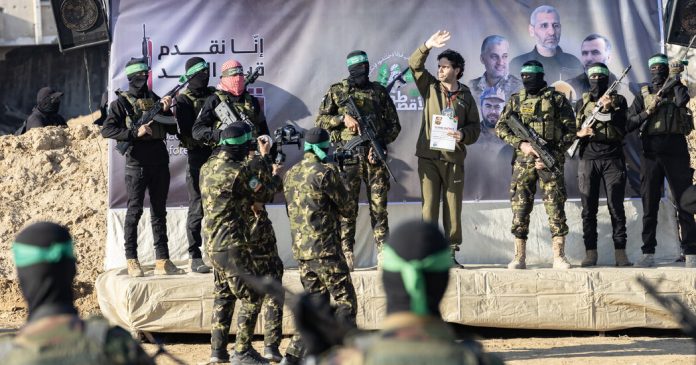
Before the exchange, Hamas fighters stood in formation onstage, a banner behind them declaring that “Nazi Zionism Will Not Win.” They held up portraits of Hamas commanders killed in the war.

Hamas released Mr. Bibas without his wife, Shiri, and their two children, Ariel, who was 4, and Kfir, who was 9 months old when they were kidnapped during the Oct. 7 attack.

Hamas said last year that Ms. Bibas and the two children had been killed in an Israeli airstrike, a claim Israeli officials have not confirmed. Rear Adm. Daniel Hagari, an Israeli military spokesman, said last week that the military was “gravely concerned” for the mother and children. All the other children seized in the Oct. 7 attack were released during the 2023 cease-fire.

Video from the day of the Hamas-led attack showed a distraught Ms. Bibas clutching her two children to her chest — images that became searing symbols for many Israelis of the cruelty of the Oct. 7 assault. Hostage families and their supporters have carried orange balloons and worn orange shirts in honor of the Bibas children, who had red hair.

After Mr. Bibas was released on Saturday, the Israeli government shared a video of him being reunited with his father and sister, who hugged him and kissed him.

Mr. Kalderon was met by his children in a hospital just outside Tel Aviv, according to the Israeli government. In video that it shared, Mr. Kalderon’s children can be seen weeping and laughing as they embrace him. Two of his children were also abducted in the Oct. 7 assault and were released in that year’s cease-fire.

Mr. Siegel was the first dual American-Israeli hostage to be released from captivity since the latest cease-fire went into effect two weeks ago. Israeli authorities have indicated that they believe that two other American-Israeli hostages are still alive in Gaza.

In Khan Younis, Dr. al-Homs said many of the Palestinian prisoners freed on Saturday had lost weight, and a few needed support to walk after enduring tough conditions in Israeli jails.

“Some of them — maybe four or five — I knew personally, they also worked in the health ministry,” he said in a phone interview. “But I struggled to recognize them.”

Among those released on Saturday was Shadi Amouri, who was serving multiple life sentences for his involvement in a 2002 suicide bombing that killed 17 people in Israel, most of them off-duty soldiers. Mr. Amouri, like six of the other Palestinians released on Saturday, will be expelled to another country and not allowed to return to his home in the West Bank, according to the cease-fire terms.

Another Palestinian freed on Saturday was Mohammad El Halabi, a humanitarian worker whose conviction in Israel on charges of funneling aid funds to Hamas prompted an outcry from rights groups. His employer, World Vision — a well-known Christian relief organization — said an independent investigation had found no evidence of wrongdoing, and Mr. Halabi’s family and lawyer also disputed the accusations.

The exchange on Saturday came as Arab nations presented a united front against President Trump’s recent call for Egypt and Jordan to take in Gazans, as part of an effort to, in Mr. Trump’s words, “clean out” the enclave.

Egypt and Jordan immediately spurned that suggestion and on Saturday the two countries were joined by Saudi Arabia, United Arab Emirates and Qatar.

They issued a joint statement warning that any plan that encouraged the “transfer or uprooting of Palestinians from their land” would threaten stability in the region and “undermine the chances of peace and coexistence among its people.”

Recapping President Trump's 2nd week in office

0

What mattered, what didn’t and what changed in the second week of the Trump administration.

Third soldier inside Black Hawk helicopter involved in DC mid-air collision identified

0

Join Fox News for access to this content

You have reached your maximum number of articles. Log in or create an account FREE of charge to continue reading.

By entering your email and pushing continue, you are agreeing to Fox News’ Terms of Use and Privacy Policy, which includes our Notice of Financial Incentive.

Please enter a valid email address.

The Army has identified the third solider who was *inside the Black Hawk helicopter involved in Wednesday’s deadly midair collision near Reagan National Airport after it had been initially withheld. 

Cpt. Rebecca M. Lobach, of Durham, North Carolina, served as an aviation officer in the Army from July 2019 and had around 500 hours of flying time in the Black Hawk under her belt. 

Lobach’s family had initially asked for her identity to be withheld because of unsubstantiated accusations that DEI was a factor in the crash. 

Cpt. Rebecca M. Lobach, of Durham, North Carolina, served as an aviation officer in the Army from July 2019 and had around 500 hours of flying time in the Black Hawk under her belt.  (Getty/US Army)

The crew chief and Lobach’s other fellow pilot inside the Black Hawk were identified on Thursday as Ryan O’Hara and Chief Warrant Office 2 Andrew Eaves. 

Their helicopter collided with an American Airlines regional jet landing at Reagan from Wichita, Kansas, Wednesday evening while the soldiers were on a training mission, killing all 64 on the plane and the three in the helicopter. 

CLICK HERE TO GET THE FOX NEWS APP

The cause is under investigation.  

Why Trump Is Imposing Tariffs on Mexico

0

President Trump on Saturday ordered 25 percent tariffs on all Mexican exports to the United States and a similar levy on all Canadian goods, except for a 10 percent tariff on Canadian energy. His move sent shock waves through both nations, whose leaders have warned that the tariffs will harm all three countries and disrupt their deeply interwoven economies.

On his first day in office, Mr. Trump had vowed to impose punitive tariffs on Mexican and Canadian exports on Feb. 1, to force the two countries to better secure their borders against the flow of undocumented migrants and drugs.

The tariffs target the United States’ closest neighbors and key trading partners. Mexico became the United States’ largest trading partner last year, exporting a variety of goods, including automobiles and avocados, while Canada is the largest foreign supplier of crude oil to the United States.

Mexican officials have criticized the tariffs, arguing that they will not only harm Mexico’s economy, but will also hurt U.S. companies that have production plants in Mexico, including General Motors and Ford. American consumers are also likely to see higher prices for fruits, vegetables and other products.

President Claudia Sheinbaum of Mexico said on Friday that the country was “prepared for any scenario.” She has suggested that Mexico could retaliate with tariffs of its own.

Here is what to know about the tariffs:

Mr. Trump placed Mexico and the U.S. southern border at the center of his presidential campaign, railing against record levels of undocumented immigrants entering the United States, as well as the movement of fentanyl into the country. (Border crossings are currently at significantly lower than the record levels in 2023.)

Mr. Trump accused Mexico of allowing a “mass migration invasion” into the United States, claiming that this had brought “crime, and drugs,” crushed wages and overwhelmed school systems.

It is not the first time Mr. Trump has used tariffs as a strategy to achieve policy objectives involving immigration.

During his first term, he threatened to impose taxes on Mexican products to pressure the country’s president at the time, Andrés Manuel López Obrador, into cracking down on migration.

As a result, Mexico deployed National Guard officers across the country to take on illegal immigration and agreed to the expansion of a program that allowed migrants seeking asylum in the United States to remain in Mexico while their legal cases proceeded.

Mexico has significantly increased immigration enforcement in recent years, particularly during the Biden administration. It has added hundreds of immigration checkpoints across the country, including along once-deserted sections of the border, conducted inspections on commercial bus routes and drastically increased detentions.

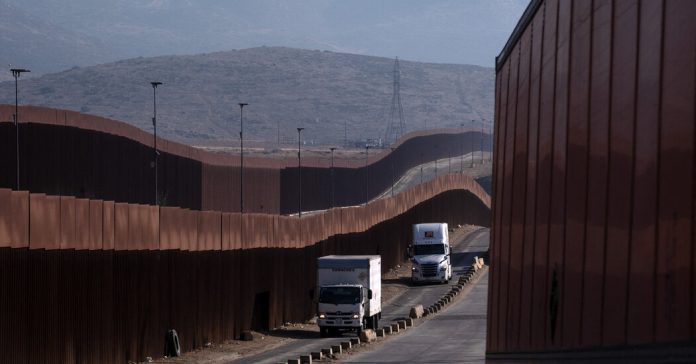
To deter people from reaching border cities like Tijuana, a top migrant entry point near San Diego, Mexican authorities raided hotels and safe houses, increased security at official crossings and installed new border checkpoints where migrants were passing through a gap in a wall.

Mexico also moved migrants away from the border, using chartered flights and buses to drop large numbers of people in southern cities like Villahermosa. The strategy contributed to a plunge in apprehensions of people trying to cross along the southern border at the start of last year.

The government also introduced bureaucratic obstacles for migrants trying to make it to the United States. At one point, it stopped issuing documents that allowed migrants and refugees to stay in Mexico.

Karoline Leavitt, the White House press secretary, alluded to these actions this past week when she said the Trump administration had seen “a historic level of cooperation from Mexico” on border security.

Ms. Sheinbaum has taken a far tougher line than her predecessor in cracking down on the criminal groups involved in the fentanyl trade.

Mr. López Obrador prioritized tackling the social and economic root causes of drug crime over enforcement actions. But during Ms. Sheinbaum’s first four months in office, Mexican security forces have conducted major seizures of fentanyl and stepped up operations to locate and destroy clandestine fentanyl laboratories. Security forces have also targeted key members of the Sinaloa cartel, the powerful criminal organization largely responsible for the fentanyl pouring over the southern border.

In December, Mexican security forces seized more than a ton of fentanyl, the equivalent of more than 20 million doses of fentanyl pills, in what Ms. Sheinbaum described as “the largest mass seizure of fentanyl pills ever made.”

Mexico’s security minister, Omar García Harfuch, announced this past week that since Ms. Sheinbaum took office on Oct. 1, more than 10,000 people had been arrested on serious criminal charges, including homicide. Mexican authorities also have seized 90 tons of drugs, including more than 1.3 tons of fentanyl, and destroyed more than 139 laboratories, Mr. Garcia Harfuch said.

Some of the most decisive efforts to curb rampant violence have focused on the state of Sinaloa, where rival factions of the Sinaloa cartel have turned the state into a war zone after Ismael “El Mayo” Zambada Garcia, a top leader of the cartel, was lured onto a plane under false pretenses and sent to the United States, where he is under indictment.

Though there is no evidence that these enforcement actions have made a significant dent in the Sinaloa cartel’s production abilities, analysts say that it has sent a clear message about Mexico’s commitment to make good on Mr. Trump’s demands.

“There are thousands of clandestine fentanyl kitchens in Sinaloa alone, and the drug is so immensely profitable the cartel is not just going to hand it over to the authorities,” said Eduardo Guerrero, a Mexican security analyst.

“But the important thing was to show that Mexico is working harder and faster and making good in this promise to produce results,” he added.

Mexico has also recently passed a constitutional reform to prohibit the production, distribution and sale of chemical precursors needed to manufacture fentanyl. It has also increased laws around offenses related to fentanyl.

After Mr. Trump’s victory, Ms. Sheinbaum said he should consider what Mexico has done to curb the flow of fentanyl and illegal immigration.

In a letter to Mr. Trump, Ms. Sheinbaum said a “comprehensive” migration policy to care for migrants arriving in Mexico from different countries and seeking to reach the United States had led to a 75 percent drop in encounters along the United States-Mexico border from December 2023 to November 2024.

Half of the migrants who arrived in the United States entered with a legal appointment to claim asylum since the United States introduced an app that allowed migrants to make those appointments, she added. (The Trump administration has shut down the app-based entry program.)

“For these reasons, migrant caravans no longer arrive at the border,” she said.

Ms. Sheinbaum, in the same letter, reiterated Mexico’s “willingness to prevent the fentanyl epidemic” from continuing to take a toll in the United States, and highlighted enforcement actions that resulted in the seizure of tons of synthetic drugs.

Transgender best actress Oscar nominee apologizes for old tweets criticizing George Floyd, Islam

0

Karla Sofía Gascón, the first openly trans actor to be nominated for an Oscar, apologized and ditched X after multiple controversial tweets were resurfaced.

Gascón, who is currently a contender for the Academy Award for “Best Actress” after starring in the movie “Emilia Pérez,” faced backlash for old social media posts about Islam and George Floyd. 

In one 2020 post that was reportedly viewed and translated from Spanish by Variety magazine, Gascón shared a photo of a Muslim family in a restaurant, and wrote, “Islam is marvelous, without any machismo. Women are respected, and when they are so respected they are left with a little squared hole on their faces for their eyes to be visible and their mouths, but only if she behaves. Although they dress this way for their own enjoyment. How DEEPLY DISGUSTING OF HUMANITY.”

This was not the only post from the performer criticizing Islam, however, as Gascón also proposed in 2020, “Until we ban religions that go against European values and violate human rights, such as Islam, under the protection of freedom of worship, we will not end part of the huge problem we face.”

DEMI MOORE’S OSCAR NOMINATION MARKS CAREER HIGH AFTER NEARLY QUITTING HOLLYWOOD

Oscar nominee Karla Sofía Gascón ditched the X platform after controversial posts resurfaced. ((Photo by Medios y Media/Getty Images))

TEEN GIRLS OPEN UP ON TRANS ATHLETE SCANDAL THAT TURNED THEIR HIGH SCHOOL INTO A CULTURE WAR BATTLEGROUND

The performer slammed other religions by name, writing in a 2021 post, “I am so sick of so much of this sh–, of islam, of christianity, of catholicism and of all the f—ing beliefs of morons that violate human rights.”

In a post from 2020, shortly after the death of George Floyd, the performer wrote, “I really think that very few people ever cared about George Floyd, a drug addict swindler, but his death has served to once again demonstrate that there are people who still consider black people to be monkeys Without rights and consider policemen to be assassins. They’re all wrong.”

The Academy Awards nominee had also criticized the Oscars in 2021, “More and more the #Oscars are looking like a ceremony for independent and protest films, I didn’t know if I was watching an Afro-Korean festival, a Black Lives Matter demonstration or the 8M. Apart from that, an ugly, ugly gala.”

Since then, Gascón appears to have ditched the X platform and apologized for the controversial statements, telling The Hollywood Reporter in Spanish, “I’m sorry, but I can no longer allow this campaign of hate and misinformation to affect neither my family nor me anymore, so at their request I am closing my account on X.” 

The performer also claimed to have been “threatened with death, insulted, abused and harassed to the point of exhaustion.”

Film-Oscars-Executives

Karla Sofía Gascón is the first openly trans actor to be nominated for an Oscar. (Matt Sayles/Invision/AP)

“I want to acknowledge the conversation around my past social media posts that have caused hurt,” Gascón said in a statement provided by Netflix. “As someone in a marginalized community, I know this suffering all too well and I am deeply sorry to those I have caused pain. All my life I have fought for a better world. I believe light will always triumph over darkness.”

Fox News Digital reached out to Gascón’s management and did not receive an immediate reply.

CLICK HERE TO GET THE FOX NEWS APP

Life in Goma After a Rebel Takeover

0

After a week of fighting, rebels backed by Rwanda have wrested almost full control over Goma, a city of two million in the eastern Democratic Republic of Congo.

Hospitals are overflowing with the wounded, and the city morgue with the dead. Goma’s residents are beginning to emerge from their hiding places, desperately searching for water and food. And the Congolese military that was supposed to protect them has been vanquished.

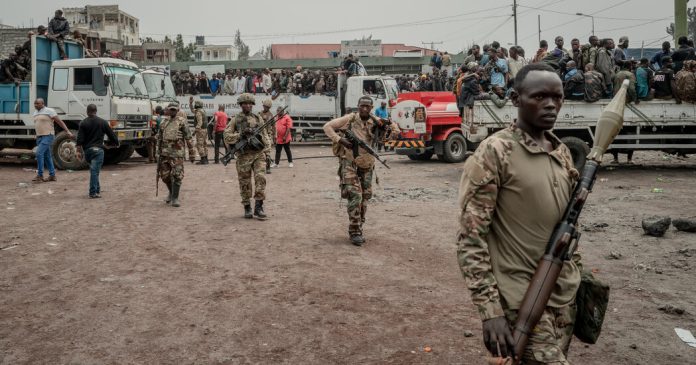
On Thursday, in a yard outside Goma’s biggest stadium, rebels with the Rwanda-backed M23 militia loaded more than 1,000 soldiers they had captured into truck beds, where the men stood packed together. Most wore the uniforms they were captured in. Many of them were furious.

But the curses they spat were not directed at their captors; rather, at Felix Tshisekedi, the Congolese president, whom they accused of selling them out, and at the military commanders who had abandoned them. Their commanders, together with government officials, had left behind their vehicles, seen in videos and photographs, and boarded boats in the early hours of Monday morning as M23 arrived in the city, escaping across a moonlit lake while leaving their men to fight alone.

Many of the soldiers in the trucks had fought on, alongside armed groups known locally as the Wazalendo. But no reinforcements had been sent.

“Tshisekedi will pay for this,” one soldier shouted.

“We’ll capture him with our own hands,” another said.

“God will pay him back,” yelled another.

A commander of the 231st infantry battalion of the Congolese Army — known by its French acronym, F.A.R.D.C. — climbed down from the cabin of one of the trucks, where his seniority had earned him a comfortable spot. The captured commander, Lt. Col. John Asegi, explained that they had no choice but to surrender. M23 was taking them somewhere to give them some training, he said, adding that they would now do whatever their new masters commanded.

“If we are sent to fight the F.A.R.D.C.,” he said, “we will fight the F.A.R.D.C.”

As the M23 rebels strode around the yard preparing for the trucks’ departure, they looked more like an army with their rocket-propelled grenades, fatigues and helmets, while the Congolese soldiers looked like a tired, ragtag rebel group.

The rebels, who already control vast tracts of mineral-rich Congo, have said they plan to march to the capital, Kinshasa, nearly a thousand miles to the west, and take over the whole country.

The rebels had already handed over to Rwanda hundreds of captured Romanian mercenaries who had been fighting alongside Congolese forces.

Hundreds of civilians stood around the trucks full of soldiers, watching this reversal of roles, and getting a good look at the men who were now in charge. A dozen women and children were crying inconsolably, having just spotted their husbands and fathers among the men in the trucks.

“I don’t know where they’re taking him to,” wept Marie Sifa, who had a baby girl on her back and three other children in tow. She was from Fizi, 270 miles south of Goma, she said, and she lost everything in the attack on Minova last week. They sought shelter in a school, but they could not stay.

“We have been chased out of the school,” Ms. Sifa said, crying as if she were in mourning. “How will I survive? How will I get these children back to Fizi?”

Later on Thursday, a rebel leader, Corneille Nangaa, gave Goma’s citizens a taste of their new reality under the powerful militia — which some experts say counts 6,000 troops in eastern Congo, backed by up to 4,000 Rwandan troops.

“Go back to normal activities,” Mr. Nangaa told Goma’s residents at a two-hour news conference at a local hotel. He was flanked by men in helmets and battle gear.

But the situation in Goma, a city built around black lava streams from a nearby live volcano, is far from normal.

Dead bodies lie in the streets. Stores, supermarkets, and humanitarian agencies’ warehouses have been looted. Cholera is breaking out. People with bullet wounds — those who survived — are finally managing to get to clinics for treatment, only to find a lack of medicine and of surgical staff.

And many families who were split up as they fled have yet to find each other.

Elysée Mopanda lost track of her two children in the chaos. The rebels were holding her husband, a soldier, prisoner. The events of the past week had left her family in ruins.

“I don’t know where to go,” she said.

Wounded, harrowed, hungry, thirsty or lost, many of Goma’s residents are in an extremely precarious situation.

Most vulnerable is Goma’s displaced population, which numbers in the hundreds of thousands.

For more than a year, people have fled the rebel advance through eastern Congo’s countryside and small towns, seeking refuge in and around Goma, in sprawling, unsanitary camps that are particularly dangerous for women and girls.

As M23 closed in on these camps last week, thousands of people who had been barely surviving there fled the clashes, carrying the little they had on their heads toward Goma, which would itself soon be overtaken.

Three families who fled one of the camps just outside Goma hid in an educational center, surviving on some beans and rice they were given.

Without that kindness, “I don’t know how we would have survived,” said Furaha Kabasele, a 34-year-old mother whose youngest child is only 5 months old.

They did survive this perilous week. But they have no idea what they will do now.

For many, the most pressing need is water. The city’s water supply, as well as its power and internet, was cut during the battle for Goma, and those who had managed to save some watched it dwindle over the week. Those who had no water tried to beg it from those who did, or paid a hawker as much as $5.20 for a jerrycan that usually costs 20 cents.

As the fighting subsided, hundreds of people have ventured to the edge of Lake Kivu to collect water, adding a little chlorine to try to keep waterborne diseases at bay.

One of those fetching water on Thursday morning was Tailor Mukendi, 13, who carried two stained yellow jerrycans to the lakeshore, took off his flip-flops, and plunged into the shimmering lake. As the fighting blazed, his family had run out of water to drink.

“We couldn’t leave the house because of the gunshots and the bombs falling,” he said.

He filled the cans, and struggled to lug them out of the lake.