Thursday, November 12, 2026
Home Blog Page 298

How the World Is Reeling From Trump’s Aid Freeze

0

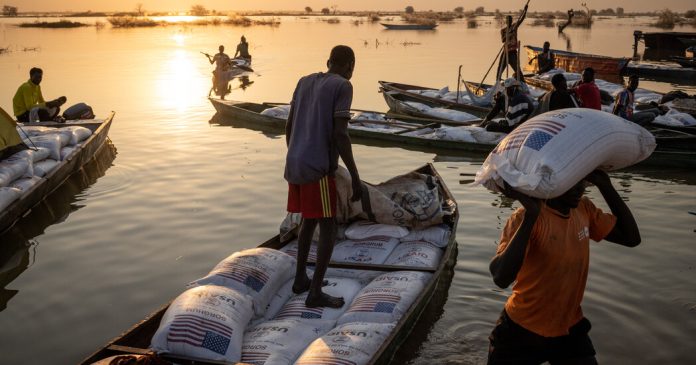
In famine-stricken Sudan, soup kitchens that feed hundreds of thousands of civilians trapped in a war zone have shut down.

In Thailand, war refugees with life-threatening diseases have been turned away by hospitals and carted off on makeshift stretchers.

In Ukraine, residents on the frontline of the war with Russia may be going without firewood in the middle of winter.

Some of the world’s most vulnerable populations are already feeling President Trump’s sudden cutoff of billions of dollars in American aid that helps fend off starvation, treats diseases and provides shelter for the displaced.

In a matter of days, Mr. Trump’s order to freeze nearly all U.S. foreign aid has intensified humanitarian crises and raised profound questions about America’s reliability and global standing.

“Everyone is freaking out,” Atif Mukhtar of the Emergency Response Rooms, a local volunteer group in the besieged Sudanese capital, Khartoum, said of the aid freeze.

Soon after announcing the cut off, the Trump administration abruptly switched gears. Secretary of State Marco Rubio said this week that “life-saving humanitarian assistance” could continue, offering a respite for what he called “core” efforts to provide food, medicine, shelter and other emergency needs.

But he stressed that the reprieve was “temporary in nature,” with limited exceptions. Beyond that, hundreds of senior officials and workers who help distribute American aid had already been fired or put on leave, and many aid efforts remain paralyzed around the world.

Most of the soup kitchens in Khartoum, the battle-torn capital of Sudan, have shut down. Until last week, the United States was the largest source of money for the volunteer-run kitchens that fed 816,000 people there.

“For most people, it’s the only meal they get,” said Hajooj Kuka, a spokesman for the Emergency Response Rooms, describing Khartoum as a city “on the edge of starvation.”

After the American money was frozen last week, some of the aid groups that channel those funds to the food kitchens said they were unsure if they were allowed to continue. Others cut off the money completely. Now, 434 of the 634 volunteer kitchens in the capital have shut down, Mr. Kuka said.

“And more are going out of service every day,” he added.

Many of the aid workers, doctors and people in need who rely on American aid are now reckoning with their relationship with the United States and the message the Trump administration is sending: America is focusing on itself.

“It feels like one easy decision by the U.S. president is quietly killing so many lives,” said Saw Nah Pha, a tuberculosis patient who said he was told to leave a U.S.-funded hospital in the Mae La refugee camp, the largest refugee camp on the Thai-Myanmar border.

Mr. Nah Pha, who fled Myanmar in 2007 to escape the fighting there, said the staff gave him a week’s supply of medicine and told him that was all they could provide. “Once my medicine runs out, I have nowhere else to get it,” he added.

The public health implications of the aid freeze are broad, health workers say. In Cambodia, which had been on the cusp of eradicating malaria with the help of the United States, officials now worry that a halt in funding will set them back. In Nepal, a $72 million program to reduce malnutrition has been suspended. In South Africa and Haiti, officials and aid workers worry that hundreds of thousands of people could die if the Trump administration withdraws support for a signature American program to fight H.I.V. and AIDS.

Some programs that don’t fit the category of lifesaving aid remain frozen, while others are explicitly barred because they fall outside of the administration’s ideological bounds, including any help with abortions, gender or diversity issues.

The United Nations Population Fund, the U.N.’s sexual and reproductive health agency, said that because of the funding freeze, maternal and mental health services to millions of women in Afghanistan, Pakistan, Gaza, Ukraine, and other places had been disrupted or eliminated. In Afghanistan, where the Taliban has banned women from working, 1,700 Afghan women who worked for the agency would no longer be employed.

At stake is not just the good will that the United States has built internationally, but also its work to promote America’s security interests. In Ivory Coast, an American-sponsored program collecting sensitive intelligence on Al Qaeda-related incidents has been interrupted.

In the Democratic Republic of Congo, some of the funding to United Nations agencies supporting more than 4.5 million people displaced by a rapidly growing conflict in the country’s east has been frozen, according to a U.S. humanitarian official on the continent.

Even with Mr. Rubio’s announcements that lifesaving efforts could resume, much of the American aid system in Africa remained paralyzed by the confusion and disruptions, including in conflict-hit areas where every day counts.

“When they issue these broad orders, they don’t seem to understand what exactly they are turning off,” said Jeremy Konyndyk, a former senior U.S.A.I.D. official under the Biden administration who is now the president of Refugees International. “They’re pulling levers without knowing what’s on the other end.”

Some of the roughly $70 billion in annual foreign aid approved by Congress has been directed at supporting civil society in countries with authoritarian regimes, especially in places where the United States sees democratic gains as furthering American security or diplomatic interests.

In Iran, where the work of documenting detentions, executions and women’s rights abuses is done by outside entities funded by the United States, activists say the U.S. pullback now means that there will be few entities holding the Iranian government accountable.

A Persian-language media outlet funded by the U.S. government said their employees were working on a voluntary basis to keep the website going for now, but they had fired all their freelancers. Without money, they said they could not keep going.

“While Trump campaigned on a promise of maximum pressure on the Iranian government, his decision to cut funding for dozens of U.S.-supported pro-democracy and human rights initiatives does the opposite — it applies maximum pressure on the regime’s opponents,” said Omid Memarian, an expert on Iran’s human rights issues at DAWN, a Washington-based group focused on American foreign policy.

In Cambodia, Pa Tongchen, 25, was relying on American funding for journalism in a country where nearly all independent media has been crushed. He was scheduled to start work on Feb. 3 as a staff reporter at a media outlet run by a nonprofit that was set up with U.S. support.

Mr. Pa said he had hoped to shine a light on corruption through his work. “I want to help people who are vulnerable in our society,” he said. “They are ignored if no journalists report about them.”

In Egypt, where the United States funds scholarships for more than 1,000 undergraduate students at private and public universities, students were left in limbo.

“I was in real shock, and I didn’t know what to do, especially since they told us to leave the dorm immediately,” said Ahmed Mahmoud, 18, a student who was about to start classes next semester at the American University but instead had to throw all his belongings into five boxes.

The fallout from the aid freeze is likely to reverberate geopolitically, giving American rivals, like China, a window of opportunity to present itself as a reliable partner.

“That will set China apart from the U.S. to win the hearts and minds of many of the global south countries,” said Jingdong Yuan, director of the Stockholm International Peace Research Institute’s China and Asia Security program.

In Africa, America’s well-run aid machinery was one of the factors that differentiated the United States from China and Russia. While Moscow deploys mercenaries and Beijing mines for rare minerals, Washington has reached across the continent with aid programs worth billions of dollars that not only save lives, but also provide a powerful form of diplomatic soft power.

Now much of that is in doubt. In Africa’s war zones, some are already regretful of their dependence on American aid.

“It was our fault to rely so heavily on one donor,” said Mr. Atif, of the Emergency Response Rooms in Sudan. “But this has really shocked us. You can’t take food off people who are starving. That’s just insane.”

On the border of Thailand and Myanmar, the implications of Mr. Trump’s decision were stark. There, a four-year civil war and decades of fighting between Myanmar’s military junta and ethnic armies have pushed thousands of refugees into Thailand.

Saw Tha Ker, the camp leader for the Mae La camp, said he was told on Friday by the International Rescue Committee, a group that receives U.S. funding, that it would stop supporting medical care, water and waste management for all of the seven refugee hospitals managed by his camp.

“The first thought that came to my mind was that whoever made this decision has no compassion at all,” said Mr. Tha Ker.

Mr. Tha Ker said he and his staff had to tell 60 patients in one hospital that they had to go home. Videos posted on social media showed men carrying patients on makeshift stretchers through unpaved streets.

“We explained to them that the hospital itself is like a person struggling to breathe through someone else’s nose,” he added. “Now that the support has stopped, it feels like we are just waiting for the end.”

Reporting was contributed by Mujib Mashal in New Delhi, Pamodi Waravita in Colombo, Bhadra Sharma from Kathmandu, Elian Peltier in Dakar, Vivian Yee and Rania Khaled in Cairo, Daniel Politi in Buenos Aires, David C. Adams in Florida, Leily Nikounazar in Brussels and Sun Narin in Phnom Penh.
6 things to know about the federal workforce that Trump wants to cut : NPR

0

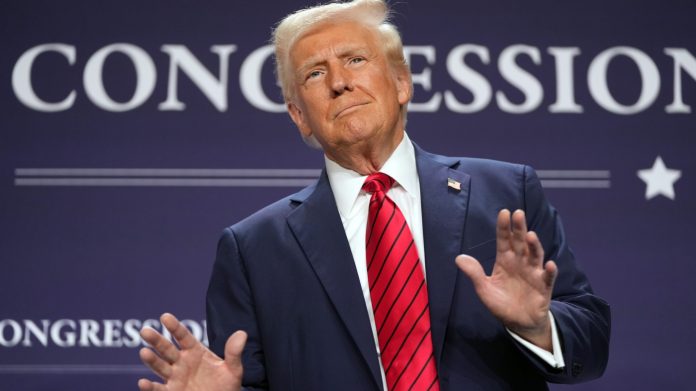
President Trump arrives to speak at the House Republican members conference dinner at Trump National Doral Golf Club in Miami on Jan. 27.

Mark Schiefelbein/AP


hide caption

toggle caption

Mark Schiefelbein/AP

It has been a confusing several days for federal workers: First came a federal hiring freeze, the announcement of an end to remote work and an executive order reclassifying thousands of civil servant positions. Then came Tuesday’s government-wide email giving nearly all federal employees until Feb. 6 to decide whether to opt into a “deferred resignation program.”

But how well do most Americans understand this group that has been in the news so much — who they are, where they work and what they do? Here are six things to know about this vast pool of workers:

How big is the federal workforce?

About 2.4 million workers are employed by the federal government, excluding uniformed military personnel and U.S. Postal Service employees, according to the Bureau of Labor Statistics. By contrast, Walmart, the largest private-sector employer in the U.S., has 1.6 million workers.

Where do most federal employees work?

If you guessed Washington, D.C., Maryland and Virginia, you’d be wrong — and not by a little. Although a sizable concentration of the federal workforce does work in the District of Columbia and the surrounding states (about 459,000 as of March 2024, according to the Office of Personnel Management), 80% of federal civilian employees can be found at military bases and in government offices outside the region: about 181,000 in California, 168,500 in Texas, 115,000 in Florida and 88,000 in Georgia.

That means the effects of cuts in the federal workforce won’t be felt in just the D.C. area but will be “scattered across the country,” according to Don Moynihan, a professor at the Ford School of Public Policy at the University of Michigan.

Fifty-four percent of federal workers are 100% on-site. That’s according to May 2024 data from the Office of Management and Budget cited by the Federal News Network that was originally posted on a since-removed White House page. The other 46% are eligible for telework, most of which are on hybrid schedules. Only 10% off them are working entirely remotely.

Also, one-third of nonuniformed federal workers are military veterans, according to Max Stier, president and CEO of the Partnership for Public Service, which describes itself as a nonpartisan nonprofit dedicated to a better government and stronger democracy.

“Most people don’t understand that lots of people in the military go into civil service because they want to continue to serve,” he says.

Just a few agencies and departments employ most of the workers. And their numbers haven’t been growing much

“The vast majority of the [federal] civilian nonuniform employees are either in Veterans Affairs, Homeland Security or the Department of Defense,” Moynihan says.

Despite what may be conventional wisdom, the relative size of the federal workforce hasn’t skyrocketed in recent years, according to a Pew Research Center report released this month.

“While the number of federal workers has grown over time, their share of the civilian workforce has generally held steady in recent years,” the report says.

That’s “despite the fact that our government is doing lots more stuff,” Stier adds.

Salaries of federal workers take up just a fraction of the government’s budget

Moynihan says the government spends “about $350 billion on federal employees every year, out of a $6.5 trillion budget.”

That represents “a tiny sliver of total government spending — just around 5% to 6%,” according to Josh Bivens, chief economist at the Economic Policy Institute, a nonpartisan think tank.

There are concerns that cuts could affect vital services that impact average Americans

It depends on how many federal employees leave and which agencies and positions see the most departures.

But regardless, “programs that provide retirement, health and income support — Social Security, Medicare, Medicaid — need to be administered,” Bivens says.

“Claims have to be filed and examined, and problems need [to be] addressed,” he says. “Payments to farmers need [to be] processed and administered,” and “key public goods like pandemic monitoring and response” need to take place.

More esoteric government responsibilities, such as economic data collection and analysis, are also vital, he adds.

Stier offers up a few examples of what could go wrong. The administration says it wants a 10% cut, he says, but “what happens if that is 50% of the food safety inspectors or 50% of the air traffic controllers or 50% at the FBI?”

“You’re talking about a fairly arbitrary reduction. … It’s entirely unpredictable about who actually walks away and who decides to stay,” he says.

Cuts could have other downsides

Buyouts and incentives aimed at shrinking the number of federal employees aren’t new. They were tried in the mid-1990s, during Bill Clinton’s presidency. But the results were mixed at best, according to a 1997 report by what’s now called the Government Accountability Office.

“[A]gencies often granted buyouts across the board rather than prioritizing them to achieve specific organizational objectives,” the GAO concluded.

“This contributed to a variety of adverse operational impacts. For example, 15 agencies said that they had experienced a loss of corporate memory and expertise, and 11 agencies said that there were work backlogs because key personnel had separated,” the report said.

As a result, Moynihan says, those agencies lost vital skills and ended up hiring more outside consultants — some of the very same federal workers who had quit — at a higher cost to taxpayers, “because people who had the most capabilities and most value on the private sector job market were the first to leave.” 

“Rational employees who think, ‘You know, I can make more in the private sector than I’m making in government, and it’s not worth the hassle of continuing to stay in this new environment,'” he says.

Wife of Delaware skating coach killed in DC plane crash left devastated by tragedy: ‘I lost everything’

0

Join Fox News for access to this content

Plus special access to select articles and other premium content with your account – free of charge.

By entering your email and pushing continue, you are agreeing to Fox News’ Terms of Use and Privacy Policy, which includes our Notice of Financial Incentive.

Please enter a valid email address.

The wife of a Delaware skating coach says she has “lost everything” after learning that her husband was one of the victims killed when an American Airlines plane collided midair with an Army helicopter in Washington, D.C., late Wednesday night. 

Natalya Gudin told WPVI that she and her husband, Alexandr “Sasha” Kirsanov, were both skating coaches in Delaware. She recalled the now heartbreaking decision that she and her husband made that Kirsanov would travel to Wichita, Kansas, for a development camp. 

Rescuers on boats work as the sun rises at the site of the crash after a Black Hawk helicopter collided with American Eagle Flight 5342, which was approaching Reagan Washington National Airport, and crashed into the Potomac River, outside of Washington, D.C., on Jan. 30, 2025. (Kevin Lamarque/Reuters)

“We are husband and wife,” she told the station. “We decided who’s going, who’s staying home,” she said. “We decided he would go to the development camp.”

CLICK HERE FOR MORE SPORTS COVERAGE ON FOXNEWS.COM

Kirsanov, 46, was one of 67 people killed when American Airlines Flight 5342 and a UH-60 Black Hawk helicopter collided near Reagan Washington National Airport at around 9 p.m. local time. 

What began as a search and rescue effort turned to a recovery operation after officials said they believed there were no survivors. 

Among the victims included several members of the figure skating community. U.S. Figure Skating released a statement confirming that the victims were returning home from a development camp being held after the U.S. Figure Skating Championships in Wichita, which concluded on Sunday. 

“I lost everything. I lost my husband. I lost my students. I lost my friends,” Gudin told the station.

University of Delaware President Dennis Assanis released a statement Thursday confirming that Kirsanov, a former figure skating coach with the university, was one of the victims in Wednesday’s crash. 

Photos of victims following the collision between an American Airlines jet and a U.S. Black Hawk helicopter

Photos of victims following the collision between an American Airlines jet and a U.S. Black Hawk helicopter. (Getty Images)

OLYMPIC FIGURE SKATER TONYA HARDING CALLS LOSS IN AIRLINE COLLISION ‘ABSOLUTELY DEVASTATING’

“I am incredibly saddened to share the news that several members of the figure skating community connected to the University of Delaware were among those who tragically lost their lives in an aircraft collision last night in Washington, DC,” his statement read. 

“Kirsanov and the skaters trained at the University’s High Performance Training Center, which uses UD ice rink facilities and has been the training home for many years of multiple world-class skating champions and competitors. The figure skating community is tight-knit, and many of our students and coaches have trained and competed alongside those who were lost.” 

Assanis also confirmed that Kirsanov was with “two young skaters” on the flight. He identified them only as members of the UD Figure Skating Club, but Sen. Chris Coons, D-Del., later identified them as Sean Kay and Angela Yang. 

“I’m devastated to hear the news that at least three Delawareans died during last night’s air collision. Sasha Kirsanov, Sean Kay, and Angela Yang went to Wichita to pursue their passion for figure skating. It is a tragedy that none of them returned home to our state,” his post on X read. 

DC Plane Crash Dawn

Part of the wreckage is seen as rescue boats search the waters of the Potomac River after a plane on approach to Reagan National Airport crashed into the river near Washington, D.C., on Jan. 30, 2025. (ANDREW CABALLERO-REYNOLDS/AFP via Getty Images)

CLICK HERE TO GET THE FOX NEWS APP

“Delaware is a state of neighbors, and tonight we hold all of our neighbors a little closer. My heart goes out to Sasha’s wife Natalia, the University of Delaware Figure Skating Club, and every other Delawarean touched by the three of them.” 

Kirsanov’s daughter, Nicole, also posted a tribute on social media following the loss of her father. 

“I miss you Dad, I would do anything to bring you back and tell you that I loved you one more time,” she wrote in a post on Instagram. 

Kirsanov was an eight-time national coach and a three-time international junior world coach with nearly a decade of experience. 

Follow Fox News Digital’s sports coverage on X, and subscribe to the Fox News Sports Huddle newsletter.

Norway Seizes Russian-Crewed Ship Suspected of Cutting an Undersea Cable

0

The authorities in Norway have seized a Russian-crewed ship that is suspected of damaging an undersea cable in an act of sabotage in the Baltic Sea, the Norwegian police said on Friday.

They were acting on a request from the Latvian authorities and on an order issued in Norwegian courts, the police said in a statement, after an undersea cable that runs between Sweden and Latvia was damaged this week.

It is the latest in a growing number of acts of damage or sabotage to undersea infrastructure in the Baltic Sea, including to cables used for communication and for the distribution of electricity. In response to one such instance in December, NATO has stepped up its patrol and surveillance operation in the Baltic Sea.

Concern about such damage has been rising since a series of undersea explosions blew apart the Nord Stream natural gas pipelines linking Russia to Western Europe in 2022.

On Thursday evening, Norway’s coast guard and police surrounded the Russian-crewed ship — the Silver Dania, a vessel owned and registered in Norway — and towed it into the Port of Tromso on Friday morning, the police said.

The ship, a 36-year-old cargo vessel, according to shipping data, was sailing between the Russian ports of St. Petersburg and Murmansk. The police said that officers had boarded the ship to search for evidence and to question the crew in relation to the damaged cable.

The vessel’s owners, a shipping company called Silver Sea, denied any wrongdoing. “We agreed to go to a Norwegian port to be checked out,” Tormod Fossmark, the company’s chief executive officer, told the Norwegian news media. He said that the company was complying with a request from the authorities.

On Monday, the authorities in Sweden boarded a different ship in connection with what they described as an act of “gross sabotage” of the Sweden-to-Latvia undersea cable a day earlier. They detained the bulk carrier, which is owned by a Bulgarian shipping company and was flying a Maltese flag.

Russian involvement was suspected in the December cutting of an undersea cable that carries electricity between Finland and Estonia. In that instance, the Finnish authorities seized an oil tanker as they looked into whether the ship’s anchor had cut the cable.

Leaders in Finland and Estonia said they believed that the tanker might be part of Russia’s “shadow fleet” of ships aimed at circumventing Western-imposed price caps on Russian sea-transported oil because of Moscow’s war in Ukraine. Such ships have increasingly come under suspicion for their role in acts of sabotage as a tactic of hybrid warfare between Russia and NATO.

Trump facing first test in Africa amid bloody battles ‘over electric vehicle battery minerals’ 

0

Join Fox News for access to this content

Plus special access to select articles and other premium content with your account – free of charge.

By entering your email and pushing continue, you are agreeing to Fox News’ Terms of Use and Privacy Policy, which includes our Notice of Financial Incentive.

Please enter a valid email address.

JOHANNESBURG- Fighting reportedly over minerals needed for electric cars and mobile phones has become the Trump administration’s first real foreign affairs test in Africa. 

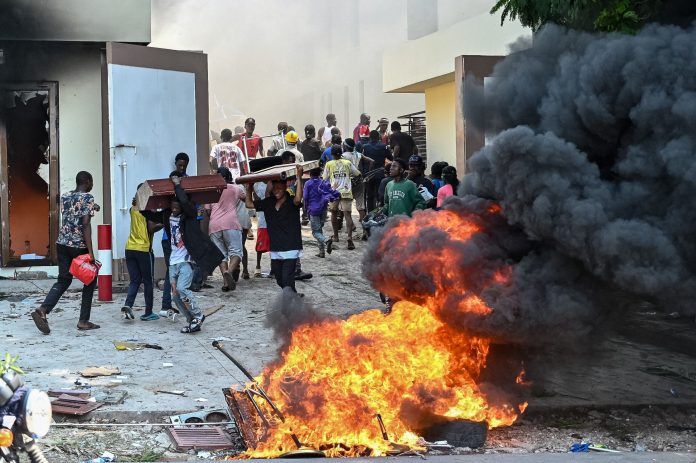
Bodies lie rotting in the streets, and hospitals have been overwhelmed with casualties in Goma, a city of 2 million people in the eastern part of the Democratic Republic of Congo (DRC). M23 rebels, backed, the United Nations and other sources say, by neighboring Rwanda, are said to have taken over the city. 

“The M23 appears to have taken control of a significant portion of the city following intense fighting with the Congolese army,” The United Nation’s Office for the Coordination of Humanitarian Affairs (OCHA) stated Wednesday, adding, “Reports have emerged of looting of shops, offices, and warehouses belonging to humanitarian organizations, while heavy gunfire and explosions have been heard in various parts of the city.” 

OCHA added “Local sources believe the civilian casualties are significant, although [an] assessment is yet to be conducted.” Thirteen South African peacekeeping troops have been killed over the past week.

13 UN PEACEKEEPERS, ALLIED SOLDIERS DEAD IN CONGO AS M23 REBELS MAKE GAINS IN KEY CITY

March 23 Movement (M23) rebels gather for large-scale protests as they set on fire the Rwandan, French, Belgian and Kenyan embassy buildings and loot some shopping centers during anti-Rwandan demonstrations allegedly supported by M23 and rebels in Kinshasa, the capital of the Democratic Republic of Congo on Jan. 28, 2025. (Chris Milosi/Anadolu via Getty Images)

Chairman of the Senate Foreign Relations Committee Sen. Jim Risch, R-Idaho., recently stated in part that, “The M23 must immediately stop their advance on Goma, and all parties must cease hostilities, restore unhindered humanitarian access, and honor their commitments.”

In the DRC’s capital, 10 foreign embassies, including the U.S. mission, have been attacked. Some, including the French Embassy, have been set on fire.

“The M23 or March 23 Movement is a Tutsi-led and eastern-DRC based insurgent movement born around 2012”, Frans Cronje, adviser at the U.S. Yorktown Foundation for Freedom, told Fox News Digital. He added “The ensuing conflict has been sustained for more than 3 decades, in large part as a consequence of the extraordinary mineral wealth of the DRC.”

Cronje, who also advises corporations and government departments on economic and political trajectory, continued. “According to a United Nations report, M23 has raised significant sums from ‘taxing’ minerals mined in areas under its control – a practice common to armed groups operating in the DRC.”

US President Donald Trump speaks about the mid-air crash between American Airlines flight 5342 and a military helicopter in Washington

President Donald Trump speaks about the midair crash between American Airlines Flight 5342 and a military helicopter in Washington, in the Brady Press Briefing Room at the White House on Jan. 30, 2025 in Washington, D.C. Trump was later asked about the violence in the DRC and called it a “very serious problem.” (Roberto Schmidt/AFP via Getty Images)

This is borne out by a 160-page report commissioned by the U.N. Security Council from their “Group of Experts on the Democratic Republic of the Congo”, and presented to the council late last year.

The report states M23 and Rwanda Defence Force operatives in the DRC captured “the Rubaya mining sites – one of the world’s largest sources of coltan – a mineral used in EV batteries – on 30 April 2024.” 

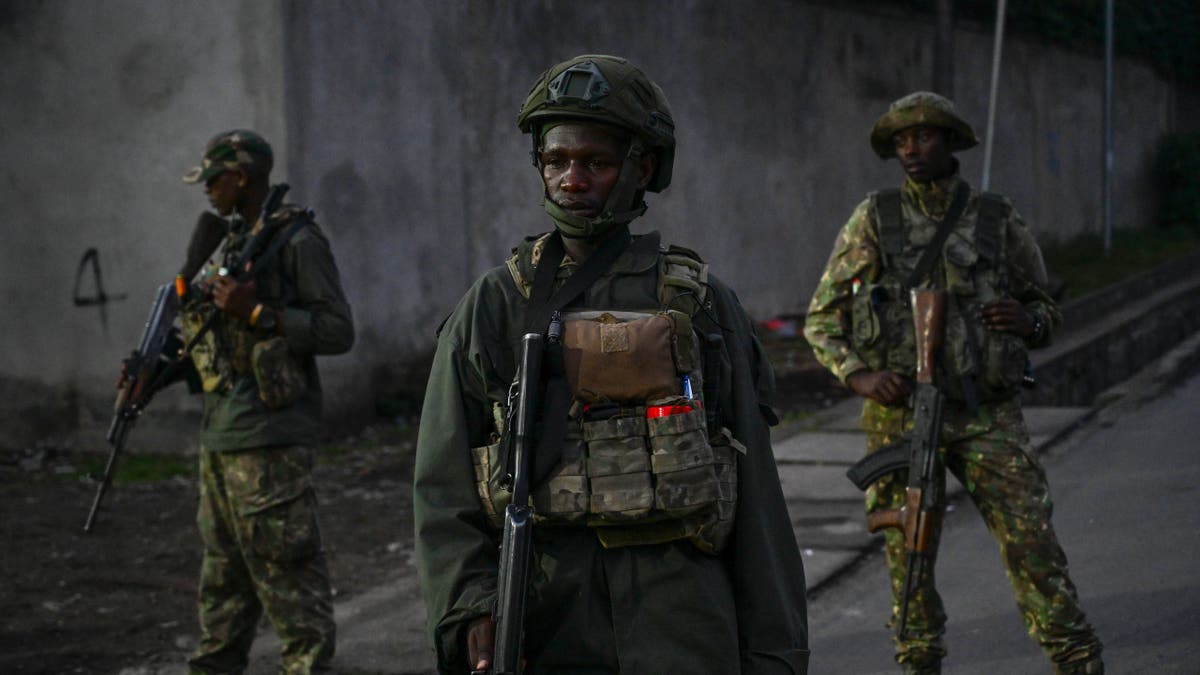
M23 rebels patrol in Goma, Democratic Republic of the Congo, on Wednesday, Jan. 29, 2025.

M23 rebels patrol in Goma, Democratic Republic of the Congo, on Wednesday, Jan. 29, 2025. (AP Photo/Moses Sawasawa)

The U.N. report says the M23 joined up with another rebel group, the AFC (the Congo River Alliance), “and levied taxes and in-kind payments on the sale and transport of minerals. The tax on a kilogram of coltan and manganese was $7, while the tax on tin (cassiterite) was $4 per kilogram. AFC/M23 thus collected at least $800,000 monthly from the taxation of coltan production and trade in Rubaya.”

Cronje pointed out this week that there are other precious metals M23 has its eyes on too. “The DRC accounts for between 70-80% of the world’s Cobalt production. Cobalt’s importance is such that the U.S. Department of Energy has listed it as one of seven minerals essential to U.S. economic competitiveness, while the Department of Defense identified cobalt as having ‘critical’ applications. Alongside that, the DRC is the third-largest producer of copper in the world, accounting for about 11% of global production.”

President Donald Trump spoke about the fighting on Thursday. “It is a very serious problem. I agree, but I don’t think it’s appropriate right now to talk about it,” when asked about it during a briefing on the deadly airline crash in Washington, D.C., on Thursday afternoon. 

BIDEN ADMIN’S DRIVE FOR GREEN ENERGY LEADS TO ACCUSATIONS OF FORCED CHILD LABOR MINING FOR EV BATTERY METALS

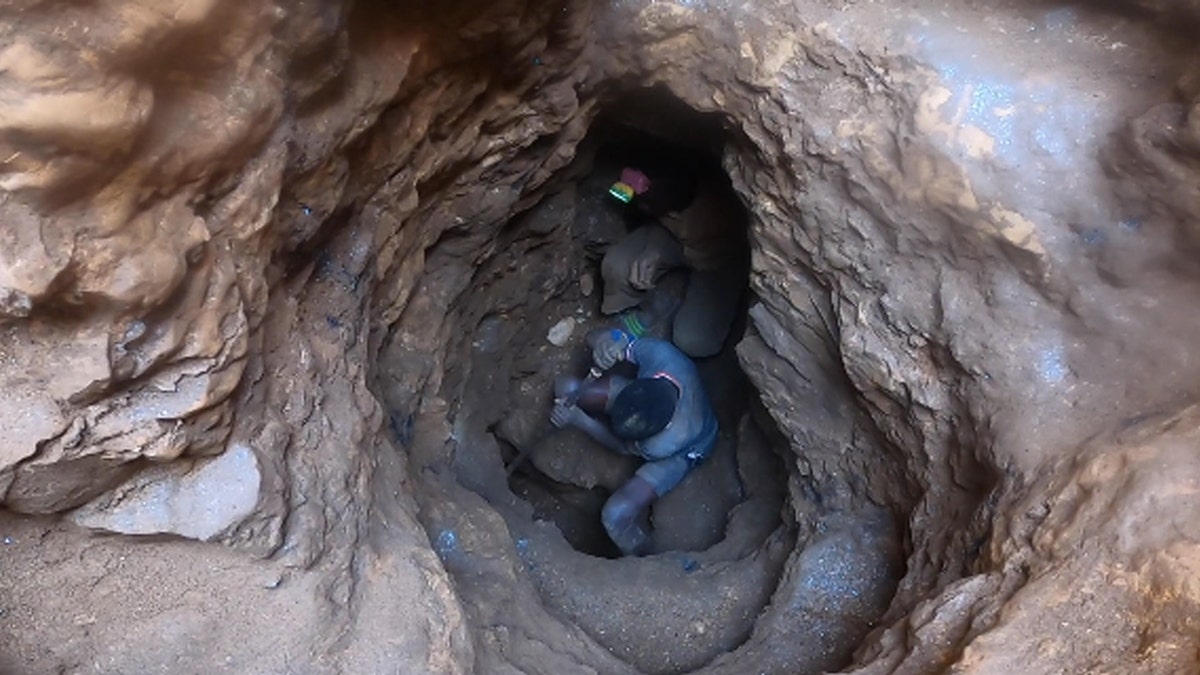
Boy in blue shirt and shorts and another person digging in a mine for cobalt in Democratic Republic of the Congo

Boys said to be mining for cobalt in a mine in the Democratic Republic of Congo. (ILO/UNICEF)

However, the State Department is speaking on the issue, calling for a ceasefire. Secretary of State Marco Rubio told Rwandan President Paul Kagame, “the United States is deeply troubled by [the] escalation of the ongoing conflict in eastern DRC, particularly the fall of Goma to the Rwandan backed M23 armed group,” spokesperson Tammy Bruce stated, adding “the secretary urged an immediate ceasefire in the region and for all parties to respect sovereign territorial integrity,” adding that the overriding goal of the United States is a durable peace that addresses security concerns and lays the foundation for a thriving regional economy.” 

Kagame responded on X, posting that his conversation with Rubio was “productive.” He said it covered “the need to ensure a ceasefire in (the) Eastern DRC, and address the root causes of the conflict once and for all.”

Kagame added, “I look forward to working with the Trump Administration to create the prosperity and security that the people of our region deserve.”

“The M23 conflict is indeed about minerals, but more so Rwandan ambition to control and administer much of Congo’s North Kivu”, Bill Roggio, editor of the Foundation for Defense of Democracies’ Long War Journal, told Fox News Digital. “Rwanda would like to control not only the minerals, but also the entire trade in the region, and flex its muscles as a new regional powerhouse in central and East Africa. Rwanda also claims it is about border security, but really it’s more about its own geopolitical ambitions in the region.”

Roggio continued, saying that it “is somewhat related to the Biden administration’s inability to bring both Congo and Rwanda to the table and negotiate real settlements, either through the Luanda Process or the earlier Nairobi Process.” He added “especially it is a failure to put enough pressure on Rwanda to pull back its support for M23, as the Obama administration had accomplished in 2012 when M23 previously captured Goma, but were forced to withdraw after the U.S. pressured Rwanda.”

For the new administration, there is a chance here to make positive steps towards a positive legacy in Africa. Michael Rubin told Fox News Digital, “For Trump and Rubio, they have the opportunity to do something different that could fix the problem permanently.” 

Rubin is a resident scholar at the American Enterprise Institute, and in 2024 embedded for several weeks with the M23 rebels. 

INCOMING TRUMP ADMIN, CONGRESS SHOWDOWN LOOMS WITH SOUTH AFRICA OVER SUPPORT FOR RUSSIA, US FOES

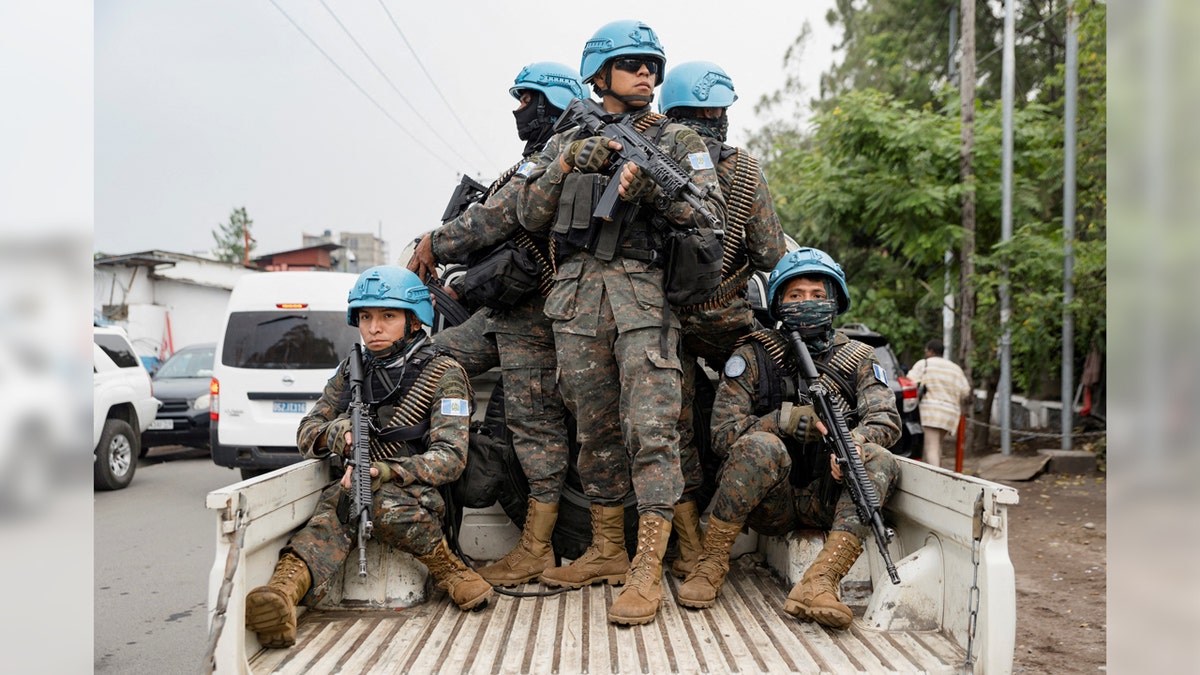
Members of the United Nations Organization Stabilization Mission in the Democratic Republic of the Congo ride on a pickup truck. They are armed, dressed in military fatigues, and wearing the blue helmets characteristic of U.N. forces.

Members of the United Nations Organization Stabilization Mission in the Democratic Republic of the Congo (MONUSCO) ride on a pickup truck as they secure the evacuation of non-essential UN staff, following the fight between M23 rebels and the Armed Forces of the Democratic Republic of the Congo, in Goma, North Kivu province, Democratic Republic of Congo, on January 25, 2025. (Reuters/Arlette Bashizi TPX IMAGES OF THE DAY)

Rubin continued, “What we’ve had for too long is that old definition of insanity: doing the same thing repeatedly, but expecting different results. There’s been two Congo wars, and if we try to apply the same band-aid to a sucking chest wound this time, there will be a third.”

The blame should rest not on Rwanda, Rubin believes, but on the DRC. “The narrative that the DRC is the victim and Rwanda and Uganda aggressors is tired. The problem is Kinshasa. If Tshisekedi (Felix Tshisekedi, DRC President) can stop armed groups in the south, he can do so in the east as well. He turned to ethnic incitement to distract from incompetent government; that never ends well.”

Rubin added that “the arguments about Rwanda looting the region are not valid. Businessmen in North Kivu, are blunt: Rwanda and Uganda charge less in customs duties than Kinshasa extracts in taxes. Kinshasa cries wolf because Kigali outcompetes them. If Kinshasa wanted businessmen to turn to them, try lowering taxes and building plants to turn raw materials into something with higher sale value.”

China and Russia stand on the sidelines, waiting to choose who they dance with to get the DRC’s minerals. China has spoken out against the M23. It threatens their mining interests in the country. Additionally, soldiers from Russia’s Africa Corps, the former Wagner Group’s private army of mercenaries, have been seen in Goma, propping up the DRC’s soldiers against the M23. 

CLICK HERE TO GET THE FOX NEWS APP

Cronje told Fox News Digital Russia and China are poised to potentially support the winner, saying “the geostrategic importance of the region is such that all global powers have an interest in influencing the balance of power in eastern DRC either directly or indirectly.”

What to Know About Trump’s Military Deportation Flights

0

When President Gustavo Petro of Colombia announced on social media on Sunday that he had turned back U.S. military planes carrying deportees, President Trump came down hard.

He threatened tariffs and penalties so extreme Mr. Petro was forced to back down. “They pushed until he had to bend,” Jorge Enrique Robledo, a former longtime Colombian senator, said in an interview.

Later that day, the White House and Mr. Petro’s government announced that Colombia would welcome all Colombian deportees, including those on military jets, and Mr. Trump declared victory.

The crisis riveted attention to the Trump administration’s deportation efforts; it also raised questions about the military planes deporting migrants, and why they angered Mr. Petro and other Latin American leaders.

No. Rarely, in recent times, if ever, defense officials say.

As part of the Trump administration’s crackdown on illegal migration, Mr. Trump signed an executive order last week authorizing the U.S. military to assist in securing the border.

The acting secretary of defense at the time, Robert Salesses, said in a statement last Wednesday that the Department of Defense would “provide military airlift” to support the Department of Homeland Security in the deportation of more than 5,000 “illegal aliens.”

Mr. Salesses said these were people being held by U.S. Customs and Border Protection at the southern border. He noted that the flights would take place after the State Department obtained “the requisite diplomatic clearances” and notified each country.

Symbolically, however, the military planes are emerging as crucial to the administration’s messaging around its efforts to crack down on migration.

On Friday, the White House press secretary, Karoline Leavitt, posted images of migrants filing onto a hulking, slate-gray C-17 Air Force plane, while shackled together. The caption read, “President Trump is sending a strong and clear message to the entire world: if you illegally enter the United States of America, you will face severe consequences.”

No, military planes have not replaced nonmilitary planes and so far represent a small fraction of the flights carrying out deportations under the administration: Only about six such flights have delivered deportees to other countries as of the end of Mr. Trump’s second week in office, according to a U.S. military spokesman.

During the same period, dozens of nonmilitary deportation flights left for countries around the hemisphere. The practice, schedule and the number of deportees on board has not changed under Mr. Trump, according to officials in Mexico, Guatemala, Colombia and Honduras.

But the commercial charters that resemble the planes used in everyday travel, which are operated by U.S. Customs and Immigration Enforcement, or I.C.E., have received less attention than the military planes.

Both the usual I.C.E. flights and the new military flights are overseen by the Department of Homeland Security. During both Mr. Biden’s term and Mr. Trump’s first term, the United States deported more than a million people, according to the Migration Policy Institute in Washington.

Only Guatemala and Ecuador were confirmed to have received U.S. military flights carrying deported migrants as of Thursday. Honduras and Peru are expected to receive military planes on Friday, a Defense Department official said.

While Colombia has agreed to receive such flights, no new military planes have been sent out since Mr. Petro turned back the two planes over the weekend, according to the U.S. military.

Mexico has said it has received only nonmilitary flights and has not said it will accept military planes.

Pete Hegseth, the new defense secretary under Mr. Trump, has promised to continue to use military planes. On his first official day on the job, Mr. Hegseth said, “This Pentagon snapped to last week.” Along with adding barriers and troops at the U.S. southern border, he said the military had also moved to “ensure mass deportations.”

He added: “That is something the Defense Department absolutely will continue to do.”

So far, the people returned since Mr. Trump took office, including those on the military planes, are primarily people apprehended under the Biden administration.

Those in the photographs posted by Mr. Trump’s press secretary were Guatemalan migrants apprehended after illegally crossing the border who had been held in detention since early January, according to Guatemalan migration officials.

Mr. Petro turned back two U.S. military planes bound for his country for a few reasons, according to his social media posts on Sunday morning and members of his government.

First, he was upset about how deportees on a nonmilitary flight had been treated while they were being transported to Brazil. (They were handcuffed and flown in a plane without air-conditioning that was forced to land in Manaus, in the Amazonian rainforest, after malfunctioning.)

Second, while Colombia’s government had authorized military flights — according to U.S. officials — Mr. Petro was caught off guard when he learned only a few hours beforehand that the military flights were scheduled to land in Bogotá, Colombia’s capital. (Officials in Guatemala have also said they are notified only shortly before military planes are scheduled to arrive.)

Mr. Petro also generally objected to putting deportees in handcuffs; officials said his government had an agreement with the Biden administration that permitted deportees to mostly travel without restraints.

Experts say handcuffs are sometimes used while a plane is in flight to prevent deportees from taking over the aircraft; in other cases, they are used when deportees are escorted on and off the aircraft.

Colombia never blocked nonmilitary deportation flights. In a post on Sunday, Mr. Petro said “on civilian planes, where they’re not treated like delinquents, we will welcome our compatriots.”

On Wednesday, Mr. Petro said online that his government was in dialogue with the Trump administration to establish a “protocol for dignified treatment” that would include allowing deportees to travel without handcuffs.

The U.S. military has a particular resonance in Latin America, experts say, especially for leftist leaders like Mr. Petro and President Luiz Inácio Lula da Silva of Brazil. They remember a time when the United States carried out covert American military operations in the region as part of an effort to subdue revolutionary movements in the name of defeating Communism.

The presence of the U.S. military can also threaten the notion of national sovereignty in countries like Mexico. President Claudia Sheinbaum of Mexico has said: “They can act within their borders. When it comes to Mexico, we defend our sovereignty and seek out dialogue so as to coordinate.”

However, regional officials are most concerned about how migrants are being treated on deportation flights, and have expressed particular concern over the use of handcuffs and chains.

Leaders in Latin America have also objected to the images that are being released of migrants in handcuffs and chains and to the way that Mr. Trump has described migrants, particularly deportees, whom on Monday he referred to as murderers, gang members and drug kingpins.

“We do not agree with calling a migrant ‘a delinquent,’” Ms. Sheinbaum said. “We defend our compatriots wherever they may be, but in particular in this moment in the United States.”

Since Mr. Trump took office, Brazil, Guatemala and Mexico have submitted complaints to the United States related to the treatment of migrants on deportation flights, according to officials in those countries. It was not immediately clear if in Guatemala the complaint was related to a deportee or deportees on military flights.

On Thursday, Colombian deportees said they had been handcuffed, shackled and chained around the waist for the duration of a flight to Bogotá on a nonmilitary plane; it was not immediately clear if the government there made an official complaint.

Reporting was contributed by Emiliano Rodríguez Mega and James Wagner from Mexico City; Jody García from Guatemala City; Federico Rios from Bogotá, Colombia; and Eric Schmitt from Washington.

Sen. Mark Kelly discusses Tulsi Gabbard's confirmation hearing to lead DNI

0

NPR speaks with Democratic U.S. Sen. Mark Kelly of Arizona, a member of the Senate Intelligence Committee, about the confirmation hearing for Tulsi Gabbard, Trump’s pick to lead national intelligence.

Here’s why US Iron Dome is necessary, but will differ from Israel’s

0

Join Fox News for access to this content

Plus special access to select articles and other premium content with your account – free of charge.

By entering your email and pushing continue, you are agreeing to Fox News’ Terms of Use and Privacy Policy, which includes our Notice of Financial Incentive.

Please enter a valid email address.

NEWYou can now listen to Fox News articles!

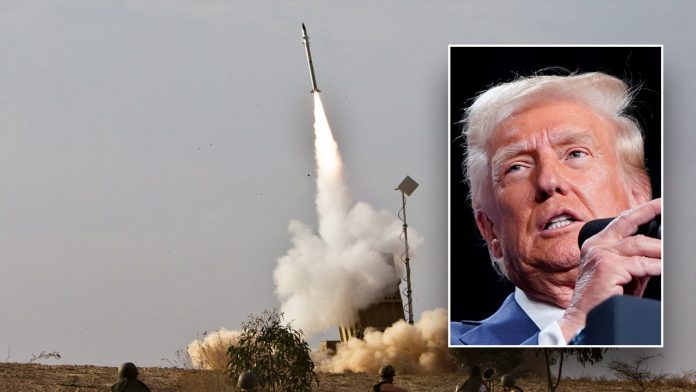
President Donald Trump’s executive order, titled “The Iron Dome for America,” calls for revamping our missile defense capabilities, which the president labels “the most catastrophic threat facing the United States.” 

However, there are significant challenges to overcome if we are to deploy something similar to Israel’s acclaimed air defense network because the threat to America is quite different.

Today, we face real threats such as nuclear-tipped intercontinental ballistic missiles (ICBM) launched from countries like China and Russia, which could put at risk the entire United States. During the Cold War (1948-1991) with the Soviet Union, we addressed that threat with our doctrine of “Mutual Assured Destruction.” If Moscow attacked us with long-range nuclear missiles, we would retaliate with an overwhelming number of similar weapons that would result in the annihilation of both nations. That doctrine worked because it ratcheted up fear on both sides.

President Donald Trump’s executive order calls for revamping our missile defense capabilities. (Reuters)

Our challenge today is more complicated than during the Cold War because we face multiple enemies which present a wide variety of airborne threats. Specifically, nation state adversaries like Russia, China, North Korea and Iran all have or are developing long-range nuclear systems that put the U.S. at risk. Also, there are a host of terrorist groups with access to sophisticated technologies such as drones and rockets that threaten our overseas interests and perhaps our homeland. 

5 THINGS TO KNOW ABOUT PRESIDENT DONALD TRUMP’S ‘IRON DOME’ PLAN FOR AMERICA

Further, many of these weapons are guided by space-based systems, which make them more precise and come in a variety of hard-to-defend-against packages – hypersonic missiles that are difficult to track, ballistic missiles with multiple warheads, drones of many sizes and capabilities, sea-launched cruise missiles, and more.

Unfortunately, America’s ability to defend the homeland from such a range of aerial threats is frankly limited, which explains Trump’s order to immediately address the issue.

Let’s put that task into perspective by considering the Israeli aerial defense model.

Trump calls for us to build something akin to Israel’s “Iron Dome” to defend America against a plethora of threats. Understandably, his desire is to protect America from attacks such as those Iran launched at Israel in 2024, whereby virtually all the projectiles were downed before they hit the Jewish state.

Israel’s effective, three-part air-defense network includes the Iron Dome, which is designed to stop short-range rockets and artillery shells launched from the Gaza Strip.

UNDER FIRE: ISRAEL’S IRON DOME WINNING BUT PRESSURE’S ON AS CONFLICT WITH IRAN ESCALATES

The second tier is David’s Sling, which is intended to intercept ballistic and cruise missiles, such as those possessed by Hezbollah in Lebanon.

The third tier is known as Arrow 3, which intercepts missiles flying outside Earth’s atmosphere, such as long-range missiles launched by Houthi militants in Yemen or those Iran used to attack Israel in 2024.

Although Israel’s three-tiered network performed well in 2024, it is not necessarily the right model for the United States. There are three key differences.

First, the U.S. is unlike Israel, which built its network to defend against mostly drones, artillery and cruise missiles launched from a neighboring country. The U.S. is unlikely to be attacked by Canada or Mexico. Rather, any aerial attack will likely involve ICBMs or missiles/drones launched from ships or submarines off our shores.

Second, Israel is a very small country, approximately 8,630 square miles or the size of New Jersey. The U.S. is 440 times the size of Israel with population centers and sensitive sites spread across this vast country. Defending our entire landscape from all aerial threats would be incredibly expensive, especially if it was done on the scale seen in Israel.

WHAT IS ISRAEL’S FIRST LINE OF DEFENSE, THE IRON DOME?

Third, the U.S. has a variety of air defense systems in its inventory, which are not networked like those seen in Israel. Yes, we have an anti-ICBM system in Alaska and California with 44 missiles. However, that system is focused primarily on the threat posed by North Korea. Our other systems are for fixed site defenses deployed mostly outside the United States.

Those movable systems include the AEGIS ballistic missile system, which is sea-based and designed to intercept ballistic missiles during the midcourse or terminal phases of flight. We field a variety of site-specific systems such as the MIM-104 Patriot, capable of engaging ballistic and cruise missiles. 

The Terminal High Altitude Area Defense (THAAD) intercepts ballistic missiles in the terminal phase of flight. The National Advanced Surface-to-Air Missile System (NASAMS) is a medium-range air defense, which is part of the U.S. National Capital Region’s air defense system since 2005. 

There are also other tactical platforms such as the Avenger Air Defense System, FIM-92 Stinger and the Maneuver-Short Range Air Defense (M-SHORAD).

Like other nations, the U.S. is working on directed energy weapons (lasers) and other counters to low-priced anti-systems against drones and rockets as well.

 CLICK HERE FOR MORE FOX NEWS OPINION

The task for the Pentagon to satisfy Trump’s executive order of deploying a “next-generation missile defense shield” is to find the right mix of air defense platforms, the right doctrine and an effective defense strategy. This effort begins by assessing the threat against very specific domestic sites and prioritize the placement of our capabilities and accept risk elsewhere.

We must also develop something akin to the Cold War’s doctrine of Mutually Assured Destruction, such that our nuclear-armed enemies understand the risk to them should they contemplate launching weapons against us.

Finally, the air defense strategy sketched in the White House’s fact sheet on the topic reminds me of something akin to President Ronald Reagan’s 1983 “Star Wars” initiative, formally named the Strategic Defense Initiative, which relied on space-based sensors and interceptors. At the time, it sobered the Soviets and led to agreements that tempered the nuclear threat, such as the intermediate-range Nuclear Forces Treaty and the Strategic Arms Reductions Talks.

CLICK HERE TO GET THE FOX NEWS APP 

In fact, Reagan’s Star Wars program, much like Trump’s “Iron Dome” proposal, was intended to protect the U.S. from aerial threats. At the time, Reagan’s program aimed to render nuclear weapons obsolete. That effort failed. 

By contrast, Trump’s 2025 program is more pragmatic and attainable. After all, he aims to make America safer from most aerial threats by fielding an American-version of Israel’s “Iron Dome.” Perhaps that’s very ambitious and could be quite costly, but clearly, in this time of exploding aerial threats, it is a national security necessity worth serious consideration.

CLICK HERE TO READ MORE FROM ROBERT MAGINNIS

Trump’s Deportations Only Work if Countries Agree to Take Their Citizens Back

0

President Donald Trump’s immigration agenda has revealed a crucial but little recognized truth. Deportation is not unilateral. It requires an agreement between two countries — one that’s expelling people, and one that’s receiving them.

President Trump made mass deportations a signature campaign issue. In the days since he was sworn in, ICE agents have conducted high-profile raids and sent military and charter planes carrying undocumented immigrants back to their countries of origin.

That has led to diplomatic friction: A flight of shackled deportees to Brazil drew protests from its government, and President Gustavo Petro of Colombia refused to allow two U.S. military planes carrying deportees to land, sparking a diplomatic face-off that led to the threat of U.S. tariffs before Colombia eventually backed down.

The disputes showed that it’s one thing for the Trump administration to detain undocumented immigrants, and quite another to actually deport them. Sending people to another country requires bilateral negotiations — and, in the last week, quite a bit of diplomatic strong arming.

The Trump administration also seems to be working to strengthen its diplomatic leverage. On Wednesday, the president announced plans to set up a detention camp at the U.S. military base in Guantánamo Bay, Cuba.

“We have 30,000 beds in Guantánamo to detain the worst criminal illegal aliens threatening the American people,” President Trump said. “Some of them are so bad we don’t even trust the countries to hold them, because we don’t want them coming back, so we’re going to send them out to Guantánamo.”

Under international law, countries are obligated to receive their own citizens who are deported by another country. But in practice, there are often ways to push back. Countries can block deportation flights from landing, decline to issue travel documents to their citizens and refuse to acknowledge that the deportees are their citizens.

“The legal situation is very clear,” said Gerald Knaus, the chairman of the European Stability Initiative, who helped to broker a high-profile deportation agreement between the European Union and Turkey in 2016. “But the legal situation doesn’t help if the countries to which you want to take the people don’t recognize that they are their citizens.”

In the past, very few countries have refused to accept deportees from the United States entirely, said Dara Lind, a senior fellow at the American Immigration Council. But some, often referred to as “recalcitrant” countries, have placed restrictions on how many deportation flights they will accept, and of whom. As of 2020, the United States had designated 13 countries as “recalcitrant,” including China, India and Cuba.

“China will take deportation flights occasionally, but it doesn’t take nearly as many as the U.S. government would like it to, and certainly not nearly as many as would be enough to deport the number of unauthorized Chinese nationals in the U.S.,” Lind said. And while Cuba began taking some deportation flights in 2017, following substantial negotiations by the Obama administration, it still limits the number of deportees it will accept.

When the U.S. wants to deport people, it has four main options: “good cop” negotiations that offer diplomatic incentives to countries to accept their deported citizens; “bad cop” negotiations that do the same via threats and coercion; finding a third country willing to accept the deportees; or just allowing the migrants to remain in the United States indefinitely.

Perversely, countries hostile to the United States may be in a stronger position to extract good-cop incentives, while friendlier allies will be more sensitive to bad-cop threats, such as tariffs.

Venezuela, for example, stopped accepting deportations last year after the U.S. reimposed sanctions, but President Nicolás Maduro has signaled that he would consider changing his policy in exchange for economic incentives from the United States. By contrast, countries like Colombia, with strong trade ties to the United States, have more to lose from new tariffs and other coercive measures.

Third-country agreements, in which countries agree to accept deportees who aren’t their own citizens, are relatively rare, but they do exist.

For years, Australia paid the governments of Papua New Guinea and Nauru to host detention centers for asylum seekers who attempted to reach Australia by boat. The program was eventually halted after numerous legal challenges.

In 2016, the European Union gave Turkey cash and other incentives in exchange for accepting Syrian asylum seekers and other undocumented migrants deported from the European Union, as part of an effort to stem a migration crisis in which more than a million people entered Europe by land and sea, many of them from Africa, the Middle East and South Asia.

One big question for the Trump administration is whether it can convince Mexico to accept deportees from other countries. President Claudia Sheinbaum previously vowed not to do so. But in a news conference this week, she said Mexico had received 4,000 deportees and that a “large majority” — but not all — were Mexican.

President Trump has already threatened to impose 25 percent tariffs on Mexico if it does not do more to stop migrants from reaching the U.S. border and stop fentanyl smuggling. Deportations may become part of those broader negotiations.

President Trump, by opening a migrant camp in Guantánamo, could effectively create a third-country option without having to negotiate with another government. Uncooperative countries like Colombia could be forced to choose between accepting deportation flights from the United States or having their citizens held indefinitely in a detention camp.

My colleague Carole Rosenberg has covered the Pentagon’s offshore prison facility on Guantánamo for decades, since the first detainees were brought there from Afghanistan in January 2002.

She and our colleague Hamed Aleaziz reported this week that several U.S. presidential administrations have prepared a site in Guantánamo to potentially accommodate tens of thousands of migrants in a sprawling tent city. The proposed site could be surrounded with barbed wire, like the military did for the tent camps of the 1990s, which were erected to house both families and single men when some 45,000 people fled there from Cuba and Haiti.

Some experts questioned the legality of housing migrants on the base. “Guantánamo is a black hole designed to escape scrutiny and with a dark history of inhumane conditions. It is a transparent attempt to avoid legal oversight that will fail,” Lucas Guttentag, a Justice Department official in the Biden administration, told them.

And even if the detention plan survives legal challenges, the utility of a Guantánamo facility would only go so far. A 30,000-person detention facility is enormous, compared with the 40,000 immigrants currently being held in private detention centers and local jails within the United States. But Guantánamo would hold only a tiny fraction of the millions of migrants that President Trump has pledged to deport, and would be costly to operate indefinitely.

The Cuban government, which has long held that the U.S. base is illegal, said in a statement that holding tens of thousands of people there “would generate a scenario of risk and insecurity.”

Additional reporting by Ed Augustin in Havana.


Thank you for being a subscriber

Read past editions of the newsletter here.

If you’re enjoying what you’re reading, please consider recommending it to others. They can sign up here. Browse all of our subscriber-only newsletters here.

Trump enacts Project 2025 policies, which he distanced himself from while campaigning

0

Two weeks into office, President Trump is enacting policies outlined in the conservative policy agenda Project 2025, from which he had distanced himself on the campaign trail.