

The massive tax and immigration bill at the heart of President Trump’s second term plans faces continued resistance from both moderates and hardliners.
Republicans divided over Trump's massive tax bill

NPR’s Steve Inskeep speaks with Rep. Mike Lawler, of New York State, about Republican divisions that threaten to derail the ongoing budget negotiations.
Trump executive actions show how he wants to reshape U.S. history : NPR
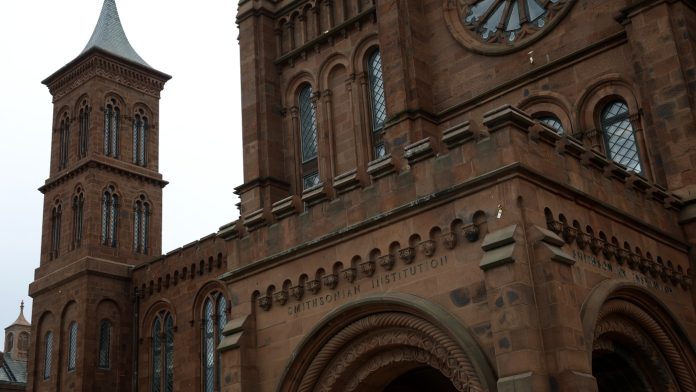
The Smithsonian Institution Building on the National Mall is seen on March 28 in Washington, D.C. The organization is the target of an order from President Donald Trump that seeks to restore “truth and sanity to American history.”
Kevin Dietsch/Getty Images
hide caption
toggle caption
Kevin Dietsch/Getty Images
President Trump issued a record number of executive actions in his first months in office, enacting sweeping changes in how the federal government works — and signaling his intentions to reshape how the country’s stories are told.

“Over the past decade, Americans have witnessed a concerted and widespread effort to rewrite our Nation’s history, replacing objective facts with a distorted narrative driven by ideology rather than truth,” the president said in an executive order entitled “Restoring Truth And Sanity To American History.”
The president’s actions are part of a general push-and-pull of how presidents seek to paint the past to bolster their agenda, historians say. Like many populists, Trump wants to “Make America Great Again” and champions nostalgia about a past golden age.
Trump said he wants to remind Americans of “our extraordinary heritage, consistent progress toward becoming a more perfect Union, and unmatched record of advancing liberty, prosperity, and human flourishing.”
But many historians are sounding an alarm and say the president is going too far.
Critics worry that the executive actions taken together, for instance, would minimize or even erase achievements by women and minorities.
The Organization of American Historians says that under the Trump administration, institutions such as museums and historic parks are now “under assault.” The 6,000-member group calls the president’s order “a disturbing attack on core institutions and the public presentation of history, and indeed on historians and history itself.”
Trump’s allies defend his executive actions, saying they’re meant to correct what conservatives see as attempts to skew history.
“President Trump continues to fulfill his promise in restoring truth and common sense to the United States and its institutions,” White House Spokesman Davis Ingle said in a statement to NPR. “President Trump is ensuring that we are celebrating true American history and ingenuity instead of corrupting it in the name of left-wing ideology.”

Cadets training to join the first black combat unit in the U.S. Army Air Corps are seen with an instructor in Tuskegee, Ala., on Sept. 5, 1942.
AP
hide caption
toggle caption
AP
Here’s a sampling of Trump’s actions, and what critics and supporters say about the battle over how the country’s cultural and historical heritage should be presented.
Executive actions and orders related to history
- Restoring Truth And Sanity To American History
The March 27 executive order calls for the removal of “divisive, race-centered ideology” at the Smithsonian Institution, and instructs the Interior secretary to revoke recent changes to landmarks and monuments if they’re found to “perpetuate a false reconstruction of American history.” - Improving Education Outcomes by Empowering Parents, States, and Communities
The March 20 executive order seeks to shut down the Department of Education. It also calls for withholding federal money from programs related to diversity, equity and inclusion or “promoting gender ideology.” - Continuing The Reduction Of The Federal Bureaucracy
The March 14 presidential action seeks to dismantle the Institute of Museum and Library Services, which sends federal money to libraries and museums, and six other agencies. - Restoring America’s Fighting Force
The Jan. 27 action abolishes DEI programs and initiatives in the military, long seen as a pioneer in America’s push toward racial equality. The Trump administration later reverses a purge of Pentagon webpages featuring notable female and minority veterans. - Ending Radical Indoctrination in K-12 Schooling
The Jan. 29 action revives Trump’s 2020 call for “patriotic education.” It accuses schools of indoctrinating children in anti-American ideologies, citing gender policies and stating that “demanding acquiescence to ‘White Privilege’ or ‘unconscious bias,’ actually promotes racial discrimination and undermines national unity.” - Restoring Names That Honor American Greatness
Trump seeks to put his stamp on the map in this Jan. 20 action, calling for changing the name of the Alaskan mountain known as Denali back to its earlier name, Mount McKinley, and changing the Gulf of Mexico to the Gulf of America. - Celebrating America’s 250th Birthday
The action from Jan. 29 reinstates and expands Trump’s 2020 plan to create a National Garden of American Heroes. The original list includes civil rights activist Ida B. Wells-Barnett and anti-abortion activist Nellie Gray, along with actor John Wayne and Oglala Lakota war strategist Red Cloud.
Competing visions of how to view American history
It’s common for U.S. presidents to consider history as they take office —and to overturn their predecessors’ actions, as Biden did after Trump’s first term. But historians say Trump is charting new territory.
“Rather than seeking to place himself in [history], he’s trying to transform it to fit him,” says Jefferson Cowie, a Pulitzer Prize-winning historian at Vanderbilt University. He calls Trump’s approach a “completely different kind of project” than previous presidents.

Denali, the tallest mountain on the North American continent, is seen here looming behind a boat on the Susitna River near Talkeetna, Alaska, in June 2021.
Mark Thiessen/AP
hide caption
toggle caption
Mark Thiessen/AP
Cowie says that Trump’s long-running slogan, “Make America Great Again,” points to how he wants to portray history.
“Like a lot of populists, he works on nostalgia for a golden age,” the historian says. “This idea that somebody took your birthright and there’s some version of America we need to get back to.”
Cowie says the president seems to invoke two different eras as touchstones: the golden age of American manufacturing, when work was stable and wages weren’t stagnant, and the 1950s, the pre-Civil Rights era of what Cowie describes as white, patriarchal households.
The approach hints at an essential divide in interpreting the story of the United States: Is America a country striving to return to former glory, or a nation on a continuous arc of self-improvement?
Those visions have always been competing, says Angela Diaz, an associate professor specializing in Civil War history at the University of Illinois Urbana-Champaign.
A large majority of Americans — for instance, women, people of color, the impoverished — did not, in fact, flourish during the so-called golden eras of the past, Diaz and other historians note.
For many groups, a return to the past would mean “erasing a lot of the legal, economic, political, technological, social progress that the country has made and calling all of that into question,” Diaz says.
Diaz also says history should include more stories: “The more voices we have in our history, the fuller it is, the richer it is. And I would say the more accurate it is, in terms of its complexity.”

The Organization of American Historians agrees. In its response to Trump’s order on American History, it warned that his action “proposes to rewrite history to reflect a glorified narrative that downplays or disappears elements of America’s history—slavery, segregation, discrimination, division—while suppressing the voices of historically excluded groups.”
In some instances, legal challenges have put some of the initiatives on hold for now.
Conservatives applaud Trump’s moves
Conservative groups have largely welcomed Trump’s push to influence history and culture. That includes the Heritage Foundation, creators of Project 2025, which lays out how the president should combat what it calls “the totalitarian cult known today as ‘The Great Awokening.'”
Jonathan Butcher, a Heritage Foundation senior fellow focusing on education, praises Trump’s reinstatement of the 1776 Project on U.S. history. The presidential advisory commission’s report was released in the final days of Trump’s first administration.
It was seen as a counterpoint to the 1619 Project by Nikole Hannah-Jones and The New York Times. The Pulitzer Prize-winning series’ goal was, in its own words, to reframe American history by “placing the consequences of slavery and the contributions of black Americans at the very center of our national narrative.”
The 1776 Report lists what the advisory commission described as five “challenges to America’s principles”: slavery, progressivism, fascism, communism and “racism and identity politics.”
“I think that document helps to underlie the executive orders that have come” from the White House, Butcher says.

People attend the unveiling of a Confederate monument surrounded by U.S. and Confederate flags at Arlington Cemetery, Va., on June 4, 1914.
Library of Congress
hide caption
toggle caption
Library of Congress
When the administration looks to prohibit DEI programs in schools, he adds, “it is with the understanding that those particular concepts are based on racial favoritism.”
Butcher agrees that there is a tension between two fundamental approaches to history: one focusing on America’s ideals, and one focusing on the country’s failures to embody them.
“Those two ideas are always going to be in competition in American life,” Butcher says. The country’s story includes the institution of slavery and the Jim Crow era, he explains, as well as the Constitution and the Declaration of Independence and the notion of God-given individual rights.

In Butcher’s view, the history of race in the U.S. has been portrayed recently in inaccurate or problematic ways, citing both The 1619 Project and an influential essay, “White Privilege: Unpacking the Invisible Knapsack” by Peggy McIntosh.
Criticizing those works, Butcher argues that they’re based on the “idea that there are burdens that America will either never get around or that systemic racism can’t be resolved.”
“It doesn’t give students the chance to look back in American history and say these were, of course, imperfect people who were trying, in many cases, in key cases, to live up to America’s founding ideals,” Butcher says. “And I think that that’s the message that we need to be giving to the next generation.”
Renaming places can unite people — if done correctly
In the U.S., recent pushes to transform how the past is remembered echo another large-scale attempt at revamping history: the Redemption era.
In the decades after the Civil War, white Southerners led a violent counteraction to Reconstruction and sought a return to the old order based on white supremacy. Statues and monuments sprang up to honor the Confederacy. Through at least the 1940s, U.S. military bases were named for Confederate leaders, according to the U.S. Army.
In the 1950s and ’60s, as tensions again rose over civil rights in the U.S., so did memorials to the Confederacy.

In the past decade, many monuments and memorials linked to white supremacy made headlines again. This time, they’ve been targeted for removal or renaming during a national reckoning that grew after shocking events such as the mass shooting that killed nine Black worshipers at Emanuel African Methodist Episcopal Church in Charleston, S.C., in 2015 and the police killing of George Floyd in Minneapolis in 2020.
A similar dynamic can be seen in other countries: In times of social and political upheaval, leaders seek to refocus the lens of history.
Political regimes seek “to represent and manipulate landscapes to promote their own ideological and political objectives,” says Martha Lungi Kabinde-Machate, who studies language and names at Tshwane University of Technology in Pretoria, South Africa.
Changing things like street names, she says, helps politicians focus “on cleansing, restoring, and transforming memory.”
Kabinde-Machate has analyzed what happened after the end of apartheid when South Africa renamed geographic markers like streets. The most successful efforts, she says, use eponyms “that unite people rather than names that cause divisions…. These [uniting] names include athletes, poets, scholars, doctors, and musicians.”
In some ways, President Trump appears to be following this thinking: Many people to be featured in the “Garden of American Heroes” are from entertainment (Alex Trebek) and sports (Kobe Bryant). But his approach to military forts and historical markers is more divisive.
Trump previously opposed a plan to rename U.S. bases if their namesakes were Confederate figures. And in his second term, Trump’s defense secretary, Pete Hegseth, has restored names such as Fort Benning and Fort Bragg. The Pentagon says those two installations now honor U.S. veterans with the same last names as Confederate officers. But as Hegseth announced the change to the now-former Fort Liberty in North Carolina, he stated, “That’s right: Bragg is back.”
Such reversions raise a question: The Trump administration’s push to remake American history is stirring controversy, but what kind of lasting effects might it have?
“As long as the data is not lost, it seems all reversible,” Vanderbilt’s Cowie says. “Especially since they’re executive orders, which you can immediately reverse with a new regime.”
If Trump’s intent is to make changes that truly resonate and reflect America, Kabinde-Machate’s work suggests that the process should be transparent. The goal, she says, is that “everyone has a chance to participate and express their opinions on the process; the information should be made public.”
Diseases are spreading. The CDC isn’t warning the public like it was months ago : NPR
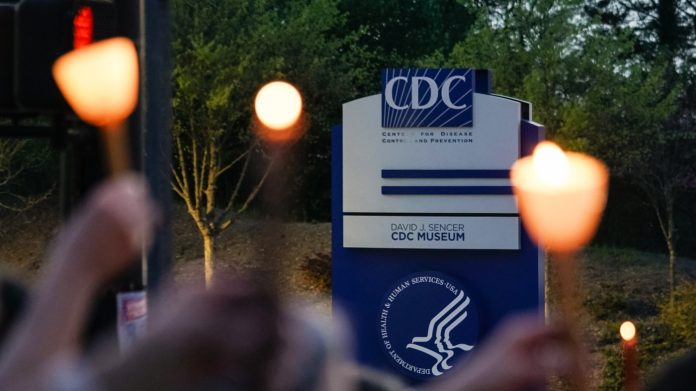
People participate in a candlelight vigil in front of the main offices of the Centers for Disease Control in Atlanta on March 28, days before thousands of CDC employees were laid off.
Elijah Nouvelage/Getty Images
hide caption
toggle caption
Elijah Nouvelage/Getty Images
To accomplish its mission of increasing the health security of the U.S., the Centers for Disease Control and Prevention states that it “conducts critical science and provides health information” to protect the nation. But since President Trump’s administration assumed power in January, many of the platforms the CDC used to communicate with the public have gone silent, an NPR analysis found.
Many of the CDC’s newsletters have stopped being distributed, workers at the CDC say. Health alerts about disease outbreaks, previously sent to health professionals subscribed to the CDC’s Health Alert Network, haven’t been dispatched since March. The agency’s main social media channels have come under new ownership of the Department of Health and Human Services, emails reviewed by NPR show, and most have gone more than a month without posting their own new content.
“Public health functions best when its experts are allowed to communicate the work that they do in real time, and that’s not happening,” said Kevin Griffis, who served as the director of communications at the CDC until March. “That could put people’s lives at risk.”
Health emergencies have not paused since January. Cases of measles, salmonella, listeria and hepatitis A and C have spread throughout the country. More than 100 million Americans continue to suffer from chronic diseases like diabetes and breast cancer. The decline in the agency’s communication could put people at risk, said four current and former CDC workers, three of whom NPR is allowing to remain anonymous because they are still employed by the CDC and believe they may be punished for speaking out.

A measles advisory is shown tacked to a bulletin board outside Gaines County Courthouse in Seminole, Texas, on April 9. The Texas Department of State Health Services has confirmed hundreds of measles cases.
Brandon Bell/Getty Images
hide caption
toggle caption
Brandon Bell/Getty Images
“We are functionally unable to operate communications,” said one of the CDC workers. “We feel like our hands are tied behind our backs.”

Before Trump was inaugurated, the CDC managed most of its communication. HHS, the agency that oversees the CDC and more than 20 divisions and agencies, rarely reviewed the content in CDC social media posts or newsletters, CDC workers said.
That allowed the CDC to communicate quickly and often.
“The whole goal is to say, this is what we know. And here are the best recommendations from experts in the field,” said Dr. Jodie Guest, a professor and senior vice chair of the Department of Epidemiology at Emory University’s Rollins School of Public Health. “And this is the best advice about the way the general population should handle things in order to protect their health.”
The CDC’s communication staff dispersed health messages weekly, monthly and quarterly through a network of more than 150 newsletters about topics like arthritis, diabetes and food safety. The CDC distributed those newsletters to tens of thousands of subscribers, CDC employees said, including clinicians and laboratories that relied on the information to care for patients.
Facts from those dispatches were often shared on social media. Information from the CDC’s Morbidity and Mortality Weekly Report, the agency’s publication of public health information and recommendations, was regularly posted across the CDC’s main social platforms, like on Facebook and X, formerly Twitter.
Scientists and other communication professionals at the CDC could also suggest other health facts to be posted on the agency’s main platforms. Those sorts of posts included information on X about topics like how COVID-19 was spreading in 2020, posts on Facebook about how to prevent bacterial infections and posts across platforms about how to get screened for chronic illnesses, like cancers.
The messages quickly reached a wide audience. More than 12 million people subscribe to the CDC’s main Facebook, Instagram, X and LinkedIn accounts.
“Social media is one of the main ways the CDC communicates plain language, life-saving messages to America,” said one CDC employee.
But now, many of those messages have stopped being sent out. Changes to communication at the CDC began shortly after Trump was inaugurated in January, when HHS instructed the CDC and other health agencies to pause any sort of collaboration with people outside the agency.
“So at that point we stopped pretty much all communications,” said a CDC employee who works at the agency.
The pause affected some of the CDC’s most essential publications. The CDC’s Morbidity and Mortality Weekly Report, the agency’s regularly published write-up of important new public health research and disease outbreak information, was not released for two weeks after Trump was inaugurated. No report was published on Jan. 23, the first Friday after the inauguration, or on Jan. 30, the second Friday.
The unprecedented break in publication of the weekly reports concerned some subscribers.
“It stopped publishing at the height of the bird flu outbreak and at the beginning of the measles outbreak,” said Guest, the epidemiology professor at Emory, who said she’s been reading the report every week since she was a graduate student. “And so it’s really a time when we want to get that very consistent and very important and scientifically sound information, and it was all shut down.”
The reports resumed on Friday Feb. 6, around the time workers at the CDC were told they could resume some meetings with external partners, CDC employees said. But the way the facts inside have been shared with the public has not returned to how it was. Communications have not been handled in-house by CDC scientists and communicators like before. All posts that CDC workers want to make to their agency’s social media accounts have to be reviewed by HHS, employees at the CDC said.
“What we’re being told is that, no, your channels aren’t going to go back.” said a CDC employee.

On April 24, some employees were sent an email from a supervisor that confirmed that HHS now owned the CDC’s main social media platforms, including its X, Instagram, LinkedIn and Facebook accounts.
“We were also notified that HHS is not accepting content for those channels at this time,” the email added.
In response to a request for comment regarding the changes to communication practices at the CDC, the director of communications at HHS, Andrew Nixon, cast doubt on what the workers said.
“It’s unfortunate to see career officials spreading false rumors,” Nixon replied.
Since HHS approval was instituted as a requirement for posting, almost no newsletters have been sent to the tens of thousands of people who subscribe to them, CDC workers said. The last update sent out by the CDC’s Health Alert Network was regarding the risk of dengue infection on March 18, even though outbreaks of salmonella and listeria were acknowledged in May by the CDC on its website.
When CDC publications have gone out, some have been delayed or missing information. A recent release of CDC data regarding the prevalence of HIV in the U.S. cautioned that it “does not include data on PrEP coverage,” referring to medication taken by individuals to prevent HIV infection. “CDC is unable to resume PrEP coverage at this time, due to a reduction in force affecting the Division of HIV Prevention (DHP).”
Two CDC employees who work in communications told NPR that fewer than half of the public health posts they’ve sent to HHS for approval have been cleared for publication on social media. Even posts that include basic information about recent disease outbreaks, like the number of people sickened or hospitalized, have not been posted as requested by employees, NPR confirmed after reviewing posts submitted for approval by an employee. Communications workers say they are also suggesting fewer health posts because they anticipate that their posts will be rejected.
“Everything is getting bottlenecked at the top,” said a worker. “It is extraordinarily time-consuming and backlogs us by weeks, if not months.”
The consequences could be deadly, experts said.
“When you have an outbreak of something like listeria, if you are a person who is pregnant and you consume food items that might have listeria in it that CDC should be warning you about, you run the risk of the baby that you are carrying dying,” said Guest. “And so that information needs to get out there.”
“Propaganda” instead of public health
On April 1, thousands of federal health workers were laid off as part of the government’s “reduction in force.” Communication professionals at the CDC were not spared. Almost everyone at the CDC whose primary job was to communicate with the press was laid off, in addition to almost everyone whose job it was to provide records to the public. Every member of the CDC’s division of digital media was also told their jobs would be eliminated, workers at the CDC said.
“All the points of contact that we generally rely on to communicate with the American people have either been eliminated or dramatically reduced,” said Griffis, the former CDC communications director.
Removing all the CDC’s web developers, graphic designers and social media staffers simultaneously caused a problem. The CDC was suddenly locked out of its main social media accounts, said three people close to the situation.
“The passwords to those accounts were kept on a password protected Word doc,” said one worker at the CDC. “And that Word doc was inaccessible for anyone left, because all of the people that could have opened that document were fired.”
Most of the main accounts haven’t posted since the CDC’s digital media team was laid off. During March, the CDC’s main Facebook page posted more than 20 times—sometimes twice a day. The posts included information for pregnant women about how to take care of their developing babies and screenings for colorectal cancer.
The only main CDC account that has posted some content since April 1 is the CDC’s account on X, a platform owned by Elon Musk. He oversaw the Department of Government Efficiency, the organization that spearheaded efforts to lay off tens of thousands of workers across federal agencies.
On April 7, workers at the CDC said they were surprised to see the CDC’s main X account post a tweet for the first time in a week.
Secretary Kennedy’s directive is for CDC to lead the nation in health readiness and response. His visit to Texas Sunday, to support the state’s efforts to control the measles outbreak, resulted in discussions with Texas state health officials to deploy another CDC response team… https://t.co/WPh86kcnYg
— CDC (@CDCgov) April 7, 2025
“Secretary Kennedy’s directive is for CDC to lead the nation in health readiness and response,” the post stated, sharing a message from Kennedy’s own X account about his visit to Gaines County, Texas. “His visit to Texas Sunday, to support the state’s efforts to control the measles outbreak, resulted in discussions with Texas state health officials to deploy another CDC response team to the area to further assist with the state’s efforts to protect its citizens against measles and its complications.”

Health and Human Services Secretary Robert F. Kennedy Jr. speaks at a news conference at the Health and Human Services Department in Washington, D.C., on April 22.
Andrew Harnik/Getty Images
hide caption
toggle caption
Andrew Harnik/Getty Images
No one they knew had drafted the message, the CDC employees said. Compared to the science and health information that had traditionally been posted to the accounts, three of the current workers at the CDC that NPR spoke with said they considered the post about Kennedy to be akin to “propaganda.”
Griffis, the former communications director, said there’s nothing wrong with retweeting a cabinet secretary.
“What’s undermines the credibility of CDC communications moving forward is the near cessation of pro-vaccination and apolitical public health messages in favor of messages that amplify the secretary,” he said. “That makes it a political channel.”
Since posting about Kennedy’s visit to Texas in early April, the CDC’s main X account has re-posted two more tweets from Kennedy’s account and re-posted one tweet from the HHS X account, which contradicted a CBS News story. On May 14, the account posted about a recent decline in overdose deaths. By comparison, during the month of April last year, in 2024, the CDC’s main X account posted more than 90 times, offering advice and information about topics like alcohol use, a salmonella outbreak, COVID-19 vaccines and wastewater surveillance.
The director of communications at HHS confirmed that the CDC is not locked out of its X account.
“The CDC has access to their X account – it’s that simple,” Nixon said. “CDC is an agency within the U.S. Department of Health and Human Services and supports Secretary Kennedy’s vision to protect public health and Make America Healthy Again.”
Nixon did not respond to a request for comment regarding whether the CDC was still locked out of its other main social media accounts.
If you want to share information regarding public health or other topics, you can send an email to the reporter of this article at [email protected]. Emails sent from Proton Mail accounts will be end-to-end encrypted. You can also send an encrypted text message on Signal to the reporter’s username: ceis.78.
Democrats face questions on Biden's decline
NPR’s Mary Louise Kelly speaks with Paul Begala, former counselor to President Clinton, about the challenges ahead for Democrats as they face scrutiny about transparency surrounding Biden’s health.
Secretary Marco Rubio clashes with Democrats in the committee where he once served
Secretary of State Marco Rubio had some testy exchanges with Democrats in the Senate Foreign Relations Committee. He defended big cuts and the Trump administration’s decision to dismantle USAID.
Trump unveils ambitious and expensive plans for ‘Golden Dome’ missile defense : NPR
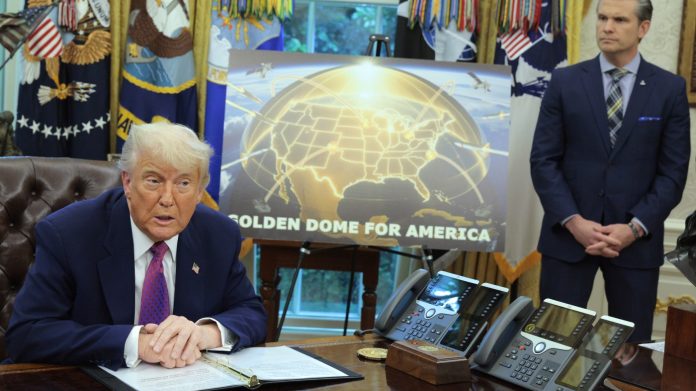
President Trump speaks alongside Secretary of Defense Pete Hegseth in the Oval Office on May 20, 2025, announcing plans for the “Golden Dome,” a national ballistic and cruise missile defense system.
Chip Somodevilla/Getty Images
hide caption
toggle caption
Chip Somodevilla/Getty Images
President Trump today unveiled an ambitious plan to shield America from missile attack by building what he describes as a “Golden Dome.”
“Once fully constructed the Golden Dome will be capable of intercepting missiles even if they are launched from other sides of the world and even if they are launched from space,” President Trump told reporters in the Oval Office on Tuesday.
Trump’s budget and timeline for the project are ambitious. He told reporters he hoped to have it done “before the end of my term.” The system would cost around $175 billion dollars, the president said, with $25 billion to start construction in next year’s budget.
A key part of the Trump plan is to place both missile-sensing and missile-destroying satellites into orbit above the Earth. The constellation would likely involve thousands of small satellites capable of attacking a missile in the moments after it launches from its submarine or silo.
Such a vast network of satellites would have been unthinkable just a few years ago, but it now seems at least theoretically within reach. Elon Musk’s company SpaceX has been using low-cost rockets to launch a constellation of Internet-transmitting satellites known as Starlink. SpaceX says the Starlink system currently has around 7,000 satellites in orbit, a scale that is comparable to most estimates of what a limited space-based missile defense capability would require.
“The overall Golden Dome effort is long overdue,” says Tom Karako, director of the missile defense project at the Center for Strategic and International Studies. Karako concedes that space-based interception of incoming missiles is a “wicked hard problem,” but he says the reality is that the next large war will likely be fought partially above Earth’s atmosphere. Given that reality, he thinks Golden Dome’s capabilities will provide the U.S. with a robust defense that could also be used for anti-satellite warfare if needed.

“There’s a need to contend with a whole lot of things that are in space and going through space,” he says.
Space-based missile defense has been a dream of politicians for decades. In 1983, Ronald Reagan announced plans for a system to intercept missiles from the then-Soviet Union.
“I know this is a formidable task, one that may not be accomplished before the end of this century,” Reagan said at the time. “It will take years, probably decades of effort on many fronts.”
In the end, the Soviet Union collapsed before anything approaching Reagan’s vision could be realized, but missile defenses have progressed. U.S. Patriot missiles have worked for decades to intercept shorter-range missiles, and the U.S. now has several systems capable of intercepting medium- and intermediate-range ballistic missiles. It also has a small number of interceptors capable of hitting ICBMs during the middle of their flight. That capability is aimed squarely at nuclear upstart North Korea.
Other countries, namely Israel and Ukraine, have used missile defenses to protect themselves from attack in recent years.

The U.S. military has ground- and sea-based missile defense systems. The Golden Dome would expand their reach into space.
Leah Garton/U.S. Missile Defense Agency
hide caption
toggle caption
Leah Garton/U.S. Missile Defense Agency
But intercepting Intercontinental Ballistic Missiles in large numbers remains a far more difficult problem. ICBMs launch from deep inside enemy territory and scream back to Earth at hypersonic speeds, making them nearly impossible to hit at the end of their flight. They can also deploy decoys that can fool interceptors. The best time to hit them is as they’re just launching from their silos, but doing so requires an extremely quick response by space-based interceptors. Thousands of interceptors must be launched in order to ensure that one is passing above a missile when it launches.
Whether the technology has, in fact, arrived is far from clear.
An orbital system would be complex, costly, and ultimately vulnerable to counterattack, warns Laura Grego, a physicist at the Union of Concerned Scientists, a group skeptical of missile defense development. Grego says that a network like Golden Dome could be defeated by clustering launches to overwhelm the system, or by attacking the satellites themselves. The U.S. has recently accused Russia of studying how to place nuclear warheads in orbit. Such a warhead could knock out large sections of any Golden Dome system in space.

And the threats facing the U.S. are more diverse than ever. A recent report from the Defense Intelligence Agency showed that Golden Dome would also have to contend with new and emerging threats like cruise missiles, hypersonic missiles that can skim the edge of space and weapons known as Fractional Orbital Bombardment Systems, which can launch, glide through part of an orbit around the Earth and then attack from any direction.
The overall price of Golden Dome is far from certain. While the president says it could be done for $175 billion over three years, a recent estimate from the Congressional Budget Office put the cost at between $161-$542 billion over two decades. Separately, Sen. Tim Sheehy, R.-Mont., who is heading a “Golden Dome caucus,” recently told a crowd that, “It will likely cost in the trillions if and when Golden Dome is completed,” according to Space News.
Given the potential high costs, Grego hopes that Congress will take a careful look before giving the Trump administration money to pursue the system. The road to missile defense “is littered with programs that were started and abandoned after some number of years,” Grego says. “I would say ask the hard questions at the beginning, before you go down this road.”
State of the World from NPR : NPR
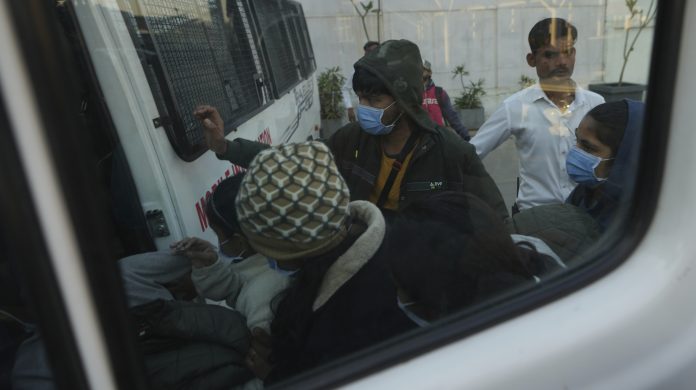
Immigrants, wearing masks, deported from the United States, who were among those who arrived in a U.S. military plane Wednesday in Amritsar, enter a police vehicle at the Ahmedabad airport, India, Thursday, Feb. 6, 2025.
Ajit Solanki/AP
hide caption
toggle caption
Ajit Solanki/AP

Immigrants, wearing masks, deported from the United States, who were among those who arrived in a U.S. military plane Wednesday in Amritsar, enter a police vehicle at the Ahmedabad airport, India, Thursday, Feb. 6, 2025.
Ajit Solanki/AP
There’s been a political backlash in India after the Trump administration deported dozens of Indian migrants who were in the U.S. without legal status. This comes after the U.S. had announced 26 percent tariffs on India, which are currently suspended. Those events have changed Indian’s perceptions of what they had thought was a cozy relationship with the U.S. and have cause a headache for the Indian prime minister. We go to western India to hear what people think of the U.S. now.
Jake Tapper details Joe Biden’s alleged decline in ‘Original Sin’ : NPR
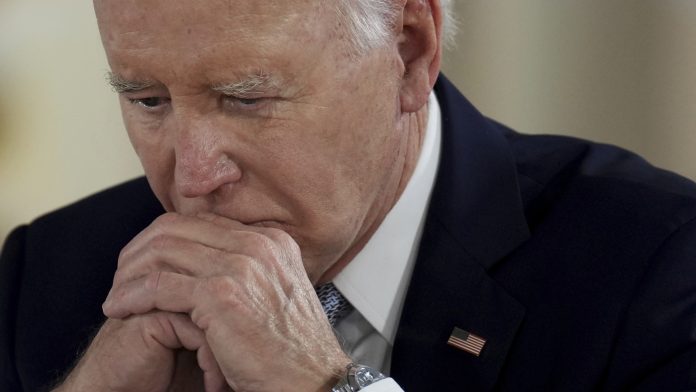
Joe Biden attends a roundtable session at the G7 world leaders summit in Italy, June 13, 2024.
Christopher Furlong/Getty Images Pool/Associated Press
hide caption
toggle caption
Christopher Furlong/Getty Images Pool/Associated Press
CNN’s Jake Tapper calls his new book a tragedy. Original Sin: President Biden’s Decline, Its Cover-Up, and His Disastrous Choice to Run Again, which Tapper co-authored with Axios’ Alex Thompson, describes two Joe Bidens.
“The first one is the one that everybody got to know during his vice presidency,” Tapper says. “And the second one was kind of a non-functioning Joe Biden. … And that non-functioning Biden would rear his head increasingly starting in, like, 2019, 2020. And then, as his term went on, more and more behind the scenes.”
The book describes a president who failed to recognize longtime political allies, lost his train of thought in important conversations and forgot important dates, including the death of his son, Beau: “We in the public would see some of it in front of the cameras … but we had no idea how bad it was,” Tapper says.
Tapper says one source described a president that was being propped up by aides: “One person told us that the presidency was, at best, a five-person board with Joe Biden as chairman of the board.”

The issue became part of a broader conversation during Biden’s June 2024 debate with then-presidential candidate Donald Trump. Biden spoke haltingly, and struggled to articulate why he should be reelected to the office. Tapper, who moderated the debate, remembers wondering if he’d make it through all 90 minutes of the event. A month later, Biden withdrew from the presidential race.

Looking back now, Tapper says he regrets not covering Biden’s decline more aggressively. “I can point to times where I asked him this or I asked them that … but knowing what I know now, I barely scratched the surface,” he says. “I need to run more towards the discomfort of questions about health because they’re so important and they’re so under-covered in Washington.”
On Sunday, Biden’s office issued a statement, revealing that the former president has been diagnosed with an “aggressive form” of prostate cancer, which has metastasized to the bone.
“It is very sad what happens to us, if we’re lucky enough to get old. Very few of us retain our acuity until our death in our sleep at age 99,” Tapper says. “It is the human condition, and that makes it difficult to report on this. But by the same token, we have a right to believe and expect that a president will be sharp and on top of things.”
Interview highlights

On the timing of his book and Biden’s recent cancer diagnosis
My heart goes out to him. My prayers are with him. I hope the hormone therapy for the cancer works. This is part and parcel of the story of Joe Biden. … The book was written as a tragedy: Here is a person that has gone through so much in his life. So many horrible things fate has thrown at him from the very beginning of his life to today — and that instilled in him a spirit that so many people love, which is the guy who gets up after getting knocked down. And it also created a sort of theology around Biden where he could do anything. And that led to the situation we’re in, if you take a step back, big picture: Donald Trump, the president, Republicans controlling the House and the Senate.
On the argument that the White House hid Biden’s decline
Some of the ways in which they helped hide his deterioration started off innocently enough. I mean, any staffer wants to make a president or a senator or a governor look as good as possible. And if he wants note cards, if he wants a teleprompter, if he wants to do events in the middle of the day instead of early in the morning or late at night — that’s all perfectly understandable. But then all of those things became crutches and started really infiltrating his presidency in a serious way to the point that even cabinet meetings, even after the cameras left, were highly scripted.
Then I think the real part of the cover-up comes with not just the fact that he’s at 40- or 50-person fundraisers using a teleprompter, which is bizarre and unprecedented for a president who should be able to speak extemporaneously for 10 minutes. There’s the fact they started cordoning him off from people in 2023. So members of Congress who went to the White House Christmas party in December 2022 didn’t see him again in the flesh, many of them, until December 2023, and they were shocked at what they saw.
On the Biden team’s aggressive response to critical coverage
It happened to me when I was reporting critically on Biden’s withdrawal from Afghanistan in August 2021. This is just politics in America today. White Houses, parties, have legions of influencers and bots and activists and journalists who agree with them, and those people, half the time you don’t even need to give them an order, they’ll just go after anybody. It’s just par for the course. We cited it not to justify anything, but just to kind of explain the terrain on which journalists were trying to report anything about President Biden. … The White House is calling your story a lie or somebody from the White House threatens to go on the record and call your story a lie, that could be really intimidating. … It also serves as a warning shot for other journalists to not follow up on a story because they see how somebody else is getting raked over the coals, and they might not want to experience that.
On the Democratic Party’s reaction to Biden’s debate performance
Democrats were shocked. They were just absolutely stunned. And I think there were really two camps. There was the Biden camp, which was, “OK, how do we get out of this? How do we crawl back?” Because Joe Biden, as I said earlier, as a compliment, he cannot be defeated. That’s his great attitude. He’s not going to be defeated by brain aneurysms, by this tragedy, by that tragedy. …

You don’t need to be a genius political consultant to know that the obvious remedy to fixing what he had just done was to go out and do 15 interviews and 20 town halls and five press conferences and just show people that he was as sharp as a tack as they had been saying. And the problem was he couldn’t do that, and that’s why his pollsters ultimately concluded there was just no way to get out of it. This was a disaster and it was going to keep getting worse and worse until election day.
On the Democratic reaction to George Clooney’s New York Times op-ed, which called for Biden to drop out of the presidential race
They were shocked. After the debate everybody was talking about, “Who’s going to say it?” Because very few people were coming forward publicly, even though the voters were clear and many members of the media were clear, a lot of Democratic officials kept quiet. … [The op-ed] had a huge impact because here’s a guy [Clooney] who co-hosted the most successful Democratic fundraiser in presidential history. Thirty million dollars raised in one night. Here’s a beloved figure who would only make enemies. You can only make enemies from such a thing. And he came out and he was gutsier here then most senators and governors and members of the House.
On the public’s lack of trust in legacy media
The news media is in a crisis. … Reporters in general, CNN, NPR, ABC, CBS, all of us, people don’t trust us. One of the reasons they don’t trust us is what just happened with Joe Biden and his acuity and the fact that we in the media were pretty late to the story. I should [say], we in the legacy media were late to that story, because conservative media was not late to it. And I think that we are in an existential fight for a free press. Not that it’s gonna be taken away, but it certainly runs the risk of not thriving as it has. And that just calls on us to be as good and professional as possible.
Sam Briger and Thea Chaloner produced and edited this interview for broadcast. Bridget Bentz, Molly Seavy-Nesper and Meghan Sullivan adapted it for the web.
New research shows what’s at stake if Congress makes cuts to Medicaid : Shots
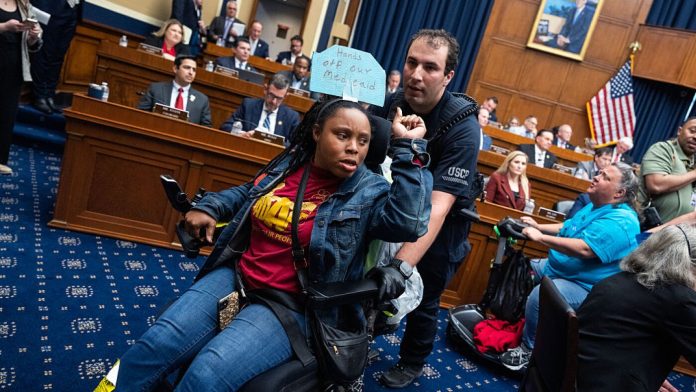
Demonstrators calling for preservation of Medicaid funding, are removed from the House Energy and Commerce markup of the budget resolution in Rayburn building on May 13.
Tom Williams/CQ-Roll Call, Inc/Getty Images
hide caption
toggle caption
Tom Williams/CQ-Roll Call, Inc/Getty Images
Two research studies published this month add important data to the fierce political debate over Medicaid in Washington, D.C.Each study — one published last week in the New England Journal of Medicine, and the other released as a working paper from the nonpartisan National Bureau of Economic Research — offers evidence that Medicaid, the public insurance program that covers more than 70 million low-income and disabled Americans, is saving people’s lives.
As Congress considers major changes to the program, these findings underscore the importance of treading carefully, said Harvard University economist Amitabh Chandra, who was not involved in either study.
“What we’re learning is that restricting access to Medicaid might save us money, but that comes at a tremendous cost,” said Chandra. “And that cost is human lives.”

Tens of thousands of lives saved
The National Bureau of Economic Research paper, by Angela Wyse, an economist at Dartmouth College, and Bruce Meyer, a University of Chicago economist, focused on the millions of low-income adults who gained Medicaid coverage in states that expanded the program under the Affordable Care Act. After examining a dataset of 37 million people, the authors found:
- People who gained Medicaid coverage via the ACA expansion were 21% less likely to die in a given year of enrollment than peers who did not get the health coverage.
- States that chose to expand Medicaid saved 27,400 lives between 2010 and 2022.
- States that declined to expand Medicaid in 2014 missed the chance to save 12,800 more lives.
The study does not explain how Medicaid expansion had this effect, but prior research has shown the program is linked with improved physical health and reductions in deaths from diseases like diabetes and cancer.
Wyse and Meyer also found that younger adults, who many have long assumed have less to gain from insurance, saw strong life-saving effects from the program, too. The authors suggest that coverage of mental health and substance use treatment for this age group could be key.

Medicaid brings life-saving drugs within reach
The NEJM study, published May 14, examined Medicaid’s effects on a smaller, yet especially vulnerable group of people who are eligible for both Medicare and Medicaid.
These 12 million Americans have low incomes and are also either disabled or over age 65, with some checking all three boxes. To get the care they need, this group of “duals,” as they’re often called by policymakers, are forced to navigate both of the country’s largest public health insurance programs.
When duals lose their Medicaid they also lose vital Medicare coverage that lowers prescription drug costs (the Part D Low-Income Subsidy) by roughly $6,000 a year on average. However, due to a quirk in policy, some people are able to keep this subsidy longer than others, depending on when in the year they lose their Medicaid.
The study’s authors, led by University of Pennsylvania economist Eric Roberts and Harvard researcher José Figueroa, took advantage of this disenrollment quirk to isolate and measure the Part D Low-Income Subsidy’s effects. They found that compared to patients who kept this extra help for longer, those who lost it sooner:
- Filled 1.2 fewer prescriptions on average
- Were between 4% and 22% more likely to die, depending on their level of medication costs and types of medicines used
- Were most likely to die during the 17-month study period if they had especially high drug costs
- Were more likely to die in that period if they’d been relying on medicines to manage HIV, heart disease or chronic lung disease
Chandra, the Harvard economist, said that in addition to showing the value of Medicaid, this “remarkable paper” helps answer a much larger question.
“It’s great that we now know Medicaid saves lives, but there’s still been this question about why,” said Chandra. “Why does Medicaid cause people to live longer?”
One clear reason, at least according to this paper, he said, is that the program makes prescription drugs easier to get. And that, said Chandra, is a testament to the value of not only Medicaid, but also medication access more broadly.
A regulation from the Department of Health and Human Services that was finalized in 2023 was poised to help nearly 1 million more duals gain this extra medication assistance. But the latest Republican proposal delays that rule until 2035.
The impact of extra red tape
Roberts, the study’s coauthor, highlighted one other timely implication of his team’s results.
Citing concerns about waste and fraud, Republicans are proposing increased frequency of eligibility checks as well as requiring states to put in place work requirements — both of these could make it harder for people to stay on Medicaid.
Research shows it’s common for people to briefly lose Medicaid coverage (as their income fluctuates, for example, or because of paperwork errors) but regain it soon thereafter — a phenomenon known as “churn.”
Policies that increase churn could have deadly effects, according to Roberts.
“For very sick, very poor people, even going one week without life-saving drugs can have huge consequences,” he said.
Roberts found that nearly 3,000 duals died despite many of those people only losing their drug subsidy for about two extra months.
Together, the two research papers highlight a tough reality for congressional Republicans as they continue to consider a slate of possible Medicaid cuts to fund their other policy priorities.
No matter how they shrink the program, whether by making federal funding less generous or paperwork more onerous, this new evidence suggests that some people are likely to get hurt.
This story comes from the nonprofit health news organization Tradeoffs and originally appeared on its website. Leslie Walker is a senior reporter/producer for Tradeoffs.