Thursday, November 12, 2026
Home Blog Page 300

Mayor Michelle Wu on juggling motherhood and public service : NPR

0

NPR’s Mary Louise Kelly talks with Boston mayor Michelle Wu, who just welcomed her third child. She’s the first Boston mayor to give birth while in office.


MARY LOUISE KELLY, HOST:

Boston Mayor Michelle Wu is used to firsts. She is the first woman to be elected mayor of Boston, first person of color to be elected to the post and, as of a couple of weeks ago, the first Boston mayor to give birth while in office – her third child. On Tuesday, Mayor Wu was back at City Hall, and as she got to work, her newborn, Mira, was in tow.

(SOUNDBITE OF ARCHIVED RECORDING)

UNIDENTIFIED PERSON #1: Oh, my God.

UNIDENTIFIED PERSON #2: Oh, wow.

MICHELLE WU: She’s been a great baby – eats a lot, sleeps a lot.

KELLY: Eats a lot, sleeps a lot. Mayor Wu, welcome and congratulations.

WU: Thank you so much. It’s great to be with you.

KELLY: How did that feel to be back at City Hall with your newest newborn babe in arms?

WU: (Laughter) It was great to be back in the swing of things. I had been participating with my team mostly remotely up until that point, since we welcomed our lovely new bundle, and to just be back in person felt really good.

KELLY: Good.

WU: And Mira held her own. She participated in Cabinet meetings…

KELLY: (Laughter).

WU: …And just had one diaper issue that we needed to address, but it got taken care of pretty quickly.

KELLY: Is this just business as usual for you? I mean, you’ve done this before. I read back when you were on the City Council before you were mayor, so, like, a decade ago, you would come to work every day carrying your then-infant son.

WU: That’s right. Mira has two big brothers, and both were born after I was already serving on the Boston City Council. And so it brought back a lot of memories of being on the council floor or having a baby on my hip as we were going through the business of the city.

We are very lucky in that City Hall is a site with onsite childcare, but there is a little bit of a lag time in terms of when they will start accepting new babies, and so for this transition period, it’s a little bit of touch and go, but we do our best. And now, with technology, with Zoom, there are even more ways to be engaged.

KELLY: We were going back through the archives, and I saw that back when you first were doing this with a baby on your hip – this was, like, back in 2015 – you gave an interview to CBS and described some of the pushback that you got for bringing your son to council meetings, council hearings at the time. Any pushback at all this time?

WU: Well, I think we’re still in a world where often there’s the expectation that you have to have very strict boundaries in order to be professional – right? – and that someone’s home or personal life should be kept very separate from what it means to be a working individual.

KELLY: Yeah.

WU: And we know from the vast majority of jobs and industries that that artificial separation is not only impossible, but it also really holds us back as a society. We have come a long way since my first child was born. Back then, I had been leading the charge, and we did not have paid parental leave at all in place in City Hall. And so I authored the ordinance, passed that policy, and in the years since then, we’ve now been able to expand it to just about every city union as well, through collective bargaining. And so a lot of those policies have now newly been implemented, and we’re seeing the benefits.

KELLY: May I ask the obvious question? You’re talking about helping to lead the fight for paid parental leave. It doesn’t really sound like you’re taking it (laughter). Why not?

WU: Well, I have a strong, strong proponent that every single person should have the full range of options to support what their family needs, what their personal health needs and what their own judgment is. The job of being an elected official is a little bit unique and different. You’re essentially on call, even on vacation, even in the middle of the night, for important decisions that have to be made. And so I’m doing this in a way that works for my family, works for the city and that I’ve, frankly, had a joy and just a huge privilege to be able to do because we have options in place.

KELLY: So I’m well aware, Mayor Wu, that I might not have asked for this interview, that it would be less newsworthy, if a male mayor of Boston had just welcomed a third child to the family. I’m also aware, as a working mom myself, that most dads aren’t actually in there doing the childbirth and breastfeeding. There’s some things you just can’t delegate. I guess it prompts the question. I mean, Mira obviously is still tiny. She’s – what? – 14, 15 days old as we’re speaking.

WU: That’s right.

KELLY: But are you thinking already about what you might want her to know about what is possible for a working mother?

WU: We’re in such an interesting and also unpredictable and in many ways stressful time. As a woman, as someone who has a front-row seat in the workings of politics and government right now, we’re seeing the push and pull of many changes or even rolling back of policies that had been long fought for to protect bodily autonomy or individual rights and protections.

As I was running for mayor, towards the end of that election, you know, there were a number of very strong women involved, and my boys had grown up seeing the sea change of women in elected office that Boston had experienced over the last decade. And one of my sons asked me if boys were ever allowed to be mayor of Boston as well.

KELLY: (Laughter).

WU: And so I think we’re seeing the impact that role models can have, and we want to make sure that that also turns into a tangible difference and the impact in improving people’s lives.

KELLY: So as you and I speak, you are running a reelection campaign for another term. And as I don’t need to tell you, we’re not living through a quiet moment for big city mayors in America. I was reading that you are 1 of 4 mayors who has been called to testify next month – February 11 – on Capitol Hill for a hearing on so-called sanctuary cities. Do you plan to go?

WU: We’re still reviewing the communication that was received and seeking some guidance from those who know the ins and outs of congressional policies and all of that best. I know that Boston has a lot to share when it comes to how our policies have been successful at creating the results that so many communities are calling for. We are very proud to be the safest major city in the country. We are at record low levels of gun violence, of homicide, of all the public safety statistics that are tracked on an annual basis. And that is because of the trust that exists within our community and the ability for everyone to be involved and to have investments that improve people’s lives. So we’re still evaluating what the next steps are on that front, and should it come to that, I think I would also need to understand the breastfeeding policies (laughter) for those who are testifying as well.

KELLY: What kind of questions are you getting, either from local law enforcement there in Boston or from people in your city without legal status – questions about the deportation threats coming from federal government officials.

WU: I think we are very clear in Boston that the results we’ve achieved have been because we create a space where everyone is part of our community. That means that regardless of your immigration status or anything else about your background, everyone needs to feel comfortable and safe reaching out to law enforcement, reporting crimes, calling 911 when you need help, taking your kids to school, being involved in activities at the community center, and we do not ask about immigration status in any of those settings. At the same time, we are very clear that there’s accountability across the board as well for those who have committed a crime or who are perpetrating violence or harm in the community. And so that’s the foundation of how we are building our city here.

KELLY: Boston mayor and mom Michelle Wu, thank you very much for your time.

WU: Thank you so much.

(SOUNDBITE OF MUSIC)

Copyright © 2025 NPR. All rights reserved. Visit our website terms of use and permissions pages at www.npr.org for further information.

NPR transcripts are created on a rush deadline by an NPR contractor. This text may not be in its final form and may be updated or revised in the future. Accuracy and availability may vary. The authoritative record of NPR’s programming is the audio record.
Trump issues unexpected ultimatum to senior FBI ranks

0

The Trump administration has told top officials at the FBI to resign or lose their jobs, Fox News has learned. 

The exact number has not been disclosed, but the ultimatum was allegedly given to senior employees promoted under former director, Christopher A. Wray.

President Donald Trump’s administration took these steps as his nominee to lead the bureau, Kash Patel, said he would not begin his tenure with retribution or focus on past transgressions. 

“I have no interest, no desire and will not, if confirmed, go backwards. There will be no politicization at the FBI. There will be no retributive actions taken,” Patel said at the Senate Judiciary Committee.

MAJOR FBI CHANGES KASH PATEL COULD MAKE ON DAY 1 IF CONFIRMED AS DIRECTOR

Kash Patel, President Donald Trump’s choice to be director of the FBI, appears before the Senate Judiciary Committee for his confirmation hearing, at the Capitol in Washington, Thursday, Jan. 30, 2025.  (AP)

According to reporting from The New York Times, an email to colleagues from one of the senior agents outlined that he had learned he would be dismissed “from the rolls of the F.B.I.” as soon as Monday morning.

“I was given no rationale for this decision, which, as you might imagine, has come as a shock,” he wrote.

FBI logo and seal seen below the American flag

The FBI seal is displayed on a podium before a news conference at the agency’s headquarters in Washington. (AP Photo/Jose Luis Magana)

During the Senate Judiciary Committee hearing, Patel said he is unaware of any plans of retribution by the Trump administration.

“Are you aware of any plans or discussions to punish in any way, including termination, FBI agents or personnel associated with Trump investigations?” asked Democratic Sen. Cory Booker.

SPARKS EXPECTED TO FLY AT KASH PATEL’S SENATE CONFIRMATION HEARING TO LEAD FBI

Kash Patel, President Donald Trump's choice to be director of the FBI, arrives for his confirmation hearing before the Senate Judiciary Committee at the Capitol in Washington, Thursday, Jan. 30, 2025. (AP Photo/Ben Curtis)

Kash Patel, President Donald Trump’s choice to be director of the FBI, arrives for his confirmation hearing before the Senate Judiciary Committee at the Capitol in Washington, Thursday, Jan. 30, 2025. (AP Photo/Ben Curtis)

“I am not aware of that, senator,” Patel replied.

Although Patel has been nominated, a director has not been officially confirmed to take charge, so the news of the ultimatum was alarming for those involved.

Until the vote comes to a close, Brian Driscoll remains the bureau’s acting director.

The FBI declined to comment when reached by Fox News. 

Kremlin Chokes YouTube Service, but Russians Find Ways Around It

0

He blocked Facebook, Instagram and Twitter.

He signed a censorship law that led TikTok to disable its functions.

President Vladimir V. Putin has clamped down on free expression in Russia to a degree unseen since the Soviet era. Now he is taking aim at the last Western tech platform barely standing in wartime Russia: YouTube.

Mr. Putin has not formally banned the U.S. video platform that has more than 2.5 billion users worldwide. But the site has angered Russian authorities, who view the site as an uncontrollable gateway to antiwar content. They have also decried YouTube for removing Russian propaganda channels as well as videos by Russian musicians subject to western sanctions.

So last summer Russian users experienced a significant slowing of YouTube, primarily on desktop internet connections. Internet experts have said the sudden and simultaneous drop-offs in traffic could be explained only by deliberate throttling of the service on the part of Russian authorities.

The purposeful slowing of the service spread to a wider swath of the internet, including mobile networks, last month. Millions of Russians trying to access videos have found them too slow to load or too pixelated to watch.

“This sudden massive drop is 100 percent artificial,” Philipp Dietrich, an analyst at the German Council on Foreign Relations, said. “There is no doubt about the fact that this is human-made.”

The results of the broadside against YouTube have so far been mixed, demonstrating the complications Moscow faces in snuffing out an American-made cornerstone of the Russian internet that for years was seen as practically too big to ban.

YouTube for years has been a staple of daily life for many Russians, streaming everything from old Soviet movies to anti-Kremlin political shows. Some 96 million Russians over the age of 12, or about 79 percent of the over-12 population, visited the site monthly as of July, before the slowdown in service began, according to the research group MediaScope.

But the relationship between the Kremlin and Google, which owns YouTube, has been tense for years. Searing viral YouTube broadcasts transformed the late Russian opposition figure Aleksei A. Navalny into a significant threat to the Kremlin. His corruption investigation into a palace on the Black Sea built for Mr. Putin, released on YouTube in early 2021, has drawn 133 million views over the past four years, underscoring the power of the platform.

On one level, the throttling looks to have worked. Russian internet traffic to YouTube is less than a third of what it was this time last year, according to public data released by Google, the streaming service’s parent company. VK, the state-controlled social media network, is pitching a domestic alternative to YouTube, known as VK Video, and it has trumpeted surges in traffic.

But the reality is more complex.

Droves of tech-savvy Russians are continuing to access YouTube using virtual private networks, or VPNs. Those tools route their internet traffic through another country, meaning it does not show up in Google’s data as Russian usage. They also encrypt users’ traffic and protect their identities.

The impeding of YouTube has also proved spotty across Russia’s hundreds of internet providers, leaving some Russians able to access YouTube videos directly, even without VPNs.

Political shows critical of the Kremlin filmed outside Russia have seen relatively minimal traffic declines from the slowing service, according to the Russian journalist Dmitry Kolezev, who tracks the shows through a product called YouScore. That is likely because their viewers in Russia who are particularly motivated to view anti-Kremlin content have swiftly acquired VPNs.

Entertainment content, ranging from children’s cartoons to cooking shows, has seen a significant drop-off in many cases, according to YouTube traffic measurement sites. Viewers of such content are less likely to purchase VPNs and may be able to find what they are looking for on Russian streaming platforms.

The exact number of Russians using VPNs is unclear. Mikhail Klimarev, executive director of the Internet Protection Society, a digital rights group now based in Europe, estimated that more than half of Russian internet users, or about 60 million people, at least know what a VPN is and say they are able to use one.

“People will learn to use VPNs because of YouTube and will discover that there is much more to the internet than what they get on the regular Russian internet,” Mr. Klimarev predicted. “It is simply of higher quality, there are simply more opportunities, more access to content.”

Still, the slowdown in service is driving many Russians to state-controlled domestic platforms, such as VK and RuTube, to consume at least some of the content they used to watch on YouTube. That is a bifurcation of the internet that the Kremlin desires.

“We are calling this phenomenon a splinternet,” said Anastasiya Zhyrmont, policy manager for Eastern Europe and Central Asia at the digital rights group Access Now. They are trying “to splinter the internet and build their own ecosystem,” she said.

Ilya Shepelin, a Russian journalist in exile who makes popular YouTube videos skewering state propaganda, worries that only politically oriented Russians willing to go through the process of setting up and paying for quality VPNs will end up staying on YouTube, with the rest migrating toward a state-controlled domestic internet for leisure, where they will not chance upon political videos critical of the state.

The result, he said, would be “a kind of information bubble” where video creators will not “reach the average Russian.”

Already, some bifurcation is visible.

Artur Dneprovsky, the creator behind some 20 YouTube channels showing Russian-language children’s cartoons, including the popular “Blue Tractor,” said in an email that his studio’s bigger channels have seen drops in YouTube traffic from 20 percent to 30 percent, while the smaller projects have dropped up to 50 percent, amid the slowdown.

At the same time, he said, he has seen noticeable and rapid increase in views and subscribers on Russia’s domestic video platforms, especially RuTube, where more than 400,000 people have signed up for “Blue Tractor” since the start of the throttling — suggesting that some people having trouble with YouTube are migrating to RuTube or VK as alternatives.

Maxim Katz, a Russian opposition figure who broadcasts a popular political YouTube show from Israel, watched as the number of users tuning into his show from Russia in the data for his channel dropped 45 percent from a year ago. But his overall viewership numbers stayed the same, suggesting that some viewers in Russia had adopted VPNs and were showing up in the data as coming from other countries.

“People simply switched to using VPNs en masse and are continuing to watch YouTube,” said Mr. Katz, who is on Russia’s federal wanted list and does not publish videos on the state-controlled platforms.

Mr. Putin’s invasion of Ukraine in early 2022 significantly escalated the Kremlin’s clash with Google. The company globally blocked more than 1,000 Russian state-sponsored propaganda channels, including more than 5.5 million videos, according to YouTube. It suspended ads shown on YouTube to users in Russia, as well as the serving of ads by Russia-based advertisers to users globally.

Google regularly denied demands by the Russian authorities to remove content. For example, after Mr. Putin announced a mobilization in September 2022 to shore up his reeling forces in Ukraine, Russia’s communications regulator asked Google to remove 63 videos from YouTube related to the unpopular mobilization. Google said it agreed to remove only one, because the clip advised the use of poison to avoid the draft.

In July, Google prompted ire from the Kremlin when it complied with European Union sanctions on pro-Kremlin musicians and removed their channels and videos. The impeding of service began soon afterward.

Russian authorities have also slapped Google with increasing fines.

Mr. Putin, speaking at his annual call-in show last month, accused YouTube and Google of doing the U.S. government’s bidding by serving up politically oriented videos to Russians searching for culture and music content.

“If they want to work here,” Mr. Putin said, “let them act in accordance with the laws of the Russian Federation.”

Mr. Putin also blamed the disruptions to YouTube last year on Google, saying that the company had not serviced its infrastructure in Russia since retreating from the market. Google denies that technical issues were responsible for the slowdown

Russian authorities have been stepping up a long-running campaign against VPN services, which, if effective, could further reduce Russian access to YouTube and other Western tech platforms.

Apple, for instance, removed scores of VPNs from its app store in Russia last year under apparent pressure from Moscow, a move that outraged international human rights groups. (Google Play, the App Store equivalent for Android devices, which are more popular than iPhones in Russia, has not done so).

Few Russian content creators, including those who support Mr. Putin, are satisfied with being confined to state-controlled domestic YouTube alternatives, which lack the same international reach, recommendation algorithm, monetization possibilities and broad user base.

Mr. Putin’s comments on YouTube in December came in response to a question from a popular Russian-language YouTube blogger, Vlad Bumaga.

Mr. Bumaga, originally from Belarus, praised the Russian alternatives, including VK, which has a deal to air his videos. But he nonetheless asked if YouTube access could remain accessible.

Even after signing with VK, Mr. Bumaga is still uploading his videos on YouTube, where they continue to earn millions of views and thousands of Russian-language comments. His account claims he is based in the United States.

Alina Lobzina and Oleg Matsnev contributed reporting.

Trump suggests that deadly airliner crash was the result of diversity hiring : NPR

0

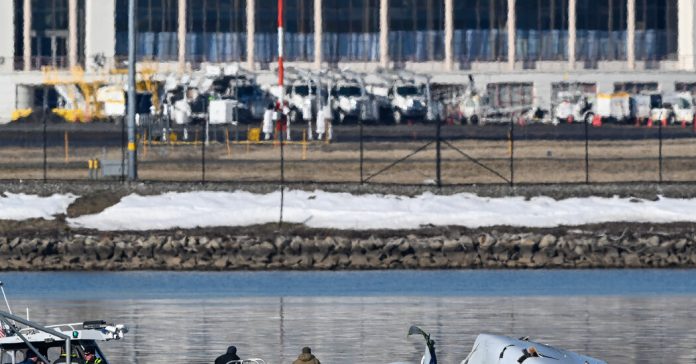
Without evidence, President Trump and other administration officials claimed that DEI programs led to Wednesday’s fatal air crash. DEI has recently become a common talking point to blame disasters on.


MARY LOUISE KELLY, HOST:

So the investigation into what caused this fatal air collision is just beginning, but almost immediately, President Trump and other administration officials said diversity, equity and inclusion programs at the Federal Aviation Administration were to blame. Trump also acknowledged he had no direct evidence that DEI had anything to do with the crash. This is not the first time opponents of DEI efforts have tried to tie DEI to a disaster, and I want to bring in NPR’s Lisa Hagen to discuss why. Hi, Lisa.

LISA HAGEN, BYLINE: Hi, Mary Louise.

KELLY: You have done some reporting about how DEI has become a sort of catchall explanation for disasters, for tragedies. What else has been blamed on DEI?

HAGEN: Yeah. Most recently, supporters of Trump’s blamed the spread of wildfires in Los Angeles on DEI efforts at the LA Fire Department. We heard it as a critique of the Secret Service after assassination attempts on candidate Trump. We heard it after the Baltimore bridge collapse last spring, and that list goes on.

KELLY: Well, and it’s interesting because in a lot of these cases, the facts are not known right away. Investigations require time. Why the seeming rush to tie DEI?

HAGEN: Yeah. I spoke with Ian Haney Lopez about this. He’s a law professor at the University of California, Berkeley and the author of the book “Dog Whistle Politics.” He says invoking DEI in this way is part of a larger effort to trigger resentment against groups that have been historically marginalized.

IAN HANEY LOPEZ: But to do so in terms that do not embrace a blatant, direct bigotry, but that instead seek to clothe themselves in some form of a commitment to fairness or excellence.

HAGEN: He says blaming DEI is shorthand for a story that America used to be based only on competence and meritocracy, which – that’s an inversion of our actual history of pervasive discrimination against people other than straight, white men.

KELLY: Back to this press conference today with President Trump. He seemed to be reading from the actual DEI inclusion policy, the actual diversity and equity inclusion policy at the FAA. What do we know about what it says about hiring practices there?

HAGEN: Yeah. So it’s important to say those hiring practices were also in place under all of Trump’s first administration. But here’s another important thing. I spoke with a former FAA official today who wanted to remain anonymous because of retribution concerns. But that official pointed out, air traffic control is a very specific job within the FAA, and those specialists go through very rigorous skills testing and a psychological evaluation before they’re hired.

KELLY: Just to step back, this second Trump administration has aggressively been trying to end DEI programs across the federal government, across the military. Can you just put into context, remind people what it is they’re trying to get rid of, how DEI is supposed to work in practice.

HAGEN: So according to people who do DEI counsel – consulting, these efforts are trying to push workplaces toward meritocracy. It’s things like standardizing hiring and promotion processes or writing scoring rubrics for candidates where often there weren’t any before. And you often hear anti-DEI activists saying it’s about hiring quotas, but those are actually illegal in the United States.

KELLY: That is NPR’s Lisa Hagen. Thanks very much.

HAGEN: Thank you.

Copyright © 2025 NPR. All rights reserved. Visit our website terms of use and permissions pages at www.npr.org for further information.

NPR transcripts are created on a rush deadline by an NPR contractor. This text may not be in its final form and may be updated or revised in the future. Accuracy and availability may vary. The authoritative record of NPR’s programming is the audio record.

Billy Crystal describes pain of losing home in Palisades Fire at FireAid benefit concert: ‘Fell to my knees’

0

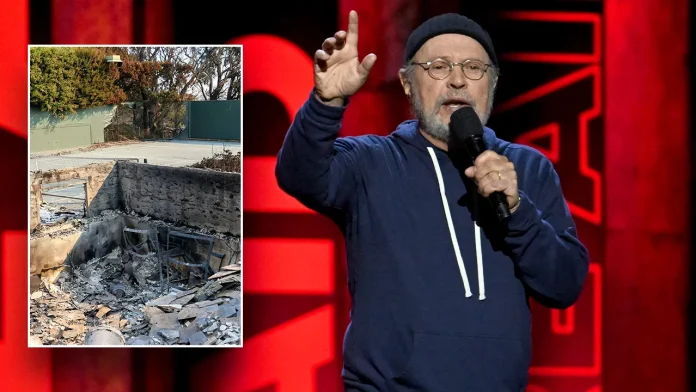
Billy Crystal, who lost his home in the Palisades Fire, shared a moving message at the LA FireAid Benefit Concert on Thursday night at the Kia Forum.

Following Green Day’s performance, Crystal took the stage to introduce the show, with proceeds going to a non-profit, supporting displaced families, rebuilding of infrastructure as well as advancing fire protection technologies.

“Our goal is simple tonight, to raise more money than the Dodgers spent on free agents,” the comedian joked. 

Billy Crystal, who lost his home in the Palisades Fire, shared a moving message at the LA FireAid Benefit Concert on Thursday night at the Kia Forum. (Getty Images)

Crystal explained that Steve Ballmer, the owner of the Los Angeles Clippers and the Intuit Dome, would be matching everyone’s donation, $1 for $1, on Thursday night. 

CALIFORNIA FIRES: ESSENTIAL PHONE NUMBERS FOR LOS ANGELES-AREA RESIDENTS AND HOW YOU CAN HELP THEM

The first donation of the night was from U2 for $1 million, which Ballmer will be matching, Crystal said.

“With your help around the country and here in the room, we will laugh again. We are going to listen to music again and we will be okay.”

— Billy Crystal

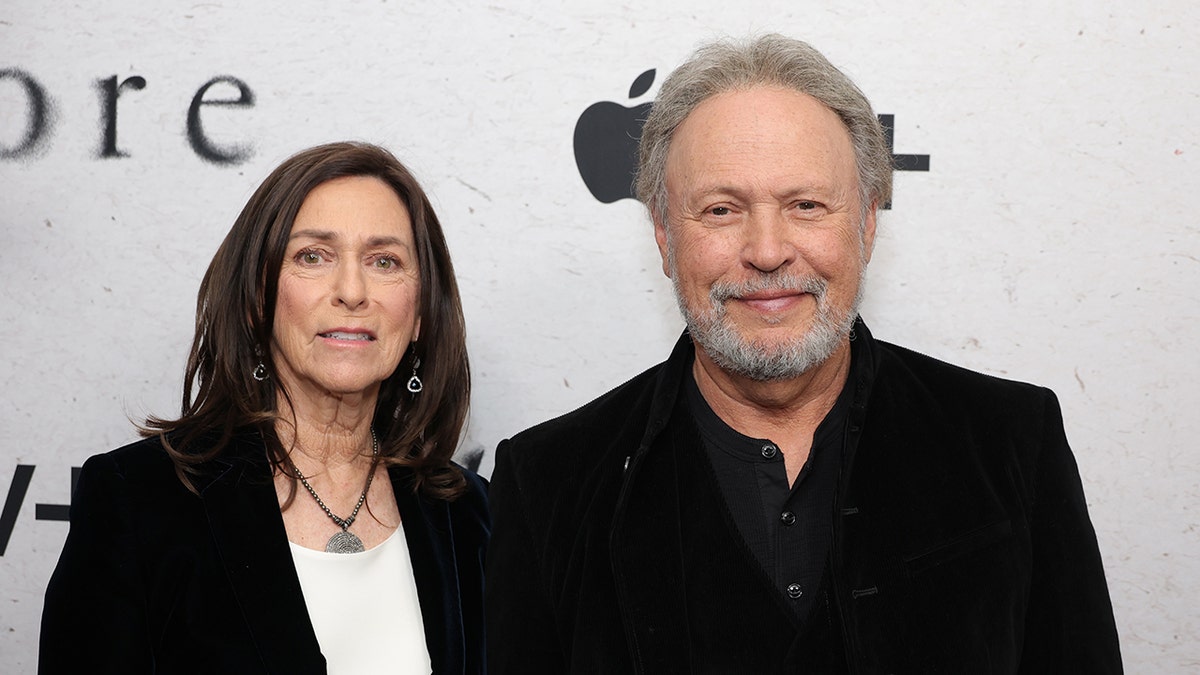
“You’ll be hearing from a number of people who were tragically affected by these fires, and I was one of them. These were the clothes I wore when I fled my house with my wife Janice, like so many of us did, on January 7th. This was all I had. Wore it for a week, plus an N-95 mask.”

Billy Crystal Palisades home

A view of Billy Crystal’s home destroyed in the Palisades Fire. (Photo by MEGA/GC Images)

Billy Crystal home ruins

Crystal lived in his Palisades home for 46 years. (Photo by MEGA/GC Images)

“I looked like an evacuee or someone that just robed a 7-11,” Crystal joked.

Crystal explained that 23 years ago, he took the stage at Madison Square Garden to hold a benefit following 9/11. He explained that he walked out to a grieving audience, holding up posters with pictures of their loved ones asking if anyone had seen them.

LIKE WHAT YOU’RE READING? CLICK HERE FOR MORE ENTERTAINMENT NEWS

“And tonight, here I am, talking to all of you in pain, but now I am also one of the hurting thousands, asking, ‘Have you seen my school? Have you seen my church? Have you seen my house? Have you seen my town? Have you seen the 29 people who lost their lives? Have you seen them?’” Crystal said.

Billy and Janice Crystal

Janice and Billy Crystal evacuated their home on Jan. 7. (Getty Images)

Crystal explained that following 9/11, he was honoring many first responders and firefighters who lost their lives. 

“Tonight, we’re here together to thank them and all those who run towards danger while we run to shelter and safety,” Crystal said. 

BILLY CRYSTAL POSTS ‘WHEN HARRY MET SALLY’ THROWBACK TO CELEBRATE 75TH BIRTHDAY

He paused to applaud the first responders, with some attending the benefit concert on Thursday night.

WATCH: Inuit Dome owner details how the FireAid benefit concert came to be

“When we were finally able to get back to our house in the Palisades, which I lived in for 46 years, like thousands of you, our house now looked like this,” Crystal said, before a photo of the aftermath of the Palisades Fire appeared on the screen. 

Firefighters watch a helicopter drop water on the Palisades Fire in Mandeville Canyon in Los Angeles, on Saturday, Jan. 11, 2025. (AP Photo/Jae C. Hong)

Firefighters watch a helicopter drop water on the Palisades Fire on Jan. 11. (AP Photo/Jae C. Hong)

Firefighters work from a deck as the Palisades Fire burns a beachfront property

Firefighters work from a deck as the Palisades Fire burns a beachfront property in Malibu, Calif.  (AP Photo/Etienne Laurent)

“I stepped onto the grounds and fell to my knees and I wailed. I had not cried like that since I was 15 years old, and I was told that my father had just died. I remember looking in the mirror back then with my whole life ahead of me thinking, ‘What’s my life gonna be like without him?'”

CLICK HERE TO SIGN UP FOR THE ENTERTAINMENT NEWSLETTER

“And now folks, I’m 76-years-old, without a mirror and a lot less life to ponder thinking, ‘What is my life going to be like without our home?’” Crystal asked. 

“I stepped onto the grounds and fell to my knees and I wailed. I had not cried like that since I was 15 years old, and I was told that my father had just died.”

— Billy Crystal

Crystal explained that while visiting the grounds of what used to be his home for 46 years, his daughters ran over with a rock that had “laughter” engraved on it. 

Billy Crystal smiling with hands up

Billy Crystal said “we will laugh again” following the LA Fires. (Bruce Glikas)

“Even in your worst pain folks, it’s okay and it’s important to laugh,” he said. “When I held that rock in my hands, this was the only thing that was left, I thought it was a message from 15-year-old me, saying ‘It’s gonna be okay and it will be okay.’ “

CLICK HERE TO GET THE FOX NEWS APP

“With your help around the country and here in the room, we will laugh again. We are going to listen to music again and we will be okay,” Crystal said.

Friday Briefing

0

Here’s what you need to know.

Kash Patel is asked to explain incendiary statements in FBI head confirmation hearing : NPR

0

Kash Patel is a frequent critic of the FBI who has spread conspiracy theories. He gets a Senate hearing Thursday to run the agency he wants to shake up.


SACHA PFEIFFER, HOST:

President Trump’s nominee to lead the FBI, Kash Patel, has spent the past few years as a fierce critic of federal law enforcement. He’s even proposed closing the FBI building and turning it into a museum for the deep state. Patel’s confirmation hearing was today on Capitol Hill, and Democrats asked him about that provocative suggestion and had many other questions. NPR’s justice correspondent Carrie Johnson followed the confirmation hearing, and she’s with us now in the studio to tell us what she heard. Hi, Carrie.

CARRIE JOHNSON, BYLINE: Hi there.

PFEIFFER: What did Kash Patel say about his priorities for the FBI?

JOHNSON: He says he wants to focus on fighting terrorism and violent crime, preventing the flow of fentanyl and other illegal drugs and to give the good cops the leeway to do their jobs. Patel talked about his 16 years in public service as a public defender, a prosecutor, a national security aide, but he really has a lot less legal and management experience than most of the previous eight FBI directors. And in the first Trump administration, then-Attorney General Bill Barr said Patel was unqualified and would get a job at the FBI over his dead body.

PFEIFFER: Patel is considered a loyal ally to President Trump, but traditionally, there has been expected to be a separation between the White House and the FBI, so the loyalty, you wonder how that will – will the separation be honored? How did Patel respond to questions about that today?

JOHNSON: Well, in 2023, he wrote a book called “Government Gangsters” that included the names of 60 people he said were part of the deep state, and that got Senate Democrats really worried that Kash Patel would use the enormous power of the FBI to go after Donald Trump’s political enemies. Here’s how Patel responded today.

(SOUNDBITE OF ARCHIVED RECORDING)

KASH PATEL: I have no interest, no desire and will not, if confirmed, go backwards. There will be no politicization at the FBI. There will be no retributive actions taken by any FBI should I be confirmed as the FBI director.

JOHNSON: And other Democrats asked whether Patel knew about any plans to fire FBI agents who investigated Trump. He said no. There’s only one political appointee at the FBI – that’s the director – but Democrats suggested there’s already been a break with that long tradition to bring into the bureau people with ties to Patel, Donald Trump and the billionaire Elon Musk.

PFEIFFER: I understand there was one area where Kash Patel seemed to break with President Trump. Tell us about that.

JOHNSON: It was January 6. On his first day in office, Trump pardoned or shortened the prison terms for more than 1,500 people charged with crimes in the attack on the U.S. Capitol four years ago. That includes rioters who beat police with bats and flagpoles and bear spray. Here’s what Kash Patel had to say about those clemencies.

(SOUNDBITE OF ARCHIVED RECORDING)

PATEL: I do not agree with the commutation of any sentence of any individual who committed violence against law enforcement.

PFEIFFER: And Patel has had a history of supporting some of those defendants, which is why January 6 was such a key thing to discuss today.

JOHNSON: That’s exactly right. Patel helped promote a song by what’s been called the J6 Choir. That’s a group of rioters who had been detained in the same D.C. jail. Here he is talking with Senator Richard Durbin, a Democrat from Illinois, about that.

(SOUNDBITE OF ARCHIVED RECORDING)

PATEL: Well, it’s not my choir. It’s simply a recording that was utilized to raise funds for families in need of nonviolent offenders.

RICHARD DURBIN: Who sings on this recording?

PATEL: I don’t know, Senator.

JOHNSON: But Patel is actually listed as a promoter of the choir, and at least five of the members pleaded guilty to attacking police. One of them sprayed Officer Brian Sicknick with chemicals. That officer died the next day after suffering a stroke.

PFEIFFER: Carrie, any sense of Patel’s prospects in the Senate?

JOHNSON: Republicans have the votes if they all stick together, and all the Republicans on the committee today seemed in line with Kash Patel.

PFEIFFER: That’s NPR justice correspondent Carrie Johnson. Thanks, Carrie.

Copyright © 2025 NPR. All rights reserved. Visit our website terms of use and permissions pages at www.npr.org for further information.

NPR transcripts are created on a rush deadline by an NPR contractor. This text may not be in its final form and may be updated or revised in the future. Accuracy and availability may vary. The authoritative record of NPR’s programming is the audio record.
VP Vance makes confirmation predictions for Gabbard, Patel and RFK, Jr

0

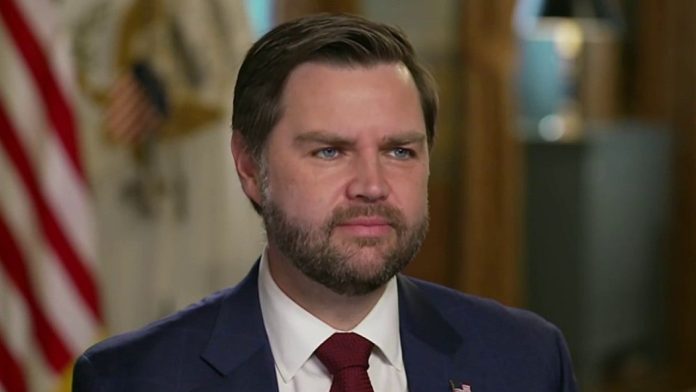
Vice President JD Vance delivered blunt advice to Republican senators considering voting against President Donald Trump’s nominees to lead key three-letter agencies: “You don’t get to make these decisions.”

Vance sat down with Fox News host Sean Hannity Wednesday for an interview from the nation’s capital a day before the Senate held confirmation hearings for FBI director nominee Kash Patel and DNI director nominee Tulsi Gabbard. 

Gabbard, Patel and Robert F. Kennedy, Jr. (RFK), Trump’s pick to lead the United States Department of Health and Human Services, are considered to be the administration’s most controversial picks, who could struggle to get confirmed.

DNI nominee Tulsi Gabbard (left) and FBI director nominee Kash Patel (left). (Getty Images / Fox News Digital)

Vance said he ultimately believes the trio will make it through the process, but Republicans will “have to fight for each one.”

TRUMP FIRES 17 GOVERNMENT WATCHDOGS AT VARIOUS FEDERAL AGENCIES

He praised Senate Republicans for being “freethinking and “independent” but argued the commander-in-chief is the one who gets to decide who he wants in his Cabinet.

“…The president has made his selections and the advice and consent power of the United States Senate should not be used to block people because you have one policy disagreement on one issue,” Vance told Hannity Thursday. “You don’t get to make these decisions. President Trump gets to make these decisions, and he already has.”

FBI Director nominee Kash Patel, left, HHS nominee RFK Jr, and Director of National Intelligence nominee Tulsi Gabbard

FBI Director nominee Kash Patel, left, HHS nominee RFK Jr, and Director of National Intelligence nominee Tulsi Gabbard (Getty)

The former Ohio senator encouraged his fellow Republicans to look at Trump’s 2024 coalition, questioning whether they could have won in November had they not included people like Gabbard and RFK, Jr.

TRUMP ADDS RFK JR., TULSI GABBARD TO HIS TRANSITION TEAM AS HE RECRUITS SUPPORTERS ‘ACROSS PARTISAN LINES’ 

“Donald Trump won an imposing mandate because he got a different group of people to vote Republican than had ever voted Republican. We have to give those parts of the coalition some wins, too. So, yes, we’ve got a lot of traditional Republicans in the administration. We’ve got a lot of traditional national security hawks in the administration. But we’ve also got some new people, some people who bring a fresh perspective,” said Vance. 

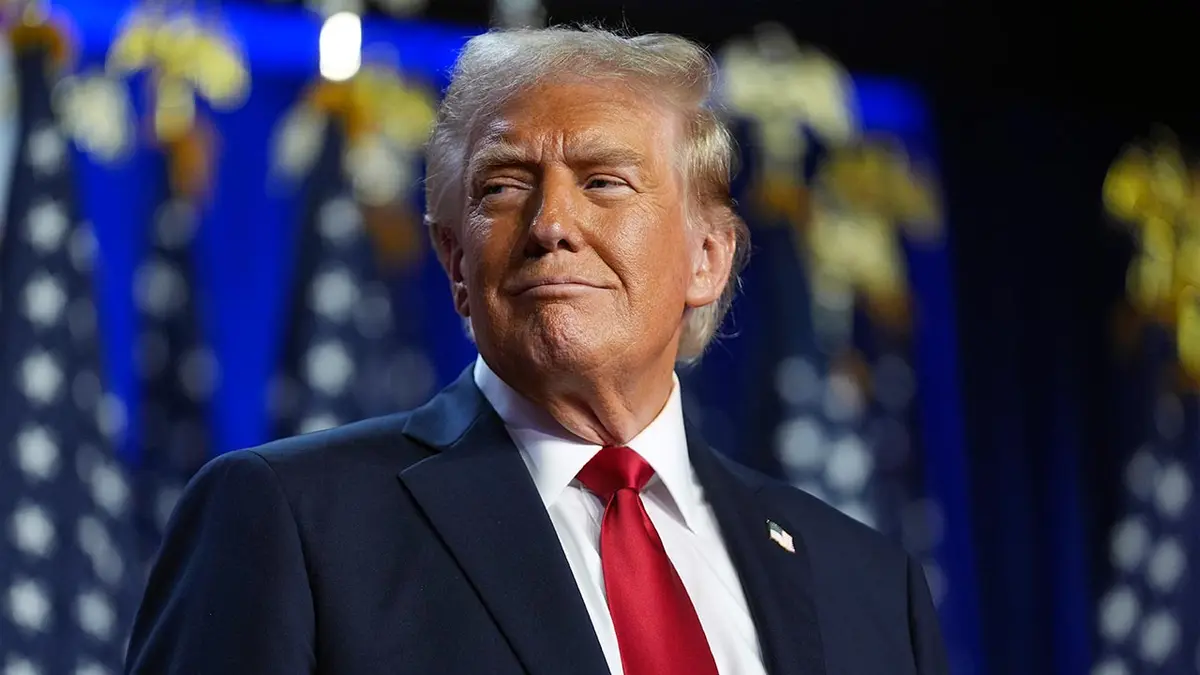
Donald Trump smiles in a navy suit and red tie

Republican presidential nominee former President Donald Trump arrives at an election night watch party at the Palm Beach Convention Center, Wednesday, Nov. 6, 2024, in West Palm Beach, Fla. (Evan Vucci/AP)

As of Thursday, Trump has eight members of his Cabinet confirmed so far: Secretary of State Marco Rubio, CIA Director John Ratcliffe, Defense Secretary Pete Hegseth, DHS Secretary Kristi Noem, Treasury Secretary Scott Bessent, Transportation Secretary Sean Duffy, EPA Administrator Lee Zeldin and Interior Secretary Doug Burgum. 

CLICK HERE TO GET THE FOX NEWS APP

The next steps for Patel, Gabbard and RFK, Jr. are committee markup votes.

Second Sinkhole Hampers Rescue of Truck Driver in Japan

0

As rescue efforts were underway for the 74-year-old man stuck in a sinkhole, another one opened up.

RFK Jr. is called out on his ‘dangerous’ position on vaccines and race : Shots

0

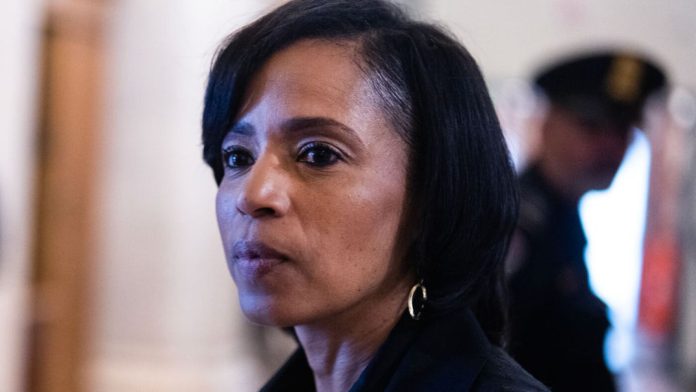
Senator Angela Alsobrook, a Democrat from Maryland questioned RFK Jr.’s suggestion that Black people should be on a different vaccine schedule than white people.

Tom Williams/CQ-Roll Call, Inc. via Getty Images


hide caption

toggle caption

Tom Williams/CQ-Roll Call, Inc. via Getty Images

It was one of the more tense exchanges in an already heated confirmation hearing as senators put Robert F Kennedy Jr.’s record on vaccines — and his shifting stances on their safety and efficacy — under the microscope.

Senator Angela Alsobrooks, a Democrat from Maryland, pointed to past comments made by Kennedy in which he said, “We should not be giving black people the same vaccine schedule that’s given to whites because their immune system is better than ours.”

“So what different vaccine schedule would you say I should have received?” asked Alsobrooks, who’s Black. “With all due respect, that is so dangerous.”

In response, Kennedy cited a well-known vaccine researcher and said there are a “series of studies” showing that “to particular antigens blacks have a much stronger reaction.”

The basis for Kennedy’s comment appears to be work done by a team at the Mayo Clinic who looked at differences in the immune response to vaccination by race. The data did show African Americans mounted a higher antibody response after MMR (Measles, Mumps, and Rubella) vaccination compared to white people.

However, the study’s own author tells NPR the data doesn’t support a change in vaccine schedule based on race.

Dr. Richard Kennedy — a vaccine researcher at the Mayo Clinic who’s not related to Robert F Kennedy Jr. — says it’s true the immune response to vaccination can vary by race, sex, and “potentially dozens of other factors.”

But suggesting that African Americans should have different schedules would be “twisting the data far beyond what they actually demonstrate,” he says.

Dr. Carlos del Rio, a professor of medicine at Emory University, agrees, saying such a conclusion is “taking it to a very unsafe place,” in part because vaccination rates are already lower among Black children.

Despite his history of undermining trust in the safety of vaccines, Kennedy has spent the confirmation hearings arguing he’s supportive of them. But he’s stopped short of actually renouncing past statements including debunked assertions that vaccines cause autism.

A review of Kennedy’s full comments during that 2021 appearance which Alsobrooks quoted from, shows Kennedy making additional false claims about the safety of vaccines.

He begins by citing a statistic from a study that reported finding a much higher rate of autism in Black children who received the MMR vaccine on schedule. However, that paper was retracted because of undeclared competing interests on the part of the author and concerns about the validity of the methods and statistical analysis. The author is the chief scientific officer for Children’s Health Defense, the anti-vaccine advocacy group Kennedy founded and led for many years.

Kennedy then seems to reference the Mayo Clinic study, saying it shows the measles vaccine will “push their immune response over the cliff” and “the body of those black boys is going to begin to attack their own body thinking that it is a foreign invader.”

He adds: “The vaccines that we’re giving them are overloading them and causing autoimmunity.”

None of this is supported by the actual study, which didn’t look at adverse events or side effects.

“The data do not show that one racial group experiences increased harm or autoimmunity compared to any other racial group,” says study author Richard Kennedy.

RFK Jr. has been involved in other efforts to cast doubt on the safety of vaccines based on race.

A film that was produced by Kennedy several years ago explicitly raised the idea that vaccines could be disproportionately harming people of color — and misrepresents another study by the Mayo Clinic, this one on the rubella vaccine, to bolster its argument.

That study’s author, Dr. Gregory Poland, told NPR they found “no evidence of increased vaccine side effects” and that any claim of “increased vulnerability” among African-Americans who receive the rubella vaccine is “simply not supported by either this study or the science.”

This story was edited by Jane Greenhalgh