Thursday, November 12, 2026
Home Blog Page 311

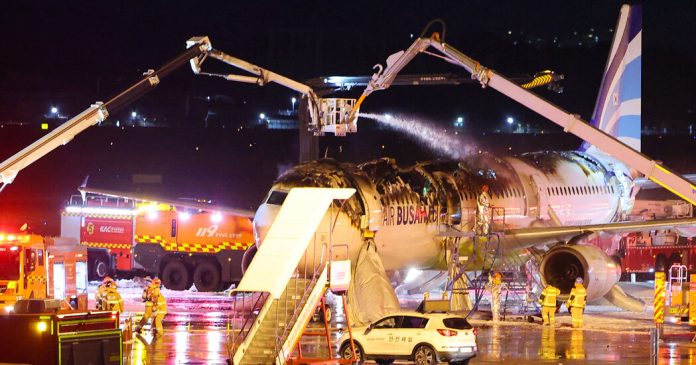
How Dozens Fled an Inferno on a South Korean Plane

0

The fire spread quickly after starting near the end of the plane’s cabin. But the captain, despite being informed of the escalating danger, did not announce an evacuation order on the intercom.

What followed was a chaotic scene of nearly 170 passengers shouting and pushing one another in panic, desperate to get off the plane and save their lives.

It was Tuesday night, at the airport in Busan, South Korea, with millions celebrating the Lunar New Year holiday. Some were headed to Hong Kong, on Air Busan Flight ABL391, which was running late. It was still on the ground minutes after its scheduled takeoff of 10:15 p.m., when passengers spotted a flame in the overhead bins in the plane’s rear left.

The incident happened barely a month after the worst aviation disaster on South Korean soil, and that tragedy, which involved another budget airline, probably would have been fresh on the minds of people onboard.

“Flames were coming out of the gaps between the overhead bin doors,” Shin Min-su, who was on the flight, told reporters later. “People were screaming trying to get out, but there was a line so they were stuck.”

Mr. Shin said he got up to try to put out the fire. But when he attempted to open the overhead bins, a flight attendant told him not to.

The cabin crew reported the situation to the captain, who shut off the plane’s hydraulic and fuel systems and, according to the airline, declared an emergency evacuation. But passengers got no word of this. The airline would say later, “there was no time for a separate announcement.”

“A lot of smoke filled up inside,” Jeong Yeong-jun, another passenger told KBS, a South Korean broadcaster. “From then on, the passengers just kept pushing forward, shouting around me, ‘Open the door, open the door!’”

Kim Dong-wan and other passengers told reporters that they had opened some of the plane’s doors on their own and jumped onto the slides, to escape. At least one of the emergency doors was opened by a flight attendant, Yonhap News Agency reported.

Air Busan did not provide a detailed accounting of the evacuation by Wednesday evening, but all 176 people on board — including 169 passengers, two pilots, four flight attendants and a flight engineer — survived. Three passengers sustained minor injuries from the evacuation process, while four flight attendants were briefly hospitalized after inhaling smoke, the airline said.

After escaping, some passengers began filming the scene and sharing videos with news organizations. The footage showed smoke billowing out of an emergency exit as passengers slid down the emergency slides, some rolling off onto the tarmac with no one helping them to land.

People yelled for their families. “We’re lucky we didn’t take off!” someone said.

Firefighters reached the scene minutes later, after the plane had emptied out. They focused on saving the plane’s wings because 35,000 pounds of fuel was stored there. The blaze was extinguished by 11:30 p.m., but the fuselage of the Airbus A321-200 jet was destroyed.

The lack of an announcement to passengers raises concerns about whether Air Busan’s crew had followed standard safety procedures, aviation experts said.

Kim In-gyu, the managing director of the Korea Aerospace University’s Flight Training Center, said that proper protocol required the captain to announce emergency procedures on the cabin’s intercom. He added that the flight attendants should typically guide passengers by using megaphones to give them clear, short commands.

“Ideally, the cabin crew would take charge of evacuating the aircraft,” said Keith Tonkin, an aviation expert and managing director of Aviation Projects in Brisbane, Australia. In a best-case scenario, “passengers would be following directions,” he said.

Mr. Kim added that the flight attendants should have first moved the passengers away from the fire. Then they should have gone down the slides first, helped passengers coming down and directed them away from the slides. Finally, he said, the airplane doors that were not emergency exits were supposed to be opened only by crew members.

In a statement, Air Busan, a subsidiary of Asiana Airlines, one of South Korea’s two main airlines, said its crew had followed protocol, and apologized to its customers. The cause of the fire remains under investigation.

On Wednesday, the transport ministry said that it had conducted a counterterrorism investigation and found that no prohibited items had been carried onto the aircraft.

Over the past few weeks, South Korean transport officials have been under pressure to overhaul the nation’s aviation safety standards. The crash on Dec. 29, in which a Jeju Air jet crashed at Muan International Airport, killed 179 people. Only two people onboard survived.

A safety inspection by the government found that seven South Korean airports altogether had concrete structures containing navigation devices near their runways, similar to the one in Muan — into which the Jeju Air jet crashed and which did not meet safety recommendations. The authorities also found that several budget airlines had failed to comply with safety checks.

Last week, the government ordered nine low-cost carriers to tighten safety measures that include reducing flight hours, improving pilot training and increasing the number of maintenance workers.

On Wednesday, one passenger from the Air Busan flight remained in the hospital. The airline canceled eight flights planned for Wednesday at the airport, known formally as Gimhae International Airport, but all other flights operated normally.

Mr. Kim, the aviation expert, said that it was fortunate that the fire had broken out before the plane took off.

“If the plane had been on time, if it were in flight,” he said, “it would have been a very serious situation.”

Trump’s health secretary pick, Robert F. Kennedy Jr., faces confirmation hearing : NPR

0

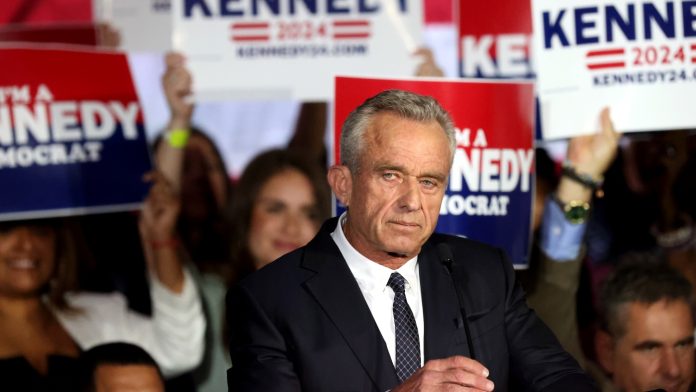
Robert F. Kennedy, Jr. campaigned for president as a Democrat and an Independent in 2024. Now, he wants to serve in President Trump’s Republican administration as health secretary.

David L. Ryan/The Boston Globe via Getty Images


hide caption

toggle caption

David L. Ryan/The Boston Globe via Getty Images

We’re following the confirmation hearings for the incoming Trump administration. See our full politics coverage, and follow NPR’s Trump’s Terms podcast or sign up for our Politics newsletter to stay up to date.

Who: Robert F. Kennedy, Jr.

Nominated for: Secretary of the Department of Health and Human Services

You might know him from: A scion of the famous Democratic political dynasty, his uncle was President John F. Kennedy and his father was Attorney General Robert F. Kennedy. He ran for president in 2024, throwing his support President Trump’s way after withdrawing from the race. For decades, he’s been one of the most prominent anti-vaccine activists in the country.

  • He has pushed the disproven link between vaccines and autism and other baseless claims, including that Wi-Fi causes cancer and that AIDS is not caused by HIV. 
  • During his campaign for president last year, he said he opposed state laws that ban abortion.

What does this role do? The secretary leads HHS and all its health agencies, including the Centers for Disease Control and Prevention, the Food and Drug Administration, and the Center for Medicare and Medicaid Services. It has one of the largest budgets in the federal government — $1.7 trillion annually.

Watch RFK Jr.’s first confirmation hearing before the Senate Finance Committee, set for 10 a.m. ET Wednesday:

RFK Jr has NFL star Aaron Rodgers’ full support ahead of confirmation hearing

0

Robert F. Kennedy Jr. will face a Senate confirmation hearing on Wednesday on Capitol Hill as he looks to take over as President Donald Trump’s Health and Human Services secretary.

New York Jets quarterback Aaron Rodgers has been one of the loudest and proudest supporters of Kennedy, as he has been entangled in the political process, starting with the initial bid for president. Kennedy broached Rodgers to be his running mate during the 2024 presidential election – a moment that was captured on the Netflix docuseries “Enigma.”

SIGN UP FOR TUBI AND STREAM SUPER BOWL LIX FOR FREE

Aaron Rodgers, left, and Robert F. Kennedy Jr. (Getty Images)

“Retire and go into politics or play two or three more years,” he said. “I definitely envisioned a life without football, and it wasn’t scary. I felt comfort in being able to move on at some point. But I love football. I want to keep playing. And I hated the way last year went. There’s still some unfinished business in New Jersey.”

Still, Rodgers was strong in his support of Kennedy.

He said on “The Pat McAfee Show” earlier this month that senators who were going to question Kennedy had better be ready.

“Like, please, somebody try and get after him and just watch him absolutely mop the floor with any of these senators,” Rodgers said. “You better come ready senators, come ready and try and see if you can pull one over on my boy, Bobby, because Bobby’s f—— smart, dude. And no notes, off the cuff, can handle his own pretty well, so excited for him to – and honestly so should everybody.”

CLICK HERE FOR MORE SPORTS COVERAGE ON FOXNEWS.COM

Robert F. Kennedy Jr.

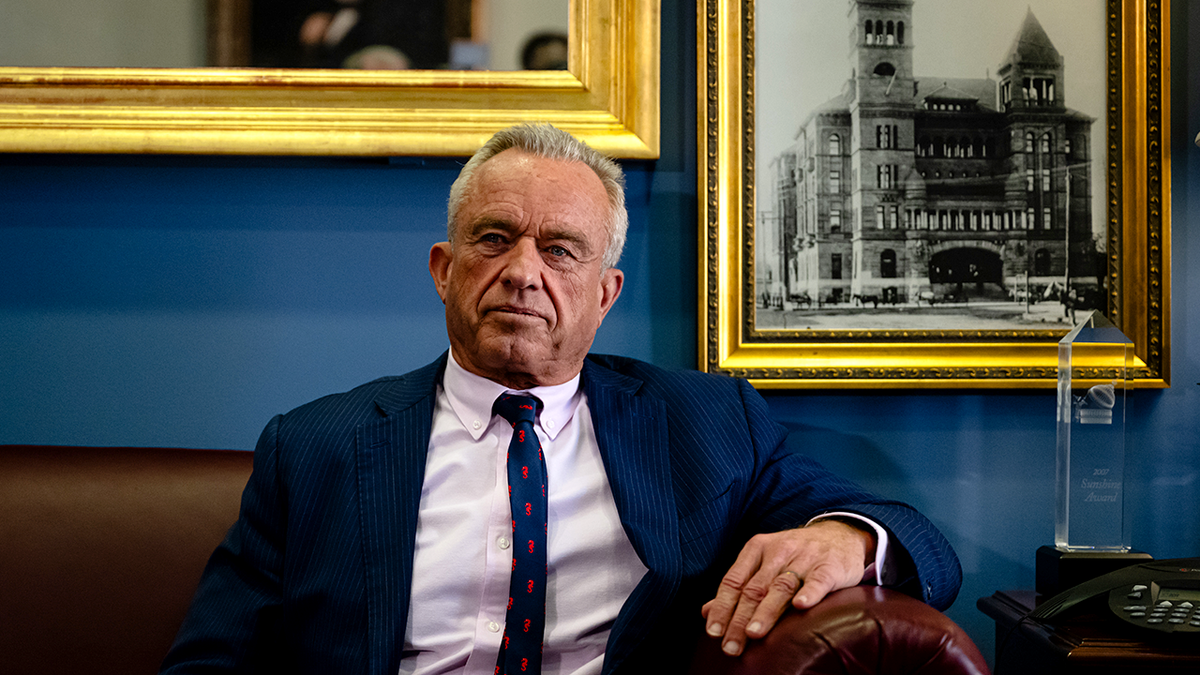
President Donald Trump’s nominee to be secretary of Health and Human Services, Robert Kennedy Jr., sits in a meeting with Sen. John Cornyn (R-TX) on Capitol Hill on Jan. 9, 2025 in Washington, D.C. (Jon Cherry/Getty Images)

Rodgers touched on Kennedy’s initiative to “Make America Healthy Again.” The movement appeared to be kick-started this week when the Food and Drug Administration banned red food dye due to potential cancer risk.

“Like, if you spend a minute researching ingredients in products in the states compared to overseas, it’s disgusting,” the star quarterback said. “It’s disgusting what they allow here, the levels that they allow here, products that are terrible for you, products they know are carcinogenic. So it’s going to [be] as he’s doing a service to everybody if you just let him and get the hell out of the way and stop trying to label him as whatever the f— they want to label him these days. 

“He just wants to make sure that everything that’s being given to our kids is safe, everything that we’re ingesting on a day-to-day basis is safe, and he’s going to ‘Make America Healthy Again’ or is going to freaking die trying.”

CLICK HERE TO GET THE FOX NEWS APP

Tubi promo

Super Bowl LIX will be streamed on Tubi. (Tubi)

Rodgers has not made any more statements ahead of Kennedy’s hearing on Wednesday, but all signs indicate he will be watching.

Follow Fox News Digital’s sports coverage on X, and subscribe to the Fox News Sports Huddle newsletter.

Three Countries Officially Quit Major West African ECOWAS Alliance

0

Three military-ruled countries have officially withdrawn from the West African regional alliance known as ECOWAS, the bloc said on Wednesday, defying pressure from the group to return the countries to civilian democratic rule.

The alliance, the Economic Community of West African States, offers its members visa-free travel, favorable trade tariffs and access to a $702 billion market for the region’s 400 million people. The three nations — Burkina Faso, Mali and Niger — announced their intention to leave last year.

Negotiations between their leaders and the bloc then failed to reach an agreement that would keep them in. Instead, the three juntas are forging ahead with their own grouping, the Alliance of Sahelian States, A.E.S. by its French acronym, and have created a military force of 5,000 troops.

The three juntas presented their exit as essential for their sovereignty and portrayed the alliance as a neocolonialist force carrying out a foreign agenda.

“ECOWAS and the jihadists are the same,” Assimi Goïta, Mali’s president, said on Jan. 10, referring to the extremists who have destabilized a vast area of the Sahel, the arid belt that stretches coast to coast below the Sahara. “The only difference is that some carry weapons and others do not.”

Their withdrawal will weaken ECOWAS, which celebrates its 50th year this May and had 16 members at its founding. It will now have only 12: Mauritania left in 2000. Burkina Faso, Mali and Niger, though not the most populous or economically strong countries in the region, account for more than half the alliance’s 1.9 million square miles and 17 percent of its 400 million population.

The alliance said in a statement that it would leave the doors open for the juntas to return.

But analysts say that the three exiting countries stand to suffer the most, including through higher prices, shortages of food supplies and political isolation.

Niger shares a 1,000-mile border with Nigeria and relies on its much richer and populous neighbor for 80 percent of its trade. Relations have become strained in recent months: Niger has accused Nigeria, whose president is the current chair of ECOWAS, of supporting jihadist groups to attack it.

Mali, Niger and Burkina Faso account for half of the world’s terrorism-related deaths, and the region overtook the Middle East last year to become the global epicenter of terrorism, according to a recent report by Global Terrorism Index. Some of the military juntas used the insecurity as a justification for seizing power, even though attacks have increased under their rule.

ECOWAS responded to the coups with biting economic sanctions, and it has threatened a military intervention to restore civilian rule in Niger. But it was accused of having double standards for not punishing civilian leaders who cause political instability by postponing elections or changing their country’s constitutions to stay in power longer.

A wave of coups has hit Africa in recent years, with nine military takeovers from 2020 to 2023 — a number unseen in decades. Most of them have been in West Africa.

In Burkina Faso, Mali and Niger, the juntas refused to yield to ECOWAS’s demands to hand over power. The sanctions, which were backed by Britain, the European Union and the United States, were eventually lifted, and the alliance tried to push for dialogue with the three countries, but the juntas were not persuaded.

“They want to be let alone, not to be dictated how to run their countries or to be forced to hold elections,” Fahiraman Rodrigue Koné, the Sahel project manager at the Institute for Security Studies, a regional think tank, said in a telephone interview.

The three juntas have lately severed ties with some of their key traditional partners, ending military cooperation with France and the United States, and imposing new mining laws and taxes to maximize revenue from their ailing economies.

They have strengthened their cooperation with Russia, which provides them with weapons and mercenaries. And they have secured new contracts for China to run mining operations that were previously controlled by Western companies and to supply arms, according to local media outlets. Turkey, offering itself as an alternative, has also provided drones and mercenaries to Niger, state media said.

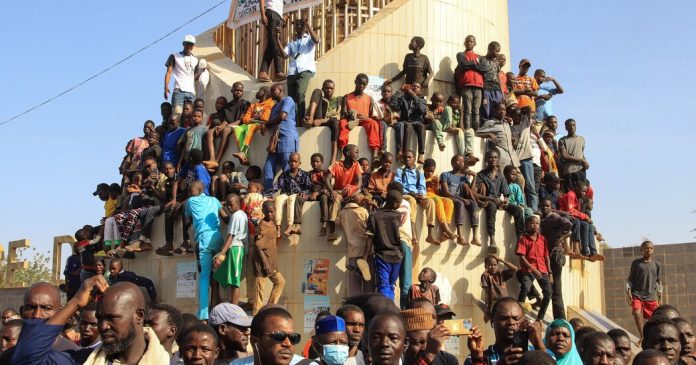
On Tuesday, protesters took to the streets in the three exiting countries’ capitals to celebrate the withdrawal. But analysts said that most people in these countries did not support the juntas’ decision to leave.

“Critical voices are suppressed,” said Gilles Yabi, the founder and executive director of the West Africa Citizen Think Tank.

Across the three countries, the human rights situation has sharply deteriorated, with thousands of civilians killed by the military and state-backed militias last year alone, according to rights groups.

But the Sahelian juntas have lately become somewhat less isolated. Ghana’s new president has appointed a special envoy to their new alliance, and Togo has signaled that it may apply for membership.

Trump turns a lowkey federal ‘digital strike team’ into DOGE : NPR

0

President Trump speaks to journalists as he signs an executive order regarding Department of Government Efficiency (DOGE), in the Oval Office of the White House in Washington, DC, on Jan. 20

Jim Watson/AFP via Getty Images


hide caption

toggle caption

Jim Watson/AFP via Getty Images

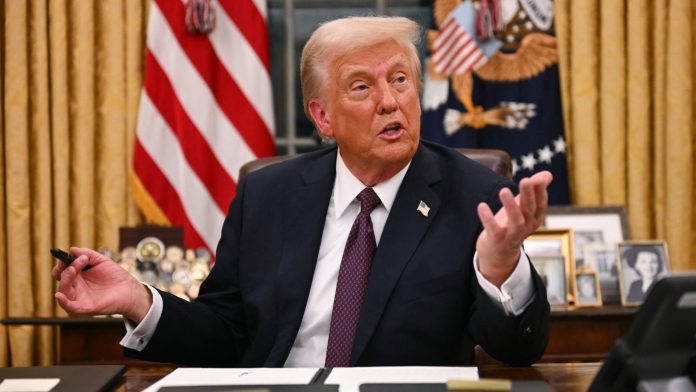
A proposed commission with a sweeping mandate to shrink federal bureaucracy and slash government spending now has a new home — and a more efficient mandate, as President Trump continues to turn campaign promises into actual policy.

On his first day in office, Trump signed an executive order that renames the little-known but highly respected United States Digital Service office as the United States DOGE Service, referring to the Department of Government Efficiency, an effort helmed by tech billionaire and Trump ally Elon Musk.

In contrast to the initial announcement of DOGE, focused federal spending, the workforce and technology infrastructure from “outside the government,” Trump’s Jan. 20 order outlines a temporary organization within the larger USDS office that will be led by a to-be-named administrator.

The order also moves the USDS from the Office of Management and Budget to the Executive Office of the President and directs each federal agency to create a “DOGE Team” that may include a team leader, engineer, human resources specialist and attorney to help facilitate Trump’s “DOGE agenda.”

Additionally, the new USDS office is tasked with a “Software Modernization Initiative” to update software, network and IT infrastructure across the federal government. There’s still a lot that’s unknown about DOGE but there is now more insight into what it may look like moving forward.

What office is the DOGE initiative joining?

Jennifer Pahlka, a senior fellow at the Niskanen Center and one of the architects of the USDS said one thing that seems apparent is the previously behind-the-scenes office is likely to be more in the spotlight.

Pahlka said the office was founded “to meet the public’s expectations, or help the agencies meet these raised expectations of the public,” when it comes to digital presence.

The USDS launched in 2014 by the Obama administration in the aftermath of the botched rollout of HeathCare.gov as an office to boost the digital capabilities of the federal government.

It has operated like a digital strike team of sorts, recruiting private sector experts in design and technology to work collaboratively with federal agencies on projects that make public-facing parts of the government more efficient, modern and user-friendly.

Mina Hsiang, the most recent administrator of the USDS before the Trump rebranding, said that over the last four years the office has worked with more than 30 agencies on projects that ranged from urgent action items to longer-term overhauls of digital systems.

Haven’t heard of it? Maybe its projects will ring a bell

“USDS has no special authorities or anything else that other parts of government don’t have,” Hsiang explained. “What we do have is a difference in strategic perspective on how to take on these challenges.”

The latest USDS annual report touts, for example, an increase in customer satisfaction with the Social Security Administration website after working to simplify complicated language that led to longer wait times.

It also highlighted the rollout of an Internal Revenue Service pilot to file taxes online for free and ongoing efforts to modernize the Department of Veterans Affairs and make it easier for veterans to access their health care benefits.

“There are digital transformation people in agencies now, and there always have been,” Pahlka noted. “They tend to struggle, they tend to be swimming upstream, given how risk-averse government is and how hard it is to change the culture to sort of shed the legacy thinking and the legacy ways of working.”

What do we know about the vision for the new USDS?

Not much, beyond the text of the executive order.

Trump hasn’t yet named an administrator for the retooled office, it’s not clear how Musk will operate in relation to the USDS and the new DOGE teams have not been put into place across federal agencies.

“DOGE is positioning itself — and we’ll see if this really plays out — as having far more power than USDS has traditionally did in the past, say, three administrations,” she said.

Pahlka adds that there are many parts of the federal government where computers and technology could be doing tasks that are currently done by civil servants, freeing up time and resources to focus on other things.

“My choice would be to redeploy those people in higher value work, their choice may be to lay those people off,” she said. “The end result of both, though, is a kind of change that government has needed for a long time.”

So, it’s all about cutting?

Hsiang and Pahlka both said the continued success of the USDS under its new mandate can only happen if the conversation with federal agencies continues to be viewed as a two-way street, and if the new leadership takes the time to understand why the inefficiencies exist in the first place.

“They will find inevitably that the questions that they think are simple to answer are not, and the systems are the way they are, for reasons that are very hard to see from the outside,” Pahlka said.

“One thing that I’m looking for is how quickly do they learn and sort of challenge their own prior assumptions?” she added. “Because everybody who goes into government thinks that it’s going to be easy to fix and everyone finds out that it is a lot harder than they thought because we have made government very, very complex.”

Hsiang adds that focusing on spending cuts without addressing things like Congressional oversight and regulation of how agencies operate won’t lead to success.

“I cannot think of any companies that build a vision that is just around cost cutting… that has limited utility,” she said.

Ex-NFL star touts ‘awesome’ impact Taylor Swift has made since going to Chiefs games

0

Taylor Swift is set to be a focal point at the Super Bowl for the second consecutive year as she will very likely be in a suite at the Caesars Superdome cheering on Travis Kelce.

There is a lot less uncertainty around her appearance than there was last year. Swift was in the midst of the Asian leg of her “Eras Tour” and needed the conditions to be just right for her to fly back to Las Vegas to watch the Kansas City Chiefs take on the San Francisco 49ers.

SIGN UP FOR TUBI AND STREAM SUPER BOWL LIX FOR FREE

Taylor Swift embraces Kansas City Chiefs tight end Travis Kelce after the AFC Championship NFL football game against the Buffalo Bills on Sunday, Jan. 26, 2025 in Kansas City, Missouri. (AP Photo/Ashley Landis)

This time, the tour is finished, and Swift has her sights set on New Orleans. While the broadcast cameras were not necessarily on her every move during the playoffs so far, the impact she has made on fans – specifically young female fans – has been indelible.

Former New England Patriots star Julian Edelman underscored that point during his appearance on “Fox & Friends” on Tuesday.

CLICK HERE FOR MORE SPORTS COVERAGE ON FOXNEWS.COM

Taylor Swift smiles during Kansas City Chiefs football game with Travis Kelce

Taylor Swift started showing up at Chiefs games last season. (David Eulitt/Getty Images)

“Honestly, it’s been an awesome thing because my daughter does talk about football,” Edelman told Fox News Channel’s Ainsley Earhardt. “You know, playing for the New England Patriots, it’s terrible to hear your daughter say Chiefs all the time. 

“It gives us a conversation point. She loves learning about it.”

Edelman will be a part of FOX’s coverage for Super Bowl LIX with Charissa Thompson, Charles Woodson, Michael Vick, Peter Schrager, Kristina Punk and Cooper Manning.

FOX’s coverage of Super Bowl LIX will begin at 1 p.m. ET. Coverage can also be streamed live on Tubi for the first time ever.

CLICK HERE TO GET THE FOX NEWS APP

Tubi promo

Super Bowl LIX will be streamed on Tubi. (Tubi)

The Chiefs will take on the Philadelphia Eagles.

Follow Fox News Digital’s sports coverage on X, and subscribe to the Fox News Sports Huddle newsletter.

Catholic Church in the Philippines Accused of Impunity Over Priest Abuse

0

A watchdog group on Wednesday accused the Catholic Church in the Philippines of a culture of impunity, saying it had found scores of priests who had been accused of sexually abusing children and that many remain in active ministry.

The group, Bishop Accountability, said it had identified 82 priests and brothers with links to the Philippines who had been accused of abuse in recent decades. It said it compiled the list from reputable media reports, court records, church documents and other public sources.

The men were local priests or those from abroad who were accused of abuse in the Philippines, or Filipino clerics who served at home before facing accusations overseas. But not one priest has been convicted of sexual abuse in the Philippines, the group said, citing Bishop Buenaventura Famadico. The country has the third-highest number of Catholics in the world, about 85 million, after Brazil and Mexico.

It was the latest sign that the Catholic Church’s global abuse scandal is still ricocheting, this time in Asia, a region that the Vatican is eyeing for growth. Pope Francis has ordered clergy to report allegations of abuse and cover-up, saying every diocese must have a system that allows the public to submit reports easily.

“He sent them forth to really change things up,” said Anne Barrett Doyle, the co-director of Bishop Accountability. “None of this is evident in the Philippines.”

She added that her group’s list almost certainly did not cover all abuse because it often goes unreported. The group was established in Boston in 2003, and has compiled similar lists of priests publicly accused of abuse in the United States, Argentina, Chile and Ireland.

At a news conference in Quezon City, Ms. Doyle talked about six priests and displayed their pictures.

One of them was the Rev. Jose Belcina, who was charged by prosecutors in the city of Cebu in 2006 with rape and child abuse. The church removed him from his parish and made him undergo “a process of spirituality,” Ms. Doyle said.

But when the police tried to arrest Father Belcina they could not find him. According to Ms. Doyle’s group, when a journalist asked the spokesman of the Archdiocese of Cebu about Father Belcina’s location, he responded that he was not the priest’s custodian.

Father Belcina denied the charges, which were later dropped by the accuser over reasons of “reconciliation and peace.” The priest was then reassigned to another parish in the province in 2008. He remains in active ministry.

The Archdiocese of Cebu did not respond to a request for comment on the status of the cases of Belcina and other priests listed by Bishop Accountability.

“We hear about these cases because the victims were courageous enough to go to law enforcement. The church is never the source of information. Never,” Ms. Doyle said.

The Catholic Bishops Conference of the Philippines said it has established the Office for the Safeguarding of Minors in response to Rome’s mandate. Every diocese is also now required to establish its own Office for the Safeguarding of Minors and Vulnerable Adults, which is under the bishops’ supervision.

“The C.B.C.P. has no direct authority as a conference to conduct such investigations. As a conference of bishops, we merely build a consensus among ourselves about common policies to be adopted,” said its president, Cardinal Pablo Virgilio David.

He added that only Rome, represented by the Nuncio, has direct disciplinary authority over individual bishops.

“As long as the problem is contained within the Church, there is no justice,” Ms. Doyle said. “The Church cannot self-police when it comes to abuse.”

The secret lab where America tests its nuclear weapons : NPR

0

FRENCHMAN FLAT, Nev. — In the middle of a dry lakebed northwest of Las Vegas sits a lone section of a bridge, its steel girders bent like spaghetti. Nearby are other oddities — a massive bank vault with no bank for miles; the entrance of an underground parking garage with no lower levels; and domes of rebar and concrete that have been ripped open, leaving their insides exposed to the desert sky.

A half-mile from here, on the morning of May 8, 1953, an Air Force bomber dropped a Mk-6D nuclear bomb from a height of 19,000 feet above the desert floor. It exploded with a yield of 27 kilotons of TNT — creating a shockwave that warped the bridge and blew open the vault. The test, code-named “Encore,” was designed to see what, if anything, in the civilian world could survive a nuclear blast (the answer is, apparently, not much).

A sub-surface atomic test is shown March 23, 1955, at the Nevada Test Site near Yucca Flats, Nev.

An atomic test that took place on March 23, 1955, at the Nevada Test Site. In the 1950s, nuclear weapons were regularly detonated aboveground to see what the effects would be on people and buildings

AP/U.S. Atomic Energy Commission


hide caption

toggle caption

AP/U.S. Atomic Energy Commission

Nuclear testing seems like a Cold War relic, but there are signs the world’s nuclear powers may be readying to test again. Amid growing tensions, Russia, China and the U.S. are all upgrading their nuclear test sites.

“The risk is significant,” says Hans Kristensen, director of the Nuclear Information Project at the Federation of American Scientists. The talk of testing comes at a time when nuclear weapons are resurgent: Russia is designing nuclear weapons to attack satellites and obliterate seaports; China is dramatically expanding its nuclear arsenal; and the U.S. is undergoing a major modernization of its nuclear warheads. After years of declining nuclear stockpiles, the world looks poised to begin increasing the number and types of nuclear weapons being deployed.

Going underground

Amid these growing tensions, the U.S. National Nuclear Security Administration, the civilian agency that maintains America’s nuclear stockpile, allowed a small group of journalists to tour a secretive nuclear weapons laboratory beneath the Nevada desert this winter. The effort was part of outgoing NNSA administrator Jill Hruby’s effort to display more transparency about what the U.S. is doing with its nuclear stockpile and why.

A mining hoist in the middle of a dry lakebed is used to descend to the PULSE underground laboratory.

NNSS/NNSA


hide caption

toggle caption

NNSS/NNSA

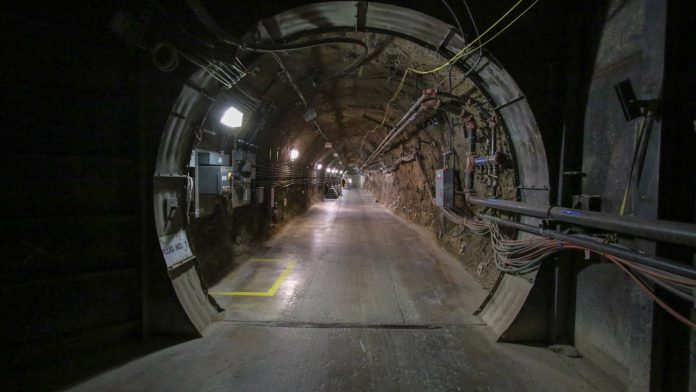
The work is taking place in a facility known as the Principal Underground Laboratory for Subcritical Experimentation (PULSE). From the surface, it appears to be a small amalgamation of modular buildings next to a large mining hoist. Reporters and officials grab hard hats, flashlights and emergency rebreathers, listen to a safety briefing, and then step into an old mining cage. With a whoosh, it drops into pitch blackness. At the bottom, the gates open to a long corridor that’s been carved out of an ancient lakebed. Pipes along the walls carry air, water and power. Workers in hard hats are everywhere.

David Funk, who helps oversee work underground, leads the group in.

“This was designed to be a nuclear test location originally,” Funk explains. In the early 1960s, nuclear tests went underground to protect people and the environment from dangerous radioactive fallout. In fact, somewhere in the maze of tunnels we’re walking through is a sealed shaft from a full-scale nuclear detonation — the Ledoux test in 1990.

The Ledoux test was among the last nuclear weapons the U.S. ever detonated. At the end of the Cold War, politicians wanted to show the nuclear arms race had also ended. In 1990, the Soviet Union conducted its last nuclear test. Two years later, the U.S. announced it would no longer test nuclear weapons. One by one, the world’s nuclear weapons states followed, with the exception of North Korea, whose last test was in 2017.

The decision to halt testing “was very much an attempt to look around and see what we can do to make it clear that we’re not just talking about the end of the Cold War, we’re serious about it,” Kristensen says.

But these tunnels stayed open. The U.S. still needed to ensure that its nuclear weapons were safe and reliable, so nuclear weapons scientists and engineers embarked on a new program to test the nukes without actually setting them off. Kristensen and most experts agree that the program, known as stockpile stewardship, has been effective in staving off new nuclear testing.

People wearing hard hats walk through an underground corridor.

Nearly 1,000 feet beneath the surface, scientists are preparing new experiments to study the plutonium cores of nuclear weapons.

NNSS/NNSA


hide caption

toggle caption

NNSS/NNSA

“You didn’t need to do nuclear tests to do what you needed to do for the foreseeable future, which is to make sure the nuclear weapons you had worked,” he says.

The stockpile stewardship program broadly consists of two arms — supercomputers at the nation’s major nuclear weapons labs are used to conduct large-scale digital simulations of nuclear weapons from “button to boom.” Highly classified nuclear experiments, like those that take place at PULSE, supply real-world data that ensures that the simulations are accurate.

Critical questions

The experiments are a far cry from full-scale nuclear tests. They are all “subcritical,” meaning that they simulate conditions inside a nuclear weapon without triggering a nuclear chain reaction. That runaway chain reaction, in which some atoms split apart and others fuse together, is what gives a nuke its incredible power. Since the testing pause began, the world’s nuclear powers have informally used the subcritical threshold to define what constitutes a nuclear test.

After a brief walk down one tunnel, the party arrives at its first stop: a long, empty corridor that’s just been dug out for a new experiment.

“This is where the Scorpius machine is going to reside,” Funk says. The Scorpius machine sounds like a device from a James Bond movie, but Funk explains it’s a giant X-ray machine. “The reason is we need higher-energy X-rays to be able to look through plutonium,” Funk says.

David Funk is overseeing the construction of several new experiments underground.

David Funk is overseeing the construction of several new experiments underground.

NNSS/NNSA


hide caption

toggle caption

NNSS/NNSA

Plutonium makes up the core of America’s nuclear weapons. Much of it was made decades ago, and it’s getting old. “Right now the oldest plutonium samples are about 80 years old,” says Ivan Otero, a nuclear weapons scientist at Lawrence Livermore National Laboratory. As the plutonium ages, it decays radioactively, releasing helium atoms. Those atoms can form bubbles and damage the plutonium metal’s structure. “We need to know whether the helium bubbles or the damage to the lattice have a significant impact on the material response,” he says.

The $2 billion Scorpius machine will see how very small quantities of plutonium react when detonated explosively. The X-rays are used to take a series of images of the plutonium as a shockwave generated by conventional explosives passes through it. In addition to addressing the aging question, the tests will help with new upgrades and modifications to existing nuclear weapons.

Not far away, Funk is clearing another tunnel for a second machine, called Zeus, that will bombard the plutonium with subatomic particles known as neutrons. The neutrons will show how plutonium behaves in a higher radiation environment such as the core of a bomb.

The final stop on the tour is an experiment that’s getting ready to test plutonium later this spring. It’s called Cygnus, and it’s arguably the most secretive scientific project in the U.S. government.

Tim Beller is directing the next test, code-named “Nob Hill.”

El Capitan, a supercomputer at Lawrence Livermore National Laboratory, reaches from floor to ceiling in a room with white floors.

El Capitan, the supercomputer at Lawrence Livermore National Laboratory, can simulate a nuclear blast from “button to boom.”

Garry McLeod/LLNL


hide caption

toggle caption

Garry McLeod/LLNL

Beller gestures to a small metal sphere about the size of a mini-fridge that’s surrounded with scientific equipment: “That is the actual vessel that we will use,” he says. A few months from now, inside this vessel, scientists will blow up a small quantity of plutonium using chemical explosives. The explosion will be tiny, an unimaginably small fraction of a nuclear weapon’s true power, and the U.S. government says there will not be a runaway nuclear reaction, even a little one.

“Whatever rules they set I ensure they happen here in Nevada,” he says.

New nuclear rule

Globally, there are signs the rules might soon be changing. A treaty to permanently ban nuclear testing is stalled. China has been building up its nuclear arsenal and expanding its test site at Lop Nur. “There were new buildings constructed in recent years,” says Tong Zhao, a senior fellow with the Carnegie Endowment for International Peace. In the southeastern part of the test area, drill rigs have also suddenly appeared. “One possibility is China developing vertical shafts that can be used for future nuclear explosive testing,” he says.

Russia has also been making upgrades to its nuclear test site at Novaya Zemlya. Last fall, Russia’s Deputy Foreign Minister Sergey Ryabkov told the state-run Tass news agency that the test site was “fully prepared for a resumption of nuclear tests.”

Russia’s stockpile is aging just like America’s, but its scientific program is less vigorous, says William Courtney, an adjunct senior fellow at the Rand Corp. who helped forge several arms control treaties at the end of the Cold War.

An undated photo shows craters created by underground nuclear tests in Nevada. Some fear testing could soon resume.

An undated photo shows craters created by underground nuclear tests in Nevada. Some fear testing could soon resume.

NNSS/NNSA


hide caption

toggle caption

NNSS/NNSA

“I’m pretty sure there are a number of Russian nuclear scientists who would like to resume nuclear testing, and Putin may want to as part of his nuclear scare tactics over Ukraine,” Courtney says.

The increased activity has led some in the U.S. to call for a return to testing. In the July issue of Foreign Affairs, Trump’s former national security adviser, Robert O’Brien, wrote that to keep up with China and Russia, “Washington must test new nuclear weapons for reliability and safety in the real world for the first time since 1992 — not just by using computer models.”

Project 2025, a conservative agenda for the U.S. government published by the Heritage Foundation, stops short of calling for a return to testing, but it does say the government should be able “to conduct nuclear tests in response to adversary nuclear developments if necessary.”

The idea “is not just to start testing for giggles,” says Robert Peters, the Heritage Foundation’s research fellow for nuclear deterrence. Peters worries that the current lack of test-readiness might unduly constrain the president in a crisis. “If you’re engaged in high-stakes poker with nuclear weapons, I don’t want to box the president out,” he says.

But arms control experts warn that the U.S. would be taking on enormous risks if it played a role in returning the world to nuclear testing. Before nuclear testing ended in the 1990s, China conducted just 45 tests. The U.S. by contrast, conducted more than 1,000 nuclear tests.

“The U.S. has a technical advantage locked in by this moratorium on nuclear testing because it undertook so may more tests during the Cold War period,” says Jamie Kwong, a fellow at the Nuclear Policy Program at the Carnegie Endowment for International Peace. Kwong and others predict that if the nuclear test moratorium breaks down, China — as well as nuclear newcomers like India, Pakistan and North Korea — would likely rush to conduct more nuclear tests to advance their weapons programs.

Many of the scientists working in the tunnels beneath Nevada feel there is no immediate technical reason to conduct another underground test.

Although a full-scale nuclear detonation would be “complementary” to the battery of experiments being planned, “our assessment is that there are no system questions that would be answered by a test, that would be worth the expense and the effort and the time,” says Don Haynes, a nuclear weapons scientist from Los Alamos National Laboratory, which tested the first bomb in 1945.

Still, he adds, the decision whether or not to test is above his pay grade. Ultimately, it will be up to the politicians and the generals to choose whether the U.S. should detonate another nuclear weapon in these tunnels.


Women’s soccer players suspended for asking if trans opponents are men: ‘I can’t even stand up for myself’

0

Join Fox News for access to this content

Plus special access to select articles and other premium content with your account – free of charge.

By entering your email and pushing continue, you are agreeing to Fox News’ Terms of Use and Privacy Policy, which includes our Notice of Financial Incentive.

Please enter a valid email address.

An 18-year-old women’s soccer player in England was suspended six games for asking referees if transgender opponents on an opposing team were men. 

It is the second incident when a teenage female player was banned for inquiring to referees about the birth sex of opposing players, The Telegraph reported. 

The most recent incident took place in September when she made a comment to referees, asking if an opposing team’s goalkeeper and others were eligible to play. The female player reportedly has learning difficulties, including ADHD.

The incident was sanctioned by a National Serious Case Panel, and in addition to her six-game ban, with two games suspended, she was also forced to undergo an “online education course.” Her club was dealt seven disciplinary points.

SIGN UP FOR TUBI AND STREAM SUPER BOWL LIX FOR FREE

In a statement provided to The Telegraph, the 18-year-old referred to the trans opponents as “extremely aggressive.” She also said she did not take her ADHD medication that day because “another medical condition” prevented it. 

“It kind of made me hate football,” she said. “If I say anything else, I get another six-game ban. So I can’t even stand up for myself at this point.”

The first incident of a teenage female getting banned for such inquiries occurred in November. That month, a 17-year-old player with autism was punished for allegedly asking a transgender opponent “are you a man?” The female player was dealt a six-game ban, with four of them suspended.

CANADIAN WOMEN’S BASKETBALL TEAM CANCELS GAME ALLEGING TRANSGENDER PLAYER ABUSE, CHRISTIAN OPPONENT DENIES ALLEGATIONS

In England, The Football Association (FA) has a policy of allowing players who are biologically male, but identify as female, aged 16 or older, to play in the women’s game.

According to the FA rules, “The general position is that the participation of trans people in competitive sports cannot be restricted unless it is strictly necessary to pursue a legitimate aim, namely securing fair competition and safety of other competitors.”

The FA’s policy is in accordance with the country’s Equality Act of 2010, which states, “Gender reassignment is one of nine protected characteristics… and as such transsexual people are protected against discrimination.”

The country’s policy that enables trans competitors against women also affected the U.K. Mini Series pool women’s championships in October. There, transgender competitors Harriet Haynes and Lucy Smith, both of whom are biological males, were allowed to play.

Haynes and Smith ended up facing off against each other in the semifinals after each of them defeated a string of biologically female opponents. Haynes won that match, advancing to the final. However, opponent Kirsty-Lee Davies defeated Haynes to ensure the championship went to a biological female. 

CLICK HERE TO GET THE FOX NEWS APP

The issue of trans inclusion in women’s sports has become a global issue in recent years that has prompted severe backlash by women’s rights groups across the West. 

The United Nations has said nearly 900 biological females have fallen short of the podium because they were beaten out by trans athletes.

The findings were compiled by Reem Alsalem, the UN’s Rapporteur on Violence Against Women, titled “Violence against women and girls in sports.” 

The report said that more than 600 athletes did not medal in more than 400 competitions in 29 different sports, totaling over 890 medals, according to information obtained up to March 30.

“The replacement of the female sports category with a mixed-sex category has resulted in an increasing number of female athletes losing opportunities, including medals, when competing against males,” the report said.

Follow Fox News Digital’s sports coverage on X, and subscribe to the Fox News Sports Huddle newsletter.
 

Citizenship by Birthright? By Bloodline? Migration Is Complicating Both.

0

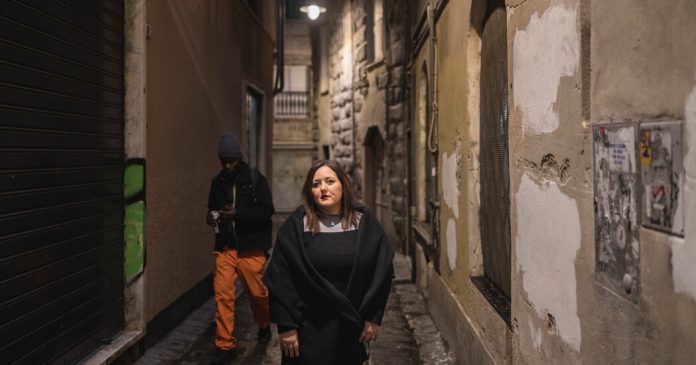
For two summers during high school, instead of joining her classmates at the beach, Noura Ghazoui had an internship at the town hall of her hometown, Borghetto Santo Spirito, on the Ligurian coast.

But when she tried to apply for a job there at age 19, she found herself ineligible because, like hundreds of thousands of children born to immigrants in Italy, she could not get Italian citizenship.

“I feel Italian, I think in Italian, I dream in Italian,” Ms. Ghazoui said in Ligurian-accented Italian. “But I am not recognized in my country.”

For generations, European countries have used mostly bloodlines to determine citizenship. The United States was an exception in the West as one of the last countries to grant citizenship unconditionally to virtually anyone born there.

President Trump’s order seeking to end birthright citizenship for the American-born children of undocumented immigrants, which a judge temporarily blocked last week, would bring the United States one step closer to Italy and other European countries.

But rising numbers of migrants in the United States and Europe have set off debates on both sides of the Atlantic over whether the systems for bestowing citizenship need to be updated in some way, either moderated or stiffened.

Each approach — known by the Latin terms “jus sanguinis,” or right of blood, and “jus soli,” or right of soil — has its critics, and increasingly, countries have sought to rebalance the two.

Since the 1980s, Britain and Ireland (as well as Australia and New Zealand), which still had unconditional birthright citizenship, have moved in a direction similar to that Mr. Trump has chosen, limiting it.

But others, like Germany, have gone the other way, making it easier for people born to immigrants to gain citizenship. The shift, supporters say, nodded to the changing realities of a country where one in four people now comes from an immigrant background.

“Citizenship is a politically contested issue,” said Maarten Vink, the co-director of the Global Citizenship Observatory. “When it changes it reflects the outcome of a political struggle.”

In Europe, bloodline citizenship has helped maintain ties with citizens who leave the country, and their descendants. But most countries in Europe also offer some form of birthright citizenship, though usually with tough restrictions.

In Europe, citizenship has at times been mixed with dangerous concepts of racism and ethnic purity, especially in colonial times and during the Nazi era, when Hitler’s regime stripped Jews of their citizenship before killing them.

Today support for limiting access to citizenship for immigrants, as well as securing borders, is not found only on the far right. But the arguments have been harnessed by some of the continent’s extreme right-wing forces, who speak of a need to preserve cultural and ethnic identity.

“We must stop migratory flows,” Jordan Bardella, the president of the far-right National Rally in France, said earlier this month. “Many French people, including even some who are of immigrant descent, no longer recognize France and no longer recognize the country they grew up in.”

Mr. Bardella’s party wants to abolish law that allows the children of foreigners born in the country to apply for citizenship at 18, as long as they meet minimal residency requirements.

While citizenship has often been described as a vehicle for belonging, it has also been a powerful means of exclusion, said Dimitry Kochenov, a professor at the Central European University and the author of the book “Citizenship.”

“Citizenship has been used by the state in order to denigrate certain groups,” Mr. Kochenov said.

In previous centuries, a much poorer Italy was a country from which millions of citizens emigrated abroad, mostly to the Americas, in search of a better life. Generous bloodline citizenship rules helped Italy maintain a link with the diaspora.

Even today churches and town halls around Italy are clogged with requests from Argentines, Brazilians and Americans who have the right to claim citizenship through distant Italian ancestry. (Most recently, President Javier Milei of Argentina obtained Italian citizenship.)

But Italy has in recent decades turned from a land where people emigrate into one that also receives large numbers of immigrants. And while Italy has changed, its citizenship law has not.

Italy does not grant citizenship to the children of immigrants who have legal status in the country. The Italian-born children of immigrants can only apply for citizenship once they turn 18; they have one year to apply and must prove they have lived in the Italy the whole time.

That ruled out Ms. Ghazoui, who spent part of her childhood in Morocco, where her parents are from. Now, 34, an employee at a company providing naval supplies, she has an Italian husband and an Italian child, and applied for citizenship based on protracted residency in the country.

“I am the only one in the house who is not Italian and not recognized,” she said.

While the public health-care system in Italy makes no distinction between citizens and noncitizens, second-generation children of immigrants face numerous hurdles. About 600,000 children born to immigrants study in Italian schools. They have often known no other country than Italy, but with no claim to citizenship, their lives are complicated.

Many cannot travel around Europe on school trips, and have to miss school o renew their residence permits. They also say they are constantly reminded that they are different from their classmates. Many Italian-born adults are in the same situation.

“Precariousness becomes the basis of your life,” said Sonny Olumati, 38, a dancer and choreographer who was born in Rome to Nigerian parents and still does not have Italian citizenship. “You create a sense of non-belonging.”

Italy’s leaders support the law as it currently stands. Prime Minister Giorgia Meloni, a hard-line conservative whose Brothers of Italy party has post-Fascist roots, has said that “Italy has a great citizenship law.”

Tying the citizenship of children to that of their parents is convenient, Ms. Meloni argues, in case the immigrants return to their countries/ She also said that she had higher priorities than changing the citizenship law.

Despite the government’s position, grass-roots associations proposed a referendum that would reduce the period of uninterrupted residence in Italy needed to become an Italian citizen to five years from 10. The vote is set to happen in the spring.

“This law does no longer represent the real Italy,” said Alba Lala, 27, the secretary of CoNNGI, a group that represents new Italian generations. “It’s completely outdated.”

Some critics say much the same about unconditional birthright citizenship.

About 20 percent of countries use it, most in North and South America. The United States and Canada inherited the law from Britain, but birthright citizenship also fulfilled an important role in the newly independent countries as a way to constitute a nation.

Like those who favor bloodline citizenship, birthright advocates say it promotes social cohesion, but for a different reason — because no child is left out.

In the United States, the 14th Amendment allowed men and women of African descent to become citizens, and millions of children of Irish, German and other European immigrants became citizens as well.

But unconditional birthright citizenship remains an exception.

“In a world of massive migration and irregular migration, unconditional ius soli is an anachronism,” said Christian Joppke, a professor of sociology at the University of Bern.

Still, some argue that the Trump’ administration is not setting out to modernize a law but instead is trying to redefine the nation itself.

“It rejects the idea of America as a nation of immigrants,” said Hiroshi Motomura, an immigration and citizenship expert at the University of California, Los Angeles, School of Law.

Even under the current rules in the United States, birthright citizenship is not absolute. They exclude, for instance, the children of diplomats born in the United States. And children of American citizens born abroad maintain an automatic right to American citizenship — in effect bloodline citizenry.

Citizenship by descent “is a really good way to connect with people who live outside the borders of a state,” said Mr. Vink. “But if you want to ensure you are also being inclusive within the borders of a state, you have to also have territorial birthright.”

Otherwise, he said, countries would have millions in their population who are not citizens.

“In a democracy,” he said, “that is not a good principle.”

Christopher F. Schuetze contributed reporting from Berlin, and Aurelien Breeden from Paris.