Thursday, November 12, 2026
Home Blog Page 316

Giorgia Meloni Investigated for Italy’s Release of Libyan Wanted for War Crimes

0

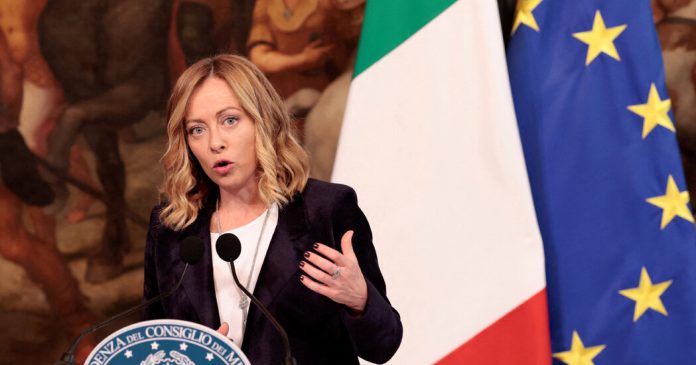
Prime Minister Giorgia Meloni of Italy announced on Tuesday that she was being investigated by Italian prosecutors for her alleged role in aiding and abetting the release last week of a Libyan official wanted for war crimes.

The case focused on the arrest and quick release by Italy of Osama Elmasry Njeem, the director of several Libyan prisons known for their inhumane conditions.

Last week, the Italian police arrested Mr. Njeem in a Turin hotel room after an international arrest warrant was issued by the International Criminal Court in The Hague. Mr. Njeem was wanted for crimes against humanity, including murder, torture, rape and sexual violence.

Shortly after he was arrested, Mr. Njeem was released for what the Italian authorities called a procedural issue. He was then taken back to Libya on a government plane.

His release set off an outcry by human rights groups and opposition leaders, who accused Ms. Meloni of cozying up to the Libyan authorities because Italy relied on Libya to keep migrants away from Italian shores.

The International Criminal Court also objected, issuing a statement recalling “the duty of all States Parties to cooperate fully with the Court in its investigations and prosecutions of crimes.” It said it had asked the Italian authorities to clarify their actions.

Ms. Meloni said in a video that she posted on social media on Tuesday that Mr. Njeem had been released because the I.C.C.’s arrest warrant had not been transmitted to the Italian justice ministry, making the arrest invalid.

Ms. Meloni said that Mr. Njeem was then expelled and taken back to Libya because of security reasons.

“I cannot be blackmailed,” she said. “I will not let myself be intimidated.”

Ms. Meloni said Rome’s chief prosecutor, Francesco Lo Voi, was also investigating Italy’s justice minister, Carlo Nordio; Italy’s interior minister, Matteo Piantedosi; and an under secretary, Alfredo Mantovano.

Mr. Nordio and Mr. Piantedosi are scheduled to speak to parliament on Wednesday about the case.

RFK Jr. faces Senate hearings for HHS Secretary this week. 7 things to watch : Shots

0

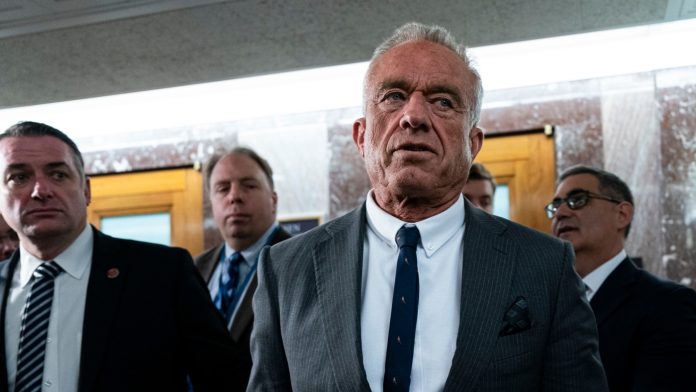
Robert F. Kennedy Jr., on Capitol Hill after meeting with Sen. Bernie Sanders on Jan. 8.

‎/Bloomberg via Getty Images


hide caption

toggle caption

‎/Bloomberg via Getty Images

Robert F. Kennedy Jr. will appear before two Senate committees this week, the next steps in his bid to lead the U.S. Department of Health and Human Services.

There is a lot for senators to dig into. HHS secretary is a consequential job that oversees all of America’s health agencies, including the Centers for Disease Control and Prevention, the Food and Drug Administration, the National Institutes of Health, Medicare, Medicaid and more. HHS employs about 90,000 people and has a budget of $1.7 trillion annually, which is about the size of Australia’s GDP.

Kennedy has been in the public eye his whole life as a member of the Democratic political family that includes President John F. Kennedy. For most of his 71 years, he’s been a government outsider, and he has built his fortune and reputation disparaging the scientists and institutions he’s now in line to lead. He’s also made wild and untrue claims, including that Wi-Fi causes cancer and that antidepressants are to blame for school shootings.

The opposition to Kennedy’s confirmation has been fierce. An advocacy group called Protect Our Care is financing an ad campaign in eight Republican Senators’ states, urging them to reject him.

Kennedy’s allies and supporters remain confident he will be confirmed. “Bobby Kennedy has met with over 60 United States senators” ahead of the confirmation hearings, White House staffer Katie Miller told NPR. “He’s prepared and excited.”

As Congress prepares to grill him this week, here’s a refresher on some of his stated plans, his record and his troublingly counterfactual ideas.

1. For decades, he’s spread misinformation about childhood vaccines

Kennedy has tried to downplay his anti-vaccine views in recent months and years, but he has a record of attacking vaccines, including routine childhood vaccinations. For much of his career, he was chairman of Children’s Health Defense, which advocates against vaccines and spreads misleading and inaccurate claims about their safety, including the thoroughly debunked claim they cause autism.

That work has had real world impact, most strikingly in Samoa, a small island nation in the Pacific. Just before a measles outbreak in 2019 in which 83 people died, Kennedy toured the country and later wrote to the prime minister falsely blaming the vaccine for the deaths instead of measles.

As the head of HHS, there’s a whole host of ways that Kennedy could change the landscape of childhood vaccines in the U.S., which infectious disease experts say could lead to a resurgence of infectious diseases among children, including meningitis and polio.

“It is a fantasy to think we can lower vaccination rates and herd immunity in the U.S. and not suffer recurrence of these diseases,” Gregory Poland, a vaccine researcher at the Mayo Clinic told KFF Health News in December. “One in 3,000 kids who gets measles is going to die. There’s no treatment for it. They are going to die.” (Kennedy has said the treatment for measles is chicken soup.)

Kennedy’s apparent inability to distinguish truth from myth is alarming, says Elizabeth Jacobs, emerita professor of epidemiology from the University of Arizona. “Kennedy has been told repeatedly by experts in the field that his positions on vaccines are wrong and not supported by scientific evidence, and he refuses to listen,” she says. “I think that that is a very dangerous position for the Secretary of Health and Human Services to have.”

2. Scientists worry he won’t prepare the U.S. for the risk of bird flu

During the COVID-19 pandemic, Kennedy railed against the federal government’s actions, including vaccine and mask requirements. He frequently said pandemic public health measures were more restrictive than Hitler’s Germany, saying once that at least “you could hide in an attic like Anne Frank did.”

How would Kennedy use his broad power as secretary if he’s faced with a public health emergency? Kennedy and his allies haven’t publicly addressed the issue. Meanwhile, as there have been several serious cases of bird flu among Americans, including the first death, and there is evidence the virus is spreading widely among poultry and cattle, intensifying concerns about another pandemic crisis.

Kennedy has already begun to discredit public health measures to counter bird flu. In an online post last summer, he claimed there’s “no evidence” the bird flu vaccines in the national stockpile will work and that they “appear dangerous.” He suggested in another post that “someone” might bioengineer a dangerous form of the virus to profit off the vaccine.

The idea is “preposterous,” Dr. Andrew Pekosz, a professor of microbiology at Johns Hopkins Bloomberg School of Public Health told NPR. The existing bird flu vaccines “have shown a safety record,” he says. “They’re not dangerous.”

Although the threat bird flu poses to humans remains small now, “this is like some brush burning around your house — you better pay attention because it could turn into something else,” Dr. Jesse Goodman, an infectious disease physician at Georgetown University and a former FDA official, told NPR.

3. His financial conflicts are raising eyebrows

Kennedy has made many millions of dollars from anti-vaccine legal actions. New public filings show that, if and when he’s confirmed, he could still financially benefit from lawsuits against Merck’s vaccine that protects against HPV and cervical cancer.

In other words, Kennedy would be in a position to potentially profit from vaccine litigation while regulating drugmakers and overseeing federal vaccine policy as the head of HHS.

“RFK Jr’s ethics agreement is inadequate,” Kathleen Clark, a law professor at Washington University in St. Louis, who specializes in government ethics, wrote to NPR. “It doesn’t address the bias created by his continuing financial interest in the litigation against Merck.”

4. He wants a major shakeup in scientific research

The COVID-19 pandemic intensified distrust of federal science research and public health efforts, especially among Republicans. The conservative Heritage Foundation and Republican lawmakers have been floating long to-do lists for changing the NIH, including dramatically reorganizing the centers and institutes that constitute the agency.

Kennedy has said he’d like to “immediately replace” hundreds of federal scientists and reorient their work away from infectious diseases.

During the first weeks of the Trump administration, scientists around the country sounded alarm bells about scientific meetings that were canceled with little notice or explanation. Those cancellations have already disrupted research funding and delayed scheduled updates to infectious disease dashboards.

Health agency spokespeople issued a statement last week explaining that these were temporary interruptions designed to allow the Trump team to get up and running. But many scientists worry it’s a sign that political appointees intend to exert a new level of control on the federal health and research agencies. Kennedy’s stated plans to reshape the health agencies and his lifetime of questioning the integrity of federal scientists could intensify those concerns.

5. His long-held abortion views are polar opposite of GOP

In an interview last spring, Kennedy said on abortion: “My belief is we should leave it to the woman, we shouldn’t have government involved,” he explained. Further, he said abortion should be legal at any point in pregnancy. He later tempered that position, saying on Facebook that an “emerging consensus” was that “abortion should be legal up until a certain number of weeks and restricted thereafter.”

Republicans are eager to curtail abortion access now that they have retaken power in Washington, including by potentially reviving a Victorian-era obscenity law or curtailing access to abortion medication. A health secretary who favors abortion access could interfere with those plans to restrict access. Former Vice President Mike Pence’s Advancing American Freedom group has launched a six-figure ad campaign opposing Kennedy based on his abortion views, writing on social media, “We need leadership that defends life and protects the most vulnerable—not radical policies that undermine our values.”

Many other anti-abortion rights groups have remained silent on his nomination. And in recent meetings with Kennedy, anti-abortion rights senators say they came away reassured. “He’s gonna align himself, by choice, with President Trump on pro-life policies,” Sen. Ted Budd of North Carolina told NPR recently.

Groups that support abortion rights largely oppose Kennedy. “RFK Jr. is an unfit, unqualified extremist who cannot be trusted to protect the health, safety, and reproductive freedom of American families,” Reproductive Freedom for All wrote soon after he was nominated.

6. He won’t accept the fact that HIV causes AIDS

It is well established science that AIDS is caused by a virus known as HIV, but it’s a fact that Kennedy does not accept. Instead, he has claimed AIDS is caused by recreational drug use and that scientists, including Dr. Anthony Fauci formerly of NIH, conspired to make up an infectious disease responsible for AIDS so they could “take control of it.”

“They were doing phony, crooked studies to develop a cure that killed people without really being able to understand what HIV was, and pumping up fear about it constantly, not really understanding whether it was causing AIDS,” Kennedy told New York Magazine last year.

This is not true, and Kennedy’s insistence on this point has HIV advocates calling his nomination dangerous. The federal government pays for the treatment of nearly half of all HIV-positive Americans through the Ryan White Program. And during President Trump’s first term, the federal government launched an ambitious effort to end the HIV epidemic by 2030. If HHS is led by Kennedy, an HIV denialist, those projects could be in jeopardy, advocates say.

7. He wants focus on lifestyle and chronic disease, but hasn’t detailed how

Kennedy talks a lot about shifting the focus of the federal health agencies towards promotion of a healthy lifestyle and the root causes of chronic diseases. This is the rare area in which his views garner some bipartisan support.

Kennedy has said he’d like to overhaul dietary guidelines, reform federal programs that pay for ultra-processed foods, take on crop subsidies, and other initiatives. It’s unclear how he could accomplish these goals without new regulations on the food and agriculture industries. “A real litmus test about whether or not they’re serious is whether they take on some of the economic interests that are causing our chronic disease epidemic,” former CDC director Tom Frieden told NPR in November.

Jacobs of the University of Arizona bristles at the way Kennedy talks about chronic disease and nutrition as if scientists have been ignoring them. “To pretend like those are his ideas alone is outrageous,” she says. “You can see for yourself just by a cursory search of PubMed,” a public database of medical and scientific research, she points out. “These are not novel ideas. These are not ideas that are exclusive to Mr. Kennedy. They are ideas that have been the result of thousands of hours of scientific research.”

Will Stone contributed to this report.

CIA Director John Ratcliffe promises ‘changes’ to come in leadership memo

0

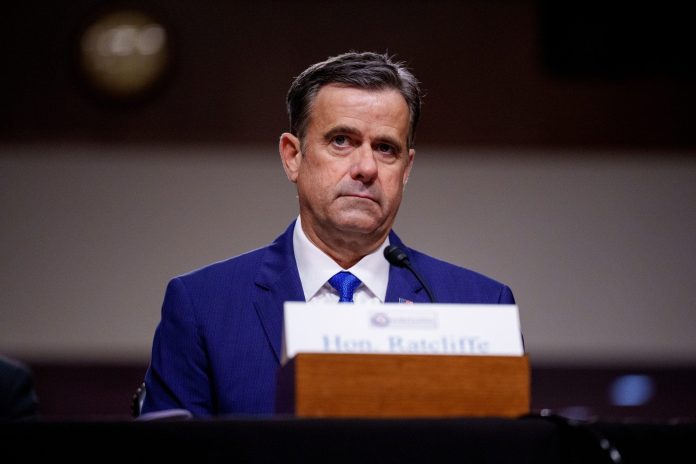
EXCLUSIVE: CIA Director John Ratcliffe warned his agents of “changes” to come under his leadership in a memo obtained by Fox News Digital. 

“There will be changes during my tenure as director,” the new leader of America’s top spy agency wrote in an agency-wide workforce message. Ratcliffe is currently reviewing all top staff and planning to put his own fingerprints on the senior level of the agency, Fox News Digital has learned. 

“We will collect intelligence in every corner of the globe, no matter how dark or difficult. We will produce insightful, objective, all-source analysis, never allowing political or personal biases to cloud our judgment or infect our products,” Ratcliffe went on in his email. 

“And we will conduct covert action at the direction of the President, going places no one else can go and doing things no one else can do.” 

NEW CIA BOSS RATCLIFFE SAYS BIDEN-ERA REPORT BACKING LAB-LEAK THEORY RELEASED TO ‘RESTORE’ TRUST

CIA Director John Ratcliffe warned his agents of “changes” to come under his leadership of the CIA. (Getty Images)

As agents conduct work in what Ratcliffe defined as the “most challenging national security environment in our nation’s history,” he promised the CIA would be the “ultimate meritocracy.”

“Our shared mission will bind us together.”

A source familiar with Ratcliffe’s thinking said, “This was a message to Agency’s workforce that the John Brennan era, the Gina Haspel era, the eras of promoting leftwing political agendas or subverting the President — those days are over.” 

Haspel was President Donald Trump‘s CIA director from 2018 to 2021 – while Ratcliffe was Trump’s director of national intelligence. Brennan headed up the agency under former President Barack Obama.  

“I’m sure it’ll rub some of the political activists burrowed in there the wrong way, but there are a lot of red-blooded, mission-focused agency officers reading this and cheering him on,” the source added.

RATCLIFFE SAYS US FACES ‘MOST CHALLENGING SECURITY ENVIRONMENT’ EVER IN CONFIRMATION HEARING

Ratcliffe is also looking for ways to streamline the agency’s many tech-focused offices – the directorate of digital innovation; directorate of science and technology; transnational and technology mission center; office of the chief technology officer; and directorate of analysis, which has been developing AI-powered tools – to stake out clear lines of authority and tasks. 

“Nobody comes to CIA to be somebody. Our successes remain hidden. Even our medals are presented behind closed doors, our sacrifices memorialized by stars on a marble wall. But each one of those stars represents somebody who wanted to do something, regardless of whether history would know their name,” Ratcliffe continued. 

Former CIA Director Gina Haspel

A source familiar with CIA Director John Ratcliffe’s thinking promised a different direction for the nation’s top spy agency than under Gina Haspel, CIA director during the first Trump administration. (Reuters)

“That’s what makes this place special. That’s what we must preserve.”

Ratcliffe was confirmed by the Senate last Thursday in a 74-25 vote. 

Under its new director, the CIA released a new assessment of the COVID-19 origin which favors a lab origin with “low confidence.” 

The review was ordered by former President Joe Biden’s National Security Advisor Jake Sullivan toward the end of Biden’s time in office. 

JOHN RATCLIFFE CONFIRMED AS NEXT CIA DIRECTOR

Senate Confirmation Held To Consider John Ratcliffe To Be CIA Director

President Donald Trump’s nominee for CIA director, John Ratcliffe, appears for a Senate Intelligence confirmation hearing on Capitol Hill on Jan. 15, 2025 in Washington, D.C. (Andrew Harnik/Getty Images)

The agency has maintained for years it did not have enough intelligence to conclude whether COVID-19 originated in a lab or a wet market in Wuhan, China.

Ratcliffe recently told Breitbart News he no longer wanted the CIA to sit “on the sidelines” of the debate over the origins of Covid-19. He has long said he believes the virus originated in the Wuhan Institute of Virology. 

 CLICK HERE TO GET THE FOX NEWS APP 

“I had the opportunity on my first day to make public an assessment that actually took place in the Biden administration, so it can’t be accused of being political,” he told “Sunday Morning Futures” host Maria Bartiromo on Sunday.  

“And the CIA has assessed that the most likely cause of this pandemic that has wrought so much devastation around the world was because of a lab-related incident in Wuhan, so we’ll continue to investigate that moving forward.” 

Many Ukrainian Aid Groups Stop Work After Trump’s Halt on Foreign Assistance

0

A week after the Trump administration abruptly ordered a sweeping halt to U.S. foreign development aid, the effect is already being felt in war-torn Ukraine. Several humanitarian organizations say they have been forced to suspend operations, including assistance to war veterans and internally displaced people.

The orders, which were issued while the Trump administration conducts a 90-day audit of foreign aid, have sent a chill through humanitarian organizations in Ukraine, which depend heavily on such assistance.

The United States, the largest single source of aid to Ukraine, has provided more than $37 billion in humanitarian aid, development assistance and direct budget support since the beginning of the war nearly three years ago through its Agency for International Development, also known as U.S.A.I.D.

Yuriy Boyechko, the founder and chief executive of Hope for Ukraine, which works with U.S.-funded Ukrainian groups to supply firewood to frontline residents, said the impact of the halt in funding would be immediate. Deliveries will stop suddenly, he said, leaving people on their own in the middle of winter.

“They’re going to feel the effect of this next week,” Mr. Boyechko said in an interview. “This is just extremely harmful because you have millions of people in frontline areas near Kherson and Kharkiv who have been living without light for a long time. For them, firewood has been the only source of heat and a way to prepare food.”

Ivona Kostyna, chairwoman of Veteran Hub, an organization that supports veterans and their families, said that the organization had already stopped two major programs: one that liaises with Ukrainian employers on employment policies for veterans, and another that provides space for veterans.

“It is on pause, but in fact for us, 90 days of pause means losing our team, our space, our clients’ trust,” she said. The sudden stop in funding “undermines the reliability of the partnership,” Ms. Kostyna said.

After Russia’s full-scale invasion of Ukraine in 2022 set off by some accounts the largest refugee crisis in Europe since World War II, European nations shouldered most of the burden of taking in refugees who fled Ukraine. The United States, for its part, helped to limit the flow of refugees by funding humanitarian programs that assisted internally displaced people.

A U.S.A.I.D spokesperson in Washington confirmed on Tuesday to The New York Times that all programs and grants without a waiver approved by the secretary of state had been paused for 90 days, while the audit is continuing. The U.S. State Department said in a statement that the aid freeze was justified by the need to “refocus on American national interests” and that it would no longer “blindly dole out money with no return for the American people.”

American officials at the U.S. Embassy in Ukraine requested exemptions to preserve aid for the country, according to Yaroslav Yurchyshyn, a Ukrainian lawmaker. The Financial Times first reported the request. In an interview, Mr. Yurchyshyn said discussions about granting waivers for Ukrainian assistance were continuing.

He expressed concern that programs providing emergency food aid would have to pause operations, even though they have been exempted globally from the orders. The funding “reduces pressure on migration,” he said, as people can remain in their towns when schools and municipal services like water and natural gas operate.

The aid agency has funded water system repairs and repairs for schools damaged by Russian artillery shelling.

Continuing the aid, Mr. Yurchyshyn said, will also counter “the narrative of totalitarian countries that democracies are unstable partners, and you can never be sure democracies will help you.”

For now, however, most aid appears to have been halted.

An email from the State Department to one group, dated Jan. 24 and viewed by The New York Times, said that “all foreign assistance awards are immediately suspended” and that the group “must stop all work on the program and not incur any new costs” after Jan. 24. The group was instructed to cancel as many outstanding obligations as possible.

The Trump administration’s threat to indefinitely cut all aid also has some groups fearing retribution if they speak out against the freeze.

In an email seen by The Times, ACTED, a major French organization operating in Ukraine and partly funded by the United States, instructed a Ukrainian partner group to “stop/suspend all work until further notice.” It added that the group should not “communicate and comment publicly,” warning that “organizations may be subject to sanctions globally.”

A manager from the Ukrainian partner group, speaking anonymously due to concerns about retaliation, said the directive would force her to lay off nearly 100 employees immediately and not pay their salaries, which are due by the end of the month.

The head of a separate Ukrainian organization, speaking on the condition of anonymity because of the sensitivity of the situation, said it had been asked to suspend the development of new projects and rethink portfolios so that no activities related to gender or gay rights issues were listed.

Ukraine also has numerous media projects that survive on grants, allowing them to stay independent. Dozens of media organizations in Ukraine are now calling for support.

Bogdan Logvynenko, a founder at Ukrainer, which publishes articles about Ukraine in foreign languages, said he did not expect that financing from the United States would resume after the 90-day audit was completed. “Our only chance is ourselves,” he says in a plea for public donations.

Ukrainian independent media currently receive more than by 80 percent of their funding from the United States, Mr. Logvynenko said.

Not all groups appear to have been notified that they should halt operations.

Oksana Kuiantseva, a board member at the charity foundation East SOS, said that the organization had not received any notice of suspension.

Most groups interviewed expressed growing concern. “The situation shows how close big geopolitics can be,” said Lesyk Yakymchuk, director of Linza, a nongovernmental group.

An election in another country can halt, for example, an online learning program for children in Ukraine, he said. “Such is the obvious dependence and influence on our small lives on this big game.”

Andrew E. Kramer contributed reporting.

Kate Middleton visits Holocaust survivors in 1st official appearance after announcing cancer remission

0

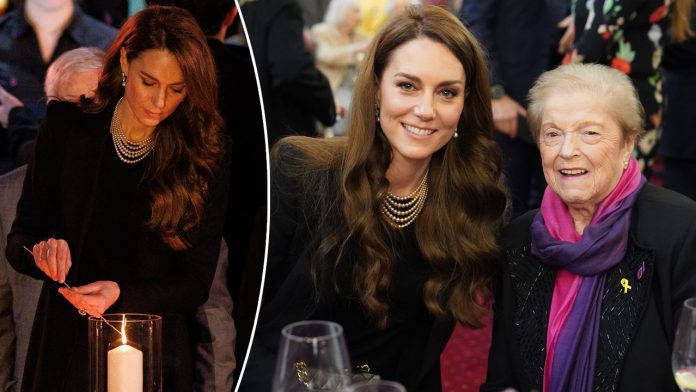
Kate Middleton made a last-minute appearance at a special ceremony commemorating Holocaust Memorial Day.

She appeared at the event alongside her husband, Prince William, who gave a speech at the ceremony honoring the 80th anniversary of the liberation of the Auschwitz-Birkenau concentration camp.

While there, the couple met with survivors of the Holocaust and posed for photos with them, in addition to hearing their stories and spending time with them.

“Marking Holocaust Memorial Day and the 80th anniversary of the liberation of Auschwitz-Birkenau,” the couple captioned an Instagram post they shared featuring photos from the ceremony. “Today we remember the six million Jews murdered in the Holocaust, victims of Nazi persecution, as well as the victims of more recent genocides, including Cambodia, Rwanda, Bosnia and Darfur.”

KING CHARLES SET TO GIVE KATE MIDDLETON POWER TO PUT $1 BILLION ‘KATE EFFECT’ INTO ACTION

Kate Middleton met with Holocaust survivors at a ceremony commemorating Holocaust Memorial Day. (Dan Kitwood/Getty Images; Arthur Edwards – WPA Pool/Getty Images)

Royal editor of The Sun, Matt Wilkinson, shared on X that at the event, Middleton was heard saying, “It’s good to be able to be here.”

The event also included a candle lighting ceremony to honor the lives of the 6 million Jewish people who were killed during the Holocaust by the Nazi regime.

APP USERS CLICK HERE FOR POST

This marks the Princess of Wales’ first appearance at a public event since announcing she is in remission from cancer. Middleton originally announced in March 2024 she had been diagnosed with an undisclosed form of the disease.

Following her completion of treatment in September, Middleton attended the Christmas service at Sandringham along with the rest of the royal family, where she spoke with a healthcare worker, identified by the New York Post as Rachel Anvil of Cambridge’s Royal Papworth Hospital, telling her, “The amount of people who have written this year is extraordinary, and I think cancer just really does resonate with so many families.”

Prince William and Kate Middleton at the Holocaust Memorial Day Commemoration Ceremony.

Prince William and Kate Middleton attended the event together. (Dan Kitwood/Getty Images)

LIKE WHAT YOU’RE READING? CLICK HERE FOR MORE ENTERTAINMENT NEWS

The royal couple have attended the memorial event in the past, commemorating the 75th anniversary of the Auschwitz-Birkenau liberation in January 2020, when Middleton debuted portraits of two survivors and their families she photographed.

Their attendance at the event comes just a few days after British royals expert Hilary Fordwich told Fox News Digital that she and Prince William are going to be placing a greater focus on their royal duties.

 “Today we remember the six million Jews murdered in the Holocaust, victims of Nazi persecution, as well as the victims of more recent genocides, including Cambodia, Rwanda, Bosnia and Darfur.”

— Prince and Princess of Wales

“Prince William and Catherine are known to be glad to retain a distance from Meghan Markle, thereby avoiding any potential entanglement in future controversies,” Fordwich explained. “Stability and service are paramount to the couple as they anticipate their lives being dedicated to both. There isn’t anything furthering either of those values in Meghan Markle and Prince Harry’s deal with Netflix.”

Part of Prince Harry and Markle’s deal with Netflix includes a new lifestyle show titled “With Love, Meghan.” This follows the six-episode docuseries released on Netflix in December 2022, which told the couple’s love story and the hardships they faced within the royal family.

CLICK HERE TO SIGN UP FOR THE ENTERTAINMENT NEWSLETTER

Prince Harry and Meghan Markle smile as senior royals

Meghan Markle has a new Netflix show titled “With Love, Meghan.” (Chris Jackson)

CLICK HERE TO GET THE FOX NEWS APP

Air Busan Plane Catches Fire at South Korean Airport

0

An Air Busan plane caught fire at an airport in Busan, South Korea, on Tuesday evening, forcing passengers and crew to evacuate, according to Yonhap news agency.

The plane was scheduled to fly to Hong Kong from Gimhae International Airport, fire officials told the news agency, when a fire broke out near its tail at around 10:30 p.m., before takeoff.

All 169 passengers, and seven crew members, were evacuated, and a few injuries were reported, the Busan fire department said.

Videos of the blaze broadcast on local media showed smoke billowing off the aircraft’s body with its evacuation slides deployed as fire engines surrounded it.

This is a developing story and will be updated.

Denmark’s last envoy says U.K., not Trump, may have dibs on Greenland : NPR

0

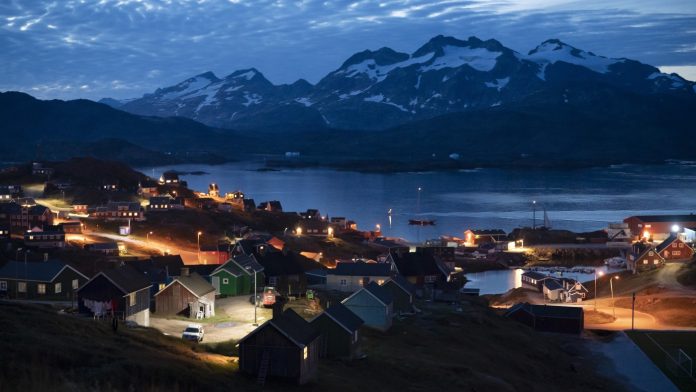
Homes are illuminated after the sunset in Tasiilaq, Greenland, Friday Aug. 16, 2019.

Felipe Dana/AP


hide caption

toggle caption

Felipe Dana/AP

If President Trump tries to buy or annex Greenland, he could face a competing claim from an old ally: Britain.

That’s according to Tom Høyem, 83, who served as Denmark’s last minister for the autonomous territory of Greenland from 1982 to 1987, after which the position was discontinued. He has visited the island 46 times, wrote a book about it and says he considers Trump’s interest “very positive and very constructive” for its defense.

Greenland is rich in rare earth minerals and uranium, and may prove strategic for global shipping routes, as Arctic ice melts with climate change. Even though Danish officials have said Greenland is not for sale, Trump keeps repeating his desire for it, telling reporters Saturday, “I think we’re going to have it.”

Høyem says Britain may actually have right of first refusal, based on diplomatic talks that happened more than a century ago, resulting in a 1917 treaty between the U.S. and Denmark. The British government was involved in those talks because of Greenland’s proximity to Canada, which at the time was governed by Britain.

The treaty outlines a deal in which the U.S. purchased a cluster of Caribbean islands — now called the U.S. Virgin Islands — from Denmark for $25 million, in exchange for recognition of Danish sovereignty over Greenland. It was signed by then-President Woodrow Wilson and his secretary of state, Robert Lansing.

“I do not know why President Trump’s civil servants have not shown him the document that his predecessor President Wilson signed — this official document — that says Greenland has been, and will always be, Danish,” Høyem told NPR in a phone interview Monday from Germany, where he now lives.

The final text of the 1917 treaty makes no mention of any British role. But Høyem, who is an expert on Greenland’s history, says British support for the treaty was contingent upon this point.

“The idea was that if Denmark ever got the stupid idea to sell Greenland, then United Kingdom had the first right to buy it or be consulted on its future — because of Canada,” he says.

NPR has asked the British Library and U.K. National Archives for copies of any declassified diplomatic cables that might support Høyem’s account, but has not yet heard back.

Danish Tom Hoyem, director of the European School, in Karlsruhe, Germany, 09 May 2014.

Tom Høyem in Karlsruhe, Germany, in 2014.

Uli Deck/picture alliance via Getty Image


hide caption

toggle caption

Uli Deck/picture alliance via Getty Image

Another expert on the Arctic tells NPR she’s never heard of any such British claim. It hasn’t been part of any mainstream academic or diplomatic conversations, she says.

“We live in a world of rules-based order,” says Jennifer Spence, director of the Arctic Initiative at the Belfer Center for Science and International Affairs at Harvard University. “If we started opening up historical agreements on all former colonies of different countries, things would get pretty chaotic pretty quickly.”

“Russia could come to the U.S. and ask for Alaska back,” she told NPR by phone from a conference in Norway.

As for British officials, no matter what their predecessors may or may not have said in the lead-up to this 1917 treaty, they are unlikely to get involved in any current discussions over Greenland’s future. U.K. Foreign Secretary David Lammy has repeatedly downplayed Trump’s claims.

In response to an NPR query, the U.K. Foreign Office wrote in an email Monday that it considers Greenland to be part of Denmark, and that its future status is a matter for the people and government of Greenland, and the kingdom of Denmark.

NPR also contacted the Danish prime minister’s office, the Danish Foreign Ministry and the Greenland Committee in Denmark’s Parliament for comment about Høyem’s account — but has not yet heard back.

For its part, Greenland has asserted its right to self-determination, and most Greenlanders favor independence from Denmark. One recent poll with a small sample size showed a majority favor joining the United States.

But Høyem says many Greenlanders are “irritated” with Trump’s talk of a takeover.

“It’s a U.S. businessman’s way of operating,” he says. “We are modern people now, and to use the words ‘buy’ and ‘sell’ — that’s a ghost from the past.”

Illinois ‘super mayor’ conducted ‘systematic’ cover-up of excessive spending, Lightfoot investigation finds

0

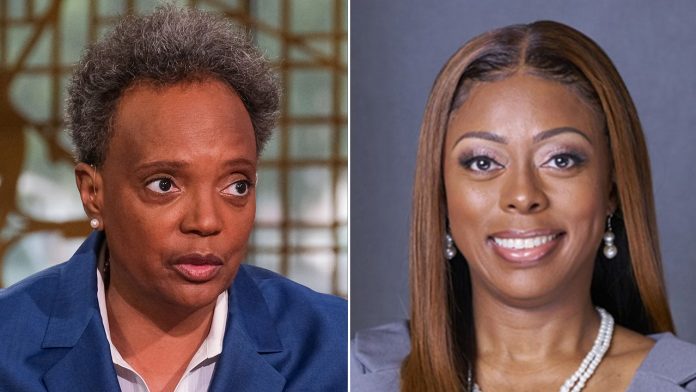
Dolton, Illinois, Mayor Tiffany Henyard’s administration was engaged in a “systematic effort” to cover up the Illinois town’s financial situation as Henyard and other officials failed to track the spending of hundreds of thousands of dollars, according to an investigation by former Chicago Mayor Lori Lightfoot.

Lightfoot, who now works as a consultant with Charles River Associates, was tasked with investigating Henyard’s administration last year, and she presented her findings at a meeting Monday night. Henyard has served as the city’s self-styled “super-mayor” since 2021.

“Beginning at least as early as late 2021, there was a concerted, systematic effort on behalf of Mayor Henyard and others in her administration to hide the true financial condition of the Village of Dolton from the trustees and from members of the public,” Lightfoot said.

Lightfoot said the Village of Dolton received some $3 million in payments from the American Rescue Plan, hundreds of thousands of which went missing without receipts. Henyard failed to appoint an official to track how the funds were spent, as required by the Treasury Department, according to Lightfoot’s report.

SCANDAL-RIDDEN ILLINOIS MAYOR LOSES TOWNSHIP SUPERVISOR NOMINATION IN HISTORIC CAUCUS

Former Chicago Mayor Lori Lightfoot issued a damning report over financial mismanagement in the Village of Dolton, Illinois. (REUTERS/Kamil Krzaczynski)

The city’s credit card spending also spiked to $779,638 in 2023, also with little to no tracking.

“Many of the credit card expenditures have no accompanying receipt, and the statements alone provide limited information about the purchases,” the report says, according to the Chicago Sun-Times.

FELLOW DEMOCRATIC MAYOR BACKS TIFFANY HENYARD’S VOTER SUPPRESSION CLAIMS: ‘TELLING THE TRUTH’

City credit cards were also used to pay for large trips to Las Vegas in both 2022 and 2023, and the report claims, “There is no evidence that any business development opportunities came to the village as a result of either of these two trips.”

Tiffany Henyard speaks to her constituents.

Dolton Mayor Tiffany Henyard’s administration is accused of misplacing hundreds of thousands of dollars. (Fox32 Chicago screen capture)

Lightfoot’s report comes just days after Henyard was found in contempt of court for stonewalling liquor licenses.

The owners of St. Patrick’s, a three-story restaurant and banquet hall on Lincoln Avenue, sued in August claiming the mayor had repeatedly promised to sign the liquor licenses – which were already approved by the village board of trustees – but did not. 

In court on Wednesday, Henyard, who also serves as the village liquor commissioner, reportedly vowed again that she would sign the licenses, but she did not before the 5 p.m. Thursday deadline. 

The parties were therefore forced to return to court again Friday, and Henyard arrived a half hour late for the hearing, WGN-TV reported.

Tiffany Henyard Tuesday

Mayor Tiffany Henyard is accused of extravagant spending that could bankrupt the Village of Dolton, Illinois. (Fox 32)

CLICK HERE TO GET THE FOX NEWS APP

Cook County Judge Cecilia Horan held Henyard in indirect criminal contempt. That means the mayor was considered “disrespectful to the authority of the court,” Adrian Vuckovich, an attorney for the owners of St. Patrick’s, told WMAQ-TV. 

“It’s been a challenge to put it mildly. It shouldn’t be so difficult. This is an ordinary event to get liquor licenses issued,” Vuckovich told WGN separately.

Fox News’ Danielle Wallace contributed to this report.

Bans, Fees, Taxes. Can Anything Stop Overtourism?

0

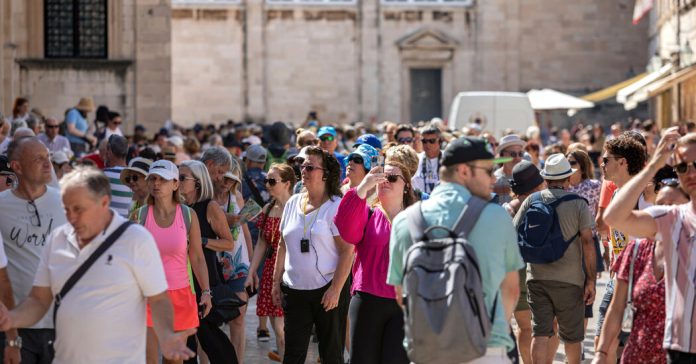
For years, Dubrovnik, Croatia, has been a poster child for overtourism, with summer visitors vastly outnumbering the local population and the municipal government repeatedly introducing measures to diminish the size and impact of a flood of tourists that turns the historic center into a crowded parking lot of selfie-snappers.

But you would never know about the negative effects of so many visitors from the Croatian Ministry of Tourism’s recent triumphant announcement noting that arrivals to the city had increased 9 percent in 2024, compared to 2023. “By all parameters we achieved another record year,” the tourism minister, Tonci Glavina, was quoted as saying.

If 2024 was the year in which concerns about overtourism achieved a critical mass in places around the globe, sparking protests from Amsterdam to the Canary Islands, and triggering new regulations from Iceland to Indonesia, it was also the year in which it became clear just how complicated reducing tourism, once it is unleashed, can be.

This year will see even more locations enact measures, but the evidence on how — or even whether — tourism can be constrained remains scarce. Competing economic interests have a way of impeding attempts to stem the tourist tide.

“The hard truth is that once overtourism has arrived,” said Rachel Dodds, professor of tourism management at Toronto Metropolitan University, “it’s exceedingly difficult to turn back the clock.”

As early as 2010, tourism experts observed that some destinations were approaching or had exceeded their carrying capacity. By the middle of the last decade, cities like Amsterdam and Barcelona had begun taking tentative steps to relieve tourism’s impacts on infrastructure, housing, the environment and quality of life.

But it was only after the pandemic, when “revenge travel” brought greater numbers of visitors to more destinations, that efforts to apply the brakes became more widespread.

This year, travelers will feel the effects of those efforts. New legislation regulating Airbnbs and other short-term rentals goes into effect in France, the Czech Republic and Greece, where a 24.5 percent surge in foreign visitors in 2024 over the previous year is also behind an increased tax — up to 20 euros a day — for cruise passengers on the islands of Santorini and Mykonos.

Ports from Ibiza, Spain, to Juneau, Alaska, are restricting the number of cruise ships that can dock simultaneously, and in Juneau’s case, will be cutting back on the number of passengers allowed each day. Bruges, Belgium, has halted new hotel construction, and Amsterdam, after imposing a similar measure in 2024, only to discover that some accommodations were exploiting a loophole, passed another measure in November that prevents them from adding more rooms or beds to their offerings.

In Italy, tourists will be limited to 20,000 a day in Pompeii, and new legislation in Florence may prevent tourists from using golf carts to tool around.

New Zealand will require visitors to pay a tourist tax of 100 New Zealand dollars, or about $57 — about three times higher than it was for most of last year, while the Galápagos Islands has doubled its fee to $200. In Japan, the mountain town of Ginzan Onsen recently joined Mount Fuji and some streets in Kyoto in restricting tourist numbers. And in South Korea, authorities have imposed a curfew in a historic neighborhood of Seoul to dampen tourist excesses.

“The major issue is that for many, many years, we’ve been utilizing an extractive model of tourism that says ‘numbers at any cost,’” said Marina Novelli, the director of the Sustainable Travel and Tourism Advanced Research Center at the University of Nottingham. “Now we are in a situation where all these kinds of things are being implemented, like restricting numbers and tourist taxes as reactive strategies.”

Whether these strategies will work remains to be seen. The evidence is spotty and suggests that measures take a long time to have an effect. Barcelona, for example, implemented its first tourist tax in 2012, began restricting short-term rentals in 2015 and capped new hotel construction in 2017. Yet tourists continued to arrive in record numbers through the first third of 2024. It was only at the end of the year that the annual rate of arrivals showed a modest 0.7 percent decline over 2023. In Amsterdam, which began targeting overtourism in 2016, arrivals are expected to climb to 26 million in 2026.

Curbing numbers is not always the primary aim. Capping short-term rentals, for example, is frequently posed as a solution to housing shortages, while tourist taxes can be intended to offset the strain that overtourism can place on resources.

“Some places, like New Zealand and Hawaii, are trying to do it as more of a regenerative or stewardship measure,” Ms. Dodds said. “While in others, like Venice, it is punitive, slapping a tax on and thinking it would persuade people not to come.”

Set at an amount roughly equivalent to a coffee and cornetto, Venice’s 5 euro fee, introduced last year, was hardly dissuasive. Venice seems to have reached the same conclusion: This year, the rate doubles to 10 euros.

Will that have more of an impact? According to Ko Koens, a professor of urban tourism at Inholland University for the Applied Sciences, no one knows. “I can tell you for sure that 5 euros wouldn’t work,” he said. “But we don’t have enough data to know how high it has to be to work.”

Other measures in Venice have also come up short. The city recently began diverting cruise ships from its historic center. While the initiative may lessen environmental damage, it has not had any discernible effect on passenger numbers. In the fall of 2024, Venice predicted a 9 percent increase for the year over 2023, thanks to its newly ‘distributed’ ports.

In fact, restricting passengers in one area may channel overtourism to another. “It’s like a water bed,” Mr. Koens said. “By spreading people out to other places, you’re potentially increasing overtourism issues.”

New York City began enforcing a pre-existing ban on short-term rentals last year. The measure, which some experts correlate to 2024’s 7 percent increase in hotel rates over the previous year, has sent tourists to surrounding areas where the rentals are legal. New Jersey has become the fastest growing market for Airbnb demand in the United States, according to the analytics site AirDNA. Yet it does not appear to have reduced the number of tourists to New York itself — the city expects to surpass its previous record of 66.6 million in 2019 by 1.4 million in 2025.

The greatest obstacle to solving overtourism may be the lack of consensus that it is actually a problem. As a source of revenue and employment — globally, tourism generated a record 1.6 trillion dollars in 2024 — travel is an engine for economic growth.

Because of that role, most attempts to limit tourism face opposition — witness the recent decision to repeal Bali’s planned moratorium on new hotel construction.

Mato Frankovic, the mayor of Dubrovnik, has experienced that resistance. After he reduced the number of cruise ships, restricted rentals in the Old Town, and cut the number of tables and chairs in outdoor cafes by 30 percent and the number of souvenir stands by 70 percent, international and local businesses rebelled. “The opposition was saying I was going to ruin the city,” Mr. Frankovic said.

He persevered. This year the city will reduce the number of taxis; introduce apps that regulate tour bus arrivals and direct visitors to alternative sites at peak times; and enact national legislation that requires apartment owners in multidwelling buildings to obtain the consent from 80 percent of other residents before they can rent their apartment.

Yet even when municipal or regional authorities are determined to make changes, they can find themselves pitted against a national government that prioritizes economic growth.

Take Copenhagen. The city council approved a tourist tax in 2024 “as a nice way to prevent us from ending up like Barcelona,” said Rasmus Steenberger, a member of the municipal government. But the national government — which is currently expanding Copenhagen’s airport, and recently announced a plan to increase tourism revenue to 200 billion kroner per year (about $28 billion) from 152 billion kroner, by 2030 — rejected the proposed tourist tax.

Such conflict is why many experts believe more profound changes are needed.

Ms. Dodds, of Toronto Metropolitan University, said that a solution requires rethinking the definition of success. “U.N. Tourism still measures success by the number of arrivals, which essentially is perpetuating the problems of overtourism,” she said. “So the conversation needs to be, how do we change the metrics of success?”

There are signs that new metrics are emerging. Both Bruges and Norway pulled tourism advertising campaigns last year, and some cruise and tour companies have voluntarily scratched Santorini and Mykonos from their itineraries for 2025 and 2026.

But with international arrivals globally expected to grow 12.4 percent in 2025 over their 2019 levels, overtourism seems likely to spread. “I’m not sure there is a solution,” said Ms. Novelli of the University of Nottingham. “Unless it’s people taking responsibility and saying, ‘You know what? I don’t need to see Venice. I’m not going to go.’”


Follow New York Times Travel on Instagram and sign up for our weekly Travel Dispatch newsletter to get expert tips on traveling smarter and inspiration for your next vacation. Dreaming up a future getaway or just armchair traveling? Check out our 52 Places to Go in 2025.

New JFK, RFK and MLK documents aren’t likely to contain any bombshells : NPR

0

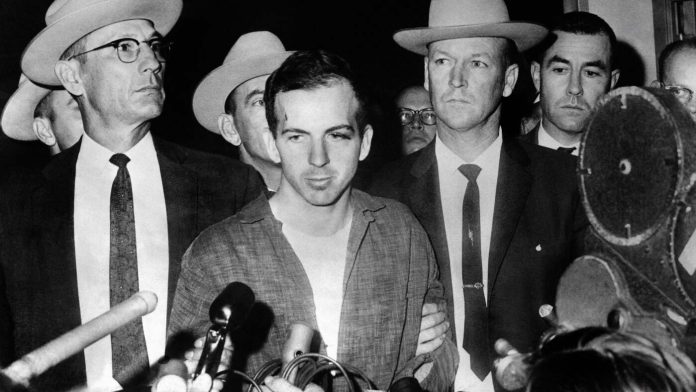
President John F. Kennedy’s assassin, Lee Harvey Oswald, during a news conference after his arrest in Dallas, on Nov. 22, 1963. Oswald was killed by Jack Ruby two days later, on the eve of Kennedy’s burial.

AFP/Getty Images


hide caption

toggle caption

AFP/Getty Images

President Trump’s order to release thousands of documents related to the assassinations of President John F. Kennedy, his brother Robert F. Kennedy, and civil rights leader Martin Luther King Jr., could shed additional light on the events. However, few historians appear to be anticipating any narrative-shifting bombshells.

The National Archives records related to the assassinations in the 1960s were first set to be released in 2017, during Trump’s first term. Many were made public, but some remain under lock. Former President Joe Biden extended some of those exemptions during his term.

But in an executive order issued Thursday, days after his inauguration, Trump said continuing to redact and withhold information “is not consistent with the public interest and the release of these records is long overdue.”

It gives intelligence officials 15 days to present a plan for the release of documents related to President Kennedy’s assassination and 45 days for a similar plan pertaining to Robert F. Kennedy and King.

For decades, conspiracy theories about the assassinations — especially in the case of President Kennedy — have been fueled by the government’s withholding information from the public, citing national security concerns, historians say.

Documents might fill in a few missing pieces on JFK assassination 

More than 300,000 pages making up the “vast majority of the material” related to President Kennedy’s assassination on Nov. 22, 1963, have already been released, notes Kevin Boyle, a professor of American history at Northwestern University.

Of the “fraction of material” remaining solely in the government’s possession, “my guess is that it’s not going to reveal … something new about John Kennedy’s assassination,” he says.

Fredrik Logevall, a biographer of President Kennedy, agrees that the new information will not “dramatically overturn our understanding of what happened on that terrible day in Dallas.”

“But even if they don’t alter our understanding in this deep way, I think there’s still useful information potentially in these materials,” he says.

Logevall thinks there could be something about shooter Lee Harvey Oswald’s travel to Mexico City in the lead-up to the assassination, such as “who he talked with when he was there and what the meaning of that trip was.” He also thinks there might be more to learn about “what the CIA either reported to the FBI about its knowledge of Oswald and his travels or what they didn’t record” prior to the assassination. “That’s really useful information, whatever it might reveal about the murder itself,” Logevall says.

Boyle thinks there could also be other information of interest that’s not directly related to the Kennedy assassination, such as some missing puzzle pieces when it comes to covert activity in Cuba. “There is a lot of information that’s already been revealed about the extent of the U.S. covert operation prior to John Kennedy’s assassination. And I think we could get interesting new revelations from that.”

More might be learned about FBI surveillance of MLK

Previous document releases have shown that the FBI had King under extensive surveillance and made use of wiretaps to uncover information aimed at damaging the civil rights leader — particularly evidence of extramarital affairs.

Kathryn McGarr, a professor of history at the University of Wisconsin–Madison, says she doesn’t think there’s much more to learn. “We already know quite a bit about how much the government was surveilling and looking at [MLK] … and how many enemies he had within the government,” she says. “I don’t think that the narrative is going to significantly change, although of course, we could get some more details here and there.”

King’s death led to violence across the U.S., particularly in cities including Washington, D.C. and Chicago. Dozens were killed. Boyle says he’s interested in the federal government’s “reaction to the racial dynamic” that surrounded King and the response to his killing.

Firefighters tackle a blaze on NE H Street during the riots in Washington, D.C., that followed the assassination of civil rights activist Martin Luther King Jr., in April 1968.

Firefighters tackle a blaze on H Street during the riots in Washington, D.C., that followed the assassination of civil rights activist Martin Luther King Jr., in April 1968.

Michael Ochs Archives/Getty Images


hide caption

toggle caption

Michael Ochs Archives/Getty Images

John Stoner, a U.S. history professor at the University of Pittsburgh, thinks the fact that the federal government “worked so hard to isolate King, to investigate potential subversive connections of some of his advisers,” has added fuel to the conspiracy fire. King’s own family has said that James Earl Ray, the man convicted of firing the fatal shot in Memphis, Tenn., on April 4, 1968, was framed.

Stoner says he’s hopeful that new documents might “shed light on the degree to which there is any hint of a government conspiracy to have killed [King].”

Robert Kennedy’s assassination has similarly been the subject of speculation, including the claim that the gunman, Sirhan Sirhan, a Palestinian refugee and Jordanian national, had been hypnotized by a woman standing nearby the scene to carry out the killing. But of the three assassinations in question, his has attracted the fewest conspiracy theories, probably because “so much air is taken up by [the assassinations of] JFK and MLK,” Stoner says.

New York Democratic Sen. Robert F. Kennedy speaking to campaign workers, on June 5, 1968, at the Ambassador Hotel in Los Angeles. After making a short speech, Kennedy was fatally shot in an adjacent room.

New York Democratic Sen. Robert F. Kennedy speaking to campaign workers, on June 5, 1968, at the Ambassador Hotel in Los Angeles. After making a short speech, Kennedy was fatally shot in an adjacent room.

AP/AP


hide caption

toggle caption

AP/AP

Sirhan, who remains in a San Diego prison, said after his arrest that the killing of Robert Kennedy was “for my country.” The June 5, 1968 assassination occurred on the first anniversary of the 1967 Arab-Israeli War, also known as the Six-Day War. Sirhan felt betrayed by Kennedy’s support for Israel, he said in a 1989 interview.

Stoner says he would be interested to learn whether the government “soft-pedalled political connections that Sirhan Sirhan might have had.”

Why has it taken so long to release the information?

Although national security is the often-cited reason for delaying the release of the assassination documents from the National Archives, McGarr from University of Wisconsin-Madison says it’s more likely that redactions are for “bureaucratic reasons.”

If her own archival work is any guide, she says, it’s most likely that information hasn’t been released because of embarrassment. “When there are certain documents that can’t be released till after someone has died, it’s often nothing more than a snide remark.”

Despite Trump’s quickly issued executive order, the documents still need to be reviewed and it could be some time before they see the light of public scrutiny, author Logevall says. “I could imagine a scenario in which … this is delayed and that there would be some redactions even in these final releases,” he says.

Northwestern’s Boyle says if the release follows the usual protocol, once it gets the official go-ahead, the National Archives will put the material online.

Typically, he says, it “doesn’t make for the most compelling reading,” he says. “You know, it’s bureaucratic material. It’s people files and personnel cases. … It’s not very exciting.”

Even if the documents don’t contain anything dramatic, they will still be of interest to people such as himself, he says. “As historians we never think that the story has been told. There is always the possibility of new information.”