Thursday, November 12, 2026
Home Blog Page 337

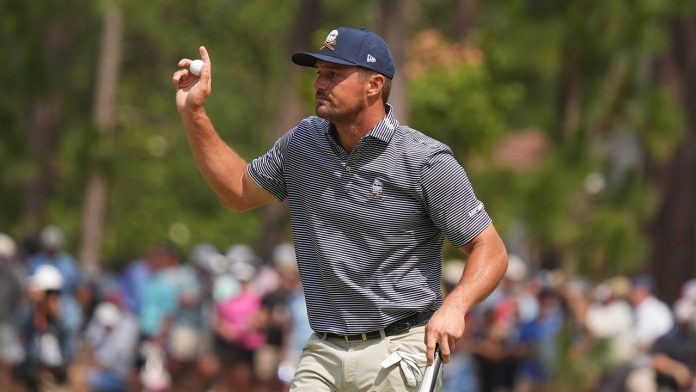
Bryson DeChambeau using Saudi-funded $125M LIV Golf salary to expand size of town by 200 acres

0

LIV Golfer Bryson DeChambeau has a grand plan for the $125 million he’s receiving from his Saudi Arabian bosses. 

The controversial 31-year-old golf star said during an interview on “The Joe Pomp Show” he bought 200 acres of land in his hometown of Modesto, California, and plans to expand the town by 30%.

“We are doing a mega project,” DeChambeau said. “It’s been in the works for a couple of years now, and we’re at the place where we are getting permits to build. People know about it now. 

“We have acquired massive amounts of land in my hometown, and it’s a three-phase process to build a whole community and increase the size of where I grew up by 30%”

CLICK HERE FOR MORE SPORTS COVERAGE ON FOXNEWS.COM

Bryson DeChambeau of LIV Golf before The Showdown: McIlroy and Scheffler v. DeChambeau and Koepka at Shadow Creek Golf Course Dec. 16, 2024, in Las Vegas.  (Kevin C. Cox/Getty Images for The Showdown)

DeChambeau says his intention is to create a prominent golf presence in the community, adding the timeline for completing this project is just over a year. 

“It’s a full-scale plan, fully thought out. It’s not only to bring golfers to the game but also to bring people to the central valley. You build a community around a multisport complex center,” he said.

“It’s going to take 12-15 months to get the permits approved for the full scope. It’s over 200 acres of land what we have right now. It’s going to be a multisports complex center — driving range, golf course, residential community center, the whole thing.”

DeChambeau was paid a reported $125 million to join LIV Golf in June 2022. He says his latest project is only possible because of the massive salary from the Saudi-funded organization.

WOMEN’S GOLF STAR CHARLEY HULL FAWNS OVER ‘BRILLIANT, LEGEND’ TRUMP AFTER DOING HIS DANCE AT TOURNAMENT

Bryson DeChambeau

Bryson DeChambeau reacts after putting on the fifth hole during the third round of the U.S. Open.  (Jim Dedmon/USA Today Sports)

“A lot of the reason why I have been able to do this is because of LIV. They gave me the economic viability to do these things and the platform to be able to do it, growing on YouTube,” he said. 

DeChambeau was one of many American golfers to incite widespread backlash from fans for choosing to compete in the Saudi-backed league when it launched due to humanitarian concerns with Saudi Arabia and its relations with the west. 

Brooks Koepka, Phil Mickelson, Dustin Johnson, Patrick Reed and Jon Rahm were other prominent PGA stars who chose to accept the massive LIV paychecks during the league’s aggressive pursuit of the sport’s biggest names. 

DeChambeau is also a close friend of President Donald Trump’s and invited Trump to play with him in a video on his YouTube channel. 

CLICK HERE TO GET THE FOX NEWS APP

Bryson DeChambeau celebrates the US Open win

Bryson DeChambeau cradles the U.S. Open trophy after his win in the final round of the 2024 U.S. Open Championship on the No. 2 Course at The Pinehurst Resort June 16, 2024, in Pinehurst, N.C. (David Cannon/Getty Images)

DeChambeau told Fox News Digital at the time he had no regrets about it.

“There’s always risk associated to that. But, from my perspective, it was focused on entertainment,” DeChambeau told Fox News Digital in August at Maridoe Golf Club, site of the LIV Golf Team Championship. 

“We can talk about politics. That’s a whole different conversation, something that I was not trying to do on my YouTube channel. It was solely on providing great entertainment.”

DeChambeau joined Trump, Elon Musk and Sen. Ted Cruz, R-Texas, to watch the SpaceX rocket launch in November. 

Follow Fox News Digital’s sports coverage on X, and subscribe to the Fox News Sports Huddle newsletter.

What Elon Musk’s Salute Was All About

0

So was it a Hitler salute or wasn’t it?

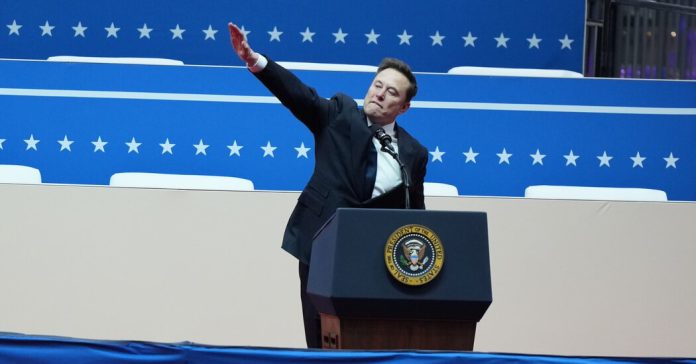
Speaking at President Trump’s inauguration event this week, Elon Musk slapped his right hand on his chest before shooting his arm diagonally upward, palm facing down. He did it twice.

It looked a lot like the salute used in Nazi Germany and fascist Italy. But almost immediately, a striking number of different interpretations began to circulate.

Some commentators called it a “Roman salute.” Others described it as a “heartfelt” expression of joy, or dismissed it as merely clumsy.

The website of the Anti-Defamation League, which campaigns against anti-Semitism, defines the Nazi salute as “raising an outstretched right arm with the palm down,” and ranks it as “the most common white supremacist hand sign in the world.”

But after Mr. Musk’s stiff-arm salute, the Anti-Defamation League called it “an awkward gesture in a moment of enthusiasm, not a Nazi salute.”

Andrea Stroppa, known as Mr. Musk’s emissary in Italy, posted on the social media platform X: “The Roman Empire is back, starting from the Roman salute.” He later deleted the post, saying that people were interpreting “the whole thing as a reference to Nazi-fascism.”

Mr. Musk, who owns X, posted in response to the criticism: “The ‘everyone is Hitler’ attack is soo tired.”

The straight-arm salute has meant very different things in different places and during different periods of history. But at a time when the far right is once again on the rise, the interpretation of this gesture being performed deliberately and publicly was straightforward — especially in Germany, where the salute’s history lingers most powerfully.

In Germany, gestures like the one Mr. Musk made are illegal, along with other symbols and slogans from the Nazi era. (On Wednesday night, anti-Musk protesters projected an image showing his salute and the words “Heil Tesla” onto the facade of his company’s German factory.)

For the German establishment, the situation was very clear.

“A Hitler salute is a Hitler salute is a Hitler salute,” the prominent German weekly Die Zeit wrote in an editorial.

“There is no need to make this unnecessarily complicated,” the editorial said. “Anyone on a political stage giving a political speech in front of a partly right-wing extremist audience,” — present at the inauguration were several far-right politicians from Germany, Italy, France and Britain — “anyone who raises their right arm in a swinging manner and at an angle several times is doing the Hitler salute.”

“Anyone who now thinks they have to discover the older ‘Roman salute’ as a supposed Musk reference is, above all, demonstrating their willingness to reinterpret it in a benign way,” it concluded.

“Roman salute” is indeed trending on social media — along with images of toga-clad actors in grainy films set in ancient Rome raising their right arm alongside Mr. Musk raising his.

But was there a Roman salute in ancient times? No: There is no evidence that the salute was ever used in ancient Rome.

The actual history of the salute is little-known — and much shorter: It was used in late 19th century theater productions and early 20th century films, which then inspired its use by fascists in Italy and Germany. And it was actually performed for decades by American school children for entirely different reasons.

“The Roman salute is a modern invention,” said Martin Winkler, professor of classics at George Mason University in Virginia, and author of “The Roman Salute: Cinema, History, Ideology.”

“There is no evidence whatsoever from the Roman art and paintings that survive that ancient Romans ever used that gesture,” he added.

The salute first became popular in stage productions and silent cinema, when films began using the gesture for costume dramas set in ancient Rome, Greece and Egypt.

“It’s simply a visual gesture that was heavily deployed in the silent cinema era when many films were set in antiquity,” Mr. Winkler said. “Why? Because in the absence of sound, dramatic gestures and what we would now consider overacting were pretty much ubiquitous. Saluting gestures were no exception.”

The salute had a real-life breakthrough in 1919. Gabriele D’Annunzio, a soldier and Italian poet turned nationalist (who had worked on “Cabiria,” an Italian silent film set in antiquity) invaded Fiume, a coastal city that is now part of Croatia.

He ruled Fiume for 15 months as a kind of mini-Caesar, calling his soldiers legionnaires and addressing them from his balcony. And he adopted a ceremony that involved a straight arm salute he called “Il saluto Romano,” or the Roman salute.

“This Roman salute resembled a stab: You extend your arm, angled upwards with your fingers together, as if it were a dagger that you symbolically thrust into an enemy’s throat,” Mr. Winkler said. “It’s a very militarized, politicized kind of gesture.”

The Roman salute was adopted soon after by the Italian fascist dictator Benito Mussolini, who came to power in 1923. Adolf Hitler’s Nazi Party adopted it in 1926, calling it the German salute.

Intriguingly, there was an American salute that preceded both.

To modern eyes, it would be jarring to see a group of schoolchildren giving the stiff-armed salute to the American flag. But the gesture was commonplace for decades.

In 1892 — in the run-up to the Chicago World’s Fair marking the 400th anniversary of Columbus arriving in America — Francis Bellamy, a Baptist minister’s son from upstate New York, wrote the Pledge of Allegiance, a version of which is recited by many American school children to this day.

Along with his boss, James Upton, Bellamy also came up with a salute to accompany the recital of the pledge: Stand up, hand on heart, then extend the right arm to salute the Stars and Stripes. It became known as the Bellamy salute.

The pledge itself was part of an Americanization program for immigrant children. But in 1942, when the United States was fighting the Nazis in World War II, the extended arm gesture was abandoned. “It looked too close to the Nazi salute,” Winkler said.

Whatever Elon Musk was trying to invoke on Monday, his salute looked pretty close to a Nazi salute even if it was not identical. He first put his hand on his chest, which is not part of the Nazi salute, and could be closer to what those American school children did until 1942.

But the pledge of allegience salute was dropped in a way that left no room for misinterpretation: The gesture had become inextricably tied to the Nazis.

“The common American perception was, ‘These are our enemies and we don’t want to be like them,’” Winkler said.

Mr. Musk is now courting far-right parties in several European countries. His audience in Washington on Inauguration Day included Tino Chrupalla, a co-leader of Germany’s Alternative for Germany party; Giorgia Meloni, the prime minister of Italy, whose party is descended from the post-Fascist movement; Nigel Farage of Britain’s Reform Party; and Eric Zemmour of France, who is to the right even of the French National Rally’s Marine Le Pen.

“What is happening now is predictable,” Die Zeit said in its editorial. “Neo-Nazis and right-wing radicals can interpret the stretched right arm as a gesture of fraternization and empowerment.”

Emma Bubola in Rome contributed reporting. Audio produced by Parin Behrooz.

Trump travels to North Carolina and California

0

President Trump took the first trip of his presidency to tour storm damage in North Carolina and fire damage in Los Angeles.

Andie MacDowell battles neuromuscular disorder, considered ‘hip replacement’

0

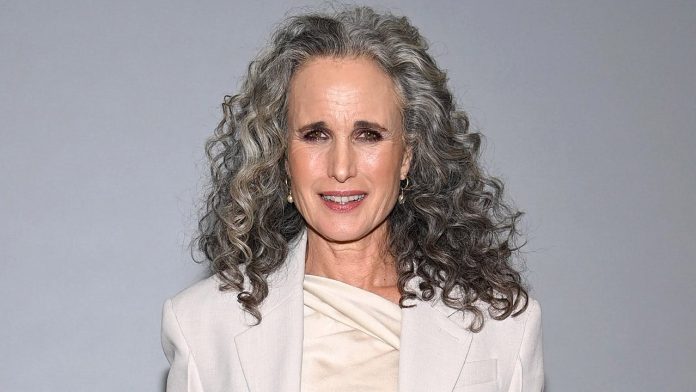
Andie MacDowell is battling a painful neuromuscular disorder.

“I have piriformis syndrome, so it’s a muscle that kind of clamps down on my sciatic nerve, and it was shooting down my leg,” MacDowell shared on “The Drew Barrymore Show.”

“I thought I was going to have hip replacement — thank God, my hips are fine,” she remarked.

ANDIE MACDOWELL EMBRACES HER WRINKLES, SAYS GETTING OLDER ‘DOESN’T FEEL LESS SEXY’

Andie MacDowell has been diagnosed with a painful neuromuscular disorder called piriformis syndrome. (Dave Kotinsky/Getty Images for Hallmark Media)

Piriformis syndrome occurs when your piriformis muscle compresses your sciatic nerve and results in inflammation. It can cause pain or numbness in your buttock and down the back of your leg. It can happen on one side of your body or both, according to the Cleveland Clinic. 

The 66-year-old actress added that she practiced daily exercises to mitigate any pain. 

“I have to work my tiny little bottom and my hips. I have to work the bottom and work my hip. I just do it every day… it doesn’t hurt anymore… it’s a miracle,” said MacDowell.

“I have piriformis syndrome, so it’s a muscle that kind of clamps down on my sciatic nerve, and it was shooting down my leg.”

— Andie MacDowell

During her appearance, MacDowell made a vulnerable admission about her health, saying she thought she was “literally falling apart” after she started riding her indoor bike “like a crazy person.”

Andie MacDowell

During her appearance on “The Drew Barrymore Show,” MacDowell said she thought she was “literally falling apart.” (Kate Green/Getty Images)

“It’s not appropriate for my body, and I ended up with bad knees… a bad hip,” she explained. 

“The good news is my pieces are fine,” MacDowell said. “My knees are good except for aging. They’ve aged.”

She continued, “I think as you age… lift weights, work with a [personal trainer] PT person to build your muscles.” 

ANDIE MACDOWELL’S DAUGHTER MARGARET QUALLEY LEADS CELEBRITY KIDS TAKING OVER THE ACTING SCENE

Andie Macdowell walked the red carpet at the Cannes Film Festival in a blue gown with a dramatic cape flowing down her right arm.

The “Groundhog Day” alum shared that she left Hollywood for a simpler life in South Carolina. (Kristy Sparow/Getty Images)

The “Groundhog Day” alum additionally shared that she left Hollywood for a simpler life in South Carolina.

During her interview, MacDowell touched on how she’s coped with her children growing older and moving out.

CLICK HERE TO SIGN UP FOR THE ENTERTAINMENT NEWSLETTER

andie macdowell and margaret qualley

Macdowell poses for a photo with one of her daughters, Margaret Qualley. (Emma McIntyre/Getty Images)

“Everything changes, it’s a hard shift,” she confessed. “You hear about how a lot of mothers… are happy… they’re free… I didn’t have that feeling, I still don’t have that feeling. I’ve had to work really hard on my independence.”

The “St. Elmo’s Fire” actress shares three children with her ex-husband, Paul Qualley — daughters Margaret and Rainey, along with their son Justin. Both daughters have followed in their mom’s acting footsteps.

CLICK HERE TO GET THE FOX NEWS APP

Greece Tightens Laws on Domestic Violence (but Not Enough, Critics Say)

0

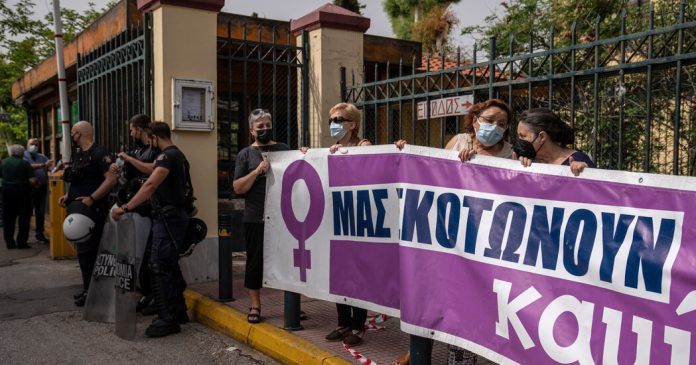
Greece on Friday toughened penalties for domestic violence in an effort to address a surge in reported cases, though critics said the new legislation did not go far enough and left out crucial measures aimed at prevention.

During fiery debates in Parliament, opposition legislators said that the conservative government, led by Prime Minister Kyriakos Mitsotakis, had concentrated too much on punishment. The new law extends pretrial detention and allows sentences to be suspended only in exceptional cases, while victims will no longer be obligated to appear in court.

The bill also seeks to align Greek law with a European Union directive from 2024 aimed at reducing domestic violence. That framework puts an emphasis on prevention and requires member states to criminalize acts like cyberstalking and other forms of online sexual harassment.

Lawyers, judges and women’s groups have argued that the new Greek legislation is only a fragmentary application of the directive, and they have called for measures such as public awareness campaigns, better access to justice for victims, and improved data collection and cooperation among officials, nongovernmental organizations and other experts.

While defending the bill in Parliament, Ioannis Bougas, the deputy justice minister, said that the law “deepens the framework of protection for victims of domestic violence.” The bill eventually passed on Friday with 157 votes in the 300-seat Greek Parliament, largely reflecting the government’s majority.

Anna Vouyioukas, an advocacy officer at the Diotima Center, an Athens-based nonprofit that offers support to victims of domestic violence, said the bill was a “missed opportunity.” The center had criticized the legislation for not reflecting the “holistic and long-term policies” of the European directive.

“It leaves out, without any justification, provisions aimed at improving protection for vulnerable groups including lesbians, older people, migrants and the poor,” Ms. Vouyioukas added.

Official figures have shown a significant rise in reports of domestic violence in Greece recently. Last year, there were 22,080 cases — almost double the number from a year earlier, according to the police. Arrests also roughly doubled over the same period, reaching 13,503.

Whether those increases are due to a worsening underlying problem or a greater willingness to report remains unclear. The police did not keep specific statistics on domestic violence until 2020 — signaling how attitudes have only recently changed and making long-term comparisons difficult.

“It’s a complex phenomenon, it will take years of research to isolate the causes,” Ms. Vouyioukas said, citing the lack of data.

A landmark moment came in 2021 when Mr. Mitsotakis and the country’s president, Katerina Sakellaropoulou, expressed their support for Sofia Bekatorou, an Olympic sailing champion who accused a top sporting official of sexual abuse. That episode prompted a wave of women to report sexual and domestic abuse.

The Greek union of judges and prosecutors called the new law “dangerous” and said that it would “become a pretext for a new narrowing of individual rights.” In a statement on Monday, the union took issue with a range of provisions, including the fact that defendants could be convicted without being able to question plaintiffs.

Lawyers have also objected to the bill and staged a walkout on Thursday and Friday because they say parts of the legislation — such as extending pretrial detention — violate constitutional protections including the presumption of innocence and the right to a fair trial.

Clio Papapadoleon, a lawyer who has represented victims of domestic violence, said the emphasis on incarceration was shortsighted and could have “disastrous” consequences.

“The automatic detention of defendants will make it harder for victims to come forward,” she said. “You have to think of the psychology of these people: If someone has three kids with her partner she’ll think twice about reporting him if she knows he’s going to go to prison immediately.”

Michalis Chrysochoidis, the public order minister, said last month that tackling domestic violence was a national priority. Last year, after a 28-year-old woman was fatally stabbed outside a police station in a suburb of Athens by her former boyfriend, his ministry started an initiative to open dozens of state shelters for victims of domestic violence.

Although change is going in the right direction, most government action has been a response to individual tragedies, Ms. Papapadoleon said, adding that the new law should have taken a more holistic approach.

“If it’s after the murder, or it’s after the rape, it’s too late,” she said.

What designating cartels as terrorist organizations means in practice : NPR

0

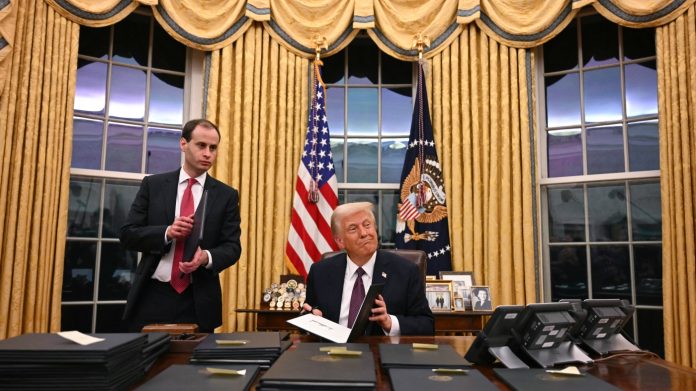
President Trump signs executive actions at the White House after his inauguration Monday. Among those orders is one labeling Mexican drug cartels terrorist organizations.

Jim Watson/AFP via Getty Images


hide caption

toggle caption

Jim Watson/AFP via Getty Images

President Trump, in one of his first actions back in office, signed an executive order that moves the U.S. government toward designating drug cartels as terrorist organizations.

The decision is part of the Trump administration’s broader efforts to crack down on the flow of drugs and people across the southern border. The full implications of designating the cartels as terrorist organizations will depend, in large part, to how the administration follows through.

Here’s a look at what the order says, and the possible implications:

The order

The order says cartels are a national security threat in a way that traditional organized crime is not. They have conducted a “campaign of violence and terror through the Western hemisphere” with destabilizing effects, including a flood of “deadly drugs, violent criminals, and vicious gangs” into the United States.

It also says the cartels, as well as two transnational gangs rooted in Central America, pose a national security threat to the U.S., and it says it is American policy to “ensure the total elimination of these organizations’ presence in the U.S.”

The order instructs the U.S. State Department to recommend, within 14 days, whether to designate the cartels as foreign terrorist organizations.

What would a terrorist designaion do?

The U.S. government already has tools, including criminal charges and sanctions, that it can use to go after the cartels. A terrorist designation would broaden those options.

The most significant additional tool, experts say, would be the ability to bring what are known as material support prosecutions. Under U.S. law, it is a crime to provide material support to a designated terrorist organization.

Material support can run from money or weapons to lodging, false papers, or even a phone card.

In the context of drug cartels, prosecutors could potentially use this charge against a whole range of actors, including cartel members, the street gangs in the U.S. that sell the narcotics, as well as anyone who provides financial or logistical support.

The ripple effects, though, could be bigger.

Some analysts note that U.S. companies that do business in Mexico routinely make payments to Mexican companies, some of which could be controlled by or affiliated with a cartel or cartel members. That could possibly expose those American firms to penalties.

Migrants could also potentially be swept up in material support prosecutions. Experts say migrants often pay smugglers to get through Mexico or across the U.S.-Mexico border, and those smugglers often have ties to cartels. And that could provide grounds for American authorities to keep those migrants out of the U.S.

There have been questions about whether a terrorism designation opens the door to possible unilateral military action by the United States on Mexican territory.

The U.S. president already has the authority to conduct military action—a designation wouldn’t change that. But American military strikes inside Mexico would be a major step, and Mexico has made clear that it opposes any such action.

Has the U.S. considered this all before?

The idea of designating the cartels as terrorist organizations was considered during Trump’s first term in office, but also during the Obama administration, but ultimately the government never followed through.

There are a variety of reasons why it stopped short, said Jason Blazakis, who led the office at the State Department that makes the designations.

“One of the most significant reasons is the negative impact such a designation would have on the United States-Mexico bilateral relations,” Blazakis said. “Mexico, as a government, has opposed the designation of criminal organizations as terrorists, feeling that it would be something that could jeopardize their sovereignty.”

Another reason, he said, has been a desire to calibrate the list “to ensure that truly terrorist actors who are carrying out political acts of violence against civilians is on that list, thinking along the lines of groups like ISIS and Al Qaida, as opposed to criminal organizations that are primarily motivated by financial concerns.”

He also notes that the U.S. government already has a lot of tools to target the cartels, including criminal prosecutions and freezing assets, and so a designation and the additional tools that come with weren’t viewed as necessary.

What about Mexico?

Mexican President Claudia Sheinbaum has said Mexico will defend its sovereignty but also try to coordinate with the United States.

“We all want to fight the drug cartels,” Sheinbaum told reporters this week.

The cartel issue can’t be viewed in vacuum, said Maria Calderon, an expert at the Wilson Center in Washington, D.C.

“We need to see the security component of the U.S.-Mexico border relation ingrained with the trade and immigration conversation,” she said. “Those three fields of the U.S-Mexico bilateral relationship are intertwined. You can’t separate them.”

Trump campaigned on promises cracking down on the Southern border, and stemming the flow of both drugs and people across the frontier. He also has threatened to impose tariffs on Mexico.

Since taking office on Monday, he has issued executive actions or publicly addressed all three topics. There is a political messaging side to these moves, analysts say, but they also can be seen as a way to pressure Mexico to coordinate more, including on security.

“I really hope that Mexico takes this as an opportunity to sit down at the table with the Trump administration and view the cartel problem as a joint problem and say, ‘OK, we have the actual designation. How is it that we’re going to we’re going to work together to address this issue?'” Calderon said.

BRET BAIER: Inauguration Day spotlights America’s perpetual promise

0

NEWYou can now listen to Fox News articles!

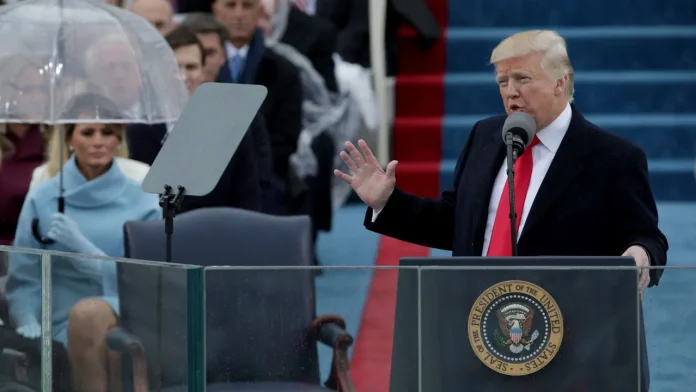
On January 20, 2025, at noon, Donald J. Trump will be sworn in as the 47th president of the United States. He will be only the second president to serve non-consecutive terms, Grover Cleveland being the first. Cleveland’s fate was the result of buyer’s remorse from the public. First elected in 1884, he was defeated in 1888 by Benjamin Harrison, whose economic policies turned out to be a disaster. Harrison was so weak that Cleveland saw an opportunity to regain the White House. He was re-elected in 1892. 

On Monday, Trump will repeat Cleveland’s rare act as he stands for inauguration on one of the coldest days of the year in Washington, D.C. Trump announced that the ceremony would be moved indoors to the Capitol Rotunda, with live viewing for up to 20,000 at the Capital One Arena. Although over 200,000 people have tickets for the inauguration, most of them will be watching on screens with the rest of America. Harsh weather has driven the ceremonies inside on only a handful of occasions, most recently for Ronald Reagan’s second inauguration in 1985, when the temperature was seven degrees at noon.

CLICK FOR FULL COVERAGE OF PRESIDENT-ELECT TRUMP’S INAUGURATION

Inauguration Day is the performance of a Constitutionally mandated ritual, our way of keeping the promise of democracy every four years. Its traditions, largely devoid of politics, are beloved by the public no matter who is placing their hand on the Bible. Every four years, this occasion is a celebratory acknowledgment of what unites us. Americans mostly set aside their differences and focus on our enduring democracy. Hard feelings may linger from the election, but the inaugural celebration transcends those divisions, if only for a day.

John F. Kennedy’s inauguration speech produced a memorable quote, while President-elect Trump is preparing to take the oath for a second time.

It begins in the late morning when it is tradition for the incoming president and his spouse to be hosted at the White House for tea by the outgoing president and his spouse. The Bidens will host the Trumps on January 20. This tea, another example of the peaceful transition of power, can be awkward when winners and losers come together in those final moments. The Trumps skipped it altogether in 2021, but photos from various transitions show a lot of stiff smiles. Everyone studies the photos for body language clues, but the bottom line is that it usually happens. Americans love to see leaders from different parties getting along, even superficially. Note the explosive response in the press and on social media over Trump and Obama smiling and chatting at Jimmy Carter’s funeral. 

It is also traditional for the outgoing and incoming presidents to ride to the Capitol together. Trump and Obama rode together on Trump’s first inauguration day in 2017. It is unknown whether Biden and Trump will share a car this time.

The inauguration ceremony itself will follow tradition, with all four living presidents—Bill Clinton, George W. Bush, Barack Obama, and Joe Biden present. Holding places of honor along with Cabinet appointees and high-ranking guests will be some new faces for this occasion—a collection of the nation’s most powerful tech leaders, including Elon Musk, Jeff Bezos, Mark Zuckerberg, Tim Cook, and TikTok CEO Shou Zi Chew.

Everyone looks forward to the inauguration speech, which sets the tone for the new administration. Over the centuries, signature lines have become memorable long after a president has come and gone. What makes a statement memorable is how well it reflects the enduring spirit of America. For example, Thomas Jefferson’s declaration that “every difference of opinion is not a difference of principle.” Or Abraham Lincoln in 1865, when the Civil War was in its final, most bloody period, offering this remarkable olive branch: “With malice toward none, with charity for all, with firmness in the right as God gives us to see the right, let us strive on to finish the work we are in, to bind up the nation’s wounds, to care for him who shall have borne the battle and for his widow and his orphan, to do all which may achieve and cherish a just and lasting peace among ourselves and with all nations.”

Franklin Roosevelt stood before a nation shattered by the Great Depression and sought to instill a new resolve with these words: “So, first of all, let me assert my firm belief that the only thing we have to fear is fear itself—nameless, unreasoning, unjustified terror which paralyzes needed efforts to convert retreat into advance.” John F. Kennedy uttered what was perhaps the most famous inaugural line of all: “Ask not what your country can do for you, but what you can do for your country.”

Tech leaders attending Trump administration

Tech leaders, including Elon Musk, Shou Zi Chew, Jeff Bezos and Mark Zuckerberg are set to attend Trump’s inauguration on Monday.  (ETIENNE LAURENTBAY ISMOYOMARK RALSTONANDREW CABALLERO-REYNOLDS/AFP/Daniel Acker/Bloomberg via Getty Images)

In Reagan’s first inaugural address, he staked out the guiding principle of American greatness in the world: “Above all, we must realize that no arsenal, or no weapon in the arsenals of the world, is so formidable as the will and moral courage of free men and women.”  

Reports from the Trump transition are that Trump will set an upbeat tone for his second inauguration, and if he does that, he will receive a positive public response. On this hallowed day, Americans like their leaders to speak about what is right with America.

CLICK HERE FOR MORE FOX NEWS OPINION

After the ceremony there will be a parade, which has also been moved to the Capital One Arena. The inaugural parade, which has been a custom since the earliest days of the nation, is an opportunity to combine celebration with a showcase of the best of American life, with marching bands, floats and exhibits representing the states. American sacrifice and courage will be on display with military units, police, and fire departments. 

This year’s parade will also feature the first responders of Butler County, Pennsylvania, the location of a July assassination attempt on Donald Trump. They will pay homage to fallen Buffalo Township fire chief Corey Comperatore, who was shot and killed that day. 

Finally, it is customary for the outgoing president to slip a personal note to his successor into a drawer of the Oval Office desk. The tradition began with Ronald Reagan, who left a personal note for George H.W. Bush. Bush then did the same for Bill Clinton, writing, “Your success now is our country’s success. I am rooting hard for you.”

CLICK HERE TO GET THE FOX NEWS APP

When President Trump entered the White House for his first term, he found a note written by Barack Obama: “Millions have placed their hopes in you, and all of us, regardless of party, should hope for expanded prosperity and security during your tenure.” 

Trump left a note for Joe Biden in 2021, which Biden said was “a very generous letter.” Now Joe Biden will leave a note for Trump. And the great cycle of American life continues.

CLICK FOR MORE FROM BRET BAIER

Jake Sullivan, White House National Security Adviser, Reflects on China Policy

0

“That to me, I think, has a practical answer, which is government-to-government agreements that emplace effective security safeguards and transparency around the hardware, the model weights and the know-how, and that’s what we have worked through in our M.O.U. [memorandum of understanding] with the U.A.E., and I believe that is a sustainable model for having a strong technology partnership with that country, as well as other countries, that gives the U.S. a series of both economic and strategic advantages, where the alternative is to have them go into the Chinese technology orbit, which we do not want.”

On the kinds of trade agreements that Asian nations want:

“What countries are looking for, in my view, has become increasingly bespoke. It’s not just about a kind of broad market access. It’s the particular needs of a country thinking about its economic model for the future. And so the economic dialogues we were having with these countries and the attractiveness of the United States is about a lot more than just: Can we lower barriers to market access?”

“So let me give you some examples. With Japan, they really wanted the critical minerals M.O.U. so that they had a route into the benefits of the I.R.A. [Inflation Reduction Act]. That was kind of their number one ask, much more important to them than some broader-based trade deal. With Indonesia, it’s quite similar. That’s what Indonesia is looking for. Fundamentally, they want to work out a high-standards, critical minerals agreement so that there can be a flow of Indonesian nickel into American electric-vehicle manufacturing, batteries and so forth with other countries.”

On whether American workers and industries benefited from earlier free-trade agreements:

“So where did workers fit into that? Now you could say, well, workers fit into that. They’re going to get lower-cost goods, and that’s good for them and, to a certain extent, that’s right, so I’m not averse to free trade. But it has to have some element of a theory for how the U.S. industrial base, the capacity to build here, is sustained, and that’s why I actually think things like the I.R.A. [Inflation Reduction Act] and a critical minerals agreement with Japan are a more rational way to think about free trade going forward.”

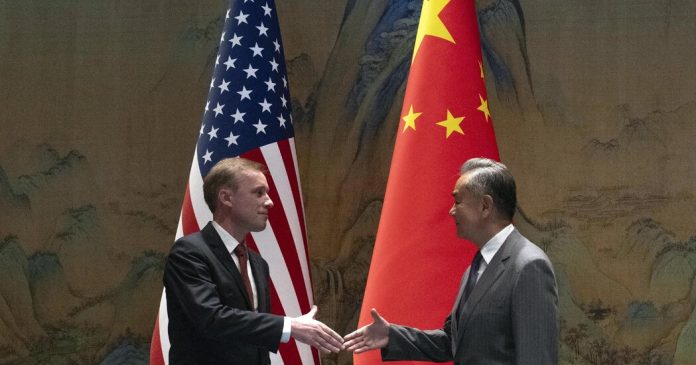
On what Mr. Sullivan learned from his meetings with Mr. Xi and Mr. Wang:

“The single biggest thing that jumps out at me comes out of the meeting with Xi — and it was reinforced in the meeting that President Biden had with Xi, and very much in the meetings with Wang Yi as well, but punctuated — which is my view that when we came into office, the Chinese view was: If you are going to compete with us, then we will not cooperate with you, and we will not have lines of communication. You can’t have it both ways. You have to choose. And we’ve just stuck with our theory, which is managed competition: We’re going to compete, we’re going to compete vigorously, but that doesn’t mean that we shouldn’t find areas to work together where it’s in our mutual interest at the same time that we’re competing. And, in order to compete responsibly, we have to have communication at all levels, including sustaining military-to-military communication.”

“As we leave, the P.R.C. [People’s Republic of China] has, at least for the time being, adopted, not in the way they talk, but in the way the relationship is conducted, managed competition. We have found areas to work together: on counternarcotics, A.I., nuclear risk and climate. We have sustained communication, including military-to-military communication, and we are competing, obviously competing vigorously, and yet still the relationship has an element of stability so that we’re not presently on the brink of a downward spiral. That is a significant evolution over four years for how the relationship is managed on both sides, and it is consistent with our theory of management of the relationship that the P.R.C. has now mirrored.”

Trump’s inauguration brings hope to the right, a dark era for others : NPR

0

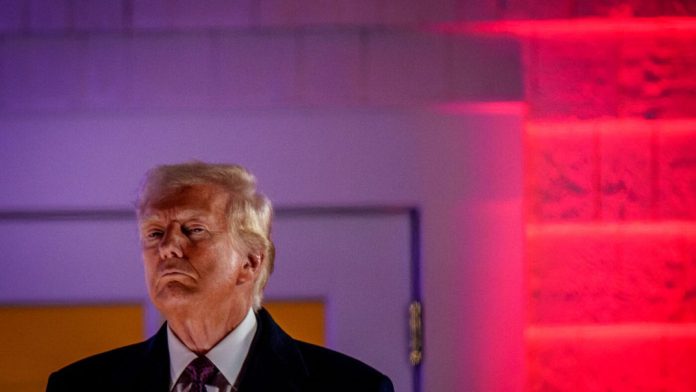
President-elect Donald Trump attends a private party and fireworks show at Trump National Golf Club on Saturday in Sterling, Va., ahead of his inauguration on Monday.

Andrew Harnik/Getty Images


hide caption

toggle caption

Andrew Harnik/Getty Images

For the second time, Donald Trump will be inaugurated Monday as president of the United States.

It represents a pivotal time in American history, a new period beyond the world order created by the United States and its allies post-World War II.

For the right, it presents hope for a future of a country it sees as lurching too far to the left. But for millions of others, it’s the dawning of a dark era, one more nativist, inward-looking and mean-spirited that could leave the marginalized more vulnerable than ever.

Trump has spent years convincing his followers that he’s been victimized by political targeting. Their belief in that, and a conservative media buoying his message, helped insulate him from the kind of consequences that have sunk most other politicians following controversy and misdeeds.

Indeed, Trump is on the precipice of a second term, one he is more prepared for than when he first won the White House in 2016. Loyalists are lined up to help push an economic and social agenda that is sure to hearten his supporters and fuel an even deeper disdain among his detractors.

Another chance for Trump to try to shape his legacy

If there is one thing that has grated on Trump in business or politics, it’s being branded a “loser.”

So after his 2020 election loss, he searched for an off-ramp to explain it away. He found it by suggesting falsely that he actually won.

Many Republicans appeared ready to abandon Trump after he inspired the Jan. 6, 2021, siege of the U.S. Capitol — an effort to overturn the legitimate election results. But, as the months went on and Trump’s continued strength with the Republican base became clearer, Republican leaders, one by one, gravitated back.

He had a social media and MAGA podcast army at his back that made the legacy media less relevant and more of a perceived nuisance.

Trump used the criminal cases against him and growing immigration concerns to consolidate the support of his base, while inflation created an environment that could help a Republican take the presidency back.

It’s a remarkable twist of fate, given Trump’s low approval ratings when he left office amid the COVID pandemic. And yet, even though the pandemic barely came up during the 2024 presidential campaign, it was a big reason why Trump wound up winning.

Americans largely disapproved of the way Trump handled the pandemic, but because of the supply-chain shortages it created, it is largely the reason for inflation going as high as it did.

In survey after survey, Americans said inflation and prices were their biggest concern during the campaign — as the pandemic receded from the forefront.

A task to “fix” the economy 

The country’s central bank, the Federal Reserve, increased interest rates as a way to decrease inflation. That has made an impact on inflation, but things like mortgage rates and auto loans also went up. So not only did eggs cost more, but so did houses and cars.

Unemployment remained low, wages increased, and the United States wound up recovering better than most other developed countries. But macroeconomics — and a message of, “We’re doing better than most other countries” — was a hard sell when groceries were more expensive than people were comfortable with.

Many Americans have a degree of nostalgia for the pre-pandemic economy when Trump was president. And why not? Prices and interest rates were lower.

The latest NPR/PBS News/Marist poll found that 6-in-10 people said the economy is not working well for them. Just before the pandemic, though, two-thirds said it was.

That’s a big mood swing, and Trump used Americans’ economic uneasiness to pave his path back to White House — with promises of fixing it. He appeared under banners that read, “Make America Wealthy Again” and “Jobs! Jobs! Jobs!“

But since Trump’s election, he has admitted that bringing down prices will be “hard.”

It was always reductive to believe that by simply putting Trump back in office, prices and interest rates would suddenly come down, especially when any president has so little control over the economy.

Yet optimism is high — 44% in the NPR poll said that they believe their family’s financial situation will get better over the next year. That’s the highest in 15 years of asking the question by NPR polling partner Marist. Just 22% said they think it will get worse.

That could mean high expectations, but Trump is inheriting a fairly strong economy that’s already headed in the right direction. So, ironically, views of the economy may improve without Trump needing to do much of anything. And if that happens, Trump will likely get credit — deserved or not.

Views of the economy — and Trump’s presidency more broadly — could determine which party controls the White House four years from now, as Trump is limited to just four more years.

The national debt is likely to continue going up

President-elect Donald Trump, Melania Trump and family watch fireworks at Trump National Golf Club on Saturday in Sterling, Va.

President-elect Donald Trump, Melania Trump and family watch fireworks at Trump National Golf Club on Saturday in Sterling, Va.

Alex Brandon/Pool/Getty Images


hide caption

toggle caption

Alex Brandon/Pool/Getty Images

As unusual as Trump is in American politics and despite how much he’s upended political norms and GOP dogma, his economic policy agenda is very much rooted in a traditional Republican playbook: cut income taxes broadly (his cuts in 2017 were projected to benefit the wealthy the most), further deregulate industry, and expand oil exploration and drilling.

Republicans say they want to slash the federal debt, which now sits at more than $36 trillion. But extending Trump’s tax cuts would add almost $5 trillion to the federal debt, according to the Congressional Budget Office.

Despite that, Trump’s Treasury Secretary-nominee Scott Bessent, a billionaire hedge-fund manager, claimed it would be an economic “calamity” if the cuts are not extended, disagreed that ending the cuts — even for the wealthiest — would help pay down the national debt, and he is against raising taxes even on billionaires.

“I think that these are the job creators,” he said in response to Sen. Raphael Warnock’s, D-Ga., line of questioning during his confirmation hearing this past week.

House Speaker Mike Johnson told reporters earlier this month that Trump does not want Social Security and Medicare cut.

“No, the president has made clear that Social Security and Medicare have to be preserved,” Johnson said.

Entitlements make up more than half the federal budget. The other massive chunk is defense spending, but an even larger defense budget is expected under Trump.

There are simply not enough possible discretionary, non-defense domestic spending cuts to make a dent in the debt.

Elon Musk, the world’s richest man, who boosted Trump’s election efforts to the tune of more than $250 million, is aiming to slash some $2 trillion through his informal effort with former tech CEO Vivek Ramaswamy to identify cuts at every level of government. They’ve declared their endeavor the Department of Government Efficiency, or DOGE.

Even if they could get that ambitious level of cuts accomplished, it would be less than half what extending the Trump tax cuts would cost. Musk himself has already cast doubt on being able to cut that much.

Trying to make up some revenue, Trump has stepped outside GOP orthodoxy, touting tariffs as a budgetary panacea. Many economists disagree and believe they would in fact damage the U.S. economy and cost consumers.

Americans also don’t appear to be buying Trump’s tariffs narrative. The NPR poll found, by a 48%-31% margin, respondents thought tariffs would do more to hurt than help the economy.

Trump’s tax-cut, deregulation and drilling agenda will more than likely make money for the wealthy and big businesses, but the national debt will almost certainly increase again.

The debt went up about $8 trillion during Trump’s first term, but he’s banking on a broad tax-cuts extension pacifying cash-strapped Americans, while he also pushes forward with the heart of what’s fueled his populist political rise — social and cultural issues, as well as grievance politics.

The culture war agenda is coming

Protesters opposed to the incoming Trump administration attend the "People's March on Washington" on Saturday in Washington, D.C.

Protesters opposed to the incoming Trump administration attend the “People’s March on Washington” on Saturday in Washington, D.C.

Christopher Furlong/Getty Images


hide caption

toggle caption

Christopher Furlong/Getty Images

Trump is expected to aggressively pursue mass deportations of those in the U.S. without legal status soon after he’s inaugurated.

He is also likely to go after diversity, equity and inclusion initiatives, push to make curriculum in schools more conservative and try to change Title IX protections to exclude transgender students, potentially affecting everything from respect for pronouns to which bathrooms and locker rooms transgender students can use.

The incoming president is also pledging retribution against those he sees as political enemies. He has pledged to pardon many, if not all, of those involved in Jan. 6, and he’s threatened to go after people he believes have wronged him, from journalists to the political class and prosecutors.

Pam Bondi, Trump’s pick for attorney general, said at her hearing last week that she will not let the Justice Department be politicized. The country will find out soon enough how she’ll run the department.

Americans, though, don’t seem convinced about all of Trump’s policies. The NPR poll found people were split on mass deportations, and more than 6 in 10 opposed pardoning those involved with Jan. 6.

Trump won despite promising to do those things during the campaign. That’s because the economic mood is really what seemed to matter most, and many people don’t take a lot of what Trump says seriously because of his penchant for bombast and his transactional nature.

Corporations, though, appear to be taking Trump’s threats seriously and are trying hard to get in his good graces — from CEOs meeting with him at Mar-a-Lago to tech billionaires like Musk, Amazon’s Jeff Bezos and Meta’s Mark Zuckerberg all expected to be at Trump’s inauguration.

It’s not new for America, though, to have billionaires at the ball. Take this from the library of former President Chester Arthur on the inauguration of 1881:

“The attendees included most Republican Stalwart luminaries of the day, and a who’s who of the business establishment and ‘billionaires’ of the day, including Jay Gould, J. Pierpont Morgan, and John Jacob Astor. Former President Grant was seated at the head of the center table, flanked by Dorsey on one side, and Arthur on the other, in a lavishly decorated private dining hall.”

Despite that precedent, President Biden warned that something new is afoot. In his farewell address last week, Biden described a growing “Tech Industrial Complex” and a new rising American “oligarchy.”

Trump has claimed that he has an “unprecedented and powerful mandate.” That’s hard to do when a candidate doesn’t even win a majority of the popular vote, but presidents often overread their electoral mandates and wind up overreaching. After all, people don’t vote for a president’s entire agenda. It’s far more complicated than that.

Democrats haven’t figured out a resistance strategy yet. Most are in a wait-and-see mode about what Trump actually does. Trump’s second inaugural address will give the first clues about what he will prioritize, and mark the beginning of what comes next politically in this country and opening the question of who will emerge to lead it beyond the Trump era.


Texas woman asks others to do ‘Dry January’ with her and fails miserably

0

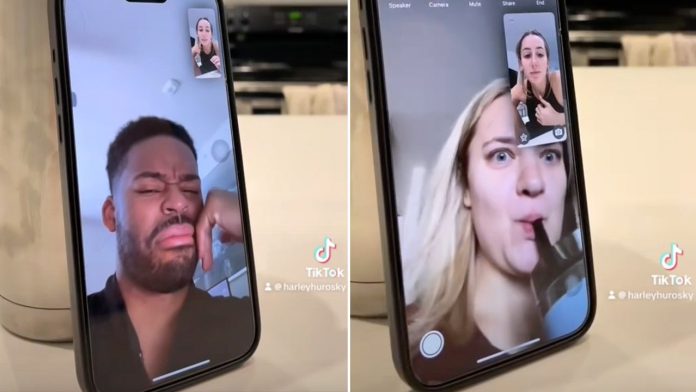
Like many Americans, Harley Hurosky of Texas decided to take part in the “Dry January” movement and forgo alcohol for a month after overindulging during the holidays.

“Doing a lot of eating and drinking during the holiday season had me feeling less than stellar,” Harley told Fox News Digital. “So, I figured kicking off the year with a goal of feeling physically better would be a smart move.”

Hurosky, who lives in Houston, hoped she’d build a circle of supporters to not only encourage her but join her on her booze-free break. That didn’t exactly happen.

AMID CANCER CONCERNS, COULD MORE DRINKERS TURN TO NO- AND LOW-ALCOHOL DRINKS?

“Naturally, I assumed my friends and family would rally around me and join in for moral support,” Hurosky said. “Turns out, the only thing they’re committed to is staying comfortably on the sidelines with cocktails in hand.”

Hurosky decided to record the reactions of those she asked and post their responses on social media. (See the video at the top of this article.)

Friends of Harley Hurosky are shown on video reacting to her query about partaking in “Dry January” with her this year. (Harley Hurosky/@harleyhurosky)

“My parents made the list because, well, they’re reliable when it comes to answering the phone and because I figured their reactions would be entertaining, which they absolutely were,” she said. 

“I fully expected most of my loved ones to respond with a lighthearted ‘no,’ especially since asking them to give up alcohol for a whole month felt like a bold move,” said Hurosky. “But their reactions – both the refusals and the laughs – were exactly what made the video so fun.”

The viral video grabbed more than 743,000 views on TikTok as of early this weekend.

DRY JANUARY ICONIC MOCKTAIL ‘SHIRLEY TEMPLE’ HAS FASCINATING HISTORY: ‘FUN TO SIP’

Hurosky is a marketing manager and said she enjoys making social media posts.

“Honestly, I just love the process. It’s so much fun to create and share moments that make people smile or laugh,” she said. “My content usually focuses on relatable, funny situations because that is how I tend to connect with people.”

Harley Hurosky's father says no to his daughter's request to do "Dry January" with her.

Harley Hurosky is a marketing manager who lives in Houston, Texas. She decided to take part in “Dry January” — but her dad, among others, wasn’t agreeable. (Harley Hurosky/@harleyhurosky; Harley Hurosky)

Hurosky said most of those she asked are “pretty social and travel often,” so she anticipated some hilarious reactions. 

“This is exactly why I recorded all the FaceTime,” she continued. “What I did not expect was that the most entertaining responses would come from my parents. My dad, who is just as goofy as I am, absolutely stole the show. Sorry for doubting you, Dad. You really delivered.”

DOES THE ‘SLEEPY GIRL MOCKTAIL’ REALLY WORK? EXPERT WEIGHS IN ON THE VIRAL SLEEP TREND

Hurosky is confident she can make it through January without any booze. 

“This isn’t my first go at Dry January. My boyfriend and I successfully completed it last year,” she told Fox News Digital. 

“The goal was to shed a few pounds and kickstart a healthier lifestyle.“

"No Alcohol" is written on a calendar for January, signifying "Dry January."

Hurosky said she made it through last January without drinking alcohol. (iStock)

Although they were able to cut out liquid calories last year, Hurosky said the couple “may have overcompensated with takeout and restaurant meals … Let’s just say the calories we saved from skipping cocktails probably snuck back in via our delivery orders.”

For more Lifestyle articles, visit www.foxnews.com/lifestyle

But she noticed some other benefits to skipping alcohol. 

“We definitely felt less groggy and enjoyed life without the dreaded hangovers,” Hurosky said. 

“Dry January didn’t really fit their vibe.”

“Plus, we proved to ourselves that we could stick to the challenge and go an entire month without drinking, so I’d call it a win overall.”

CLICK HERE TO SIGN UP FOR OUR LIFESTYLE NEWSLETTER

In the end, Hurosky said she wasn’t surprised by the rejections this year of her friends and family. 

CLICK HERE TO GET THE FOX NEWS APP

“I have surrounded myself with people who love a good time and a good drink, and Dry January didn’t really fit their vibe.”