Thursday, November 12, 2026
Home Blog Page 348

Iran’s Leader in Moscow to Sign Cooperation Treaty With Russia

0

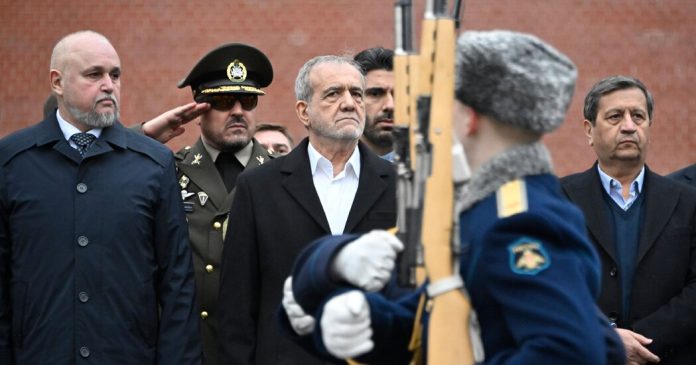
President Masoud Pezeshkian of Iran on Friday met in Moscow with Vladimir V. Putin, his Russian counterpart, for high-profile talks, solidifying an alliance between two countries driven by a mutual desire to challenge the West.

Iran and Russia have been subjected to numerous sanctions by the West, and trade and finance are at the forefront of a strategic cooperation agreement that the two leaders are expected to sign.

The agreement is also expected to cover military issues, but in contrast to accords that Moscow has signed with other allies, the deal with Iran stops short of including a mutual defense clause, according to Iran’s ambassador to Moscow.

“Our country’s independence and security, as well as self-reliance, are very important,” Kazem Jalali, told IRNA, an Iranian news agency, according to TASS. “We are not interested in joining any bloc.”

Speaking in the Kremlin ahead of the meeting, Mr. Putin called Mr. Pezeshkian’s visit “especially important” because of the “big, basic, comprehensive, strategic cooperation agreement” that they planned to sign.

Before Mr. Pezeshkian’s arrival, Dmitri S. Peskov, the Kremlin’s spokesman, said the signing of the treaty would be a “very important event” for Russia, and Iranian leaders have portrayed the trip as more than just a state visit, saying it represented a strategic turning point.

“This treaty is not only a key turning point that strengthens our bilateral ties,” wrote Iran’s foreign minister, Abbas Araghchi, on the social media network Telegram. He added, “This is not just a political agreement, it’s the road map to the future.”

Mr. Peskov said that the timing of the treaty’s signing was not meant to divert attention from the inauguration on Monday of Donald J. Trump as president in the United States, and Mr. Araghchi told state television in Iran that it had been scheduled months ago.

Since the invasion of Ukraine nearly three years ago, Moscow and Tehran have been growing closer. Iran has sent short-range ballistic missiles and drones to Russia, according to U.S. and European officials, to aid the Kremlin’s war effort. Iran has denied it is providing weapons to Moscow.

The Kremlin has provided some diplomatic support to Tehran, but has had to balance the relationship with maintaining ties with Saudi Arabia and United Arab Emirates, both of which are opponents of Iran. Both Moscow and Tehran have recently faced a major setback in the region with the fall of Bashar al-Assad’s regime in Syria.

Since the start of the war, Russia has been working to counter what it sees as an aggressive and imperial Western hegemony, led by the United States, by creating and formalizing a series of treaties.

In June, Russia signed a partnership agreement with North Korea, and in December, a security treaty with Belarus formalized the deployment of Russian tactical nuclear weapons in that country. Both treaties included a mutual defense clause.

Russia also leads what is known as the Collective Security Treaty Organization, which includes Belarus and several other former Soviet states including Armenia in the Caucasus, and Kazakhstan, Kyrgyzstan and Tajikistan in Central Asia. Intended as a counterweight to NATO, the organization is based on a principle that an attack against one member should be perceived as an attack against all. The alliance has been challenged recently with Armenia effectively freezing its membership.

For its part, Iran is facing a cascade of challenges at home and in the region, with its militant allies weakened and its economy in shambles because of sanctions. The return of Mr. Trump as U.S. president will likely bring more pressure and efforts by Washington to isolate Iran.

Apart from defense issues, Russia has been working with Iran and other countries to develop an alternative to the Western-led Swift, a global messaging service that connects more than 11,000 financial institutions and allows them to alert one another about pending transactions.

Moscow also hopes to build a railway through Iran that would connect Russia directly with ports on the Persian Gulf. Mr. Araghchi said that the deal to be signed Friday would allow Iran to serve as a passageway for Russian gas exports through its network of pipelines, bringing gas from the Caspian Sea to the shores of the Persian Gulf. It means, he said, that Iran is “becoming a major hub for gas exports.”

Mr. Jalali, the ambassador to Russia, told Iranian media that the leaders of Russia and Iran realized that an older agreement between the two countries was outdated and did not reflect the realities of the current world and regional order.

The new accord, he said, “takes into consideration every aspect of our bilateral relations including our political posturing. How do we view power and how do we move forward together.”
Biden issues 2,500 commutations and sets a record for clemency : NPR

0

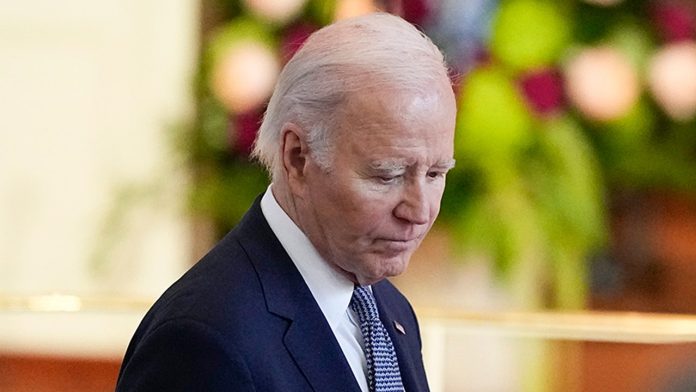
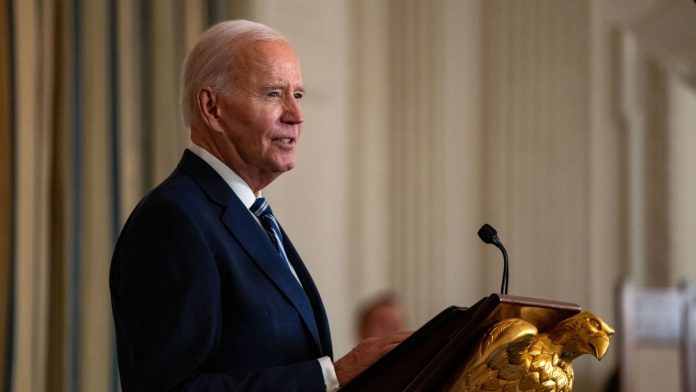
President Biden speaks during a White House event in this Jan. 5, 2025 file photo.

Kent Nishimura/Getty Images


hide caption

toggle caption

Kent Nishimura/Getty Images

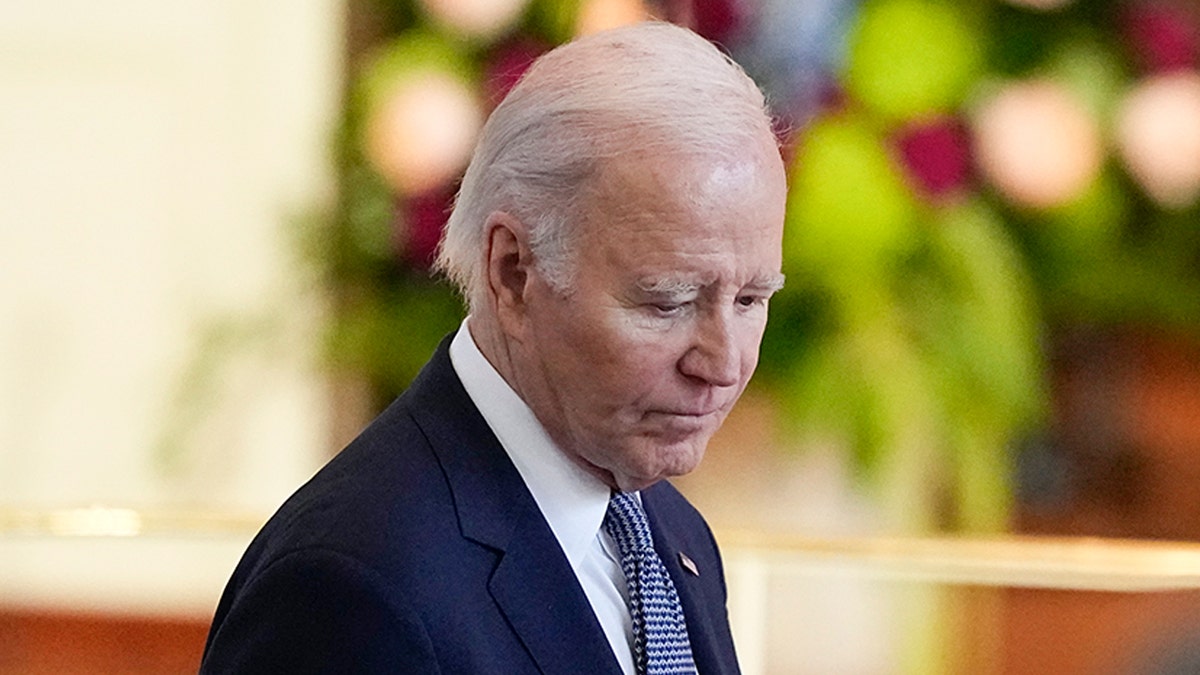
President Biden announced on Friday that he is commuting the sentences of nearly 2,500 people convicted of non-violent drug crimes who are serving far longer sentences than they would receive today.

“With this action, I have now issued more individual pardons and commutations than any president in U.S. history,” Biden said in a statement, hinting there may be more to come before he leaves office on Monday.

“I am proud of my record on clemency and will continue to review additional commutations and pardons,” he said.

Last month, Biden commuted the death sentences of 37 federal prisoners to life in prison without parole. He also commuted 1,500 prison sentences and pardoned 39 people in what the White House called the largest act of clemency in a single day in modern presidential history.

The individuals receiving clemency on Friday had received sentences that were longer than they would be under current laws and policies, the White House said.

Crack cocaine offenses historically had significantly harsher prison sentences than those for powder cocaine — a difference that disproportionately affected Black men. A bill to address the issue died in the Senate.

Earlier this month, Biden told USA Today he was considering using his power to address disparities in sentences for offenses involving crack cocaine.

“This action is an important step toward righting historic wrongs, correcting sentencing disparities, and providing deserving individuals the opportunity to return to their families and communities after spending far too much time behind bars,” Biden said.

Biden drew criticism last month for his decision to issue a blanket pardon to his son Hunter, who was convicted of federal gun charges. Hunter Biden also pleaded guilty to a federal tax offense.

Jake Tapper tells Adam Schiff Hur report on Biden’s memory ‘proved pretty accurate’

0

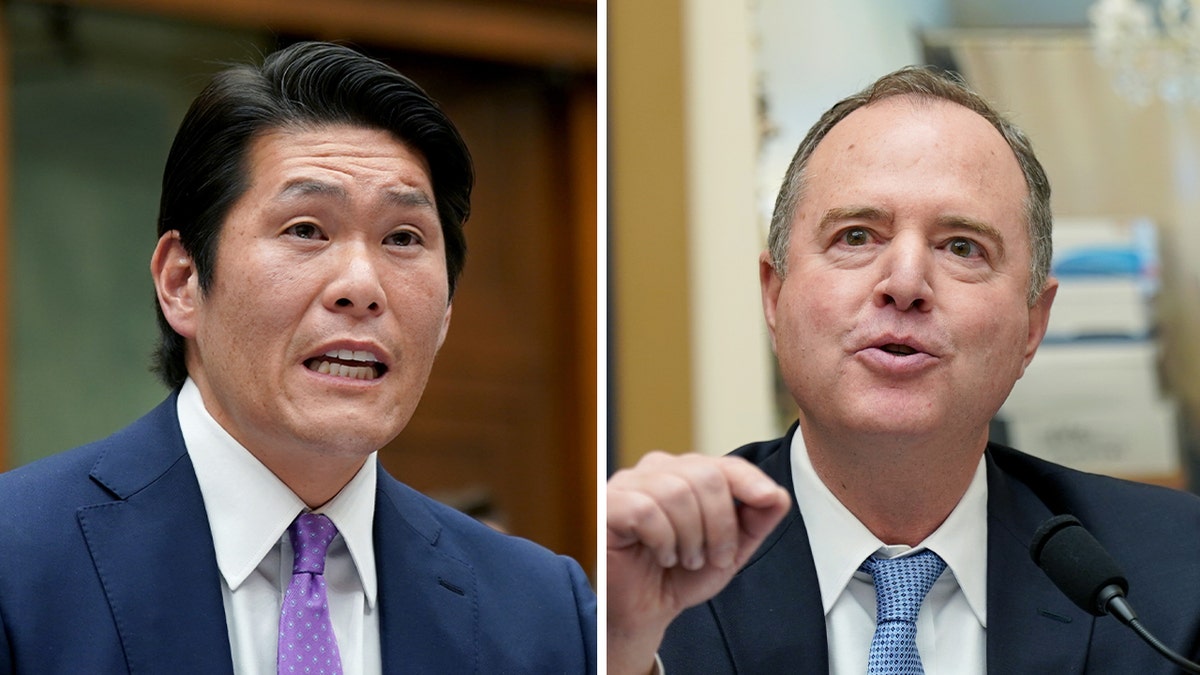
CNN host Jake Tapper reminded Sen. Adam Schiff, D-Calif., how he was “relentlessly harsh against Special Counsel Robert Hur” and his report on President Biden despite it being “pretty accurate.”

During a segment on Thursday, Tapper brought up Schiff’s questioning of President-elect Donald Trump’s attorney general nominee Pam Bondi, particularly after she claimed most Americans no longer trust the Justice Department.

Schiff blamed Republicans “trashing” the DOJ, but Tapper remarked that he and other Democrats have also attacked the Justice Department in the past.

CNN’s Jake Tapper spoke to Sen. Adam Schiff, D-Calif., about recent Senate hearings. (CNN screenshot)

“President Biden gave a pretty harsh assessment of the investigation into his son Hunter,” Tapper began. “He basically threw the Justice Department under the bus there for those investigations. And Democrats, including you, were relentlessly harsh against Special Counsel Robert Hur for making an observation that proved pretty accurate, about how Joe Biden might appear to a jury as a ‘well-meaning, elderly man with a poor memory.’”

MEDIA, DEMOCRATS INSIST BIDEN HAS ‘STRONG MENTAL ACUITY’ AFTER SPECIAL COUNSEL PROBE HITS HIS ‘POOR MEMORY’

“I was critical of that for good reason,” Schiff argued. “And that is, you don’t put gratuitous personal observations like that in a prosecutorial memo. You just don’t. And it was done for a political reason. So it’s not that, you know, everyone, including special counsels, necessarily follow [Department of Justice] policy the way I believe they should. And when they don’t, I call it out. And as indeed I did, I disagreed with the president’s comments about the prosecution of his own son.” 

Schiff continued to blame Republicans for a “a multi-year campaign” to paint the Justice Department as the “deep state.” Tapper briefly explained the context of Hur’s comments before moving on to another topic.

President Joe Biden

Special Counsel Robert Hur described President Biden as “a sympathetic, well-meaning, elderly man with a poor memory.” (Brynn Anderson-Pool/Getty Images)

“I think Robert Hur would say he needed to explain why he wasn’t going to prosecute President Biden for what he thought was a violation of the law,” Tapper said.

Though Hur found that Biden willfully retained classified materials in violation of the law, he ultimately wrote in his February report that he would not recommend charging him based on his diminished mental capacity.

“Mr. Biden would likely present himself to a jury, as he did during our interview of him, as a sympathetic, well-meaning, elderly man with a poor memory,” Hur wrote.

CLICK HERE FOR MORE COVERAGE OF MEDIA AND CULTURE

Schiff viciously attacked Hur on this report when he questioned him during a House hearing in March.

Hur Schiff

Schiff attacked Hur on the language in his report during a hearing in March. (Getty Images)

“I want to go back to your opening statement in which you said that you did not disparage the president, your report, but of course, you did disparage the president,” Schiff said at the time. “You disparaged him in terms you had to know would have a maximal political impact. You understood your report would be public, right?”

CLICK HERE TO GET THE FOX NEWS APP

He continued, “What you did write was deeply prejudicial to the interests of the president, you say it wasn’t political, and yet you must have understood. You must have understood the impact of your words. You must have understood the impact of your decision to go beyond the specifics of a particular document, to go to the very general, to your own personal prejudicial, subjective opinion of the president, one you knew would be amplified by his political opponent. When you knew that would influence a political campaign, you had to understand, and you did it anyway. You did it anyway.”

After 15 Months of War, Gazans Dream of Returning Home

0

It is almost over, the end so close they can practically feel the keys they have kept all these months sliding into the locks of their old homes, the doorknobs turning in their hands, the beds they will sink into for their first night’s peaceful rest in more than 15 months — their own beds. Just a couple more days to go.

Two nights before the first stage of a cease-fire in Gaza was announced, Layan al-Mohtaseb, 15, dreamed of being back in her bedroom in Gaza City, cleaning it as she used to before her family fled during the war.

“This time, it feels like we’re truly going home,” she said.

That may be true only for those whose homes are still standing after months of destruction. And there is always a chance the fighting might resume after the six-week initial truce if talks over a permanent one collapsed. But across Gaza, people were daydreaming of the first moments of peace, the people they would hug as soon as the truce took hold, the graves they would visit. They already knew they would be shedding tears, tears they hardly knew whether to attribute to joy or to grief.

If Wednesday night was for celebrating the news that a cease-fire deal had been struck, the following days were for making preparations. As the Israeli security cabinet convened to vote on the cease-fire and hostage release agreement on Friday, Palestinians were calling around for trucks they could rent to move their things back to northern Gaza, or vans, or even donkey carts; they were packing up their tents, wondering where they would live if their houses were no longer there.

Fedaa al-Rayyes, 40, was already buying ingredients to make small festive sweets to welcome the war’s end. But the first thing she planned to do when the bombs and drones fell silent was to search for relatives she hadn’t seen in months, to find out who was still alive and to mourn for those who did not live to see this day.

“It’s impossible to describe this mix of relief and grief,” she said. “I’m happy we survived and grateful for the kind people who helped us. Yet, I’m deeply sad — sad for the relatives and friends we lost and for the neighborhood we’ll return to without them.”

There were practical matters to think of, too. She would remind her children to “stay away from anything that might still be dangerous or explosive,” she said — from all the unexploded ordnance littering Gaza that could keep adding to the war’s casualty count, one accidental blast at a time, for months or years to come.

Most of Gaza’s population of more than two million people have had to huddle into tents and schools and other people’s apartments for much of the war, driven by Israel’s airstrikes and evacuation orders from their houses or the earlier shelters they had tried. Now they could think of little else but going home. Even if those homes were damaged. Even if they were now no more than rubble and ash.

Manal Silmi, 34, a psychologist for an international aid group, planned first to go hug her mother and her siblings and “cry, letting out all the pain we’ve carried for these 15 months,” she said.

Then the trek home could begin. Per the agreement, people displaced from northern Gaza to the south will be allowed to return on the seventh day after the cease-fire takes effect on Sunday. Her family was already looking for a big van to drive all their tents and bedding back up north. Her friends and the few relatives she had left in Gaza City had already called, making plans to meet them at the crossing point dividing northern and southern Gaza.

“We’ll hug, we’ll cry and we’ll thank God over and over for surviving this war,” she said.

Al-Hassan al-Harazeen, 23, a college senior majoring in computer science, knew his family’s house in eastern Gaza City was in ruins, he said. But he would still head straight there as soon as the cease-fire began.

He was imagining spray-painting his family’s name on any brick that was still in one piece, picturing himself sitting on the rubble for a while, he said, “to embrace those broken stones and bricks as if they’re a part of me.”

Then he would visit the grave where they had buried his grandfather at the start of the war to recite the opening verses of the Quran for him.

Even as mediators announced the deal on Wednesday, Israel was still heavily bombing Gaza. Two of Jamal Mortaja’s employees from the solar-panel business he owned before the war were killed the day before. They would be in his thoughts, said Mr. Mortaja, 65, when he headed back to Gaza City to visit what remained of his home before checking on his stores at the al-Ansar roundabout.

Raed al-Gharabli, too, wanted to return to Gaza City, despite his home’s destruction, just to say goodbye before the rubble was removed. He wanted to walk through his neighborhood, Shuja’iyya, greeting neighbors who had stuck it out all these long months. He would take his makeshift tent from the central Gaza city of Deir al Balah, where he had fled with his family, and set it up next to the ruins of his house.

“I can’t wait to see this moment become real,” said Mr. al-Gharabli, 48, a tailor. “If I could, I’d fly straight north and land on the rubble of my home.”

To speed things up, he said his family would leave some belongings with neighbors in Deir al Balah, where they and other displaced people had come to trust and rely on people who had been total strangers at the war’s beginning.

There was even a part of them that was already nostalgic for it, the camaraderie that had formed between them and their temporary neighbors.

After his home in the southern city of Khan Younis was destroyed, Ismail al-Sheikh, 39, a university lecturer, had moved to a tent nearby, where he got to know two men in nearby tents. The new friends spent their evenings reminiscing about life before Oct. 7, 2023, when the war began, and imagining aloud what would happen once the nightmare was over. What they would do. Where they would go.

For Mr. al-Sheikh, who taught at al-Aqsa University, the daydreams were nothing crazy. He just wanted his normal life back, teaching his classes, meeting up with friends at night at the Titanic Restaurant in Khan Younis. The Titanic, which he’d heard had collapsed into rubble.

Now, with the war nearing its close, his new friends were getting ready to return to Gaza City, where they were from.

“I’ll deeply miss those gatherings,” Mr. al-Sheikh said. “It’s truly a mix of emotions — happiness for their return, sadness for the farewells and hope for what lies ahead.”

South Dakota Gov. Kristi Noem faces Senate Homeland Security panel : NPR

0

Gov. Kristi Noem, R-SD., speaks during the Republican National Convention Monday, July 15, 2024, in Milwaukee.

Julia Nikhinson/AP


hide caption

toggle caption

Julia Nikhinson/AP

We’re following the confirmation hearings for the incoming Trump administration. See our full politics coverage, and follow NPR’s Trump’s Terms podcast or sign up for our Politics newsletter to stay up to date.

Who: Kristi Noem

Nominated for: Secretary of Homeland Security

You might know her from: Being the two-term governor of South Dakota

More about Noem:

What does this role do: Advises the president on security issues within the United States. In charge of immigration and border-related issues; the Coast Guard; the Federal Emergency Management Agency; counterterrorism; aviation security; and cybersecurity. Oversees more than a quarter-million employees.

Watch Noem’s Senate confirmation, set to begin Friday at 9 a.m. ET, here:

Noem would lead the department poised to be at the center of Trump’s immigration policy priorities, including any deportation efforts, visa changes, and border security.

She was among the first cabinet picks Trump announced, just one week after his electoral victory.

In a statement at the time, Trump said that “she will work closely with ‘Border Czar’ Tom Homan to secure the Border, and will guarantee that our American Homeland is secure from our adversaries.” Homan, along with deputy chief of staff Stephen Miller, are expected to draft and direct immigration policy at the White House that will be implemented through DHS and other agencies.

Following her nomination, Noem spent several days last month meeting with Republican lawmakers to discuss border security, among other items.

“I appreciate the president’s heart on this issue, and I know he wants the laws to be followed so I’ll work with him to get his vision accomplished,” she told reporters on Capitol Hill.

For example, she has expressed support for Trump’s idea of ending birthright citizenship, despite the constitutional complications involved.

What Noem might be asked about

If confirmed, Noem will oversee more than 260,000 federal employees at agencies ranging from the Coast Guard and the Transportation Security Administration to the Federal Emergency Management Administration and the various divisions that enforce immigration and border laws.

Immigration is poised to be the top issue during the hearing. As a member of Congress, Noem supported several of Trump’s immigration policies, including a 2017 executive order that banned travel into the U.S. for nationals of seven Muslim-majority countries.

In 2020, Noem allowed her state to opt in to the U.S. Refugee Resettlement Program, which helps refugees admitted into the U.S. settle into the country.

Over the last four years, Noem has positioned herself as tough on the southern border and drug trafficking by deploying members of the South Dakota National Guard to the Texas-Mexico border.

She also invited controversy last year. She claimed in a speech that cartels from the southern border used tribal reservations to “spread drugs throughout the Midwest,” and that tribal leaders benefited. Her comments resulted in her banishment from lands held by the nine tribes of the state.

As the potential new lead of the nation’s federal national disaster response, Noem may also face questions about her handling of devastating floods in her state; her response was criticized for not sending the state’s National Guard, failing to issue evacuation orders and delaying the request for an emergency declaration.

Orlando drone show crash caused by misaligned flight path: NTSB report

0

The National Transportation Safety Board released its preliminary report on Thursday into what went wrong at a Florida drone show last month that caused some of the aircraft to go rogue, leaving a little boy seriously injured.

The mishap took place during a Christmas light show put on by Sky Elements at Lake Eola Park in Orlando on Dec. 21, 2024. Hundreds of people were watching the aerial show when several of the drones flew out of formation – some colliding with one another before falling to the ground.

One of the rogue drones struck a 7-year-old boy in the face and chest, knocking him out upon impact. His parents told FOX 35 Orlando at the time that his injuries required open-heart surgery.

The preliminary report from the NTSB revealed that “combined errors” right before the show’s start led to a misaligned flight path, causing chaos for a handful of the 500 drones during the performance.

DRONE MISHAP DURING ORLANDO HOLIDAY AERIAL SHOW SENDS CHILD TO HOSPITAL

A preliminary report into what went wrong at a Florida drone show on Dec. 21, 2024, has been released by the National Transportation Safety Board. There were 500 drones set up to fly in the aerial show above Lake Eola in Orlando, Florida. (Sky Elements LLC via NTSB report)

Before the show, a remote pilot in command confirmed the setup was standard and “consisted of preflight checks” that ensured “the software programming matched and was updated on all show computers, and the layout of the 500-drone grid on the ground,” according to the report.

Approximately five of the drones were “not accepting the launch data” initially, but troubleshooting of the Wi-Fi access points led to all 500 drones showing up on the network five minutes before the show was set to start, the NTSB wrote.

A soft reboot was then conducted to ensure all drones were “show ready.” After the reboot, two drones were removed from the show because their systems were not showing green. Once they were taken out, the drones were armed and the countdown to liftoff was initiated.

FAA PLACES RESTRICTIONS ON DRONE COMPANY AFTER FLORIDA BOY INJURED AT HOLIDAY AIRSHOW, UNDERWENT HEART SURGERY

“At liftoff it was noted that the aircraft ‘layers’ did not lift uniformly,” the report stated. “Further investigation revealed that the launch parameter file that contained the final flight paths had not been sent, and that the show center was not completely aligned.”

several drones crashed during an aerial show in orlando, florida

Several drones malfunctioned during a drone show in Orlando, Florida, on Dec. 21, 2024, sending the unmanned aerial objects crashing to the ground. (Credit – X/MosquitoCoFL)

Because of the misalignment, the drones shifted positions and altitude when moving to the first frame of animation, causing a collision and loss of control. Numerous drones fell from the sky and hit the ground, while one went in the direction of the audience.

The show’s remote pilot in command told the NTSB that he determined the safest course of action was to continue the show based on the steps involved in pausing it and recovering drones from the air. The remaining drones were able to complete the show and land safely.

A review by the pilot of aircraft logs revealed that the show’s position had rotated by 7 degrees, resulting in the “geo hard fence being too close to the audience.” On top of that, the fence was not set to company standards of 1 meter and was instead at 5 meters.

“The combined errors resulted in a reduced safety area that was outside of the company’s standards,” the report noted.

Each drone involved in the show contained an SD card with recorded data. Approximately 42 impacted drones were recovered by the operator, who sent their SD cards to be analyzed at the NTSB’s Vehicle Recorder Lab. Law enforcement personnel also located one drone and sent it to the NTSB. Five drones believed to have fallen into the lake were not recovered.

several drones crashed during an aerial show in orlando, florida (1)

A handful of the 500 drones involved in the aerial light show crashed to the ground, and five of them went into the lake. (Credit – X/MosquitoCoFL)

CLICK HERE TO GET THE FOX NEWS APP

While the NTSB is still investigating the incident, additional safety actions were proposed to the Federal Aviation Administration by Sky Elements in order to prevent future problems, including allowing more time on site prior to a show, requiring a chief pilot, or second in command, to verify all steps are completed before the show, and additional training for all pilots.

The FAA placed restrictions on Sky Elements, which puts on shows across the country, by suspending its waiver that allows for drone performances near crowds and at night.

What to Know About Plane Maintenance After the South Korean Crash

0

The cause of the fatal plane crash in South Korea last month is still to be determined, but it thrust into the spotlight a subject little understood by the general public: how airplanes are maintained.

Jeju Air, the airline that operated the flight in which 179 people died, said that checks before the flight had raised no concerns and that the jet, a Boeing 737-800 that was about 15 years old, had no history of accidents.

While there is no evidence that poor upkeep played a role in the crash, experts say that the plane’s repair history, which includes work performed by maintenance firms in other countries, will be an important part of the crash investigation, as is typically the case.

Here’s what you should know about how airplanes are maintained.

Airline executives, pilots, mechanics, regulators and others play vital, and overlapping, roles in taking care of commercial jets.

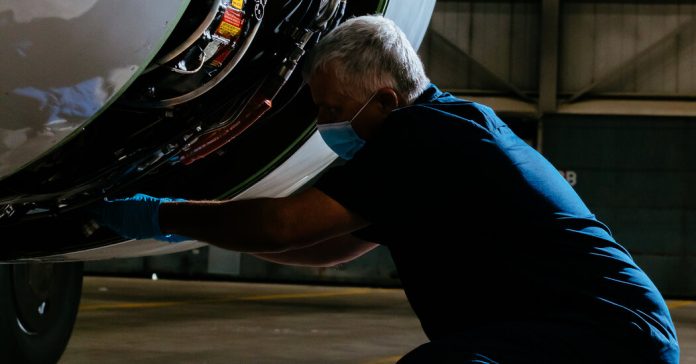
At the front line is a practice that will be familiar to many travelers even if they don’t know what it is called: line maintenance, which involves regular inspections and repairs between flights. Before a jet takes off, pilots perform visual and other inspections for damage or other problems. Airline mechanics also conduct periodic checks. Often, a mechanic can troubleshoot a problem quickly, fixing it or safely patching it up until the issue can be addressed later. Serious problems can result in a long delay or cancellation.

In addition, every part of a plane, down to the nuts and bolts, is subjected to routine inspections, repair or replacement. Those checks are typically scheduled based on how many hours the plane has been used, the number of flights, time or some combination of those factors. These inspections are overseen by aviation authorities around the world, with many following the lead of regulators at the Federal Aviation Administration or its European Union counterpart.

When it comes to more intensive maintenance that might take a plane out of service for days or weeks, the world’s largest airlines perform much of that work on their own. Some, including Lufthansa and Delta Air Lines, even sell those services to others. But every airline outsources at least some work to the companies that make parts and planes, like Boeing and Airbus, or to third parties. Small carriers, especially, depend on the practice.

“If you look at the long tail of aircraft operators, the majority are very small, so it never made sense for them to invest the capital,” said Jonathan Berger, a founding partner of Alton Aviation, a consulting firm. “Outsourcing has been going on since the dawn of time.”

While it has always played a role in aviation, outsourcing accelerated in recent decades. In the United States, the share of spending on airline maintenance that was outsourced more than doubled from 1990 to 2011, rising from about 20 percent to more than 44 percent, according to a 2012 Congressional Research Service report. Airlines do not typically disclose such spending and few outside the industry track or estimate it.

Worldwide, airlines still conduct almost all of their own line maintenance. But they often send out more comprehensive work to companies that specialize in maintenance, repair and overhaul of planes. That work is usually divided into three categories, covering the airframe — or body, wings and tail of a plane — the engine and various other components.

Labor accounts for most of the cost of airframe maintenance, so airlines in wealthier countries often send that work to countries where wages are lower. Some U.S. airlines send planes to El Salvador, for example, and Western European carriers send them to Eastern Europe.

With engines, materials make up more of the cost of repairs, so outsourcing to lower-income countries doesn’t save airlines as much. Still, the much of that work is also outsourced, often to engine manufacturers, because fixing these large machines is expensive and complex, according to Mr. Berger. Most jet engines for large commercial planes are made by several U.S. and European companies.

The global network of maintenance providers is a growing market valued at more than $100 billion. Proponents say that it allows airlines, particularly budget carriers, to plan costs and focus on what they do best: plan, sell and operate flights efficiently. Airlines also benefit because they can turn to specialists who may focus on certain kinds of maintenance or aircraft.

Many aviation industry experts say that outsourcing is safe and necessary and note that the F.A.A. still oversees maintenance of U.S. planes wherever it occurs. But some consumer groups and labor unions representing American mechanics have raised concerns about it.

“There is a quality issue and for the industry to deny that is just false,” said William J. McGee, who has spent decades as a passenger advocate before lawmakers and regulators and is a senior fellow at the American Economic Liberties Project, a progressive group.

In the 2000s and early 2010s, the Transportation Department’s inspector general looked into the F.A.A.’s oversight of foreign and domestic repair stations and found it lacking. Airline mechanics have reported finding obvious mistakes in planes returning from foreign repair shops. And their unions, including the International Brotherhood of Teamsters and the Transport Workers Union, have raised concerns that workers abroad are not subject to the same rigorous standards as those in the United States.

The F.A.A. recently addressed some of those concerns. This month, a new agency rule will start requiring foreign repair sites to carry out drug and alcohol tests of employees who perform certain safety-sensitive maintenance, affecting as many as 977 locations in 65 countries.

“This rule will ensure these employees are held to the equivalent high level of safety standards, regardless of where they are physically located,” Mike Whitaker, the outgoing F.A.A. administrator, said in a statement last month.

Defenders of outsourcing say that oversight by airlines and the F.A.A. today is rigorous, noting that despite a few shocking crashes and incidents, flying on commercial planes is far safer than other common modes of travel, including cars, buses or trains.

Despite a substantial slowdown early in the pandemic, air travel came roaring back much more quickly than the industry had expected. Airlines are now eager to expand and upgrade their fleets.

But Boeing and Airbus, the two big jet manufacturers, have struggled to churn out planes. Boeing has had to slow production in recent years, first after two fatal crashes in 2018 and 2019 of its most popular plane, the 737 Max. Last year, it was forced to do that again after a panel blew off a Max jet in flight, and in the fall it largely stopped production of the Max during a seven-week strike.

Airlines have also had to pull Airbus jets from service to carry out unexpected inspections of Pratt & Whitney engines after the engine manufacturer discovered a quality defect. Airbus and Boeing have also struggled with lingering pandemic-era problems, including shortages of parts and skilled workers.

The slow delivery of new planes has forced airlines to use older planes longer, which is safe but often requires more maintenance. Newer engines, which are packed with new technology that makes them more efficient, have also required more fixes and upkeep than expected.

But the number of people pursuing careers in airplane maintenance has lagged behind demand.

“Not only are the airlines hiring, but general aviation is hiring, corporate aviation is hiring,” Chuck Horning, a professor of aviation maintenance at Embry‑Riddle Aeronautical University, said referring to planes used by many businesses to transport people and goods. “And then you’ve got industries that didn’t even really exist when I graduated in 1986, like the space industry and unmanned aerial systems.”

What’s next for Kamala Harris : NPR

0

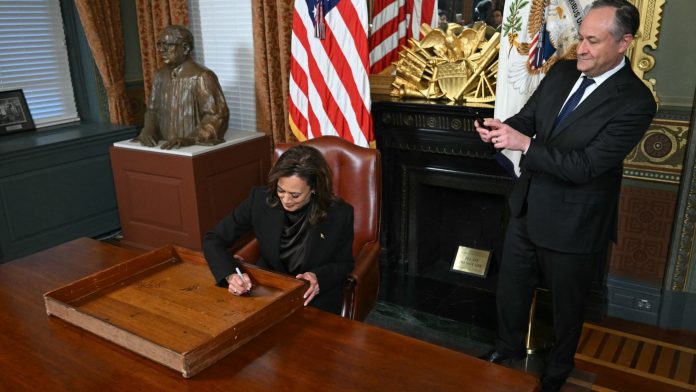
Vice President Harris signs the drawer of her desk as second gentleman Doug Emhoff takes a picture on Jan. 16, 2025.

Mandel Ngan/AFP


hide caption

toggle caption

Mandel Ngan/AFP

Vice President Harris sat at her ceremonial desk Thursday afternoon for a tradition that started back in the 1940s — signing the top drawer.

In her final public event before her political opponent’s inauguration on January 20, Harris pulled out a Sharpie and became the first woman to sign the desk, capping off a historic four years as she broke barriers as the first woman elected to the vice presidency.

Aides and former staffers who have worked with her through the years cheered. Harris thanked them for their work, and told them that she’s not done yet.

“I will tell you that everyone here has so much to be proud of, and our work is not done,” Harris said. “And as you all know me — because we have spent long hours, long days and months and years together — it is not my nature to go quietly into the night, so don’t worry about that.”

It's a tradition for vice president to sign the inside of the top drawer of the desk before leaving office.

It’s a tradition for vice president to sign the inside of the top drawer of the desk before leaving office.

Mandel Ngan/AFP


hide caption

toggle caption

Mandel Ngan/AFP

Harris is going back to California

Harris’ term isn’t ending the way she had hoped. Had she won the election in November, Harris would be packing up to move into the West Wing.

But instead, she’s spent the last few weeks packing up and attending to constitutional duties in Washington, like certifying the election on January 6. She announced the tally of Electoral College votes, formally cemented her loss to Donald Trump to cheers from Republicans in Congress, and ensured a peaceful transfer of power — something Trump himself tried to subvert four years ago.

“I do believe very strongly that America’s democracy is only as strong as our willingness to fight for it … otherwise it is very fragile and it will not be willing to withstand moments of crisis. And today, America’s democracy stood,” she said after certifying the results.

Vice President Harris certifies the Electoral College vote as Speaker Mike Johnson applauds during a joint session of Congress on Jan. 6, 2025, ratifying the 2024 presidential election.

Vice President Harris certifies the Electoral College vote as Speaker Mike Johnson applauds during a joint session of Congress on Jan. 6, 2025, ratifying the 2024 presidential election.

Win McNamee/Getty Images


hide caption

toggle caption

Win McNamee/Getty Images

By the time Inauguration Day arrives, boxes of materials from her four years in office will head to the National Archives — and the vice president herself will move to Los Angeles.

Her home was evacuated last week as a precaution amid the wildfires. Harris is moving to a different location in the city where she’ll remain as she figures out her next steps. Her husband, second gentleman Doug Emhoff, will return to work at a still-to-be-announced law firm.

This VP expert sees 3 options for Harris

Harris is leaving office in a fairly unique position. Her national profile was boosted over the course of her short presidential run last year. She has a higher approval rating now than when she launched her campaign, though it is lower than when she first came into office.

Joel Goldstein, a law professor at St. Louis University and an expert on the modern vice presidency, said Harris is well-positioned to run for office again.

“She’s had experiences as vice president and as a presidential candidate that no Democratic figure under the age of 75 or so has had,” he said.

Goldstein said Harris likely has three options: run for governor of California in 2026, run for president in 2028, or take what he referred to as “Door Number Three:” something else that doesn’t involve running for office.

Vice President Harris speaks to her staff, former aides and friends before signing the drawer of her desk in the Vice President's Ceremonial Office at the White House on Jan. 16, 2025.

Vice President Harris speaks to her staff, former aides and friends before signing the drawer of her desk in the Vice President’s Ceremonial Office at the White House on Jan. 16, 2025.

Mandel Ngan/AFP


hide caption

toggle caption

Mandel Ngan/AFP

She plans to stay in the public eye

Two Harris aides who spoke to NPR on the condition of anonymity to protect private conversations say she hasn’t made any decisions on her options — one source said there hasn’t been a full-on discussion yet. A second source said they feel running for governor would be “too low” — a step down for Harris after serving as vice president.

But Harris does intend to stay in the public eye, whether that’s in the form of speeches or social media, a third source says. And she’s keeping a small group of advisers with her as she decides how to weigh in over the next few months.

One of the sources close to Harris said she will likely have to make a decision by this summer if she does want to run for office again, to begin the work of fundraising and campaigning.

When she leaves office on Monday, it will be the first time in more than 20 years that Harris has not been working as a public servant, which will be a big adjustment for her, those who know Harris say.

Rep. Lateefah Simon, D-Calif., went to work for Harris back in her first elected position as District Attorney of San Francisco. Now, Simon is a new member of Congress representing Oakland, where her old boss grew up — and she says Harris is nowhere close to retiring.

“I’m excited for what she’s going to do,” Simon said.

“There’s no way – I’m going to repeat it time and time again — that I think she’s done. Has she told me what she’s going to do? No. But I know this woman, and I know she’s just beginning, really,” she said.

Surgeon shares story of insurance provider calling during surgery

0

Join Fox News for access to this content

Plus special access to select articles and other premium content with your account – free of charge.

By entering your email and pushing continue, you are agreeing to Fox News’ Terms of Use and Privacy Policy, which includes our Notice of Financial Incentive.

Please enter a valid email address.

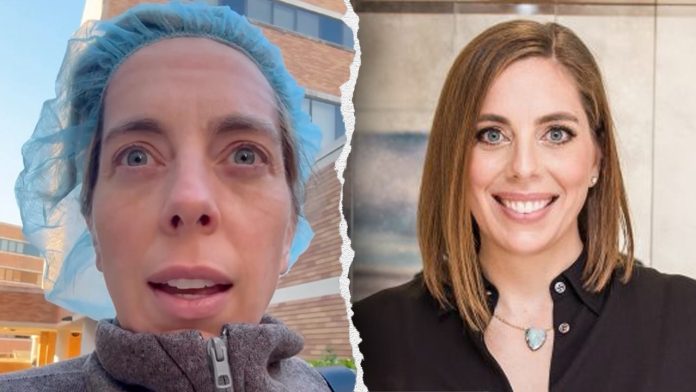
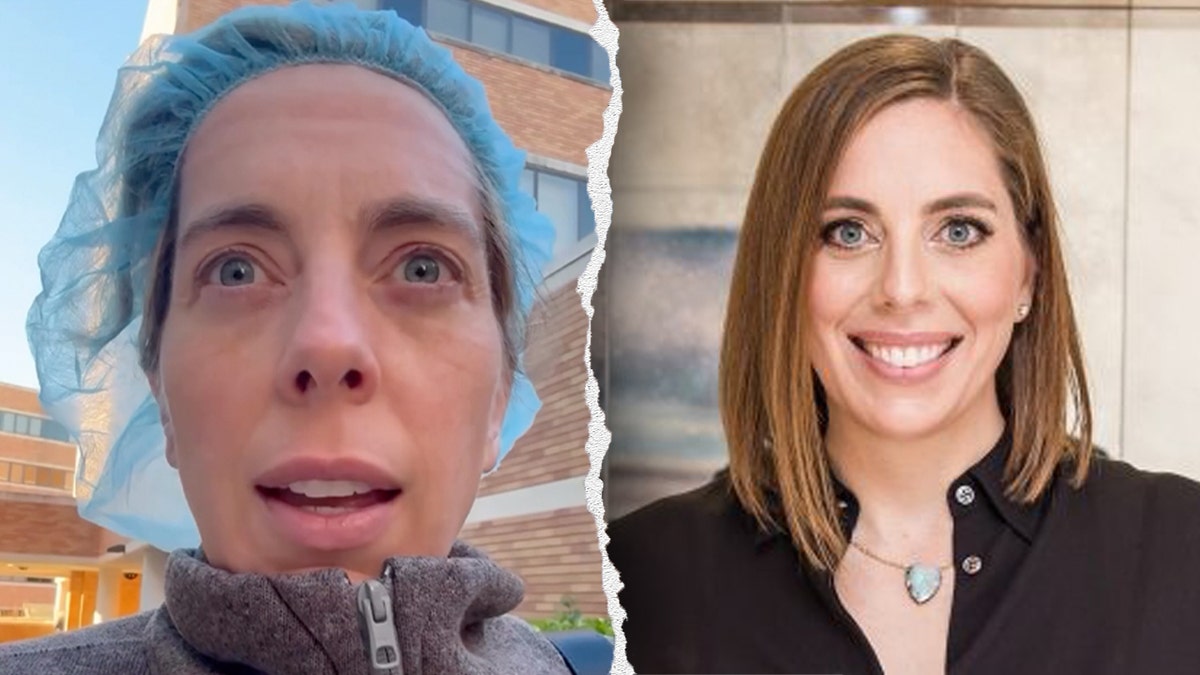
A surgeon in Austin, Texas, was in the middle of surgery when she was notified of a phone call from the patient’s insurance provider.

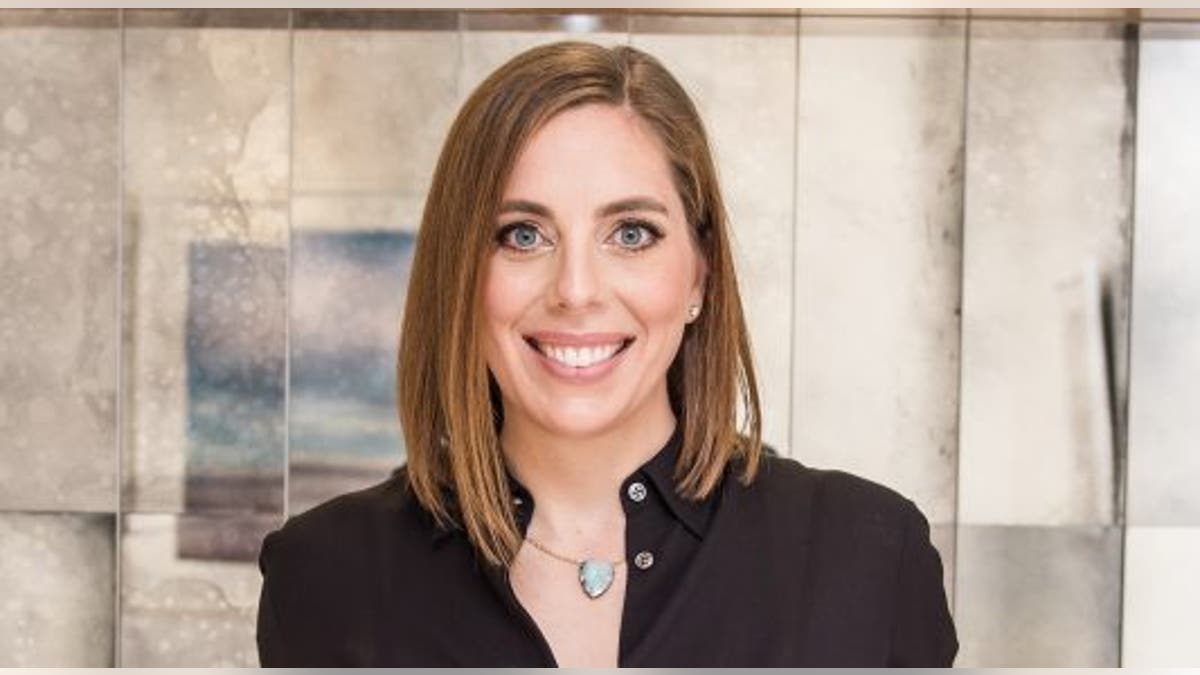
Dr. Elisabeth Potter is a board-certified plastic surgeon who specializes in reconstruction for women who have had breast cancer. Last year alone, she did about 520 surgeries for cancer patients.

She recently shared a video of herself talking about the experience.

HEALTH CARE COSTS UP TO 300% HIGHER FOR PRIVATELY INSURED PATIENTS THAN THOSE WITH MEDICARE, REPORT REVEALS

“I just performed two bilateral DIEP flap surgeries and two bilateral tissue expander surgeries,” she said in the now-viral video. 

(In DIEP flap surgery reconstruction, skin, fat and blood vessels from the patient’s abdominal area are used to rebuild breasts.) 

Dr. Elisabeth Potter, a Texas surgeon, recently shared a video of herself talking about a phone call that came in from an insurance company during a patient’s surgery.  (Dr. Elisabeth Potter; @drelisabethpotter)

During one of the DIEP cases, while the patient was asleep on the operating table, the doctor was interrupted by a nurse supervisor informing her that a call had come in from UnitedHealthcare, the patient’s insurance company, Potter said.

The nurse who took the call said that Potter was in surgery and not available. 

“And they said, I need to get her a message because we need to talk to her about this patient,” Potter told Fox News Digital. “So they wrote a note and brought it into the operating room and I took a picture of it, because I’m like, I can’t believe this is happening.”

HEALTH CARE IS ‘OVERWHELMINGLY COMPLEX’ FOR OLDER ADULTS, EXPERTS SAY: ‘EVER-INCREASING HURDLE’

The note indicated the name and number of the person to call at UnitedHealthcare, along with the patient’s name and Dr. Potter’s name. (The note did not state that the caller had requested an immediate response.)

“The nurse at the front desk of the OR who took the call and wrote this note said that the person on the phone first asked for the patient and then for me,” Potter told Fox News Digital. 

“I made that judgment call and I stand by that — I think it was the right thing to do for the patient.”

“He was told I was scrubbed in[to the] OR and he asked the nurse that I be contacted in OR and given the message.”

Added Potter, “The nurse manager said she had never in her career received a call like that before. She thought it must be important and brought the message to the OR.”

Dr. Elisabeth Potter

Dr. Elisabeth Potter, a surgeon in Austin, Texas, was in the middle of surgery when she was notified of a phone call from the patient’s insurance provider. (Dr. Elisabeth Potter; @drelisabethpotter)

It was odd, Potter said, that the insurance company had called the front desk of the hospital, where she is not an employee. 

“They didn’t call my office. They didn’t call my cell phone. They didn’t send me an email. This wasn’t the billing department of the hospital.” 

Afraid that the insurance company might deny the patient’s service, Potter made the decision to scrub out mid-surgery to return the call to United. 

BOY FACING BLINDNESS GETS LIFE-CHANGING EYE SURGERY: ‘SUCH A BLESSING’

The surgeon stated to Fox News Digital that UnitedHealthcare did not require her to leave the operating room or threaten to deny coverage.

The patient was safe with another surgeon and the anesthesia team, who were finishing up the procedure.

Dr. Elisabeth Potter

Dr. Elisabeth Potter is a board-certified plastic surgeon in Texas who specializes in breast reconstruction for women who have had breast cancer.  (Dr. Elisabeth Potter)

Potter was “scared” that the patient would wake up and find out that the insurance company said they didn’t have the information they needed and would deny the claim, she said.

“I’ve seen it before, when people get stuck with bills that are $80,000 or $100,000,” she said to Fox News Digital. “And so I said to my partners, ‘I’m going to make this call real quick.’” (See her video here.)

“Dealing with insurance is a really important part of taking care of patients affected by breast cancer, because the diagnosis is financially devastating.”

“If it had been at a critical moment during the surgery, I wouldn’t have,” Potter clarified. “But I made that judgment call and I stand by that — I think it was the right thing to do for the patient.”

On the phone, the insurance company stated that they needed to know the patient’s diagnosis and the justification for the inpatient stay, something Potter had already communicated, she said.

WOMAN RECEIVES PIG KIDNEY TRANSPLANT, WALKS OUT OF HOSPITAL DAYS LATER: ‘SECOND CHANCE’

“And I was like, wait a minute, we got authorization for the surgery. We submitted all of our clinical documentation. We’ve done all the paperwork, the phone calls, all the stuff. You have her diagnosis codes, you have all of it,” she went on.

“And they said, ‘Actually, I don’t, another department has that, but I need this right now,'” Potter said. “There was a sense of entitlement to my time and to the information in that moment,” the surgeon added. 

CLICK HERE TO SIGN UP FOR OUR HEALTH NEWSLETTER

Potter also noted that the person on the line didn’t have access to the patient’s full medical information, despite the procedure already being pre-approved.

“I’m not sure that person even understood that they had an impact on those patients I was operating on,” Potter told Fox News Digital. “They were just thinking about money and numbers and were not understanding at all.”

Insurance form

Potter was “scared” that the patient would wake up and find out that the insurance company said they didn’t have the information they needed and would deny the claim, the surgeon told Fox News Digital. (iStock)

“It’s beyond frustrating and, frankly, unacceptable,” she told Fox News Digital. “Patients and providers deserve better than this. We should be focused on care, not bureaucracy.”

Potter noted that she has always been “devoted” to providing care in-network through insurance. 

“Dealing with insurance is a really important part of taking care of patients affected by breast cancer, because the diagnosis is financially devastating,” she told Fox News Digital.

CLICK HERE TO GET THE FOX NEWS APP      

“I’ve found that I really have to engage directly and think about insurance and whether they’re covering treatments and what my patients are experiencing.”

Potter emphasized that she doesn’t think insurance is “evil,” noting that there are some “really good things” about businesses that take care of people. 

Hospital front desk

It was odd, the surgeon felt, that the insurance company called the front desk of the hospital, where she was not an employee.  (iStock)

“But this has developed into something that no longer is devoted to patient care. This is just a machine that’s running and making money, and they don’t care about me as a provider,” she said.

Many physicians have given up and refuse to deal with insurance companies, opting to stay out of network and let the patient pay upfront and deal with getting reimbursed, Potter noted. 

“Patients and providers deserve better than this.”

“I’ve gone to Washington, D.C., I have fought to protect access to [breast] reconstruction,” she said. “I have testified in the state legislature about these issues.”

She added, “It’s just getting undoable. And this moment, this week, was like, we’ve crossed a line — they’re actually in the operating room.”

HEALTH CARE OR HOUSING? MORE STATES ARE USING MEDICAID FUNDS TO HELP THE HOMELESS

Fox News Digital contacted UnitedHealthcare for comment. The company sent the following statement.

“There are no insurance-related circumstances that would require a physician to step out of surgery and it would create potential safety risks if they were to do so.”

It went on, “We did not ask nor would ever expect a physician to interrupt patient care to answer a call and we will be following up with the provider and hospital to understand why these unorthodox actions were taken.”

UnitedHealthcare

Separately, the head of UnitedHealthcare group said on Thursday that the company remains “focused on making high-quality, affordable health care more available while making the health system easier to navigate for patients and providers.” (iStock)

Separately, the head of UnitedHealthcare group said on Thursday that the company is confident it will be able to grow its business in fiscal year 2025. 

“The people of UnitedHealthcare remain focused on making high-quality, affordable health care more available to more people while making the health system easier to navigate for patients and providers, positioning us well for growth in 2025,” CEO Andrew Witty said in the company’s earnings report on Thursday. 

For more Health articles, visit www.foxnews.com/health

His optimism comes shortly after the head of its insurance unit was gunned down in New York City, inciting a heated conversation about the role of the health insurance industry in the United States. 

Fox News Digital’s Daniella Genovese contributed reporting.

Biden Says He Urged Netanyahu to Accommodate Palestinians’ ‘Legitimate Concerns’

0

President Biden said Thursday that in the days after the war in Gaza began, he pushed Prime Minister Benjamin Netanyahu of Israel to prevent civilian deaths and to accommodate Palestinians’ concerns, while maintaining the United States’ firm support for Israel.

Mr. Biden spoke with the MSNBC host Lawrence O’Donnell in his last television interview while in office, during which he also discussed his political career and presidency. The interview, which aired Thursday night, was taped earlier in the day.

The 15-month-long war, which began after Hamas led a deadly attack on Israel on Oct. 7, 2023, has killed tens of thousands of Palestinians. Most of Gaza’s roughly two million residents have been displaced at least once, and much of the enclave has been destroyed.

Mr. Biden and other leaders announced a provisional cease-fire deal on Wednesday that has raised hopes that Israel’s military assault on Gaza will come to an end. Under the deal to halt the fighting, some hostages held by Hamas in Gaza would be released.

The president and his advisers struggled for months to negotiate an end to the conflict. Mr. Biden, who put the cease-fire deal on the table in May, said on MSNBC that he had told Mr. Netanyahu repeatedly that “he has to find a way to accommodate the legitimate concerns” of Palestinians. He called Mr. Netanyahu a friend but said, “We don’t agree a whole lot lately.”

Critics, including some families of hostages who have pressed for a cease-fire deal, have accused Mr. Netanyahu of intentionally stalling negotiations to prolong the conflict. Mr. Biden did not directly answer when asked whether he thought Mr. Netanyahu had done so. He said that the Israeli prime minister had come under political pressure from Israel’s right-wing, and was at times forced “to do some of the things that, in my belief, I thought were counterproductive.”

To achieve the cease-fire agreement, President-elect Donald J. Trump and Mr. Biden directed their advisers to work together. Mr. Biden said in the Thursday interview that he had had no discussions with Mr. Trump about the negotiations during the past two weeks.

Mr. Biden recalled that the first time he urged Mr. Netanyahu to prevent civilian deaths was during a visit to Israel 10 days after the Hamas attack on Oct. 7, 2023. Mr. Biden said he told the prime minister that the United States would support Israel, but that “you can’t be carpet-bombing these communities.”

Israel’s bombing campaign has been one of the most intense in 21st-century warfare, and the country has at times used inaccurate bombs.

During the interview, Mr. Biden defended his steadfast support for Israel throughout the conflict.

“When Iran thought it was going to blow Israel off the map — they had those thousands of missiles heading their way,” he said. “Well, guess what? We didn’t let it happen.”