Thursday, November 12, 2026
Home Blog Page 365

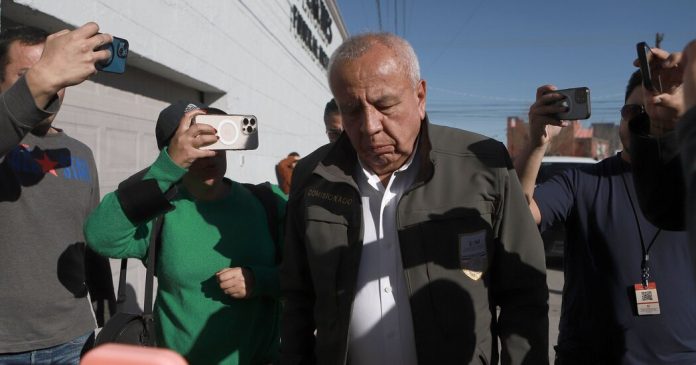
How Mexico Cracked Down on Its Immigration Chief to Defuse a US Migrant Crisis

0

The Americans were not happy.

The migrant situation at the border was out of control, they said, and Mexico was not doing enough to stop it, according to officials from both countries.

In fact, the crisis was worse than Mexican officials had been led to believe by their own immigration chief, Francisco Garduño Yáñez.

The revelation in October 2023 led Mexico’s defense secretary at the time to fly into a rage at an emergency meeting, officials with knowledge of the encounter said.

“You fooled me,” the defense secretary, Luis Cresencio Sandoval González, yelled at Mr. Garduño, according to two people familiar with the incident.

The defense secretary regularly briefed Mexico’s then-president, Andrés Manuel López Obrador. But Mr. Sandoval had learned days earlier from the Americans that the migrant crisis was more dire than he realized.

“You hid information from me, making me lie to the president,” the defense secretary lashed out.

It was a tense chapter in U.S.-Mexico relations, according to five Mexican and American officials privy to bilateral talks on migration, and Mr. Garduño, 76, had landed in the middle of it. Beyond being accused of mismanaging and minimizing the migrant crisis, he is separately facing criminal charges in connection with a fire at a migration detention center that killed 40 people in 2023.

Now, as Mexico stands on the precipice of what are expected to be contentious border discussions with the incoming Trump administration, the same Mexican official blamed for mismanaging the migrant crisis, Mr. Garduño, will be a pivotal player in those negotiations. The American president-elect has vowed to begin mass deportations of undocumented immigrants as soon as he takes office.

The Defense Ministry, Mr. Garduño and the agency he led, the National Migration Institute, did not respond to several requests for comment.

Controlling the Mexico-U.S. border is a sprawling endeavor, involving thousands of government agents from both countries. The issue is often used as a political cudgel. U.S. House Republicans accused the Biden administration of failing to control the border and voted to impeach his homeland security secretary, Alejandro Mayorkas.

In Mexico, Mr. Garduño was the one in the cross hairs.

A former director of Mexico’s prison system, he has been criticized for relying on troops to help manage migrant flows. Mr. Garduño’s agency has also been accused of essentially waving migrants through to the northern border for bribes. In interviews, migrants said they had to pay Mexican migration agents to travel through the country to reach the United States.

In 2022, the British Embassy also commissioned a classified report on Mexico’s migration system, a copy of which was obtained by The New York Times. It found systemic corruption in the government’s handling of migrants, including extortion, sexual abuse and collusion with criminal organizations to kidnap migrants for ransom.

In a 2022 interview, Mr. Garduño defended his performance, saying he had fired nearly half of the agency’s employees for extorting migrants. His agency had issued documents to nearly two million migrants from 2018 to 2022, he said, helping to regularize their presence in the country.

It is “a humanitarian policy of integration and brotherhood,” he said.

But interviews with officials from both countries have laid bare the discontent of American officials with how Mexico was handling migration.

In 2023, President Biden’s popularity was slipping ahead of the 2024 elections. Migration was a top concern among American voters. So the president dispatched Secretary of State Antony J. Blinken and Mr. Mayorkas for an emergency meeting in Mexico City that October.

They told Mr. López Obrador that American border agents had encountered nearly 220,000 migrants at the southern U.S. border that September — one of the largest flows ever recorded, officials with knowledge of the meeting said.

Border patrol agents were overwhelmed. The freight trains from Mexico to the United States had no security. Corrupt conductors, the Americans said, were stopping or slowing the trains to allow migrants to hop on.

They asked Mexican officials to move more aggressively to break up large groups of migrants heading to the U.S. border and to end visa-free travel for countries whose nationals used Mexico to enter America illegally, officials said.

The reality that the American delegation revealed was grimmer than the one presented by Mr. Garduño’s agency, which gave daily briefings to the Mexican administration on the number of migrants intercepted in southern Mexico.

Three officials working on migration and were privy to those figures said the numbers rarely correlated with the data presented by the U.S. Customs and Border Protection and the government of Panama, which many migrants pass through to reach Mexico.

The Mexican military reported that it and the migration agency encountered five million migrants from 2018 to 2024, but Mexico’s Interior Ministry reported about half that number in that time. The 2023 numbers varied widely as well; the migration agency reported nearly 1.5 million encounters that year, whereas the Interior Ministry reported about 500,000.

“Mexico’s government is blurring the picture by issuing two widely divergent numbers, without even explaining the divergence,” said Adam Isacson, a director at the Washington Office on Latin America, a research institute. “It’s confusing, it undermines the government’s credibility, and it makes it harder to anticipate emerging trends.”

After the U.S. delegation returned to Washington, Mr. López Obrador called the emergency meeting of Mexico’s most senior security and migration officials on Oct. 13, 2023. It was held in Tapachula, a city on the border with Guatemala and a funnel for migrants entering Mexico.

The city’s refugee agency was about to collapse, with about 7,000 migrants a day flooding its offices to register as asylum seekers — a fast track to receiving a migrant permit.

The permits were sort of a golden ticket: They allow asylum seekers to study, work and get access to basic services. Though asylum seekers are supposed to stay in the state where they apply, many use the Mexican permits to navigate to the U.S. border without being detained, officials say.

At the emergency meeting, the interior secretary at the time, Luisa María Alcalde Luján, zeroed in on the permits, officials said.

She grilled Mr. Garduño about whether his agency was handing out the permits but allowing asylum seekers to head north toward the U.S. border, according to four officials with knowledge of the meeting, two in attendance.

Yes, Mr. Garduño replied.

As Ms. Alcalde berated him, Mr. Garduño looked down at his lap and fell silent, officials with knowledge of the encounter said.

She then announced to the room that she was stripping Mr. Garduño of the ability to hand out new migration permits without the approval of other government branches.

Ms. Alcalde did not respond to requests for comment.

As soon as the migrant permits stopped, thousands of asylum seekers in Mexico were plunged into legal limbo.

The move made them “easier prey for criminal groups,” said Dana Graber Ladek, the Mexico chief of mission for the International Organization for Migration. It left “migrants with basically no option to be able to work legally in the country,” she added.

Eventually, Mexico restarted issuing the migration permits, but today they are a trickle of what they once were: Only about 3,500 permits were issued last year, compared with nearly 130,000 in 2023.

After the meeting, Mr. Garduño quickly moved to demonstrate that his agency was capable of controlling migrant flows, officials said.

His agents made it harder for migrants to reach the U.S. border and stepped up security on the trains many used to travel north. The number of migrants encountered at the U.S.-Mexican border dropped from September to November by nearly 13 percent, according to November 2023 statistics from the U.S. Customs and Border Protection.

But just as the numbers trended down, a leak prompted high-level officials to call another emergency migration meeting in Mexico.

The Mexican treasury secretary temporarily stopped funding parts of the government in November 2023, including Mr. Garduño’s agency, because of budgetary constraints. But instead of lobbying the treasury to release funds, as other officials did, Mr. Garduño proactively halted his agency’s operations.

On Dec. 1, he sent a memo ordering his agency to pause deportation flights that carry undocumented migrants, withdraw personnel from checkpoints and shut down the busing program that had relieved pressure on the northern border.

The memo was swiftly leaked and went public.

Migrants rushed to the U.S. border, many unhindered by Mexican migration agents. That December, U.S. Customs and Border Protection registered the highest number of migrant encounters on the border in history: nearly 250,000 migrants.

Overwhelmed American border patrol agents shut land border crossings in Lukeville, Ariz., and San Diego. The U.S. border protection agency suspended several railway crossings in Texas.

Mexico’s government, trying to contain the fallout, publicly pledged more funds to its migration agency. Mr. Blinken flew back to Mexico City, on Dec. 27 — with an even larger delegation.

The next month, January 2024, after Mexico and the United States cooperated to enforce stricter measures, the migrant flow at the U.S. border was cut in half.

The pressure from Washington has continued to work; unlawful border crossings have declined. Last June, Mr. Biden issued an executive order to essentially block undocumented migrants from receiving asylum at the border.

Mexico has deployed National Guard troops to immigration checkpoints and bused migrants farther south, exhausting their efforts to head north. The authorities have also broken up migrant caravans so they no longer reach the U.S. border.

In October, Claudia Sheinbaum was sworn in as president of Mexico. She named a new immigration chief, but said Mr. Garduño would continue to advise the government to create a “profound transformation” of its migration agency and to help weather the storm after Mr. Trump takes office Jan. 20.

Mr. Garduño still faces criminal proceedings over the migration center fire. Several Mexican and American officials said they thought he would resign after the tragedy. But he has been a confidante of Mr. López Obrador for decades.

Mr. Garduño is not under arrest, but every two weeks, he must check in with the prosecuting judge.

Emiliano Rodríguez Mega and Paulina Villegas contributed reporting.
Massie removed from powerful House committee after vote against Johnson

0

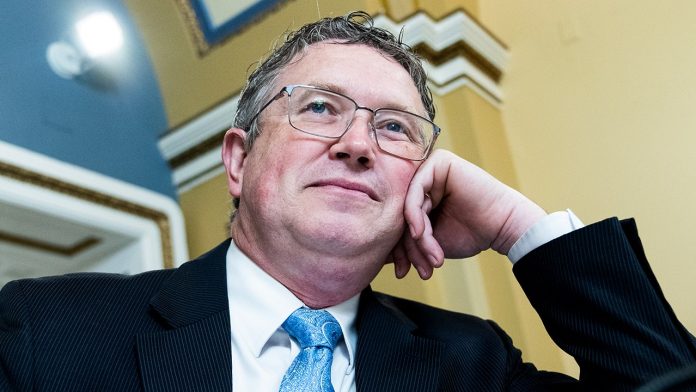
Rep. Thomas Massie, R-Ky., no longer sits on the powerful House Rules Committee after he was the only Republican to vote against Speaker Mike Johnson in the House leadership election.

The Rules Committee holds sway over which bills make it to the House floor for a vote. Massie, a hardline libertarian, had said he would step aside from the panel voluntarily after he opposed Johnson for speaker on grounds that Johnson had relied on Democratic support to pass major spending bills.

But Massie’s uncompromising positions have often isolated him from the rest of the GOP conference. One Republican lawvmaker told Fox News Digital, “98% of the conference wanted Massie off rules.” 

MASSIE COMES OUT AGAINST JOHNSON RETAINING SPEAKER’S GAVEL

Rep. Thomas Massie, R-Ky., is seen outside the U.S. Capitol on Wednesday, Dec. 18, 2024. (Tom Williams/CQ-Roll Call, Inc via Getty Images)

Massie’s office did not immediately respond to a request for comment.

The House Republican conference met behind closed doors Tuesday morning and voted for a new committee roster. Rep. Morgan Griffith, R-Va., a member of the House Freedom Caucus, has succeeded Massie on the Rules Committee. 

MASSIE DROPS COLORFUL ANALOGY OPPOSING FOREIGN AID, MOCKS SPEAKER JOHNSON WITH AI-GENERATED IMAGE

Reps. Chip Roy and Thomas Massie

House Judiciary Committee members Rep. Chip Roy, R-Texas, and Rep. Thomas Massie, R-Ky., listen to U.S. Attorney General Merrick Garland testify before the committee in the Rayburn House Office Building on Capitol Hill on June 4, 2024, in Washington, D.C. (Chip Somodevilla/Getty Images)

Additionally, Rep. Virginia Foxx, R-N.C., the former chairwoman of the Education and Workforce Committee, will lead the panel after Rep. Michael Burgess, R-Texas, retired.

Rep. Guy Reschenthaler, R-Pa., the House GOP deputy whip, was also removed from the committee and replaced by freshman Rep. Brian Jack, R-Ga. 

THOMAS MASSIE, CONSERVATIVE COMMENTATORS VOCALLY OPPOSE TRUMP’S DEA NOMINEE

House Speaker Mike Johnson

Massie opposed Mike Johnson for re-election as House speaker.  (Kent Nishimura/Bloomberg via Getty Images)

Massie was first appointed to the Rules Committee alongside Rep. Chip Roy, R-Texas, and Rep. Ralph Norman, R-S.C., as part of a deal with ex-Speaker Kevin McCarthy, R-Calif., in January 2023 to expand conservative representation – a piece of a wider compromise for McCarthy to win his short-lived House speakership.

The House Rules Committee is the final stop for bills before a House-wide vote. The committee and its chair are responsible for dictating the terms of debate on a bill and what, if any, amendments will also get a vote.

CLICK HERE TO GET THE FOX NEWS APP

After a bill passes the House Rules Committee, it is then subject to a House-wide “rule vote” to allow for debate on the legislation before a vote on final passage.

Fox News Digital’s Elizabeth Elkind contributed to this report.

Tulip Siddiq, U.K. Anticorruption Minister, Resigns

0

Prime Minister Keir Starmer of Britain suffered a new blow on Tuesday when his anticorruption minister, Tulip Siddiq, quit her post weeks after being named in an embezzlement investigation in Bangladesh.

Ms. Siddiq, 42, is the niece of Sheikh Hasina, the former prime minister of Bangladesh, who resigned last year after 15 years in power and fled the country amid a broad student-led protest movement against her repressive rule.

A junior minister in Mr. Starmer’s government, Ms. Siddiq had previously referred herself to the prime minister’s ethics adviser for investigation after questions arose over whether she had benefited financially from her ties to Ms. Hasina.

Ms. Siddiq has dismissed the allegations against her as politically motivated and insisted that she did nothing wrong. But in an official letter of resignation to Mr. Starmer on Tuesday, she wrote that the media focus on her risked diverting attention from the government’s political agenda.

“I want to assure you that I acted and have continued to act with full transparency and on the advice of officials on these matters,” Ms. Siddiq wrote. “However it is clear that my continuing in my role as economic secretary to the Treasury is likely to be a distraction from the work of the government.”

As economic secretary to the Treasury, a position she was given when the Labour Party came to power last July, Ms. Siddiq was responsible for tackling corruption in financial markets, including money laundering and illicit finance.

Mr. Starmer’s ethics adviser, Laurie Magnus, said on Tuesday that having reviewed the facts regarding Ms. Siddiq’s case, he concluded that she had not broken the code under which ministers serve. In a letter to the prime minister, he said he had found no evidence of impropriety or that she had made unusual financial arrangements.

However he added that it was “regrettable that she was not more alert to the potential reputational risks — both to her and the government — arising from her close family’s association with Bangladesh.”

And he added, “Unfortunately, I have not been able to obtain comprehensive comfort in relation to all the UK property-related matters referred to in the media.”

The departure is the second high-profile resignation from Mr. Starmer’s government in recent months, after Louise Haigh quit as transport secretary in November when it emerged that she had been convicted of a fraud offense involving a phone a decade ago.

Unlike Ms. Haigh, Ms. Siddiq was not a member of the cabinet, but she was regarded as a political ally of Mr. Starmer’s, and the nature of her government role added to the embarrassment. She has been replaced by Emma Reynolds, another junior minister.

Ms. Siddiq was named in December in an investigation into claims that her family had embezzled up to £3.9 billion pounds, or nearly $5 billion, from infrastructure projects in Bangladesh.

Officials of the new Bangladeshi government have accused Ms. Hasina and her associates of siphoning off billions of dollars from the country every year, bringing its economy to the verge of collapse.

Ms. Siddiq was born in London. Her father was an academic, and her mother, Sheikh Rehana, is the sister of Ms. Hasina. The two sisters were the only survivors of a 1975 military coup that massacred the rest of their family, including their father, Sheikh Mujib ur Rehman, the founding leader of Bangladesh.

The furor over the Bangladeshi investigation prompted a wider focus in the British news media on Ms. Siddiq’s ties to her aunt, including reports that she had lived in London properties with links to Ms. Hasina.

Bangladesh’s interim leader, Muhammad Yunus, said in an interview last weekend with The Sunday Times that Ms. Siddiq should apologize and that the London properties should be handed back to his government if they were gained through corrupt means.

On Tuesday, Kemi Badenoch, leader of the main opposition Conservative Party, criticized the prime minister for failing to take action earlier.

“It was clear at the weekend that the anti-corruption minister’s position was completely untenable,” she wrote on social media. “Yet Keir Starmer dithered and delayed to protect his close friend.”

In the official exchange of letters following Ms. Siddiq’s departure, Mr. Starmer wrote that his former minister had “made a difficult decision,” but added that “the door remains open” to her going forward — signaling that a return to a government might be possible for her in the future.

Mujib Mashal contributed reporting.

California senator talks LA fires, rebuilding and Trump nominees : NPR

0

A person walks amid the destruction left behind by the Palisades Fire in the Pacific Palisades neighborhood of Los Angeles, Jan. 9, 2025.

Jae C. Hong/AP


hide caption

toggle caption

Jae C. Hong/AP

Crews are working around the clock to contain the flames scorching through the Los Angeles area. But recovery for the affected communities will take a long time.

Democratic Sen. Alex Padilla of California, who was born and raised in Pacoima, has visited the hardest hit areas.

The destructive fires are “as up close and personal as it can get,” Padilla said in an interview with NPR’s Morning Edition. He added that, thankfully, his own home and those of friends and family have been spared, though they’re right on the edge of the Hurst Fire, burning north of the city.

“But my heart goes out to the thousands and thousands of families that have either lost their homes or at least lost their sense of security, having to evacuate, wondering whether they’re going to be able to go home, what’s next and how we’re going to begin to rebuild,” Padilla said.

Sen. Alex Padilla, D-Calif., speaks during a hearing of the Senate Committee on the Judiciary on Capitol Hill, Tuesday, Dec. 10, 2024, in Washington.

Sen. Alex Padilla, D-Calif., speaks during a hearing of the Senate Committee on the Judiciary on Capitol Hill, Tuesday, Dec. 10, 2024, in Washington.

Mark Schiefelbein/AP


hide caption

toggle caption

Mark Schiefelbein/AP

The Palisades, Eaton, Hurst and Auto fires have claimed at least 23 lives, burned over 40,000 acres and destroyed thousands of homes, according to the California Department of Forestry and Fire Protection.

Homeowners likely face fights with their insurance companies, as local officials grapple with how to cope with billions of dollars worth of damage. And the state faces one additional challenge: Some Republicans, including President-elect Donald Trump, have taken to blaming California’s Democratic leadership for failing in their response to the fires and have even argued for federal recovery dollars to come with strings attached.

Padilla spoke to Morning Edition‘s A Martínez from Washington D.C. about how politics have entered California’s recovery efforts, rebuilding affected communities and the confirmation hearings for Trump’s nominees.

This interview has been edited for length and clarity.

A Martínez: So speaking of what’s next in rebuilding, President Biden has vowed that the federal government will do anything and everything to help California. But in a week, he is no longer president. So how much support do you expect or hope to get from Donald Trump?

Sen. Alex Padilla: Yeah, first and foremost, a big thank you to President Biden who happened to be in Los Angeles as these windstorms and fires flared up last week. He wasn’t in the Situation Room. He was literally in the situation and acted swiftly to commit federal support to the response and the beginnings of rebuilding. I’m hopeful that President Trump will do the right thing, frankly, despite the political rhetoric that we’ve heard from him in recent days. I’m hopeful because the California delegation request for aid was bipartisan. The California House Republicans joined us in those efforts and I imagine their support is going to continue. And I’ve heard from colleagues as well that have offered support not just on my side of the aisle. Senator Collins from Maine, who has been through disasters, she’s the lead appropriator on the Republican side, Senator Tillis from North Carolina, who’s been through recent devastation.

Disaster aid should come with no strings attached. So let’s make that clear and reinforce that.

Martínez: Well, speaking of that, Republican Alabama Sen. Tommy Tuberville and House Speaker Mike Johnson have suggested or even just flat out said the disaster aid to California should be conditional, determined around changing policies on wildfire prevention. If they were sitting in front of you. What would you say to that?

Padilla: I’d say we’ve never done that before. California’s always been there for other regions of the country in their time of crisis. And now it’s time for the country to be there for California, no strings attached. And I think as part of that, urging President-elect Trump to accept the invitation that so many have extended to come visit the impacted areas and come visit the impacted families if you want to be a true leader. He talked about uniting the country during the election. Here’s his chance to demonstrate that.

Martínez: Is there any mechanism you’re aware of where aid could be restricted or limited based on certain conditions?

Padilla: It’s never been done before, but we’re not living in typical political times. So people of California, people of Los Angeles, know that I, Sen. [Adam] Schiff, and the entire delegation are united in fighting for what’s right, fighting for all the relief that families deserve. We’ll navigate through this politics.

Martínez: Now, in order for communities to rebuild, help from insurance companies is going to be critical. But a lot of companies have been leaving California. A lot of families did not have coverage, especially in Pacific Palisades, going into these fires. So what can be done to get insurance companies to help out?

Padilla: Yeah, that’s a significant question, not just for the state of California. It really is a national issue as well. You know, I mentioned North Carolina earlier. You can look at Florida and some of the recent hurricanes that are increasing in magnitude and devastation. They’re having insurance troubles there. Louisiana is no stranger to natural disasters. So whether it’s hurricanes, tornadoes, fires, floods, different parts of the country are suffering differently. And it warrants a federal look at what we can do to buttress the insurance market and help make families as whole as possible wherever insurance falls short.

Martínez: Gov. Newsom has suspended certain environmental requirements trying to help people rebuild their homes. But, senator, considering how likely it is for wildfires to once again hit parts of California, you mentioned other parts of the country that deal with natural disasters. How wise is it to rebuild in areas that are always going to be in a constant position of threat of fire threat and disaster threat?

Padilla: Yeah, it’s an ongoing balancing act because you do have a growing population. We do have a growing economy. We do need additional housing. So in some places where it absolutely does not make sense to rebuild – and I’m not just talking about the recent fires in Palisades or Pasadena, Altadena, I’m talking more globally here – that’s a legitimate question. But where we can we rebuild and should rebuild, let’s at least rebuild smarter, more sustainably. We’ve come a long way with building materials, types of building design that can be much more resilient. I was touring Mandeville Canyon just yesterday with firefighters and you can see more modern buildings that are much more fire resistant versus much older structures. Wood shingle roofs,. that should be a thing of the past. Wood paneling in fire vulnerable areas does not make sense. So in many areas we will rebuild, but let’s build back smarter.

Martínez: So, Senator, while I have you here, I know that you were just recently in Los Angeles, but you’re back here in D.C. for the Senate confirmation hearings. A lot of public job interviews this week. How do you expect them all to go?

Padilla: Democrats are taking these confirmation hearings in the process seriously. Some of these nominees raise a lot of questions and concerns and we’re not going to be shy about bringing them to the fore. That’s what this process is for. President Trump won the election. He deserves to nominate his Cabinet. But the Senate has an important responsibility here to vet and to either approve or not. And buckle your seatbelt.

Martínez: So does that mean that Trump’s nominees are going to face a rough week when Democratic senators are questioning them?

Padilla: They should prepare to be serious. Each nominee is a little bit different. But you see some of the most worrisome, problematic ones, like Kash Patel for FBI, Tulsi Gabbard for national security positions. Public service is serious business.

Martínez: If things do get bad back in Los Angeles, are you prepared to head back?

Padilla: On a moment’s notice. Multiple flights, they’re on my schedule, in my back pocket. So if the fires flare up, I’m coming home. But the service continues on both coasts.

Heat’s Kevin Love uses OnlyFans model to describe team’s poor 2nd half in loss to Clippers

0

There was only really one way for Miami Heat veteran Kevin Love to describe the team’s loss to the Los Angeles Clippers on Monday night.

Miami led Los Angeles 48-43 at the half and then allowed 66 points in the second half to eventually lose 109-98. The loss snapped Miami’s three-game winning streak. The team had a three-game losing streak before that.

CLICK HERE FOR MORE SPORTS COVERAGE ON FOXNEWS.COM

Miami Heat forward Kevin Love looks to shoot against the Clippers, Monday, Jan. 13, 2025, in Los Angeles.  (AP Photo/Jessie Alcheh)

Love played 15 minutes and scored nine points and grabbed three rebounds. He used OnlyFans model Bonnie Blue to describe the team’s performance. He posted a photo of her holding a sign with the number 1,000 on it. 

For Blue, it signified how many men she slept with. For Love, it described the Heat’s defense.

“When someone asks me how f—ed our 2nd half was last night…” he captioned the photo.

LAKERS RETIRE MICHAEL COOPER’S NO. 21 JERSEY ON AN EMOTIONAL NIGHT

Kevin Love fights for the ball

Miami Heat forward Kevin Love dribbles against Clippers guard James Harden, Monday, Jan. 13, 2025, in Los Angeles. (AP Photo/Jessie Alcheh)

Love has been using his Instagram to joke about some of the Heat’s issues over the last few weeks. Most notably, the team has been dealing with Jimmy Butler’s trade request and team president Pat Riley’s unwillingness to deal the star forward.

Miami has been able to stay above water in tumultuous times. The Heat dropped to 20-18 with the loss.

CLICK HERE TO GET THE FOX NEWS APP

Kevin Love and Jimmy Butler

Heat forward Jimmy Butler talks with forward Kevin Love on the bench during the Indiana Pacers game at Kaseya Center in Miami, Florida, Jan. 2, 2025. (Jim Rassol-Imagn Images)

The Heat sit in the seventh spot in the Eastern Conference – only a half-game behind the Milwaukee Bucks to avoid the play-in tournament.

Follow Fox News Digital’s sports coverage on X and subscribe to the Fox News Sports Huddle newsletter.

Kate Middleton, Princess of Wales, Confirms She Is in Remission from Cancer

0

Catherine, Princess of Wales, said on Tuesday that her cancer was in remission, lifting a major cloud from the British royal family, which had struggled with serious health concerns for both her and King Charles III.

“It is a relief to now be in remission and I remain focused on recovery,” Catherine, the wife of Prince William, wrote on Instagram.

“As anyone who has experienced a cancer diagnosis will know, it takes time to adjust to a new normal. I am however looking forward to a fulfilling year ahead,” she added. “There is much to look forward to.”

Catherine said last September that she had completed chemotherapy for her cancer and her goal was to remain cancer free. But Kensington Palace, where she and William have their offices, declined to say at that point whether her doctors had declared her medically free of cancer, or whether she was undergoing any other treatment.

The palace has never confirmed the type of cancer that struck Catherine, how far it had progressed, or what other treatment she was undergoing, beyond chemotherapy. The cancer was detected in January after she entered the hospital for 14 days for abdominal surgery.

Catherine’s announcement on Tuesday seemed more promising than the update last fall, though Kensington Palace again offered no additional medical details. A palace official cautioned that Catherine would still only return to official duties on a gradual basis over the rest of this year.

Her announcement that she was in remission came as she visited the hospital, the Royal Marsden, in west London, where she had been treated. “My heartfelt thanks goes to all those who have quietly walked alongside William and me as we have navigated everything,” Catherine wrote.

This is a developing story. Check back for updates.

Trump's 2nd-term foreign policy includes power plays in Greenland, Panama and beyond

0

N.Y. Times journalist David Sanger says Trump’s idea of America first is now less isolationism, more expansionism. He expects changes in the approach to Russia, China and the wars in Gaza and Ukraine.

Biden issues executive order to accelerate AI infrastructure, data centers in US

0

President Biden on Tuesday signed an ambitious executive order that he says will keep both national security and climate change in mind while fast-tracking large-scale artificial intelligence (AI) infrastructure in the United States. 

Biden said in a statement released by the White House that the executive order will “accelerate the speed at which we build the next generation of AI infrastructure here in America, in a way that enhances economic competitiveness, national security, AI safety, and clean energy.” It directs the Department of Defense and the Department of Energy “to lease federal sites where the private sector can build frontier AI infrastructure at speed and scale.” 

“The United States leads the world at the frontier of artificial intelligence (AI). Cutting-edge AI will have profound implications for national security and enormous potential to improve Americans’ lives if harnessed responsibly, from helping cure disease to keeping communities safe by mitigating the effects of climate change. However, we cannot take our lead for granted,” Biden said. “We will not let America be out-built when it comes to the technology that will define the future, nor should we sacrifice critical environmental standards and our shared efforts to protect clean air and clean water.” 

Amazon Web Services data center is seen on Thursday, Aug. 22, 2024, in Boardman, Ore.  (AP Photo/Jenny Kane, File)

The order will “ensure that the infrastructure needed for advanced AI operations—including large-scale data centers and new clean power infrastructure—can be built with speed and scale here in the United States,” Biden said, adding, “These efforts are designed to accelerate the clean energy transition in a way that is responsible and respectful to local communities, and in a way that does not impose any new costs on American families.” 

“Building AI infrastructure in the United States is a national security imperative,” Biden said. “As AI’s capabilities grow, so do its implications for Americans’ safety and security. Domestic data centers for training and operating powerful AI models will help the United States facilitate AI’s safe and secure development, harness AI in service of national security, and prevent adversaries from accessing powerful systems to the detriment of our military and national security.” 

BIDEN WHITE HOUSE ANNOUNCES ‘FINAL RULE’ ON AI CHIP EXPORTS BEFORE TRUMP HAND-OFF, DRAWING INDUSTRY BLOWBACK

“It will also help prevent America from growing dependent on other countries to access powerful AI tools,” he added.

Vice President Harris, who attended the first-ever global AI summit hosted in London in November 2023, said in a statement on Tuesday the “significant electrical power needs of large-scale AI operations also present a new opportunity for advancing American leadership in clean-energy technology, which will power our future economy.” “By activating the full force of the federal government to speed up and scale AI operations here in the United States, we are securing our global leadership on AI, which will have a profound impact on our economy, society, and national security for generations to come,” she added. 

Under the new rules, the departments of Defense and Energy will each identify at least three sites where the private sector can build AI data centers. The agencies will run “competitive solicitations” from private companies to build AI data centers on those federal sites, senior administration officials said.

Developers building on those sites will be required, among other things, to pay for the construction of those facilities and to bring sufficient “clean power” generation to match the full capacity needs of their data centers. Although the U.S. government will be leasing land to a company, that company would own the materials it creates there, officials said.

Biden in Oval Office

President Biden at a wildfire briefing in the Oval Office on Monday, Jan. 13, 2025.  (Chris Kleponis/CNP/Bloomberg via Getty Images)

Developers selected to build on government sites will be required to pay all costs of building and operating AI infrastructure so that development does not raise electricity prices for consumers, the administration said.

SULLIVAN CLAIMS BIDEN ADMIN LEAVES RUSSIA, CHINA AND IRAN ‘WEAKER,’ AMERICA ‘SAFER’ BEFORE TRUMP HANDOFF

The orders also direct construction of AI data centers on federal sites to be done with public labor agreements. Some of the sites are reserved for small and medium-sized AI companies, according to government officials.

Government agencies will also complete a study on the effects of all AI data centers on electricity prices, and the Energy Department will provide technical assistance to state public utility commissions regarding electricity tariff designs that can support connecting new large customers with clean energy.

As part of the order, the Interior Department will identify lands it manages that are suitable for clean energy development and can support data centers on government sites, administration officials said.

“The volumes of computing power, electricity needed to train and operate frontier models are increasing rapidly and set to surge even more,” Tarun Chhabra, deputy assistant to the president and coordinator for technology and national security, told the Associated Press. “By around 2028, we expect that leading AI developers will be seeking to operate data centers with as much as five gigawatts of capacity for training AI models.”

Sullivan at White House briefing

National Security Advisor Jake Sullivan speaks during a news conference in the Brady Press Briefing Room at the White House on Jan. 13, 2025. (Andrew Harnik/Getty Images)

Deploying AI systems at scale also requires a broader network of data centers across different parts of the country, he said.

CLICK HERE TO GET THE FOX NEWS APP

The executive order comes on the heels of the Biden administration’s proposed new restrictions on exports of artificial intelligence chips, an attempt to balance national security concerns about the technology with the economic interests of producers and other countries. The Biden White House announced its “final rule” on AI diffusion Monday, receiving blow-back from chip industry executives as well as officials from the European Union over export restrictions that would affect 120 countries.

“We’re trying to strike the right balance between ensuring that the frontier of AI stays in the United States of America and our close allies, while also ensuring that the rest of the world can benefit from AI and get the hardware that they need to power AI applications going forward,” National Security Adviser Jake Sullivan told reporters at the White House Monday. “We think this is, in a bipartisan spirit, the way to best preserve and protect America’s lead when it comes to artificial intelligence.” 

The Associated Press contributed to this report.

In a First, the E.P.A. Warns of ‘Forever Chemicals’ in Fertilizer

0

For the first time, the Environmental Protection Agency on Tuesday warned that “forever chemicals” present in sewage sludge that is used as fertilizer can pose human health risks.

In a groundbreaking study, the agency said that while the general food supply isn’t threatened, the risk from contaminated fertilizer could in some cases exceed the E.P.A.’s safety thresholds “sometimes by several orders of magnitude.”

A growing body of research has shown that the sludge can be contaminated with manmade chemicals known as per- and polyfluoroalkyl substances, or PFAS, which are used widely in everyday items like nonstick cookware and stain-resistant carpets. The chemicals, which are linked to a range of illnesses including an increased risk of cancer, do not break down in the environment, and, when tainted sludge is used as fertilizer on farmland, it can contaminate the soil, groundwater, crops and livestock.

Last year, The New York Times reported that 3M, which for decades has manufactured PFAS, found as early as 2000 that the chemicals were turning up in sludge samples from municipal wastewater plants across the country. In 2003, 3M told E.P.A. of its findings.

The E.P.A. has for decades encouraged the use of sludge from treated wastewater as inexpensive fertilizer with no limits on how much PFAS it can contain. But the agency’s new draft risk assessment sets a potential new course. If finalized, it could mark what could be the first step toward regulating PFAS in the sludge used as fertilizer, which the industry calls biosolids. The agency currently regulates certain heavy metals and pathogens in sewage sludge used as fertilizer, but not PFAS.

The Biden administration has tackled PFAS contamination elsewhere, setting limits on PFAS in drinking water for the first time and designating two kinds of PFAS as hazardous under the nation’s Superfund cleanup law. Those rules came after the agency said in 2023 that there is no safe level of exposure to those two PFAS.

The new E.P.A. assessment “provides important information to help inform future actions by federal and state agencies,” as well as sewage treatment plants and farmers, “to protect people from PFAS exposure,” Jane Nishida, the E.P.A. acting administrator, said in a statement.

It’s unclear what further steps the incoming Trump administration might take. President-elect Trump has been hostile to regulations; however, he spoke on the campaign trail of “getting dangerous chemicals out of our environment,” and concerns about PFAS contamination in fertilizer have reached some deeply red states.

The E.P.A.’s risk study comes as farmers across the country have been discovering PFAS on their land.

In Maine, the first and only state that is systematically testing its farmland for PFAS, dozens of dairy farms have been found to be contaminated. In Texas, a group of ranchers sued the provider of sludge fertilizer last year after a neighboring farm used the fertilizer on its fields. County investigators found several types of PFAS in the ranchers’ soil, water, crops and livestock, and the ranchers have since sued the E.P.A., accusing the agency of failing to regulate PFAS in biosolids. In Michigan, state officials shut down a farm where tests found particularly high concentrations in the soil and in cattle that grazed on the land.

The E.P.A. said its analysis did not suggest the general food supply was at risk. Sewage sludge is applied to less than 1 percent of the fertilized acreage of agricultural land a year, it said, a number that roughly aligns with industry data. And, not all farms where sewage fertilizer was used would present a risk.

Still, studies have found that, because PFAS is so persistent in the environment, tainted sludge applied years or even decades ago can continue to be a source of contamination. More than 2 million dry tons were used on 4.6 million acres of farmland in 2018, according to the biosolids industry. Farmers have obtained permits to use sewage sludge on nearly 70 million acres, or about a fifth of all U.S. agricultural land, the industry said.

The E.P.A. hasn’t changed its policy of promoting sludge fertilizer, which has benefits along with the risks. It is rich in nutrients, and spreading it on fields cuts down on the need to incinerate it or put it in landfills, which would have other environmental costs. Using sludge fertilizer also reduces the use of synthetic fertilizers that are based on fossil fuels.

The agency said in its new assessment that at farms that used contaminated sludge, the highest human risks involved drinking milk from pasture-raised cows raised on a contaminated farm, from drinking contaminated water, from eating eggs from pasture-raised hens or beef from cattle raised on contaminated land, or from eating fish from lakes and ponds contaminated with runoff.

Particularly at risk were households that live near or relied on products from a contaminated source, for example milk or beef from a family farm contaminated with PFAS from sewage sludge, the agency said. It said in certain conditions, risks exceeded the E.P.A.’s acceptable thresholds by several orders of magnitude.

The general public, which is more likely to buy milk from a grocery store that sources its produce from many farms, was at less risk, the agency said. For its assessment, the E.P.A. focused on the two most commonly detected types of forever chemicals, called PFOA and PFOS, though many others exist.

The Food and Drug Administration does not set limits on PFAS levels in food. Since 2019, however, the agency has tested nearly 1,300 samples and said the vast majority were free of the types of PFAS the agency is able to test for.

Some public health experts and advocacy groups have questioned the testing methodology, and the agency itself says that “PFAS exposure from food is an emerging area of science and there remains much we do not yet know.” Last year, Consumer Reports said it had detected PFAS in some milk, including organic brands. Packaging is another source of PFAS in food.

The National Association of Clean Water Agencies, which represents wastewater treatment plants across the country, said the findings reinforced that sludge fertilizer was not a risk to the public food supply. Sludge providers have argued that they should not be held responsible for PFAS contamination, saying the chemicals are simply passed onto them.

“Ultimately, the manufacturers of these chemicals must bear the responsibility and cost to remove these chemicals” from their products and environment, said Adam Krantz, the group’s chief executive.

In the absence of federal action, states have started to take their own measures. Maine banned the use of sewage sludge on agricultural fields in 2022 and remains the only state to have done so. In December, a Texas lawmaker introduced a bill that would place limits on levels of certain kinds of PFAS in sewage sludge applied to farmland. Oklahoma lawmakers have also introduced a bill that would place a moratorium on the use of sludge on farmland.

An outright ban on the use of sludge as fertilizer would bring its own problems. Wastewater sludge still needs somewhere to go. Since Maine’s ban, some wastewater treatment plants say they have been forced to ship sewage sludge out of state.

Environmental experts say what’s important is limiting the amount of PFAS that ends up in wastewater and sewage in the first place. That could come from phasing out the use of PFAS in everyday products, or requiring manufacturers to treat polluted wastewater before sending it to municipal wastewater treatment plants.

WaPo’s daily digital reader base shrunk during Biden years nearly 90%

0

According to internal data shared with digital news site Semafor, The Washington Post has lost most of its daily digital traffic during President Biden’s time in office.

Though the outlet’s website reached its peak daily online readership towards the start of the Biden administration, it lost nearly every one of those readers by the time it was about to end. 

Semafor reported Monday that, “the Post’s daily traffic last year reached a nadir of just a quarter of what it was at its peak in January 2021. That month, the Post had around 22.5 million daily active users. But by the middle of 2024, its daily users hovered around 2.5-3 million daily users.”

That is approximately an 87 percent drop in online readership. 

WASHINGTON POST ‘RUDDERLESS’ AS BEZOS’ PAPER ENGULFED BY LAYOFFS, TALENT EXODUS AHEAD OF TRUMP’S SECOND TERM

The Washington Post’s daily online digital readership dropped nearly 90 percent during the Biden administration.  (ERIC BARADAT/AFP via Getty Images)

As The New York Post reported, the liberal outlet had 114 million readers for the entire month of Nov. 2020. That number dwindled to 54 million digital visitors by Nov. 2024. 

The Wall Street Journal last week reported just how much damage this drop-off in readers has done to the paper’s bottom line. The paper has lost around $100 million in subscription and ad revenue in 2024.

The Post’s woes have only increased in recent months. In addition to this massive decline in traffic over the years, the outlet lost 250,000 paid subscribers in one fell swoop after Washington Post owner Jeff Bezos directed it not to endorse a 2024 presidential candidate.

Several prominent Post staffers resigned from the paper following Bezos’ move.

CLICK HERE FOR MORE COVERAGE OF MEDIA AND CULTURE

Washington Post columnist Jennifer Rubin

Longtime Washington Post columnist Jennifer Rubin was the latest person to resign from The Washington Post, following months of upheaval at the outlet. ((Photo by: William B. Plowman/NBC/NBC Newswire/NBCUniversal via Getty Images))

Washington Post editor at large, Robert Kagan, resigned in the weeks since, as did reporters Josh Dawsey, Ashley Parker, Michael Scherer, Tyler Page and Leigh Ann Caldwell, columnist Charles Lane and veteran editor Matea Gold.

Pulitzer Prize-winning cartoonist Ann Telnaes resigned from The Post in January after the outlet refused to publish her cartoon depicting Bezos groveling to President-elect Donald Trump.

Prominent Post columnist Jennifer Rubin also announced her resignation on Monday, telling CNN in a recent interview that The Post “has failed spectacularly at a moment that we most need a robust, aggressive free press.”

In her resignation letter, the columnist stated, “I cannot justify remaining at The Post, “Jeff Bezos and his cronies accommodate and enable the most acute threat to American democracy – Donald Trump – at a time when a vibrant free press is more essential than ever to our democracy’s survival and capacity to thrive.”

In addition to these resignations, it was reported that the outlet would lay off 4 percent of the workforce across its business divisions this month.

Representatives for The Washington Post did not immediately reply to Fox News Digital’s request for comment.

CLICK HERE TO GET THE FOX NEWS APP