Thursday, November 12, 2026
Home Blog Page 371

A New Age of American Interference in Europe

0

For the last decade or more, Europe’s governments have been trying to resist covert influence operations from adversaries like Russia and China.

Now they have a very different challenge: Fending off overt efforts by Elon Musk and Donald Trump’s MAGA movement to seize territory, oust elected leaders and empower far-right causes and parties.

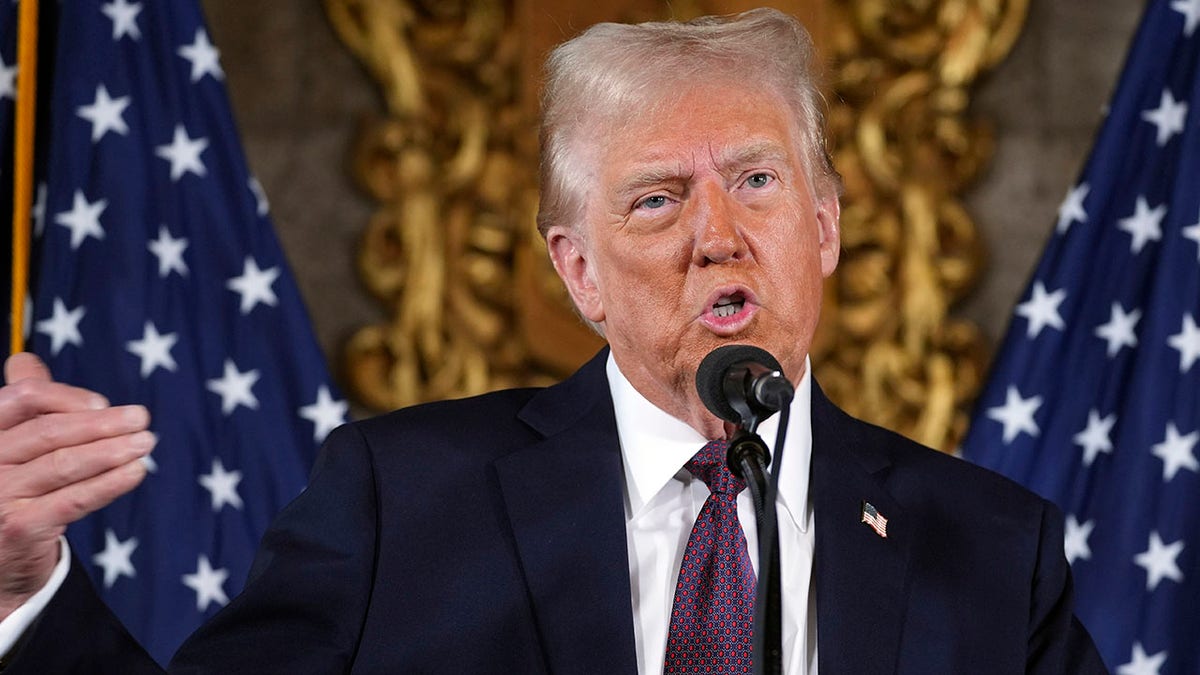
Even before he retakes office, Mr. Trump is making threats — perhaps serious, perhaps not — to acquire the territory of NATO allies like Canada and Denmark. And Mr. Musk, the president-elect’s biggest financial supporter, is using his social media platform X to bring the far-right Alternative for Germany party into the mainstream and smear the leaders of Britain’s center-left Labour Party.

It is not clear if Europe’s political immune system has the antibodies to defend against these new incursions.

This is not the first time a Trump ally has attempted to build a bridge with the European far right. In 2018 and 2019, the Trump adviser Stephen K. Bannon held meetings with far-right politicians across Europe. But the political landscape now is very different. The governments of Germany and France have collapsed; far-right parties are on the rise in those countries, and are already in power in several others across the continent.

A senior official from the first Trump administration, who is in line for an even more senior role in the second, was blunt in his assessment: Europe, he said, has no idea what is coming its way.

Mr. Musk spent a $250 million slice of his $400 billion fortune to help Donald Trump get re-elected. He arguably had just as much influence on U.S. politics through his own notoriety and ownership of X, the social media network formerly known as Twitter.

He aggressively campaigned against Kamala Harris (in one case sharing a fake video of her describing herself as a “diversity hire” who does not “know the first thing about running the country”) and interviewed Trump live on the platform. He is now deploying a similar playbook in Europe.

In Britain, Mr. Musk revived a decade-old “grooming gangs” scandal that unfolded while Prime Minister Keir Starmer, whose center-left Labour Party is in power, was head of public prosecutions.

Fanning the flames that were kindled by right-wing media outlets, Mr. Musk has called Mr. Starmer “utterly despicable” and says he should be “in prison.” Last week he asked his 212 million followers to vote on whether “America should liberate the people of Britain from their tyrannical government.”

According to British media reports, Mr. Musk is also considering a $100 million donation to Britain’s far-right Reform Party, which would be the country’s largest political donation ever. The party’s leader, Nigel Farage, one of the chief campaigners for Brexit, has met Trump several times, most recently at Mar-a-Lago last month.

“MAGA hates Starmer,” the former Trump administration official told The Times. He spoke on the condition of anonymity to offer his candid views while he is being considered for a role in the second Trump administration.

“MAGA loves Meloni,” he added, referring to Italy’s right-wing prime minister, Giorgia Meloni, “as long as she meets her deportation targets.”

Mr. Musk’s SpaceX is also in talks with Ms. Meloni’s government to provide secure military communications through its Starlink satellite network. At a news conference last week, she described Mr. Musk as a “very rich person who is expressing his opinions.”

In Germany, which is holding snap federal elections next month, Mr. Musk is encouraging voters to vote for the far-right AfD, offering it the legitimacy that has long been denied to a party under surveillance by Germany’s domestic intelligence service for its links to neo-Nazis.

In an opinion piece for a major German newspaper published Dec. 28, he called the AfD the last “spark of hope” for Germany. The country, he said, is “teetering on the brink of economic and cultural collapse.”

On Thursday he live-streamed a 75-minute conversation with Alice Weidel, the AfD’s candidate for chancellor, on X, giving her the same platform he gave Trump five months earlier.

Since Mr. Musk first endorsed the AfD in December, Ms. Weidel’s posts on X have routinely gone viral, in part because he reposts them, along with numerous neo-Nazi accounts that have been reinstated and amplified. Researchers watching the online scene say far-right German influencers now post on X in English to get Mr. Musk’s attention.

Germans won’t vote for the AfD just because an American billionaire asks them to. But social media is a tool that can shift public opinion, taking ideas that were once considered extreme and inserting them into the mainstream over time.

What has kept the AfD out of power despite becoming the second most popular party in the country is a national taboo against working with the far right. The memory of Hitler, who formed a coalition with centrist conservatives, has so far kept this firewall in place.

“The firewall between the AfD and the White House is officially gone and that makes the German firewall look silly,” the AfD’s co-leader, Tino Chrupalla, told me. “Musk is normalizing us.”

U.S. influence campaigns in other countries are not new. During the Cold War America lent its support to friendly nations and parties and intervened — sometimes aggressively — in countries seen to be ideological adversaries.

But now the MAGA movement seems to be intentionally sowing discord within U.S. allies. That’s disorienting for Europeans who grew up imbibing American lessons about democracy after World War II.

“I can’t remember a comparable case of interference in the election campaign of a friendly country in the history of the western democracies,” said Friedrich Merz, the leader and chancellor candidate of the center-right Christian Democrats. His party is leading in the polls but will need a coalition partner to form a government.

The United States remains the main guarantor of European security as the war in Ukraine has shown. It is also Europe’s biggest export market, making the prospect of tariffs a powerful threat for European economies. And Europe has no technology companies on par with those coming out of Silicon Valley, including Mr. Musk’s X platform and his Space X satellite company.

Europe’s dependency on Russian energy long hampered its response to the Kremlin’s meddling. But the dependency is much greater in the case of the United States.

Add to that the fact that the American interference is not covert, it is happening in broad daylight, which makes fighting back that much harder.

Influence campaigns work best when they tap into existing grievances. As in the United States, Europe’s trust in institutions fell in the aftermath of the 2008 financial crisis and the pandemic. Voters have become more hostile toward immigration and more worried about the cost of living and the economy. There is a growing sense that centrist leaders on left and right have failed them on these issues.

Millions of people in Europe are angry with the establishment, said Matthew Goodwin, a conservative author and commentator. “It’s not being orchestrated by Trump or Musk.”

“Musk has not created the AfD,” Mr. Goodwin added. “It helps the AfD that he is getting them attention but the underlying driver of this are policy choices that were made over the past decade.”

Mr. Musk’s provocations in Europe may be designed for maximum chaos rather than electoral success. In Britain, he trashed Nigel Farage, leader of the far-right Reform Party, after Mr. Farage declined to endorse Mr. Musk’s demand that a far-right agitator be released from prison.

“Both the Kremlin and the forces around the libertarian-authoritarian camp around Musk want to sow chaos in Europe and get rid of the liberal democratic elites,” Thorsten Benner, director of the Global Public Policy Institute in Berlin, told the German outlet Die Zeit. “We have to arm ourselves against that. But the biggest danger for our democracies comes not from the outside but the inside. Those fighting election campaigns should focus on the problems that concern voters.”

Similar levels of infighting and chaos also exist within the broader MAGA movement. Back in United States, there are signs that those in Mr. Trump’s hard line anti-immigration inner circle are tiring of Mr. Musk, especially after a spat about whether the country should expand work visas for highly skilled immigrants. In an interview with the Italian newspaper Corriere della Sera on Sunday, Mr. Bannon called Mr. Musk “truly evil” and vowed to “take this guy down.”

Whatever the direct impact of American interference on Europe’s political map in coming years, Trump is determined to enforce his priorities in Europe whoever is in government.

“At the end of the day, Trump is going to be so much more aggressive with Europe in terms of advocating uncompromisingly for the U.S. position that it doesn’t actually matter who’s in charge,” the former Trump official said. “They key thing is America First. Everything else is a distraction. Trump is going to use American strength to get his way.”
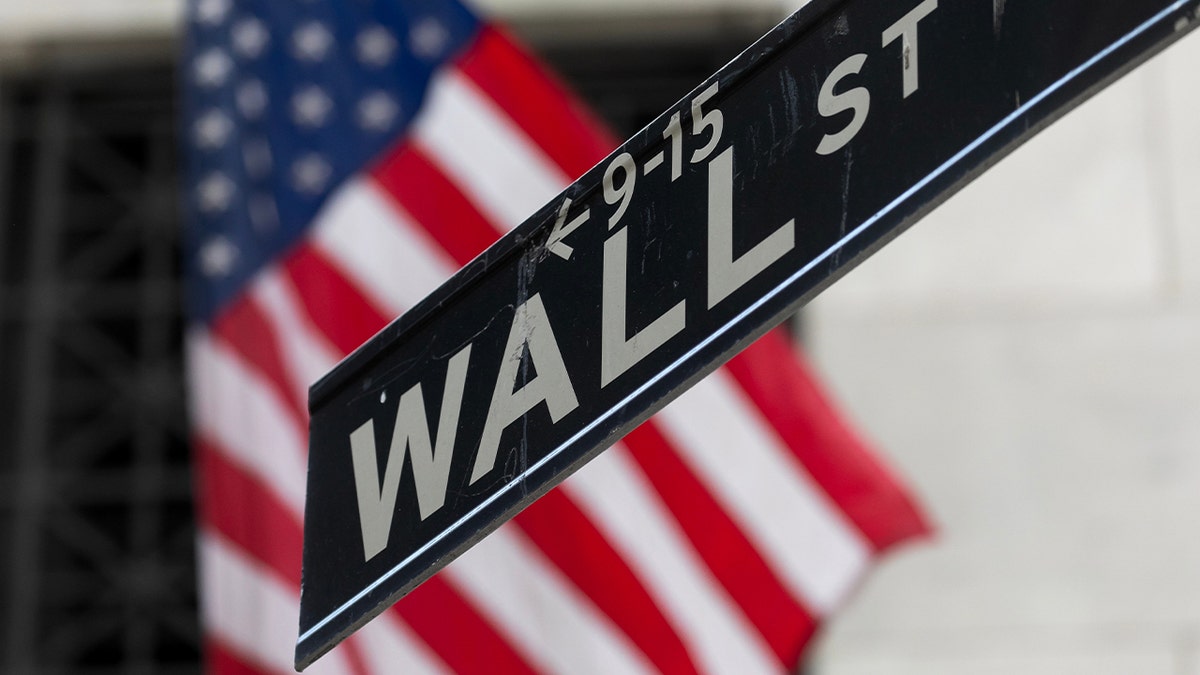
Wall Street breaks from net-zero climate alliance ahead of Trump term

0

Wall Street’s largest banks simultaneously exited the same net-zero climate alliance that was probed by Republican lawmakers last year, announced just weeks before President-elect Donald Trump will be sworn into office.

Since 2021, banking giants have been prominent members of the Net-Zero Banking Alliance (NZBA), a global group of financial institutions “committed to financing ambitious climate action” to transition the economy to net-zero greenhouse gas emissions by 2050. 

However, since December, six of the world’s largest banks, J.P. Morgan, Wells Fargo, Goldman Sachs, Morgan Stanley, Citigroup and Bank of America, have all separately announced their leaving the alliance, which encourages its member banks to additionally “design, set, and achieve” science-based, net-zero targets.

The banks said that they remain committed to emission reduction targets, but they will do so independently.

A POTENTIAL SECOND WITHDRAWAL FROM PARIS CLIMATE TREATY COULD LOOK DIFFERENT THAN FIRST US EXIT

JPMorgan Chase & Co. sign and building exterior seen in New York City. (Plexi Images)

“We will continue to work independently to advance the interests of our Firm, our shareholders and our clients and remain focused on pragmatic solutions to help further low-carbon technologies while advancing energy security,” a spokesperson for J.P. Morgan, the latest bank to withdraw from the alliance, said in a statement.

BlackRock, the world’s largest investment firm, also announced on Thursday it was separating from a major climate group, the Net Zero Asset Managers Initiative, which works with asset managers to attain net-zero emissions by 2050 or sooner.

The synchronicity of the exits comes just weeks before Trump, who is expected to break away from President Biden’s greenhouse gas emissions reduction target and potentially withdrawal from the Paris Climate Agreement, will assume the presidency.

A Wall Street sign in front of the New York Stock Exchange in New York City on Wednesday, July 31, 2024.

A Wall Street sign in front of the New York Stock Exchange in New York City on Wednesday, July 31, 2024. (Michael Nagle)

“The sudden exodus of these big US banks out of the NZBA is a lily-livered effort to avoid criticism from Trump and his climate denialist cronies,” said Paddy McCully, a senior analyst at Reclaim Finance, the Guardian reported. 

“A few years ago, when climate change was at the front of the political agenda, the banks were keen to boast of their commitments to act on climate,” McCully added. “Now that the political pendulum has swung in the other direction, suddenly acting on climate does not seem so important for the Wall Street lenders.”

CLICK HERE TO GET THE FOX NEWS APP

The exits come nearly a year after a group of House Republicans launched a probe into the six banks over their involvement in the international alliance over claims it could impact the agriculture sector.

How Lagging Vaccination Could Lead to a Polio Resurgence

0

Most American parents hardly give thought to polio beyond the instant their child is immunized against the disease. But there was a time in this country when polio paralyzed 20,000 people in a year, killing many of them.

Vaccines turned the tide against the virus. Over the past decade, there has been only one case in the United States, related to international travel.

That could change very quickly if polio vaccination rates dropped or the vaccine were to become less accessible.

Robert F. Kennedy Jr., a longtime vaccine skeptic who may become the secretary of health and human services, has said the idea that vaccination has nearly eradicated polio is “a mythology.”

And while Mr. Kennedy has said he’s not planning to take vaccines away from Americans, he has long contended that they are not as safe and effective as claimed.

As recently as 2023, he said batches of an early version of the polio vaccine, contaminated with a virus, caused cancers “that killed many, many, many, many, many more people than polio ever did.” The contamination was real, but research never bore out a link to cancer.

Aaron Siri, a lawyer and adviser to Mr. Kennedy, has represented a client seeking to challenge the approval or distribution of some polio vaccines on the grounds that they might be unsafe.

Those efforts appear unlikely to succeed. And there is widespread support for vaccination among prominent Republicans, including President-elect Donald J. Trump and Senator Mitch McConnell, who had polio as a child.

But the secretary of health and human services has the authority to discourage vaccination in less direct ways. He or she could withdraw federal funds for childhood vaccination programs, hasten the end of school mandates in states already disinclined toward vaccines or fuel doubts about the shots, exacerbating a decline in immunization rates.

If polio vaccination rates were to fall, scientists say, the virus could slip into pockets of the country where significant numbers of people are unvaccinated, wreaking havoc once more. The virus may be nearly eradicated in its original form, but resurgence remains a constant threat.

Any decision the Trump administration makes regarding the polio vaccine is likely to ripple across the globe, said Dr. David Heymann, an infectious disease physician at the London School of Hygiene and Tropical Medicine and former leader of polio eradication at the World Health Organization.

“If the U.S. takes away the license, then many other countries will do the same thing,” he said. To have polio resurge when it is so close to eradication “would be very, very, very, very sad.”

Before 1955, when the vaccine was introduced, polio disabled more than 15,000 Americans each year and hundreds of thousands more worldwide. In 1952 alone, it killed 3,000 Americans after paralysis left them unable to breathe.

Many of those who survived still live with the consequences.

“People really underestimate how horrific polio was,” said Dr. Karen Kowalske, a physician and polio specialist at University of Texas Southwestern Medical Center in Dallas.

Many who recovered now suffer “post-polio syndrome”: Some of the original symptoms, including muscle weakness and respiratory problems, return.

Dr. Kowalske tends to about 100 post-polio patients who need braces, wheelchairs or other devices to cope with progressive weakness. Some are older adults who became infected before the vaccine was available; others are middle-aged immigrants from countries where polio remained a problem for much longer than in the United States.

To some survivors, the idea of polio’s return is unfathomable.

Carol Paulk contracted the disease in 1943, when she was just 3. Her right leg never recovered, and for the rest of her life she has walked with a pronounced limp and has been in near-constant pain.

Ms. Paulk is among the luckier ones. Until recently, she did not suffer the breathing, swallowing or digestive problems that often torment polio survivors.

She has had “a wonderful, wonderful life” with a husband and three daughters, a law degree and extensive travel abroad.

But always, everywhere, she is calculating how far away the next seat is, how long her energy will hold out and whether a given activity is worth debilitating pain the next day.

She didn’t participate in the 1963 March on Washington or play sports, as she desperately wanted to, or go hiking, skiing and bicycling with her husband.

If there were a public hearing about the polio vaccine now, “I would go, and I would take off my brace, and I would let them see my leg and ask them, is that what they want for their children?” she said.

Polio disables many fewer children now. Vaccination has scrubbed the virus from most of the planet, slashing the number of cases by more than 99.9 percent and preventing an estimated 20 million cases of paralysis.

Still, the virus has turned out to be a stubborn enemy, and eradication has been set back over and over again.

In 2024, 20 countries reported polio cases, and the virus was detected in wastewater in five European countries, decades after its official elimination from the region, and in Australia.

“Any reduction in coverage rates increases the risk of polio anywhere,” said Oliver Rosenbauer, a spokesman for the World Health Organization’s polio eradication program.

There are three types of polioviruses, and eradication requires that all three disappear. For years, the goal has been tantalizingly close.

Type 2 was declared vanquished in 2015, and Type 3 in 2019. Type 1 now circulates only in Afghanistan and Pakistan. In 2021, the two countries together had just five cases; in 2024, they had 93.

But those figures tell only part of the story. In a surprising twist, an oral vaccine used in some parts of the world has kept poliovirus circulating long after it should have died out.

In most low- and middle-income countries, health officials still rely on an oral vaccine given as two drops on the tongue. It is inexpensive and easy to administer, and it prevents transmission of the virus.

But it contains weakened virus, which vaccinated children can shed into the environment through their feces. When there are enough unvaccinated children to infect, the pathogen slowly spreads, regaining its virulence and eventually causing paralysis.

The problem is this: Since 2016, the oral vaccine used for routine immunization has not protected against Type 2 virus. Global health authorities made a deliberate decision to reformulate the vaccine on the grounds that naturally occurring Type 2 virus had disappeared.

That turned out to be premature. More Type 2 virus had been shed by orally vaccinated children in some parts of the world than officials had anticipated. When some nonimmunized children, or those given the newer oral vaccine, encountered this “vaccine-derived” Type 2 virus, they became infected and paralyzed.

Vaccine-derived poliovirus now paralyzes more children than naturally occurring virus does. For example, Nigeria eliminated all so-called wild-type polio in 2020. But in 2024, the country saw 93 cases of Type 2 vaccine-derived virus, more than one-third the global total.

None of this is a problem for Americans — as long as they are vaccinated.

The inactivated polio vaccine (I.P.V.) used for routine immunization of American children protects against all three types of polio. These formulations contain dead virus, and so cannot cause disease or revert to a dangerous form.

But like some other vaccines for infectious diseases, they do not fully prevent infection or transmission of the virus. This aspect is among the criticisms of Mr. Siri, Mr. Kennedy’s adviser.

Still, it is less important than the vaccines’ near-perfect power to prevent paralysis, experts said.

“Yeah, yeah, it’s true, I.P.V. doesn’t prevent transmission,” said Dr. William Petri, an infectious diseases physician and past president of the W.H.O.’s polio research committee. “But, boy, that’s the best thing since sliced bread at preventing paralysis.”

It does mean, however, that people vaccinated with I.P.V. can keep the virus circulating, even when they themselves are protected against illness and paralysis.

So here’s a realistic scenario that worries researchers: Someone who was vaccinated with the oral polio vaccine in another country might bring the virus into the United States and then shed it, in its weakened form. This has already happened in other countries.

So long as most of the population remains vaccinated, this is not likely to set off an epidemic. But if the virus makes its way into communities with low vaccination rates, it may spread, and then revert to a virulent form that can cause paralysis.

That is what happened in New York in 2022, when polio struck a 20-year-old unvaccinated member of an ultra-Orthodox Jewish community in Rockland County.

The vaccination rate in that county was just over 60 percent, compared with the national average of 93 percent.

The virus that paralyzed the young man had been circulating for months, and it was later detected in the sewage of multiple New York counties with vaccination rates hovering around 60 percent, prompting the state to declare an emergency.

Genetically related polioviruses were detected in wastewater samples in Britain, Israel and Canada, suggesting widespread transmission. The authorities later found two distinct vaccine-derived Type 2 polioviruses in New York wastewater, suggesting two separate importations.

If polio were to re-emerge in the United States, it is unlikely to be as horrific as it was in the pre-vaccine decades. Many older adults still remember that as children they were not permitted to swim in rivers or pools, or anywhere the virus might lurk.

“The reason we weren’t allowed to play in rivers in the ’50s is because raw sewage was dumped into the rivers,” Dr. Heymann said.

That is no longer the case, so there “wouldn’t be massive transmission immediately in the U.S.,” he added.

But even if just a few children were to become paralyzed, “it would be awful.”

Maps show extent of wildfire devastation, homes destroyed

0

Los Angeles authorities revealed updated maps of the destruction left in the wake of wildfires across the city on Monday.

The maps focus on the impact of the Eaton and Pacific Palisades fires, two of the largest and least contained of the blazes. The maps show destruction on a per-structure basis, with red icons indicating a structure that has been at least 50% destroyed, while orange, yellow and green indicate more minor damage and black indicates no damage at all.

In total, the Eaton fire has impacted 885 structures, of which 674 were more than half destroyed, while 157 avoided damage entirely. The Pacific Palisades fire has impacted 664 structures, of which 485 were more than half destroyed, and just 127 avoided damage.

“Field damage inspections may be ongoing and subject to change as information is gathered and verified. The icons on the map indicate the current known status of the structure,” city authorities noted.

ESSENTIAL PHONE NUMBERS FOR LOS ANGELES-AREA RESIDENTS AND HOW YOU CAN HELP THEM

More than 12,000 homes and businesses have been burned in the wildfires, with damage assessments still ongoing in affected areas. 

POWER GRID FAULTS SURGED RIGHT BEFORE LOS ANGELES WILDFIRES BEGAN: EXPERT

Last week, Cal Fire reported the Palisades and Eaton Fires to be among the top five most destructive in California history.

At least 24 people have been killed in the blazes, though recovery efforts are ongoing.

Both the Eaton and Palisades fires started Tuesday last week and have so far burned nearly 40,000 combined acres. The Eaton fire, which is centered around Pasadena, has caused 16 deaths, the Los Angeles County Medical Examiner says. The Palisades fire has claimed eight additional lives, and both fires remain largely uncontained as of Monday morning.

An aerial view shows debris from burned properties, following the Palisades Fire at the Pacific Palisades neighborhood in Los Angeles, California, on Jan. 10, 2025. (REUTERS/Daniel Cole )

CLICK HERE TO GET THE FOX NEWS APP

Fire authorities have clarified that not all “structures” referenced in the map are homes or businesses. They say things like sheds and even some vehicles are included in the “structures” count.

Fox News’ Greg Norman contributed to this report.

Map: 6.8-Magnitude Earthquake Strikes Near Japan

0

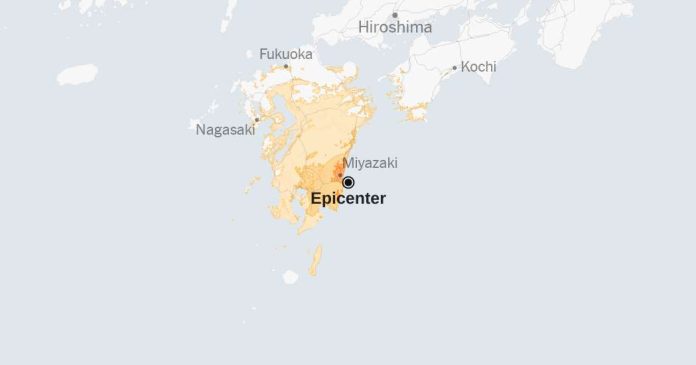
Note: Map shows the area with a shake intensity of 4 or greater, which U.S.G.S. defines as “light,” though the earthquake may be felt outside the areas shown. The New York Times

A strong, 6.8-magnitude earthquake struck off the coast of southern Japan on Monday, according to the United States Geological Survey.

The temblor happened at 9:19 p.m. Japan time about 7 miles southeast of Miyazaki, Japan, data from the agency shows.

As seismologists review available data, they may revise the earthquake’s reported magnitude. Additional information collected about the earthquake may also prompt U.S.G.S. scientists to update the shake-severity map.

Aftershocks in the region

An aftershock is usually a smaller earthquake that follows a larger one in the same general area. Aftershocks are typically minor adjustments along the portion of a fault that slipped at the time of the initial earthquake.

Quakes and aftershocks within 100 miles

Aftershocks can occur days, weeks or even years after the first earthquake. These events can be of equal or larger magnitude to the initial earthquake, and they can continue to affect already damaged locations.

Source: United States Geological Survey | Notes: Shaking categories are based on the Modified Mercalli Intensity scale. When aftershock data is available, the corresponding maps and charts include earthquakes within 100 miles and seven days of the initial quake. All times above are Japan time. Shake data is as of Monday, Jan. 13 at 7:37 a.m. Eastern. Aftershocks data is as of Monday, Jan. 13 at 8:34 a.m. Eastern.

Trudeau says Canada won’t be 51st state, though Trump a ‘successful negotiator’

0

Join Fox News for access to this content

You have reached your maximum number of articles. Log in or create an account FREE of charge to continue reading.

By entering your email and pushing continue, you are agreeing to Fox News’ Terms of Use and Privacy Policy, which includes our Notice of Financial Incentive.

Please enter a valid email address.

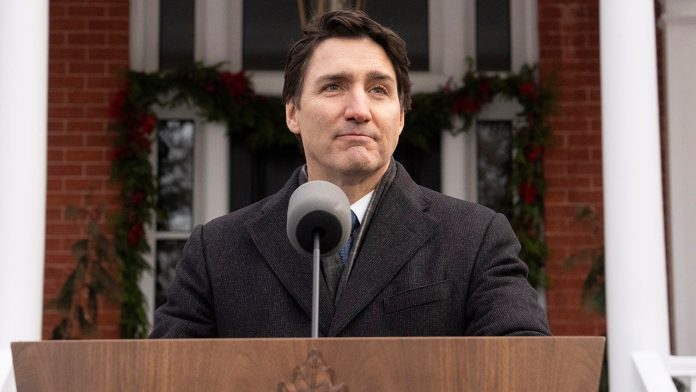
Canada’s outgoing Prime Minister Justin Trudeau suggested that President-elect Trump’s suggestion that Canada become America’s “51st state” was a distraction from the tariff threat. 

“I know that as a successful negotiator, he likes to keep people a little off balance. The 51st state, that’s not going to happen,” Trudeau told MSNBC’s “Inside with Jen Psaki” on Sunday. “It’s just a non-starter. Canadians are incredibly proud of being Canadian. But people are now talking about that, as opposed to talking about what impact 25% tariffs [has] on steel and aluminum coming into the United States, on energy, whether it’s oil and gas or electricity.”

“No American wants to pay 25% more for electricity or oil and gas coming in from Canada,” Trudeau said in the interview with Psaki, President Biden’s former White House press secretary. “That’s something I think people need to pay a little more attention to. And perhaps the idea of a 51st state is distracting a little bit from a very real question that will increase the cost of living for Americans and harm a trading relationship that works extremely well.”

Trump has threatened to impose 25% tariffs on all Canadian imports. The president-elect also said that if Canada merged with the U.S., taxes would decrease and there would be no tariffs. 

The president-elect has also taken shots at Trudeau, referring to him as the “governor” of Canada. Last Monday, Trudeau announced that he would resign as Canada’s prime minister once his Liberal Party chooses a new leader on March 9. 

GROWING CONSERVATIVE MOVEMENT IN CANADA IS FIGHTING BACK AGAINST ‘CALIFORNIA ON STEROIDS,’ SAYS STRATEGIST

Canada Prime Minister Justin Trudeau announced his upcoming resignation to the media outside Rideau Cottage on Monday, Jan. 6, 2025, in Ottawa. (AP/Adrian Wyld/The Canadian Press)

“From my very first conversations with him back in 2016, he told me how much he admires Canada, how much he appreciates and likes us, so there is a certain amount of flattery in this that he thinks that we are as great as we are,” Trudeau said of Trump on Sunday. “He’s right, we are great. We’re also very, very proud of being Canadian. If you talk to any Canadian, you ask them to define what it is to be Canadian, they’ll talk about all sorts of different things, but one of the things we will point out is, ‘and we’re not Americans.’” 

On Trudeau’s trip to Mar-a-Lago in November, the Canadian prime minister said the topic of the U.S. annexing Canada did come up, but Trudeau said once he joked that Canada could annex Vermont or California as a sort of trade, Trump “immediately decided it was not that funny anymore, and we moved on to a different conversation.” 

“This isn’t out of the blue that he’s doing this, but my focus has to be not on something that he’s talking about that will not ever happen, but more on something that might well happen, that if he does choose to go forward with tariffs that raise the costs of just about everything for American citizens, that on top of that, we’re going to have a robust response to that,” Trudeau said. 

“We are ready to respond with tariffs as necessary,” Trudeau said. 

Canadian officials say that if Trump follows through with his threat of punishing tariffs, Canada would consider slapping retaliatory tariffs on American orange juice, toilets and some steel products. 

Trudeau leaves Florida hotel to head to Mar-a-Lago

Canadian Prime Minister Justin Trudeau leaves his hotel as he heads to meet President-elect Donald Trump, in West Palm Beach, Florida, on Nov. 29, 2024.  (CHANDAN KHANNA/AFP via Getty Images)

MAGAFEST DESTINY? TRUMP FLEXES HIS MUSCLES WITH REPEATED TALK OF AMERICAN EXPANSIONISM

Trudeau recalled that Trump previously put tariffs on imports of steel and aluminum during his first term, and Canada responded by putting tariffs on bourbon, Harley Davidson motorcycles, orange juice, playing cards and other such items that Trudeau argued Canadians could easily find replacements for. 

“It ended up causing a lot of loss in American businesses for whom Canada is their number one export partner. We are the number one export partner for about 35 different U.S. states, and anything that thickens the border between us ends up costing American citizens and American jobs. That’s not what President Trump got elected to do,” Trudeau said. “I know he got elected to try and make life easier for all Americans, to support American workers. These are things that are going to hurt them.” 

Trudeau at Jimmy Carter funeral

Justin Trudeau during the funeral service of late former President Jimmy Carter at the Washington National Cathedral in Washington, DC, on Thursday, Jan. 9, 2025.  (Al Drago/Bloomberg via Getty Images)

Trump said last week that the U.S. does not need oil – or anything else – from Canada, but almost a quarter of the oil that the U.S. consumes each day comes from Canada. The energy-rich western province of Alberta exports 4.3 million barrels of oil a day to the U.S., according to the Associated Press. Data from the United States Energy Information Administration shows that the U.S. consumes 20 million barrels a day, and produces about 13.2 million barrels a day.

Canada, a founding partner of NATO and home to more than 40 million people, is also the top export destination for 36 U.S. states. Nearly $2.7 billion worth of goods and services cross the border each day.

Trump has said that he would reconsider his tariff threat if Canada made improvements in managing security at the Canada-U.S. border, which he and his advisers see as a potential entry point for illegal immigrants.

Trudeau has said that less than 1% of illegal immigrants and fentanyl cross into the U.S. from Canada.

CLICK HERE TO GET THE FOX NEWS APP

Nevertheless, after his meeting with Trump at Mar-a-Lago, Trudeau announced an increase in spending on border security, expressing willingness to address Trump’s concerns in hopes that he would reconsider his tariff threat.

The Associated Press contributed to this report.

Talks on Gaza Cease-Fire and Hostage Releases: What to Know

0

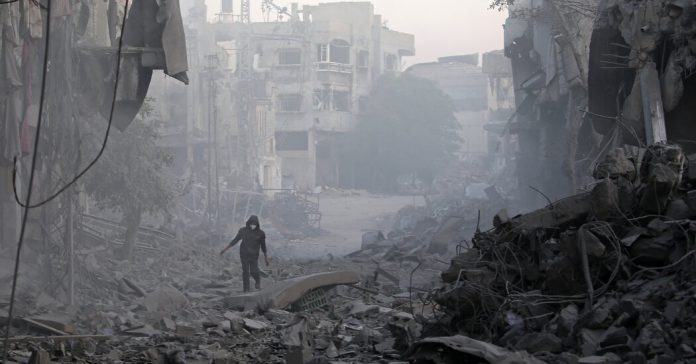
High-level cease-fire talks appeared to be gaining momentum on Monday as Arab and American mediators pressed for an agreement to halt the fighting in Gaza and release hostages held by Hamas before President-elect Donald J. Trump assumes office on Jan. 20.

It was still unclear whether the parties had reached resolution on central disputes that have proved insurmountable in previous rounds of negotiations, but officials briefed on the talks have expressed cautious optimism in recent days about the possibility of concluding a deal.

For months, repeated rounds of talks have seen hopes rise only to be dashed days later, with both Israel and Hamas blaming the other for the impasse.

If a deal is achieved, it would bring some respite to Palestinians in Gaza, who have endured miserable conditions in displacement camps and relentless bombardments by Israel, and the families of hostages taken from Israel, who have suffered for months wondering about the fate of their loved ones.

  • The lead mediators in the talks are Qatar and Egypt, shuttling messages between Israel and Hamas. The Qatari prime minister, Sheikh Mohammed bin Abdulrahman bin Jassim Al-Thani, and the director of Egypt’s General Intelligence Service, Maj. Gen. Hassan Rashad, have been the top officials representing their countries in the negotiations.

  • David Barnea, the chief of Israel’s foreign intelligence service, Mossad, is one of Israel’s main negotiators, alongside Ronen Bar, the head of the Shin Bet, a domestic security service, and Maj. Gen. Nitzan Alon of the Israeli military. Ophir Falk, a foreign policy adviser to Prime Minister Benjamin Netanyahu, has also participated in important meetings related to the negotiations.

  • Khalil al-Hayya, a senior Hamas official based in Doha, is the militant group’s chief negotiator and has interfaced with Qatari and Egyptian officials about the details of a possible agreement.

  • The United States has used its leverage to encourage Israel and Hamas to sign on to a deal. Bill Burns, the C.I.A. director, and Brett McGurk, a senior White House official, have crisscrossed the Middle East, pressing for a breakthrough in the talks. Steve Witkoff, Mr. Trump’s Middle East envoy, has also made trips to Qatar and Israel, meeting with top officials there.

Israeli officials hope to secure the release of at least some of the roughly 100 hostages who have been held in Gaza since the Hamas-led attack on southern Israel on Oct. 7, 2023, that ignited the ensuing war in the territory.

Hamas leaders want to achieve an end to the war in Gaza, which has severely weakened the group’s armed wing and government, led to the displacement of nearly two million people, and reduced cities to rubble. Hamas officials have also said they are seeking a complete Israeli withdrawal from Gaza, the return of displaced people in the south of the enclave to the north, and the entry of materials for reconstruction.

  • A major obstacle to the success of the talks has been the permanency of a cease-fire. While Hamas has demanded a comprehensive end to the war, Mr. Netanyahu has said he wants a “partial” deal that will allow Israel to resume the war after freeing hostages.

  • Israel has been demanding vague language in the text of an agreement that leaves room for a resumption of fighting at some point, according to a Palestinian familiar with the matter and two Israeli officials. Mr. Netanyahu has feared that his right-wing coalition partners could take down his government and jeopardize his political future if he agrees to a deal that ends the war in Gaza, analysts say.

  • Hamas has not suggested it would be willing to compromise on its demand to end the war. Last week, Osama Hamdan, a senior Hamas official, told a gathering in Algeria that there must be “an absolute end to the aggression.”

DNC hires former Harris staffers behind @KamalaHQ for social media response to Trump

0

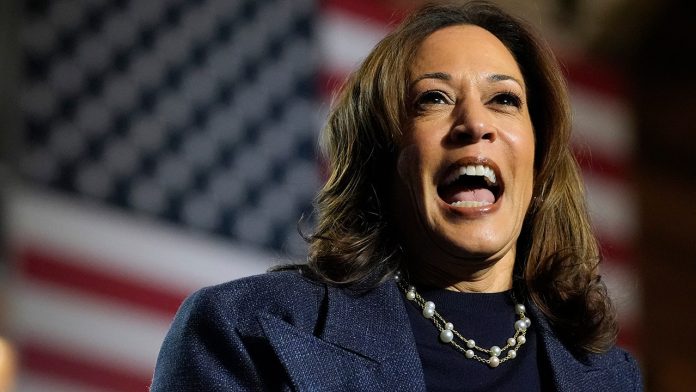
The Democratic National Committee has hired the social media staffers who ran the @KamalaHQ account during Vice President Kamala Harris’ failed presidential campaign, the organization announced Monday.

The social team will now focus on building a new @FactPostNews brand for the Democratic Party across X, Threads and Bluesky, with plans to expand to Facebook, Instagram, TikTok. The account will seek to counter so-called “misinformation” from President-elect Trump’s administration in real time.

“The Republican disinformation machine is powerful, but we believe a stronger weapon is giving people the facts about how Trump and his administration are screwing over the American people,” DNC chief mobilization officer Shelby Cole told Axios.

The DNC did not immediately respond to a request for comment from Fox News Digital on Monday morning.

JAMES CARVILLE CONCEDES HE WAS WRONG ABOUT KAMALA HARRIS’ CHANCES: ‘IT WILL ALWAYS BE THE ECONOMY, STUPID’

The social media team behind Vice President Kamala Harris’ campaign account is launching a new initiative with the Democratic National Committee. (AP Photo/Jacquelyn Martin)

The team’s first set of marching orders will be to harass the confirmation process for Trump’s cabinet nominees, namely by highlighting their personal wealth, according to Axios. An internal memo calls the nominees “unfit billionaire picks.”

The new initiative comes as Democrats are re-evaluating their election strategies across the board following Trump’s commanding victory in November.

KAMALA HARRIS’ BUNGLED ANSWER ON ‘THE VIEW’ ABOUT BIDEN SEEN AS TURNING POINT FOR CAMPAIGN

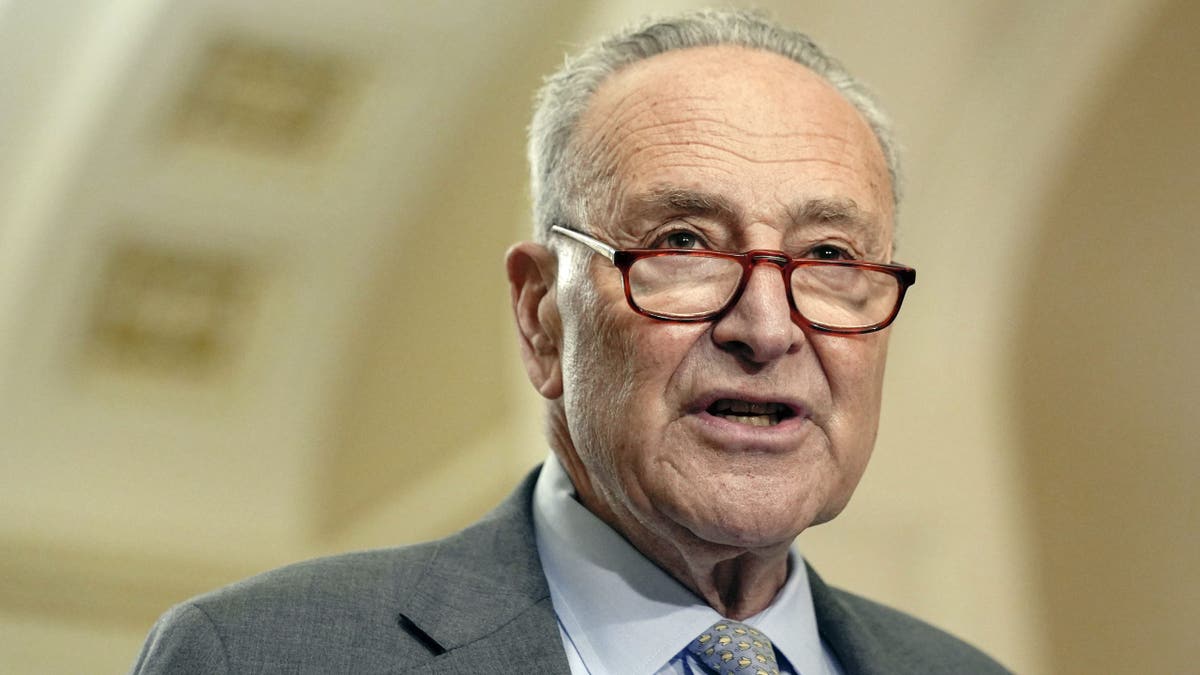
Senate Minority Leader Chuck Schumer, D-N.Y., conceded last week that Democrats should regard the 2024 election as a loss and reflect on what went wrong for the party after losing both the White House and Senate and failing to flip the House of Representatives.

Schumer on Capitol Hill

Sen. Majority Leader Chuck Schumer, D-N.Y., talks after a policy luncheon on Capitol Hill, Sept. 24, 2024, in Washington.  (AP Photo/Mariam Zuhaib, File)

Schumer appeared on NBC’s “Meet the Press,” where he was asked about Democratic strategist James Carville’s assertion that the reason Democrats lost was because of “the economy, stupid.”

“I told my caucus, and I’ll say it here, too… certainly it was a loss, but it’s also a challenge,” Schumer said of the election.

Schumer said Democrats faced “severe headwinds” to win four of seven contested Democratic Senate seats, though conceded that “we did some things wrong and we have to look in the mirror and see what we did wrong.”

Trump mar-a-lago

President-elect Donald Trump and his fellow Republicans secured commanding victories across the board in November. (AP Photo/Evan Vucci)

CLICK TO GET THE FOX NEWS APP

“What we’re going to do is spend time talking to working families, showing them how much we care for them,” Schumer added. “And not just talk about legislation, but talk about the conditions that have made so many working families worried about their futures.”

Fox News’ Stephen Sorace contributed to this report

Troops Detained in Ukraine Give Rare Glimpse Into North Korea’s Military

0

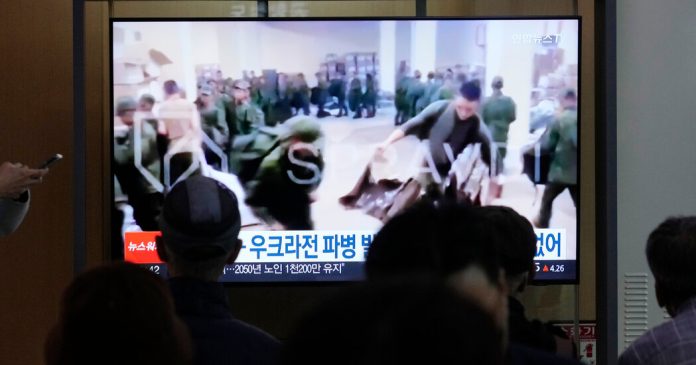
One young soldier from North Korea said he didn’t know where he was fighting when he was sent from his isolated homeland to the frontline of the war between Russia and Ukraine. When asked whether his parents knew where he was, another North Korean soldier shook his head.

The three-minute video clip that President Volodymyr Zelensky of Ukraine posted on the social media ​platform X on Sunday showed a Ukrainian official questioning two North Korean prisoners of war with the help of a Korean interpreter. ​The Ukrainian authorities announced their capture​ on Saturday, saying they were the first North Korean troops to be taken alive. Mr. Zelensky later offered to exchange them for Ukrainian prisoners of war held in Russia.

The soldiers’ answers came in footage provided and edited by Ukraine, which controlled the production and release of the video. It offered a tiny, but rare, glimpse into the mind-set and preparedness of ​an estimated 11,000 North Korean troops deployed to help Russia’s war against Ukraine.

They appeared to back up what South Korean and U.S. officials have said in recent weeks: North Korean troops were taking heavy casualties in a foreign war waged in an unfamiliar territory while their government was keeping their deployment a secret to its people.

South Korea’s National Intelligence Service told lawmakers in Seoul on Monday that it estimates 300 North Korean soldiers have been killed and 2,700 others wounded in battles​ against Ukraine. The White House has put the toll even higher.

​Memos found with dead North Korean soldiers indicated that their government had urged the highly indoctrinated troops to end their own lives rather than be captured​ in the battlefield, according to South Korean lawmakers who briefed journalists after a closed-door meeting with the spy agency, echoing an assertion made by Mr. Zelensky. One North Korean soldier was trying to blow himself up with a grenade, shouting the name of ​North Korea’s leader, Kim Jong-un, when ​he was shot by Ukrainian troops, they said.

North Korea has not responded to reports of its troops captured or killed by Ukraine forces. ​It has never publicized the ​deployment ​or large shipments of ​North Korean artillery shells and other weapons​ sent to Russia to help its war against Ukraine​, although ​they marked the country’s first intervention in a major armed conflict overseas in decades.

In the video released by Mr. Zelensky, the voice of an official questioning the North Koreans was distorted, perhaps to prevent their identification, and the captured troops were clearly still wounded. Ukraine said the soldiers had received medical care and had been taken to Ukraine’s capital, Kyiv, for interrogation. But by posting the video clip online, Ukraine also appeared to use the POWs in its messaging to the West.

The Ukrainian leader has seized the involvement of North Korean troops for Russia as a way to try and galvanize more support from allies. South Korea, too, has cited North Korea’s growing military alliance with Russia as a source for international concern.

Experts say that comments from prisoners of war should be assessed in light of the power imbalance between captors and captives, with the knowledge that the prisoners may not be speaking freely and could be motivated by their own safety concerns or a desire for good treatment.

According to the rules governing treatment of prisoners of war under the Geneva Conventions, governments are supposed to protect a prisoner of war from being made into a “public curiosity,” a concept that is sometimes interpreted as not presenting them in any public setting.

Lying in a bed with both his hands wrapped in white bandages, one of the two North Korean POWs looked bewildered when he indicated — by nodding or shaking his head — that he didn’t know he was fighting Ukraine ​when he was captured or that he was now in Ukraine.

When he was sent to the front line on Jan. 3, he said he was only told that the North Korean troops “would train as if we were in real combat.”

“I saw my colleagues dying next to me,” he said. “I was hiding in a dugout when I got injured.”

When asked whether he wanted to return home, the soldier asked if the Ukrainians were good people. When the interpreter said yes, he said in a weak but pleading voice: “I want to live here.”

The other North Korean soldier had a bandage wrapped around his ​wounded jaw and did not speak. He nodded when he was asked whether he had parents in North Korea. But he shook his head when​ he was asked whether they knew where he was.

“​The video clip of the two soldiers shows that Kim Jong-un has not been able to find a way to justify his country’s participation in the Russia-Ukraine war to his people,” said Kang Dong-wan, an expert on North Korea at Dong-A University in South Korea. “It also showed that the North Korean troops are being wasted as cannon fodder.”

The two soldiers belonged to the Reconnaissance General Bureau, the North Korean military’s intelligence arm, the South Korean lawmakers told journalists in a briefing. The lawmakers said that when the soldiers were sent to the war, their government had promised to treat them as “heroes.”

The soldiers were captured in the Kursk region of western Russia, where North Korean forces were fighting to help Russia regain territory seized by Ukraine during a surprise cross-border incursion last summer.

​The North Korean troops were shooting at drones flying in the distance in futile attempts to destroy them, the South Korean intelligence agency told lawmakers, citing battlefield footage that it analyzed. They were also making reckless charges at their enemies without proper artillery support from the rear, it was quoted as saying.

Mr. Kim is believed to reap billions of dollars worth of oil, food and weapon technologies in return for its supply of troops and weapons to Russia, according to South Korean analysts and officials. But the troop deployment was so rushed that the ​North Korean soldiers were poorly prepared for modern warfare, especially drone attacks, they said.

On Sunday, Mr. Zelensky said that Ukraine was “ready to hand over Kim Jong-un’s soldiers to him if he can organize their exchange for our warriors who are being held captive in Russia.”

“For those North Korean soldiers who do not wish to return, there may be other options available. In particular, those who express a desire to bring peace closer by spreading the truth about this war in Korean will be given that opportunity,” he added.

Professor Kang said that by exposing the face of one North Korean soldier and his wish to remain in Ukraine, the Ukrainian authorities were endangering his safety should he be sent back to North Korea, where his statement would be seen as an act of betrayal.

​If any North Korean POWs wanted to defect to South Korea, the Seoul government was ready to negotiate with Kyiv, the South Korean lawmakers quoted the intelligence agency as saying.

China’s exports in December up 10.7% as U.S. tariffs loom : NPR

0

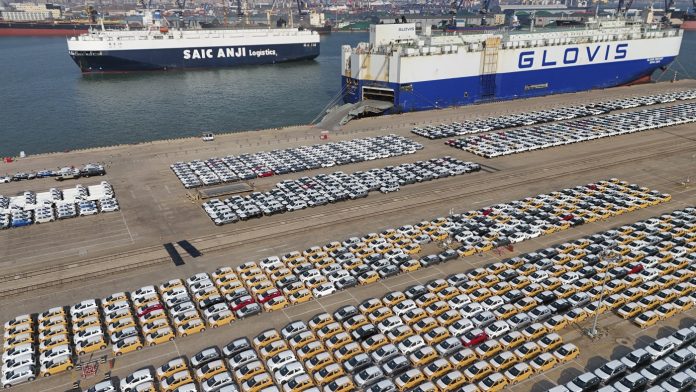
Vehicles and trucks for export wait for transportation from a port in Yantai in eastern China’s Shandong province on Jan. 2, 2025.

AP/CHINATOPIX/AP


hide caption

toggle caption

AP/CHINATOPIX/AP

HONG KONG — China’s exports in December grew at a faster pace than expected, as factories rushed to fill orders to beat higher tariffs that U.S. President-elect Donald Trump has threatened to impose once he takes office.

Exports rose 10.7% from a year earlier. Economists had forecast they would grow about 7%. Imports rose 1% year-on-year. Analysts had expected them to shrink about 1.5%. With exports outpacing imports, China’s trade surplus grew to $104.84 billion.

Here are some highlights from the report.

Higher tariffs on the horizon

Trump has pledged to raise tariffs on Chinese goods and close some loopholes that exporters now use to sell their products more cheaply in the U.S. If enacted, his plans would likely raise prices in America and squeeze sales and profit margins for Chinese exporters.

China’s exports are likely to remain strong in the near-term, said Zichun Huang of Capital Economics, as businesses try to “front-run” potentially higher tariffs.

“Outbound shipments are likely to stay resilient in the near-term, supported by further gains in global market share thanks to a weak real effective exchange rate,” she wrote in a note.

But exports will likely weaken later in the year if Trump follows through on his threat to impose tariffs, Huang said.

Record exports and total trade

Officials who briefed reporters in Beijing said the total value of China’s imports and exports reached a record 43.85 trillion yuan (nearly $6 trillion), up 5% from a year earlier. China is the world’s largest exporter and the main trading partner of more than 150 countries and regions, said Wang Lingjun, the Customs Administration’s deputy director general.

While growth of the rest of China’s economy has slowed following the pandemic and partly because of downturn in the housing industry, exports have surged. Under leader Xi Jinping, the ruling Communist Party is promoting upgrading of factories and a shift to more high-tech manufacturing. The report Monday said China’s export of mechanical and electrical products increased by almost 9% last year from a year earlier, with growth in exports of “high-end equipment” jumping more than 40%.

Exports of electric vehicles rose 13%, exports of 3D printers jumped almost 33% and shipments of industrial robots surged 45%. E-commerce trade, including sales by companies including Temu, Shein and Alibaba, registered 2.6 trillion yuan ($350 billion), more than twice the level in 2020.

What about imports?

China does not pursue a trade surplus and wants to increase its imports, the officials said. But while imports edged higher last year, they still lagged exports, partly due to lower prices for key commodities such as oil and iron ore.

“Regarding this year’s imports, we believe that there is still a lot of room for growth. This is not only because my country’s market capacity is large, there are many levels, and it has huge potential,” said Lv Daliang, a Customs Administration spokesperson.

China also is blocked from importing some products due to trade restrictions, Lv said, alluding to controls by the U.S. and some other countries on strategically sensitive exports to China, such as sales of advanced semiconductors and items that can be used for military purposes.

“In addition, some countries politicize economic and trade issues, abuse export control measures, and unreasonably restrict the export of some products to China, otherwise we will import more,” he said.

Where are all those exports going?

The officials emphasized China’s efforts to expand trade with countries participating in its “Belt and Road” initiative to expand infrastructure construction and trade across much of the globe. Trade with those countries accounted for about half of China’s total trade last year.

They noted that China has completely eliminated tariffs on imports from the world’s poorest countries.

But China also values trade with traditional markets like Europe and the United States, and two-way trade with the U.S. grew nearly 5% last year.

“We imported agricultural products, energy products, medicines, and aircraft from the United States, and exported clothing, consumer electronics, and household appliances to the United States, achieving mutual benefit and win-win results,” Wang said.

China and the overcapacity issue

U.S. officials and other critics say Beijing has pushed an expansion of exports to help make up for sluggish demand inside China as the economy has slowed. With factories in some industries operating well below capacity, they contend that the country has an “overcapacity” problem.

Chinese officials reject that contention.

“Whether from the perspective of comparative advantage or global market demand, there is no so-called ‘China’s overcapacity’ problem. This problem is a pure false proposition,” Wang said when asked about the issue.

China has made its industries more efficient through upgrading, investment and innovation supported by research and development, he said. “We have ensured the stability of the global production and supply chain with our own complete manufacturing industry chain, and driven technological progress and industrial upgrading around the world.”