Thursday, November 12, 2026
Home Blog Page 375

Ukraine has captured 2 North Korean soldiers: South Korea’s intelligence service

0

Ukraine captured two wounded North Korean soldiers who were fighting on behalf of Russia in a Russian border region, South Korea’s intelligence service said, confirming an account from Ukrainian President Volodymyr Zelenskyy on Saturday.

Seoul’s National Intelligence Service (NIS) told AFP it has “confirmed that the Ukrainian military captured two North Korean soldiers on January 9 in the Kursk battlefield in Russia.”

The confirmation comes after Zelenskyy said in a post on the Telegram messaging app that the two captured North Korean soldiers were wounded and taken to Kyiv, where they are communicating with Ukrainian security services SBU.

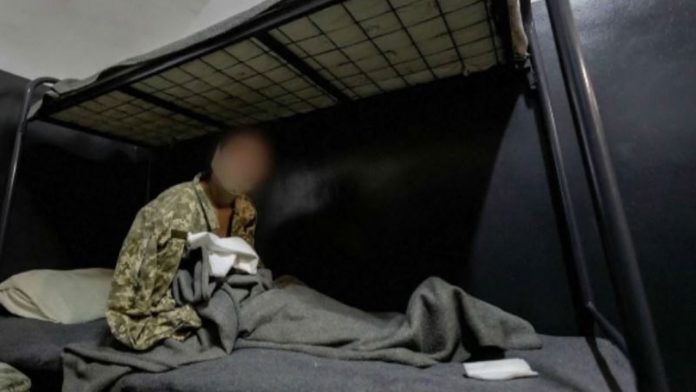
SBU released video that appears to show the two prisoners on beds inside jail cells. The authenticity of the video could not be independently verified.

TRUMP’S DESIGNATED SPECIAL ENVOY FOR UKRAINE AND RUSSIA SETS LONGER TIMETABLE THAN ‘24 HOURS’ FOR ENDING WAR

In this unverified photo shared by the Ukrainian military, an apparent captured North Korean soldier with injuries is sitting in a bed inside a cell. (Ukraine Military handout)

A doctor interviewed in the SBU video said one soldier suffered a facial wound while the other soldier had an open wound and a lower leg fracture. Both men were receiving medical treatment.

North Korean soldier lying in bed

In this unverified photo shared by the Ukrainian military, an apparent captured North Korean soldier with injuries is lying in a bed inside a cell. (Ukraine Military handout)

SBU also said one of the soldiers had no documents at all, while the other had been carrying a Russian military ID card in the name of a man from Tuva, a Russian region bordering Mongolia.

Ukraine’s military says North Korean soldiers are outfitted in Russian military uniforms and carry fake military IDs in their pockets, a scheme that Andrii Yusov, spokesperson for Ukraine’s military intelligence agency, says could mean Moscow and “its representatives at the U.N. can deny the facts.”

Despite Ukrainian, U.S. and South Korean assertions that Pyongyang has sent 10,000 – 12,000 troops to fight alongside Russia in the Kursk border region, Moscow has never publicly acknowledged the North Korean forces.

TRUMP SETTING UP MEETING WITH PUTIN, IN COMMUNICATION WITH XI

While reports of their presence first emerged in October, Ukrainian troops only confirmed engagement on the ground in December.

On Thursday, Zelenskyy put the number of killed or wounded North Koreans at 4,000, though U.S. estimates are lower, at around 1,200.

North Korean soldiers

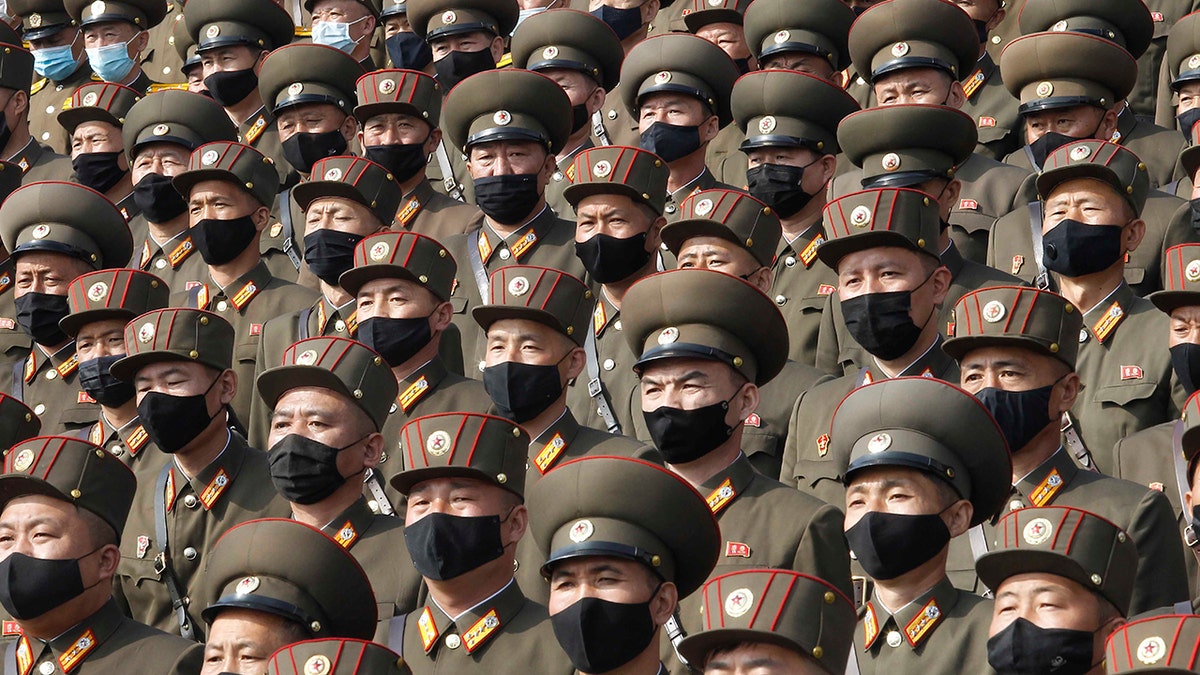
Soldiers are seen at Kim Il Sung Square in Pyongyang, North Korea, on Oct. 12, 2020.  (AP Photo/Jon Chol Jin, File)

Despite North Korea’s suffering losses and initial inexperience on the battlefield, Ukrainian soldiers, military intelligence and experts suggest first-hand experience will only help them develop further as a fighting force.

CLICK TO GET THE FOX NEWS APP

“For the first time in decades, the North Korean army is gaining real military experience,” Yusov said. “This is a global challenge — not just for Ukraine and Europe, but for the entire world.”

The Associated Press contributed to this report.

DAVID MARCUS: California could learn a lot from Florida when it comes to looters

0

NEWYou can now listen to Fox News articles!

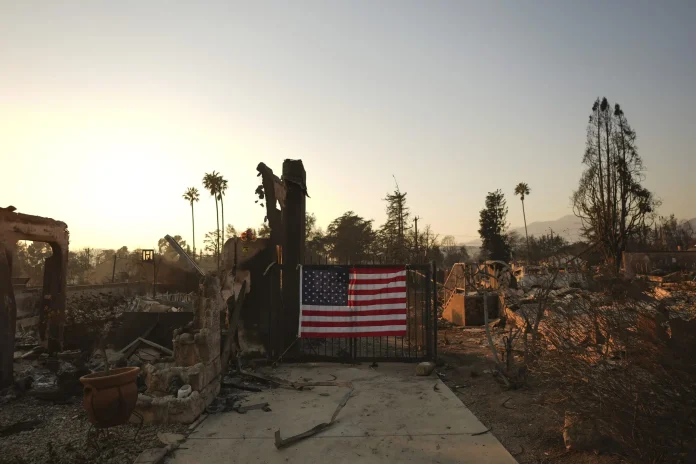
Amid the many acts of courage in kindness we have witnessed during the Los Angeles infernos, a darker side of human nature has also emerged as cases of looting rise. Unfortunately, in virulently anti-gun California, homeowners are left with few self-defense options.

Police have already charged more than 20 people with looting. One pernicious pair went so far as to dress up as firefighters to help themselves to the valuables of victims whose homes were abandoned or destroyed.

LOOTERS POSING AS FIRE OFFICIALS, UTILITY WORKERS TO RANSACK ABANDONED LA HOMES

Obviously, with the winds still whipping the deadly fires around Tinseltown, all resources, including police, are stretched to the breaking point, providing hard-hearted thieves with a target-rich environment for their crimes.

One thing that these thugs in Los Angeles can count on is that if they encounter a homeowner amid their looting, there is little chance that person will be pointing a gun at them.

A firefighter jumps over a fence while fighting the Palisades Fire in the Pacific Palisades neighborhood of Los Angeles, Tuesday, Jan. 7, 2025. (Ethan Swope/AP)

In the free state of Florida, where the Second Amendment protecting gun rights is revered, not reviled, potential looters, after hurricanes for example, know that stealing from the wrong house could be a death sentence.

They know because Gov. Ron DeSantis told them so after the damage done to thousands of homes by Hurricane Milton last year.

“If you go into somebody’s house after the storm passes, think that you’re going to be able to commit crimes, you’re going to get in really serious trouble.” DeSantis promised, adding, “And quite frankly, you don’t know what’s behind that door in a Second Amendment state.”

Hear, hear.

There are really two ways in which the unarmed people of Los Angeles are put at risk by the Draconian anti-gun laws in the Golden State. The first is that individuals are unable to protect themselves and their property, but the second, and it might be worse, is that criminals are very well aware of this.

When we think about the reasons why we have the Second Amendment, it is often noted that it is for self-defense, and also a check on the power of the government. But in California, we are seeing a third reason, which is exactly this kind of emergency.

grady judd polk county

Florida’s Polk County Sheriff Grady Judd has a warning for looters attempting to take advantage of areas affected by Hurricane Milton.  (Fox News Digital)

Angelenos don’t need guns to overthrow their government, not yet anyway, but they do need them to hold down the fort, or the house, so to speak, while the government pours all of its resources into disaster management.

In fact, when you look at rates of gun ownership by state, it is rural states such as Montana that have the most guns per capita. This is precisely because, while in a city, government protection in the form of police is always minutes away, in rural areas, it often is not.

This is precisely where Los Angeles residents find themselves today. The city and state governments are overwhelmed, people need to protect themselves and short-sighted, anti-gun policies are preventing them from doing that.

This is why we see reports of some of the wealthy in LA paying for private security to protect their homes, which I guess is great if you are a millionaire, but if not, it leaves you even more vulnerable.

Frankly, in many cases, all it would take to dissuade would-be looters from rolling the dice with their lives is a handful of openly armed men in a neighborhood watch patrolling their neighborhood.

But the progressive leadership of California, who, by the way, also have armed protection at taxpayer expense, will not allow the average Joe to protect his family with a gun of his own.

CLICK HERE FOR MORE FOX NEWS OPINION

Progressive gun policies such as those in California, like so many other progressive policies, are intended to make citizens weaker, more vulnerable, and more dependent on the state. That is on open and clear display in LA today.

Hopefully, once this emergency passes, Californians will realize how essential their gun rights really are and demand their restoration. In the meantime, thousands and thousands are simply helpless.

CLICK HERE TO GET THE FOX NEWS APP

Los Angeles District Attorney Nate Hochman was elected to get tough on crime. Here is his first chance. If the city does not allow its citizens to protect themselves, then the penalty for looting must be massive, as in years in prison.

But honestly, that is not and never will be an adequate replacement for an armed population, which is precisely what the founding fathers understood when they enshrined our God-given right to gun ownership.

CLICK HERE TO READ MORE DAVID MARCUS 

Battling Militants Backed by Islamic State in Mozambique

0

For more than seven years, an insurgency backed by the Islamic State has raged across Cabo Delgado, Mozambique, completely upending life in this coastal province rich with natural resources. John Eligon, The New York Times Johannesburg bureau chief, traveled across the province to speak with people trying to rebuild their lives.

Politics chat: Looking back at Biden's career as he enters his last week in the White House

0

We take a look at President Biden’s last week not only in the White House, but also as a life-long public servant.

Private drones are interfering with aerial firefighting efforts in LA wildfires

0

Private drones being flown near the wildfires consuming Los Angeles County continued to interfere with aerial firefighting efforts Saturday evening, according to officials, as the death toll from the flames rises.

Officials have detected 48 privately owned drones flying over the fires since the infernos erupted Tuesday, Los Angeles County Deputy Fire Chief Robert Harris said during a briefing Saturday evening.

“When those privately owned drones are detected, we have to pause firefighting activities, so we ask you to please assist us by not operating drones in the area,” Harris said, adding that the drones’ owners are being sought by police and will face potential prosecution.

Authorities urge civilians not to fly drones near wildfires because they can get in the way of low-flying firefighting aircraft and delay emergency responders. Pilot distractions can be deadly.

LIVE UPDATES: LOS ANGELES WILDFIRES DEATH TOLL RISES TO 16 AS GAVIN NEWSOM FACES NEW FIREFIGHTING FUNDING SCRUTINY

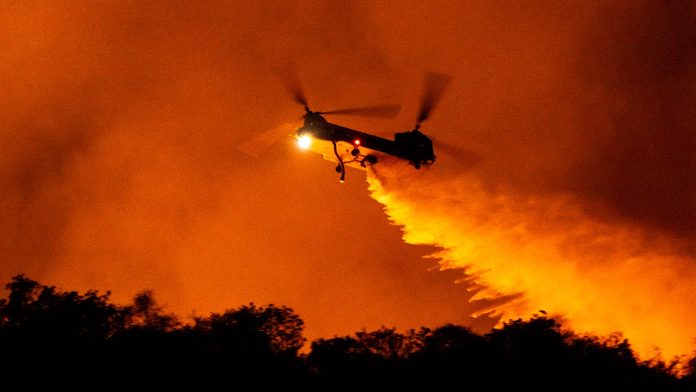
A helicopter drops water on the Palisades Fire in Mandeville Canyon on Saturday, Jan. 11, 2025, in Los Angeles. (AP Photo/Etienne Laurent)

On Thursday, someone flew a private drone into the wing of a Quebec 1 Super Scooper firefighting aircraft as it carried water to battle the wildfires. Officials said the collision caused a “fist-sized hole” in the aircraft and knocked it out of service until at least Monday.

plane drops water on palisades fire

A Super Scooper plane drops water on the Palisades fire on Tuesday in Pacific Palisades, Calif. (Brian van der Brug / Los Angeles Times via Getty Images)

The Super Scooper, which had flown down from Canada, was working to contain the Palisades Fire at the time of the incident. The pilots were unaware of the drone hit, which wasn’t discovered until they landed at Van Nuys airport and maintenance staff noticed the hole, officials said.

The FAA is investigating, and a spokesperson told Fox News Digital that interfering with firefighters is a federal crime punishable by up to a year in prison and a $75,000 fine.

CALIFORNIANS ‘ANGRY’ AMID DEVASTATING WILDFIRES, ASKING WHERE HIGH TAX DOLLARS WENT: LOCAL RESEARCHER

Meanwhile, the death toll in connection with the wildfires has jumped to 16, according to the Los Angeles County Department of Medical Examiner. Five of the deaths were attributed to the Palisades Fire and 11 resulted from the Eaton Fire.

helicopter drops water on the Palisades Fire

A helicopter drops water on the Palisades Fire in Mandeville Canyon on Friday, Jan. 10, 2025, in Los Angeles. (AP Photo/Ethan Swope)

As of Saturday evening, the Palisades, Eaton, Kenneth and Hurst fires had consumed about 62 square miles, an area larger than San Francisco, Cal Fire said. The Palisades and Eaton fires – the two largest wildfires – have so far scorched 59 square miles.

Firefighters are still working to contain the Palisades and Eaton fires. Cal Fire reported containment of the Palisades Fire at 11% and the Eaton Fire at 15% on Saturday night.

Palisades firefighters

Firefighters watch as water is dropped on the Palisades Fire in Mandeville Canyon on Saturday, Jan. 11, 2025, in Los Angeles.  (AP Photo/Jae C. Hong)

CLICK TO GET THE FOX NEWS APP

With the battle set to continue, firefighters are bracing for another round of strong winds expected starting on Monday, said Michael Traum of the California Office of Emergency Services.

Fox News Digital’s Michael Ruiz and Julia Bonavita, along with The Associated Press, contributed to this report.

Israeli Security Chiefs Join Critical Talks for a Cease-Fire in Gaza

0

Israeli security and policy chiefs were expected to arrive in Qatar on Sunday for high-level talks about a proposed cease-fire deal in Gaza that would see hostages released in the final days of President Biden’s term and before Donald J. Trump takes office.

Biden administration officials have been pressing for a deal that would become part of the departing president’s legacy, and Mr. Trump has warned that “all hell will break out in the Middle East” if Hamas does not release the hostages before he is inaugurated on Jan. 20.

Lower-level negotiations have been underway in recent weeks after months of deadlock.

While some progress has been made, disagreements remain on several key points, including the timing and extent of Israel’s redeployments and withdrawal from Gaza and its willingness to ultimately end the war, according to several officials and a Palestinian familiar with the matter. They were speaking on the condition of anonymity because the talks are being held in secrecy and they were not authorized to discuss details publicly.

Representatives of the departing and incoming U.S. presidents have been cooperating on the issue, the Biden administration has said, while Qatar and Egypt are mediating between Israel and Hamas.

Steve Witkoff, Mr. Trump’s intended Middle East envoy, met Prime Minister Benjamin Netanyahu in Israel on Saturday. On Friday, Mr. Witkoff was in Doha, the capital of Qatar, and met the Qatari prime minister, Sheikh Mohammed bin Abdulrahman bin Jassim Al-Thani, for talks that focused on efforts to reach a cease-fire in Gaza, according to Qatar’s Foreign Ministry.

Mr. Netanyahu’s office announced late Saturday that he had discussed the issue with Israel’s security chiefs and with negotiators from both the departing and incoming American administrations. He also instructed Israel’s top negotiators — including David Barnea, the head of the Mossad intelligence agency — to leave for Qatar with the goal of advancing a deal, Mr. Netanyahu’s office said.

Disagreements between Israel and Hamas remain on the fundamental issue of the permanency of a cease-fire, with Mr. Netanyahu still unwilling to declare an end of the war as part of a three-phase agreement that was laid out by Mr. Biden last May.

Israel is insisting on a vaguer formula that leaves room for ambiguity, according to the Palestinian familiar with the matter and two Israeli officials. Another official familiar with the matter said the Americans were supposed to provide mediators with a guarantee that the United States would work to bring the war to an end, though Israel has not agreed to any exact phrasing.

Hamas is also demanding detailed maps from Israel showing where it will withdraw to, but Israel has not provided them, according to the officials and the Palestinian familiar with the matter. They added that disagreements remain about the timing of an Israeli troop withdrawal from the Philadelphi Corridor, a strip of land abutting Gaza’s border with Egypt.

Nearly 100 hostages who were seized during the Hamas-led attack in southern Israel on Oct. 7, 2023, remain in Gaza, out of roughly 250 who were taken. Israel believes at least a third of the remaining hostages are dead.

Israel and Hamas have both shown signs of wanting to resolve the outstanding issues, as pressure mounts from the United States and the Israeli public. Last week Hamas representatives indicated that the group had approved an Israeli list of 34 hostages to be released in the first stage of an agreement.

But Israel said last week that it had not received any information from Hamas regarding the status of the hostages appearing on the list, which includes those it considers the most vulnerable and urgent cases — women and children, men over 50 and several sick or injured hostages.

Israel has demanded a list from Hamas of which hostages remain alive. Without that, Israeli officials say, there can be no agreement on how many Palestinian prisoners Israel would be willing to release in exchange for them. As of Sunday morning, Israel had not received a list of live hostages, according to one of the officials familiar with the matter.

The body of one of the hostages whose name appeared on the list of 34 — Youssef Ziyadne, 53, an Arab citizen of Israel — was located last week by Israeli forces in a tunnel in Gaza along with the remains of his son, Hamza Ziyadne, who was also captured during the 2023 attack.

The Israeli military brought the remains of both men back to Israel for burial.

Outgoing DOT Secretary Pete Buttigieg reflects on the past four years : NPR

0

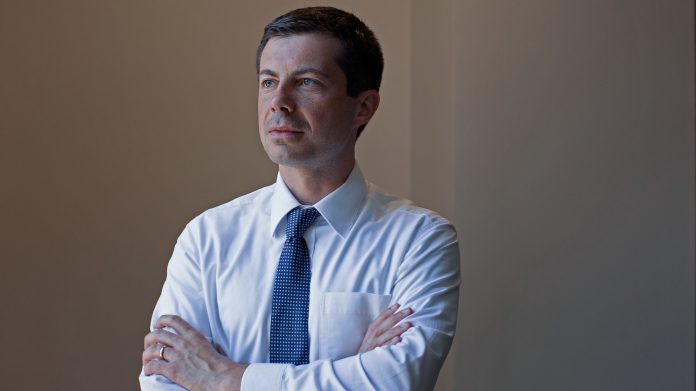
U.S. Transportation Secretary Pete Buttigieg.

Shuran Huang/NPR


hide caption

toggle caption

Shuran Huang/NPR

U.S. Transportation Secretary Pete Buttigieg.

U.S. Transportation Secretary Pete Buttigieg.

Shuran Huang/NPR

With barely a week until President-elect Donald Trump’s inauguration, Transportation Secretary Pete Buttigieg is packing up his office and preparing for his return to civilian life.

It will be quite a shift after managing the dispersal of billions of dollars in funds as part of President Biden’s infrastructure legislation, and managing crises in the airline and railroad sectors.

As he prepares to step down, Buttigieg spoke with All Things Considered host Scott Detrow about some of his accomplishments and the challenges he faced on the job.

This interview has been edited for length and clarity.

Interview highlights

Scott Detrow: I want to start by talking about the thing that probably got the most attention throughout the course of the administration – all the infrastructure spending. I think that’s a good example of something that seems to do all of the things that a lot of people think that the voters want from government: investing in communities, fixing problems, coming together to fix those problems, spending at historic levels. You and others in the administration spent years getting the message out there, [and] putting this project into place. I know how many airports you visited to tout these accomplishments, and yet a lot of different metrics, including the election results, suggest that maybe voters didn’t quite appreciate, that it didn’t seem to land, it didn’t seem to be a reaching a consensus of, ‘Wow, the Biden administration did this for me.’ I’m wondering how you make sense of all of that.

Pete Buttigieg: Well, a lot of the things that we work on are worth doing, whether they’re getting a lot of political credit or not. We do safety work to save people from losing their lives on our roadways or in the aviation system. We don’t expect people to cheer for us. We just do it because it’s the right thing to do, and our infrastructure is something that should just work. That said, I do think that as more and more of these projects go to completion, we’re going to see more and more of an appreciation for what this infrastructure era has done to make people better off. We’re already seeing levels of employment in construction, building, trades, and manufacturing that we haven’t seen in my lifetime. Think about the Affordable Care Act. Took years before people fully appreciated them, and the very nature of infrastructure work is, it takes some time. That said, I’m going to keep telling the story and waving the flag, because it is extraordinary what we did and what will continue to happen in this country. It didn’t happen on its own. It was a bipartisan achievement at a time when anything bipartisan is pretty rare in this town. And I think we’re going to be benefiting from it for the rest of our lives.

Detrow: That being said, this idea that Americans wanted to see their government working for them more was such a concrete thesis of the Biden administration. It’s something that you campaigned and wrote about before you joined this administration. Given where we are at this point in time, the transition of power that’s happening, has that made you rethink anything, whether it was the way that this was approached, or the way that it was communicated?

Buttigieg: We always knew that part of what we were doing is turning a very big ship in terms of the condition of American infrastructure and the condition of a lot of things that Americans count on government to do. But that’s going to take a lot of time. And the best thing that could come of that, is a higher baseline level of public trust in what government can do for them.

U.S. Transportation Secretary Pete Buttigieg at the Baltimore and Potomac Tunnel North Portal in January 2023 in Baltimore. The tunnel, which is more than 150 years old, will be replaced with funds from the bipartisan infrastructure law.

U.S. Transportation Secretary Pete Buttigieg at the Baltimore and Potomac Tunnel North Portal in January 2023 in Baltimore. The tunnel, which is more than 150 years old, will be replaced with funds from the bipartisan infrastructure law.

Drew Angerer/Getty Images


hide caption

toggle caption

Drew Angerer/Getty Images

Detrow: Do you think you achieved that?

Buttigieg: Well, I think we set things on a different trajectory, but we’re also operating in a different information environment. We’re now living in a time where some dude on the internet has as much authority as somebody holding themselves to the highest journalistic standards of fact-checking and research. And that is something that I think can swamp a lot of our more traditional calculations about what makes for good policy and good politics.

Detrow: This very week, there’s a concrete moment of stepping away from fact-checking, stepping away from regulations on Facebook in particular. Do you think that’s the answer, or do you think it makes us all worse?

Buttigieg: Well, what we’ve seen so far is that places that have abandoned fact-checking or editorial responsibility have not become a paradise of free speech. Things have taken a pretty dark turn. And so I think we need to continue to find ways to help people sort through and make sense of all of this information that’s coming at us. Because right now, we’ve never had more information in my lifetime, and we’ve never been less informed.

Detrow: You, up until this point, are the most high-profile millennial to hold national office. I guess Vice President-elect [J.D.] Vance will join that club in a matter of weeks. But as we talk about this, I’m wondering, you came of age with the internet — do you think it’s done more harm or good for government, for public policy, at this point in time?

Buttigieg: I think at best it has cut both ways. One thing that I think it has made possible is it’s empowered everybody to be a reporter. And there are things that we find out about, including things that have happened in our communities or on our streets that no one would have known about if it weren’t possible to record and publicize them through the internet. On the other hand, what we’ve found is that everybody is a reporter, but nobody’s an editor. And the idea that you do in fact have a responsibility to separate fact from fiction, to make judgments about what deserves real scrutiny or real attention, that’s something that has really weakened in our society as a result of some of these technologies. Also, for my entire lifetime, you could use a photograph usually to settle a question about whether something was true or false. That’s less and less true. And adapting to things like that is really going to test our capacity as a society, as a species.

Detrow: I want to talk about social justice and transportation. You at times talked about Robert Moses — and got the attention of nerds who love “The Power Broker“ — but to get to these broader examples of the way that infrastructure and transportation projects were often built in a way that furthered injustice instead of helping to fix it. You talked early on about wanting to take that head-on. Are there areas where you feel like you accomplished that goal?

Buttigieg: We were able, through so many of our projects, to empower the very kinds of people and homes and families and neighborhoods that used to get rolled over by transportation projects in the past. And that’s really twofold — both making neighborhoods better off with transit access to places that didn’t have it in the past or roads that are built with their neighborhood in mind. But also the jobs we created, I mean, the number of people getting good-paying jobs in the building trades, who are actually literally making these things happen and happened in the neighborhoods where they grew up, is extraordinary. And I believe it’s unprecedented. So we’ve really been able to make a big difference there. Still, a long way to go. It took decades to get the way we are, everything good and everything that needs to change. And it’s going to take a while to get to a new reality. But we’re well underway in what I like to call this infrastructure decade.

U.S. Secretary of Transportation Pete Buttigieg speaks during an event to discuss investments in the U.S. electric vehicle charging network, outside Department of Transportation headquarters on February 10, 2022 in Washington, DC. Administration officials outlined the plans for a $5 billion network of electric vehicle chargers along interstate highways. The money is included in the recently passed and signed into law bipartisan Infrastructure Investment and Jobs Act.

U.S. Secretary of Transportation Pete Buttigieg speaks during an event to discuss investments in the U.S. electric vehicle charging network, outside Department of Transportation headquarters on February 10, 2022 in Washington, DC. Administration officials outlined the plans for a $5 billion network of electric vehicle chargers along interstate highways. The money is included in the recently passed and signed into law bipartisan Infrastructure Investment and Jobs Act.

Drew Angerer/Getty Images/Getty Images North America


hide caption

toggle caption

Drew Angerer/Getty Images/Getty Images North America

Detrow: When you made those comments, there was this parallel reaction of excitement from people who love thousand-page books and criticism and some of the right-wing press that this was yet another example of identity politics, social justice-type governing. And I’m asking that because in the months since the election, there has been all of this back-and-forth about ‘Did Democrats kind of veer too far in that lane? Did that hurt them politically?’ I’m wondering what you make about that general conversation, if you have any big takeaways on the policies of the last five or six years, and how people are interpreting them.

Buttigieg: I think it was a reminder of how some voices in the media can get people whipped up over anything, when we’re talking about measures that don’t make anyone worse off and make a lot of people better off. I will never be able to relate to the idea that it’s wrong to confront segregation that neighborhoods still have to live with because of some physical design decision that was made in the ’50s or ’60s. When we see that, we should put it right, and that’s what we set out to do.

Detrow: Do you think there’s something to the idea that your party needs to talk about these things in a different way to bring more people along?

Buttigieg: I think any way you come at it, the most important thing is the actions, not the words. I think that there has been a lot of hyperventilating about vocabulary. I think that this is something that you see in different flavors from all sides of the aisle. My side of the aisle gets lost in jargon sometimes, and there’s some really troubling things that you see in terms of vocabulary of what comes from the other side of the aisle, too. The bottom line is, we need to do the thing and then figure out how to talk about what we’re doing. And the thing that we’re doing is fixing roads and bridges across the country.

Detrow: You’re going to be a private citizen. You, along with many other Democrats, really raised deep, deep concerns about what a second Trump administration would mean on the rule of law, and democracy, [and] on many other fronts. How are you going to be approaching that? Whatever you do next, how are you going to be responding? Do you have any thoughts about what you will charge yourself with doing when you’re out of office?

Buttigieg: What I know is that most Americans believe in some basic values and some very important norms that hold our country together. Frankly, no matter how you voted, a strong majority of Americans believe in making sure that our country is a freedom loving place, that people have rights, and that we solve big problems together. And that’s something that I’m going to continue to care about and work on. I’ll be doing it as a citizen rather than as a policymaker … I’m going to do everything I can to work on the things that I care about and the things that are going to matter to our family, and [to] Michigan, and to so many people who I’ve gotten to know along the way in this work.


Hydrogen-powered rescue truck just smashed a world record, and it only spits out water

0

Join Fox News for access to this content

You have reached your maximum number of articles. Log in or create an account FREE of charge to continue reading.

By entering your email and pushing continue, you are agreeing to Fox News’ Terms of Use and Privacy Policy, which includes our Notice of Financial Incentive.

Please enter a valid email address.

Hydrogen-powered trucks are making waves in the world of clean transportation, and the H2Rescue truck just set a new Guinness World Record to prove it. 

This impressive vehicle, developed by Cummins Accelera in collaboration with the U.S. Department of Energy and Department of Defense, traveled an astounding 1,806 miles on a single tank of hydrogen.

H2Rescue truck (Department of Homeland Security)

The record-breaking journey

The H2Rescue truck embarked on its record-setting trip in California, carrying 386 pounds of hydrogen fuel. Throughout the journey, it navigated rush hour traffic, maintained speeds between 50 and 55 mph and operated in temperatures ranging from 60 to 80 degrees Fahrenheit. 

I’M GIVING AWAY THE LATEST & GREATEST AIRPODS PRO 2

The truck’s performance was closely monitored by a Guinness World Records adjudicator, who ensured the integrity of the test by sealing the hydrogen tank before departure.

hydrogen-powered truck 2

H2Rescue truck  (Cummins Accelera)

YOU WON’T BELIEVE HOW FAR VOLVO’S NEW ELECTRIC SEMI-TRUCK GOES ON A SINGLE CHARGE

Impressive technology

The H2Rescue truck is powered by a Cummins Accelera fuel cell engine and a 250-kilowatt traction motor. During its record-breaking run, it consumed 370 pounds of hydrogen, demonstrating the efficiency of hydrogen fuel cell technology. The most striking aspect of this journey? The truck emitted absolutely nothing but water vapor from its tailpipe.

hydrogen-powered truck 3

H2Rescue truck   (Cummins Accelera)

GET FOX BUSINESS ON THE GO BY CLICKING HERE

Environmental impact

By using hydrogen instead of gasoline, the H2Rescue truck saved a whopping 664 pounds of carbon dioxide emissions compared to a conventional truck of the same size covering the same distance. This showcases the potential of hydrogen-powered vehicles in reducing greenhouse gas emissions and combating climate change.

hydrogen-powered truck 4

H2Rescue truck  (Cummins Accelera)

TECH TURNING BIG RIGS, TRUCKS, EVEN TAKS INTO SELF-DRIVING VEHICLES 

More than just a record breaker

The H2Rescue truck isn’t just about setting records. It’s designed for real-world emergency response scenarios. The vehicle can provide 25 kilowatts of power from its fuel cells for up to 72 hours without refueling, which is sufficient to power multiple FEMA trailers during critical emergency operations.

Weighing 33,000 pounds, the truck is robustly built to carry essential supplies directly into disaster zones where infrastructure might be compromised. As an added innovative feature, the truck produces about a gallon of water per hour as a byproduct, which, while not a massive water source, represents a small but intriguing potential benefit in emergency situations where resources can be scarce.

WHAT IS ARTIFICIAL INTELLIGENCE (AI)?

hydrogen-powered truck 5

H2Rescue truck (Cummins Accelera)

The bigger picture

The DOE estimates that replacing traditional emergency response vehicles with H2Rescue trucks could save about 1,825 gallons of gasoline per year and reduce annual greenhouse gas emissions by 2.8 tons. This demonstrates the significant potential of hydrogen fuel cell technology in heavy-duty transportation and emergency response applications.

SUBSCRIBE TO KURT’S YOUTUBE CHANNEL FOR QUICK VIDEO TIPS ON HOW TO WORK ALL OF YOUR TECH DEVICES

hydrogen-powered truck 6

H2Rescue truck   (Cummins Accelera)

Kurt’s key takeaways

As we look to the future, hydrogen-powered trucks like the H2Rescue are paving the way for cleaner, more efficient transportation. With zero carbon emissions and impressive range capabilities, they’re proving to be a viable alternative to traditional fossil fuel-powered vehicles, especially in sectors that are challenging to decarbonize.

CLICK HERE TO GET THE FOX NEWS APP

What are your thoughts on the potential of hydrogen-powered vehicles like the H2Rescue on disaster response and environmental sustainability? Let us know by writing us at Cyberguy.com/Contact

For more of my tech tips and security alerts, subscribe to my free CyberGuy Report Newsletter by heading to Cyberguy.com/Newsletter

Ask Kurt a question or let us know what stories you’d like us to cover

Follow Kurt on his social channels

Answers to the most asked CyberGuy questions:

New from Kurt:

Copyright 2025 CyberGuy.com.  All rights reserved.

This Part of Mozambique Was Like Paradise. Now It’s a Terrorist Hotbed.

0

In October, we traveled to the Cabo Delgado Province in northern Mozambique to understand how terrorists who claim an affiliation with the Islamic State have gained a foothold and wreaked havoc on Muslims and Christians alike.

Officials in the region and in the West say they are deeply concerned that if the Islamic State affiliate known as ISIS-Mozambique is not contained, then the loosely linked Islamic State network that has been gaining ground in pockets of Africa could become a bigger global threat.

What locals call “the war” has robbed the region of what was a largely peaceful life of fishing and farming.

Nearly 6,000 people have been killed and up to half of the province’s 2.3 million people have been displaced. Finding food and shelter has become a daily struggle in a province rich with natural resources like rubies, gas and timber.

Since our visit, the country has grown only more tense. After a disputed presidential election, Mozambique has been engulfed in the worst election-related violence since a long-running civil war ended in 1992. Tens of thousands of people have taken to the streets across the country to protest a result that many believe was rigged by the governing party, Frelimo. Nearly 300 people have been killed during the protests, according to Decide Electoral Platform, a civil society organization.

On top of that, Cabo Delgado and Nampula province to the south took a direct hit from Cyclone Chido in mid-December, killing as many as 120 people, displacing tens of thousands, and leaving many without food and clean water.

There is little doubt that the insurgency is at its weakest, diplomats and security analysts say, down to a few hundred fighters from several thousand. That is mostly because international troops, led by the Rwandan military, have picked up the slack for Mozambique’s ill-equipped and ill-trained armed forces.

But insurgents have now broken into small groups scattered across the dense forests of a province roughly the size of Austria, turning the conflict into a game of Whac-a-Mole, security experts said. Attacks are smaller than in the past. But they were more frequent in 2024 than in 2023, and have spread to previously unaffected areas.

“The government is doing the best it can,” Valige Tauabo, the governor of the province, said in an interview.

Our Cessna 206 landed on an airstrip in Mocimboa da Praia, a sleepy fishing village that was the birthplace of the insurgency. A Rwandan soldier in battle gear surveilled us from the control tower.

Because of the high risk of ambushes, we had chartered a flight from the provincial capital, Pemba, a luxury few residents can afford.

We hopped into a sedan that wove around barricades set up by the Rwandan military and made our way into the village.

In October 2017, more than two dozen insurgents raided a police station in Mocimboa da Praia and killed two officers in the first attack of the insurgency.

Back then, the group called itself Al Shabab (analysts say it is unaffiliated with the Shabab in Somalia). Researchers say it had begun forming around 2005, when the teachings of extremist clerics from neighboring Tanzania to the north began infiltrating the mosques and madrassas in Cabo Delgado.

To win recruits, the extremists told the locals that while they struggled in poverty, their land was rich in natural resources. Lucrative natural gas reserves that had attracted some $24 billion in foreign investment, including nearly $5 billion from the United States, were nearby, off the coastal town of Palma.

Resentment of the government grew with multiple reports of the Mozambican military assaulting or killing civilians in Palma.

But the insurgents’ early message quickly got lost in their brutality.

In March 2020, Islamist militants gathered village residents on a soccer field in Mocimboa da Praia and warned them not to associate with the government, or “we’re going to decapitate everyone,” recalled Sanula Issa.

Only a couple of weeks later, Ms. Issa said, she was startled awake early one morning by gunfire and shouts of, “Allahu akbar!”

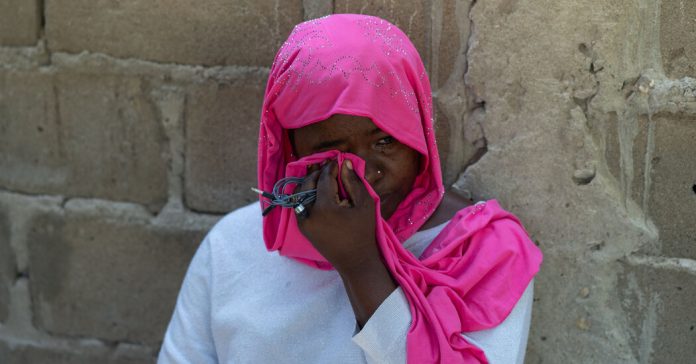
She raced to the beach with her husband and three children, she said, and tried to pile into boats with others. But the insurgents grabbed her husband and decapitated him with a machete, said Ms. Issa, 33, wiping away tears with a pink head scarf.

“They are evil,” said Ms. Issa, who once cooked rice for sailors. “They ruined people’s lives — innocent people.”

But it is not as though the locals turned to the government.

“Our dislike goes both ways,” said Rabia Muandimo Issa, who is no relation to Sanula Issa. She lost her brother and sister, and her home in Mocimboa da Praia, in an insurgent attack five years ago. “We don’t see good coming either from the government or the insurgents.”

For most of his 20 years, Muinde Macassari had a comfortable life in a shack near the ocean, fishing with his family. But since insurgents stormed his seaside village of Quiterajo two years ago, he has been sleeping on blankets in his aunt’s yard in Pemba, sharing a tent with two relatives.

The heat in the tattered tent becomes oppressive, and rain trickles through the torn canvas.

Hundreds of thousands of people have returned to their communities, only to find that their jobs, homes and stability are now gone.

Hundreds of thousands of others, like Mr. Macassari, live displaced in unfamiliar communities.

More than 80,000 displaced people are now crowding into Pemba, which had previously held about 200,000 residents. Aid organizations say Mozambique’s conflict does not get the assistance it needs because it is overshadowed by other global crises.

Mothers with children wrapped to their backs crowd clinics for child malnutrition treatment. Displaced people cram into the low-slung homes of family, friends and good Samaritans, using bedsheets as dividing walls.

Mr. Macassari sleeps outside because his aunt’s squat, two-bedroom concrete home is already full with 10 people.

He had been kidnapped by the insurgents, he said, forced to wash their clothes and stand guard, but says he was never sent into battle. He slept in the forest on an uncomfortable bed made of coconut tree leaves and ate just occasional portions of rice, corn and cassava.

Mr. Macassari said he understood some of the grievances the extremists preached — about the political elite riding around in fancy cars while everyone else was poor. But if the insurgents’ complaints are with the government, Mr. Macassari wondered, “why then are they killing innocent people?”

He escaped one night, using a bathroom break as an excuse, he said. He ran through the bush until he made it to a nearby village.

When insurgents captured Cheia Cassiano during an attack on Mocimboa da Praia in early 2020, they offered him a choice: You can join us, or we can kill you.

Over the next year, Mr. Cassiano, now 37, said the insurgents forced him to run, lift weights, fire a gun — and attack villages. They preached their message loudly: The war will not end until the end of the world; men should wear pants and women long skirts; everyone needed to pledge fealty to Islam, not the government.

“I was anxious,” Mr. Cassiano said. “Within the insurgency, when you don’t perform according to the plan, they can kill you.”

The insurgents seized control of Mocimboa da Praia in August 2020 and held it for a year, until troops from Rwanda and countries in southern Africa drove them out. It was the longest the insurgents had occupied a town over the course of the conflict.

Mocimboa da Praia emptied out during the occupation in 2020. But in 2022, residents began returning and life in many ways seems to have returned to normal. A market in the center of town buzzes at night with street vendors and growling motorcycle taxis. Fishermen gather around a sandy cove at sunrise, preparing nets and wooden boats, and drying out fish on tarps. Teams compete on dirt soccer fields.

But with just a little probing, it is easy to find deep physical and mental scars.

The steeple of the Catholic church in the center of town stands tall, but most of the building has been reduced to rubble. Next door, an elementary school is mostly gutted, with faded writing on a chalkboard reminding parents of a deadline, now years old, to enroll their children. A hospital infirmary is just a metal skeleton.

Where statues once stood of two of Mozambique’s liberation heroes, Eduardo Mondlane and Samora Machel, there are just broken foundations.

Many residents returned after the fighting to find empty patches of dirt where their homes made of red clay and thin logs once stood.

Mr. Cassiano, who joined the fighters after he was kidnapped, said his house had been burned down. He has rebuilt it and now sells fish for a living, but carries a visible scar of the conflict: He is missing his right hand. He said that he got into a dispute with his fellow insurgents over a bicycle he took from a village they raided. They accused him of stealing the bike from a group leader, he said, and, in accordance with their interpretation of Shariah law, chopped off his hand.

At a community center next to a displacement camp in Mocimboa da Praia, children in an art therapy workshop sometimes draw stick figures without heads, or sculpt mounds of clay into rifles.

One recent day, children sat in a circle singing, keeping the rhythm by slapping rock-filled plastic bottles on the ground.

“Children have the right to play,” they sang, “and to live as a child.”

One 12-year-old said she was only 8 when she was kidnapped by insurgents from Mocimboa da Praia and sexually assaulted multiple times while in captivity. She was once beaten for not putting on her hijab properly. She escaped into the bush with several women, and says she ate sand to stay alive.

She acted erratically when she returned home, said her aunt and uncle, whom she lives with because her parents were killed in an insurgent attack.

“I have seen people killed!” she would scream in sudden outbursts, her aunt said.

She is now back in school, and said she has begun to recover by spending time with other child survivors who gather at the center, run by the Foundation for Community Development, a local nonprofit. As we sat on the ground speaking, she stared downward, tracing the sand with a twig. The horrific things she has experienced, she said, are now motivation for her life ahead.

“I want to be a nurse,” she said, “to help other people in my community.”

Former IDF solider offers hope to severely wounded troops

0

Join Fox News for access to this content

Plus special access to select articles and other premium content with your account – free of charge.

By entering your email and pushing continue, you are agreeing to Fox News’ Terms of Use and Privacy Policy, which includes our Notice of Financial Incentive.

Please enter a valid email address.

Former Israel Defense Forces Major Sagi Dovev spent 20 years training young soldiers in Israel’s military before retiring two years ago to start his own organization. But when he woke up on the morning of October 7, 2023, he knew everything had changed.

“Sirens were everywhere. I knew exactly what was going on because I’m in many WhatsApp groups for professional security,” Dovev told Fox News Digital. As he witnessed the atrocities broadcast live to social media by Hamas terrorists that day, he knew war had begun.

On his way to base, friends started calling to tell him that his soldiers had been wounded and were being sent to Sheba Medical Center. Dovev said he immediately turned around and headed to the hospital where he saw helicopters dropping off dozens of wounded soldiers “every few minutes.”

He ended up staying with one of his soldiers that day as he was rushed into surgery to have his leg amputated. But Dovev realized he couldn’t leave these soldiers behind. 

ISRAEL HOSTAGES’ FAMILIES HOLD CENTRAL PARK RALLY, CALL ON BIDEN, TRUMP TO BRING LOVED ONES HOME

Pictures are displayed on the walls of a bomb shelter, in which, six months prior, people sought refuge before being killed during the deadly October 7 attack on Israel by Hamas terrorists from Gaza, near Kibbutz Beeri in southern Israel, April 7, 2024. (REUTERS/Amir Cohen)

“When I got called back to base to train at the base, I said, I cannot leave the soldiers here at the hospital. I have to stay here and train them here,” he recalled. “And that’s what I’ve been doing since October 7.”

Dovev, a close combat and resilience trainer who formerly served as a special operations close combat head trainer in the IDF, has spent over a year now volunteering day and night at Sheba Hospital, helping wounded soldiers regain their strength and sense of purpose after being injured in the ongoing war in Gaza.

“It became even more than a job,” he explained.

Dovev shares inspirational videos on his social media accounts showcasing the incredible journeys these young men and women have gone through to recover not just their physical strength, but their mental strength, in dealing with devastating injuries from the war.

ISRAELIS LOOK TO TRUMP AMID DEBATE ON GAZA’S FUTURE: ‘GOING TO ENABLE THINGS THAT WERE NOT POSSIBLE BEFORE’

Sagi Dovev

Former IDF special unit major Sagi Dovev shares inspirational videos on his social media accounts about training and rehabilitating wounded soldiers in the IDF. (Sagi Dovev/Instagram)

He shares stories like that of Elisha Medan, who lost both of his legs from an explosion that killed four of his teammates and critically wounded four others.

“But his spirit is high and his resilience is strong. He wants us to stay united (inside and outside Israel) and fight together for the future of Israel. I really hope we are going to see him one day soon, leading this country,” Dovev wrote alongside a video of Medan training with Dovev.

Stories like Dor Almog, a young soldier who was the sole survivor after 21 of his teammates died in a terrorist attack. Dovev shared how Almog went from being hooked up to a ventilator after the attack last January to learning to walk again to training in Krav Maga by that summer.

Or stories like Gaya Zubery’s, the first female soldier severely wounded in Gaza.

“Only a month and a half after completing her training, Gaya was severely injured while rescuing soldiers from a tank hit by an RPG in Saja’iyya. Gaya was injured in both legs and was airlifted in critical condition,” he wrote in the social media post.

“During five months of rehabilitation, Gaya underwent numerous surgeries but maintained her fighting spirit. Her determination and resilience are truly inspiring. Gaya never wanted to be a hero; she simply wanted to save lives. Even after her injury, she says she would do it all over again,” Dovev said.

“I started teaching them how to fight again. How to walk again, how to fight without a leg. How to punch without a leg. How to control their body to learn their new bodies. And that became a big thing,” Dovev explained to Fox News Digital.

“This is what made them feel like warriors again. Because one day they are elite fighters or elite professional athletes, and the next day they need someone to help them take a shower or help them go to the bathroom. They have to learn their new bodies, how to become resilient again. And they do,” he continued.

Sometimes that means sitting by the beds of these soldiers and offering words of encouragement while they remain unconscious.

“We start building it from scratch, from their lowest point,” Dovev said, saying each person’s journey to rehabilitation can take several months to a year’s time.

The proud Israeli feels his calling is to help these soldiers feel strong again and to share their stories with the world, even as anti-Israel sentiment has spread across the globe since the October 7 attacks.

The war between Israel and Hamas remains a divisive issue in the U.S., particularly on college campuses, where protest encampments took over several elite universities last spring.

college protest

Pro-Palestinian protesters walk from Columbia University down to Hunter College.

Dovev, who has seen firsthand the costs of war, offered blunt criticism of students participating in anti-Israel protests.

“Ignorance is not an excuse,” Dovev said. “If any other group was targeted, no one would say, ‘it’s not a big deal.’ But, this is a big deal.”

“They don’t know the situation,” he said of his interactions with students at encampments. “They can’t even point to where the river or the sea” is, referring to the antisemitic phrase frequently chanted at protests.

Dovev sees the fight against Hamas as a fight to preserve not only his people but the freedoms of the entire western world.

American Hostages

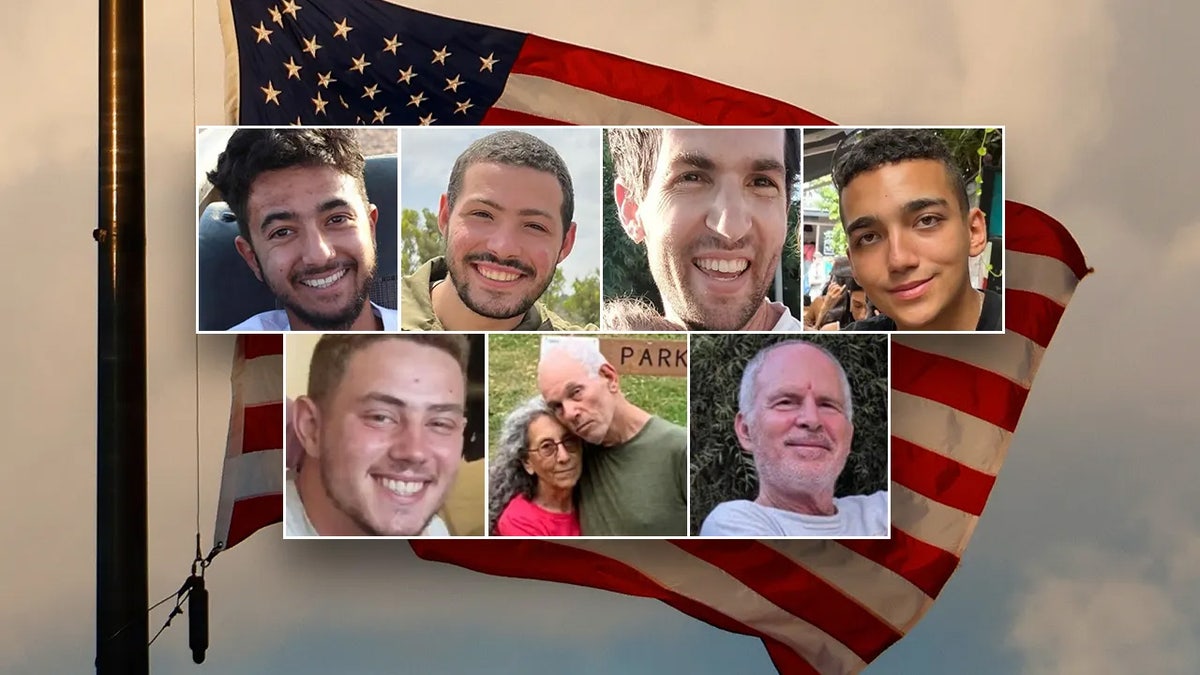
These are the American hostages who were taken by Hamas terrorists on Oct. 7, 2023 and held in Gaza. Only Hersh Goldberg-Polin (Left) has been returned to Israel after the IDF found him and other hostages killed by terrorists. Pictured next to Hersh is Itay Chen, Sagui Dekel-Chen, Edan Alexander, Omer Neutra, Gadi Haggai and Judi Weinstein Haggai and Keith Siegel. (Fox News Photo)

“This is the only Jewish land and this is what we are fighting for and this is what we are dying for. For this country, for democracy, for the Jewish people, for the western world.”

“Israel is the only democracy in the Middle East,” he said, inviting critics of Israel to come visit Tel Aviv and see the difference for themselves. “Yet if they come to Gaza, they will be thrown off the roof in five minutes if they are LGBTQ.”

Dovev warned Americans, “You don’t want this radicalism to come to the United States. It has already begun. Look at Canada. Look at Europe. We have to stop the spread of Hamas and Hezbollah and ISIS.”

Israel and Hamas once again appear to be inching toward a ceasefire that could wind down the 15-month war in Gaza and bring home dozens of Israelis held hostage there, the Associated Press reported earlier this week.

CLICK HERE TO GET THE FOX NEWS APP

Both Israel and Hamas are under pressure from outgoing President Biden and President-elect Donald Trump to reach a deal before the Jan. 20 inauguration. But the sides have come close before, only to have talks collapse over various disagreements.

Last week, Trump was asked about the threats he first levied in early December at the Hamas terrorist organization that has continued to hold dozens of hostages, seven of whom are American, in Gaza.

Israel says about a third of the remaining nearly 100 hostages have died, but believes as many as half could be dead, the Associated Press reported.

Trump told reporters that “all hell will break out” if the hostages have not been freed by the time he enters office.

The Associated Press and Fox News’ Caitlin McFall contributed to this report.