Thursday, November 12, 2026
Home Blog Page 379

The Picture Show : NPR

0

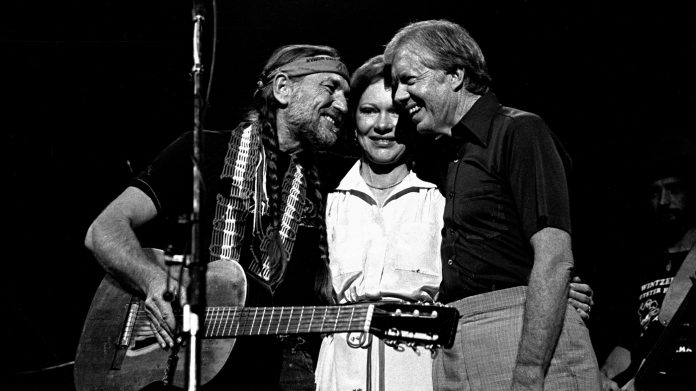
July 21, 1978: President Jimmy Carter greets Willie Nelson, left, after watching the star country and western music singer perform in a concert at the Merriweather Post Pavillion at Columbia, Md.

Charles Tasnadi/Associated Press


hide caption

toggle caption

Charles Tasnadi/Associated Press

July 21, 1978: President Jimmy Carter greets Willie Nelson, left, after watching the star country and western music singer perform in a concert at the Merriweather Post Pavillion at Columbia, Md.

July 21, 1978: President Jimmy Carter greets Willie Nelson, left, after watching the star country and western music singer perform in a concert at the Merriweather Post Pavillion at Columbia, Md.

Charles Tasnadi/Associated Press

When Jimmy Carter ran for president, he was barely known outside of his home state. He had served in the Georgia State Senate and as governor of Georgia, but was far from a household name. What gave momentum to his campaign and endeared him to the youth vote was his friendships with musicians like Bob Dylan, Willie Nelson and the Allman Brothers.

“I was practically a non-entity,” Carter says in the film Jimmy Carter: Rock & Roll President. “But everyone knew the Allman Brothers. When they endorsed me, all the young people said, ‘Well, if the Allman Brothers like him, we can vote for him’.”

Music was always an important part of Carter’s life. Growing up in rural Georgia instilled in him a love for the gospel of Black churches and an appreciation for the power and spirituality of music. His penchant for independent thinking helped endear him to baby boomer musicians like Dylan who were otherwise antiestablishment.

Oct. 31, 1975: (L-R) The Marshall Tucker Band guitarist Toy Caldwell, then-Georgia Gov. Jimmy Carter and The Marshall Tucker Band guitarist George McCorkle are photographed during a pre-concert reception for the governor at the Stouffer Hotel in Atlanta, Ga.

Oct. 31, 1975: (L-R) The Marshall Tucker Band guitarist Toy Caldwell, then-Georgia Gov. Jimmy Carter and The Marshall Tucker Band guitarist George McCorkle are photographed during a pre-concert reception for the governor at the Stouffer Hotel in Atlanta, Ga.

Tom Hill/Getty Images


hide caption

toggle caption

Tom Hill/Getty Images

Jan. 21, 1977: President Jimmy Carter kisses singer Cher as her husband Gregg Allman stands by (second from right) during a reception at the White House held by the Carters for the Peanut Brigade, a group of campaign workers.

Jan. 21, 1977: President Jimmy Carter kisses singer Cher as her husband Gregg Allman stands by (second from right) during a reception at the White House held by the Carters for the Peanut Brigade, a group of campaign workers.

Peter Bregg/AP


hide caption

toggle caption

Peter Bregg/AP

Jan. 21, 1977: President Jimmy Carter kisses singer Cher as her husband Gregg Allman stands by (second from right) during a reception at the White House held by the Carters for the Peanut Brigade, a group of campaign workers.

Jan. 21, 1977: President Jimmy Carter kisses singer Cher as her husband Gregg Allman stands by (second from right) during a reception at the White House held by the Carters for the Peanut Brigade, a group of campaign workers.

Peter Bregg/AP

Oct. 2, 1979: President Jimmy Carter and Dolly Parton embrace in the receiving lime at the White House in Washington, Tuesday, . President Carter hosted a luncheon in the Executive Mansion for a group of country music entertainer.

Oct. 2, 1979: President Jimmy Carter and Dolly Parton embrace in the receiving lime at the White House in Washington, Tuesday, . President Carter hosted a luncheon in the Executive Mansion for a group of country music entertainer.

Georges/Associated Press


hide caption

toggle caption

Georges/Associated Press

June 14, 1977: President and Mrs. Carter chat with singers Johnny Cash and his wife June Carter during a visit the couple paid to the White House, in Washington, D.C. With them is the singer's son, John Carter Cash. Earlier, Cash sang at Flag Day ceremonies at the Capitol.

June 14, 1977: President and Mrs. Carter chat with singers Johnny Cash and his wife June Carter during a visit the couple paid to the White House, in Washington, D.C. With them is the singer’s son, John Carter Cash. Earlier, Cash sang at Flag Day ceremonies at the Capitol.

Bettmann Archive


hide caption

toggle caption

Bettmann Archive

1977: President Jimmy Carter, first lady Rosalynn Carter and Elvis Presley

1977: President Jimmy Carter, first lady Rosalynn Carter and Elvis Presley

Michael Ochs Archives/Getty Images


hide caption

toggle caption

Michael Ochs Archives/Getty Images

During his time as president, Carter invited many of these musicians to the White House. His first guest was Gregg Allman, despite the fact that the singer was facing a cocaine possession charge at the time. He hosted the first White House Jazz Festival on the grounds in June 1978. Carter’s son James “Chip” Carter smoked weed with Nelson on the White House roof.

“There were some people who didn’t like my being deeply involved with Willie Nelson and Bob Dylan and ‘disreputables’ — you know, rock and rollers,” Carter said. “But I didn’t care about that because I was doing what I really believed.”

Former President Jimmy Carter passed away on December 29, 2024 at the age of 100.

1974: Georgia Gov. Jimmy Carter visits Capricorn Records during the production of Dickey Betts' debut album, Highway Call.

1974: Georgia Gov. Jimmy Carter visits Capricorn Records during the production of Dickey Betts’ debut album, Highway Call.

Amy Kossover/Getty Images


hide caption

toggle caption

Amy Kossover/Getty Images

1977: Soul and gospel singer Andraé Crouch (R) meets former President Jimmy Carter at the White House Salute to Black Music in honor of the Black Music Association.

1977: Soul and gospel singer Andraé Crouch (R) meets former President Jimmy Carter at the White House Salute to Black Music in honor of the Black Music Association.

Getty Images


hide caption

toggle caption

Getty Images

June 18, 1978: President Jimmy Carter (left) and musician Dizzy Gillespie (right) at the White House Jazz Concert. Carter was singing 'Salt Peanuts' and getting cues from drummer Max Roach.

June 18, 1978: President Jimmy Carter (left) and musician Dizzy Gillespie (right) at the White House Jazz Concert. Carter was singing ‘Salt Peanuts’ and getting cues from drummer Max Roach.

Chuck Fishman/Getty Images


hide caption

toggle caption

Chuck Fishman/Getty Images

June 18, 1978: President Jimmy Carter (left) and musician Dizzy Gillespie (right) at the White House Jazz Concert. Carter was singing 'Salt Peanuts' and getting cues from drummer Max Roach.

June 18, 1978: President Jimmy Carter (left) and musician Dizzy Gillespie (right) at the White House Jazz Concert. Carter was singing ‘Salt Peanuts’ and getting cues from drummer Max Roach.

Chuck Fishman/Getty Images

Sept. 24, 1979: The famed rock group the Bee Gees — (L-R) Maurice, Robin and Barry — visit President Carter at the White House.

Sept. 24, 1979: The famed rock group the Bee Gees — (L-R) Maurice, Robin and Barry — visit President Carter at the White House.

Bettmann Archive


hide caption

toggle caption

Bettmann Archive

October 17, 1978: Famed singer Marian Anderson, left, and President Jimmy Carter, right, are shown at a White House ceremony at which Anderson was presented with a special congressional award for services to the nation. Carter praised Anderson as one who had brought great joy to the nation's millions of people.

October 17, 1978: Famed singer Marian Anderson, left, and President Jimmy Carter, right, are shown at a White House ceremony at which Anderson was presented with a special congressional award for services to the nation. Carter praised Anderson as one who had brought great joy to the nation’s millions of people.

AFP via Getty Images


hide caption

toggle caption

AFP via Getty Images

October 17, 1978: Famed singer Marian Anderson, left, and President Jimmy Carter, right, are shown at a White House ceremony at which Anderson was presented with a special congressional award for services to the nation. Carter praised Anderson as one who had brought great joy to the nation's millions of people.

October 17, 1978: Famed singer Marian Anderson, left, and President Jimmy Carter, right, are shown at a White House ceremony at which Anderson was presented with a special congressional award for services to the nation. Carter praised Anderson as one who had brought great joy to the nation’s millions of people.

AFP via Getty Images

Dec. 12, 1982: Former President Jimmy Carter and former first lady Rosalynn Carter join Willie Nelson at a performance at the Omni Coliseum in Atlanta, Ga.

Dec. 12, 1982: Former President Jimmy Carter and former first lady Rosalynn Carter join Willie Nelson at a performance at the Omni Coliseum in Atlanta, Ga.

Rick Diamond/Getty Images


hide caption

toggle caption

Rick Diamond/Getty Images

Dec. 12, 1982: Former President Jimmy Carter and former first lady Rosalynn Carter join Willie Nelson at a performance at the Omni Coliseum in Atlanta, Ga.

Dec. 12, 1982: Former President Jimmy Carter and former first lady Rosalynn Carter join Willie Nelson at a performance at the Omni Coliseum in Atlanta, Ga.

Rick Diamond/Getty Images

1984: Jack Carter, Elizabeth Carter, former first lady Rosalynn Carter and former President Jimmy Carter join Randy Owen, the lead singer of country group Alabama, on stage at the Peachtree City Amphitheater outside Atlanta, Ga.

1984: Jack Carter, Elizabeth Carter, former first lady Rosalynn Carter and former President Jimmy Carter join Randy Owen, the lead singer of country group Alabama, on stage at the Peachtree City Amphitheater outside Atlanta, Ga.

Rick Diamond/Getty Images


hide caption

toggle caption

Rick Diamond/Getty Images

1984: Jack Carter, Elizabeth Carter, former first lady Rosalynn Carter and former President Jimmy Carter join Randy Owen, the lead singer of country group Alabama, on stage at the Peachtree City Amphitheater outside Atlanta, Ga.

1984: Jack Carter, Elizabeth Carter, former first lady Rosalynn Carter and former President Jimmy Carter join Randy Owen, the lead singer of country group Alabama, on stage at the Peachtree City Amphitheater outside Atlanta, Ga.

Rick Diamond/Getty Images

May 5, 1993: (L-R) Former President Jimmy Carter, singer-songwriter Michael Jackson and actor Emmanuel Lewis visit Atlanta, Ga., to boost Carter's Atlanta Project Immunization Drive.

May 5, 1993: (L-R) Former President Jimmy Carter, singer-songwriter Michael Jackson and actor Emmanuel Lewis visit Atlanta, Ga., to boost Carter’s Atlanta Project Immunization Drive.

Rick Diamond/Getty Images


hide caption

toggle caption

Rick Diamond/Getty Images

July 27, 2008: Willie Nelson is joined on stage by former President Jimmy Carter, who played harmonica on "Georgia on My Mind," at the Chastain Park Amphitheater in Atlanta, Ga.

July 27, 2008: Willie Nelson is joined on stage by former President Jimmy Carter, who played harmonica on “Georgia on My Mind,” at the Chastain Park Amphitheater in Atlanta, Ga.

Rick Diamond/Getty Images


hide caption

toggle caption

Rick Diamond/Getty Images

Feb. 6, 2015: (L-R) Honoree Bob Dylan, former President Jimmy Carter and Neil Portnow, president of the National Academy of Recording Arts and Sciences, pose together on stage at the 25th anniversary MusiCares 2015 Person Of The Year Gala honoring Dylan at the Los Angeles Convention Center.

Feb. 6, 2015: (L-R) Honoree Bob Dylan, former President Jimmy Carter and Neil Portnow, president of the National Academy of Recording Arts and Sciences, pose together on stage at the 25th anniversary MusiCares 2015 Person Of The Year Gala honoring Dylan at the Los Angeles Convention Center.

Michael Kovac/Getty Images


hide caption

toggle caption

Michael Kovac/Getty Images

Nov. 2, 2015: Justin Timberlake, Paul Williams, the President and Chairman of the Board for the ASCAP, and President Jimmy Carter present Trisha Yearwood (R) with the Voice of Music Award onstage during the 53rd annual ASCAP Country Music awards at the Omni Hotel in Nashville, Tenn.

Nov. 2, 2015: Justin Timberlake, Paul Williams, the President and Chairman of the Board for the ASCAP, and President Jimmy Carter present Trisha Yearwood (R) with the Voice of Music Award onstage during the 53rd annual ASCAP Country Music awards at the Omni Hotel in Nashville, Tenn.

Michael Loccisano/Getty Images


hide caption

toggle caption

Michael Loccisano/Getty Images

April 29, 2016: Singer Bono of U2, former President Jimmy Carter and co-founder of WAFF Nile Rodgers attend We Are Family Foundation 2016 Celebration Gala in New York.

April 29, 2016: Singer Bono of U2, former President Jimmy Carter and co-founder of WAFF Nile Rodgers attend We Are Family Foundation 2016 Celebration Gala in New York.

Shahar Azran/Getty Images


hide caption

toggle caption

Shahar Azran/Getty Images

April 29, 2016: Singer Bono of U2, former President Jimmy Carter and co-founder of WAFF Nile Rodgers attend We Are Family Foundation 2016 Celebration Gala in New York.

April 29, 2016: Singer Bono of U2, former President Jimmy Carter and co-founder of WAFF Nile Rodgers attend We Are Family Foundation 2016 Celebration Gala in New York.

Shahar Azran/Getty Images

Former President Jimmy Carter with pianist Roger Williams celebrate their 80th birthdays together at the Jimmy Carter Presidential Library and Museum in Atlanta, Ga.

Former President Jimmy Carter with pianist Roger Williams celebrate their 80th birthdays together at the Jimmy Carter Presidential Library and Museum in Atlanta, Ga.

R. Diamond/Getty Images


hide caption

toggle caption

R. Diamond/Getty Images

‘Soul Man’ singer Sam Moore dead at 89

0

Sam Moore, one half of the 1960s duo Sam & Dave, has died. He was 89. 

According to Moore’s rep, the late singer – best known for hits such as “Soul Man” and “Hold On, I’m Comin,'” – died Friday morning in Coral Gables, Florida, due to complications while recovering from surgery.

His singing partner Dave Prater died in a car accident in 1988. 

MARIE OSMOND SAYS BROTHER WAYNE’S DEATH HAS LEFT A ‘GIANT HOLE’ IN HER HEART

Moore died on Friday. He was 89. (Getty Images)

The soul and R&B duo performed together for nearly two decades starting in the early 1960s. Best known for their high energy and gospel-infused performances, the duo became an influence for a number of artists including Tom Petty, Bruce Springsteen and more. 

In the 1980s, the Blues Brothers – comedians Dan Aykroyd and John Belushi – put soul and blues back on the map after covering Sam & Dave’s “Soul Man” on ‘Saturday Night Live’. They often paid homage to Sam & Dave during their act as well. 

Moore was born Oct. 12, 1935, in Miami, Florida and kickstarted his singing career in church. 

Moore battled a drug addiction in the 1970s.

Moore battled a drug addiction in the 1970s. (Getty Images)

He and Prater performed in soul and R&B clubs in the 1950s, but didn’t meet until 1961 in Miami, according to the Associated Press. 

LIKE WHAT YOU’RE READING? CLICK HERE FOR MORE ENTERTAINMENT NEWS

The duo had a contentious relationship towards the end of their run. Moore sued Prater after Prater began touring with a new bandmate as the New Sam & Dave, according to the AP. 

Sam & Dave began their run in the 1960s. 

Sam & Dave began their run in the 1960s.  (Getty Images)

Moore battled a drug addiction throughout the 1970s, which eventually impacted his career. His wife, Joyce, helped him get treatment for his addiction. After finding sobriety, Moore started taking jobs he never anticipated. 

“I did a lot of cruise ships, I did a lot of oldies shows,” he once told the AP. 

CLICK HERE TO SIGN UP FOR THE ENTERTAINMENT NEWSLETTER 

“That’s funny to think back to it now. And I did a lot of shows where if I did a show with an oldie show, I had to actually audition,” he said. “But you know what? You keep your mouth shut and you get up there and you sing as hard and perform as hard as you can, and get the little money and go on about your business and try and pay those bills. I’m laughing about it now, but at that time, man, it was really serious.”

Moore is survived by his wife, Joyce, daughter, Michell, and two grandchildren.

Far From the Fires, the Deadly Risks of Smoke Are Intensifying

0

It kills more people each year than car crashes, war or drugs do. This invisible killer is the air pollution from sources like cars and trucks or factory smokestacks.

But as wildfires intensify and grow more frequent in a warming world, the smoke from these fires is emerging as a new and deadly pollution source, health experts say. By some estimates, wildfire smoke — which contains a mixture of hazardous air pollutants like particulate matter, nitrogen dioxide, ozone and lead — already causes as many as 675,000 premature deaths a year worldwide, as well as a range of respiratory, heart and other diseases.

Research shows that wildfire smoke is starting to erode the world’s progress in cleaning up pollution from tailpipes and smokestacks, as climate change supercharges fires.

“It’s heartbreaking, it really is,” said Dr. Afif El-Hasan, a pediatrician who specializes in asthma care at Kaiser Permanente in Southern California and a board director of the American Lung Association. Wildfires “are putting our homes in danger, but they’re also putting our health in danger,” Dr. El-Hasan said, “and it’s only going to get worse.”

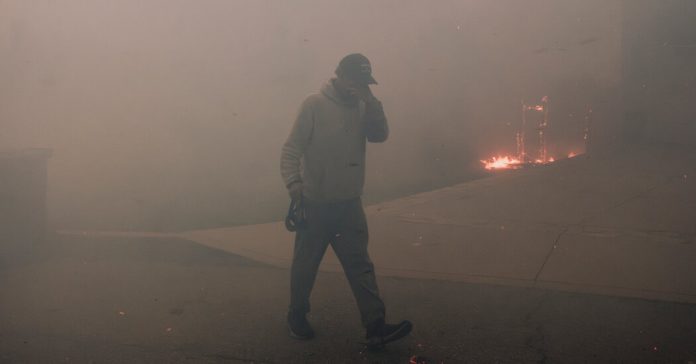
Those health concerns were coming to the fore this week as wildfires ravaged the Los Angeles area. Residents began to return to their neighborhoods, many strewed with smoldering ash and rubble, to survey the damage. Air pollution levels remained high in many parts of the city, including in northwest coastal Los Angeles, where the air quality index climbed to “dangerous” levels.

Los Angeles, in particular, has seen air pollution at levels that could be raising daily mortality by between 5 to 15 percent, said Carlos F. Gold, an expert in the health effects of air pollution at the University of California, San Diego.

That means current death counts, “while tragic, are likely large underestimates,” he said. People with underlying health issues, as well as older people and children, are particularly vulnerable.

The rapid spread of this week’s fires into dense neighborhoods, where they burned homes, furniture, cars, electronics and materials like paint and plastic, made the smoke more dangerous, said Dr. Lisa Patel, a pediatrician in the San Francisco Bay Area and the executive director of the Medical Society Consortium on Climate and Health.

A recent study found that even for homes that are spared destruction, smoke and ash blown inside could adhere to rugs, sofas and drywall, creating health hazards that can linger for months. “We’re breathing in this toxic brew of volatile organic compounds and polycyclic aromatic hydrocarbons and hexavalent chromium,” Dr. Patel said. “All of it is noxious.”

Intensifying and more frequent fires, meanwhile, are upending experts’ understanding of smoke’s health effects. “Wildfire season is no longer a season,” said Colleen Reid, who researches the effects of air pollution from wildfires on heath at the University of Colorado Boulder. “We have fires all year round that affect the same population repeatedly.”

“The health impacts are not the same as if you were exposed once, and then not again for 10 years,” she said. “The effects of that is something that we still don’t really know.”

A United Nations report from 2022 concluded that the risk of devastating wildfires around the world would surge in coming decades. Heating and drying caused by climate change, along with development in places vulnerable to fire, was expected to intensify a “global wildfire crisis,” the report said. Both the frequency and intensity of extreme wildfires have more than doubled in the past two decades. In the United States, the average acreage burned a year has surged since the 1990s.

Now, pollution from wildfires is reversing what had been a decades-long improvement in air quality brought about by cleaner cars and power generation. Since at least 2016, in nearly three-quarters of states in the U.S. mainland, wildfire smoke has eroded about 25 percent of progress in reducing concentrations of a type of particulate matter called PM 2.5, a Nature study in 2023 found.

In California, wildfire smoke’s effect on air quality is offsetting public health gains brought about by a decline in air pollution from automobiles and factories, state health officials have found. (By releasing carbon dioxide and other planet-warming gases into the atmosphere, wildfires are themselves a big contributor to climate change: The wildfires that ravaged Canada’s boreal forests in 2023 produced more greenhouse gases than the burning of fossil fuels in all but three countries.)

”It’s not a pretty picture,” said Dr. Gold of U.C. San Diego, who took part in the Nature study. If planet-warming gas emissions continue at current levels, “we’ve got some work that suggests that mortality from wildfire smoke in the U.S. could go up by 50 percent,” he said.

One silver lining is that the Santa Ana winds that so ferociously fueled the flames in recent days have been blowing some of the smoke toward the ocean. That stands in contrast to the smoke from the 2023 Canadian wildfires that drifted to New York and other American states hundreds of miles away, causing spikes in emergency room visits for asthma.

At one point that year, more than a third of Americans, from the East Coast to the Midwest, were under air quality alerts from Canadian wildfire smoke. “We’re seeing new and worsening threats in places that are not used to them,” Dr. Patel, the pediatrician, said.

The new normal is bringing about changes to health care, Dr. Patel said. More health systems are sending out air quality alerts to vulnerable patients. In the small community hospital where she works, “every child that comes in with wheezing or asthma, I talk to them about how air pollution is getting worse because of wildfires and climate change,” she said.

“I teach them how to look up air quality, and say they should ask for an air purifier,” Dr. Patel added. She also cautions that children should not participate in cleanup after a wildfire.

Scientists are still trying to understand the full range of wildfire smoke’s health effects. One big question is how much of what researchers know about vehicle exhaust and other forms of air pollution apply to wildfire smoke, said Mark R. Miller, a researcher at the Center for Cardiovascular Science at the University of Edinburgh who led a recent global survey of climate change, air pollution and wildfires.

For example, exhaust particles “are so small that when we breathe them in, they go deep down into our lungs and are actually small enough that they can pass from our lungs into our blood,” he said. “And once they’re in our blood, they can be carried around our body and start to build up.”

That means air pollution affects our entire body, he said. “It has effects on people who have diabetes, has effects on the liver and the kidney, it has effects on the brain, on pregnancy,” he said. What’s still not clear is whether pollution from wildfires has all of those same effects. “But it’s likely,” he said.

Experts have a range of advice for people living in areas with smoke. Keep an eye on air quality alerts, and follow evacuation orders. Stay indoors as much as possible, and use air purifiers. When venturing outside, wear N95 masks. Don’t do strenuous exercise in bad air. Keep children, older people and other vulnerable groups away from the worst smoke.

Ultimately, tackling climate change and cutting back on all kinds of air pollution is the way to reduce the overall burden on health, said Dr. El-Hasan of the American Lung Association. “Can you imagine how much worse things would be if we hadn’t started cleaning up emissions from our cars?” he said. “I’m trying to think, glass half full, but it does break my heart and it does worry me.”

Deep sleep can keep two big health problems at bay, new studies suggest

0

It might be worth working a little bit harder to get that much-desired but often elusive good night’s sleep.

Deep sleep clears the mind of waste just as a “dishwasher” cleans dirty plates and glasses, just-published research suggests — and there’s more.

The findings also offer insights into how sleeping pills may disrupt the “brainwashing” system — potentially affecting cognitive function for people over the long run.

ANOTHER REASON TO GET MORE SLEEP AND THIS ONE MIGHT SURPRISE YOU

Study senior author professor Maiken Nedergaard of the University of Rochester, New York, and the University of Copenhagen, Denmark, said norepinephrine (a neurotransmitter and hormone) triggers blood vessels to contract — generating slow pulsations that create a rhythmic flow in the surrounding fluid to carry away waste, news agency SWNS noted.

Said Nedergaard, “It’s like turning on the dishwasher before you go to bed and waking up with a clean brain … We’re essentially asking what drives this process and trying to define restorative sleep based on” this “glymphatic clearance.”

“It’s like turning on the dishwasher before you go to bed and waking up with a clean brain.” (iStock)

The brain has a built-in waste removal process – the glymphatic system – that circulates fluid in the brain and spinal cord to clear out waste, per the scientists. 

The process helps remove toxic proteins that form sticky plaques linked to neurological disorders, such as Alzheimer’s disease.

But the scientists indicated that what drives the system was unclear until now, according to the study.

Is all sleep created equal? The researchers wanted to find out.

To find clues, Nedergaard and her team looked into what happens in mice when the brain sleeps, as SWNS reported of the study. The team focused on the relationship between norepinephrine and blood flow during deep sleep.

TRUMP’S DAYLIGHT SAVING PLAN AND SLEEP: WHAT YOU MUST KNOW

They found that norepinephrine waves correlate to variations in brain blood volume — suggesting norepinephrine triggers a rhythmic pulsation in the blood vessels. The researchers then compared the changes in blood volume to brain fluid flow.

The brain fluid flow fluctuates in correspondence to blood volume changes — suggesting the vessels act as pumps to propel the surrounding brain fluid to flush out waste.

Senior couple sleeping

During deep sleep, toxic proteins that form sticky plaques linked to neurological disorders such as Alzheimer’s disease are removed, scientists say in a new study.  (iStock)

Natalie Hauglund of the University of Copenhagen and the University of Oxford, the study’s lead author, said, “You can view norepinephrine as [the] conductor of an orchestra.” 

She added, “There’s a harmony in the constriction and dilation of the arteries, which then drives the cerebrospinal fluid through the brain to remove the waste products.”  

‘I CAN’T SLEEP BECAUSE OF RACING THOUGHTS AT NIGHT — HOW CAN I STOP THEM?’: ASK A DOCTOR

Hauglund said she wanted to understand if all sleep is created equal. 

To find out, the research team administered zolpidem, a common drug to aid sleep, to mice.

“If people aren’t getting the full benefits of sleep, they should be aware of that so they can make informed decisions.” 

They found that the norepinephrine waves during deep sleep were 50% lower in zolpidem-treated mice than in naturally sleeping mice. 

Although the zolpidem-treated mice fell asleep faster — fluid transport into the brain dropped more than 30%, as SWNS reported.

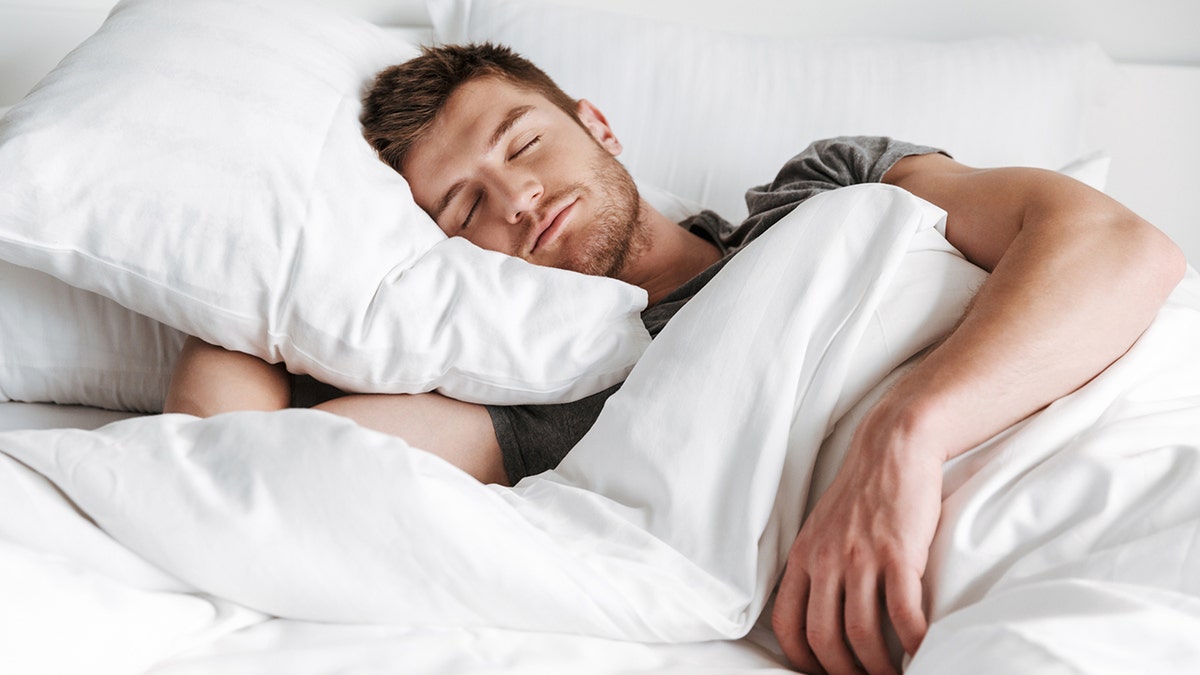
man sleeps in bed

Two new studies indicate the importance of getting a good night’s sleep — with one study saying a lack of sleep may be sabotaging the brain’s ability to keep intrusive thoughts at bay. (iStock)

The researchers say their findings, published in the journal Cell, suggest that the sleeping aid may disrupt the norepinephrine-driven waste clearance during sleep.

Hauglund said, “More and more people are using sleep medication, and it’s really important to know if that’s healthy sleep. If people aren’t getting the full benefits of sleep, they should be aware of that so they can make informed decisions.” 

CLICK HERE TO SIGN UP FOR OUR HEALTH NEWSLETTER

The research team said the findings likely apply to humans, who also have a glymphatic system, although it requires further testing.

Nedergaard added, “Now we know norepinephrine is driving the cleaning of the brain, we may figure out how to get people a long and restorative sleep.”

For more Health articles, visit www.foxnews.com/health

Meanwhile, a lack of sleep may be doing more damage than just making people groggy.

It could be sabotaging the brain’s ability to keep intrusive thoughts at bay.

young woman asleep

Anyone who suffers from sleep deprivation may find that the brain’s defense against unwanted memories is weakened, say experts. (iStock)

Another new study, this one published in the Proceedings of the National Academy of Sciences, found that sleep deprivation weakens the brain’s defense against unwanted memories, allowing them to flood the mind, according to the New York Post. 

CLICK HERE TO GET THE FOX NEWS APP

“We show that sleep deprivation disrupts prefrontal inhibition of memory retrieval, and that the overnight restoration of this inhibitory mechanism is associated with time spent in rapid eye movement (REM) sleep,” the scientists said.

Ukraine Says It Captured 2 North Korean Soldiers Fighting for Russia

0

The Ukrainian authorities on Saturday announced the capture of two North Korean soldiers in Russia, saying they were the first to be taken alive since Pyongyang sent troops to assist Moscow’s war effort.

President Volodymyr Zelensky of Ukraine said the two soldiers, who were wounded, were captured in the Kursk region of western Russia, where Ukrainian troops have been fighting to hold on to territory seized during a surprise cross-border incursion last summer.

In a post on various social media channels, Mr. Zelensky said the soldiers had received medical care, as required by the Geneva Conventions, and had been taken to Ukraine’s capital, Kyiv, for interrogation.

Ukraine’s domestic intelligence service, the SBU, said one of the soldiers was captured on Thursday. It did not provide details on where, or say when the second was taken prisoner, but said they were the first North Koreans fighting against Ukraine in Kursk to be captured.

Interrogations are being carried out through Korean translators in coordination with South Korea’s intelligence service, according to the SBU. South Korea’s embassy in Ukraine did not immediately respond to a request for comment. Neither Russia nor North Korea had any immediate comment.

Ukraine’s intelligence agency and Mr. Zelensky both shared photographs and videos of the two soldiers, showing one with bandages around his jaw and the other with bandaged hands.

According to the rules governing treatment of prisoners of war under the Geneva Conventions, governments are supposed to protect a prisoner of war from being made into a “public curiosity,” a concept that is sometimes interpreted as not presenting them in any public setting.

Fierce fighting has raged in Kursk as Russian forces try to rout Ukrainian troops and drive them back across the border. Bolstered by more than 11,000 North Korean soldiers, Russian troops have regained roughly half of the territory they lost in the area.

But Ukraine has hung on to more than 150 square miles of land inside Russia. The White House has said North Korea’s forces are suffering heavy casualties.

Last month, the Biden administration said more than 1,000 North Korean soldiers had been killed or wounded fighting Ukrainian troops in Kursk over the course of a week — with some choosing suicide over surrender.

Week in politics: Trump blames Gavin Newsom for wildfires, sentenced in hush money trial

0

President-elect Donald Trump picks a fight with California Governor Gavin Newsom as the wildfires burn, and was sentenced this week.

The top 3 factors heightening the risk of terror attacks on the homeland

0

Join Fox News for access to this content

Plus special access to select articles and other premium content with your account – free of charge.

By entering your email and pushing continue, you are agreeing to Fox News’ Terms of Use and Privacy Policy, which includes our Notice of Financial Incentive.

Please enter a valid email address.

NEWYou can now listen to Fox News articles!

As a former military intelligence officer, serving in the Defense Intelligence Agency (DIA), I tracked foreign threats to the U.S. homeland, identifying adversaries’ plans, intentions and capabilities that could harm Americans. I predicted Russia’s invasion of Ukraine more than a year before it took place. In March, in my Fox News Digital article titled “Ignore FBI director’s urgent warning about terrorist threats at our own peril,” I predicted terrorist attacks striking inside the U.S. homeland, the kind that took place on New Year’s Day in New Orleans and in Las Vegas.

Here are the top three reasons why we will likely face more terrorism in America this year. This time, it will be something we haven’t seen before.

Bureaucratic Inertia Stifles Defense Against Threats

Bureaucratic inertia prevents government agencies from acting on threats they themselves identify and warn about. During last year’s annual congressional briefing on the top “worldwide threats” facing the United States, FBI Director Christopher Wray warned that terrorist threats have reached a “whole other level” from the already heightened situation. Wray mentioned the “elevated” threat posed by “homegrown violent extremists, that is jihadist-inspired, extremists, domestic violent extremists, foreign terrorist organizations, and state-sponsored terrorist organizations.” 

He also specifically called out violent gangs and smugglers with ties to ISIS entering the country via the southern border. This was in March 2024. 

SPACE WARFARE: US, CHINA, AND RUSSIA ARE GEARING UP FOR THE NEXT FRONTIER OF ARMED CONFLICT

New Orleans police and federal agents investigate a terrorist attack on Bourbon Street in New Orleans on New Year’s Day on Wednesday, Jan. 1, 2025. (Chris Granger/The New Orleans Advocate via AP)

Wray’s concerns, however, did not translate into an augmented security posture that should have been adopted by intelligence, security and law enforcement agencies, and could have avoided the tragic events in New Orleans and Las Vegas, and saved American lives. 

Millions of migrants, predominantly military-age males, including criminals, terrorists and foreign intelligence operatives, continued to pour into our country. The highly dangerous transnational criminal gang from Venezuela, Tren de Aragua, has established operations in 16 states, including New Jersey and New York, as of November. They’re attacking Americans, at will.

To this day, the border has not been fully secured, enabling millions of illegal crossings, straining local law enforcement and making communities unsafe. The notorious free mobile application called the CBP One app, continues to be widely available on the Apple App Store and Google Play. Foreigners of all stripes who wish to enter the United States use it to schedule interview appointments, conducted remotely, to qualify for asylum status and entry to our country. All of this is courtesy of U.S. Customs and Border Protection (CBP). 

Did the FBI implement any of the 18 recommendations made by the 2012 William Webster Commission to improve and detect terrorist threats? What actions, if any, were taken following Wray’s March warning? These are fair questions for Americans to ask of their government. Especially given that we’ve had two assassination attempts on President-elect Trump, mysterious drone overflights over our military installations, and rampant crime committed by members of a transnational criminal gang – all since March.

Wray sits to testify before the Senate

FBI Director Christopher Wray arrives to testify during a Senate Appropriations Subcommittee hearing on June 4, 2024, in Washington, D.C. (Samuel Corum/Getty Images)

‘Over-the-horizon’ threats seemingly ignored

There’s a whole new threat that is looming over the horizon. And it hasn’t even hit the government’s to-do-list yet. Drone warfare is a prime example of such an emerging threat, which is driven by the democratization of high-tech capabilities, such as uncrewed aircraft systems (UASs). UAS is a general term for an unmanned aerial vehicle (UAV – aircraft or drone), but it encompasses the UAV’s entire operating system, including a ground control station (hosting the pilot operating the UAV); communication hardware (linking the UAV and controller); payload (cameras, sensors, explosives, etc.); and flight planning software.

PUTIN’S ‘FOG OF WAR’ MISSILE CONFUSES EXPERTS, BUT THAT’S HIS PLAN

UASs easily present the most dangerous threat our homeland has ever faced for three reasons. They are commercially available, relatively inexpensive, highly maneuverable, extremely difficult to identify and characterize, and have virtually unlimited payload capacity. You can outfit a UAS with a non-kinetic payload, such as a sensor or a camera, or with a kinetic or lethal capability, such as an explosive device, a bomb, or a WMD (chemical, biological, radiological). 

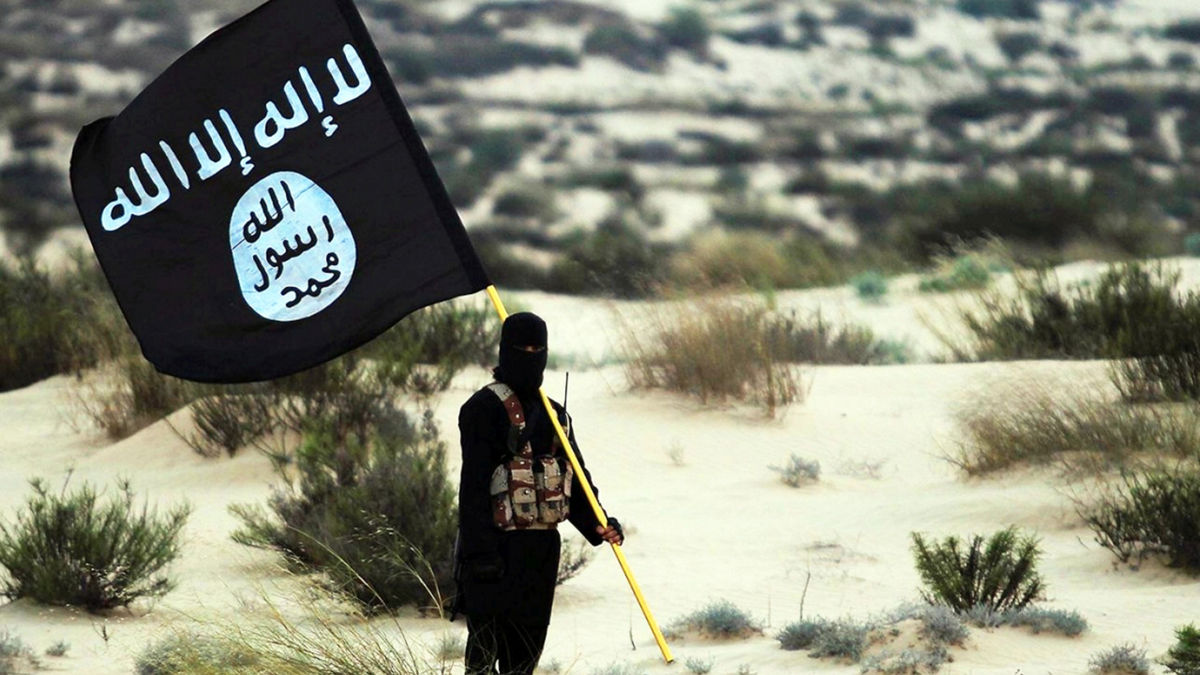
Islamic State militant holds ISIS flag in a desert setting

A masked Islamic State terrorist holds the ISIS flag in 2015.  (History/Universal Images Group via Getty Images)

Originally employed by our military for surveillance purposes and then later as a counterterrorism tool to eliminate terrorist leaders, drones are now widely available and used, including by terrorists. Drone warfare is being operationalized and perfected in the Russia-Ukraine conflict and in combat zones in the Middle East.

Drones are a perfect capability to strike soft targets and crowded places, which the homeland is full of. Here’s what a 2023 study commissioned by the U.S. Department of Homeland Security noted: “The growing use of UASs in both the private sector and government operations likely means that more people will have access to these systems in the future and the expertise to operate them, making the use of UASs for attacks increasingly likely.” The study highlighted the fact that “UASs can also give the operator the ability to act anonymously and a greater chance to avoid detection and capture.” This characteristic can be very attractive to terrorists as well as state actors who are U.S. adversaries.

CLICK HERE TO GET THE OPINION NEWSLETTER

As early as 2018, the U.S. government knew about the drone threat. Kirstjen M. Nielsen, then secretary of Homeland Security, wrote in a Washington Post article, “The U.S. isn’t prepared for the growing threat of drones,” and was defenseless against them. She even revealed that “terrorist groups such as the Islamic State aspire to use armed drones against our homeland and U.S. interests overseas.” 

And yet, to this day, we remain vulnerable to drone attacks. It became very obvious to everyone just how defenseless we still are to such attacks during the recent mysterious drone incidents. For weeks since November, unidentified drones were reportedly flying over military sites and critical infrastructure facilities in multiple East Coast states, including New Jersey and New York, and neither federal nor state security agencies put an end to it. The White House and the Pentagon even admitted not knowing the origin of those drones.

Ukraine drones battlefield

A Ukrainian air intelligence soldier carries a drone in the direction of Bakhmut, Ukraine, on May 10, 2024. (Diego Herrera Carcedo/Anadolu via Getty Images)

Politicization of intelligence drives shift to the wrong targets

The entire government security apparatus is now politicized, having shifted its focus from foreign threats, such as terrorists, to American dissidents. Instead of identifying and stopping those who are hell-bent on harming Americans, our government agencies have been targeting our own citizens who oppose the spread of woke ideologies in our society. Catholics, whose religious convictions prevent them from accepting things like transgenderism, and parents, who protest against the brainwashing of their children in leftist ideologies, such as the critical race theory (CRT), engulfing our public schools, are now viewed by government agencies as domestic threat actors.

This heinous politicization comes from the very top. President Biden has been minimizing the terrorist threat to the homeland, including that emanating from ISIS. In June 2021, Biden said: “According to the intelligence community, terrorism from White supremacy is the most lethal threat to the homeland today. Not ISIS, not al Qaeda – White supremacists.” Is it any wonder that the FBI agent-in-charge initially ruled out any links between the New Orleans attacker and terrorism or ISIS? That despite the fact that the attacker, 42- year-old Shamsud-Din Jabbar of Texas, had an ISIS flag installed on his Ford pickup, which he intentionally rammed into a group of civilians celebrating the New Year in the French Quarter, killing 14. 

Maj. Nidal Malik Hasan, the U.S. Army doctor convicted in the shooting deaths of 13 people at Fort Hood, Texas, on Nov. 5, 2009. (U.S. Government Uniformed Services University of the Health Sciences via Getty Images)

Maj. Nidal Malik Hasan, the U.S. Army doctor convicted in the shooting deaths of 13 people at Fort Hood, Texas, on Nov. 5, 2009. (U.S. Government Uniformed Services University of the Health Sciences via Getty Images)

Similarly, the FBI failed to identify an Army psychiatrist, Maj. Nidal Hasan, who in 2009 shot and killed 13 people and injured 31 at Fort Hood, Texas, as someone involved in terrorist activities – despite the fact that Hasan was in regular contact with a known terrorist, Anwar al-Awlaki. In his correspondence, Hasan, an American-born Muslim, discussed suicide bombers, and whether it is permissible for “the killing of innocents for a valuable target.” 

CLICK HERE TO GET THE FOX NEWS APP

According to a 2012 Report of the William Webster Commission on the FBI, Counterrorism, Intelligence and the Events at Fort Hood, Texas on Nov. 5, 2009, the FBI agents on the San Diego Joint Terrorism Task Force were aware that Hasan had contacted al-Awlaki numerous times before the shooting spree. Nevertheless, the FBI field office in Washington determined that Hasan “was not involved in terrorist activities.” The FBI therefore did not issue a warning about Hasan’s terrorist links to the Department of the Army and the Pentagon, both of which classified the incident as workplace violence and not an act of terrorism. The 2012 report made 18 formal recommendations to the FBI to improve and detect terrorist threats.

The incoming Trump administration promised to de-politicize government agencies. Nominating Tulsi Gabbard, a former Democrat, as the Director of National Intelligence, as part of a Republican administration is a step in the right direction. Intelligence is supposed to be nonpartisan. Intelligence officers should not fear to speak truth to power even if their analytic line contradicts the sitting president’s policies. But eradicating government’s inertia will be a much taller order. Let’s see, if DOGE can compel government bureaucrats to mount defenses against the drone threat and save Americans.

CLICK HERE TO READ MORE FROM REBEKAH KOFFLER

Out in the Cold With Justin Trudeau

0

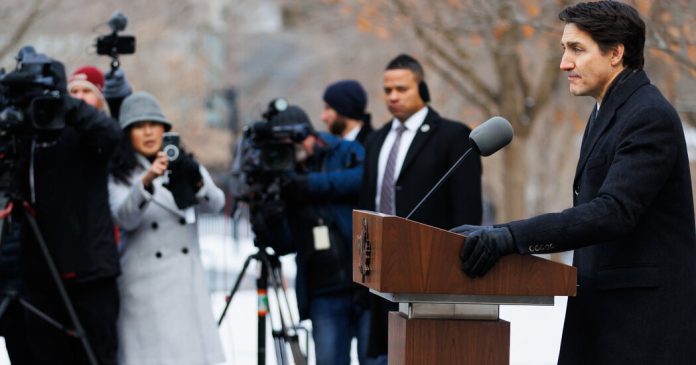
In light wool trousers, dress shoes and an overcoat that was partly open, Prime Minister Justin Trudeau was minimally clothed for the minus 13 degrees Celsius weather on Monday when he stepped out of his official residence to announce his resignation.

Mr. Ignatieff pulled on a Team Canada hockey jersey — conveniently Liberal red in color — and, mostly for the benefit of television camera crews and photographers, went for a skate with some other members of Parliament and senators from his party.

I went ahead of them and randomly stopped other skaters to ask whether they recognized Mr. Ignatieff. Few did. No one waved at Mr. Ignatieff or paid attention to him.

But when Mr. Ignatieff sat on a bench to take off his skates, I heard a commotion on the ice behind me. Mr. Trudeau had arrived — and was immediately swarmed.

[Read: In Canada, Covering the Trudeau News With an ‘Orchestra’]

Two years later, I got a personal demonstration of that star power.

I interviewed Mr. Trudeau at his constituency office in Montreal for a profile that would appear just after he became Liberal leader in 2013. The office was above a drugstore, and it looked as though the furniture had been left behind by a previous tenant.

We met in a dark boardroom. When we started discussing the death of his father, former Prime Minister Pierre Elliott Trudeau, and the crowds that lined the route of his funeral train from Ottawa to Montreal, Mr. Trudeau briefly lost his composure and had to get a box of tissues. I had never seen anything like it during an interview with a politician, and have yet to see it since.

After the interview was over, we walked in the same direction down the busy road in front of the office. It was another bone-chilling day. A man ran toward us from across the street, zigzagging through traffic. In African-accented French, he said that all he wanted was to shake Mr. Trudeau’s hand.

[From Opinion: Justin Trudeau Was His Own Worst Enemy]

[From Opinion: Saying au Revoir to a Trudeau. For Now.]

Even as Mr. Trudeau’s popularity faded in the years that followed, the crowds never did. Nor did his apparent desire to meet people.

Stephen Harper, the Conservative prime minister whom Mr. Trudeau succeeded in 2015, favored tightly controlled events before carefully selected audiences. In contrast, even outside of election campaigns, Mr. Trudeau held town halls that were open without registration and that often generated overflow crowds even after being moved into larger arenas.

During campaigns, Mr. Trudeau didn’t just stop for selfies and handshakes and immediately move along. If people had questions, he listened and had conversations — usually to the dismay of his staff trying to keep things on schedule.

With this approach, he was sometimes working without a net. In 2017, when his image was just starting to tarnish, I attended a town hall in Peterborough, Ontario, on yet another cold day. While Mr. Trudeau clearly had fans in the crowd, the gathering became raucous.

The Ontario government’s electrical utility had introduced steep rate increases. One woman brandished at the prime minister her monthly bill of more than 1,000 Canadian dollars. Even though the utility was not at all under federal control, Mr. Trudeau became the target of the people’s wrath.

After he became prime minister, his interviews lost their previous candor. His replies were carefully considered.

Certainly he never again offered anything like his response in that boardroom to why he was opening himself up to the sort of vitriol that his father received as prime minister.

“Am I going to make mistakes? Loads of them,” he told me in 2013. “I’ll be apologizing, I’ll stumble through. But I trust my core, I trust my values and I trust Canadians. And if I blow it, it will really be because I wasn’t up to the task.”


Ian Austen reports on Canada for The Times and is based in Ottawa. Originally from Windsor, Ontario, he covers politics, culture and the people of Canada and has reported on the country for two decades


How are we doing?
We’re eager to have your thoughts about this newsletter and events in Canada in general. Please send them to [email protected].

Like this email?
Forward it to your friends, and let them know they can sign up here.

Trump's national security team will start their Senate confirmation hearings amid controversy

0

President-elect Trump’s picks for his national security team will soon start confirmation hearings, after his remarks about buying Greenland, taking over the Panama Canal and making Canada a state.

Power grid faults surged right before Los Angeles wildfires began: expert

0

A company that monitors electrical activity says faults along the Los Angeles power grid skyrocketed in the same areas where three of this week’s major wildfires are currently raging.

Bob Marshall, the chief executive of Whisker Labs, told Fox News Digital that the company recorded sharp increases in faults in the hours prior to the Eaton, Palisades and Hurst Fires.

Marshall said that his company has a network of around 14,000 sensors known as “ting” sensors across Los Angeles that can pinpoint and identify faults generated by electrical arcs. Through its network of sensors in homes, Whisker Labs is able to monitor the electric utility grid with “extraordinary precision and accuracy.”

ESSENTIAL PHONE NUMBERS FOR LOS ANGELES-AREA RESIDENTS AND HOW YOU CAN HELP THEM

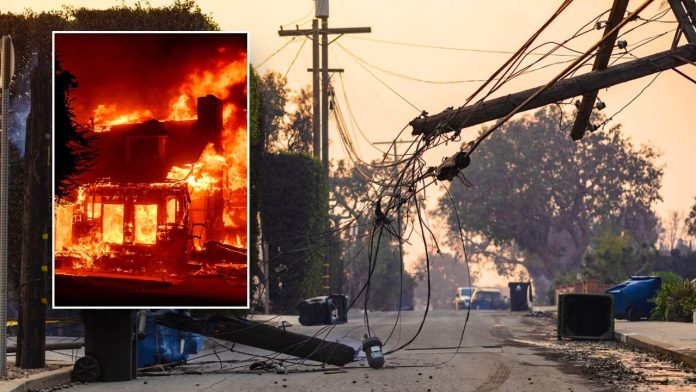
Power lines hang on broken power poles in the middle of a street caused by the Palisades Fire on Jan. 8, 2025 in the Pacific Palisades community of Los Angeles, California. A company that monitors electrical activity says faults along the Los Angeles power grid soared in the same areas where three of this week’s major wildfires are occurring. (Jay L. Clendenin/Getty Images)

DISTRAUGHT LA MOM CONFRONTS NEWSOM OVER FLAILING WILDFIRE RESPONSE

“Faults are caused by tree limbs touching wires or wires blowing in the wind and touching. That creates a spark in a fault, and we detect all of those things,” Marshall explained. 

Other causes include faulty electric equipment igniting, a sudden surge in demand or earthquake tremors. At the time the fires ignited, intense Santa Ana winds were blowing across Los Angeles.  

The company’s data, which was shared with Fox News Digital, is startling. 

In the Palisades area, the largest of the fires currently raging, there were 63 faults in the two to three hours prior to the ignition of the fire, Marshall said. There were 18 faults registered in the hour it began on Tuesday. 

The blaze has so far torched 12,300 homes and buildings across the area. Across the county, the death toll has risen to 11 people, and authorities anticipate that number rising.

“In the case of the Eaton Fire near Altadena, there’s 317 grid faults that occurred in the hours preceding the ignition,” Marshall said. “And then in the Hurst Fire, there’s about 230 faults that occurred that we measured on the sensor network.”

He said on a typical day there are very few faults.

Bob Marshall with a "ting" sensor

Bob Marshall, the CEO and co-founder of Whisker labs, holding a “ting” sensor. (Fox News Digital)

LA FIRE SOUNDED ALARM ON BUDGET CUTS IMPACTING WILDFIRE RESPONSE: MEMO

Sparks from faults can fall to the ground and ignite vegetation, essentially setting a match on the landscape. High winds then carry the flames at rapid speeds.

Investigators have yet to determine what sparked the raging wildfires that have decimated large areas of Los Angeles, but a jump in faults on the power grid may serve as vital clues. 

“Importantly, what we cannot say is one of those is whether one of those faults caused the fire. We don’t know that,” Marshall said. “What we know from our data is that there were increasing faults in the grid in the area around where those fires ignited.”

He said the data shows that the power was not shut off immediately when the faults were rising. 

“But again, we can’t say definitively at all whether one of those faults caused a fire. I do want to be very, very clear about that,” he added.

Marshall said that Whisker Labs has had discussions with utility companies about using its data, but currently, the data is not being shared.

Right now, ting sensors notify homeowners of a surge in power so they can take preventative measures to prevent house fires. Marshall said the company has a network of about one million ting sensors across the U.S.

“A power surge can cause damage to appliances and devices. In the worst case, it can cause a fire in a home,” Marshall said. 

He said the “smart and super sophisticated” technology can prevent 80% of potential house fires.

Raging fire devours home

A home is engulfed in flames during the Eaton Fire in the Altadena area of Los Angeles County, California, on Jan. 8, 2025. (JOSH EDELSON/AFP via Getty Images)

When the sensor picks up a fault, the home sensor is notified via an app, and then they can arrange for an electrician to call and make the necessary fixes.

“We take 30 million electrical measurements every second. There’s AI (artificial intelligence) in the sensor, [and] we stream data to a cloud that is specifically designed to detect electrical faults inside of homes,” he continued. “And then the network of sensors detects faults on the grid because when there’s a fault on the grid it is simultaneously measured by many ting sensors in a community. So if there’s a fault in your home, that fault doesn’t propagate out to the whole community, we only detect it on one single thing sensor in your home.”

CLICK HERE TO GET THE FOX NEWS APP

Meanwhile, the Los Angeles Department of Water and Power didn’t proactively turn off the power to mitigate the risk of starting a fire ahead of this week’s devastating wildfires, The Wall Street Journal reported Friday, citing regulatory filings.

The preventative measure is in place with every other big California power company after utilities have sparked wildfires in the past, the Journal reported.

An LADWP spokesperson told the Journal that they have other safety precautions in place, such as disabling technology that automatically restores power after an outage. She added that widespread preventative power outages could also be harmful to emergency services.

Fox News’ Brie Stimson contributed to this report.