Thursday, November 12, 2026
Home Blog Page 403

Syria’s New Rebel Government Orders Changes to School Curriculum, Worrying Some Syrians

0

References to the ousted President Bashar al-Assad and his father, who ruled Syria before him, have been removed, as have images of pre-Islamic gods. The definition of a martyr has been changed, and it now means someone who has died for God, not one’s country. A Roman-era queen has been taken out of some textbooks.

Just weeks after a coalition of rebels toppled the Assad regime, the interim government they have set up in Damascus has moved quickly to order a raft of changes to the country’s school curriculum. The modifications cover subjects ranging from English and history to science and Islamic studies.

The move has been criticized by teachers and other Syrians who object not only to the nature of some of the changes but also to the fact that they were decided upon so quickly, with no transparency and no guidance from teachers and the general public.

Critics say that the changes, and the unilateral way in which they were ordered, are worrying signs of how the new Syrian government plans to govern a diverse country.

Some of the changes, which were detailed in nine pages released by the Education Ministry on social media last week, have been broadly welcomed, like removing glorification of the Assad regime from textbooks.

But some Syrians question why other changes were a priority, given the more pressing issues, like insecurity, sectarian tensions and an economic crisis, that still confront the country.

“The modifications should be restricted to only the things that involved the previous regime,” Rose Maya, 45, a high school French teacher, said at a small protest against the changes outside the Education Ministry on Sunday. “But there is no need for all the other changes.”

Ms. Maya was joined by about two dozen other people — among them teachers, students, doctors and artists — holding signs expressing various objections to the changes. Next to her was another teacher, Muayid Muflih, with a sign that read: “Power belongs to the people, not over the people.”

Mr. Muflih said that until recently he taught about nationalism, a subject that was widely seen as serving the agenda of the Assad regime. It has now been eliminated completely from the curriculum.

Ms. Maya, referring to Nazir Mohammad al-Qadri, the education minister, said that “as an interim minister he shouldn’t make changes.” And she said there needed to be transparency regarding the committees the ministry said it formed to review textbooks and suggest the changes. “There should be teachers involved,” she said.

The ministry has defended the changes and pushed back against suggestions that the alterations were Islamist, or a nod to Salafism, a conservative branch of Sunni Islam to which many of the country’s new leaders belong.

“The modifications were needed after the liberation of Syria,” Mr. al-Qadri said in an interview on Sunday. “These modifications were not changes to the curriculum but modifications of some of the slogans and symbols that used to glorify the previous regime.”

Mr. al-Qadri was part of the education ministry in Idlib, the province in northwest Syria run by the Islamist rebel group that now heads the interim government, Hayat Tahrir al-Sham.

Specialized committees involving both members of the Hayat Tahrir al-Sham-led government in Idlib Province and members of the Assad-era education ministry reviewed the textbooks and suggested changes, he said.

Mutasem Syoufi, executive director of the Day After, a nonprofit group, said that the interim government was trying to impose its vision not just on the political system of Syria but also its public life. The Day After was founded in 2012 by members of the Syrian opposition to plan for a transitional phase in Syria after the eventual fall of the Assad regime.

“The changes are a clear reflection of a very narrow reading of Islam, and again it reminds us of the background of the group which is in charge of Syria today,” he said. “There is no inclusive viewpoint.”

The speed with which the curriculum changes were made suggests they had been prepared before the interim government took power, Mr. Syoufi said.

Across Syria, even as people celebrate the toppling of a brutal and autocratic regime, there is some trepidation about the future of the country under a government headed by Islamist rebels.

Syria’s de facto new leader, Ahmed al-Shara, recently said it could take two to three years to draft a new constitution and up to four years to hold elections, alarming some Syrians who have expressed fear that they have traded one authoritarian leader for another.

Several people at the protest questioned why removing a Roman-era queen was such a priority for the new Syrian leadership, which is already overwhelmed with suddenly running a whole country, and rebuilding the state.

On page 19 in the third-grade Islamic Studies textbook a reference to Zenobia, a queen in the Roman colony of Palmyra, in present-day central Syria, has been removed. An ambiguous notation in the ministry’s list of changes has been read by many as proof that it sees her as a fictional person.

Mr. al-Qadri said she had not been removed from history textbooks. He said she had been deleted from the Islamic Studies textbook because she had lived and ruled in a pre-Islamic period.

“We don’t deny that Zenobia was present in history,” he said. But, he said, “we object to her inclusion in this book.”

The deletion of the female leader from the textbook has nevertheless worried some Syrians, who see it as an attack on the storied history of Syria.

“If we teach this generation that she was a fictional character, then we lose our connection to the past,” Ms. Maya said. “It means that we don’t have a past. And those that don’t have a past don’t have a future.”

Such changes, some Syrians say, should await the writing of a constitution and elections. They should also be part of a broader dialogue between different parts of Syrian society, made up of various religions, sects and ethnicities, they said.

“Their focus at this point should be just enforcing security and making it clear how they came into power and what their plans are,” said Malak Muhammad Suleiman, a dentist.

Another of the curriculum changes that has Syrians worried concerns the translation of a verse of the Quran. The final verse in the first chapter of the Muslim holy book refers to “those who are astray.”

In the previous first-grade Islamic studies book, the phrase was defined as “those who have moved away from the right path.” Under the new government’s changes, the phrase is now defined as “Christians and Jews.”

Manwella al-Hakim, a 60-year-old abstract painter and observant Muslim who wears the hijab, held up a sign at the protest objecting to this new interpretation.

“We don’t want things that will divide us,” she said. “Syria has always had all the religions and all the beliefs.”

Near her, Ziyad al-Khoury, a 61-year-old retired journalist, held up two signs, one of which read: “I am a Christian and not astray.”

Mr. al-Khoury said he was shocked when he first heard of the change.

“It felt like a message from the new government that we aren’t part of this country,” he said.

Four years after the Capitol riot, its meaning and legacy are still debated

0

Trump has promised to pardon many who were involved in the violence of Jan 6. Experts on authoritarianism and extremism say that promise adds to the debate over how the day will be remembered.

Ubaid figurine resembling alien stumps archaeologists in Kuwait

0

A strange alien-like clay head dating back thousands of years has been retrieved from an excavation in Kuwait, stumping archaeologists about how it came to be.

In a Nov. 28 press release published by the University of Warsaw, the school explained that researchers from the Kuwaiti-Polish Archaeological Mission found the artifact in Bahra 1, an archaeological site in the Subiya region of Kuwait.

The press release called the artifact “one of the most remarkable” discoveries of the excavation, describing it as a “small, finely crafted clay head featuring an elongated skull, slanting eyes, and a flat nose.”

The figurine dates back to the Ubaid period of ancient Mesopotamia, which predated the Bronze Age. Archaeologists estimate that the artifact was crafted during the 6th millennium BCE, making it between 7,000 and 8,000 years old.

ARTIFACT WITH STRANGE INSCRIPTION DUG UP AT HOLY SITE IN JERUSALEM: ‘UNUSUAL LOCATION’

Archaeologists recently discovered a 7,000-year-old figurine that looks like an alien. Researchers discovered the unearthly form while digging at a site in Kuwait called Bahra 1. (SWNS)

The University of Warsaw release noted that similar Ubaid figurines have been found before, but this artifact was the first of its kind uncovered in the Persian Gulf.

“Its presence raises intriguing questions about its purpose and the symbolic, or possibly ritualistic, value it held for the people of this ancient community,” Professor Piotr Bieliński said in the press release.

Archaeologists also noted that they uncovered two distinct types of pottery at the site, calling the discovery “pivotal” to the study of the Ubaid period.

ARCHAEOLOGISTS UNCOVER ONE OF THE WORLD’S OLDEST CHRISTIAN CHURCHES

“From their onset, excavations at the site have yielded two types of pottery: Ubaid are, known to have been imported from Mesopotamia, and a completely different type known as Coarse Red Ware (CRW) and known from sites in the Arabian Peninsula,” the press release explained.

“The latter type has long been described as produced locally, in the Gulf region, but actual places of its production have hitherto remained unknown,” the statement added. “Conclusive evidence finally came from the Bahra 1 site, including an unfired clay vessel.”

CLICK HERE TO SIGN UP FOR OUR LIFESTYLE NEWSLETTER

Excavation

The joint Kuwaiti-Polish archaeological team. (SWNS)

The findings confirm that Bahra 1, which is one of the oldest and largest-known settlements in the Arabian Peninsula, is also the oldest-known pottery production site in the Persian Gulf.

Excavators also found small fragments of plants that were added to the clay while the pottery was being made. Next, researchers will conduct an archaeobotanical analysis of the plant matter in order to learn about the local flora during the time period.

For more Lifestyle articles, visit foxnews.com/lifestyle.

“Early analyses have revealed traces of wild plants, particularly reed, within the locally produced pottery, while cultivated plant remains, including cereals, such as barley and wheat, have been found in the imported Ubaid ware,” Dr. Roman Hovsepyan said.

The Kuwaiti-Polish Archaeological Mission plans to continue studying the site, and hopes to find “further discoveries and insights into the intersection of the Arabian Neolithic and Mesopotamian Ubaid cultures as well as to develop further cooperation between Polish and Kuwaiti heritage specialists,” the statement noted.

Ubaid pottery

An example of Ubaid pottery, found at the Eridu settlement. It dates back to the 6th or 5th millennium BC. (Getty Images)

CLICK HERE TO GET THE FOX NEWS APP

“The ongoing excavations reveal Bahra 1 as a critical site for understanding the cultural exchanges between Arabian Neolithic societies and the Ubaid culture which spread from Mesopotamia to a vast territory, from Anatolia to the Arabian Peninsula,” the press release said. “Recent research at Bahra 1 contributed new information to the picture through several unique discoveries.”

‘Forever Chemicals’ Reach Tap Water via Treated Sewage, Study Finds

0

As the world grapples with climate change, population growth and dwindling supplies of fresh water, more people are set to rely on treated wastewater to sustain their daily lives.

But wastewater, even after treatment, contains high levels of harmful “forever chemicals” that are already contaminating the drinking water of millions of Americans, researchers said in a study published on Monday that analyzed wastewater samples nationwide.

The study, led by researchers at Harvard and New York University, found elevated levels of six types of chemicals known as PFAS, or per- and polyfluoroalkyl substances, in the samples. The chemicals, which have been linked to cancer and other diseases, are known as forever chemicals because they don’t break down in the environment. Last year, the Environmental Protection Agency started to regulate PFAS in drinking water.

The researchers found that the samples contained an even greater quantity of organofluorines, a wider group of chemicals that includes PFAS and is used in pharmaceuticals, refrigerants, and nonstick coatings. The majority of those chemicals are unregulated and the health consequences of exposure to many of them are still unknown.

“What are all of these other compounds? Are they other PFAS that we’re not measuring, that the industry has shifted toward?” said Bridger Ruyle, assistant professor of environmental engineering at New York University, who led the research. “What does that mean for exposure?”

The study, published in the Proceedings of the National Academy of Sciences, found that wastewater treatment facilities do not effectively remove these compounds from wastewater. At most sites, in fact, PFAS in wastewater became more concentrated after treatment, the researchers found.

The contamination is of particular concern, the researchers said, given that water scarcity across many regions of the United States means wastewater is being reused or is being released into rivers and lakes. And if that wastewater isn’t diluted enough before re-entering the drinking water supply, a concern that is growing as water flows dwindle because of overuse and climate change, “you have a contamination issue,” Professor Ruyle said.

About 50 percent of the country’s drinking water supplies are downstream of one or more wastewater sites, he added. The study used modeling to show that PFAS from wastewater was already contaminating the drinking water of up to 23 million people in the United States.

The results “emphasize the importance of further curbing ongoing PFAS sources,” the researchers concluded.

The new study highlights how widespread contamination is complicating efforts to reuse wastewater, which includes sewage from households as well as polluted water from businesses and factories. The sludge that is left over after wastewater treatment is also used to fertilize farmland across the country, and PFAS contamination of that sludge is also raising concerns over the practice.

Post Malone gifts Houston bartender and single mother $20,000 tip on Christmas Eve

0

Santa Claus wasn’t the only one shelling out gifts on Christmas Eve.

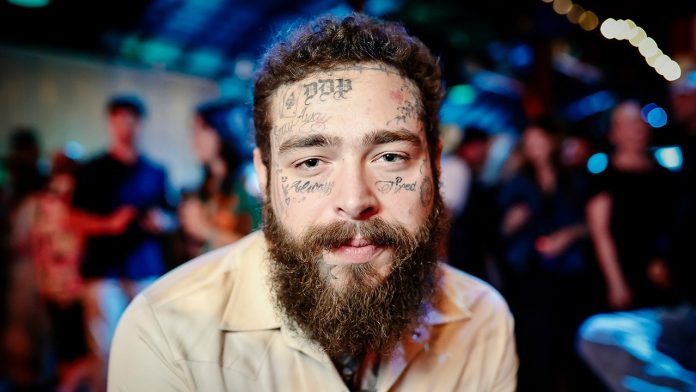
According to Renee Brown, a single mother and bartender at The Railyard bar in Houston, Texas, rapper Post Malone channeled his inner Kris Kringle, gifting her an enormous tip on a day that started out unusually to begin with. 

Brown says her holiday plans were a deviation from her normal routine, typically spent with her 9-year-old daughter, Iliana. 

“We usually bake cookies and watch Christmas movies, and this was the first time I wasn’t able to do that,” she told Music Mayem magazine of her regular plans.

POST MALONE PREFERS NASHVILLE TO LA: ‘IT’S ALWAYS LIKE SOMEONE WANTS SOMETHING FROM YOU’

Post Malone and his pals were patrons at a small dive bar in Houston, Texas on Christmas Eve. (Greg Doherty/Getty Images for Amazon MGM Studios)

“I work two jobs and home school my daughter. I’m constantly exhausted,” she explained. “We’ve been without a car for two years. And recently moved after losing everything and starting over from scratch in August of 2024.

“The day started off super slow, and I was just taking it as it was, trying to be in a good mood for others while dealing with not being able to spend Christmas Eve with my daughter,” Brown remembered. But things would change when Post Malone, whose real name is Austin Post, showed up at her bar with pals and fellow performer, Shaboozey, to enjoy a quiet evening.

Shaboozey in a Detroit Lions letterman jacket sings on stage

“A Bar Song (Tipsy)” singer Shaboozey accompanied Post Malone at the Texas bar on Christmas Eve. (Mike Mulholland/Getty Images)

“I initially didn’t realize [Malone] was there until one of my coworkers from my second job came inside and told me that Austin was outside on the patio,” Brown said. “I thought he was kidding with me at first, then I kept seeing people go outside [and] I kept making drinks for like 30 minutes before curiosity got the best of me, and lo and behold, he was there.

“I told all my regulars not to be weird and bug him as it’s a neighborhood dive bar, and I’m sure he picked a place like that to feel a sense of normalcy.” 

The Railyard, described as a no-frills establishment, devoid of pretentiousness, shifted because of the “Circles” singer’s presence. 

“It was amazing to see everyone so happy and seeing how kind he was to all the people that spend their days with me on the regular,” she said. “Everyone that he was with was also so kind and inviting. We had a great night jamming to songs on the jukebox.”

LIKE WHAT YOU’RE READING? CLICK HERE FOR MORE ENTERTAINMENT NEWS

Post Malone in a yellow vest and blue shirt smiles while on stage in a tan cowboy hat

Post Malone’s tab was covered by patrons and friends at the bar, much to the singer’s chagrin. (Jon MorganCBS via Getty Images)

Positive vibes were felt throughout the room, but things only got better for Brown. 

“When Austin asked for his check, he didn’t have one because many regulars and his friends bought his beverages,” Brown shared. Intent on tipping Brown, the rapper insisted that he be billed for something. 

“So he asked me to ring him up for a penny or anything, so I did. I continued my close and collected all my checks and started to enter my tips. Then I got to his. It was a tip for 20,000 dollars.”

CLICK HERE TO SIGN UP FOR THE ENTERTAINMENT NEWSLETTER

Post Malone in a blue patterned shirt sits on stage and sings behind a microphone

Post Malone gifted Renee Brown a $20,000 tip on a $1.00 bill. (Jason Kempin/Getty Images for Bud Light)

“I immediately broke down crying. It was a very emotional night already being away from home, being swamped behind the bar, trying to process that they were even there and then the tip on top,” she said. Working two jobs, Brown says Malone’s gift was genuinely life-changing. 

“This put me in a position to at least be able to get a way back and forth to work and pay up on rent and save a bit. I’m trying to save up to start a business, so I don’t have to continue working two jobs and be able to spend more time with my daughter. Things have been extremely difficult, and this was truly a blessing that I can’t fully put into words. The visit alone was absolutely amazing and something I could talk about and remember for the rest of my life.

“I finally got a chance to stop cleaning and talk to him some more and thank him,” Brown said of sharing her gratitude with Malone. “I know I was crying and thanking him, but he has no idea exactly how much this meant to me.” 

Brown shared photos of her and the rapper on Instagram, adding that the performer was “hands down the most humble personable celebrity” she’d had “the pleasure of meeting.”

Musician Post Malone wears cowboy hat while playing the guitar.

Renee Brown says Post Malone’s generous gift changed her life. (Getty Images)

CLICK HERE TO GET THE FOX NEWS APP

Although she was able to thank Malone in person, Brown reiterated her appreciation in the interview. “If this message reaches him, I know I told him that night how grateful I am, but I’d like to reiterate that he helped me in ways I can’t even begin to explain,” she said. “My best friend [Matthew] and I have been huge fans of him for years, and it was amazing we got to meet him and experience that moment.”

A representative for the singer, who will go on tour with musical guest Jelly Roll starting in April, did not immediately respond to Fox News Digital’s request for comment.

Justin Trudeau to Resign as Canada’s Prime Minister

0

Prime Minister Justin Trudeau of Canada said on Monday that he would step down in the coming months, bowing to an angry electorate at a time of uncertain economic prospects and political infighting.

The announcement, which came amid a gridlocked Parliament, left Canada in political flux just as the incoming Trump administration has vowed to impose punishing tariffs on Canadian imports.

“It’s time for a reset,” Mr. Trudeau told reporters outside his residence on a frigid morning in Ottawa, the capital. Mr. Trudeau said that he had suspended Parliament until March 24 and that he would stay on as Liberal Party leader and prime minister until his replacement had been chosen through a nationwide party election.

“I truly feel that removing the contention around my own continued leadership is an opportunity to bring the temperature down,” he said.

Mr. Trudeau, 53, who rose to power nearly a decade ago and quickly became seen as a progressive icon, is the latest leader in the West to be swept aside by a mood of anti-incumbency, a backlash against immigration and anger at the lingering effects of a spike in inflation during the Coronavirus pandemic. Although inflation in Canada has receded to below 2 percent, unemployment remains high, at above 6 percent.

General elections must be held by October, a timetable that Mr. Trudeau referred to on Monday.

“It’s become obvious to me with the internal battles that I cannot be the one to carry the Liberal standard into the next election,” he said.

Mr. Trudeau has faced weeks of mounting pressure from inside his party’s ranks.

In December, Mr. Trudeau’s deputy prime minister and finance minister, Chrystia Freeland, abruptly stepped down, issuing a stinging rebuke of his leadership and stewardship of the country. Ms. Freeland, who had been a close ally of the prime minister, accused Mr. Trudeau of having engaged in “costly political gimmicks” and being ill-prepared to face the challenge posed by Mr. Trump.

Her resignation incited a growing chorus of voices from Liberal parliamentarians asking him to step aside for the sake of the party, and let someone else lead the party in general elections.

Mr. Trudeau also had been under pressure from a resurgent Conservative Party, which in recent surveys has drawn a commanding double-digit lead over the Liberal Party. The Conservative leader, Pierre Poilievre, posted a video on social media on Monday promoting an alternate vision of governing: “ax the tax,” referring to Trudeau’s unpopular carbon tax, “build the homes,” “fix the budget” and “stop the crime.”

The upheaval comes as Canada is debating how best to deal with Mr. Trump’s pledge to impose tariffs that would upend a trade agreement among Canada, the United States and Mexico. (Mr. Trump has also threatened tariffs on Mexico and says he wants both countries to address the flow of drugs and undocumented migrants into the United States).

Tariffs would be potentially ruinous for Canada’s economy, which is heavily dependent on exports, particularly of oil and automobiles. The United States and Canada are each other’s biggest trading partners.

Mr. Trudeau visited Mr. Trump at Mar-a-Lago, his private club and residence in Florida, in late November, and his government had been in talks to address the president-elect’s concerns about border security in hopes that he would reconsider his tariff threat.

The talks do not appear to have been fruitful. In early December, Mr. Trump mocked Mr. Trudeau in a social media post, describing the Canadian prime minister as “Governor Justin Trudeau of the Great State of Canada.”

On Monday Mr. Trump responded to Trudeau’s resignation by again suggesting that Canada should become America’s “51st state,” saying on social media that if Canada merged with the U.S. that taxes would decrease and that there would be no tariffs.

Among possible replacements for Mr. Trudeau are Ms. Freeland, the former deputy prime minister and finance minister; Dominic LeBlanc, who became finance minister when Ms. Freeland resigned; Mélanie Joly, Canada’s top diplomat since 2021; and Mark Carney, the former governor of the Bank of Canada, who also led the Bank of England.

Mr. Trudeau, whose government has been hamstrung by its lack of a majority in Parliament, said on Monday that the legislative body had been “totally seized by obstruction, and filibustering and a total lack of productivity.”

In his comments in French, he painted an even starker picture of a Parliament that “no longer functions.”

The suspension of Parliament, a process known as prorogation, will give his party time to pick a new leader, which Mr. Trudeau said would be through a “robust, nationwide, competitive process.” A new — and perhaps more popular leader — could put the Liberals on firmer footing in the upcoming national election.

Suspending Parliament wipes out all pending legislation but does not affect the government’s day-to-day operations.

Mr. Trudeau spent a decade building a political brand around being a feminist, an environmentalist, and an advocate for refugees and Indigenous people, pursuing the same message of change and hope as Barack Obama. But analysts say Mr. Trudeau’s brand, which appears antithetical to Mr. Trump’s, is no longer working for him.

“He caught a wave on his way in, and when you catch a wave, it can lift you up,” Darrell Bricker, a seasoned pollster and chief executive of Ipsos Public Affairs, said. “But on the other side, if you don’t get off, it will ground you.”

An Ipsos poll, published in late December, found that the Liberals trail the Conservatives by 25 percentage points.

Although the next election must be held by October, a vote could be called or forced earlier.

The Liberal government under a new prime minister could be short lived. And shortly after the new session begins, the Liberal government is likely to face a vote of confidence. It would likely lose such a vote, as it only commands a minority of the seats in Parliament and it has lost the support of all other parties. That would prompt a federal election.

The prime minister also has the power to dissolve Parliament at any time, which would also prompt an election.

Under the shadow of the Jan 6. 2021 riot, Congress certifies the 2024 election : NPR

0

Vice President Harris and speaker of the House Mike Johnson, R-La., presided together over a joint session of Congress to certify the 2024 presidential election.

Chip Somodevilla/Getty Images/Getty Images North America


hide caption

toggle caption

Chip Somodevilla/Getty Images/Getty Images North America

Congress convened Monday in the midst of a snowstorm to certify President-elect Donald Trump’s election victory in a smooth and orderly process, in stark contrast to four years ago when throngs of Trump’s supporters breached security barriers at the U.S. Capitol and stormed the building to try to overturn the 2020 election results.

Vice President Harris, who lost the presidential election to Trump, oversaw the proceedings certifying Trump’s win and announced the final tally: 312 to 226.

Unlike four years ago, there were no objections to the certification of any state’s election certificate during the hour-long joint session of Congress, a return to what’s normally a mundane bureaucratic process of members fulfilling a Constitutional duty to officially oversee the counting of electoral votes.

While some Democrats objected to Trump’s 2016 electoral win, none did on Monday.

Four tellers — two from each chamber — took turns announcing each state’s electoral certificates were “regular in form and authentic.”

Lawmakers from either aisle politely applauded after each result was read. Vice President-elect JD Vance had a front row seat to his own election certification, standing and clapping when the tallies of his home state — Ohio — were read in his favor.

There was a standing ovation after Harris concluded the certification — the only time members on both sides of the aisle clapped together.

After the certification Harris told reporters on Capitol Hill that the ceremony was “what should be the norm and what the American people should be able to take for granted — which is one of the most important pillars of our democracy is that there will be a peaceful transfer of power.”

She added that she “did what I’ve done my entire career” and fulfilled the constitutional duty of her position.

“I do believe very strongly that America’s democracy is only as strong as our willingness to fight for it.”

Lawmakers met in a joint session of Congress to certify the 2024 election as Washington, DC was blanketed by a major snow storm. Capitol Hill was under increased security as Congress met to certify the first presidential election since the 2021 riot where supporters of Donald Trump, now the president-elect, stormed the Capitol to disrupt the certification.

Lawmakers met in a joint session of Congress to certify the 2024 election as Washington, DC was blanketed by a major snow storm. Capitol Hill was under increased security as Congress met to certify the first presidential election since the 2021 riot where supporters of Donald Trump, now the president-elect, stormed the Capitol to disrupt the certification.

Andrew Harnik/Getty Images/Getty Images North America


hide caption

toggle caption

Andrew Harnik/Getty Images/Getty Images North America

In the shadow of 2021

“We fight like hell. And if you don’t fight like hell, you’re not going to have a country anymore,” Trump told his supporters in 2021 during a rally on the ellipse outside the White House hours before the certification process was set to begin.

Trump called on his vice president, Mike Pence, not to certify the electoral count in favor of Biden. Once Pence made it clear he would not intervene, some of the protesters who marched to the Capitol after Trump’s speech chanted, “hang Mike Pence.”

On Monday, Pence praised “the peaceful transfer of power” on social media, congratulated Trump and Vance, and commended lawmakers from both parties for the smooth process. He also praised Harris, noting “it being particularly admirable that Vice President Harris would preside over the certification of a presidential election that she lost.”

House Speaker Mike Johnson, who authored a legal brief in support of the effort to dispute the results as a rank and file member in 2021, sat next to Harris on the dais Monday.

Ahead of the ceremony, many Democratic lawmakers issued statements marking their concerns about Trump’s actions in 2021 and declaring the process would move forward without any disruption. Several also argued the GOP was essentially trying to rewrite history about that day.

Republicans largely didn’t acknowledge the violence or unrest following the scene that delayed the 2021 certification until early morning hours of Jan. 7, 2021.

Certification: 2021 versus 2025

In response to the attack in 2021, Congress passed election reform measures to clarify the certification process.

The 2024 election is the first presidential election to be certified under the new law — The Electoral Count Reform Act (ECRA).

Previously, a single member of the House and one from the Senate could file an objection to a state’s electoral count. This opened up a potentially days-long debate period with no clear resolution if the two chambers then disagreed with each other on their respective votes on the objection.

The original law, which passed in 1887, also wasn’t clear about what sort of issues could qualify as a challenge.

The ECRA raised the bar on objections to election results (which have already been certified by each individual state). Under the new law, an objection is only valid if it is signed by one-fifth of each chamber of Congress.

The law significantly narrows the reasons a lawmaker may object to results, making clear that partisan differences over election policies in a certain state aren’t a valid reason to object to the state’s results.

The Department of Justice on Monday said it has charged 1,583 people with crimes in federal court in connection with the events of Jan. 6, 2021. Charges cover assaults against more than 140 Capitol and District of Columbia police officers and damage to the Capitol and other government property. The FBI is also still trying to find others wanted for violent assaults that day.

Separately, lawyers for convicted Proud Boys leader Henry “Enrique” Tarrio on Monday renewed their request for a pardon from Trump. Tarrio has been serving a 22-year prison sentence for seditious conspiracy for his role in the attack.

Tarrio has been held in special housing units during his incarceration, limiting his interactions with other prisoners and his movements outside his cell. His lawyer told NPR that kind of isolation can lead to major mental health problems.

The appeal comes as Trump has said he wants to pardon at least some of the defendants convicted in the Capitol riot.

Trump will be inaugurated on January 20 on the West front of the Capitol.

NPR’s Miles Parks and Carrie Johnson contributed to this story

Donald Trump Jr takes personal trip to Greenland after president-elect floats purchasing country

0

Join Fox News for access to this content

Plus special access to select articles and other premium content with your account – free of charge.

By entering your email and pushing continue, you are agreeing to Fox News’ Terms of Use and Privacy Policy, which includes our Notice of Financial Incentive.

Please enter a valid email address.

Donald Trump Jr. is expected to travel to Greenland Tuesday after his father, President-elect Donald Trump, signaled an interest in U.S. “ownership and control” of the country, Fox News Digital has learned. 

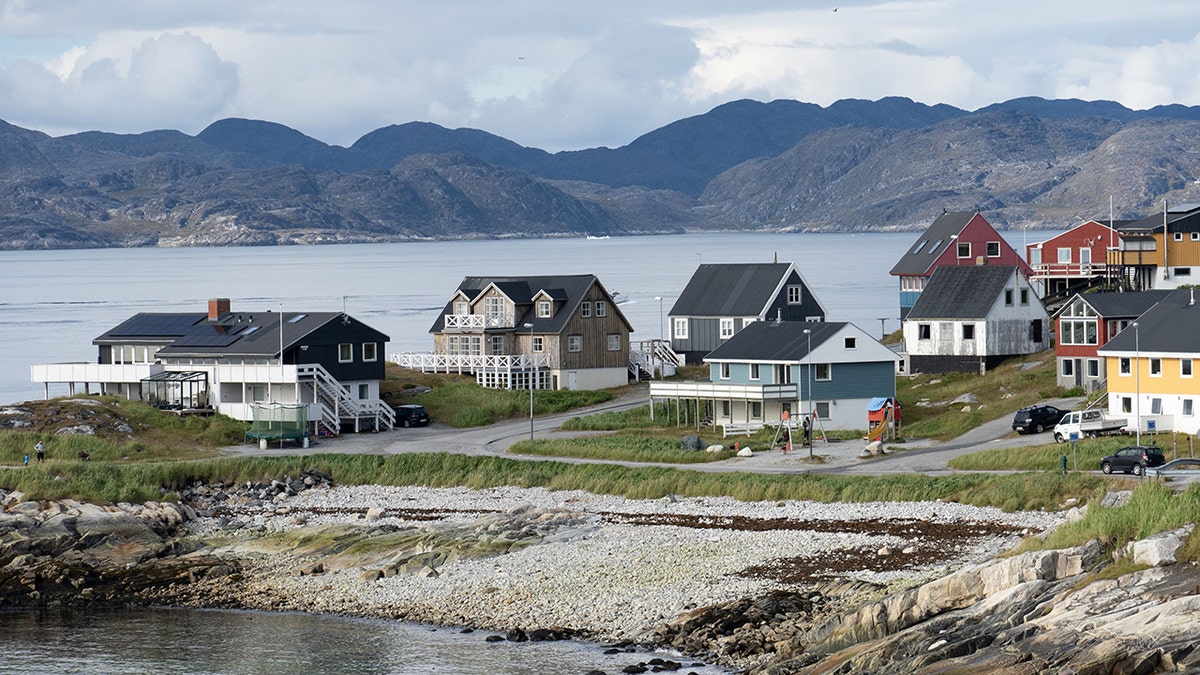
A source familiar with Trump Jr.’s plans told Fox News Digital that the president-elect’s son, who is traveling in a personal capacity, is set to arrive in Nuuk, Greenland midday Tuesday for meetings with locals, to visit cultural sites and more. 

“As someone who has traveled to some fascinating places across the globe as an outdoorsman, I’m excited to stop into Greenland for a little bit of fun this week,” Donald Trump Jr. told Fox News Digital. 

A source familiar told Fox News Digital that Trump Jr. is “popping in for a quick day-long trip to shoot some fun video content for podcasting.”

Donald Trump Jr. speaks before his father Republican presidential candidate former President Donald Trump speaks at a campaign rally at Trump National Doral Miami, Tuesday, July 9, 2024, in Doral, Fla.  (AP Photo/Marta Lavandier)

A USER’S MANUAL TO CERTIFYING THE PRESIDENTIAL ELECTION

“He will not be meeting with any government officials or political figures,” the source told Fox News Digital. 

The trip comes as President-elect Donald Trump seeks to buy the mineral-rich, geographically important territory. 

American interest in Greenland dates back to the 1800s. 

Donald Trump

US President-elect Donald Trump looks on during a meeting with France’s President at the Elysee Palace in Paris, on Dec. 7, 2024. (Sarah Meyssonnier/Getty Images)

JOHNSON REVEALS TRUMP’S WISHES ON DELIVERING HUGE POLICY OVERHAUL IN CLOSED-DOOR MEETING

In 1867, the State Department explored buying both Greenland and Iceland, recognizing their strategic importance, Fox News reported. After World War II, Denmark turned down a $100 million offer from President Harry Truman for the island.

Acquiring the land would mark the largest expansion of American territory in history, topping the Louisiana Purchase.

Nuuk, Greenland

Houses are seen on the coastline in Nuuk, Greenland. (Marli Miller/UCG/Universal Images Group via Getty Images)

CLICK HERE TO GET THE FOX NEWS APP

But Greenland Prime Minister Mute Egede said last week that the country is not interested. 

“Greenland is ours,” he said. “We are not for sale, and will never be for sale. We must not lose our long struggle for freedom.”

Elon Musk and His Megaphone, X, Rattle British Politics

0

When Elon Musk asked his 211 million followers on X to vote on whether “America should liberate the people of Britain from their tyrannical government,” it seemed as if the post could only be tongue-in-cheek.

But coming after a barrage of strident posts about Britain by Mr. Musk — assailing the Labour prime minister, Keir Starmer; demanding the release of a jailed far-right agitator; and breaking with a hard-right leader, Nigel Farage — it came off less as a joke than a flex by a powerful man relishing his ability to roil the politics of another country.

Mr. Musk’s posts, which popped up on X throughout the holiday like unwelcome guests at a Christmas party, have thoroughly hijacked the political debate in Britain at the start of 2025.

On Monday, Mr. Starmer used a news conference about fixing Britain’s National Health Service to deny Mr. Musk’s allegations that he had not acted when he was Britain’s chief prosecutor more than a decade ago against gangs that sexually abused girls.

Mr. Farage, for his part, faced questions about his future as the leader of the right-wing anti-immigration party Reform U.K. after Mr. Musk declared on X on Sunday that “Farage doesn’t have what it takes.” A day later, Mr. Farage posted a call for a national inquiry into the cases of child sexual abuse, picking up on one of Mr. Musk’s favorite causes.

“Musk has a very distorted understanding of British politics, and yet he’s got a megaphone,” said Robert Ford, a professor of politics at the University of Manchester. “When he says this stuff at 3 a.m. on a Sunday night, it disrupts Labour’s whole N.H.S. press conference on Monday.”

The long-term effect of Mr. Musk’s erratic crusade was harder to predict, Professor Ford said, but some of his moves could backfire. His rupture with Mr. Farage, for example, could redound to Mr. Farage’s benefit.

The likely cause of the split was Mr. Farage’s refusal to back Mr. Musk’s demand for the release of the far-right agitator Tommy Robinson. Mr. Robinson, whose real name is Stephen Yaxley-Lennon, is serving a prison sentence for defying a court order by repeating a libel against a young Syrian refugee. He has multiple criminal convictions and a record of racist and Islamophobic statements.

In Britain, Professor Ford said, “Tommy Robinson is political kryptonite. There’s a reason that Farage doesn’t want to have anything to do with him, and never has.”

By rejecting Mr. Robinson in defiance of Mr. Musk, he said, Mr. Farage could make himself more palatable to mainstream voters on the right who are disenchanted by the Conservatives. Mr. Musk, he added, will also find that there aren’t clear alternatives for party leader to Mr. Farage, an architect of Brexit and a fixture in right-wing British politics for decades who galvanized Reform U.K. during last year’s election campaign.

For Mr. Starmer, who returned from a rare vacation that had to be postponed because of the death of his brother, Mr. Musk’s intervention was another setback after a glitch-ridden start to his fledgling government. With his personal ratings plunging in opinion polls, Mr. Starmer was hoping to begin 2025 by rolling out a plan to reduce patient waiting times at the N.H.S.

Instead, reporters asked him about Mr. Musk, who had falsely claimed that Mr. Starmer had covered up the abuse and exploitation of girls in the 2000s and 2010s by gang members, many of whom were of British Pakistani heritage. “Prison for Starmer,” Mr. Musk wrote in one post on Monday morning.

“It probably irritated him beyond description that he has to deal with this kind of thing,” said Steven Fielding, an emeritus professor of political history at the University of Nottingham. The prime minister, he said, was trying to avoid “a street fight” with Mr. Musk and focus on governing.

Mr. Starmer noted that when he was director of the Crown Prosecution Service, between 2008 and 2013, his office brought the first of several cases against a grooming gang and drafted guidelines for the mandatory reporting of child sexual abuse. He had tackled the scandal “head on,” he said.

The prime minister became visibly angry as he defended Jess Phillips, a minister for safeguarding and violence against women and girls, from Mr. Musk’s charge that she was a “rape genocide apologist” because she pushed back on calls for a national inquiry into child sexual exploitation in Oldham, a town near Manchester.

Ms. Phillips had instead called for an investigation to be run by Oldham’s authorities rather than the central government. Mr. Starmer said she had done “a thousand times more than they’ve even dreamed about when it comes to protecting victims of sexual abuse.”

Elizabeth Pearson, the author of a book about Britain’s far-right, “Extreme Britain,” said Mr. Robinson, who had been convicted of assault and fraud, was fortunate to draw “the attention of one of the most powerful people in the West.”

She and other analysts are more puzzled about what Mr. Musk stands to gain from supporting a reviled figure who has occupied the sometimes violent margins of British politics. Daily users of X in Britain have declined since Mr. Musk took over the platform formerly known as Twitter; championing Mr. Robinson’s cause, experts said, is not likely to reverse that trend.

“It is foreign interference in our system,” said Dr. Pearson, a senior lecturer at Royal Holloway, University of London. “I do feel, at the moment, that Musk is becoming a bad actor seeking to destabilize our system.”

Professor Fielding said Mr. Musk was probably catering to his audience in the United States. The risk, he said, was that “anyone who is serious in the U.S. administration will think this man is creating fires that are absolutely unnecessary.”

Mr. Musk’s activism has drawn alarm in other European countries, like Germany, where he endorsed a far-right party with neo-Nazi ties. On Monday, President Emmanuel Macron of France told a diplomatic audience, “Ten years ago, who would have imagined that the owner of one of the world’s largest social networks would be supporting a new international reactionary movement.” He did not mention Mr. Musk by name.

Likewise, Mr. Starmer showed no appetite to single out Mr. Musk, a close ally of President-elect Donald J. Trump, with whom Mr. Starmer and his aides have tried to cultivate relations. “This isn’t about America or Musk,” he said to a reporter on Monday. “I’m talking about our politics.”

Lessons from South Korea’s martial law crisis : NPR

0

A supporter of impeached South Korean President Yoon Suk Yeol holds a placard reading “Stop the Steal” as he takes part in a rally near Yoon’s residence in Seoul on Sunday.

Anthony Wallace/AFP via Getty Images


hide caption

toggle caption

Anthony Wallace/AFP via Getty Images

SEOUL, South Korea — More than a month after South Korea’s now-impeached president, Yoon Suk Yeol, declared martial law, the country remains deep in political crisis.

The one-month mark since the Dec. 3 martial law decree came just ahead of Monday’s fourth anniversary of the attack on the U.S. Capitol by supporters of then-President Donald Trump on Jan. 6, 2021. Analysts are examining both instances — however different — as examples of self-inflicted wounds to democracy, and mining them for lessons about how to prevent them from recurring.

Challenges to democracy in South Korea and the U.S.

The South Korean and U.S. examples have clear differences. The attack on the U.S. Capitol four years ago was an attempt to overturn election results. Yoon’s martial law decree was aimed at breaking the resistance of an opposition-controlled parliament.

But “the essential feature of the action is similar,” argues Aurel Croissant, a political scientist at Heidelberg University in Germany. He says both moments were attempts by a sitting executive “to prevent another branch of government from performing its constitutional duties and holding the government accountable.”

Political scientists call this a “self-coup.”

“The South Korean declaration of martial law is a textbook example of such a self-coup,” says Croissant, and many see the Jan. 6 insurrection in the United States as one, too.

For many South Koreans, their experience naturally raises comparisons with the U.S. Capitol attack. That includes impeached President Yoon, who argued that he should enjoy the same absolute immunity from criminal prosecution for his official acts that the Supreme Court confirmed for U.S. presidents last year.

South Korean law does indeed grant presidents immunity from prosecution, except for charges of insurrection or treason. Yoon is being charged with insurrection.

At a press conference in Seoul on Monday, U.S. Secretary of State Antony Blinken said, “We had serious concerns about some of the actions that President Yoon took and we communicated those directly to the government.”

But, he said, “We have tremendous confidence in the resilience of South Korea’s democracy,” whose institutions, the U.S. has argued, have held firm.

Resistance to self-coups vs. resilience

Croissant argues that if South Korea’s institutions had held, Yoon would not have been able to declare martial law, even for a few hours.

“South Korean’s democracy is strong in reacting to crisis,” he says, “but it’s very weak in preventing crisis.”

While South Korean law requires the president to notify parliament of a declaration of martial law, and parliament can demand that the president cancel the declaration, parliament has no power to veto it.

Part of the problem lies in the way South Korea’s political system was designed and built, says Seoul National University political scientist Kang Won-taek.

“The core of Korea’s democratization so far,” he explains, “has been focused on holding fair and democratic elections for president.”

Kang argues that the system has reached its limits, and some of the president’s powers now need to be redistributed. A debate on this issue has been going on for some years.

The “muscle” behind self-coups

Another reason Yoon’s self-coup failed is that the military balked at using force to impose martial law.

One factor in that, Kang says, is the events of May 1980, when South Korea’s then-ruling military junta sent troops to crush pro-democracy protests in the city of Gwangju, killing around 200 civilians. “The soldiers felt extremely ashamed after witnessing the incident in Gwangju,” he says.

South Korean author Han Kang won the Nobel Prize in literature last year for books including Human Acts, which dealt with the trauma of Gwangju.

In South Korea’s parliament last month, opposition floor leader Park Chan-dae mentioned two of the questions Han raises about Gwangju: “Can the past help the present?” and “Can the dead save the living?”

“As I experience the civil strife of the Dec. 3 martial law decree,” he said, “I would like to answer ‘yes’ to the question, ‘Can the past help the present?’ Because May 1980 saved December 2024.”

Croissant, the political scientist in Germany, argues that because leaders who stage self-coups often require the use or the threat of force to achieve their aims, lawmakers must strictly oversee militaries and security apparatuses to see that they adhere to the constitution.

The last line of defense

At the end of the day, Croissant points out that South Korea and the U.S. are both representative democracies, where people select representatives to govern for them. When the representatives fail, he adds, citizens must mobilize to protect their rights themselves.

“Civil society is the last line of defense for democracy,” Croissant says, citing Daron Acemoglu, a Nobel Prize winner in economics.

South Koreans have been mobilizing for over 100 years, Croissant adds, learning lessons from 35 years of Japanese colonial occupation and more than 25 years of military dictatorships.

NPR’s Se Eun Gong contributed to this report in Seoul.