Wednesday, November 11, 2026
Home Blog Page 459

Croatian school knife attack leaves 7-year-old dead, 6 people wounded, police say

0
  • A knife attack at a school in Croatia’s capital left a 7-year-old girl dead and a teacher and five other students wounded, police said.
  • Police described the attacker as a “young male” and said he had been detained.
  • State HRT television said the attacker entered the school and went straight into the first classroom he found and attacked the children.

ZAGREB, Croatia (AP) — A knife-wielding teenager walked into a school in Croatia’s capital Zagreb on Friday, killing a 7-year-old student and injuring three more children and a teacher, authorities said.

Authorities said the knife attack happened at 9:50 a.m. at the Precko Elementary School in the neighborhood of the same name. They described the attacker as a 19-year-old male and said he had been detained after inflicting injuries to himself.

Croatian Interior Minister Davor Bozinovic said one child died while three children and a teacher were injured.

NYC TOURIST STABBED IN SWANKY AREA AFTER 3 KILLED IN RANDOM ATTACK AS DA SLAMS TRUMP

Police secure access to the elementary school where a 7-year-old girl died and a teacher and five other students were wounded in a knife attack in Zagreb, Croatia, on Dec. 20, 2024. (AP Photo/Ronald Gorsic)

“The attacker is a 19-year-old who is a former student of that school and still lives nearby,” said Interior Minister Davor Bozinovic. “Eventually he started injuring himself. Police prevented him from committing suicide.”

Bozinovic said the attacker was registered as previously having mental health problems and had already tried to kill himself: “It is hard to say this person was mentally balanced.”

Video footage released by Croatian media showed children running away from the school building and a medical helicopter landing in the schoolyard.

Authorities in Zagreb declared Saturday a day or mourning. President Zoran Milanovic said “there are no words to describe the grief over the horrible and unthinkable tragedy that shocked us all today.” MIlanovic called for unity and an effort to ensure that schools are a safe and careless place for children.

Prime Minister Andrej Plenkovic said at the a government session that he is “appalled” by the attack and that authorities are still working to determine exactly what happened. Plenkovic said several children have been taken to various hospitals in Zagreb.

State HRT television said the attacker entered the school and went straight into the first classroom he found and attacked the children.

CLICK HERE TO GET THE FOX NEWS APP

School attacks are rare in Croatia. Last May, a teenager in neighboring Serbia opened fire at a school in the capital Belgrade, killing nine fellow students and a school guard.

Mike Lee predicts demise of Johnson speakership, calls for ‘DOGE speaker’

0

Sen. Mike Lee, R-Utah, predicted that House Speaker Mike Johnson would not retain the gavel next year and called for either Elon Musk or Vivek Ramaswamy to fill the leadership role.

“I don’t think the speaker is going to remain in power,” Lee predicted during a Thursday night appearance on “Jesse Watters Primetime.”

The senator went on to say if he is correct, the next speaker should be a “DOGE speaker,” a reference to the Department of Governmental Efficiency. President-elect Donald Trump tapped Musk and Ramaswamy to lead the effort to advocate for reduced government spending.

“Vivek, Elon if you’re watching, please sign up, America needs you,” Lee said.

TRUMP-BACKED SPENDING BILL TO AVERT GOVERNMENT SHUTDOWN FAILS HOUSE VOTE

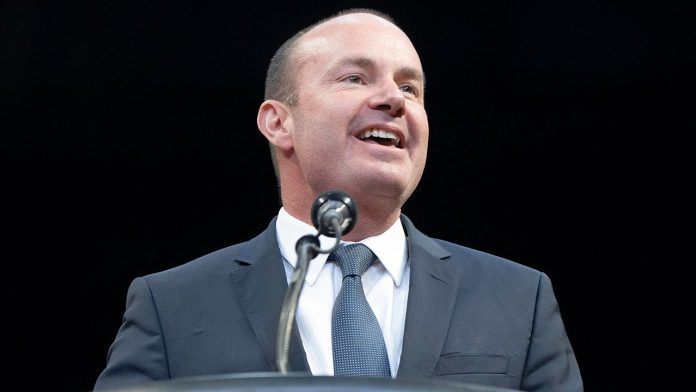
Sen Mike Lee, R-Utah, speaks during a campaign rally for former President Donald Trump at Findlay Toyota Center on Oct. 13, 2024 in Prescott Valley, Arizona. (Rebecca Noble/Getty Images)

In a Thursday morning post on X, Sen. Rand Paul, R-Ky., had floated the idea of Musk for House speaker.

“Nothing would disrupt the swamp more than electing Elon Musk . . . think about it .  . . nothing’s impossible. (not to mention the joy at seeing the collective establishment, aka ‘uniparty,’ lose their ever-lovin’ minds),” Paul posted Thursday morning.

This week, with the prospect of a potential partial government shutdown looming, conservatives railed against a 1,547-page government spending measure advocated by House Speaker Mike Johnson. 

President-elect Trump and Vice President-elect JD Vance also weighed in, declaring in a statement, “Republicans want to support our farmers, pay for disaster relief, and set our country up for success in 2025. The only way to do that is with a temporary funding bill WITHOUT DEMOCRAT GIVEAWAYS combined with an increase in the debt ceiling.”

Before a vote on Thursday, in which 38 House Republicans and most Democrats rejected a reworked proposal with a much lower page count, Trump lambasted Rep. Chip Roy, R-Tx., claiming that the lawmaker was “getting in the way, as usual, of having yet another Great Republican Victory – All for the sake of some cheap publicity for himself.”

“Weak and ineffective people like Chip have to be dismissed as being utterly unknowledgeable as to the ways of politics, and as to Making America Great Again,” Trump asserted in a Truth Social post.

TRUMP-BACKED SPENDING BILL GOES DOWN IN FLAMES AS SHUTDOWN LOOMS

President-elect Donald Trump

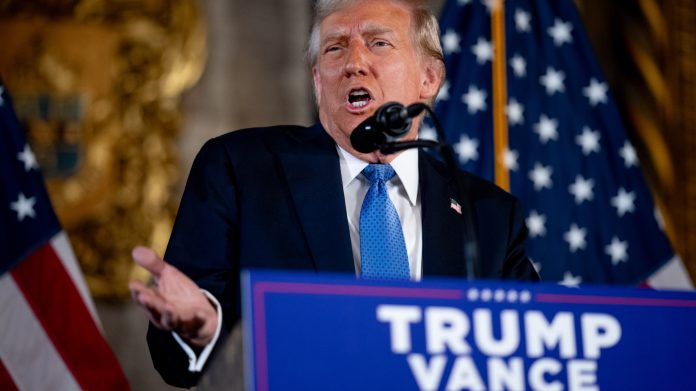
President-elect Donald Trump speaks at a news conference at Trump’s Mar-a-Lago resort on Dec. 16, 2024 in Palm Beach, Florida. (Andrew Harnik/Getty Images)

Lee spoke highly of Roy after Trump trashed the Lone Star State lawmaker.

“There is not a more faithful advocate of conservative policy, constitutionally limited government, or MAGA principles than @ChipRoyTX,” Lee declared in a post on X. “President Trump will not have a more principled, hardworking ally than @ChipRoyTX,” he added. “If a more devoted advocate for the Constitution exists today, I have not met that person.”

Roy delivered a fiery speech ahead of the vote on Thursday, in which he blasted the new version of the spending proposal and the Republicans supporting it.

“Yes, I think this bill is better than it was yesterday on certain respects,” Roy noted, adding that to “congratulate yourself because it’s shorter in pages but increases the debt by $5 trillion is asinine.”

Roy said he was “sickened by a party that campaigns on fiscal responsibility and has the temerity” to suggest the proposal was “fiscally responsible. It is absolutely ridiculous,” he asserted.

Sen. Paul, R-Ky., reposted a clip of Roy’s speech, and commented, “We are either fiscally conservative or not. An unlimited increase in the debt ceiling for 2 years is not fiscally conservative and should be rejected.”

MASSIE COMES OUT AGAINST JOHNSON RETAINING SPEAKER’S GAVEL: ‘HE DOES NOT HAVE MY VOTE’

Rep. Chip Roy

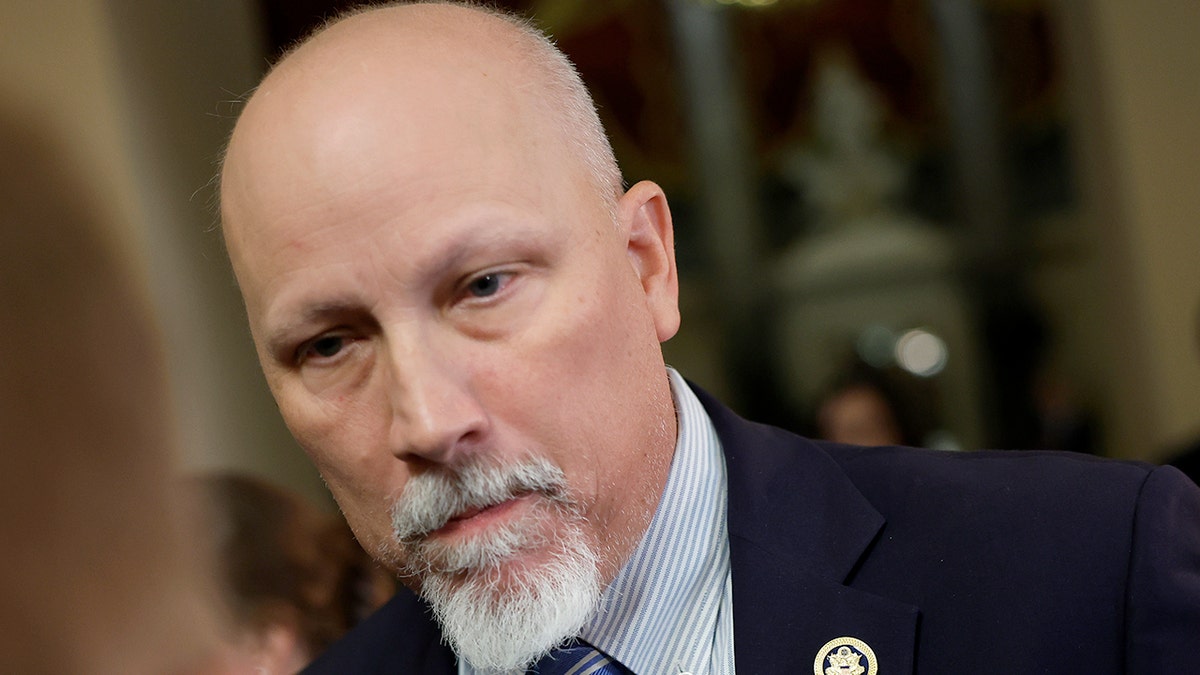
U.S. Rep. Chip Roy, R-Tx., speaks to the media after the House of Representatives failed to pass a government funding bill at the U.S. Capitol on Dec. 19, 2024 in Washington, D.C. (Kevin Dietsch/Getty Images)

CLICK TO GET THE FOX NEWS APP

In a post on X, Roy noted, “Currently, I’m against raising the debt ceiling without major spending cuts/reform.”

Rep. Thomas Massie, R-Ky., who like Roy, voted against passing the spending proposal on Thursday, suggested that instead of voting on a catchall measure, there should be multiple measures that receive individual votes.

“This isn’t complicated. Separate the bills and vote on them individually. one vote on the clean CR one vote on the debt limit one vote on disaster relief one vote on farm bailouts Radical right? Individual bills for each issue,” he posted.

Lee agreed with him. 

“Separate the bills,” he wrote. “Vote on them individually,” he added. “Revolutionary!”

How Elon Musk helped to hold up a federal stop-gap funding plan

0

NPR’s Michel Martin speaks with GOP strategist Tricia McLaughlin about how incoming presidential advisor Elon Musk helped hold up a federal spending deal, showcasing his growing political influence.

SJSU responds to volleyball player mass exodus after trans athlete scandal rocked program

0

San Jose State University has acknowledged a recent mass exodus of volleyball players who entered the transfer portal after a controversy-riddled season involving a trans athlete on the team. 

The university provided a statement to Fox News Digital in which it expressed “respect” for the recent wave of players who have opted to transfer. “Student athletes have the ability to make decisions about their college athletic careers, and we have the utmost respect for that,” the statement read.

The San Francisco Chronicle reported that seven of the team’s players have entered the transfer portal. 

CLICK HERE FOR MORE SPORTS COVERAGE ON FOXNEWS.COM

In an article detailing the San Jose State University Spartans’ transgender athlete scandal, the New York Times referred to the biological female athletes on the team as “non-transgender women.” (AP Photo/David Zalubowski)

The seven players who are transferring will be leaving the team after a season that included eight forfeited matches, regular police protection, national scrutiny and internal turmoil between players and coaches. One player even received threats of physical harm amid the controversy.

Head coach Todd Kress even spoke about how the 2024 season was one of the “most difficult” of his life after the team’s loss in the conference final to Colorado State, in a statement provided to Fox News Digital. 

“This has been one of the most difficult seasons I’ve ever experienced, and I know this is true as well for many of our players and the staff who have been supporting us all along. Maintaining our focus on the court and ensuring the overall safety and well-being of my players amid the external noise have been my priorities,” Kress said. 

The transgender player, Blaire Fleming, is out of eligibility after completing a fourth collegiate season in 2024. The team’s season ended in the Mountain West Conference championship game after it advanced to the title game by virtue of a forfeit from Boise State in the semifinal round. Boise State previously forfeited two regular season games to San Jose State amid the controversy involving Fleming, accounting for three of its seven conference wins via forfeit this year. 

A loss to Colorado State in the conference final ended the season and prevented the controversy from slipping into the NCAA tournament. The loss effectively ended Fleming’s collegiate career.

In September, co-captain Brooke Slusser joined a lawsuit against the NCAA alleging the program withheld knowledge about Fleming’s birth gender from her and other players on the team. Slusser alleged she was made to share changing and sleeping spaces with Fleming without knowing that Fleming was a biological male. 

Slusser, along with several other players in the Mountain West, filed a separate lawsuit against the conference and San Jose State in November over Fleming’s presence. That lawsuit included testimony from former San Jose State volleyball players Alyssa Sugai and Elle Patterson alleging they were passed over for scholarships in favor of Fleming. 

That lawsuit also alleges that San Jose State players spoke up about an alleged scheme by Fleming to have Slusser spiked in the face with a volleyball in a game against Colorado State on Oct. 3. Slusser was not spiked in the face in that game, and an investigation by the Mountain West concluded without finding sufficient evidence of the alleged plot.

SJSU TRANSGENDER VOLLEYBALL SCANDAL: TIMELINE OF ALLEGATIONS, POLITICAL IMPACT AND A RAGING CULTURE MOVEMENT

Assistant coach Melissa Batie-Smoose was suspended by the program in early November after she filed a Title IX complaint against the university for showing favoritism toward Fleming over the other players, especially Slusser. Batie-Smoose’s complaint also included allegations of Fleming’s plot to have Slusser spiked in the face. 

Slusser previously told Fox News Digital that Batie-Smoose’s dismissal severely impacted the morale of the team.

“After we found out that she was released, a lot of the team just kind of broke down and was kind of freaking out, and even one of my teammates was like, ‘I don’t feel safe anymore,’ because there’s no one now that we feel like we can go and talk to about our concerns or our actual feelings and can actually speak freely in front of,” Slusser said.

Slusser added that she and other players lost trust in the coaches, including head coach Kress. 

“You can’t truly voice how you’re feeling without them just trying to cover it up or act like it’s all OK. With Melissa, you could voice how you felt, and she could comfort you and validate your feelings and at least make you feel heard compared to the other coaches,” Slusser said.

Kress also blamed the team that forfeited for igniting backlash against his team, as each forfeit brought about more controversy and media attention.

CLICK HERE TO GET THE FOX NEWS APP

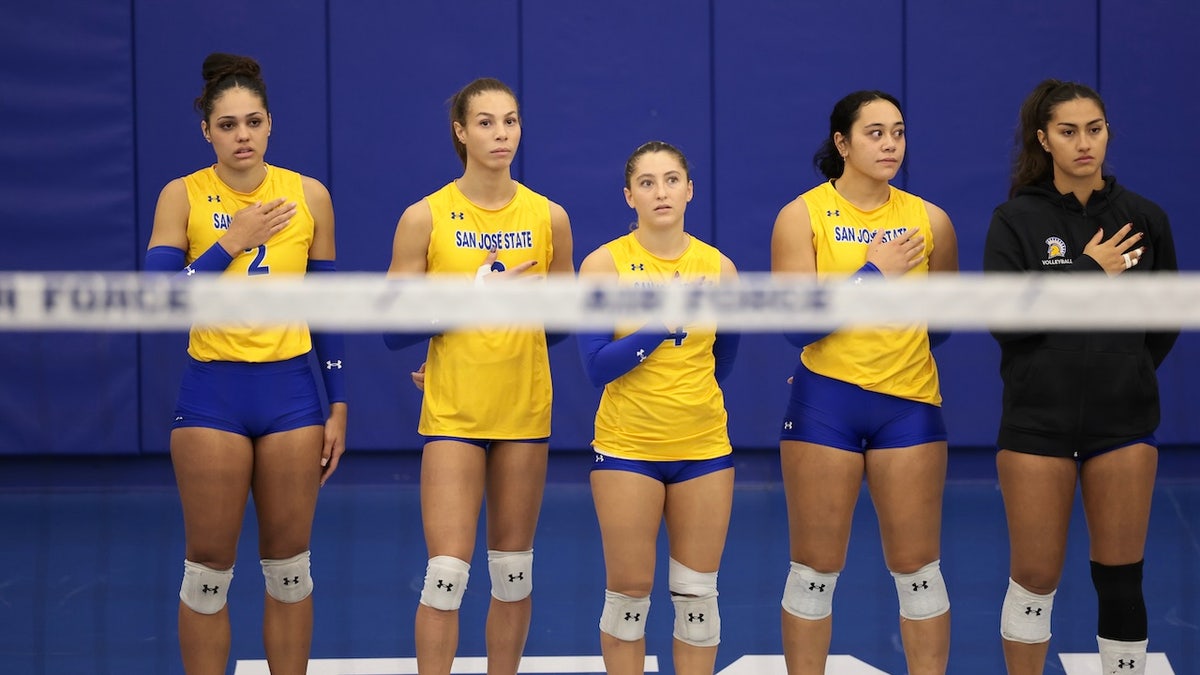
San Jose State Spartans players look on prior to the game against the Air Force Falcons at Falcon Court at East Gym on Oct. 19, 2024 in Colorado Springs, Colorado.

San Jose State Spartans players look on prior to the game against the Air Force Falcons at Falcon Court at East Gym on Oct. 19, 2024 in Colorado Springs, Colorado. (Andrew Wevers/Getty Images)

“Sadly, others who for years have played this same team without incident chose not to play us this season. To be clear, we did not celebrate a single win by forfeiture. Instead, we braced for the fallout. Each forfeiture announcement unleashed appalling, hateful messages individuals chose to send directly to our student-athletes, our coaching staff and many associated with our program.” 

However, these issues did not stop the players from at least having some fun on what was their final road trip as San Jose State Spartans for most of them. 

Slusser previously told Fox News Digital that the team went out to a magic show together when they traveled to Las Vegas for the Mountain West tournament, and even had a team Thanksgiving meal together at the team hotel with takeout from a local diner with many of their families. 

However, that was not enough to keep the seven players who have entered the transfer portal attached to the program, as the team will be facing a major roster turnover as it looks to rebound on the court and in its reputation in 2025. 

Follow Fox News Digital’s sports coverage on X, and subscribe to the Fox News Sports Huddle newsletter.

Government faces shutdown after stop-gap funding bill fails on House floor

0

Federal agencies run out of money at midnight tonight and lawmakers are scrambling to pass legislation before the deadline.

Fox News Digital’s News Quiz: December 20, 2024

0

UnitedHealthcare CEO murder suspect Luigi Mangione got on a plane this week, and sitting Supreme Court Justice Ketanji Brown Jackson took to the stage. Do you know the details of this week’s top stories in Fox News Digital’s News Quiz?

Try to get a perfect score!

Looking for more?

Marine vet Daniel Penny revealed what he’d like to do post-trial, and a country star gave up fame to raise his kids. Test your knowledge with last week’s News Quiz.

Give yourself a challenge with festive flavors, seasonal sales and historical heroes in this week’s American Culture Quiz.

CLICK HERE TO DOWNLOAD THE FOX NEWS APP

If you’re looking to play even more, you can find all of our quizzes by clicking here.

Check back next week for the latest News Quiz from Fox News Digital. Thanks for playing!  

How Trump rewrote the Republican Party playbook on free trade : NPR

0

President-elect Donald Trump speaks at a news conference at his Mar-a-Lago resort in Palm Beach, Fla., on Dec. 16.

Andrew Harnik/Getty Images


hide caption

toggle caption

Andrew Harnik/Getty Images

This week, President-elect Donald Trump told reporters that “tariff” is “the most beautiful word in the dictionary” and claimed that tariffs would “make our country rich.”

All of that is standard Trump rhetoric on trade, but it also represents a stunning about-face for the party he leads, especially when you look at how past presidential nominees talked about trade.

In 1999, while running for president, George W. Bush framed free trade as a moral good: “In order to promote the peace, I believe we ought to be a free-trading nation in a free-trading world,” he said at a primary debate, “because free trade brings markets, and markets bring hope and prosperity.”

In 2007, Sen. John McCain, R-Ariz., proclaimed himself “the biggest free marketer and free trader that you will ever see.”

In 2011, Republican presidential candidate Mitt Romney likewise championed free trade, albeit with a few more reservations.

“I love free trade. I want to open markets to free trade, but I will crack down on cheaters like China,” he said at a debate.

But Trump blew up that Republican orthodoxy, twice winning the presidency while telling voters to be skeptical of international trade. Relatedly, he proposed massive new barriers to trade. During his most recent presidential campaign, he floated 60% tariffs on Chinese goods, plus blanket 20% tariffs on all other goods coming into the United States. Since winning the presidency, he has additionally promised 25% tariffs on products from Mexico and Canada.

“Tariffs, properly used, which we will do, and being reciprocal with other nations, but it’ll make our country rich,” he said at this week’s news conference. “Our country right now loses to everybody.”

That’s a significant change from free trade leading to “hope and prosperity.”

A massive Republican shift

This photo is an aerial view of a container ship that's sitting docked at the Port of Oakland in California. Rows of pink and brick-red shipping containers are stacked in rows on the ship.

A container ship sits docked at the Port of Oakland in California on Dec. 9. President-elect Donald Trump is threatening new tariffs on multiple countries as his second term approaches, after making tariffs a signature of his 2024 presidential campaign.

Justin Sullivan/Getty Images


hide caption

toggle caption

Justin Sullivan/Getty Images

Free trade is about making it easier to sell goods overseas and easier to buy foreign goods at home. That generally means making trade agreements and reducing tariffs, which are taxes that American importers pay on foreign goods. Economists broadly agree that tariffs therefore raise prices for U.S. consumers, as American businesses pass on the higher costs.

Just how different is Trump’s trade rhetoric from that of past Republicans? Doug Irwin, a professor of economics at Dartmouth College, says you have to think back almost a century.

“To have a president that across the board thinks trade is bad and thinks that tariffs are really good, you have to go back to Herbert Hoover,” Irwin said.

Free trade has had support from prominent Democrats as well over the years — think President Bill Clinton passing NAFTA or President Barack Obama promoting the Trans-Pacific Partnership (which ultimately failed).

Still, Irwin says, the modern Republican Party was long seen as the party of “big business” and was more firmly pro-free-trade.

“There’s a stereotype that the Republicans were the party of big business,” he said. “And that was certainly the case, that the Reagan administration, George H.W. Bush, George W. Bush — all of them championed trying to reduce trade barriers, expand world trade in the 1980s and ’90s and into the 2000s.”

But importantly, he’s talking about elites. Voters have had more mixed views.

Throughout the 1990s and into the early 2000s, for example, the two major parties weren’t far apart on the question of whether trade creates opportunities, according to Gallup. Republicans were only somewhat more pro-trade than Democrats, and neither party was overwhelmingly pro- or anti-trade.

Still, there’s good reason that there was some voter skepticism — in some manufacturing-heavy states, for example, Americans saw job losses as trade increased with China.

And that is where Trump comes in.

The elite-voter divide

There wasn’t just a partisan divide on trade, says Diana Mutz, a political science professor at the University of Pennsylvania. There was a divide between elites and voters — one that Trump used to his advantage.

“What he did was to move the Republican Party’s position to something closer to what the average American position was on trade, which was more negative than they saw the party elites being on trade,” she explained.

There are nuances to this — some pre-Trump politicians, like Romney, had started to worry about China using currency manipulation to unfairly boost its exports. But Trump went much further than Romney, not only being hostile to China on trade but using China as an example to his voters of why, in his view, trade can be bad.

Mutz has studied American attitudes toward trade closely — she wrote a whole book on the subject — and her research found that Trump’s shift did win him votes.

“What happened in 2016? The two big issues that people talked a lot about were trade and immigration,” she said. “And what I was surprised to find in my analysis was that Trump moving the party closer [to voters] on trade did in fact garner additional votes. It did switch people’s attitudes toward the Republican candidate relative to the previous presidential election.”

In addition, Trump made voters think more about trade, period, than they had before. And he did it in a very Trump way: He made trade about fighting.

“Trade was emphasized by Trump as a means of dominating other countries, as a means of becoming the winner and them the losers,” Mutz added.

An economics textbook would tell you that trade isn’t about winners and losers — the idea is that two countries trade so they both can benefit.

Trade is complicated. A trade deal can lead to job losses, but it can also boost the economy and lower prices. And that idea — that trade can bring widespread economic benefits and that those benefits outweigh the costs — is why some old-guard Republicans disagree sharply with Trump.

Will Republicans go along?

Before he left the Senate in 2023, Pennsylvania’s Pat Toomey was known as a free trader.

“There’s no question Donald Trump is a protectionist. He has been for decades,” Toomey said. “He’s been consistent. I think he’s been consistently wrong, but he has been consistent.”

On December 14, 2022, Senator Pat Toomey speaks as Senator Sherrod Brown listens. Toomey is on the right side of the photo, wearing a suit and speaking into a microphone. Brown is on the left side of the photo and is a bit in the background.

On Dec. 14, 2022, Sen. Pat Toomey, R-Pa., speaks as Sen. Sherrod Brown, D-Ohio, listens during a hearing before the Senate Banking Committee.

Alex Wong/Getty Images


hide caption

toggle caption

Alex Wong/Getty Images

When Toomey left the Senate, it was seen as a blow to long-held Republican values of limited spending and free trade. Toomey himself told The Wall Street Journal that he thought Trump had changed the party.

When Toomey eventually opposed the Trans-Pacific Partnership — a trade deal he had once championed — it was seen as a sign that he had caved to the pressures of the MAGA GOP. Toomey told NPR that he thought the Trans-Pacific Partnership needed better protections for American businesses.

Congressional Republicans have fallen in line behind Trump on many issues. Whether current members push back on tariffs depends in part on how far Trump goes once he’s back in the White House.

Toomey, for his part, isn’t convinced Republicans will go along if voters are threatened by higher prices.

“Republicans are going to be hearing from their constituents if there are these broad, significant new tariffs imposed. So I think it’s premature to decide that the Republican Party has gone all protectionist,” Toomey said.

For now, Trump isn’t backing off his tariff threats. In just over a month, he’ll get the chance to follow through.

Biden admin announces another $4.28 billion in student loan handouts

0

The Biden administration announced another $4.28 billion in student loan handouts as President Biden and Vice President Harris prepare to leave the White House.

The massive loan handout will give 54,900 public workers loan forgiveness.

“Four years ago, the Biden-Harris Administration made a pledge to America’s teachers, service members, nurses, first responders, and other public servants that we would fix the broken Public Service Loan Forgiveness Program, and I’m proud to say that we delivered,” Secretary of Education Miguel Cardona said in a release on Friday.

The action brings the total loan forgiveness approved by Biden to nearly $180 billion for nearly 5 million borrowers.

HOUSE GOP LEADERS SCRAMBLE FOR PLAN B AFTER TRUMP, MUSK LEAD CONSERVATIVE FURY AGAINST SPENDING BILL

Biden has approved nearly $180 billion in student loan handouts during his time in office. (Daniel Steinle/Bloomberg via Getty Images)

“With the approval of another $4.28 billion in loan forgiveness for nearly 55,000 public servants, the Administration has secured nearly $180 billion in life-changing student debt relief for nearly five million borrowers,” Cardona said. “The U.S. Department of Education’s successful transformation of the PSLF Program is a testament to what’s possible when you have leaders, like President Biden and Vice President Harris, who are relentlessly and unapologetically focused on making government deliver for everyday working people.”

Biden speaks in Wisconsin

Biden announced another $4.28 billion in student loan handouts right before he is set to leave office. (Daniel Steinle/Bloomberg via Getty Images)

The Biden-Harris administration touted the program for creating an “incentive” for public servants to “pursue and remain” in their careers by forgiving borrowers’ remaining balance after they made the 120 qualifying monthly payments.

DAD WHO SACRIFICED HIS SAVINGS TO PAY FOR SON’S COLLEGE CALLS STUDENT LOAN FORGIVENESS A ‘BITTER PILL’ 

“The relief announced today includes both borrowers who have benefitted from the Administration’s limited PSLF waiver, a temporary opportunity that ended in October 2022, as well as from regulatory improvements made to the program during this Administration,” the release said.

Split image of former President Trump and President Biden

President-elect Donald Trump and President Biden (Getty Images)

During his 2020 presidential campaign, Biden pledged to forgive student loans for millions of Americans if elected, but the president has faced continuous legal roadblocks in his attempt to eliminate hundreds of billions of dollars in debt.

CLICK HERE TO GET THE FOX NEWS APP

After the Supreme Court blocked the Biden administration’s first attempt at providing broad-based student loan forgiveness, ruling it was an overreach of the executive branch’s authority under the Constitution, the president and his team began to work on other options to provide handouts.

President-elect Trump has not said specifically how he will approach the Biden administration’s student loan handout plans, but he has said he plans to rework the entire education system during his term.

Fox News Digital’s Audrie Spady contributed to this report.

Ten Years Later, a Political Exile Returns to a Syria in Transition

0

“I’m very excited but also very overwhelmed. It’s an amazing feeling.” When Sawsan Abou Zainedin fled Bashar al-Assad’s rule more than a decade ago, she thought she might never return. Now, after the fall of the regime, she’s headed to her hometown in southern Syria to see her father for the first time in seven years. While scenes of celebration like these take place across the country, there’s also concern about what’s to come. “We cannot topple a dictator regime to go under a different one. These few months are fundamental, not just in our lives as individuals but also in the life of this country.” Abou Zainedin says her political activism against the former government landed her in trouble, narrowly escaping arrest. As part of the wave of six million Syrians who fled during the 13-year civil war, she sought asylum in the United Kingdom. She now leads a network of organizations that support legal and political rights for all Syrians. “Syria is ours and is not the property of the Assad family. We will not rest until we claim back our state of citizenship and democracy.” Abou Zainedin grew up here in the Suwayda district, home to a large Druse community, one of Syria’s many minority religious groups. It was also one of the first places where the uprising against Assad began in 2011. Many here want to see a secular state that protects the interests of Syria’s diverse population. In early December, rebels led by Hayat Tahrir al-Sham, or H.T.S., overthrew five decades of Assad family rule. H.T.S. is an Islamist group formerly affiliated with Al Qaeda. Since toppling the Assad regime, the group’s leader, Ahmed al-Shara, has signaled an openness to a more inclusive government. People in Abou Zainedin’s hometown remain cautious. At a meeting with the spiritual leader of the Druse in Syria, concerns about the new chapter quickly surface. “We have achieved something we all thought it was impossible to achieve. But lots of work lies ahead of us still. We are definitely going to engage with the interim government, and we’re hoping that they will be responsive to this.” What will happen next under H.T.S. leadership is unknown, but for now the celebration continues.

Trump’s reelection victory pushes some LGTBQ Minneapolis residents to safety training : NPR

0

Sam Koshiol-Wright of Sequeerity helps lead a community outreach event in Minneapolis on Dec. 4.

Jim Urquhart for NPR/JIM URQUHART


hide caption

toggle caption

Jim Urquhart for NPR/JIM URQUHART

The morning after Election Day, Kimmy Hull woke up to find that her inbox had been bombarded overnight.

“There was over a hundred emails from people asking about our permit to carry classes,” said Hull.

Hull, a former private security guard who is also half-Asian and lesbian, has devoted herself to keeping communities of color and her LGBTQ neighbors safe in Minneapolis. Her company, Sequeerity, offers de-escalation services, community defense classes and firearms instruction. But Hull said the post-election surge in clients looking for gun training signals a new feeling of urgency.

“At least half of them are like, ‘You know, we thought about getting a gun, you know, back during the uprising and everything,’ ” she said, referring to the social justice protests in Minneapolis that followed the 2020 police killing of George Floyd, ” ‘and… we wanted to sit back and see what happened. …’ And as soon as [Trump] got reelected, we decided that it’s not about whether they want one or not. They feel like they have to have one.”

Trans people are less than 1 percent of all U.S. adults, but they have increasingly been in the crosshairs of right-wing efforts to limit their rights and public visibility. Between June 2023 and 2024, hate incidents against LGBTQ people more than doubled over the prior year, according to data collected by GLAAD, an LGBTQ media watchdog and advocacy nonprofit. Of those 1,109 incidents, trans and queer people were disproportionately targeted.

And during the 2024 election cycle, Republicans spent roughly $230 million on anti-trans television advertisements, according to data collected by AdImpact. State-level legislation targeting trans rights has also mushroomed, more than tripling from 2022 to 2023, which saw 615 measures considered. These bills have largely built off of false claims that portray trans people either as hapless victims of profit-driven medical practices or as predators of children.

Trump has also promised to further restrict trans rights, including access to gender-affirming care and Title IX protections for transgender students.

In a statement to NPR, Trump-Vance transition spokeswoman Karoline Leavitt wrote that, “President Trump will serve ALL Americans, even those who did not vote for him in the election.”

But still, because of Trump’s election victory, many trans Americans are reconsidering how they maintain day-to-day safety. Many from within the community are falling back onto a long-held motto: We keep us safe. Sequeerity represents an unusually public-facing example of these efforts to help local trans neighbors acquire skills and access resources for self-defense.

Sequeerity founder Kimmy Hull at the site of where George Floyd was murdered by Minneapolis Police officers in 2020 in Minneapolis on Dec. 5.

Sequeerity founder Kimmy Hull at the site of where George Floyd was murdered by Minneapolis Police officers in 2020 in Minneapolis on Dec. 5.

Jim Urquhart for NPR/JIM URQUHART


hide caption

toggle caption

Jim Urquhart for NPR/JIM URQUHART

“And the scary part about this is that this is Minneapolis, Minnesota,” said Hull. “We are one of the safest states for trans communities, and our trans communities are buying guns because they don’t feel safe.”

“We’re going to lose people”

On a December night that even hardened Minnesotans called cold, roughly two dozen people balanced pizza on paper plates and took seats in a large circle around a concert floor. They were there to learn about community defense — how to keep themselves and their neighbors safe against harassment or worse. The group, mostly young people, cut across racial and gender categories.

Hull ran the meeting, along with Sequeerity’s CEO, Sam Koshiol-Wright.

“Quite frankly, we’re going to lose people,” Hull told the group, underscoring how seriously she sees the backlash against trans and minority identities. “So my hope is that we can limit the amount of damage that our communities are going to take on in the next four years.”

Over the course of 90 minutes, Hull and Koshiol-Wright led the group through discussions about developing situational awareness, a practice of continually observing one’s environment to assess risks and make informed decisions around safety. They emphasized the importance of “podding up,” by which they meant building networks of friends and neighbors who could lean on each other for help with everything from grocery shopping to emergency medical care. Throughout, the emphasis was on building personal skills and strengthening community, rather than calling on state resources like the police.

Hull is not the only one hearing from people who fear for their safety. Roxanne Anderson, a co-organizer of this community defense meeting, said she has, too. Anderson is director of Our Space, a campaign that is working to establish an LGBT community center in Minneapolis.

“When our [government] policies don’t kind of reflect a protective nature, then people … take it upon themselves to make sure that they can protect themselves,” said Anderson. “I think people have just begun to realize that not only is there a need to protect themselves individually, but we also have to have greater strides in community protection.”

Minnesota has some of the nation’s strongest protections for trans people. Officially a “trans refuge state,” it has codified trans people’s right to access medical care and their freedom from discrimination. Still, trans people in the state continue to experience violence. Early in November, two trans women were attacked at a light rail station in Minneapolis. In the spring, a trans high school student in Minnetonka had her jaw broken in an assault by another student.

By the end of the meeting, the group collectively agreed to hold ongoing, bimonthly trainings. The tips that Hull and Koshiol-Wright dispense in these trainings are all nonviolent, common-sense practices. But since 2020, Sequeerity has also been ready to offer further services to those who believe they need more than that to stay safe.

“Better to be safe than sorry”

Hull also schedules one-on-one sessions with people who have completed a 4-hour, online permit to carry course. One trainee, Jayce, is a 35-year old former school teacher and a trans, Black man. He asked that only his first name be used out of concern for his safety.

“You know, with kids in my house, I never really thought I would own a gun or want one in my home,” Jayce said, “but with things in the state that they are, [it] just seems better to be safe than sorry.”

Founder of Sequeerity, Kimmy Hull teaches Jayce, a Minneapolis-area resident, about handling firearms and safety at a gun range outside Minneapolis, Minn., Dec. 3.

Founder of Sequeerity, Kimmy Hull teaches Jayce, a Minneapolis-area resident, about handling firearms and safety at a gun range outside Minneapolis, Minn., Dec. 3.

Jim Urquhart for NPR/JIM URQUHART


hide caption

toggle caption

Jim Urquhart for NPR/JIM URQUHART

Hull, the daughter of a Vietnam War veteran, grew up using guns. But she said she realized during the George Floyd uprising that other people from marginalized backgrounds needed a culturally-sensitive introduction to firearms.

“Our permit to carry [class]… covers everything we’re absolutely required to cover, but we also gear it specifically with best practices and tips on how to handle being a gun owner as a person of color, as a queer person, as somebody who is not of the norm,” said Hull. “Because it looks very, very different when a white dude who’s carrying a gun gets pulled over by a cop compared to a young Black man who’s carrying a gun getting pulled over by the same cop.”

For Jayce, that risk is baked into his calculus — he decided that it may ultimately be safer in the coming years to have a gun than it will be not to have one.

“It’s been said that there’s going to be all these things that [the Trump administration is] going to try to undo as far as rights for [trans] folks,” said Jayce. “If that kind of rhetoric emboldens people to try to cause harm, it feels safer to be prepared.”

Protecting the Proud Boys

Unlike many grassroots networks that have emerged to protect the LGBTQ community, Sequeerity is a for-profit business. Hull charges for firearms training, and she also hires out staff and contractors to de-escalate tensions that may arise at gatherings such as Pride celebrations and drag events. During “festival season,” starting in April and through the fall, when the company staffs up to six events in a day.

“What we do is we look for warning signs. We look for heightened behaviors, heightened attitudes, feelings,” explained Hull. “And then when we encounter them, we approach it in a gentler, I call it the ‘soft touch’ way, where you just stop in and just check in with people.”

Sam Koshiol-Wright, left, and Aleksi Brown talk after a press conference the group Sequeerity monitored for any confrontations at the Minnesota State Capitol in Saint Paul, Minn., Dec. 3.

Sam Koshiol-Wright, left, and Aleksi Brown talk after a press conference the group Sequeerity monitored for any confrontations at the Minnesota State Capitol in Saint Paul, Minn., Dec. 3.

Jim Urquhart for NPR/JIM URQUHART


hide caption

toggle caption

Jim Urquhart for NPR/JIM URQUHART

Recently, Koshiol-Wright and two other Sequeerity de-escalators were on hand at the Minnesota State Capitol. They had been hired by Gender Justice, a legal and advocacy organization, to head off any tensions that might unfold during or after that morning’s oral arguments before the Minnesota Supreme Court. The high court was hearing a landmark case concerning a trans athlete’s exclusion from women’s powerlifting events.

“Really, our role is to allow people to have their freedom of speech, to allow them to have their… First Amendment [rights],” said Koshiol-Wright. She and her two colleagues wore casual black jeans and black hooded sweatshirts with “Sequeerity” spelled across the front. Although firearms are allowed into the Minnesota State Capitol, they did not carry guns.

Instead, Koshiol-Wright unzips a cross-body bag to show what she carries inside.

“I’ve got gum, Uncrustables. … This is my favorite fidget toy,” she said, pulling out a squidgy, pink stress cube. “You know, I have used all of these things in lots of different ways.”

During the last two legislative sessions, Koshiol-Wright said Sequeerity was frequently at the state capitol on days that lawmakers were considering trans rights bills. She said that even though supporters and opponents of those bills were passionate, Sequeerity was able to help defuse tensions by monitoring behaviors that might provoke physical conflict, and stepping in early to avert them. Sometimes this might involve simply talking someone down, or separating camps, or using snacks and toys to calm or distract someone.

Keeping the peace sometimes has pushed Hull and Sequeerity into unconventional territory. In July of 2022, after the U.S. Supreme Court overturned Roe v. Wade, pro-abortion access protesters rallied in the thousands at the Minnesota State Capitol. Hull said the challenge was that some members of the Proud Boys showed up, too.

“And see, the thing is, you can carry a firearm to the Capitol, right? So all these Proud Boys and they’re showing up there with guns,” she said, “and we had to form a circle around the Proud Boys to keep the crowd from hitting them or kicking them or doing anything like that.”

Hull explained that this was actually about protecting pro-abortion access protesters.

“I’ll do whatever it takes to make sure that people get home, you know?,” she said. “If we’re out there and violence is happening, physical violence, [law enforcement is] not going to let us be able to go back out there, not to mention how many of our people are going to get hurt.”

Working with law enforcement

Hull also communicates with law enforcement agencies, sharing information about events that Sequeerity will be at and indications of potential threats targeting those gatherings. She acknowledges that, for some of the marginalized communities she works with, this coordination may not sit well. But Hull said she has to take a practical approach to safety.

“There’s no functioning society that doesn’t have an enforcement group of some sort,” she said.

Kim Austell watches over a press conference as the group Sequeerity monitors for any confrontations at the Minnesota State Capitol in Saint Paul, Minn., Dec. 3.

Kim Austell watches over a press conference as the group Sequeerity monitors for any confrontations at the Minnesota State Capitol in Saint Paul, Minn., Dec. 3.

Jim Urquhart for NPR/JIM URQUHART


hide caption

toggle caption

Jim Urquhart for NPR/JIM URQUHART

Hull said she sees a clear division in what a de-escalation team like Sequeerity might do at an event, versus law enforcement or hired security services. She says her team focuses on keeping people safe and does not concern itself with the protection of property. When Sequeerity is unable to de-escalate someone who presents a threat, they notify on-site security officers.

Koshiol-Wright said some law enforcement departments have welcomed Sequeerity’s presence at high-tension events, and some others have not. At the capitol, she and state police chat with a friendly familiarity in the rotunda. A spokesperson for the Minnesota State Police department declined to comment on Sequeerity.

When it comes to the Minneapolis Police Department, Hull said that some officers have worked well in conjunction with Sequeerity, and some have not. But she said that Officer Derek Chauvin’s killing of George Floyd exposed nationally the dynamic that has led many people of color and LGBTQ residents to view the department as a danger, rather than as a protector.

The Minneapolis Police Department did not respond to an interview request from NPR. But a link on the agency’s website to an “LGBTQIA Liaison” leads to a 404 error page. It’s a stark display of the argument that underpins Sequeerity’s work: that marginalized communities currently, and in the next four years, will need to look to themselves for protection.

This story was made possible in part by the Pulitzer Center on Crisis Reporting.