


The Damascus International Airport reopened on Wednesday with a domestic flight to Aleppo, signaling that Syria’s new rulers are confident in their ability to govern after the end of the Assad family’s rule.
Durbin faces backlash for remark on trans inclusion in women’s sports

Sen. Dick Durbin, D-Ill., took heat on social media on Tuesday for a post he made about transgender athletes in women’s sports.
Durbin was among the lawmakers who grilled NCAA President Charlie Baker on Capitol Hill. Durbin asked Baker how many athletes were in the collegiate organization and how many of those athletes were transgender.
CLICK HERE FOR MORE SPORTS COVERAGE ON FOXNEWS.COM
Sen. Dick Durbin, D-Ill., speaks on student loans on Wednesday, Dec. 4, 2024 on Capitol Hill in Washington. (AP Photo/Mariam Zuhaib)
Baker said there were about 510,000 NCAA athletes with 10 or fewer of those being transgender.
“Let’s focus on ways to actually improve women’s sports,” Durbin wrote on X.
The senator faced backlash for the post on X.
Baker faced questions from Sens. John Kennedy, R-La., and Josh Hawley, R-Mo., about trans participation in women’s sports and the accommodations for those athletes.
Hawley and Baker sparred over NCAA policies that have allowed trans athletes to compete on women’s teams. Hawley confronted Baker about the NCAA policy that states “transgender student athletes should be able to use the locker room, shower and toilet facilities in accordance with their gender identity.”
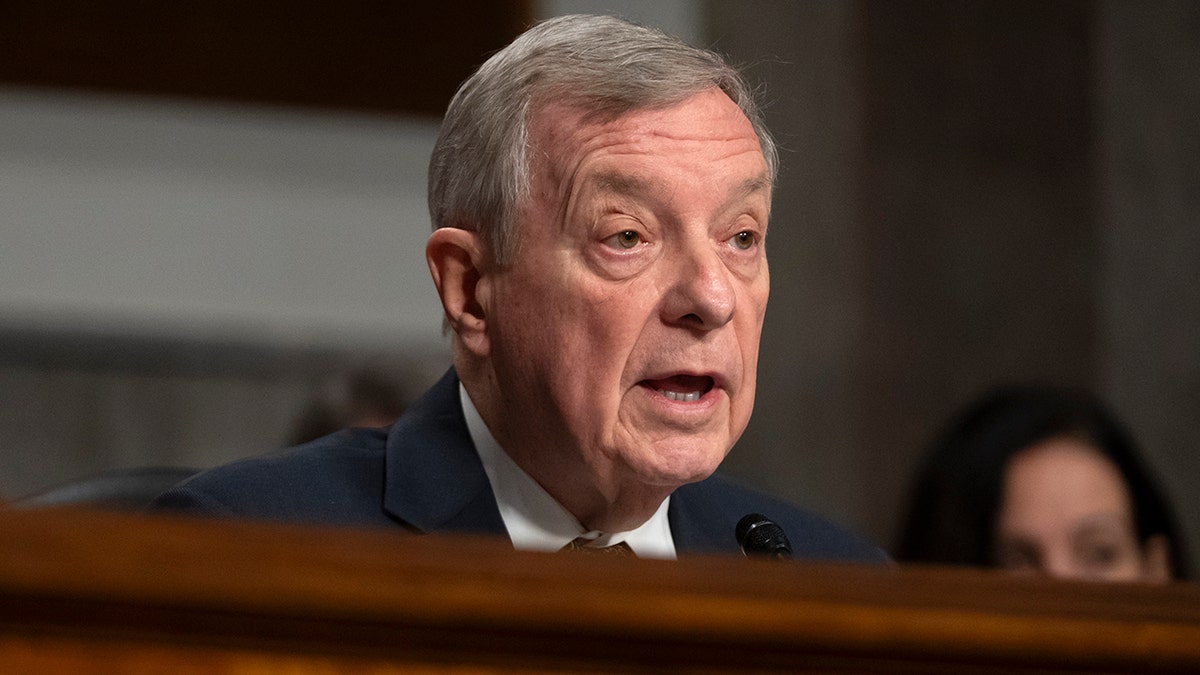
Committee Chairman Sen. Dick Durbin, D-Ill., speaks during a hearing of the Senate Committee on the Judiciary on Capitol Hill on Tuesday, Dec. 10, 2024 in Washington, D.C. (AP Photo/Mark Schiefelbein)
Baker responded by insisting other athletes have the option to find other accommodations if they are uncomfortable with it.
“Everybody else should have an opportunity to use other facilities if they wish to do so,” Baker said.
Baker added that NCAA guidelines give the institutions and organizations that host college sporting events, who he referred to as “locals,” the option to accommodate athletes however they see fit.
“I believe our guidelines give people optionality in how they choose to use their facilities,” Baker said. “We told the local folks who hosted our tournaments that they need to make accommodations for the people who are playing.”
Baker also refused to initially agree with the notion that biological males have physical advantages over female athletes. When asked by Sen. John Kennedy, R-La., if trans athletes are at an advantage, Baker said the idea was debatable.
“There’s not a lot of research on it, but it’s certainly debatable,” Baker said.
Kennedy posed the question a second time, asking if Baker did not think that “a biological male has an advantage every time competing against a biological female.”
The NCAA president changed his answer, saying, “I think the way you defined it, yes, I would agree with you.”
When Baker was pressed about why he and the NCAA have not taken action to amend policies to prevent trans inclusion in women’s sports, he repeatedly cited federal law and recent rulings of federal courts that have enabled it. Kennedy loudly encouraged Baker to do something about it anyway.

NCAA President Charlie Baker speaks during a press conference celebrating the 25-year anniversary of the NCAA moving its national office to Indianapolis on Tuesday, Aug. 13, 2024 at the NCAA Headquarters in Indianapolis. (Michelle Pemberton/IndyStar / USA TODAY NETWORK)
“Why don’t you go to Amazon and buy a spine online and take a stand?” Kennedy yelled at Baker.
CLICK HERE TO GET THE FOX NEWS APP
Trans inclusion in women’s sports has been a major issue in the U.S. The issue has grown in recent years with Lia Thomas winning a women’s swimming national championship and Blaire Fleming helping San Jose State women’s volleyball to a Mountain West Conference Championship appearance.
Fox News’ Jackson Thompson contributed to this report.
Follow Fox News Digital’s sports coverage on X, and subscribe to the Fox News Sports Huddle newsletter.
Blue Jays’ Kevin Gausman takes swipe at MLB Commissioner Rob Manfred

Toronto Blue Jays pitcher Kevin Gausman took a swipe at MLB Commissioner Rob Manfred on Tuesday as the baseball boss talked about marketing the sport through starting pitchers.
Gausman implored his followers not to believe what Manfred said about starting pitching.
CLICK HERE FOR MORE SPORTS COVERAGE ON FOXNEWS.COM
“Don’t believe a word this man says,” Gausman wrote on X. “Get ready for 6 innings you get to keep the DH, if not a fan hits in their spot.”
Toronto Blue Jays pitcher Kevin Gausman, #34, stands in the dugout after pitching five innings against the Texas Rangers without giving up a hit at Globe Life Field on Sep 19, 2024 in Arlington, Texas. (Raymond Carlin III-Imagn Images)
Gausman’s jab came weeks after the possibility of implementing the “golden at-bat” rule, which would allow teams to pick one batter per game to hit even if they are not next in the batting order, was floated into the baseball world.
Manfred spoke as part of the “Questions for Cancer” podcast. He said he did not think a minimum inning requirement for starting pitchers would be a great idea to help with the issue.
“I don’t think a specific inning requirement even with exceptions are workable in our rule,” Manfred. “It’s just too blunt an instrument to fix this problem. I do see both problems as really serious. I think the injury issue – our physicians have studied this carefully. They continue to believe that the focus on velocity and spin rate is a significant cause in the increase in injuries.
“Look, marketing the game, just think about a broadcast. The name and face you see the most is the starting pitcher. The matchups of great starting pitchers have historically been important in terms of marketing the game and I do think we need to get back to that.”
YANKEES ACQUIRE ONE-TIME MVP CODY BELLINGER AS POST-JUAN SOTO ERA CONTINUES

MLB commissioner Rob Manfred before game four of the 2024 World Series between the Los Angeles Dodgers and New York Yankees at Yankee Stadium on Oct 29, 2024 in New York City. (Brad Penner-Imagn Images)
Manfred said rules should be developed to create incentives for teams that develop pitchers who can go deep into games.
“To me, this needs to be addressed in a more subtle way. I think rules surrounding transactions, that is how often pitchers can come on and off the roster. One of the things that happens today, guy pitches three days in a row, he gets outrighted, they bring somebody else in. They give him some rest as opposed to him staying on the roster the whole time.
“I think we need to create incentives through things like roster rules, transaction rules for clubs to develop pitchers who go deeper in the game. I don’t think it can be prescriptive, you have to go six innings. I think it has to be a series of rules that create an incentive for clubs to develop pitchers of a certain type.”
CBS Sports noted that the inning per start rate sat at 5.2 during the 2024 season – more than an inning lower than it was in 1984.

Toronto Blue Jays starting pitcher Kevin Gausman, #34, throws against the Atlanta Braves in the first inning at Truist Park on Sep 6, 2024 in Atlanta. (Brett Davis-Imagn Images)
CLICK HERE TO GET THE FOX NEWS APP
Gausman started in 31 games in 2024 and led the majors with two complete games and one shutout. He completed at least seven innings of work eight times.
Follow Fox News Digital’s sports coverage on X, and subscribe to the Fox News Sports Huddle newsletter.
RFK Jr. at HHS? Former health secretary Kathleen Sebelius explains the limits of the role : Shots
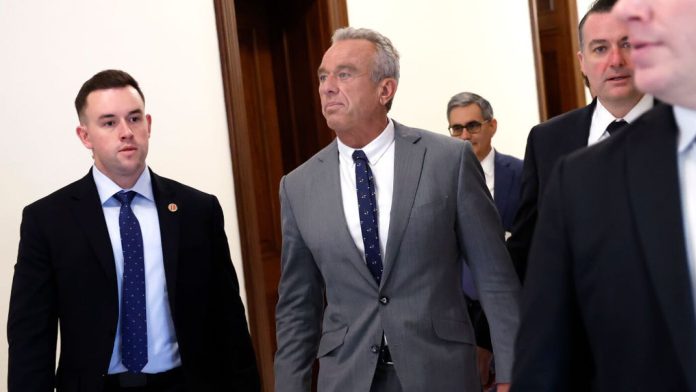
Robert F. Kennedy Jr. arrives for a meeting with Senators in the Russell Senate Office Building on December 17, 2024 in Washington, DC.
Kevin Dietsch/Getty Images/Getty Images North America
hide caption
toggle caption
Kevin Dietsch/Getty Images/Getty Images North America
Robert F. Kennedy Jr. is on Capitol Hill this week, trying to convince senators that they should greenlight him to lead the Department of Health and Human Services, ahead of expected confirmation hearings.
Kennedy — who initially ran for president as a Democrat in the primary and an Independent in the general election before dropping out and endorsing Trump — is perhaps best known for his vaccine skepticism and for spreading misinformation about the safety of vaccines. He’s also a fierce critic of the pharmaceutical industry, processed foods and water fluoridation.
Kennedy has never worked in health care or the federal government, but he’s become outspoken on a wide range of health care issues that have now coalesced under the banner of the “Make America Healthy Again” movement. He has said he wants to fire hundreds of career staffers at the Food and Drug Administration and at the National Institutes of Health, and shift federal research funding from infectious disease to chronic disease and obesity.
If confirmed, Kennedy would be in charge of a $1.7 trillion agency with power over regulating food and drugs, funding groundbreaking research and setting vaccine recommendations. He would also oversee Medicare, Medicaid and the Affordable Care Act, which account for nearly 90% of the department’s budget and provide health insurance to nearly 170 million Americans.

Kennedy’s views have led to a mixed reaction across the political spectrum. Colorado’s Democratic Gov. Jared Polis praised the pick, and New Jersey’s Democratic Sen. Cory Booker acknowledged his common ground with Kennedy on the unhealthy U.S. food system. In contrast, Oregon Sen. Ron Wyden said Kennedy’s “outlandish views … should worry all parents,” and former New York City mayor Michael R. Bloomberg says Kennedy would be “beyond dangerous” as health secretary.
On the other side of the aisle, Wisconsin Republican Sen. Ron Johnson called Kennedy a “brilliant, courageous truth-teller,” while former Republican Vice President Mike Pence urged senators to reject Kennedy’s nomination over his support for abortion rights.
Kathleen Sebelius, who led HHS under President Barack Obama from 2009 to 2014 talked with the health policy podcast Tradeoffs about the power of the position, and the checks and balances Kennedy may face in enacting some of his priorities.
“The [HHS] secretary is in a position to do a lot of good, but also potentially do a lot of harm,” she said.

Kathleen Sebelius on May 6, 2014 in National Harbor, Md.
Patrick Smith/Getty Images/Getty Images North America
hide caption
toggle caption
Patrick Smith/Getty Images/Getty Images North America
Here are highlights from that conversation, edited for length and clarity:
On the role of the HHS secretary
[The secretary] is the [federal government’s] public spokesperson for health and wellness, not only in America but around the world, because America has a huge role in global health and in partnering with other countries.
A lot of the role of secretary is winning hearts and minds, because I can guarantee you nothing gets done in a federal agency unless a lot of the workers in that agency believe that they’re part of the mission. I spent a good deal of time at the beginning of my tenure literally physically visiting each and every agency … having lunch with people on the ground.
I could never have done the job with any measure of success without learning something from really talented people. Having people come forward and say, you know, you may not have thought about this, but how about this? That kind of management, I think, in any big organization works well. Not that you arrive with the answers, but that you actually learn something about the organization that you’re asked to lead.
On how much power the HHS secretary wields
[The job] can be wildly powerful and unpowerful at the same time. Most of the power in the agency, most of the administrative authority comes from laws that Congress has passed, and the agency is then asked to write rules and [regulations] and implement those laws. What I found out is that there were a lot of areas where the agency had administrative power that they had never used.
One of the areas that [we] identified within HHS was a lot of opportunity to make a difference with LGBTQ citizens in the United States. I mean, across the board, there were rules and regs in place that were very limiting. So we began to redefine what a family member was. This was well before the marriage decision and Supreme Court and others. We had partners who had been long-time living together and were not allowed to visit each other in a critical care unit in a hospital because they weren’t a member of a family. You could actually move long-standing policy. You could rescind what a previous administration had done. You could redefine terms that had a huge impact on people. And that could be done all administratively, not by going back to Congress.
On the limits of the HHS secretary’s power
Certainly what the president wants and needs is one [limit]. I would say there is a congressional check, where lots of committees in the House and the Senate have jurisdiction over pieces of the Department of Health and Human Services. The secretary has to go through two Senate confirmation hearings, one with the Finance Committee and one with the HELP Committee. That’s gobbledygook to a lot of people, but it just means that there are lots of congressional committees — three in the House and two in the Senate — with big interest in what’s going on at HHS. And so they can have hearings on a regular basis. They do what’s called oversight, calling the secretary in, calling the department in, challenging authority: Why are you doing this or that?
And then there’s a whole legal system that can sue the department. The FDA is very used to that. Any time they would issue, for instance, a tobacco regulation, tobacco companies would immediately file a lawsuit and slow that down or stop it. That can be done. When there’s any kind of cut suggested to the hospital system, the hospital association immediately goes to court. So I would say the court, Congress and the president operate as guardrails around the secretary’s power.
On how much discretion Robert F. Kennedy Jr. would have to fire hundreds of career staffers, as he has promised to
At this point, I would say the discretion is limited by civil service protection. In the waning days of the last Trump administration, there was an executive order issued that would have removed civil service protection from a host of federal employees. I can’t remember how many. The Biden incoming administration immediately rescinded that executive order, so it’s never been carried out. [So, absent that] you really can’t just fire people who are in a protected position.
But I think just suggesting that you want to fire people before he knows anything about what those folks are doing, [there’s a] likelihood that you lose the best talent right away because they walk out the door. The FDA scientists are well sought out by industry across the board. So just the suggestion that a secretary comes in and says at the outset, I’m going to get rid of this division, I’m going to fire researchers at NIH, I’m going to get rid of these folks. What that does is send really a chilling effect throughout the department — saying we have somebody coming in here who doesn’t value us, doesn’t like what we do. And I can tell you right now, there are likely to be lots of people already having conversations about their next job.
On Kennedy’s interest in moving research priorities at the National Institutes of Health away from infectious diseases
NIH research is done in research universities across the country. Bobby Kennedy said, let’s give infectious diseases a break and focus on obesity. What he clearly doesn’t understand is that within the National Institutes of Health, those are going on simultaneously.
You can’t pick and choose when an infectious disease is going to break out. And in fact, he’s clearly not reading the news because we are, I think, a year or so away from a major outbreak of avian flu in humans. We’ve seen avian flu jump from birds to farm animals and from farm animals to farm workers. That’s just a step away from a major outbreak of avian flu, which right now has no vaccine. Do I want people to stop researching what could be an effective counter to an avian flu outbreak? Absolutely not. Because it’s coming. And it’s coming on a timetable that Bobby Kennedy cannot control.
On the impact that Kennedy’s anti-vaccine views could have on vaccine uptake nationwide
[The CDC has] a list of known childhood vaccines and makes recommendations to states. And then state governments adopt their own vaccine list based on CDC recommendations. Some [states] have a more robust list, some have a narrow list. So in terms of vaccine take-up … he could make very strong recommendations to states that they grant far more exemptions to parents, so greatly increase the number of children who could qualify to go to school without vaccines. He could encourage states to just make [vaccines] optional.
To me, this is really personal. I have an 11-month-old grandson. He is too young to qualify for the full measles vaccination set. We live in a red state. He is susceptible to getting measles because he can’t get vaccinated. And so these are real life consequences. I mean, kids could die from this kind of policy change. And I think the secretary could have a lot of influence. He can’t change the rules, but he could recommend very strongly that people who believe in Donald Trump should change the rules.
On how she thinks senators should think about the power they’d be giving Kennedy if they confirmed him to lead HHS
I think they should think long and hard about it. Think about Bobby Kennedy as secretary during COVID, when there’s an opportunity to stand up Operation Warp Speed and a COVID vaccine, which clearly saved lives. My guess is he would not have participated in that robust effort. He would have tried to throw barriers and roadblocks and suggest to people that they shouldn’t get the vaccine. That’s a real life example that we just had — and I think was a remarkable scientific breakthrough and accomplishment — and then contrast it with this point of view. That’s a really dangerous place to be when you’re looking at the safety and security of U.S. citizens, and you’re looking at health issues that can topple our economy.
I have no idea what Donald Trump’s health policy is, so it’s a little confusing for me to know what to tell the senators. If [Kennedy] is allowed to, as Donald Trump has said, “go wild on health,” what does that mean? And I would, if I were a senator, try to understand that, because it’s likely within HHS to have a huge impact on that senator’s constituents.
Dan Gorenstein is the executive editor of Tradeoffs, a nonprofit health policy news organization. Reporter Ryan Levi produced this story for the Tradeoffs podcast, and adapted it for the web. You can listen to the full interview here:
FBI’s warning as reported drone sightings plague the East Coast and more top headlines

Good morning and welcome to Fox News’ morning newsletter, Fox News First. And here’s what you need to know to start your day…
TOP 3
1. FBI’s warning about drone sightings.
2. Trump names two more picks.
3. Accused Ivy League killer’s legal gamble.
MAJOR HEADLINES
‘SENSELESS VIOLENCE’ – Police chief says motive for Christian school shooting was a ‘combination of factors.’ Continue reading …
NO LAUGHING MATTER – Social media shreds VP Harris for laughing at her own word salad. Continue reading …
STOPPING THE FLOW – GOP’s new ‘America First Act’ ends welfare, other benefits going to illegal immigrants. Continue reading …
‘ONE IN A TRILLION’ – TV station shares cause of beloved 28-year-old anchor’s sudden death. Continue reading …
LOUD AND CLEAR – Trump’s border czar delivers stern message after arrest of suspected gang members. Continue reading …
—
POLITICS
PRIVATE HIDEAWAYS – GOP calls on FBI to investigate Liz Cheney for ‘potential criminal witness tampering.’ Continue reading …
‘SHOULD NOT PASS’ – Key Trump ally comes out against massive emergency spending plan. Continue reading …
‘GETTING OUR BUTTS KICKED’ – Democratic chair frontrunner’s sobering admission about party’s recent election losses. Continue reading …
‘PERFECTLY HORRIFIC’ – Judge in Trump trial under fire for delays leading to longest ‘performance’ in history. Continue reading …

MEDIA
‘THEY PUNISHED US’ – MSNBC host says why Biden team ‘started screaming and yelling.’ Continue reading …
‘LOW, LOW POINT’ – ABC continues to take heat for massive Trump settlement. Continue reading …
SCHOOL’S OUT – Teacher says ‘a lot’ of staff disagreed, some quit over student pronoun mandate. Continue reading …
NATURAL BEAUTY – Americans chose this surprising, scenic state above all others in 2024. Continue reading …
OPINION
ROBERT O’BRIEN – Four ways American states and cities can address the CCP threat to our way of life. Continue reading …
RICH ZEOLI – The great drone scare will flip New Jersey red in 2025. Continue reading …
—
IN OTHER NEWS
DIVINE DEVELOPMENT – Archaeologists find amulet that shakes up what we know about the history of Christianity. Continue reading …
ROYAL RIFT – King Charles haunted by Prince Andrew as ‘grubby’ duke humiliates monarchy again. Continue reading …
AMERICAN CULTURE QUIZ – Test yourself on festive flavors, seasonal sales, historic heroes? Take the quiz here …
RULES OF THE SKY – Expert weighs in as rise of ‘seat squatters’ on flights prompts etiquette debate. Continue reading …
FESTIVE & SIMPLE – Winemaker preps a delicious holiday spritzer. See video …
WATCH
KEVIN O’LEARY – This is the real reason tech CEOs are flocking to Trump. See video …
REP. ANDREW CLYDE – American people are speaking ‘loud and clear.’ See video …
FOX WEATHER

What’s it looking like in your neighborhood? Continue reading…
FOLLOW FOX NEWS ON SOCIAL MEDIA
SIGN UP FOR OUR NEWSLETTERS
Fox News Entertainment (FOX411)
DOWNLOAD OUR APPS
WATCH FOX NEWS ONLINE
Thank you for making us your first choice in the morning! We’ll see you in your inbox first thing Thursday.
What we learned from Elian Gonzalez, 25 years later : Code Switch : NPR

Twenty-five years ago, a six-year-old boy named Elian Gonzalez appeared off the coast of Miami. He and his mother had been traveling by boat to the U.S. from Cuba. His mother didn’t survive the journey, but remarkably, Elian did. And almost immediately, his fate became the subject of an international debate: Should he stay in the U.S. and live with relatives in Miami? Or should he return to Cuba, to live with his father, who very much wanted him back?
How people answered that question tended to reflect a lot about their larger beliefs – about the benefits of democracy, the importance of family, the distinctions between the U.S and Cuba, and immigration writ large.
This episode was originally reported and produced by our play cousins at Futuro Studios. It’s hosted by Peniley Ramirez.
We want to hear from our listeners about what you like about Code Switch and how we could do better. Please tell us what you think by taking our short survey, and thank you!
Tensions between Israel and Turkey escalate over Syria: ‘it’s time to pay attention’

Israel rejected Turkish accusations on Tuesday following Ankara’s condemnation of Israeli military actions in Syria, as Turkey escalates its own operations in the war-torn country. The rising tensions have deepened the rift between the two nations and sparked concerns over regional stability and the fate of U.S.-backed Kurdish forces fighting ISIS.
On Monday, the Turkish Foreign Ministry criticized Israel for expanding settlements in the Golan Heights, calling it part of Israel’s “expansion of borders through occupation.” Turkey urged Israel to comply with the 1974 Disengagement Agreement, which established a cease-fire between Israel and Syria.
However, Israeli Prime Minister Benjamin Netanyahu declared the agreement void, arguing it no longer applied after forces loyal to Syrian President Bashar al-Assad abandoned their positions on the Syrian side during the country’s civil war. Netanyahu has described the Golan Heights as a vital security buffer and integral to Israel’s defense strategy against Iran and Hezbollah, which operate in Syria.
TRUMP SAYS TURKEY ‘DID AN UNFRIENDLY TAKEOVER’ IN SYRIA AS US-BROKERED CEASE-FIRE APPEARS TO FAIL
Prime Minister Benjamin Netanyahuheld meetings on Tuesday at Mount Hermon with Defense Minister Israel Katz, Chief of Staff Lt. Col. Herzi Halevi, Northern Command Commander Major General Uri Gordin, and Shin Bet Chief Ronen Bar. (IDF)
On Tuesday, Israel’s Foreign Ministry issued a response on X. “Turkey has systematically encroached on Syrian territory… Approximately 15% of Syria’s territory is under Turkish-backed control. In these areas, the Turkish currency is in use, and Turkish bank branches and postal services have been operating.
“Furthermore, the Turkish military bombards infrastructure in the northeastern autonomous region of Syria using aircraft and UAVs. Turkey supports jihadist forces that operate against Kurds in Syria. The last country that can speak about occupation in Syria is Turkey… There is no justification for Turkish aggression and violence against Kurds in Syria!”
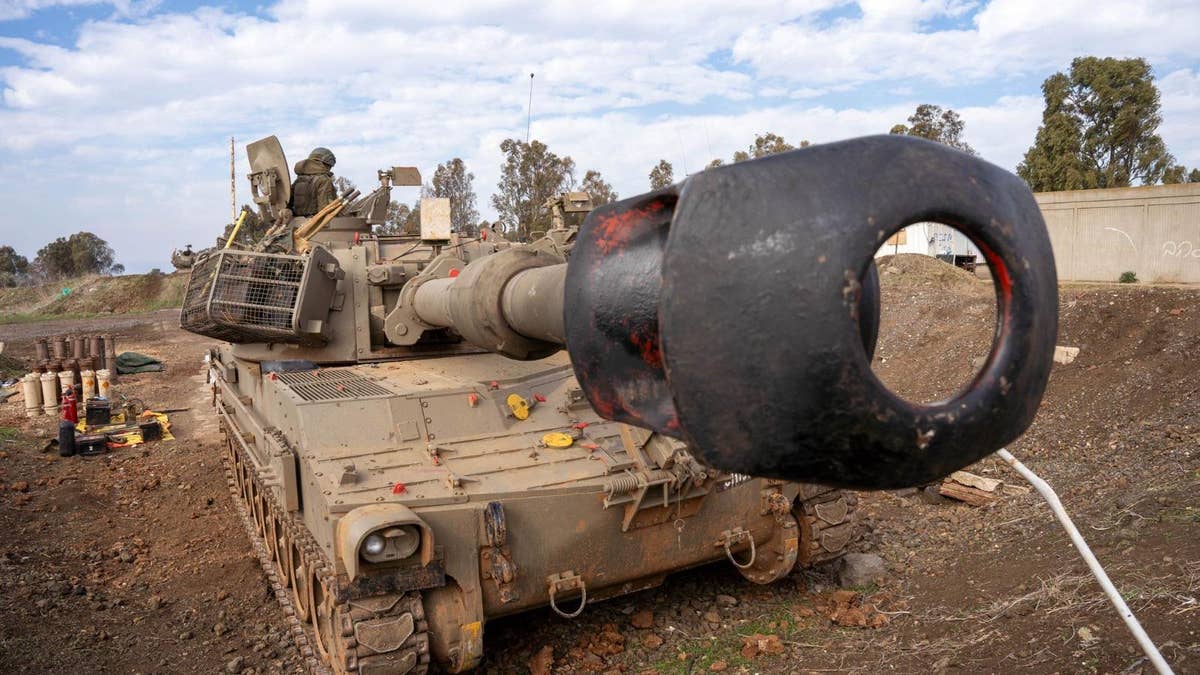
The Israeli Defense Forces announced it was reinforcing its border with Syria on the Golan Heights following developments in Syria. (IDF Spokesman’s Unit.)
The unusually sharp exchange reflects a new low in bilateral relations, according to Gallia Lindenstrauss, a senior research fellow at the Institute for National Security Studies. “Relations between Israel and Turkey are now at their lowest point in decades,” she told Fox News Digital. “In May, Turkey imposed a complete trade ban on Israel, severing all direct links. This is unprecedented for countries that maintain diplomatic relations.”
Turkish President Recep Tayyip Erdoğan’s rhetoric has worsened ties further. His support for Hamas, which carried out the Oct. 7 attack on Israel, and his accusations of “genocide” in Gaza have drawn Israeli ire. “We must be very strong so that Israel can’t do these ridiculous things to Palestine,” Erdoğan said in July. “Just like we entered Karabakh, just like we entered Libya, we might do similar to them.”
TOP US ALLY, SDF COMMANDER IN SYRIA WARNS OF ISIS RETURN IF TURKISH AIRSTRIKES DON’T STOP
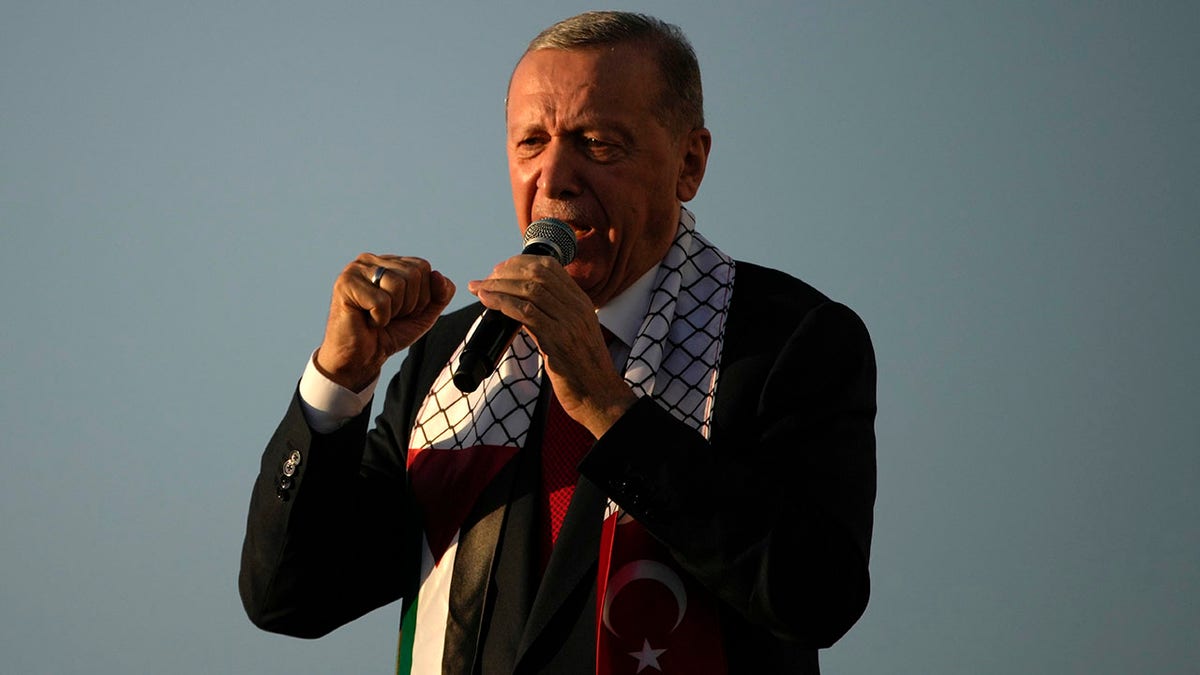
Turkish President Recep Tayyip Erdoğan speaks to the attendees during a rally to show their solidarity with the Palestinians, in Istanbul on Saturday, Oct. 28. (AP/Emrah Gurel)
Erdoğan has also urged Islamic nations to unite against Israel, calling it “the most concrete threat to regional and global peace.” Lindenstrauss emphasized Turkey’s support for Hamas as a major source of tension. “Turkey backs Hamas and wants to see Hamas remain in charge in Gaza after the war,” she explained.
Israel remains increasingly concerned about Turkey’s military buildup in northern Syria. Lindenstrauss said Ankara’s ambitions are growing. “Turkey has been in control of northern areas and supported rebels against Assad,” she said. “The question now is whether Turkey’s influence will spread further south, positioning Ankara as a patron of the emerging regime.”
Lindenstrauss highlighted Turkey’s reliance on Qatar for financial backing, referencing Erdoğan’s recent meeting with the Qatari emir. “Turkey cannot sustain its influence in Syria alone,” she said. “It needs Gulf state cooperation, particularly from Qatar, Saudi Arabia, and the UAE, to finance the rebuilding of Syria.”
US WARNS AMERICANS TO FLEE SYRIA OR PREPARE TO ‘SHELTER IN PLACE FOR EXTENDED PERIODS’
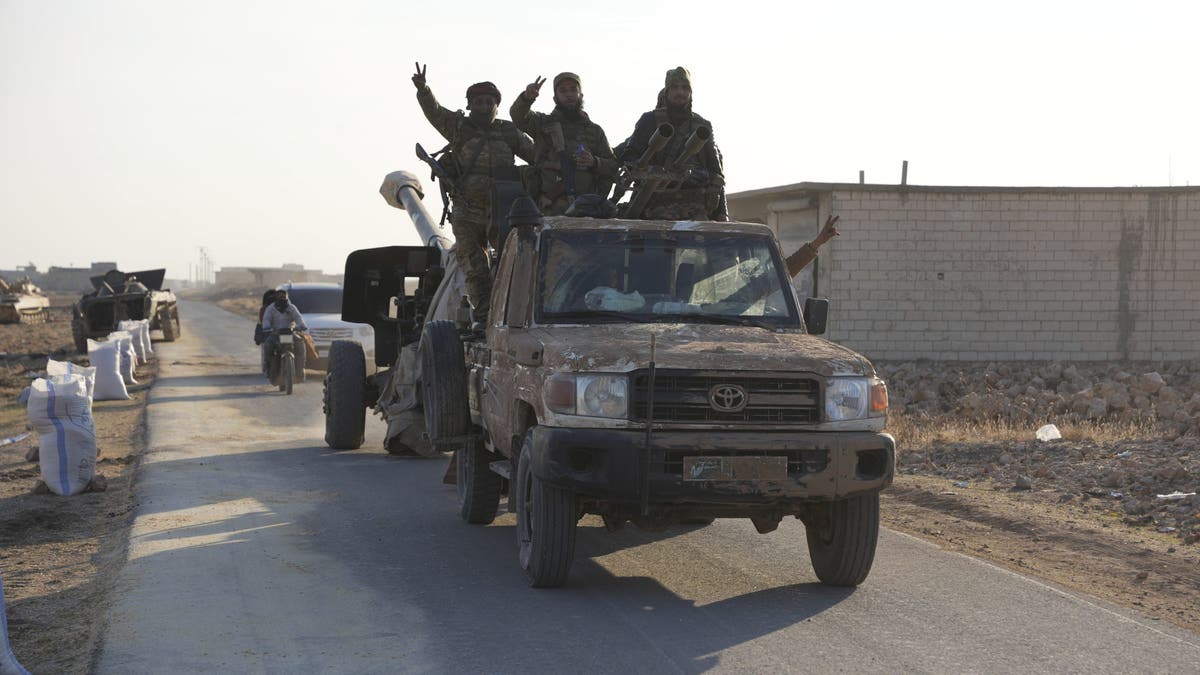
Rebels in northwest Syria seized military vehicles belonging to the regime along the route toward Kweris Airport in the eastern countryside of Aleppo on Dec. 2, 2024. (Rami Alsayed/NurPhoto via APRami Alsayed/NurPhoto via AP)
Turkey’s focus remains on dismantling Kurdish control in northern Syria, particularly around Kobani, a symbolic city for the Kurds. Ankara’s current strategy recalls its 2019 invasion, which displaced hundreds of thousands of civilians.
“The Kurds control prisons that hold thousands of ISIS fighters,” Lindenstrauss said. “These prisons are critical to the U.S., Israel, and the West. Weakening Kurdish control risks regional destabilization and a resurgence of ISIS.”
CLICK HERE TO GET THE FOX NEWS APP
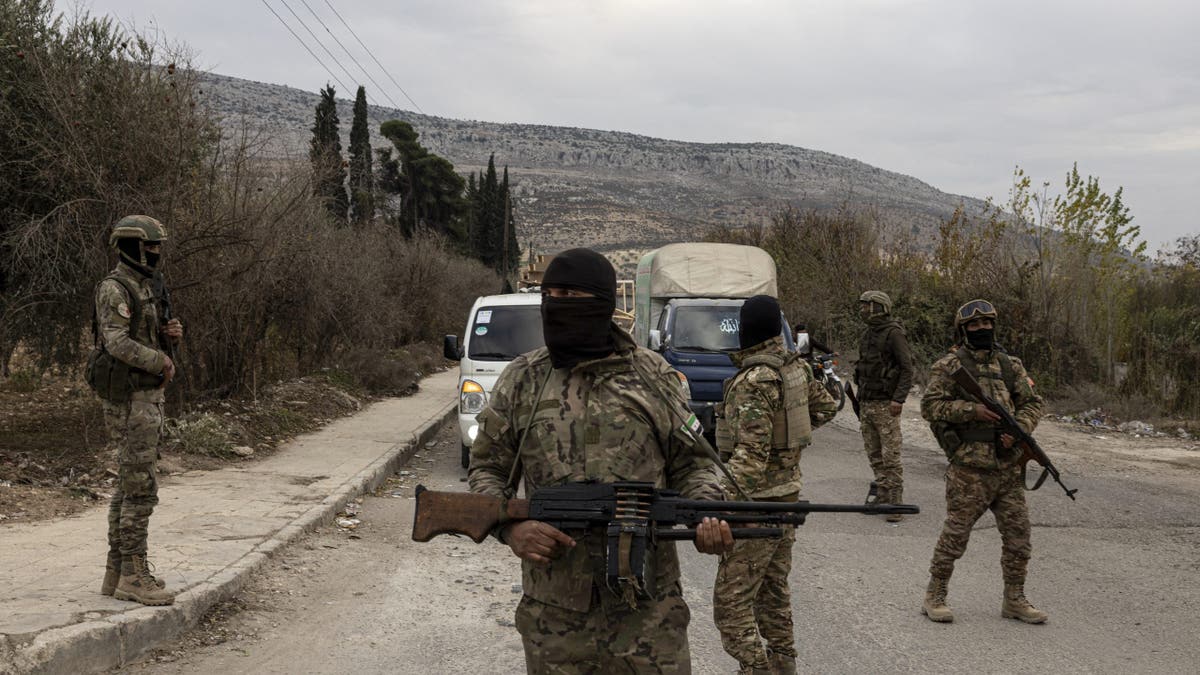
Displaced Kurds leave the refugee camp in the north of Aleppo, fleeing to Afrin, on Dec. 4, 2024. (Ugur Yildirim/DIA Images/Abaca/Sipa USA(Sipa via AP Images)
As Turkey deepens its presence in Syria, analysts warn that clashes with Israel could become unavoidable. Dr. Hay Eytan Cohen Yanarocak of Tel Aviv University’s Moshe Dayan Center drew parallels to Turkey’s interventions in Libya and Azerbaijan. “If Turkish forces move into proximity with Israeli operations or allies, the risk of unintended confrontations will rise dramatically,” he told TPS-IL news agency.
Despite the sharp rhetoric, experts argue that both countries share an interest in avoiding direct conflict. “Turkey’s main interests are in northern Syria, while Israel’s focus is on the south,” Lindenstrauss said. “Israel and Turkey managed to establish deconfliction channels with Russia in Syria to avoid friction. Similar mechanisms will be necessary here, even if they operate quietly.”
Yanarocak warned of growing risks. “The skies are the limit for how far this situation could deteriorate,” he said. “It’s time to pay attention.”
Adam Fravel to spend life in prison for killing ex-girlfriend Madeline Kingsbury

The ex-boyfriend of Madeline Kingsbury, a 26-year-old mother who went missing in 2023 and was found dead after a 69-day search, was sentenced to life in prison without the possibility of parole on Tuesday.
Adam Fravel, 30, was sentenced by District Judge Nancy Buytendorp in Winona, Minnesota, after he was convicted of premeditated first-degree murder about 136 miles away in Mankato due to pretrial publicity, The Associated Press reported.
“The sentence reflects the severity of your actions and serves as a clear statement that such violence will not be tolerated in this community,” Buytendorp said, adding that she hopes the case will “inspire collective action to prevent future tragedies of this nature.”
Fravel, who did not testify in his defense at trial, told the judge during sentencing that he is innocent and “never caused harm to Maddie.”
MADELINE KINGSBURY’S EX IN CUSTODY AFTER ‘COVERED AND CONCEALED’ REMAINS IDENTIFIED
Adam Fravel, who was found guilty in the 2023 murder of Madeline Kingsbury, his ex-girlfriend and with whom he shared two children, was sentenced to life in prison without parole on Tuesday in Minnesota. (Saskia Hatvany/Winona Daily News via AP, Pool)
Kingsbury, who shared two young children with Fravel, went missing in March 2023 after dropping their kids off at daycare. Her disappearance gained national attention and prompted a massive search that lasted more than two months.
Her body was found by a deputy in June 2023 in a culvert on a dead-end road near a property owned by Fravel’s parents. She was wrapped inside a gray fitted sheet closed with duct tape. Fravel was arrested days after the discovery.
Prosecutors said Kingsbury was strangled with a towel and a medical examiner determined her cause of death to likely be asphyxiation.

Minnesota mom Madeline Kingsbury, 26, was last seen dropping her children off at daycare around 8 a.m. on March 31, 2023. (Madeline Kingsbury/Facebook)
FAMILY OF MISSING MINNESOTA MOM FEARED FOUL PLAY WHEN SHE DISAPPEARED AFTER DAYCARE DROP-OFF
“The crimes committed by Mr. Fravel shook the foundations of our community, shedding a very bright light on the extremes of domestic violence, and revealing the evil acts of a man who had no care as to how his actions would affect his children for their lifetimes,” Winona County Attorney Karin Sonneman told the court, according to The AP.
Witnesses, who testified to seeing bruises on Kingsbury’s neck, also said that she was planning to leave Fravel for another man due to “alleged abusive behavior and inadequate financial contributions,” the outlet said.
Fravel’s attorney Zach Bauer told the judge they intend to appeal the sentence, arguing that the case focused on “tunnel vision, revisionist history and secret truths.”

Adam Fravel, 30, was convicted of killing his ex-girlfriend Madeline Kingsbury, whose remains were located in June 2023 after a 69-day search. (Saskia Hatvany/Winona Daily News via AP, Pool)
CLICK HERE TO GET THE FOX NEWS APP
The two children shared by Fravel and Kingsbury now live with her parents, who were in the courtroom during sentencing.
Kingsbury’s mother, Catherine, had the following statement read to the court on her behalf.
“I will never understand a father who could and did do this to his children. He took away a mother’s love, the type of love that only Maddie could give them. The knowledge of this horror will haunt me forever. All that Adam had to do was walk away and let Maddie go. He chose not to do that. He chose evil over good.”
The Associated Press contributed to this report.
The Year in Pictures 2024: Far From Ordinary

When shots were fired at a campaign rally for former President Donald J. Trump on a July evening in Butler, Pa., the veteran New York Times photographer Doug Mills was just a few feet from him. As the Secret Service rushed toward Mr. Trump, Mr. Mills’s heart pounded when he realized what was happening.
Then instinct took over. Mr. Mills kept taking pictures, at an extremely fast shutter speed of one eight-thousandth of a second, capturing an image that illustrates the magnitude of that moment: Mr. Trump, his face streaked with blood, his fist raised in defiance.
This year was made up of such extraordinary moments. And Times photographers captured them in extraordinary images. The Year in Pictures brings you the most powerful, evocative and history-making of those images — and allows you to see the biggest stories of 2024 through our photographers’ eyes.
The presidential campaign — full of twists and turns — provided some of our most memorable photos. Kenny Holston captured a shaky President Biden struggling to find his footing in what turned out to be his only debate of the 2024 election. Erin Schaff conveyed the exhilaration surrounding Vice President Kamala Harris in the short sprint of her campaign. And Todd Heisler brought home the excitement of an 8-year-old girl in pigtails, Ms. Harris’s great-niece, who watched with pride as Ms. Harris accepted her party’s nomination for president.
Yet even as the American political campaign intensified, wars ground on overseas, creating new dangers and obstacles for our photojournalists determined to document the fighting. The war between Hamas and Israel escalated into a regional conflict, and our photographers depicted the Israeli airstrikes on Lebanon, the families forced to flee their homes and the neighborhoods reduced to rubble.
When Israeli forces recovered the bodies of six hostages in Gaza, our photographers revealed the pain of the captives’ families as they cried out at their loved ones’ funerals after 11 months of anguished waiting. And last month, Samar Abu Elouf, a Palestinian photographer for The Times, delivered some of the most indelible images of the year: a series of portraits of Gazans horribly injured in the war, including children who had lost arms, legs or eyes.
Children were also central to the work of Lynsey Addario, a veteran photographer who has been chronicling the war in Ukraine since Russia first invaded in 2022. Ms. Addario’s images tell the stories of young Ukrainians with cancer whose treatment was disrupted by the war, often with devastating results. One, a 5-year-old girl whose chemotherapy was upended by the Russian invasion, ultimately lost her life.
Our photographers embrace their calling of bearing witness to history, showing readers the atrocities and the suffering that might otherwise be overlooked. But they also see their mission more broadly, and aim to depict the richness and color of life by regularly bringing us pictures that delight and surprise.
Take the photo by Hiroko Masuike from the ticker-tape parade in October for the New York Liberty women’s basketball team. The young fans pictured radiate a kind of awe-struck joy, screaming to the players by name. Or the photographs that show the sense of wonder on the faces of people at Niagara Falls as they bask in the magic of a solar eclipse in April.
We hope you can spend some time with these pictures, and take in our photographers’ reflections on them. This collection of images is a way to remember the year, but it is also, we hope, an opportunity to better understand their craft and their devotion to producing the world’s best photojournalism.
January
Arivaca, Ariz., Jan. 13 Migrants climbing over the border wall between Mexico and a ranch in Arizona. When the ranch owners discovered that migrants were becoming stranded, they installed water fountains in the desert to help keep people alive.
Erin Schaff/The New York Times

Luhansk, Ukraine, Jan. 21 Russian soldiers killed on the battlefield in eastern Ukraine, left behind in a maelstrom of violence where the struggle to stay alive often outweighed concern for the dead.
Tyler Hicks/The New York Times
“This struck me as an image that showed how stark and cold this war can be. This scene is played out on both sides every day. And if you think about all of the battles that are happening at any given moment, you can only imagine the number of incidents like this that are costing the lives of young men.” — Tyler Hicks

Kharkiv, Ukraine, Jan. 20 A group of civilian volunteers called Platsdarm collected bodies from the bloody fields and battered villages of eastern Ukraine. A cross on a chain was found on the body of a Russian soldier.
Tyler Hicks/The New York Times

Iowa City, Jan. 17 Young fans waiting to take a picture with Caitlin Clark. The basketball star shattered scoring records in both college and the W.N.B.A., where she was the No. 1 draft pick this year.
Hilary Swift for The New York Times
“It was amazing to go into the arena and see so many people there and such massive support for not only an Iowa team, but a women’s team. There were so many little girls there who were so excited and stoked to be in Clark’s presence. They can now aspire to having similarly successful careers.” — Hilary Swift

Manhattan, Jan. 22 The artist Cindy Sherman, who folds photographic nips and tucks right in with her aging subjects’ wrinkles. She said she saw the disjunctions in her new work’s faces almost as an exercise in Cubism.
Caroline Tompkins for The New York Times

Las Vegas, Jan. 19 Hannah Neeleman, a Utah homemaker known to her millions of online fans as Ballerina Farm, competed in the Mrs. World pageant two weeks after giving birth. She breastfed her baby backstage after the crowning of the winner.
Bridget Bennett for The New York Times

Manhattan, Jan. 30 Yusef Salaam, a City Council member who was wrongfully convicted in 1990 as part of the Central Park Five, explaining his vote to override the mayor’s veto of two criminal justice bills. The Council passed both laws.
Dave Sanders for The New York Times
“Salaam said that he wondered how his life might have been different if these laws had existed in 1989. I had positioned myself in front of him, thinking it might be more personal for him than other members. He became choked up while speaking, and Avilés, a co-sponsor of the legislation, came over to embrace him. It was a powerful moment.” — Dave Sanders

Central Gaza Strip, Jan. 8 A destroyed Palestinian house, emblematic of the sheer destruction wrought by Israel’s war in the territory and the devastation of Hamas’s operations.
Avishag Shaar-Yashuv for The New York Times
“I tried hard to show the life there, but we couldn’t see any people. So I tried to feel the life there in the houses. I wanted to show the view that was there before the war. This was a way to see the view from this house — even if it wasn’t through the windows but through a broken wall.” — Avishag Shaar-Yashuv

Rafah, Gaza Strip, Jan. 9 Palestinians lining up for free food. Officials said that inspections, bottlenecks and safety concerns were limiting the flow of aid in the territory, contributing to a growing humanitarian crisis.
Hatem Ali/Associated Press

Bakhmut, Ukraine, Jan. 22 Wounded Russian soldiers being treated near the front line at an underground hospital, where medical personnel operate in rooms set up in a warren of tunnels that once served as a wine cellar.
Nanna Heitmann for The New York Times
“I was standing at this particular place all night. I had dozens of frames of different patients. They were undressing the man in this photo, and it was unclear if he would make it. They brought him to the surgery room in the back to amputate his leg and arm, his hip and part of his genitals.” — Nanna Heitmann
February
Los Angeles, Feb. 18 A construction worker covering the side of a hill with plastic tarp in the Baldwin Hills neighborhood as the region braced for an atmospheric river that was expected to bring heavy rains.
Mark Abramson for The New York Times

Aboard the U.S.S. Dwight D. Eisenhower, Feb. 20-21 On an aircraft carrier in the Red Sea, 5,000 sailors and pilots destroyed weapons storage sites, missile systems, air defense systems, radars and missile launchers before the Houthi militia could use them to wreck commercial ships.
Kenny Holston/The New York Times

Las Vegas, Feb. 11 Travis Kelce and Taylor Swift celebrating after his team won the Super Bowl. Their relationship dominated the N.F.L. conversation all season, attracting a new audience for the league and inspiring strong emotions among fans.
Doug Mills/The New York Times

Manhattan, Feb. 2 Marc Jacobs brought the living paper-doll look to the runway before Fashion Month kicked off. Models arrived seven hours early to get ready, and a team of 50 dressers helped them into the show’s 47 looks.
Simbarashe Cha/The New York Times

Khan Younis, Gaza, Feb. 9 Shaymaa Shady, 5, left, and Sarah Yusuf, 5, center, were among a group of 16 young people airlifted to hospitals in Italy after suffering grievous injuries in the course of Israel’s campaign against Hamas.
Nariman El-Mofty for The New York Times

Trostyanets, Ukraine, Feb. 19 After nearly two years, the family of Serhiy Hrebinyk, a Ukrainian marine captured by the Russians in Mariupol, still hoped he would come home. His sister Kateryna wore a dog tag featuring his image.
David Guttenfelder for The New York Times
“I went with Serhiy’s sister and mom to the church to light candles for him, and I noticed the tag around her neck. There was something touching about the relationship between the brother and sister, with the siblings so close in age. I photographed it up close so we could see his face.” — David Guttenfelder

Dover Air Force Base in Delaware, Feb. 2 President Biden honoring three Army reservists who were killed in an attack on a base in Jordan. Their bodies were returned to the United States in a ceremony known as a dignified transfer.
Kenny Holston/The New York Times
“I was a combat photographer for the Air Force, and this is something I had covered while I was still in the military. I tried to give depth to a serious, sad and solemn situation. The principals standing at the back of the plane with their heads down — that was a picture that I knew would drive the point home.” — Kenny Holston

Rafah, Gaza, Feb. 28 Children in a burned-out car. A United Nations official said that at least a quarter of Gaza’s residents were “one step away from famine,” and that one in six children under 2 in northern Gaza were acutely malnourished.
Agence France-Presse — Getty Images

Amsterdam, Feb. 17 Aleksei Navalny, an anticorruption activist who led the political opposition in President Vladimir V. Putin’s Russia, spent months in a Russian prison before his death. Memorials were held around the world, including in Dam Square.
Remko De Waal/Agence France-Presse — Getty Images

Athens, Ga., Feb. 26 Mourners attending a vigil at the University of Georgia for Laken Riley, a 22-year-old nursing student who was killed on campus. Jose Antonio Ibarra, a migrant from Venezuela, was charged in her death.
Melissa Golden for The New York Times
March
Baltimore, March 26 The collapse of the cargo ship Dali’s vital operating systems left the vessel adrift until it ultimately collided with the Francis Scott Key Bridge, knocking it into the Patapsco River and killing six people.
Erin Schaff/The New York Times

Columbus, Ga., March 24 A full military funeral was held for Pvt. Albert King, a Black soldier killed by a white military police officer in 1941. It was part of an Army effort to correct its record on race going back to the Civil War.
Alyssa Pointer for The New York Times
“This was a reverent moment. The family is about to participate in a funeral they have been waiting years for. It was a somber experience and good to know the man was getting the respect he needed. I wanted to get as close as I possibly could to show the contrast between the hands and the flag.” — Alyssa Pointer

Brooklyn, March 20 Aldryn Zea, a migrant from Venezuela, resting at a warehouse that was converted into a shelter. Its capacity grew to 4,000 as the city grappled with an influx of migrants.
Todd Heisler/The New York Times

The Beaufort Sea, March 16 The U.S.S. Hampton, a nuclear-powered submarine, surfacing for Operation Ice Camp, a Navy mission aimed at sharpening sailors’ combat skills in the Arctic as Russia expanded military operations there.
Kenny Holston/The New York Times
“We were in the middle of the Arctic on a giant floating piece of ice, and out of nowhere a submarine surfaced through the ice. It felt as if I was on a different planet. Trying to work in such harsh conditions was so challenging. I had to use hand warmers to warm up the cameras.” — Kenny Holston

Zaporizhzhia region, Ukraine, March 15 A Ukrainian soldier taking part in a training exercise. Ukrainian troops in the region were working to defend an area created by the previous summer’s counteroffensive, a 10-mile-deep semicircle pressing into Russian-held territory.
Brendan Hoffman for The New York Times
April
Northern Gaza, April 23 Aid being parachuted into the Gaza Strip. Rules enforced by Israel, stolen shipments and difficult terrain made it a challenge for humanitarian groups to deliver aid in more traditional ways.
Omar Al-Qatta/Agence France-Presse — Getty Images
“I went to the site and found thousands of citizens gathered near the destroyed buildings, waiting for the arrival of the planes. I carefully chose a shooting angle that showed the destruction, the aid and the people together in a single frame. The joy on people’s faces was evident as they received the aid and walked away, relieved and happy.” — Omar Al-Qatta

Los Angeles, April 26 Pro-Palestinian demonstrators camping out at the University of California, Los Angeles. After several days, the university declared the encampment illegal and threatened consequences if the protesters did not leave — but demonstrations continued.
Mark Abramson for The New York Times
“These students were sitting and waiting for their professor, who was leading the class to take a midterm math exam. I had this vantage point to see the encampment from above. Rather than just the scale of the encampment itself you get — literally — a window into these two worlds colliding. It was a different way of seeing the situation.” — Mark Abramson

Eagle Pass, Texas, April 8 The first total solar eclipse in seven years plunged the day into darkness across a swath of North America, reminding all in its path of Earth’s place in the cosmos.
Todd Heisler/The New York Times

From the project “Watching the Total Eclipse Across North America,” April 8 As darkness raced across the sky during the total solar eclipse, people in Murphysboro, Ill.; Cuatro Ciénegas, Mexico; Fredericton, New Brunswick; and Columbus, Ohio, gathered outside to look up for a moment of reverence.
Clockwise from top left; Andrea Morales for The New York Times, Luis Antonio Rojas for The New York Times, Chris Donovan for The New York Times, Ashley Gilbertson for The New York Times

Randall’s Island, April 19 People praying on Randall’s Island, a strip of land in the East River that is home to one of New York City’s largest migrant shelters. The city announced it would close the shelter in early 2025.
Todd Heisler/The New York Times

Omdurman, Sudan, April 21 Skeletal remains, apparently of a fighter for the Rapid Support Forces, a powerful paramilitary group. A feud between two generals dragged the country into civil war, creating one of the world’s worst humanitarian catastrophes.
Ivor Prickett for The New York Times
“This scene was in one of those areas that had been fiercely fought over through the previous year and had been liberated by government forces. We were touring around these heavily destroyed areas, trying to piece together what had happened. I’ve seen worse, but there’s something about seeing a skull — it’s never not going to be disturbing.” — Ivor Prickett

Hualien, Taiwan, April 3 A magnitude-7.4 earthquake, the strongest to hit Taiwan in 25 years, killed 17 and injured over 1,000 others. It caused the most damage in Hualien, where several buildings tilted as their ground-floor levels were crushed.
Lam Yik Fei for The New York Times

Johannesburg, April 3 Athenkosi Fani posing for photographs after graduating from the University of Johannesburg. He, like many other young people in South Africa, felt disillusioned heading into a pivotal election this year and planned not to vote.
Joao Silva/The New York Times

Manhattan, April 17 Youth America Grand Prix, a student ballet group, set out to gather a record number of ballet dancers on pointe at the same time. The group needed at least 307 — and got 353.
Earl Wilson/The New York Times

Paris, Tenn., April 9 Summer, who was a teenage mom and leader of the Lady Jaguars when The New York Times followed the basketball team of troubled girls more than a decade earlier, is now a mother of seven. Her youngest is Kayra, born last year.
Ruth Fremson/The New York Times

Manhattan, April 25 This year, Eddie Redmayne took on the role of the Emcee, an indecorous impresario of a bawdy Berlin nightclub, in “Cabaret.” The performance earned him a Tony Award nomination for best leading actor in a musical.
Dana Scruggs for The New York Times
“Sometimes celebrities will come to get their portrait taken and it’s kind of like picture day, and they’re not engaged in the process. But even though I had a very short period of time, Eddie was fully engaged in making these images with me. I love this; it feels like Eddie is connecting with the person looking at the photograph.” — Dana Scruggs
May
East Taiga, Mongolia, May 30 Shurentsetseg Ganbold, a health worker, treats semi-nomadic reindeer herders who follow their herd wherever it roams. She travels for hours to meet them where they are, and when no horses are available she rides a reindeer.
Chang W. Lee/The New York Times
“The nomads, they are scattered around, and when she visits them she rides a reindeer there, usually just for fun. But there was one nomad who lived in a hut farther away from the others. The doctor really wanted to visit her and didn’t want to wait until the next day. It was getting dark, so riding the reindeer helped.” — Chang W. Lee

Manhattan, May 29 Donald J. Trump leaving court during his criminal trial. The next day, he was found guilty of 34 felony counts of falsifying business records to cover up a sex scandal, making him the first former U.S. president to be a felon.
Doug Mills/The New York Times
“It was not a pleasant time for him. Every day, every time he left the courtroom, there was a show of defiance when he would talk about the judge or the trial or the witch hunt he thought it was. It was either a vocal show of defiance or a hand gesture of defiance.” — Doug Mills

Kharkiv region, Ukraine, May 14 A bus filled with evacuees from Vovchansk and nearby small villages that were in the path of Russia’s surge across the border. They were among the thousands of people heading to Kharkiv, Ukraine’s second-largest city.
Emile Ducke for The New York Times
“Something that struck me was that many of the evacuees had already seen their homes occupied and had lived through an occupation in the first months of the war. Now they were fleeing yet another Russian assault.” — Emile Ducke

Kharkiv, Ukraine, May 17 Smoke rising from the site of a strike on industrial buildings as Russian troops advanced on the city. Ukrainian officials and military analysts described the push as an attempt to stretch Ukraine’s already outnumbered forces.
Finbarr O’Reilly for The New York Times

Kyiv, Ukraine, May 20 President Volodymyr Zelensky of Ukraine, his army struggling after over two years of war, beseeched the United States and Europe to do more. “Shoot down what’s in the sky over Ukraine,” he said. “And give us the weapons to use against Russian forces on the borders.”
Daniel Berehulak/The New York Times

Swan Lake, N.Y., May 9 A group of men traveled to the Catskills to join a weekend-long retreat with All Kings, a New York nonprofit that aims to help men tap into stronger, kinder and more purposeful versions of themselves.
Kadar Small for The New York Times

Manhattan, May 6 Gwendoline Christie wore Maison Margiela to the Met Gala, the theme of which was “Garden of Time.” For the party, the Metropolitan Museum of Art was transformed by greenery and filled with musicians and dancers, creating a dreamscape just off Fifth Avenue.
Landon Nordeman for The New York Times
“The Met Gala is by far my favorite assignment of the year. There is incredible energy inside, and I am trying to make honest pictures in the midst of all of this over-the-top artistry and costume role-playing.” — Landon Nordeman

Greenfield, Iowa, May 22 Cassie Marckmann, left, comforted Jeri Pickrell as she sorted through belongings after a deadly tornado tore through the small town of about 2,000 people.
Rachel Mummey for The New York Times
“Jeri’s husband had sustained serious lung damage. The basement walls had collapsed, and he had been holding the walls up from crushing them. They were $940 away from paying off their house, and now they have to start over from scratch. They’re stuck in limbo. It was just really traumatic for them.” — Rachel Mummey

Atlanta, May 19 A Morehouse professor turned away as President Biden delivered the commencement address at the historically Black men’s college. Some students also turned their backs or wore keffiyehs or Palestinian flags in protest of his presence at the ceremony.
Michael A. McCoy for The New York Times
“I kept hearing about students at Morehouse not wanting Biden to come speak. They felt he had other things he could have been doing, like worrying about the war in Israel and Gaza. This was a professor at Morehouse. She stood there and held that position for minutes. It was a quiet moment.” — Michael McCoy
June
Mina, Saudi Arabia, June 16 Pilgrims arriving to perform the symbolic “stoning of the devil” ritual as part of the hajj. At least 1,300 people died during the pilgrimage to Mecca amid record heat.
Fadel Senna/Agence France-Presse — Getty Images

Nairobi, Kenya, June 25 Outrage over proposed tax increases drove Kenyans to the streets across the country, leading to violent clashes with the police who used water cannons to disperse the protesters.
Brian Otieno for The New York Times
“It was a showdown between the police and the young people. The police were pressing the youths, firing water cannons at them, and tear gas, and the youths were steadfast. They were not going anywhere. It was crazy. It was chaotic. And the protests were effective: The finance bill that brought on the protests was withdrawn.” — Brian Otieno

Atlanta, June 27 In a testy, personal clash at the first presidential debate, President Biden failed to ease worries about his age as former President Donald J. Trump forcefully made his case with limited resistance.
Kenny Holston/The New York Times
“I could see right out of the gate a lot of Trump dominance. It seemed like Biden was trying to catch up and couldn’t get his footing. I was trying to make pictures that captured that. The expressions on each of their faces — Trump forging forward and Biden losing his footing — that was the vibe in the debate hall.” — Kenny Holston

Raleigh, N.C., June 28 At a rally the day after his shaky debate performance, President Biden tried to beat back doubts about his fitness for office, firing up a crowd of supporters with an energetic speech.
Damon Winter/The New York Times
“There had been so much talk already about President Biden’s age and fitness to run for a second term, but the debate intensified the calls for him to step aside. In the front row, this woman exemplified the sense of panic that gripped the party with only a few months to go before the election.” — Damon Winter

Parkland, Fla., June 14 Six years after a gunman killed 17 people at Marjory Stoneman Douglas High School in one of the deadliest school shootings in American history, the site of the attack was torn down.
Scott McIntyre for The New York Times

Inglewood, Calif., June 19 KendrickLamar, left, sharing a moment with Ab-Soul during a Juneteenth concert hosted by Lamar after he unofficially won a high-profile diss war with his hip-hop rival, Drake.
Gabriella Angotti-Jones for The New York Times
July
Toretsk, Ukraine, July 13 An artillery unit of Ukraine’s 95th Separate Air Assault Brigade firing a howitzer at Russian troops trying to capture the eastern city, which had been under relentless assault.
Tyler Hicks/The New York Times
“Coverage of the war in Ukraine is not only in the trenches, but also at artillery positions such as this one. These positions in the past have been considered a safe way to cover the war. Now, because of armed drones, they have become as dangerous as infantry positions. There is no such thing as a safe haven for anybody.” — Tyler Hicks

New Orleans, July 6 Vice President Kamala Harris waiting backstage before an appearance at the Essence Festival of Culture, where she promoted the Biden administration’s achievements on issues like Black maternal health.
Erin Schaff/The New York Times
“When I started traveling with her about a month before she became the candidate, things were a lot slower. Then the energy ramped up incredibly quickly after she was tapped to run for president. It was a huge shift — and it became this whirlwind short campaign to define her and who she is to the American public.” — Erin Schaff

Adre, Chad, July 12 Fleeing war and a looming famine, Sudanese families like Adam Omar Osman, his wife, Fatima Hassan, and their four children crossed from the Darfur region to a refugee camp in Chad.
Ivor Prickett for The New York Times

Chernivtsi, Ukraine, July 28 Sonya Liakh, 6, gave herself medication with a syringe as she lay next to her mother, Natalia Kryvolapchuk. Sonya’s treatment for eye cancer was interrupted by the Russian invasion, allowing tumors to spread.
Lynsey Addario for The New York Times
“There are so many elements of this photograph that break my heart — Sonya’s withering body as she nears the end of her life, the visible tumors emerging from her neck, the fentanyl patch on her arm, the look on Sonya’s face, her mother’s face, and the bags of apples and snacks she insisted on having nearby but she no longer ate.” — Lynsey Addario

Guanare, Venezuela, July 17 Barred from running for president herself, María Corina Machado, the leader of Venezuela’s opposition, helped galvanize support behind the candidate challenging President Nicolás Maduro in elections.
Adriana Loureiro Fernandez for The New York Times
“This was a rural area, and everyone from nearby came by to see her. I had not seen turnout like this. That town especially was really emotional; you saw a lot of people crying. You could kind of feel the desperation. In that specific moment it was chaotic. We photographers had to climb on nearby cars to take photos.” — Adriana Loureiro Fernandez

Butler, Pa., July 13 A bullet streaked past former President Donald J. Trump’s head during an assassination attempt at a campaign rally.
Doug Mills/The New York Times
“I started sending those photos to my editor. She looked through them and said: ‘You won’t believe this. I think you actually captured the bullet flying behind his head.’ I got chills. I’ve talked to Trump about it a number of times. He said it’s a picture he’s looked at quite often since then. It was an incredibly surreal moment.” — Doug Mills

Butler, Pa., July 13 With a bloodied face and ear, Donald J. Trump pumped his fist in a defiant gesture to the crowd as he was escorted offstage by Secret Service agents after the attempt on his life.
Doug Mills/The New York Times
“I heard the loud pops. I saw him grab his ear and go down, but I didn’t know how serious it was. All of a sudden he started to stand up. I was shocked, and happy to see he was alive. And then he put his fist up and pumped it — ‘Fight, fight, fight.’ That was his act of defiance.” — Doug Mills

Milwaukee, July 16 Donald J. Trump, a large bandage covering his right ear, was greeted with cheers and thunderous applause at the Republican National Convention, just days after the assassination attempt.
Haiyun Jiang for The New York Times
“He was raising up his fist in what was like a coronation for him. It happened every single night. It felt like he was the king in a castle looking over his subjects. He showed up for four nights in a row, and every time people were cheering and chanting ‘U.S.A.’ and chanting his name.” — Haiyun Jiang

Al-Mawasi, Gaza, July 13 A Palestinian woman and her children mourning her husband, who was killed in an Israeli airstrike. Gaza health officials said at least 90 people were killed and 300 wounded in the attack.
Mohammed Saber/EPA, via Shutterstock

Butte County, Calif., July 27 A helicopter dropped water on the Park fire, which, within days, consumed hundreds of thousands of acres. It became the fourth largest wildfire in California history.
Daniel Dreifuss for The New York Times

Teahupoʻo, Tahiti, July 29 The Brazilian surfer Gabriel Medina celebrating his ride at the Paris Games, for which he earned the highest single wave score in Olympics history with a 9.90 and advanced to the men’s quarterfinal.
Jerome Brouillet/Agence France-Presse — Getty Images
“I knew, like other surf photographers, that Gabriel loves Teahupo’o and usually celebrates at the end of big wave rides. And that’s what he did. The tricky part of the shot was that when he was about to jump out of the wave, I was totally blind because the wave passed behind the boat at this moment.” — Jerome Brouillet

Paris, July 30 Simone Biles and Sunisa Lee carrying the American flag after the women’s gymnastics team won Olympic gold. It was a comeback for Biles, who withdrew from the Tokyo Games in 2021 because of a mental block.
James Hill for The New York Times
August
Paris, Aug. 9 At the Paris Olympics, iconic landmarks provided a backdrop for many events. Switzerland’s win over Australia for the bronze in women’s beach volleyball played out at the foot of the Eiffel Tower.
Daniel Berehulak/The New York Times
“I’d seen that view and seen incredible sunsets come and go. I got there and realized I had the wrong lens; it wasn’t wide enough. So I raced back to the hotel and grabbed the lens I should have grabbed in the first place. Luckily, I got back up there and the sky still had color. It all fell into place.” — Daniel Berehulak

Paris, Aug. 6 Team China performing in artistic swimming, one of the flashiest sports at the Olympics. Theatricality and impression are part of the score, but the need to exude constant beaming delight is a challenging element.
James Hill for The New York Times

Paris, Aug. 9 Breaking announced itself as an Olympic sport this year, making a memorable debut powered by a backbeat. Ami Yuasa of Japan, known as B-Girl Ami, won the sport’s first gold medal.
Chang W. Lee/The New York Times

Brooklyn, Aug. 16 The actress Margaret Qualley, who this year starred in “The Substance,” a body-horror bloodbath about fame and self-hatred. “I think everyone involved had to enter the eye of the storm,” Qualley said of making the film.
Thea Traff for The New York Times
“We wanted to convey the drama and intensity of the movie, and we also knew that Margaret used to dance. I asked her to move in a way that was reminiscent of the dance she used to do. It was very subtle movement. There was this moment where the light perfectly framed her eyes that felt so moody and perfect.” — Thea Traff

Chicago, Aug. 22 Vice President Kamala Harris accepted her party’s nomination four weeks after President Biden dropped out of the race, capping a Democratic convention unlike any in modern history. Her great-niece, Amara Ajagu, watched her from below.
Todd Heisler/The New York Times
“These are scripted events, but there are moments of authenticity to be found within that. I try not to overthink these situations and overdo it with symbolism. My editor asked me to look for any reaction from the family, but I had fairly low expectations since I was behind them and wouldn’t see their faces. I was pleasantly surprised when I saw this connection.” — Todd Heisler

Vinhedo, Brazil, Aug. 10 Forensic workers examined the wreckage of VoePass Flight 2283, a São Paulo-bound passenger plane that fell from 17,000 feet, killing all 62 people on board.
Isaac Fontana/EPA, via Shutterstock

Kavumu, Democratic Republic of Congo, Aug. 24 Nathalie Minani, 7, being treated for mpox at a remote hospital overwhelmed with patients. The disease spread across the country and beyond, prompting the World Health Organization to declare a global health emergency.
Arlette Bashizi for The New York Times

Joint Base Andrews in Maryland, Aug. 1 Evan Gershkovich, a reporter for the Wall Street Journal, was freed in a prisoner swap after 16 months in a Russian prison on what were widely seen as fabricated charges of espionage.
Haiyun Jiang for The New York Times
September
Swannanoa, N.C., Sept. 27 Two trailers and several cars blocked a road after Hurricane Helene swept through, causing catastrophic flooding. The storm was among the deadliest in U.S. history, killing more than 200 people.
Mike Belleme for The New York Times
“Overnight, the hurricane came through, and I live in that neighborhood. I didn’t go out with shooting in mind; I went out with checking on my neighbors in mind. There was a trailer that this guy named Danny had, and it had washed up and landed right in the middle of the road. Even by foot you couldn’t get around it.” — Mike Belleme

Ra’anana, Israel, Sept. 1 Nira Sarusi at the funeral of her son, Almog Sarusi, one of six hostages whose bodies were found in Gaza by the Israeli Army. The discovery set off a fresh wave of grief and anger in Israel.
Avishag Shaar-Yashuv for The New York Times
“That was a really hard day. Everyone was broken here in Israel. The moment I saw the mother screaming and the father alongside her was really hard. I can actually feel the pain still.” — Avishag Shaar-Yashuv

Manhattan, Sept. 11 Inside the Roosevelt Hotel, which became a symbol of New York’s flagging aspirations and mounting struggles to respond with open arms to an influx of migrants. City officials called it the “new Ellis Island.”
Todd Heisler/The New York Times
“At night I would always see someone looking out the windows, and I thought to myself, I want to know what that experience is like inside. The boy was looking out the window, just kind of fascinated with this landscape of this wall of windows across the way and the Manhattan streets. I was finally able to see that perspective.” — Todd Heisler

Dekle Beach, Fla., Sept. 26 The wreckage of houses piled up along the shoreline southeast of Tallahassee. Dozens of homes in the small community were decimated when Hurricane Helene passed through.
Paul Ratje for The New York Times

Manhattan, Sept. 27 Mayor Eric Adams outside the federal courthouse in Lower Manhattan after pleading not guilty to bribery and fraud charges. He asked New Yorkers to give him a chance to defend himself.
Todd Heisler/The New York Times

Mount Vernon, N.Y., Sept. 26 Alexander Reben, OpenAI’s first artist in residence, used a 16-foot robot outfitted with a cutting tool to create an alienlike sculpture — designed by artificial intelligence — from Italian marble.
Amir Hamja for The New York Times

Port-au-Prince, Haiti, Sept. 22 Families displaced by gang violence took shelter at a converted school. More than 700,000 people who fled their homes after gang attacks on their communities were still unable to return.
Adriana Zehbrauskas for The New York Times
“Were these children ever going back to school? For them to go back to school they will have to leave here, and they have nowhere else to go. Their homes have been burned and taken over by gangs. They are going through all this, but they play. They were jumping rope, and others were playing soccer with a tiny pen cap.” — Adriana Zehbrauskas

Beirut, Lebanon, Sept. 19 Hezbollah supporters mourning the deaths of two people killed when pagers and walkie-talkies used by the militant group exploded in waves across the country on two successive days.
Diego Ibarra Sanchez for The New York Times

Beirut, Lebanon, Sept. 29 Families sought refuge at Ramlet Al Baida beach after fleeing Israeli airstrikes on the city’s southern suburbs. Years of crises left the country in no shape to withstand a sharply escalating conflict.
Diego Ibarra Sanchez for The New York Times
“In these kinds of moments, you realize you’re trying to find scenes to illustrate the story, but at the same time we’re not vultures. If we want to humanize or illustrate the consequences, we need to do it with respect. I wanted to portray how war affects the innocents in a way that is universal all over the world.” — Diego Ibarra Sanchez

London, Sept. 14 The outfits on and off the runway at London Fashion Week — which was celebrating its 40th anniversary — felt more mature than usual. Some enchanting attire even conjured the wardrobe of Cinderella.
Simbarashe Cha/The New York Times
October
Juneau, Wis., Oct. 6 Former President Donald J. Trump at a rally at Dodge County Airport, one of the many campaign stops where he made his closing argument, a slurry of polarizing disinformation and unfounded personal attacks on his opponent in the presidential race, Kamala Harris.
Jamie Kelter Davis for The New York Times
“I was trying to figure out where to be to get an interesting photo. As soon as he’s onstage, it’s a performance. But that moment going down the stairs, you’re vulnerable, and the silhouette shows that. It was a real moment. That’s a moment that they are not behind the seal and the microphone.” — Jamie Kelter Davis

Washington, Oct. 29 Vice President Kamala Harris reviewing her last major speech of the presidential campaign. Later in the day, she delivered it at the Ellipse, the park where Donald Trump encouraged supporters to march on the Capitol on Jan. 6, 2021.
Erin Schaff/The New York Times
“I’m most interested in seeing who politicians are when they’re not onstage performing for the public. And one thing is that she plays a big role in writing and editing her speeches, and she will go line by line on a speech, reworking it with staff, debating the meaning of a single word, and the grammar, and what her voice is.” — Erin Schaff

Manhattan, Oct. 24 A young New York Liberty fan celebrated the team’s first-ever championship at a ticker-tape parade along the Canyon of Heroes, the third time such an honor has been bestowed upon a women’s sports team in New York.
Hiroko Masuike/The New York Times
“These kids were at the very beginning of the parade. Everybody was screaming, but those three girls especially were crazy screaming to each player that was coming. I thought, This is the moment I have to capture. These kids’ eyes were shining; I could see some hope or dreams in them.” — Hiroko Masuike

Christchurch, New Zealand, Oct. 12 Sara Saumanaia, 15, in an area near her home that became uninhabitable after an earthquake in 2011. For teenagers around the world, the global-warming crisis is upending their adolescence — and will define their future.
Tatsiana Chypsanava for The New York Times
“Behind these trees is a bike ramp where Sara goes with her siblings. We found this little island in the middle of a flooded area, and I asked her to sit down in a dry spot. It looks a little like her world is upside down. I wanted to show that in this area you can’t really run from climate change.” — Tatsiana Chypsanava

Beirut, Lebanon, Oct. 11 The aftermath in the Ras el-Nabaa neighborhood after Israeli airstrikes killed at least 22 people and wounded over 100. The strikes spread fear that nowhere was safe from Israel’s military onslaught against Hezbollah.
David Guttenfelder for The New York Times
“The power of the Israeli bombardment is hard to grasp without seeing it with your own eyes. It brings down entire buildings, and city blocks are reduced to a smoldering pile of stones. They were digging to find victims all day and all night; when they pulled the cranes out, people were able to go and retrieve whatever they could find.” — David Guttenfelder

From the project “Out of Gaza” Israel’s invasion and bombardment of Gaza left many with life-changing injuries. Some made it out for treatment. They included, clockwise from top left: Mahmoud Ajjour, 9, who lost both hands; Ruba Abu Jibba, 19, who lost her eye; and Nusaiba Kleib, 9, whose leg was amputated.
Samar Abu Elouf for The New York Times
“When I started photographing the story, I could not imagine the amount of sadness I would share with my subjects. I felt very heavy. I cried a lot and felt all the pain they went through. No one in the world deserves to go through what they did. I cry every time I remember all of the horrors they endured.” — Samar Abu Elouf

Springfield, Ohio, Oct. 5 Nathan and Danielle Clark, whose 11-year-old son, Aiden, was killed in a crash caused by a Haitian migrant. His death inspired conspiracy theories, campaign lies and anti-immigrant hate.
Erin Schaff/The New York Times
“They wanted to share who Aiden really was as a person because all of the sentiment was antithetical to what their family believes, and also to the compassion and kindness their son had when he was alive. This is a photo of them in his room holding his baby blanket, which he had still used, and which still smelled like him.” — Erin Schaff

Allentown, Pa., Oct. 3 Members of the Valley Elite All Stars, a cheerleading team aiming to make it to Cheerleading Worlds. Competitive cheer is popular yet dangerous, and dominated by a single company: Varsity Spirit.
Dina Litovsky for The New York Times
“I was there for the team’s practice, and it was one of the hardest shifts I’ve ever had. It was complete pandemonium. They were jumping, somersaulting and doing flips, and I was just trying to get out of the way and not get kicked in the head. They were giving me their hardest material. They are very serious athletes.” — Dina Litovsky

Lakeland, Fla., Oct. 10 Donna Clark, 64, was rescued from floodwaters with her dog, Jack, after Hurricane Milton made landfall on Florida’s western coast, just two weeks after Hurricane Helene had devastated the area.
Nicole Craine for The New York Times
“She had her eyes closed, dog in her hand, trash bag filled with her items and a carrier with the cat inside. She was so grateful she had gotten out of there, and so terrified. I had mixed feelings about taking that photo. I knew I was going to be headed home and she wasn’t sure where she was going.” — Nicole Craine

Stonecrest, Ga., Oct. 20 Congregants praying over Vice President Kamala Harris at New Birth Missionary Baptist Church, an Atlanta-area megachurch that has hosted numerous politicians. Ms. Harris visited several churches in the final weeks of the election campaign.
Erin Schaff/The New York Times
“There was a moment at the worship service when leaders said, ‘Now we’re going to pray for the vice president,’ and I was on a balcony far away, holding a camera over my head, just hoping I was capturing the moment. What I like about that image is the visualization of people literally having her back.” — Erin Schaff
November
West Palm Beach, Fla., Nov. 5 Waiting for election results at a Trump watch party at the Palm Beach Convention Center. They came faster than expected, with former President Donald J. Trump declared the winner early the next morning.
Mark Peterson for The New York Times
“It was before people knew Trump was going to win. It was shortly after they let a lot of the public in. They could have been waiting hours in line. They kept filing in and filling up the chairs until all of them were full. They were all dressed so alike. I took five frames and that was that.” — Mark Peterson

Philadelphia, Nov. 4 Vice President Kamala Harris made her final pitch to voters from the museum steps made famous by the movie “Rocky,” calling it “a tribute to those who start as the underdog and climb to victory.”
Erin Schaff/The New York Times
“The energy was high, and she had really hit her stride in terms of what her character was as the lead face of the Democratic Party. One of the things she had incorporated in the final few days was raising up her fist at the end. There was a lot of energy, and a lot of tension and exhaustion.” — Erin Schaff

West Memphis, Ark., Nov. 5 A sticker was given to a voter outside a polling place at Lehr Arena on Election Day. Donald J. Trump won Arkansas’s six electoral votes with 64.2 percent of the vote.
Brad J. Vest for The New York Times
“Dr. Alfreda Robinson was running for Ward 1, a local government position, and she was out there campaigning and noticed they weren’t handing out stickers inside polling places. So she started to print out her own ‘I Voted’ stickers to hand out. Everybody who votes loves a good sticker afterward.” — Brad J. Vest

Washington, Nov. 6 Supporters of Vice President Kamala Harris waiting to hear her concession speech. Many were grappling with disorienting disappointment after Donald J. Trump’s quick and decisive victory.
Damon Winter/The New York Times

Plains Township, Pa., Nov. 6 Members of the group Bikers for Trump gathered to celebrate at D’s Diner. When approached by a Harris voter, Dave Ragan, an Army veteran, stood up and told him: “We changed the world!”
Philip Montgomery for The New York Times
“The man congratulated them and in a sarcastic tone remarked that he ‘hoped it all worked out.’ My decades of chronicling the American experience have been marked by frequent encounters with deep societal divisions, often manifesting at protests or organized gatherings. This moment felt unique in that it unfolded spontaneously in a mundane public place as people went about their lives.” — Philip Montgomery

Boston, Nov. 16 Anthony Kunz of Buffalo paused to pray before he and dozens of other men marched against abortion. Counterprotesters clashed with the demonstrators as they made their way through the city.
Sophie Park for The New York Times

Greenwood Lake, N.Y., Nov. 10 The Jennings Creek wildfire raged along a mountainous border between New York and New Jersey. It burned for 14 days across 5,300 acres.
Dakota Santiago for The New York Times
December
Damascus, Syria, Dec. 9 Thousands of people celebrated in Umayyad Square, in the center of the capital, after rebels ended Bashar al-Assad’s long and brutal reign and took control of the country.
Daniel Berehulak/The New York Times
“Civilians poured into the streets, weeping in disbelief and celebrating the end of al-Assad’s brutal reign. People screamed curses at the Assad family — words that would once have been a death sentence to utter out loud — as rebels fired celebratory gunfire into the air. Everyone there reveled in the fall of the regime and their newfound, if uncertain, sense of freedom.” — Daniel Berehulak

Damascus, Syria, Dec. 10 After the overthrow of President Bashar al-Assad’s regime, relatives looked for lost loved ones in a hospital mortuary, where bodies discovered at a notorious prison had been taken. For over a decade, tens of thousands of people would disappear without explanation.
Daniel Berehulak/The New York Times

Damascus, Syria, Dec. 12 The neighborhood of Jobar six years after it was destroyed by President Bashar al-Assad’s regime in an operation to drive out rebels. The rebel group Hayat Tahrir al-Sham toppled the Assad regime on Dec. 8.
Nicole Tung for The New York Times

Seoul, Dec. 7 Protesters took to the streets outside the National Assembly as lawmakers voted on whether to impeach President Yoon Suk Yeol after he briefly imposed martial law. The vote failed to meet the required two-thirds threshold.
Chang W. Lee/The New York Times

Hollidaysburg, Pa., Dec. 9 Luigi Mangione, the 26-year-old suspect charged with murder in the fatal shooting of Brian Thompson, the chief executive of UnitedHealthcare, being taken into the Blair County courthouse to be arraigned.
Rachel Wisniewski for the New York Times

Paris, Dec. 6 Five years after a fire devoured its roof and nearly collapsed its walls, Notre-Dame Cathedral reopened with the clanging of its centuries-old bell. It was an emotional rebirth for one of the world’s most recognized monuments.
Dmitry Kostyukov for The New York Times
“This was during rehearsal so they were testing the lighting, and I had a chance to shoot it several times. This picture was taken from a bridge where tourists go. I wanted to take this iconic view of how people see it. A lot of Parisians are still so much in love with their city. They never tire of it.” — Dmitry Kostyukov
Curation
Tanner Curtis, Jeffrey Henson Scales
Interviews
Dionne Searcey
Editing
Natasha King
Digital Design
Matt Ruby
Print Design
Mary Jane Callister, Felicia Vasquez
Production
Peter Blair, Eric Dyer, Wendy Lu, Nancy Ramsey, Jessica Schnall, Hannah Wulkan
Additional Production
Anna Diamond
New York Times Director of Photography
Meaghan Looram
Congressional lawmakers release spending bill to fund the government until March 14
Lawmakers on Capitol Hill have released a spending bill to fund the federal government until March 14.