Wednesday, November 11, 2026
Home Blog Page 564

Home for the holidays? Here’s how to navigate disagreement : Short Wave : NPR

0

A 2022 study from the Pew Research Center found that a growing number of Republicans and Democrats view the other party as dishonest, immoral and close-minded.

Jackie Lay/NPR


hide caption

toggle caption

Jackie Lay/NPR


A 2022 study from the Pew Research Center found that a growing number of Republicans and Democrats view the other party as dishonest, immoral and close-minded.

Jackie Lay/NPR

The latest campaign season was also filled with divisive language. And, polling data from SNF Agora Institute at Johns Hopkins University show that almost half of the U.S. electorate thinks members of the opposing political party are “downright evil.”

At the same time, many people are gearing up for holiday conversations with loved ones who may disagree with them — on everything from politics to religion and lifestyle choices.

These divisions are visible in our conversations, in our relationships and in our brains. Neuroscience and psychology research shows that as much as people may disagree, there are ways to bridge these divides:

  1. Take a breath. Taking a beat can lower the temperature of the conversation and allow you to refocus the conversation around mutual goals of understanding each other.
  2. Remember empathy. Unlike when both people dig in their heels on their points, it’s possible to find common ground when we learn more about a person than their stance on a singular topic.
  3. Practice intellectual humility and charity. Try to focus on the best points another person makes and remember that all your points aren’t perfect either.

Want to hear more neuroscience and psychology? Email us your ideas to [email protected] — we’d love to hear from you!

Listen to Short Wave on Spotify and Apple Podcasts.

Listen to every episode of Short Wave sponsor-free and support our work at NPR by signing up for Short Wave+ at plus.npr.org/shortwave.

This episode was produced by Hannah Chinn. It was edited by Rebecca Ramirez. It was fact-checked by Tyler Jones and Rachel Carlson. The audio engineer was Patrick Murray.

Gov. Newsom announces decision in Menendez brothers case

0

California Gov. Gavin Newsom has reached a decision on a pair of clemency requests for Erik and Joseph “Lyle” Menendez, the two Beverly Hills brothers serving life without parole for the murder of their parents in 1989.

He will hold off until the newly elected Los Angeles District Attorney Nathan Hochman has time to review the case, respecting the will of the voters who sent the far left progressive George Gascon packing on Election Day, he said.

“The Governor respects the role of the District Attorney in ensuring justice is served and recognizes that voters have entrusted District Attorney-elect Hochman to carry out this responsibility,” Newsom’s office said in a statement. “The Governor will defer to the DA-elect’s review and analysis of the Menendez case prior to making any clemency decisions.”

WATCH ON FOX NATION: MENENDEZ BROTHERS: VICTIMS OR VILLAINS?

Lyle Menendez, left, and his brother Erik are pictured in their most recent prison mugshots, taken on Oct. 10, 2024. (California Department of Corrections and Rehabilitation)

Hochman, a former federal prosecutor and assistant U.S. attorney general during the President George W. Bush years, previously told Fox News Digital he would not reach a decision of his own until he becomes “thoroughly familiar” with all aspects of the case.

“I will have to review the confidential prison files for each brother, the transcripts from both trials, and speak to the prosecutors, law enforcement, defense counsel, and the victims’ family members,” he said shortly after his Election Day victory. “Only then can I make a decision. If, for some reason, I need additional time, I will ask the court for that time.”

SIGN UP TO GET TRUE CRIME NEWSLETTER

Lakers, Grizzlies, NBA

New Los Angeles District Attorney Nathan Hochman at Crypto.com Arena in Los Angeles on Wednesday, Nov. 13, 2024. ( Wally Skalij/Los Angeles Times via Getty Images)

The Menendez brothers’ resentencing hearing, requested by Gascon just days before he lost his re-election bid, is scheduled for Dec. 11.

“Once I take office on December 3, I look forward to putting in the hard work to thoroughly review the facts and law of the Menendez case, including reviewing the confidential prison files, the transcripts of the two trials, and the voluminous exhibits as well as speaking with the prosecutors, defense attorneys and victim family members,” Hochman said Tuesday.

“This is the same type of rigorous analysis I have done throughout my 34-year career in criminal justice as a prosecutor and defense counsel, and the same type of thorough review that I will give to all cases regardless of media attention.”

The brothers have been held on sentences of life without the possibility of parole since 1996, after their second trial in the shotgun murders of their parents, Jose and Mary “Kitty” Menendez, who they ambushed in their living room. The first ended in a mistrial a few years earlier.

MENENDEZ BROTHERS: WHAT GEORGE GASCON’S ELECTION LOSS MEANS FOR UPCOMING RESENTENCING

They said they killed their dad in self-defense, believing he would have killed them after they warned him they would expose him as a child sex abuser. Their mom was sitting next to him, eating ice cream and watching TV when they started shooting from behind.

California Gov. Newsom And LA Mayor Bass Unveil Entertainment Business Proposal

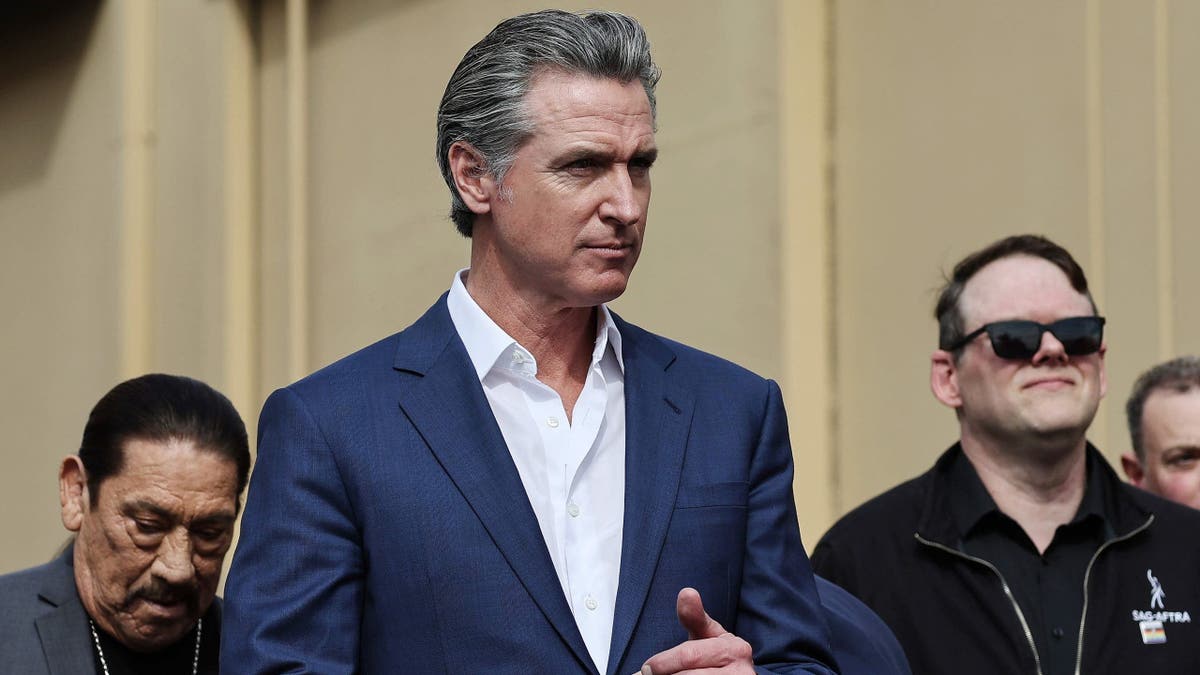
California Gov. Gavin Newsom speaks at a press conference on Oct. 27, 2024 in Los Angeles. (Mario Tama/Getty Images)

FOLLOW THE FOX TRUE CRIME TEAM ON X

Two dozen relatives have publicly supported the brothers’ freedom, including Kitty’s sister, Joan Andersen VanderMolen, 92. However, her brother, Milton Andersen, 90, remains vehemently opposed to clemency and says he does not believe the abuse allegations against Jose.

Hochman could continue where Gascon left off and seek the resentencing, ask the judge to withdraw the prior administration’s resentencing request or file additional briefs to give the judge more material to work with as the court considers the matter.

GET THE LATEST FROM THE FOX NEWS TRUE CRIME HUB

Los Angeles County District Attorney George Gascon

Los Angeles County District Attorney George Gascon, right, shakes hands with members of the Menendez family after addressing the case of brothers Erik and Lyle Menendez at a news conference at the Hall of Justice in Los Angeles on Thursday, Oct. 24, 2024 in Los Angeles. (AP Photo/Damian Dovarganes)

Gascon, after explaining to reporters the process would go through multiple layers of review, from the judge to the parole board and ultimately to Newsom, days later asked the governor to skip all of those steps and immediately grant clemency to the brothers.

CLICK HERE TO GET THE FOX NEWS APP

If Hochman’s office continues down the resentencing road, Newsom still has the final say. If the brothers’ sentences are reduced to something that would make them eligible for parole, the governor has veto power over parole board decisions. He could also issue clemency or a pardon on his own.

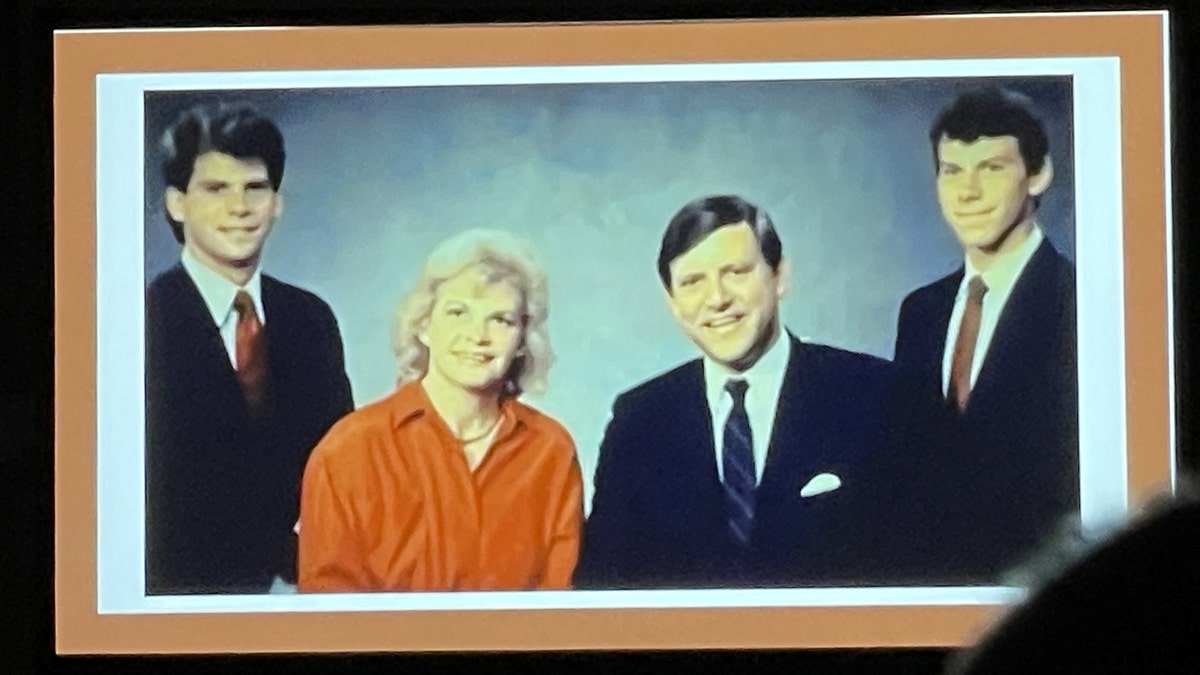
Menendez family photo from the 1980s

An undated photo of the Menendez family as it appears on screen during a panel at CrimeCon 2024 in Nashville, Tennessee, on Sunday, June 2. The brothers Lyle and Erik were convicted of fatally shooting both of their parents in 1989. (Michael Ruiz/Fox News Digital)

A separate habeas corpus petition is also making its way through the court, which would be an additional path to freedom if successful. Their petition is based on newly emerged evidence in support of their allegations of child abuse against their father – a corroborating letter of unconfirmed origin and the word of Roy Rosello, a former Menudo member who said he too had been abused by Jose Menendez as a child.

Their lawyer’s goal of having them home for Thanksgiving looks unlikely.

A pastor offers some advice about bridging political divides : NPR

0

Pastor Chris Morgan leads a contemporary service at Christ United Methodist Church in Bethel Park, Pa., on the Sunday after Election Day. The church developed a sermon series called “Do Unto Others” to help parishioners navigate political divisions after the election. Justin Merriman for NPR

Justin Merriman/for NPR


hide caption

toggle caption

Justin Merriman/for NPR

BETHEL PARK, Pa. — Campaign lawn signs rarely bring people together from opposite sides of the political fence. But in the lead up to Election Day, some purple-colored ones in this Pittsburgh suburb did just that.

The signs are an attempt to transcend the nation’s bitter divisions. Instead of touting a candidate, they promoted a value: the Bible’s Golden Rule.

“Do unto others as you would have them do unto you,” the signs read.

Christ United Methodist Church here in Bethel Park distributed the lawn signs as part of what Pastor Chris Morgan calls a movement for kindness, built around a handful of sermons as well as hundreds of purple “Do Unto Others” T-shirts. He says he got the idea from Kansas City’s Church of the Resurrection, the largest United Methodist church in the country.

The choir sings during one of four services at Christ United Methodist Church in Bethel Park, Pa. The church was jolted last summer after it was revealed that the man who nearly killed now-President-elect Donald Trump lived just 2 1/2 blocks away.  Justin Merriman for NPR

The choir sings during one of four services at Christ United Methodist Church in Bethel Park, Pa. The church was jolted last summer after it was revealed that the man who nearly killed now-President-elect Donald Trump lived just 2 1/2 blocks away. Justin Merriman for NPR

Justin Merriman/for NPR


hide caption

toggle caption

Justin Merriman/for NPR

Morgan — parishioners call him Pastor Chris — says his congregation is pretty evenly divided between Democrats and Republicans. He drafted a sermon series to give his flock some spiritual tools to help them navigate the country’s divisions, the November election results and beyond.

“We wanted to remind our people that no matter what happened, whether Trump won or Harris won, our job as followers of Christ is to remember that God’s bigger than all of this,” says Morgan, who is 49. “Our call as followers of Christ is to show people kindness and respect and love and humility and compassion, no matter what.”

Pastor Chris Morgan holds 8-month-old Elliott Holdren after his baptism as his mother, Megan and father, Matt, look on during a traditional service at Christ United Methodist Church, in Bethel Park, Pa. Justin Merriman for NPR

Pastor Chris Morgan holds 8-month-old Elliott Holdren after his baptism as his mother, Megan and father, Matt, look on during a traditional service at Christ United Methodist Church, in Bethel Park, Pa. Justin Merriman for NPR

Justin Merriman/for NPR


hide caption

toggle caption

Justin Merriman/for NPR

Christ Church offers four services each weekend, drawing about 1,000 people in person and online. Sunday’s contemporary services feature a crack rock band in which Pastor Chris occasionally plays keyboards.

In July, after planning for the sermon series was well underway, political violence hit close to home. President-elect Donald Trump was nearly killed by a rooftop shooter during a campaign event in Butler, about 40 miles north of here.

“It had a pretty big impact on the congregation because the person that made the attempt lived two and a half blocks from here,” Pastor Chris recalls.

Parishioners at Christ Church say the Do Unto Others lawn signs have sparked conversations that might not otherwise have occurred. Tommy Longenecker, an avid Trump supporter, was blowing leaves last month when he spotted one of the signs in the yard of his next-door neighbor, Bob Lewis, a Harris supporter and member of Christ Church. Longenecker walked over and read the Bible passage.

Bob Lewis, a member of Christ United Methodist Church, stands in his yard in suburban Pittsburgh near a “Do Unto Others” sign. Christ Church launched a

Bob Lewis, a member of Christ United Methodist Church, stands in his yard in suburban Pittsburgh near a “Do Unto Others” sign. Christ Church launched a “kindness” campaign ahead of the presidential election, urging respect and love and humility to help parishioners navigate the country’s bitter political differences. Justin Merriman for NPR

Justin Merriman/for NPR


hide caption

toggle caption

Justin Merriman/for NPR

“I really like your sign,'” said Longenecker, who is 56 and a nonpracticing Catholic.

Longenecker said the Do Unto Others message resonated because people had repeatedly torn down his Trump signs — including one that measured 8 feet by 4 feet.

The two men have been neighbors for nearly eight years, but this was the first time they’d really talked about their faith.

“I like the fact that we can still get along and not be hateful and mean to each other,” Lewis recalls Longenecker saying.

Bob Lewis, a member of Christ United Methodist Church, stands in his yard near his neighbor's Trump flag in Upper St. Clair, Pa. Lewis, a Harris supporter, had put up a “Do Unto Others” lawn sign that drew his Trump-supporting neighbor and led to an unexpected conversation about the men's shared Christian faith and the need for civility in these divided times. Justin Merriman for NPR

Bob Lewis, a member of Christ Church, stands in his yard near his neighbors Trump flag on Wednesday, November 13, 2024 in Upper St. Clair, Pa. Lewis put up a “Do Unto Other” sign that allowed him and his neighbor to see beyond their different political believes to be civil to each other. The church has a sermon series called “Do Unto Others,” which is designed to help people on either side of the political divide navigate the division post-election. Justin Merriman for NPR

Justin Merriman/for NPR


hide caption

toggle caption

Justin Merriman/for NPR

Some parishioners say the Do Unto Others message has helped them manage relationships with people who have different views.

“I’m engaging with my significant other much differently,” says parishioner Patti Goyette.

Goyette recalled one sermon where Pastor Chris spoke about becoming stranded on a long bike ride because he hadn’t had enough to eat or drink. The sermon was a turning point for Goyette, who questioned whether she was doing enough to nourish her relationship. She said she changed her approach.

Patti Goyette, 50, stands with her husband, Will Frame, 53, and 6-year-old daughter Phoebe at Christ United Methodist Church. Goyette says the church's

Patti Goyette, 50, stands with her husband, Will Frame, 53, and 6-year-old daughter Phoebe at Christ United Methodist Church. Goyette says the church’s “Do Unto Others” sermon series has helped her navigate difficult political conversations with people in her personal life. Justin Merriman for NPR

Justin Merriman/for NPR


hide caption

toggle caption

Justin Merriman/for NPR

“I haven’t gone into a confrontation with a higher heart rate and clenched muscles,” says Goyette, 50, who works for a local riverboat company. “I listen and I hear, and when you do that, people stop yelling and start talking and it makes a difference.”

While some parishioners found the Do Unto Other program helpful, others had reservations. Tony Reda, who ushers at one of the church services, thinks the sermon series encouraged people to express their political opinions.

“I felt like going to church was an hour of peace and quiet and trying to be closer to Christ,” says Reda, 61. “I felt like that sermon series was bringing politics into the church“

Betty Preite, left, and Bonnie Wieland, right, sing along with a six-piece rock band during a contemporary service at Christ United Methodist Church. The sprawling church complex covers two acres and features four services each weekend. Justin Merriman for NPR

Betty Preite, left, and Bonnie Wieland, right, sing along with a six-piece rock band during a contemporary service at Christ United Methodist Church. The sprawling church complex covers two acres and features four services each weekend. Justin Merriman for NPR

Justin Merriman/for NPR


hide caption

toggle caption

Justin Merriman/for NPR

Reda, who works as an insurance broker, says some in the congregation openly criticized Trump, which he found especially disturbing following Trump’s near-assassination.

“There’s people that are flat-out saying, I can’t believe they missed,” Reda recalled.

If Reda thought the sermon series went too far, Stephanie White, a mother of two, thought it didn’t go far enough. She’s a big fan of Pastor Chris, but wishes the church had called out Trump for what she says is hateful rhetoric. Failing to do so, White says, creates a false equivalence.

White has no illusions about the Democratic Party’s shortcomings. “But can we also talk about the terrible things that Trump says?” she said during an after-service coffee hour. “The reaction you get [from some Republicans] is ‘It’s both sides. It’s both sides.’ “

White says she is concerned about what the next four years could mean for friends who are trans or people of color.

Stephanie White, a member of Christ United Methodist Church, says she supports Pastor Chris Morgan but wishes that the

Stephanie White, a member of Christ United Methodist Church, says she supports Pastor Chris Morgan but wishes that the “Do Unto Others” sermon series would’ve called out President-elect Donald Trump for what she sees as hateful rhetoric. Morgan says the series was not about calling out either political side, but helping congregants treat each other with kindness and civility in such a divided age. Justin Merriman for NPR

Justin Merriman/for NPR


hide caption

toggle caption

Justin Merriman/for NPR

“It’s just a lot of emotions packed into a really small piece of time,” she said as she cried. “And it’s very scary what could happen.”

Pastor Chris knows it’s challenging to lead a big-tent church in such fraught times. He says the Do Unto Others program isn’t about calling out sides or making statements about anyone’s morality.

“Outside of the pulpit. I personally will stand up for what I think is right and what I think is wrong, and I have done those things,” Morgan says. “My job as a pastor when I am preaching is to help people grow in their faith and become as much like Jesus as we can.”

Morgan says a key to the campaign for kindness is to recognize we can’t control what others say or do, but we can control how we respond.

Pro-Trump prison warden asks Biden to commute all death sentences before leaving

0

Join Fox News for access to this content

Plus special access to select articles and other premium content with your account – free of charge.

By entering your email and pushing continue, you are agreeing to Fox News’ Terms of Use and Privacy Policy, which includes our Notice of Financial Incentive.

Please enter a valid email address.

FIRST ON FOX: A pro-Trump former Florida prison warden who oversaw executions is urging President Biden to commute all federal and military death sentences before leaving office.

“I voted for President Trump in all of his campaigns, and I agree with him on most of his positions, but not the death penalty,” Ron McAndrew, former warden of the Florida State Penitentiary, wrote in a letter to the outgoing president. “I have written to President Trump personally to ask him to stop calling for more executions.”

McAndrew, a self-described “law-and-order guy,” Air Force veteran and pro-life Catholic, said that after overseeing three electric chair executions and witnessing five lethal injections, he grew to oppose the death penalty. 

While he had reservations from the start, he told Fox News Digital that he saw a burst of flames from the head of Pedro Medina during his execution in 1997 on the electric chair. That incident became a watershed moment in Florida and other parts of the country that marked the beginning of the end of electrocution. 

TRUMP EXECUTION RESTART TO PUT BOSTON MARATHON BOMBER, CHARLESTON CHURCH SHOOTER, MORE KILLERS IN HOT SEAT

Ron McAndrew, a former Florida prison warden, testifies during a 2019 hearing regarding a death row inmate. (Doug Engle/Ocala Star-Banner)

“A plume of smoke and then a flame that came down underneath the helmet and out right in front of my face, had it come a few inches further, it would have actually burned me,” he said. 

Later, he said the stench was so overpowering that, “it was like we had gone to a human barbecue.”

State investigators found that Medina, a convicted murderer and Cuban refugee, had died instantly – but the incident traumatized McAndrew and at least two dozen other witnesses, he said.

The incident led Florida to adopt lethal injections instead, but he said that form of execution was no less disturbing for the prison workers who carried it out.

TRUMP EXPECTED TO END BIDEN-ERA DEATH PENALTY PAUSE, EXPAND TO MORE FEDERAL INMATES

Condemned murderer Pedro Medina wears an orange shirt and short-cropped hair in his mugshot

Pedro Medina, a convicted killer, was sentenced to death and went to the electric chair on March 25, 1997. He was one of the last inmates electrocuted in this manner after his head burst into flames, filling the chamber with smoke and horrifying onlookers. (Archive PL / Alamy Stock Photo)

“The heaving of the chest is an example,” he told Fox News Digital. “You can see it if you’re up close, and you’re the executioner or a member of the team. You can see that they’re trying to break out of their own body, so to speak. But the witnesses don’t see this. They see it as, like, a clean, a sanitary form of killing someone.”

At one point, he said, he began seeing executed inmates in his sleep and drinking heavily – half a bottle of Johnnie Walker a night – as a result. Eventually, he was diagnosed with severe stress. Now he is a staunch supporter of abolishing the death penalty.

Read the letter here:

“I feel compelled to say there is one thing in particular that I agree about with President Biden,” McAndrew wrote in his letter. “We share a strong opposition to the death penalty. President Biden has the power to show mercy through the process of executive clemency, and I urge that he do so expeditiously for everyone on the federal and military death rows.”

When asked why the worst of the worst killers on death row, including Boston Marathon bomber Dzhokhar Tsarnaev, Charleston church shooter Dylann Roof and Pittsburgh synagogue gunman Robert Bowers, should have their lives spared, he questioned where we should draw the line and suggested incarcerating them all with no possibility of parole instead.

BRYAN KOHBERGER’S FIGHT AGAINST DEATH PENALTY GETS DAY IN COURT; EXPERT SKEPTICAL OF DEFENSE’S ARGUMENTS

“If this same inmate was doing life without possibility of parole, he’d be working between 40 and 60 hours per week whether he liked it or not,” he said. “He would be making a contribution…rather than being a burden on the taxpayers, sitting in a cell getting room service for 25 years.”

WATCH: Death row inmates on notice after Trump’s re-election

Abraham Bonowitz, who co-founded the group Death Penalty Action with McAndrew, told Fox News Digital that capital punishment should not be a partisan issue.

“Capital punishment is government overreach at its worst,” he said. “Anyone who does not trust the government to tax us fairly or come up with a safe vaccine should have a hard time trusting government with the power to execute its citizens.”

He also extended the appeal to Elon Musk, the future co-head of a new Department of Government Efficiency, if Biden rejects the letter.

Trump during his meeting with biden

President Biden, not pictured, meets with President-elect Donald Trump in the Oval Office of the White House on Wednesday, Nov. 13, 2024 in Washington, D.C. (AP Photo/Evan Vucci)

“We’re excited to have a cabinet level official focused on government efficiency, because this is the first time anyone in the federal government is positioned to eliminate the death penalty by executive order,” Bonowitz said. “There is no current government program more wasteful, ineffective and inefficient than capital punishment.”

The letter comes as Trump has vowed to not only end Biden’s moratorium on capital punishment, but also to expand the list of crimes that can be punishable with execution to include child rape, human trafficking and the murder of U.S. citizens by illegal immigrants.

There are currently 40 inmates on federal death row, and they include domestic terrorists, drug kingpins and criminals who had witnesses against them killed.

Tsarnaev, who killed four and wounded hundreds; Roof, who killed nine at a Bible study; Bowers, who killed 11 at the Tree of Life Synagogue; and Kaboni Savage, a Philadelphia drug lord who killed 12 people – including four children linked to an informant – would all see clemency under the proposal.

biden sitting with his hands together

President Biden listens as Iraqi Prime Minister Mohammed Shia al-Sudani speaks in the Oval Office of the White House on April 15, 2024 in Washington, D.C. (Anna Moneymaker/Getty Images)

The U.S. government has executed 50 inmates since 1927, according to the Bureau of Prisons, including Oklahoma City bomber Timothy McVeigh and Cold War spies Julius and Ethel Rosenberg. That is far fewer than the individual states, which have executed more than 1,500 condemned inmates in the last 50 years.

CLICK HERE TO GET THE FOX NEWS APP

McAndrew also took issue with the special treatment death row inmates receive. Unlike other prisoners, they do not have to work a job behind bars and contribute, in some way, to their own “upkeep.” They have a TV, a private cell and are kept separate from the general population.

In places like California, where death row inmates are safe from execution due to a moratorium against capital punishment, they also have access to elite attorneys and all the time in the world to try and fight their circumstances.

The feds carried out death sentences for 13 federal prisoners during Trump’s first term, the most under any president in a century. Biden declared a moratorium on federal executions after taking office in 2021.

The White House did not respond to a request for comment.

Out of Gaza

0

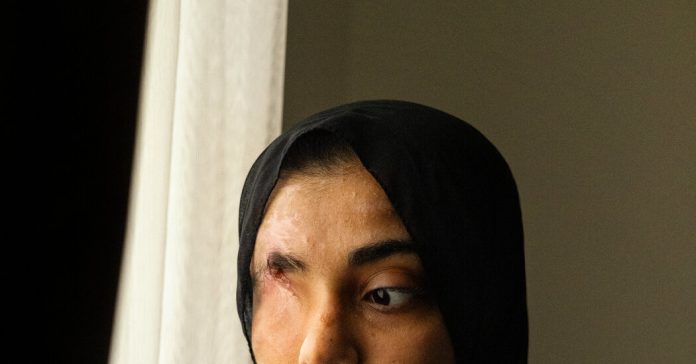
We photographed badly wounded Gazans who made it out for treatment. Many can think of little but the dead they left behind. “We wanted to go with them, too,” one child told us.

President-elect Trump promises a massive overhaul of the federal government

0

Donald Trump has promised to slash federal spending massively with help from Vivek Ramaswamy and Elon Musk. NPR’s Michel Martin asks fiscal watcher Maya MacGuineas whether their plans are realistic.

Size of slim Republican House majority hangs on 5 uncalled races

0

Republicans hold a slim majority in the House of Representatives, though the size of that narrow margin will not be known until the final five undecided races are called.

The five House races that remain uncalled as of Tuesday morning are in Alaska, California, Iowa and Ohio. The balance of power currently sits at 218 seats for Republicans, and 212 for the Democrats.

Alaska

At-large district

Democratic incumbent Rep. Mary Sattler Peltola is in a tight race in Alaska’s at-large congressional district, where she is trailing Republican entrepreneur Nick Begich.

As of Tuesday morning, Begich holds just over a 2-point lead at 48.5% of the vote compared to Peltola’s 46.3%. The vote count sits at 156,415 to 149,192 with nearly 99% of the vote counted.

WHAT TRUMP’S TRIFECTA IN HIS FIRST ADMINISTRATION ACCOMPLISHED, AND WHERE THEY FAILED: FLASHBACK

House Speaker Mike Johnson, R-La., will preside with a slim Republican majority. (Allison Robbert/Pool via AP, File)

California

13th Congressional District

Republican Rep. John Duarte is leading former Democratic state assembly member Adam Gray in California’s 13th Congressional District, but the highly contested race remains uncalled as of Tuesday morning.

Roughly 86% of the vote has been counted, and Duarte holds a 50.6% to 49.4% lead. The pair is separated by just over 2,000 votes.

45th Congressional District

Democratic challenger Derek Tran has taken the lead over Republican incumbent Rep. Michelle Steel in the 45th District. Steel had been in the lead by a few hundred votes late last week, but Tran now has a razor-thin 102-vote lead.

President-elect Donald Trump

President-elect Trump will begin his second term with control of both the House and the Senate. (AP Photo/Alex Brandon, File)

Roughly 94% of the vote has been counted for the district.

Iowa

1st Congressional District

Republican incumbent Rep. Mariannet Miller-Meeks holds a less than 1% lead over challenger Christina Bohannan with 99% of the vote counted. Miller-Meeks’ lead sits at just over 800 votes.

DEMOCRATS PRIVATELY GRIPE ABOUT PELOSI’S ‘DAMAGING’ POST-ELECTION COMMENTS: ‘SHE NEEDS TO TAKE A SEAT’

Bohannan has requested a recount in her bid to unseat Miller-Meeks. The Associated Press has not yet called the race because the margin was close enough that it could prompt a recount. Miller-Meeks has declared victory and said she was confident in her lead.

Ohio

9th Congressional District

Democratic incumbent Marcy Kaptur leads her Republican challenger, Derek Merrin, by less than 1 point with 99% of the votes counted. Kaptur’s lead sits at just over 1,000 votes with 99% of the vote counted as of Tuesday morning.

CLICK HERE TO GET THE FOX NEWS APP

Races with a margin of 0.5% or less trigger an automatic recount in Ohio.

Fox News’ Anders Hagstrom, Chris Pandolfo and Jasmine Baehr and the Associated Press contributed to this report.

America’s first major immigration crackdown and the making and breaking of the West : Planet Money : NPR

0

Illustration depicting Chinese laborers clearing snow on the Pacific Railroad in the Sierra Nevada mountains. Dated 19th century.

Ann Ronan Picture Library/Photo 12/Universal Images Group via Getty Images


hide caption

toggle caption

Ann Ronan Picture Library/Photo 12/Universal Images Group via Getty Images

The Chinese Exclusion Act of 1882 is widely considered to be the first major immigration clampdown in American history. It’s a riveting tale that parallels today and may provide insights into the economic consequences of immigration restrictions and mass deportations. This is Part 1 of that story, which explains how Chinese immigrants became a crucial workforce in the American West and why, despite their sacrifices and contributions creating the transcontinental railroad, the railroad’s completion may have actually contributed to a populist backlash that sealed their fates.

Donner Memorial State Park in Truckee, California, is a place where natural beauty clashes with historic horror like maybe nowhere else on Earth. The park has a stunning alpine lake and inspiring views of the craggy, granite peaks of the Sierra Nevada. It’s an awesome place to swim, boat, windsurf, hike, snowshoe, ski, picnic — you name it. It also just so happens to be the gruesome site where, in the winter of 1846-47, a snowbound Donner Party resorted to the most infamous incident of cannibalism in American history.

The first time my wife and I visited Donner Memorial State Park together, we expected that the reminders of cannibalism would be the most disturbing part of an otherwise pleasant stroll around Donner Lake. We were wrong.

Donner Lake is soooo beautiful. It's insane how horrible the history is there.

Donner Lake is soooo beautiful. It’s insane how horrible the history is there.

Greg Rosalsky/NPR


hide caption

toggle caption

Greg Rosalsky/NPR

Walking about halfway around the lake, we reached a beach area called China Cove. We peered across emerald waters for a beautiful view of granite-crowned Donner Peak. China Cove seemed like an odd name for this area. But then, on our walk out, my wife spotted a placard pointing to why.

The view from China Cove at Donner Lake.

The view from China Cove at Donner Lake.

Greg Rosalsky/NPR


hide caption

toggle caption

Greg Rosalsky/NPR

In the mountains just above the lake, there’s a series of now-abandoned tunnels that, for well over a century, enabled the transcontinental railroad to cross the imposing Sierra Nevada. It was by far one of the most — if not the most — difficult stretches of the railroad to build. The mountains here are steep and made of solid granite. And, after Americans began to dream of a railroad that could link the Atlantic with the Pacific, surveyors determined that the train tracks would have to go literally right through them.

The Pacific Railway Act, which was signed into law by President Abraham Lincoln in 1862, funded the creation of the transcontinental railroad. The federal government awarded contracts to two railroad companies. One, Union Pacific Railroad, would build from the east and the other, Central Pacific Railroad, would build from the west. Each company was paid in federal subsidies and land grants based on the miles of track they laid. This incentivized building track as quickly as possible because, as the companies built toward each other, one company’s loss of a mile was the other’s gain. The race was on.

The Central Pacific Railroad had a much harder job. It had to build a railroad through the Sierra Nevada, with its sheer cliffs, hard granite, and monster snowstorms. And the company had to recruit workers on the still relatively unpopulated West Coast.

Central Pacific Railroad first tried to recruit white workers to do the job. But many Americans were fighting in the Civil War and those Westerners who weren’t fighting apparently believed they had better economic options, including trying to strike it rich in Nevada’s booming silver mines. The work of building a railroad was brutal and turnover was high. The company found itself in a frantic search for a large and cheap labor force to help do the work in record time.

Meanwhile, a small population of people had begun to arrive in the American West from the Far East, specifically the war-torn Guangdong province in Southern China. These thousands of Chinese immigrants were first attracted to Northern California for the same reasons that many white Americans and Europeans were: the lore of riches in the foothills of the Sierra Nevada after the discovery of gold in 1848 sent shockwaves around the world.

Pariah Immigrants

Almost as soon as the Chinese came to America, they were targeted with discrimination, hostility, and violence. First, it was at the local and state levels. Beginning as early as 1849, California mining counties began passing laws that sought to restrict the rights of the Chinese to mine. In 1850 and 1852, the California State Legislature passed laws taxing foreign miners (any foreigner who was considered a “free white person” was exempt). These were only some of the first shots in a barrage of discriminatory laws and community actions that would make life harder for Chinese immigrants.

So, in the 1860s, Charlie Crocker, one of the executives and founders of Central Pacific Railroad, caused some controversy when he floated the idea of hiring Chinese workers to help build the railroad. Despite being recent migrants themselves — California had only recently become part of the United States after a war with Mexico — many white workers were unhappy seeing other foreigners getting jobs and seizing opportunities. Racist notions about Chinese people infected American perceptions of their value as community members and human beings. They also infected business executives’ views of their capabilities as workers.

At one point, for example, a railroad executive questioned whether the Chinese had the strength and skills to do masonry. Crocker reportedly replied, “Did they not build the Chinese Wall, the biggest piece of masonry in the world?” (Today, up near Donner Summit above the lake, there’s a 150-foot tall retaining wall still standing that Chinese workers built for the transcontinental railroad. Locals have named it “the China Wall.”)

“The China Wall”

Wayne Hsieh/Flickr


hide caption

toggle caption

Wayne Hsieh/Flickr

Central Pacific Railroad ended up deciding to hire Chinese workers, and the company turned to a Chinese labor contractor named Hung Wah to help with recruitment. Wah was based in Auburn, California, a mining town that sits in the foothills of the Sierra Nevada, along the planned railroad route. In 1863, Wah advertised in an Auburn newspaper that he could “furnish any number of Chinese laborers to work on Rail Roads, Wagon Roads, or Mining Claims” and could do so “at the lowest cash rates.” This ad apparently caught the attention of railroad executives.

Between 1865 and 1869, the Central Pacific Railroad would employ about 20,000 Chinese immigrants in total — as much as 90% of their workforce at the peak of construction — to build the western section of the transcontinental railroad. Although these workers would prove themselves to be incredibly talented, brave, and productive, the company didn’t treat them well. It paid them less than their white counterparts. It forced them to sleep in tents while white workers got to sleep in warmer box cars. And it enlisted them to do the most dangerous jobs.

In early California, thousands of Chinese immigrants were employed by the railroads to do the toughest work.

In early California, thousands of Chinese immigrants were employed by the railroads to do the toughest work.

George Rinhart/Corbis via Getty Images


hide caption

toggle caption

George Rinhart/Corbis via Getty Images

The Summit Tunnel

The section of the railroad that towers above Donner Lake, through Donner Pass, was especially difficult and perilous to build. One tunnel in particular, the Summit Tunnel, required workers to dig by hand, using primitive tools and explosives, through nearly 1,700 feet of solid granite.

West Portal to Summit Tunnel

West Portal to Summit Tunnel

CPRR.org/http://CPRR.org/Wikimedia Commons


hide caption

toggle caption

CPRR.org/http://CPRR.org/Wikimedia Commons

Roland Hsu is the former research director of Stanford University’s Chinese Railroad Workers in North America Project, which tapped dozens of scholars from multiple disciplines to analyze and document the contributions of Chinese immigrants to the creation of the transcontinental railroad.

Hsu says that, when constructing the tunnels, four Chinese workers would ram a long iron bar into the granite. Another would hit the bar with a sledgehammer. Next they would twist and hammer the bar again, arduously boring a hole into the rock. Once the hole was deep enough, they would pack it with explosives, light them, and run for their lives. “That would break a layer of granite, and then they’d come back and — by hand — carry out all the debris.”

Inch by inch, it would take workers over two painstaking years to bore Summit Tunnel through Donner Peak — and Central Pacific Railroad, racing to complete the project, insisted they work around the clock and through the winters. These would be some of the snowiest winters on record.

It was hard work. And, while the poor treatment they experienced might have led other workers to quit, the Chinese immigrants had fewer options than other workers. That said, they still refused to be mere cogs in their railroad company’s machine. In June 1867, in what proved to be the biggest organized labor strike in the nation, Chinese workers stopped working on the railroad in a fight for better pay, reduced hours (from 11 to 10 hours a day), and better working conditions.

Chinese laborers engaged to work on the American Transcontinental Railroad system

Chinese laborers engaged to work on the American Transcontinental Railroad system

Universal Images Group via Getty Images


hide caption

toggle caption

Universal Images Group via Getty Images

Fearing that if he gave them an inch they’d take a mile, Crocker declared he would not meet their demands. And, after about a week of labor strife, Crocker turned to intimidation efforts, including cutting off the supply of food and other provisions to the camps of Chinese workers. The company ultimately coerced the laborers to return to work. Despite the mostly unsuccessful strike, historians note that the company did end up increasing their pay in coming months.

Countless Chinese workers died constructing Summit and other tunnels in the mountains above Donner Lake. They died in explosions. They died falling. They died freezing to death in the elements at altitude during brutal snowstorms and subzero cold spells. They died in avalanches of rock and snow.

“And one thing we do know is that those who died in the avalanches, their bodies were left at the base towards what’s now Donner Lake until the spring,” Hsu says. “Because the company was not gonna go in and try to dig them out or even see if they were worth rescuing.”

We lack solid estimates for the exact number of Chinese laborers who died building the transcontinental railroad, but, Hsu says, evidence suggests it was as high as 1,200. For perspective, 42 people died in the Donner Party, which now has a lake, a mountain, a pass, a state park, and more named in their memory.

The Irony And Tragedy Of Completing The Transcontinental Railroad

The transcontinental railroad was completed in 1869. It was a marvel of modern engineering and technological innovation, slashing the time it took to cross the United States from many months to a mere week. It literally united the nation. Not only did the railroad reduce the time and cost of making the journey, it also helped ensure that there would be no more tragedies like the Donner Party.

There’s no doubt that the railroad would ultimately be a gigantic engine that powered economic growth in the West. But, as with many other new technological waves in history, excitement about locomotives was accompanied by a speculative mania. And, when the spell was broken and the economy came crashing down, life would get much worse for Chinese immigrants.

Railroad investors believed that the sky was the limit with the transcontinental and other railroads. They took on massive amounts of debt, buying railroad bonds and gobbling up real estate they believed would increase in value near train stops. This debt proved to be a ticking time bomb.

What followed was a financial crisis known as “The Panic of 1873,” which led to what some historians call “the first Great Depression,” or “the Long Depression.” Nationally, the unemployment rate skyrocketed to 14 percent. The economy remained bad for many years.

Nancy Qian, an economist at the Northwestern University Kellogg School of Management, says this harsh recession was worse in the West — and one reason, ironically, was the transcontinental railroad.

“One of the ironies of integrating the East and West of the United States with the transcontinental railroad is that the West had to now compete with the East,” Qian says. “The East was more developed than the West. This made it very difficult for manufacturing and agriculture in the West.”

Like so many other times in history, economic turmoil led to scapegoating, populist foment, and racial violence. With many white people now looking for gainful employment, Qian says that Western voters and populist politicians began to blame Chinese immigrants for taking jobs. They began to gravitate to the idea that, “If we kick out the Chinese, then the rest of us will have more jobs, more opportunities.”

Ground zero for this movement to kick the Chinese out of America would be none other than the home to what is now Donner Memorial State Park: Truckee, California. Many of the Chinese immigrants who built the railroad moved there after its completion. In fact, they helped make Truckee’s “Chinatown” one of the largest in the nation. But soon that would dramatically change.

Next week in the Planet Money newsletter: the movement to exclude and expel Chinese immigrants from the United States, and a new study that shows how Chinese exclusion affected the American economy. Subscribe here.


‘Gravy Boys’ have been stirring up Cajun cuisine and culture since college

0

Cajun food is fairly mainstream — and gumbo, jambalaya and bread pudding can be found on restaurant menus nationwide. 

But one dish – gravy – has remained something of a hidden gem of Louisiana. And the “Gravy Boys,” eight best friends from college, are dedicated to perfecting the dish and preserving their cultural heritage. 

The story of the Gravy Boys begins, technically, in the 1700s when Cajuns first arrived in Louisiana.

CREAMY CAJUN SHRIMP SCAMPI OVER PASTA IS A FLAVOR-PACKED, CHEESY DREAM: TRY THE EASY RECIPE

“They were kicked out of France. They were kicked out of Nova Scotia. They ended up here,” Sullivan Zant, one of the Gravy Boys, told Fox News Digital in a Zoom interview. (See the video at the top of this article.)

Zant is executive chef at Vestal, a restaurant in Lafayette, Louisiana. 

The Gravy Boys, four of whom are pictured here in their custom denim jackets, met in college at the University of Louisiana at Lafayette. They’ve been friends ever since.  (Joshua Mata)

The Cajuns, Zant said, “were a people of much resource but definitely not a lot of money. Gravy, along with jambalaya and a lot of other dishes that are popular throughout Cajun cuisine, are, for lack of a better term, ‘poor people food.'” 

Gravy, Zant said, is “a way to take a little bit of meat and a little bit of vegetables, fortify them and truly give them not only the nutrients, but also [make them] filling.” 

He added, “So, it essentially consists of some type of protein, typically the Cajun holy trinity, which is going to be onions, bell pepper and celery and, almost always, but not always, it’s going to be served over rice.”

“From the ashes of ‘Taco Tuesday’ arose ‘Gravy Thursday.'”

The Gravy Boys met in college at the University of Louisiana at Lafayette. The group began a tradition of throwing gravy parties every Thursday.

“From the ashes of ‘Taco Tuesday’ arose ‘Gravy Thursday,'” Zant said with a laugh.

These parties attracted a crowd, and the group used them as an opportunity to finetune their cooking skills. They now have custom denim jackets, and some of the Gravy Boys compete together in Cajun cooking competitions. 

In addition to Zant, the Gravy Boys are Trey Delcambre, Tanner Dimmick, Samuel Frazier, Jacab Gibson, Jordon Konow, Joshua Mata and Derrick Savoie. Dimmick recently got married, and the other Gravy Boys served as his groomsmen.

Seven men at a wedding, with a groom in the center.

The Gravy Boys have stayed close in the years since college and recently served as groomsmen at member Tanner Dimmick’s wedding. From left to right, Derrick Savoie, Jacab Gibson, Joshua Mata, Dimmick, Trey Delcambre, Sullivan Zant and Jordon Konow. Not pictured: Samuel Frazier. (Joseph Vidrine )

Most of the Gravy Boys grew up eating Cajun food, Mata, the “self-proclaimed CEO of Gravy Thursday,” told Fox News Digital. 

“Rice and gravy has always been part of my diet, at least,” he said. 

Delcambre has memories of watching his grandmother make gravy and other Cajun delicacies. 

“This is just stuff we grew up seeing and watching and observing our family members do,” he told Fox News Digital.

TABASCO PUT SPICE IN AMERICAN LIFE: HERE’S THE SURPRISING ORIGIN OF LOUISIANA HEAT

For the Gravy Boys, gravy is more than just a way to feed delicious food to many people relatively cheaply. It’s a way to preserve their culture, their friendships and the community they’ve built.

“One of our good friends, who is also a very, very successful and fantastic musician from around here, has this thing where he likes to stop at shows and yell in the middle of it, ‘If you’re not living your culture, you’re killing it,'” Zant said. 

“And that’s something that really rang true to me at the moment, I think for all of us as well. That’s really all we do.”

“If you’re not living your culture, you’re killing it.”

Cajun culture “is unique and obviously very special to us,” Zant said, but he insists he’s “not gatekeeping it.” 

He said, “We just want you to come and have a good time to meet us and hang out. That’s how you get to break down barriers and really get to know somebody — whenever you actually sit down at a table and break bread with them.”

Zant said they “find more commonalities that way than almost anything. And I think that that’s really important to what we do and why we do it.”

The Gravy Boys shared a basic gravy recipe with Fox News Digital for those looking to start a tradition of their own. 

A dutch oven full of what looks like a stew.

Gravy began as an easy and delicious way to create a filling dish for a relatively low cost, said Zant, one of the Gravy Boys. (Joshua Mata)

Part of the appeal of gravy is that there is no official recipe – the choice of meat, seasonings, vegetables and cooking time is different for each chef and is largely based on one’s personal taste or what is available at the time of cooking. 

This recipe, the Gravy Boys said, is more of a guideline and is meant to be adjusted. 

Basic Gravy Recipe from the Gravy Boys

Ingredients

Any cheap cuts of meat (7-bone steak, pork chops, “whatever is on sale”)

Cajun spice mix (salt, black pepper, cayenne, garlic powder, amounts to taste) 

Vegetable oil

Beer, wine or water (for deglazing)

CLICK HERE TO SIGN UP FOR OUR LIFESTYLE NEWSLETTER

1 onion 

1 bell pepper 

1 bunch celery 

Stock (chicken, beef “or even just water, if that’s all you have”) 

Long grain rice (for serving) 

Dutch oven of cajun gravy

Gravy is made best with cheap cuts of meat, the Gravy Boys said – whatever is available.  (Joshua Mata)

Directions

1. Pat dry meat and season with Cajun spice mix. Dice onion, bell pepper and celery or whatever vegetables you feel like. 

2. Heat pot (preferably a cast-iron dutch oven) over medium high heat. Add vegetable oil. Once oil is hot, add seasoned meat and sear for about four to five minutes on each side, “so you get some nice fond going on in there.” 

For more Lifestyle articles, visit www.foxnews.com/lifestyle

3. Remove meat after browning and deglaze pot with “beer, wine or water – whatever is on hand,” and scrape up fond.

4. Add veggies to the pot, cook for about 10 minutes, until soft. Add additional seasoning if desired. 

5. Add stock (or water), enough to cover all meat. Bring to a boil, then add meat back to the pot and reduce to a simmer. Put the lid on the pot. 

CLICK HERE TO GET THE FOX NEWS APP

6. Simmer for about an hour and a half, stirring occasionally. Afterward, remove lid to let the gravy reduce. 

7. Once meat is tender, serve over long grain rice.

A pastor offers some advice about bridging political divides : NPR

0

Pastor Chris Morgan leads a contemporary service at Christ United Methodist Church in Bethel Park, Pa., on the Sunday after Election Day. The church developed a sermon series called “Do Unto Others” to help parishioners navigate political divisions after the election. Justin Merriman for NPR

Justin Merriman/for NPR


hide caption

toggle caption

Justin Merriman/for NPR

BETHEL PARK, Pa. — Campaign lawn signs rarely bring people together from opposite sides of the political fence. But in the lead up to Election Day, some purple-colored ones in this Pittsburgh suburb did just that.

The signs are an attempt to transcend the nation’s bitter divisions. Instead of touting a candidate, they promoted a value: the Bible’s Golden Rule.

“Do unto others as you would have them do unto you,” the signs read.

Christ United Methodist Church here in Bethel Park distributed the lawn signs as part of what Pastor Chris Morgan calls a movement for kindness, built around a handful of sermons as well as hundreds of purple “Do Unto Others” T-shirts. He says he got the idea from Kansas City’s Church of the Resurrection, the largest United Methodist church in the country.

The choir sings during one of four services at Christ United Methodist Church in Bethel Park, Pa., which draws about 1,000 congregants each weekend. The church was jolted last summer after it was revealed that the man who nearly killed now-President-elect Trump lived just two and a half blocks away.  Justin Merriman for NPR

The choir sings during one of four services at Christ United Methodist Church in Bethel Park, Pa., which draws about 1,000 congregants each weekend. The church was jolted last summer after it was revealed that the man who nearly killed now-President-elect Trump lived just two and a half blocks away. Justin Merriman for NPR

Justin Merriman/for NPR


hide caption

toggle caption

Justin Merriman/for NPR

Morgan — parishioners call him Pastor Chris — says his congregation is pretty evenly divided between Democrats and Republicans. He drafted a sermon series to give his flock some spiritual tools to help them navigate the country’s divisions, the November election results and beyond.

“We wanted to remind our people that no matter what happened, whether Trump won or Harris won, our job as followers of Christ is to remember that God’s bigger than all of this,” says Morgan, who is 49. “Our call as followers of Christ is to show people kindness and respect and love and humility and compassion, no matter what.”

Pastor Chris Morgan holds 8-month-old Elliott Holdren after his baptism as his mother, Megan and father, Matt, look on during a traditional service at Christ United Methodist Church, in Bethel Park, Pa. Justin Merriman for NPR

Pastor Chris Morgan holds 8-month-old Elliott Holdren after his baptism as his mother, Megan and father, Matt, look on during a traditional service at Christ United Methodist Church, in Bethel Park, Pa. Justin Merriman for NPR

Justin Merriman/for NPR


hide caption

toggle caption

Justin Merriman/for NPR

Christ Church offers four services each weekend, drawing about 1,000 people in person and online. Sunday’s contemporary services feature a crack rock band in which Pastor Chris occasionally plays keyboards.

In July, after planning for the sermon series was well underway, political violence hit close to home. President-elect Donald Trump was nearly killed by a rooftop shooter during a campaign event in Butler, about 40 miles north of here.

“It had a pretty big impact on the congregation because the person that made the attempt lived two and a half blocks from here,” Pastor Chris recalls.

Parishioners at Christ Church say the Do Unto Others lawn signs have sparked conversations that might not otherwise have occurred. Tommy Longenecker, an avid Trump supporter, was blowing leaves last month when he spotted one of the signs in the yard of his next-door neighbor, Bob Lewis, a Harris supporter and member of Christ Church. Longenecker walked over and read the Bible passage.

Bob Lewis, a member of Christ United Methodist Church, stands in his yard in suburban Pittsburgh near a “Do Unto Others” sign. Christ Church launched a

Bob Lewis, a member of Christ United Methodist Church, stands in his yard in suburban Pittsburgh near a “Do Unto Others” sign. Christ Church launched a “kindness” campaign ahead of the presidential election, urging respect and love and humility to help parishioners navigate the country’s bitter political differences. Justin Merriman for NPR

Justin Merriman/for NPR


hide caption

toggle caption

Justin Merriman/for NPR

“I really like your sign,'” said Longenecker, who is 56 and a nonpracticing Catholic.

Longenecker said the Do Unto Others message resonated because people had repeatedly torn down his Trump signs — including one that measured 8 feet by 4 feet.

The two men have been neighbors for nearly eight years, but this was the first time they’d really talked about their faith.

“I like the fact that we can still get along and not be hateful and mean to each other,” Lewis recalls Longenecker saying.

Bob Lewis, a member of Christ United Methodist Church, stands in his yard near his neighbor's Trump flag in Upper St. Clair, Pa. Lewis, a Harris supporter, had put up a “Do Unto Others” lawn sign that drew his Trump-supporting neighbor and led to an unexpected conversation about the men's shared Christian faith and the need for civility in these divided times. Justin Merriman for NPR

Bob Lewis, a member of Christ Church, stands in his yard near his neighbors Trump flag on Wednesday, November 13, 2024 in Upper St. Clair, Pa. Lewis put up a “Do Unto Other” sign that allowed him and his neighbor to see beyond their different political believes to be civil to each other. The church has a sermon series called “Do Unto Others,” which is designed to help people on either side of the political divide navigate the division post-election. Justin Merriman for NPR

Justin Merriman/for NPR


hide caption

toggle caption

Justin Merriman/for NPR

Some parishioners say the Do Unto Others message has helped them manage relationships with people who have different views.

“I’m engaging with my significant other much differently,” says parishioner Patti Goyette.

Goyette recalled one sermon where Pastor Chris spoke about becoming stranded on a long bike ride because he hadn’t had enough to eat or drink. The sermon was a turning point for Goyette, who questioned whether she was doing enough to nourish her relationship. She said she changed her approach.

Patti Goyette, 50, stands with her husband, Will Frame, 53, and 6-year-old daughter Phoebe at Christ United Methodist Church. Goyette says the church's

Patti Goyette, 50, stands with her husband, Will Frame, 53, and 6-year-old daughter Phoebe at Christ United Methodist Church. Goyette says the church’s “Do Unto Others” sermon series has helped her navigate difficult political conversations with people in her personal life. Justin Merriman for NPR

Justin Merriman/for NPR


hide caption

toggle caption

Justin Merriman/for NPR

“I haven’t gone into a confrontation with a higher heart rate and clenched muscles,” says Goyette, 50, who works for a local riverboat company. “I listen and I hear, and when you do that, people stop yelling and start talking and it makes a difference.”

While some parishioners found the Do Unto Other program helpful, others had reservations. Tony Reda, who ushers at one of the church services, thinks the sermon series encouraged people to express their political opinions.

“I felt like going to church was an hour of peace and quiet and trying to be closer to Christ,” says Reda, 61. “I felt like that sermon series was bringing politics into the church“

Betty Preite, left, and Bonnie Wieland, right, sing along with a six-piece rock band during a contemporary service at Christ United Methodist Church. The sprawling church complex covers two acres and features four services each weekend. Justin Merriman for NPR

Betty Preite, left, and Bonnie Wieland, right, sing along with a six-piece rock band during a contemporary service at Christ United Methodist Church. The sprawling church complex covers two acres and features four services each weekend. Justin Merriman for NPR

Justin Merriman/for NPR


hide caption

toggle caption

Justin Merriman/for NPR

Reda, who works as an insurance broker, says some in the congregation openly criticized Trump, which he found especially disturbing following Trump’s near-assassination.

“There’s people that are flat-out saying, I can’t believe they missed,” Reda recalled.

If Reda thought the sermon series went too far, Stephanie White, a mother of two, thought it didn’t go far enough. She’s a big fan of Pastor Chris, but wishes the church had called out Trump for what she says is hateful rhetoric. Failing to do so, White says, creates a false equivalence.

White has no illusions about the Democratic Party’s shortcomings. “But can we also talk about the terrible things that Trump says?” she said during an after-service coffee hour. “The reaction you get [from some Republicans] is ‘It’s both sides. It’s both sides.’ “

White says she is concerned about what the next four years could mean for friends who are trans or people of color.

Stephanie White, a member of Christ United Methodist Church, says she supports Pastor Chris Morgan but wishes that the

Stephanie White, a member of Christ United Methodist Church, says she supports Pastor Chris Morgan but wishes that the “Do Unto Others” sermon series would’ve called out President-elect Donald Trump for what she sees as hateful rhetoric. Morgan says the series was not about calling out either political side, but helping congregants treat each other with kindness and civility in such a divided age. Justin Merriman for NPR

Justin Merriman/for NPR


hide caption

toggle caption

Justin Merriman/for NPR

“It’s just a lot of emotions packed into a really small piece of time,” she said as she cried. “And it’s very scary what could happen.”

Pastor Chris knows it’s challenging to lead a big-tent church in such fraught times. He says the Do Unto Others program isn’t about calling out sides or making statements about anyone’s morality.

“Outside of the pulpit. I personally will stand up for what I think is right and what I think is wrong, and I have done those things,” Morgan says. “My job as a pastor when I am preaching is to help people grow in their faith and become as much like Jesus as we can.”

Morgan says a key to the campaign for kindness is to recognize we can’t control what others say or do, but we can control how we respond.