Wednesday, November 11, 2026
Home Blog Page 577

Durbin urges release of Gaetz ethics report

0

The office of Sen. Dick Durbin, D-Ill., said former Rep. Matt Gaetz, R-Fla., shouldn’t be able to “resign away” an ethics investigation into misconduct allegations, citing Gaetz’s nomination to serve as U.S. attorney general under President-elect Trump. 

House Speaker Mike Johnson, R-La., has pushed for the House Ethics Committee not to release a potentially damaging report on a three-year probe of Gaetz amid allegations of sexual misconduct with a minor and illicit drug use. 

Gaetz has denied the claims against him.

Gaetz’s resignation effectively ended the investigation because he is no longer a member of Congress. Speaking with reporters at the U.S. Capitol Friday, Johnson said releasing the report would “open a dangerous Pandora’s box.”

MATT GAETZ FACES GOP SENATE OPPOSITION AFTER TRUMP SELECTION FOR ATTORNEY GENERAL

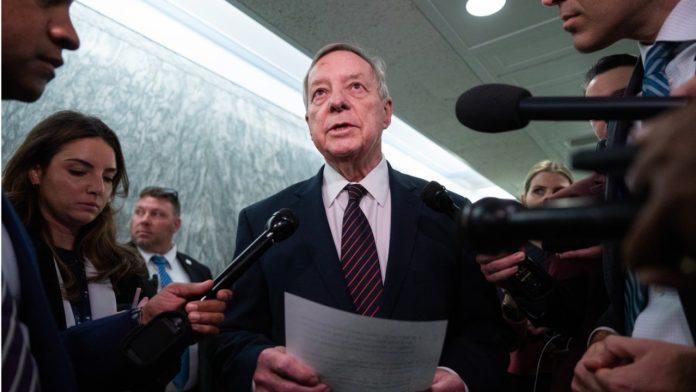
Senate Judiciary Chairman Richard Durbin, D-Ill., talks with reporters about the nomination of former Rep. Matt Gaetz, R-Fla., to be attorney general outside a Senate Judiciary Committee markup Thursday, Nov. 14, 2024.   (Tom Williams/CQ Roll Call)

Durbin spokesperson Josh Sorbe said the senator, who chairs the Senate Judiciary Committee, has pushed for the report’s release to the public. 

“There is longstanding precedent for releasing ethics investigation materials after a member resigns, whether in the House or Senate,” said Sorbe. “The now former congressman shouldn’t be able to resign away an ethics investigation involving allegations of grave misconduct, especially when he will be nominated to be our country’s top law enforcement officer.

MATT GAETZ RESIGNS FROM CONGRESS OVER TRUMP NOD TO BE ATTORNEY GENERAL, JOHNSON SAYS

“There is bipartisan support for the Senate Judiciary Committee having access to this information,” he added. “Chair Durbin will continue pursuing it so members of the committee can fulfill their constitutional obligation of advice and consent on this deeply problematic nominee.”

After news broke Wednesday that Gaetz was chosen for the Trump Cabinet, House Ethics Committee Chair Rep. Michael Guest, R-Miss., told reporters the investigation would end if Gaetz were to step down from Congress. 

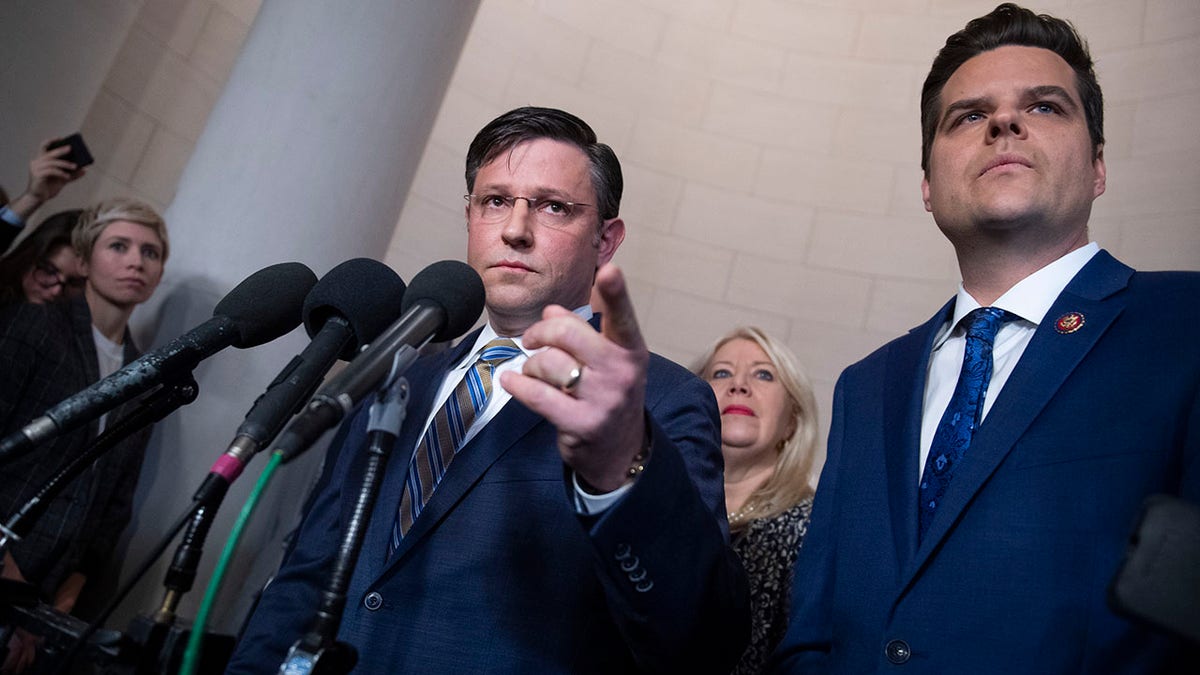
Rep. Mike Johnson, R-La., center, Matt Gaetz, R-Fla., at a news conference.

Rep. Mike Johnson, R-La., center; Matt Gaetz, R-Fla.; and Debbie Lesko, R-Ariz., address the media after the House Judiciary Committee passed two articles of impeachment against President Trump Dec. 13, 2019.  (Tom Williams/CQ-Roll Call, Inc via Getty Images)

On Friday, Johnson said he won’t be reaching out or speaking with the Ethics Committee to ask it not to release the report when asked by Fox News. 

“I don’t know anything about the investigation. The speaker of the House is not involved with those things,” Johnson said. “I am reacting to media reports that a report is currently in some draft form and was going to be released on what is now a former member of the House.”

He added that he didn’t believe releasing the report would be “appropriate.”

CLICK HERE TO GET THE FOX NEWS APP

“It doesn’t follow our rules and traditions, and there is a reason for that,” said Johnson. “That would open up Pandora’s box, and I don’t think that’s a healthy thing for the institution. So, that’s my position.”

Gaetz’s nomination has come under fire by some considering the allegations against him. Some GOP members of the Senate have said he faces an uphill battle to get confirmed. 

Haitians capital as gangs ratchet up violence : NPR

0

Residents flee their homes to escape gang violence in the Nazon neighborhood of Port-au-Prince, Haiti on Thursday.

Odelyn Joseph/AP


hide caption

toggle caption

Odelyn Joseph/AP

PORT-AU-PRINCE, Haiti — Masses of residents fled a running battle Thursday between gang members and police in one of the few neighborhoods of Haiti’s capital that hadn’t already been fully taken over by gangs, as violence flared amid political turmoil.

Families frantically packed mattresses and furniture into cars and carried their belongings on their heads as they left the Solino neighborhood, one of a handful of areas in Port-au-Prince where a coalition of gangs, called Viv Ansanm, and police were locked in a violent firefight over the past several days.

“We barely made it out,” said 52-year-old Jean-Jean Pierre, who carrying his son in his arms as he fled the neighborhood with throngs of people. “I’ve lived here 40 years of my life and I’ve never seen it this bad.”

Residents flee their homes to escape gang violence in the Nazon neighborhood of Port-au-Prince, Haiti on Thursday.

Residents flee their homes to escape gang violence in the Nazon neighborhood of Port-au-Prince, Haiti on Thursday.

Odelyn Joseph/AP


hide caption

toggle caption

Odelyn Joseph/AP

Violence has exploded in the capital since Sunday when Haiti’s transitional council created to restore democratic order fired the interim prime minister amid political infighting. The Caribbean nation hasn’t held an election since 2016, largely because of the gang violence.

The U.N. International Office for Migration reports that since Sunday more than 4,300 people have fled their homes in Port-au-Prince and neighboring towns, U.N. spokesman Stephane Dujarric told reporters at the U.N. in New York on Thursday,

Gangs like the Viv Ansanm coalition often seize on moments of political chaos to make power grabs like the one seen in Solino in recent days.

Gangs also largely shut down the country’s main airport by shooting a number of planes, wounding one flight attendant on Monday. The United Nations said that it documented 20 armed clashes in Port-au-Prince in just one day. The U.N. estimates that gangs control 85% of the city.

Residents flee their homes to escape gang violence in the Nazon neighborhood of Port-au-Prince, Haiti on Thursday.

Residents flee their homes to escape gang violence in the Nazon neighborhood of Port-au-Prince, Haiti on Thursday.

Odelyn Joseph/AP


hide caption

toggle caption

Odelyn Joseph/AP

A U.N.-backed mission led by Kenyan police sent to subdue the gangs has been unable to quell the violence.

Pierre, the fleeing father, said he hasn’t seen any presence of the U.N.-backed mission in his neighborhood, and that he and his family don’t know where they’ll go. Other residents said gang members had forced them from their homes and burned their belongings.

“These gangs are more powerful than the police,” Pierre said.

The United Nations has mobilized help, spokesman Dujarric said.

In the past two days, he said the U.N. children’s agency UNICEF provided cash to nearly 1,500 people in displacement sites in the capital and the U.N. population and migration agencies deployed mobile health clinics and are providing clean water. Starting Thursday, he said, the U.N. World Food Program delivered food to more than 50,000 displaced people in Port-au-Prince.

“Across Haiti, WFP has also provided cash to nearly 100,000 people and is delivering daily meals to 430,000 children in 2,000 schools across the country,” Dujarric said.

The country’s new interim prime minister, Alix Didier Fils-Aimé, has been largely silent about the violence since he was sworn in on Monday, but on Wednesday released a statement condemning the plane shootings. His office said that he ordered police to regain control of the airport and nearby areas.

Meanwhile, videos on social media have shown smoke rising up from the Solino area, as gunfire has echoed from the neighborhood’s streets in recent days.

Children sleep on the floor at a school where residents of the Nazon neighborhood displaced by gang violence have sought refuge, in Port-au-Prince, Haiti on Thursday.

Children sleep on the floor at a school where residents of the Nazon neighborhood displaced by gang violence have sought refuge, in Port-au-Prince, Haiti on Thursday.

Odelyn Joseph/AP


hide caption

toggle caption

Odelyn Joseph/AP

While it wasn’t immediately clear how many people were fleeing the violence in Solino, it appeared that much of the neighborhood was emptying out.

Residents said that gang members had killed a police officer who was known as a community leader fighting back against the gangs. That killing also was reported by local media, though The Associated Press wasn’t able to confirm the death with authorities.

In October, the same gang coalition made a similar violent push into the Solino neighborhood, setting fire to homes and leaving many fleeing with all they could carry or calling radio stations to plead for help.

Iran told Biden administration it won’t try to assassinate President-elect Trump: report

0

In an unusual assurance to the Biden administration last month, Iran promised it would not assassinate Donald Trump in a secret exchange intended to ease tensions, U.S. officials told the Wall Street Journal, according to a Friday report. 

The assurances reportedly came in a written message to the administration on Oct. 14, after the White House in September said it would take any attempt on Trump’s life as a serious national security that would reportedly “be treated as an act of war.”

IRAN DENIES INVOLVEMENT IN TRUMP ASSASSINATION PLOT OUTLINED IN DOJ REPORT: ‘MALICIOUS CONSPIRACY’

President Joe Biden meets with President-elect Donald Trump in the Oval Office of the White House, Wednesday, Nov. 13, 2024, in Washington.  (AP Photo/Evan Vucci)

The Department of Justice last week outlined allegations levied at Tehran that detailed a plot by an Iranian agent to assassinate the former president from the campaign trail.

The allegations came after a Pakistani man involved in an Iranian murder-for-hire scheme was charged by federal prosecutors in August with plotting to kill Trump.

Fox News Digital could not immediately reach the White House for comment on how it will act following the department’s charges last week.

Iran has long said it would seek revenge for the 2020 killing of its top military commander and chief of Iran’s Quds Force, Qassem Soleimani, who was assassinated after then President Trump directed the U.S. military to kill him in Iraq.

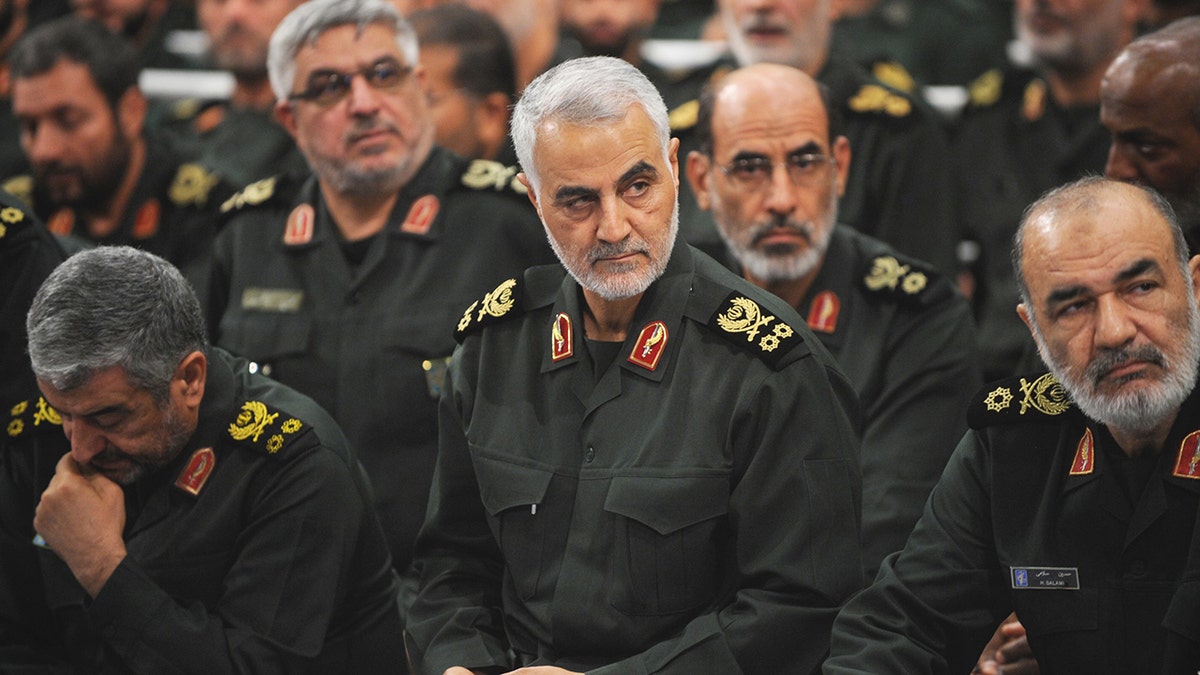
Iranian General Qasem Soleimani

Iranian Quds Force commander Qassem Soleimani (C) attends Iranian supreme leader Ayatollah Ali Khamenei’s (not seen) meeting with the Islamic Revolution Guards Corps (IRGC) in Tehran, Iran on September 18, 2016. (Press Office of Iranian Supreme Leader/Anadolu Agency/Getty Images)

IRAN DENIES INVOLVEMENT IN TRUMP ASSASSINATION PLOT OUTLINED IN DOJ REPORT: ‘MALICIOUS CONSPIRACY’

Soleimani has since been dubbed a hero and a martyr. 

In response to the news that Iran has since pledged not to assassinate the now president-elect, the Permanent Mission of the Islamic Republic of Iran to the United Nations told Fox News Digital, “We do not issue public statements on the details of official messages exchanged between the two countries.”

“The Islamic Republic of Iran has long declared its commitment to pursuing Martyr Soleimani’s assassination through legal and judicial avenues, while adhering to the recognized principles of international law,” the Mission added. 

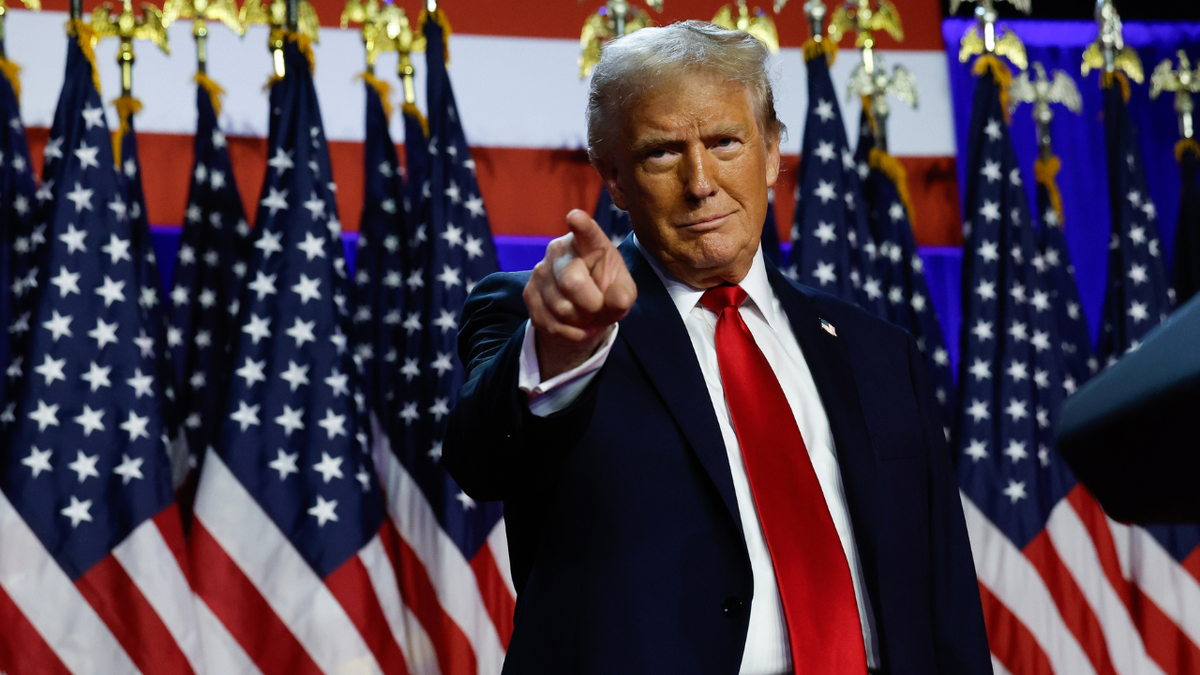
Trump points at supporters while standing in front of a row of US flags

Republican presidential nominee, former U.S. President Donald Trump arrives to speak during an election night event at the Palm Beach Convention Center on November 6, 2024, in West Palm Beach, Florida.  (Chip Somodevilla/Getty Images)

CLICK HERE TO GET THE FOX NEWS APP

The White House has not publicly commented on the report, and Fox News Digital could not immediately reach Trump’s transition team for the president-elect’s reaction to it. 

The Iranian Foreign Minister, Abbas Araghchi, appeared to dismiss the Department of Justice’s allegations, calling the claims “third-rate comedy” earlier this week.

Republicans make gains in state legislatures : NPR

0

Michigan Democratic Gov. Gretchen Whitmer delivers her State of the State address in January 2024. Republicans won control of the Michigan House this year, ending the Democratic trifecta that ushered in a wave of progressive policies.

Al Goldis/AP


hide caption

toggle caption

Al Goldis/AP

Up and down the ballot, Republicans had a good election. They’ll continue to control more legislatures than Democrats — 27 to 17 — a trend that dates back to 2010 elections when Republicans made a concerted push to win statehouse races ahead of redistricting.

The results didn’t amount to a sea change for either party this year. Republicans are celebrating after they chipped away at Democratic majorities and fended off expensive challenges in states the GOP narrowly controls. And Democrats netted some important victories in the battles for legislative majorities.

Democrats are still trying to build back from their 2016 rock-bottom, said Louis Jacobson, who writes about state legislatures for Sabato’s Crystal Ball at the University of Virginia Center for Politics.

“It’s sort of a fact of life for Democrats that they’re probably going to be in a little bit of a hole if you just count the state legislative chambers, because there are more solidly red states than there are solidly blue states just by counting the states,” he said. “These are things that will take, you know, maybe more than a cycle or two…It’s really building and making consistent gains over a couple of them.”

Nine states had significant shifts in who controls the legislature — parties either gained or lost majorities or supermajorities in at least one legislative chamber.

Riding on the coattails of President-elect Donald Trump, the GOP flipped control of the Michigan House, breaking the Democratic trifecta that ushered a wave of progressive policies in recent years under Gov. Gretchen Whitmer.

Republicans also gained enough seats to create a tie in the Minnesota House, likely leading to a power-sharing agreement in the chamber after two years of Democrats wielding control of all three branches of state government.

Republicans fended off Democratic challenges to vulnerable legislative majorities in Arizona, New Hampshire and Wisconsin. In Wisconsin, Democrats gained seats under new court-ordered political maps, but not enough to win legislative control in either chamber.

And in Pennsylvania — one of two split legislatures before this year’s election — Democrats held on to a one-seat majority in the House and Republicans retained control of the Senate.

Republicans also kept their narrow control of the Arizona Legislature, padded majorities in New Hampshire and gained enough seats to create supermajorities in Iowa and South Carolina — enough votes for lawmakers to override a governor’s veto. They also broke Democratic supermajorities in New York and Vermont, an important victory for Republican Gov. Phil Scott, who will be able to more easily veto legislation without risk of being overridden by lawmakers.

Dee Duncan, president of the Republican State Legislative Committee, which funds GOP statehouse campaigns, said the results show that “Americans crave balance in their state capitals.”

“This is a major step for the state Republican coalition in its efforts to chip away at the control of legislative chambers in blue states and expand its majorities nationwide,” Duncan wrote in a statement.

Democratic wins

Dems netted a significant victory in North Carolina, where they flipped one state House seat, breaking apart the GOP supermajority. That’ll be a boon for incoming Democratic Gov. Josh Stein, who also will be able to issue vetoes without being thwarted by Republicans. And though they didn’t win a majority in either of Wisconsin’s chambers, Democrats celebrated winning 10 seats in the state Assembly, and 4 seats in the Senate.

“The DLCC and our campaigns successfully prevented a Republican wave from taking shape in our state legislatures,” Heather Williams, the president of the Democratic Legislative Campaign Committee, wrote in a statement. “Because of the progress we have made, nearly half the country will continue to have their rights and futures protected by at least one Democratic majority in their statehouse.”

But the results came with a high price tag. Democrats and aligned groups poured more than four times the amount supporting legislative candidates than Republicans did.

In all, Democratic-aligned groups said they would spend $175 million supporting legislative groups during the cycle. The DLCC set a $60 million budget. Forward Majority, a group aligned with Democrats, planned to spend $45 million. And The States Project, another progressive group, had a $70 million goal.

Republicans sounded the alarm on being outspent by Democrats ahead of the election. In an October memo, the RSLC announced an increase of their initial $38 million commitment to $44 million.

Protestors storm Putin-backed parliament in Georgia breakaway region

0

Join Fox News for access to this content

Plus special access to select articles and other premium content with your account – free of charge.

By entering your email and pushing continue, you are agreeing to Fox News’ Terms of Use and Privacy Policy, which includes our Notice of Financial Incentive.

Please enter a valid email address.

Protesters on Friday stormed the parliament of the Russian-backed government in the breakaway region of Abkhazia in Georgia and have demanded the resignation of the pro-Kremlin leader President Aslan Bzhania.

A truck was used to smash through metal gates surrounding the government building in the capital city of Sukhumi, and images of the riot show protesters then climbing through the windows and chanting in the halls, according to information sent to Fox News Digital by the East 2 West news outlet.

Russian officials said they were monitoring the “crisis situation” and urged citizens to avoid traveling to the region, Reuters reported Friday.

Abkhazia erupts in protests as parliament is stormed over a Russian property deal, fueling fears of Moscow’s control, Nov. 15, 2024 (Photo provided by East 2 West News)

PRO-PUTIN PARTY WINS CONTESTED ELECTION AS GEORGIA DRIFTS FURTHER FROM US, EUROPE

Moscow has had a vested interest in the region given its immense economic support since it first recognized Abkhazia, along with the region of South Ossetia, as independent from Georgia following its 2008 invasion. 

Protesters originally intended to demand that Bzhania drop an investment agreement that critics argue would have paved the way for wealthy Russians to buy up property in the region by easily out-pricing the local residents, reports said Friday.

This pool photograph distributed by Russian state-owned agency Sputnik shows Aslan Bzhania, the leader of Georgian breakaway region of Abkhazia, arriving for a welcoming ceremony led by the Russian President prior to a military parade, which marks the 75th anniversary of the Soviet victory over Nazi Germany in World War Two, in Moscow on June 24, 2020. 

This pool photograph distributed by Russian state-owned agency Sputnik shows Aslan Bzhania, the leader of Georgian breakaway region of Abkhazia, arriving for a welcoming ceremony led by the Russian President prior to a military parade, which marks the 75th anniversary of the Soviet victory over Nazi Germany in World War Two, in Moscow on June 24, 2020.  (Photo by Alexy Nikolsky/Pool/AFP via Getty Images)

But according to one opposition leader, Temur Gulia, the protest has morphed into an overall demand that Bzhania step down from the presidency, which he has held since 2020, Reuters reported.

He is not believed to have been in the parliamentary building at the time of the ambush. 

The presidential administration reportedly said in a statement that authorities were preparing to withdraw the investment agreement, but another opposition leader, Eshsou Kakalia, maintained that the protesters would not leave until Bzhania steps down.

Putin

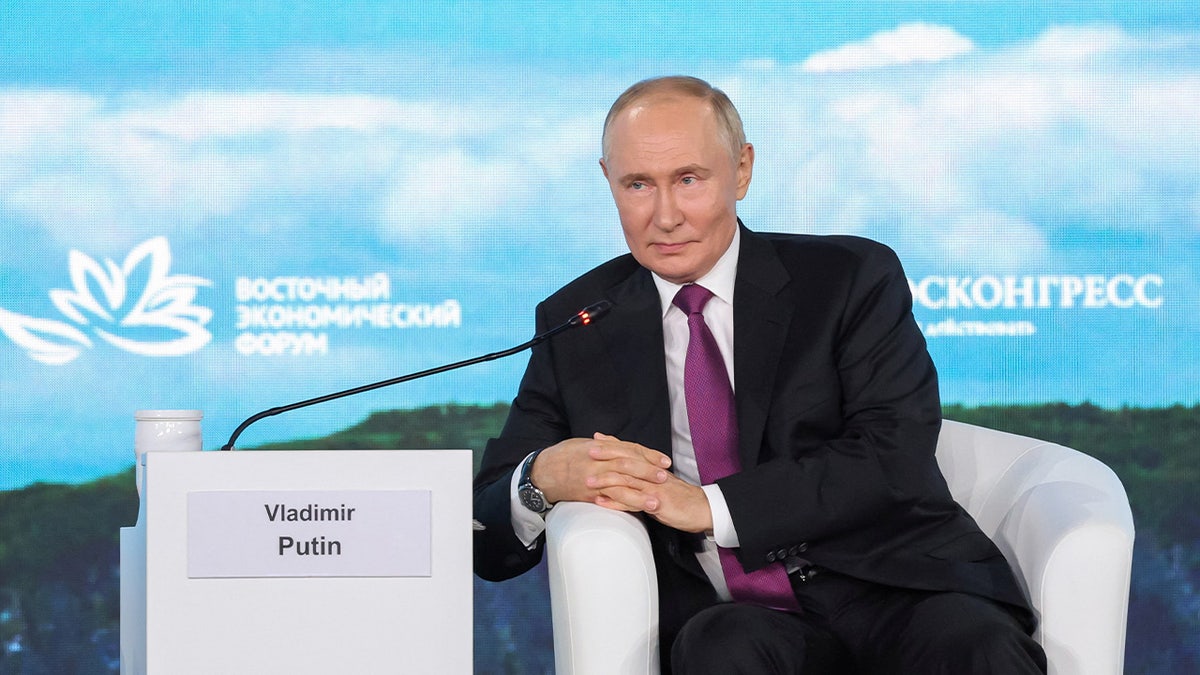
Russian President Vladimir Putin attends a plenary session of the Eastern Economic Forum in Vladivostok, Russia September 5, 2024.  (Kirill Kazachkov/Roscongress Foundation via Reuters.)

PUTIN LOOKS TO HALT NEIGHBORING GEORGIA’S WESTERN AMBITIONS IN VITAL ELECTION

If Bzhania were to step down, he would be the third leader to do so in Abkhazia since 2008.

“The Abkhazians don’t want to rejoin Georgia,” Will Stewart of East 2 West News explained to Fox News Digital. “They fought a bloody war against this, after all, or their fathers did.

“But nor do they want their culture and distinctive way of life overrun by super-rich Russians buying them up. And this is the risk now,” he added. 

Stewart explained that Western sanctions on Russia over its war in Ukraine have likely prompted wealthy Russians to look to the beaches of Abkhazia for their new vacation destinations, but this is being met with opposition by the locals there.

Reports in late August 2008 suggested that separatist supporters in the regions championed the recognition by Moscow, and it remains unclear whether there has been a shift in attitude toward the Kremlin following its invasion of Ukraine nearly three years ago.

The majority of nations across the globe do not recognize the breakaway region as separate from Georgia, and Moscow’s decision to do so under former Russian President Dmitry Medvedev sparked outcry from then President George W. Bush, who said the move was “irresponsible.”

Abkhazia Georgia protests

Abkhazia erupts in protests as parliament is stormed over Russian property deal, fueling fears of Moscow’s control, November 15, 2024 (Photo provided by East 2 West News)

CLICK HERE TO GET THE FOX NEWS APP

Similarly, then-Chancellor of Germany Angela Merkel argued that it violated the U.N.’s “understanding of the principle of territorial integrity and the fundamental international rights of nations” and said it was “unacceptable.”

The move, which came just weeks after Russian invaded Georgia, largely signified a fundamental shift in the era of post-Cold War cooperation between the West and Russia. 

But despite strong condemnation from Western leaders in 2008, the West’s altogether muted response to the violation of Georgia’s territorial integrity essentially paved the way for Russia’s uninhibited invasion of Ukraine, first in 2014 and again in 2022. 

Trump picks Steven Cheung to run White House communications : NPR

0

Former President Donald Trump’s campaign spokesman Steven Cheung speaks to reporters across the street from Trump’s criminal trial in New York, on May 28.

Seth Wenig/AP


hide caption

toggle caption

Seth Wenig/AP

Pugilistic Trump campaign communications director Steven Cheung is heading to the White House to be communications director, the president-elect announced on Friday.

Cheung, a former spokesperson for the Ultimate Fighting Championship — the popular mixed martial arts league — brought a cage fighter’s spirit to speaking on behalf of Trump on the campaign trail.

For example, during the campaign, Cheung in a statement called Vice President Harris a “stone cold loser” and blamed her rhetoric for the assassination attempts on Trump.

He wrote that author and longtime Washington Post journalist Bob Woodward was a “truly demented and deranged man who suffers from a debilitating case of Trump Derangement Syndrome,” and the insults went on from there.

Cheung regularly attributed backlash to Trump statements to “Trump Derangement Syndrome” as a way to deflect controversy. In the final days of the 2024 campaign when Trump said he wouldn’t mind so much if an assassin had to shoot through the press corps to get to him, Cheung said he certainly wasn’t calling for anyone to be shot.

He said that Trump had been suggesting that the media should also be surrounded by bulletproof glass. “There can be no other interpretation of what was said,” Cheung said in a campaign statement. “He was actually looking out for their welfare, far more than his own!”

Despite his hyperbolic official statements, Cheung is a communications professional who was known for having a generally pragmatic working relationship with reporters covering the Trump campaign.

Cheung worked on both of Trump’s previous campaigns and worked in the White House for part of Trump’s first term. He grew up in Sacramento, Calif., and worked on several mainstream Republican campaigns before joining up with Trump.

Will Trump White House rescue TikTok from looming ban? President-elect has done a 180 on the app

0

Months ago, President-elect Donald Trump vaguely suggested that those who “like TikTok” should vote for him, raising the hopes for users of the video-sharing app that he might thwart a ban that is soon to take effect.  

“We’re not doing anything with TikTok, but the other side is going to close it up, so if you like TikTok, go out and vote for Trump,” Trump said in a September post on his Truth Social service.

He didn’t make any specific promises to reverse the impending ban, but his team says he will “deliver.”

“The American people re-elected President Trump by a resounding margin, giving him a mandate to implement the promises he made on the campaign trail,” Karoline Leavitt, a spokeswoman for Trump and Vice President-elect JD Vance’s transition team, said in a statement.

Working to reverse a ban, which should take effect in January, passed by Congress and signed into law by President Joe Biden, would be a 180-degree reversal from 2020, when Trump tried to block the app in the U.S. or force its sale. 

MIKE ROGERS IN CONSIDERATION FOR FBI CHIEF

(Months ago, President-elect Donald Trump vaguely suggested that those who “like TikTok” should vote for him, raising the hopes for users of the video-sharing app that he might thwart a ban that is soon to take effect.)

Then, in April 2024, Biden signed a similar measure that gave TikTok’s parent company, ByteDance, until Jan. 19, 2025 – the day before the inauguration – to sell it or face a U.S. ban.

“He appreciates the breadth and reach of TikTok, which he used masterfully along with podcasts and new media entrants to win,”Kellyanne Conway, an adviser close to Trump who now advocates for TikTok, told the Washington Post.

“There are many ways to hold China to account outside alienating 180 million U.S. users each month. Trump recognized early on that Democrats are the party of bans — gas-powered cars, menthol cigarettes, vapes, plastic straws and TikTok — and to let them own that draconian, anti-personal-choice space.”

The Trump White House could pressure the Republican-led Congress to reverse the TikTok ban. Or, the justice department could pursue a policy of loose enforcement of the law. 

TRUMP TURNS TO ALLIES AND LOYALISTS TO IMPLEMENT HIS AMERICA FIRST AGENDA

TikTok is currently fighting in court to undo the law, arguing that it is unconstitutional. 

The law also allows the president to extend the divestment deadline by 90 days if the administration sees “significant progress” toward a sale. 

The law is enforced by ordering app stores like Apple and Google to stop offering TikTok on their platforms, or be subjected to a fine. 

When it comes to Big Tech, Trump has focused much of his ire on TikTok’s rival, Meta, formerly Facebook. In a March interview with CNBC, Trump said the owner of Facebook and Instagram poses a far bigger threat, labeling Meta an “enemy of the people.”

“Facebook has been very bad for our country, especially when it comes to elections,” Trump said.

U.S. President-elect Donald Trump

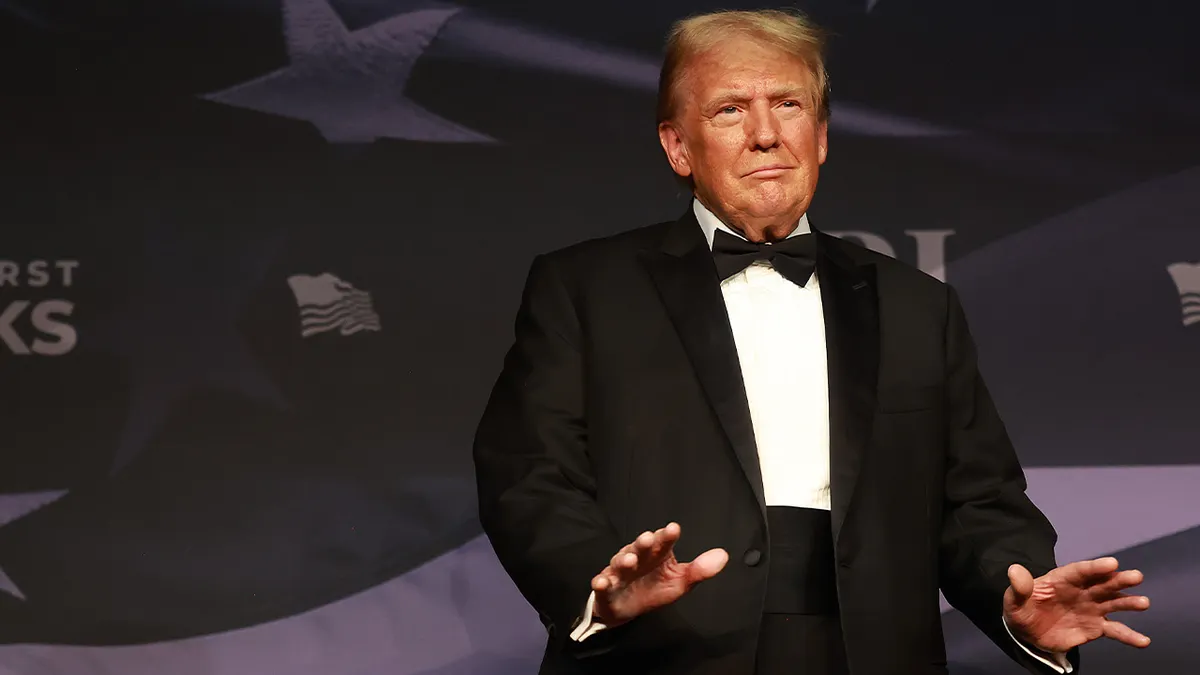
“We’re not doing anything with TikTok, but the other side is going to close it up, so if you like TikTok, go out and vote for Trump,” Trump said in a September post on his Truth Social service. ( Joe Raedle/Getty Images)

Sen. Marco Rubio

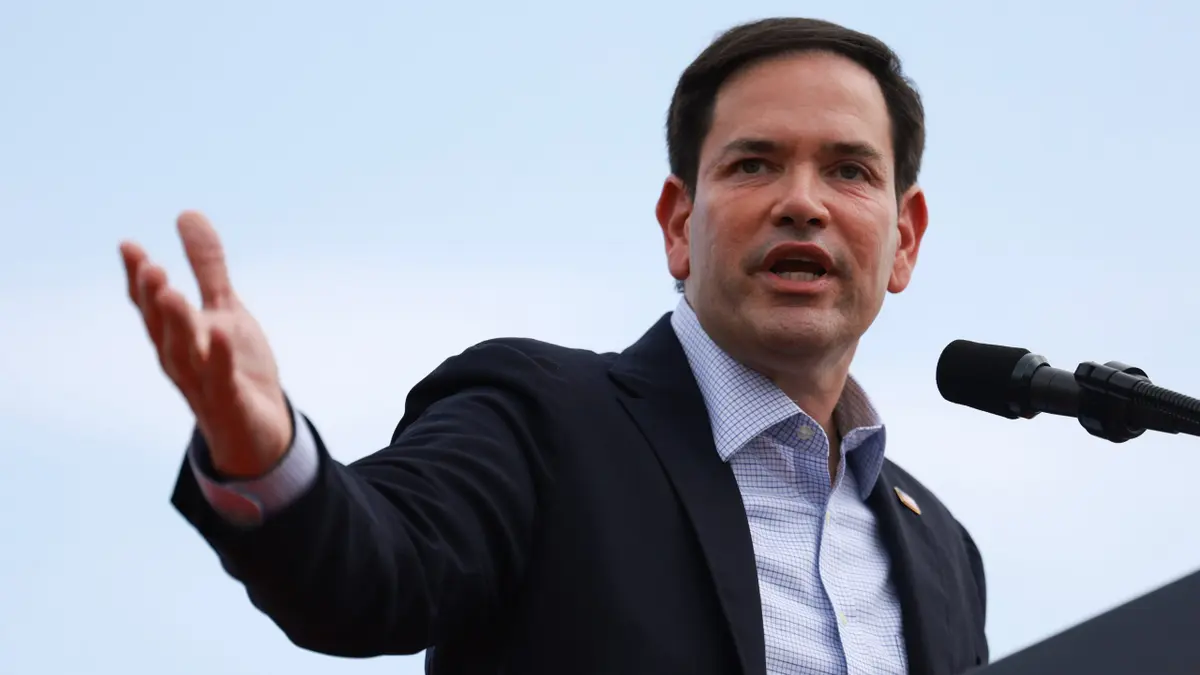
Trump’s secretary of state pick, Sen. Marco Rubio, has called for TikTok to be banned in the U.S.  (Joe Raedle/Getty Images)

But since then, Meta’s CEO, Mark Zuckerberg, has given a number of glowing statements about Trump. 

“Congratulations to President Trump on a decisive victory. We have great opportunities ahead of us as a country. Looking forward to working with you and your administration,” the tech mogul said after Trump’s win. 

Trump himself has more than 14 million followers on TikTok. “For all of those who want to save TikTok in America, vote for Trump. The other side is closing it up, but I’m now a big star on TikTok,” he declared in September. 

But back on Capitol Hill, the national security threat of TikTok is a top concern for lawmakers of both parties – 197 Republicans and 155 Democrats voted for the bill to force ByteDance to divest. They fear that the Chinese parent company could be harnessing data on U.S. citizens and manipulating the content that users see to be against U.S. interests, charges that TikTok denies. 

But Trump’s Cabinet picks are largely China hawks who have supported the ban. His appointed national security adviser, Rep. Michael Waltz, R-Fla., voted for it. His choice for secretary of state, Sen. Marco Rubio, R-Fla., said that TikTok gives the Chinese government “a unique ability to monitor” U.S. teens and that “we must ban this potential spyware before it is too late.” 

CLICK HERE TO GET THE FOX NEWS APP

Trump’s nominee for homeland security secretary, South Dakota Gov. Kristi Noem, was the first governor to ban TikTok on government devices.

Public support for a TikTok ban has tanked in the U.S., with only 32% of Americans backing one, a Pew Research poll found in September. 

As HHS chief, can RFK Jr. make ‘Make America Healthy Again?’ : Shots

0

With RFK Jr.’s nomination for health secretary, his ‘Make American Healthy Again’ movement is poised for real power.

Michael M. Santiago/Getty Images


hide caption

toggle caption

Michael M. Santiago/Getty Images

With Robert F. Kennedy Jr. now lined up to lead the department of Health and Human Services, it appears his Make America Healthy Again movement is poised for real power.

Its central mandate: Reverse the chronic disease epidemic, which is the leading cause of death in the U.S., and drives massive health care costs.

MAHA has set its sights on big food and big pharma, arguing that these industries use lobbying power to maximize profits at the expense of the country’s health.

This message served as an animating force in the final stretch of the election, as Kennedy elevated concerns about ultra processed foods and poor nutrition, food additives, pesticides and toxic chemicals, and the harms of industrial agriculture, among other issues.

He knit together an unlikely coalition — some from the left and some MAGA supporters — eager to take on the establishment.

“Bobby Kennedy and Trump have bonded over tying the core of MAGA – which is a distrust of institutions and getting corruption out of institutions – to our health care industries,” says Calley Means, an advisor to Kennedy and the Trump transition team, who spoke with NPR before Kennedy’s nomination.

The ascendance of MAHA is a dizzying moment for scientists who’ve long pushed for more attention to lifestyle diseases — and agree reforms are desperately needed. At the same time, they’re deeply worried about Kennedy’s history of questioning scientific consensus on vaccines and his antagonism to mainstream medicine more broadly.

Barry Popkin, professor of nutrition at the UNC Gillings School of Global Public Health, says he’d welcome substantive policy changes that tackle diet-related illnesses like obesity and diabetes.

“If it comes, they’ll have plenty of support,” he says. “But I do not see that — I fear the worst.”

He fears if Kennedy is confirmed as HHS head, “thousands of children may die of measles and many other infectious diseases for which children have been vaccinated for many decades.” (Kennedy recently told NPR that he won’t “take vaccines away from anybody.”)

And yet there’s no denying there are areas of substantial overlap between the goals of MAHA and scientists who have long advocated for tackling the root causes of chronic illness.

“There are some things that RFK Jr. gets right,” says former CDC director Dr. Tom Frieden. “We do have a chronic disease crisis in this country, but we need to avoid simplistic solutions and stick with the science.”

Public health researchers note that what Kennedy is setting out to do — even wielding the power of a major federal agency — is an immensely tall order. And many question how realistic or actionable the mission will be in a Republican-controlled, regulation-unfriendly federal government.

An ambitious to-do list

If appointed, Kennedy would have broad sway over health policy — from the Centers for Disease Control and Prevention to the Food and Drug Administration. And he has promised seismic changes, from day one, including firing hundreds of staffers and scientists.

Kennedy’s influence could reach deep into health care, infectious disease prevention, drug pricing and approvals and more. But his vision for preventing chronic disease is one that he’s been particularly vocal about in the lead up to this appointment.

And the MAHA to-do list is ambitious, to say the least.

Overhauling dietary guidelines, reforming federal programs that pay for ultra processed foods, taking on crop subsidies, potentially banning pesticides and chemicals are just some of the priorities Kennedy outlined during the campaign.

“Despite the media’s effort to silo this movement into fringe areas like vaccines or fluoride or things like that, the voters saw very clearly that big ideas were being talked about,” says Means. “I think a spiritual connection was hit.” 

Means — himself a former lobbyist for the food and drug industry — has emerged as one of the leading voices in the MAHA orbit. He and his sister, Dr. Casey Means, catapulted into the political sphere after publishing a bestseller on metabolic health. Both have business ventures in the health and wellness industry.

Means helped forge the political alliance between Trump and Kennedy.

“The public health expert class has given us a public health collapse,” he says. “We are on the verge of, at best, a health crisis and, at worst, a societal collapse with 20% of GDP going to health expenditures. [We’re] getting sicker, fatter, more depressed, more infertile for every dollar we spend.” 

Means says a key to their plan is eliminating conflicts of interest.

He cites the revolving door between industry and government, the fees paid by pharmaceutical companies to the FDA, and experts who sit on advisory panels or carry out government-funded research while receiving industry dollars.

Dr. Mark Hyman, a bestselling author and longtime friend of Kennedy, says he’s faced “massive” resistance over the years when he’s advocated for many of these reforms on the food supply and nutrition.

“I think this is a unique opportunity,” says Hyman, who is co-founder and chief medical officer for Function Health. “Because Trump is a burn-down-the-house kind of guy. Bobby is not looking for incremental change.”

Political contradictions

The outpouring of attention on lifestyle-related diseases — and the promise to crackdown on industry influence — is a surprising twist that longtime researchers in the field are still trying to square with the broader Trump agenda.

“I’m certainly excited by this idea of addressing the root causes of chronic diseases,” says Randall Stafford, a professor at Stanford Medical School. “But I’m not sure that those goals are consistent with other goals to deregulate the economy.”

He worries that “anything that contradicts other Trump policies is going to be discarded.”

Trump’s first administration installed industry insiders and made decisions that run counter to some MAHA priorities, like approving dangerous pesticide products and loosening nutrition rules for school lunches.

Now Kennedy wants to do more to reign in food and pharma. He’s calling for restrictions on a host of food additives and dyes. He wants to reduce the dominance of ultra-processed foods; he’s called for reforming the SNAP food assistance program — formerly known as food stamps.

And he’s called for an end to direct-to-consumer advertising for prescription drugs.

“A real litmus test about whether or not they’re serious is whether they take on some of the economic interests that are causing our chronic disease epidemic,” says former CDC director Frieden who is now President and CEO of Resolve to Save lives.

Popkin says the Republican party doesn’t like regulation — and pushing through reforms that go against industry interests will face enormous headwinds in Congress.

“Given the desire to cut government, they’re going to want to cut regulations as a huge component. They did under Trump’s first term, they’re going to be more systematic about it even now,” says Popkin.

Calley Means pushes back, claiming MAHA’s approach is not “overregulation.”

“I would tell anyone skeptical about this, to look at the positives here,” he says. “This MAHA agenda is one of the golden areas for true bipartisan reform.”

He says Kennedy’s approach will be to insist on “accurate science” and “then it’s Congress’s job to allocate money. It’s Congress’s job to figure out how to rectify the broken subsidy systems that led to this poisoning of the American consumer.”  

Make snow removal easy this year with these 8 winter necessities

0

Winter is a magical, picturesque season, but frequent snowstorms can make it difficult to get out of the house. As long as you’re prepared, however, winter can be the beautiful season many people love.

To clear your driveway and yard of snow, it’s vital that you have the right equipment. A shovel, ice melt and ice scraper are musts. For anyone looking for a more serious upgrade this year, a snowblower or a mini snowplow may be better options.

A classic shovel and some muscle can help you move snow quickly. 

A classic shovel and some muscle can help you move snow quickly.  (Amazon)

A good winter shovel can make all the difference during a snowstorm. The Suncast shovel from Amazon is a no-frills, durable shovel that’s designed to lift heavy snow. There’s also an 18-inch shovel from Walmart that’s easy to lift and is sure to last years.

If you’re an Amazon Prime member, you can get some of these costumes sent to your door ASAP. You can join or start a 30-day free trial to start your shopping today.

Make snow removal painless with the help of a snowblower. 

Make snow removal painless with the help of a snowblower.  (Amazon )

Tired of spending hours shoveling your driveway? It may be time to invest in a snowblower. They make quick work of snow and save your back from aching. There are different types of snowblowers and different price categories.

An Ego battery-powered snowblower is a lightweight, weather-resistant snowblower with a foldable handle, making it easy to store. You can go with a corded PowerSmart snowblower that easily handles heavy snow and blows snow up to 30 feet away. Finally, there is a gas-powered Murray snowblower that’s easy to push and has a rotating chute for easy use.

Chip away at ice with a steel ice scraper. 

Chip away at ice with a steel ice scraper.  (Amazon )

Ice build-up is a huge pain in the winter, so it pays to have a strong ice scraper. Walmart and Amazon both have ice scrapers made from strong steel so you can crack through ice, no matter how thick.

BUNDLE UP FOR YOUR FAVORITE FALL ACTIVITIES WITH THIS OUTDOOR APPAREL

Original price: $221.58

Apply sand or ice melt to your entire driveway quickly and easily with a salt spreader. 

Apply sand or ice melt to your entire driveway quickly and easily with a salt spreader.  (Amazon )

Instead of lugging a heavy bag of salt around your driveway, grab a salt spreader that evenly spreads salt and ice melt across your driveway. Amazon and Home Depot both sell reliable Chapin salt spreaders. It has off-road wheels that can stand up to ice and snow and a spiked auger that breaks up chunks of salt or ice melt.

Take shoveling to the next level when you use an electric shovel. 

Take shoveling to the next level when you use an electric shovel.  (Amazon )

Shoveling gets a lot easier with an electric snow shovel. Get an electric corded snow shovel from Amazon and move 430 lbs. of snow in just one minute. Walmart has a battery-powered electric snow shovel that is best used for moving small amounts of snow without a pesky cord getting in the way.

7 HEALTH PRODUCTS TO SUPPORT YOU THROUGH SEASONAL CHANGES

Have some run with snow removal by using a mini plow. 

Have some run with snow removal by using a mini plow.  (Amazon )

One of the more fun ways to move snow is with a mini snowplow. If you don’t have a truck with a plow attached, you can get a miniature snowplow from Amazon that attaches to an ATV. It’s a universal mount that can attach to most ATV models.

No ATV? You can get a push version of a mini snowplow from Walmart. It’s on wheels and has a durable metal plow that makes pushing snow much easier.

Sometimes the only way to get through ice on your driveway is with the help of some ice melt. 

Sometimes the only way to get through ice on your driveway is with the help of some ice melt.  (Amazon )

Ice melt is a necessity for winter. It cuts through thick ice that prevents you from getting in and out of your driveway. Amazon has Snow Joe ice melt that melts ice even when it’s -10 degrees outside. It’s an eco-friendlier version than rock salt and won’t irritate your skin. You can also get a 40 lb. bag of ice melt from Home Depot that’s long-lasting.

For more Deals, visit www.foxnews.com/category/deals

Original price: $159.99

Keep your ice melt and salt dry with a storage container. 

Keep your ice melt and salt dry with a storage container.  (Amazon )

You need somewhere to store salt, sand and ice melt so it doesn’t damage your floors inside or melt outside. A simple storage bin that won’t crack from the cold is helpful. Amazon has an ice melt storage bin that can hold up to six 50 lb. bags of sand, salt or ice melter.

Home Depot has a yellow storage bin that you won’t lose track of outside, and it comes with a scoop so you can easily spread salt out on the driveway.

Trump taps a border czar. What’s a czar and how do they work? : NPR

0

President-elect Trump announced former acting ICE director Tom Homan (left) as his incoming border czar, joining a long list of presidents who have appointed czars to oversee specific issues — like Obama’s “car czar” Steven Rattner (right).

Drew Angerer/Getty Images


hide caption

toggle caption

Drew Angerer/Getty Images

Like it or not, the term “border czar” keeps coming up.

Throughout the election cycle, Republicans referred to — and criticized — Vice President Harris as one, despite the fact that she was never officially tasked with repairing the U.S.-Mexico border.

Now, President-elect Donald Trump says he plans to install one. One of his first personnel announcements was that Tom Homan, the former acting head of Immigration and Customs Enforcement, will rejoin his second administration in that role.

As border czar, Homan would be in charge of “the Southern Border, the Northern Border, all Maritime, and Aviation Security” as well as “all Deportation of Illegal Aliens back to their Country of Origin,” Trump wrote, though it’s unclear exactly how that will work.

In appointing a czar, Trump is continuing a decades-long presidential tradition — one that aims to solve problems quickly but hasn’t always been well-received or even well-defined.

“‘Czar’ is a relatively amorphous term because it’s used in the media so fast and loosely,” says Mitch Sollenberger, a professor of political science at the University of Michigan-Dearborn and co-author of the 2012 book The President’s Czars: Undermining Congress and the Constitution.

Nowadays, the term czar is used — sometimes by headline writers, sometimes by the White House — to describe an official that a president designates to coordinate the government’s response to a specific issue, usually one that is time-sensitive.

Presidents have used them in recent decades to address everything from drug proliferation to human trafficking, AIDS, cybersecurity, rubber, the Middle East, the Great Lakes and Asian Carp (yes, the invasive fish species). Trump installed at least one during his first term, to oversee the development of COVID-19 vaccines.

While the practice is relatively common, Sollenberger says, it can be controversial. The founders specifically didn’t want presidents to have the power to create offices without oversight, the way kings did.

“One of the problematic things about czars is if you are creating these positions out of thin air, you’re giving them whatever authority without any kind of paper trail,” he says, adding that those concerns are especially relevant given Trump’s very public designs on expanding presidential power.

Czars, he says, could be seen as one of several attempts by Trump to install his chosen officials — a list of names that have shocked and alienated even some in his own party — without going through the standard vetting process. Another example would be Trump’s public push for Senate Republican leadership to allow recess appointments, which would allow him to install some nominees without Senate confirmation.

“Unilateral executive action — Trump didn’t start this,” he adds. “But is Trump going to put this on steroids?”

Here’s a look at how czars fit into that picture.

Where did the term come from?

Sollenberger and his co-author, Mark Rozell, have defined a czar as a “non-Senate confirmed position that has final decision-making authority over budgets, policy areas [and] can promulgate rules, regulations as well that impact other government officials and even the private sector.”

But the term has a much longer history.

The word comes from “tsar,” the title for a Russian ruler or emperor (itself derived from the Latin word “caesar”), and migrated to the U.S. as an epithet for a power-hungry leader.

It originated — from the Latin word “caesar” — as the title for a Russian ruler or emperor, and migrated to the U.S. as a sort of epithet for a power-hungry leader.

One of its first recipients was Nicholas Biddle, who served as president of the Bank of the United States from 1823 to 1836 and clashed with President Andrew Jackson in the political conflict known as the “Bank War.”

The publisher of the Washington Globe, a Jackson ally, dubbed Biddle “Czar Nicholas,” according to Slate — an especially cutting moniker as Russia’s Nicholas I was in power at the time.

After the 1917 Russian Revolution — during which the last tzar, Nicholas II, abdicated the throne — the term started popping up in other contexts.

Kenesaw Mountain Landis, the first commissioner of Major League Baseball, became known as the “Czar of Baseball.” Per Slate, New York had both a boxing czar (the Athletic Commission chairman) and a beer czar (the Alcoholic Beverage Control Board chairman).

Which presidents have used czars?

The concept of a czar only reached the federal government during World War I, under President Woodrow Wilson.

Sollenberger says that’s in part because Congress passed the Overman Act, giving the president the authority to create government agencies and positions to respond to the war.

One of them was the War Industries Board, which coordinated the production of war supplies. It was overseen by financier Bernard Baruch, a powerful figure who came to be known as the “industry czar.”

“It makes logical sense for presidents to create these positions or to fill a public policy hole that necessarily wouldn’t be filled quickly if they went to Congress or tried to get Congress to fashion a particular law that not only properly authorized but created either a position or an agency,” Sollenberger says. “Those things don’t just take weeks or months. Those things take usually years.”

The use of czars has ebbed and flowed since then, according to Sollenberger. Some presidents had none, while others had many.

“It’s a power that isn’t necessarily exercised uniformly by each administration,” Sollenberger says. “If you look at the czars … it’s done during these emergency circumstances, primarily, where the president feels like there is this need, and we need to do this and we need to find somebody.”

Franklin Roosevelt had dozens, he says, to oversee various aspects of the response to WWII, from shipping to synthetic rubber to food prices to censorship.

Decades later, Richard Nixon named an energy czar to address the oil embargo and gas shortages. Several presidents, including Ronald Reagan and George H.W. Bush, tapped officials to serve as drug czars.

And there was another uptick in czars under Bill Clinton, who appointed officials to handle issues ranging from the federal bank bailout to nuclear cleanup to bird flu, according to Government Executive.

The president who had the most czars — and czar-related controversy — in recent memory is Barack Obama, who had by some counts nearly 30, for issues like climate, terrorism, green jobs, the closure of the Guantanamo Bay detention center and the auto bailout (even though his administration sought to clarify in 2009 that it wasn’t an official job title).

Obama’s perceived reliance on czars drew scrutiny from Republican lawmakers, who argued that he was dodging congressional oversight. It prompted a 2009 hearing on the history and legality of executive branch czars, as well as this quip from Republican Sen. John McCain: “Obama has more czars than the Romanovs” (Politifact rated that true).

What are the pros and cons of czars?

The advantage of czars is their “unity of purpose” and ability to address issues quickly, Sollenberger says.

“Particularly … in emergency circumstances, people want action, they want the problem to be addressed,” he adds. “And the solution to these problems is through some kind of concrete or specific type of individual authority.”

In the case of a border czar, for instance, he says that while there are already officials and agencies with the statutory authority to address immigration, taking action by labeling somebody a czar offers “a little bit more political benefit” to the president.

The downside, he says, is that the position of a czar isn’t rooted in the constitution or laws — so if their actions result in private harm, they could be sued. Plus, a president who installs multiple czars is likely to pay an internal political price, with competing spheres of influence and infighting between czars and agency or department heads.

And overall, he says, the effect of a czar is relatively temporary compared to that of someone like a Senate-approved Cabinet secretary.

“It’s why executive orders are oftentimes seen as … lesser than going to Congress and trying to get something permanently done,” he adds. “That’s the same thing with czars in that respect.”

Sollenberger says a characteristic of czars is that they have a fairly high turnover rate, with most lasting only several years. He sees that as a source of comfort.

“Even though these people are not created through law, [and] they can exercise a significant amount of authority, they’re only going to be here for a second,” he says. “So maybe that should at least calm some fears.”