

NPR’s Ayesha Rascoe talks with A.B. Stoddard, columnist at The Bulwark, about the election results and if it means there has been a durable political realignment.
Veterans deserve ‘national moment of gratitude’ on Veterans Day to help heal ‘unseen wounds’
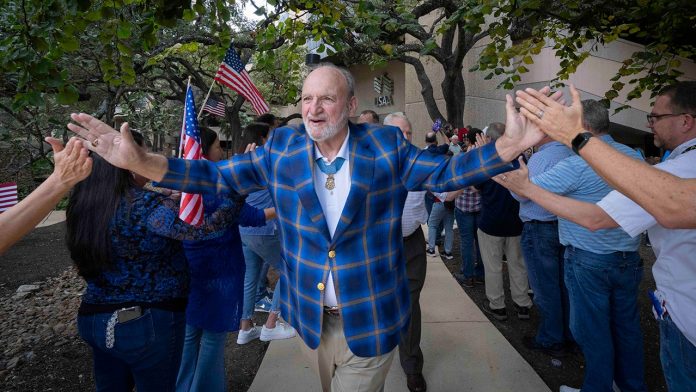
It’s easy to say “thank you for your service” to an American veteran and move on a moment later.
But what about true and meaningful connection that really lasts?
For Veterans Day this year, a prominent company is hoping that Americans, no matter where they are or who they are, will go beyond the simple words of “thank you” and become “intentional in showing appreciation for our nation’s servicemembers” through a healthy act of connection.
US ARMY VETERAN STARTS SUCCESSFUL BARBEQUE BUSINESS DESPITE HEALTH CHALLENGES: ‘VERY PROUD’
USAA — which serves more than 13.5 million members of the U.S. military, as well as veterans who have honorably served, plus their families — is calling for a “national moment of gratitude” on Monday, Nov. 11, at 11 a.m. local time.
The effort is part of the Texas-based company’s larger “Go Beyond Thanks” campaign. As more veterans in America struggle with mental health issues, “connecting with our veterans is becoming more important,” the company told Fox News Digital.
USAA has had the opportunity to host Medal of Honor recipients at the company’s headquarters in San Antonio, Texas. Employees are shown gathered to send them off. (USAA)
And younger veterans, in particular, often feel uncomfortable or awkward when people just say “thank you,” the company has found.
Matt Shifrin, a 20-year U.S. Army veteran who is USAA’s executive director and CEO chief of staff, told Fox News Digital in a phone interview, “There are over 17 million living veterans in the United States today. And while that sounds like a lot, there are over 300 million people living in the U.S. So there’s a bit of a divide sometimes between those who have served and those who haven’t served.”
“You might ask veterans how they’re doing.”
To bridge that divide, “we’re asking people to try to ‘go beyond thanks’ this Veterans Day and make a connection with veterans in the community,” he said — “whether it’s with teachers, police officers, or people you work with who have served.”
VETERANS WITH PTSD GET ‘SIGNIFICANT’ BENEFITS FROM SERVICE DOGS, FIRST NIH-FUNDED STUDY FINDS
One way to do that, he suggested, is by asking a veteran to share the details of his or her service.
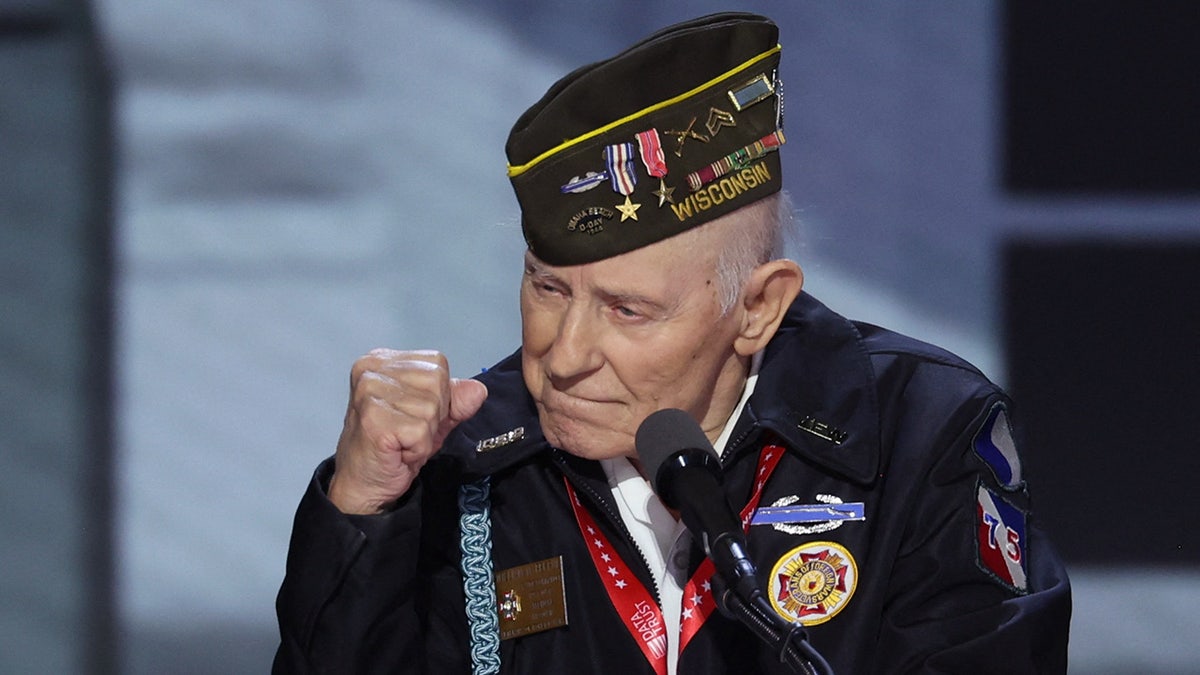
Sgt. William Pekrul, a World War II veteran, is shown gesturing during the Republican National Convention (RNC), at the Fiserv Forum in Milwaukee, Wisconsin, July 17, 2024. (REUTERS/Mike Segar)
“You might ask them where they served, what they did for the country — and how they’re doing.”
In turn, veterans can reciprocate, he said — and ask others about their work, their lives, their own contributions both locally and nationally whatever those contributions might be, “even what keeps them up at night,” he said.
“I think we’re going to find that there’s a lot of similarity between the two groups,” he said.
“This is one team — and this effort can bring us together as a country.”
Another way to show gratitude: Stop by a local American Legion or VFW post or event. Drop by a VA hospital. Check in with community centers about veterans events. It’s about being intentional, said USAA.
US MARINE CORPS VETERAN WHO LOST LEGS IN AFGHANISTAN SAYS A NONPROFIT HELPED HIM STAY ALIVE
Still more ways are to send a text, make a phone call or visit a veteran one on one.

Maj. Gen. (Ret.) John Richardson and fellow USAA employee veterans lead over 400 USAA employees at an event in October, in which participants gain a better understanding of the military community they serve. (USAA)
Either way, the goal is to “create a meaningful and supportive connection with our veterans.”
Shifrin added, “America doesn’t work without those who decide to serve and without those who are back home doing the hard work, generating the economic engine that makes us so capable, providing support to veterans and bringing them together. This is one team — and this effort can bring us together as a country.”
He added, “It is worth the time to engage in a little bit more than just, ‘Thank you.’ Serving is a defining moment in people’s lives and most people, we’ve found, are generally willing to talk about their service.”
He said the interaction and connection can help heal “the unseen wounds” that many veterans carry around with them.
“We’re really hoping to start building those relationships between people.”
CLICK HERE TO SIGN UP FOR OUR HEALTH NEWSLETTER
Added Air Force Maj. Gen. (Ret.) Bob LaBrutta, vice president of survivorship and claims at USAA, “As Veterans Day parades and celebrations dwindle compared to years past, besides thanking us for our service and providing sales discounts, we’ve found that many Americans aren’t sure how to show their appreciation for our nation’s veterans,” he noted in a statement.

Another way to show gratitude, advises USAA: Stop by a local American Legion or VFW post or event. Drop by a VA hospital. Check in with community centers about veterans events. (Francine Orr/Los Angeles Times via Getty Images)
He said no matter how busy, people can take a bit of time for veterans who have served the nation.
“It’s a mantra that runs deep in the military – look to the left and look to the right to make sure your battle buddies, shipmates, devil dogs, wingmen, guardians or coasties are OK.”
CLICK HERE TO GET THE FOX NEWS APP
More information about the campaign can be found on various social media platforms at #GoBeyondThanks.
A coalition created by USAA, Face the Fight, is also charged with raising awareness and support for veteran and military suicide prevention.
For more Health articles, visit www.foxnews.com/health
Founded in 1922, USAA is a leading provider of insurance, banking and retirement solutions in the United States.
Republicans hope for a House majority as Congress returns to session

Congress returns this week. Republicans are hopeful they will maintain their House majority in the next Congress. In the Senate, Republicans will choose the next majority leader.
Here are the top 5 Democrats who could lead the party after Kamala’s fall

Vice President Kamala Harris’ loss to President-elect Donald Trump places the Democratic Party in an awkward position of having no clear leader in the months to come.
Once President Biden and Harris leave office in January, Democrats will be without a figurehead, proving an opportunity for some of the party’s top personalities to fill the void.
Here are the most likely candidates:
Chuck Schumer
Senate Majority Leader Chuck Schumer could play a major role in shepherding the Democratic Party through the next four years. He has led Democrats in the Senate for decades, and with Rep. Nancy Pelosi stepping back from leadership in Congress, he is the most senior Democrat left in the branch.
He will now have to contend once again with a Republican majority in the Senate, however.
SHUTDOWN STANDOFF LOOMS IN CONGRESS’ FINAL WEEKS BEFORE TRUMP’S RETURN TO WHITE HOUSE
Vice President Kamala Harris’ loss leaves the Democratic Party with no clear leader. (AP/Jacquelyn Martin)
Hakeem Jeffries
House Minority Leader Hakeem Jeffries, D-N.Y., presents a younger alternative to Schumer as Pelosi’s successor in the House of Representatives. Jeffries is sure to play a central role in Democrats’ efforts to hamper the Trump administration and congressional Republicans over the next four years.
ALL EYES ON CALIFORNIA AS HOUSE MAJORITY STILL HINGES ON TIGHT RACES
Gavin Newsom
California Gov. Gavin Newsom is widely thought to have national ambitions, and the void left by Biden and Harris could be the opportunity he’s been looking for. Newsom loudly ruled himself out from contesting Biden’s re-election campaign early in the 2024 cycle, and he is already making plays to position himself as a standout leader against Trump.
Josh Shapiro
Pennsylvania Gov. Josh Shapiro could also position himself as a Democratic leader. Spurned by Harris as a VP pick, he is now free from the political fallout from her loss that has also disqualified Minnesota Gov. Tim Walz.
Shapiro enjoys an over-60% approval rating in Pennsylvania, arguably the most important state for winning the presidency.

Pennsylvania Gov. Josh Shapiro looks on as President Joe Biden delivers remarks following a briefing on Interstate-95 highway emergency repair and reconstruction efforts, in Philadelphia, Pennsylvania. (Julia Nikhinson/AFP via Getty Images)
Pete Buttigieg
While “Mayor Pete” has played a relatively quiet role under the Biden administration as transportation secretary, the Biden-Harris departure could give him an opportunity to resume his meteoric rise within the Democratic Party.
CLICK HERE TO GET THE FOX NEWS APP
Buttigieg secured a position in the party’s top tier with his performance in the 2019 Democratic primary, but it remains unclear what role he will play after the Biden administration comes to a close.
New film shares faith-focused stories of America’s combat chaplains

“Fighting Spirit: A Combat Chaplain’s Journey” is a new documentary that tells the stories of America’s combat chaplains. Released in theaters on Nov. 8, the film is the result of many years of emotional work, its director told Fox News Digital.
“It’s been a four-year journey for me,” Rich Hull said in a phone interview from Los Angeles.
Prior to beginning work on the film, the director said he “didn’t know anything about military combat chaplains” — but he quickly found himself amazed by their stories of bravery and heroism.
FAITH LEADER WANTS CHRISTIANS TO ‘LOVE THEIR BIBLES’: IT IS ‘TRUE AND TRUSTWORTHY,’ HE SAYS
“These are people [who] go to war wearing a uniform but not carrying a weapon,” he said. “And I thought, ‘Who in the world does that?’ Obviously, it’s a profession you do for far more than just a paycheck.”
The film is narrated by its co-director, former U.S. Army chaplain Justin Roberts, who found himself having a difficult time transitioning back into life in the civilian world after serving in Afghanistan.
Combat chaplains “are people [who] go to war wearing a uniform but not carrying a weapon,” said the director of a new documentary, “Fighting Spirit,” that tells the chaplains’ stories. (Paulist Productions)
During the film, Roberts travels to Wichita, Kansas, for the funeral of Emil Kapaun, an Army chaplain who died in a prisoner of war camp in North Korea.
Kapaun, a Catholic priest, received the Medal of Honor in 2013.
Initially, Kapaun’s story was not going to be a major part of the film, which highlights the history of the Chaplain Corps and tells the stories of some of the 419 chaplains who died while serving their country. But, in 2021, Kapaun’s remains were finally identified and sent to his hometown in Kansas for a proper burial – and the film took a turn.
“[Roberts and I] weren’t quite sure how they would fit into our work, but we just kind of thought they might,” Hull said. “So we sent Justin with a camera crew off to the funeral, and Justin thought no one would show up and he would be the only guy.”
As it turns out, that was not the case.

Emil Kapaun is shown celebrating Mass using the hood of his jeep as an altar, as his assistant, Patrick J. Schuler, kneels in prayer in Korea on Oct. 7, 1950. This was less than a month before Kapaun was taken prisoner. (U.S. Army Col. Raymond A. Skeehan/courtesy Diocese of Wichita)
The funeral “literally shut down the whole town of Wichita,” Hull said.
“People came from far and wide, not only to celebrate Father Kapaun, but to celebrate all combat chaplains. And I think it became a pivotal part of Justin’s own life.”
CLICK HERE TO SIGN UP FOR OUR LIFESTYLE NEWSLETTER
The story of Kapaun’s homecoming and burial “is really where the movie found its heartbeat, because I think that’s what audiences are responding to,” Hull said.
“It allowed us to build a structure for the movie that was all about Justin’s own journey, but also the journey of the former combat chaplains who inspired him.”
The Chaplain Corps traces its history back to the Revolutionary War, Hull noted.
“One of the things that’s so amazing about the Chaplain Corps is that all faiths are represented.”
In the film, viewers hear from Christian, Buddhist, Muslim and Jewish chaplains.
For more Lifestyle articles, visit www.foxnews.com/lifestyle
“I think that the thing that’s interesting about that, for me, is that, particularly for people of faith, this is truly a unique opportunity to live your faith on a daily basis,” Hull said.

“Fighting Spirit: A Combat Chaplain’s Journey” tells the story of the work of combat chaplains through the eyes of a recently retired combat chaplain. (Paulist Productions)
“And so while a chaplain may come from a particular faith, when you’re out there on the front lines, you’re dealing with soldiers of all faiths and no faith.”
“And you have to figure out how to bridge that divide on some really hard, powerful and important questions of life and death – and bullets are whizzing by your head.”
CLICK HERE TO GET THE FOX NEWS APP
“Fighting Spirit: A Combat Chaplain’s Journey” is in theaters nationwide.
NPR goes back to talk to 2 Hillary Clinton fans after Trump win : NPR

Jules Randell, 15, and little sister Bee, 8, talk with NPR correspondent Tovia Smith at their home in a Boston suburb days after Vice President Harris lost her bid to become the first female U.S. president.
Image by/Sarah Wall-Randell
hide caption
toggle caption
Image by/Sarah Wall-Randell
They showed up primed for victory, and dressed to party.
Jules Randell was 7 years old when Wellesley College grads, including Jules’ mom, gathered for what they believed would be a celebration of fellow alumna Hillary Clinton becoming the first female U.S. president on Election Night in 2016.

Jules picked out a flowy blue skirt, after learning that was the Democratic Party’s color, and topped it with a tiny T-shirt stamped with a big statement:
“Future president,” it read.
But that was the long game. Jules was definitely not aspiring to be the first to shatter that ultimate glass ceiling — that person “of course” was going to be Clinton, in just a matter of hours.
‘I want to be the second,” Jules explained excitedly when questioned by this NPR reporter who was covering the event that night.

Smith first interviewed Jules and Bee, then 7 and 4, at a Wellesley College watch party for almuna Hillary Clinton on Election Night 2016.
Image by/Sarah Wall-Randell
hide caption
toggle caption
Image by/Sarah Wall-Randell
That election obviously didn’t go as Jules expected. And after former President Donald Trump again defeated a female Democratic nominee for president last week, we wondered about those youngest fans of Clinton and Vice President Harris and how they, in particular, were processing it all.
Both Jules and little sister Bee, who was 4 at the time, still have vivid memories of the hyped-up vibe at the Wellesley party, including cupcakes topped with sugar-based “shards of glass” and toy wooden hammers to mark the expected shattering of the nation’s highest glass ceiling.
“I remember the banners and the balloons and everything,” Bee says. They both only saw the festivities; their bedtime rolled around and they went home long before all the excitement and cheers devolved into despair and tears.
But both also remember the morning after when their mom broke the news to them. “It was definitely a disappointment,” says Jules, who’s now 15. Bee, now 12, says she remembers continuing to think about it — especially every time she sat down to eat on that laminated placemat her mom always used to put on the table, with little portraits of all the former presidents.

It was past Jules’ and Bee’s bedtime when news of Clinton’s loss broke, so they learned about it from their mom the next day.
Image by/Pamela Baldwin
hide caption
toggle caption
Image by/Pamela Baldwin
“I just thought it was crazy that, like, all of these years, there’s never been a woman president,” she says.
It brought them some solace in 2020 to see Harris elected the first female U.S. vice president.
“Yeah, I remember thinking ‘Oh wow, this is so epic,’ ” says Jules.
But this year, Harris’ loss to Trump hit hard. It felt personal and more high-stakes.
Jules now identifies as nonbinary and uses they/them pronouns. When Trump talks about Americans being better off under a Trump administration, Jules doesn’t believe that applies to everyone.
“It’s a matter of safety for millions of people — immigrants and people of color and LGBTQ people and women,” says Jules. “They are all people genuinely in danger if they live in a state where they are not protected by the state, and that’s scary.”
At the same time, Jules takes a more sanguine view of the long-term.

Bee, pictured when she was younger, wears a T-shirt covered in cartoon female heroes like Wonder Woman that she says now feels outdated. “I don’t think it has to be just brave women who are actively doing something for the country,” she says. “It can be anyone.”
Image by/Sarah Wall-Randell
hide caption
toggle caption
Image by/Sarah Wall-Randell
That’s partly because Trump can serve only for four years, Jules says, and also because their generation will be old enough to vote by the next election — and they’re definitely paying attention.
“I thought it was really cool when I went to school and literally in all my classes people were discussing the election. Kids really care, and that gives me hope.”
Jules also sees it as a sign of progress that their generation seems somewhat less hung up on seeing a woman in the oval office than their moms were.
It actually made Jules and Bee giggle to think back to another old T-shirt of theirs that their mom once considered so progressive and feminist.
The shirt read “The patriarchy isn’t going to smash itself” and pictured a cartoon lineup of exclusively female heroes, including fictional ones like Wonder Woman and Hermione Granger, from the Harry Potter series.
That, to Jules and Bee, feels like a fusty old form of feminism compared with the kind of gender equity that their generation is fighting for, one they say advocates for a broader and more inclusive definition of feminism along with an emphasis on intersectionality.
“I don’t think it has to be just brave women who are actively doing something for the country. It can be anyone,” says Bee.
“Right, absolutely,” Jules nods. “Men can be feminists. They just have to believe that women have a choice to be who they want to be.”
Electing a female president would be a big symbolic victory, they say. But what matters most is policy change — and whether whoever is in the Oval Office is with them on their issues.
Gun shots at Tuskegee University’s 100th homecoming caught on video

Gunshots near the campus of Tuskegee University in Alabama were caught on video and posted to social media Sunday morning.
In a video posted to X, people are seen ducking behind a vehicle while gunshots are heard firing in the background.
“Oh my gosh,” one person said.
“Get down, get down,” another said.
White Hall historic building, Tuskegee University, Tuskegee, Alabama (Carol M. Highsmith/Buyenlarge/Getty Images)
There are no immediate reports of injuries or casualties.
Tuskegee was celebrating its 100th homecoming this weekend, per the university’s website.
This is a developing story and will be updated.
The story of White House ‘trophy terms’ offers a cautionary tale : NPR

Former President Donald Trump holds a campaign rally at the Santander Arena in Reading, Pa.
Chip Somodevilla/Getty Images
hide caption
toggle caption
Chip Somodevilla/Getty Images
A second presidential term is the ultimate trophy in American politics. But those who win it often see it as something more: a chance to change the country — or at least its national government –- to make it more to their liking.
Influenced by both an inner circle and throngs of fervid supporters, second-term presidents hear the word “mandate” and believe the voters have given them new and almost limitless leeway to deliver marching orders to the nation.
In reality, swing voters in key states tend to tell a different story — one that spotlights the voters’ own personal circumstances, including whether they see themselves as “better off” or not.
The highly unusual circumstance of 2024 was the presence on the ballot of a former president, Donald Trump, who was defeated in 2020. This year, he came back — the first former president to seek a new term in more than a century. His opponent was the current vice president, Kamala Harris.
But for a crucial slice of the electorate, the comparison was not between Trump and Harris but between memories of the last four years and memories of the pre-COVID years that preceded them. For these voters, Kamala Harris was a reminder of hardships visited on working class families of all kinds by the COVID year and the post-COVID inflation spike that drove up prices on everyday goods such as food, gas and shelter. Trump offered a version of the pre-COVID economy that sounded good by comparison.

These voters’ focus was and is on the most recent conditions they have to deal with. Their viewpoint on the government is the current government and how it relates to them. That is why such voters talk about the price of eggs so much more often than the fate of Ukraine or perceived threats to democracy.
But once a vote is cast it can mean anything the winning candidate wants it to mean. And that means Trump is living a second-term president’s dream. He has democracy’s seal of approval. So he and those feeding his thoughts can live their dream, hearing a flourish of trumpets and imagining overwhelming popular support for their agenda across the board.
Trump in this campaign has promised or hinted at many ambitious proposals for his second term. These include sweeping new tariffs, the deportation of millions of illegal immigrants, new loyalty requirements for federal employees, altered military alliances abroad and deep cuts in federal regulations as well as federal spending and taxes.
As a candidate, Trump has often suggested he could accomplish these things by fiat. To be sure, he will have the power to rescind executive orders issued by President Biden once Biden has left office.
But beyond that there will still be roles for the Congress and the federal judiciary. Both may be more compliant this time around than they were when Trump first took office; but both can be expected to defend the share of decision-making power granted them by the Constitution.
These are among the obstacles that await and eventually confront any president’s real or imagined mandate from the people.

Lessons from past presidents elected to a second term
Historical review finds presidents who served two terms have typically found their trophy term more difficult to manage than their first. It is rare for a president to be remembered more for his second term’s achievements than for those of his first.
That has in no sense dimmed the luster of a second term, any more than it offers consolation to those who have been denied one. In good health, presidents all but automatically seek reelection. It is the most obvious vindication and confers democracy’s seal of approval.
Moreover, remaining the party standard bearer to the end of a first term usually helps hold the president’s party together as a voting unit in Congress. In general, it should minimize or mask divisions within the party that can be fatally magnified by battles over the nomination (such as the contest between President Jimmy Carter and Sen. Edward Kennedy in 1980). Not having a clear continuity clouds the reelection prospects of a party’s candidates up and down the ballot.
So there is little doubt an incumbent will run again, in good health, and offer his party its strongest suit. It’s just that the reality of those dearly desired second terms has rarely been as fulfilling as promised. As a general rule it has not even equaled the positives of the first term. And, not infrequently, they have brought reversals that even marred the first-term legacy they were meant to burnish.

Half a dozen since World War II
Such has been the case for each of the six presidents who have won a second elected term since World War II. That includes the most recent three: Barack Obama, George W. Bush and Bill Clinton. (This was the first time three presidents had served second elected terms since the early years of the Republic, when Thomas Jefferson, James Madison and James Monroe all won back-to-back terms between 1800 and 1824.)
All six of the postwar presidents who won a second elected term before Trump came to Washington with a sense of transformation or even revolution driven by popular demand – much as Trump himself did in 2016. For Dwight Eisenhower, the World War II general, the big change was the return of the Grand Old Party to the White House. “Ike” was not a particularly partisan figure and might have been nominated by either party. But he was nonetheless the first Republican chief executive in a generation, taking the oath 20 years after the Great Depression had first lifted Franklin D. Roosevelt to the White House.
Eisenhower’s first-term mandate was to end U.S. involvement in the Korean War and hold the fort against Soviet incursions and influence in Europe. He had been the supreme commander of NATO (the North American Treaty Organization), which grew out of the World War II alliance whose combined forces he had commanded in winning that war. For most Americans he symbolized both war and a return to peace, a commitment to resisting Communism but also to domestic economic prosperity and traditional social and family life.
Reelected in a landslide in 1956, Eisenhower found fewer dragons available for slaying in his second term. The Supreme Court order against segregation in public schools had spawned “massive resistance” in the South and the president was caught in the conflict when he sent an elite force of airborne troops to Little Rock, Ark., in 1957 to protect children integrating a high school in the face of angry crowds.
The postwar economic boom was losing steam in the late 1950s, and resurgent labor unions helped Democrats expand their majorities in both chambers of Congress in the midterms of 1958. The Senate majority that would pass the major civil rights legislation of the 1960s was largely a product of that midterm. Eisenhower’s legacy was also bruised when he was unable to help his vice president, Richard Nixon, succeed him in the Oval Office. Nixon lost narrowly to Democrat John F. Kennedy.

Nixon would have a measure of revenge later on when he won the presidency in 1968 and again in 1972, carrying 49 states in his landslide reelection year. But Nixon would also come to symbolize the notion of a second-term curse on presidents, plunging from his 49-state victory to an ignominious resignation just two years later in August of 1974. Nixon’s reelection campaign had been guilty of a variety of “dirty tricks,” including burglarizing the Democratic National Headquarters in the Watergate office complex. Investigations by law enforcement and months of nationally televised hearings in the Senate forced Nixon out on the brink of impeachment.

Former first Lady Nancy Reagan rests her head against her husband, Former President Ronald Reagan, as he praised her during a luncheon in New Orleans on August 15, 1988.
Mike Sargent/AFP via Getty Images
hide caption
toggle caption
Mike Sargent/AFP via Getty Images
Reagan: A hard act to follow, even for Reagan
After the shorter presidencies of Gerald Ford and Jimmy Carter, the nation turned to former Hollywood actor Ronald Reagan in 1980 and gave him his own 49-state reelection landslide four years later. There was talk on realignment in those days, talk of the Republicans becoming a permanent majority as they added seats in the South and won over blue collar voters in multiple regions.
But Reagan found himself a hard act to follow in his second term. Having passed deep tax and spending cuts in 1981 and given new life to many conservative ideas and initiatives on social policy, Reagan had to compromise with congressional Democrats to move versions of his legislative program in his second. His tax reform in 1986 was largely written by Democratic and moderate Republican committee chairs, and his foreign policy hard line softened considerably as the Soviet Union was collapsing.
Reagan in 1988 was the only two-term president to hand over the keys to the White House to a member of his own party since Ulysses Grant in the 1870s. But his successor, George H.W. Bush, lasted only one term. He was defeated by Democrat Bill Clinton, who would pass major trade and crime bills but fail in his effort to reform the health insurance system.
Clinton was an exception to the usual pattern of two-term presidents in that his biggest setback came in his first term, with the 1994 midterm elections costing Democrats their majorities in both chambers. It was also that election that installed the GOP in the majority of House and Senate seats and governorships in the South for the first time since Reconstruction – a dominance the party has held ever since.
Clinton still managed to win reelection in a three-way contest in 1996 but he found the road rocky in his second term as well. Although he survived an impeachment trial in the Senate in 1999, the scandal of his affair with a White House intern dominated the news for nearly two years.
The ambivalence with which the nation seemed to regard Clinton was manifest in the closer-than-close presidential election of 2000. The determinative electoral college vote of Florida came down to 537 votes, and that made George W. Bush president.
Bush’s presidency was struggling in 2001 when the terror attacks of Sept. 11, 2001, intervened and subordinated all other issues and concerns. Bush would rocket to 90% approval in the Gallup Poll and retain enough of that support to win a second term in 2004. But his second-term agenda, headlined by an effort to restrain future growth in Social Security costs, did not find much purchase in Congress, despite GOP majorities in both chambers. When Bush’s second midterm election came around, his party took what he himself called a “thumpin” and fell to minority status in both chambers.
By 2008, Bush’s military incursions into Afghanistan and Iraq had lost much of their avenging angel momentum. Worse yet, a meltdown in mortgage-backed securities sent Wall Street into a panic and spurred a highly unpopular federal bailout for investors. Angered and frightened, many voters turned to the Democrats and their fresh-faced hero, Barack Obama.

Former President Barack Obama speaks during a fundraiser event at the Capital Hilton Hotel Sept. 28, 2012 in Washington, D.C.
Ron Sachs-Pool/Getty Images
hide caption
toggle caption
Ron Sachs-Pool/Getty Images
Obama not only reunited the Democratic voting base of that had been Republican mainstays in recent decades. Years past, he won states such as Indiana and North Carolina. He managed to enact a health insurance reform his party had long been pushing for, along with new restraints on Wall Street investors. But after his reelection in 2012 he too fell victim to the “lame duck” status that has made it increasingly difficult for second-term presidents to dominate the news or move the electorate.
It is hard to imagine a president who took office with more of an outpouring of voter emotion than Obama. But by the midpoint of Obama’s second term, much of this adulation and energy had dissipated, and the usual payback had begun. Obama had lost the House in 2010 in crushing fashion. He then lost the Senate in 2014 and with it the chance to confirm a Democratic nominee to the Supreme Court when a vacancy occurred in 2016. Obama’s second term served as a prelude to Trump’s first.
Trump Redux: A whole new world?
Trump differs from other presidents who have contemplated second terms in that he does not carry a functioning administration into office with him as he would have as the incumbent in 2020. He will have to start over, but not from scratch. His allies have been hard at work finding new personnel for the executive branch of government’s thousands of appointive positions. There are also lists of prospective federal judges who can expect to be confirmed by the new Senate majority.
(The only other president to return to office after an interruption was Grover Cleveland, a Democrat, defeated in 1888 but returned to office four years later.)
It is not unusual for second-term presidents to find themselves with majorities in both chambers in Congress, or for those majorities to be led by the president’s allies. These encouraging voices on Capitol Hill are eager to be heard in support of the party leader who has, presumably, made their own success possible. The support of such a choir can make it seem as though the usual restraints – the checks and balances of our system – have been suspended. It suggests anything can happen, anything can be done.
Moreover, it is easy for a second-term president to see the judgment of the voters as vox populi, vox dei (“the voice of the people is the voice of God”). At a minimum, it seems to confer democracy’s seal of approval on a previous term. Even if analysis suggests the crucial factor was rejection or non-acceptance of the opposing candidate, the returning president will see himself as the protagonist and the motivating force in his own story.
Imagine how much more this might be the case when the returning president is not already in office, but instead has suffered rejection by the voters himself. Add to that the indignities of criminal prosecution and even felony convictions. Now imagine how much all this would be true for a personality such as the current president-elect has displayed throughout his career.
Given the extraordinary degree of focus Trump maintains on himself and manages to promote in the media — among critics as well as disciples — it is tempting for those in either camp to say his second term will be unlike those of all his predecessors.
Nonetheless, the lessons of history, and specifically the cautionary tales of second-term presidents and second-term Republicans in particular, are not just the stuff of textbooks or seminars. They can offer guidance and perhaps even temper expectations. That may not be welcome in the Trump world in the moment of triumph, but it might be useful if events lead to frustration down the road.
Teriyaki short rib masubi recipe uses ‘high-quality’ beef for canned meat

Chef and content creator Adam Witt has been making food videos since 2018, but in 2021 the habit turned into a full-time job for him.
A former private chef for a family in Chicago, Witt considers himself “very lucky” to live the life he does, even if it means taking cellphone video of food when he’s on vacation.
“It’s life. It’s work. It’s kind of all the above,” Witt told Fox News Digital in a Zoom interview. (See the video at the top of this article.)
SURPRISING SECRETS OF THE PERFECT SANDWICH, FROM A COOKBOOK AUTHOR AND SOCIAL MEDIA STAR
One of his more recent videos shows him making a variation of a food he grew up eating because of his Hawaiian-raised stepmother.
Musubi is canned lunch meat and rice wrapped in seaweed — but Witt’s version substitutes teriyaki-flavored beef short ribs for Spam.
Chef and content creator Adam Witt at home in Chicago. He told Fox News Digital, “[Why not] make a really nice teriyaki sauce, use very high-quality short rib and make sort of a different version of a Hawaiian classic?” (Fox News Digital)
“I figured we have some of the best beef here in the United States, [so why not] make a really nice teriyaki sauce, use very high-quality short rib and make sort of a different version of a Hawaiian classic?” Witt said.
FRIED BOLOGNA SANDWICH IS BOTH COWBOY ‘COMFORT FOOD’ AND ‘FIVE-STAR DINING’
Although the recipe calls for beef short rib, any tender cut will do, such as a New York strip or a ribeye — “something that you can grill over high heat fast and it’s already tender,” Witt told Fox News Digital.
“Or, if you did want to use something that’s more similar to a short rib, you would just need to make sure to cook it low and slow, as we say, until it softens up,” he said. “And then from there you can glaze it with your sauce and put it on top of your musubi.”

Chef Witt uses beef short rib with a teriyaki sauce as a substitute for canned lunch meat in his musubi recipe, but he says any tender cut will work as well. (Adam Witt)
Witt’s always glad when someone takes a liking to one of his creations, but he admitted his greatest joy comes from “making cool videos.”
CHEF ANDREW ZIMMERN HUNTS, COOKS WILD ANIMALS, CREATES RECIPES ‘FOR ANYBODY’ WATCHING HIS SHOW
“Whether you cook the food or not, it’s up to you,” he said.
“It’s awesome when I see it, though.”
Here’s his recipe.
Teriyaki Short Rib Musubi by Adam Witt
Ingredients
4 pounds American beef short ribs, deboned and trimmed
1 tablespoon soy sauce
1 tablespoon mirin
¼ onion
2 garlic cloves, smashed
½-inch knob of ginger, peeled
1 12-ounce can luncheon meat
½ cup teriyaki sauce
8 cups cooked and cooled white rice
CLICK HERE TO SIGN UP FOR OUR LIFESTYLE NEWSLETTER
Furikake, as needed
Toasted sesame oil, to taste
5-6 nori sheets
Kosher salt
black pepper
Directions
1. Season the short ribs with salt and pepper, then add them to a sous vide bag along with the soy sauce and mirin. Sous vide the short ribs at 167 degrees Fahrenheit for 24 hours.
2. Carefully remove the short ribs from the hot water and remove them from the bag, separating any leftover aromatics, which can be discarded. Allow the meat to cool down in the fridge for 1 hour.

Adam Witt, right, is seen enjoying his teriyaki short rib musubi. (Adam Witt)
3. Remove the luncheon meat from the can. Set it aside for something else. Rinse out the can. This will be our “molding can.”
4. Remove the cooled short ribs, then trim them to fit the molding can. Brush on some teriyaki sauce, then use either the oven broiler or a handheld torch to caramelize the sauce onto the meat. Set aside.
CLICK HERE TO GET THE FOX NEWS APP
5. Line the inside of the molding can with a piece of plastic wrap. Add in the rice, followed by a dusting of furikake and drizzle of toasted sesame oil. Add a piece of the trimmed short rib on top. Add the same amount of furikake and sesame oil to the top of the short rib piece, then cover with more rice. Lightly press the plastic wrap down to shape the mixture into a rectangular brick shape. Pull the plastic wrap to remove the rice brick and set it aside. Repeat with the remaining pieces of short rib and rice.
6. Lay down a piece of nori and place the rice brick in the center. Roll the whole thing to form a musubi and seal it with a touch of water.
For more Lifestyle articles, visit www.foxnews.com/lifestyle
7. Enjoy immediately — or wrap in plastic and save it for later!
This recipe is owned by Adam Witt, courtesy of Beef. It’s What’s for Dinner. It was shared with Fox News Digital.
EXCLUSIVE: The pro-life movement’s plan for the second Donald Trump presidency
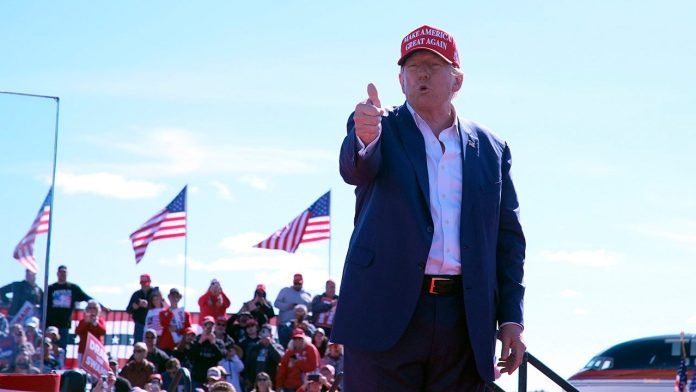
FIRST ON FOX: Leading pro-life activist groups are already shifting from celebrating former President Donald Trump’s victory to drawing up plans for his second term, Fox News Digital has learned.
A memorandum shared exclusively with Fox News Digital by Susan B. Anthony Pro-Life America (SBA), one of the country’s largest and most influential pro-life groups, lays out the group’s plans and priorities for the upcoming administration in what they hope will serve as the beginning of a roadmap for pro-life victories in the years to come.
It states that while Democrats spent $570 million on abortion advertising, Trump’s blowout victory is evidence that the American people do not support the unrestricted abortion access endorsed by Vice President Kamala Harris and many top Democrats.
“Democrats’ abortion fearmongering campaign was a spectacular failure in the first presidential election since the reversal of Roe,” the memo says. “Meanwhile, President T
rump did what he’s done better than anyone since 2016: he effectively cast the Democrats as the real extremists on abortion who support abortion even in the seventh, eighth and ninth month of pregnancy and even refuse to support giving basic medical care to children who survive attempted abortions.”
CALIFORNIA’S SHOCKING 2024 ELECTORAL MAP FLIP A ‘WAKEUP FOR DEMOCRATS’
White women upset about abortion rights could help Vice President Harris win the 2024 election, CNN’s data reporter speculated. (Getty Images)
“With victory in hand,” the memo asks: “What’s next?”
First, the memo states that the Trump administration must immediately undo every abortion policy instituted over the last four years under the Biden-Harris administration.
“The accomplishments from President Trump’s first term become the baseline for the second term,” the memo continues. “However, in order to even get to the baseline, there is much that must be undone from the Biden-Harris regime, which worked tirelessly to promote abortion in every nook and cranny of the federal government. It all must be undone.”
Marjorie Dannenfelser, the president of SBA, told Fox News Digital that her group will push for the “cleansing” of tax funding of abortion during the first 100 days of the Trump administration through the Department of Defense, Health and Human Services and other government agencies, as well as through grants to groups like Planned Parenthood.
Dannenfelser added that the Trump administration should clarify what resources and options are available to women who do not want to choose abortion during the first 100 days. She also said Trump should reinstate the “Mexico City Policy” that prohibits the government from pushing or paying for abortion internationally.
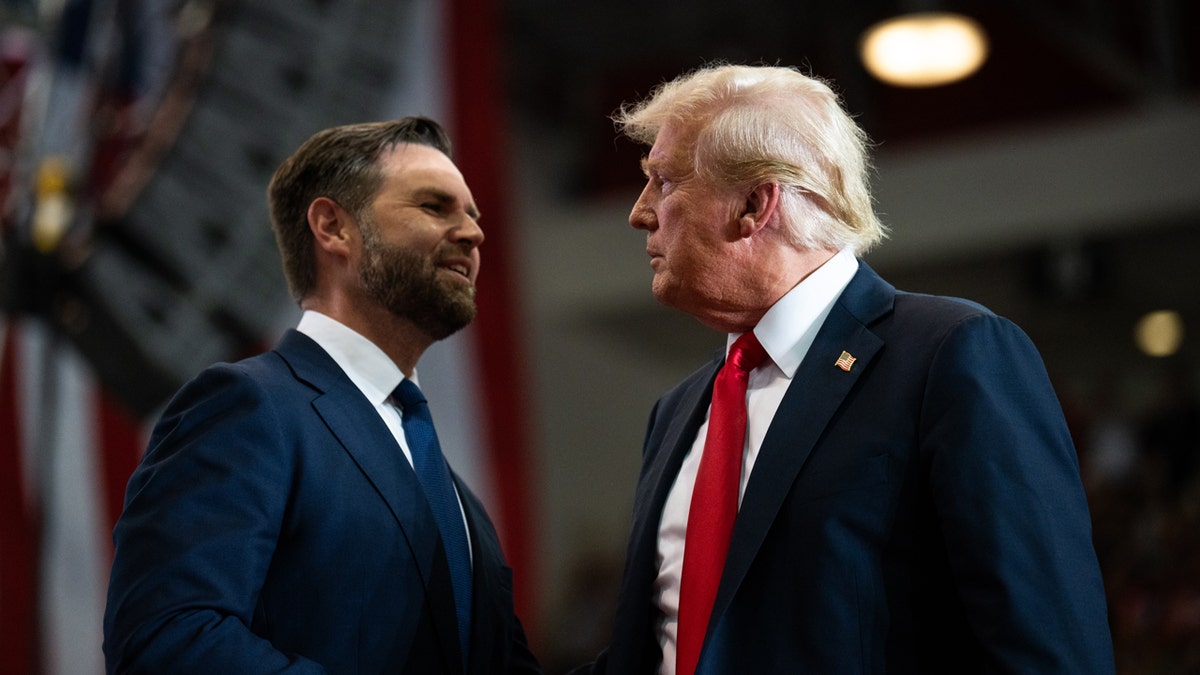
ST CLOUD, MINNESOTA – JULY 27: Republican vice presidential nominee U.S. Sen. J.D. Vance (R-OH) introduces U.S. Republican Presidential nominee former President Donald Trump during a rally at Herb Brooks National Hockey Center on July 27, 2024 in St Cloud, Minnesota. Trump hopes to flip the state of Minnesota this November, which hasn’t been carried by a Republican in a presidential election since 1972. (Stephen Maturen/Getty Images)
Dannenfelser did not take a national abortion limit off the table, though she admitted it is “not a day one” issue.
While the pro-life movement had a lot to celebrate this past week, seven states passed sweeping amendments to enshrine abortion into their state law, significantly expanding abortion in those states. This followed a series of similar amendments being passed by voters in California, Ohio, Michigan and Vermont.
Dannenfelser acknowledged that she understands Americans are not ready to accept the protection of all unborn life after 50 years under Roe v. Wade, but said she believes there should be at least a “minimum standard” of protection for the unborn across the nation.
SBA noted in its memo that “to go on offense and truly defeat the abortion industry in the long term, we must strengthen the pro-life, pro-woman, pro-family resolve of the Republican Party, centered on the unalienable right to life for the unborn child that exists under the 14th Amendment.”
Dannenfelser said that the job of the pro-life movement over the next few years will be to help advance the cultural conversation about what minimum standards the country should enact to protect unborn life.

SBA Pro-Life America has spent $92 million on voter contact operations ahead of Nov. 5, 2024. (SBA Pro-Life America)
She pointed to Florida Governor Ron DeSantis, who she said provides a model of a leader who is effectively engaging in and promoting cultural conversation about abortion.
Florida, along with South Dakota and Nebraska, became the first states to defeat any abortion initiative since the overturn of Roe v. Wade.
Dannenfelser said that DeSantis’ leadership “showed exactly what you do” to win pro-life victories.
“You don’t pretend it’s not happening; you go on offense against extremism,” she said. “DeSantis showed that when you go full-on, you defy all the prognosticators and fend off that horrible initiative.”

Florida Gov. Ron DeSantis urged voters to vote “No,” on Amendment 4. He said that the language in the amendment was “vague” and impacts parental rights. (WOFL)
SBA is not the only pro-life group mobilizing since Trump’s victory. Kristan Hawkins, president of Students for Life of America (SFLA), told Fox News Digital that her group has also developed a plan titled “Make America Pro-Life Again” that “encompasses both federal action as well as state actions.”
For the early days of the administration, Hawkins said SFLA would prioritize four main policies: 1) Appointing pro-life officials to federal agencies such as the Department of Health and Human Services, FDA and DOJ, 2) Releasing pro-life activists imprisoned under the Freedom of Access to Clinic Entrances (FACE) Act, completely defunding Planned Parenthood and to investigate the harmful chemicals used by chemical abortion pills.
Hawkins also said that she will continue to advocate for abortion restrictions on the federal level, but like Dannenfelser, she granted that will not be likely to happen soon.
For now, she said that Trump’s “day one” priority should be defunding Planned Parenthood.

Planned Parenthood Mobile Clinic outside the Democratic National Convention 2024 (Jamie Joseph/Fox News Digital)
CLICK HERE TO GET THE FOX NEWS APP
“Students for Life America has always been very clear; abortion is 100% federal. The pro-life movement is clear that abortion is 100% federal. Why? Because your right to not be killed because you’re simply inconvenient to another does not begin and end at state lines,” she told Fox News Digital. “We disagree with President Trump on this point. However, we are able to work with President Trump at this point and the first thing he must do is defund and debar Planned Parenthood.”
Also looming large behind both these groups’ plans is the possibility of a Supreme Court justice retiring or passing away. Neither Dannenfelser nor Hawkins divulged who they might support for a Supreme Court nomination, but, like before, Hawkins said she expects Trump to appoint justices supporting the unborn.
“Our ask of President Trump in 2015 and 2016 will be the same ask of President Trump in 2025 or whenever that happens in this administration, that if there is a Supreme Court vacancy, no matter if it’s a Sotomayor or it’s a Justice Thomas, that the person that he nominates, the person that will be confirmed by the US Senate, will not be an abortion activist, they will be a constitutionalist, and they’ll know what’s in the Constitution and what’s not in the Constitution. One of the things that’s not in the Constitution is the right to end the life of an inconvenient human child.”