Thursday, November 12, 2026
Home Blog Page 111

Trump Administration Ends Tracking of Kidnapped Ukrainian Children in Russia

0

The State Department has ended funding for the tracking of thousands of Ukrainian children abducted by Russia, and American officials or contractors might have deleted a database with information on them, according to a letter that U.S. lawmakers plan to send to Secretary of State Rubio on Wednesday.

The work on the abducted children by the Yale School of Public Health Humanitarian Research Lab was frozen when President Trump signed an executive order in late January halting almost all foreign aid spending. Since then, Secretary of State Marco Rubio and an official under him, Pete Marocco, have ended the vast majority of foreign aid contracts, including the one to the Yale lab.

The congressional letter, organized by Representative Greg Landsman, Democrat of Ohio, said “the foreign aid freeze has jeopardized, and may ultimately eliminate, our informational support of Ukraine on this front.”

The State Department and the Yale center “had been preserving evidence of abducted children from Ukraine it had identified, to be shared with Europol and the government of Ukraine to secure their return,” the letter said, according to a copy obtained by The New York Times. Europol is the main law enforcement agency of the European Union.

“We have reason to believe that the data from the repository has been permanently deleted,” it said. “If true, this would have devastating consequences. Can you please update us as to the status of the data from the evidence repository?”

A person familiar with the work of the Yale Center said the details in the letter were accurate.

The Yale lab was one of several recipients of $26 million in congressional funding over three years through the State Department to track war crimes committed by Russian forces in Ukraine. That work began in 2022 under a program called the Conflict Observatory.

The lab did research into abducted children and the “filtration sites” they and others were taken to in Russian-occupied Ukraine, where Ukrainians were interrogated and prepared for deportation to Russia. The researchers used open-source information and commercial satellite imagery.

Yale researchers were compiling the database, called Caesar, so the State Department could share information on abducted children with Europol and the International Criminal Court, which could eventually bring charges against Russian officials. In 2022, after Russia began its full-scale invasion of Ukraine, President Joseph R. Biden Jr. accused the Russians of committing “genocide.”

Ukrainian officials say Russia has abducted 20,000 children from Ukraine. Yale researchers said in earlier reports they have tracked 30,000 children to sites outside of Ukraine. They have put information into the database on 6,000 children taken to Russia and more than 2,400 to Belarus. The database has detailed information on 314 kidnapped children in Russia: their names and photographs, and dossiers of 20 to 30 pages on each child.

Some of the findings were previously disclosed in public reports from Yale. The center also gave information on the children to the Ukrainian government.

The main contractor for the State Department project is the MITRE Corporation, a nonprofit that mainly does work for the U.S. government, including for intelligence agencies. The Yale lab had a contract under it.

The State Department did not reply to a request for comment about the project and the status of the database. The MITRE Corporation also did not reply.

In July 2023, a Russian official said Russia had brought 700,000 children from conflict zones in Ukraine to Russia.

The Yale researchers have not been able to work on the project since the funding freeze began in late January. When the U.S. government halted weapons aid and intelligence sharing with Ukraine after President Trump berated Volodymyr Zelensky at the White House on Feb. 28, the president of Ukraine, the Yale researchers lost access to satellite imagery.

The Trump administration restarted the intelligence sharing and weapons aid after a meeting in Saudi Arabia this month between U.S. and Ukrainian officials. But the Yale researchers still do not have access to satellite images.

Mr. Trump is trying to align with President Vladimir V. Putin of Russia, and the two spoke on the phone on Tuesday. Mr. Trump said he wants to arrange a 30-day cease-fire in Ukraine, which the Ukrainians have agreed to, but Mr. Putin said he would only halt strikes temporarily on energy infrastructure.

Details of the State Department’s termination of its contracts for the research into potential Russian war crimes in Ukraine were earlier reported by The i Paper, a British news site and The New Republic.The Washington Post first reported details of the congressional draft letter on Tuesday.
fundraising for the Republican National Committee : NPR

0

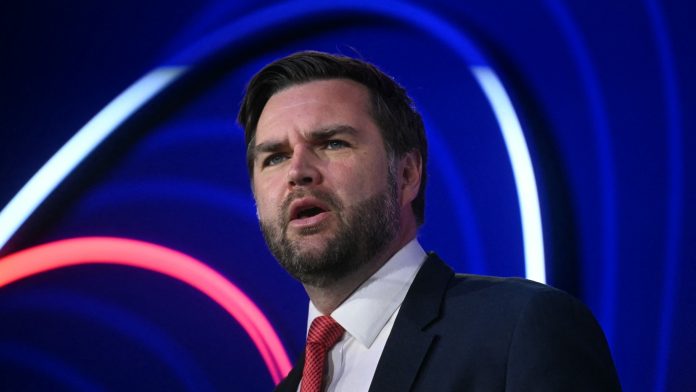
Vice President Vance speaks at the American Dynamism Summit on supporting U.S. industry and workers, in Washington, DC, on Tuesday.

Jim Watson/AFP via Getty Images


hide caption

toggle caption

Jim Watson/AFP via Getty Images

Vice President JD Vance will assume the role of finance chairman for the Republican National Committee — an unconventional move for a sitting vice president, but one that also places a top ally of President Trump within the party’s campaign wing ahead of the 2026 midterms.

“Last year, President Trump won an historic election victory, taking back the White House and helping Republicans regain control of the Senate and retain control of the House,” Vance said in a statement provided by the RNC on Tuesday. “But to fully enact the MAGA mandate and President Trump’s vision that voters demanded, we must keep and grow our Republican majorities in 2026.”

Presidents and vice presidents typically hold indirect influence over their party’s national committee, rather than serving within the ranks. According to the RNC, Vance will be the first sitting vice president to serve as finance chairman.

“Vice President Vance is not only one of our Party’s most talented messengers, he is also a thought leader who has helped remake the GOP into the party of working Americans representing the forgotten men and women of our country,” RNC Chairman Michael Whatley said in a statement.

As finance chairman, Vance will play a key role in the GOP’s fundraising efforts, getting valuable facetime with some of the most influential conservative donors — a potentially beneficial role for the vice president as he weighs his political ambitions for the 2028 presidential race.

It could also be a boost for his resume, said Republican strategist Ron Bonjean, if Vance can bring in considerable cash during a high-stakes time for the party.

“Hard jobs are usually given to the vice president,” Bonjean said. “Raising money in a midterm where it’s going to be tough to keep the House of Representatives for Republicans — that are the party in power — is going to be a difficult job.”

“If Vance can pull it off, it really gives him a leg up going into ’28,” he added.

Though still years away, Vance is currently considered a front-runner in what may be a packed Republican presidential primary. However, Trump told FOX News in February that he does not see Vance as his successor — at least not yet.

“I think you have a lot of very capable people,” Trump said. “So far, I think he’s doing a fantastic job. It’s too early. We’re just starting.”

Vance is not the first member of Trump’s inner circle to work within the RNC. The president’s daughter-in-law Lara Trump previously served as a co-chair of the committee but stepped down in December.

Vance will succeed former investor Duke Buchan as finance chair. Trump has selected Buchan to serve as the U.S. Ambassador to Morocco. Buchan served as ambassador to Spain during Trump’s first administration.

Earth’s 10 Hottest Years Have Been the Last 10

0

With the addition of 2024, yet another record-hot year, the past 10 years have been the 10 hottest in nearly 200 years of record-keeping, the World Meteorological Organization reports.

“That’s never happened before,” said Chris Hewitt, the director of the W.M.O.’s climate services division. It marks the first time since record keeping began that all of the 10 hottest years have fallen within the most recent decade.

2024 was the single warmest year on record, surpassing even 2023’s wide lead over other recent years. The planet’s surface was approximately 1.55 degrees Celsius warmer than its average during a reference period that approximates the preindustrial era, from 1850-1900.

The annual report from the W.M.O., a United Nations agency, includes input from dozens of experts and institutions from around the world and sheds further light on the record-breaking heat of 2024 and places it in the context of Earth’s long-term warming from climate change.

The extra energy in the atmosphere and the oceans helped fuel climate-related disasters around the globe. Extreme weather events like drought, storms and wildfires displaced hundreds of thousands of people from their homes, the report says.

Atmospheric levels of greenhouse gases released from fossil fuel combustion continue to rise. In 2024, the concentration of carbon dioxide hit amounts unseen in at least two million years, according to the report.

Concentrations of two other important greenhouse gases, methane and nitrous oxide, reached levels unseen in at least 800,000 years. Homo sapiens, or modern humans, emerged around 300,000 years ago, so our species has never before experienced an atmosphere so laden with planet-warming greenhouse gases.

When countries signed the Paris Agreement in 2015, they agreed to try to limit global warming to 1.5 degrees Celsius above preindustrial levels.

“While a single year above 1.5 degrees C of warming does not indicate that the long-term temperature goals of the Paris Agreement are out of reach, it is a wake-up call that we are increasing the risks to our lives, economies and to the planet,” Celeste Saulo, the secretary general of the W.M.O., said in a statement.

The new report estimates that long-term warming has reached 1.25 to 1.41 degrees Celsius above preindustrial levels, although the margins of error for some estimates extend beyond 1.5 degrees. The report authors estimate that last year, El Niño and other factors contributed an additional 0.1 or 0.2 of a degree of temporary warming.

El Niño is a natural climate pattern that tends to slightly raise the overall surface temperature of the planet. Record warmth, however, continued into 2025, even through El Niño’s transition into the opposing pattern, La Niña.

“It’s been really quite extraordinary to see that warmth continue for so long,” John Kennedy, the scientific coordinator and lead author of the report, said during a call with reporters.

This warmth is especially apparent in the oceans, where key indicators of climate change are now accelerating.

The oceans have so far absorbed around 90 percent of the additional heat trapped inside Earth’s atmosphere by greenhouse gases. The oceans’ heat content — a way to measure this warmth throughout different depths — also reached a record high last year. Over the past two decades, from 2005 to 2024, the oceans warmed more than twice as fast as they did from 1960 to 2005, according to the report.

Increased ocean temperatures have had devastating consequences for marine life. By April 2024, warm-water corals had been bleached in every ocean basin where they grow.

Global average sea-level rise also reached a record high in 2024, according to the report. The speed at which the seas are rising has also more than doubled in recent years: 4.7 millimeters per year in the past decade, from 2015 to 2024, compared with 2.1 millimeters per year from 1993 to 2002.

The World Meteorological Organization’s work depends on international cooperation among its 101 member countries, including the United States.

“If you look at how weather has progressed since the initiation of the W.M.O. in 1950, you can now see that you can have the forecast on your smartphone,” said Omar Baddour, the W.M.O.’s chief of climate monitoring. “You cannot believe how much collaboration is behind this.”

Data from NASA and the National Oceanic and Atmospheric Administration, which recently lost hundreds of staff positions as part of the rapid, large-scale cuts to the federal bureaucracy the Trump administration undertook beginning earlier this year, are included in the W.M.O.’s new report.

Why is Trump trying to shut the U.S. Institute of Peace? : NPR

0

A view of the United States Institute of Peace (USIP) building headquarters on March 18 in Washington, D.C. Trump administration employees entered the building on Monday with the help of law enforcement officials after President Trump ordered the dismantling of the congressionally funded independent nonprofit.

Anna Moneymaker/Getty Images


hide caption

toggle caption

Anna Moneymaker/Getty Images

The Trump administration is trying to gut a congressionally funded think tank, prompting a standoff between the police and the think tank’s board members on Monday.

The U.S. Institute of Peace (USIP) was created through an act of Congress in 1984, shortly after a nuclear standoff with the-then Soviet Union, in order to study peaceful resolutions to conflict around the world.

Over the last four decades, USIP became an influential repository for studying international affairs and bringing together global experts on conflict resolution and one of the many platforms the U.S. cultivated to spread its soft power globally — until the White House ordered it dismantled last month.

Why was USIP created?

USIP is part of an ecosystem of organizations created by Congress during the Cold War to protect and project American values globally.

The think tank was designed to support research and advise policymaking that avoided violent conflict and to project American influence through programs like training peacekeepers and researching communication channels with geopolitical competitors, such as China.

“It was built as a symbol of the aspiration of the American people to be peace builders in the world,” said George Moose, a former diplomat who says he is USIP’s acting president and contests the Trump administration’s efforts to replace the nonprofit’s leadership.

This ecosystem also includes the National Endowment for Democracy (NED), a foundation which annually granted nearly $300 million in funding to pro-democracy work in over 100 countries, and the Wilson Center, a nonpartisan think tank which supported foreign policy research, particularly on Russia and Central Asia. The U.S. also grew its humanitarian aid programs through agencies like USAID, started in the 1960s in part to combat the influence of Communism, and through the State Department.

In the last two months however, the Trump administration effectively closed down USAID; frozen NED funding; cancelled some State Department grants; and ordered the Wilson Center to dramatically downsize.

A sign says "No Trespassing" on doorway to the United States Institute of Peace (USIP) building headquarters on March 18, 2025 in Washington, DC after Trump administration officials ejected the think tank's staff.

A sign says “No Trespassing” on doorway to the United States Institute of Peace (USIP) building headquarters on March 18, 2025 in Washington, D.C., after Trump administration officials ejected the think tank’s staff.

Anna Moneymaker/Getty Images


hide caption

toggle caption

Anna Moneymaker/Getty Images

Why is the Trump administration trying to close USIP down?

The Heritage Foundation, a conservative think tank in Washington that helped shape the current overhaul of the federal government, criticized USIP last year for being opaque in its operations and for favoring Democratic-leaning appointments.

In February, President Trump ordered USIP be effectively shuttered, citing a “reduction in elements” of the federal government he deemed “unnecessary.”

Since then, Trump has fired 11 of the USIP’s 15 board members, citing noncompliance with his executive order.

Can the White House dismantle USIP?

USIP staff argue the executive branch has no authority to shut them down or freeze their funding, as the think tank is not a federal agency and is directly funded by Congress.

“We have been talking to them for many weeks now in anticipation of just this possibility and also to remind them that we are a private, nonprofit corporation in the District of Columbia and therefore not a federal agency, and therefore, the federal government has no entitlement to come in and take over our building,” Moose told reporters on Monday.

Moose had refused to vacate his office even after the Trump administration fired him and most other board members. USIP staff are planning to file a lawsuit challenging the Trump administration’s appointment of a new USIP president, because they argue the hirings and firings sidestepped the think tank’s procedures for choosing leadership.

“We do not recognize the illegitimate president,” George Foote, USIP’s lawyer, told NPR.

According to USIP’s own rules, the president of the United States is allowed to appoint and remove board members, but must do so with the consent of a majority of the board or with approval from several Senate subcommittees.

Michele Kelemen contributed reporting.

Mexico City Bans Traditional Bullfights for Violence-Free Option

0

In the biggest bullfighting city in the largest bullfighting country in the world, Mexico City lawmakers overwhelmingly voted on Tuesday to ban traditional bullfighting — a move that was supported by Mexico’s president, Claudia Sheinbaum, but was fiercely opposed by backers of the centuries-old custom.

The legislation, approved by a 61-1 vote, prohibits the injuring or killing of bulls for sport, in or outside of the arenas. It will allow for what proponents call “bullfighting without violence,” in which rules determine how long a bull can be in the ring and limit bullfighters to using only capes.

“My heart always beats for animal welfare,” said Xochitl Bravo Espinosa, a Mexico City legislator who helped spearhead the effort.

But Ms. Bravo Espinosa said that legislators tried to find a balance in which the bullfights could go on, albeit modified, so that people who made a living off the industry could continue working. She pointed to people who sell gear and food around La Plaza México, the largest bullfighting arena in the world, which opened in 1946 in the heart of the city and seats 42,000 people.

Bullfighting proponents denounced the legislation, protesting outside the Mexico City legislature’s building on Tuesday morning.

“This is just the beginning of a fight for our bullfighting,” four bullfighting groups said in a joint statement later in the day.

Raúl Pérez Johnston, a lawyer for Tauromaquia Mexicana, a national bullfighting organization, said in an interview that there were a number of remaining questions about the implementation of the law, which is expected to go into effect in the coming days, and that the group planned to challenge it legally.

In a statement leading up to Tuesday’s vote, La Plaza México said that the proposal to alter bullfighting was “a clear threat against one of the most deeply rooted cultural traditions in our country.” It said the changes “completely distort the essence and go against the heart and origins of this tradition.”

Bullfighting was at the center of a major legal fight over its return to Mexico City just last year. A human rights group successfully convinced a federal judge in 2022 to approve a suspension of bullfights at La Plaza México. But arena officials appealed the decision, and Mexico’s Supreme Court revoked the suspension, paving the way for bullfights to return with much fanfare in January 2024.

Bullfighting, spread by Spain throughout its colonies in Latin America in the 1500s, has faced a mounting, existential crisis over the years.

Despite a steady decline over the decades because of prohibitions and deepening opposition, the practice continues in at least five other countries beside Spain and Mexico: France, Venezuela, Peru, Ecuador and Colombia, where a ban doesn’t begin until 2027.

Mexico’s first recorded bullfight was in 1526, and over 300 bullfighting plazas remain. But since 2013, five of Mexico’s 31 states have prohibited bullfights.

The battle over bullfighting has come to symbolize a larger culture war between tradition and more modern views on animal cruelty.

According to Mexico City’s legislature, 168 bulls and steers were killed at La Plaza México in 2019. Proponents of the tradition have argued that represents a very small percentage of all bulls born in Mexico and that the bullfighting industry creates tens of thousands of jobs in the country.

The new legislation decreed that bullfighters will only be allowed to use the traditional large cape and the smaller red one to lure the bulls. It also determined that individual bull fights last only 15 minutes, with only six such bull fights per event.

Mayor Clara Brugada of Mexico City, who proposed the violence-free option, welcomed Tuesday’s vote with “great happiness.” In recent days, Ms. Sheinbaum said she, too, was in favor of the violence-free bullfights and called them “a very important step.”

Some animal rights groups also applauded the legislation — but argued it hadn’t gone far enough.

“Bloodless bullfighting is just the beginning,” said Animal Heroes, an organization that started a “Mexico Without Bullfighting” campaign six years ago. “We will continue fighting until we achieve its total abolition.”

Ms. Bravo Espinosa, the legislator, said that within seven months, the city government will issue the new bullfighting regulations, with input from all sides, on exactly how the new bull events can be held.

Judge blocks Trump effort to ban transgender soldiers from military : NPR

0

President Trump departs after speaking with reporters in the Grand Foyer during a tour at the John F. Kennedy Center for the Performing Arts on Monday.

Chip Somodevilla/Getty Images


hide caption

toggle caption

Chip Somodevilla/Getty Images

A federal judge in Washington D.C. has issued a preliminary injunction against the Trump administration over its attempt to ban transgender troops from serving in the U.S. military.

Tuesday’s decision by U.S. District Judge Ana C. Reyes blocks the Department of Defense from carrying through with a policy directive designed to remove transgender servicemembers from the military.

In a sweeping and at times strongly worded opinion, Reyes pushed back against the administration effort, writing that the ban violated the constitutional rights of transgender troops.

“Indeed, the cruel irony is that thousands of transgender servicemembers have sacrificed — some risking their lives – to ensure for others the very equal protection rights the Military Ban seeks to deny them,” Reyes wrote.

The preliminary injunction is the latest example of a federal court moving to pause or block efforts by President Trump to enact his agenda through executive action. The steady cascade of orders against the president has raised fears among Trump critics that the administration may in time choose to defy a federal court decision and spark a potential constitutional crisis.

Trump has pledged to adhere to court decisions, saying he would appeal rulings where judges have sided against the administration. At the same time, he has been openly critical of federal judges who have ruled against him.

Canada Announces Arctic Radar Deal With Australia Amid Trump Threats

0

Canada has made a 6 billion Canadian dollar ($4.2 billion) deal with Australia to develop a cutting-edge radar for the Arctic that can detect hypersonic missiles and other threats over the curvature of the earth, Prime Minister Mark Carney announced on Tuesday.

Mr. Carney also announced hundreds of millions of dollars in new spending to carry out year-round military exercises in the Arctic and to build up vital infrastructure for the Indigenous communities that make up most of the population there.

The new Canadian funding and operational plans come amid a crisis in the U.S.-Canada relationship as a result of President Trump’s continued threats to crush the Canadian economy through tariffs and to annex it to the United States.

Mr. Trump has also expressed an interest in annexing Greenland, part of a broader play for dominance in the Arctic, where Russia and China are also flexing their muscle as the region emerges as a new frontier for global competition.

Mr. Carney’s announcement Tuesday signaled Canada’s renewed interest in asserting its sovereignty over its immense Arctic territory, amid intensifying and shifting geopolitical pressures that raise doubts about his country’s core defense alliance with the United States.

“Canada is, and forever will be, an Arctic nation,” Mr. Carney said during a four-hour stop in Iqaluit, near the Arctic Circle, the capital of the northern Canadian territory of Nunavut, on his way back to Ottawa from a quick visit to Europe.

“We are strong, united and sovereign.”

The new radar, which Australia has developed, is known as over-the-horizon-radar technology, and is expected to be delivered by 2029, said a senior Canadian official who was not authorized to speak to reporters on the record.

It will be deployed under NORAD, the North American Aerospace Defense Command, the agreement between Canada and the United States to jointly manage and defend the skies over the two countries. The command was established in the early 1980s, when the prospect of Soviet missiles and bombers crossing the Arctic was considered the gravest threat to North America.

The decision to opt for Australia as a provider for the advanced radar technology was supported by the U.S. military, the senior Canadian official said, highlighting that, despite the now-rocky relationship between Canada and the United States, military cooperation has continued.

Developing military technology and maintaining personnel in the Arctic is a major challenge because of the extreme weather conditions. Conventional equipment does not work properly in Arctic conditions, and maintaining bases that can be staffed the entire year is a challenge because access to the area is limited.

Advancing Arctic defense has been a longstanding demand of Canada by the United States. Canada, which is also a member of NATO, has committed to spending more toward its overall defense budget to reach the threshold of 2 percent of its economic output — the NATO target for all member nations.

But as Canada tries to boost its military spending, it faces new challenges over the procurement of equipment.

Mr. Trump said last week that he would not allow Canada to use icebreakers that the United States has ordered unless it became the 51st U.S. state.

“If you’re a state, you can be part of the deal, but if you’re separate country, you’ve got to get your own icebreakers,” Mr. Trump said. That led to calls in Canada to cancel an order for F-35 aircraft from the United States.

Mr. Carney also announced on Tuesday that Canada had set aside 420 million Canadian dollars to carry out three to four new military exercises in different places in the Arctic, in order to enable it to maintain personnel there throughout the year.

He also said that the federal government would spend 253 million Canadian dollars to improve infrastructure for the local people, who are mostly Inuit. Nunavut, with a land area nearly the size of Mexico, has a population of about 37,000.

Trump and Putin Talk about a Ceasefire in Ukraine

0

President Trump and President Vladimir Putin of Russia held a lengthy phone call on Tuesday to discuss a possible ceasefire in Ukraine. This is part of Trump’s efforts to end the Russia’s war in Ukraine and while he didn’t get a ceasefire agreement, some progress was made. We hear the latest.

And in Ukraine, people are watching these and other developments with concern, skepticism, and with dark humor.

Parents of Student Missing in the Dominican Republic Believe She Drowned

0

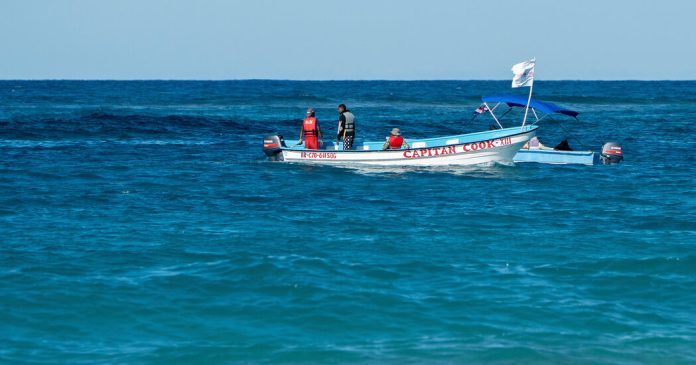
The parents of Sudiksha Konanki, the 20-year-old college student who went missing during a spring break trip to Punta Cana, Dominican Republic, said they had come to terms with the possibility she had drowned, and asked for privacy to mourn her, according to officials and a statement to the media on Tuesday.

Their sorrowful statement came more than a week after her disappearance on March 6 grabbed headlines around the world, and led to repeated questioning of the last person seen with her.

“Sudiksha’s family has expressed their belief that she drowned,” the Loudoun County Sheriff’s Office in Virginia said in a statement on Tuesday. “While a final decision to make such a declaration rests with authorities in the Dominican Republic, we will support the Konanki family in every way possible” while continuing to review the evidence, the office said.

In a tearful Fox 5 DC video shared online, Ms. Konanki’s father said that they had accepted “that our daughter has drowned” and that this conclusion was “incredibly difficult for us to process.” Her mother sobbed as he read the statement. They also asked for “time and privacy to focus on healing” and their family, NBC4 Washington reported.

An undated photo of Ms. Konanki, who was last seen at a beach in Punta Cana, Dominican Republic, on March 6.Credit…via Reuters

Ms. Konanki, a University of Pittsburgh student from Loudoun County was last seen nearly two weeks ago. She was spotted in the early morning hours of March 6 at a beach in Punta Cana with an unnamed friend who was “under investigation,” according to the authorities in the Dominican Republic.

The man, who was not named by The New York Times because he had not been charged with a crime, was present at a court hearing in the Dominican city of Higüey on Tuesday, but the outcome of the proceeding had not yet been disclosed by the authorities.

During the proceeding, the judge granted the man’s request to be able to move about freely and without police supervision.

Ms. Konanki stayed at the Hotel Riu Republica in Punta Cana with five friends after arriving in the Dominican Republic on March 3, the police said. Her disappearance sparked a massive search in the Caribbean nation, which is heavily dependent on foreign tourism.

When the United States Embassy in the Dominican Republic alerted the national police that Ms. Konanki had disappeared, officials began an exhaustive search of the beach and the surrounding area, using drones, helicopters, divers, boats, police dogs and other resources, the authorities said.

More than 300 agents have been searching for Ms. Konanki, the police said. The F.B.I. has been assisting in the investigation, according to the Loudoun County Sheriff’s Office.

Hogla Enecia Pérez contributed reporting from Santo Domingo, Dominican Republic.

Radio Free Europe sues Trump administration over canceled grant : NPR

0

The Trump administration has put journalists at government-funded broadcasters, including Prague-based Radio Free Europe/Radio Liberty (RFERL), on leave on March 15 as it froze funding to them.

MICHAL CIZEK/AFP via Getty Images/AFP


hide caption

toggle caption

MICHAL CIZEK/AFP via Getty Images/AFP

Radio Free Europe/Radio Liberty sued the Trump administration on Tuesday to try to block it from terminating all federal funds for the U.S.-backed broadcaster.

In a federal lawsuit, the network argues that the U.S. Agency for Global Media (USAGM) has violated the Constitution and federal laws by withholding money Congress expressly allocated for the broadcaster. USAGM oversees funding for government-funded international networks including Radio Free Europe/Radio Liberty that serve foreign lands without a free or robust press.

“This is not the time to cede terrain to the propaganda and censorship of America’s adversaries,” said Stephen Capus, the president and chief executive of Radio Free Europe/Radio Liberty, in a statement. “We believe the law is on our side and that the celebration of our demise by despots around the world is premature.”

The network says it presents news and information to 47 million people each week in 27 languages across 23 countries, including Afghanistan, Hungary, Iran, Pakistan, Russia, and Ukraine.

It is part of an historic effort at soft power, launched in 1950 to reach people living behind the Iron Curtain. It aims to advertise American ideals by presenting the news in its complexity, even when it involves debate or dissent.

The lawsuit names USAGM and two officials, Senior Adviser Kari Lake and Acting Chief Executive Victor Morales.The agency, Lake and Morales have not responded to NPR’s requests for comment.

Former USAGM general counsel David Kligerman, who left the agency as Trump took office once more, says the network had no choice but to sue.

“They have no other option,” Kligerman says. “None of the entities would want to enter litigation against the government. They receive their funds from the government. The relationship that the statute envisions is one of cooperation and coordination.”

The Trump administration has something different in mind.

On Friday, Congress passed a stopgap spending bill that included continuing funds for the agency and the network it funds. Later that night, the White House put out an executive order commanding the U.S. Agency for Global Media to limit its activities only to those that are “statutorily required” – that is, by law.

Radio Free Europe/Radio Liberty’s lawsuit articulates the need for the network and the value of the mission. It rests its case, however, on the idea that Congress has passed laws requiring the agency to spend the money, and that providing its coverage is legally required.

“This case challenges a federal agency’s refusal to abide by Congress’s power of the purse,” the lawsuit states in its opening lines. It adds that the question of whether to pass along those funds in the form of annual grants “is not an optional choice for the agency to make. It is the law.”

The legal argument appears to echo one made by current and former employees of the U.S. Agency for International Development in court. A federal judge ruled earlier Tuesday that the Trump administration likely violated the Constitution when it effectively shuttered the agency.

Lake acted over the weekend to shut down the Voice of America and Radio/TV Marti, which are owned by the federal government.

She also revoked contracts distributing the Congressionally allocated money for Radio Free Europe/Radio Liberty and their sister networks – including Radio Free Asia and the Middle East Broadcasting Networks. These networks are private not-for-profit corporations that are fully funded by the U.S. Congress.

Lake also terminated the contract of the Open Tech Fund, which helped develop the open source technology Signal and other secure messaging systems.

Radio Free Europe/Radio Liberty is the first of the networks to challenge Lake’s actions.

In a tweet Monday, Lake argued, “There’s too much rot in the United States Agency for Global Media to salvage.” She previously had said the networks offered value but were in need of dramatic reform. Appearing on the podcast of Steve Bannon, Trump’s former chief political strategist, Lake appeared to anticipate the lawsuit – and others – and taunted the networks’ leaders.

“They’ve probably worked all weekend – I hope they didn’t get any sleep,” Lake told Steve Bannon. “We’re going to continue to move forward and do what President Trump’s executive order said.”

USAGM put all Voice of America staffers on indefinite paid leave, terminated all of its hundreds of contractual employees as of the end of the month and severed the contracts with Radio Free Europe/Radio Liberty and the other outfits.

The moves were denounced by Congressional Democrats, international diplomats and some Republicans. Yet they were hailed by MAGA loyalists in the U.S. and autocratic regimes abroad.

Authorities in Russia and China openly rejoiced; “A dog’s death for a dog,” Kremlin spokesman Dmitry Peskov said. Similarly, the Global Times, the English-language tabloid owned by the Chinese Communist Party, celebrated the shuttering of the Voice of America: “Almost every malicious falsehood about China has VOA’s fingerprints all over it.”

“They want to control the information landscape and they don’t see any value in exporting a free press – and securing good will with the people who are the subjects of our enemies,” says Libby Liu, the former Radio Free Asia president and former Open Technology Fund CEO.

China, she says, remains a strategic foe. “They’re seeking to fight us 24/7,” Liu says. “They’re fomenting misinformation and disinformation to alienate people from the United States. They’re seeking global dominance. Why are we vacating the information space to the enemy?”