Thursday, November 12, 2026
Home Blog Page 110

Congo and Rwanda Call for Cease-Fire in Their Deadly Conflict

0

The leaders of the Democratic Republic of Congo and Rwanda have called for a cease-fire in eastern Congo in a bid to end the latest deadly chapter in a three-decade conflict.

Presidents Félix Tshisekedi of Congo and Paul Kagame of Rwanda committed to an “immediate and unconditional cease-fire,” according to a joint statement issued with Qatar, where the two leaders gathered for an unannounced meeting on Tuesday.

They did not say how the cease-fire would be carried out or monitored. But the meeting was the leaders’ most significant step since a Rwanda-backed armed group, called M23, captured eastern Congo’s two largest cities and large swathes of the territory in an offensive that began in January.

“This is the first time a concrete statement is coming from both leaders,” Oluwole Ojewale, a scholar with the Institute for Security Studies who focuses on Central Africa, said in an interview.

Mr. Ojewale said that the United States could have been in a position to convene peace talks, but given that it was not a priority for the Trump administration, Qatar stepped in. But he said the bigger failing belonged to the African Union, whose efforts to bring the two leaders together had been unsuccessful.

“It appears now that the countries that actually have the leverage to bring warring African leaders to the table are countries like Turkey, Saudi Arabia, the U.A.E. — who are completely outside the shores of the continent,” he said.

The fighting in eastern Congo has displaced more than 700,000 people since January, according to the United Nations refugee agency, and killed thousands of others.

The leaders’ surprise meeting came a day after the European Union announced sanctions on the Rwandan government and military officials over the backing of M23. Rwanda retaliated by severing diplomatic ties with Belgium, a country that was once the colonial ruler in both Congo and Rwanda, and which has been a leading voice for sanctions on Rwanda over its involvement in the conflict.

Mr. Tshisekedi and Mr. Kagame said in the statement that they wanted to “establish solid foundations for lasting peace” in eastern Congo, where three decades of fighting over ethnic tensions and access to land have killed millions of people.

M23, a group created in 2012, is armed and commanded by Rwanda’s army, according to the United Nations, the United States and the European Union. Rwanda denies backing the group and says that the violence in neighboring Congo is threatening its security.

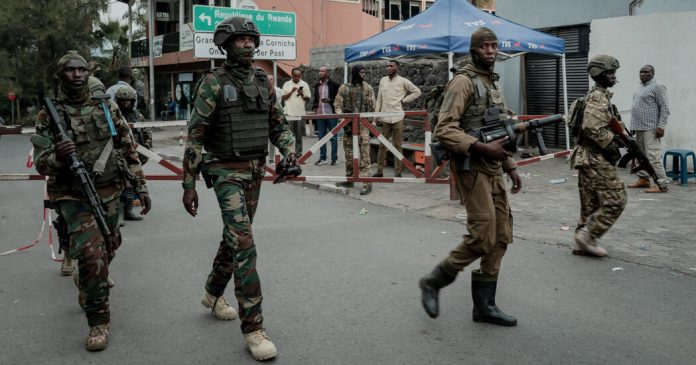
M23 now controls Goma and Bukavu, two key hubs on the border with Rwanda.

Whether M23 will heed the calls for a cease-fire remains to be seen. It has denied any affiliation with Rwanda’s government, and canceled a meeting with Congo’s government that was also scheduled for Tuesday.

Neither Congo’s weak army nor international pressure, including a unanimous condemnation from the U.N. Security Council, has been able to stop the group’s advance. M23, which has 6,000 to 9,000 soldiers, according to U.N. estimates, now controls an area the size of Louisiana in eastern Congo that is rich in gold and other minerals like coltan.
Israelis Take to Streets Day After Strikes on Gaza

0

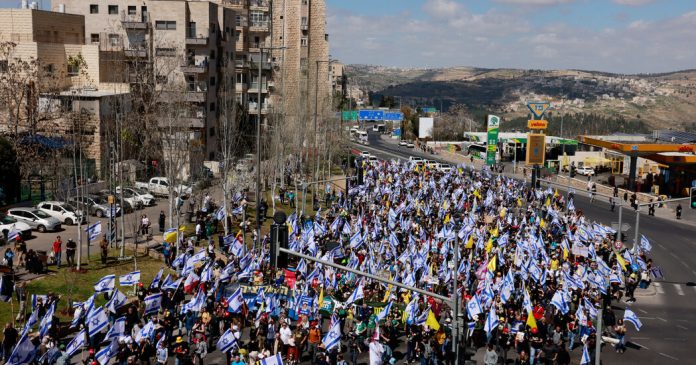
Israelis were gathering on Wednesday outside the Parliament building in Jerusalem to protest moves by Prime Minister Benjamin Netanyahu that they say undermine the country’s democracy and to call for a renewed cease-fire deal for Gaza to bring the remaining hostages there home.

The convergence of popular anger over both domestic and national security issues comes after Israel carried out deadly aerial attacks across the Gaza Strip early Tuesday, ending a temporary truce with Hamas that began in January.

The broad sense of national solidarity that had surrounded the war in Gaza, set off on Oct. 7, 2023, by the Hamas-led attack on southern Israel, now appears to be fraying.

There are growing accusations in Israel that Mr. Netanyahu’s priorities are his political survival and of bolstering his right-wing government ahead of a crucial budget vote later this month.

Protesters closed down the main highway into Jerusalem during the morning hours as they marched into the city in scenes reminiscent of the social and political upheaval that roiled the country in the months before the war over government plans to curb the powers of the judiciary.

At the time, Israeli security chiefs and experts said the internal strife had contributed to Israel’s vulnerability and encouraged its enemies.

Protests were initially called for Wednesday after Mr. Netanyahu announced that he was moving to dismiss the head of Israel’s domestic intelligence agency, citing a lack of personal trust between them.

That has raised public concerns about the government’s renewed push to reduce the power of state watchdogs and make appointments that critics say are based on loyalty.

The centrist leader of Israel’s parliamentary opposition, Yair Lapid, called on people to join the protests in a social media post on Wednesday morning.

“This government does not stop at red,” he wrote. “The only solution is unity, not silent, submissive, or fake unity, but the unity of an entire nation coming together and saying: Enough!” He added, “This is our moment, our future, our country. Take to the streets!”

Mr. Netanyahu said that the surprise attack on Gaza on Tuesday was the opening salvo in a campaign to pressure Hamas into releasing more hostages after weeks of fruitless negotiations via mediators.

From now on, he said, Israel would increase its military action against Hamas and negotiations would take place “only under fire.”

Rawan Sheikh Ahmad contributed reporting from Haifa, Israel.

Energy Infrastructure Attacks Have Inflicted Pain on Both Russia and Ukraine

0

Russia has said it would agree to a limited cease-fire that would stop attacks on energy infrastructure, a proposal Kyiv has signaled it is open to but has yet to officially approve. An agreement would be the first significant step toward de-escalation since the start of the full-scale war more than three years ago.

On Wednesday, Ukraine and Russia traded accusations of attacks against each others’ energy infrastructure, a day after the proposed agreement was reported, highlighting the lack of trust between the two countries and how tenuous any deal would be.

Strikes against energy facilities have been a key part of both countries’ efforts to weaken the other. Russia has launched repeated attacks on Ukraine’s power grid to undermine its war effort by making life as difficult as possible for civilians, experts say. For Ukraine, strikes on Russian facilities are aimed at cutting the revenues of Russia’s sprawling oil industry, which have been used to fund the country’s military.

Russia began attacking Ukraine’s energy infrastructure in October 2022 after it became clear that its initial plan to achieve a swift victory had failed. Moscow opted for a war of attrition in which Ukraine’s energy infrastructure became a key target.

Ukraine began repeatedly targeting Russia’s energy infrastructure in early 2024to try to inflict pain on the heart of the Russian economy — its oil and gas industry — and to limit the supply of fuel to its military. Kyiv’s aim appeared to be twofold, experts say: to reduce Russia’s oil revenues, which are used to fund its military, and to produce a psychological effect by causing large-scale fires at critical infrastructure facilities.

Russian attacks on Ukraine’s energy infrastructure have been a key part of Moscow’s effort to bring the country to its knees. The goal, energy experts say, has been to choke off the energy resources that fuel Ukraine’s economy and ultimately its war effort. But it also appears intended to make life so unbearable for people — plunging them into cold and darkness — that it breaks their morale.

Over the past year, Ukrainian drones have flown deep into Russian territory, hitting oil refineries, depots, storage units, pipelines and pumping stations. The attacks have disrupted oil flows that pass through Russian seaport oil terminals and the Druzhba pipeline, which takes crude to some European countries.

That has threatened to undercut Moscow’s revenue from energy sales abroad. It has not been possible to independently determine how much of Russia’s oil revenues have been affected by the attacks.

The attacks on oil refineries reduced the country’s refining capacity by around 10 percent at one point, according to Reuters, which has been calculating the effect of damage.

But Russian oil giants have also been able to quickly repair some damage.

Ukraine has escalated its attacks since January, but overall they have had a limited effect, according to Russian news media. Oil refiners are giant enterprises and while drone attacks have caused fires that are hard to extinguish, they often failed to damage the critical infrastructure.

Since the fall of 2022, Moscow has repeatedly used drones and missiles to strike substations that distribute electricity, power plants that generate it, and, more recently, gas facilities.

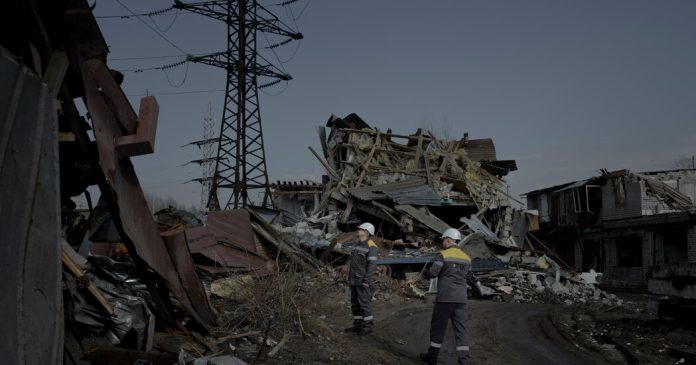
The Kyiv School of Economics estimates that damage to Ukraine’s energy sector has reached at least $14.6 billion. Several hydroelectric and thermal power plants have been completely destroyed by the attacks.

The power shortages have forced Ukraine to impose nationwide rolling blackouts to ease strain on the grid. On some days, neighborhoods in Kyiv, the Ukrainian capital, had as little as four hours of electricity. Many civilians have resorted to candles to light homes and relied on cellphone flashlights to navigate unlit streets.

Water pumping systems have sometimes failed, making life difficult for citizens as it cut the flow of running water to their homes. During the first winter of the war, long lines formed at wells in Kyiv as residents hauled jugs of water back to their unheated apartments.

Still, Russia has failed in its attempts to make Ukraine’s energy system completely collapse. Ukraine has endured the assaults, thanks to Western-supplied air defenses that enabled it to gradually intercept more Russian missiles, round-the-clock work by engineers to repair vital equipment, and the energy-saving ingenuity of residents.

Ukraine has also relied on its three operational nuclear power stations, which Russia has avoided targeting to prevent a nuclear disaster, to meet up to half of the country’s electricity needs during certain periods.

Armed Rohingya Group’s Leader Is Arrested in Bangladesh

0

The leader of an armed group representing a persecuted Muslim minority from Myanmar was arrested in a raid in neighboring Bangladesh this week and charged under an antiterrorism law.

Ataullah, an ethnic Rohingya and the commander of the Arakan Rohingya Salvation Army, or ARSA, was arrested on Monday, the Bangladeshi police said in a statement. He was captured in Narayanganj District, on the outskirts of Dhaka, the capital of Bangladesh, according to a local police officer. Nine other suspected members of ARSA were also nabbed in raids.

The 10 suspected insurgents were charged under an antiterrorism law at a court in Narayanganj and are now in police custody, Shahinur Alam, the officer in charge at the Siddhirganj Police Station in Narayanganj, said on Wednesday.

Coordinated attacks by ARSA insurgents on security outposts in 2016 and 2017 were used as a pretext for the Myanmar military to launch a scorched-earth campaign of arson, mass rape and killing against the Rohingya minority. Dozens of Rohingya villages were wiped from the map in what the Myanmar military called “security operations.” The United States has labeled the expulsion of Rohingya Muslims from Myanmar to Bangladesh, which propelled the fastest outflow of refugees in recent history, a genocide.

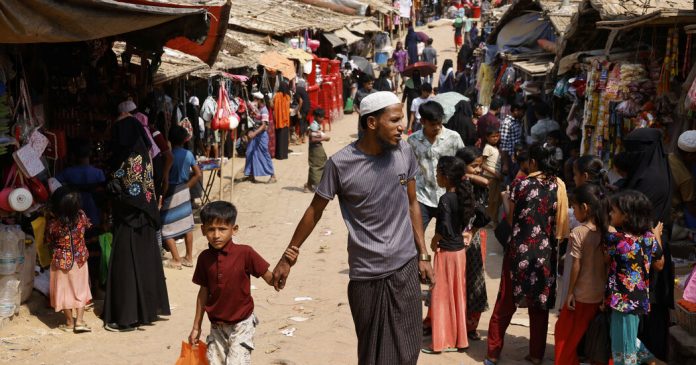
Today, more than a million Rohingya are confined to a series of tent settlements in neighboring Bangladesh, one of which is the largest refugee camp in the world. Gun battles in the camps between rival militant groups, including ARSA, have added yet another layer of trauma to Rohingya life and radicalized a generation of desperate youth.

ARSA and other insurgent groups have assassinated camp leaders, including those working toward a return of Rohingya to Myanmar. Militants have forcibly recruited boys and young men into their ranks. They have also directed smuggling rings that deposit young Rohingya in the sex and servant trades, according to camp elders and human rights groups.

Mr. Ataullah, the ARSA commander, was born to an exiled Rohingya family in Pakistan and raised in Saudi Arabia, where he received religious instruction. The group was largely unknown until thousands of its fighters besieged the Myanmar security outposts, killing about 20 police and military personnel in the 2017 attacks, according to the Myanmar government. Dressed in black, ARSA insurgents were trained to rally themselves with the battle cry “Speak loudly, Allah is the greatest,” according to the group’s members.

Mr. Ataullah, who was identified by the Bangladeshi police as Ataullah abu Ammar Jununi, secretly recruited among Rohingya in Myanmar, both young and old, arguing that only an armed rebellion could counter the decades of persecution faced by the Muslim minority in a Buddhist-majority country.

But in recent years, ARSA has become better known for gangland-style turf battles in the refugee camps in Bangladesh, fighting with other armed groups, including the Rohingya Solidarity Organization. Insurgent leaders, human rights watchdogs say, have indulged in drug and human trafficking.

“Ataullah’s role in orchestrating egregious violations against civilians is undeniable,” said John Quinley, director of Fortify Rights, a human rights group that on Tuesday released a 78-page report on Rohingya militant activity in Bangladesh. “He directly oversaw horrific acts of violence, including killings, abductions and the torture of Rohingya civilians in both Myanmar and Bangladesh.”

The actions of Mr. Ataullah and other insurgents, Mr. Quinley added, may constitute war crimes.

There is little hope that the Rohingya can return to Myanmar anytime soon. Even before the Myanmar military staged a coup four years ago, plunging the Southeast Asian country into civil war, the Rohingya bore the brunt of the military’s ethnic chauvinism. Waves of Rohingya fled home, finding refuge and menial jobs in Asia and the Middle East. There are now far more Rohingya living outside of Myanmar than in their homeland.

Cuts in American aid in recent weeks have added more pain to Rohingya life in the Bangladesh camps, as clinics and other essential services have ceased.

Militant groups that claim to be fighting on behalf of the Rohingya have formed over the decades in Rakhine State, their home in western Myanmar. Some Rohingya armed organizations have called for autonomy, others merely a halt to the apartheidlike conditions inflicted on the minority by the Myanmar military, which is dominated by the Buddhist Bamar ethnic group. The pogroms against the Rohingya in 2016 and 2017 were abetted by yet another ethnic minority, the Buddhist Rakhine, who populate the same strip of western Myanmar as the Rohingya.

Today, an ethnic Rakhine insurgency called the Arakan Army has wrested control of much of Rakhine State from the Myanmar military, including the northern part of the state where the Rohingya are clustered. The changed battlefield has led to an unusual alliance. Some Rohingya militant groups have kidnapped boys and young men from the refugee camps in Bangladesh and dispatched them to Myanmar to fight on the side of the Myanmar military. Many Rohingya believe the Arakan Army commits far worse atrocities against them than does the Myanmar military.

The Myanmar military’s ethnic cleansing campaigns have targeted multiple minority groups of multiple faiths. But the violence directed toward the Rohingya has been the most extreme. Both military and civilian governments in Myanmar have dismissed the Rohingya as foreign interlopers from Bangladesh and refuse to even use the name “Rohingya,” lest it legitimize the ethnic minority’s existence. Most Rohingya have been essentially stripped of their citizenship, despite their leaders having once served in Parliament and in other august positions.

Saif Hasnatcontributed reporting from Dhaka, Bangladesh.

Turkey Arrests Istanbul Mayor, Key Rival to President Erdogan

0

The mayor of Istanbul, Ekrem Imamoglu, one of Turkey’s most prominent opposition politicians, was arrested on Wednesday morning on charges related to corruption and terrorism, the city’s prosecutor’s office said.

A large group of police officers arrived at Mr. Imamoglu’s house and took him away, and a number of his aides were also detained. Prosecutors said arrest warrants had been issued for more than 100 people.

Mr. Imamoglu has been seen as a likely contender in the next presidential election, scheduled for 2028, although early elections are likely. He and other opposition figures have accused President Recep Tayyip Erdogan’s government of seeking to exclude Mr. Imamoglu from politics so that he cannot run in the election, possibly against Mr. Erdogan himself.

In a video posted on social media before his arrest, Mr. Imamoglu accused the government of “usurping the will of the people.”

“We are facing great tyranny, but I want you to know that I will not be discouraged,” he said.

This is a developing story.

Code Switch talks to a legal expert about Mahmoud Khalil arrest : Code Switch : NPR

0
Flyer with Mahmoud Khalil

Mahmoud Khalil, a legal permanent resident and Columbia alum, was detained by ICE for his role in leading pro-Palestinian protests at his former university last year. As Khalil’s case has captured the nation’s attention, free speech advocates see it as a test of the First Amendment. Meanwhile, the Trump administration argues they have the right to deport Khalil without charging him with a crime. On this episode, why Khalil’s arrest should worry all of us.

This episode was produced by Xavier Lopez. It was edited by Courtney Stein. Our engineers were Gilly Moon and Patrick Murray.

Wednesday Briefing – The New York Times

0

During a call with President Trump, President Vladimir Putin said yesterday that he would accept a halt to strikes on energy infrastructure in Russia’s war with Ukraine, as long as both sides honored it, according to the Kremlin. But the Russian leader did not agree to a broader, 30-day cease-fire proposed by the U.S. and Ukraine.

President Volodymyr Zelensky of Ukraine said he was open to suspending attacks on energy targets, but he, too, insisted that the deal not be one-sided. “It cannot be the case that Russia attacks our energy sector, and we remain silent,” he said. “We will respond.”

Putin has told Trump “that the ‘key condition’ to resolving the conflict was an end to military and intelligence aid to Ukraine by the West,” said my colleague Paul Sonne, who covers Russia. That path, he added, “would essentially make Ukraine perpetually vulnerable to Russia.”

The White House said a pause on energy strikes would be a first step toward peace, but the outcome of the call with Putin seemed to fall well short of what Trump had suggested was possible.

Analysis: Halting attacks on energy targets would benefit both nations. Ukraine has struggled with Russia’s repeated attacks on its power grid, and Ukraine’s strikes on Russian oil and gas facilities have jeopardized a crucial revenue stream.

Related:

  • The U.S. is seeking access to Ukrainian minerals, which require extensive energy to process. The Russian-controlled Zaporizhzhia power plant in southern Ukraine could help with that goal, Kyiv says.

  • Russia significantly stepped up its sabotage campaign as it sought to pressure Europe and the U.S. to curb their support for Ukraine, a study found.


Israeli forces launched devastating aerial attacks across the Gaza Strip yesterday, ending a temporary cease-fire with Hamas that began in January and raising the prospect of a return to all-out war. More than 400 people, including children, were killed in the strikes, Gaza’s health ministry said, one of the war’s deadliest single-day tolls. Here’s what to know.

The attacks came after weeks of fruitless talks aimed at extending the fragile cease-fire. The first phase of the truce expired in early March, but it had largely held as diplomats worked to broker an extension to free the surviving Israeli hostages and end the war. Of the 59 hostages still in Gaza, fewer than half are believed to be alive.

Prime Minister Benjamin Netanyahu suggested yesterday that Israel would carry out more attacks in tandem with negotiations. “This is just the beginning,” he said. “We will keep fighting to achieve all of the war’s objectives.” Hamas officials argued that Israel had brazenly overturned the truce, but it had no immediate military response.

Analysis: Israel appears to have returned to war in an attempt to crush Hamas’s hopes of retaining control of Gaza, Patrick Kingsley and Ronen Bergman write.


“For more than two centuries,” Roberts said, “it has been established that impeachment is not an appropriate response to disagreement concerning a judicial decision.” The judge attacked by Trump had ordered a halt to the deportation of hundreds of migrants to El Salvador.

Context: The deportation case has emerged as a flashpoint in a larger debate over presidential power and the role of courts to review how that power is applied.

Lucy’s, a beloved New York City dive bar, sat dark and empty behind an iron gate after a new landlord more than doubled the rent. An unlikely friendship between Ludwika Mickevicius, 84, and John Neidich, 43, gave it a second lease on life.

Lives lived: John Hemingway, who flew fighters in the Battle of Britain and was the last known survivor of the nearly 3,000 pilots and crew, died at 105.

Piet Mondrian is known for his abstract works of glossy black lines and planes of red or blue. But Jason Farago, our critic at large, kept returning to the artist’s portrait of a single true-to-life chrysanthemum, with its blue galaxy of petals.

“Whether in solo flower or abstract field, he is teaching you the beauty of parts and wholes,” Jason writes. Go inside the work.


That’s it for today’s briefing. See you tomorrow. — Natasha

Reach Natasha and the team at [email protected].

12 Killed in Plane Crash Near Mainland Honduras

0

A small passenger plane carrying 15 passengers and two crew members crashed seconds after taking off from the Caribbean island of Roatán on Monday, killing 12 people.

Six Women Were Elected. So Why Were Their Husbands Sworn In?

0

The video that set off the storm was not much to look at. A circle of 12 men draped in bright garlands were reading aloud solemn statements during a ceremony to form a new local government in a deeply rural corner of India.

The scandal was that six of those elected to lead the village had been women. Those six were absent, each one represented by her husband instead.

The video went viral after the March 3 ceremony, and reporters from India’s national newspapers descended on Paraswara village in the central state of Chhattisgarh over the next week — which included International Women’s Day.

The public erasure of the six female officeholders was shocking but hardly surprising. This kind of unofficial substitution is commonplace in rural India, in exactly the places where small-time leadership positions have long been set aside for women.

Since 1992, the national rules concerning panchayats, or traditional village councils, have promised that one-third and in some cases one-half of all seats will be set aside for women. The idea was to lift up a generation of female leaders and to make the councils more attuned to women’s needs.

The spirit of this law, however, is often disregarded, even when the letter is obeyed. The women who are supposed to take seats in the panchayat end up serving as deputies to their own husbands, who wield power alongside the elected men. There is a well-known term in Hindi, pradhan pati, for this “boss husband” role.

India has a long way to go to empower women at the national level, too. Only about 15 percent of members of Parliament are women, and there are just two women in the 30-member cabinet of Prime Minister Narendra Modi. The government approved a constitutional amendment in 2023 to reserve a third of all parliamentary seats for women, though it will not go into effect for at least another four years.

While many female politicians have risen to national prominence, that has come not via panchayat seats, but often through association with established male politicians.

In Paraswara, the men who had been present at the village’s swearing-in ceremony were defensive about the absence of the six women. One of the men, Bahal Ram Sahu, said in an interview later that three of the women had been ill and that the other three were required at a funeral that day. Other witnesses differed about the details, but all agreed with Mr. Sahu: Sometimes a husband stands in for his wife, and “nobody thinks there is anything wrong with that.”

Over the past 15 years, Mr. Sahu’s wife, Ram Bai, has been elected three times to Paraswara’s panchayat and once served as its head. But “as a husband, I am always with her,” he said. He counseled her on all matters, he added, and represented her whenever she was indisposed.

The husband who serves as a proxy for his officially empowered wife has become a stock character in fiction. “Panchayat” is the title of a popular series on Amazon Prime in which a village’s local boss lounges around on a string bed calling shots while his wife pretends to hold the office to which she was elected.

The national government has recognized the problem. It commissioned a report in 2023 aimed at “eliminating efforts for proxy participation,” and last month it proposed “exemplary penalties” against husbands who usurp their wives’ roles.

Even “Panchayat” the TV show has a role to play. As the series unspools, the wife turns out to be a wily and capable character and finds ways to exercise her lawful authority. Now the show’s producers are working with the government on a series of episodes subtitled “Who’s the Real Boss?,” in which, after all, the woman knows best.

Encouragement comes from real life, too, in other parts of India. In the state of Punjab, Sheshandeep Kaur Sidhu became the head of her village’s panchayat at the age of 22. Ms. Sidhu, who is now 29, had earned a master’s degree in political science and felt determined to do something for her village.

After winning one of the seats reserved for women, Ms. Sidhu had her eye on fixing problems involving education and sanitation. She faced resistance. “I was very young and they were like: ‘What can this girl achieve?’” she recalled.

Ms. Sidhu wants every woman seated in every panchayat in India to stick up for herself and her fellow women, and to use the power the state has entrusted with them. Women like her, she said, must be “headstrong” and “make your points clear to your husbands.”

“I was told politics is not considered a good thing for girls and women,” Ms. Sidhu said. So she made a priority of solving a symbolic problem in her village.

For every household that was headed by a woman, she had a nameplate hung outside. These houses used to be known only by the names of male relatives: fathers, brothers or husbands, even if dead or departed. Now each one shows the name of the actual woman who runs the home.

Judge demands more answers about deportation flights : NPR

0

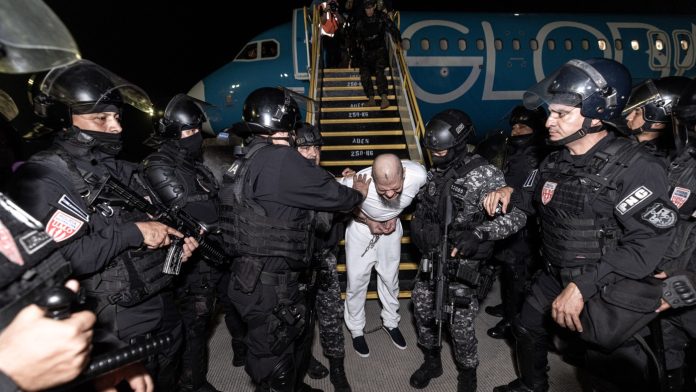
Guards escort one of the hundreds of alleged members of the ‘Tren De Aragua’ and Mara Salvatrucha gangs who were deported from the U.S. to El Salvador.

Salvadoran government handout/Getty Images


hide caption

toggle caption

Salvadoran government handout/Getty Images

WASHINGTON, D.C. — A federal judge is pushing the Trump administration for more details about weekend flights that deported hundreds of alleged Venezuelan gang members, despite his order to turn the planes around.

In court filings on Tuesday, the Justice Department complied with a judge’s order for a sworn declaration about how planeloads of alleged members of the Tren de Aragua gang landed in El Salvador — hours after U.S. District Judge James Boasberg issued emergency orders temporarily blocking the Trump administration from using wartime powers to quickly deport people.

Almost immediately, Boasberg gave the Justice Department another deadline for more detailed information about those flights, by noon ET on Wednesday.

The legal back-and-forth comes amid escalating tensions between the White House and the judiciary, as President Trump appeared to call for the removal of the judge overseeing the case.

Trump complained about “This Radical Left Lunatic of a Judge, a troublemaker and agitator who was sadly appointed by Barack Hussein Obama” in a post on his Truth Social platform on Tuesday. Trump did not mention Boasberg by name. But said that “This judge, like many of the Crooked Judges’ I am forced to appear before, should be IMPEACHED!!”

That prompted a rare statement from Supreme Court Chief Justice John Roberts.

“For more than two centuries, it has been established that impeachment is not an appropriate response to disagreement concerning a judicial decision,” the court said in a statement from Roberts. “The normal appellate review process exists for that purpose.”

At a hearing on Monday, lawyers for the Justice Department did not answer repeated questions from the judge about when the deportation flights took off, and exactly who was on board the planes.

That prompted Boasberg to request a sworn declaration in writing from the Justice Department.

In a court filing on Tuesday, lawyers for the Justice Department complied, providing a sworn declaration from Robert Cerna, a top official at the U.S. Immigration Customs and Enforcement field office in Harlingen, Texas, where the deportation flights originated.

But at the same time, Justice Department lawyers struck a defiant note, insisting that Boasberg had “no justification” to seek more information about two deportation flights that left the U.S. before his written order.

According to Cerna’s statement, there were three deportation flights that left the U.S. on Saturday for El Salvador, a day after Trump signed a proclamation invoking the Alien Enemies Act, a rarely used authority that gives the president power to detain or deport nationals of an enemy nation during wartime or invasion.

Two of those planes left before Boasberg’s written order was published at 7:25 p.m. ET, Cerna said in his sworn declaration. A third flight took off after the judge’s written order, but according to Cerna, all individuals on the plane had final orders of removal and were not deported “solely on the basis of the Proclamation at issue.”

DOJ lawyers also repeated some of the arguments they made at a hearing Monday, insisting the Trump administration had not violated the court’s written order because the first two flights had already left U.S. airspace, while the court’s earlier oral statements to turn around any planes already in the air were “not independently enforceable as injunctions.”

The incident is adding to concerns among Trump’s critics that the administration is openly defying the authority of federal courts, and moving the nation closer to a constitutional crisis.

The Alien Enemies Act has been used only a handful of times in U.S. history to detain or deport nationals of an enemy nation during wartime or an invasion.

The last time a president invoked the Alien Enemies Act was during World War II, when it was used to detain 31,000 people, mostly of Japanese, Italian and German ancestry.

The American Civil Liberties Union and Democracy Forward filed a lawsuit on Saturday seeking to block the deportations of five Venezuelan men, and later expanded their request to all people who could be deported under Trump’s proclamation.

The ACLU argues it’s illegal to use the Alien Enemies Act during peacetime for regular immigration enforcement, and that only Congress can authorize its use by declaring a state of war.

“Congress was very clear in the statute that it can only be used against a foreign government or foreign nation. It has never in our country’s history been used during peacetime, much less against a gang,” said Lee Gelernt, the ACLU’s lead attorney on the case, in an interview with NPR.

Gelernt also questioned whether the hundreds of Venezuelan men deported to El Salvador were in fact members of Tren de Aragua or other gangs, as the Trump administration has alleged.

“These individuals did not get a hearing to show they’re not members of a gang,” Gelernt said.

In a court filing late Monday night, the Trump administration insisted it had good reason to believe that the men deported to El Salvador over the weekend are gang members.

“Agency personnel carefully vetted each individual alien to ensure they were in fact members of [Tren de Arugua,]” Cerna said in a declaration. “ICE did not simply rely on social media posts, photographs of the alien displaying gang-related hand gestures, or tattoos alone.”

Cerna also conceded that “many” of those Venezuelan men who are now being held in a supermax prison in El Salvador do not have criminal records in the U.S. But “that is because they have only been in the United States for a short period of time,” Cerna said.

“The lack of a criminal record does not indicate they pose a limited threat,” according to Cerna’s declaration. “The lack of specific information about each individual actually highlights the risk they pose. It demonstrates that they are terrorists with regard to whom we lack a complete profile.”