Tuesday, November 10, 2026
Home Blog Page 14

U.S. and China begin talks amid tensions over Trump’s tariff war : NPR

0

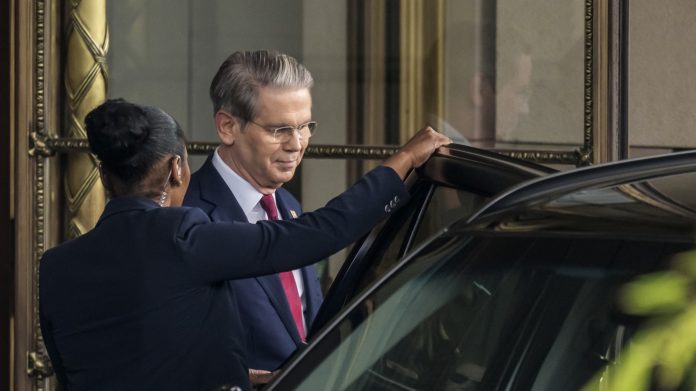
U.S. Treasury Secretary Scott Bessent leaves his hotel to attend a meeting with China’s officials on tariffs in Geneva, on Saturday.

Fabrice Coffrini/AFP via Getty Images


hide caption

toggle caption

Fabrice Coffrini/AFP via Getty Images

GENEVA — Officials from the United States and China began trade-related talks here Saturday, marking the first face-to-face conversations since President Trump placed new tariffs of 145% on Chinese goods.

The meetings in a Swiss city known for its discretion and conflict resolution represent the first potential efforts to end a trade war that has frazzled financial markets in recent weeks, and caused billions of dollars’ worth of import disruption across both the United States and China.

The U.S. delegation is being led by Treasury Secretary Scott Bessent, alongside Trade Representative Jamieson Greer, and the only participant the Chinese have confirmed is the country’s vice premier for economic affairs, He Lifeng.

The talks are being held at a grand hilltop villa with sweeping views of Lake Geneva used by Switzerland’s ambassador to the United Nations. Neither side has issued public statements since the talks began early Saturday.

Just days before these discussions of seismic economic significance, the United Kingdom became the first country to strike its own limited trade deal with the Trump administration — albeit one that left tariffs of 10% still in place on most British exports. 

But for Bessent, China has been the “missing piece,” as he explained in a recent interview on Fox News — one of the only countries that until now has refused to enter discussions on trade.

Bessent said he was originally only visiting Geneva to edge closer to a separate, updated trading arrangement with Swiss authorities. They told reporters in a news conference Friday that they hoped their own agreement with Washington could be struck within a few weeks.

In the meantime, Swiss President Karin Keller-Sutter said, her country was happy to help facilitate dialogue between the two global economic superpowers, at a moment when the anticipated impacts of tariffs have weighed heavily on stock prices and economic forecasts alike.

“Now the chance has been taken by China and the U.S.,” Keller-Sutter told NPR. “We really hope that this platform we can offer will also lead to a result, because it would be in the interest of, I would say, the world economy and world commerce.”

When he arrived in Geneva on Friday, Bessent had met with senior Swiss officials including Keller-Sutter. She told him she hoped the Holy Spirit that had visited Rome this past week — during the election of a new pope — might travel up to Geneva this weekend too, to help nudge things along.

But a swift resolution seems unlikely, and this initial set of conversations could merely herald the start of a months-long marathon of negotiations, says Dmitry Grozoubinski, a former diplomat and trade negotiator for Australia.

“The two delegations will be feeling one another out — neither side particularly benefits from this current iteration of the trade war continuing,” said Grozoubinski, now the executive director of the Geneva Trade Platform think tank.

“This is going to be the first steps in a dance where they try to feel out: ‘OK, what would a win for you look like, and is that a price we’re willing to pay,’ while trying to communicate the same thing in the other direction,” he said.

Week in politics: U.S. stays away from new conflict, shakeup in Trump's appointees

0

The Trump administration is not eager to involve itself in international conflicts like the one between India and Pakistan.

GOP lawmakers seek more state laws on transgender people, putting Democrats on the spot : NPR

0

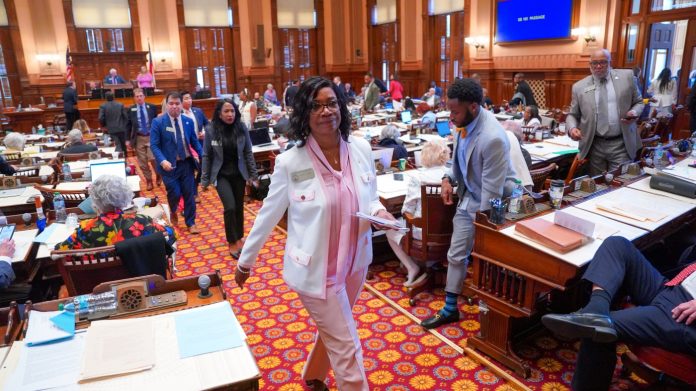
Democratic lawmakers, led by Minority Leader Carolyn Hugley, walk out of the Georgia House of Representatives last month, skipping a vote on a bill to ban gender-affirming care for inmates in state prisons.

Matthew Pearson/WABE


hide caption

toggle caption

Matthew Pearson/WABE

ATLANTA – Bathrooms. Medical care. Sports. The definition of “male” and “female.” In state legislatures this spring, Republicans have kept a focus on transgender people. They have filed hundreds of restrictive bills, often using them to put Democrats in tough political positions.

The majority don’t pass, like the majority of all bills, but dozens have. And, even when they don’t, they can force votes and drive debate.

Iowa lawmakers removed gender identity from the state’s civil rights protections. Wyoming prohibited state agencies from requiring employees to use other employees’ preferred pronouns. Alabama passed a law defining words like “father,” “boy” and “girl.”

This week Maine lawmakers discussed proposals to ban trans athletes from girls school sports, a move demanded by the Trump administration.

Supporters of such proposals call them common-sense measures to safeguard tax dollars, promote fairness and respond to public opinion. Opponents argue the laws sanction discrimination and the exclusion of a vulnerable minority group and that rhetoric produced in these debates can stigmatize the transgender community.

Republicans have continued to raise the issue, prompting some Democrats to reevaluate their response.

Each year, more bills and new themes

Georgia Republican Gov. Brian Kemp signs into law a series of education bills in April, including a measure preventing transgender girls from playing on girls’ sports teams.

Georgia Republican Gov. Brian Kemp signs into law a series of education bills in April, including a measure preventing transgender girls from playing on girls’ sports teams.

Matthew Pearson/WABE


hide caption

toggle caption

Matthew Pearson/WABE

Bills focused on transgender people rose to prominence in 2016 with a North Carolina law requiring people to use bathrooms based on their sex assigned at birth (later rolled back). By 2021, the number of bills climbed with a new emphasis on transgender athletes’ participation in school sports and, later, on restricting gender-affirming treatments, especially for minors.

By 2024, some advocates on the other side thought the effort had peaked. A group that opposes restrictions on transgender people, the Human Rights Campaign, issued a report last year declaring it, “increasingly clear that the tide is turning and momentum has begun to shift” against these bills.

But later that year, Republicans saturated campaigns with ads about gender, including attacks on Biden administration policies. The Trump campaign highlighted the issue in ads in swing states. Down-ballot candidates picked up the message, too.

The American Civil Liberties Union tracks “anti-LGBTQ bills.” The group says the bulk of them contain restrictions on transgender people and that a record 575 bills had been filed in states through April. Last year, there were 533 and there were 510 in 2023, according to the ACLU, which opposes such laws.

A research group, Trans Legislation Tracker, counts  more than 800 bills that “negatively impact trans and gender non-conforming people” as of this week. That’s up from 701 last year and 615 in 2023.

The figures are questioned by Joseph Kohm III, policy director at the Family Policy Alliance, a network that has promoted bills in state legislatures for laws like preventing transgender girls from playing on girls sports teams. He says these tracking groups use overly broad definitions that pull in bills with no chance at passage, inflating the total.

But Kohm agrees that there is an uptick in political interest from state lawmakers. “Those waves across the country have turned this into a slow burn that’s finally coming to a boil,” he says.

About half the states now ban transgender girls from girls’ school sports teams, and Kohm says advocates are now turning to new efforts, like codifying definitions of man and woman in state law.

“This is not one of those revolutions that’s going to go on forever,” Kohm says. “There is an end point where I think we right the collective ship on this issue, but we’re not there yet.”

‘I’ve struggled over this legislation’

Georgia illustrates how Republicans have forced Democrats to wrestle with the way forward.

This year, Republicans filed bills to ban transgender girls from girls’ school sports, restrict puberty blockers for minors and prevent the state health plan from covering gender-affirming care.

Georgia State Sen. Elena Parent, a Democrat from Atlanta, speaks on the Senate floor in March.

Georgia State Sen. Elena Parent, a Democrat from Atlanta, speaks on the Senate floor in March.

Matthew Pearson/WABE


hide caption

toggle caption

Matthew Pearson/WABE

It was a bill banning those treatments for state prison inmates that prompted a handful of Democrats who usually oppose bills restricting the transgender community to vote in favor. Democratic Sen. Elena Parent told her colleagues she had to acknowledge public sentiment after the 2024 election.

“I feel like we’ve done more bills this session picking on transgender folks than we’ve done anything else,” Parent lamented. “But we also need to consider the public’s priorities.”

But when the bill advanced to the state House, Democrats tried a different approach, skipping the vote and walking out in protest. Republicans called them cowardly, an accusation Democrats pushed back on.

“People sent us here to do great work,” Democratic House Minority Leader Carolyn Hugley said. “They did not send us here to bully people, to discriminate against people. Many of us are descendants of people who have felt the same thing.”

Republicans see the issue as still politically potent 

Debates like that translate easily into language for effective campaign ads and mailers, says Georgia Republican strategist Brian Robinson.

“Democrats ‘refused,’ that’s the word you use, ‘refused,’ to stand up for taxpayers when given the choice to ban transition surgeries for prisoners,” Robinson says. “Because they don’t share your values, because they are out of touch. That’s the message.”

According to the Pew Research Center, survey data suggests Americans have generally become more supportive of restrictions on transgender rights.

But Chase Strangio, who runs the ACLU’s LGBTQ and HIV Project, says any shift is because conservative politicians and groups have flooded voters with messaging that says transgender people are a threat.

“I think it’s incredibly misguided to look at an election aftermath and turn against trans people, and I think in some ways that’s what we’re seeing,” Strangio says.

There were protests in Raleigh in 2016 as the North Carolina Legislature eventually passed a law requiring people to use bathrooms according to their sex assigned at birth, putting "bathroom" bills on the map.

There were protests in Raleigh in 2016 as the North Carolina Legislature eventually passed a law requiring people to use bathrooms that correspond to their sex assigned at birth. The law was later rolled back.

Gerry Broome/AP


hide caption

toggle caption

Gerry Broome/AP

Strangio, the first openly trans attorney to argue before the U.S. Supreme Court, says courts can block some of the laws, but it’s also important to stop the proposals before they pass. “The whole purpose of constitutional rights is to protect against erosion of the rights of politically unpopular minorities.”

Transgender advocates and their Democratic supporters consider new strategies

Brandon Wolf, with the Human Rights Campaign, points to Montana Democrat Zooey Zephyr, a transgender lawmaker prevented by her GOP colleagues from speaking on the floor. Two years later, she convinced many of them to help her defeat two restrictive bills.

Wolf calls for a strategy that humanizes transgender individuals.

“This web of right-wing organizations sets a million tiny fires across the country, so that we get stuck running around with an extinguisher trying to put them out one by one,” Wolf says.

In Georgia, Sen. Parent says Democrats need to show they are in touch with the challenges faced by the broader public, like the high cost of housing.

“We are very clear that transgender Georgians should be able to live their lives with dignity and respect and free of undue discrimination,” Parent said in an interview. “But we have to recognize that this is an evolving conversation in the public. And seeming as though we are really wrapped up in worry about transgender prisoners does a disservice if you can’t talk to voters in areas we must win.”

Republicans have pledged to continue the push next year, as the midterms get underway.

Sam Gringlas covers politics for WABE.

Jeanine Pirro latest Fox News star to join Trump administration : NPR

0

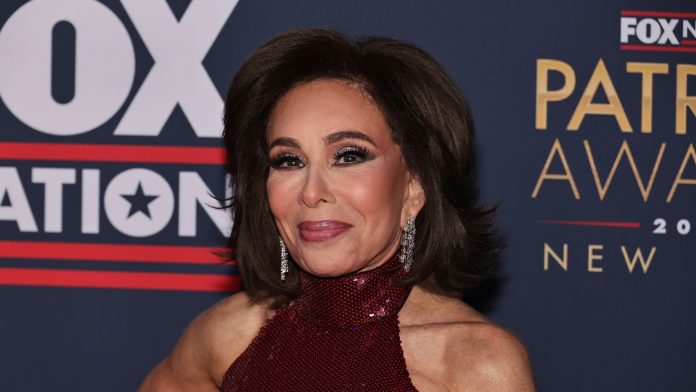
Jeanine Pirro, who just left Fox News’ The Five to become the interim U.S. attorney for Washington, D.C., attends FOX Nation’s 2024 Patriot Awards on December 05, 2024.

Theo Wargo/Getty Images/Getty Images North America


hide caption

toggle caption

Theo Wargo/Getty Images/Getty Images North America

On the eve of President Trump’s inauguration, Fox News star Jeanine Pirro stood on the stage at a party in his honor, his son Donald Trump Jr. by her side.

A Trump official responsible for hiring raised Pirro’s arm aloft and told the crowd, “Very soon, we have a big announcement for another big hire!”

Pirro mouthed the words “No, no,” and soon issued a statement through Fox that she “will not be joining the administration,” though she helped to rally Trump’s fans at the event.

On Thursday night, Trump said he was appointing Pirro to be the acting U.S. attorney for Washington, D.C. She’s replacing Ed Martin, whose Senate confirmation ran into trouble with both Republicans and Democrats.

In his announcement, Trump proudly cited Pirro’s work for Fox. The Five, which she co-hosted, is “one of the Highest Rated Shows on Television,” he noted.

(L-R) Kash Patel, now the FBI director; Donald Trump Jr.; Brendan Carr, now chairman of the Federal Communications Commission; Jeanine Pirro; Sergio Gor, now the head of the White House Office of Presidential Personnel, and Trump senior advisor Alina Habba attend the Turning Point USA Inaugural-Eve Ball on January 19, 2025 in Washington, D.C.

(L-R) Kash Patel, now the FBI director; Donald Trump Jr.; Brendan Carr, now chairman of the Federal Communications Commission; Jeanine Pirro; Sergio Gor, now the head of the White House Office of Presidential Personnel, and Alina Habba, now the acting U.S. attorney for New Jersey, attend the Turning Point USA Inaugural-Eve Ball on January 19, 2025 in Washington, D.C.

Samuel Corum/Getty Images/Getty Images North America


hide caption

toggle caption

Samuel Corum/Getty Images/Getty Images North America

Pirro is, by the count of the liberal watchdog group Media Matters, the 23rd Fox personality named to a high-ranking position in the Trump administration. She did not respond to NPR’s request for comment.

The Fox-to-Trump Funnel

The Fox News funnel keeps on pouring into 1600 Pennsylvania Avenue. Even the network’s stars — many of whom have advised the president off the air —have acknowledged the phenomenon is an unprecedented circumstance. In Trump’s second administration — not even four months old — there are more people with “Fox” on their résumés than there were during all four years of his first term.

A former Fox News personality serves as the director of national intelligence. What about the administrator of the Centers of Medicare and Medicaid? Yup. The deputy director of the FBI? Check. And don’t forget the former Trump national security adviser who was just shunted over to represent the U.S. at the United Nations. The ambassador to Israel is a former Fox News host. So is the nominee to be the ambassador to Greece (who is also Don Jr.’s former fiancée).

U.S. Attorney General Pam Bondi was not a Fox News pundit. But she did guest host The Five several times while serving as Florida’s attorney general.

Two of the most prominent of these Fox-Trump administration officials are among its most telegenic: Defense Secretary and former Fox & Friends Weekend host Pete Hegseth and Transportation Secretary and former Fox Business host Sean Duffy. Both men met their wives at the network. Duffy’s wife Rachel Campos-Duffy is a host on Hegseth’s former Fox News show; the influence Jennifer Hegseth has wielded during the defense secretary’s brief tenure has drawn unwanted press scrutiny.

It is not clear the two former talking heads talk to each other, however: After the fatal plane crash involving a military helicopter near Ronald Reagan Washington National Airport, Duffy complained that the Defense Department was not sharing vital information. He lodged his complaint on — where else — Fox News.

“The DOD has promised radical transparency,” Duffy told his former colleague Laura Ingraham. “They should tell us who is qualified to take a helicopter out of the Pentagon. I don’t know, but they have to tell us.”

Ingraham offered to call Hegseth right there, lifting up her smartphone.

“You call Pete. Dial in!” Duffy responded, adding that he needed the information for safety purposes. Press aides to the two cabinet secretaries did not return NPR’s requests for comment.

Pirro left lawyering for the studio decades ago

Pirro was a county judge and district attorney in Westchester County, the suburb immediately north of New York City, but she’s been out of office for nearly two decades. She has a longstanding friendship with Trump, who rose to prominence as a real estate developer in New York City. Trump contributed to Pirro’s unsuccessful 2006 effort to seek the Republican nomination for U.S. Senate against then-incumbent, Democrat Hillary Clinton. (Trump was also a donor to Clinton.)

After a nationally syndicated reality courtroom show on the CW network, Pirro was named by then-Fox News Chairman Roger Ailes to be a host of her own weekend program on Fox in 2011.

She presented herself as tough on crime but became a tough talker more broadly.

During Trump’s first term, Pirro called for the jailing of FBI and Justice Department staffers, spoke on stage at a Trump campaign event, and ran rhetorical interference for him during his impeachment trials.

In 2019, as Media Matters reported, Pirro acknowledged being suspended by Fox, which had rebuked her for suggesting that Rep. Ilhan Omar’s hijab, reflecting her observance of Muslim practices, suggested an “adherence to sharia law.”

“This woman should never be on live television”

Back in early November 2020, just after Joe Biden defeated Trump to win the White House, Pirro was among a slew of Fox News stars who amplified the conspiracy theories — and later, outright lies — about the election being rigged.

A senior executive at the network yanked her weekend show from the air the Saturday after the election, saying he couldn’t trust she would be responsible.

Two weeks later, Pirro’s executive producer flagged that the introduction she proposed for her next show was “rife with conspiracy theories and BS and yet another example why this woman should never be on live television.”

Pirro was one of four Fox hosts sued for defamation along with the network, by the election machine Dominion Voting Systems. Fox paid $787.5 million to settle the case on the eve of the jury trial, which would have focused on statements on Fox’s programs spuriously giving credibility to false claims of election fraud in 2020. 

The network is in court again in a parallel suit filed by Smartmatic, a voting tech company.

Pirro used her perch to call attention to Jan. 6

As NPR has reported, after the election, Pirro was among the Fox News personalities who kept raising alarms about the importance of Jan. 6, 2021 — the date the U.S. Congress was to certify Biden’s win.

On Jan. 3, Jeanine Pirro compared those gathering to protest at the foot of the U.S. Capitol to the American soldiers in the Revolutionary War, adding, “Jan. 6 will tell us whether there are any in Congress willing to battle for America.”

After Trump addressed the crowd, hundreds of protesters laid siege to the Capitol to try to block the certification of the election.

The U.S. Attorney’s office would go on to prosecute more than 1,500 people for crimes in connection with the riot. More than 1,000 pleaded guilty; another 200 were found guilty.

Upon taking office, Trump granted clemency to all the Jan. 6 insurrectionists and named Martin as acting U.S. attorney for Washington, D.C.

Martin had previously advanced bogus claims about election fraud in swing states in 2020. He spoke at a raucous protest the day before the siege of the Capitol. And he represented several of the defendants in court.

That record unraveled Martin’s prospects for nomination. A key Republican senator, North Carolina’s Thom Tillis, made clear he’d vote against Martin.

Trump has once more found a like-minded prosecutor to lead the office.

And he tuned into a favorite TV channel to find her.

Why Trump is focusing on business deals on his Middle East trip : NPR

0

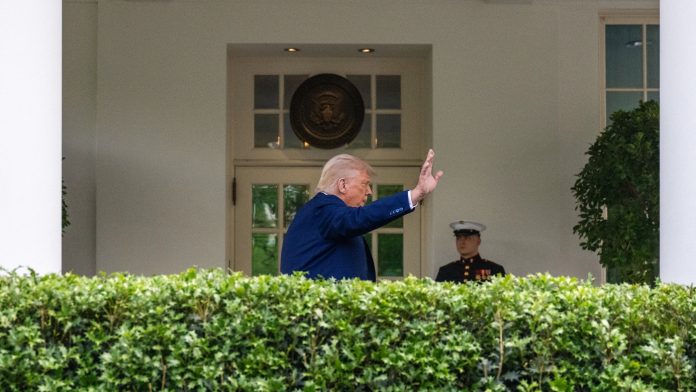
President Trump waves after taking questions from reporters outside the White House on May 8.

Jim Watson/AFP


hide caption

toggle caption

Jim Watson/AFP

President Trump leaves Monday for the first major foreign trip of his second term, focusing on business deals in Saudi Arabia, Qatar and the United Arab Emirates as his administration struggles to broker an end to the war in Gaza.

Trump pledged to bring peace to the region as he ran for a second term, but that is proving to be elusive. On this trip, he will showcase a promise by Saudi Arabia to invest $600 billion in the United States over the next four years and pledges from the UAE to spend $1.4 trillion over 10 years.

“The Saudis, the Emiratis and Qataris are going to fall all over themselves over who can outdo themselves to welcome the president,” said Steven Cook, a senior fellow for the Middle East at the Council on Foreign Relations. “And then they will outdo themselves over the number of deals that they can announce as the president is there.”

In many ways, the trip is a replay of the inaugural foreign trip of Trump’s first term. The Saudis welcomed Trump with a lavish ceremony and announcements of billions of dollars in investments.

In this May 21, 2017, photo, Egyptian President Abdel Fattah el-Sisi, Saudi King Salman and President Trump place their hands on an illuminated globe as they stand around it.

In 2017, Egyptian President Abdel Fattah el-Sisi (from left), Saudi King Salman and President Trump attend a ceremonial launch of the Global Center for Combating Extremist Ideology.

AP/Saudi Press Agency


hide caption

toggle caption

AP/Saudi Press Agency

Cook said the Gulf leaders understand what Trump wants — and have an interest in giving it to him — because there are other things they don’t want Trump to ask about.

“It’s good for them because when he comes to them and says, ‘We want your help doing something on Gaza,’ and they’re not inclined to do it, they will be insulated from the criticism that would likely come if they just didn’t do anything,” Cook said.

Back in 2017, Trump sought to shore up relationships in the region after implementing a travel ban on some Muslim-majority countries — and did some business with autocratic leaders seeking global credibility.

In this 2017 photo, taken at a welcome ceremony in Riyadh, Saudi Arabia, President Trump is wearing a dark suit and holding a sword while flanked by men wearing traditional white robes who are also holding swords.

President Trump joins dancers with swords at a welcome ceremony in Riyadh, Saudi Arabia, on May 20, 2017.

Mandel Ngan/AFP


hide caption

toggle caption

Mandel Ngan/AFP

The White House said this trip will highlight strengthening ties in the region.

“President Trump will return to reemphasize his continued vision for a proud, prosperous and successful Middle East, where the United States and Middle Eastern nations are in cooperative relationships and where extremism is defeated in place of commerce and cultural exchanges,” press secretary Karoline Leavitt told reporters on Friday.

But the unrest and uncertainty in the region have complicated the messaging, said Karen Young, a political economist focusing on the Gulf at the Middle East Institute.

“A lot of the rhetoric is the same, but the world has changed,” she said.

Trump’s biggest policy goals are currently beyond reach

Trump has some big goals in the region for his second term: end fighting in Gaza, stop Iran‘s advances toward becoming a nuclear power and persuade Saudi Arabia to normalize relations with Israel by joining what’s known as the Abraham Accords.

But Saudi Arabia — which has long called for an independent Palestinian state — is unlikely to be interested in those accords right now because of the war in Gaza, said Dennis Ross, who worked on Middle East issues for both the George H.W. Bush and Clinton administrations.

“Mohammed bin Salman [Saudi Arabia’s crown prince] is very likely to say that so sours the atmosphere, that that’s not something that he can be engaging in at this time,” said Ross, who’s now at the Washington Institute for Near East Policy.

In this 2017 photo, President Trump and Saudi Crown Prince Mohammed bin Salman are shaking hands while standing in front of U.S. and Saudi flags. Trump is on the right, wearing a suit and tie, and Salman is on the left, wearing a traditional Saudi robe.

President Trump and Saudi Crown Prince Mohammed bin Salman meet in Riyadh on May 20, 2017.

Mandel Ngan/AFP


hide caption

toggle caption

Mandel Ngan/AFP

Any discussions about the accords are likely to happen behind closed doors, Ross said.

It also makes the business deals more important for Trump.

“Right now, the president doesn’t have a lot of successes to point to,” Ross said.” So I think he’s going to want to play up the trip in terms of showing, ‘Look what I’m producing for the United States.'”

What happened on Trump’s first trip to Riyadh

During Trump’s first trip to Riyadh, the Saudi capital, in 2017, nearly $110 billion in arms deals were announced, and the administration said that other investments could boost that total to as much as $350 billion.

Since then, the State Department said, the U.S. government has “implemented” $30 billion in foreign military “cases” with Saudi Arabia. Put another way: The Riyadh announcement was the easy part.

“There are a lot of steps in any arms sales process,” said John Parachini, a senior defense researcher at the Rand Corp. The process involves complex negotiations, multiple federal agencies, Congress, arms manufacturers and the customer countries.

But that complexity wasn’t part of how Trump sold it.

“That’s the style of this particular president. He’s going to send a strong signal that he’s supporting American business, but these things are really complicated and can take years,” Parachini said.

VA says its job cuts will limit doctor, nurse resignations : NPR

0

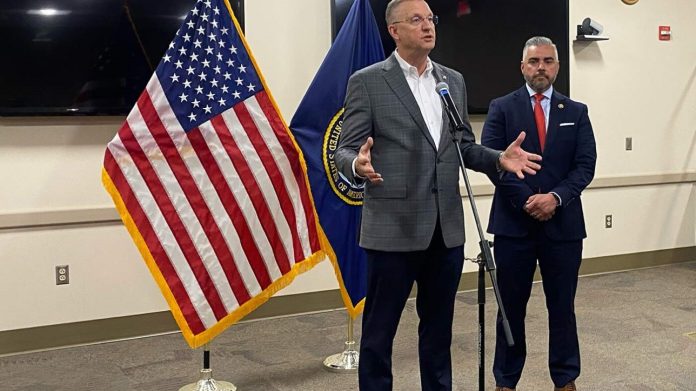
Secretary of Veterans Affairs Doug Collins and Rep. Juan Ciscomani of Arizona at the Tucson VA Medical Center on April 28.

Katya Mendoza/Arizona Public Media


hide caption

toggle caption

Katya Mendoza/Arizona Public Media

Data that employees of the Department of Veterans Affairs have shared with NPR shows that 11,273 agency employees nationwide have applied for deferred resignation, which the Trump administration is offering as part of its DOGE initiative to cut the VA’s workforce by 15%.

The top positions across all networks that are requesting deferred resignation are nurses (about 1,300), medical support assistants (about 800) and social workers (about 300).

A screenshot of Department of Veterans Affairs data shared with NPR

A screenshot of Department of Veterans Affairs data shared with NPR

Quil Lawrence/NPR


hide caption

toggle caption

Quil Lawrence/NPR

Secretary of Veterans Affairs Doug Collins has been adamant that staff cuts will not affect veterans’ health care. In a contentious Senate hearing Tuesday, he accused Democrats of fearmongering.

“I will not let you sit here and scare my veterans and scare my employees, because no one has discussed firing doctors or firing nurses,” Collins replied to a question from Democratic Sen. Richard Blumenthal of Connecticut. “We’ve always said that we’re going to keep frontline health care.”

Blumenthal responded that the secretary has failed to explain how he would reach his stated goal of returning the VA to its 2019 size without affecting care.

“It simply cannot be done. And you may give us a lot of verbiage here, but you’re not giving us facts. And facts are essential to accountability,” said Blumenthal.

The Department of Veterans Affairs is the second-largest department in the U.S. government, after the Defense Department. The VA employs about 470,000 people, of whom the agency says more than 371,000 are health care professionals. They work at 1,380 health care facilities nationwide, including 170 VA medical centers and 1,193 outpatient clinics.

On Thursday, VA press secretary Pete Kasperowicz told NPR that the agency will be very careful in approving deferred resignations for health care staff.

“While all VA employees may apply for these programs, employees who provide direct or indirect care to veterans will only be approved in very limited circumstances when their separation fulfills mission needs. Approval for staff in these positions requires multiple high-level reviews, and VA anticipates very few of these applications to be approved,” he said.

At Tuesday’s hearing, Sen. Bernie Sanders of Vermont highlighted concerns about an already existing shortage of medical providers at the VA, asking Collins: “Do you acknowledge there’s a shortage of doctors, nurses, social workers in the VA?”

“I acknowledge there’s a shortage for everybody in the health care industry on those same issues,” Collins responded.

“But in the VA?” Sanders asked.

“We are the same as every other health care system. We’re struggling to recruit doctors, nurses and others, just as anybody else, and that’s something we’re constantly in outreach about.”

Collins said that his goal with the workforce reduction is to increase productivity, eliminate waste and bureaucracy, and increase efficiency in order to improve veteran health care and benefits.

“We have been emphatic that we will not be cutting benefits and health care, only improving them,” Collins said.

But VA staff (25% of whom are veterans themselves) and vets who use VA care are concerned. In a recent poll by Iraq and Afghanistan Veterans of America, more than 4 out of 5 veterans (81%) said they are concerned that recent federal cuts could impact veteran benefits and health care.

At a May 2 protest outside the VA facility in Tucson, Ariz., Alex Maldonado, a veteran and organizer with the group Veterans for Peace, said proposed cuts to VA staff are too big.

“Those are the people we need right now to answer phones, talk to veterans, talk to us about our appointments, just somebody to talk to,” Maldonado said.

“A lot of veterans are calling us, and they’re worried because they’re afraid that this is going to affect their health care, this is going to affect the benefits,” said Dan Clare, with Disabled American Veterans.

“The secretary might be able to find some efficiencies, might be able to do some amazing things,” said Clare “It’s just we’re not getting the answers to who’s being cut, what jobs are going away, how that can affect veterans.”

That’s tough for veterans, and VA employees. One VA employee, who wished to remain anonymous for fear of retribution, said, “The mental stress so many people are working under, not knowing the status of their jobs, that indirectly also affects patient care.”

VA employees were notified via email that the deadline to apply for deferred resignation, which was initially set for April 30, has now been extended through May 16.

Employees who request and are approved for the deferred resignation would separate from the agency by Sept. 30 and would go on administrative leave on either July 1 or seven days after, or seven days after both employee and manager have signed the necessary paperwork if the employee is age 40 or older, according to myfedbenefitshelp.com.

Can Trump’s tariffs bring back factory jobs? : NPR

0

The Laughlin Steel Corporation’s open hearth furnace in Pittsburgh, Pennsylvania, circa 1955.

Martin/Keystone/Hulton Archive/Getty Images


hide caption

toggle caption

Martin/Keystone/Hulton Archive/Getty Images

“Jobs in factories will come roaring back into our country,” said President Trump when he announced reciprocal tariffs last month. “We will supercharge our domestic industrial base.”

The American manufacturing sector is not what it once was. Since its peak of 19.6 million workers in 1979, American manufacturing has lost over a third of its workers, now employing 12.7 million.

Many people aside from President Trump want these jobs back. Factory work has been a political focus on both sides of the aisle for years. And one poll from the Cato Institute and YouGov shows that 80% of Americans say the country would be better off if more Americans worked in manufacturing.

But why do Americans of all stripes want these jobs back so much – and why does factory work seem so culturally charged? And how does the dream of bringing more factory jobs back stack up against the reality of how American manufacturing works today?

We looked into some of these big cultural questions around factory jobs – and here are the four main takeaways.

Question 1: Why is there so much cultural nostalgia around factory jobs?  

Jeffrey Gonzalez, associate professor of English at Montclair State University, wrote a paper about “smokestack nostalgia” in different pieces of art.

“The picture that we get with smokestack nostalgia is that these were good, solid jobs that people had for generations,” he says, “that forgets that it was union activity that secured those [wages]. And it was often [a] violent struggle, right?”

In fact, salaries for manufacturing jobs are now in the bottom half of all jobs. And one paper by researchers at the Federal Reserve shows that the decline in unionization rates is, by and large, responsible for the drop in wages for factory work compared to other jobs.

“[And] the northern factories where that union work happened, they were undercut by laws in the south that made manufacturing move south, where [it was] so much harder to create a union,” adds Gonzalez.

Vox senior correspondent Dylan Matthews adds that some of the cultural nostalgia for factory work might stem from guilt some people might have about their “email jobs,” as opposed to making something physical for work.

“I think I very much have an email job now,” he says. “What am I doing? I’m trying to create page views, so that we can sell money to advertisers, so they can sell cars. The whole economic process I am a part of is so baroque and so apart from what it is I’m actually doing day to day that you lose that kind of connection. And I think that’s an important emotional thing for some people.”

Question 2:  What’s the political appeal of bringing more factory jobs back?

While there may be other incentives for more American manufacturing jobs, Matthews also thinks narratives about factory work align with conservative views around traditional families.

“Some of the conservative mythologies [about factory work include] the idea of a ‘family wage,’ that you can make enough money in a factory to pay for the full family, which implicitly means the wife does not have to work,” says Matthews.

Republican politicians including Vice President J.D. Vance have also made national security arguments for opening more factories in the U.S. that could produce weapons.

“We’ve been giving a lot of artillery shells to Ukraine in their battle with Russia, and we’ve run through a lot of existing stockpiles,” says Matthews. “And I think the other thing is [that] a surprising amount of the Ukraine war has been both sides using drones to do reconnaissance on each other and try to anticipate attacks. And those drones are [largely] made in China.”

For some conservatives – that’s a big problem.

“There are people in DC who are very convinced that China is a deep adversary, and if this is an important military technology that they make [a lot] of, I think within that worldview, it makes sense to be a little worried about this,” says Matthews. “Now, whether you think China is the big adversary and we should be preparing for war against them, that’s a bigger question.”

However, the issue of bringing back more manufacturing jobs cuts across political lines. Bernie Sanders has recently called for rebuilding American manufacturing. Revitalizing American manufacturing was also a priority of former Presidents Biden and Obama. And Matthews believes there is a particular political nostalgia around factory work for people on the left.

“If you look back at the ’50’s and ’60’s, the heyday of American manufacturing was also the heyday of American unions,” Matthews said. “The [United Auto Workers Union] was incredibly powerful, and that in turn supported a Democratic Party where labor was an incredibly important part of the coalition. Spending programs like Medicare [might] not have passed without strong union support.”

Question 3: Does the desire to bring jobs back match up with the reality of American manufacturing today? 

Many manufacturing jobs in the U.S. are already available. In fact, there are 400,000 open positions in manufacturing as of February, according to the National Association of Manufacturers. Some factory owners are having trouble filling these existing positions.

“A manufacturing job looks very different from what it did in the fifties,” says Matthews. “If part of the appeal of manufacturing was that it provided decent wage jobs for people straight out of high school, that is not the way a lot of these factories operate these days.”

But can we add more jobs in the sector? Matthews says there’s reason to think that could be tough.

While there’s been disagreement about the main cause of factory job losses, one new paper by Robert Z. Lawrence, Harvard’s Albert L. Williams Professor of International Trade and Investment, suggests that productivity growth beats out foreign competition for the most blame.

So even if we add more factories – we might not be adding that many jobs along with them.

“There’s just been a lot of money invested in making humans less essential to the production process,” he adds. “It’s incredibly automated.”

But Matthews argues that there’s nothing special about manufacturing work that made it a “good job,” and that other work should also have that “good job” status.

“I would love for politicians to stand up and say Amazon warehouse workers need to make more money. I want to make that a job that is good the same way that working at a GM line was a good job,” he says. “We can make the jobs good if we want them to be good.”

Question 4: What might be the impact of President Trump’s policies on bringing factory jobs back? 

The last time President Trump issued import tariffs, they did not increase or decrease employment in protected sectors, according to one analysis in the National Bureau of Economic Research.

“I think the best analogy I’ve heard for using tariffs to try to get manufacturing jobs back is: if you run someone over with your car, and then to fix the situation, you back over them again,” Matthews says. “It just doesn’t follow that if the U.S. changing its trade policy one way led to this exit of jobs, reversing [it] will bring them back.”

There are also potential effects from President Trump’s immigration policies. As of 2023, there are 3.2 million foreign-born workers in manufacturing, about 25% of all manufacturing workers. His large-scale deportation efforts may add to the number of open jobs in the sector.

Liam McBain contributed reporting, Neena Pathak and Luis Clemens edited the text.

Pope Leo’s stance on issues, from climate to LGBTQ+ to politics : NPR

0

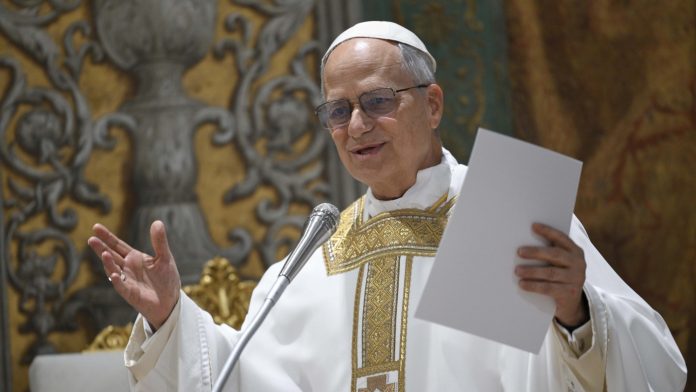
Pope Leo XIV concelebrates Mass with the College of Cardinals inside the Sistine Chapel on Friday, the day after his election.

Vatican Media/AP


hide caption

toggle caption

Vatican Media/AP

Pope Leo XIV has already made history, as the first-ever American-born pope to lead the Roman Catholic Church. But how might he shape the institution?

Robert Francis Prevost was elected on Thursday after a two-day conclave to succeed the late Pope Francis — a progressive pontiff who was known for his commitment to social justice.

While Pope Leo is considered a centrist, he shares some of his predecessor’s views, including those about the environment and outreach to migrants.

Leo is also notable for being the first Augustinian friar to lead the church. The Order of St. Augustine, which dates back to 1244, says it has some 2,800 members throughout 47 countries. Its three core values are “truth, unity and love.”

“And so, Leo XIV has been formed on those foundational values,” the Rev. Robert Hagan, prior provincial of the Province of St. Thomas of Villanova, told NPR. “Francis spoke a lot about synodality, to listen. I think Pope Leo XIV is someone who is also willing to listen to the voices on the margins.”

Leo’s public comments and social media presence dating back years help paint a picture of his stances on certain issues.

At a 2023 Vatican news conference, for example, he said, “Our work is to enlarge the tent and to let everyone know they are welcome inside the church.” In an interview the following year, he echoed Francis’ view that a bishop is “called to serve.”

“The bishop is not supposed to be a little prince sitting in his kingdom, but rather called authentically to be humble, to be close to the people he serves, to walk with them, to suffer with them and to look for ways that he can better live the Gospel message in the midst of his people,” the then-cardinal told Vatican News in 2024.

Here’s what Pope Leo has said in the past about a number of issues, from LGBTQ+ Catholics to climate change — though it’s not clear whether his views have changed since or whether they are clear indicators of how he will guide the world’s billion-plus Catholic faithful.

Equality for women

Like his predecessor, Leo opposes the idea of ordaining female deacons. That’s in keeping with thousands of years of Catholic understanding, as he told journalists at a 2023 conference.

“Something that needs to be said also is that ordaining women — and there’s been some women that have said this interestingly enough — ‘clericalizing women’ doesn’t necessarily solve a problem, it might make a new problem,” he said.

At the same time, he touted Francis’ efforts to increase women’s participation and visibility in the Vatican, such as by appointing several women to prominent leadership roles. In fact, Francis tasked the now-pope with overseeing one of his most revolutionary reforms: adding three women to the office that vets bishop nominations, in 2022.

“I think there will be a continuing recognition of the fact that women can add a great deal to the life of the church on many different levels,” Leo added.

LGBTQ+ Catholics

While Francis was known for his efforts to make the church more open to members of the LGBTQ+ community — famously asking, “Who am I to judge?” — Leo may not follow in his footsteps.

In a 2012 address, Leo expressed concern that Western culture promotes “enormous sympathy for beliefs and practices that are at odds with the Gospel,” specifically referencing abortion, the “homosexual lifestyle” and “alternative families comprised of same-sex partners and their adopted children.”

Leo’s views on the Vatican’s 2023 document “Fiducia Supplicans” — which permits nonliturgical blessings for same-sex couples, among others — are also ambiguous. He did not wholly endorse or reject the document, instead emphasizing the need for national bishops conferences to have the authority to interpret such guidance within their local cultural context.

During his eight-year tenure as a bishop in the Peruvian city of Chiclayo, he opposed a government plan to add teachings on gender in schools.

“The idea of promoting gender ideology is confusing because it seeks to create genders that don’t exist. So God created man and woman, and the attempt to confuse ideas from nature will only harm families and people,” he told the Peruvian newspaper Diario Correo.

He went on to say that people should “respect the dignity of each person, including the options that adult persons may have.”

“To talk about matters of identity and sexual orientation with a child who hasn’t yet reached a sufficient age of development will create much confusion,” he added.

Climate change 

Leo — like his predecessor — has been outspoken about the need to confront climate change. In 2024 remarks, he called for the church to move “from words to action.”

The then-cardinal cautioned against the “harmful” effects of technological development and reaffirmed the Vatican’s commitments to protecting the environment, pointing to Pope Francis’ installation of solar panels and shift to electric vehicles as examples.

Leo said humanity’s “dominion over nature” should not be “tyrannical,” but rather a “relationship of reciprocity” with the environment.

Migrants

Leo spent most of his career in Peru and holds dual citizenship there.

Jesus Leon Angeles, the coordinator of a Catholic group in Chiclayo who has known the now-pope since 2018, told Reuters that he showed special concern for Venezuelan migrants in Peru.

“He is a person who likes to help,” he said.

The U.N. refugee agency says over 1.5 million forcibly displaced Venezuelans are living in Peru, making it one of the largest host countries for refugees fleeing the humanitarian and economic crisis there.

Pope Francis advocated vocally for the rights of migrants and refugees, often reminding people that he was a descendant of immigrants himself. He publicly criticized the Trump administration’s crackdown on immigration over the years, most recently calling its mass deportation plan “a major crisis” in a February letter to U.S. Catholic bishops.

U.S. politics 

Leo, who is from Chicago, voted in Republican primary elections in 2012, 2014 and 2016, and most recently in the 2024 general election, according to voting records obtained by Politico. Illinois voters don’t register as members of a political party, so he is listed as “undeclared” and it is not clear for whom he voted.

Occasional tweets and retweets on Leo’s X account may hold more clues to his political views.

His most recent retweet was critical of the Trump administration’s partnership with El Salvador to deport immigrants without legal status, quoting a bishop who asked, “Is your conscience not disturbed? How can you stay quiet?”

In February, he posted links to two op-eds disagreeing with Vice President Vance’s February comments on the Christian hierarchy of love, which were widely criticized, including by Pope Francis. One of Leo’s tweets repeated the headline: “JD Vance is wrong: Jesus doesn’t ask us to rank our love for others.”

Leo has also shared messages opposing the death penalty, supporting vaccination during the COVID-19 pandemic and retweeting prayers for George Floyd after his police killing in 2020.

“We need to hear more from leaders in the Church, to reject racism and seek justice,” he tweeted at the time.

Online sleuths have dug up older tweets on his feed that criticize the first Trump administration, including its family separation policy, efforts to repeal Deferred Action for Childhood Arrivals (DACA) and Trump’s “bad hombres” rhetoric.

Some right-wing figures in U.S. media were quick to criticize the new pope as his social media posts emerged, with Trump ally Laura Loomer calling him “WOKE MARXIST POPE.” Trump himself congratulated Leo on Thursday.

“It is such an honor to realize that he is the first American Pope,” the president wrote on Truth Social. “What excitement, and what a Great Honor for our Country. I look forward to meeting Pope Leo XIV. It will be a very meaningful moment!”

USDA wants states to share sensitive food stamp data : NPR

0

People shop in a supermarket in New York City on Feb. 20, 2025.

Charly Triballeau/AFP via Getty Images


hide caption

toggle caption

Charly Triballeau/AFP via Getty Images

The Department of Agriculture is demanding states hand over personal data of food assistance recipients — including Social Security numbers, addresses and, in at least one state, citizenship status, according to emails shared with NPR by an official who was not allowed to speak publicly.

The sweeping and unprecedented request comes as the Trump administration ramps up the collection and consolidation of Americans’ sensitive data, and as that data has been used to make misleading claims about people in the U.S. illegally accessing public benefits and committing fraud, and to build a greater capacity to deport them.

The emails obtained by NPR also show the nationwide directive regarding the Supplemental Nutrition Assistance Program, or SNAP, follows a request by federal auditors for information that included citizenship data but not other data typically used to verify financial eligibility for the program.

In 2024, SNAP served an average of 42 million people each month, according to the Department of Agriculture, at a cost of $100 billion. Only some categories of lawfully present noncitizens are eligible to receive SNAP benefits, and those without legal status can never qualify. However, a noncitizen parent without legal status may apply for the assistance on behalf of their children who are U.S. citizens.

The latest data demands are “absolutely alarming,” and “reckless” and likely violate the Privacy Act and other statutes, said John Davisson, senior counsel and director of litigation at the nonprofit Electronic Privacy Information Center. He and other advocates warn the data could be used to enable deportation and mass surveillance efforts and would do little to address improper payments.

“It is an unprecedented extension of the administration’s campaign to consolidate personal data,” Davisson said.

USDA’s unusual data request

SNAP, formerly known as food stamps, is a federal program. Each state administers the program and enrolls participants based on eligibility determined by Congress. While the USDA and its Office of Inspector General can audit state SNAP programs, participants’ personal data typically remains under the state’s control.

In March, the USDA’s Office of Inspector General notified California, Florida, New York and Texas of inspections of their SNAP programs to see if the states were improperly using administrative funds to pay out benefits, the emails show.

That ultimately led to a request for detailed sensitive data — including citizenship status and addresses — of all SNAP participants in the previous year from at least one of the states.

A sign outside of a grocery store welcomes those on food assistance in a Brooklyn neighborhood that has a large immigrant and elderly population on Oct. 16, 2023 in New York City.

A sign outside of a grocery store welcomes those on food assistance in a Brooklyn neighborhood that has a large immigrant and elderly population on Oct. 16, 2023 in New York City.

Spencer Platt/Getty Images


hide caption

toggle caption

Spencer Platt/Getty Images

An April 2 update the state received from the OIG’s office added a new objective: performing analytics on participant data to “evaluate its quality and integrity.” Yet the watchdog ultimately declined to request participants’ employment status or income — which are key for determining financial eligibility for food assistance and detecting possible fraud.

Instead, the request prioritized other data fields, including name, date of birth, address, contact information, Social Security number, citizenship status and information about household members, the emails show.

At an initial joint video conference, the states learned the inspections had been requested by Secretary of Agriculture Brooke Rollins, according to an official who attended the meeting but was not authorized to discuss the matter. Trump fired existing inspectors general across the federal government when he took office, including at the USDA where a new permanent leader of the office has yet to be confirmed.

Earlier this week, the USDA escalated its quest for data further.

In a May 6 letter to all states, an adviser for Food, Nutrition and Consumer Services said the federal agency would be seeking personally identifiable information for SNAP applicants and recipients, including, but not limited to, “names, dates of birth, personal addresses used, and Social Security numbers” going back to Jan. 1, 2020. USDA did not answer NPR’s questions about the full extent of personal data it was requesting.

The letter said USDA is asking private contractors that process SNAP payments for states to turn over that data, and will use it to “ensure program integrity, including by verifying the eligibility of benefit recipients.” The directive comes as Republican lawmakers in Congress are proposing deep cuts to the food assistance program that would reduce the number of people who participate in it.

DOGE’s role

The May 6 letter cited President Donald Trump’s March 20 executive order, “Stopping Waste, Fraud, and Abuse by Eliminating Information Silos,” which calls on agencies to ensure the federal government “has unfettered access to comprehensive data from all state programs that receive federal funding “including from “third-party databases” in order to identify fraud and overpayments.

The ad hoc Department of Government Efficiency team, or DOGE, has been accessing sensitive data across the federal government in recent months and has been using allegations of wasteful and fraudulent spending to justify dismantling government agencies. Neither DOGE nor the White House responded to NPR’s requests for comment.

Fidelity Information Services, a vendor used by some states to process electronic bank transfer transactions for SNAP programs, told its state partners the day before USDA’s letter to states that the agency and its DOGE team contacted them in connection to the executive order, and that “no proprietary, confidential, or personally identifiable information” was shared, according to emails obtained by NPR.

A customer shops for eggs at a grocery store on March 12, 2025 in Chicago.

A customer shops for eggs at a grocery store on March 12, 2025 in Chicago.

Scott Olson/Getty Images


hide caption

toggle caption

Scott Olson/Getty Images

“FIS values its close working relationship with both USDA and its state partners and is committed to supporting efforts to improve program efficiency and reduce fraud,” reads a statement the company provided to NPR. “As agreed with the USDA and in compliance with federal regulation, FIS has notified States of the USDA’s request and is working with both to determine the most efficient manner to respond with the requested information.”

Wired, the Washington Post and CNN have reported that DOGE is also combining sensitive data from across agencies, including Social Security Administration, Department of Homeland Security and the Internal Revenue Service, to create a data tool that can help the federal government track and arrest immigrants they want to remove.

More than a dozen federal lawsuits allege DOGE staffers have been illegally granted permission to view databases with personal and financial information the government maintains, and multiple federal judges have expressed concern about what information DOGE has accessed and why. Late last month, DHS announced a DOGE-led overhaul of its Systematic Alien Verification Entitlements (SAVE) database, making the system free for state and local governments to use and promising a “single, reliable source for verifying non-citizen status nationwide.”

Davisson, the privacy attorney, said the SNAP data being requested could be used to make exaggerated allegations of fraud, and that combining the information with other DOGE-obtained data could be used for immigration enforcement efforts.

“What they’re building is a surveillance weapon and it can be put to all sorts of adverse uses in the future,” said Davisson.

NPR asked the USDA if the agency would be following protocols outlined in the Privacy Act, such as publishing a privacy assessment and System of Records Notice for the new dataset. An unnamed spokesperson using a USDA press email account told NPR the agency’s general counsel is determining whether that is required.

“All personally identifiable information will comply with all privacy laws and regulations and will follow responsible data handling requirements,” the email said.

Fraud and abuse with SNAP benefits are rare

After Trump issued an executive order in February aimed at ensuring immigrants without legal status are not receiving federal benefits, Agriculture Secretary Rollins made combatting alleged mispayments to ineligible immigrants a focus.

“The days in which taxpayer dollars are used to subsidize illegal immigration are over,” Rollins said in a February press release.

In fiscal year 2023 about 11% of SNAP benefits distributed were considered improper over- or underpayments. Still, even fewer — about 1% of those — were attributed to state-level issues related to determining citizenship eligibility, according to USDA’s own data.

Most of the improper payments in 2022 were due to unintentional mistakes by state workers or households, rather than intentional fraud, according to an analysis of the data by the left-leaning Center for Budget and Policy Priorities.

Only 50% of eligible noncitizens (which includes refugees and green card holders) and 59% of eligible children living with noncitizen adults participated in SNAP in 2022, according to a USDA report. Overall, advocates said participation among those who are entitled to receive this benefit is low due to fears that it may have a negative impact on immigration proceedings.

A sign alerting customers about SNAP food stamps benefits is displayed in a Brooklyn grocery store on Dec. 5, 2019 in New York City.

A sign alerting customers about SNAP food stamps benefits is displayed in a Brooklyn grocery store on Dec. 5, 2019 in New York City.

Scott Heins/Getty Images


hide caption

toggle caption

Scott Heins/Getty Images

Even though immigrants without legal status are not eligible to receive SNAP or other federal benefits, SNAP data does include the names and addresses of people who could be subject to deportation now or in the future, or who share a household with people who could be.

Some legal immigrants who receive SNAP benefits may lose their legal status in the future given that the administration is trying to reverse Biden-era immigration programs that granted hundreds of thousands of people the ability to live and work in the U.S.

For years, advocates and state agencies have tried to reassure immigrant families that it is safe for them to sign up for assistance if they met the eligibility requirements.

“People seeking services need to know that their information will be used only to administer the program — and won’t put them or their family members at risk,” said Tanya Broder, an attorney with the National Immigration Law Center.

“But the federal government’s demand for ‘unfettered’ access to sensitive data across multiple agencies, and its aggressive pursuit of immigrants, raise serious privacy concerns and the potential that information will be weaponized against people who would go hungry without assistance.”

On an FAQ page to sign up for food assistance from California, the site currently says the state will not report applicants’ immigration status to authorities and information is used only to determine eligibility.

“Authorities cannot use this information to deport you unless there is a criminal violation,” the state website says.

New York’s website says: “Applying for or receiving SNAP will not affect your ability to remain in the United States.”

Advocates NPR spoke with said it is important for SNAP participants to understand that it is not yet known at this point how states will handle the USDA’s pending data requests.

Esther Reyes with Protecting Immigrant Families, a coalition of 700 groups across the country that help eligible immigrants access services, is urging states to check with their congressional delegations about whether the data requests are legal before responding.

As for people who may feel fearful about enrolling in SNAP given concerns over data, Reyes said, “We really encourage families and communities to talk to enrollment workers and the people that they trust before acting on that fear.”

NPR’s Ximena Bustillo contributed reporting.

Have information you want to share about SNAP, DOGE access to government databases and immigration? Reach out to these authors through encrypted communication on Signal. Stephen Fowler is at stphnfwlr.25, Jude Joffe-Block is at JudeJB.10 and Ximena Bustillo is at ximenabustillo.77. Please use a nonwork device.


Trump fires Librarian of Congress, continuing to shape cultural institutions : NPR

0

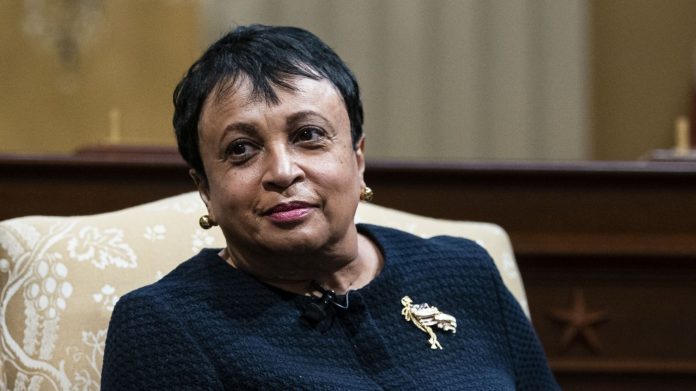
As the Librarian of Congress, Hayden was tasked with digitizing the library’s massive collection.

Al Drago/Getty Images


hide caption

toggle caption

Al Drago/Getty Images

By firing the Librarian of Congress Carla Hayden on Thursday night, President Trump continued his remaking of American cultural institutions.

Hayden was the first woman and the first African American to hold the post. She was also the first person in the job to be term-limited. Her time was set to expire next year.

“There were quite concerning things that she had done at the Library of Congress in the pursuit of DEI and putting inappropriate books in the library for children,” said White House press secretary Karoline Leavitt on Friday.

NPR has reached out to Hayden for comment.

The Library of Congress does a lot of things. It’s the main research arm of the U.S. Congress. It houses the U.S. Copyright Office. It organizes the National Book Festival every year (which, full disclosure, has hosted NPR journalists). But it also houses a giant trove of books, films, recordings, manuscripts, newspapers, and more, making it one of the largest libraries in the world.

When Hayden first got the job in 2016, her main task was bringing the Library of Congress into the 21st century and digitizing the collection. It was a pretty big job, considering the Government Accountability Office had just published a report in 2015 with the headline: “Strong Leadership Needed to Address Serious Information Technology Management Weaknesses.”

By most accounts, Hayden’s work in strengthening the Library’s digital infrastructure has been a success. At a hearing of the House Administration committee Tuesday, Republican Congressman Bryan Steil praised Hayden and her staff, saying they “dedicate a lot of time and service to the country and the Library of Congress, and their work should be commended.”

While libraries in general have become fought-over turf in the broader culture wars, the Library of Congress has mostly stayed out of those controversies. Beside checking in on the process of digitization, the other topic of discussion in this week’s hearing was the remodeling its of the Library’s main reading room.

Democratic lawmakers, including Sen. Chuck Schumer and Rep. Hakeem Jeffries, have criticized the firing.

Also this week, a number of senior staff at the National Endowment for the Arts left their posts. In a letter published by the literary magazine N+1, four members of the NEA’s literary arts staff announced their departures. “While we don’t know specifically how the work of the agency will change, we know the remaining staff will do their best to support you,” the letter read.

President Trump had previously proposed eliminating the NEA. Over the weekend, arts groups across the country got an email saying their grants from the National Endowment for the Arts had been canceled. It read, “The NEA is updating its grantmaking policy priorities to focus funding on projects that reflect the nation’s rich artistic heritage and creativity as prioritized by the President.”

This has since left arts groups – across the country scrambling for funding.

And on Wednesday, CNN reported that a number of performers in the upcoming production of Les Misérables at the Kennedy Center are planning on boycotting when President Trump sees the show on June 11.

Trump’s takeover of the Kennedy Center was an early show of force. He fired Deborah Rutter, who served as president of the performing arts center for a decade, and installed Richard Grenell as its interim president. Trump also placed himself as chair of the board. A number of artists who were slated to perform cancelled their appearances in response.

This is just a portion of Trump’s changes to arts institutions since he took office in January. He’s also attempted to cut staff at the National Endowment for the Humanities, and the Institute of Museum and Library Services.

Meghan Sullivan edited this story.