Wednesday, November 11, 2026
Home Blog Page 16

Trump gutted the national service agency AmeriCorps : NPR

0

Brandon Fernandez, second from left, with AmeriCorps colleagues in North Carolina this year, where they were helping with disaster recovery after Hurricane Helene. He and others struggled to hold back tears when their deployment was cut short.

Courtesy of Brandon Fernandez


hide caption

toggle caption

Courtesy of Brandon Fernandez

Until last month, 25-year-old Theo Faucher was an AmeriCorps team leader. He and 10 others got a small stipend to build affordable homes in Virginia, remove hurricane debris in Florida, and repair park trails in West Virginia. That’s where they were, in the middle of New River Gorge National Park, when Faucher’s boss called with shocking news.

“Essentially it was, pull your team off the work site, pack up your camp, hit the road tonight, if possible,” he recalled.

The Trump administration had ended nearly $400 million in AmeriCorps grants, a sizable chunk of the agency’s roughly billion dollar budget. A notice on April 25 said the grants no longer fit AmeriCorps’ priorities, but offered no detail on why not.

Some 32,000 people across the country – mostly young adults but also senior volunteers – have had to immediately stop their work in fields like disaster recovery, education, environmental stewardship and public health.

The Trump administration also fired most AmeriCorps staff last month. The combined cuts have gutted a federal agency created three decades ago as a way for people to serve their country.

“I kinda feel devastated,” said Brandon Fernandez, who’s 21 and was helping with disaster recovery after Hurricane Helene in North Carolina. He was hoping the assignment might lead to a job with FEMA.

When his group was told they were being disbanded, he said he and others struggled to hold back tears. “My bosses did not know about this at all,” Fernandez said. “They were shocked as well.”

AmeriCorps team leader Theo Faucher in Florida, where his group cleared debris from Hurricane Debby. He said the agency is "patriotic," calling it good for the country and for the young adults he led.

AmeriCorps team leader Theo Faucher in Florida, where his group cleared debris from Hurricane Debby. He said the agency is “patriotic,” calling it good for the country and for the young adults he led.

Courtesy of Theo Faucher


hide caption

toggle caption

Courtesy of Theo Faucher

Faucher, the team leader who got the news in West Virginia, said slashing the budget of this small agency is a shame.

“I think AmeriCorps is a very patriotic program,” he said, calling it good for the country and good for the young adults he led. They were 18 and 19 year olds who’d never left home and weren’t sure what they wanted to do with their lives, he said. But as they traveled the country together, “the personal growth and agency and competence I saw in these members was massive.”

“To have that opportunity ripped away from them is just unconscionable,” said Kaira Esgate, CEO of America’s Service Commissions, a nonprofit that represents the state groups that manage AmeriCorps funding.

She admitted there have been issues, noting that AmeriCorps has failed eight consecutive audits. A White House spokeswoman cited the same thing in a statement to NPR, and pointed to $45 million in improper payments last year.

Esgate said incorrect or unqualified payments are a longstanding government wide problem, and AmeriCorps found that $45 million in its own review of spending. By law, improper payments get paid back. The agency is also upgrading a clunky IT system to better track payments. “We’d like to see it of course go faster, but I also understand that these things don’t just change overnight,” she said.

AmeriCorps did not respond to a request for comment from NPR.

Two legal challenges have been filed over AmeriCorps’ dismantling, one by community organizations and the other by two dozen Democratic-led states. Like so many other lawsuits against the administration, they allege that President Trump does not have authority to gut an agency that was created and funded for decades by Congress.

AnnMaura Connolly, who heads the nonprofit Voices for National Service, said Democrats and Republicans alike have long supported AmeriCorps.

“This is really an incredible story of the power of a person, or a group of people, to make a difference in their communities, and in ways that have ripple effects that go well into the future,” she said. AmeriCorps transforms not just those who serve, she said, but also the students many teach and mentor.

Local and regional nonprofits and faith-based groups are reeling from this loss, she said, and AmeriCorps helps staff larger organizations like Habitat for Humanity, Teach for America, and Big Brothers Big Sisters of America. The funding can also be crucial for local economies.

“In states like West Virginia, it’s a massive opportunity to keep young people, talented young people in the state, help them get ready for careers and to really invest in their communities there. And they were hit hard by this,” she said.

It’s also been a financial blow for many AmeriCorps service members.

In Chicago, 26-year-old Madly Espinoza spent several months helping to bring in grants for a nonprofit that supports homeless families. She was counting on the AmeriCorps education award at the end of the year-long assignment to help pay her community college student loan. But now she’s not sure whether she’ll get the full amount.

“Anything that you were planning, maybe an expense or whatever,” she said, “now you have to scramble and think, ‘How am I going to make up for that?’ So it’s tough.”

“Right now I am currently rudderless,” said Nate Rebosa, who’d only spent a few weeks helping the American Red Cross in Lubbock, Texas, before being dismissed. He still wants to go into this kind of community or government work, but says AmeriCorps funding supports so much of it that “I am in limbo now trying to find a job.”

The loss of jobs can also mean no health insurance or federal unemployment benefits, a worry for many dismissed members. America’s Service Commissions has raised money for an emergency fund to offer help.

The 85% of AmeriCorps staff who are on paid administrative leave will have their jobs terminated on June 24. Esgate said the agency still has other funding, but a staff shortage could make that difficult to administer. She also worried that nonprofits will now be wary of hosting volunteers. “Are they just going to say, you know what … there’s too much risk here for us?” she wondered.

Trump names Jeanine Pirro as U.S. Attorney for D.C. after dropping earlier pick

0

President Trump said he is appointing Fox News host Jeanine Pirro to be acting U.S. attorney in Washington DC. This is after the president pulled his controversial first pick for the job, Ed Martin.

The political power of Gen Z women

0

The leftward shift of Gen Z women is one of the most dramatic political trends happening right now. Polling data from Gallup found that 40% of young women aged 18-29 self-describe as liberal compared to 28% of the same demographic at the beginning of the century. So what’s causing a new generation of young women to move to the left?

Brittany is joined by founder of the Up and Up Newsletter, Rachel Janfaza, and New York Times reporter, Claire Cain Miller. Together they discuss what we should make of the growing political gender gap between young men and young women.

In the wake of tariffs, cargo at the Port of LA is down 35% : NPR

0

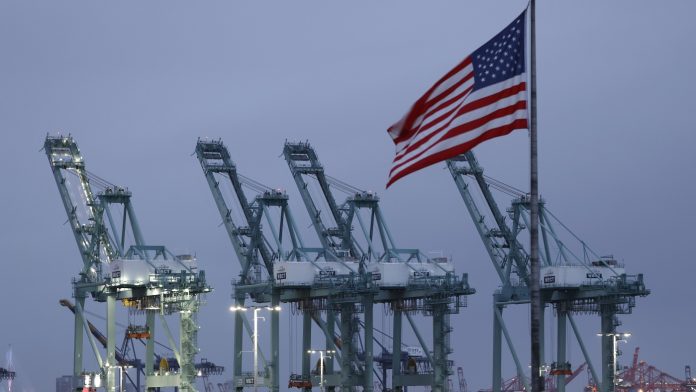
A view of shipping cranes at the Port of Los Angeles on May 06, 2025 in San Pedro, California. Los Angeles and Long Beach ports are seeing significant drops in expected cargo ships coming into port this week due to tariffs imposed by the Trump Administration.

Justin Sullivan/Getty Images North America


hide caption

toggle caption

Justin Sullivan/Getty Images North America

Each weekday morning outside the Dispatch Office of the International Longshore and Warehouse Union (ILWU) Local 13, dozens of dock workers gather, hoping to get some work at the vast ports of Los Angeles and Long Beach. Usually it’s relatively easy to find – and workers are given a white slip of paper with details of where to go and when to show up.

But on Tuesday morning, many left empty-handed.

“Less volume of cargo containers means less work for us,” said longshore worker Charlie Camacho. His job typically consists of loading and unloading shipping containers. “So we feel it, we definitely feel it,” he said.

Together these two ports comprise an extremely busy port complex – the Port of Los Angeles alone is the busiest in the Western Hemisphere. But in the month or so since tariffs against Chinese goods ratcheted up – port officials here have been predicting a drop in cargo. This week, they announced it was down 35% compared to the same week last year.

The immediate impact of the cargo decline affects virtually every business around the ports: trucking, shipping, distribution centers, and others. But port officials say this downturn will soon be felt much more broadly – by manufacturers and retailers around the country, as well as consumers.

Volume down, local businesses suffering 

In 2024, approximately 31% of everything that came into or out of the U.S. in shipping containers over water, came through this port complex. Last year, the ports handled 19.9 million of those containers – but it’s likely to be less in 2025.

Camacho, whose family has worked at the ports for three generations, spoke with pride about working as part of this system.

“My grandmother was one of the first women to work at the ports,” he said. “I sometimes think I am doing this for her.”

When asked about his chances of finding work on Tuesday, he was not optimistic – “Ah man, like 25 percent, maybe,” he responded.

He ultimately left the dispatch office with no gig.

It’s not just longshore workers who are being affected – a dip in cargo affects a huge ecosystem of businesses that are connected to the importing and exporting of goods in Southern California.

Frank Groves is an independent salesman who makes his money selling gloves and safety gear to port workers. He was also at the dispatch hall on Tuesday, trying to find customers – but he says business has dropped nearly 75 percent in recent weeks.

“No sales at all really. If they aren’t working I don’t make money,” he said.

Frank Groves waits outside the ILWU Local 13 dispatch office for workers to purchase gloves and safety gear. He's one of many whose incomes have been impacted by the drop in cargo.

Frank Groves waits outside the ILWU Local 13 dispatch office for workers to purchase gloves and safety gear. He’s one of many whose incomes have been impacted by the drop in cargo.

Steve Futterman


hide caption

toggle caption

Steve Futterman

Rob Walpole‘s business is also down. He’s the CEO of Customs Goods, which is based in nearby Carson, California and handles shipments of products once they arrive at the ports.

“We’ve seen significant reductions of import shipping volumes into this country,” he said. “That means significantly less volumes we will be handling on behalf of our customers.”

“You name it, they all come through our ports”

“The situation is not good,” said Gene Seroka, the executive director of the Port of Los Angeles. “People are quite concerned, absolutely.“

According to the Port’s website, 1 in 12 jobs in Los Angeles and Long Beach are supported by the ports. But their economic footprint goes well beyond Los Angeles and California.

Trucks line up amid stacks of shipping containers at the Port of Los Angeles in Los Angeles, in early April.

Trucks line up amid stacks of shipping containers at the Port of Los Angeles in Los Angeles, in early April.

Jae C. Hong/AP


hide caption

toggle caption

Jae C. Hong/AP

“The impact the Port of Los Angeles has on the city, the region, and the country cannot be understated,” said Seroka. “The cargo that moves through this port reaches not only all 50 states, but each one of our 435 congressional districts.”

That could include food, medical supplies, manufacturing components, and finished products, according to Sal Di Constanzo, a labor Relations Representative for the ILWU Local 13.

The port lists furniture, auto parts, apparel and electronics among their top imports.

“You name it, they all come through our ports,” Di Constanzo said.

According to Seroka, big importers say shoppers could start to see shortages in four to six weeks, once inventory that was stockpiled ahead of the tariffs runs out. He says they also may start to see significant price hikes.

Long-term concerns

Even if the increased tariffs go away, some of these problems could persist for a while, said Diane Middleton. She’s a former Los Angeles City Harbor Commissioner who has been working with the ports for more than 50 years.

“You don’t just have ships lined up like taxi cabs,” she said. “You have to reserve vessels. You have to specify a time. Once you’ve cut all that off, you can’t bring it back in a minute.”

And in the long term, she added, decades-old trade patterns may be permanently changed. She thinks that while the U.S. will always be a desired customer, countries like China may seek out others with less political upheaval in the trade sector to do business with in the future.

USDA is recruiting for key jobs after paying 15,000 to leave : NPR

0

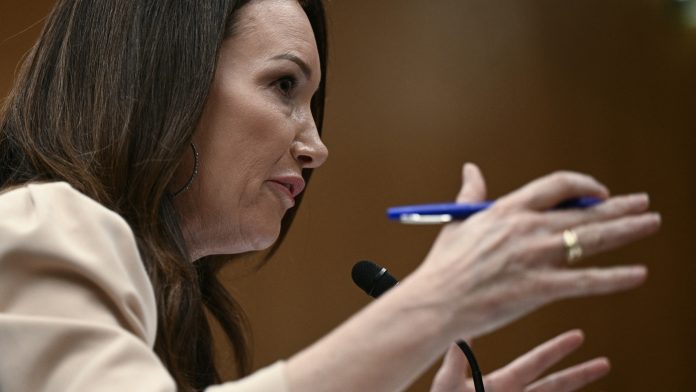
Secretary of Agriculture Brooke Rollins testifies on Capitol Hill in Washington, D.C., on May 6, 2025.

Brendan Smialowski/AFP via Getty Images


hide caption

toggle caption

Brendan Smialowski/AFP via Getty Images

In testimony on Capitol Hill on Tuesday and Wednesday, Secretary of Agriculture Brooke Rollins confirmed that the U.S. Department of Agriculture is now looking to fill critical positions, after agreeing to pay more than 15,000 employees’ salaries and benefits through September in exchange for their resignations.

“We are actively looking and recruiting to fill those positions that are integral to the efforts and the key frontlines,” Rollins told members of the Senate Appropriations Committee on Tuesday.

USDA is among the agencies that twice invited employees to quit their jobs through the deferred resignation program — once in late January when the deal was presented to nearly the entire federal workforce, and again for a short window in April. The Trump administration has leaned heavily on the deferred resignation program as it seeks to dramatically downsize the federal workforce.

But the need to fill positions so soon after letting people go has raised questions, including from Sen. Patty Murray of Washington, the top Democrat on the Senate Appropriations Committee.

“So you let people go and you’re looking for new people to fill the positions that they had experience in?” Murray asked.

“We’re having those discussions right now,” Rollins responded, while noting that 15,000 employees represents less than 15% of USDA’s workforce and that the department loses 8,000 to 10,000 employees every year through attrition.

Still, Rollins invited some of those who took the deferred resignation offer to return.

“If they want to come back, and if they were in a key position, then we would love to have that conversation,” she told lawmakers.

Earlier, NPR reported that just a day after employees of USDA’s Animal and Plant Health Inspection Service (APHIS) had left their jobs through the deferred resignation program, human resources sent an email to remaining employees offering them an opportunity to apply for 73 open positions, including ones newly vacant.

One employee who had taken the deferred resignation deal was furious to learn their job was on that list. They had not wanted to resign from their job but felt forced to do so after repeated warnings of mass layoffs ahead. The employee asked to remain anonymous out of fear of reprisal for speaking with the media while still on paid administrative leave.

At Tuesday’s hearing, Rollins acknowledged some mistakes may have been made along the way but insisted that people in key positions were not accepted in the second round of the deferred resignation program.

“We are very intentionally approaching this. Have we done it perfectly? No. Any type of wholescale change and big effort to basically realign an entire government agency is difficult,” she said. “We’re working every day to solve for a lot of this, and I think we’re making a lot of really good progress.”

On Wednesday, Rollins went further, denying that anyone at APHIS had been allowed to accept deferred resignation, or DRP, in April.

“In the last round, we did not accept any DRPs from anyone in [Farm Service Agency] offices or APHIS offices or state veterinarians,” Rollins said at a budget hearing of the House Appropriations Committee.

Her assertion is at odds with another account from an APHIS employee whose separation agreement was seen by NPR. NPR agreed not to name this employee because he also fears retaliation for speaking with the media while on paid administrative leave.

He described seeing stressed IT staff dealing with piles of laptops and cell phones turned in by those departing the government last Wednesday. He added his to the pile.

Armando Rosario-Lebron, a vice president with the National Association of Agriculture Employees, which represents employees in APHIS’ Plant Protection and Quarantine program, believes several hundred of its bargaining unit members could have accepted the deferred resignation offer in April.

USDA did not immediately respond to NPR’s questions about the discrepancy between Rollins’ testimony and these employees’ accounts.

Trump withdraws Ed Martin’s nomination for U.S. Attorney for D.C. : NPR

0

President Trump withdrew the nomination of Ed Martin, seen here in 2023, for U.S. Attorney for D.C., after facing bipartisan pushback from the U.S. Senate.

Amanda Andrade-Rhoades/AP


hide caption

toggle caption

Amanda Andrade-Rhoades/AP

President Trump announced he will withdraw his nomination for U.S. Attorney for Washington, D.C., following unified opposition from Senate Democrats and pushback from some key Republicans.

Ed Martin, a longtime Republican activist with no previous prosecutorial experience, had been serving as the interim U.S. Attorney in the nation’s capital since Trump’s inauguration.

Trump said he was “very disappointed” by the Senate’s response, but promised to name a new nominee soon.

“We have somebody else that will be great,” Trump said.

Martin’s nomination ultimately collapsed under the weight of multiple controversies.

Among them: Martin’s outspoken advocacy for defendants charged in the Jan. 6, 2021 attack on the U.S. Capitol; his past praise for an alleged “Nazi sympathizer“; and a series of letters he sent to medical journals, Wikipedia’s leadership and members of Congress, which many interpreted as threats.

As interim U.S. Attorney, Martin directed the firing of prosecutors who had worked on Jan. 6 cases, launched an internal investigation into their conduct, and ordered the dismissal of ongoing Capitol riot probes.

Before his appointment, Martin promoted conspiracy theories about the Jan. 6 attack, including the claim that federal agents instigated the violence.

“The more we find out about how staged and managed this was,” Martin said in a 2024 podcast interview, “the more we have to have less judgment for somebody who hits a cop.”

Sen. Thom Tillis, a North Carolina Republican on the Senate Judiciary Committee, said he could not support Martin’s confirmation because of his views on Jan. 6.

“We have to be very, very clear that what happened on Jan. 6 was wrong. It was not prompted or created by other people to put those people in trouble. They made a stupid decision, and they disgraced the United States by absolutely destroying the Capitol,” Tillis told reporters earlier this week..

“If Mr. Martin were being put forth as a U.S. Attorney for any district, except the district where Jan. 6 happened,” Tillis said, “I’d probably support him. But not in this district.”

The U.S. Attorney’s office in Washington, D.C., along with its counterpart in Manhattan, is widely considered among the most important federal law enforcement roles in the country.

“Sen. Tillis’ pushback on Martin’s views on Jan. 6 was very important,” said Carl Tobias, a law professor at the University of Richmond, in an email. “Martin lacked much relevant experience for the second most important U.S. Attorney office in the U.S., and his performance as the interim U.S. Attorney did not inspire much confidence that he should be confirmed.”

“This is a great day for anyone who cares about a fair and functional justice system,” said Brendan Ballou, a former federal prosecutor who worked on Jan. 6 cases and left the office shortly after Martin’s arrival. “Ed Martin came to this job with no prosecutorial experience, and spent his time threatening perceived political opponents.”

Martin’s supporters expressed disappointment over the failed nomination.

“Ed Martin is a very good man and close friend of mine,” Mike Davis, a prominent right-wing attorney, posted on social media. “These Republicans are not willing to fight like Democrats, who confirmed countless radical nominees for Joe Biden.”

Trump told reporters that he had limited political capital to spend on Martin’s troubled nomination, given his other priorities.

“I have so many different things that I’m doing now with the trade. You know, I’m one person,” Trump said. “I can only lift that little phone so many times in a day.”

Trump said he would likely find another role for Martin in his administration, presumably one that does not require Senate confirmation.

Shortly after Trump’s announcement, Martin posted what appeared to be an A.I.-generated image of himself dressed as the Pope, with the caption “Plot twist.”

Kennedy says autism database to use Medicare, Medicaid info : NPR

0

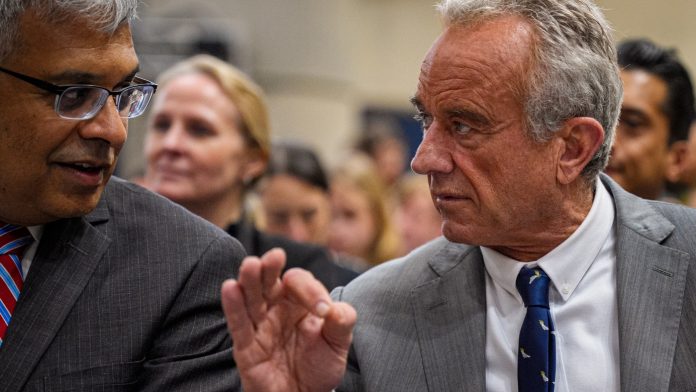
NIH Director Jayanta Bhattacharya, left, and Health and Human Services Secretary Robert F. Kennedy Jr. speak before a news conference at the Health and Human Services Department on April 22.

Andrew Harnik/Getty Images


hide caption

toggle caption

Andrew Harnik/Getty Images

The National Institutes of Health will use information from federal health insurance programs Medicare and Medicaid to create a “real-world data platform” to determine the cause of autism, the agency announced this week.

The Department of Health and Human Services said in a statement on Wednesday that the NIH would team up with the Centers for Medicare & Medicaid Services (CMS) to create the database utilizing insurance claims, electronic medical records and data from wearable devices with health sensors, like smartwatches.

“We’re using this partnership to uncover the root causes of autism and other chronic diseases,” HHS Secretary Robert F. Kennedy Jr. said in a statement.

HHS said that CMS and NIH would establish a data use agreement focused on Medicare and Medicaid enrollees — about 36% of Americans — and follow autism diagnoses before expanding their research into additional chronic health conditions.

“Using ASD [Autistic Spectrum Disorders] as the pilot research program, teams at CMS and NIH will establish a secure tech-enabled mechanism to enhance this data sharing with timely, privacy and security compliant data exchange,” the statement read.

There was outrage last month after NIH Director Jay Bhattacharya told his staff of plans to compile a database of Americans with autism using private data that could be used to create a national autism registry

Unnamed HHS sources told multiple news outlets that the agencies are not creating an autism registry and described the effort instead as a real-world data platform linking existing datasets. NPR has not independently confirmed the reporting.

In Wednesday’s statement, NIH’s Bhattacharya said that the partnership with CMS was “an important step in our commitment to unlocking the power of real-world data to inform public health decisions and improve lives.”

“Linking CMS claims data with a secure real-world NIH data platform, fully compliant with privacy and security laws, will unlock landmark research into the complex factors that drive autism and chronic disease — ultimately delivering superior health outcomes to the Americans we serve,” he said.

NPR has reached out to HHS, NIH and CMS, but none responded to requests for comment before publication of this story.

The latest details immediately raised more alarm bells for the autistic community and privacy experts, who questioned how this data would be used and how patients’ sensitive data would be protected.

Helen Tager-Flusberg is the director of the Center for Autism Research at Boston University and leader of the Coalition of Autism Scientists, an organization formed in response to Kennedy’s widely debunked views on autism.

She warned of the potential for information collected in this database to be abused.

“CMS data includes certain information about individuals — age/date of birth, sex, where they live. It is possible to identify a person based on knowledge about these characteristics,” Tager-Flusberg said in an email to NPR.

“While the NIH Director provides assurances that privacy protections will be put in place, we have seen other examples of how this administration has given permission to identify people to certain people working for the federal government. How will this registry be protected?” she asked.

The heightened public focus on autism comes as Kennedy has repeatedly vowed to identify the cause of the disorder and ultimately eradicate it.

To that end, Kennedy, a former environmental lawyer, has made a number of baseless, conspiratorial claims about autism, including that it can be traced back to childhood vaccinations and that an “environmental toxin” is to blame for the uptick in autism diagnoses over the years.

He described autism as “a preventable disease” and said his agency would find the root cause of the disorder by September.

The notion that vaccines cause autism has been thoroughly debunked in medical science, and experts say there is likely no single cause for autism. Bhattacharya, the NIH director, pushed back on the September deadline to find a cause and said that a year timeline was more realistic.

And while a Centers for Disease Control and Prevention report did find that autism prevalence in the United States had increased from 1 in 36 children five years ago, to 1 in 31 children in 2022, it is more likely that this is due in large part to more comprehensive screening across a broader population.

Duffy unveils a modernization plan for air traffic control system : NPR

0

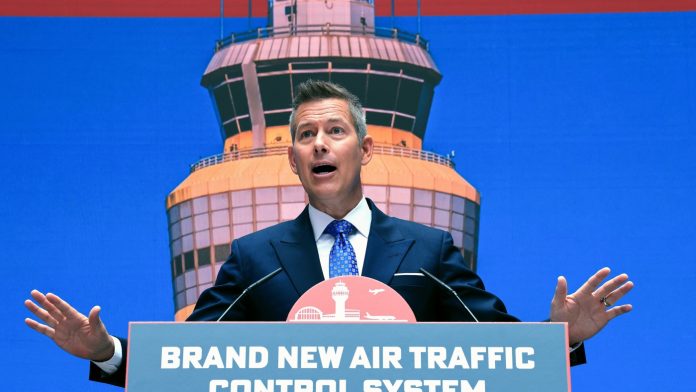
U.S. Transportation Secretary Sean Duffy speaks at an event unveiling a new U.S. air traffic control system at the Department of Transportation on Thursday in Washington, D.C.

Win McNamee/Getty Images


hide caption

toggle caption

Win McNamee/Getty Images

Transportation Secretary Sean Duffy says he wants a full modernization of the nation’s antiquated air traffic control system within four years. On Thursday, he announced a far-reaching, estimated multibillion-dollar plan that would drastically overhaul the current technology used by thousands of controllers responsible for guiding planes in and out of airports.

Duffy and other Trump administration officials unveiled the ambitious modernization plan after several days of turmoil at Newark Liberty International Airport, one of the nation’s busiest.

“A lot of people have said: This problem is too complicated, too expensive, too hard,” Duffy said at an event at Department of Transportation headquarters in Washington, D.C. “But we are blessed to have a president who actually loves to build and knows how to build.”

He said President Trump “doesn’t want to pass this problem to the next administration, the next secretary, or the next set of victims.”

Duffy was cagey about saying what this plan will cost. The House Transportation and Infrastructure Committee estimated last week that it might cost $12.5 billion to modernize the air traffic control system. Duffy said he estimates this project will cost more than that.

The Modern Skies Coalition, a group of aviation industry experts, pilot association representatives and others, issued a statement saying they believe a minimum of $18.5 billion in additional emergency funding (on top of the $12.5 billion figure being floated) should be appropriated over the next three years. And that’s in addition to FAA’s annual technologies and facilities budget.

The DOT is proposing to replace the existing decades-old telecommunications, radio and surveillance systems (which currently rely on things like copper wires and floppy disks) with modern technology. The plan also includes investing in new ground radar sensors on tarmacs and at airports, a new flight management system and some new air traffic control towers and other facilities, Duffy said.

The plan will need approval from Congress and to get this done within four years, the secretary is requesting Congress provide the funding up front, rather than incrementally. Trump has endorsed the plan, even joining Duffy at the press conference via speakerphone.

Airline executives and trade representatives attended the plan’s unveiling, expressing full backing of the proposal.

“We can’t kick the can down the road. We need to do it now,” said Nicholas Calio, president and CEO of Airlines for America, a trade association for the aviation industry.

The control tower at Reagan National Washington Airport on Jan. 30, in Arlington, Va.

The control tower at Reagan National Washington Airport is shown on Jan. 30, in Arlington, Va.

Andrew Harnik/Getty Images


hide caption

toggle caption

Andrew Harnik/Getty Images

The plan comes after years of mounting problems at airports and a series of incidents just this year.

In January, the midair collision of an Army Black Hawk helicopter and a commercial airliner near Ronald Reagan Washington National Airport (known by the airport code DCA) led to the deadliest aviation accident in the U.S. since 2001. In the months since, multiple close calls and other crashes, as well as technology failures that led to delays and cancellations at Newark airport spurred officials to act.

National Transportation Safety Board Chairwoman Jennifer Homendy expressed full support for the plan saying, “An aging system poses an untenable risk to safety. I said it after DCA, I’ll say it again now: an untenable risk to safety.”

How does the chaos at Newark Airport fit into this?

Bad weather, the months long renovation of one of Newark’s busiest runways for departing flights and a shortage of air traffic controllers have led to more than a week of of long delays and cancellations at the airport.

On April 28, air traffic controllers stationed at the Philadelphia Terminal Radar Approach Control facility, which is responsible for separating and sequencing planes in and out of Newark, lost all radar and communications with planes, leaving them unable to hear or talk to the pilots for at least 30 seconds. Some controllers took leave “to recover from the stress of multiple recent outages,” the Federal Aviation Administration said in a statement.

The chaos at Newark helped highlight the aging air traffic technology the industry relies on and spurred officials to do more.

To address the situation, the FAA this week announced several changes, including introducing three “new, high-bandwidth telecommunications connections” between the New York station that processes radar data and the Philadelphia location where controllers handle Newark’s arrivals and departures. The old, copper telecommunications connections will get a fiber-optic technology update, allowing for greater bandwidth and speed, the agency said.

Last week, Duffy announced a new recruitment award and retention incentive program to boost hiring of controllers. But staffing is not part of this new, wider proposal introduced Thursday.

A history of problems

Following the recent chaos at Newark, the Trump administration has railed against former President Joe Biden and former Transportation Secretary Pete Buttigieg, blaming them for the issues with the air traffic control system.

Trump took to his Truth Social account Thursday to say: “Air Traffic problems caused by the incompetent Biden Administration, as headed by, in this case, a total novice and political hack, Pete B. I WILL FIX IT!!!”

During his first term, Trump discussed possible solutions — including privatizing air traffic control — that went nowhere.

After taking office for the second time, the Trump administration laid off hundreds of FAA employees as part of a federal effort to cut back on workers. Officials said controllers and other “critical safety personnel” were not among those laid off.

But problems with the civilian aviation industry did not start with Newark, the Jan. 29 crash at DCA or the Biden administration.

Airlines and unions have called on the government to do more for decades.

Under the Biden administration, Buttigieg requested Congress provide more funding to hire thousands of new air traffic controllers. House Republicans blocked that effort.

In September, the Government Accountability Office said the FAA needed to make drastic changes, and fast, to fix the aging air traffic control system.

The report found that in the previous year, the FAA determined more than a third of its systems “are unsustainable, citing outdated functionality, a lack of spare parts, and more.” The report said most modernization projects won’t be completed for another 10-13 years.

Robert W. Mann Jr., an aviation industry analyst, who spoke to NPR earlier this week about the disruptions at Newark, expressed skepticism that a new system will be built.

“This has been the same mantra for the past 30 years. Give them more money. They’ll build the new system. It’ll work better, work harder. And this is what airlines tell the FAA. This is what the FAA says they want to do each time the agency comes up for reauthorization. And we’ve been doing that for well over 30 years now, and we’ve gotten the same results,” Mann said.

States try to revive Medicaid work requirements : NPR

0

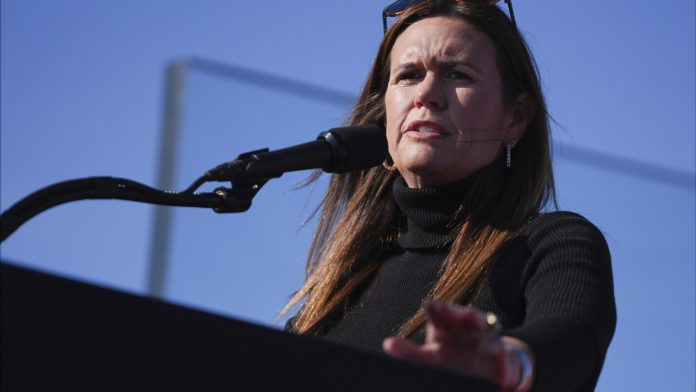
Arkansas Gov. Sarah Huckabee Sanders speaks at a campaign rally for then-presidential candidate Donald Trump, in Nov., 2024. In January, Sanders announced plans to reprise an effort to institute work requirements for Medicaid, as Arkansas did under the first Trump administration.

Evan Vucci/AP


hide caption

toggle caption

Evan Vucci/AP

More than 70 million Americans who are low-income or disabled have health insurance paid for by the state and federal government called Medicaid. The main qualification currently is that you have to make below a certain income level. But there’s an idea that’s been popular with Republicans – that all those individuals should also be required to work.

While Republicans introduced a bill to create a national work requirement, states have a lot of flexibility to add their own rules. Arkansas and 12 other states got the greenlight to add these work requirements during the first Trump Administration, but after just a few months, courts halted those plans.

Now that Trump is back in the White House, states including Arkansas, Ohio and Arizona are reviving the effort – which concerns some Medicaid patients and advocates.

Patients worry about losing health care 

Summer Neal, 31, relies on a lot of medications to keep her healthy. The Paragould, Arkansas resident suffers from lupus, an auto-immune disease that causes joint pain and leaves her susceptible to frequent illnesses.

“Someone can have a cold and it’ll turn into the flu for me, or pneumonia,” Neal says, “I’ve had COVID 11 times.”

Thanks to Arkansas’ Medicaid, Neal is able to afford her essential doctor visits and medications.

But in December, when Neal went to pick up her prescription to manage pain and inflammation, the pharmacist told her that she no longer had insurance coverage and she owed more than $1,000.

“I was really worried,” Neal recalls, leaving the pharmacy empty handed. “If I don’t have a steroid to keep this inflammation down, the amount of pain that I am in is almost unbearable.”

The situation turned out to be a paperwork error, but it created a two-month nightmare for Neal. She said she ended up delaying paying her rent to afford some medications.

Neal does work now, as a manager at a pizza restaurant, but her income is low enough to qualify for Medicaid. And she worries that if she gets sicker, she could have to stop working — and lose her Medicaid coverage.

That’s because in January, Arkansas Governor Sarah Huckabee Sanders announced plans to reprise the requirement the state tried to institute under the first Trump administration.

Arkansas’ new proposal 

Under current rules, if you are a single adult making about $20,000 a year or less in Arkansas, you can qualify for Medicaid. The proposed rules would add another test – you have to work.

“Most Arkansans work hard to pay for their health insurance, but many of these healthy adults don’t work at all and receive it for free,” Sanders said.

In a statement, she said the state is spending $2.2 billion on Medicaid for more than 200,000 healthy adults and estimated 40% are not working.

The state’s plan this time is to offer those people state-funded help finding a job and, only if they refuse, pause their Medicaid coverage. This is different from their attempt in 2018, where if people didn’t report that they worked 80 hours a month, they would automatically lose health insurance.

“Once this work requirement starts, we will achieve our goal of moving Arkansans off the path of government dependency and on the path to prosperity,” Sanders said when announcing the program.

However, multiple studies show that more than 90 percent of eligible adults on Medicaid nationally are already working, or are exempt from the requirement because they have disabilities, are in school or are caregiving.

Arkansas could get the signoff from the federal government any day now. Ohio and Arizona are waiting on the same approval. Several other states including South Carolina, Idaho and Iowa are also in talks to add their own work rules.

Lessons from Arkansas’ first try

Seven years ago when Arkansas did this under the first Trump administration, a third of the eligible adults, or about 18,000 people, lost coverage in less than a year. Many were working but didn’t follow the complicated monthly process for reporting work. Fixing those mistakes and helping people regain coverage became Legal Aid of Arkansas attorney Trevor Hawkins’ full time job.

“It was my entire day,” Hawkins said, “I was able, for a lot of folks, to help them get their coverage back.”

However, many others didn’t regain Medicaid. Just a tenth of those who lost coverage had it the next year.

In 2019, a federal judge halted the state’s program, ruling that it was illegal and didn’t address Medicaid’s core purpose of providing medical coverage to low-income individuals.

Research from the Harvard T.H. Chan School of Public Health also found that the rules didn’t result in more work.

“It’s been tested,” Hawkins said about the work requirement program, “It’s a bad investment.”

In order to implement these work rules, states also have to create new tracking and reporting systems which can be expensive to set up and run.

‘Just another way to cut Medicaid’

Proponents of work requirements argue that the policy will help lift low-income individuals out of poverty by motivating them to get jobs.

But Gideon Lukens, a senior fellow at the Center for Budget and Policy Priorities, believes these work requirements are simply a tactic to shrink Medicaid enrollment.

The Congressional Budget Office has estimated that imposing work requirements nationwide could save over $100 billion over the next decade – by excluding more people from Medicaid so the government doesn’t have to pay for their medications and care.

Lukens says, “When you have people losing coverage, yes, you do pay less money, but you also have extreme hardship.”

States with limited Medicaid coverage have double the rate of people without insurance, compared with states that have expanded Medicaid coverage.

Right now, states are the ones requesting approval for these work changes, but if the proposal from House Republicans for a national work requirement were to pass, The Urban Institute and Robert Wood Johnson Foundation estimate that up to 5 million people could lose coverage.

Trump announces trade deal with UK : NPR

0

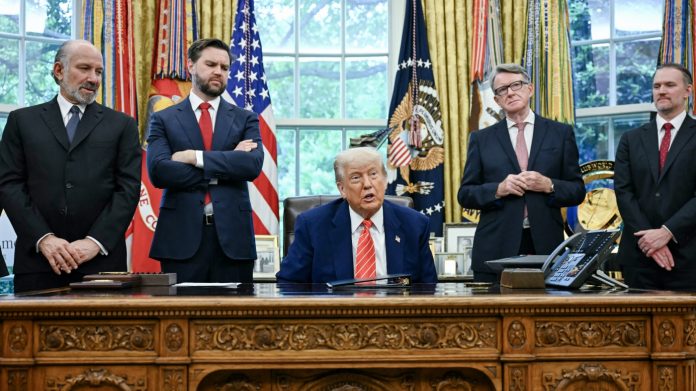
President Trump announces a trade agreement with the United Kingdom on May 8, 2025 as Commerce Secretary Howard Lutnick, Vice President Vance, British Ambassador Peter Mandelson and U.S. Trade Representative Jamieson Greer look on.

Jim Watson/AFP


hide caption

toggle caption

Jim Watson/AFP

WASHINGTON, D.C., and LONDON — President Trump and British Prime Minister Keir Starmer on Thursday announced on Thursday they had reached a trade agreement that lifted some — but not all — U.S. tariffs on British goods.

It’s Trump’s first such deal since his steep tariffs last month roiled stock markets and raised fears about a U.S. recession. Trump made the announcement sitting at the Resolute Desk in the Oval Office, with Starmer joining by speakerphone.

Trump said it would give U.S. companies better market access for beef, ethanol, other farm products, chemicals, machinery and industrial products — new opportunities his administration said were worth $5 billion. But talks on non-tariff barriers to U.S. meat still needed to continue, Trump officials said.

“The final details are being written up in the coming weeks,” Trump said. “We think just about everything’s been approved.”

The 10% U.S. tariff on imports of most British goods will remain.

The deal lifts U.S. tariffs on British steel and aluminum

Starmer, speaking to reporters from at a Jaguar Land Rover car factory in the British Midlands, said the deal would protect British businesses and save jobs.

He said the deals removes 25% tariffs on British steel and aluminum, and cuts U.S. tariffs from 27.5% to 10% for almost all cars exported from the United Kingdom. (Last year, 101,000 British cars were imported into the United States; under this deal, the 10% tariff would apply only to the first 100,000 cars.)

Britain's Prime Minister Keir Starmer smiles as he discusses a trade deal with President Trump over the phone on May 8, 2025.

Britain’s Prime Minister Keir Starmer smiles as he discusses a trade deal with President Trump over the phone on May 8, 2025.

Alberto Pezzali/Pool/AFP


hide caption

toggle caption

Alberto Pezzali/Pool/AFP

The U.K. prime minister said all of these tariff cuts would come into effect “as soon as possible.”

“We are the first country to secure such a deal with the United States, and in an era of global insecurity and instability, that is so important,” Starmer said in a speech on the factory floor, with dozens of workers in overalls behind him.

For Britain, Thursday’s agreement is part of an effort to strike new post-Brexit trade deals. Since leaving the European Union five years ago, it’s been negotiating new trade rules with individual countries, and signed a comprehensive deal with India earlier this week.

Commerce Secretary Howard Lutnick said the United States will allow tariff-free imports of Rolls Royce engines and plane parts, Lutnick said, noting that there would be an announcement later on Thursday of $10 billion in purchases of Boeing planes.

Trump says it’s the first deal of many

Trump’s administration has engaged in a flurry of talks with trading partners since April 2, when Trump rolled out a 10% tariff on all imported goods, as well as what he called “reciprocal tariffs” — steep tariff walls aimed at punishing countries for their trading practices and volumes, and at drawing manufacturing to America.

Trump retreated from his country-specific tariffs after markets plunged last month, pausing the hikes for 90 days, though he kept the 10% baseline in place, as well as those on autos, steel and aluminum — and extremely steep tariffs on China, where 145% tariffs have effectively stopped shipments. Economists have warned that the tariffs could lead to shortages of some goods and raise consumer prices for others.

Trump administration officials have said his moves brought countries to the table to talk about a range of trade issues, including Japan, South Korea, the United Kingdom, Vietnam and India. On Saturday, Treasury Secretary Scott Bessent and Trade Representative Jamieson Greer are set to meet China’s He Lifeng in Switzerland.

Asked what the U.K. would need to do to lift the 10% baseline tariff, Trump said it was “set” and indicated it was unlikely to change.

He said that other trade partners should not necessarily expect to be left with such a low tariff after their negotiations.

“That’s a low number. They made a good deal. Many, some will be much higher, because they have massive trade surpluses,” Trump said.