Friday, November 13, 2026
Home Blog Page 166

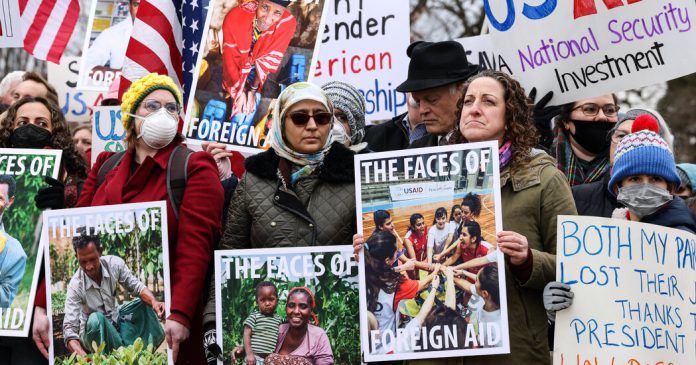
U.S.A.I.D. Memos Detail Human Costs of Cuts to Foreign Aid

0

The Trump administration’s decision to withdraw foreign aid and dismantle the U.S. Agency for International Development is likely to cause enormous human suffering, according to estimates by the agency itself. Among them:

  • up to 18 million additional cases of malaria per year, and as many as 166,000 additional deaths;

  • 200,000 children paralyzed with polio annually, and hundreds of millions of infections;

  • one million children not treated for severe acute malnutrition, which is often fatal, each year;

  • more than 28,000 new cases of such infectious diseases as Ebola and Marburg every year.

Those stark projections were laid out in a series of memos by Nicholas Enrich, acting assistant administrator for global health at U.S.A.I.D., which were obtained by The New York Times. Mr. Enrich was placed on administrative leave on Sunday.

In one memo, he placed the blame for these potential health crises on “political leadership at U.S.A.I.D., the Department of State, and D.O.G.E., who have created and continue to create intentional and/or unintentional obstacles that have wholly prevented implementation” of aid programs.

Those leaders have blocked payment systems, created new and ineffective processes for payments, and constantly shifted guidance regarding which activities qualify as “lifesaving,” Mr. Enrich wrote.

Another memo describes the slashing of the agency’s global health work force from 783 on Jan. 20 to fewer than 70 on Sunday.

In an interview, Mr. Enrich said he released the memos on Sunday afternoon, after an email arrived placing him on leave, to set the record straight on the gutting of U.S.A.I.D. staff and the termination of thousands of lifesaving grants.

By detailing the series of events behind the scenes, he hoped “it’ll be clear that we were never actually given the opportunity to implement lifesaving humanitarian assistance.”

Officials at the State Department did not immediately respond to a request for comment.

In January, the Trump administration froze funds intended for foreign aid. On Jan. 28, Secretary of State Marco Rubio issued a temporary waiver for lifesaving humanitarian assistance.

But very little money has actually been delivered, essentially shuttering aid programs worldwide and forcing hundreds of organizations to furlough or fire workers.

Still, employees in U.S.A.I.D.’s Bureau for Global Health tried to remain optimistic and “to do everything we can” to implement the waivers, Mr. Enrich said.

But on Wednesday the Trump administration abruptly terminated some 5,800 projects financed by U.S.A.I.D., including many that had received waivers.

“It was finally clear that we were not going to be implementing under that waiver,” Mr. Enrich said.

“I needed for myself and all the staff who had been pouring their hearts into doing this — we needed records to show what had happened,” he said.

Mr. Enrich said he had hoped to compile one more memo, showing the ways in which he and others had conveyed the risks of disrupting crucial programs to Mark Lloyd and Tim Meisburger, political appointees at the agency. But they repeatedly asked for more details to justify the programs, he said.

“It is clear the Trump administration is well aware that it is violating court orders and not delivering lifesaving aid it claimed to be funding under a waiver,” said Matthew Kavanagh, director of the Georgetown University Center for Global Health Policy and Politics.

“Unless reversed, this will cost millions of lives, by the government’s own accounting,” Dr. Kavanagh added.

According to Mr. Enrich’s memo, other devastating impacts could include uncontrolled outbreaks of mpox and bird flu, including as many 105 million cases in the United States alone, rising maternal and children’s mortality in 48 countries, and a 30 percent increase in drug-resistant tuberculosis.

Disruption to TB programs overseas will result in more patients arriving in the United States, Mr. Enrich’s memo warned. Treating one patient with multidrug-resistant TB costs more than $154,000 in the United States.

(The Trump administration is said to be readying plans to turn back migrants on the grounds that they might bring TB into the country.)

The memos also note the disruption to the effort to contain Ebola in Uganda.

A single Ebola patient in New York in 2014 cost the city’s Health Department $4.3 million in response measures. The outbreak in Uganda appeared to be ebbing, but a 4-year-old boy died earlier in the week, indicating that the virus was still circulating.

The consequences may extend beyond human health, affecting U.S. businesses — including agriculture — and families by increasing health care costs, disrupting international trade and straining domestic resources.

Programs for maternal and child health and for nutrition can stabilize the economy and political climate in other countries, the memo notes.

“Article 1 of the Constitution gives Congress the power to create or remove agencies and authorize spending, not the president,” Dr. Kavanagh said.

By dismantling U.S.A.I.D. and terminating its programs, the Trump administration is not only “risking death for millions of the most marginalized around the world, but they are also triggering a constitutional crisis in the service of cruelty,” Dr. Kavanagh added.

As Musk Consolidates Power, His Mother, Maye, Is in Demand

0

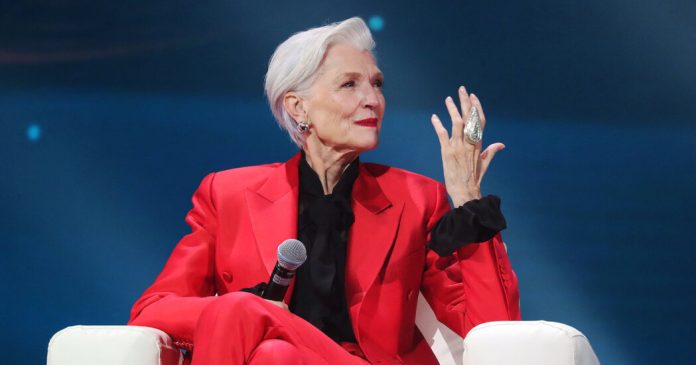
In the past six months, Maye Musk, the mother of Elon Musk, has been to China, Kazakhstan and the United Arab Emirates, visits that come as foreign leaders are jockeying for influence over the Trump administration.

Ms. Musk, 76, has for years traveled the world to model, speak and promote her memoir. But lately she seems to be even more in demand, especially outside the United States. And her celebrity has taken on greater significance now that Mr. Musk has considerable influence over how billions of dollars in military spending and foreign aid will get paid out.

In late 2024, she visited China at least four times to endorse or model for seven brands there, including makeup products, down jackets and massage devices. Her visits were promoted by state media outlets, which in the past have quoted her calling for improved ties between the United States and China.

In October, three weeks before the U.S. presidential election, she headlined a forum on women in Kazakhstan, where she spoke about her son’s success, according to Kazinform, a state news agency there.

And in January, the week before Donald J. Trump’s second inauguration, she was in Dubai, speaking at a government conference on influencers with the former Fox News personality Tucker Carlson. Her talk was titled, “How I Raised Three Amazing Children, Including the Richest Man in the World,” according to the state-run Emirates News Agency.

All of these trips were taken after Mr. Musk became a staunch supporter of Mr. Trump’s campaign, and on several of them, she waded into U.S. politics.

Several of the countries where she recently appeared have concerns to press in Washington.

Beijing opposes newly announced U.S. tariffs on its goods, and leaders there appear to see Mr. Musk, who himself has extensive business interests in China, as a potential ally. Kazakhstan is hoping that the Trump administration will end restrictions on trade. And the United Arab Emirates buys weapons from Washington and has spent hundreds of millions on lobbyists and donations to think tanks.

Ms. Musk has long traveled extensively for work, both within the United States and overseas. But her activities in China have intensified in recent months, a review of her social media posts over the past four years by The New York Times found. She endorsed five Chinese brands last year, while the year before, she traveled to China mostly to promote her book and for modeling work, appearing in one ad.

The Times could not confirm how much Ms. Musk has earned overseas in recent months. Although in her endorsements and speeches she often emphasizes her connection to Mr. Musk, there is no evidence that she has sought to influence U.S. government policy. Nor is there evidence that she has taken work linked to China’s government.

Ms. Musk’s agency, the Los Angeles-based Creative Artists Agency; her manager, Anna Sherman; and a lawyer who has recently worked for Ms. Musk, Doreen Small, did not respond to questions about her international engagements, including how much she has earned for speaking and endorsing products. The five Chinese brands she endorsed last year did not reply to questions about how much she was paid.

Her activities raise the possibility that foreign governments could see her as a conduit to Mr. Musk, said Scott Amey, the general counsel for the Project on Government Oversight, a watchdog group. “The fear is,” he said, “would people be using her to get one degree of separation from her son and two degrees of separation from the Oval Office?”

Mr. Musk is already dogged by ethical concerns stemming from his businesses such as SpaceX, which has billions of dollars in Pentagon contracts. “We don’t need other potential conflicts of interest that involve his family to be added to his long list that already exists,” Mr. Amey said.

The F.B.I. normally scrutinizes the foreign contacts of presidential advisers and their family members before granting security clearances. Contacts from countries seen as potential U.S. adversaries, like China, typically receive more scrutiny.

It is unclear if Ms. Musk or her contacts have been vetted. The White House has said that her son is a “special government employee,” a short-term adviser who is subject to federal ethics law, but has not disclosed his security clearance status. Before joining the U.S. government, he had skirted reporting requirements as a federal contractor.

Mr. Musk and his lawyer, Alex Spiro, did not respond to questions about his clearance status or his mother’s work overseas. He said on X on Feb. 14 that he has had a “top secret clearance for many years.”

It is notable that both Mr. Musk and his mother have interests in China, said Norman Eisen, a former White House ethics counsel in the Obama administration and a founder of the State Democracy Defenders Fund, which is suing Mr. Musk and his team on behalf of current and recently laid-off federal workers. (Mr. Musk’s company, Tesla, makes half its cars in China, for instance.)

But Ms. Musk’s business trips to China and other countries independently deserve attention, Mr. Eisen said. “Given the exceptionally powerful role of Mr. Musk, who may be the single most influential person in the executive branch, even beyond Trump himself, these foreign entanglements are a cause for concern,” he said.

Mr. Musk often appears in public with his mother and, before becoming a government adviser, brought her to business meetings at X, the social media company he owns, according to the book “Character Limit,” by Kate Conger and Ryan Mac, both reporters for The Times. Since the election, she has accompanied him to social events at Mr. Trump’s Mar-a-Lago estate in Florida and defended her son on Fox News.

Ms. Musk, who was born in Canada but raised Mr. Musk and his two younger siblings in South Africa, has modeled for decades. In recent years, however, her career took off in parallel with that of Mr. Musk. Her rise also reflected an effort in fashion to work with models of varying ages and body types.

Ms. Musk, who has an apartment in New York, has modeled for American and European brands, appearing on the cover of Sports Illustrated’s swimsuit edition in 2022.

Recently she has developed a large following in China, where some of her success is tied to being the mother of Mr. Musk, who has star status there. Fans and businesspeople closely track developments in his tech empire and pore over biographies of him, hoping to gain insights.

His mother’s popularity in China comes amid strained relations with the United States, as the threat of still more tariffs and other tensions hang over the relationship.

She has signed copies of her memoir, in which she writes about raising her three children as a single mother, and of surviving domestic abuse (which her former husband has denied). She opened accounts on Chinese social media and has amassed 1.2 million followers across multiple platforms, where fans thank her for being a role model and ask questions about Mr. Musk.

Ms. Musk has visited more than a dozen Chinese cities, graced billboards and magazine covers, and is often invited to speak (in English) at events geared toward women there. Her image “carries an element of successful parenting, attracting a significant number of mothers among her followers,” said Yang Hu, an expert on China’s beauty industry with Euromonitor International, a market research firm.

One of Ms. Musk’s Chinese ad campaigns centers on her being Mr. Musk’s mother. The ad, for a baby care line, shows her encouraging disobedient children, over the text, “No leading figure of our time is raised following rules.”

Three days after the U.S. presidential election, she spoke about her son’s coming government role at an event in Shanghai to promote a mattress brand, saying, “He is definitely going to work on efficiency, but he really likes rockets and cars,” according to a clip posted by a state media outlet.

At New York Fashion Week in February, Ms. Musk modeled for the Chinese brand Juzui. Before taking to the runway, she told Women’s Wear Daily that she wants to explore work in new countries this year.

Eric Lipton contributed reporting. Susan C. Beachy contributed research.

Finland Lets Eagle S Tanker Depart to International Waters

0

The Finnish authorities said on Sunday that they had released an oil tanker seized in December over suspicions that it had deliberately cut vital undersea cables but that a criminal investigation into the episode would continue.

The authorities said last year that the ship, the Eagle S, appeared to belong to Russia’s shadow fleet — older tankers that covertly transport Russian crude oil around the world — escalating concerns about a covert campaign to sabotage European infrastructure.

On Sunday, the Finnish police said that since the criminal inquiry “has progressed,” the aging tanker was free to leave and that border officials had escorted the ship out of the country’s territorial waters.

Petteri Orpo, Finland’s prime minister, said in an interview with Yle, the country’s public broadcaster, that “the criminal process and investigation will continue.”

Investigators were still examining materials gathered after an onboard “forensic investigation” and would continue to interview the crew, according to the police.

Eight crew members are suspected of criminal offenses, including aggravated criminal mischief and aggravated interference with communications, the police said in a statement. Five were allowed to leave Finland last week, while the other three were still barred from leaving, according to the statement.

The police said the authorities hoped to conclude the investigation by the end of April.

The cutting of the cables under the Baltic Sea in late December came on the heels of a series of similar incidents and prompted NATO to bolster security in the region. In January, the Swedish authorities also seized a ship and said they suspected “gross sabotage” after a different undersea cable was damaged. Last month, the European Union vowed to increase security after another cable break.

The Eagle S, registered in the Cook Islands in the South Pacific, had been sailing from St. Petersburg, Russia, to Port Said, Egypt, when it was seized.

Western officials have long feared that Moscow’s so-called shadow fleet could be used to circumvent sanctions imposed over the Kremlin’s full-scale invasion of Ukraine. The episodes of severed cables raised worries that the shadow fleet might also be used for sabotage.

Syrian Forces Deployed in Druse Town After Deadly Gunfight

0

Syrian security forces were deployed across a predominately Druse town on the outskirts of Damascus, the capital, early Sunday, two days after a gunfight between government officers and armed men from a local neighborhood left one person dead and several others wounded.

A tense calm has returned to the town, Jaramana, after the deadly clash Friday night between the security forces of Syria’s new government and the Druse, a religious minority. The person killed was a security officer, according to the Syrian Observatory for Human Rights, which added that nine other people were wounded.

Druse spiritual leaders blamed the killing on “an undisciplined mob that does not belong to our customs, nor to our known monotheistic traditions or customs.”

There were conflicting reports about how the episode unfolded in Jaramana, but the clash was thrust into the international spotlight on Saturday when Prime Minister Benjamin Netanyahu of Israel said he had instructed the military “to prepare and deliver a strong and clear warning message: If the regime harms the Druse — it will be harmed by us.”

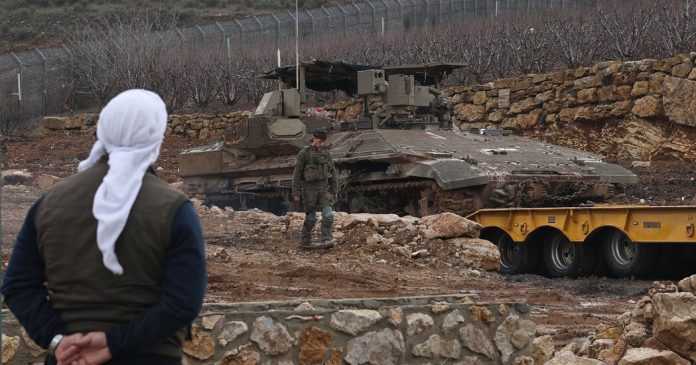
There are Druse populations in Syria, Lebanon and Israel. They are present in the Golan Heights, territory that Israel captured from Syria during the Arab-Israeli War of 1967 and then annexed. The move is not recognized by most of the world, including the United Nations, which considers the land occupied.

Syrian Druse and government leaders swiftly and strongly rejected any threats of intervention by Israel.

“We are Syrian Arab nationals, and we await a response from the administration and government,” said Rabih Munthir, a Druse leader in Jaramana. “We are not asking for protection from anyone, and we won’t ask for protection from anyone. We are citizens who have been living on this land for more than 1,000 years.”

A Syrian security official, Lt. Col. Hossam al-Tahan, the chief of the security directorate in the Damascus suburbs, said Saturday that it was working with local leaders to track down all who had been involved in the shooting.

“We affirm that no entity will be allowed to undermine Syria’s unity,” he said, according to the Syrian state media. “Our only issue is with those who carried out the attack and assault, and we urge rational minds to recognize that this path threatens Syria’s security, stability and unity.”

Just days after Syrian rebels ousted President Bashar al-Assad in early December, Israel carried out numerous incursions in Syria, raiding villages, launching hundreds of airstrikes, destroying military outposts and threatening residents. Israel has described the incursions as temporary measures to protect its own security, but they have gone on for three months and have raised fears among Syrians of a prolonged military occupation.

Israel’s attacks on Syria have been condemned internationally, and in January the United Nations said that “Syria’s sovereignty, territorial unity, and integrity must be fully restored.”

Since Mr. al-Assad and his government were ousted by the rebel coalition, its leader, Ahmed al-Shara, who was appointed interim president last month, has sought to allay concerns that his Sunni Islamist group would target religious minorities.

He has spoken regularly of the need to unite Syria’s many religious and ethnic minorities to build a new Syria after more than 13 years of a brutal civil war.

Last week, the country held its first national dialogue which included representatives from Syria’s many sects, including Sunnis, Alawites, Druse, Christians and Kurds.

Reham Mourshed and Myra Noveck contributed reporting.

Greenpeace Faces Tough Start in Trial Over Dakota Access Pipeline Protests

0

The opening week of the landmark trial of Greenpeace in a multimillion-dollar lawsuit by Energy Transfer over the Dakota Access Pipeline protests did not bode well for the defense.

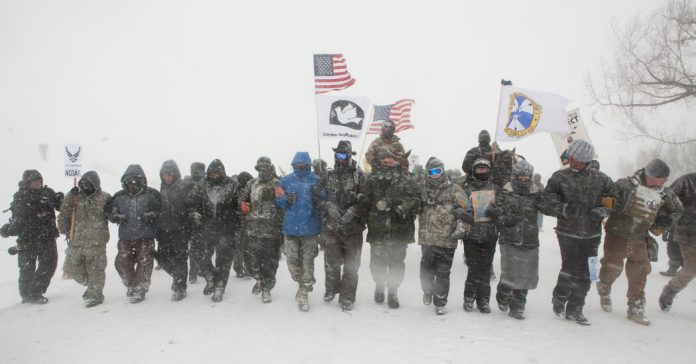
Lawyers for Greenpeace said so themselves in a petition filed in North Dakota’s Supreme Court. They asked the court on Thursday to move the trial out of Morton County, arguing the jury is not impartial. Daily life was disrupted there for nearly a year, in 2016 and 2017, by protesters heading toward the Standing Rock Indian Reservation, just south of the county line.

The protests against construction of the pipeline, which since 2017 has carried oil from North Dakota across several states to Illinois, garnered international attention, attracted thousands of people and, at times, led to violent clashes.

The company that built the pipeline, Energy Transfer, first filed the lawsuit against Greenpeace in 2019. The suit accuses the environmental group of playing a key role in protests that delayed pipeline construction, as well as attacking workers and equipment and defaming Energy Transfer.

Greenpeace, one of the world’s most widely known environmental groups, says it played only a minor role in the protests, in support of Native American activists, and that the organization promotes nonviolence.

Lawyers for Greenpeace said the jury-selection process showed that the county court had erred in denying its previous motions to move the trial to the bigger city of Fargo. “With jury selection complete, it is clearer now than ever that Greenpeace Defendants will not get a fair and impartial trial in the county where the protests occurred,” they wrote in the motion.

If Greenpeace were to lose the lawsuit, a judgment could amount to hundreds of millions of dollars and force it to shut down operations in the United States.

The motion also pointed to newspapers that had been sent to Morton County residents in recent months containing negative articles about the protests. The three Greenpeace entities named in the lawsuit said in their petition to the State Supreme Court that they believe the newspapers “may have emanated from plaintiffs or from someone closely connected to them.”

Energy Transfer did not immediately respond to a request for comment about whether it was connected to the mailed newspapers.

As of Sunday afternoon, the court had not responded to the petition. The trial is scheduled to last five weeks.

Testimony began Wednesday in the courthouse in Mandan, N.D., just across the Missouri River from Bismarck, the capital. The protests took place about a 45-minute drive south.

The case is being heard by Judge James D. Gion, who is normally based in neighboring Stark County. Morton County’s judges had recused themselves, noting that they were “acquainted with the plaintiff/defendant, and feel that in the best interest of justice should disqualify themselves,” according to court documents.

Energy Transfer began to call witnesses on Wednesday.

Joey Mahmoud, who was a vice president at Energy Transfer overseeing Dakota Access, testified that the pipeline serves a crucial purpose in bringing oil from the Bakken fields of western North Dakota to refineries in the Midwest and beyond. The pipeline construction came amid a historic boom in fracked oil from the area that helped lead the United States to become the world’s biggest oil producer.

The protests against the project from the Standing Rock Sioux Tribe and its allies escalated in spring 2016, he testified. Tribal leaders said the project went through burial sites and other sacred land and that its construction would endanger the tribe’s water supply.

The company countered it had hired experts to survey the route and argued that those claims were unsupported. It also said pipelines were a safer way to transport oil than trucks or rail.

Energy Transfer’s lawyers also called the county sheriff to the stand and showed video depositions of former Greenpeace employees. Much of their questioning centered on the use of “lockboxes” — devices protesters can use to lock themselves to one another, or to items like fences or equipment — that Greenpeace sent to the protests.

The Morton County sheriff, Kyle Kirchmeier, testified that law enforcement had to scramble to respond to the influx of protesters and the escalation of conflicts. He had to ask for an emergency declaration from the state and to train officers in tactics like disabling lockboxes, he said.

Harmony Lambert, a former Greenpeace employee, said in her deposition that she traveled to Standing Rock in 2016 and also worked with an Indigenous activist group. Emails were shown that she had sent to Greenpeace colleagues at the time detailing her activities, including training people in blockade techniques and donating about 20 lockboxes.

A petition from media organizations, including The New York Times, to stream the proceedings online is pending with the State Supreme Court. Another petition for online access, from a group of left-leaning lawyers who traveled to North Dakota to observe the proceedings, has been denied. That group included the First Amendment lawyer Martin Garbus and Steven Donziger, who spent decades suing oil companies and then served time in prison for contempt of court.

Starmer Vows to Assemble ‘Coalition of the Willing’ to Help Ukraine

0

new video loaded: Starmer Vows to Assemble ‘Coalition of the Willing’ to Help Ukraine

transcript

transcript

Starmer Vows to Assemble ‘Coalition of the Willing’ to Help Ukraine

Prime Minister Keir Starmer of Britain said he would work with other European leaders to develop a plan for ending the war in Ukraine. They hope the effort will win the backing of President Trump.

“Through my discussions over recent days, we’ve agreed that the U.K., France and others will work with Ukraine on a plan to stop the fighting. Then we’ll discuss that plan with the United States and take it forward together. We will go further to develop a ‘coalition of the willing’ to defend a deal in Ukraine and to guarantee the peace. The U.K. is prepared to back this with boots on the ground and planes in the air, together with others. Europe must do the heavy lifting. But to support peace in our continent and to succeed, this effort must have strong U.S. backing.” Reporter: “Do you think you really do need the U.S., and if you do, do you think the ‘coalition of the willing’ will be enough to bring President Trump back around? Thank you.” “Well, firstly, in relation to last Friday, nobody wanted to see what happened last Friday. But I do not accept that the U.S. is an unreliable ally. The U.S. has been a reliable ally to the U.K. for many, many decades, and continues to be. There are no two countries as closely aligned as our two countries. I spoke to President Trump last night. I’m not going to go through the details of that conversation, but I would not be taking this step down this road if I didn’t think that it was something that would yield a positive outcome in terms of ensuring that we move together — Ukraine, Europe, the U.K., and the U.S., together — towards a lasting peace. We are at a crossroads in history today. That is not a moment for more talk. It’s time to act. Time to step up and lead. And to unite around a new plan for just and enduring peace.”

Recent episodes in Ukraine Crisis

UK says Europe will take lead in securing Ukraine peace deal : NPR

0

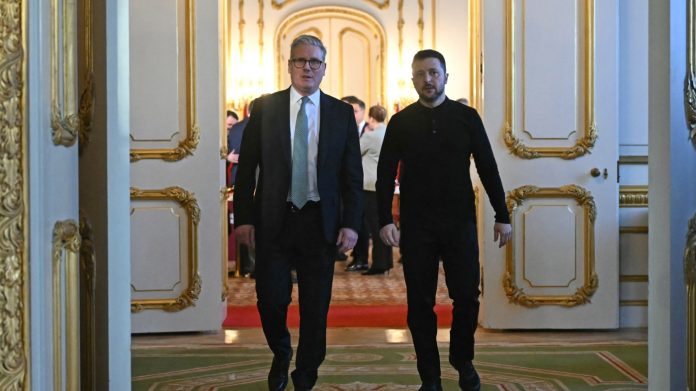
Britain’s Prime Minister Keir Starmer (left) and Ukraine’s President Volodymyr Zelensky (right) head to a private room to hold a meeting during a summit at Lancaster House on March 2 in London, England.

WPA Pool/Getty Images


hide caption

toggle caption

WPA Pool/Getty Images

British Prime Minister Keir Starmer on Sunday laid out a framework for a plan to end Russia’s war in Ukraine — one where Europe will lead the charge for securing peace — while still relying heavily on U.S. backing.

The proposal is the result of emergency talks held by European leaders in London following President Trump’s heated exchange with Ukrainian President Volodymyr Zelenskyy at the White House last week.

Over the weekend, leaders from over a dozen countries got together to discuss a roadmap to peace and security for Ukraine, as the country faces its third year of war with Russia. The emergency summit was also aimed at working to preserve Ukraine’s relationship with the U.S. and America’s involvement in the war overseas.

Starmer said that Europe must do the “heavy lifting” to secure a lasting peace agreement between Russia and Ukraine, and that the U.K. should lead the front. He emphasized that “this effort must have strong U.S. backing.”

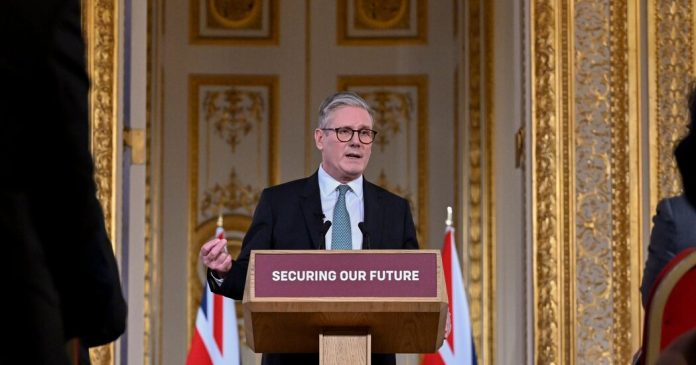
“ Through my discussions over recent days, we’ve agreed that the U.K., France and others will work with Ukraine on a plan to stop the fighting,” Starmer said at a press conference Sunday. “Then we’ll discuss that plan with the United States. And take it forward together.”

UK leads on pledge to boost military spending for Ukraine

The prime minister outlined four key priorities that would guide the proposal. The first was to put Ukraine “ in the strongest possible position now so that they can negotiate from a position of strength.”

To do so, Starmer vowed the United Kingdom would ramp up its support for Ukraine. That includes a loan of 2.26 billion British pounds ($2.84 billion). Starmer noted that the funds will not be coming from British tax dollars, but rather profits from frozen Russian assets. Ukraine will also be able to dip into the 1.6 billion pounds ($2 billion), in U.K. export finance to purchase over 5,000 air defense missiles.

Second, Starmer said, European leaders agreed it is important to ensure Ukraine’s sovereignty and security. A third goal was to ensure Ukraine had robust defensive capabilities to protect itself from any potential future invasions.

The fourth aim was to develop a “coalition of the willing” among countries wanting to guarantee and possibly provide troops to defend long-term peace in Ukraine. He said “ a number of countries” have expressed interest in being involved, adding that he would leave it to them to announce their participation.

 ”Not every nation will feel able to contribute, but that can’t mean that we sit back,” Starmer said. “ Instead, those willing will intensify planning now with real urgency.”

For the United Kingdom, this involves preparing to deploy soldiers and aircraft, the prime minister said.

The prime minister said that such a coalition would rest on the premise that the U.S. will be involved — without deploying its own troops.  ”That is why I spoke to President Trump last night before we develop the work on this plan,” Starmer said.

At the press conference, Starmer responded to last week’s incident at the White House, where Trump scolded Zelenskyy and described the Ukrainian leader as being ungrateful.

“ Nobody wanted to see what happened last Friday, but I do not accept that the U.S. is an unreliable ally,” Starmer said. “The U. S. has been a reliable ally to the U.K. for many, many decades and continues to be.”

Starmer stressed the need to help Ukraine secure long-term peace, but also said that it cannot come at the expense of a “weak deal” that would allow Russia to “breach with ease.”

The need to defend Ukraine, Starmer said, is critical in order to avoid a broader conflict.

“ I do not want conflict in Ukraine, in Europe and certainly not in the United Kingdom,” Starmer said. “The way to ensure that stability is to ensure that we are able to defend a deal in Ukraine, because the one thing our history tells us is that if there is conflict in Europe, it will wash up on our shores.”

Monday Briefing: Europe Pledges to Support Ukraine

0

The British prime minister, Keir Starmer, declared yesterday that “we are at a crossroads in history,” and announced that European countries would assemble a “coalition of the willing” to defend Ukraine against Russia. Read more here.

The announcement followed a meeting in London of 18 European leaders that Ukraine’s president, Volodymyr Zelensky, attended. Starmer said that “a number” of other nations had indicated that they could join with Britain and France and deploy troops to Ukraine in the event of a cease-fire between Kyiv and Moscow. He also announced plans to allow Ukraine to use 1.6 billion pounds in British export financing to buy more than 5,000 air defense missiles.

Context: The gathering took on greater urgency after Zelensky’s heated meeting with President Trump and Vice President JD Vance in the Oval Office on Friday, which raised fears that the U.S. would try to force Ukraine into making a peace deal.

Ukraine: Most people in the country this weekend appeared to be watching and waiting after the meeting between Trump and Zelensky. They wondered: Would the U.S. abandon them?

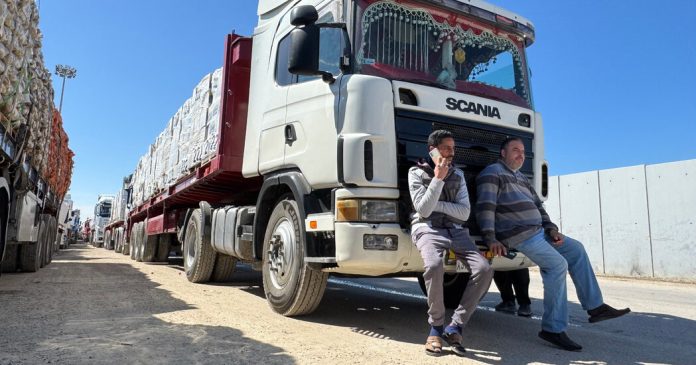
Israel said yesterday that it was immediately halting the entry of all goods and humanitarian aid into Gaza. The move was meant to force Hamas into accepting a temporary extension of the cease-fire after the first phase ended on Saturday. The halt makes the fate of the remaining hostages uncertain, and is likely to worsen conditions for Gaza’s roughly two million inhabitants. Israel said the restrictions would not apply to water.

Hours before the aid halt, Israel had proposed extending the cease-fire seven weeks, during which Hamas would release half the remaining living hostages and the remains of half the deceased ones. Hamas rejected Israel’s gambit, referring to the aid halt as “cheap blackmail,” but said it was still willing to negotiate the second stage of the deal.

What’s next: Hamas is unlikely to accept a new offer without further negotiations, said Aaron David Miller, an analyst. Israel’s proposal, he said, would allow “Israelis to get hostages back without making reciprocal commitments.”


The militia group M23 has swept through the eastern part of the Democratic Republic of Congo in recent weeks. The Congolese military should have been able to easily stop the threat: It has somewhere between 100,000 and 200,000 troops, dwarfing M23. Instead, Congolese forces keep losing.

Part of the problem is that M23, an experienced militia, is backed by Rwanda, the U.N. says. But that’s not the whole story. Congo’s military is plagued by unmotivated soldiers, infighting, extortion and abuse. The government, left weakened by decades of colonialism, has struggled with unstable or predatory leadership since.

Remote snacking has moved a bit closer to virtual reality. A team of scientists has built a device that transmits tastes from a distance, helping volunteers experience flavors meant to represent different foods. It’s a bit cumbersome right now, but someday you might be able to taste a recipe from the comfort of your home before buying groceries.

Lives lived: Antonine Maillet, a Canadian writer who became the first non-European to win France’s most prestigious literary prize, died at 95.

The new Amazon series “House of David” looks as if it could be an alternate universe of “Game of Thrones.” The show is part of a wave of faith-based programming on streaming services. Last year, Netflix signed a deal for similar entertainment and released “Mary,” a film about the mother of Jesus that cast the Oscar winner Anthony Hopkins as King Herod.

A lasting religious revival in Hollywood is unlikely, scholars predict. But such projects could make up a good financial model for platforms looking to reach spiritual audiences.

“The sheer size of the audience is enormous,” said Jon Erwin, who pitched “House of David” to Amazon. “It is the largest underserved niche audience in the world.”

What to Know About Israel’s Decision to Halt Aid to Gaza

0

Israel on Sunday announced that it would stop all goods and humanitarian aid from entering Gaza, a draconian move that disrupted the existing, agreed-upon framework for negotiating a permanent end to the war.

The decision came a day after the end of the first phase of a cease-fire deal between Israel and Hamas. Here’s what to know:

Prime Minister Benjamin Netanyahu of Israel announced the halt to the flow of humanitarian assistance and goods hours after his government proposed a seven-week extension of the temporary cease-fire, at the start of which it said that Hamas would have to release half the remaining living hostages as well as the remains of half the deceased ones.

The decision was apparently part of a bid to force Hamas into accepting Israel’s cease-fire proposal.

Hamas led the Oct. 7, 2023, attacks on Israel that killed around 1,200 people, resulted in the seizure of around 250 hostages and set off the devastating war in Gaza. During the initial cease-fire, 25 living Israeli hostages and the remains of eight dead ones were returned to Israel in exchange for about 1,500 Palestinian prisoners and detainees. That deal also allowed for a significant increase of aid to Gaza.

Israel attributed its extension proposal to the work of the new U.S. envoy to the region, Steve Witkoff. It would replace the original deal, negotiated by the United States, Qatar and Egypt, which called for the next phase to include a full withdrawal of Israeli troops from Gaza and a commitment to a permanent cease-fire in return for the release of all remaining living hostages in Gaza.

Hamas issued a statement on Sunday describing the halt in aid as “cheap blackmail.” The group said Israel’s decision was a “blatant upending of the agreement,” and added that it remained willing to begin negotiations for the second stage of the deal.

The halt, which does not apply to water, according to two Israeli officials, is likely to cause further hardship to Palestinian civilians, many of whom are at the start of the holy month of Ramadan. Supplies of fuel, vital for bakeries, are also being halted.

Aside from stopping humanitarian aid, Israel’s decision is also likely to inflate the price of goods that have begun to appear in Gaza’s markets in greater quantities in recent weeks amid the lull in fighting.

Abdulrahman Mohammed, 35, a father of four from Gaza City, said the announcement had already caused a spike in the prices of essential goods.

During the 15-month war, Israeli bombing and fighting have shattered Gaza and, according to the Palestinian health authorities, killed more than 45,000 people. The amount of aid arriving in Gaza also has dropped dramatically compared with before the war.

The United Nations and aid groups have blamed Israeli restrictions for that drop, while Israel has pointed the finger at aid groups. The result of the decrease has been serious malnutrition. Experts last year repeatedly warned of a looming famine. Under the terms of the cease-fire, there has been a surge in the amount of aid into the enclave. This phase appears now to have ended.

The move also puts the fate of the hostages remaining in Gaza into uncharted territory.

How Washington is reacting to the heated Trump-Zelenskyy meeting : NPR

0

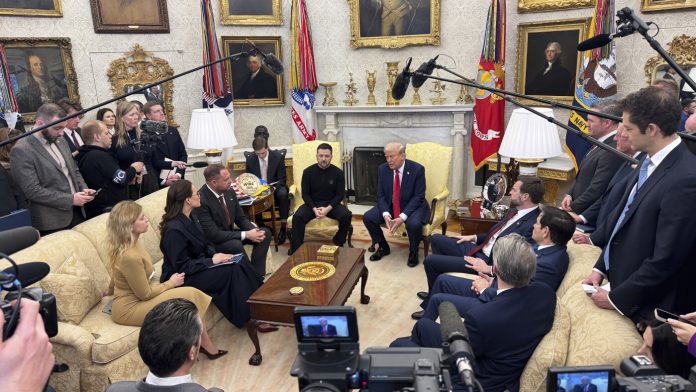
President Trump meets with Ukraine President Volodymyr Zelenskyy in the Oval Office at the White House on Friday.

Mstyslav Cherno/AP


hide caption

toggle caption

Mstyslav Cherno/AP

Both House Speaker Mike Johnson, R-La., and President Trump’s national security adviser Mike Waltz questioned President Volodymyr Zelenskyy’s future leadership of Ukraine following the heated Oval Office meeting between Trump and Zelenskyy on Friday.

Johnson told NBC News on Sunday that Zelenskyy might lose his support among his own people.

“Something has to change,” Johnson said. “Either he needs to come to his senses and come back to the table in gratitude, or someone else needs to lead the country to do that. I mean, it’s up to the Ukrainians to figure that out, but I can tell you that we are — we are re-exerting peace through strength.”

Waltz, a top White House adviser, echoed Johnson. He also harkened back to 1945 when then-prime minister of Britain, Winston Churchill, was voted out of office in the wake of World War II and “did not transition England to the next phase.”

“It’s unclear whether President Zelenskyy, particularly after what we saw Friday, is ready to transition Ukraine to an end to this war,” Waltz said on CNN’s State of the Union. “If it becomes apparent that President Zelenskyy’s … motivations are divergent from ending the fighting in his country, then I think we have a real issue on our hands.”

Trump’s national security adviser then defined the path to peace, as the administration see it.

“This will clearly be some type of territorial concession for a security guarantees going forward,” Waltz said of a potential peace deal between Ukraine and Russia. “This needs to be European led security guarantees going forward.”

Meanwhile, the Ukrainian president agreed to work on a ceasefire plan with Britain and France on Sunday, according to British Prime Minister Keir Starmer. European leaders largely supported Zelenskyy following his Friday Oval Office meeting with Trump.

Both Johnson and Waltz said they hoped Zelenskyy would return to Washington to sign a deal that would grant the U.S. access to Ukraine’s critical raw materials in exchange for possible aid.

“I hope and pray, frankly, that President Zelenskyy will come to his senses, come back to President Trump, express gratitude as he should, you know, apologize for his behavior there, and accept this mineral rights deal,” Johnson said.

Yet, the suggestion of a change in Ukrainian leadership brought bipartisan pushback on Sunday.

“I think that is a horrific suggestion,” Sen. Bernie Sanders, I-Vt., said on NBC News. “Zelenskyy is leading a country, trying to defend democracy against an authoritarian dictator, Putin, who invaded his country.”

Sen. James Lankford, R-Okla., similarly disagrees with ending support of the Ukrainian president — which Sen. Lindsay Graham, R-S.C., also suggested.

“I’m not interested in calling on the resignation of other world leaders,” Lankford said. “I didn’t like it when Chuck Schumer asked for [Israeli Prime Minister Benjamin] Netanyahu to be removed. I don’t like it when other members of the Senate ask for Zelenskyy to be removed, either.”

Rep. Mike Lawler, R-N.Y., called the Friday meeting a “missed opportunity” for both Trump and Zelenskyy.

“The only winner the other day was Vladimir Putin, because this deal did not happen,” Lawler, who serves on the House Foreign Affairs Committee, told NPR. “And so it is important for both sides to get back to the table and finalize this agreement and put Ukraine in a much stronger position to negotiate a settlement.”

On Sunday, Secretary of State Marco Rubio told ABC News, “we’ll be ready to reengage when they are ready to make peace.”