Friday, November 13, 2026
Home Blog Page 165

Drones Now Rule the Battlefield in the Ukraine-Russia War

0

When a mortar round exploded on top of their American-made Bradley infantry fighting vehicle, the Ukrainian soldiers inside were shaken but not terribly worried, having been hardened by artillery shelling over three years of war.

But then the small drones started to swarm.

They targeted the weakest points of the armored Bradley with a deadly precision that mortar fire doesn’t possess. One of the explosive drones struck the hatch right above where the commander was sitting.

“It tore my arm off,” recounted Jr. Sgt. Taras, the 31-year-old commander who, like others, used his first name in accordance with Ukrainian military protocols.

Scrambling for a tourniquet, Sergeant Taras saw that the team’s driver had also been hit, his eye blasted from its socket.

The two soldiers survived. But the attack showed how an ever-evolving constellation of drones — largely off-the-shelf technologies that are being turned into killing machines at breakneck speed — made the third year of war in Ukraine deadlier than the first two years combined, according to Western estimates.

Drones, not the big, heavy artillery that the war was once known for, inflict about 70 percent of all Russian and Ukrainian casualties, said Roman Kostenko, the chairman of the defense and intelligence committee in Ukraine’s Parliament. In some battles, they cause even more — up to 80 percent of deaths and injuries, commanders say.

When President Vladimir V. Putin of Russia sent troops storming into Ukraine three years ago, setting off the biggest ground war in Europe since World War II, the West rushed billions of dollars in conventional weapons into Ukraine, hoping to keep Russia at bay.

The insatiable battlefield demands nearly emptied NATO nations’ stockpiles.

The war has killed and wounded more than a million soldiers in all, according to Ukrainian and Western estimates. But drones now kill more soldiers and destroy more armored vehicles in Ukraine than all traditional weapons of war combined, including sniper rifles, tanks, howitzers and mortars, Ukrainian commanders and officials say.

Until recently, the clanging, metallic explosions from incoming artillery, ringing out around the clock, epitomized the war. Ukrainian soldiers raced at high speed in armored personnel carriers or pickup trucks, screeching to a stop and spilling out to run for cover in bunkers.

The artillery gave soldiers a sense of impersonal danger — the dread that you could die any moment from the bad luck of a direct hit.

The funeral for Yaroslav Yarotskyi, 25, who was killed along with eight other Ukrainian soldiers when a drone hit their position in a front line trench in the Luhansk region in November 2023.

Mauricio Lima for The New York Times

The conflict now bears little resemblance to the war’s early battles, when Russian columns lumbered into towns and small bands of Ukrainian infantry moved quickly, using hit-and-run tactics to slow the larger enemy.

The trenches that cut scars across hundreds of miles of the front are still essential for defense, but today most soldiers die or lose limbs to remote-controlled aircraft rigged with explosives, many of them lightly modified hobby models. Drone pilots, in the safety of bunkers or hidden positions in tree lines, attack with joysticks and video screens, often miles from the fighting.

Speeding cars or trucks no longer provide protection from faster-flying drones. Soldiers hike for miles, ducking into cover, through drone-infested territory too dangerous for jeeps, armored personnel carriers or tanks. Soldiers say it has become strangely personal, as buzzing robots hunt specific cars or even individual soldiers.

It is, they say, a feeling of a thousand snipers in the sky.

“You can hide from artillery,” said Bohdan, a deputy commander with the National Police Brigade. But drones, he said, “are a different kind of nightmare.”

A “dragon drone” spits out molten metal at 4,400 degrees Fahrenheit over enemy lines before crashing.

Handout video | 68th Separate Jaeger Brigade of Ukraine

An FPV drone launched a kamikaze attack on a Russian ground unmanned vehicle.

Ukraine’s 72nd Black Zaporozhets Motorized Rifle Brigade via Telegram

An FPV attack drone launches itself at an enemy surveillance Mavic-3 drone to disable it.

Ukraine’s 47th Mechanized Brigade ‘Magura’ via Telegram

The war’s evolution could have major geopolitical implications.

As the precarious relations between Ukraine and the Trump administration threaten future military aid, the kind of conventional weaponry that the Americans have spent billions of dollars providing Ukraine is declining in importance.

Of the 31 highly sophisticated Abrams tanks that the United States provided Ukraine in 2023, 19 have been destroyed, disabled or captured, with many incapacitated by drones, senior Ukrainian officials said. Nearly all of the others have been taken off the front lines, they added.

Drones, by contrast, are much cheaper and easier to build. Last year, they helped make up for the dwindling supplies of Western-made artillery and missiles sent to Ukraine. The sheer scale of their wartime production is staggering.

Ukrainian officials said they had made more than one million first-person-view, or FPV, drones in 2024. Russia claims it can churn out 4,000 every day. Both countries say they are still scaling up production, with each aiming to make three to four million drones in 2025.

Reports of drone attacks in Ukraine

Researchers say drone attacks, especially those by FPV drones, are so ubiquitous that the total number is impossible to log. But the number of attacks reported by the Ukrainian defense ministry and other sources has risen dramatically.

Source: Armed Conflict Location and Event Data Project

Note: Data does not capture all attacks and shows only those that were reported. Data as of January 31, 2025

The New York Times

They’re being deployed far more often, too. With each year of the war, Ukraine’s military has reported huge increases in drone attacks by Russian forces.

Source: Armed Conflict Location and Event Data Project

Note: Data does not capture all attacks and shows only those that were reported.

The New York Times

Ukraine has followed suit, firing more drones last year than the most common type of large-caliber artillery shells. The commander of Ukraine’s drone force, Colonel Vadym Sukharevsky, says Ukraine is now pursuing a “robots first” military strategy.

However effective they may be, the drones fall far short of meeting all of Ukraine’s war needs and cannot simply replace the demand for conventional weapons, commanders warn. Heavy artillery and other long-range weapons remain essential for many reasons, they say, including protecting troops and targeting command-and-control outposts or air-defense systems.

But the emerging dominance of drones could change the nature of warfare itself, leaders note.

The battlefield tactics shaping Ukraine are sure to be emulated by Western allies and adversaries alike, including Iran, North Korea and China.

“The war is a mix of World War I and World War III — what could be a future war,” said NATO’s supreme allied commander for transformation, Adm. Pierre Vandier of France.

A member of Ukraine’s 28th Separate Mechanized Brigade retreating after firing at a Russian position in Ukraine’s eastern Donetsk region in March 2023.

Tyler Hicks/The New York Times

Soldiers assembling first-person-view drones inside a destroyed home near the frontline in the Donetsk region of Ukraine in March 2024.

David Guttenfelder for The New York Times

NATO just opened a joint training center with Ukrainian soldiers to develop new warfighting strategies with A.I., advanced analytics and other machine-learning systems.

Admiral Vandier said it was vital not just for the current war, but also to understand how the changes playing out across Ukraine can prepare NATO for future conflicts.

“A war is a learning process, and so NATO needs to learn from the war,” he added.

The pace of advances has astonished even close observers of the war, forcing many to rethink the viability of weapons that cost millions of dollars on a battlefield where they can be destroyed by a drone that costs a few hundred dollars.

Drones armed with shotguns are now shooting down other drones. Antiaircraft drones are being designed to take out surveillance drones flying higher in the sky. Larger drones are being developed to serve as motherships for swarms of small drones, increasing the distance they can fly and kill.

A Russian fiber-optic FPV drone hits an Abrams tank operated by the Ukrainian military in Russia’s Kursk region.

@Heroiam_Slava via X

Ukrainian drones attack Russian military vehicles clad in extra armor.

Ukraine’s 3rd Mechanized Battalion of the Separate Presidential Brigade ‘Bulava’ via Telegram.

A Russian soldier navigates through Ukrainian tanks destroyed by drones.

Ukraine’s Battalion 141 ‘Magyar’ via Telegram.

The proliferation of drones, many equipped with powerful cameras, has also provided a closer glimpse of the fighting in frontline areas often inaccessible to journalists. The New York Times analyzed dozens of video clips posted online by military units on both sides of the war. While these videos are sometimes used for promotional purposes, they also help illustrate how new battlefield technologies are reshaping the war.

Drones, of course, were deployed in the earliest days of the invasion as well. When Russian armored columns streamed into Ukraine at the start of the war, some civilians — calling themselves “the Space Invaders” — organized through an informal chat group to help defend the country. They quickly modified their own drones to drop hand grenades and other munitions on the advancing enemy soldiers.

Those ad hoc weapons have become so common that one of those early defenders, Serhiy, said he was later attacked by the same kind of bomber drone he had developed.

“I was wounded by the same technology I worked with,” said Serhiy, using his first name for fear of retribution from Russia.

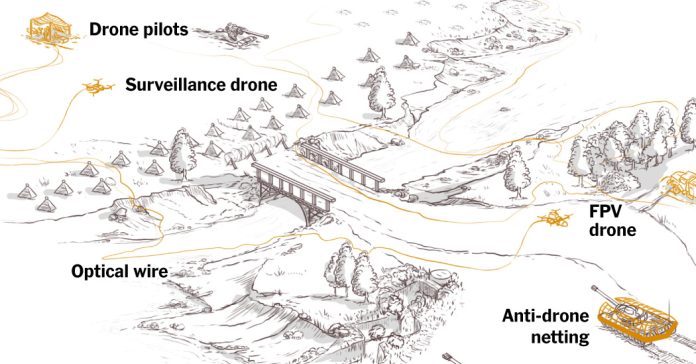
Common drones in the battlefield in Ukraine

Sources: New York Times reporting; news reports; photographs and videos released by Russian and Ukrainian authorities

The New York Times

The Ukrainians make use of a wide range of explosives to arm drones. They drop grenades, mortar rounds or mines on enemy positions. They repurpose anti-tank weapons and cluster munitions to fit onto drones, or they use anti-personnel fragmentation warheads and others with thermobaric charges to destroy buildings and bunkers.

Capt. Viacheslav, commander of Ukraine’s 68th Separate Jaeger Brigade’s strike drone company, scrolled through his phone to show some of the 50 types of munitions the Ukrainians use.

“This is called ‘White Heat,’” with over 10 kilograms of explosives, he said. “It burns through everything.”

“This one is called ‘Dementor,’ like in Harry Potter,” he added. “It’s black, and it’s a 120-millimeter mortar. We just repurpose it. This one’s called ‘Bead.’ This is ‘Kardonitik.’ The guys really like it.”

The proliferation of drones inevitably gave rise to widespread electronic warfare — tools to jam the radio signals that most drones need to fly.

Tens of thousands of jammers have been littered across Ukraine’s front lines to disable drones, cluttering the electromagnetic spectrum that also enables GPS, military communications, navigation, radar and surveillance.

The jammers have made it much harder for even skilled Ukrainian pilots to hit their targets, Ukrainian soldiers and commanders said.

That has fueled innovative ways of overcoming jamming.

A Ukrainian soldier uses an anti-drone system to jam frequencies and counter Russian drones, in a forest in eastern Ukraine in February 2024.

Tyler Hicks/The New York Times

Ukrainian engineers have built drones and robots with “frequency hoppers,” automatically switching from one radio signal to another to evade jammers.

Surveillance drones that guide themselves with A.I. — instead of being remotely operated by radio — are starting to take flight, too. Last fall, a drone being tested by the American company Shield A.I. found two Russian Buk SA-11 surface-to-air missile launchers, and sent their location to Ukrainian forces to strike.

Ukraine and Russia have also reached back to older technologies to thwart jammers, including tethering drones to thin fiber-optic cables that can stretch for more than 10 miles.

With its long tail, the drone remains connected to a controller, so it doesn’t need to use radio signals, rendering it immune to jamming.

Russia has been quicker to churn out these fiber-optic workarounds on a mass scale, partnering with Chinese factories to make the spools of cable for the “fly-by-wire” drones, Ukrainian officials say.

In recent videos from the front lines, fiber-optic cables crisscross fields, glinting in the sun. The production of this new weapon follows a pattern in the war: Ukraine has a broader variety of new designs, but Russia has a numerical advantage, able to make them more quickly.

Fiber-optic cables stretch above homes near Pokrovsk, Ukraine.

Handout video | Ukrainian military drone pilot

A soldier walks along a road in the Kursk region where fiber optic lines have been left behind by drones.

@GrandpaRoy2 via X

The unspooling mechanism of a Russian fiber-optic drone.

PGITechnology via Telegram

Other adaptations to the swirl of drones are surprisingly low-tech. Soldiers cover tanks in anti-drone netting or makeshift structures of metal sheets, with rubber and logs nestled between to protect them.

On the front lines, vehicles carry extra armor as a low-tech way to protect themselves from drones. This vehicle seen in the Sumy region in January was covered with extra wire netting for protection.

Finbarr O’Reilly for The New York Times

Ground drones have also been thrust onto Ukraine’s battlefields at a time when they are still being tested by many modern militaries.

The so-called battle bots sometimes look like remote-controlled toy cars with puffy tires or small tanks on tracks, scattering land mines, carrying ammunition or helping to evacuate the wounded. They have been packed with explosives to slam into enemy positions and outfitted with machine guns and other weapons.

In December, the 13th Brigade of the National Guard of Ukraine carried out what the Ukrainian military said was the first fully robotic combined arms assault in combat.

Russian forces tried to destroy the remote-controlled vehicles with mortars and by dropping explosives from their own drones, said Lt. Volodymyr Dehtyaryov, a brigade spokesman. Soldiers were kept at a distance, operating from a bunker behind the Ukrainian front line.

“Drones show that the one who is quicker to adapt,” he said, “wins the war.”

The 108th Separate Battalion “Da Vinci Wolves” of Ukraine training with unmanned land drones in the Donbas region this month.

Tyler Hicks/The New York Times

Air defenses remain one of Ukraine’s most urgent needs, so much so that the F-16 jets that NATO countries have donated mostly fly air patrol and other defensive missions, rather than attacking. But A.I. is about to enter the picture, commanders hope — particularly to counter Russian bombs.

Russia has outfitted its Soviet-era bombs with pop-out wings and satellite navigation, turning them into guided munitions called glide bombs. More than 51,000 of them have been dropped on Ukrainian cities, towns and positions near the front, the Ukrainian military says. It has tried to intercept them, including by shooting them down with costly missiles. But it does not always succeed.

So NATO is trying to use artificial intelligence and other machine learning to find patterns in glide bomb attacks, hoping to intercept or jam them more precisely, NATO officials said.

Ukrainian officials say they have also made strides in drone-on-drone warfare to bolster traditional air defenses.

Small quadcopter drones can now spring off the ground and crash into long-range Russian drones. Ukraine also recently claimed to have developed a laser weapon that can hit low-flying aircraft, including the Iranian-designed Shahed drones that Russia has used since the war’s early days.

Long-range weapons are also a priority. Russia has launched more than 10,000 missile strikes across Ukraine and is continually replenishing its missile arsenal. Ukraine, by comparison, has depended on a limited number of Western-made weapons to hit targets far inside Russia, and some of them are so old that officials in Kyiv doubt their effectiveness.

Russian soldiers preparing a Lancet drone to launch it in an undisclosed location in Ukraine, in a photograph shared by Russia’s Defense Ministry.

Russian Defense Ministry Press Service, via Associated Press

As an alternative, Ukraine has developed long-range drones to attack Russia at distances that would have been unthinkable when the war started. Some have struck more than 700 miles beyond the front, and it is not uncommon for more than 100 long-range attack drones to fly into Russia and Ukraine on any given night.

At sea the battle is no less surprising, especially given that Ukraine started the war with almost no navy.

For months, Russian warships, visible from shore, menaced the coast of Odesa, one of Ukraine’s biggest cities. Even after the Ukrainians sank the flagship of the Russian Black Sea Fleet, using domestically produced Neptune anti-ship missiles, the Kremlin effectively blockaded Ukrainian ports.

Three years later, Russian ships rarely enter the northwestern Black Sea, while its navy has pulled most of its valuable assets from ports in the occupied Crimean Peninsula, fearing Ukrainian attack.

Crude Ukrainian robotic vessels packed with explosives sail hundreds of miles across choppy waters to target enemy ships. Russia’s fleet in the Crimean port of Sevastopol now has layers of buoys and barriers to protect itself against naval drones.

Source: Satellite image by BlackSky, July 2023.

The New York Times

Ukraine often sends its drones to hunt in “wolf packs,” hoping the lead drone can blast a path for those that follow.

The commander of Ukraine’s naval forces, Vice Adm. Oleksiy Neizhpapa, said that while traditional naval weapons and warships remained necessary, drones have “ushered in a new era in maritime operations.”

“This is not just a tactical tool but a strategic shift in the approach to naval warfare,” Admiral Neizhpapa said in a statement, crediting the drones with “altering the balance of power in the Black Sea.” American military leaders have noted the Ukrainian approach to see if there are lessons should China make a move to attack Taiwan.

Sea drones at an undisclosed location in Ukraine in December 2023.

Brendan Hoffman for The New York Times

Taken together, what has unfolded in the war’s first three years has made some Western leaders question longstanding military assumptions.

“I think we’re moving to technological warfare,” President Alexander Stubb of Finland said at the World Economic Forum in Davos, Switzerland, in January. “Not only the Ukrainians are a step ahead of us, which I think is great, but the Russians are adapting to a new situation as well.”

“So we really need to think about collective defense comprehensively,” he said. “The advancements are so quick that all of us need to be alert to that.”
What time is Trump’s speech to Congress? : NPR

0

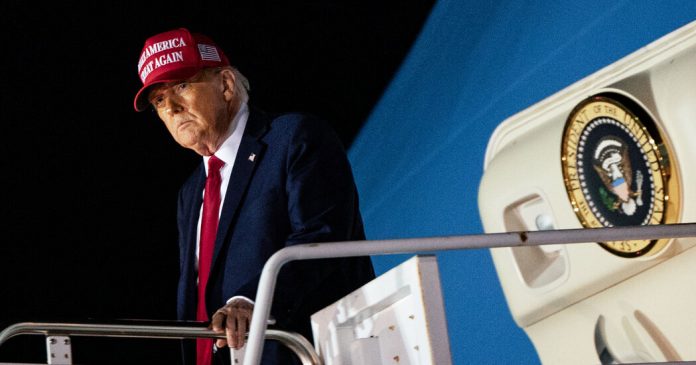
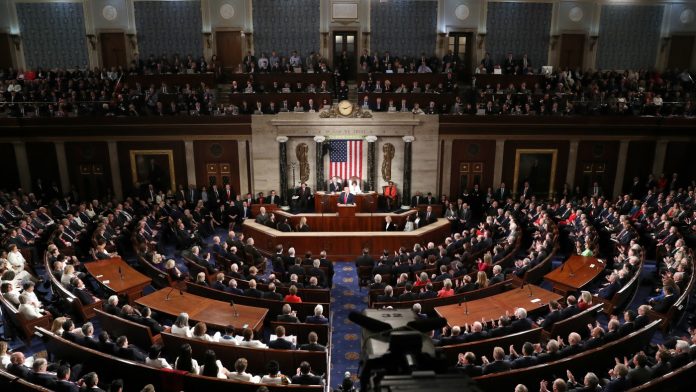
President Trump during his last State of the Union address on Feb. 4, 2020. Trump will return to Capitol Hill on Tuesday to deliver an address to a joint session of Congress.

Mark Wilson/Getty Images


hide caption

toggle caption

Mark Wilson/Getty Images

President Trump will deliver an address to a joint session of Congress on Tuesday, his first since returning to the White House six weeks ago.

The speech comes as the administration is seeking to dramatically reshape the federal government, crack down on illegal immigration and redefine the U.S. role abroad.

He will address Congress at a time when Republicans hold a majority in both the Senate and the House of Representatives. Despite those majorities, progress on delivering legislation to fund the president’s key campaign promises has been slow going.

Here’s what you need to know ahead of Tuesday night’s speech.

What time is the address?

Trump’s speech is set to start at 9 p.m. ET. NPR’s live special coverage and analysis of the president’s joint address and the Democratic response will also begin at 9 p.m. ET.

You can tune in on many public radio stations or in the NPR app, tell your Alexa device to “Ask NPR to play Special Coverage” and also watch our live in-studio video coverage here and on NPR.org

What will Trump talk about?

Trump has launched a blitz of actions since taking office, and Tuesday’s address will offer him an opportunity to tout his agenda to viewers in prime time — many of whom could have concerns, according to a new NPR/PBS News/Marist poll. The poll found that 53% of respondents think the state of the union is not strong, and 54% say the country is headed in the wrong direction.

In his address, Trump is likely to double down on his administration’s government restructuring initiative, known as the Department of Government Efficiency (DOGE), which Trump has turned to billionaire Elon Musk to lead.

As part of this effort, the administration has moved to lay off tens of thousands of federal workers and essentially closed multiple agencies — resulting in mass confusion among federal employees and a slew of legal battles.

Trump is also expected to talk about his plans for reducing illegal immigration. Days after taking office, he suspended the asylum process at the southern border as well as refugee resettlement. He also moved to end birthright citizenship for children born in the U.S. to parents without legal status, but that effort has since been blocked by two federal judges. The White House has sought to portray the crackdown on illegal immigration as a wholesale success, but critics say that the administration’s hard-line policy is feeding into misperceptions about immigrants and crime.

Tariffs may also be a big focus of the address. Trump has already imposed a 10% tariff on Chinese goods and has vowed to impose steep tariffs on Mexico and Canada. The president has said the tariffs are aimed at reducing illegal border crossings and the amount of fentanyl entering the U.S., even as federal data show crossings and fentanyl smuggling both falling.

Trump has also signed an executive order expanding steel and aluminum tariffs and another aimed at imposing “reciprocal tariffs” on U.S. trading partners.

On foreign policy, expect lots of attention on anything Trump may say about ending the wars between Israel and Hamas and Russia and Ukraine.

In the Middle East, Trump has said he wants the U.S. to take ownership of the Gaza Strip and redevelop the territory — in what would be a drastic and unprecedented shift in U.S. relations in the region. He has provided little additional detail on how the effort would work.

The role of the U.S. in brokering a peace deal between Russia and Ukraine is another open question, particularly after last week’s heated Oval Office meeting between Trump and Ukrainian President Volodymyr Zelenskyy.

This speech is not a State of the Union address, why? 

An address to a joint session of Congress is similar to a State of the Union address — each happens in the same place and around the same time each year. But they have slightly different purposes.

A State of the Union address allows a sitting president to recap their accomplishments over the past year in office. For a newly sworn-in president, the joint address is an opportunity to lay out an initial agenda.

That said, Trump is in a unique situation. He is offering a far different playbook from his predecessor, but will also stand in front of lawmakers as a second-term president with a ticking clock. He’s the first president to serve two non-consecutive terms in more than 130 years.

Who is delivering the Democratic response?

First-term Sen. Elissa Slotkin, D-Mich., will provide remarks following Trump’s address on Tuesday. In a year that saw Democrats lose their majority in the Senate, Slotkin’s win was a rare bright spot for Democrats — and came in a state that Trump ultimately carried.

Rep. Adriano Espaillat, D-N.Y., will deliver the Spanish language response. Rep. Lateefah Simon, D-Calif., will also give a response for progressives from the Working Families Party.

Economic concerns will likely be a focus of these rebuttal remarks. Democrats lost on the issue during the 2024 election and have made addressing rising prices a priority in their messaging. While Trump campaigned heavily on combating inflation, it has thus far not been a main focus of his presidency. Expect Trump’s close relationship with Musk to also face criticism.

European Leaders Look for Allies to Secure Ukraine-Russia Peace Deal

0

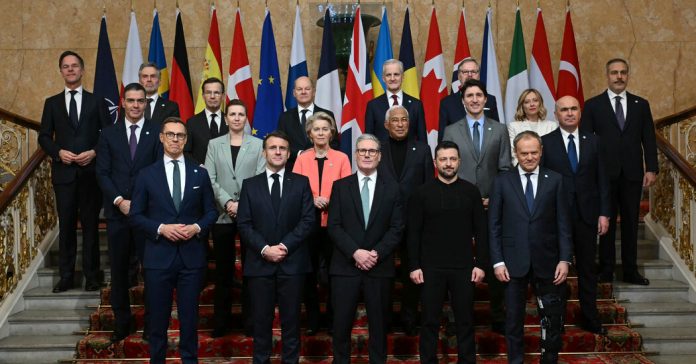
Britain and France have promised to muster a “coalition of the willing” to secure a peace agreement between Ukraine and Russia. Now comes the acid test for Europe: How many countries will step up, and does that even matter, given Russia’s rejection of such a coalition as part of any settlement?

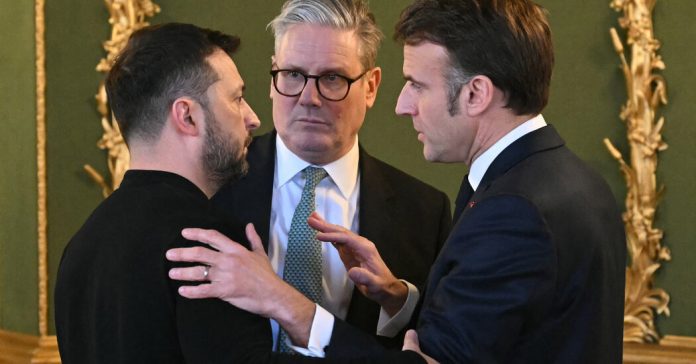
Prime Minister Keir Starmer of Britain left those questions unanswered as he bade farewell to fellow leaders after a summit meeting in London on Sunday. He conceded that “not every nation will feel able to contribute,” though he expressed optimism that several would, and that this would send a signal to President Trump that Europe was ready to “do the heavy lifting.”

Drawing Mr. Trump back into the process is as important as the mission and scope of a European coalition, analysts say. For the moment, the United States appears determined to strike a deal with President Vladimir V. Putin of Russia over the heads of Europe and Ukraine, and without any security guarantees.

Mr. Starmer presented his coalition of the willing as one of multiple steps that included continued military aid for Ukraine to improve its position on the battlefield, a seat at the table for Kyiv in any peace negotiation and further help with its defensive capabilities after a settlement. That is where the coalition would come in.

In addition to Britain and France, northern European countries like Denmark and the Netherlands seem obvious candidates to take part. Both have been strong financial supporters of Ukraine’s war effort and are NATO members who contributed to other security campaigns, like that in Afghanistan. Germany is the second-largest contributor of military and other aid to Ukraine, after the United States.

But each country faces political and economic hurdles, such as the need to pass specific parliamentary measures in the Netherlands and the lack of a new government in Germany after recent elections. Denmark’s prime minister, Mette Frederiksen, said she had an “open mind.” Dick Schoof, prime minister of the Netherlands, said he had not yet made concrete commitments.

“We will renegotiate precisely these issues,” the departing German chancellor, Olaf Scholz, said after Sunday’s meeting, in what sounded like something less than a stirring call to arms. Ramping up military spending, he added, “will require an effort that many are not yet really sufficiently prepared for.”

Mr. Scholz’s likely successor, Friedrich Merz, is scrambling to obtain a huge amount of funding for defense — potentially at least 200 billion euros, about $207 billion — in the current German Parliament because he faces the prospect of an opposition minority in the next that is big enough to block additional spending.

President Emmanuel Macron of France said the nascent British-French plan would begin with a one-month truce between Ukraine and Russia. Any deployment of peacekeeping troops would come only after that, he said in an interview with the French paper Le Figaro on Sunday evening.

“There will be no European troops on Ukrainian soil in the coming weeks,” Mr. Macron said, noting the need for negotiations first. “The question is how we use this time to try and obtain an accessible truce, with negotiations that will take several weeks and then, once peace has been signed, a deployment.”

“We want peace,” Mr. Macron said. “We don’t want it at any price, without guarantees.”

Italy’s prime minister, Giorgia Meloni, who has cultivated friendly ties with the Trump administration, remains skeptical of a peacekeeping force. On Sunday, she noted that deploying Italian troops “has never been on the table” and added that such an operation ran the risk of being “highly complex and less effective.”

There are also openly unwilling countries, notably Hungary, which has in the past tried to hold up additional European aid to Ukraine. Hungary’s prime minister, Viktor Orban, thanked Mr. Trump for his hostile treatment of President Volodymyr Zelensky of Ukraine during their Oval Office meeting last week.

Mr. Orban and Robert Fico, Slovakia’s prime minister, have demanded that the European Union push for an immediate cease-fire in Ukraine. Both have threatened to block statements of support for Ukraine at an E.U. summit meeting this week. Neither leader was invited to the gathering in London.

European leaders fear that Mr. Orban could also hold up efforts to keep about $200 billion in Russian assets frozen when the decision to keep them locked up is up for renewal this summer. London just lent Ukraine 2.26 billion pounds, about $2.8 billion, that it says will be paid back with the interest from frozen Russian assets held in Britain.

“This requires unanimity,” Prime Minister Donald Tusk of Poland said of the vote to keep the assets frozen. “We know what Hungary’s position is, what it may be.”

Even if Europe marshals a robust coalition, it is not clear that will satisfy Mr. Trump. On Monday, he is expected to meet with top aides to discuss suspending or canceling U.S. military aid to Ukraine, according to an administration official, who spoke on condition of anonymity to discuss internal deliberations.

For Mr. Starmer, who has cast himself as a bridge between Europe and the United States, the diplomatic risks are high.

Britain’s ambassador to the United States, Peter Mandelson, drew protests at home on Monday after he told ABC News that Mr. Zelensky needed to give “his unequivocal backing to the initiative that President Trump is taking to end the war and to bring a just and lasting peace to Ukraine.”

James Cleverly, a Conservative former foreign secretary, posted on social media, “The UK ambassador to Washington isn’t meant to communicate his own opinion, he is meant to communicate the UK government opinion.” He urged Mr. Starmer and the current foreign secretary, David Lammy, to “grip this.”

But Mr. Starmer has also rejected calls for Europe to distance itself from Mr. Trump, whom he said was committed to a “durable peace.” He said he had discussed Europe’s plans by phone with the American president on Saturday evening. He is likely to face close questioning about his strategy in Parliament on Monday afternoon.

“I wouldn’t be taking this step down this road if I didn’t think it would yield a positive outcome in terms of ensuring that we move together,” Mr. Starmer said after his day of whirlwind diplomacy in London.

Reporting was contributed by Steven Erlanger in Berlin; Aurelien Breeden in Paris; and Eric Schmitt in Washington.

Poll finds most think Trump is rushing change ahead of joint address : NPR

0

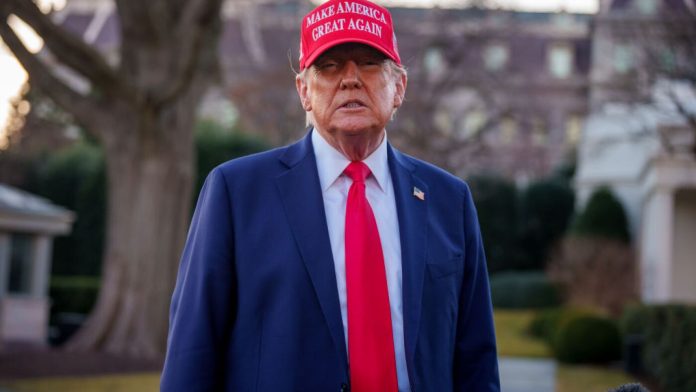
President Trump takes a question from a reporter before boarding Marine One on the South Lawn of the White House on Friday.

Andrew Harnik/Getty Images


hide caption

toggle caption

Andrew Harnik/Getty Images

Majorities say the state of the union is not strong, that the country is headed in the wrong direction and President Trump is rushing to make changes without considering their impact, a new NPR/PBS News/Marist poll finds.

There are some real warning signs for Trump, particularly with independents, who oppose his cuts to the federal government, as well as his approach to foreign policy and the economy.

Most respondents expect prices to go up. They also believe federal workers are essential to making the government function and are not huge fans of Elon Musk, who is shepherding Trump’s government overhaul. They don’t think Trump would follow court orders springing up from his slew of executive orders, and don’t believe that the U.S. system of checks and balances is working well.

Only on immigration do more see Trump’s approach as change for the better — and only narrowly.

Even though a majority thinks the country is headed in the wrong direction, views on that have improved from the past couple of years. That’s largely due to Republicans, who overwhelmingly support what Trump is doing.

The findings, the result of interviews and responses from nearly 1,700 Americans adults collected online, by text and over the phone from Feb. 24-26, come a day before Trump is set to deliver an address to a joint session of Congress. (It will have the look and feel of a State of the Union address, but is technically not one.)

The state of the union is … divided

A slim majority of respondents — 53% — said the state of the union is either not very strong or not strong at all. A similar 54% said the country is headed in the wrong direction.

Even though those are majority-negative views of the country, they are improvements over recent years. Under former President Joe Biden, in January 2023, 62% overall said the state of the union was not strong. In December of last year, 64% said the country was headed in the wrong direction.

Like so much of U.S. politics, there are sharp divides by political party. In this most recent survey, three-quarters of Democrats said the state of the union is not very strong, while three-quarters of Republicans said the opposite.

But when it comes to independents, who often determine elections, two-thirds said the state of the union was not strong.

Trump approval starts with a lower approval than recent presidents — except himself

When Trump left office in 2021, he had a 38% approval rating, so the 45% in the first Marist poll of Trump’s presidency is an improvement. It’s also higher than the 39% rating Trump came into his first term with.

But only 34% of independents approve of the job he’s doing now, and his overall score is lower than where all other presidents started out since Gallup has been tracking presidential approval ratings, except for Trump in his first term:

  • Biden (2021) 57%
  • Trump (2017) 44%
  • Obama (2009) 67%
  • Bush (2001) 57%
  • Clinton (1993) 58%
  • Bush (1989) 51%
  • Reagan (1981) 51%
  • Carter (1977) 66%
  • Ford (1974) 71%
  • Nixon (1969) 59%
  • Johnson (1963) 78%
  • Kennedy (1961) 72%
  • Eisenhower (1953) 68%
  • Truman (1945) 87%

Most say Trump is making changes too hastily, and what he’s doing isn’t broadly popular

A majority of respondents — 56% — think Trump is rushing to make changes without considering their impact. That includes 65% independents.

Most said the cuts to the federal government are doing more harm than good (55%), and 60% said federal employees are essential, including two-thirds of independents, compared to 40% overall who said the country could function effectively without most of them.

Meanwhile, Musk, who is advising Trump on slashing the federal government, continues to be unpopular. Just 39% had a favorable opinion of him in the survey, roughly unchanged from January — prior to inauguration. That’s also the same percentage who have a favorable view of DOGE, Musk’s government efficiency project.

So much of what Trump is doing appears tailored to Republicans because his moves are largely unpopular with independents and Democrats.

Carter Deaderick, a Republican voter from Marietta, Ga., told NPR she understands why Trump is moving quickly to implement parts of his agenda.

“He’s doing what he said he was going to do, which most presidents have not,” said Deaderick, who participated in NPR’s poll.

“I like how he gets it done and he works nonstop for it,” she added. “I respect that.”

As DOGE associates make rapid changes to the federal workforce, they are conducting mass firings — actions that now face legal challenges.

David Nicholas, a Republican voter in Port St. Lucie, Fla., expressed sympathy for those federal workers, but said he still backs the DOGE effort.

“I’ve been laid off before different times over the years, and nobody really [cared] about my feelings or anything like that,” said the poll respondent, who is not a government worker. “Maybe some [federal] programs should still be out there. But I think we need to tighten the belt and save the taxpayers some money because I’m one of them.”

Trump is narrowly underwater on whether people think he’s making changes for the better or worse when it comes to the economy (42% better, 46% worse) and foreign policy (44% better, 49% worse). A majority — 57% — said they expect prices to go up in the next 6 months, and 65% think the U.S. is either not doing enough or doing about the right amount to support Ukraine. Only a third said the U.S. is giving too much support, but that includes 56% of Republicans. The survey was completed before Friday’s dramatic Oval Office meeting that has created a further rift between the U.S. and Ukraine.

Trump does slightly better on immigration (47% better, 43% worse), but independents think Trump’s approach on immigration is making things worse by 5 points (40% better, 45% worse).

More independents think Trump is making things worse rather than better when it comes to the economy and foreign policy by a whopping 20 points each.

Respondents were also overwhelmingly against the idea of dismantling the Department of Education (63% oppose) and taking ownership of Gaza (71% oppose), as Trump has proposed.

Republicans in the poll, though, favored abolishing the Education Department and were split on ownership of Gaza.

Most people — 58% — said they aren’t confident Trump would follow court orders if they block his executive actions.

There has also been a severe decline in faith in the U.S.’s system of checks and balances. Just 43% think it is working well, down from 66% in December, driven by Democrats and independents.

Trump Turns Up Trade Pressure on China After Beijing Fails to Come Running

0

When President Trump threatened tariffs on Canada, Mexico and China in January, saying those countries needed to do more to stop the flow of drugs and migrants into the United States, Canadian and Mexican officials raced to Washington, bearing charts and videos detailing their efforts to toughen their borders.

Canada created a “fentanyl czar” and committed fresh resources to combating organized crime, while Mexico dispatched troops to the border and delivered cartel operatives into U.S. custody. As a result, Mr. Trump paused tariffs on America’s North American neighbors for 30 days.

China never made these kinds of overtures and, in Mr. Trump’s view, did not take any big moves to stop the flow of fentanyl into the United States. So on Feb. 4, Mr. Trump moved forward with imposing a 10 percent tariff on all Chinese imports. Last week, the president said that on March 4 he would add another 10 percent on top of all existing Chinese tariffs.

Mr. Trump is moving quickly to radically transform the U.S.-China trade relationship. The Chinese are moving much more cautiously and deliberately as they try to assess Mr. Trump and determine what it is he actually wants from China. Some of Mr. Trump’s advisers, including Treasury Secretary Scott Bessent and Secretary of State Marco Rubio, have held calls with their Chinese counterparts. But a call between Mr. Trump and Xi Jinping, China’s leader, has failed to materialize.

The Chinese do not want to initiate a conversation because they do not want to be seen as pleading, and are wary of offering concessions before they understand the parameters of the debate, people familiar with the discussions said. Instead, Chinese officials, academics and others close to the government have been holding discreet conversations to try to determine Mr. Trump’s motives, while floating various aspects of a potential trade deal between the countries to assess the Americans’ reaction.

“With my experience with the Chinese, they are suspicious in the initial rounds of a negotiation that there are hidden traps or other reasons to be cautious,” said Michael Pillsbury, a China expert who advises the Trump administration on dealing with the country.

The Chinese side has conveyed they would like to work with the United States on mutually beneficial measures. But they have been struggling to identify people in the United States that they see as reliable channels for communication, according to a person close to the Chinese government.

They are also trying to assess the significance of some recent steps by the administration, like a memorandum that proposed strict limits on investment between the countries. Mr. Trump publicly contradicted that memo days after he signed it, saying he welcomed Chinese investment.

“I think the Chinese are in a wait and listen mode,” said Myron Brilliant, who has spent years working with businesses to understand the Chinese and recently returned from a trip to China. “They’re taking in all kinds of input, they’re beginning their consultations, they’re not pushing the panic button just yet.”

“There is a willingness, an appetite to do a deal with the Trump administration, but China doesn’t want preconditions on that, and seeks more clarity on the parameters of a deal,” said Mr. Brilliant, a senior counselor at DGA-Albright Stonebridge Group, an advisory firm.

In late February, a delegation including Cui Tiankai, the former Chinese ambassador to the United States, met with representatives of think tanks in Washington, according to more than half a dozen people familiar with the discussions.

Over meetings and dinners, the Chinese delegation conveyed hope that the countries could reach an accommodation, and floated ideas for a potential trade deal, including significant purchases of American agricultural products and Chinese investment in the United States, several people said.

They called for treating China as an equal partner and criticized past measures taken by the Biden administration to “contain” China, like export controls. The delegation also threatened that, if further U.S. tariffs went into effect, China could withdraw a law enforcement package that it had put together to combat the fentanyl trade, which included information that could be used to prosecute Chinese companies, one of the people said. They acknowledged that the Chinese economy was struggling and that more tariffs could hurt it.

Current and former advisers and others familiar with Mr. Trump’s thinking say he has expressed interest in striking a wide-ranging deal with Mr. Xi, which could involve Chinese purchases and investment, as well as cooperation on issues like nuclear security.

But Mr. Trump also believes that China reneged on the deal he signed with it in 2020 by not purchasing enough products. Mr. Trump also has no aversion to ramping up the pressure on Beijing by imposing tariffs, seeing them as a source of leverage in negotiations.

Mr. Trump has said he has a great relationship with Mr. Xi and would like the Chinese to invest in the United States. When asked in February if he would do a trade deal with China, Mr. Trump responded, “It’s possible.”

“We did a great trade deal with China,” he said. “The problem is that Biden didn’t push them to adhere to it.”

In a televised interview on Fox on Sunday, Howard Lutnick, the commerce secretary, said that instead of stopping the manufacturing of fentanyl, the Chinese were giving “the maximum subsidy” to people making the ingredients.

“The Chinese need to stop this murder of Americans,” he said.

The tariffs that Mr. Trump has threatened to impose on China since coming into office are already roughly comparable to those he imposed during his first administration, said Scott Kennedy, a senior adviser at the Center for Strategic and International Studies, a Washington think tank. In 2018, Mr. Trump put tariffs ranging from 10 to 25 percent on more than $350 billion of Chinese imports, levies that remain in effect.

“It’s still early days,” Mr. Kennedy said. “This should be seen as the floor of what’s imposed, not the ceiling.”

Beijing has so far been cautious in retaliating, answering Mr. Trump’s first volley of tariffs with a more limited number of its own. But it has signaled that it is willing to go further, possibly using its dominance in the global supply chain to exact pain.

The Chinese delegation that included Mr. Cui had come to New York as China’s top diplomat, Wang Yi, visited the United Nations. While Mr. Wang did not continue on to Washington, according to one source, the Chinese embassy helped to arrange meetings for Mr. Cui in the nation’s capital.

Senior Communist Party officials including Fang Xinghai, the former deputy chief of China’s markets regulator, and the economist Zhu Min, also traveled to Washington and met with some members of the think tank community and government.

The Chinese appear to be exploring the best points of contact for the their government. In the previous Trump administration, the president’s son-in-law, Jared Kushner, served as an important go-between, as did private sector figures. Recently, the Chinese have been probing the role that Elon Musk — who has extensive business interests in China through Tesla — will play in the Trump administration.

Privately, the Chinese have indicated a willingness to start negotiating a deal but want to know that they have direct access to Mr. Trump.

“There seems to be a sense that Beijing is blaming what has happened on the poor communication channels,” said Yun Sun, the director of the China program at the Stimson Center, a research group in Washington.

Chinese academics and think tank officials have begun floating various ideas for a trade deal. One proposal is for the Chinese to make major investments in the United States in areas like electric vehicles, batteries and solar panels, which could create an estimated 500,000 U.S. jobs, according to one person with direct knowledge of the proposal. In an unusual move, Chinese companies would be willing to license technology to American partners and hold minority stakes in ventures to mitigate national security concerns, the person said.

Another tentative offer is the purchase of goods and services from the United States in agriculture, aerospace, energy and possibly even technology. The Chinese have also suggested buying more U.S. Treasuries, and honed in on a concern Mr. Trump recently voiced about a move by a handful of nations, including China and Russia to create a new reserve currency, threatening the U.S. dollar. The Chinese have proposed Beijing could stand down on that effort.

Chinese diplomats and academics have indicated that Beijing might also help the United States achieve a deal between Russia and Ukraine and assist in Ukraine’s reconstruction.

In return, the Chinese have suggested that the United States should commit to stabilizing the economic relationship. That could mean refraining from further tariffs and technology controls, and allowing more Chinese investment in the United States.

Given national security concerns in the United States about closer ties with China, it’s not clear that the two sides could find agreement on any of these issues. And some analysts say that Mr. Trump’s moves to ratchet up tariffs are making any conciliation from the Chinese less likely, since Mr. Xi will not want to look as if he’s caving to Mr. Trump.

“We are watching opportunities fly by and the longer you wait, the more hostility there is in the room and less time there is for both sides to come to an agreement,” Ms. Sun said.

Minho Kim contributed reporting.

What to expect at President Trump's address to a joint session of Congress on Tuesday

0

President Trump’s 2020 State of the Union address took theatrics to a new level. We look at what that bodes for his Tuesday address to a joint session of Congress.

With Cease-Fire Shaky, Israel and Hamas Consider Both Diplomatic and Military Options

0

When the cease-fire agreement between Israel and Hamas was announced in January, Israelis and Palestinians burst into simultaneous celebrations, optimistic after 15 months of war.

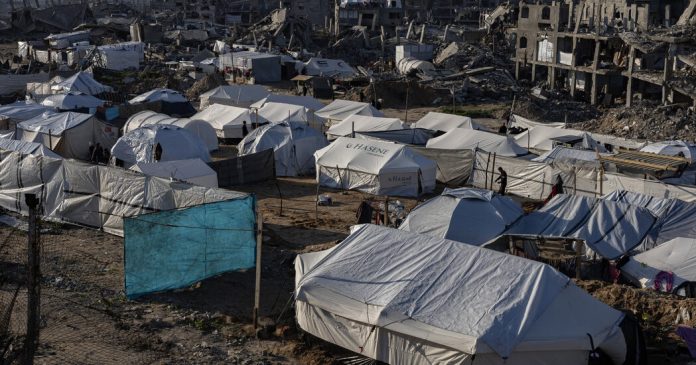
Now, with the first phase of the deal over on Sunday and Israel introducing an entirely new proposal that Hamas has already rejected, concern is rising that the fighting that reduced Gaza to rubble, killed tens of thousands of Palestinians and threatened the lives of hostages could resume.

As the cease-fire teeters, both Hamas and Israel are pursuing two paths, one diplomatic and another military.

On the diplomatic front, Hamas is insisting on the implementation of the second phase of the original agreement, which calls for an end to the war, a full Israeli withdrawal from Gaza and the release of more hostages and prisoners.

Israel, though, has made a new proposal for a seven-week extension of the current cease-fire, during which Hamas would be required to release half the remaining living hostages as well as the remains of half the deceased ones. Prime Minister Benjamin Netanyahu of Israel on Sunday attributed the proposal to the work of President Trump’s Middle East envoy, Steve Witkoff.

For weeks, Israel has been sending signals that it wasn’t interested in moving forward with the second phase of the agreement. While the two sides agreed to the second phase in principle, they never worked out the details and have staked out irreconcilable visions.

Mr. Netanyahu has said repeatedly that Hamas’s government and military wing must be dismantled, a position shared by his right-wing coalition partners in the government. Hamas has suggested it was willing to give up civilian governance of Gaza but has firmly rejected dissolving its military wing, a critical source of its power in the enclave.

The new proposal, as described on Sunday by Mr. Netanyahu, appears to be an attempt to replace the cease-fire deal with terms that would enable Israel to bring home dozens of hostages and remains of hostages without committing to the end of the war.

But the suggestion, analysts said, may be an effort to shake up the cease-fire talks in a way that breaks the deadlock between Israel and Hamas, at least temporarily.

“It’s not really feasible, but it’s an opening offer,” said Shira Efron, an analyst at the Israel Policy Forum, a New York-based research group. “It could force a discussion that bridges the two sides’ positions to extend the cease-fire for a couple weeks or more.”

Still, she said, it does not resolve the underlying differences between Hamas and Israel about the end of the war.

At a government meeting on Sunday, Mr. Netanyahu said the proposal included a temporary cease-fire during the Muslim fasting month of Ramadan and the Jewish holiday of Passover. Half of the remaining hostages in Gaza, he said, would be returned to Israel at the beginning of the temporary cease-fire and the other half would be repatriated at the end, if an agreement on a permanent cease-fire is concluded.

In the first phase of the three-stage deal agreed to in January, Hamas released 25 Israeli hostages and handed over the bodies of eight others in exchange for more than 1,500 Palestinians jailed by Israel. But without further planned exchanges of hostages and prisoners, Israel will have fewer incentives to keep the truce going.

On Sunday, Hamas dismissed the new proposal as “a blatant attempt to renege on the agreement and evade negotiations for its second phase.”

Hamas considers the idea of immediately giving up half of the hostages a nonstarter, but it could consider exchanging a small number of hostages or bodies for Palestinian prisoners, even without a commitment to the end of the war, analysts said. The hostages represent Hamas’s most powerful leverage, and every time it trades an Israeli captive for Palestinian prisoners, its negotiating hand is weakened.

Two Israeli officials, who spoke on condition of anonymity to discuss internal deliberations, acknowledged that Hamas would probably be willing to give up only a small number of hostages, or their remains, without guarantees for the end of the war. That dynamic, the officials said, may eventually make Israel choose between restarting a war to unseat Hamas or saving hostages still believed to be alive.

About 25 captives and the remains of more than 30 others are still in Gaza, according to the Israeli government.

“Israel stands on the horns of a dilemma,” said Yaakov Amidror, a retired major general who served as Mr. Netanyahu’s national security adviser.

On Sunday, Hazem Qassim, a spokesman for Hamas, said the militant group was insisting on negotiating the second phase because it wanted to prevent the resumption of the war and ensure Israel withdraws from Gaza.

“This is a fundamental position for the Hamas movement,” he told the Qatari-funded broadcaster Al Jazeera.

Both Israel and Hamas have sent negotiators to speak with Egyptian and Qatari mediators. But even as the diplomatic discussions continue, the two sides are preparing for the possibility of a return to war.

Hamas has been collecting unexploded bombs throughout Gaza and repurposing the explosives and their metal cases as improvised explosive devices, according to one member of the Qassam Brigades, Hamas’s military wing, who spoke on condition of anonymity to discuss sensitive details. The militant group has also been recruiting new members and replacing commanders killed in the fighting, the person said.

Israel has prepared extensively for a new and intense campaign in Gaza, according to Israeli officials. They said any new operations would include targeting Hamas officials who siphon off aid supplies meant for civilians, as well as destroying buildings and infrastructure used by the Hamas-run civilian government.

Such a plan has not yet been approved by the Israeli cabinet, the officials said, but they believe that only Mr. Trump could dissuade Mr. Netanyahu from renewed war.

While Israel and Hamas struggle over Gaza’s future, Palestinian civilians in the enclave, and the families of hostages, are facing an anxious period of limbo.

“They’re being left in a state of perpetual worry,” said Akram Atallah, a London-based Palestinian columnist originally from Jabaliya in the northern Gaza Strip. “If the war returns, they stand to lose the most.”

Patrick Kingsley and Ronen Bergman contributed reporting.

China’s Vow of ‘Leniency’ in Plea Deals Erodes Rights to Fair Trial

0

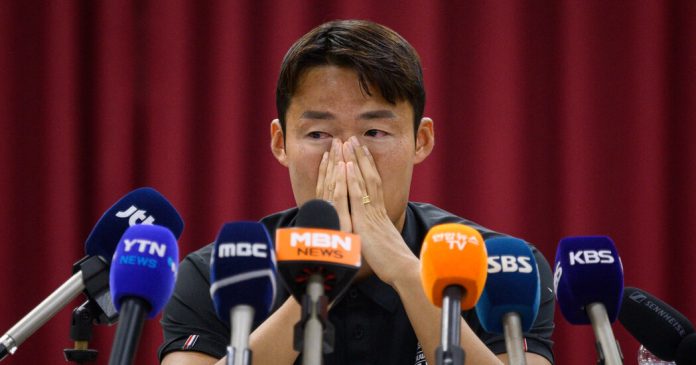
When Son Jun-ho, a key midfielder for South Korea’s World Cup soccer team, signed with a Chinese club, he was an indication of China’s ambition to dominate the world’s most popular sport.

But after Chinese police officers detained him two years later, accusing him of bribery and match-fixing, he became a symbol of a different sort: the ruthless efficiency of China’s legal system.

Mr. Son had insisted to his interrogators that he was innocent. He asked for a lawyer, but the police told him, through a Korean translator, that one was unnecessary. The police threatened to bring his wife in and asked how his children would fare if both parents were detained.

After months in detention, he was offered a deal in which he was promised a lighter punishment in return for signing an admission of guilt. He took it.

It was a move he would later regret, saying that he had signed only under duress. “Fear overtook me, and without fully understanding the charges, I confessed, hoping to return to my family,” Mr. Son told reporters at a news conference in South Korea, fighting back tears. “It was a naïve mistake.”

The arrangement Mr. Son was offered, known as plea leniency in China, is a legal tactic that scholars say has further eroded the rights of the accused in a judicial system that has long been stacked against them.

The courts and police in China answer to the Communist Party and the conviction rate is more than 99 percent. Still, the party has tried in recent years to create a more equitable justice system, including by introducing the “plea leniency” system.

That system has now transformed how justice is carried out in China by enabling the authorities to process cases more quickly. But it has also made the system less fair, lawyers and experts say, by giving prosecutors more power to determine who gets punished and for how long.

In the last few years, as Xi Jinping, China’s top leader, has waged crackdowns on corruption across society, the plea tactic has become a critical tool used by prosecutors. It has been used in investigations into officials, the military, the financial industry, and, as in Mr. Son’s case, sports, as well as in campaigns to stamp out organized crime and so-called evil forces.

“Plea leniency is being practiced in a disturbing way,” said Pu Zhiqiang, a former human rights lawyer in Beijing who was disbarred in 2016 for “provoking trouble” for criticizing Chinese officials. “Threats used during interrogations, sleep deprivation, nobody regulates the process.”

Mr. Son’s detention in 2023 was part of a broader nationwide anti-corruption campaign in soccer. Many high-ranking officials have been ensnared, including the former president of the Chinese Football Association, who was sentenced to life last year for accepting bribes.

The authorities announced in September that a two-year investigation had uncovered gambling and match fixing involving 120 matches and 41 football clubs. Mr. Son was among 43 players and officials China said would be banned from the sport for life.

Many details about the investigation have not been made public, and the question of his innocence may not immediately be resolved. But Mr. Son’s account provided a glimpse into how individuals accused of crimes can be pressured into accepting plea agreements. It also gave a sense of how prosecutors use guilty pleas obtained this way to build bigger cases against other suspects — in this case, his teammate, Jin Jingdao.

Mr. Son told reporters he thought the document he had signed, which was in Chinese, was acknowledging that he had received a payment of about $28,000 from Mr. Jin. Mr. Son said that there was nothing illegal about the payment, describing it as a normal financial transaction between friends.

Mr. Son had been detained in a cell in the northeastern city of Shenyang with 20 other people for nearly a year, he told reporters. “Everyday felt like hell because I didn’t know when I’d be released.” It was only after he signed that document, in March last year, he said, that he was allowed to return to South Korea.

He later learned that Mr. Jin had confessed to match fixing and that the document Mr. Son had signed would be used as proof he had received a bribe from Mr. Jin to throw a game in 2022. Mr. Jin was later also banned for life.

When China introduced the plea leniency system in 2018, it was hailed as a major advancement in fairness that would allow those who admitted guilt voluntarily to be granted a “lenient” punishment.

The aim was also to streamline a judicial system grappling with a caseload that has surged over recent decades. Leniency deals can be offered to suspected offenders even before any formal charges are filed. They now account for about 90 percent of convictions.

But lawyers and experts say suspects are often misled into making false confessions. Even the top prosecutor’s office recently signaled a need for caution, saying plea deals should be examined for signs of coercion.

In recent interviews with Chinese media, judges raised concerns that the courts were merely rubber-stamping plea leniency deals without studying them closely. Law professors have questioned whether quotas imposed on prosecutors were creating incentives for them to strike deals hastily.

Xi Wei, a law professor at Anhui Normal University in central China, in researching this practice, found 226 cases in which defendants had pleaded guilty but authorities later discovered errors and inappropriate sentences.

Defense lawyers say that plea deals are also being used to railroad entrepreneurs and go after their assets, especially as China’s economy continues to struggle.

In the southwestern Chinese city of Mianyang, which has been hit by a housing downturn, the authorities in 2021 detained Zeng Jianbin, a property developer, along with his employees. Local police called them gang members and asked the public to submit evidence of crimes to prove their assertion.

The local government went after Mr. Zeng and his company’s assets, seizing acres of land, hundreds of apartments, and dozens of cars. His company had paid an $83 million deposit for a plot of land auctioned by the city. Officials took the land back and auctioned it off again.

Before the trial of Mr. Zeng and his associates started in May 2023, 14 employees — accountants, managers, staff and guards — confessed. But during the trial, those confessions started to unravel.

Some employees said they didn’t understand the charges and only confessed in the hope of being released, according to a trial transcript posted online. Another employee was illiterate and could not read what he had signed.

Yet the judge accepted the plea deals and sentenced all 14 employees to prison.

Those convictions then provided the foundation for the prosecutors’ case against Mr. Zeng, who was charged with leading a gang, among other charges. He denied all the charges, accusing prosecutors of using false confessions as evidence against him.

“This confuses right and wrong, and it makes something out of nothing,” he said, according to the transcript. “These charges are not based in fact.”

Chen Siyu, Mr. Zeng’s wife, shared details of her husband’s ordeal on social media and with reporters. She was detained for two years for “posting false information online” and on suspicion of money laundering, and was only released in December.

Mr. Zeng was found guilty on almost all charges, and he was sentenced to 20 years in prison.

Mr. Son, the South Korean soccer player, said he decided to give his side of the story after the Chinese Football Association handed him the lifetime ban in September and referred the matter to soccer’s governing body, FIFA.

In January, FIFA informed South Korea’s football association that it was rejecting China’s request for a lifetime ban. A FIFA spokesman did not disclose why the organization turned down China’s request, but it is unusual for the international body to go against the ruling of a domestic association on such a serious allegation.

Through his agent, Mr. Son declined to be interviewed. At the news conference, he said he believed that an audio recording of his interrogation exists and that the recording would exonerate him.

When asked about Mr. Son, China’s foreign ministry said the matter was closed because the player had “admitted guilt and accepted punishment.”

Haemin Kwak contributed research.

Monday Briefing

0

Here’s what you need to know.

Khalil Fong, Hong Kong Singer-Songwriter, Dies at 41

0

Khalil Fong, a Hong Kong singer-songwriter who infused a soul and R&B sensibility into Chinese pop songs, died on Feb. 21. He was 41.

His death was announced on Saturday by his record label, Fu Music. The announcement did not say where Mr. Fong had died or specify a cause of death, but it said he had battled a “relentless illness” for five years.

Beloved for its soulful vocals and distinctive blend of soul and Mandarin pop, Mr. Fong’s music found an audience in Hong Kong, mainland China and much of the wider Chinese-speaking world.

“Trying to introduce soul music, or soul R&B, was not the easiest thing,” he said in a 2016 interview with The South China Morning Post, noting that the genre was not widely embraced in the region. “One of the things I wanted to do was to introduce this type of music within the context of Chinese language.”

He broke into the popular music scene in 2005, when Warner Music Hong Kong released his funky, syncopated debut album, “Soulboy.” In the following decade, he released eight albums and performed in stadiums and large concert halls around the world, wearing his signature thick black glasses.

But Mr. Fong’s career was cut short by health problems, and in recent years he had largely retreated from the public eye. Inspiration never stopped flowing, however, and he sporadically released singles.

He recorded his final album, “The Dreamer,” during what he described as various stages of illness, the nature of which he never disclosed.

Making the music was “both a challenge and a relief from the rather tedious circumstance” of ill health, he wrote on Instagram when the album was released in October.

“I had tons of notes and ideas, song structures and lyrics jotted down and whenever I could manage, I would gradually chip away at them,” he added.

Khalil Fong, whose Chinese name was Fong Tai-tung, was born on July 14, 1983, in Hawaii.

His father was a drummer, and Mr. Fong grew up listening to his collection of blues and soul records from the 1950s, ’60s and ’70s. His mother was a language teacher who later became his full-time business manager and was credited in some songs as a lyricist.

When Mr. Fong was 5, the family moved to Shanghai, where they lived for several years. After a brief stint in Guangzhou, they settled in Hong Kong. He began learning guitar and writing music as a teenager, and he was soon submitting demo tapes to record labels.

He was 22 when “Soulboy” was released. More albums, among them “Love Love Love,” “Orange Moon” and “Timeless,” followed in quick succession, along with world tours.

His interpretations of American hits like “Nothing’s Gonna Change My Love for You” and “Red Bean,” a Chinese ballad by the popular singer Faye Wong, accumulated millions of views online.

While most pop musicians in Hong Kong sang in Cantonese, he acknowledged in interviews that he did not feel comfortable singing in what was his third language. He mostly sang in Mandarin and English.

In 2016, he founded the independent label Fu Music, saying he wanted it to pay tribute to both Chinese and Western influences.

“JTW,” named after the Ming-dynasty Buddhist epic “Journey to the West,” was released that year. The album included collaborations with two South Korean pop stars, Zion T. and Crush, as well as the Taiwanese-American pop star Wang Leehom.

In 2018, Mr. Fong began publishing “Emi the Dream Catcher,” a fantasy graphic novel series he wrote in Chinese and English, about a girl who has lucid dreams that help her understand her place in the world.

“I think these stories are a reminder to myself and others of the things we should be mindful of, to create a better society for future generations,” he said in an interview at the time.

He did not disclose that he had been struggling with health problems until 2024, when he introduced “The Dreamer,” his last album.

“In life we are each faced with challenges but through it all let’s not forget how to be dreamers,” he wrote.

Complete information about Mr. Fong’s survivors was not available. He said in interviews that he was an only child and had no children himself.

He recently told Chinese-language media outlets that he hoped to start touring again and had plans for new music. Just a few weeks ago, he promoted the video for “Oasis,” a song from “The Dreamer.”

The album was wide-ranging. Its songs included a tongue-in-cheek rebuttal to an internet rumor that he had taken up farming and a whimsical review of the “Godfather” trilogy: “It was good but it was sad/ Mike was good and Mike was bad / But mostly mad and lonely.”

Most poignant, perhaps, was how he conveyed the swift passage of time. Many songs on the album, including the last one, “Not Much Left to Say,” ended abruptly midsentence, just before he could complete the thought.

Oh, my love, I could want you to stay

But the truth’s telling me

That there’s nothing here left to …