Friday, November 13, 2026
Home Blog Page 199

Fate of Bibas Family Renews Fears for Israel-Gaza Cease-Fire

0

For 16 months, the smiling faces of Shiri Bibas and her two young sons, Ariel and Kfir, had been slowly receding into the background of Israeli life as their photographs — posted on walls and bus stops soon after the family’s abduction to Gaza in October 2023 — began to fade, tear and peel.

On Friday, the Bibas’s lives and disturbing deaths were swept back to the forefront of Israel’s collective consciousness in such a startling and unsettling way that it set off fresh alarm about the fate of the fragile cease-fire in Gaza.

Early on Friday morning, the Israeli military announced that the body of Ms. Bibas — nominally returned, along with those of her sons, by Hamas to Israel on Thursday — appeared to be that of someone else. And an autopsy of the two boys, aged 4 and 8 months at the time of their abduction, revealed that they were killed by terrorists in Gaza, the military said.

Hamas, which had previously said they were killed in an Israeli missile strike, said in a statement that it was investigating the claims and suggested that Ms. Bibas’s body might have been mistakenly confused for that of a dead Palestinian in the chaotic aftermath of an Israeli attack. Neither side’s account could be independently verified.

The news set off a paroxysm of fury and agony in Israel rarely seen since the tumultuous days that followed Hamas’s attack on Israel on Oct. 7, 2023, when up to 1,200 people were killed and 251 were abducted, including Ms. Bibas and her sons, on the deadliest day in Israeli history.

Responding to the military’s announcement, Prime Minister Benjamin Netanyahu of Israel returned to the language of vengeance that defined his speeches in the aftermath of that attack.

“May God avenge their blood,” Mr. Netanyahu said in a recorded speech to the nation on Friday morning. “And we will also have our vengeance.”

The seething tenor of Mr. Netanyahu’s response was maintained across much of the Israeli political spectrum. Naftali Bennett, a former prime minister, said in a broadcast interview that the Bibas’s treatment showed how “the majority of Gazans want to murder all of the Israelis.” (Polling last fall suggested that less than 40 percent of Gazan Palestinians supported the Oct. 7 attack, down from more than 70 percent early last year.)

For some Israelis, the horror underlined the need to restart the war to defeat Hamas once and for all. The current truce is set to elapse in early March unless Hamas and Israel can agree to an extension. “The only solution is the destruction of Hamas, and this must not be postponed,” said Bezalel Smotrich, the far-right finance minister, in a post on social media.

But others called for calm, arguing that the fate of the Bibas family exemplified why the truce needed to be extended to bring home roughly 70 hostages still held, both dead and alive, in Gaza.

The village leadership at Nir Oz, the Bibas’s hometown, released a statement on Friday that called on Israel to “stick to our values and to the Bibas family’s clear demands at this moment: release, not revenge. The state must bring Shiri back by all means, in a way that does not jeopardize the continuation of the deal and the immediate release of all the hostages.”

Isaac Herzog, Israel’s mainly ceremonial president, also called on the government to “remember our highest duty — to do everything in our power to bring every one of our kidnapped sisters and brothers home. All of them. Until the very last.”

Six living Israeli hostages are set to be released on Saturday, and analysts said it was unlikely that Israel would do anything to jeopardize their freedom. Hamas announced their names on Friday morning, projecting a sense of business as usual. The six included two Israeli citizens — Avera Mengistu and Hisham al-Sayed — who were captured by Hamas years before the attack in 2023 after they entered Gaza of their own accord.

The long-term future of the truce seemed less clear. Arab leaders were set to meet in Saudi Arabia on Friday to try to thrash out a proposal for Gaza’s postwar reconstruction that would allow for the peaceful transfer of power from Hamas to an alternative Palestinian administration.

But in Israel, analysts speculated that the government would rather expel Hamas by force.

“If it were up to Netanyahu and his far-right partners, then next week — upon the completion of the first phase of the deal, with the return of four more bodies of fallen hostages — the path would be paved for the resumption of the war in Gaza,” wrote Amos Harel, a commentator on military affairs for Haaretz, a left-leaning newspaper. “This time, they promise, without restraints.”

Johnatan Reiss contributed reporting from Tel Aviv, and Rawan Sheikh Ahmad from Haifa, Israel.

From Ukraine to DOGE to NYC mayor saga : NPR

0

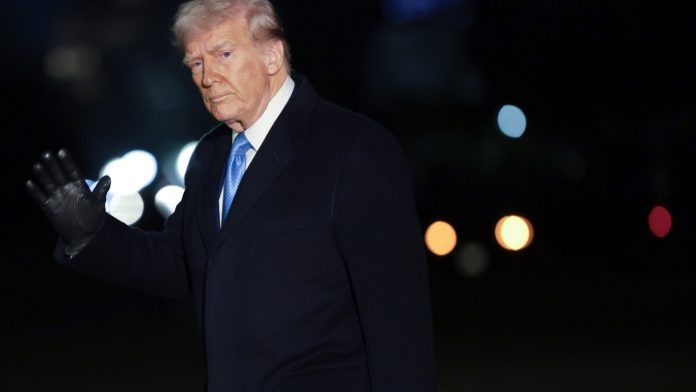
President Trump returns to the White House on Feb. 19 after spending the weekend and the first two days of the week in Florida.

Win McNamee/Getty Images


hide caption

toggle caption

Win McNamee/Getty Images

We’ll be recapping what you need to know every Friday morning for the first 100 days of the Trump administration. Get more updates and analysis in the NPR Politics newsletter.

It’s now been a month since President Trump was sworn in, and the firehose of information coming from the administration continued this week, including:

Trump reshaping the U.S. position toward Ukraine, more civil service firings, more resignations amid allegations of a quid pro quo between Trump’s Justice Department and New York Mayor Eric Adams, confirmation of Kash Patel as FBI director, another handful of executive orders, the courts putting some speedbumps in the Trump administration’s way and the White House posting on X a fake Time magazine cover of Trump adorning a crown with the words, “LONG LIVE THE KING.”

Here is a closer look at three of the biggest themes of the week, followed by a day-by-day rundown of what happened:

1. Trump blames Ukraine for Russia’s invasion: Ukraine President Zelenskyy expressed frustration about being left out of U.S. negotiations with Russia in Saudi Arabia about the war. He said Trump is living in a “disinformation bubble,” and Trump then lashed out, calling Zelenskyy a “dictator” and blamed the country for “starting” the war with Russia (when it was Russia that invaded Ukraine three years ago). All of Trump’s accusations echo Russian propaganda.

2. Who is the top DOGE? A court filing about Elon Musk’s informal Department of Government Efficiency did not acknowledge him as its head. But DOGE was Musk’s idea, and Trump said Musk is in charge of it: “I signed an order creating the Department of Government Efficiency and put a man named Elon Musk in charge,” he said in Miami this week.

DOGE, now in its third week of finding drastic cuts to make to the federal government, continued to make abrupt firings, embedded itself at key agencies and signaled there’s more to come. (The head of the Social Security Administration resigned after a dispute with DOGE over access to recipient information.)

Musk has claimed big savings and even floated the idea of $5,000 “dividend” checks to people, but the math on Musk’s group’s claimed savings doesn’t add up, according to an NPR investigation. A lot of what DOGE is doing is provocative, and Trump is well aware of optics. Speaking of Trump’s attention to optics, that was highlighted earlier in the week when Trump did laps in the presidential limo at the Daytona 500 and flew Air Force One around the stadium.

3. The Eric Adams saga: The Justice Department cited in court that the New York mayor’s ability to curtail illegal immigration in the city would be hampered if he were to be prosecuted. Deputy Acting Attorney General Emil Bove said in a memo that letting Adams off the hook for now was not about the merits of the charges against him, but that the “pending prosecution unduly restricted Mayor Adams’ ability to devote full attention and resources to the illegal immigration and violent crime that escalated under the policies of the prior administration.”

Prosecutors at the department resigned last week over this. This week, four deputy mayors in Adams’ office also stepped down, and New York Gov. Kathy Hochul said she will not use her powers to oust him from office, but will push for legislation to put more guardrails on the mayor’s independence.

And here’s a detailed day-by-day look at everything (that we know of) that happened this week:

Sunday:

  • Trump takes laps at Daytona 500 in The Beast and on AF1. 

Monday:

  • Trump names Ed Martin his nominee to be U.S. attorney in Washington. Martin, a conservative lawyer who backed the “Stop the Steal” movement trying to overturn the results of the 2020 election, had already been acting in that role.
  • Roughly 400 people were fired at the Federal Aviation Administration, including some with roles supporting air safety.
  • The New York Times reports Trump pushed for a merger between the PGA, the Professional Golf Association, and Saudi-backed LIV Golf, noting that Trump has a financial interest in LIV Golf.

Tuesday:

  • Legal filings from the administration shows Musk is not officially running DOGE. Agency heads have to be congressionally confirmed. 
  • The head of the Social Security Administration resigns after a disagreement with DOGE wanting to access recipient information.
  • Four deputies in New York Mayor Eric Adams’ office resign. Hochul holds a meeting in Manhattan with key New York political leaders about what to do about Adams, including potentially using her powers to oust him from office.
  • 168 people are fired at the National Science Foundation.
  • Secretary of State Marco Rubio and other American officials meet with Russian counterparts in Saudi Arabia. 
  • White House forces out top leadership at the National Archives and Records Administration. The John F. Kennedy Library announces five employees were laid off and were temporarily unable to stay open as a result. It reopened, however, the next day. 
  • Federal judge reinstates head of Merit Systems Protections Board, saying Trump’s firing exceeded his authority.
  • A top prosecutor in the criminal division of the U.S. attorney’s office in Washington resigns after being ordered to freeze funds and criminally investigate grants at the Environmental Protection Agency without probable cause.
  • Louis DeJoy, who was originally appointed by Trump in 2020, announces plans to step down as postmaster general. 
  • Border czar Tom Homan goes after Rep. Alexandria Ocasio-Cortez, D-N.Y., for hosting a “Know Your Rights with ICE” webinar, calling her the “dumbest congresswoman ever elected to Congress.” He said he asked the Justice Department if she violated the law for “educating” people to “evade ICE.”
  • Federal judge declines to block DOGE from accessing federal data or instituting layoffs. 
  • Trump reacts to Ukraine’s Zelenskyy saying his country should be involved in any negotiations with Russia to end the war. He accuses Ukraine of starting the war. “You should’ve never started it,” Trump said. “You should’ve made a deal.”
  • Judge temporarily stops dismissal of intelligence officers fired for their work related to diversity initiatives.  
  • Musk floats the idea of DOGE dividend checks. 
  • FEMA, the Federal Emergency Management Agency, fires hundreds, starting over the weekend and continuing through Tuesday.

Wednesday:

  • Trump surprises staff and endorses a House budget that would gut Medicaid despite his pledge that the program “would not be touched.”
  • Immigration and Customs Enforcement data shows it’s not just criminals being deported.
  • Trump signs executive order on IVF seeking to “aggressively reduce out-of-pocket and health plan costs for such treatments.” But what the order can actually achieve is unclear. Democrats called on Trump to back legislation like the “Right to IVF” bill, which Republicans have previously blocked. Otherwise, they said it’s just “lip service” and a “PR stunt.”
  • The New York Times reports DOGE misreported $8 million in savings as $8 billion. 
  • Veterans Affairs reinstates some of the 1,000 fired employees, including those let go from the agency’s crisis hotline.
  • Zelenskyy says Trump is “living in a disinformation space” and that he “would like to have more truth with the Trump team.”
  • Trump calls Zelenskyy a “dictator without elections” and accuses him of wanting to “keep the gravy train going.” National Security Adviser Mike Waltz says the relationship between Trump and Zelenskyy is going in the wrong direction and stems from Ukraine not giving access to their rare earth minerals, natural resources and oil and gas to the U.S.
  • Trump special envoy Keith Kellogg, a retired three-star general, visits Kiev and notes the third year anniversary of “Russia’s invasion of Ukraine.”
  • Trump signs executive order ending federal benefits for immigrants in the country without legal status. It aims to not “incentivize or support illegal immigration” or “sanctuary policies.” 
  • Defense Secretary Pete Hegseth tells the Pentagon to identify $50 billion in cuts. Climate and DEI initiatives are to be targets. 
  • Deputy Acting Attorney General Emil Bove says in court that dropping charges against Adams has nothing to do with the merits of the case. He wrote in a memo: “[T]he pending prosecution has unduly restricted Mayor Adams’ ability to devote full attention and resources to the illegal immigration and violent crime that escalated under the policies of the prior administration.”
  • Trump signs executive order to reduce size of Presidio Trust, the Inter-American Foundation, the U.S. African Development Foundation and the U.S. Institute of Peace. The Presidio Trust oversees the park at the base of the Golden Gate Bridge in San Francisco. It was a former military installation. Congress established the trust in 1996.
  • The Washington Post reports that national parks are starting to see longer lines and cancellations of things like bookings for accommodations at Gettysburg. “It’s chaos everywhere,” Kristin Jenn, a former seasonal park ranger at Alaska’s Denali National Park and Preserve, told the Post. “I don’t know what the next couple of months are going to bring.”
  • Trump tells investors and company executives in Miami, per Reuters: “I signed an order creating the Department of Government Efficiency and put a man named Elon Musk in charge.” 
  • DOGE’s claimed cuts are not adding up.
  • Military doctors, including pediatricians and OB/GYNs, are preparing to go to Guantanamo Bay to treat immigrants housed at the facility.
  • The White House posts on X a fake Time cover with a crown on Trump above the headline: “LONG LIVE THE KING.”
  • Trump and Musk on Fox contend that Musk won’t be involved in anything where there’s a potential conflict of interest.
  • In one of his first moves as secretary of Health and Human Services, Robert F. Kennedy Jr. pulls the plug on a Centers for Disease Control and Prevention ad encouraging people to get the flu vaccine. This comes during a bad flu season that has seen the most number of people hospitalized with it in 15 years. 
  • Trump signs an executive order that aims to take more control over independent regulatory agencies that were created by Congress to be shielded from White House influence. They include: the Consumer Product Safety Commission, the Securities and Exchange Commission, which regulates Wall Street, and the Federal Deposit Insurance Corporation, which insures bank deposits.

Thursday:

  • Layoffs begin at the IRS with cuts of more than 6,000 jobs in the middle of tax season. “Under an executive order, I.R.S. has been directed to terminate probationary employees who were not deemed critical to filing season,” an email to staff reads. Some worry that even if employees aren’t deemed “critical” to tax season, such a large number of layoffs could still affect things like the timing of rebate checks and ease of filing. 
  • Kash Patel confirmed as FBI director.
  • Flanked by South Carolina Sen. Tim Scott, golfer Tiger Woods and others at an event commemorating Black History Month at the White House, Trump said, “We’re going to be fighting long and hard for Black Americans and all Americans. We’re going to be fighting for all Americans.” Trump, however, has taken steps to decrease diversity efforts across all levels of the federal government. Trump also wondered aloud if he should run for a third term. “Should I run again? You tell me?” The crowd breaks into chants of “four more years.” 
  • Hochul says at a press conference she will push for more guardrails on Adams’ mayorship, but won’t use extraordinary powers to remove him from office.
  • CNN poll shows declining approval for Trump, especially with specific groups, like Black, Latino and young voters and most don’t think Trump is doing enough to address prices.
  • Elon Musk brandishes a chainsaw at CPAC, the Conservative Political Action Conference, to underscore how he’s slashed the federal workforce.
CEO of Tesla and SpaceX Elon Musk, head of the Trump administration's team tasked with slashing the size of the federal government, leaves the stage holding a chainsaw after speaking at the Conservative Political Action Conference (CPAC) on Feb. 20 in Oxon Hill, Md. The annual four-day gathering brings together conservative U.S. lawmakers, international leaders, media personalities and businessmen to discuss and champion conservative ideas. Argentinian President Javier Milei gifted Musk a chainsaw that he used as a prop while campaigning.

CEO of Tesla and SpaceX Elon Musk, head of the Trump administration’s team tasked with slashing the size of the federal government, leaves the stage holding a chainsaw after speaking at the Conservative Political Action Conference (CPAC) on Feb. 20 in Oxon Hill, Md.

Andrew Harnik/Getty Images


hide caption

toggle caption

Andrew Harnik/Getty Images

As Truce Talks Stall, Fears Mount for Israeli Hostages in Gaza After 500 Days

0

For Jonathan Dekel-Chen, every day this week has been a mixture of joy and grief. He is celebrating the return of his son Sagui, who was released over the weekend as part of the cease-fire deal with Hamas. But reminders of Sagui’s ordeal, and the torments of the remaining hostages, are impossible to escape.

“Today is a day with very mixed feelings,” Mr. Dekel-Chen said in an interview on Thursday.

He had just visited his son in a Tel Aviv-area hospital on a day when Hamas turned over coffins that were said to contain the remains of four of Mr. Dekel-Chen’s neighbors in Kibbutz Nir Oz, where about a quarter of the 400 residents were either killed or taken hostage on Oct. 7, 2023.

It has been 504 days since the Hamas-led attack, and roughly 60 hostages have yet to come home. “We need to double down now on getting all the hostages home,” Mr. Dekel-Chen said. The four bodies returned on Thursday were said to include three members of the Bibas family — Ariel Bibas, 4, and Kfir Bibas, who was just 10 months old, and their mother, Shiri Bibas. The Bibases came to symbolize the plight of the captives after videos of them being taken to Gaza went viral.

But early Friday, the Israeli military announced that the remains in what was said to be Ms. Bibas’s coffin did not match the identity of any of the hostages. “This is a violation of utmost severity,” the military said.

The authorities did confirm the children’s remains, and those of Oded Lifshitz, who was 83 when he was killed in captivity by the militant group Palestinian Islamic Jihad, according to Prime Minister Benjamin Netanyahu’s office.

Mr. Lifshitz, a retired journalist, was captured along with his wife, Yocheved Lifshitz, who was released weeks into the war for what Hamas called “humanitarian and health reasons.”

She has described abuse and harrowing conditions in Hamas’s underground tunnels, warning that other hostages would not be able to endure them.

Before the war, Mr. Lifshitz volunteered to drive Gazans seeking medical treatment to hospitals in Israel and was a founding member of a branch of Peace Now, a group advocating a two-state solution to the Israeli-Palestinian conflict. Mr. Dekel-Chen, who was friends with Mr. Lifshitz for decades, said he “was a man truly committed to his values.”

Thousands of Israelis paid tribute to Mr. Lifshitz and the other hostages during a Thursday night rally in what has become known as Hostage Square in Tel Aviv. They were also there to pressure the Israeli government to secure the release of those still being held.

Rally speakers demanded that the Netanyahu government not let the cease-fire fall apart. The first phase of the agreement between Israel and Hamas took effect in January and is set to end in less than two weeks. Negotiations on the second phase have been delayed, leaving the fates of dozens of captives up in the air.

The fragile truce has led to the release of hostages from Gaza in exchange for Palestinians held in Israeli jails — but there are concerns among the relatives of hostages that there may not be another round of releases.

Yael Adar, whose son Tamir Adar was killed in the attack on Kibbutz Nir Oz and whose body has not been returned from Gaza, spoke at the Thursday rally. She said that when Tamir’s son heard that bodies would be returned to Israel this week, he asked if his father would be coming home.

“We told him no, not at this stage. Asaf couldn’t understand why there were stages,” she said.

Mr. Netanyahu’s office said has said that six living hostages would be released on Saturday, instead of three as planned, and that four more bodies would be returned next week.

But relatives are anxious.

Hamas’s failure to return Ms. Bibas raises new questions about whether the next release of hostages and prisoners on Saturday will proceed and the fate of talks on the second phase of the cease-fire deal.

If negotiations on the second phase fail, roughly 60 hostages, some believed to be dead, would most likely remain in Gaza. And if fighting resumes, those who are alive will be in even graver danger.

On Monday, a rally in Hostage Square was held to mark the 500th day of captivity for those being held in Gaza.

Among the speakers was Yeela David, the sister of Evyatar David, who was taken from the Nova music festival during the Oct. 7 attack. “Phase 2 is the last chance to save the lives of dozens,” she said. “If this deal falls apart and Phase 2 doesn’t begin, it will remain a black stain in the pages of our history.”

The hostages that have been freed say there is no time to spare.

Keith Siegel’s wife drove that point home during the Monday rally at Hostage Square. Mr. Siegel was held in Gaza for nearly 500 days, six months of which were spent locked in a small room alone. He was beaten, threatened at gunpoint and reduced by his captors to “nothing,” in the words of his wife, Aviva.

He ate only moldy pita bread, lost 65 pounds and some days thought he would not survive, Ms. Siegel said, describing details of her husband’s experience for the first time.

“He went through 484 days of hell no human being should ever have to experience,” said Ms. Siegel, who was also taken hostage. She was released during a brief truce in November 2023. “I was in Gaza. I survived. Keith survived. Others will not,” Ms. Siegel warned.

It was a theme repeated by other former captives, including Iair Horn, 46, who was freed on Saturday along with two other hostages in exchange for 369 Palestinian prisoners.

He appeared in a video message at the Monday rally, recorded about 48 hours after his return to Israel, to plead for his brother, Eitan Horn, who was still in Gaza and was not slated to be freed in the first phase of the agreement.

“I was there. I was in Hamas’s tunnels. I experienced it firsthand,” Iair Horn said. “And I’m telling you, the hostages don’t have time. They must be brought back now.”

Since his return, he said, people kept asking what he needs. “I answer them, ‘I need only one thing: Bring back my brother. Bring back my brother and all the hostages.’”

Washington Post columnist Jason Willick discusses the latest facing NYC Mayor Adams

0

Steve Inskeep talks with Jason Willick, a Washington Post columnist who argues the Trump administration needlessly created a scandal in its handling of corruption charges facing NYC Mayor Eric Adams.

Trudeau Thumbs Nose at Trump as Canadians Revel in Hockey Win

0

It took Prime Minister Justin Trudeau of Canada just minutes to tap out his reaction to his nation’s victory over the United States in an international hockey championship final on Thursday in Boston.

“You can’t take our country — and you can’t take our game,” Mr. Trudeau wrote on X.

Ahead of the match, the stakes were high for Canada, the birthplace of hockey. For weeks, President Trump has threatened to devastate the Canadian economy with tariffs and mockingly belittled the nation by suggesting it become the United States’ 51st state.

Mr. Trudeau’s swift riposte after the game tapped into an anger that has simmered across Canada since Mr. Trump took office on Jan. 20. His message was echoed from across the political aisle. “The true North, strong, free and golden,” Pierre Poilievre, Canada’s opposition leader, wrote on X.

The political tensions had been spilling over into sports arenas for weeks; the U.S. national anthem was loudly booed at N.B.A. and N.H.L. games in Canada.

That did not deter Mr. Trump from repeating his taunt before the championship game.

“I think they have to become the 51st state,” he said during a speech on Thursday in Washington. “And you heard the people booing the national anthem, but I think ultimately they’ll be praising the national anthem.”

Mr. Trump went on to refer to Mr. Trudeau as “governor,” which he has done often in recent weeks.

Mr. Trump also called the U.S. team to express his support. At the White House, his press secretary, Karoline Leavitt, said he was looking forward to watching the game. “And we look forward to the United States beating our soon-to-be 51st state, Canada,” she said.

Later, there were some boos at the Boston arena as Chantal Kreviazuk, a Canadian musician, sang “O Canada.”

There was a twist in her rendition too. She changed the words “in all of us command” to “that only us command.” Ms. Kreviazuk said on Instagram that the change was in response to the talk of annexation.

Mr. Trump’s repeated digs have had a unifying effect in Canada, forging a rare consensus among the public and the political class despite the country going through one of its most divided political periods in recent history.

A survey published last month by the Angus Reid Institute, a research center, found that 90 percent of Canadian respondents were opposed to being a part of the United States.

The political significance of a win was not lost on the team, Jon Cooper, the Team Canada coach, said after the game on Thursday.

“Not only, like, our team, but Canada needed a win,” Mr. Cooper said. “This one was different. This wasn’t a win for themselves. This was a win for 40-plus million people.”

U.S. Objects to Calling Russia ‘Aggressor’ in G7 Statement on Ukraine Invasion

0

The United States is opposing calling Russia the aggressor in the war with Ukraine in a Group of 7 statement being drafted to mark the third anniversary of Russia’s full-scale invasion, four senior officials from countries involved said on Thursday.

The American objections to the statement come after President Trump earlier this week blamed Ukraine for starting the war, which in fact began with Russia’s attack on Ukraine.

One senior official from a Group of 7 country said that Canada had circulated the first draft of the statement to the other six member countries. That version, the official said, used language that retained the pro-Ukraine tone the group of allies adopted after the full-scale invasion of the country in February 2022.

The U.S. side went through that first draft this week and removed all references that could be interpreted as being pro-Ukraine, the official said. The result, the official added, was a neutral draft statement that made no references to Russia as the aggressor in the conflict, nor to Ukraine as the victim of the invasion.

The officials spoke on the condition of anonymity given the sensitivity of the discussions.

Canada took the lead in writing the draft because it currently holds the presidency of the Group of 7.

Diplomats are continuing to work on the language in the draft, which currently describes “a devastating war that began with Russia’s invasion of Ukraine,” but does not use the words “Russian aggression” or “aggressors,” which have been in Group of 7 statements since 2022, senior German and European officials said.

The U.S. objection to labeling Russia as an aggressor was reported earlier by The Financial Times.

Another senior official from a Group of 7 nation added that the drafting and negotiating over the text could continue until Monday, when the text is set to be published.

Similarly, it is not yet settled whether the Group of 7 leaders who will meet virtually on Monday will invite President Volodymyr Zelensky of Ukraine to participate, as he did last year, the official said.

The officials emphasized that the Group of 7 draft was not finished but also said that it was important to come up with a mutually agreed to statement, which is never easy and always requires “wordsmithing.”

Canada began the drafting process by adhering to expressions used in previous Group of 7 statements on the war, which condemned Russia at some length. But Trump administration officials indicated they wanted something different from and shorter than the statement issued under former President Joseph R. Biden Jr. and sought to ensure it did not interfere or block the negotiations now underway with Russia, the officials said.

The Americans also wanted to cut passages that described the invasion as a breach of sovereignty, one official said.

For now, the current draft includes a statement that says strong security guarantees and Ukraine’s integration into the European Union “will be critical to secure a lasting peace that prevents future aggression.”

Negotiations are continuing, so the final language is still to be determined.

Foreign affairs ministers from the Group of 7 are scheduled to meet in Quebec from March 12 to 14. The countries’ leaders are scheduled to meet in Alberta in mid-June.

The last time Canada was the Group of 7 chair, during Mr. Trump’s first term in 2018, the president walked out of a summit meeting in Quebec and withdrew his support for the final joint communiqué, angry about its language on trade.

How a Hong Kong Artist Got Fired From McDonald’s

0

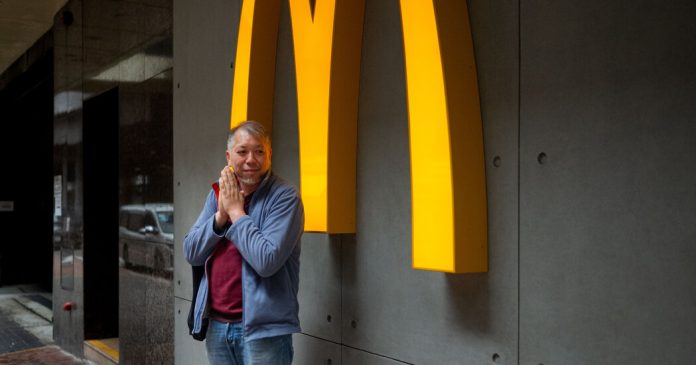
On a recent eight-hour shift at a McDonald’s in Hong Kong, Luke Ching, 52, wiped tables, cleared trays of half-eaten fries, emptied cups of soda and milk tea and lugged bulging trash bags to the dumpster.

For him, the main goal of the part-time work was not making ends meet. It was research for his main pursuit: using art to advocate for better treatment of people in menial jobs in a city with one of the widest income gaps in the world.

That project came to an abrupt end last month when he was fired after publicly calling on McDonald’s Hong Kong to reinstate paid meal breaks for employees at its local outlets. Undeterred, Mr. Ching is pushing ahead — even as the scope for broader political protest has shrunk in the city.

“Many people have accepted that they’re not allowed to speak critically about their workplace. But employees don’t exist just to drive profit,” Mr. Ching said in an interview. “We have the right to express ourselves in public.”

Over the past two decades, his campaigns have cut across the worlds of art and activism, gaining him a wide following of supporters as well as some online detractors, who call him attention-seeking and gimmicky.

The workplace has been both muse and canvas as he has agitated for everything from stools for museum guards to more consideration for the people who clean the subway.

Hong Kong’s minimum wage — about $5 an hour — barely covers basic living costs. There are no collective bargaining laws, and employers are not legally obligated to recognize labor unions, so relatively few do.

Unions, nevertheless, had long been politically active, regularly joining demonstrations to pressure the local government. Such protests became more common as people in Hong Kong resisted what they saw as efforts to erode the “high degree of autonomy” Chinese leaders had promised after Britain returned its former colony in 1997.

But a year of antigovernment protests, at times violent, led to a crackdown by Beijing in 2020 and the imposition of a national security law that has chilled dissent and led many activist unions to disband.

Some labor organizers in Hong Kong have been convicted of violating the law over their pro-democracy activism and sentenced to prison. Lee Cheuk Yan, a former lawmaker and labor champion, has been jailed since 2021 awaiting trial, and the government has offered a bounty for the arrest of another such activist, Christopher Mung, who now lives in the United Kingdom.

Steve Tsang, director of the SOAS China Institute in London, said that, on its own, labor activism is not likely to be seen by the Hong Kong government as a potential threat to national security, especially if it targets big companies rather than government bodies.

“The difficulty is that in Hong Kong, what you do and how it will be treated is not always as clear,” he said. “Therefore, people are becoming a lot more cautious about what they can and cannot say.”

Pressure continues to mount: The city on Wednesday proposed amendments that would empower the government to reject new unions on national security grounds.

Mr. Ching said that his activism has always focused on livelihood issues, and he does not think there’s anything wrong or risky about what he does.

Things got tense at times during the Covid pandemic, he said, when authorities were cracking down on anything that might attract a crowd. Police searched and questioned him, he said, as he stood in a subway station wearing a garbage bag over his cleaner’s uniform, with “Lowest pay. Highest risk. Least support” written in tape.

The company that runs the subway, MTR, later increased its hourly pay for contract cleaners.

Mr. Ching has a master’s degree in fine art from the Chinese University of Hong Kong and has participated in exhibitions and residencies around the world, including last year in New York, where he collected cans and other recyclable items as part of an effort to realize “the artist as a citizen.” Some of his work — video, photos and sculpture — is housed in the collections of museums including M+ in Hong Kong and the Open Eye Gallery in Liverpool, England. His project “Undercover Worker” was shortlisted for the Visible Award, a prize for socially engaged artwork, in 2019.

For about a decade, he taught art part-time at his alma mater and at the Hong Kong Polytechnic University, including a popular “creative citizen” course, where his students trained to become security guards and reported on their experiences. (His inspiration for community activism, he said, dates back to 2007, when people chained themselves together to try to save a historic ferry pier from demolition.)

He set aside teaching last August and raised $25,700 in crowd-funded donations so that he could spend more time making art, working briefly at fast-food chains, a Chinese butcher shop and as a cleaner at Disneyland Hong Kong. Though he uses his real name, he said his managers usually were not aware of his activism and were more concerned with filling vacancies.

While working at McDonald’s, Mr. Ching, who is married with a teenage daughter, posted diarylike entries on Instagram and Facebook. To illustrate the repetitive toil during a typical shift, he tracked his step count and made images of himself picking up endless rows of half-emptied cups.

Mr. Ching said he was drawn to study McDonald’s because customers from all walks of life used it as a communal space, bringing to it a Hong Kong flair. At his former branch in the middle-class neighborhood of Tai Po, elderly regulars brought their own insulated mugs, newspapers and novels as they settled into their regular seats, refilling from the free hot water every so often.

Mr. Ching said that he also admired how, like him, the CEO of McDonald’s Hong Kong, Randy Lai, had spent several months working as a low-level employee. He brought up this experience in an open letter to her that was published in the Hong Kong broadsheet Ming Pao in January.

“You must know that without mealtime pay, countless colleagues return to work after a hasty meal or forgo their rest time,” he said.

He was fired within weeks. Representatives for the company, owned by a Chinese private equity firm, did not respond to requests from The New York Times for comment. A McDonald’s spokesperson told local media that Mr. Ching had leaked internal operational and commercial information, and that he had been advised against doing so. Mr. Ching denied those allegations, saying that he had merely shared his observations about his workplace.

Some observers say that as Mr. Ching’s ambitions have broadened, his work has become less focused. Wong Wai Yin, an artist in Hong Kong who wrote her Ph.D. dissertation on Mr. Ching, said at times it was difficult to understand his goals at McDonald’s — until he got fired.

“There were many ketchup packets and selfies,” Ms. Wong said.

Wan Pak Kin, an organizer at the Catering and Hotels Industries Employees General Union, said Mr. Ching’s tactics balanced out the more hard-line approach of traditional labor unions. “He knows how to find a middle ground between praise and criticism,” Mr. Wan said. “He examines relationships and bonding among colleagues. He becomes part of the community.”

This month, Mr. Ching, Mr. Wan and three other organizers representing labor and environmental groups said they would form a coalition called the Alliance for My McDonald’s. Wearing McDonald’s party hats at a news conference, the organizers said they hoped to push McDonald’s to pay attention to suggestions from both employees and the wider public.

Mr. Ching said he plans to spend more time on the front lines to campaign for small and meaningful changes and strengthen relationships among workers. “I want the revolution to be in our daily work,” he said.

Arab Leaders Scramble to Counter Trump’s Gaza Plans

0

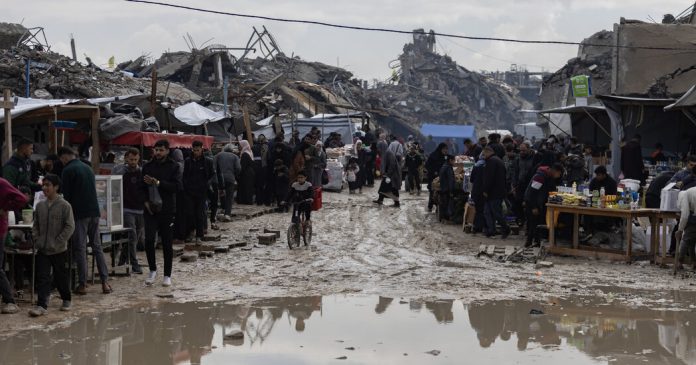
The leaders of Gulf Arab states are expected to strategize with their Egyptian and Jordanian counterparts on Friday in an effort to counter President Trump’s controversial proposal to redevelop Gaza under U.S. control and displace its Palestinian residents.

The meeting in the Saudi capital, Riyadh, is in preparation for a broader Arab League summit in Egypt on March 4.

Mr. Trump’s suggestion last month that the United States might take control of Gaza, develop it into the “Riviera of the Middle East,” and relocate its Palestinian residents to neighboring countries like Egypt and Jordan was met with astonishment and outrage across the Arab world. His aides then reframed it as a challenge to leaders of the Middle East to come up with a better alternative.

“All these countries say how much they care about the Palestinians,” Secretary of State Marco Rubio said last week. “If the Arab countries have a better plan, then that’s great.”

Now, Arab governments are in rushed consultations to do just that.

Egypt, Jordan, Saudi Arabia, Qatar and the United Arab Emirates have been working together to forge an alternative idea for Gaza in which Arab countries would help fund and oversee reconstruction, while keeping the two million Palestinian residents in place and preserving the possibility of a Palestinian state, according to diplomats and officials briefed on the efforts.

There have been a number of audacious plans floated for the day after in Gaza, but none have really gained traction. The latest one came from Emirati real estate magnate, Khalaf al-Habtoor, who offered an ambitious blueprint aimed at rebuilding the enclave within a “matter of years, not decades.”

But a key sticking point remains the question of postwar governance in Gaza.

A proposed Egyptian plan would likely include the formation of a committee of Palestinian technocrats and community leaders, all unaffiliated with Hamas, who could run Gaza after the war.

But Israeli leaders have said they would oppose any postwar plans that would pave the way to Palestinian sovereignty. Arab leaders insist they would only support a proposal that at least nominally forges a path toward Palestinian statehood.

For any Arab strategy on the governance of Gaza, the Arab leaders would want the blessing of the Palestinian Authority, the internationally recognized body that administered Gaza until Hamas wrested control of the territory nearly two decades ago.

But the authority’s president, Mahmoud Abbas, has appeared wary of any plan that does not give him full control of Gaza.

Hamas officials have said they would be willing to cede control over civilian affairs to another power but have refused so far to say they would disband their military wing, an unacceptable position for both Israel and Mr. Trump.

All six members of the Gulf Cooperation Council are expected to attend the meeting in Riyadh on Friday along with Egypt’s president, Abdel Fattah el-Sisi. The Egyptian leader was expected in Riyadh on Thursday for preliminary talks with the Saudi crown prince, Mohammed bin Salman.

Speaking to reporters on Wednesday before his departure for Saudi Arabia, Mr. el-Sisi reinforced the idea that Egypt’s proposals would “not involve forcible displacement” of Palestinians.

The Arab plan will focus on ideas that keep Palestinians inside Gaza to counter Mr. Trump call’s for Egypt and Jordan to take them in, an idea Arab countries have all rejected. Many in the Arab world would consider any forced displacement of Palestinians from Gaza an ethnic cleansing and a war crime as well as a death knell for any future Palestinian state.

Some countries, like Jordan and Egypt, might also be concerned that increased Palestinian migration could create economic and political disruptions at home.

Speaking at an investment forum hosted by Saudi Arabia in Miami on Thursday, Mr. Trump’s envoy to the Middle East, Steve Witkoff, said the president’s plan for Gaza was not about evicting Palestinians, but about shaking up current thinking and improving prospects for the Palestinian people.

“He’s engendered this discussion throughout the entire Arab world,” Mr. Witkoff said. “You’ve got different types of solutions than before he talked about this.”

Any plan for Gaza will also need to take into account the need to prevent future attacks on Israel. There are also the questions of who would pay for reconstruction and whether Arab countries would send forces to keep Gaza stable.

While Egypt has yet to release full details of its proposal, Prime Minister Mustafa Madbouly said on Wednesday that Cairo is working on a comprehensive plan for Gaza’s reconstruction which envisions restoring the enclave within three years, according to Ahram Online, an Egyptian state-run news outlet.

Riyadh has been playing a crucial diplomatic role this week, hosting U.S., Russian and Arab officials for high-stakes talks on the wars in both Ukraine and Gaza.

Vivian Yee contributed reporting from Cairo, Egypt.

Friday Briefing

0

Germans head to the polls.

World Anti-Doping Agency Drops Defamation and Ethics Cases Against U.S. Officials

0

The World Anti-Doping Agency has dropped a defamation lawsuit against its American counterpart, a major retreat for the agency after nearly a year of escalating conflict over its handling of positive tests for a banned drug by 23 elite Chinese swimmers.

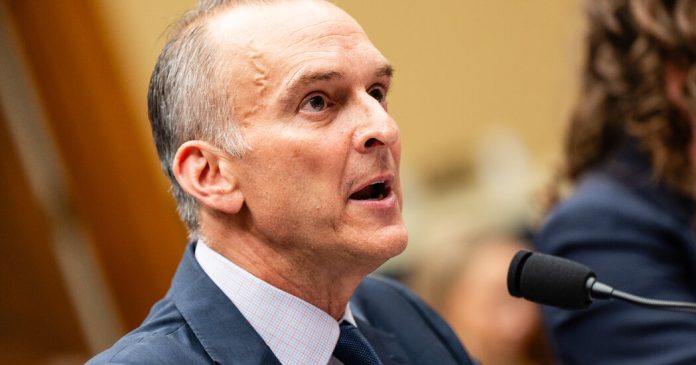
The decision by the agency — known by its acronym, WADA — to drop the suit it had filed in a Swiss court came months after it angrily reacted to comments from Travis T. Tygart, the leader of the U.S. Anti-Doping Agency. Mr. Tygart accused WADA of covering up the tests after The New York Times revealed details of how swimmers in China were found to have had a banned heart drug in their systems at a competition just months before the Tokyo Olympics.

That revelation led to anger and recrimination among athletes and antidoping regulators around the world, including a deep rupture in an already strained relationship between WADA and the United States. The United States had contributed more than any other country to WADA’s budget, but withdrew its funding over doubts that WADA’s leadership was up to the task of keeping sports clean.

On top of walking away from the defamation suit, WADA also retreated on another matter: It dropped an ethics case against Dr. Rahul Gupta, who represented the United States on WADA’s executive board during the Biden administration.

A WADA official had claimed that Dr. Gupta, who had been the drug czar in the Biden White House, had failed to disclose to the agency what he knew about a Justice Department investigation into how the tests of the Chinese swimmers were handled. Dr. Gupta has said he knew nothing about the investigation, which is being run by the U.S. attorney’s office in Boston.

“The dismissal of the unauthorized and baseless lawsuit against USADA and the ethics complaint against the White House is complete vindication for us both,” the U.S. Anti-Doping Agency said in a statement.

“WADA’s actions were nothing more than retaliatory, wasteful and abusive attempts to suppress the truth and the voice of those seeking answers to why WADA allowed China to blatantly disregard the rules for 23 elite swimmers who tested positive,” the statement said.

In a statement, WADA attacked Mr. Tygart, insisted that it had done nothing wrong in how it handled the positive tests and did not provide specifics for why it was walking away from the suit.

“In the interest of moving on and focusing our efforts on strengthening the global antidoping system that the community has worked hard to build together over 25 years, WADA has made the decision to withdraw the lawsuit against Mr. Tygart and USADA,” the World Anti-Doping Agency said. “The lawsuit was only ever about protecting WADA’s reputation (indeed, no financial compensation was sought).”

WADA had opened its ethics investigation into Dr. Gupta in July after receiving an anonymous complaint against him, which U.S. officials believe was filed by a senior WADA official. Mette Hartlev, chairman of the agency’s independent ethics board, wrote Dr. Gupta on Jan. 30 to tell him the matter had been closed, according to a document reviewed by The Times.

The World Anti-Doping Agency’s Swiss lawyers wrote to lawyers representing Mr. Tygart and the U.S. Anti-Doping Agency a week later to say the defamation case had been dropped. The WADA lawyers wrote that the turnabout was because WADA’s “sole goal” of protecting its reputation had “been achieved through non-procedural means,” without providing details.

WADA’s secretary general, Olivier Niggli, confirmed that the agency had dropped the lawsuit in a letter to members of its executive board. The letter was first reported by Honest Sport, an online publication focusing on sports integrity.

“While we remain convinced that the lawsuit would be successful on its merits, we have determined that it is futile to argue with somebody who is unwilling to accept clear evidence, whose only goal is to damage WADA and the global antidoping system,” the letter said.

Dr. Gupta had a different interpretation.

WADA’s moves to drop its claims, he said in emailed comments to The Times, “clearly demonstrate the meritless and politically motivated claims that WADA leaders attempted to pursue against the United States.”

Some of the Chinese swimmers who had tested positive went on to win medals, including golds, at the Tokyo Olympics. After the revelation about the earlier positive tests and WADA’s decision not to impose any sanctions on the swimmers, Congress sought testimony from antidoping officials. A Justice Department investigation has for months rattled sports and antidoping officials around the world.

The United States, through Dr. Gupta, had been asking WADA to undertake an independent audit of its operations in light of the Chinese cases. WADA has resisted and, according to Dr. Gupta, retaliated against the United States.

“These actions are not only damaging to the integrity of global antidoping efforts but demonstrate a clear example of why reform of WADA is urgently needed,” he said.

The tension ratcheted up before a meeting of the WADA board in Riyadh, Saudi Arabia, in December. Dr. Gupta had demanded before the meeting that the agency submit to the audit and also drop the defamation lawsuit against American antidoping authorities, who have repeatedly accused WADA of covering up the failed Chinese tests, if it wanted to keep receiving United States funding.

WADA countered by saying there would be consequences — including harm to U.S. efforts to stage international sporting events — should it not make the payments. The Americans have continued to withhold the funds. The next Summer Olympics are set to be held in Los Angeles in 2028, two years after the United States hosts the majority of the 2026 men’s soccer World Cup.