


For three years, the U.S. has been Ukraine’s leading supporter in its war with Russia. Yet with a series of stunning moves, President Trump is now sounding more aligned with Russia than with Ukraine.
In Private Remarks on Russia, Rubio Tries to Reassure Europeans
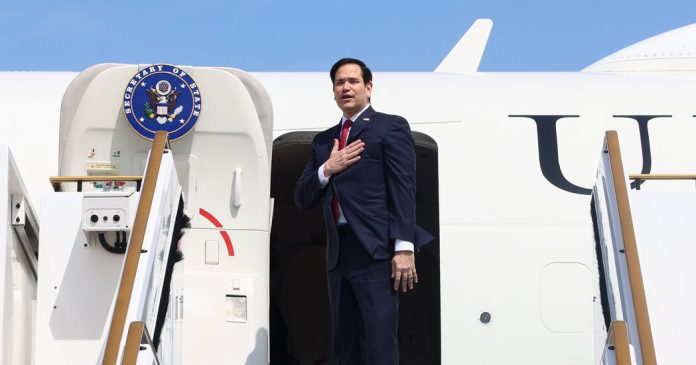
After meeting with Russian negotiators to discuss the future of the war in Ukraine, Secretary of State Marco Rubio signaled a dramatic reset in relations with the Kremlin, trumpeting “the incredible opportunities that exist to partner with the Russians.”
Hours later, though, Mr. Rubio sought to reassure nervous European allies that the talks did not represent an abrupt departure from American policies, as many feared.
Rather, the talks this week in Saudi Arabia’s capital, Riyadh, were meant as a first step in a process, a test of whether the Kremlin was serious about making a deal, Mr. Rubio said in a call with several European diplomats.
European officials were not sure what to make of Mr. Rubio’s measured assessment, which came as leaders on the continent struggled to make sense of the apparent renewal of the relationship between Washington and Moscow.
Mr. Rubio told the Europeans that no, the Trump administration had no plans to impose the terms of any bilateral agreement with Russia on Ukraine and Europe, according to a summary of the call prepared by European officials.
No, he said, the administration would not lift U.S. sanctions on Russia absent a noticeable change in Moscow’s behavior, though he left the door open to easing some sanctions in limited ways if the Russians began taking steps that the administration was seeking.
And yes, Mr. Rubio said, the Trump administration was cleareyed that Russia could be attempting to use the talks to sow divisions in the West or to ease its isolation on the international stage, according to the summary, which was reviewed by The New York Times.
The State Department did not respond to a request for comment on Mr. Rubio’s discussion with the Europeans.
On Wednesday, President Emmanuel Macron of France called for a second emergency meeting in Paris to hammer out a strategy amid growing fears that the United States would abandon its decades-long role in providing for European security.
After years of working to isolate the Kremlin following its February 2022 invasion of Ukraine, the White House under President Trump has appeared to flip the script.
In the 24 hours after the meeting in Riyadh wrapped up, Mr. Trump made a series of demands and false statements that appeared to embrace the worldview of Russia’s president, Vladimir V. Putin, while blaming Ukraine for the war.
He called President Volodymyr Zelensky of Ukraine a dictator, and falsely declared that Kyiv somehow tricked the United States into supporting it in a war that Ukraine’s leaders started.
He also mocked Ukrainians’ complaints that their country, having sacrificed tens of thousands of lives to preserve its independence, had been left out of negotiations about its future.
“I hear that they’re upset about not having a seat,” Mr. Trump said on Tuesday, speaking to reporters at Mar-a-Lago, his estate in Florida. “Just a half-baked negotiator could have settled this years ago without, I think, without the loss of much land, very little land. Without the loss of any lives.”
At no point did Mr. Trump criticize Mr. Putin, who, in fact, started the war by invading Ukraine.
After meeting with Russian officials for more than four hours in Riyadh on Tuesday, Mr. Rubio provided few details publicly about what was achieved. He said Russia and the United States had agreed to work on a peace settlement for Ukraine, lauding Mr. Trump as “the only leader in the world” who could have pulled off such a rapprochement between longtime adversaries.
One of his partners in the American delegation, Steve Witkoff, the Middle East envoy and a longtime friend of Mr. Trump, described the meeting as “positive, upbeat, constructive.”
Mr. Rubio’s message to European officials after the meeting in Riyadh was more nuanced and conciliatory, according to the summary of the call, which included officials from Britain, France, Germany and Italy.
Part of the call was devoted to explaining why the Ukrainians and the Europeans were not included in the talks.
It was not, Mr. Rubio said, because the United States was sidelining its allies, as Mr. Trump’s remarks may have suggested. Rather, he said, much of the conversation had centered on bilateral issues between the United States and Russia. This included opening a discussion about lifting restrictions on their embassies, which have been effectively shuttered in both countries because of the many diplomats who have been expelled.
Negotiations between U.S. and Russian officials over removing these diplomatic restrictions would serve as a first test of Russia’s intentions, Mr. Rubio explained. Failure to successfully negotiate over the embassies, he said, would show that the Kremlin was not serious about negotiating an end to the Ukraine war.
Mr. Rubio told the Europeans that he was unable to say, based on that one meeting, whether the Russians were serious about making a deal. But he said they had given enough of an indication that they might be to warrant further discussions.
Mr. Rubio ended the call, according to the summary, by promising to keep America’s allies informed and by urging unity.
Far-right media gets center stage in Trump White House : NPR
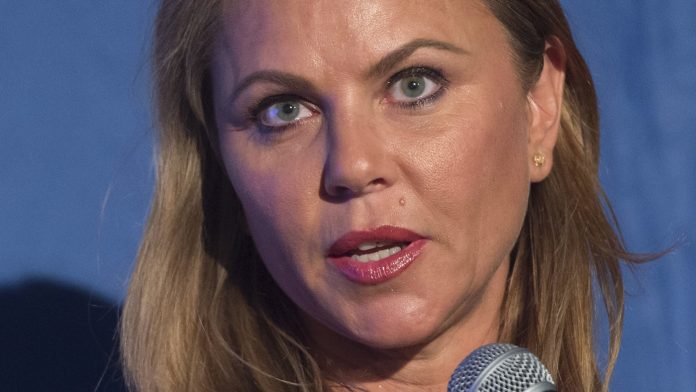
Former CBS News correspondent Lara Logan, who has increasingly embraced unfounded conspiracy theories in recent years, is one of several fringe media figures who have surfaced at Trump administration events.
SAUL LOEB/AFP via Getty Images/AFP
hide caption
toggle caption
SAUL LOEB/AFP via Getty Images/AFP
Fringe media figures are increasingly present at the White House and throughout the new administration, even as President Trump and other senior officials keep established news outlets at bay.
The Trump administration has barred The Associated Press from significant events at the White House, at Trump’s Mar-a-Lago estate and aboard Air Force One because it will not submit to his demand to rename the Gulf of Mexico.
“We’re going to keep them out until such time as they agree that it’s the Gulf of America,” Trump said on Tuesday. The next day, AP Executive Editor Julie Pace met with White House Chief of Staff Susie Wiles to address the issue. But the news service says it will not compromise its independent editorial standards, including on the Gulf.
By contrast, Lara Logan — barred from Fox News and the right-wing network Newsmax for promoting extremist views — shocked some participants by joining a formal State Department listening session about international aid last Friday. While the event was intended for people who worked or had worked at the State Department, the U.S. Agency for International Development or the nonprofits and companies who work with them on contract, more than 1,000 people — more than expected — logged on.

The event was convened by Peter Marocco, the State Department’s director for foreign assistance who is also overseeing USAID’s operations. (The State Department did not reply to requests for comment.)
Logan, who has said she has known Marocco for nearly two decades, was among 30 people called upon by the event moderator, a faculty member at Florida International University. She spoke for about five minutes — longer than other participants, according to five people who attended the event. (Logan did not respond to a request for comment sent through an associate.)
They say Logan charged that foreign aid programs were rife with corruption and demanded accountability. According to three attendees, Logan repeatedly invoked the idea that crimes had been committed and called for imprisonment of those involved. Logan said in Texas, where she lives, the middle class had been hollowed out, and money used for foreign aid instead should go to support those families.

(The participants spoke on condition they not be named because they feared professional repercussions at a time of widespread layoffs of federal employees and contractors.)
On screen, the attendees say, Logan spoke on an account bearing the name Luke Coffee; Coffee is the Texas-based co-host and producer of her latest video production. Logan called Coffee “an extraordinary man — the best you’ll ever meet” in a tweet last month.
Coffee was found guilty of six felony offenses related to the Jan. 6, 2021, attack on the U.S. Capitol, including assaulting police officers; Coffee had not yet been sentenced when the U.S. Justice Department moved to dismiss his case following Trump’s order to give clemency to all Jan. 6 defendants.
Marocco is from Dallas. He and his wife were identified by online sleuths, who call themselves the Sedition Hunters, as having entered the U.S. Capitol during the siege; in comments to D magazine, Marocco called the allegation “petty smear tactics and desperate personal attacks,” though he did not deny it.

Led by Marocco and Trump advisor Elon Musk, the administration has frozen nearly all international aid as part of what they characterize as a campaign to root out waste, fraud and abuse. Some staffers at USAID —and some lawmakers — say they’ve thrown lifesaving programs into chaos; some contractors on the call advocated for the programs they say are vital.
Logan was a highly decorated foreign correspondent at CBS News until her embrace of a fabulist’s claims about Benghazi imploded her career at 60 Minutes. She later hosted her own shows on Fox’s streaming service, Fox Nation.
Fox bounced her after she compared former presidential chief medical adviser Anthony Fauci to the Nazi war criminal Josef Mengele, who performed sadistic experiments on prisoners at Auschwitz. Newsmax blocked her over comments in which she said a cabal of world leaders push open borders “while they dine on the blood of children.”
New faces in the White House briefing room
Over at the White House, too, fringe media figures are taking on increased prominence.
At a formal press conference with India’s prime minister, Narendra Modi, Trump called on a reporter for the Gateway Pundit. The site has a history of promoting groundless conspiracy theories. It filed for bankruptcy after facing defamation suits over its false claims about widespread fraud in the 2020 presidential race. (A federal judge rejected the site’s bankruptcy petition, finding the company had not acted in good faith.)

President Trump and Indian Prime Minister Narendra Modi meet in the Oval Office at the White House on February 13.
Andrew Harnik/Getty Images/Getty Images North America
hide caption
toggle caption
Andrew Harnik/Getty Images/Getty Images North America
The Gateway Pundit reporter, Jordan Conradson, asked Modi how much more confident he was with Trump leading the U.S than former President Joe Biden, given what Conradson called “Biden’s incompetence and weakness over the last four years.” In his account of the event, Conradson wrote, “Biden could never have inspired such confidence in a foreign leader or negotiated such an incredible partnership to help the U.S. prosper.”
There have been unconventional correspondents at the White House over the years — from the right-wing Baltimore talk-radio host Lester Kinsolving, to a former escort turned political blogger during George W. Bush’s administration, to a reporter for the India Globe who has served as a useful foil for decades when White House officials wanted to sidestep tough questions from American journalists.
This White House, however, is welcoming sympathetic media figures and influencers whom they credit, in part, for Trump’s win. They have amplified memes, conspiracies and false claims during — and since — the presidential campaign.
Since saying she was opening a new seat in the briefing room for “new media,” White House Press Secretary Karoline Leavitt received thousands of applications.

Among the reporters now present at press briefings are the co-host of Steve Bannon‘s podcast “The War Room” and a reporter from Lindell TV. That’s the video news outlet created by MyPillow magnate Mike Lindell, a pro-Trump booster of thoroughly discredited claims about fraud in the 2020 presidential election.
Once-fringe media figures crop up across Washington
The new administration, more broadly, is welcoming media figures once relegated to the fringes.
Far-right podcaster Jack Posobiec posted last week that he had traveled with Treasury Secretary Scott Bessent to Kyiv; the Washington Post reported that Posobiec initially had been invited to travel with Defense Secretary Pete Hegseth.
And Julie Kelly, a right-wing writer prominent on social media for her MAGA posts, announced last week that she had visited the U.S. Justice Department as an “invited guest.” Kelly said in a note to NPR that she’s “covered DOJ for years” and declined to “disclose the nature of my visit.”
Kelly fiercely advocated for blanket pardons for all those charged with crimes in the Jan. 6 attack on the U.S. Capitol shortly before Trump did so, referring to police officers injured in the attack as “crisis actors.” She has also compared the FBI to the Gestapo, Nazi Germany’s secret police, and called for the bureau to be defunded.
Mainstream media pushed aside — or shut out
Evidence of Trump’s hostility to the mainstream media can be found throughout his administration.
The State Department has joined a growing list of federal departments and agencies slashing subscriptions to media outlets, including the New York Times, the Economist, Bloomberg News, Politico, the AP and Reuters.
Under Hegseth, a former star at Fox, the Pentagon has dislodged journalists for CNN, NBC, NPR, Politico, the New York Times, the Washington Post, the Hill, and the military site The War Zone from their work stations and brought in seven conservative and far-right sites to replace them. A liberal site, HuffPost, was also offered space, though its spokesperson says it had not asked for it. Journalists for the ousted news outlets still have the press passes that let them report from inside the Pentagon.
And then there’s the White House’s refusal to budge on punishing the AP. For decades, the AP has invariably been part of pools designed to let a small group of journalists share accounts of events with other outlets. The news agency serves thousands of news outlets and claims billions of readers worldwide.

President Trump speaks to the press after signing a proclamation renaming the Gulf of Mexico as the Gulf of America aboard Air Force One, as it flies over the Gulf enroute to New Orleans, Louisiana on February 09, 2025.
ROBERTO SCHMIDT/AFP via Getty Images/AFP
hide caption
toggle caption
ROBERTO SCHMIDT/AFP via Getty Images/AFP
The AP’s Stylebook, a language guide for the outlet’s own journalists as well as those at other news organizations, recommends that writers continue to call the body of water between Mexico and Florida the Gulf of Mexico, while acknowledging Trump’s desired shift in language. The president has directed the federal government to rename it the Gulf of America. Several mapmakers, including Apple and Google, have followed suit. The Stylebook notes that the AP serves a global audience and clients, and that Mexico, which borders the Gulf, has not changed its language.
“The Associated Press, as you know, has been very, very wrong on the election, on Trump, and the treatment of Trump, and other things having to do with Trump and Republicans and conservatives,” Trump said at a press conference at Mar-a-Lago. “They’re doing us no favors. And I guess I’m not doing them any favors.”
The news service rejects his characterization. “This is about the government telling the public and press what words to use and retaliating if they do not follow government orders,” said Lauren Easton, a spokesperson for the Associated Press. “The Associated Press has provided critical and independent coverage of the White House for over 100 years.”
The White House Correspondents Association sent a private letter of protest to Wiles, as first reported by Oliver Darcy’s newsletter Status.
According to two White House reporters who spoke on condition of anonymity because they were not authorized to speak for their outlets, efforts to stage a walkout or other acts of solidarity with the AP have been stymied by the presence of new right-wing members of the White House press corps. If mainstream media were to leave, they said, the outlets that are outright supportive of Trump are poised to fill the gap.
NPR’s Matteen Mokalla contributed to this story.
Friday Briefing: Germans Are Choosing New Leadership
Germany prepares to vote as a Trump-E.U. rift grows
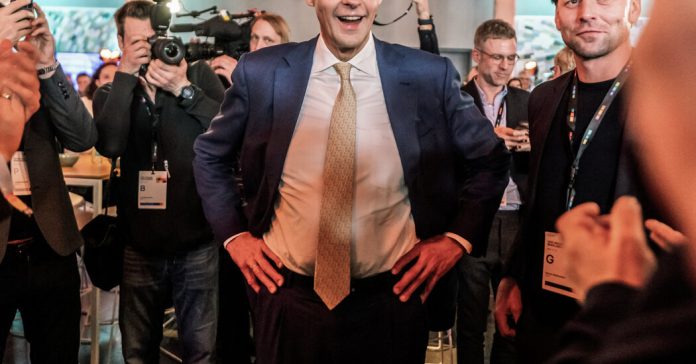
Germans will head to the polls on Sunday to choose their next chancellor. The man favored to clinch the election is Friedrich Merz of the Christian Democrats. He has been considered a potentially better match for President Trump than the current Social Democratic chancellor, Olaf Scholz.
Merz sees an “epochal rupture” with a U.S. that is more aligned with Russia. His reputation for boldness would benefit Germany, argued Noah Barkin, a senior adviser at the Rhodium Group, a geopolitical advisory firm, particularly at a moment when Europe’s security environment is rapidly changing.
Polling second is the far-right party Alternative for Germany, or AfD, which has been linked to neo-Nazis and plots to overthrow the state. To get a sense of what’s at stake, we spoke with Jim Tankersley, our Berlin bureau chief.
What are the big issues galvanizing voters?
Jim: The first is the economy. Germany is in a crisis of stagnant growth and declining competitiveness. Its famed industries, like auto manufacturing, are slumping. Voters are frustrated and appear likely to evict the current chancellor, Olaf Scholz, over it.
The second big issue is immigration. Germany has welcomed millions of refugees over the last decade. They have adapted relatively well, but their presence has unsettled many native-born Germans. The dissatisfaction has grown after a series of seemingly unrelated attacks committed by immigrants over the last year.
How might the actions of the Trump administration affect the election?
Germans generally don’t like the American president, but until last weekend, his actions didn’t seem to be motivating many voters. That might have changed after Trump essentially cut Europe — including Ukraine — out of negotiations with Russia over an end to the war in Ukraine.
What impact could the AfD have on the outcome of the vote?
The party has gained popularity based on an unrelenting promise to stop migration at Germany’s borders and deport some immigrants already in the country. Parts of it are formally classified as extreme by German intelligence, and some of its members have been arrested in plotting to overthrow the government or fined for repeating banned Nazi slogans. It is currently polling in second place. With a late push, it could potentially challenge Friedrich Merz’s Christian Democrats for first.
With taunts, Hamas handed back dead hostages
Hamas handed over yesterday what it said were the remains of four Israelis abducted during the Oct. 7, 2023, attack. Among them were Shiri Bibas and her two young children, Ariel and Kfir, the militant group said. Their abduction was widely seen as emblematic of the viciousness of the assault. A U.N. official described the theatrical handoff in Gaza as “abhorrent and cruel.”
Four coffins were placed on a stage in front of a cartoonish picture of Benjamin Netanyahu, the Israeli prime minister, as triumphant music played. One casket bore a picture of Kfir Bibas, who was less than 9 months old when he was kidnapped. A poster threatened that if Israel resumed the war, more hostages would return in coffins. The display showed that Hamas was still very much in control in Gaza.
What’s next: Hamas is expected tomorrow to free the last six living hostages covered in the first phase of the cease-fire in exchange for more Palestinian prisoners.
Saudi Arabia: The kingdom is hosting U.S., Russian and Arab officials for high-stakes talks on Ukraine and Gaza, more proof of its regional clout and warm relations with President Trump.
Trump went after officials fighting foreign influence
The Trump administration reassigned several dozen officials at multiple agencies who had been flagging foreign interference in U.S. elections. Trump said that, in the guise of fighting misinformation and disinformation, the government had infringed on free speech rights of Americans.
Experts are alarmed that the cuts could leave the U.S. defenseless against covert influence operations and could embolden foreign adversaries. In last year’s election, the teams tracked and publicized numerous such operations from Russia, China and Iran.
Is that legal?: We examined the legality of 38 major actions Trump has taken in his first month in office.
More on Trump
To some tourists, fire, lava and catapulted rocks apparently scream “ideal getaway.” Thousands of visitors are swarming Sicily as Mount Etna erupts. The throngs have congested roads and obstructed rescue crews, prompting warnings from officials for people to stay away.
Lives lived: Dorothy Chin Brandt, who in 1987 became the first female Asian American judge in New York State, died at 78.
CONVERSATION STARTERS
When a digital maze feels like home
Metroidvanias — video games known for their labyrinthine environments that become more accessible with upgrades — have been delighting (and confounding) players since their creation in the 1980s.
The name for this subgenre is a mash-up of the titles of the games Metroid and Castlevania, which earned devoted fan bases in the mid-80s for the freedom they gave players to explore their arcane worlds. Much of a Metroidvania’s appeal stems from a foundational emotion: feeling lost, until even a lonely labyrinth starts to feel like home.
RECOMMENDATIONS
Senate confirms Kash Patel, fierce critic of FBI, to head the bureau : NPR
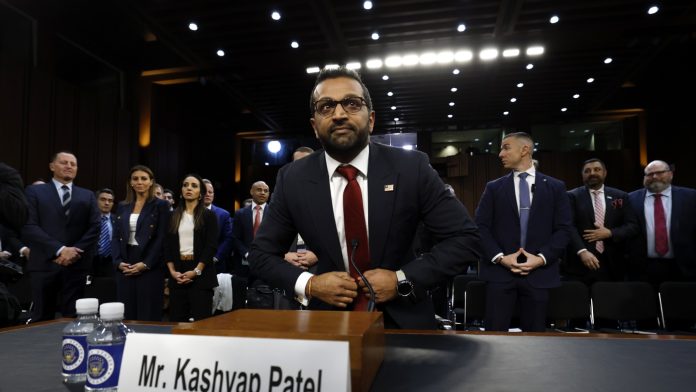
Kash Patel, Trump’s pick for FBI director, arrives to testify during his confirmation hearing before the Senate Judiciary Committee on Jan. 30, 2025 in Washington, D.C.
Anna Moneymaker/Getty Images
hide caption
toggle caption
Anna Moneymaker/Getty Images
The Republican-led Senate voted Thursday to confirm Kash Patel as the new FBI director despite questions about whether he has the qualifications and the temperament to lead the nation’s most powerful law enforcement agency.
Patel, who had been a fierce critic of the bureau, was confirmed by a 51-49 vote, with Republican Sens. Susan Collins and Lisa Murkowski joining all Democrats in opposing him.

It caps a remarkable rise for Patel, who has worked as a public defender, federal prosecutor and congressional aide before serving as a national security official in President Trump’s first term. He later emerged as a fixture in MAGA world, a right-wing podcast regular and a Trump loyalist.
Republicans welcomed his confirmation. They argue that the FBI has unfairly targeted conservatives in recent years, and they see Patel as someone who will fix that purported problem.
They pushed Patel’s nomination over the line in the face of fierce opposition from Democrats, who voiced concerns about Patel’s fitness for the job and his ability—or even desire—to maintain the FBI’s traditional independence the White House.

On Thursday morning, Democrats on the Senate Judiciary Committee gathered in front of FBI headquarters to speak out against Patel.
“Mr. Patel will be a political and national security disaster, if confirmed,” said Illinois Sen. Dick Durbin, the panel’s top Democrat.
“I’m convinced he has neither the experience, the judgment nor the temperament to lead the FBI,” Durbin added. “My Senate Republican colleagues are willfully ignoring myriad red flags about Mr. Patel, especially his recurring instinct to threaten retribution against his perceived enemies. This is an extremely dangerous flaw for someone who seeks to lead the nation’s most powerful domestic investigative agency for the next 10 years.”
Neither of Patel’s immediate predecessors served out the job’s full 10-year term. Trump fired then-director James Comey in 2017, and handpicked Christopher Wray to replace him.
After Trump’s election win last November, he tapped Patel to lead the FBI, effectively pushing Wray out of the job.
Unlike those two men, Patel has no experience as a senior law enforcement official. That has fueled questions about his qualifications to lead the FBI.
But the pushback to his nomination has centered more around his loyalty to Trump and his past statements about rooting out what he calls the “deep state” and going after his and Trump’s perceived political enemies, including at the FBI.

In one podcast appearance, Patel vowed to shut down FBI headquarters on Day 1 and reopen it as a “museum of the deep state.”
At his confirmation hearing, Patel sought to deflect questions about his past comments, telling lawmakers “any accusations leveled against me that I would somehow put political bias before the Constitution are grotesquely unfair.”
Trump Cuts Protections for Haitians, Putting Them on Track for Deportation
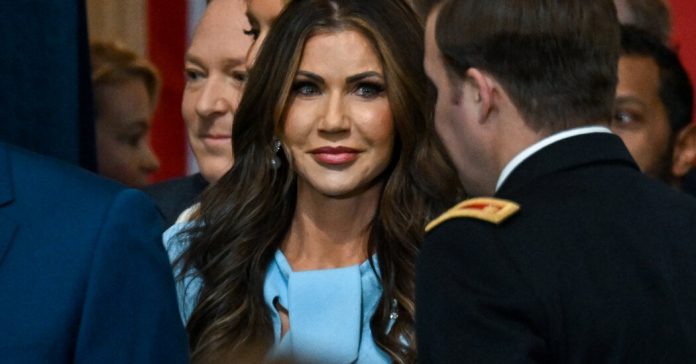
The Trump administration on Thursday cut protections for hundreds of thousands of Haitians in the United States, putting them on track to be targeted for deportation this summer, according to government documents and an official with the Department of Homeland Security.
The decision was signed this week by Kristi Noem, the homeland security secretary, and is the latest in President Trump’s sweeping crackdown on immigration, including people whom the Biden administration had authorized to remain in the country.
The Haitians affected by the decision had been living in the United States under Temporary Protected Status, which is intended to help people in the United States who cannot return safely and immediately to their countries because of a natural disaster or an armed conflict. More than 500,000 Haitians in the United States are eligible for the status.
Before he left office, President Joseph R. Biden Jr. had granted them an 18-month extension of their deportation protections. On Thursday, Ms. Noem revoked that extension — meaning those protections will now expire in August instead of next February.
Ms. Noem must then decide whether she will end protections for Haitians altogether, a move that appears likely. Mr. Trump and other critics of Temporary Protected Status say it is not being used as intended, instead serving as a pathway to stay in the country indefinitely.
Some Haitian migrants have had the protections since 2010, when an earthquake hit the country and the Obama administration first extended that status to its citizens.
Last month, the Trump administration announced that Venezuelans would lose their protected status beginning in April. It was a blow to 600,000 people who believed they would not only be protected from deportation but also provided work permits until at least the fall of 2026.
Mr. Trump had signaled that such a move was in the cards for Haitian immigrants with the status. “Absolutely I’d revoke it,” Mr. Trump said in an October interview with the channel News Nation following false claims he spread about Haitians in Ohio eating pets.
A homeland security official, who spoke on the condition of anonymity, said the agency had cut the protections by six months because they did not want to let the final decision languish.
Already, advocates for immigrants are challenging the Trump administration’s cuts to the T.P.S. program in federal court. During the first Trump administration, U.S. officials’ attempts to end the program for certain countries were stopped in federal court.
On Wednesday evening, an advocacy group sued the Trump administration’s cuts to the Venezuelan protected-status program. They said the decision to cut the protections for Venezuelans was unlawful and are asking a judge to block the move.
“Venezuela is in crisis. Even Trump admits that. The influx of Venezuelans to the United States due to their country’s humanitarian crisis is exactly the reason that T.P.S. exists,” said Emi MacLean, an attorney with the A.C.L.U. of Northern California who is helping to sue the government, in a statement.
One of the attorneys on the case, said Ahilan Arulanantham, who helps lead the Center for Immigration Law and Policy at the U.C.L.A. School of Law, said the decision to cut down the time Haitians would be protected was also against the law and could have vast consequences.
“T.P.S. has served as a crucial lifeline for many members of the Haitian community, allowing them to live and work in the United States at a time when Haiti is experiencing tremendous political, social and economic instability,” he said.
The decision issued by the Biden administration to extend Temporary Protected Status for Haitians last year cited ongoing issues in their country including widespread violence and political instability.
Sherika Blanc, a 34-year-old Haitian woman who has had protected status since 2010, said that the decision was gutting. Ms. Blanc was a plaintiff in the lawsuit that blocked the Trump administration’s repeal of protections for Haitians in 2018.
“My heart is breaking and just that uncertainty of what could happen and the conditions of Haiti right now,” she said.
Ms. Blanc said she was considering moving away from the United States along with her four children who had been born in the country.
“Basically, we’re not wanted,” she said.
Elon Musk Is Focused on DOGE. What About Tesla?
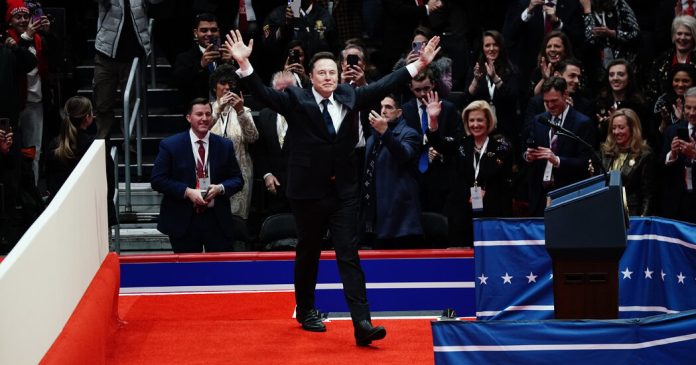
Elon Musk’s role as President Trump’s cost-cutting czar and his immersion in right-wing politics appear to be diverting his attention from Tesla at a perilous moment for the electric car company.
Tesla’s car sales fell 1 percent last year even as the global market for electric vehicles grew 25 percent. Mr. Musk has not addressed that underperformance, and he has offered no concrete plan to revive sales. He has also provided no details about a more affordable model Tesla says it will start producing this year. In the past, Mr. Musk spent months or years promoting vehicles before they appeared in showrooms.
And he has spent much of his time since the election in Washington and at Mr. Trump’s home in Florida — far from Austin, Texas, where Tesla has its corporate headquarters and a factory, or the San Francisco Bay Area, where it has a factory and engineering offices.
In the past decade or so, Tesla went from a struggling start-up to upending the global auto industry. The company sold millions of electric cars and generated huge profits, forcing established automakers to invest billions of dollars to catch up. Tesla’s success has been reflected in its soaring stock price, which helped make Mr. Musk the world’s richest person.
But now, he seems to have lost interest in the grinding business of developing, producing and selling cars, investors and analysts say. That could have serious ramifications for his company and the auto industry, which employs millions of people worldwide.
Even before he joined the Trump administration as the head of the Department of Government Efficiency, Mr. Musk’s running multiple companies had led investors and corporate governance experts to wonder whether he was spread too thin. Besides Tesla, Mr. Musk controls and runs SpaceX, whose rockets carry astronauts and satellites for NASA and others; X, the social media site; and xAI, which is developing artificial intelligence. And he wants to colonize Mars.
“We don’t have a C.E.O. who is fully focused on ensuring that Tesla remains a leader in the E.V. space,” said Brad Lander, the New York City comptroller, who oversees employee pension funds that own Tesla shares worth $1.25 billion.
Mr. Lander said he wanted Mr. Musk to stay on Tesla’s board and relinquish his chief executive duties to someone who would do the job full time. “That’s not too much to ask for,” Mr. Lander said. “That’s just the basic model of shareholder governance in America.”
Few, if any, executives have ever had such an array of responsibilities, said Eric Talley, a Columbia Law School professor who focuses on corporate governance. And while some of Mr. Musk’s businesses stand to benefit from his ties to the president, it is virtually impossible for Mr. Musk’s commercial and political interests not to collide in ways that could hurt Tesla and his other companies, Mr. Talley said.
“The more you split your loyalties,” Mr. Talley said, “the more it’s going to be difficult to claim you had an undivided loyalty to any company.”
Mr. Musk and Tesla did not respond to emails seeking comment.
In the past, he and the company’s board have defended Mr. Musk’s management of Tesla and dismissed the idea that he was spread too thin. They have pointed to the company’s soaring stock price and robust profits as evidence that Tesla has not suffered because of his other commitments.
Mr. Musk’s support for right-wing leaders at home and in Germany, Britain, France and other countries appears to have alienated significant numbers of customers.
There are signs that Mr. Musk’s political activities and reduced presence at Tesla are also stirring dissatisfaction within the company.
The discontent was apparent during an unusual meeting last month at the company’s offices in Palo Alto, Calif., where numerous employees vented their frustrations.
A senior executive who spoke at the meeting told the employees that he, too, was discouraged by Mr. Musk’s “mercurial” behavior and by the departure of some senior executives who had been a moderating influence. The chief executive’s polarizing social media posts and work in the Trump administration were driving away customers, prompting some employees to leave and making it harder to recruit new talent to Tesla, the manager said, according to an audio recording of the meeting reviewed by The New York Times.
The executive urged employees to focus on their work and tune out Mr. Musk’s comments on X and other forums. “I just kind of ignore it and think about what are we working on and is it exciting to me and is it having an impact?” the manager said. “That’s the best advice I can give for how to handle it.”
The recording was first reported by The Washington Post.
There are signs that at least some investors are having doubts, too. Tesla’s share price has fallen 25 percent since mid-December, though it is still up about 40 percent since the election. The S&P 500 stock index is up about 6 percent since the election.
Many investors still have faith in Mr. Musk. That’s why Wall Street treats Tesla as being more than three times as valuable as Toyota, the world’s largest automaker.
Optimistic investors believe that the company will develop cars that can drive themselves in most conditions. ARK Invest, an investment firm that has long been bullish about Mr. Musk’s endeavors, estimates that Tesla could control half of an estimated $10 trillion market for autonomous ride-hailing services.
“I see a path for Tesla being the most valuable company in the world by far,” Mr. Musk said in January. The growth, he added, would “overwhelmingly be due to autonomous vehicles and autonomous humanoid robots.”
What Mr. Musk has appeared surprisingly unconcerned about is Tesla’s biggest business today: selling cars.
During a conference call last month to discuss Tesla’s fourth quarter results, a financial analyst asked him to elaborate on his plans to sell more cars to take advantage of Tesla’s competitive advantage in technology that allows cars in some cases to steer, accelerate and slow down on their own. Mr. Musk said he didn’t understand the question and said the company already had millions of cars on the road.
The company has lost market share to BYD in China; BMW and Volkswagen in Europe; and Hyundai and General Motors in the United States. Some Tesla drivers like the musician Sheryl Crow are so upset by Mr. Musk’s political activities that they are selling their cars or saying they won’t buy another one.
In January Tesla’s sales were down 59 percent in Germany, 63 percent in France and 12 percent in Britain after Mr. Musk endorsed right-wing politicians and made inflammatory statements on social media. Tesla sales fell 12 percent last year in California, which accounts for nearly one-third of the electric cars sold in the United States.
“The hate is real,” Ross Gerber, chief executive of Gerber Kawasaki Wealth and Investment Management, wrote on an X post along with a photo of a Cybertruck that someone had defaced with an obscenity.
But political blowback is not the company’s only problem.
Tesla remains reliant on two vehicles, the Model 3 and Model Y, for 95 percent of its sales. BYD has more than a dozen electric models, some costing much less than $20,000. The Model 3 starts at $42,000 in the United States before taking into account a $7,500 federal tax credit.
Auto experts say Tesla badly needs a cheaper car to revive sales. But last year, Mr. Musk delayed indefinitely plans to build a low-cost car in Monterrey, Mexico, that would have cost $25,000.
The company has promised to begin producing a new model at its existing factories by the end of June, but it has not displayed a prototype or provided details. Analysts expect it to be based on the Model 3 and cost a lot more than $25,000.
“You would think they would be doubling down and trying to capitalize on the lead they have on other players,” said Michael Lenox, a professor of business at the University of Virginia. “It begs the question,” he added, “has there been a lack of attention?”
Some investors said that Mr. Musk’s lack of interest in selling cars was apparent in how little he had said about Mr. Trump’s initiatives that could hurt Tesla’s sales.
The chief executive of Ford, Jim Farley, last week said that some of Mr. Trump’s plans to repeal Biden era incentives for electric cars could force the company to lay off workers. But Mr. Musk has said nothing publicly about them.
Environmentalists in particular are very concerned that Mr. Musk, who once talked about electric vehicles as a solution for climate change, has allied himself with climate change deniers.
“It’s really concerning that Elon is more focused on D.C. than on advancing E.V. production,” said Katherine Garcia, director of the Clean Transportation for All campaign at the Sierra Club.
Mr. Musk has argued that electric cars don’t need government incentives. “You can’t stop the advent of electric cars,” Mr. Musk said in January. “It’s going to happen.”
Why independent agencies were created to be independent : NPR
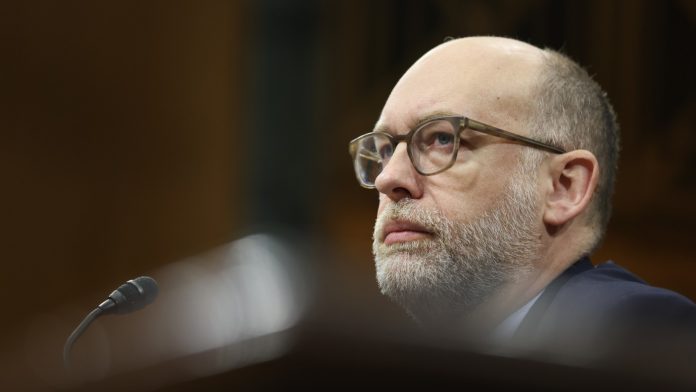
Russel Vought, President Donald Trump’s choice for Director of the Office of Management and Budget, attends a Senate Budget Committee hearing on his nomination, on Capital Hill in Washington, Wednesday, Jan 22, 2025.
Kayla Bartkowski/Getty Images
hide caption
toggle caption
Kayla Bartkowski/Getty Images

Two big questions have come up as President Trump works to expand his power: what should the government do, and who decides?
In an executive order signed on Tuesday, Trump sought direct supervision of agencies that regulate stock markets, election spending, broadcasting and more. Though the president appoints the heads of these agencies, they are, by law and tradition, supposed to operate with some independence.
Russell Vought, the president’s budget director, wants to go in a different direction.
Here’s what he told me in 2023, as he worked on Project 2025, a Republican blueprint for policy action: “The notion of an independent agency —whether that’s a flat out independent agency like the FCC, or an agency that has parts of it that view itself as independent, like the Department of Justice — we’re planting a flag and saying we reject that notion completely.”
That flag the administration has now planted challenges decades of precedent.
Jane Manners, a legal historian at Temple University Beasley School of Law, told us how the “alphabet agencies” came to be — agencies like the FCC, or Federal Communications Commission that regulates the broadcast airways, or the SEC, the Securities and Exchange Commission that regulates stock markets.
Here are four key points:
The tradition of independent agencies goes back to the 1880s.
The first was the Interstate Commerce Commission. It was established by Congress in 1887 to regulate railroad rates. “This was a really heated political issue,” Manners said. Railroads had transformed the economy and many other businesses relied on them–very much as the internet has transformed the modern economy. “You really had to have interstate regulation, and they wanted to do it right … They decided that the best way to do this was to create a commission comprising people from both parties,” who would not be “subject to the vagaries of politics,” and could not be “removed at will, which would insulate them from politics.
Congress approved and Presidents signed laws creating numerous agencies, but critics in the Trump administration deny that experts are ever truly insulated from politics.
Manners says Vought has raised several objections to independent agencies, which are collectively known as “the administrative state.” She said the objections include “that they are not 100% accountable to the President,” which “is a problem in terms of their overall accountability, the idea who do they answer to? And that is a vision of accountability that makes sense on first hearing.”
On reflection, the Temple professor takes a different view: “When you think about the kind of accountability that you want in a decision making body that is making sensitive decisions about the stock market, about communications, about elections, it’s hard to imagine” that they can function properly under presidential pressure.
The key to the system up to now has been ambiguity: Presidents appoint officials and lead the executive branch but generally keep their distance from some agencies.
“The way these independent commissions have been set up,” Manners said, “is you have this generally, a commission … set up to serve a term of years, like you serve a term of four years, but you can be removed [only] in discrete instances. Generally it’s inefficiency, neglect of duty and malfeasance in office.” Outside those reasons, “the law structures it is the President hands off create that sort of independence.”
The Justice Department is run by the Attorney General, not a commission, but similar arguments have applied.
“Since Watergate, there have been strong norms against presidential control of the Department of Justice. These norms arose after the scandals involving [President Richard] Nixon … You want your procedures and your independent decision making to legitimate the government’s adjudication of particular problems. You don’t want everything to be politics all the way down.”
Manners asserts that the administration’s views in many cases challenge or even flout the laws structured to limit a president’s direct power. The laws governing administrative agencies are invoked in many of the lawsuits against the administration’s early actions. And now the administration is reaching for power again, asserting power over large portions of the most powerful independent agency: the Federal Reserve.
Trump Elevates Kremlin Talking Points, a Familiar Pattern From His First Term
Last spring, the Kremlin added a new rhetorical weapon to its regular barrages against President Volodymyr Zelensky of Ukraine.
“We are aware that the legitimacy of the current head of state has expired,” President Vladimir V. Putin of Russia said of the Ukrainian leader in May 2024, two months after orchestrating his own latest rubber-stamp re-election at home.
Those stilted words kicked off a concerted campaign by Moscow to tarnish Mr. Zelensky as an impostor incapable of signing a peace deal unless presidential elections were held in Ukraine.
Mr. Zelensky had remained in power when his term expired because Ukraine prohibits elections under martial law. No matter. By Wednesday, President Trump had picked up Mr. Putin’s message.
“A Dictator without Elections,” Mr. Trump said in a post on his Truth Social account, in a scathing attack on the Ukrainian leader. It came a day after Mr. Trump falsely accused Ukraine of starting the war.
Dmitri A. Medvedev, deputy chairman of the Russian security council and a former president of Russia, said he agreed with Mr. Trump about the Ukrainian leader “200 percent.” He suggested that Moscow could not believe its luck with Washington’s about-face, throwing into stark relief how completely Mr. Trump had adopted the Kremlin’s messaging.
“If you’d told me just three months ago that these were the words of the US president, I would have laughed out loud,” Mr. Medvedev wrote on X.
It was not the first time that Mr. Trump had picked up and repeated a questionable talking point of a strongman leader who had won his sympathies. During Mr. Trump’s first term, such interlocutors sometimes guided the president handily toward taking up their positions, even if those stances contradicted Mr. Trump’s own advisers and intelligence agencies.
President Recep Tayyip Erdogan of Turkey, for example, regularly steered Mr. Trump toward his positions in calls and interactions, ultimately getting the U.S. president to move American forces out of the way while Turkey attacked the Kurds in northern Syria. The Kurds had been Washington’s main partners in the campaign against the Islamic State.
After the murder of the columnist Jamal Khashoggi, Mr. Trump publicly repeated Crown Prince Mohammed bin Salman’s assertion that he had no knowledge of the crime, and said that the truth about what really happened might never be known. That was at odds with the C.I.A.’s conclusion at the time that Prince Mohammed, Saudi Arabia’s de facto ruler, ordered the killing.
Mr. Trump also caused an uproar in 2019 when he said he took the North Korean leader Kim Jong-un “at his word” that he did not know about the harsh treatment of Otto Warmbier, an American in North Korean custody. Mr. Trump said North Korean prisons were “rough places.” Mr. Warmbier was released to the United States in a vegetative state and died soon afterward.
Perhaps none of Mr. Trump’s relationships with other world leaders have received more scrutiny than the one with Mr. Putin, whom the U.S. president has long praised and admired.
In 2018, the Justice Department named and charged 12 officers from Russia’s military intelligence agency with hacking emails from Democratic Party systems and releasing them online. The effort damaged the party’s 2016 presidential candidate, Hillary Rodham Clinton.
Days later, after a two-hour private meeting with Mr. Putin in Helsinki, Mr. Trump repeated the Russian leader’s assertion that Moscow had not interfered in Mr. Trump’s favor in the election.
“I have President Putin. He just said it is not Russia,” Mr. Trump said. “I will say this: I do not see any reason why it would be.”
Mr. Trump expressed “great confidence” in his intelligence agencies, which concluded that Russia had interfered, but said, “I will tell you that President Putin was extremely strong and powerful in his denial today.”
His decision to take Mr. Putin’s word over that of his own intelligence agencies outraged even Republicans, with the late Senator John McCain calling it a “disgraceful performance.”
A three-year study by a bipartisan U.S. Senate committee concluded that the Russian government “engaged in an aggressive, multifaceted effort to influence, or attempt to influence, the outcome of the 2016 presidential election.”
Constraints during his first term, including a special counsel investigation into Russian interference, a coterie of Russia hawks within his administration and overwhelming bipartisan contempt for the Kremlin in Congress, largely prevented Mr. Trump from acting on his impulse to develop close ties with Mr. Putin.
In his second term, with those restrictions gone, Mr. Trump has set about pursuing a rapid rapprochement with Moscow, to the shock of both European allies and Ukraine. At the same time, he has taken actions cheered by the Kremlin, including the dismantlement of the American government foreign aid agency, U.S.A.I.D., while also repeating some of the Kremlin’s main anti-Ukrainian talking points.
Mr. Trump’s pattern of repeating what Mr. Putin says and being steered toward policy decisions by foreign strongmen has caused grave worry in both Europe and Ukraine about what the American president might agree to during impending talks with Mr. Putin, who has long sought to destroy NATO and unity between the United States and its European allies.
Mr. Trump adopted the Russian president’s line of attack against Mr. Zelensky a week after the two leaders held a phone call, during which Mr. Putin may have raised the matter.
Mr. Zelensky’s five-year presidential term would have expired in May of last year, was extended under martial law rules in place since Russia’s invasion in 2022.
Mr. Putin told Russian state television in January that peace negotiations could be conducted with whomever, but that “due to his illegitimacy” Mr. Zelensky “has no right to sign anything.”
Mr. Zelensky hit back at Mr. Putin’s line of attack in June of last year, saying the Ukrainian people were the only ones who would determine the legitimacy of their president.
“Our people are free. To be honest, we’re fighting precisely for this,” Mr. Zelensky said. “The legitimacy of comrade Putin is recognized only by comrade Putin himself. Only Putin elects Putin. Russians are the scenery, with only one performer on stage.”
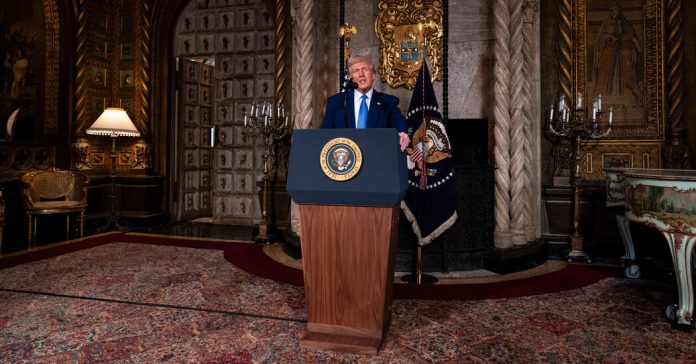
During an appearance on Tuesday at Mar-a-Lago, Mr. Trump’s Florida estate, the president not only supported Mr. Putin’s argument about Mr. Zelensky’s legitimacy. He co-opted it.
Mr. Trump said it was the United States, not Russia, pushing for elections in Ukraine, though Mr. Putin for months has been saying that Mr. Zelensky cannot sign a peace deal unless presidential elections take place.
“That’s not a Russia thing,” Mr. Trump said of elections in Ukraine. “That’s something coming from me and coming from many other countries also.”
It was unclear what countries, apart from Russia, Mr. Trump had in mind.
The White House did not immediately respond to a request for comment.
It is unclear exactly what the Kremlin intends to gain from its rhetoric, but questions about Mr. Zelensky’s legitimacy and the timing of future elections could weaken Ukraine’s negotiating position in potential peace talks or form a pretext for sidelining Mr. Zelensky — especially if Mr. Trump amplifies the message.
Stefan Meister, a Russia expert at the German Council on Foreign Relations, said the Kremlin is trying to delegitimize Mr. Zelensky with the hope of destabilizing Ukraine and ultimately setting in motion a process to install a new, more Moscow-friendly leader in Kyiv.
He called the false narrative about Mr. Zelensky an important tool in Russia’s “toolbox for how they want to destroy Ukraine as a state.”
“This is ongoing and evergreen in the Russian disinformation campaign — that there were no elections in Ukraine and Zelensky is an illegitimate president,” Mr. Meister said. “As we understand, Trump is taking over the elements of Russian disinformation.”
Beyond Ukraine’s clear prohibition on elections during martial law, active warfare in the country would also make holding a fair election incredibly difficult, with thousands of men stationed at the front, fears about going to polls during fighting and worries about a distracting political sweepstakes at a moment of existential crisis for the Ukrainian state.
Republican members of Congress who back Ukraine have hit out at the idea that elections should be held before or during any peace process and have highlighted the irony of such a demand by Mr. Putin, who years ago ended fair elections in Russia and changed the rules to stay in power past his term limits.
Rep. Don Bacon, Republican of Nebraska, wrote on X that while Russia was demanding elections in Ukraine, “we should remind ourselves that Putin has murdered or exiled all his political rivals.” Rep. Brian Fitzpatrick, Republican of Pennsylvania, told Mr. Putin, also in a post on X, that he should try holding a free and fair election in his own country first.
Mitch McConnell to retire from Senate in 2026 : NPR
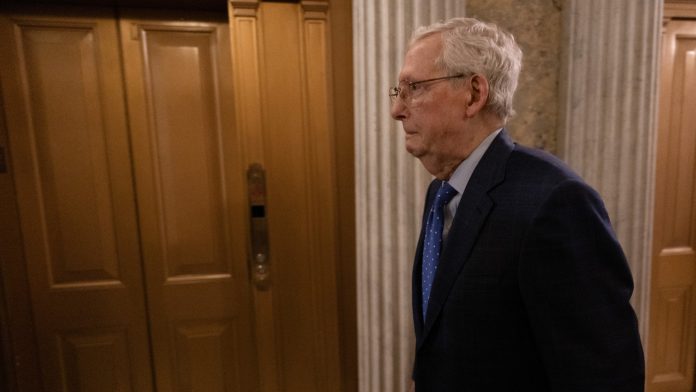
U.S. Sen. Mitch McConnell (R-KY) arrives to cast his vote at the US Capitol on January 24, 2025 in Washington, DC.
Tasos Katopodis/Getty Images
hide caption
toggle caption
Tasos Katopodis/Getty Images
Former Senate Majority Leader Mitch McConnell will not seek reelection in 2026, the Kentucky Republican announced Thursday.
“Seven times my fellow Kentuckians have sent me to the Senate,” McConnell said on the Senate floor Thursday, his 83rd birthday. “Every day in between, I’ve been humbled by the trust they place in me to do their business right here. Representing our Commonwealth has been the honor of a lifetime. I will not seek this honor an eighth time. My current term in the Senate will be my last.”
One of the most consequential and controversial legislators who helped redefine the modern Senate, McConnell stepped down from leadership last year after facing questions about his health. Now 83, he abruptly froze and seemed unable to speak during two news conferences in July and August of 2024. In March of 2023 he fell during a dinner event at a D.C. hotel and spent five days in the hospital.

McConnell’s most lasting legacy will be his efforts to remake the federal judiciary, shifting the balance of the courts toward conservatives, likely for the next generation. Those actions made him a hero of the conservative movement, despite years of attacks questioning his commitment to the cause and a frayed relationship with President Trump.
First elected to the Senate in 1984, McConnell was soon driven by a singular political ambition to become majority leader. A cunning tactician who understood how to accumulate power at home and inside the Beltway, he carved a strategic path through the Senate by securing a seat on the Appropriations Committee that allowed him to drive federal dollars back to help his impoverished state and shore up his influence — and reelection chances — back home.
In Washington, McConnell worked his way up the leadership ladder, serving in elected positions including Senate campaign chair, whip and minority leader before being elected majority leader when Republicans won control of the Senate in the 2014 election, some 30 years after he first entered the chamber.

During the Obama presidency, McConnell worked with determined focus to block any legislative victories while Democrats held the White House and enjoyed super majorities in Congress.
“The single most important thing we want to achieve is for President Obama to be a one-term president,” he told National Journal just before the 2010 election. In that goal, McConnell failed, but he remained on a collision course with the Obama White House that would come to be his most defining moment in office.
McConnell and the courts
In 2013, then Democratic Senate Majority Leader Harry Reid, D-Nev., went “nuclear” in the Senate. Tired of Republicans blocking Obama’s judicial nominees, he forced through a rules change on a party line vote to make it easier to confirm lower court nominees with a simple majority vote. The rules change did not apply to the Supreme Court.
“You’ll regret this, and you may regret this a lot sooner than you think,” McConnell warned Democrats at the time.
It was prescient: Three years later, Justice Antonin Scalia — an icon on the right — died suddenly, 10 months before the 2016 presidential election. It was plenty of time to fill the seat by Senate standards and precedents, but McConnell was under pressure to block a Democratic president from filling the conservative jurist’s seat.
McConnell quickly rallied every Senate Republican behind his strategy to hold the seat vacant until after the presidential election. Obama’s appointee, Merrick Garland, never even received a Senate hearing. McConnell told The New York Times in 2019 that the Garland decision was “the single most consequential thing I’ve ever done.”
McConnell, like most of Washington, was expecting Hillary Clinton to defeat Donald Trump in the 2016 election. Ironically, McConnell’s decision to hold the seat vacant may have played a role in Trump’s victory, propelling white evangelicals to show up in higher numbers for him on Election Day to protect what they viewed as a critical Supreme Court seat that Trump had publicly pledged to fill with a conservative.
“It really did have an impact on the election,” Trump said, “People knew me very well, but they didn’t know, ‘Is he liberal? Conservative?'”
Trump’s victory paved the way for a Republican president to nominate Neil Gorsuch to fill the Scalia seat. Democrats promptly threatened a filibuster, and McConnell — like Reid before him — went nuclear again, forcing through a rules change on a party line vote that now lowered the threshold to confirm Supreme Court nominees to a simple majority vote. The rules change allowed Trump to put two additional conservatives, Brett Kavanaugh and Amy Coney Barrett, on the Supreme Court over Democratic objections, reshaping the Court to a 6-3 conservative majority.
McConnell did not stop there. During Trump’s first-term he eschewed any real legislative agenda in favor of pushing through as many conservative judicial nominations as possible while a Republican was in the White House. While Trump and McConnell had a rocky personal relationship, they shared that goal.
“The nation owes an immense debt of gratitude to a man whose leadership has been instrumental to our success,” Trump said of McConnell at a 2019 White House event. Democrats complained vigorously but had little power to block him.
Sen. Chris Murphy, D-Conn., accused McConnell of turning the so-called “world’s greatest deliberative body” to “a very expensive lunch club” that occasionally votes on judges.
All told, McConnell helped guide 234 Trump appointed judicial nominees to the Supreme Court, Circuit courts, District courts, and the U.S Court of international trade in four years.


