Friday, November 13, 2026
Home Blog Page 202

Next Likely Chancellor Promises a Tougher Germany

0

Friedrich Merz, the man favored to be Germany’s next chancellor after elections on Sunday, is a conservative businessman who has never been a government minister and was forced out of party leadership years ago for challenging Angela Merkel.

As a Christian Democrat and committed trans-Atlanticist, he has been considered a potentially better match for President Trump than the current Social Democratic chancellor, Olaf Scholz. He is also expected to lead a foreign policy more aligned with Mr. Trump’s ideas about Europe’s taking responsibility for its own defense.

But recent comments by Mr. Trump and Vice President JD Vance have displayed just how difficult any partnership may be with a United States that is less reliable and possibly hostile, and sympathetic to Russia’s narrative on Ukraine and spheres of influence.

That challenge is especially profound for Germany, and after Sunday is likely to fall on Mr. Merz, 69, who is known to be assertive and direct, if a bit awkward.

He pushed back strongly against Mr. Trump’s latest comments siding with Russia, as well as what was seen as interference in Germany’s election by Mr. Vance when he criticized Europe for sidelining far-right parties at the Munich Security Conference last week.

Speaking Tuesday night in Halle, Mr. Merz described a new contest between democracies and autocracies and spoke of “an epochal rupture” with the United States. “We see in America a president who admires autocratic systems and rides roughshod over all kinds of norms,” he said, and a “vice president who tells us how to run our democracy.”

Today he said, “we are no longer sure if the Americans still stand by our side as they did after 1945,” or “whether we can still rely on the Americans.”

Mr. Merz was also sharply critical of Mr. Vance’s intervention and had earlier defended German democracy and restrictions on hate speech. He accused Mr. Vance of “intervening quite openly in an election.” He slammed Mr. Trump’s trade policies, including threats of broad new tariffs on European goods and services.

That boldness is characteristic of Mr. Mertz, analysts say, and reflects a worldview that aspires to a Germany that is more forcefully engaged in European and global affairs. Mr. Scholz, on the other hand, has often been criticized for his tentativeness and caution, even from within his own coalition.

Mr. Merz has vowed to carve out a more prominent German role inside the European Union and NATO, to pursue better relations with France and Poland, and to take a tougher stance against China, which he has described as a full member of the “axis of autocracies.”

He has also promised more forthright support for Ukraine’s battle against Russia and that Germany will meet and surpass the current NATO target of 2 percent of gross domestic product being spent on the military. And he wants his ministers to be able to speak reasonable English.

“I fully agree with all those who are demanding more leadership from Germany,” Mr. Merz has said. “And I am willing to do that.”

The bluntness of Mr. Merz would benefit Germany, argued Noah Barkin, a senior adviser at the Rhodium Group, a geopolitical advisory firm, particularly at a moment when Europe’s security environment is rapidly changing.

“Scholz is extremely risk averse, a waffler, and Merz speaks in a clearer language, whether it’s on Russia or China,” Mr. Barkin said. “Scholz would never describe Russia, China, Iran and North Korea as an ‘axis of autocracies,’ and I wouldn’t underestimate that.”

Mr. Merz wants a single clear voice from the new government, Mr. Barkin said. “That won’t be easy in a coalition government or with the E.U.’s 27 member states, but the commitment is half the battle.”

Guntram Wolff, an economist and former head of the German Council on Foreign Relations, worked on a foreign-policy paper for Mr. Merz’s party. “There is a clear pro-European stance,” he said.

There is also “a clear understanding about Russia and Russian imperialism, that peace and freedom can only be sustained against Russia, not with it,” he added.

In a recent foreign-policy speech at the Körber Foundation, Mr. Merz, a former member of the European Parliament, promised to provide German leadership in Europe, which has not been a priority for Mr. Scholz, and to establish a national security council in the chancellery.

“I have been advocating that we do our own homework here in Europe in view of Donald Trump’s return to office, rather than sitting like a rabbit in front of a snake,” he said. “If we want to be taken seriously as equals, we as Europeans must put ourselves in a position to take responsibility for our own security.”

But given the compromise nature of German coalition politics — which may again require a three-party coalition after Sunday’s election — it’s also not a given that “the tougher rhetoric will lead to concrete changes in policy,” Mr. Barkin cautioned.

While German foreign policy is increasingly made inside the chancellery, traditionally a coalition partner demands to head the foreign ministry. Many expect that main partner to be the dovish Social Democrats, not least because their strength in the upper house of Parliament will be needed for any constitutional change on debt levels, which would make it far easier to increase military spending.

But given the conflicting ambitions on Ukraine of the possible coalition partners, some fear the resulting policy could be as muddled as that of the last government’s.

Mr. Merz has been more forward-leaning on the need for greater German support for Ukraine, saying, for instance, that he would provide Ukraine with Germany’s long-range cruise missile, the Taurus.

That is something that Mr. Scholz has steadfastly refused to do, fearing it could provoke Russia. The Scholz formula for Ukraine has been that Russia must not win and Ukraine must not lose, which has been seen as a recipe for stalemate. Mr. Scholz has said he will not serve in a Merz cabinet, but another Social Democrat in the foreign ministry might be just as inclined to keep that policy.

Mr. Merz has not ruled out deploying German troops to secure a peace settlement in Ukraine, but he has been cautious, insisting that first there must be a coordinated European response, agreement from Moscow and a clear legal mandate.

“On paper, Merz looks and sounds like he would be clearer in his foreign policy, in defense and in his political and military support for Ukraine,” said Claudia Major, a foreign and defense analyst with the German Institute for International and Security Affairs. “But he must deal with his coalition partner, the economic situation and the Trump administration, and all this will limit his space for maneuver.”

Germany’s low economic growth could restrain any large increase in military spending, but a loosening of the constitutional debt brake, which Mr. Merz has promised, would create more fiscal space to do so.

As for China, given the importance of German exports there and Mr. Merz’s reputation as a supporter of free trade, few expect major changes to raise barriers to Chinese imports or to institute tougher investment screening or export controls.

“There will be changes in substance, but on the margins,” Mr. Barkin said. “And Merz will have trouble navigating Trump, but as a pro-American businessman he’ll be in a better position than Scholz.”

Order asks agencies to end taxpayer benefits for those without legal status : NPR

0

Immigrant seniors and persons with disabilities call California lawmakers asking for support of a bill expanding immigrant benefits in August 2023.

Frederic J. Brown/AFP via Getty Images


hide caption

toggle caption

Frederic J. Brown/AFP via Getty Images

President Trump issued an order Thursday aimed at preventing taxpayer money from supporting immigrants without legal status.

The order says it will end “all taxpayer-funded benefits for illegal aliens.” It does not clarify exactly which benefits will be targeted, but directs agencies to identify federally funded programs that do so.

Immigrants without legal status generally do not qualify for federal benefits, although there are some exceptions for emergency situations. All children are entitled to free K-12 education, regardless of immigration status, following a landmark Supreme Court decision in 1982.

However, immigrants who have been granted parole into the U.S. are eligible for certain benefits for a limited period of time, such as Medicaid and the Children’s Health Insurance Program (CHIP). Under the Biden administration, over a million people were paroled into the U.S., meaning they were admitted legally into the U.S. under temporary programs.

A White House fact sheet cited figures from the Federation for American Immigration Reform (FAIR), which advocates for lower levels of immigration. FAIR calculates that “American taxpayers spend at least $182 billion annually to cover the costs incurred by the presence of 20 million illegal aliens and their children.”

Research from other organizations paints a more complex picture.

A study from the Institute on Taxation and Economic Policy, a liberal tax research group, found those in the U.S. without legal status have contributed billions of dollars to the U.S. Social Security system.

And according to the libertarian CATO institute, “the biggest myth in the debate over immigrant welfare use is that noncitizens — which includes illegal immigrants and those lawfully present on various temporary visas and green cards — disproportionately consume welfare. That is not the case. Noncitizen immigrants consumed 54 percent less welfare than native-born Americans.”

The executive order also seeks to ensure that state and local governments do not use federal funds to support sanctuary policies — those which limit local law enforcement from assisting federal immigration officers. Trump tried to do this during his last administration, but the attempt was ultimately dismissed by the Supreme Court.

The White House did not respond to NPR’s request for further information on the specifics of the order.

Why Did QR Codes Appear on About 1,000 Graves in Munich?

0

In a wooded cemetery in Munich, a white sticker with a puzzling QR code appeared on a gravestone late last year.

Then, over the next few weeks, more and more stickers mysteriously appeared, until more than 1,000 graves were marked like goods in a supermarket.

“It’s really strange,” Bernd Hoerauf, who oversees the management of the city’s cemeteries, said in an interview this week. “We thought, ‘What could be the sense of this kind of sticker?’”

Each of the white rectangular stickers, measuring about 1 by 2 inches, bore a black QR code, a last name and a combination of letters and numbers, according to images published in the German press.

Cemeteries in Munich allow QR codes as memorials on headstones, Mr. Hoerauf said, and for more than a decade, people whose loved ones are buried in cemeteries around the world have uploaded photographs and other digital keepsakes to create online memorials that can be viewed via QR code.

But those are usually etched into the gravestone or carved as a metal plate to form a deliberate part of the memorial to the deceased.

The recent appearances in Munich also raised eyebrows because in 2004, stickers appeared in a Jewish cemetery in Bochum, a city in western Germany. Those turned out to commemorate Rudolf Hess, a senior Nazi leader who served as Hitler’s deputy. The stickers appeared to be linked to a far-right demonstration in the town of Wunsiedel, in southeastern Germany, according to the World Jewish Congress.

In this instance, though, the graves were not linked by religion, ethnicity or any other discernible personal characteristic of the deceased, Mr. Hoerauf said.

City workers first came across the QR codes in December, and scanning them revealed only the name of the deceased and the grave’s location — essentially repeating the information on the sticker, but providing no other useful information, Mr. Hoerauf said.

The stickers popped up in Waldfriedhof cemetery, a wooded space with some 60,000 graves, and in the nearby smaller Sendlinger Friedhof and Friedhof Solln cemeteries, Mr. Hoerauf said.

They seemed to be posted randomly, he said — on old and new graves, on carved tombstones and wooden crosses.

Bewildered municipal workers initially recorded the sightings as they tried to figure out the source of the stickers.

They were also looking at a steep price to remove them, Mr. Hoerauf said: anywhere from 100 to 500 euros (about $104 to $523) per sticker to strip the adhesive without damaging the graves, a total potential cost of roughly €500,000, he said.

So this week, the municipality turned to the police to investigate a criminal case of property damage.

They quickly found that a local business that had been contracted to clean and maintain certain graves was behind the QR codes, the police said on Thursday. The relatives of the deceased whose graves were marked with them would be notified during the inquiry, an investigating officer said in an email.

The police would not name the company or share details about how they had found the perpetrators, but the German news media identified a gardening company as being responsible.

The Süddeutsche Zeitung newspaper cited Alfred Zanker, a senior manager at that company, as saying that the stickers were simply a way for employees to keep track of which headstones they had maintained.

“We are a large company,” he told the newspaper. “Everything has to happen in an orderly manner.”

The police declined to comment further, citing the continuing investigation.

Zelensky to Meet U.S. Envoy to Ukraine Amid Public Spat With Trump

0

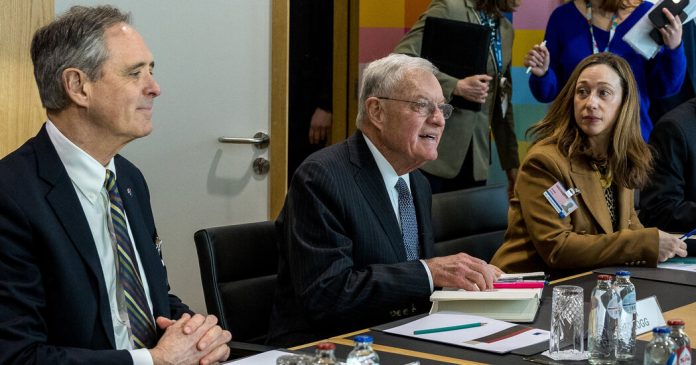
President Volodymyr Zelensky of Ukraine was set to meet with President Trump’s special envoy to Ukraine and Russia in Kyiv on Thursday — a day after a public feud between the Ukrainian and American leaders threatened to derail diplomatic efforts toward peace talks.

The meeting with the envoy, Keith Kellogg, a retired U.S. general and longtime adviser to Mr. Trump on security matters, was to discuss paths to ending the war that would safeguard Ukraine’s interests. But whether Mr. Kellogg can persuade Mr. Trump to renew ties with the Ukrainian leader is unclear.

On Wednesday, Mr. Trump labeled Mr. Zelensky a “dictator,” and the Ukrainian president accused him of echoing Russian propaganda. And there are concerns in Kyiv that Mr. Kellogg has been sidelined from the Trump administration’s negotiating team, since he was not part of the U.S. delegation that met with Russian officials this week to initiate peace talks.

Ukraine is wary of straining ties with Washington, its biggest ally, however, and Kyiv has suggested that the meeting will aim to stop the feud from escalating into an out-of-control dispute. “It is crucial for us that the meeting and our overall cooperation with America be constructive,” Mr. Zelensky said in his nightly address on Wednesday.

Mr. Kellogg has said that the United States is conducting separate discussions on a potential peace deal with Russia and with Ukraine and that he is leading the U.S.-Ukraine track and Steve Witkoff, Mr. Trump’s Middle East envoy, is in charge of the U.S.-Russia track. The two envoys will then return to Washington to compare notes and determine the next steps, Mr. Kellogg added.

Mr. Kellogg arrived in Kyiv on Wednesday morning for a three-day visit. Speaking from the city’s railway station upon arrival, he said that his mission would be to “sit and listen” to Ukraine’s concerns, and he added that he understood Ukraine’s “need for security guarantees” in any postwar settlement.

Later that day, he met with a series of top Ukrainian officials, including Gen. Oleksandr Syrsky, the head of the Ukrainian army; Gen. Kyrylo Budanov, the head of Ukraine’s military intelligence agency; and Andriy Yermak, the head of Mr. Zelensky’s office. The timing of his meeting with the Ukrainian president on Thursday was not immediately clear.

Beyond discussing a possible path to a peace deal, Mr. Kellogg was expected to address a potential agreement that would grant the United States access to Ukrainian natural resources as compensation for past aid and, possibly, as a guarantee for future assistance. Mr. Trump has insisted that he wants payback for the money that Washington has invested in Ukraine’s defense.

Scott Bessent, the U.S. Treasury secretary, presented Mr. Zelensky with a draft of the agreement last week. But Mr. Zelensky rejected the proposal — an extraordinary demand to grant the United States a 50 percent interest in Ukraine’s natural resources like minerals, oil and gas — because it did not tie resource access to security guarantees for Kyiv.

Mr. Trump has demanded $500 billion of Ukrainian critical minerals, a request that Mr. Zelensky dismissed as “not serious” during a news conference on Wednesday. But Mr. Zelensky said that Ukraine was still open to striking a deal to trade some of its resources for security guarantees.

Mr. Trump expressed frustration with Mr. Zelensky’s refusal to sign the deal, telling reporters on Air Force One on Wednesday night that Mr. Bessent had been “treated rather rudely.” Mr. Trump insisted that he would resurrect the deal with Ukraine’s leader, “or things are going to not make him too happy.”

In some ways, Mr. Kellogg could be an ally to Kyiv. He has adopted a more aggressive stance toward Russia than Mr. Trump and some of his advisers, proposing that Washington could increase sanctions to push Russia toward a peace deal and favorably viewing the Biden administration’s approval for Ukraine to strike inside Russia with long-range missiles.

Mr. Kellogg’s three-day visit to Ukraine is unusually long for an American official. Since the war began nearly three years ago, U.S. officials have typically limited their trips to a single day for security reasons.

Mr. Zelensky said on Wednesday that he hoped Mr. Kellogg could talk to civilians and service members to grasp the reality of the war, including through a possible visit to the front line.

“It’s important to feel the atmosphere on the ground,” Mr. Zelensky said.

On Mr. Kellogg’s first night in Ukraine, air defense systems worked to repel a large Russian assault on energy infrastructure. The booms of antiaircraft missiles echoed across central Kyiv as the air alert blared for more than seven hours.

Souleymane Cissé, Celebrated Malian Filmmaker, Dies at 84

0

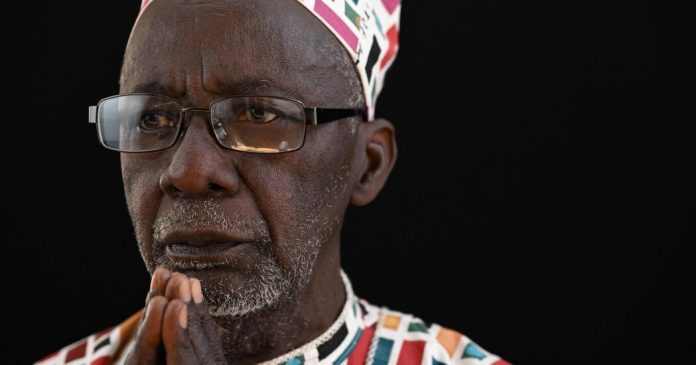
Souleymane Cissé, an award-winning writer and director who became the first Black African filmmaker to win the Jury Prize at the Cannes Film Festival, died on Wednesday in Bamako, Mali. He was 84.

His death was confirmed by François Margolin, a French film producer and a close friend of Mr. Cissé’s for the last three decades.

Mr. Cissé had just appeared at a news conference on Wednesday morning to present two prizes ahead of the Pan-African Film and Television Festival of Ouagadougou, known as Fespaco, where he had been set to head the jury.

After the news conference — where he was “talking and joking” — Mr. Cissé went to take a nap and didn’t wake up, Mr. Margolin said.

Mr. Cissé was catapulted to worldwide fame with the release in 1987 of “Yeelen” (“Light” in his native Bambara). The film won the jury prize at Cannes and was nominated as the best foreign film in the 1989 Spirit Awards. The director Martin Scorsese called the film “one of the great revelatory experiences of my moviegoing life.”

Mr. Cissé had been energetic until the end of his life, Mr. Margolin said, working and traveling around the world.

“He was never an old man,” said Mr. Margolin, who said he last saw his friend about six months ago.

Mr. Cissé directed his first feature-length movie, “Den Muso,” (“The Young Girl”) in 1975. The movie, in Bambara, is about a mute girl who becomes pregnant after being raped and is subsequently shunned by her family.

Mr. Cissé “pulled no punches with his debut feature,” the Museum of Modern Art said in 2022, when it hosted a viewing of the film as part of its annual International Festival of Film Preservation. The Malian authorities censored the film, and Mr. Cissé was briefly imprisoned on what MoMA described as “trumped-up charges.”

But it was “Yeelen,” Mr. Cissé’s fourth feature, that cemented his position as a top filmmaker. The movie is about a young man with magical powers who travels to his uncle with the request to fight his sorcerer father. It “recreates the pre-modern world of the Bambara culture, where the only hint of the industrial age is the presence of a blacksmith,” The Times wrote in 1987.

Mr. Scorsese has said the film helped inspire him to start the World Cinema Project, a nonprofit that restores neglected films around the world.

“Souleymane’s work has had a deep and lasting effect on me,” Mr. Scorsese wrote in 2023.

Souleymane Cissé was born on April 21, 1940, in Bamako, Mali’s capital. He spent his high school years in Dakar, Senegal, before going to the Russian State University of Cinematography in Moscow on a scholarship, according to the Cannes Film Festival.

Mr. Cissé’s survivors include his daughters Fatou, a filmmaker who worked closely with her father, and Mariam.

Mr. Cissé’s most recent credit was the 2015 film “O Ka” (“Our House”), his fifth to debut at Cannes. The movie tells the story of how police officers forcibly removed Mr. Cissé’s four sisters from their childhood home in 2008.

In 2023, Cannes honored Mr. Cissé again, this time with the Carrosse d’Or — the Golden Coach Award — a prize given by the Society of French Directors. Mr. Cissé became the second African filmmaker to win that prize after Ousmane Sembène, a Senegalese director, who won the prize at the 2005 festival.

“If the profession recognizes the films you have made,” Mr. Cissé told a French radio broadcaster in 2023. “I think it’s an exceptional reward.”

In that interview, he also expressed optimism for the future of African filmmaking, saying that he did not think it would take 15 more years for another director from the continent to win the Golden Coach Award.

He also emphasized the importance of African filmmaking. “Africa cannot be transported to France or Europe or the United States,” he said. “Africa is transported through images.”

Luis Rubiales Found Guilty of Sexual Assault for Kissing Jennifer Hermoso

0

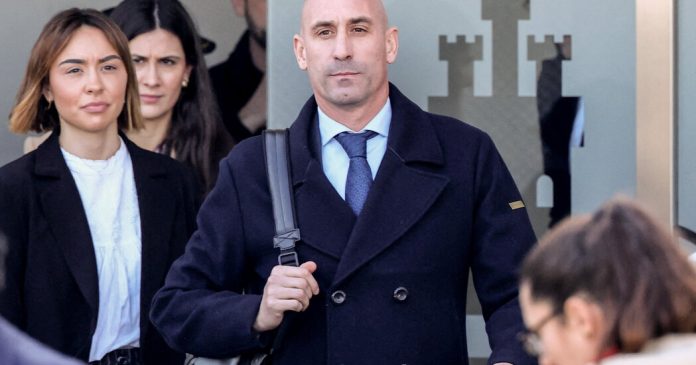
Luis Rubiales, the former head of Spain’s soccer federation, was convicted on Thursday of sexual assault for forcibly kissing a member of the women’s national team on the lips after the team won the 2023 Women’s World Cup.

Mr. Rubiales’s kiss of the player, Jennifer Hermoso, set off a national scandal, deepened debates about longstanding sexism in Spanish soccer and became a watershed moment in Spain’s #MeToo movement.

A Spanish court on Thursday also fined Mr. Rubiales 10,800 euros, about $11,270, but he was not sentenced to prison. It cleared him of a separate charge of coercion.

Ms. Hermoso said that the kiss was not consensual, which Mr. Rubiales disputed. Speaking in a courtroom near Madrid earlier this month, he said, “You don’t win a World Cup every day,” and he added that he had kissed other players in celebratory moments.

This is a developing story. Check back for updates.

Hamas Hands Bodies of 4 Hostages Back to Israel

0

Hamas handed over on Thursday what it said were the remains of four Israeli hostages abducted during the Oct. 7, 2023, attack on southern Israel, including a woman and her two young children whom Israelis saw as symbols of the viciousness of the Hamas assault.

Crowds of Palestinians gathered near the southern Gaza city of Khan Younis to watch the theatrical handoff staged by Hamas: four coffins were placed on a stage with a banner featuring a cartoonish, vampiric picture of Benjamin Netanyahu, the Israeli prime minister. Triumphant music thumped in the background.

Miles away, Israelis watched the scene unfold in horror and anguish, a sharp contrast to the catharsis evoked by the recent releases of hostages who had survived their ordeal. Israel’s leaders had vowed to topple Hamas and bring home the roughly 250 hostages the militant group and its allies abducted during the 2023 attack.

But Mr. Netanyahu has also been criticized by many Israelis for not agreeing to a cease-fire sooner that might have saved some of the captives who died in Gaza. Hamas’s shows of force during the exchanges over the past few weeks have also revealed that the group is very much still in power.

Israel and Hamas are now in the final weeks of a 42-day cease-fire that began in late January. As part of the truce, Hamas agreed to turn over 25 living Israeli hostages and the bodies of eight others in exchange for more than 1,500 Palestinian prisoners held by Israel.

In exchange for the bodies, Israel is expected to free women and minors from Gaza who were detained during the war, mostly without formal charges.

Two Israeli officials said the detainees were slated to be freed on Saturday, in part to allow time for Israel to conduct forensic testing and identify the bodies. They spoke on the condition of anonymity because they were not authorized to speak publicly.

On Thursday, as rain trickled down in Gaza, officials with the International Committee of the Red Cross — which has served as the go-between during the exchanges — placed the four coffins in white vehicles. Israel later confirmed they had brought the boxes to Israeli forces.

Hamas identified the four as Shiri Bibas, 32 at the time of her abduction, her redheaded young children Ariel, 4, and Kfir, 9 months old when they were captured; and Oded Lifshitz, 83 when he was taken hostage. All four were abducted during Hamas’s Oct. 7 surprise attack — the deadliest day in Israeli history — in which roughly 1,200 people were killed.

Israel’s relentless campaign against Hamas in Gaza quickly followed, killing tens of thousands of Palestinians and leaving much of the enclave in ruins. Hamas has said the four hostages were also killed in Israeli airstrikes, which Israeli officials have yet to confirm.

Isaac Herzog, the Israeli president, said “there are no words” for the agony roiling the Israeli public.

“Our hearts — the hearts of an entire nation — lie in tatters,” Mr. Herzog wrote on social media. “On behalf of the State of Israel, I bow my head and ask for forgiveness. Forgiveness for not protecting you on that terrible day. Forgiveness for not bringing you home safely.”

The captives were kidnapped by Palestinian militants from Nir Oz, one of the hardest-hit Israeli communities during the Hamas-led attack. Roughly a quarter of the village’s 400-odd residents were either killed or taken hostage during the assault.

Among the abducted were Ms. Bibas, her husband, Yarden Bibas, and their children, Ariel and Kfir. In footage from the scene that is now seared into Israel’s national memory, a terrified Ms. Bibas — covered with a blanket — could be seen clutching the two children to her chest.

In November 2023, Hamas published a statement announcing the deaths of Ms. Bibas and the two children. The group also published a propaganda video featuring a sobbing Mr. Bibas responding to the news. Human rights groups have said such videos amount to a war crime.

Mr. Lifshitz, a retired journalist and peace activist, was taken alongside his wife, Yocheved Lifshitz. Hamas later freed her for what it said were “humanitarian reasons” but declined to release her husband. Before the war, Mr. Lifshitz had volunteered to drive Gazans seeking medical treatment in Israel to hospitals.

Both Israelis and Palestinians have seen emotional homecomings in recent weeks. Israeli hostages have reunited with their families after many months in Hamas’s warren of underground tunnels. Palestinian prisoners — some convicted of militancy, others detained without charge — have embraced loved ones outside of Israeli prisons.

On Saturday, Hamas is expected to free the last six living hostages in the first phase of the cease-fire with Israel in exchange for Palestinian prisoners, including some serving life sentences for attacks against Israelis. The remains of four more hostages will be released the next weekend.

But the future of the truce after its first stage — which is set to expire in early March — is still shrouded in uncertainty.

Israel and Hamas have not agreed on terms to extend the agreement into a new phase that would conclusively end the war, free the remaining living hostages, and see a full withdrawal of Israeli forces. This week, the Qatari government — which is brokering the talks alongside Egypt and the United States — said negotiations on the matter had yet to formally begin.

President Trump has pressured both sides to clinch such a deal. But Israel has refused to countenance any Hamas control in Gaza going forward, while Hamas has shown little appetite for disbanding its battalions of armed fighters or sending its Gaza leaders into exile.

Trump fires federal workers protecting America’s food system : NPR

0

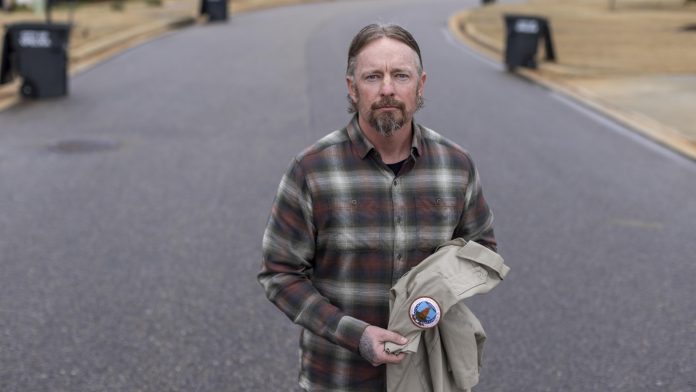
Derek Copeland, who was recently fired from the U.S. Department of Agriculture, holds a USDA work shirt near his residence in Opelika, Alabama. The Air Force veteran had worked as a dog trainer for the USDA.

Alyssa Pointer for NPR


hide caption

toggle caption

Alyssa Pointer for NPR

Derek Copeland was 11 days away from hitting his one-year mark with the U.S. Department of Agriculture when he received his termination letter on Feb. 14.

“You have not demonstrated that your further employment at the Agency would be in the public interest,” the notice said.

Copeland was shocked. His performance appraisal stated that he was “fully successful” in performing the critical functions of his job as a training specialist at the National Detector Dog Training Center in Newnan, Ga.

Moreover, while he’d been at the USDA less than a year, he’d spent his career working with dogs. Copeland had recently retired from two decades of service in the Air Force, most of that time in canine units, running kennels and training dogs to sniff out narcotics and explosives, among other tasks.

In this photo, Derek Copeland is kneeling on the ground with a military working dog next to him. Copeland is wearing a military uniform.

Derek Copeland served in the Air Force for 20 years, spending most of that time running kennels and training dogs.

Derek Copeland


hide caption

toggle caption

Derek Copeland

In Georgia, his job was to train dogs and their handlers to find agricultural products that aren’t supposed to come into the U.S., a critical layer of protection for the U.S. food system.

“I gave blood, sweat and tears to this country for 20 years to continue service to the federal government, doing what I was trained to do by them,” he says. “I kind of feel like I was just thrown out like a piece of trash.”

Copeland is part of a slew of federal employees who’ve been fired in recent days. Now, many are vowing to fight back, and attorneys exploring legal action say they may have a case.

A mass firing of probationary employees

Since last week, the Trump administration has fired more than 10,000 federal employees, including at the National Institutes of Health, the Small Business Administration, the Department of Energy and elsewhere. Still more are getting termination letters this week.

It’s part of President Trump’s broader plan, executed in large part by his billionaire adviser, Elon Musk, to dramatically downsize the federal workforce from its current 2.3 million employees, eliminate waste and save American taxpayers money.

A majority of those fired were still considered probationary, a status that lasts one to three years, depending on the position. Federal employees gain civil service job protections only once their probationary period is up.

Already, the Alden Law Group and Democracy Forward, a nonprofit organization that’s a frequent foil of the Trump administration, have filed a classwide complaint with the Office of Special Counsel, asking it to intervene in the mass firings of probationary employees.

Attorneys elsewhere say the workers may have other pathways to contest their dismissals, based on the language in the termination letters.

“The suggestion that somehow their skills or their abilities or knowledge is not a fit, that’s probably defamatory — and definitely if there’s a statement that their performance was inadequate,” says David Branch, an employment attorney in Washington, D.C., who has sued federal agencies on behalf of federal workers for years.

“If you can prove that this statement is false,” he says, “you probably have a claim for infringement upon your good name and reputation under the Fifth Amendment.”

Research to secure America’s food supply

In this photo, Michelle Kirchner is standing outdoors on sloped ground that's blanketed in snow. Leafless trees stand in the background. Kirchner has long brown hair and is wearing a brown corduroy jacket.

Michelle Kirchner, photographed in Logan, Utah, was just fired from the USDA’s Agricultural Research Service.

Niki Chan Wylie for NPR


hide caption

toggle caption

Niki Chan Wylie for NPR

In Logan, Utah, Michelle Kirchner’s work was also directly tied to American food security.

A postdoctoral researcher with the USDA’s Agricultural Research Service, Kirchner had been hired last spring to run a project helping alfalfa growers in Western states control pests while protecting pollinating bees. Alfalfa crops support the U.S. dairy industry.

Kirchner spent last summer in eastern Washington state, where temperatures at times topped 100 degrees.

“There’s no shade because it’s just alfalfa as far as the eye can see, and the sun just beats down on you all day, and they’re just bugs everywhere,” she says.

And she loved it.

Kirchner spent her days sampling fields for pests and pollinators and talking with growers about their operations and their priorities for research. Her work was recognized with a performance award.

Then in January, she and a colleague won a $25,000 grant through the Alfalfa Pollinator Research Initiative to further their study into protecting pollinators. Their proposal was chosen by the growers themselves.

“They were very excited about it. I had many of them tell me that personally,” she says.

Over 10 months, Kirchner has submitted three peer-reviewed manuscripts for publication. Now, she fears the research is “dead in the water.”

“My supervisor looked at me and said, ‘We won’t be able to continue this without you,'” she says.

The USDA’s Bee Biology and Systematics Laboratory was founded in the late 1940s. Now, key members of the lab’s research team are gone. Kirchner is struggling to make sense of the dismantling.

“The Agricultural Research Service part of the USDA is usually pretty buffered from a lot of the more partisan political actions, just because it’s people’s food,” she says. “You shouldn’t mess with people’s food.”

Not a “surgical approach”

Copeland is equally confounded by the termination of probationary employees at the dog training center in Georgia.

“It makes absolutely zero sense,” he says.

Copeland says the center had been looking to hire more training specialists to fulfill a growing demand from U.S. Customs and Border Protection for dogs and handlers.

The law enforcement agency uses dogs at airport terminals and other ports of entry, screening bags, passengers, vehicles and cargo warehouses for products that pose a danger to America’s crops.

“There’s so, so many crazy different diseases that can really mess up our food system,” Copeland says.

In this photo, Derek Copeland's hand is holding a challenge coin he received from the Department of Defense working-dog school. The gold-colored coin has a paw print in the center and a black border that says in gold letters on it: "Presented by the commander for excellence."

Derek Copeland shows a challenge coin he received from the Department of Defense working-dog school.

Alyssa Pointer for NPR


hide caption

toggle caption

Alyssa Pointer for NPR

He’s incensed at talk he has heard on television that the Trump administration is taking a “surgical approach” to firings while also weeding out lazy federal employees who don’t want to return to the office.

“We were in an office actually doing the work that secures and protects this nation’s borders, which supposedly is a big priority,” says Copeland. “It’s all bull****.”

Probationary employees are often “the most industrious”

In his more than three decades practicing employment law, Branch has never seen a purge like what has unfolded over the past week. The mass firing of newer employees doesn’t make much sense to him.

“Probationary employees are usually … the most industrious employees there,” he says. “These folks know that they have a year to prove themselves, some folks two years, and if they don’t, they can be terminated for any reason.”

The challenge, he says, will be convincing a federal judge that the termination letters are in fact defamatory.

Branch is urging federal employees who believe they were illegally fired to collect any feedback or comments they received that refute the government’s claim that their performance was somehow poor or inadequate.

“They can’t tarnish your reputation. They can’t infringe upon your liberty interest. You have a liberty interest in your name, in your reputation,” he says. “No person shall be deprived of life, liberty and property without due process of law.”

Have information you want to share about ongoing changes across the federal government? NPR’s Andrea Hsu can be contacted through encrypted communications on Signal at andreahsu.08.

Australia, New Zealand Alarmed by Chinese Warships in Tasman Sea

0

A group of Chinese navy vessels, including a formidable warship, sailing legally in the Tasman Sea have raised alarm in Australia and New Zealand because they were in unusually southern waters and on an undeclared mission.

Australian officials said Thursday that they were closely monitoring the ships — a cruiser, a frigate and a supply vessel. They have been tracking them since last week, when they were detected off Australia’s northeast coast.

This week, the three ships were traveling within about 150 nautical miles of Sydney, outside Australia’s territorial waters but within its exclusive economic zone, according to an Australian government official speaking on condition of anonymity. Their presence near Sydney was first reported by The Financial Times.

China’s military has not publicly commented on the naval vessels, and the Chinese Embassy in Australia did not respond to a request for comment.

Richard Marles, Australia’s defense minister and deputy prime minister, said that the ships were operating in accordance with international law, and that the Australian military was closely observing their activities from the sea and from the air. He said in a television interview that the presence of the Chinese navy in the area was “not unprecedented,” but “unusual.”

“We are keeping close watch on them, and we will be making sure that we watch every move,” he said.

Chinese warships docked at Sydney Harbor in 2019, in what the prime minister at the time called a “reciprocal visit” after Australian navy ships had visited Chinese ports. This time, Australian officials said they were in the dark about where the ships were headed and what their objective was.

But Australia had good reason to be concerned by the proximity of the Chinese warships to its coastline, according to Bec Strating, an expert on maritime disputes, given China’s recent history of exerting force in disputed waters like the South China Sea, and flouting maritime rules

“What is the Chinese navy doing this far south?” said Ms. Strating, who is a professor of international relations at La Trobe University. “That would be the thing that is causing anxiety. Is this intelligence gathering, is this really just signaling to Australia that the Chinese are also able to have naval presence in these areas?”

One of the ships is the Renhai-class cruiser Zunyi, which the U.S. Naval Institute has described as “among the most formidable warships afloat.”

Collin Koh, a senior fellow at the Nanyang Technological University in Singapore, said the fact that one of the Chinese navy’s newest and most powerful warships was involved made it clear the trip was designed to send a message about China’s military, the People’s Liberation Army.

“It’s meant to demonstrate naval power” he said. “It’s meant to signal to Australia and to the U.S., the P.L.A. navy is not going to be constrained in movements and actions.”

New Zealand’s defense minister, Judith Collins, said on Thursday that its military was jointly monitoring the ships’ movements with Australia. She said she was concerned by the types of ships involved and by the lack of communication from China.

“I’m sorry to say things are more tense” since China launched an intercontinental ballistic missile in September that landed in the Pacific Ocean, Ms. Collins told reporters in Wellington, the capital, according to the New Zealand Herald.

Last week, an Australian maritime patrol plane had a close encounter with a Chinese fighter jet over the South China Sea. The Australian Defense Forces accused the Chinese of “unsafe and unprofessional” conduct, while a spokesman for China’s foreign ministry accused Australia of provocation and intruding into Chinese territory.

A gold-framed Trump mug shot is hanging just outside of the Oval Office : NPR

0

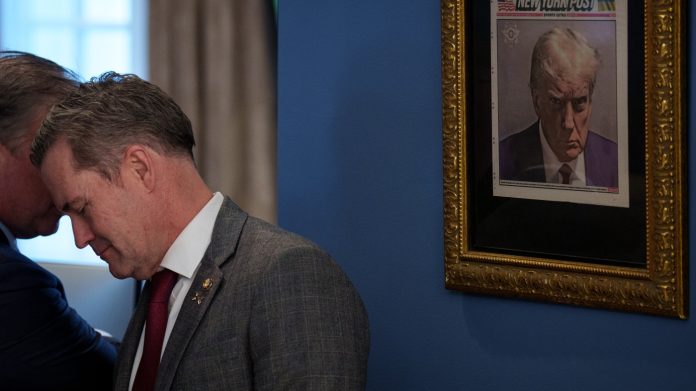
A copy of Donald Trump’s mug shot on the cover of the New York Post is framed in an office just outside the Oval Office.

Andrew Harnik/Getty Images


hide caption

toggle caption

Andrew Harnik/Getty Images

Right outside the Oval Office hangs a framed photo of President Trump’s mug shot, as featured on the cover of a New York tabloid.

The image, which shows Trump scowling to the camera for his booking shot at the Fulton County Jail in Atlanta, has become a symbol. That booking photo was taken for a Georgia case related to his efforts to overturn the state’s 2020 presidential election result. Experts say many of Trump’s supporters see the dozens of felony convictions against the president in a separate case in New York as part of an establishment ploy to suppress their discontent.

“When Trump’s mug shot was released in August 2023, he and his supporters immediately embraced it, and it became a really common feature on Trump-themed merchandise and in Trump favorable memes,” said Cara Finnegan, a professor of communication at the University of Illinois at Urbana-Champaign.

“The reasons he embraced it, I think, are because he wanted to kind of flout the legal fight against him, which he believed was a conspiracy designed to take him down,” Finnegan said. “And so that kind of approach, whether it’s based on fact or law, really animates the base.”

In Georgia, where the mug shot was taken, Trump still faces charges related to efforts to overturn the state’s 2020 presidential election outcome.

He was ultimately convicted, separately, in New York on 34 felony counts of falsified business records tied to a $130,000 hush money payment to adult film star Stormy Daniels to influence the outcome of the 2016 election. Trump received an unconditional discharge for his criminal conviction in that case, meaning he will not face fines, prison or any other penalties.

The New York state case was the only one of Trump’s criminal cases to go to trial. Federal prosecutors dropped two other criminal cases against Trump after he won the 2024 election.

Trump is the first president — sitting or otherwise — to be convicted of criminal charges. His proud display of his mug shot is just the latest example of his disregard for political norms.

“The hanging of his own mug shot framed outside the office, I think, needs to be understood as Trump thumbing his nose at convention,” Finnegan said.

“It’s really important to note that he’s sending political signals by doing this. And he’s making sure that people understand that he’s not going to be constrained by legal convention in this presidency,” Finnegan said, pointing to Trump’s sweeping and legally complex executive orders.

Trump isn’t the only politician to capitalize on scandal. Former Texas Gov. Rick Perry also merchandised pictures of his mug shot after he was accused of abusing his position as governor.

But the growing willingness to embrace controversy does not bode well for the health of democracy, according to Brandon Rottinghaus, a political science professor at the University of Houston.

“Scandals don’t have the same sanction that they used to have,” Rottinghaus said. “The loss of political scandals means that there’s a loss of accountability. Scandals are like the canary in the coal mine. If scandals don’t matter, then we lose a triggering mechanism that tells us there’s a flaw in the system.”