Friday, November 13, 2026
Home Blog Page 222

Vance Scolds Europe on Democracy but Offers No Clarity on Trump’s Plan for Ukraine: Live Updates

0

Olena Matvienko knows she doesn’t have much to go home to.

The Russians captured her city, Mariupol, shortly after invading Ukraine. A Russian missile destroyed her old apartment building. Her daughter and her granddaughter were killed in the city. Still, Ms. Matvienko, 66, would like to return.

But after comments by President Trump and his defense secretary this week signaled that Ukraine would have to give up territory as part of a peace deal, she is worried that Mariupol will become part of Russia. And she is horrified.

“If a part of America were taken from them, I would like to see how they would react,” said Ms. Matvienko, one of about 4.6 million Ukrainians who have fled their homes in the occupied territories and Crimea to live elsewhere in Ukraine. “It’s like ripping off a man’s arm or leg and then saying, ‘Let it be as it is.’”

Ukrainians who fled Russian-occupied areas being transported to a center for displaced people in April.Credit…Mauricio Lima for The New York Times

Mr. Trump has promised to bring a quick end to the war, which was set off by Russia’s full-scale invasion of its neighbor three years ago. This week, he and his defense secretary, Pete Hegseth, publicly handed Moscow two big trophies before peace negotiations even start, saying that Russia could keep at least some of the Ukrainian territory it has captured and that Ukraine won’t be joining NATO anytime soon.

Russia has captured about 20 percent of Ukraine, including Crimea, which it seized in 2014. If the deal outlined by U.S. officials this week goes through, many people who have lost their homes in the war will have little chance, in all likelihood, of returning.

Going forward, there would in effect be two Ukraines: The one controlled by Kyiv, and a battered Russian satellite to the east, with many Ukrainian families divided between them.

“This chain of Trump’s statements is a chain of humiliation for people like me, people who believed that there was law and justice in the world,” said Anna Murlykina, a 50-year-old journalist who fled to Kyiv from Mariupol in 2022.

“When you live in a world that is crumbling under your feet,” she said, “the only thing that helps you survive is to believe in guidelines, in civilized democratic countries that uphold values. When countries like the United States cease to be pillars, there is nothing to hope for.”

A destroyed Ukrainian recruiting office in the city of Zaporizhzhia in March. Credit…David Guttenfelder for The New York Times

In explaining the American position, Defense Secretary Pete Hegseth said it was “unrealistic” to insist on a return to Ukraine’s old borders. That, he said, “will only prolong the war and cause more suffering.”

It is difficult to say how many people remain in the occupied territories. By one estimate, there were some six million people living there as of last June, among them 1.5 million children.

Some villages have been bombed so heavily that they now resemble moonscapes. People complain about the lack of sewers, water, electricity and other public services, while schools aim to indoctrinate Ukrainian children with Russian ideology.

One woman in Berdiansk, a seaport captured by Russia in 2022, said the city was slowly recovering, though few original residents remained. She said that she had not supported the Russian invasion, and that like others who stayed, she was just trying to live her life.

The woman, who spoke on the condition of anonymity because she is scared of retaliation, said it angered her that some people in Ukraine called those who stayed traitors. “We did not betray anyone,” she said. “We are living on our own land, in our own homes, and simply trying to survive in the circumstances we found ourselves in.”

Liubov, 64, who asked that only her first name be used because she fears the Russians, fled Melitopol in eastern Ukraine in 2022, moving to Zaporizhzhia — which is now near the front lines. She said she was worried about her son, who is fighting for the Ukrainian army.

Medics treating Ukrainian soldiers wounded at the front lines at a stabilization point in Donetsk oblast in August.Credit…Tyler Hicks/The New York Times

“It’s naïve, I know, but I was really hoping for Trump,” Liubov said. “Everyone I knew said he was so unpredictable, maybe he was the man who would stop the war.”

Now she, like other eastern Ukrainians, wonders what the cost of peace might be for them.

“I used to fantasize about how I would return home to Melitopol, cleanse my house of these bastards, because they live there now,” Liubov said. “I’d plant new roses, because no one cares about the garden there, and probably many flowers are gone.”

For some families, the split is more than just geographical.

One 55-year-old woman, for instance, lives in Dnipro, on the side of Ukraine controlled by Kyiv, while two sons live on the other side of the front line. Her younger son, 20, is trapped in the family home in a village in Donetsk. She said she was not speaking to her older son, who has sided with Russia.

He’s not alone. For years, President Vladimir V. Putin has fomented the idea that Ukraine as a country shouldn’t exist, that it belongs with Russia, as it was during the Soviet Union. And in parts of eastern Ukraine, especially near the border, some Ukrainians have supported the idea of joining Russia.

Ukraine’s government has long said that its goal is to restore its borders to where they were before Russia captured Crimea, but in recent months, President Volodymyr Zelensky has shifted his public stance. He now says that Ukraine might have to cede land to Russia temporarily in a peace agreement and then try to regain it later through diplomatic means.

Recent polls show that more Ukrainians, weary of the grinding war, are willing to trade land for peace than ever before; in November, a Gallup poll said more than half of respondents wanted a quick negotiated end to the war.

Under the Biden administration, the United States was Ukraine’s biggest backer. Mr. Trump and his team, however, are skeptical of U.S. involvement in the war.

Without the United States in its corner, it is unclear how Ukraine will be able to keep fighting, or what diplomatic avenues are available to wrest territory back from Russia. If U.S. support stops, Europe and other allies might have to dramatically step up military aid. Already, the country is having difficulty recruiting new soldiers.

Soldiers in Serebryanka Forest, Ukraine, in February.Credit…Tyler Hicks/The New York Times

Many Ukrainians in the occupied territories say they are afraid to speak, especially to family members elsewhere in Ukraine, worried that their phones are being monitored. When they do talk, like the 20-year-old man on the Russian side of the frontline and his mother in Dnipro, they opt for uncontroversial topics, like the forest or the weather.

Russian civilians have already moved into some occupied areas, lured by cheap mortgages and abandoned properties. Some brokers are actively recruiting Russian buyers for waterfront property in places like Mariupol and Crimea.

One woman in Crimea, who spoke anonymously because she feared retribution, said in an interview that she and her neighbors had adapted to Russian institutions. She said she had stayed in Crimea because she wanted to raise her children in her homeland, but there is little hope.

Many people are at an emotional low because of all the uncertainty, she said. “I don’t understand what prospects I or my children have,” she said. “It’s incredibly discouraging.”

Ms. Matvienko, the woman whose daughter and granddaughter were killed in Mariupol, gained some renown in Ukraine after fleeing that city by going back into Russian-controlled territory to reclaim her 10-year-old grandson, who had been wounded in the strike that killed his mother.

Her friends say that people have moved to Mariupol from the Russian republics, and tell her horror stories about life there now.

“They can come into any house, throw the owner out and take it,” Ms. Matvienko said. “They can seize your business, your car.”

“There is absolute lawlessness,” she added, “no one to complain to, no one to restore order.”

One friend, whom she used to chat with frequently on a social-media channel, has gone silent, she said. No one knows where she is.

Oleksandra Mykolyshyn and Dzvinka Pinchuk contributed reporting from Kyiv, and Yurii Shyvala from Lviv, Ukraine.

Trump’s Funding Freeze Raises a New Question: Is the Government’s Word Good?

0

As the Trump administration continues to withhold billions of dollars for climate and clean energy spending — despite two federal judges ordering the money released — concerns are growing that the United States government could skip out on its legal commitments.

Typically, when the federal government spends money through a grant or a loan program approved by Congress, it signs a legally binding agreement, known as an obligation, to deliver the money. Companies, states and other recipients often spend millions of dollars to buy equipment, hire workers, build facilities and more, fully expecting that the federal government will make good on its promise to reimburse the funds.

That expectation has been upended by the new administration.

Following an order by President Trump, federal agencies, including the Energy Department, Environmental Protection Agency and the Agriculture Department, have paused funding for a wide range of obligated grants related to the 2022 Inflation Reduction Act and 2021 bipartisan infrastructure law, sweeping laws that provided billions for climate and energy programs.

In just a few weeks, the consequences have begun to be felt nationwide. School districts that planned to use promised federal dollars to buy electric school buses have seen their accounts frozen. Farmers and store owners that spent hundreds of thousands of dollars of their own money to replace old refrigeration systems or install solar panels are finding their requests for reimbursements delayed.

Two federal judges have explicitly ordered the Trump administration to end its freeze and let the money flow again. On Monday, one of those judges, Judge John J. McConnell Jr. in Rhode Island federal court, said the White House was defying his order by withholding funds.

Jessica Tillipman, associate dean for government procurement law at the George Washington University Law School, said the administration’s actions had jeopardized the integrity of federal contracting.

“They’ve taken a process that is longstanding, stable and reliable and turned the government into an unreliable business partner,” Ms. Tillipman said. “Who wants to do business with an individual or entity that doesn’t pay its bills, that doesn’t pay for work already performed and, in some instances, completely ceases communications?”

Lawsuits filed in recent days have challenged the Trump administration’s actions, with companies arguing that the government freeze has hurt their businesses.

On Monday, the sustainable development company Chemonics International sued the federal government alongside other plaintiffs for freezing its work with the U.S. Agency for International Development. The company said in a court filing that the agency owed roughly $103.6 million in outstanding invoices for work performed last year. In a statement, Chemonics said it had been forced to furlough more than 600 staffers in the United States and reduce the hours of 300 employees.

The White House did not respond to a request for comment.

While some agencies have said that the pause is temporary and that they are reviewing funds approved by the Biden administration to make sure they comply with the law, others have gone further.

On Wednesday, Lee Zeldin, the E.P.A. administrator, said in a video posted on X that $20 billion in agency funding meant to help reduce greenhouse gas emissions in low-income communities were a “rush job with reduced oversight” under the Biden administration. Mr. Zeldin suggested he would try to claw back money that had already gone out the door.

Mr. Zeldin appeared to be referring to the Greenhouse Gas Reduction Fund, a program established by Congress in 2022. Under the program, the Biden administration had awarded $20 billion to eight organizations and deposited the money in Citibank accounts, with legal limits on how it could be used. In the video, Mr. Zeldin said, “The financial agent agreement with the bank needs to be instantly terminated.”

“The days of irresponsibly shoveling boatloads of cash to far-left activist groups in the name of environmental justice and climate equity are over,” Mr. Zeldin said.

Zealan Hoover, who directed the implementation of Inflation Reduction Act programs at the E.P.A. under the Biden administration, said that the arrangement with Citi had been thoroughly vetted by the agency’s inspector general at the time, and that the federal government has been using private banks as financial agents since the 1800s.

If either E.P.A. or Citi cuts off access to the funds, that could trigger further lawsuits. Some of the program’s recipients have already made their own agreements to lend money to other organizations for clean energy and energy efficiency projects.

Mr. Hoover said that the fact that agencies were defying courts on the spending freeze — and threatening to claw back obligated funding — was a “major area of concern.”

“It really calls into question the full faith and credit of the U.S. government as a counterparty to financial agreements,” he said.

Aram Gavoor, a law professor at George Washington University, said many of the questions being argued in the courts aren’t clear-cut.

“There isn’t an immediate Supreme Court case or series of circuit cases that are recent that make it very clear what the outcome of litigation will be,” he said, adding that the administration’s actions and resulting lawsuits had “injected a strong degree of regulatory uncertainty” into federal contracting.

At the Energy Department, officials have ordered an internal review of potentially billions of dollars worth of climate and infrastructure spending that was awarded by the Biden administration after the Nov. 5 presidential election, according to a memo sent to agency staff.

The memo, dated Feb. 7, says that all Energy Department actions during the “transition period” before President Trump’s inauguration would be reviewed, and that financial transactions that used funds from the Inflation Reduction Act or bipartisan infrastructure law would have to be “reviewed and approved” by senior political appointees.

Christopher S. Johns, the agency’s deputy chief financial officer, wrote in the memo that this review process followed recent district court orders on federal funding. But the document, which was first reported by E&E News, did not say what would happen if political appointees reviewed certain transactions and did not approve of them.

It is not uncommon for a new administration to review existing programs, experts said. But it is unusual for agencies to halt a wide swath of obligated grants.

Republicans criticized those moves at the time. Vivek Ramaswamy called the Rivian loan a “shot across the bow” to Tesla, a rival electric carmaker owned by Elon Musk. In December, three House Republicans sent a letter urging the Energy Department to “cease its campaign to quickly distribute federal funding before the incoming administration takes office.”

Experts said it wouldn’t be easy for a new administration to revoke loans that have been closed. Under the Biden administration, the Energy Department’s loan office closed roughly $60.6 billion in loans and financial guarantees, while another $47 billion were conditional commitments that still need final approval.

Kennedy Nickerson, a former policy adviser to the loan office and now a vice president for energy at Capstone, a research firm, said it would be “legally challenging and time-consuming” for the Trump administration to try to cancel final loan agreements.

Attempts to go after finalized loans could deter companies from doing business with the federal government, former agency officials said. Companies typically spend millions of dollars to go through an exhaustive vetting process by the loan program office.

“If we get to conditional commitment with a loan program recipient, that’s the government’s credibility,” David Turk, the deputy secretary of energy during the Biden administration, said in a statement. “That’s the American people’s credibility on the line to follow through and make sure that we are providing that certainty for investment.”

Mr. Trump’s energy secretary, Chris Wright, has said that he wants to use the hundreds of billions of dollars in remaining loan authority to advance the president’s agenda of affordable, reliable electricity.

In an interview with Bloomberg on Tuesday, Mr. Wright was asked whether he might cancel loans that were already in place. “We will follow the law,” he replied.

At least one project was exempted from the administration’s freeze.

Montana Renewables had secured a $1.67 billion loan guarantee from the Biden administration to expand a plant in Great Falls, Mont., that converted vegetable oils and fats into diesel and jet fuel. Initially, the Trump administration had blocked the first scheduled $782 million payment while it reviewed the loan.

But Senator Steve Daines, Republican of Montana and an ally of President Trump, said in a statement that he had pressed the White House to approve the payment because the project would “provide high-paying jobs, boost our economy and provide efficient biofuel production.”

Energy Department officials didn’t explain why they allowed the Montana Renewables loan to go forward. Montana Renewables also declined to comment.

“The Department of Energy is continuing to conduct a departmentwide review of all funding, including grants and loans, to ensure all activities are consistent with the law and in accordance with President Trump’s executive orders and priorities,” said Andrea Woods, an agency spokeswoman. “As part of this review process, the Department approved the scheduled disbursement of a loan for the expansion of a biofuels facility in Great Falls, Montana.”

Mass layoffs at federal agencies prompt questions about Elon Musk's influence

0

President Trump has given Elon Musk’s DOGE group virtually unfettered access to federal agencies. Meanwhile, mass layoffs at federal agencies this week are prompting questions about Musk’s influence.

Russian Drone Hits Chernobyl Nuclear Radiation Shield, Ukraine Says

0

The structure at Chernobyl that was hit on Friday is a huge arching shelter covering what remains of the crippled reactor. The meltdown spewed radiation into the atmosphere and contaminated an 18-mile zone around the plant that residents were forced to leave.

The protective structure, which resembles an aircraft hangar, was completed in 2016. It covers another structure known as the sarcophagus that was built immediately after the disaster.

The exploding drone breached the outer shield but did not damage the older, interior containment structure, Leontiy Derkach, a radiological engineer at the site, said in a telephone interview.

The explosion sprayed shrapnel into the space between the two structures, damaging both, he said, but did not spread radioactive materials. Emergency crews responded at about 3 a.m., he said, as the fire still burned.

The first people to approach the site were workers with radiation meters, to ascertain if radiation was leaking, he said. “We are not kamikazes to immediately go into the danger zone,” he said.

Air samples determined no radiation was leaking, Mr. Derkach said. Ukrainian military chemists and radiation specialists are still working at the site to gain a fuller picture of the damage. By around noon, he said, crews had not yet entered the outer containment structure for a closer view.

The drone, he said, had hit about 60 yards from where protective plates covered highly radioactive debris from the 1986 accident. Had it hit at that location, he said, the exploding drone could have spread radiation at least inside the outer containment structure.

Emergency crews, Mr. Derkach said, were assessing how to repair the hole. “The Russians caused us great damage,” he said. “The whole world built this shelter and the Russians destroyed it in one second.”

Greenpeace, the conservation group, issued a statement on the strike on the Chernobyl plant, saying it was “a further escalation of the threat to Ukraine’s nuclear power plants and must be condemned and punished.”

Chernobyl was among the first locations targeted in Russia’s invasion of Ukraine in February 2022, as the Russian army captured and occupied the decommissioned plant and used the site as a base for attacks on Kyiv, to the south.

Radiation levels rose for several days, most likely from columns of heavy weaponry stirring dust. During the monthlong occupation of the site, Russian soldiers dug trenches in irradiated soil, and electrical power to a cooling pool for nuclear waste was briefly cut, raising alarms.

The International Atomic Energy Agency said that its staff members at the site of the former nuclear plant had heard the explosion overnight.

The strike on Chernobyl, about two hours north of Ukraine’s capital, Kyiv, and the recent increase in military activity around the Zaporizhzhia nuclear power plant in a Russian-occupied zone “underline persistent nuclear safety risks,” said Rafael Grossi, the agency’s director general.

Ivan Nechepurenko and Maria Varenikova contributed reporting.

DOJ official targeting Jan. 6 investigators worked on those cases himself

0

The No. 2 acting official at the DOJ, Emil Bove, has been shaking up the agency and its past work on the 2021 Capitol riot. But he also has his own history with Jan. 6 cases.

Britain’s Hard-Right Reform U.K. Party Wins Over Some Labour Voters

0

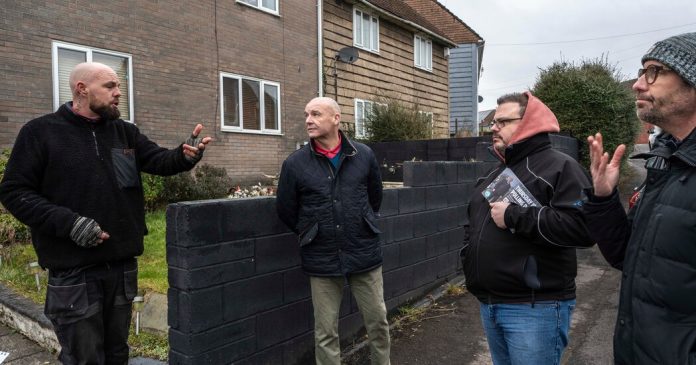
Fewer than 6,000 people live in Trevethin and Penygarn, a gritty, deindustrialized district amid the hills and valleys of South Wales, and not many expected drama when a vote was called to elect a member of the local municipality, one of the lowest tiers of British government.

But as one candidate, Stuart Keyte, a member of the populist anti-immigration party Reform U.K., campaigned outside Trevethin’s small supermarket on Wednesday, a volley of eggs rained down on him from behind a van parked nearby.

Sidestepping quickly, Mr. Keyte, who happens to be a former member of Britain’s elite Parachute Regiment, avoided the worst of the barrage from the unknown assailant, then drew on his military experience. “The closer you get to the target, the more flak you get,” he said as he inspected the egg yolk splattered on his shoes.

He hit his target on Thursday, when he became the first member of Reform U.K., the upstart party led by Nigel Farage, the Brexit campaigner and ally of President Trump, to win an election in Wales.

Turnout was low, as it usually is in municipal elections: just 973 people (less than a quarter of those eligible) voted in the contest for a council seat in Torfaen (pronounced Tor-vai-uhn) municipality, which remains under Labour control and includes Trevethin and Penygarn. Mr. Keyte won 457 votes.

But Reform is riding high in national opinion polls, and Thursday’s victory, and others in municipal elections elsewhere, underscore the threat the party poses to Prime Minister Keir Starmer’s governing Labour Party. In last year’s general election Reform, formerly known as the Brexit Party, secured 14 percent of the national vote and won five parliamentary seats. It also finished second in 89 Labour seats.

Reform’s new strategy is to target regions that are struggling economically, campaigning on local issues and exploiting the frustration of voters who feel failed by the main political parties.

Mr. Keyte, 64, said he had knocked on doors every day for the last two weeks but barely mentioned Mr. Farage — his party’s divisive yet effective leader — or immigration.

“I am sure those issues are very important to the locals, it’s not something I’ve discussed with them,” he said, adding that he talked instead of smashed car windows, litter, dog mess and faulty street lighting.

Council members are the backbone of British politics and are often the people who campaign at street level. Nationwide, Reform holds just 72 such seats as of Friday. (Although the party already had three council members in Torfaen, all had been elected for other parties or were independent before defecting to Mr. Farage’s party.)

But Reform thinks it has momentum, and Wales, which voted in favor of Mr. Farage’s marquee policy of Brexit in 2016, is a crucial battleground for the party.

Reform strategists are eyeing next year’s elections for the Welsh Parliament, or Senedd, under a proportional voting system that is much more favorable to small parties than the one used for British general elections.

With Labour running the British government in Westminster, the Senedd in Cardiff and Torfaen Council, some residents have plenty to complain about.

Outside his home, Christopher Jennings, 70, a retired bus driver and former Labour voter, said he would support Reform, criticizing Mr. Starmer’s decision to limit payments to retirees for heating costs.

“I’ve always had it since I was 65, had it every year and all of a sudden I can’t have it anymore,” he said of the tax-free handout, which will now only be available to the very poorest retirees. He added that the government was somehow still finding money to house asylum seekers in hotels.

Community spirit is strong here but the region was battered by the loss of jobs in traditional industries, a process that is still underway at Port Talbot, a large steel making plant 50 miles away.

“After they shut the pits and the steel works, there is nothing here for us now or for the kids,” Mr. Jennings said.

Paul Jones, 42, who runs a business offering pet services including dog walking, said he favors Reform because he wants lower immigration. “People are starting to change their outlook, especially when it comes to Labour. It’s time for change,” Mr. Jones said as he complained about the difficulty of getting doctor appointments.

The center of the nearby town of Pontypool was “dead, finished,” he added.

Some parts of Pontypool certainly look that way. Several pubs, cafes and businesses were shuttered and foliage sprouted from the roof of an elegant but derelict department store building awaiting redevelopment.

Around the corner in the town hall, Anthony Hunt, the Labour leader of the Torfaen municipal council, said the municipality had invested in schools and was the last line of defense during years of budget cuts under the previous Conservative government.

“We do need to listen,” he said. “My fear is that Reform typify a type of politics that doesn’t seek to solve problems — it seeks to make people angry, and I would ask what their policies are both locally and nationally to make things better.”

The campaigning had raised tensions in the area, he argued. Folk in Trevethin “feel that the circus has come to town a little bit, that people have come in from outside,” and that Reform’s campaigners have been “upping the temperature,” he said. Certainly the contest has been full of incident.

David Thomas, a formerly Labour council member who now represents Reform, was the subject of news articles earlier this week after LBC, a radio station, identified him as “DJ Dowster,” reporting that he had posted songs online with misogynistic and offensive lyrics. The Reform party said they were not his creations and that the lyrics were samples taken from other songs.

At Evermore Tattoo Collective in Trevethin, Robby Taylor, 44, said before the vote that he was undecided on whether to vote at all. “I don’t know what’s right for the area,” he said adding that he loved living there, despite a lack of amenities.

It was the resignation of a Labour council member, Sue Malson, that precipitated Thursday’s election.

At the busy charity shop she runs in Trevethin, she described the community as “like a family.” But she resigned because her work as a council member led to attacks on her home and on the horses she keeps, she said.

Ms. Malson described herself as the most outspoken member of the local Labour Party and said she had clashed with Mr. Thomas in council meetings.

Speaking outside Trevethin’s supermarket, David Nutt, 78, a farmer and former miner, said he was unimpressed by Reform. “They say a lot of things people want to hear,” he said, adding that “Farage, himself, is a very dangerous fellow.”

Still, Mr. Nutt, a longstanding Labour supporter, said the party doesn’t “listen to the voters enough,” and planned to vote for an independent candidate.

He named three pubs that had closed over the years. Then, as he lamented the changes he had seen over six decades, a commotion broke out behind him.

A young man in a gray track suit dashed out of the supermarket, pursued by a shop worker, who was just too late to stop him shoplifting. By the time Mr. Nutt looked around to see what was happening, the figure in gray had disappeared around the corner.

Some federal workers who took ‘Fork’ resignation offer are exempt : NPR

0

Liz Goggin, a licensed clinical social worker with the Veterans Health Administration (VA), accepted the Trump administration’s deferred resignation offer before her agency said her position was exempt.

Justine Kenin/NPR


hide caption

toggle caption

Justine Kenin/NPR

The “Fork in the Road” email arrived in Liz Goggin’s inbox around 11 p.m. on Jan. 28th.

The email blast from the U.S. Office of Personnel Management (OPM) went to nearly all federal employees — some 2.3 million people across the U.S.

The memo presented federal workers with a choice: Offer your resignation by Feb. 6, in exchange for pay and benefits through the end of September. Or remain in your position, with the understanding that you may be laid off.

Goggin is among roughly 75,000 federal employees who agreed to resign, according to OPM. But she is also one of an unknown number of people who have since learned they can’t take the deal, because their positions are exempt.

Even as a federal judge has cleared the way for the Trump administration’s deferred resignation program to go forward, there remains much confusion over who agreed to exactly what — and what they’ll get in return.

For now, Goggin assumes her resignation is off.

“But like, who knows?” she says, “I had regrets about telling my supervisor given the whole thing is kind of unraveling.”

A good offer “in the abstract”

By the time Goggin received the “Fork in the Road” offer, her household was already in upheaval. The Trump administration’s freeze on foreign aid was directly impacting her husband’s position with a nongovernmental organization.

“It became pretty clear that he was very likely to lose his job,” says Goggin, a scary prospect given the couple has two young children and a mortgage.

Still, she wasn’t immediately drawn to the resignation offer.

“My initial reaction, honestly, was kind of like fear,” she says. “If a lot of people take this, what’s going to happen to services — both at my place of work at the VA, but also other agencies that are doing important work?”

Like many federal employees, she was also a bit skeptical of the deal.

But in the days that followed, OPM issued an FAQ clarifying that employees who resigned wouldn’t be expected to work during the “deferred resignation period” and would be allowed to get a second job.

“In the abstract, it did sound like a good offer,” she says. “My husband and I talked about it, and if this offer was legitimate, it seemed like, wow… I could potentially be making double salary for six months, which would give him some time to regroup and find a job he cares about.”

That weekend, she made her decision. She replied to the original email with the word “Resign” and hit send.

The following week, in an effort to be transparent, Goggin emailed her supervisor about her decision.

But a few days later, she got another surprise in her inbox: an email from the VA, exempting scores of positions from the resignation offer, including social workers.

“Which didn’t surprise me,” says Goggin. “Of course, the VA is a health care agency trying to fulfill its mission.”

She has still not received any direct communication from OPM informing her that her acceptance of the “Fork” deal has been canceled.

For now, she assumes she still has a job.

A mission at odds with Trump’s executive actions?

Goggin originally came to the VA through a postgraduate fellowship, where she worked with incarcerated veterans. The experience was so rewarding she decided to stay.

These days, she works with veterans of all ages, including Vietnam War vets as well as those who deployed to Iraq and Afghanistan.

“Their life experiences are quite unique, and they also have a lot of worldly intelligence, having kind of been scattered all over the planet serving their country,” she says.

Most of her current clients are Black. As a White clinician, she says, she relies on trainings and discussions with colleagues to work through issues and figure out how to provide the best care. She says those sessions increase her awareness and understanding of other people’s experiences, including how they may be impacted by racism and other forms of oppression.

But since President Trump’s second term began, people have been pulled from trainings and discouraged from gathering to discuss such topics.

“At this point, those meetings aren’t happening,” she says.

She even wonders whether support groups for her clients, centered around race and gender, can continue.

Challenging social injustices while respecting individuals’ inherent dignity and worth are core values of social work, embedded in the profession’s code of ethics.

Now, Goggin worries whether social workers at the VA will be able to abide by that code, given Trump’s executives actions to end diversity, equity and inclusion initiatives and to recognize male and female as the only two sexes.

“There’s been some vagueness as to what this actually means,” she says. “I think the atmosphere has been pretty tense, and people are really uncertain and questioning like, what is okay now?”

She says she doesn’t know what this means for the future. And, she’s worried about that.

Have information you want to share about ongoing changes across the federal government? Reach out to the author. Andrea Hsu is available through encrypted communications on Signal at andreahsu.08.

Remnants of a Roman Basilica Are Found Under a London Office Building

0

Archaeologists have unearthed the foundations of London’s first public building.

Excavating under the basement of a commercial building in the city’s financial district, they encountered what they believe are the roughly 2,000-year-old remains of a basilica from Roman London.

The basilica was part of London’s Roman forum, or public square, and was “effectively the first town hall,” said Sophie Jackson, a director at the Museum of London Archaeology.

The archaeologists first found the remnants over the summer and completed their investigation a few weeks ago, Ms. Jackson said. They began work after planning permission was granted to demolish a commercial building at the site and replace it with a 32-story mixed-use office tower.

They unearthed “massive foundations and walls made of flint, ragstone and Roman tile,” the museum said in a statement announcing the discovery on Thursday. In some areas, these remnants were more than 33 feet long, three feet wide and 13 feet deep, the statement said.

Their size and scope indicates that the basilica, which must have been the city’s biggest structure at the time, was three stories high and built atop a hill, Ms. Jackson said in a phone interview on Thursday. She added that it was probably a place where administrative matters were resolved and money may have been stored.

Archaeologists also believe that the site that was excavated was a designated area inside the basilica called a tribunal, where magistrates sat on a raised platform and made judgments on court cases and important decisions about the government, Ms. Jackson said.

“This was a clear symbol of Roman power and authority,” the museum said.

Archaeologists had known of the existence of the basilica, but they did not know how much of it had survived underneath the streets of London, nor did they expect such a high level of preservation.

The remains were found in the center of a bustling metropolis, in an area of London that essentially has the same function now as it did thousands of years ago under Roman rule. The Museum of London Archaeology said the basilica was “once the beating heart of Roman London.”

“Trying to understand Roman London is a puzzle,” Ms. Jackson said, and “most of the pieces have been lost.”

The Romans conquered Britain in 43 A.D. and established London, then known as Londinium, about five years later. The city at that point was an industrial port with a quickly growing transportation network. Thirteen years into the founding of Londinium, British tribes led a rebellion against the Romans and destroyed most of the city.

Roughly 15 years later, in the late 70s or 80s A.D., the Romans rebuilt the city, including the recently unearthed basilica. The Romans also built a bath house and an amphitheater in the same area around the same time.

Ron Hertshten, the chief executive of Hertshten Properties, the company that is redeveloping the site, said that “the discovery of the remains under our building has caused us to significantly revise our plans.” The company, he said, planned to incorporate the remains into a public display that would be open to the public.

Archaeologists hope that the revelation of the remains will lead to more discoveries about Roman London. After the existing building is demolished, they will be able to do a full excavation, Ms. Jackson said. “We’ll find out so much about the origin of London and the lives of the first Londoners,” she said.

The remains of the basilica are hardly the first significant archaeological discovery in London. In 2022, archaeologists dug up two extremely well-preserved Roman mosaics. In 2017, when Bloomberg completed a large office building in the City of London, it incorporated the 2,000-year-old Temple of Mithras, another relic of London’s days under Roman rule that was first discovered in the 1950s, into its design.

It was not even the first time that Roman ruins had been found on the same street.

“A Roman mystery has sent London citizens scurrying to the scene of recent excavations,” The New York Times reported in February 1926, when remnants of the forum were discovered during the construction of a Barclays Bank building on Gracechurch Street, about 350 feet from the site of the recent basilica discovery.

“Only two or three pieces of it will be preserved,” The Times reported. “The remainder will once more be lost sight of, to offer no doubt a puzzle to future generations rearing habitations undreamed of by this one.”

Israeli police raided Palestinian-owned bookstores in Jerusalem : NPR

0

Mahmoud Muna inside a branch of the Educational Bookshop chain in East Jerusalem in July 2024.

Sally Hayden/SOPA Images/LightRocket via Getty Images


hide caption

toggle caption

Sally Hayden/SOPA Images/LightRocket via Getty Images

For Mahmoud and Murad Muna, East Jerusalem’s Educational Bookshop is the backdrop of many of their earliest memories.

“I crawled, walked and learned to speak in the bookshop,” Mahmoud Muna said in an interview on NPR’s Morning Edition.

The Educational Bookshop is a family business — Mahmoud manages one of the store’s locations. The other store, located right across the street, is run by his nephew, Ahmad Muna. So on Sunday, when Mahmoud’s ten-year old daughter wanted to do her homework and help around at the store, Mahmoud was excited.

“I was very pleased because this is, in a way, integrating her in the life of the bookshop,” he said. “So I said yes. And unfortunately it was a bad choice.”

That same day, the Israeli police raided the store, confiscated books and arrested Mahmoud. Police also went to the other store and arrested Ahmad.

A statement from the Israeli police said that the two men were “suspected of selling books containing incitement and support for terrorism at bookstores in Jerusalem.”

The statement also said that “detectives encountered numerous books containing inciteful material with nationalist Palestinian themes, including a children’s coloring book titled ‘From the Jordan to the Sea.'”

Police added that they “will continue its efforts to thwart incitement and support for terrorism, as well as apprehend those involved in offenses that threaten the security of Israel’s citizens.”

Mahmoud Muna told NPR’s Leila Fadel that the police took any book with a Palestinian flag on it. They were also looking for books that mention the word “occupation” or had any kind of map on it.

Mahmoud said the bookstores have a wide collection of books from all over the world and do not cater to a specific viewpoint or ideology.

“We have books that present the Palestinian story, sure,” Mahmoud said. “We also have books that present part of the Israeli story as well. This is not my personal wishlist of a library. This is a bookstore that presents different voices along different political lines for different readership to read and learn things that they did not know.”

Unlike Israeli Jews and Palestinian citizens of Israel, Palestinians in East Jerusalem—where the bookshops are located—are subjected to a different set of laws and face restrictions on residency rights, land ownership, and political participation. The United Nations has consistently affirmed that Israel’s annexation and settlement of East Jerusalem since 1967 are illegal. Palestinians have been forcibly evicted from their homes in the area for years. Amnesty International has labeled Israel’s treatment of Palestinians in the area as apartheid, a charge Israel denies.

This is not the first time the Israeli police have cracked down on speech in the country. Since the Hamas-led October 7 attacks on Israel, the government has ordered a boycott of left-leaning Israeli newspapers, such as Haaretz, accused journalists of militant activity and banned a Palestinian movie from playing in theaters.

But arresting bookstore owners was a line that Murad Muna never thought the police would cross.

“Even in our dreams, we didn’t think it would happen,” Murad said. “The Israelis always say that we are the best, the only democracy in the Middle East. We have freedom of speech. So we believe in that until that day. We don’t believe it any more.”

“I was immediately assumed guilty”

Booksellers Mahmoud and Ahmad Muna appeared in court Monday after their arrest in Jerusalem. Mahmoud told Morning Edition that the Israeli raid is "in a way, a sequence... now coming to books and bookstores."

Booksellers Mahmoud and Ahmad Muna appeared in court Monday after their arrest in Jerusalem. Mahmoud told Morning Edition that the Israeli raid is “in a way, a sequence… now coming to books and bookstores.”

Mahmoud Illean/AP


hide caption

toggle caption

Mahmoud Illean/AP

The police raid occurred on Sunday afternoon, according to Mahmoud. He said about seven detectives showed up with a warrant saying they had a right to search the store for materials that could incite violence.

“I asked the question on what is the criteria to decide if something is inciting or not? And they said that they know their job,” Mahmoud said.

Mahmoud said the officers took books by Noam Chomsky, a Jewish author who has criticized Israel in the past, along with any book that said the word Palestine on it — including a book about mountain climbing in the region.

After collecting books from both stores, the officers arrested the two men.

The two spent about 48 hours in prison. Mahmoud described the conditions as inhuman and unprofessional, saying he was shoved and kicked by prison guards and police inside the Russian Compound, where he was held.

“I was in a cell with ten people in a space of maximum four by four meters, constantly being insulted and constantly being humiliated by the guards.”

Mahmoud said that everyone in the cell with him was Palestinian, and the guards assumed they were all terrorists.

“In all places, you are innocent until proven guilty,” Mahmoud said. “The condition I was in, I was immediately assumed guilty.”

Israeli police did not respond to an NPR request for comment on the conditions of Mahmoud’s detention.

What’s next for the Educational Bookshop branches?

Both Mahmoud and Ahmad were released on bail but remain under house arrest for five days and are banned from their stores for two weeks after that. Mahmoud said most of the books were also returned to the shops, but a few were kept by the police. He suspects they may still be building a case against him.

Both bookstores are open. Murad, who is managing the bookstores while Mahmoud and Ahmad are on house arrest, says that they have been overcrowded with visitors since the arrests.

“Yesterday we got a customer who came specially from Tel Aviv to say, [he is] ashamed of [his] country and what they did,” Murad said.

People protest outside the court where booksellers Ahmad and Mahmoud Muna are set to appear after their arrest during an Israeli police raid of their long-established Palestinian-owned Educational Bookshop in east Jerusalem, Monday, Feb. 10, 2025. A sign at left: "first they took Palestinian flags and I said nothing," and right: "fascism is burning all of us."

People protest after the Munas’ arrest, in east Jerusalem, Feb. 10, 2025. A sign at left: “first they took Palestinian flags and I said nothing,” and right: “fascism is burning all of us.”

Mahmoud Illean/AP


hide caption

toggle caption

Mahmoud Illean/AP

The outpouring of support has meant a lot to the Munas, but Mahmoud is worried about what this means for cultural institutions in East Jerusalem and beyond.

What does this police raid mean for free speech in Jerusalem and the West Bank?

Mahmoud believes that the raid on the Educational Bookshop is just another step in Israel’s mission to censor Palestinian voices. He says that in recent years, the right wing government in Israel has been targeting cultural institutions, and that the raiding of the book store is another attack on free speech.

“This is, in a way, a sequence of events that is now coming to books and coming to bookstores. I hope this will be the end of it,” he said.

These Podcasters Want to Teach You How to Date

0

At the tail end of her 30s, Elizabeth Day found herself divorced and single after a string of long-term relationships. Ms. Day, a British writer and podcaster, entered a world of dating she had never encountered, not having been single since the advent of dating apps.

“It was such a jungle out there,” Ms. Day, 46, said in a video interview. Her experiences in the dating world — which ultimately led to her meeting her husband on the dating app Hinge — gave her the idea to start “How to Date,” a new limited series and an offshoot of her popular podcast “How to Fail,” which is in its 20th season.

Ms. Day hosts the podcast with Mel Schilling, a dating coach who serves as an expert on the reality television show “Married at First Sight,” in which couples — you guessed it — meet each other and marry on the same day.

Both women met their husbands online when they were 39, and have been, by their own accounts, “through it.”

“I want to teach the world how to date,” Ms. Day said. “I really would have liked to have a podcast to turn to that could’ve guided me through.”

While the landscape of dating podcasts is vast, Ms. Day said she hoped that “How to Date” would stand out as a mixture of expertise and entertainment, with just a bit of voluntary homework. Each episode prompts listeners to do exercises and comes with work sheets.

“I think there are so many people out there dating and just feeling isolated and lonely or completely confused and overwhelmed,” Ms. Schilling said in a phone interview. The podcast, she added, will “hopefully help them feel less alone.”

Here are some of the duo’s biggest lessons.

Before you can date someone else, you have to get to know yourself. Often, people start dating shortly after a terrible heartbreak, she said, instead of giving themselves time to process the loss of their prior relationship.

After her own breakup, Ms. Day said, she allowed herself time to process what she had lost, which helped her “to remind myself what I enjoyed doing when I was on my own.” (For example, going to the movies by herself.)

“It’s really important to spend that time nurturing yourself, to know who you are and to know what you want,” she said.

Some people keep very rigid lists of what they want — or do not want — in romantic partners. Those kinds of restrictions can be very limiting, Ms. Schilling said, and are often based on previous romantic experiences that did not turn out well.

Instead, you should decide what values matter to you most, and what criteria are nonnegotiable. “People need to be less scared about being real early on,” Ms. Schilling said. Sure, you may scare some people off, she added, but those people were not going to be aligned with your lifestyle.

Unfortunately, living through at least some disappointment is virtually a guarantee for those looking for a significant other.

“Every failed date, I came to realize, was data acquisition about what to do differently next time,” Ms. Day said. “Someone who isn’t right for you is bringing you one step closer to the person who might be right.”

One of the lessons that Ms. Schilling said she took away from working on “Married at First Sight” is that couples can build chemistry over time. “That’s something I didn’t understand before,” she said. “Now I understand, and see it. I reassure people all the time.”

It is, of course, also possible that there is simply no chemistry, in which case kindness and direct communication are paramount, according to Ms. Day and Ms. Schilling. “Don’t ghost!” Ms. Day said, admitting she did disappear on a romantic partner once and still felt guilty. “Communicating kindly is just invaluable,” she said.

That’s often easier said than done, and is something Ms. Day said she herself had struggled with. “I was single in my late thirties and I wanted a child,” she said. “In that situation, it can feel very difficult to be patient.”

Life does not always turn out the way you think it should, and patience pays off.

“I now don’t have a child, and I am at peace with that,” she said. “My past self would be reassured by my future self saying, ‘Listen, it’s not going to work out the way you think you can control, and it’s going to be so much better than that.’”

Dating can be overwhelming. Make sure to shut off those apps when you need to.

When Ms. Schilling got together with her husband in 2011, online dating was different than it is now, she said. “It’s definitely more of a disposable dating culture now because there is so much choice,” she said. Periods without dating can be helpful and serve as a reset.

Dating can be tiring, Ms. Day said, “it’s like having another job.”

If you are single on Valentine’s Day, do something that you like and lean into the enjoyment of being single, Ms. Day advised. “Valentine’s Day is just a day,” she said. “It’s a commercial invention from a capitalist society that wants to sell you stuff.”

But do not mistake that for cynicism. “If you want to meet someone, ultimately you will,” Ms. Day said. But, she added, imparting one last lesson, “they might not come in the package you expect.”