Friday, November 13, 2026
Home Blog Page 231

Trump official targeting Jan. 6 investigators worked on those cases himself : NPR

0

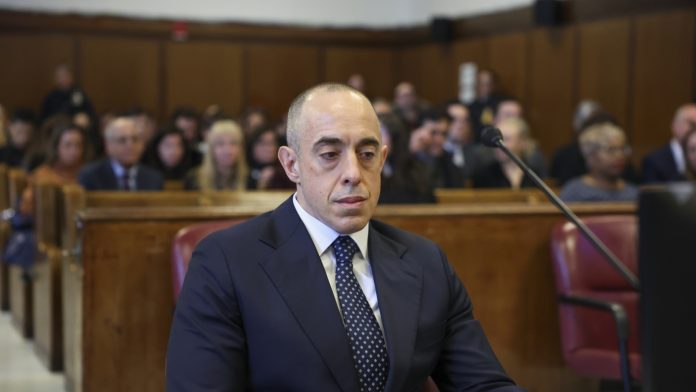
Emil Bove, then President Trump’s attorney, looks on as Trump appears remotely for a sentencing hearing in Manhattan Criminal Court on Jan. 10, 2025, in New York City, after being found guilty of falsifying business records.

Jeenah Moon-Pool/Getty Images


hide caption

toggle caption

Jeenah Moon-Pool/Getty Images

After a mob of Donald Trump’s supporters violently stormed the U.S. Capitol on Jan. 6, 2021, Emil Bove led efforts by federal prosecutors in Manhattan to help the FBI aggressively investigate, identify and arrest rioters from the New York region.

Four years later, Bove is now the acting No. 2 official in President Trump’s Justice Department. He has used that perch to denounce the Capitol riot investigation and spearhead a purge of prosecutors—and potentially of FBI agents—who worked on Jan. 6 cases.

The disconnect between Bove’s aggressive stance to hold rioters accountable for the Jan. 6 assault and his current hostility around the investigation has troubled some former colleagues.

“At no point did I ever hear him or anybody else express concern about these investigations and these arrests that we were making,” said Christopher O’Leary, who was a top counterterrorism official in the FBI’s New York field office at the time. “We never heard any pushback from him or anybody in his office.”

The Department of Justice didn’t immediately respond to questions about the disconnect between Bove’s role in New York and his actions since entering the Department of Justice.

When the Jan. 6 attack happened, Bove was the co-chief of the terrorism and international narcotics unit at the U.S. Attorney’s Office for the Southern District of New York.

In that role, he helped supervise all of the office’s work related to the Capitol attack, directing prosecutors to support the FBI in the investigation and overseeing efforts to obtain things like search warrants, according to O’Leary and a former prosecutor who worked with Bove.

Like O’Leary, the former prosecutor said Bove never voiced any reservations about the riot investigation. To the contrary, the former prosecutor said, Bove “gave strong, direct encouragement to the line prosecutors to aggressively pursue the investigation, legal process, support FBI, etc.”

The person spoke on condition of anonymity in order to describe the office’s internal dynamics.

As the unit co-chief, Bove also took part in weekly meetings of the Joint Terrorism Task Force in New York, which gave him an overview of cases and operations in the New York region, including Jan. 6 investigations.

Bove and his team, O’Leary said, “were intimately involved in all of these cases and very knowledgeable of it [the investigation].”

“I always had a good working relationship with him, was impressed with him as an attorney, as a trustworthy partner, as a committed professional to our counterterrorism cases,” O’Leary said.

But his view has changed in recent weeks in light of what Bove has done since moving into a top job in Trump’s Justice Department.

“I’m really surprised and disappointed by his actions, how he’s pursuing FBI agents and employees who were conducting investigations in the same manner that they would have conducted any investigation,” O’Leary said.

Moves at the agency

Bove left the U.S. Attorney’s Office in Manhattan about a year after the Capitol riot. He moved into private practice and joined Trump’s legal defense team alongside Todd Blanche, who has been nominated to serve as deputy attorney general at the Justice Department under Attorney General Pam Bondi.

If Blanche is confirmed, Bove would serve as his top deputy. But until then, Bove has been the acting deputy attorney general.

And in that role, over the past three weeks, he has imposed a series of personnel moves that have shaken the department and the FBI.

He has transferred several top career attorneys with decades of experience to a new office that handles immigration enforcement, effectively pushing them out of the department.

He’s also fired dozens of Capitol riot prosecutors at the U.S. Attorney’s Office in Washington, D.C. The Jan. 6 prosecutors were brought in during the Biden administration to help handle the more than 1,600 Capitol riot prosecutions, which was one of the largest investigations in Justice Department history.

In a memo, Bove said hiring those prosecutors was a “subversive” step by the Biden administration and hampered the ability of the department to “faithfully implement” Trump’s agenda.

On the FBI front, he has pushed out eight senior bureau officials, according to the memo, and demanded the names of FBI agents who worked Jan. 6 cases, touching off fears of possible mass firings at the bureau.

Bove has told the bureau that the list of names is needed in order to review the agents’ conduct in light of an executive order Trump signed about ending the purported weaponization of the federal government.

“No FBI employee who simply followed orders and carried out their duties in an ethical manner with respect to January 6 investigations is at risk of termination or other penalties,” Bove wrote in an email last week addressed to all FBI employees.

The only individuals who should be concerned, he continued, “are those who acted with corrupt or partisan intent, who blatantly defied orders from Department leadership, or who exercised discretion in weaponizing the FBI.”

After a tense back-and-forth, the FBI and acting director Brian Driscoll ultimately provided a list of names of bureau employees to the Justice Department. Driscoll has told the FBI workforce that he is one of the agents who worked Jan. 6 cases, according to an email he sent.

While Bove didn’t work as a line prosecutor charging defendants, he did supervise prosecutors doing the legal legwork on Jan. 6 cases.

In at least one instance, Bove and Driscoll worked on the same Jan. 6 case: the arrest of Samuel Fisher in Manhattan, according to the former prosecutor who worked with Bove in New York. Driscoll participated in the arrest of Fisher, who was ultimately sentenced to 120 days in prison for his activities at the U.S. Capitol. Bove was up late that night reviewing the legal paperwork to support the FBI, the former prosecutor said.

The former prosecutor said that if a list of department attorneys who worked on Jan 6. cases was collected in the same way as the list of FBI agents was, “Emil’s name would surely be on that list as well.”

Alabama officer’s traffic stop uncovers illegal aliens trafficking cocaine

0

A police force in a small Alabama town uncovered illegal aliens trafficking a large amount of cocaine after an officer stopped their car for a minor violation.

Calera Police Chief David Hyche said a patrol officer stopped a vehicle traveling through the town last week for not having a tag. During the stop, Hyche said “probable cause for a search was evident,” which ultimately led to the discovery of 46 pounds of cocaine.

He said the monetary value of the drugs will be determined after Homeland Security Investigations is done examining what was seized.

The driver and the passenger, both men who are from Colombia and in the U.S. illegally, were arrested and charged with trafficking cocaine. Hyche said one of the men is wanted in Atlanta for drug trafficking and failure to appear.

ICE ARRESTS HOMELESS ILLEGAL IMMIGRANT WHO ASKED TO BE DETAINED OR ELSE HE WOULD ‘GO OUT AND COMMIT CRIMES’

A police officer in Calera, Alabama, uncovered 46 pounds of cocaine after conducting a traffic stop for a minor violation last week. (Calera Police Department)

“We didn’t initially know where these two were from, what they had in their car or their immigration status,” Hyche said. “The choices these two men made led to this outcome.”

Hyche also said the department is working with federal agencies who are pursuing charges against the men for drugs and immigration violations.

Police believe the men were traveling from California to Miami, and took an unusual route to avoid the typical drug interdiction areas.

“If they chose I-65 to avoid heavy drug interdiction areas, it didn’t work out for them,” Hyche said.

ILLEGAL ALIEN CHARGED IN SANDWICH SHOP OWNER’S MURDER CAUGHT AND RELEASED INTO US UNDER BIDEN: ICE

Sweet Home Alabama sign

Calera Police Chief David Hyche believes the two men were traveling to Miami from California, and took an odd route to avoid “drug interdiction areas.” (Raymond Boyd/Getty Images)

Though traffic stops for minor violations have become unpopular in recent years, Hyche advocated for them, describing instances where minor traffic violations led to the rescue of two children in danger.

“Many departments around the U.S. have ceased making stops for minor traffic violations. I have repeatedly spoken out against this and other instances where law enforcement leaders apologize for enforcing the law or change policy to appease critics,” Hyche said. “We in law enforcement don’t make laws, we enforce them.”

The police chief also said criminal activity is encouraged by “weak and passive law enforcement.”

Hyche also compared today’s presence of drugs to when he began his law enforcement career decades ago, stating that drugs like cocaine and heroin are now cheap and easy to find because they’re pouring across the border.

A small pile of cocaine

Calera Police Chief David Hyche said drugs like cocaine and heroin are cheap and easy to access due to the cartels constantly bringing them over the border. (iStock)

“If we control the borders, the dope would be expensive,” Hyche said. “The solution has to be at the border. It can’t be here.”

CLICK HERE TO GET THE FOX NEWS APP 

Shelby County District Attorney Matt Casey thanked the police department “for their great work protecting our community” and said the two men are being retained on $10 million bond.

The police chief said he believes this bust is the largest in Shelby County history.

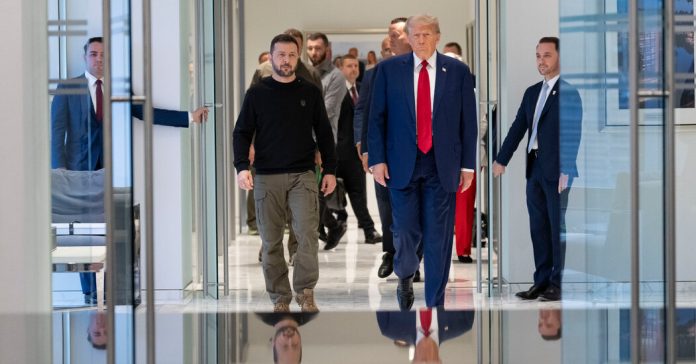
How Ukraine Pitched Trump on a Deal for Critical Minerals

0

To Ukraine, they are a chit to play in an ongoing appeal to President Trump for more financial and military support. To Mr. Trump, they should be overdue payment for billions of dollars committed to Kyiv’s war effort.

Either way, Ukraine’s vast and valuable mineral resources have suddenly become a prominent component in the maneuvering over the country’s future.

Over the past week, Mr. Trump has repeatedly pushed the idea of trading U.S. aid for Ukraine’s critical minerals. He told Fox News on Monday that he wanted “the equivalent of like $500 billion worth of rare earths,” a group of minerals crucial for many high-tech products, in exchange for American aid. Ukraine had “essentially agreed to do that,” he said.

For Ukraine, it is a hopeful sign that Mr. Trump, a longtime skeptic of American aid to Kyiv, might find a path to maintaining support that he finds palatable. But it’s still possible that the famously mercurial president will change his mind, and even his statements about a deal have been ambiguous about whether he wants Ukraine’s minerals for past or future aid — or a combination of both.

Mr. Trump’s proposal followed a campaign launched by Kyiv in the fall to appeal to the U.S. president’s business-oriented mind-set by discussing lucrative energy deals and emphasizing that defending Ukraine aligned with American economic interests.

The campaign included a meeting between Mr. Trump and President Volodymyr Zelensky and trips to the United States by Ukrainian officials to pitch deals for exploiting deposits of lithium and titanium — vital for producing technologies like electric batteries. It also involved getting backing from influential political figures like the Republican senator Lindsey Graham.

The campaign was launched after politically connected U.S. investors started showing interest in Ukraine’s underground wealth in late 2023, despite the war that has been raging since 2022. A consortium including TechMet, an energy investment firm partly owned by the U.S. government, and Ronald S. Lauder, a wealthy friend of Mr. Trump, has engaged with Kyiv to bid on a Ukrainian lithium field, according to a letter to Mr. Zelensky reviewed by The New York Times.

Mr. Lauder, a cosmetics heir who planted the idea in Mr. Trump’s mind of buying resource-rich Greenland, said through a spokesman that he had not discussed Ukrainian minerals with Mr. Trump directly, but had “raised the issue with stakeholders in the U.S. and Ukraine for many years up to the present day.”

As Mr. Trump pushes for peace talks between Russia and Ukraine, Kyiv’s campaign around critical minerals has underscored Mr. Zelensky’s evolving strategy for retaining American support. Moving away from the moral appeals he used with the Biden administration, he has embraced a more transactional approach closer to Mr. Trump’s style. Mr. Zelensky recently said that he would also be interested in purchasing American liquefied natural gas.

Speaking to Reuters on Friday, Mr. Zelensky said: “If we are talking about a deal, then let’s do a deal.”

Mr. Trump said Tuesday that he was sending his Treasury secretary, Scott Bessent, to meet Mr. Zelensky in Ukraine — the first visit by a Trump administration official.

Mr. Bessent was directed to explore with the Ukrainians what a deal for the minerals might look like. He was expected in Kyiv on Wednesday, according to an official with knowledge of the trip.

The idea of leveraging Ukraine’s mineral resources took shape last summer. Kyiv was crafting its “Victory Plan,” a strategy aimed at ending the war on terms favorable to Ukraine, and wanted to convince its allies to sustain their support despite rising war fatigue.

Ukrainian officials were particularly concerned about a potential return to power of Mr. Trump, who had vowed to cut off military and financial aid to Ukraine, according to Ukrainian officials and lawmakers.

Their attention was drawn to an argument voiced by a Trump ally: Mr. Graham, who was making the case that Ukraine was “sitting on a gold mine” of critical minerals. “If we help Ukraine now, they could become the best business partner we’ve ever dreamed of,” he said last June. He reinforced his message in a video with Mr. Zelensky in September.

Ukrainian authorities say the country holds deposits of nearly half the 50 minerals the United States has identified as critical for its economy and national security. The Kyiv School of Economics says Ukraine holds the largest titanium reserves in Europe and a third of the continent’s lithium reserves.

Groups like SecDev, a Canadian firm, have valued the reserves at several trillion dollars. But some deposits are inaccessible because they are in Russian-occupied land. And experts caution that exploiting mineral reserves could be a costly and prolonged process, with new surveys needed to accurately assess their potential.

In a November 2023 letter to Mr. Zelensky, Brian Menell, head of TechMet, sought assistance for launching a bid to exploit a state-owned lithium field in central Ukraine. The letter named Mr. Lauder, the Texas-based investment firm Privateer Capital and other U.S. and international investors as associates.

Mr. Menell and other energy executives met Mr. Zelensky in New York in September. It is unclear whether they discussed the bid, which has yet to be launched. “TechMet, together with our partners, is available to move forward with further work if the U.S. and Ukrainian governments instruct us to do so,” Mr. Menell said in a statement.

Kyiv then decided to offer allies access to critical minerals as part of its Victory Plan. Mr. Zelensky presented the plan to Mr. Trump during a meeting in New York in late September.

During Mr. Trump’s first term, when Kremlin-backed troops were already waging war in eastern Ukraine, Kyiv won support from him, including for weapons supplies, by buying coal from an important swing state, Pennsylvania.

Part of Ukraine’s argument now is to emphasize that should it lose the war, its mineral resources would fall into the hands of Russia and its allies like China, which already dominates the global market for such materials.

John E. Herbst, a former U.S. ambassador to Ukraine and now senior director of the Atlantic Council’s Eurasia Center, said Ukraine’s pitch was an obvious sell for Mr. Trump.

“It involves vast energy resources, economically valuable assets which are not abundant in the Western world, and it’s a way to strip other competitors, including China, of their leverage over the United States,” Mr. Herbst said. “It’s a no-brainer.”

Last fall, work was underway to finalize and sign an agreement with the Biden administration to cooperate on extracting and processing minerals. But Ukrainian authorities decided to postpone the signing of the deal and offer it to Mr. Trump instead so that he could claim credit for it.

A Ukrainian delegation led by Yulia Svyrydenko, the economy minister, then traveled to New York and Washington in December for meetings with U.S. officials and business representatives, with critical minerals as a central topic.

Ms. Svyrydenko outlined potential energy deals, including the acquisition of production licenses for critical minerals. A presentation, seen by The Times, emphasized that Ukraine was “capable of building the entire value chain to meet U.S. and E.U. metallic titanium demand for 25 years.”

Matthew Murray, chairman of the advisory board of Velta, a Ukrainian titanium extraction company, said Ms. Svyrydenko had asked him and other U.S. business representatives for their help in making Ukraine’s case to the Trump administration.

“We spent a good deal of this meeting talking about critical raw materials,” Mr. Murray said. He added that the exploitation of these resources could become a new pillar of the U.S.-Ukraine relationship.

What shape this pillar may take remains to be seen.

A draft of the agreement that Kyiv postponed, and which was reviewed by The Times, included only pledges to share information and expertise on potential partnerships. It contained no financial commitments and was nonbinding. It is unclear whether Kyiv and Washington will amend the agreement to align it with Mr. Trump’s latest proposals.

Mr. Murray, a former Obama administration official, said one idea circulating in Washington was to offer Ukraine a loan to purchase U.S. weaponry, with access to critical minerals as collateral. This proposal could align with Mr. Trump’s vision, who has talked of obtaining a “guarantee” for continued American assistance.

“There are many steps yet to be taken, but the concept is very viable,” he said.

Marian Prysiazhniuk contributed reporting.

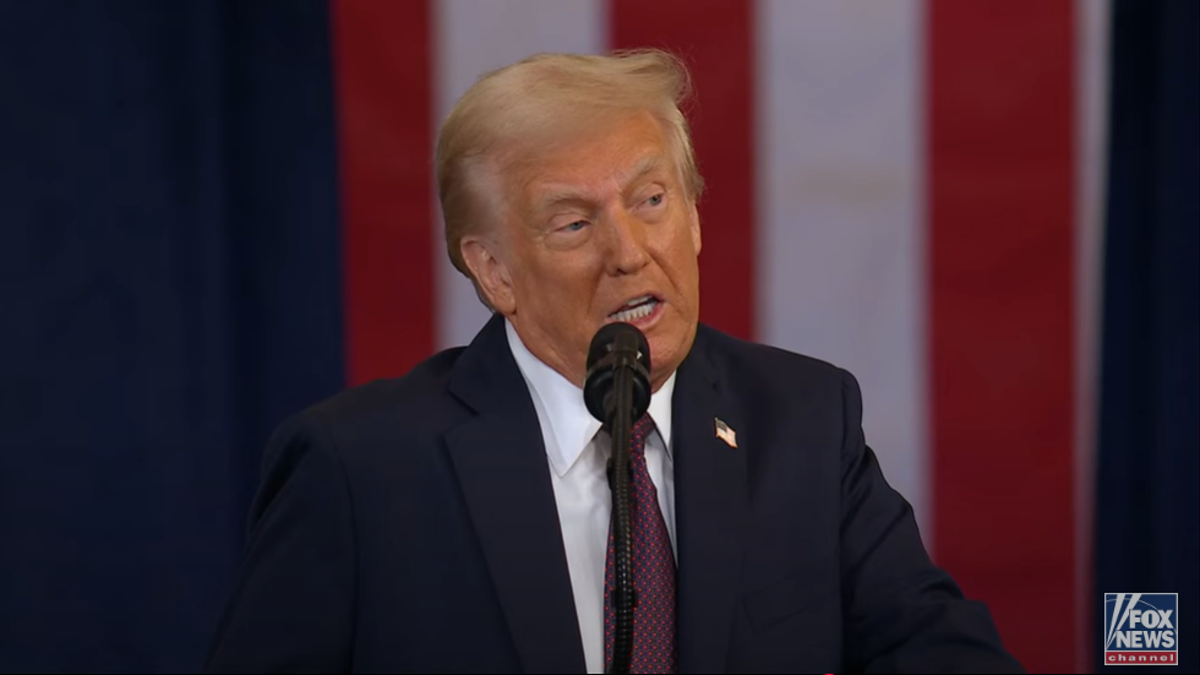
Trump and Musk appear together to defend the cost-cutting efforts of DOGE

0

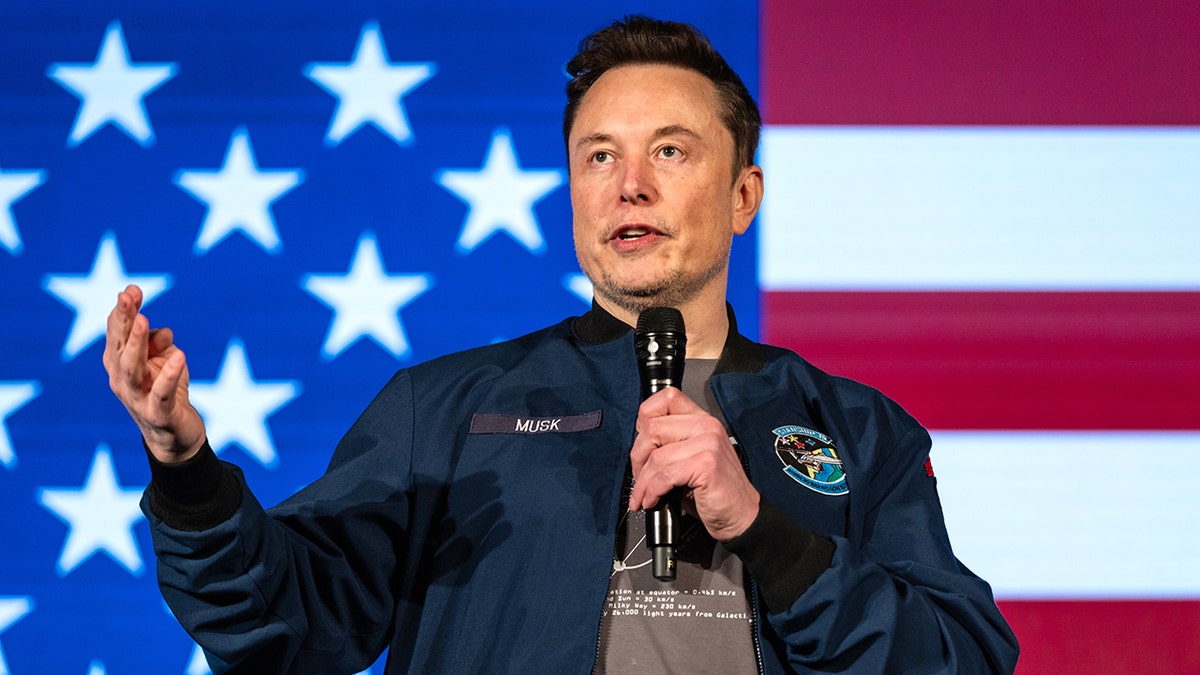
Elon Musk defended the controversial cost-cutting methods of his Department of Government Efficiency group in an unusual conversation from the Oval Office while President Trump sat at his desk.

Canada appoints Kevin Brosseau to serve as fentanyl czar

0

Canada appointed a fentanyl czar on Tuesday in accordance with a deal made with U.S. President Donald Trump to avoid additional tariffs on Canadian imports.

Prime Minister Justin Trudeau chose Kevin Brosseau, who spent decades with the Royal Canadian Mounted Police, for the position aimed at working with the U.S. to “detect, disrupt and dismantle” the fentanyl trade. His appointment is effective immediately.

Brosseau has extensive law enforcement experience, having served as deputy commissioner and the commanding officer in Manitoba during his career as a Mountie. He most recently worked with Trudeau as his deputy national security and intelligence advisor.

“Mr. Brosseau navigated Canada’s most sensitive security challenges. His demonstrated expertise tackling drug trafficking, organized crime networks, and other national security threats will bring tremendous value to this position,” Trudeau said in his announcement.

TRUMP AGREES TO PAUSE TARIFFS ON CANADA IN EXCHANGE FOR MORE BORDER ENFORCEMENT

Canadian Prime Minister Justin Trudeau appointed former Mountie Kevin Brosseau to serve as the country’s fentanyl czar. (Kevin Brosseau / X)

Brosseau’s appointment comes days after Trump threatened to impose an additional 25% tariff on Canadian imports, citing the flow of illegal aliens and drugs, such as fentanyl, across the northern border.

Trump agreed to a 30-day pause on the tariffs in order to assess Canada’s response to his demands, which revolved around creating a stronger border.

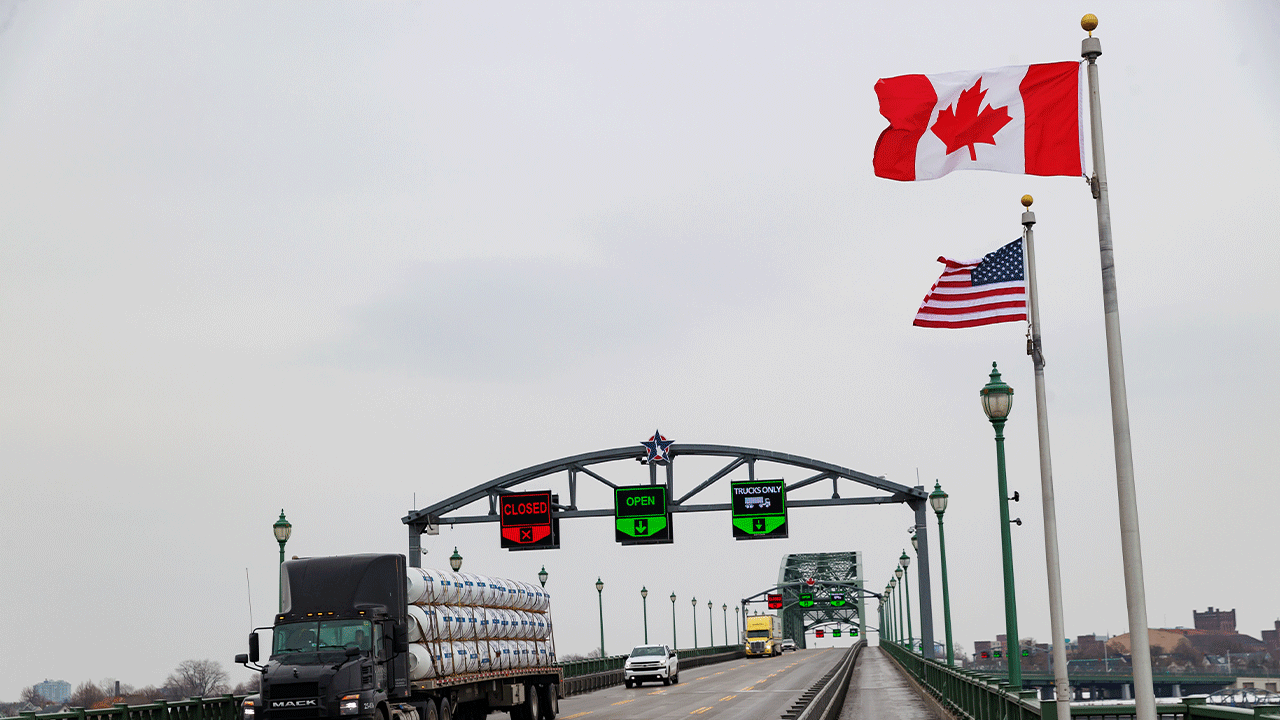
In addition to appointing a fentanyl czar, Trudeau said the country will implement a $1.3 billion border plan that utilizes Black Hawk helicopters, drones, mobile surveillance towers and nearly 10,000 frontline personnel to protect the U.S.-Canada border.

Trucks cross at US-Canada border

Canada is implementing a border plan worth $1.3 billion to bolster law enforcement’s presence and crackdown on the fentanyl discovered at entry points. (Cole Burston/Bloomberg via Getty Images)

He also said organized crime cartels will be listed as terrorist entities in order to enforce criminal investigations in Canada.

TRUDEAU SAYS TRUMP IS SERIOUS ABOUT CANADA BECOMING 51ST STATE: REPORTS

Focusing on fentanyl production and trafficking, Canada will be adding new and expanded detection capacity at border entry points and building a Canadian Drug Analysis Center where authorities will study illegal drug samples to identify where and how they are manufactured.

“While less than 1% of the fentanyl intercepted at the U.S. border comes from Canada, any amount of fentanyl is too much,” Trudeau said, adding that “fentanyl must be wiped from the face of the Earth, its production must be shut down, and its profiteers must be punished.”

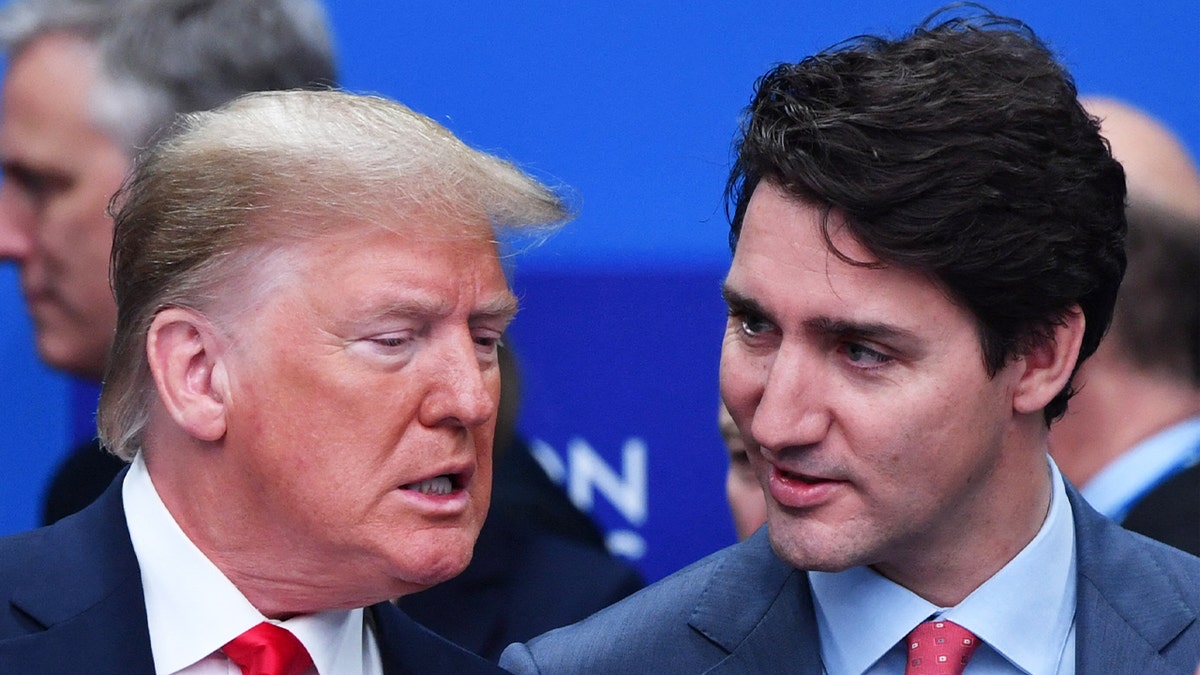
Donald Trump (L) talks with Canada's Prime Minister Justin Trudeau

President Donald Trump threatened an additional 25% on Canadian imports if the country didn’t increase security at the northern border. (Nicholas Kamm)

CLICK HERE TO GET THE FOX NEWS APP

While the fentanyl that comes through the northern border is significantly less than what comes from Mexico, U.S. customs agents seized 43 pounds of fentanyl at the Canadian border during the last fiscal year.

Agents at the U.S.-Mexico border seized 21,100 pounds of fentanyl during the same time period.

When Will China’s Leader Talk to Trump?

0

The leaders of the world’s two rival superpowers have plenty to talk about. But so far, it seems, they can’t agree on when they should speak, or even whether they already have.

Over the last 10 days or so, President Trump has sent conflicting messages about talking to China’s top leader, Xi Jinping. Mr. Trump said on Feb. 3 that they would have a call within “24 hours,” then reversed himself, saying he was in “no rush” to talk. More recently, when asked whether the two had spoken since he took office, Mr. Trump said that they had.

By contrast, Mr. Xi has said nothing about talking to Mr. Trump. And on Tuesday, China’s foreign ministry suggested that no such call had taken place since Mr. Trump’s return to the White House, apparently contradicting Mr. Trump’s claim, which he made during an interview with the Fox News host Bret Baier that aired this week.

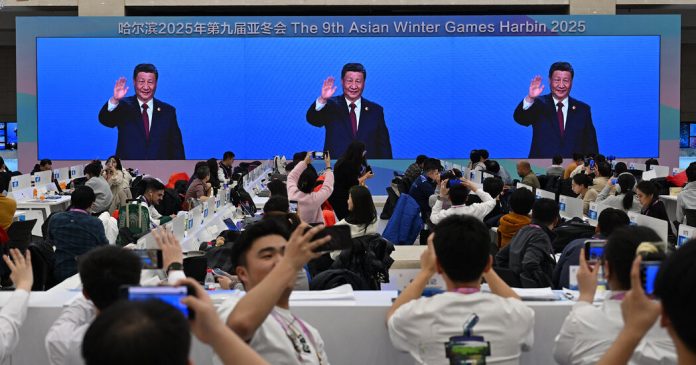
Mr. Xi, it seems, is in no rush to engage, stalling progress on a number of thorny issues in the nations’ competition for global power. (Both sides say the leaders did speak on Jan. 17, before Mr. Trump’s inauguration.) Even as Mr. Trump has imposed tariffs aimed directly and indirectly at China, Mr. Xi has played it cool, preferring to be seen hosting foreign dignitaries at the opening of the Asian Winter Games in the icy northeastern Chinese city of Harbin.

The disconnect reflects, in part, how Mr. Xi is trying to show Mr. Trump and the Chinese people that he will not be intimidated by tariffs, analysts say. Mr. Xi does not want to be confused with Prime Minister Justin Trudeau of Canada or President Claudia Sheinbaum of Mexico, both of whom quickly negotiated with Mr. Trump after he threatened to slap 25 percent tariffs on their nations’ exports to the United States.

Those leaders “caved to Trump and Trump claimed victory,” said Zhiqun Zhu, an expert in Chinese foreign policy at Bucknell University in Pennsylvania. “Xi will not let that happen. It would reflect very, very badly on him domestically. I think the strategy is to wait and see what Trump can offer before taking a call.”

Mr. Zhu said Mr. Xi could also be irked by a joint statement that Mr. Trump and Japan’s prime minister, Shigeru Ishiba, released after their meeting in Washington last week, which addressed Taiwan, the self-governing island claimed by Beijing.

Mr. Trump and Mr. Ishiba said they opposed any changes to the status quo in the Taiwan Strait made not only by force, but by coercion. The mention of coercion, believed to be a first, refers to China’s use of nonmilitary means to pressure Taiwan, such as cyberattacks and trade restrictions.

To strike any kind of deal with Mr. Xi, Mr. Trump will almost certainly be pressed to soften Washington’s stance on Taiwan. That could include a pledge to reduce American arms sales to the island, or a statement that the United States “opposes” formal independence for Taiwan (currently, it says it “does not support” that).

It is unclear whether the Trump administration would even consider such concessions, which could be widely viewed as a blow to Taiwan’s security.

The administration may also be reluctant to yield on another major demand by Mr. Xi: loosening U.S. restrictions on exports of technology to China, such as the advanced semiconductors needed to power artificial intelligence, a key battleground between the world’s top two economic powers.

As for Mr. Trump, he wants China to reduce its trade surplus with the United States and do more to crack down on undocumented immigration, as well as the sale of chemicals used to make fentanyl. He has called for China to approve a sale of TikTok so that an American company can buy half of the video-sharing platform, and he has suggested that Beijing help his administration end the war in Ukraine.

Chinese analysts said that any promise from Mr. Trump would have to be viewed skeptically. Relations between the two countries seemed stable when Mr. Trump visited Beijing in November 2017 and praised Mr. Xi, saying he did not blame China for its trade deficit with the United States. Two months later, he launched his trade war with China.

Mr. Trump has “said some nice words,” said Xin Qiang, a U.S.-China expert at Fudan University in Shanghai. “But what’s important is how he translates them into action. His actions are the opposite.”

Other analysts said the apparent lack of a call, so far, could be more easily explained.

Chinese leaders typically do not meet or speak with their foreign counterparts until their subordinates “work out all the thorny issues” for an agreement or a joint statement, said John Gong, a professor of economics at the University of International Business and Economics in Beijing.

Mr. Trump, however, operates more like a business executive, looking to negotiate with world leaders on the fly, as he did during his first presidential term with Kim Jong-un, the North Korean leader.

“Trump is a little bit delusional in the sense that he thinks in his own way, the Western way, that somehow he can do a sales pitch and convince Xi” to do what he wants, Mr. Gong said. “It’s just not going to happen.”

Denmark Reacts to Trump's Threats to Take Greenland

0

President Trump has made clear his desire for the U.S. to take Greenland saying the territory is vital to U.S. economic security. Greenland is an autonomous territory of U.S. ally Denmark. And as we hear, Danes have had a variety of reactions to Trumps words.

Oregon congresswoman determined to protect federal workers with Stop Musk Act

0

An Oregon congresswoman is determined to protect federal workers from possible retaliation by introducing new legislation that focuses on “federal workers who stand up against Elon Musk’s grotesque seizure of critical government agencies.”

Representative Maxine Dexter has proposed the “Stop Musk Act” which states, “No Federal employee may be retaliated against, including any retaliation occurring on or after the date of the enactment of this Act, for resisting, circumventing, or preventing Elon Musk or individuals he oversees from taking unlawful or unconstitutional actions relating to Federal agencies.”

The bill addresses, what Dexter alleges, is Musk’s recent seizing of control of the U.S. Department of Treasury’s payment system, exposing Oregonian’s personal financial information, shuttering the U.S. Agency for International Development (USAID) putting the lives of millions of people at risk.

PRESIDENT TRUMP PREDICTS ELON MUSK WILL FIND ‘HUNDREDS OF BILLIONS’ IN WASTE IN NEXT DOGE DIRECTIVES

The ‘Stop Musk Act’ states federal employees who resist, circumvent, or prevent Musk’s takeover would be protected against any present or future retaliation for their efforts. (Mark Wilson/Getty Images)

She alleges that the billionaire has “the National Oceanic and Atmospheric Administration (NOAA) undermining our work to combat the climate crisis. This is only the beginning. Under this legislation, federal employees who resist, circumvent, or prevent Musk’s takeover would be protected against any present or future retaliation for their efforts.”

The bill comes as Musk, along with the Department of Government Efficiency, has forced leave of U.S. Agency for International Development staffers. 

“The world’s richest man should not have the power to unilaterally dismantle the federal government and the critical services it provides Oregonians. Federal employees are at the forefront of fighting Elon Musk’s power grab, and we must protect them. 

Elon Musk

The bill comes as Musk, along with the Department of Government Efficiency, has forced leave of U.S. Agency for International Development staffers.  ( Samuel Corum/Getty Images)

TRUMP DEFENDS MUSK’S DOGE AMID DEMS’ RESISTANCE EFFORTS | FOX NEWS VIDEO

President Trump continues to defend DOGE’s work alongside Musk and has predicted that he will find billions in fraud and abuse. Meanwhile, his actions have been met with outrage from some Democrats.

“I’m going to tell him very soon… to go check the Department of Education. He’s going to find the same thing. Then I’m going to go into the military. Let’s check the military. We’re going to find billions, hundreds of billions of dollars of fraud and abuse, and the people elected me on that.”

Trump and Musk have asked federal workers to leave their jobs, and even offered a buyout to some, giving them the opportunity to quit and still get paid until Sept. 30.

Trump speaks

The bill comes as Musk, along with the Department of Government Efficiency, has forced leave of U.S. Agency for International Development staffers.  (Fox News)

CLICK TO GET THE FOX NEWS APP

Dexter says she is concerned as thousands of federal workers in Oregon are voicing their opinions about cuts to federal agencies.

“All week, I have heard from constituents who are demanding action. Let me be clear: we will use every legislative, judicial, and public pressure tactic to stop Musk’s takeover. This multi-front battle will be fought in the courts, the halls of Congress, and the public sphere.  

“We must stay loud. We must stand tight. We must press on.” 

Pope Criticizes Trump’s Deportation of Migrants, Calling It a Violation of Dignity

0

Pope Francis on Tuesday harshly criticized President Trump’s policy of mass deportations and urged Catholics to reject anti-immigrant narratives in an unusually direct attack on the American administration.

In an open letter to American bishops, Francis said that deporting people who often come from difficult situations violates the “dignity of many men and women, and of entire families.”

The pope wrote that he had “followed closely the major crisis that is taking place in the United States with the initiation of a program of mass deportations,” adding that any policy built on force “begins badly and will end badly.”

Francis has long been an advocate for migrants, and has made denouncing their plight a pillar of his papacy. He has called the issue a “shipwreck of civilization” and spoken out repeatedly against what he considers unwelcoming and unchristian migration policies around the world.

Pope Francis had criticized Mr. Trump’s anti-immigration plans when he was a presidential candidate, but the letter was one of the first public and explicit criticisms he has directed at the United States’ president since the election. Experts said it amounted to a steep escalation in the temper of the relationship between the Vatican and the American administration.

“It turns up the heat of the conflict,” said Massimo Faggioli, a professor of theology at Villanova University.

Experts said that by writing an open letter, the pope was also indirectly addressing members of the new American administration, many of whom are Catholic, and specifically, Vice President JD Vance.

Francis appeared to give a riposte to Mr. Vance, who recently talked about the “ordo amoris” — a medieval Catholic theological concept that established a hierarchy of duties that prioritized immediate obligations to one’s family or community over distant needs.

The pope wrote that “Christian love is not a concentric expansion of interests that little by little extend to other persons and groups.” “The true ordo amoris that must be promoted,” he wrote, is “love that builds a fraternity open to all, without exception.”

The pope’s letter, experts said, was also addressed to some bishops and Catholics who have adopted a benevolent stance toward President Trump.

“He wants to avoid that the Church is divided into a Church of the Pope and a Church of Trump,” said Alberto Melloni, a church historian and the director of the John XXIII Foundation for Religious Sciences in Bologna.

Pope Francis has spoken out before against Mr. Trump’s anti-immigration policies.

In 2016, he suggested that Mr. Trump, then a presidential candidate, “is not Christian” because of his campaign promises to deport more immigrants and build a wall along the Mexico border.

Last year, Pope Francis said that both presidential candidates were “against life” — Kamala Harris for her support for abortion rights, and President Trump for closing the door to immigrants. He urged voters to choose the “lesser of two evils.”

But during President Trump’s first term, Francis directed general criticism at the building of walls, but generally refrained from direct attacks on the administration.

This time, Francis has not been shy to criticize President Trump’s policies more directly. On an Italian TV show on the eve of the inauguration, he said that Mr. Trump’s deportation plans, “if true, will be a disgrace.”

During President Trump’s first term, “the Vatican thought Trump was a historical mistake that would be corrected,” Mr. Faggioli said. “Now they know it’s a new era.”

There was no immediate comment from the White House.

In the letter, which was unannounced, Francis urged Catholics to consider human values, not laws or regulations, as the primary compass driving their actions.

“Consider the legitimacy of norms and public policies in the light of the dignity of the person and his or her fundamental rights,” he wrote. “Not vice versa.”

He reminded Catholics that Jesus and his family were migrants to Egypt, and exhorted “all the faithful of the Catholic Church” not to “give in to narratives that discriminate against and cause unnecessary suffering to our migrant and refugee brothers and sisters.”

Other Christian leaders have also criticized President Trump.

During the inaugural prayer service at Washington National Cathedral last month, Bishop Mariann Edgar Budde, the leader of the Episcopal Diocese of Washington, asked President Trump to have mercy on undocumented immigrants, L.G.B.T.Q. children, and others.

The following day, Mr. Trump demanded an apology from the “so-called Bishop” and “Radical Left hard line Trump hater” on his social media platform Truth Social.

Trump’s freeze on refugee programs is an issue for Republicans wanting to help Afghans : NPR

0

Aid groups are suing the Trump Administration over it’s freeze of refugee programs, but criticism is also coming from Republicans who want to help Afghan refugees who aided the U.S. military.


AILSA CHANG, HOST:

Advocates for refugees to the U.S. filed a lawsuit against the Trump administration yesterday in federal court. They’re trying to lift the administration’s freeze on resettlement services for tens of thousands of legal refugees who were at various stages of coming to the U.S. Some of President Trump’s allies have also taken issue with the freeze, especially with how it affects Afghan refugees who worked with the United States. NPR’s Quil Lawrence reports.

QUIL LAWRENCE, BYLINE: One of President Trump’s first executive orders, preloaded for Inauguration Day, suspended the U.S. Refugee Admissions Program. Another executive order froze foreign aid, which includes help getting refugees resettled when they arrive in America. Melissa Keaney is with the International Refugee Assistance Project, which has filed a lawsuit to resume resettlement and aid.

MELISSA KEANEY: One of our clients is an Afghan peace activist who was evacuated from Kabul by the United States during the Taliban takeover, and his case, like so many others, has now frozen in the process.

LAWRENCE: Also on hold is Welcome Corps, a State Department program where Americans sponsor refugees to help them resettle in the U.S. Another plaintiff in the lawsuit, Keaney says, is an American woman who has joined Welcome Corps.

KEANEY: And she befriended a young Afghan woman here in the United States whose family remained in Afghanistan, and she organized her synagogue and community members to raise the money. She now is devastated, having made all these plans to welcome this family.

LAWRENCE: The lawsuit aims to help all refugees worldwide who are stranded by the White House order. But Afghans who had any connection with the U.S. government are in danger under the Taliban, especially if they helped out the U.S. military. And that’s where they may also have an advantage, because some Republican supporters of President Trump want him to make an exception for Afghan allies. Here’s Texas Republican Congressman Michael McCaul, speaking to CBS’s “Face The Nation.”

(SOUNDBITE OF TV SHOW, “FACE THE NATION”)

MICHAEL MCCAUL: And do I believe that it was an unintended consequence that needs to be fixed. Look, we promised them that we would protect them when they worked with our servicemen and women in Afghanistan. These are the interpreters, the ones who were right alongside our combat veterans.

LAWRENCE: Especially military veterans have voiced support for bringing Afghan allies to this country, including prominent Republicans like Trump’s national security adviser, Mike Waltz. But so far, no exception has been announced, and tens of thousands of Afghan refugees wait anxiously to make their way to the United States.

Quil Lawrence, NPR News.

Copyright © 2025 NPR. All rights reserved. Visit our website terms of use and permissions pages at www.npr.org for further information.

NPR transcripts are created on a rush deadline by an NPR contractor. This text may not be in its final form and may be updated or revised in the future. Accuracy and availability may vary. The authoritative record of NPR’s programming is the audio record.