Friday, November 13, 2026
Home Blog Page 234

Musk and Trump appear in Oval Office to talk DOGE : NPR

0

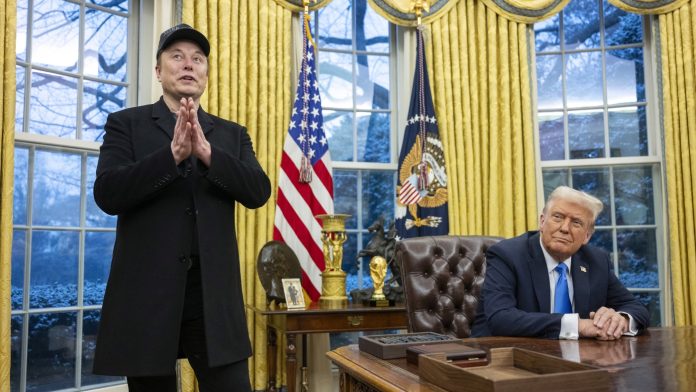
Elon Musk takes questions from reporters as President Trump looks on in the Oval Office of the White House on Tuesday.

JIM WATSON/AFP via Getty Images/AFP


hide caption

toggle caption

JIM WATSON/AFP via Getty Images/AFP

President Trump and Elon Musk appeared together from the Oval Office on Tuesday, where they defended their efforts to enact sweeping changes to the federal government and limit spending.

Musk — who is the richest man in the world — has been at the helm of the White House’s Department of Government Efficiency (DOGE) initiative, a push to cut what he and Trump characterize as excessive government spending.

In the three weeks since Trump was sworn in, Musk has moved to cut billions in federal spending and effectively shut down the work of government institutions like the U.S. Agency for International Development. The moves have prompted a cascade of legal challenges and sparked uncertainty among federal workers as they await additional actions from DOGE.

Speaking to reporters with Musk at his side, Trump said DOGE has already resulted in the discovery of “billions and billions of dollars in waste, fraud and abuse,” adding that the final tally could eventually reach as high as “close to a trillion dollars.” But the president and Musk offered few specifics on how they were arriving at those estimates.

Trump and Musk addressed a range of criticism about the DOGE effort, from whether its work required authorization from Congress, to if the administration would comply with court orders against the initiative.

Federal courts have already blocked DOGE staff from accessing sensitive Department of Treasury materials, and in a separate ruling on Monday, a federal judge in Rhode Island said the administration was not in full compliance with an order blocking its effort to suspend payments for grants and other federal programs.

When asked about the court challenges against DOGE actions, Trump acknowledged he would comply with the rulings made by federal judges.

“I always abide by the courts. Always abide by them, and we’ll appeal,” he said.

Musk spoke for a majority of the roughly 30-minute appearance, donning a trench coat and a black “Make America Great Again” hat. Standing just feet away from the president, who sat behind the Resolute Desk, Musk was asked to respond to critics who argue he is not working transparently and exercising too much power over the government.

“The people voted for major government reform, and that’s what people are going to get,” he said. “They’re going to get what they voted for.”

Musk also said DOGE was “trying to be as transparent as possible” and claimed that all DOGE actions are posted online.

“So all of our actions are maximally transparent,” Musk said.

Jets gave Aaron Rodgers ultimatum on ‘Pat McAfee Show’ appearances: report

0

As reports swirl that the New York Jets will move on from Aaron Rodgers this offseason, his media appearances may factor into the decision.

Rodgers joined the Jets in the offseason ahead of the 2023 season after spending 18 years with the Green Bay Packers.

Before his departure, Rodgers found himself in some controversies, most notably when he said he was “immunized” against the COVID-19 virus. He also spoke fondly of the hallucinogen ayahuasca.

Then, shortly after what became his final game with the Packers, he went on a “darkness retreat.”

CLICK HERE FOR MORE SPORTS COVERAGE ON FOXNEWS.COM

New York Jets quarterback Aaron Rodgers walks on the field during the second half of a game against the Buffalo Bills in East Rutherford, N.J., Oct. 14, 2024.  (AP Photo/Adam Hunger)

Throughout this time, Rodgers had become a mainstay on ESPN’s “The Pat McAfee Show,” on which he had been known to push the envelope.

Rodgers has continued to make controversial headlines during his appearances on the show, including calling out Dr. Anthony Fauci for his vaccine measures, linking Jimmy Kimmel to Jeffrey Epstein and mocking “celebrities bought by China” ahead of the 2024 presidential election.

A new report from The Athletic claims new Jets brass told Rodgers he would not be allowed to appear on the show if he plays for the Jets in 2025.

“I was told that when they had conversations with Aaron Rodgers about what the future would look like, ‘If you’re going to be part of this team, you’re going to attend all of training camp, you’re not going to do Pat McAfee interviews anymore,'” Dianna Russini said on her “Scoop City” podcast. “They had a conversation with him of, ‘If you were to stay here, here is how we would want it to be.’”

Pat McAfee on the ESPN College GameDay set

Pat McAfee sits on the set of ESPN’s “College GameDay” before a game between the Penn State Nittany Lions and the Ohio State Buckeyes at Beaver Stadium in University Park, Pa., Nov. 2, 2024. (Adam Cairns/Columbus Dispatch/USA Today Network via Imagn Images)

Fox News Digital reached out to Rodgers’ representative, the Jets and ESPN.

CHIEFS PLAYER SPEAKS OUT AFTER PATRICK MAHOMES SKIPPED HIM WHILE GREETING TEAMMATES DURING SUPER BOWL LOSS

The Jets hired Aaron Glenn as their head coach last month and brought in Darren Mougey as their general manager. Apparently, Glenn told Rodgers the quarterback would have to abide by Glenn’s terms, which included full offseason involvement.

Rodgers had an unexcused absence from mandatory minicamp, which turned out to be a scheduled trip in Egypt. Robert Saleh, the head coach at the time, said, “If it’s important to Aaron, it’s important to us.”

Perhaps Rodgers’ time with the Jets was done anyway. In a season where they had, at minimum, playoff expectations, they went 5-12 with Rodgers under center. And although there were times he looked like he turned back the clock, for the most part he did look like a quarterback on the wrong side of 40 coming off a serious Achilles injury.

Aaron Rodgers waits for the snap

New York Jets quarterback Aaron Rodgers (8) waits for a snap during the first half of a game against the Los Angeles Rams in East Rutherford, N.J., Dec. 22, 2024.  (AP Photo/Seth Wenig)

CLICK HERE TO GET THE FOX NEWS APP

Perhaps that injury robbed Rodgers and the Jets of a run, but with the team losing two more games in 2024 than it had in 2023 when Zach Wilson took over for Rodgers — even after they added Davante Adams — it may be time to close the door.

Follow Fox News Digital’s sports coverage on X, and subscribe to the Fox News Sports Huddle newsletter.

Gaza Truce Imperiled as Netanyahu and Hamas Send Dueling Warnings

0

The future of the cease-fire in Gaza and the territory’s long-term fate hung in the balance on Tuesday as Prime Minister Benjamin Netanyahu of Israel warned Hamas that if the scheduled release of hostages did not take place on Saturday, the truce would end and Israeli troops would resume “intense fighting.”

Mr. Netanyahu’s warning came after Hamas said on Monday it would indefinitely postpone the next round of hostage releases, which he said amounted to a “decision to violate the agreement.”

His statement echoed President Trump’s demand a day earlier that all remaining hostages must be freed by 12 o’clock on Saturday or “all hell is going to break out.” But the prime minister did not say that all captives still in Gaza had to be freed; under the terms of the cease-fire, only three were supposed to be let go on Saturday.

Mr. Netanyahu also reiterated an order he issued on Monday night to reinforce troops in and around Gaza, but he did not say they were planning to recapture territory from which Israel had recently withdrawn.

“This operation is currently underway,” he said. “It will be completed as soon as possible.”

Analysts said it was possible that Israel and Hamas would reach a compromise before Saturday on this weekend’s scheduled round of hostage releases. Another hurdle looms in March, when the cease-fire is set to elapse unless Hamas and Israel negotiate an extension.

“The crisis is a prelude for a much bigger crisis that is coming in early March,” said Ibrahim Dalalsha, the director of the Horizon Center, a political research group in the West Bank of Ramallah.

Mr. Trump repeated his ultimatum on freeing the remaining hostages while meeting on Tuesday with King Abdullah II of Jordan at the White House. “They either have them out by Saturday at 12 p.m. or all bets are off,” the president said.

Mr. Trump’s pronouncements this week — including his statements that the United States will take over the devastated territory and that its Palestinian residents have no rights to return — have infuriated Hamas, flummoxed world leaders and amplified the sense of chaos surrounding the cease-fire negotiations.

Mr. Trump has said the United States will rebuild Gaza into the “Riviera of the Middle East,” and on Monday he threatened to withdraw financial support for Egypt and Jordan unless they take in all the Palestinians who would be displaced by that effort.

During his meeting with King Abdullah on Tuesday, Mr. Trump insisted that the United States had the authority to “take” Gaza and that other countries in the region would absorb the Palestinians who live there.

“We will have Gaza,” he said. “It’s a war-torn area. We’re going to take it.”

Jordan’s Parliament last week introduced a bill that would ban the resettlement of Palestinians in the country. But King Abdullah is trying to protect the more than $1.5 billion in foreign aid his country receives from the United States. He said in the meeting that Jordan was willing to take in 2,000 Palestinian children with cancer or otherwise very ill “right away.” Mr. Trump called the offer “a beautiful gesture.”

Hamas, in a statement on Tuesday, called Mr. Trump’s broader proposal of removing Gazans “ethnic cleansing.” The group added, “The plan to deport our people from Gaza will not succeed, and they will be faced with a unified Palestinian, Arab and Islamic position that rejects all displacement plans.”

On Tuesday, Egypt said in a statement released by a spokesperson for the foreign ministry that it intended to present to the United States a “comprehensive vision for the reconstruction of the Gaza Strip” that “ensures the Palestinian people remain in their homeland.”

The first phase of the cease-fire deal was struck last month between Israel and Hamas, and it was set to expire on March 2. Originally, three Israelis were to be freed this week in the latest hostage-for-prisoner exchange as required under the agreement. Most of the exchanges have taken place on Saturdays.

So far, 16 of 33 Israeli hostages who were set to be released in the first phase of this cease-fire have been freed. About 60 other hostages, some of whom are believed to be dead, were to be released later this spring under a second phase of the deal.

In a video posted after a four-hour meeting with his security cabinet, Mr. Netanyahu said on Tuesday that he and his top advisers had been shocked by the emaciated appearances of three Israeli men who were freed last Saturday.

“The decision I passed in the cabinet, unanimously, is this: If Hamas does not return our hostages by Saturday noon, the cease-fire will end, and the I.D.F. will resume intense fighting until Hamas is decisively defeated,” Mr. Netanyahu said in the video, referring to the Israel Defense Forces.

In its threat on Monday to delay the next round of hostages to be released, Hamas accused Israel of violating parts of the cease-fire agreement, including by slowing sufficient humanitarian aid in and around Gaza. Israel has denied the claim.

Hamas led the attack on Israel on Oct. 7, 2023, that started the war, killed about 1,200 people and led to the abduction of 250 others to Gaza. Israel retaliated by bombarding the territory and displacing millions of Palestinians. At least 48,000 Gazans have been killed during the fighting, according to local health officials, who do not distinguish between combatants and civilians. Millions of Palestinians are returning to neighborhoods in ruins.

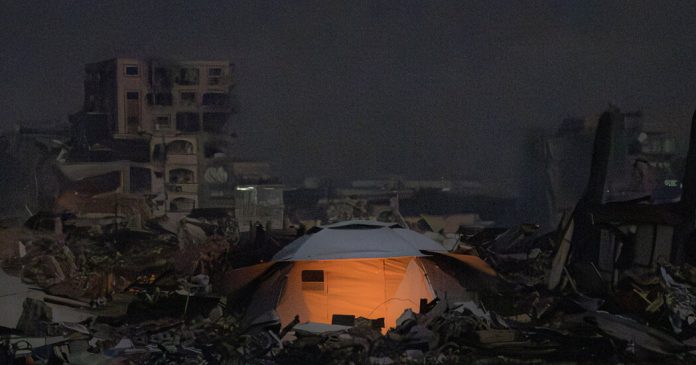
The current standoff stems in part from Hamas’s accusation that Israel has not upheld its promises for the first phase of the cease-fire. Israel was required to send hundreds of thousands of tents into Gaza, a promise that Hamas says Israel has not kept.

Three Israeli officials and two mediators, who spoke on the condition of anonymity to discuss a sensitive matter, said that Hamas’s claims were accurate. But COGAT, the Israeli military unit that oversees aid deliveries, said in a written response that Hamas’s accusations were “completely false.”

It added, “Hundreds of thousands of tents have entered Gaza since the beginning of the agreement, as well as fuel, generators and everything Israel pledged.”

Regardless, officials and commentators say the dispute can be resolved relatively easily if Israel allows more aid to Gaza. More serious, they say, is the widespread perception that Mr. Netanyahu is undermining the negotiations over an extended truce. Those talks were to begin early last week. Instead, Mr. Netanyahu delayed sending a team to Qatar, which is mediating talks, until early this week.

That delegation consisted of three officials who have not previously led Israel’s negotiating effort, according to five Israeli officials and an official from one of the mediating countries. And their mandate was only to listen, not to negotiate.

That created the perception that Mr. Netanyahu was playing for time rather than trying to extend the truce. All the officials spoke on the condition of anonymity to discuss the private talks more freely.

Omer Dostri, a spokesman for the Israeli prime minister, said that Mr. Netanyahu was “working tirelessly to return all hostages held by the Hamas terrorist organization.” Mr. Dostri added that Israel would send negotiators to discuss the deal’s extension after Israel’s position had been set by the cabinet.

Mr. Netanyahu has often said that Hamas will not remain in power after the war. Key members of his governing coalition have expressed a wish to resume the war to oust Hamas, despite calls from much of the Israeli public and relatives of the captives for an extension of the truce to free the remaining hostages, even if it leaves the militant group in power.

A Hamas official, Mahmoud Mardawi, said that the group’s warning on Monday had been in response mainly to the disagreements over humanitarian aid. But analysts said that it was also an attempt to force Mr. Netanyahu to negotiate earnestly and was probably a reaction to Mr. Trump’s statements about depopulating Gaza.

“There’s an anger among Hamas about the demands of both Netanyahu and Trump that Hamas will be kicked out of Gaza,” said Michael Milshtein, an Israeli analyst of Palestinian affairs.

“The announcement yesterday was a kind of a signal that, if you continue demanding this, there will be several dramatic crises,” he added.

Reporting was contributed by Gabby Sobelman, Natan Odenheimer, Ephrat Livni, Aaron Boxerman and Zolan Kanno-Youngs.

Consider This from NPR : NPR

0

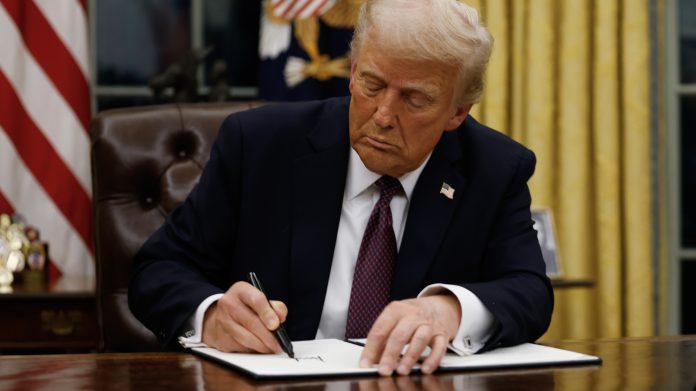
President Donald Trump signs executive orders in the Oval Office of the White House on January 20, 2025.

Anna Moneymaker/Getty Images


hide caption

toggle caption

Anna Moneymaker/Getty Images


President Donald Trump signs executive orders in the Oval Office of the White House on January 20, 2025.

Anna Moneymaker/Getty Images

The Trump administration has issued more than 50 executive actions, since the 47th president returned to office three weeks ago. This has opened the door to a flood of legal challenges — there are dozens of cases challenging the White House’s actions and judges all over the country have found that the White House likely acted illegally.

There are rulings that block the dismantling of USAID, the administration’s freeze on federal grants and more:

  • On immigration, several judges have blocked Trump’s order ending birthright citizenship.
  • On the federal workforce, a judge blocked the offer encouraging government employees to resign.
  • On transgender rights, a judge blocked the Trump administration from moving trans women to federal prisons for men.

As the challenges, and the rulings, continue to pour in — Trump’s team is punching back:

  • After a judge blocked Elon Musk’s DOGE team from accessing personal data and other Treasury department systems, Musk referred to him as “a corrupt judge protecting corruption” and called for his impeachment.
  • Vice President JD Vance made the controversial claim on Sunday that “judges aren’t allowed to control the executive’s legitimate power.”
  • On Monday, in an interview with radio host Mark Levin, President Trump criticized judges for wanting to “tell everybody how to run the country.” Adding that “judges should be ruling. They shouldn’t be dictating what you’re supposed to be doing and why is someone saying you’re not allowed to.”

These comments suggest that Trump’s circle may be willing to ignore court orders and defy judicial authority — that authority is enshrined in article three of the U.S. constitution.

What power does the judicial branch have if the executive branch simply refuses to comply?

Is the U.S. facing a constitutional crisis?

Checks and balances.

Amanda Frost is a Law Professor at the University of Virginia Law. She says a constitutional crisis occurs when one branch of government, usually the executive, “blatantly, flagrantly and regularly exceeds its constitutional authority — and the other branches are either unable or unwilling to stop it.”

Frost says the first half of her definition is already happening, and that it’s clear President Trump has gone beyond the powers of the executive branch. She points to him trying to usurp Congress’ “power of the purse” or trying to put an end to birthright citizenship as examples.

“So I am deeply concerned, as I think every American should be, about the way in which executive power is being abused, misused and overstepping the bounds of the authority,” Frost says. “But I will say that as of today, at this moment, the executive branch has not taken the position that it can violate court orders or that it does not need to comply with court orders. So as long as we remain in a system in which the executive follows, or at least states that it has to follow what a court says, I have hope that the system will hold.”

She says the way our system is intended to work is that each of the three branches maybe pushes at the edges of its powers — and ideally at that point, the other branches should step in and push back.

Court orders.

So what happens if the executive does turn its back on a legitimate court order? Frost says there are a number of mechanisms or tools courts have to enforce their orders:

“Things like subpoenaing government officials to come and explain themselves if they’re not following orders, holding government officials in contempt or fining individuals. All that said, if at the end of the day, neither political branch nor the people want to see the law enforced, eventually the courts will fail in their efforts to do so. Our system, at the end of the day, relies on the people and elections and the political branches of government to ensure that we remain a nation governed by law.”

A new territory.

On Monday, Judge John McConnell, Jr. wrote that the administration defied a temporary restraining order by continuing to improperly freeze federal funds.

The Trump administration argues that it acted “in good faith” to interpret the scope of the restraining order and has appealed the ruling.

“The response that the Trump administration has given is within the system as we know it,” Frost says. “If they begin blatantly violating court orders and saying they don’t have to follow them, then we’re in new territory.”

She says we are not yet in a constitutional crisis – yet – but we’re “undergoing a constitutional stress test.”

“We have an executive that has usurped the power of Congress and overstepped the boundaries of the office. And the question is, will the courts step up to play their constitutional role in stopping it? And following that, will the executive comply with court orders requiring them to stop taking action?”

For sponsor-free episodes of Consider This, sign up for Consider This+ via Apple Podcasts or at plus.npr.org

Email us at [email protected]

This episode was produced by Elena Burnett and Marc Rivers.

It was edited by Courtney Dorning and Nadia Lancy.

Our executive producer is Sami Yenigun.

Firefighters battle inferno after reported explosion near Texas airport, at least 4 injured

0

Multiple people have been taken to the hospital after a reported vehicle explosion ignited a large inferno Tuesday afternoon near El Paso International Airport.

Just before 4 p.m., El Paso Fire Department posted on X confirming crews were responding to a condition 4 fire at the Sun Metro Transit Operations Center. 

The fire was later upgraded to a second alarm, which means the fire escalated and more firefighters were needed to battle the blaze.

Four people were taken to area hospitals, according to the fire department.

The Texas Department of Transportation shared photos of the inferno near El Paso International Airport. (Texas Department of Transportation)


SEN. SCHIFF URGES TRUMP ADMIN TO EXCLUDE FIREFIGHTERS FROM FEDERAL HIRING FREEZE

KFOX14 reported a vehicle exploded, possibly inside the Sun Metro center, igniting the fire.

El Paso Police Department confirmed it is assisting and asked locals to avoid the area.

The Texas Department of Transportation shared photos of the inferno near El Paso International Airport.

The Texas Department of Transportation shared photos of the inferno near El Paso International Airport. (Texas Department of Transportation)

LOS ANGELES FIRE VICTIMS TO BE BOOTED FROM RED CROSS SHELTER TO MAKE SPACE FOR FILM CREWS, EVENTS

The fire department said the area was evacuated, affiliate FOX 4 Dallas-Fort Worth reported.

A category 4 fire carries a “very high” level of danger, according to the US Forestry Service. It can spread rapidly and become long-lasting.

CLICK HERE TO GET THE FOX NEWS APP

Traffic is closed until further notice at Montana Avenue and Wedgewood Drive, according to police and the Texas Department of Transportation.

Venezuelan Migrant Sent to Guantánamo Bay Is ‘Not a Criminal,’ Family Pleads

0

Luis Alberto Castillo, a father of one from Venezuela, entered the United States on Jan. 19, one day before Donald Trump became president for a second term — swept into office on a promise to treat undocumented migrants with a heavy hand.

By Feb. 4, Mr. Castillo was on a plane to a U.S. Navy base at Guantánamo Bay in Cuba, best known for a detention center that has long held terrorism suspects accused of launching the deadliest attack on American soil.

That day, the Department of Homeland Security declared that those who had been transferred to the island represented “the worst of the worst” and were all members of a Venezuelan criminal group, the Tren de Aragua.

But in an interview from her home in Colombia, Mr. Castillo’s sister Yajaira Castillo said her brother was not a gang member to be feared, but rather an everyday Venezuelan who had fled his country because of its economic crisis.

She broke down repeatedly during the conversation, crying as she described her pain and confusion around her brother’s situation.

“My brother is not a criminal,” she said. “This is all discrimination and xenophobia, just because he’s Venezuelan.”

Given that Mr. Castillo had spent such little time in the United States, she questioned how the U.S. government could have determined that he was a member of the Tren de Aragua, or was worthy of such harsh treatment.

After he entered the United States, officials suspected Mr. Castillo of being a member of the gang because of his tattoos, according to two people familiar with his case who were not authorized to discuss it publicly.

He did not admit to being a part of the criminal group. Later, officials assessed his tattoos and interviewed him, and they found that he did not appear to have ties with the Tren de Aragua, the people said.

In an initial email, a spokeswoman for the Department of Homeland Security said that Mr. Castillo was in the United States illegally and had final deportation orders issued by a federal judge.

“This administration abides by the rule of law,” said the spokeswoman, Tricia McLaughlin. “During further assessment, intelligence officers could not definitively determine whether the individual is or is not a confirmed member of TDA,” or Tren de Aragua. “He may very well be a member of this vicious gang. He may not be.”

In a follow-up message, Ms. McLaughlin said that the department had received new information that Mr. Castillo was a member of the gang. She did not provide evidence.

“TDA is a pathetic gang for human trafficking, drug trafficking and kidnap for ransom among other heinous crimes,’’ Ms. McLaughlin said. “The New York Times is more interested in writing sob stories about its disgusting members than justice for its victims.”

In the interview, Mr. Castillo’s sister shared a screenshot that indicated that he had not tried to evade authorities when he entered the country. The image included details of an appointment her brother had secured to present himself at the border to claim asylum on Jan. 19 at 7 a.m.

The Biden administration had set up a system for migrants to make these claims and enter the United States legally through an app called CBP One. Mr. Trump ended the program on Jan. 21.

Over the last week, the United States government has sent more than 80 men to Guantánamo Bay as part of larger plan by the Trump administration to hold as many as 30,000 migrants at the Naval base. So far, all the detainees are believed to be Venezuelans. Some are being held in a prison building on the base, while others are detained at the Migrant Operations Center, a dormitory-style facility. (Mr. Castillo is being held at the migrant center, according to D.H.S.)

U.S. troops are building a tent camp at the site in an effort to vastly expand its capacity to hold detained migrants.

The Pentagon has described the first few Guantánamo arrivals as “high-threat illegal aliens” and their detention at the base as “a temporary measure.” But the administration has not released any details proving the men have criminal records or described how officials determined they were a threat.

Mr. Castillo is believed to be among the first 10 men who were sent there from El Paso, Texas, on Feb. 4, because his sister recognized him in a photograph of migrants being sent to Guantánamo that was published on social media by Kristi Noem, the new head of the Department of Homeland Security.

The image, in which Mr. Castillo’s head is bowed low and an officer in camouflage and gloves holds his back, was later shared widely on social media. Ms. Castillo happened upon it on TikTok.

The Tren de Aragua, a multinational group born in Venezuela’s Aragua state, has expanded to other parts of Latin America and as far as the United States. The Trump administration recently began the process of designating the group as a foreign terrorist organization.

Mr. Castillo has a Michael Jordan tattoo on his neck, which his sister believes border authorities took as a sign that he was a member of the gang. In one of the last messages he sent to her before detention, Mr. Castillo said that he had made it to the border and that officials “treated him badly because of the tattoos,” she said.

Ronna Rísquez, a Venezuelan investigative journalist who has written a book about the criminal group, said the authorities would be wrong to assume that someone with a Michael Jordan tattoo is a member.

Some individuals in the Tren de Aragua might wear the symbol, she said, but this has more to do with the fact that basketball — which can be played with limited resources — has become enormously popular in poorer parts of Venezuela over the last few decades.

“The passion for Michael Jordan, because he is the ultimate symbol of basketball, has been around for generations,” she said.

Ms. Castillo said the tattoos were simply part of her brother’s look, which often included shorts and sneakers and Jordan gear. She shared a past photo of him wearing a sweatshirt with the “jumpman” logo associated with Mr. Jordan.

She said she believed her brother’s affinity for Mr. Jordan had turned him into a “guinea pig” for the Trump administration’s expanding deportation program.

Like many Venezuelans, Mr. Castillo had left his country years ago and was living in Colombia, washing cars. His sister said he was barely scraping by and had left for the United States in the hopes of making more money “to give everything to his son, to work and work for his son.”

His journey to the U.S. southern border began in late 2023, she said. With limited funds, it took him until January of this year to reach Texas. There, she said, he was apprehended by the authorities.

A review of public police records indicates that Mr. Castillo was not convicted of any crimes while in Colombia.

Mr. Castillo is the eighth of nine siblings; four live in Colombia and four others in Venezuela. He will turn 30 on Feb. 23.

The Guantánamo base is best known for its post-9/11 detention facility, operated by the Pentagon. It today holds 15 foreigners as wartime prisoners, separately from the Venezuelans being held there in migrant detention.

Ms. Castillo said she had known little about Guantánamo, only that it was “a high-danger cell for major terrorists” and that once sent there, prisoners “have no rights, that it’s for the worst criminals.”

All she wanted now for her brother, she said, “is for him to be returned.”

“I don’t want him in the hands of any government,” she continued. “What I want is for him to be returned to us.”

Carol Rosenberg contributed reporting from Florida and Simón Posada from Bogotá, Colombia.

Trump wants an end to paper straws : NPR

0

Paper straws sit on a bar in San Francisco in 2018. President Trump has signed an executive order decrying the “irrational campaign against plastic straws” and directing federal agencies to stop buying paper straws.

Justin Sullivan/Getty Images


hide caption

toggle caption

Justin Sullivan/Getty Images

A decade ago, a video of a sea turtle with a plastic straw stuck in its nostril went viral, spurring a wave of activism aimed at curtailing plastic pollution. The disposable plastic straw became the movement’s poster child. Bans or restrictions on plastic straws were passed in dozens of cities and states.

Backlash followed, and now things seem to have come full circle. President Trump signed an executive order Monday, decrying the “irrational campaign against plastic straws,” and stating that it is “the policy of the United States to end the use of paper straws.”

Where does this leave the movement to cut plastic pollution? Is the paper straw really dead?

“It was never about the straw in particular,” says Jackie Nuñez, founder of the Last Plastic Straw campaign. “It was about single-use plastics, a way to get people to act on it in a simple, tangible way.”

Straws, she says, were a “gateway” issue to get people interested in curbing plastic use. According to one estimate, Americans use, and throw away, as many as a half a billion straws each day.

Nuñez was one of the first people to start advocating for ditching plastic straws, back in 2009. In the early days, pre-turtle video, there were a lot of doubters, even in the world of environmental nonprofits.

“What I found was, even the bad press was good press,” Nuñez says. When people were bashing her anti-plastic-straw crusade, she saw it as an opportunity to talk about the growing problem of single-use plastics.

During a televised signing ceremony Trump railed against paper straws — adopted in recent years as a biodegradable alternative to plastic ones.

“These things don’t work. I’ve had them many times, and on occasion, they break, they explode,” Trump said. “If something’s hot, they don’t last very long, like a matter of minutes, sometimes a matter of seconds. It’s a ridiculous situation.”

Nuñes admits the movement against plastic straws may be over, in terms of being an issue to galvanize the public. But she says efforts to move away from plastic straws did have a lasting impact.

“You can’t undo what you’ve learned, you can’t unsee what you’ve seen. That’s the one thing that I think the plastic straw did. It just really kind of opened up that awareness about single-use plastics,” Nuñez says.

More recently, the movement to reduce single-use plastic has focused less on wildlife (sorry sea-turtles), and more on the negative impact plastics can have on human health, citing a growing body of scientific research.

A study published this month found that human brain samples contained a whole spoon’s worth of tiny nanoparticles. Earlier research found plastic particles in human lungs and in mens’ testicles. One study from last year found nearly a quarter-million plastic particles in a typical liter of bottled water.

Trump’s executive order directs federal agencies to stop purchasing paper straws, making sure they are not provided in government buildings. It also calls for a “National Strategy to End the Use of Paper Straws” to be produced within 45 days.

Though the executive order aims to “alleviate the forced use of paper straws nationwide,” according to a White House fact sheet, plastic straw bans and restrictions will remain in effect in cities and states across the country.

More than a half dozen states have laws stating that restaurants and bars can only provide plastic straws if customers request them. This includes New York, California, Oregon, Washington, New Jersey, Delaware and Rhode Island. Dozens of cities and counties also have restrictions in place — some, including Washington, D.C., ban businesses from providing plastic straws, even if the customer asks for one.

Trump’s action rolls back steps taken by the Biden administration to cut plastic pollution. Last year, Biden pledged to start phasing out the federal government’s purchasing of plastic straws and other single-use plastics starting in 2027.

Trump reveals pick to lead Drug Enforcement Administration

0

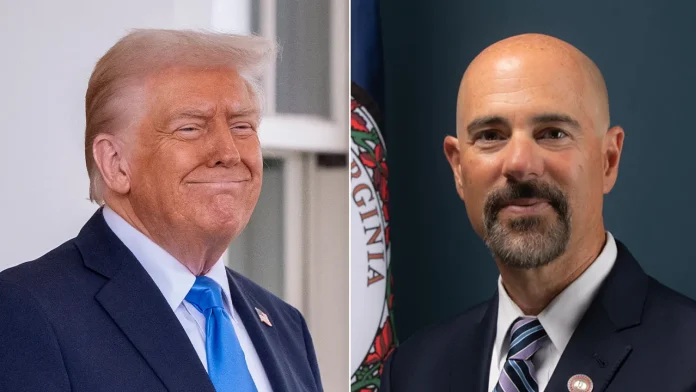
President Donald Trump has nominated a Virginia state official to lead the Drug Enforcement Administration (DEA) in his new administration.

In a Truth Social post on Tuesday, Trump wrote that he nominated Terry Cole to become the next administrator of the DEA. Cole is currently the secretary of public safety and homeland security for the Commonwealth of Virginia.

According to the Virginia government’s website, Cole was previously the chief of staff and executive officer at the DEA’s Department of Justice Special Operations Division, and also served as the DEA’s representative to the National Security Council. The website also notes that Cole worked for the DEA for 22 years, though Trump wrote that he was employed by the DEA for 21 years.

In a social media post, Trump said that he was “pleased” to announce Cole, who will need to be confirmed by the U.S. Senate, as his nominee.

NOEM, HEGSETH, BONDI PLEAD WITH CONGRESS FOR MORE BORDER FUNDING AMID LARGE-SCALE DEPORTATIONS

Trump has nominated Terry Cole to become the next administrator of the Drug Enforcement Administration.  (AP | Virginia.gov)

“Terry is a DEA Veteran of 21 years, with tours in Colombia, Afghanistan, and Mexico City, who currently serves as Virginia’s Secretary of Public Safety and Homeland Security, leading 11 State Public Safety Agencies, with more than 19,000 employees,” Trump’s post read.

Trump also added that Cole holds a degree from the Rochester Institute of Technology, as well as certificates from the University of Virginia and the University of Notre Dame.

“Together, we will save lives, and MAKE AMERICA SAFE AGAIN. Congratulations Terry!” the president’s post concluded.

TRUMP NOMINEE TULSI GABBARD CLEARS LAST HURDLE, HEADS FOR FINAL CONFIRMATION VOTE

Terry Cole smiling

Terry Cole has 22 years of experience working for the DEA. (Virginia.gov)

Trump originally named Florida sheriff Chad Chronister as his first pick to lead the DEA, but Chronister, who serves as the sheriff of Hillsborough County, later withdrew his name from consideration in December.

“To have been nominated by President-Elect @realDonaldTrump to serve as Administrator of the Drug Enforcement Administration is the honor of a lifetime,” Chronister wrote in a post on X at the time.

“Over the past several days, as the gravity of this very important responsibility set in, I’ve concluded that I must respectfully withdraw from consideration. There is more work to be done for the citizens of Hillsborough County and a lot of initiatives I am committed to fulfilling.”

CLICK HERE TO GET THE FOX NEWS APP

A DEA logo

A logo reading DEA Special Agent is pictured in the Office of the US Drug Enforcement Administration (DEA). (JOHANNES EISELE/AFP via Getty Images)

The DEA is expected to work with the Department of Homeland Security and U.S. Immigration and Customs Enforcement to fulfill Trump’s campaign promises of restoring safety at the Southern border. At the end of January, federal agents conducted nationwide roundups of more than 1,200 illegal immigrants accused of committing crimes in the U.S.

Fox News Digital’s Stepheny Price contributed to this report.

Wednesday Briefing: Israel Threatens to End the Cease-Fire

0

Benjamin Netanyahu, the prime minister of Israel, yesterday warned that “intense fighting” would resume in Gaza if Hamas did not release hostages by noon on Saturday. His statements closely echoed President Trump’s threats against Hamas on Monday after the Palestinian group said it would postpone releasing hostages.

Netanyahu did not specify how many hostages would have to be freed to stop a renewed war. Three hostages were scheduled to be released this week.

In Washington, Trump met with King Abdullah II of Jordan yesterday and insisted that the U.S. would “take” Gaza. He repeated that other countries in the region, namely Jordan and Egypt, should take in the Palestinians currently there. Egypt and Jordan rejected the idea when Trump raised it last week. Rather than pushing back directly, Abdullah said it would be best to consult with other Arab nations. Follow our coverage.

Aid: On the eve of Abdullah’s visit, Trump said he could cut aid to Jordan unless it took in Palestinians. Jordan receives more than $1.5 billion from the U.S. each year. Experts say that the survival of the king’s rule depends on his digging in against Trump’s plan.

Related: The Palestinian Authority announced that it would end payments to the families of Palestinians jailed or killed by Israel. Analysts saw the move as an attempt to curry favor with Trump and to bring much-needed foreign aid into Palestinian coffers.


Canada, Mexico and European countries denounced Trump’s 25 percent tariffs on steel and aluminum as unfair and threatened yesterday to retaliate.

Justin Trudeau, Canada’s prime minister, said that his country would “be working with our international partners and friends” to pressure the Trump administration to hold off on the tariffs, which are set to go into effect on March 12. He also said he was ready to respond with countertariffs.

European leaders promised to react firmly but weren’t specific about what that response would look like. Mexican leaders called the tariffs “unjustifiable” and planned to appeal to Trump in a bid to fend them off.


The prospect of a peace deal for Ukraine is sure to be a focus this week at the annual Munich Security Conference, which Vice President JD Vance and Secretary of State Marco Rubio are scheduled to attend.

Experts say that deterring Russia from reinvading Ukraine once the war ends would require 150,000 troops and U.S. help with air cover, intelligence and missile defense. President Volodymyr Zelensky of Ukraine has spoken of as many as 200,000 foreign troops on the ground. My colleague Steven Erlanger looked at the possibilities for European “boots on the ground.”

The highest-grossing movie ever in China is “Ne Zha 2,” an animated film about a demonic child that fights monsters. It is part of a trend in the world’s second-largest movie market: Domestic films with patriotic messages or roots in traditional culture are outperforming Hollywood hits.

Lives lived: Maria Teresa Horta, a feminist writer who helped shatter conservative Portugal’s strictures on women, died at 87.

Fashion Week came to an end in New York City yesterday. Vanessa Friedman, our chief fashion critic, spoke to us about what she saw on, and off, the runway.

What defined this year’s NYFW?

Vanessa: The themes were, predictably, shaped by the current political moment; designers said they had started making their collections in one reality, and after the election, the looks started to change. That meant wrestling with questions of femininity — what does that look like when traditional gender definitions are resurgent? — as well as whether to wear your values on your sleeve (or your runway).

In terms of trends, there were a lot of over-the-knee boots and a lot of fringing. A more polished, tailored kind of sportswear is also staging a return. People want to feel pulled together when so much of life seems out of their control.

What got people talking?

The big news in New York was the return of Calvin Klein to the runway after almost seven years away. Klein defined a certain kind of American minimalism and suiting for decades; the brand is hoping to reclaim that territory and redefine American style under new designer Veronica Leoni. Her show was pretty loyal to the heritage — too loyal, really — but it did feel like the beginning of a new era.

Two CFPB officials resign after being ordered to stop work : NPR

0

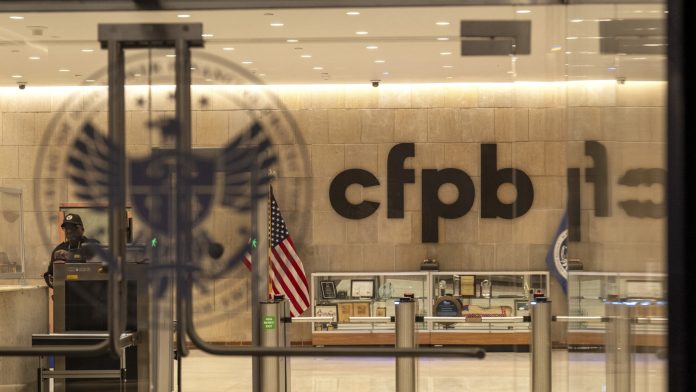
A security officer works inside of the Consumer Financial Protection Bureau (CFPB) building headquarters on Monday in Washington. Staff and contractors have been told the building is closed for the week, and to perform no work.

Jacquelyn Martin/AP/AP


hide caption

toggle caption

Jacquelyn Martin/AP/AP

The directors of supervision and enforcement at the Consumer Financial Protection Bureau stepped down on Tuesday morning, with both citing the stop work orders issued in recent days by the agency’s acting Director Russell Vought.

The resignations by supervision head Lorelei Salas and enforcement head Eric Halperin were announced to their respective teams via emails that were shared with NPR by current and former employees of CFPB. The two officials were appointed to their roles over three years ago.

Before Halperin and Salas resigned, they were put on leave by Mark Paoletta, general counsel at the White House Office of Management and Budget, according to a CFPB employee familiar with the situation who requested anonymity because they are not authorized to comment. NPR could not determine why Halperin and Salas were placed on leave.

“The Bureau has been instructed to stand down. I do not believe it is appropriate, nor lawful, to stop all supervisory activities and examinations, and I cannot longer serve as the Supervision Director,” Salas wrote in her email.

Halperin sent a similar message.

“I don’t believe in these conditions I can effectively serve in my role, which is protecting American consumers,” he wrote. “Since October 2021, we have secured orders for $9.5 Billion in penalties and redress for consumers. It has been an honor to serve with you.”

The CFPB was created in the wake of the 2008 financial crisis and is part of the Federal Reserve system, from which it receives its funding. The bureau is an enforcement agency, and its supervisors monitor companies across the country to ensure they are following consumer protection rules.

The bureau has been a focus of the Trump administration’s attention and ire, and there have been several dramatic moves to stop the agency’s work in recent days.

A barrage of orders

Late last week, employees of Elon Musk’s DOGE team entered CFPB headquarters and were given access to key systems. The Department of Governmental Efficiency was created through one of Trump’s executive orders.

Then Vought took over as CFPB’s acting head, and on Saturday night announced that he would seek no money at the bureau’s next funding round.

Vought also instructed staff to cease doing the agency’s work, including supervision. On Sunday, agency staff were told that CFPB’s Washington headquarters would be closed for the week and that they would not be permitted to enter. On Monday, staff and contractors were told they couldn’t “perform any work tasks.”

Rohit Chopra, who led the agency until he was fired by President Trump earlier this month, was interviewed Monday on NPR’s Morning Edition, and he described the work that CFPB does on behalf of consumers — work that’s now on hold.

“There’s all sorts of fraud and abuse that targets people in our country,” Chopra said, naming lawsuits it has filed against big banks like JPMorgan Chase, Bank of America and Wells Fargo.

“Really, the CFPB is protecting people’s pocketbooks every day, and that future is looking uncertain,” he said.