


A once-fringe movement claims having more babies is the only way to save civilization. NPR reporter Lisa Hagen and sociologist Karen Guzzo explain who’s empowering pronatalism today.
Republicans will need near-unanimous GOP support to advance Trump's top priorities

Republicans in Congress are eager to turn President Trump’s top policy priorities into actual legislation. But they’ll need near-unanimous GOP support to get Trump’s “big beautiful bill” passed.
Republicans are planning big changes to federal student loans : NPR

Republicans are planning big changes to federal student loans.
Yulia Romashko/Getty Images
hide caption
toggle caption
Yulia Romashko/Getty Images
Republicans on the House education committee publicly unveiled their plan Tuesday to remake the federal student loan system while also cutting more than $330 billion in federal spending to help offset the cost of extending President Trump’s tax cuts.
The Republican proposal includes eliminating previous income-contingent loan repayment options and replacing them with one “Repayment Assistance Plan.” It also ends the Grad PLUS loan program, sets strict limits on Parent PLUS loans and envisions a new system whereby colleges and universities are forced to reimburse the federal government for a share of the debt when their students fail to repay their loans.

During the plan’s unveiling Tuesday – what is known as a committee “markup” – the education committee’s Republican chairman, Rep. Tim Walberg of Michigan, said, “If there is any consensus when it comes to student loans, it’s that the current system is effectively broken and littered with incentives that push tuition prices upward. Schools have no reason to lower costs or ensure degrees align with employer needs, all while students and taxpayers pay the price.”
The committee’s ranking member, Democrat Rep. Bobby Scott of Virginia, made clear, though, there’s no consensus on Republicans’ proposed remedy: “This current reconciliation plan would increase costs for colleges and students, limit students’ access to quality programs … and then take the so-called ‘savings’ to pay for more tax cuts for the wealthy and the well-connected.”
Because the proposal is part of a reconciliation package, Republicans only need a simple majority in the Senate – and a unified front in the House – to pass it.
In other words, it’s no sure thing, but it’s as close to a sure thing as Congress gets these days.

Here’s a quick run-through of some of the key changes Republicans outlined:
Shrinking loan repayment options to a two-plan system
For new borrowers taking out federal student loans after July 1, 2026, gone will be the Biden administration’s generous SAVE Plan, as well as a host of previous repayment plans including Income-Contingent Repayment (ICR) and Pay As You Earn (PAYE).
In their place will be two options: 1) a “Standard Repayment Plan” with fixed monthly payments across a range of 10 to 25 years and 2) a “Repayment Assistance Plan” that bases monthly payments on a borrower’s total adjusted gross income. The plan also waives unpaid interest that isn’t covered by the monthly payment, according to a Republican fact sheet.
The maximum term of this new income-based repayment plan will take some getting used to for borrowers: While previous plans offered forgiveness after 20 or 25 years, the Repayment Assistance Plan comes with a maximum repayment term of 360 payments – or 30 years.
For borrowers who took out loans before July 1, 2026, they will have access to an updated version of the old Income-Based Repayment plan.
Cuts to Pell Grants
Republicans want to make a few significant changes to the Pell Grant program for low-income students. They proposed increasing the definition of full-time college attendance, which is required for students to receive the maximum Pell amount, to 30 credit hours per year. They also plan to require that Pell students be enrolled at least halftime, or 15 credit hours per year, to qualify for any Pell award at all.
These changes, according to an analysis by the National College Attainment Network, would result in a significant cut in aid for many Pell recipients.
There is one way Republicans want to expand access to Pell: by opening the grants up to students who attend short-term workforce-training programs.
Changes coming to Grad PLUS, Parent PLUS and subsidized loans for undergraduates
After July 1, 2026, Republicans plan to end the Grad PLUS loan program for graduate school borrowers as well as subsidized loans for undergraduate borrowers, where the government covers interest on the loans while the borrower is still enrolled in school.
Republicans also want to cap the total amount a student can borrow each year based on “the median cost of attendance for students enrolled in the same program of study nationally,” according to the Republican fact sheet.
In other words, if a student wants to attend a program with an unusually high cost relative to other schools nationwide, federal loans might not cover the full bill.
There would also be new borrowing caps, or “aggregate limits,” for undergraduates ($50,000), graduate students ($100,000) and professional programs ($150,000).

The Parent PLUS loan program would see big changes too. Parent PLUS has been controversial because it comes with a higher interest rate than traditional federal loans and has led to nagging debts for many older borrowers, but it has also been an important tool for many families of color, who lack generational wealth, to put their children through college.
Republicans want an aggregate limit of $50,000 on Parent PLUS borrowing. What’s more, they will require students to take out the maximum available unsubsidized loans before families can fill in the remaining gap with Parent PLUS.
“Skin-in-the-game accountability” for colleges
One novel proposal in Republicans’ reconciliation package would change the fundamental terms colleges and universities agree to when they participate in the federal loan program.
It would require schools to reimburse the federal government “for a percentage” of the loans their students fail to repay, calculating that percentage “based on the total price the institution charges students for a program of study and the value-added earnings of students after they graduate or, in the case of students who do not graduate, the completion rate of the institution or program.”
The change would also include penalties to schools for late or missed payments that could culminate in a college losing access to the federal student loan program altogether.
While Republicans push for new accountability from schools, they are also ending older provisions to protect borrowers when their school suddenly closes or if they believe they were enticed to enroll with false promises about potential work or earnings.
In first 100 days, Trump tests limits, creates chaos and turns from allies : NPR
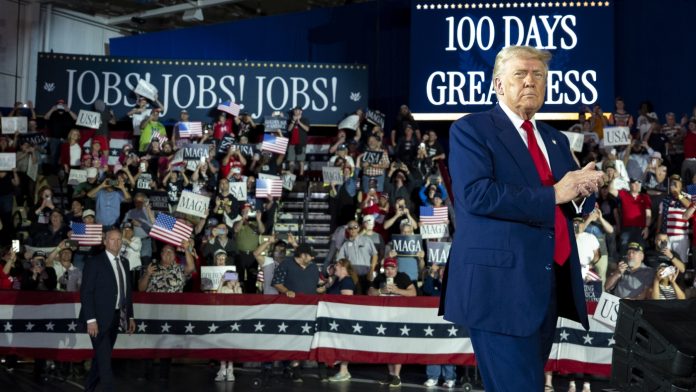
President Trump arrives to speak on his first 100 days at Macomb County Community College Sports Expo Center on April 29 in Warren, Mich.
Alex Brandon/AP
hide caption
toggle caption
Alex Brandon/AP
So much has happened in the first 100 days of President Trump’s second term.
On Day 1, he signed a slew of executive orders aimed at, among other things, creating DOGE, his government-slashing informal Department of Government Efficiency, erasing diversity, equity and inclusion efforts, getting rid of birthright citizenship for people born in the U.S. to parents without permanent legal status, declaring an emergency at the southern border and recognizing only “two sexes – male and female.”
He’s moved aggressively to implement tariffs on imported goods, restructure the federal government and tighten his grip on power, carry out deportations, reposition the United States on the world stage, and punish perceived political enemies.
It hasn’t all gone smoothly. There was the Signalgate scandal that has engulfed several top members of his administration, some courts have pushed back on his deportation attempts, there have been reversals in some of the firings of federal workers and cuts to programs and agencies, and the billionaire leading his government restructuring effort, Elon Musk, has grown increasingly unpopular.
The public reaction toward Trump’s trade wars, in particular, hasn’t been positive, leading to a plunge in his poll numbers, according to a NPR/PBS News/Marist poll released this week. A slim majority now even disapproves of his handling of immigration, which had been a relative strength.
Here’s a look at some of the major moves Trump has made in the past 100 days:
Skip to a section: DOGE, governmental overhaul and a tightening grip on power | Immigration and deportations | Tariffs | Foreign Policy | Retribution | Targeting DEI and transgender rights | Signalgate
DOGE, governmental overhaul and a tightening grip on power
Trump has moved aggressively to tighten his grip on power and decrease accountability. He fired inspectors general across various agencies, purged leaders perceived not to be “pro-Trump,” has moved in friendlier news media and decreased access for traditional journalists and threatened them with lawsuits and subpoenas.
The Trump administration has also fired thousands of federal workers across multiple agencies, offered a form of a buyout to thousands of others, cut or proposed cutting funding for congressionally authorized programs, for such things as science research, Head Start and low-income heating, among many others. It has dismantled or begun dismantling entire agencies, such as the USAID, the Consumer Financial Protection Bureau and the Department of Education.
The cuts represent a tiny fraction of the budget, but that may not be the point. Russ Vought, Trump’s budget director and co-author of the Heritage Foundation’s Project 2025, which the second-term Trump agenda has hewed closely to, said before Trump won that he wanted federal workers to feel “trauma.” That has certainly been the case for many, who haven’t known what to expect from one day to the next — whether it will be a Reduction in Force email in their inbox or a cryptic request to write about five things they did at work in the past week.
The cuts haven’t been made with a scalpel, but an axe — or, rather a chainsaw. The man wielding that chainsaw — literally on stage at a conservative political conference in late February — has been Elon Musk, the world’s richest man, CEO of Tesla and founder of SpaceX.
Musk ingratiated himself with Trump by donating millions for his presidential campaign. And Musk has been a fixture in these first few months of Trump’s second term, leading efforts to restructure the federal government through his informal Department of Government Efficiency, or DOGE.
Musk spoke in the Oval Office by Trump’s side, wore a “Tech Support” T-shirt to a Cabinet meeting and appeared in a joint interview on Fox News — with the president of the United States.
But Musk’s influence soon seemed to lessen. Republicans faced angry constituents at town halls, upset with Musk and his “DOGE bros,” who have been inserted at many federal agencies and accessed sensitive personal data of millions of Americans, including at the Social Security Administration.
Musk became a central figure in a Wisconsin judicial race, spending millions on it, but the conservative candidate lost handily. Questions started to mount about whether Musk’s days were numbered.
With Tesla facing a 71% profit drop, Musk has said he will step back from DOGE soon, meaning it’s more likely than not that he will take a backseat by the end of next month when his advisory role expires.
Immigration and deportations
Trump said during the campaign that he would focus on getting “criminals” out of the country. But lots of other immigrants without legal permanent status have been caught up in raids, detentions and deportations — from college students on visas, who spoke out against the war in Gaza to parents of children who are U.S. citizens, to people like Kilmar Abrego Garcia.
And they’ve been sent to a U.S. military prison at Guantanamo Bay, Cuba, a maximum security prison in El Salvador, and detention centers in Panama and Costa Rica without any due process. Trump has even mused publicly about sending “homegrown” criminals, meaning U.S. citizens, to El Salvador, as well.
Abrego Garcia’s case has gained tons of attention in recent weeks. He was born in El Salvador, has lived in Maryland for more than a decade after crossing the border illegally when he was 16 because of gangs threatening him and trying to recruit him. He had a standing order from 2019 not to be deported to El Salvador because of that.
The U.S. government admitted he was deported by mistake due to an “administrative error.” But the Trump administration has since doubled down, contending that he is a gang member. A judge handling Abrego Garcia’s case says the evidence against him is flimsy. He has no criminal record in the U.S. or El Savador, is a father and is married to a U.S. citizen.
But the Trump administration is refusing to try to bring him back despite a Supreme Court order requiring the government to “facilitate” his return. The Trump administration argues that the Supreme Court also said the courts should not interfere with the president’s foreign policy and that El Salvador does not want Abrego Garcia returned.
It’s not the first time that the Trump administration in these three months has come ever-so-close to a full-blown Constitutional crisis. It has walked lines with thin justifications and reached deep with seldom-used laws and defying lower-court rulings with judges launching contempt investigations.
Trump is testing the limits of his power and banking on a friendly, conservative-majority Supreme Court to have his back. The next several months will show just how far the courts allow him to go when it comes to deportations.
Tariffs
All presidents start out with a degree of political capital — some more than others. And they usually spend it early on in their presidency on one big policy priority — and with a limited amount of time to get it done.
Trump decided that would be attempting to restructure the world economy.
He has long believed that tariffs are an important way, if not the way, to reclaim a vague notion of what he considers American greatness.
“A lot of people are tired of watching the other countries ripping off the United States,” Trump said in 1987 in an interview with then CNN host Larry King. He added, “They laugh at us. Behind our backs, they laugh at us because of our own stupidity.”
That was a reaction to Japan and later China’s increase in manufacturing and imports into the United States. Trump has been singing the same tune for almost 40 years on tariffs. But his effort to actually implement those has led to chaos and volatility – with trading partners, allies and global markets.
Wall Street, in fact, has had a historically bad performance so far. Trump’s trade wars have taken a toll on his political standing — and getting through something like tax cuts now will be more of a slog than it would have been if he chose to use his political capital to secure those first.
Foreign Policy
Internationally, Trump has repositioned the U.S. away from the long-held, post-World War II bipartisan stance championing democracy and human rights abroad. Instead he’s cozied up to strongmen, like Hungary’s Viktor Orbán and Russia’s Vladimir Putin — or at least in the case of Putin, to not take sides even when all of the U.S.’s allies are standing with Ukraine.
“You don’t have the cards,” an irritated Trump, who is trying to strike a peace deal to end the fighting in Ukraine, told Ukrainian President Volodymyr Zelenskyy in their disastrous Oval Office meeting in February.
That’s very different than any past president would have acted toward a pro-Western, democratic ally that was invaded by a larger, autocratic regime. Trump has parroted Russian talking points in blaming Ukraine for “starting” the war and implied that Zelenskyy isn’t the rightful leader of the country. He has publicly tried to cajole territorial and natural-resource concessions from Ukraine, while asking little of Russia except to stop fighting.
Trump has pushed to make lots of other deals – unsuccessfully to this point – between Palestinians and Israelis over the war in Gaza and with Iran on nuclear weapons.
And that’s to say nothing of Trump renaming the Gulf of Mexico the Gulf of America, his continued calls to acquire Greenland, take the Panama Canal Zone back, make Canada the 51st state, take over Gaza to make it into the “Riviera of the Middle East,” and browbeat allies over trade.
Retribution
During the presidential campaign, Trump promised to seek retribution against those he felt wronged him.
“WHEN I WIN, those people that CHEATED will be prosecuted to the fullest extent of the Law, which will include long term prison sentences so that this Depravity of Justice does not happen again,” he wrote on his social media platform in October of last year. “We cannot let our Country further devolve into a Third World Nation, AND WE WON’T! Please beware that this legal exposure extends to Lawyers, Political Operatives, Donors, Illegal Voters, & Corrupt Election Officials. Those involved in unscrupulous behavior will be sought out, caught, and prosecuted at levels, unfortunately, never seen before in our Country.”
He made similar threats and promises more than 100 times.
As president, he is following through. He pardoned all of those convicted for their actions during the siege at the Capitol on Jan. 6, 2021, even violent white nationalists, who plotted and planned for the day.
He has fired and is investigating those who investigated and indicted him. He stripped security clearances from former President Joe Biden and former Vice President Kamala Harris, whom he ran against in 2024 for president. He also took them away from former Republican members of Congress Liz Cheney and Adam Kinzinger, who have spoken out against him. And he also took them away from retired Gen. Mark Milley, a former chairman of the Joint Chiefs of Staff who called Trump a “fascist,” as well as former national security council staffer Alexander Vindman who testified against Trump in his first impeachment and is now a member of Congress.
He’s gone after law firms and the Associated Press (for not going along with his renaming of the Gulf of Mexico the Gulf of America) and stripped the security clearance of his former head of cybersecurity, Chris Krebs, who said the 2020 election was properly conducted, and of Krebs’ employer. He also called for an investigation into his time as head of the U.S. Cybersecurity and Infrastructure Security Agency.
He also took away Secret Service protection for Biden’s children – even though Biden left it in place for Trump’s.
The fear of retaliation has silenced dissent among many of those in his own party as well.
“We’re in a time and place, where, I don’t know, I certainly have not, I have not been here before,” said Alaska Republican Sen. Lisa Murkowski earlier this month. “And I’ll tell you, I’m oftentimes very anxious myself about using my voice, because retaliation is real – and that’s not right, but that’s what you’ve asked me to do, and so I’m going to use my voice to the best of my ability.”
Targeting DEI and transgender rights
Besides immigration, little has animated Trump and the MAGA movement’s culture war more than the targeting of diversity, equity and inclusion initiatives, as well as the rights of people who are transgender.
There have been multiple executive orders seeking to eliminate DEI or limit or eliminate the rights of transgender and nonbinary people in government jobs and the military but also in private life, businesses and schools, including universities, across the country.
Trump has signed executive orders, and his administration has sued states and universities, taken down photos of renowned black historical figures from government buildings and websites, scrubbed websites of content it opposes and banned certain books from agency libraries, archives and military service academies. Trump took over the Kennedy Center, because he did not like the types of artists who performed there and said that the venue was in “disrepair.”
Even the Smithsonian, home to the free museums in Washington, D.C. that millions visit every year, are being transformed through executive actions. The Trump administration argues that historical exhibits shouldn’t “inappropriately disparage Americans” and people shouldn’t be made to feel bad about the country’s history.
While Trump argues that a revisionist movement has cast the nation’s history in a “divisive, race-centered ideology,” the MAGA movement wants a white-washed version of history presented.
Signalgate
Every president has scandals that are out of their control. And this presidency is no different.
For all of the things Trump himself has done, this flashpoint began with top members of his administration’s handling of sensitive military operation details — and adding a journalist to a group chat on the messaging app Signal. (NPR’s chief executive, Katherine Maher, is chairman of the nonprofit Signal foundation that supports the messaging app.)
But the scandal was compounded by the administration’s reaction, especially by his Defense secretary, Pete Hegseth, who shared the most sensitive details. Hegseth lashed out at the media and denied that the information shared was “classified.” It was later revealed that Hegseth was copy-pasting the details from a secure government channel put in by the head of U.S. Central Command.
And he was sharing the military attack plans, not just with key Trump administration officials, but also in a second group chat on his private phone – with his wife, brother and personal attorney.
Trump has stood by Hegseth, even denying that he did anything wrong at the outset. In the aftermath, Hegseth has become increasingly isolated at the Pentagon. Several aides, who were previously close to him, left or were fired. One even penned an op-ed – with his name on it – describing a month of chaos at the Defense Department.
The whole scandal has raised questions about how Trump’s team handles this kind of sensitive information, record-keeping and for what exactly congressional Republicans would hold the administration accountable. Answer: not much, if anything.
One of the only GOP members to speak out was Rep. Don Bacon of Nebraska, who said, if he were president, he would not tolerate Hegseth’s behavior and said it shows the Defense Secretary to be “an amateur person.”
Bacon is one of the few congressional Republicans who represents a district Kamala Harris won last year.
Heidi Glenn contributed to this story. It was designed and developed by Alyson Hurt.
Trump’s Michigan rally; Steve Bannon; Trump’s bill : NPR
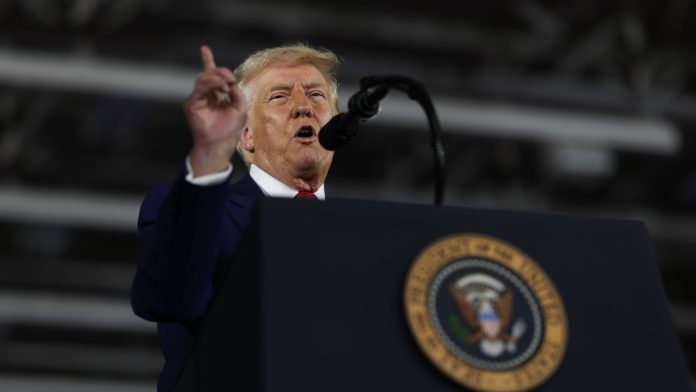
Good morning. You’re reading the Up First newsletter. Subscribe here to get it delivered to your inbox, and listen to the Up First podcast for all the news you need to start your day.
Today’s top stories
President Trump marked the 100th day of his second term with a rally in Michigan last night. There, Trump cited an editorial alleging that his presidency has been the most consequential in history. Trump has pushed the limits of presidential power, used wartime authorities to crack down on immigration, punished his political enemies and launched a trade war that has upended global relationships. During his hour-and-a-half rally, he falsely claimed to have won the 2020 presidential election, blamed former President Joe Biden for various national problems, and insisted he’s not getting enough credit for his accomplishments.
President Trump speaks during a rally at Macomb Community College on in Warren, Mich., on Tuesday to mark his first 100 days in office.
Scott Olson/Getty Images
hide caption
toggle caption
Scott Olson/Getty Images
- 🎧 The key difference between Trump’s first and second terms in office so far is that now, he has more experience, NPR’s Tamara Keith tells Up First. During his first term, he received pushback from his administration. This time, the president has filled his administration with more loyalists. Keith said that at the rally, Trump seemed to be transitioning to a campaign-style push for what he calls his “one big beautiful bill,” — a massive tax and spending cut measure he is pushing Republicans to pass quickly in Congress.
Trump’s bill is the main focus for Republicans in Congress as they return to the nation’s capital after a two-week recess. The House says the goal is to pass the bill by Memorial Day.
- 🎧 This is an entirely partisan process, because the Democrats, who are unanimously opposed to the bill, do not have the power to stop it, NPR’s Elena Moore says. Some of the bill is divisive among Republicans. With a razor-thin majority, virtually full party support is needed to get this bill across the finish line.
Trump’s sometime adviser Steve Bannon said he is expecting a “summer like no other,” during an interview with Morning Edition host Steve Inskeep. Bannon promoted Trump’s agenda in 2016 and worked in the White House for some time. Political observers keep an eye on Bannon to gauge where Trump’s coalition may be going. Watch the video of Bannon and Inskeep’s expansive conversation, which included discussions about tariffs, immigration and how Trump is using his power.
- 🎧 Bannon expressed to Inskeep that he wants to see more intense attacks on universities, both public and private, from the administration — even as many Americans tell pollsters they believe Trump has gone too far. He also wants all Chinese students to be sent home. Bannon says he wants to see high-value-added manufacturing return to provide an opportunity for an individual to have a job and support their family while one spouse stays home if they want to. “Once we’re back to that, the country is going to be vibrant and robust again,” he says.
Living better

Sunnu Rebecca Choi/For NPR
Living Better is a special series about what it takes to stay healthy in America.
Many people are currently feeling financial anxiety, brought on by the tens of thousands of federal workers cut from their jobs, the possibility of a recession and other recent developments in the headlines. Some people may experience financial setbacks as a disaster that can trigger intense stress, which can then spiral into serious health problems, like depression, substance abuse, high blood pressure and heart problems. Research shows that how you approach financial stress can be key to protecting your health.
- 💰 Acknowledging and processing the grief of a job loss is an important step toward moving on and embracing your new financial reality.
- 💰 Find new ways to utilize your skills with side hustles or volunteering. It can provide purpose and a path forward, and allow you to reinvent yourself.
- 💰 Give yourself permission not to worry about the future and focus on the immediate present. Carve out a discrete period, like one or three months, to set goals around financial savings and the number of jobs you plan to apply for.
Picture show

Alex, a female bodega kitten playing with a Lotto ticket at Grand Organic in Brooklyn, New York on March 31, 2025.
Lanna Apisukh for NPR/Lanna Apisukh
hide caption
toggle caption
Lanna Apisukh for NPR/Lanna Apisukh
In New York, bodega cats are more than just cute companions for the workers and shoppers at the convenience stores. They contribute to the work by taking care of rodents and attracting customers. However, the felines are illegal in New York City because bodegas sell food. Now, kitty lovers have petitioned to reclassify them as working animals. Check out these photos of the cats hard at work.
3 things to know before you go

In 2024, the Idaho Humanities Council funded a rural historical society’s project to compile 400 biographies of local veterans.
Hagerman Valley Historical Museum and Idaho Humanities
hide caption
toggle caption
Hagerman Valley Historical Museum and Idaho Humanities
- The Mellon Foundation has announced $15 million in “emergency funding” for state humanities councils across the U.S. The support comes after the government recently eliminated $65 million in grants, affecting museums, historical sites and more.
- The Trump administration wants to reduce funding for specialized services for LGBTQ+ youth on the 988 Suicide and Crisis Lifeline, based on a leaked budget proposal reviewed by NPR.
- The 6888th Central Postal Directory Battalion, the only female unit to serve overseas in World War II, was honored with a Congressional Gold Medal yesterday, exactly 80 years after achieving the organizational feat.
This newsletter was edited by Suzanne Nuyen.
What's changed between Trump's first and second terms in office
When President Trump took office in 2017, it was a shock to the political system. But his first term looks downright tame compared to the first 100 days of Trump 2.0.
VA research brought CT scans and pacemakers into the world. Now it’s at risk of cuts : NPR
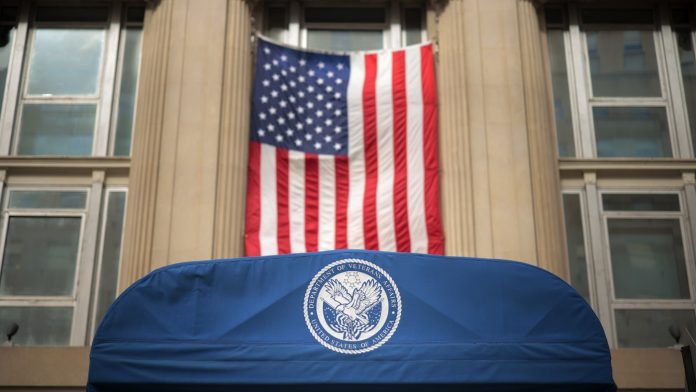
An awning with the Department of Veterans Affairs’ seal marks the entrance to the department’s headquarters a block from the White House on March 6, 2025 in Washington, D.C.
Chip Somodevilla/Getty Images
hide caption
toggle caption
Chip Somodevilla/Getty Images
For Stephan Fihn, the reward was seeing how Veterans Affairs research changed his patients’ lives.
“A big one was the management of prostate enlargement. You know, when I went into practice, the standard treatment for men with prostate symptoms was surgery,” he told NPR.
Then VA research revealed that medication was just as effective as surgery.

“So instead of sending a patient to a urologist for a surgeon, I could prescribe a pill,” said Fihn, who worked at the VA for 36 years as both a physician and a medical researcher.
Dr. Fihn lists similar examples: the nicotine patch, the first liver transplant, CT scans, and pretty much all the little rapid test strips used to detect everything from pregnancy to COVID, are the result of VA-funded research. Congress authorized nearly $1 billion in VA research last year, but Fihn and several colleagues warn that it’s all under threat.
“Sudden, arbitrary personnel decisions are placing thousands of researchers and tens of millions of dollars of ongoing research at risk and threatening the future of a $2 billion research enterprise that extends back more than 80 years,” Fihn wrote in a recent piece he co-authored in JAMA Internal Medicine.
Uncertainty and staff departures
The concerns began when VA froze all hiring and posted a list of hundreds of VA contracts to be cut. After an outcry — that VA is perpetually short-staffed in many key medical fields — VA promised none of those cuts will come from the VA’s more than 300,000 frontline health jobs, exempting them from the freeze. Medical research was not initially spared. Then on March 7, VA extended for 90 days the terms of all research employees whose appointments were otherwise due to expire.
“We aim to make it even more effective. That’s why VA is conducting a comprehensive assessment of ongoing research initiatives to evaluate their impact on Veteran health care,” said VA spokesman Pete Kasperowicz. He said the 90 day pause will ensure continuity of all research efforts as VA completes its review.

But the uncertainty means research projects have already lost critical staff, like data analysts, to the VA’s deferred resignation offers, according to several department researchers who requested anonymity because they fear retaliation. They said long-term projects could get interrupted, like the VA’s million veteran program, one of the world’s largest genetic study groups.
Just as important as the things VA research discovers, says former VA Chief of R&D, Timothy O’Leary, is what it debunks. He points out that in the private sector there isn’t much interest in funding studies that might show a new drug isn’t better than the old one.
“The VA conducts enormous numbers of clinical trials, a lot of which wouldn’t happen otherwise because there isn’t much incentive for a pharmaceutical company to be comparing their new drug with old treatments. I mean, what’s the upside potential for them?” he says.

As the largest healthcare network in the country, with a patient-base that has already shown a sense of commitment to service, VA can conduct these trials much more easily than almost any other medical system in the country — unclouded by a profit motive.
“VA clinical trials have shown this many times that new intervention really isn’t any better. Pharmaceutical companies, medical device companies may not want to take the risk of that kind of outcome, but VA can take the risk because it’s not in the business of selling drugs or selling medical devices, whether they be cardiac stents or anything else. It’s in the business of doing the best possible job for veterans and the best possible job for taxpayers,” O’Leary says.
A ticking clock
Researchers worry that the public doesn’t know how much U.S. medical innovation involves VA projects. Rashi Romanoff, chief executive officer of the National Association of Veterans’ Research and Education Foundations said the 90 day pause, which ends in June, is a chance to get the word out.

“Investing in VA’s biomedical and innovation arm is good also for America on the global stage. I think the pause has given us all a chance to be able to talk about that. This is the moment really that we should be doubling down in research investments,” she said.
Math might get in the way though. The Trump administration is standing by a pledge to cut 70,000 to 80,000 jobs at VA, with the more than 300,000 frontline health workers exempted from those cuts. That implies devastating cuts to all other positions, including VA medical research jobs.
Steve Bannon has praise for Trump, criticism for Musk : NPR
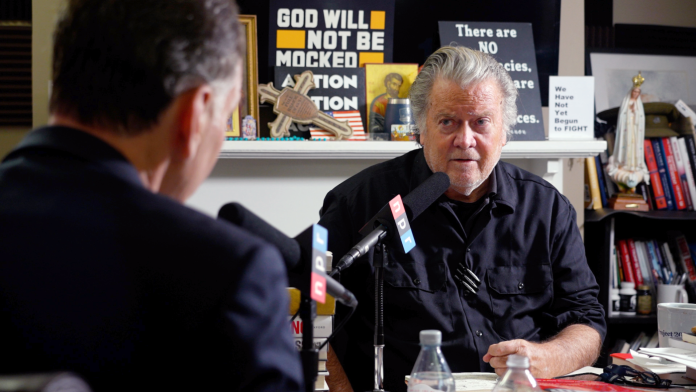
Stephen K. Bannon says he is expecting a “summer like no other.”
The sometime presidential adviser is one of many figures worth watching to see what Trump voters, and occasionally Trump himself, might be thinking. And as the Trump administration completes its first 100 days, Bannon is anticipating a “constitutional crisis” and a battle over spending in the next hundred.
He spoke with NPR in an expansive video conversation, which you can watch above. It was in the basement studio from which he broadcasts War Room, a daily live webcast that is also a podcast.
Here are some key points.
He defends Trump’s frequent changes of direction in the trade war.
Bannon supports Trump’s attempt at reordering the world economic system. As he increased tariffs on most countries, Trump put a massive 145 percent tariff on goods from China, the world’s second largest economy. He has since exempted some products.
“President Trump went in full force,” Bannon said. “I don’t think he looks weak. I think he looks like a very smart-deal guy, trying to move the chess pieces.”

Bannon claims Trump’s tariffs are designed to restore high-paying jobs for the working class.
He does not defend other Republicans on taxes and spending cuts.
Though Bannon has a Harvard MBA and made money on Wall Street and in Hollywood, he describes himself as a defender of the working class. That leads to his conflicts with other members of the Trump coalition. He’s cast doubt on the effectiveness of Elon Musk, the billionaire presidential aide, saying he wants an “audit” of purported savings by Musk’s Department of Government Efficiency.
Bannon also calls for higher taxes on the wealthy to help reduce federal debt. Trump has toyed with the idea but has not endorsed it.

He defends Trump’s expansive use of presidential power.
He took issue with judges who have blocked many of Trump’s actions.
The Supreme Court, which includes three Trump appointees, unanimously said that people were entitled to due process before a court before being deported, and a Trump-appointed judge said “no meaningful process” was followed before a two-year-old U.S. citizen was deported. But Bannon used the phrase “judicial insurrection.”
“If every one of these criminal terrorists have due process, it’s 200 years before they get out. It’s not going to happen,” Bannon said. “The American people back Trump on this. And they have to go and they’re going to go.”
Asked if he meant to say that constitutional safeguards were “inconvenient,” he said “the convenience thing is one thing but you don’t need it. It’s a time of war.”

He offered a long-term idea of how he would like the country to change.
“We’ve got to start making things again,” he said. “The high value added part of manufacturing has to come back. Something that a man or woman can have a job and have a family and have their spouse stay home if they so want and raise their kids. Once we’re back to that, the country is going to be vibrant and robust again.”
In speaking that way, Bannon expressed his desire for an older model of the U.S. economy, which was connected with a more traditional idea of the family.
The radio version of this interview was produced by Barry Gordemer and edited by Reena Advani.
How the Trump administration is affecting health, here and abroad : Short Wave : NPR
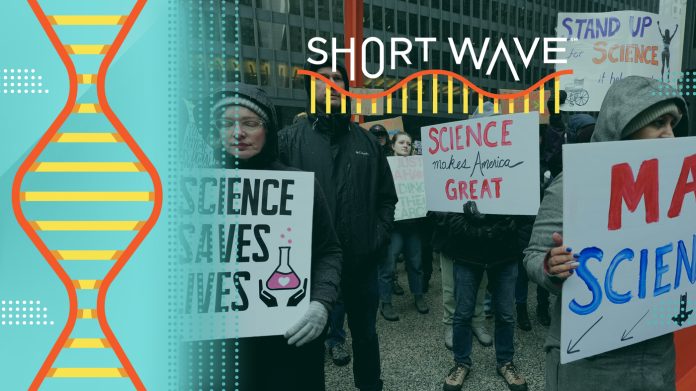
People hold handmade signs at a Stand up for Science rally protesting the Trump administration’s science policies and federal job cuts on Friday, March 7, 2025, in Chicago.
Nam Y. Huh/AP News
hide caption
toggle caption
Nam Y. Huh/AP News

People hold handmade signs at a Stand up for Science rally protesting the Trump administration’s science policies and federal job cuts on Friday, March 7, 2025, in Chicago.
Nam Y. Huh/AP News
In its first 100 days, the Trump administration — and specifically, the Department of Government Efficiency — shuttered agencies and slashed budgets pertaining to foreign aid, scientific research, food safety, and more.
How will this impact people’s health and well-being both in the U.S., and around the world?
To answer that question, we’re calling in our colleagues: global health correspondent Gabrielle Emmanuel and health policy reporter Selena Simmons-Duffin. They break down what cuts to science and health departments have been made, why they matter and what those changes might mean for the future.

Want to hear more about how policy changes affect scientific research and discovery? Let us know by emailing [email protected].
Listen to Short Wave on Spotify, Apple Podcasts and Google Podcasts.
Listen to every episode of Short Wave sponsor-free and support our work at NPR by signing up for Short Wave+ at plus.npr.org/shortwave.
This episode was produced by Hannah Chinn and edited by Rebecca Ramirez. Tyler Jones checked the facts. Maggie Luthar was the audio engineer.
Trump marks 100 days in office with a Michigan rally : NPR
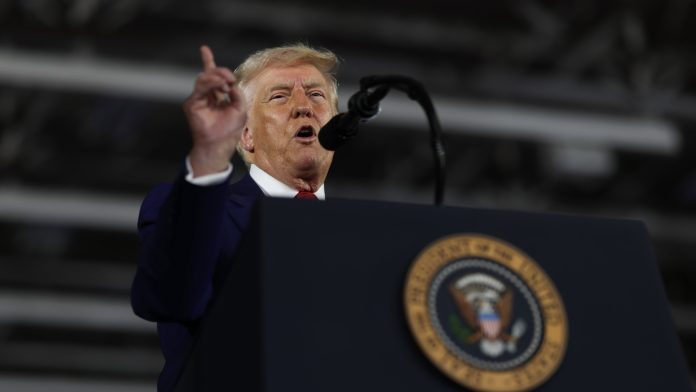
President Trump speaks during a rally at Macomb Community College on in Warren, Mich., on Tuesday to mark his first 100 days in office.
Scott Olson/Getty Images
hide caption
toggle caption
Scott Olson/Getty Images
Donald Trump’s Michigan rally celebrating the 100th day of his second term wasn’t a campaign rally, but it resembled one in many ways. He spoke for almost an hour and a half, falsely claimed to have won the 2020 presidential election, danced to “YMCA,” and acknowledged the regulars that have shown up to his rallies for years.
“I miss you guys,” he said to the Front Row Joes, one group of Trump faithful. “I miss the campaign.”
While the Tuesday night rally had been billed as a way to celebrate his 100-day record, it served many more purposes. Trump also used his time on stage to luxuriate in the crowd’s adoration, blame Joe Biden for various national problems, and insist that he, as president, is not getting the credit he deserves for his accomplishments.
Among the policies Trump celebrated was his deportations of alleged Venezuelan gang members to El Salvador — a move that courts have challenged. In recent days, the Supreme Court temporarily blocked new deportations under the Alien Enemies Act, the law the Trump administration has used to deport more than 200 people to El Salvador.

“Now the courts are trying to say that, you know, that doesn’t matter. I don’t think it’s going to be allowed to stand,” he said. “We are delivering mass deportation, and it’s happening very fast. And the worst of the worst are being sent to a no-nonsense prison in El Salvador.”
He then presented a video of prisoners being flown to El Salvador and treated roughly — having their heads shaved and being marched, bent-over, into prison cells — while the crowd cheered.
Defending tariffs, criticizing the press

Trump gestures to the crowd at the at the end of his address marking 100 days in office.
Jeff Kowalsky/AFP via Getty Images
hide caption
toggle caption
Jeff Kowalsky/AFP via Getty Images
Trump boasted about his tariff policy, which has worried economists and consumers alike, raising recession fears. Trump casts tariffs, however, as a way to punish countries he feels have been unfair to the U.S.
“We’ve been abused by friend and foe, and in many cases, friend has abused us more so than foe on trade,” he told the crowd. “So I want to just let you know you’re going to be very proud of this country very soon, and with my China tariffs, we’re ending the greatest job theft in the history of the world.”

While Trump’s tariff policy has been aggressive, including 145% tariffs on Chinese goods, his trade policy also changes frequently. On Tuesday, Trump signed executive actions to ease the tariff burden on automakers who assemble cars in the U.S.
“Somebody would say, ‘Oh, well, that’s a change.’ It’s called a little flexibility,” Trump said, before adding a threatening note about companies that don’t eventually build in the United States: “We give them a little time before we slaughter them if they don’t do this, right?”
Trump took time to condemn the news media, as he often did on the campaign trail, and reserved some criticism for pollsters.
Many polls have shown Trump’s approval rating to be dropping since he took office. A new NPR/PBS News/Marist survey, for example, has his overall approval rating down to 42%.
Trump without evidence decried these as “fake polls.”
“They say Trump only has a 44% approval rating,” he said. “Well, that’s actually not bad. But when you figure that if it were a legit poll, it would be in the 60s or 70s, is – these people are a bunch of crooked people.”
Trump also took aim at Federal Reserve Chair Jerome Powell, whom he has criticized in recent weeks for not boosting the economy by lowering interest rates, scaring markets.
“You’re not supposed to criticize the Fed. You’re supposed to let him do his own thing. But I know much more than he does about interest rates,” Trump said.

In one more callback to the 2024 campaign, Trump again and again returned to criticizing former President Biden. Trump told the crowd that Biden had caused high inflation, allowed undocumented criminals into the U.S. and allowed unfair trade deals.
Trump even informally polled the crowd on how best to insult Biden.
“What’s better? Crooked Joe or Sleepy Joe?” he said.
Calls for a third term

Auto Workers for Trump held up a Trump 2028 banner as Trump delivered his remarks.
Jeff Kowalsky/AFP via Getty Images
hide caption
toggle caption
Jeff Kowalsky/AFP via Getty Images
Adding to the campaign-rally feel was the fact that some in the crowd wanted the two-term president to run again — something the Constitution does not allow.
“They used to say — the fake news — ‘To be a great president, you have to serve two terms,'” Trump told the crowd at one point. “So now we’re going to serve two terms.”
The crowd responded with shouts of “Three!”, with some holding up three fingers. Trump smiled as the cheers continued.
Later, he invited communications aide Margo Martin to take the stage, where she said one sentence: “Trump 2028, anybody?” The crowd erupted in cheers.