


Hamas released three Israeli hostages on Saturday in an exchange with Israel for more than 180 Palestinian prisoners, as part of a cease-fire deal.
Voters defend Trump and Musk’s spending cuts, challenge Dems to show they have nothing to hide
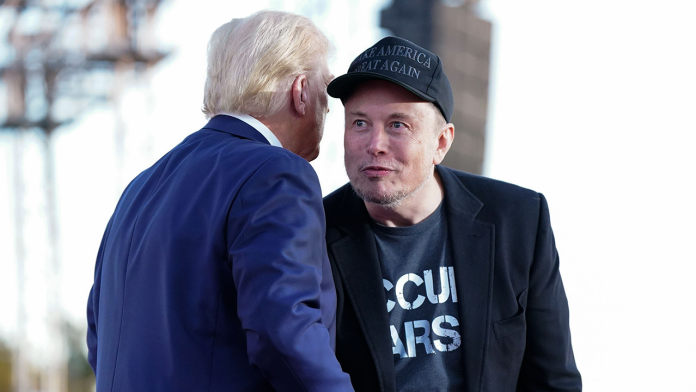
Voters are voicing their support for the Trump administration’s efforts to clean up wasteful government spending, despite some Democrats protesting the actions.
President Donald Trump and Tesla CEO Elon Musk sent shock waves nationwide after announcing the Department of Government Efficiency would push to freeze USAID and suggesting the Department of Education could soon be shut down.
Earlier this week, several prominent Democrats, including Rep. Ayanna Pressley, D-Mass., protested DOGE’s actions outside the Treasury Department. On Friday, 30 House Democrats, including Rep. Maxine Waters, D-Calif., attempted to enter the Department of Education building in Washington, D.C., to meet with acting Education Secretary Denise L. Carter, but they were stopped by security, Fox News Digital previously reported.
Despite the protests, a number of voters are defending the White House.
One voter, Theresa Albano, told “The Story” that Democrats are “panicking” about the cuts, but don’t appear to be “helping themselves at all.”
HOUSE DEMOCRAT DITCHES DOGE CAUCUS, SAYS MUSK IS ‘BLOWING THINGS UP’
U.S. President Donald Trump greets Elon Musk as he arrives to attend a viewing of the launch of the sixth test flight of the SpaceX Starship rocket on November 19, 2024 in Brownsville, Texas. (Photo by Brandon Bell/Getty Images) (Brandon Bell)
“I really don’t think they want people to see where this money is going,” she told “The Story” anchor and executive editor Martha MacCallum on Thursday. “I don’t even know if it’s going to some of the places that they’re saying it’s going. How are we supposed to know that it’s not going in their pockets? I mean, they’re putting up that much of a stink about it… then show it all if you have nothing to hide.”
Democrats are “very upset” the spending is coming to the public eye, she continued, saying that hardworking Americans are concerned about where their taxpayer dollars are going.
Voter Ranger Irwin told “The Story” he is a “firm believer” in Trump.
“He has America’s best interests at heart, and I feel like he 100% got Elon Musk to join him,” Irwin said. “If you look at Elon’s track record, I mean, he’s really cut back on lots of other companies he’s bought, like Twitter [now X]. I mean, he let, like, half the company go, and I mean, Twitter has been amazing since. I mean… He’s [Trump] gotten someone who knows what the heck they’re doing.”
CLICK HERE TO GET THE FOX NEWS APP

Elon Musk joins former President Donald Trump at his rally in Butler, PA on Saturday, October 5, 2024. The rally is in the same location as the one on July 13 at which an assassination attempt was made on Trump’s life. (Matthew McDermott for Fox News Digital)
Irwin added that he is not the only one noticing the White House’s work.
“All of my friends and all my co-workers have been really excited and really been grateful for what Donald Trump’s been doing,” he said. “They feel like he’s the strong leader that America’s been needing for a while now.”
Far-Right Leaders Rally in Spain to ‘Make Europe Great Again’
Since taking office, President Trump has threatened European countries’ security and economies, angled to take control of Greenland, and promised to “definitely” slap the nations with tariffs. Even parties that would seem to be his natural allies are nervous. Some have quietly tiptoed back from the American president.
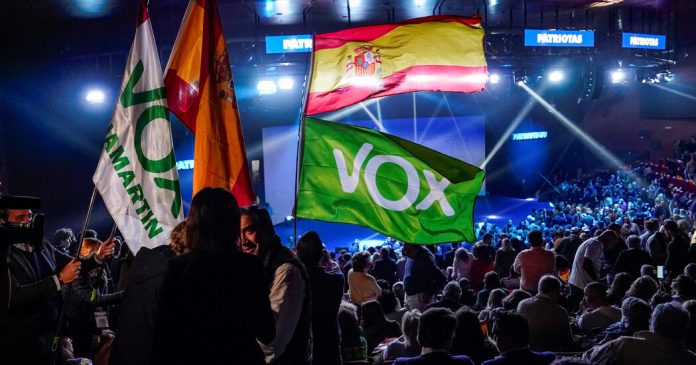
But Saturday was not the day for disputes. Leaders of far-right parties in Europe came to Madrid for what, on the surface at least, amounted to a boldface names booster rally for a new Trump era.
There was Marine Le Pen of France’s far-right National Rally; the Netherland’s populist, Geert Wilders; the leader of Italy’s League party, Matteo Salvini. All made clear that they shared Mr. Trump’s charge against what they see as “wokeism,” “gender theory,” and overweening environmentalism.
For them, the American president had blown through the last barriers that had confined their parties to the political margins. The taboos had been toppled.
“Trump’s tornado has changed the world in just a couple of weeks,” Prime Minister Viktor Orban of Hungary told his allies from the stage of the summit whose slogan was, “Make Europe Great Again.”
“Yesterday we were the heretics,” he said. “Now we are the mainstream.”
In addition to the recurring themes of the European far right — labeling the media “parasites,” bashing liberal elites, and decrying an “invasion” of Muslim immigrants — the attendees quickly turned their sights on Mr. Trump’s most recent targets.
For example, Mr. Salvini criticized the World Health Organization and the International Criminal Court; Mr. Trump moved to withdraw the United States from the W.H.O., and issued an executive order imposing sanctions on the I.C.C..
Mr. Wilders seemed to mimic Mr. Trump’s language as he said voters were asking them to “expel illegal aliens and criminals.”
Mr. Trump’s election represents “the Western world’s final opportunity,” said Afroditi Latinopoulou, a lawmaker with the Greek far-right party Voice of Reason.
Ms. Latinopoulou’s party has no representation in the Greek Parliament, but some leaders at the rally, including Mr. Salvini’s League and Mr. Wilders’ Freedom Party in the Netherlands, are already governing as part of coalitions.
Other parties, like Ms. Le Pen’s National Party and the Spanish Vox party, which hosted the event, have risen in recent years, but were still out of power, often kept out by an alliance of mainstream parties.
Many of these parties are still considered pariahs in the European Parliament in Brussels, and right-wing leaders like Prime Minister Giorgia Meloni of Italy did not join the event organized by the group, which calls itself the Patriots for Europe in that legislative body.
In elections last summer for the European Parliament, what many had anticipated would be a wave of support for far-right parties did not fully materialize. But many of these parties are popular among young voters, and stand a chance to enter governments in coming elections. They think Mr. Trump’s victory has put wind in their sails.
Mr. Trump’s victory “brought a political earthquake to the world,” Mr. Wilders said. “He brings a message of hope.”
They skewered the “liberal fascists” who they said had replaced Christian civilization with “a sick Satanic utopia,” the “creeps” who “want to turn our children into trans-freaks,” and the supposed ethnic replacement of native-born Europeans by immigrants. They borrowed liberally from conspiracy theories.
And along with Mr. Trump they shared a distaste for the European Union — even though many of their countries benefit from E.U. funds and nearly all the parties have disavowed cries to leave the bloc since Brexit has proved to be a drag on Britain’s economy.
Nonetheless it was clear that their idea of making “Europe Great Again” was to tear down the European Union as it now stands. “Less Europe, more freedom,” Mr. Salvini said.
Some of those attending questioned the very slogan of the event. “They say they want to make Europe great but what do I care about defending Europe?” said Jesus Castañón, 79, a retired architect who sat in the crowd. “It does not deserve it.”
At the gathering, the European Union was uniformly loathed as a group of unelected bureaucrats sealed in glass palaces and intent on infringing upon nations with excessive regulation and sabotaging their economies with climate policies.
Since Russia’s invasion of Ukraine, most of Europe’s mainstream parties have come to accept the need to spend more money on defense, and they talk of unity to confront potential trade disputes with Mr. Trump.
But few at the rally spoke of needing to increase cooperation among E.U. countries. “The European Union is a pump that works in reverse,” Ms. Le Pen said. “It sucks up the sovereignty from our states to institutionalize powerlessness.”
When people at the event talked of making Europe great again, most talked about making Europe a beacon for Christianity, elevating individual nations and restoring their pride and identity.
Instead of supporting the European Union, one member of the crowd said he preferred the re-establishment of the Spanish colonial empire encompassing Spain and Latin America.
“I have little in common with a Belgian or a northern Italian,” said Gonzalo Ruiz, 64, a retired meteorologist. “Reunification with South America is the dream.”
Some divisions could not be disguised. Some leaders praised free-market economics, while others supported protectionism.
Mr. Orban, who has long stood out even among the far right for his closeness to President Vladimir V. Putin of Russia, has criticized support for Ukraine. “Because of Brussels we are giving our money to Ukraine in a hopeless war,” he said on Saturday.
Commentator says recent DNC meeting proves Dems might be crazier than ever

Prominent mainstream media journalist and author Joe Klein savaged the Democratic Party, claiming that its recent Democratic National Committee meeting proves the party’s “intellectual corrosion is comprehensive.”
In a new article for his “Sanity Clause” Substack series, Klein pointed out the various gender rules that the DNC rolled out during its meeting last week as proof that the party may be damaged beyond anything he’s ever seen.
“Yes, friends, still crazy after all these years…and the encroaching dementia is not benign. Can this party be saved? I have my doubts,” Klein wrote after quoting multiple articles detailing the complex gender rules established at the meeting.
Media commentator Joe Klein ripped the Democratic National Committee for the far-left gender rules it implemented in its recent meeting. (AP Photo)
He began with The Atlantic staff writer Jonathan Chait’s account of the proceedings. In his article, headlined, The Democrats Show Why They Lost,” Chait wrote that “outgoing chair, Jaime Harrison, attempted to explain a point about its rules concerning gender balance for its vice-chair race. ‘The rules specify that when we have a gender-nonbinary candidate or officer, the nonbinary individual is counted as neither male nor female, and the remaining six officers must be gender balanced,’ Harrison announced.”
As Chait’s account said, Harrison “labored” over explaining the committee’s efforts to provide inclusion to “male, female, and nonbinary candidates.”
Klein followed up by quoting Wall Street Journal reporter Molly Ball’s account,”Later in the program, an audience member stood up to lament that there was only one at-large seat set aside for a transgender person, and called on the candidates to add another seat and for ‘making sure those appointments reflect the gender and ethnic diversity of the transgender community.’”
Klein is best well known for writing for Time magazine and as the author of “Primary Colors,” which he wrote anonymously back in 1996.
After sharing these accounts, Klein remarked on how he saw the party as out of touch.
“The intellectual corrosion is comprehensive; it is only matched by the self-righteous arrogance. But what’s the alternative?” he said. “I’ve been through Dems in Disarray syndrome multiple times in the past: in 1972, in 1980, in 1988, in 2016…but, gotta say, this is the worst I’ve ever seen it.”

Candidates for the DNC chair position at the DNC chair debate at Georgetown University, January 30th 2025 (Fox News/Paul Steinhauser)
Further on, the commentator bashed the Democratic Party’s descent into its current state for enabling President Trump’s rise to power.
“The Democrats have twice now enabled a World-Historic Demagogue to be elected President of the United States. One wonders if Trump’s reelection will stand with Julius Caesar crossing the Rubicon,” Klein stated, adding that former President Biden’s policy alignment with Sen. Bernie Sanders’, I-Ver., progressive wing of the party ahead of Biden’s election brought in “left-nuttiness below the radar throughout the government.”
CLICK HERE FOR MORE COVERAGE OF MEDIA AND CULTURE
“Every so often, the nuttiness would surface—as with the chaos at the Southern border—and Biden would do nothing about it,” he wrote.
Elsewhere in the column, Klein advocated for a major shakeup to the Democratic Party. He began citing The Free Press’ Ruy Teixeira’s points for fixing the party, which include, avoiding calling Trump a “fascist,” moderating on the border issue, helping Trump with stuff he’s “right” about, and embracing “energy abundance.”
Klein added his own two cents, stating, “The Democratic Party needs to be challenged—from the outside, by like-minded people, as it was in the early 1990s by the Democratic Leadership Conference.” He noted that a similar revival needs to be driven by competent reform movement that is backed by “big-time financial support” as well as “And big-time courage from Dem politicians.”
Still, he concluded by admitting such reform seems like a long shot, remarking, “But, yeah, I’m dreaming….”
CLICK HERE TO GET THE FOX NEWS APP
Trump Plans to Send $8 Billion in Arms to Israel, Bypassing Some Lawmakers
The State Department has given Congress formal notification that it plans to move forward with sales of more than $8 billion in weapons to Israel, bypassing an informal review process that was still ongoing in one House committee.
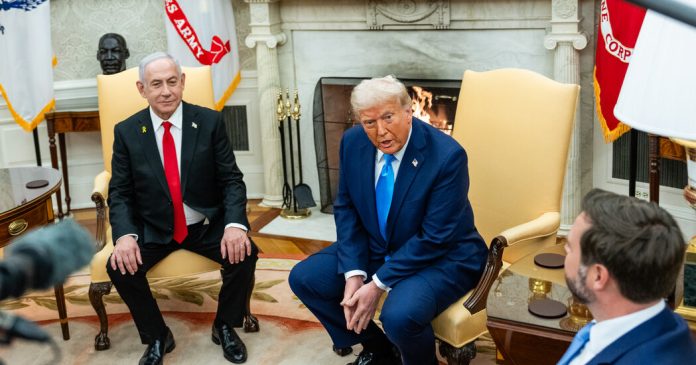
The move took place just two days after President Trump met with Prime Minister Benjamin Netanyahu of Israel and said the United States would “take over” the devastated Gaza Strip and turn it into a “Riviera of the Middle East.”
The State Department formally notified Congress of its intention on Thursday. That same day, the Pentagon put out two news releases, one saying it was selling to Israel 3,000 Hellfire air-to-ground missiles worth $660 million, and another saying it was sending $6.75 billion of bombs and guidance kits. The Pentagon did not issue a news release for the sale of artillery shells, which as a direct commercial sale did not require the department to put out a detailed statement. Together, all the sales are worth more than $8 billion.
The Biden administration announced the $8 billion sale in early January, then sent the entire package to the House Foreign Affairs Committee and the Senate Foreign Relations Committee for informal review. During that process, lawmakers can ask the State Department detailed questions about the sales before making a decision on whether or not to approve them.
The two top Republican lawmakers on the committees gave their approval, and a Democratic senator eventually did too, but Representative Gregory W. Meeks of New York, the top Democrat on the committee, decided to use the review process to ask more questions.
The State Department moved ahead with the package after it had sat in informal review for more than 20 days, the typical amount of time granted to senior lawmakers for their consideration of such cases.
The sales will almost certainly continue unhindered, since Congress would need to muster a two-thirds vote in both houses to halt the orders.
Following the announcement that the sales would move ahead despite his hold, Mr. Meeks sharply criticized what he characterized as an erosion of longstanding precedent, accusing the Trump administration of sidelining Congress in its decision to proceed with the arms transfer.
“I continue to support Israel’s critical military needs as it faces a range of regional threats,” Mr. Meeks said in a statement. But his backing, he made clear, was not unconditional. He had engaged in what he described as “close consultation” with administration officials on the sales, raising a number of concerns — only to find his inquiries met with silence. The administration, he said, had failed to provide meaningful documentation or justification for its decision.
The administration’s move to carry out the sales was lawful, but Mr. Meeks said it showed “blatant disregard of longstanding congressional prerogative.” More than a bureaucratic slight, he argued, it was a fundamental challenge to the balance of power among coequal branches of government.
In 2019, during his first administration, Mr. Trump declared an “emergency” over Iran, allowing Mike Pompeo, then the secretary of state, to move forward with sending weapons to the United Arab Emirates and Saudi Arabia despite the fact that Congress was still asking questions about the arms in the initial review process. Mr. Pompeo’s move led to an investigation by the State Department’s inspector general.
Thursday’s notification was sent absent an emergency declaration. In 2023, the Biden administration used a similar mechanism to circumvent congressional oversight for arms sales to Israel by invoking the same emergency provision.
Separate from the $8 billion package, Congress is reviewing a request by Israel for a license to buy 5,000 assault rifles from American gun makers. The State Department could soon submit more requests for assault rifle licenses to Congress for informal review. During the Biden administration, the State Department held up a license that would permit Israel to buy 24,000 U.S.-made assault rifles. In direct commercial sales, a foreign country asks the State Department for a license to buy weapons from a company.
Super Bowl BBQ Po’ Boys are created by ‘Master of ‘Cue’

For Super Bowl Sunday, it’s a sure thing that Erica Blaire Roby will be serving barbecue to her guests.
“If it’s coming from my kitchen, it’s going to be barbecue-related,” the Houston-based champion pitmaster told Fox News Digital. (See the video at the top of this article.)
Roby won the Food Network’s “BBQ Brawl” title of “Master of ‘Cue” — and has won other barbecue cooking titles as well.
HOW TO WATCH SUPER BOWL LIX BETWEEN CHIEFS, EAGLES STREAMED ON TUBI
But she did not grow up in a kitchen or tend to a barbecue pit as a child.
She was a lawyer before pivotins toward the food industry in 2014. Initially, Roby became certified as a sommelier and then, after having a child in 2018, she found herself at home.
Erica Blaire Roby of Houston, Texas, began her career as a lawyer before shifting to culinary pursuits. She was named “Master of ‘Cue” on the Food Network show “BBQ Brawl.” (Dorothy Beam Photography)
“So I would call my dad all the time on the phone. He’s from New Orleans,” she said.
“And we always just talked about his bucket list and what he wanted to do. He said that he had always wanted to have a barbecue restaurant.“
This revelation came as a shock to Roby, who said that opening a restaurant with her father had “never been on my radar.”
SUPER BOWL PARTY DISHES INSPIRED BY HOST CITY NEW ORLEANS
“We both realized that neither one of us knew how to run a restaurant or to cook barbecue. So I went online and found barbecue classes,” she said.
Moving to national television
Roby took to cooking barbecue, entering competitions and sharing her creations on social media. That led to a call from the Food Network, which asked her to audition for “BBQ Brawl.”
Initially, Roby was intimidated by “all of these barbecue legends” she had seen on television, she said.
EAGLES FAN FAVORITE IS PHILADELPHIA’S SIGNATURE SANDWICH, NO PEPPERS INCLUDED
“I called my dad and I was like, ‘Dad, I have good news and bad news. The good news is, I’m going to be home very, very quickly. So you’re not going to have to watch my kid for very long. The bad news is, I’m going to publicly embarrass our family on national television,'” she said.
Her father suggested she go by her middle name and style herself as “Erica Blaire, for Blue Smoke Blaire Barbecue.”
Roby dedicated her life to barbecue and “spreading barbecue love.”
On the show, she started “really leaning into” her Creole New Orleans roots to cook – “and those dishes started winning,” Roby said.
The next thing she knew, she said, “I’m announced as Food Network’s ‘Master of ‘Cue.'”
After that, Roby dedicated her life to barbecue and “spreading barbecue love.”
KANSAS CITY HOME TO AMERICA’S BEST BARBECUE, CHEFS CLAIM: ‘OUR VARIETY MAKES US UNIQUE’
Although New Orleans is not necessarily known for barbecue, “it has a lot of rich cultural history when it comes to culinary and food,” she said.
Incorporating the spices and ingredients of Cajun cooking with the smoke and meats of barbecue was a way to add an “element without actually changing the integrity of the tradition of the cuisine,” Roby said.

Erica Blaire Roby revealed how she’s able to blend Cajun flavors with barbecue traditions. (Fox News Digital; Erica Blaire Roby)
“And that was something that’s really beautiful. It’s unexpected.”
AMERICA’S FAVORITE SUPER BOWL SNACKS BY STATE
Roby shared one of her hybrid Cajun barbecue recipes with Fox News Digital.
With Super Bowl LIX taking place in New Orleans, this is a great dish to celebrate with some Big Easy flair, she said.
Smothered Beef Po’ Boys: The Leftover Edition by Erica Blaire Roby
Ingredients
Gravy and Beef
2 cups leftover beef (shredded)
2 tablespoons butter or oil
1 onion, chopped or sliced
1 bell pepper, chopped or sliced
2 cloves garlic, minced
1½ cups beef broth
1 tablespoon Worcestershire sauce
1 teaspoon BBQ Rub
Salt and pepper, to taste
1 tablespoon flour or cornstarch (optional, for thickening)
CLICK HERE TO SIGN UP FOR OUR LIFESTYLE NEWSLETTER
Sandwich
4 French bread rolls or hoagie rolls, split
Lettuce, shredded
Tomato, sliced
Pickles, sliced
Mayonnaise

This beef po’ boy sandwich uses leftover beef and comes together quickly. (Erica Blaire Roby)
Directions
1. Sauté the vegetables. In a skillet or saucepan, heat the butter or oil over medium heat. Add the sliced onions and bell pepper and cook until soft and caramelized, about 5 to 7 minutes. Add the minced garlic and cook for an additional minute.
For more Lifestyle articles, visit www.foxnews.com/lifestyle
2. For gravy: Add the beef broth, Worcestershire sauce and BBQ rub to the skillet, stirring well to combine. Bring to a low simmer.
For a thicker gravy, sprinkle in the flour or make a cornstarch slurry by combing two tablespoons of cold water with one tablespoon of cornstarch in a separate bowl and stir. Slowly add this slurry to the gravy and stir until thickened.
3. Stir in the shredded leftover beef, letting it warm through in the gravy for about five minutes. Season with salt and pepper as needed.
CLICK HERE TO GET THE FOX NEWS APP
4. Assemble the Po’ Boys: Spread mayonnaise on each French bread roll. Layer with shredded lettuce, tomato slices, and pickles. Spoon the smothered beef and gravy onto each roll.
This recipe is owned by Erica Blaire Roby and was shared with Fox News Digital.
How Trump’s Tariff Threats Tore the U.S.-Canada Bond
Booing during “The Star-Spangled Banner” at sports games in Canada.
“Buy Canadian” signs multiplying at grocery stores amid a brewing boycott of U.S. goods.
Cross-party calls to find new friends and customers on the global stage.
President Trump may have paused his plans to impose crushing tariffs on Canada, pulling the two countries back from the brink of a trade war. But evidence abounds of the damage Mr. Trump has inflicted on the relations between the two nations.
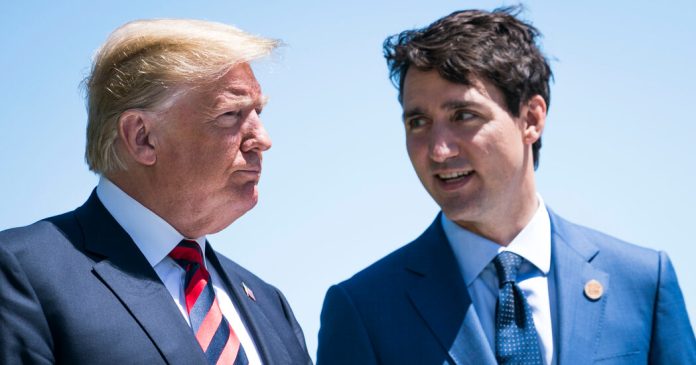
After threatening levies on Canada, and Canada threatening to retaliate, Mr. Trump and Prime Minister Justin Trudeau on Monday came to an agreement for a 30-day reprieve in the brewing trade war in exchange for new measures to tackle the flow of fentanyl across the northern border.
But the standoff has left many Canadians livid.
And Mr. Trump’s menacing rhetoric, especially his repeated statements that he wants the United States to annex Canada and make it the 51st state, seems to have fractured the fraternal trust that has, for more than a century, been the core of the relationship.
“This has damaged the relationship quite significantly, and there will be a period of sorting out,” said Jon Parmenter, professor of North American history at Cornell. “It has triggered really significant and striking emotional responses. It’s very raw for people.”
Mr. Parmenter noted that being America’s far less populous neighbor has not always been comfortable for Canadians, who are deeply aware of their dependence on trading with the United States and know that so many things emanating from their superpower neighbor — from pop culture to economic downturns — influence their lives.
In the words of Pierre Elliott Trudeau, the former Canadian prime minister and father of the current one: “Living next to you is in some ways like sleeping with an elephant. No matter how friendly and even-tempered is the beast, if I can call it that, one is affected by every twitch and grunt.”
But, Mr. Parmenter added, rubbing in that dependence the way Mr. Trump has done with his invocation of annexation and repeated complaints about Canada providing little in return to the United States, has touched off a visceral response in Canadian society.
History Matters
While Canada has been described as the United States’ closest friend for over a century, until World War II it was actually closer economically and politically with Britain. The Atlantic province of Newfoundland and Labrador was a British colony until it joined Canada, which it did only in 1949.
Events like the war in Vietnam, the brutal crackdown in the South of protests during the civil rights movement and the U.S.-led invasion of Iraq in 2003, which Canada strongly opposed, tested that friendship at times.
But it has generally been marked by moments like the Canadian response to the Sept. 11, 2001, terror attacks on the United States.
As flights to the United States were grounded, about 7,000 air travelers aboard dozens of diverted flights, mostly Americans, were taken in by the residents of Gander, Newfoundland, a community of just 11,000 people. The scenes of heartfelt hospitality in one of America’s worst moments were recounted in the Broadway musical “Come From Away.”
In his emotional address to the nation on Saturday, Mr. Trudeau, who made sure to direct his comments to Canadians and American, did not forget those bonds.
He quoted President John F. Kennedy, who said about Canada: “Geography has made us neighbors, history has made us friends, economics has made us partners and necessity has made us allies.”
And he added: “From the beaches of Normandy to the mountains of the Korean Peninsula, from the fields of Flanders to the streets of Kandahar, we have fought and died alongside you during your darkest hours.”
Team Canada
Mr. Trump’s targeting of Canada has forged a rare consensus among Canadians and among politicians who, until last week, were feuding amid one of the country’s most fraught political periods in recent history.
But for Mr. Trudeau, the opposition leader Pierre Poilievre, and other senior politicians, there is only one game in Canadian politics right now: Team Canada.
“We need a Canada First plan that’s good for this country,” Mr. Poilievre, the Conservative opposition leader, said in reaction to the tariff fight. And while Mr. Poilievre has built a big advantage in polls over Mr. Trudeau’s Liberal Party by highlighting what he describes as the prime minister’s failures, he has momentarily toned down those attacks in recent days to focus on a unifying message.
Mr. Trudeau has leaped at this rally-round-the-flag moment. “In this moment, we must pull together because we love this country,” he said on Saturday evening, when tariffs were supposed to begin in just more than 48 hours. “We don’t pretend to be perfect, but Canada is the best country on earth,” he added.
Chrystia Freeland, the former finance minister, who is running to replace Mr. Trudeau as Liberal Party leader, tried to capture the nation’s mood during an interview with Fareed Zakaria on CNN over the weekend.
“We’re hurt, for sure, because we’re your friends and neighbors, but most of all, we’re angry, and we are united and resolute,” she said, adding “Canada is the true north, strong and free,” an echo of Canada’s national anthem.
Public opinion surveys suggest these politicians are aligned with the public mood: 91 percent of those asked said they wanted a reduction in the country’s reliance on the United States, according to a poll conducted on Sunday and Monday by Angus Reid.
The poll also found a 10 percentage point jump since December in the number of people declaring themselves to be “very proud” to be Canadian, and a similar jump in the percentage of Canadians saying they feel “a deep emotional attachment to Canada.”
Speaking at a campaign event in Windsor, Ontario, Mark Carney, the former governor of the Bank of Canada and the Bank of England, who is also running to replace Mr. Trudeau, said he had been traveling around the country seeking support for his campaign and finding the mood of Canadians toward the United States to be “initially confusion and bewilderment.”
But, increasingly, he added, there is “a real enthusiasm and energy to get on with things on our terms, because we don’t want to wake up every morning and check through social media to find out how our country is being affected.”
‘I Feel Really Betrayed’
The prospect of thousands of auto workers being laid off if Mr. Trump’s threatened 25 percent tariff is ultimately put in place has brought fear to many people in Windsor, which is the heart of Canada’s automotive industry and sits just across from Detroit.
And it has even shaken Canadians who once supported Mr. Trump — a minority of the population, according to surveys.
Joe Butler, a trucker who carries new cars and trucks every day from a factory owned by the automaker Stellantis, Windsor’s largest employer, up and down the highway corridor to Toronto, is one of many Canadians with family ties to the United States.
His great-grandparents moved from the United States to Alberta, in Western Canada, where some of his distant relatives still ranch, before his grandfather moved east to Ontario.
During summer school breaks, Mr. Butler joined his father, a long-haul trucker, in the cab during his runs to the United States. “Growing up, I loved the culture of America: the people, the lifestyle, the landscape,” said Mr. Butler, whose cargo usually consists of vehicles assembled in Stellantis factories in Mexico and the United States.
Mr. Trump’s promise to rebuild America, Mr. Butler said, resonated with him. “I was 100 percent behind him as a Canadian,” Mr. Butler said.
“Now I just shake my head and say: Where are you going?” he said. “You just went and completely kicked us in the nuts. It’s scary.”
If the auto industry comes to a halt, Mr. Butler said, he has a small beer, wine and liquor delivery service that he can fall back on for income. But, he added, most of his friends and family members lack such options.
Mr. Butler, who buys the groceries for his family, now boycotts American-made products. And he wants Canada to find a way to cut out the United States as much as possible.
“I don’t care if they close the border, we can live on our own,” he said. “I still love America, and my job depends on the American economy. But now I feel really betrayed.”
Tiger Woods to play in Genesis Invitational, marking return to competition for first time since British Open

For the first time since the British Open in July, Tiger Woods is back in action on a golf course.
Woods, 49, committed Friday to playing 18 holes at the Genesis Invitational at Torrey Pines.
It will be the first time Woods will be competing since he had a microdiscectomy in September to alleviate pain in his legs. It was the sixth surgery he has undergone on his lower back.
SIGN UP FOR TUBI AND STREAM SUPER BOWL LIX FOR FREE
Golfer Tiger Woods smiles during a press conference after playing at SoFi Center in a match between Jupiter Links Golf Club and Los Angeles Golf Club in the TGL. (Imagn)
It is also the first time Woods will be playing since the loss of his mother, Kultida Woods, who died Tuesday at the age of 80.
Normally, the Genesis Invitational is at the Riviera Country Club, but the tournament was moved to Torrey Pines due to the wildfires that devastated the Los Angeles community.
Woods has had a lot of success during his illustrious career at Torrey Pines, with eight wins on the public course alongside the Pacific Ocean.
CLICK HERE FOR MORE SPORTS COVERAGE ON FOXNEWS.COM

Tiger Woods of Jupiter Links celebrates a win with Tom Kim, left, and Kevin Kisner, right, during a TGL match against Bottom Common at the SoFi Center Jan. 27, 2025, in Palm Beach Gardens, Fla. (Imagn)
Torrey Pines is the course where Woods last finished in the top 10 at a PGA Tour event, when he was in a tie for ninth at the Farmers Insurance Open in 2020.
There is no cut at the Genesis Invitational, meaning Woods will be walking for all four days no matter his performance.
The last time Woods played four rounds was at last year’s Masters, when he broke the tournament record for most cuts made at the prestigious major with his 24th consecutive cut made.
CLICK HERE TO GET THE FOX NEWS APP

Tiger Woods of Jupiter Links GC tees off during a TGL match against Bottom Common at the SoFi Center Jan. 27, 2025, in Palm Beach Gardens, Fla. (Imagn)
Woods missed the cut at the other three major tournaments he played in.
The 15-time major champion has been competing in the indoor TGL league, which debuted Jan. 7, 2025.
The Genesis Invitational begins Feb. 13 and runs through Feb. 16.
The Associated Press contributed to this report.
Follow Fox News Digital’s sports coverage on X, and subscribe to the Fox News Sports Huddle newsletter.
A Trade War Is on Hold, but Trump’s Motives and a Fix Remain Uncertain

When I returned to Windsor, Ontario, the day before President Trump was set to impose potentially devastating tariffs on exports from Canada, fear was the city’s prevailing mood. A week later, following Mr. Trump’s suspension of a 25 percent tariff on most exports and 10 percent on oil, the mood has shifted more toward anger and the nation’s focus has moved toward alternatives to the United States.
Whether Mr. Trump will impose the tariffs in early March remains unknown. But Matina Stevis-Gridneff and I found that whatever happens, relations between Canada and the United States have undergone a profound shift.
[Read: Betrayed: How Trump’s Tariff Threats Tore the U.S.-Canada Bond]
If the tariffs do come into effect, Windsor will be hit particularly hard. It has been nearly 60 years since Canada and the United States started integrating their automotive industries through a trade deal known as the auto pact. The North American Free Trade Agreement then brought Mexico into the mix.
While the president has frequently claimed that the United States is facing an emergency because of large amounts of fentanyl coming across its border with Canada, my colleague Vjosa Isai has documented how his claim that there is a significant problem is highly exaggerated.
[Read: What to Know About Canada’s Role in the Fentanyl Crisis ]
Ana Swanson, who covers international trade in the Washington bureau, writes that to President Trump, “one economic number represents everything that is wrong with the global economy: America’s trade deficit.” (The United States’ trade deficit with Canada is a product of its oil imports.)
[Read: One Economic Number Has Vexed Trump for Decades]
“Mr. Trump has shown a willingness to use American power in a way that most of his modern predecessors have not,” Peter Baker, The Times’s chief White House correspondent, writes. “His favorite blunt instrument is not military force but economic coercion.”
There has been no ambiguity in Canada when it comes to Mr. Trump’s proposed takeover. Politicians across the political spectrum reject it, and it has revived a sense of patriotism among Canadians.
That’s a stark contrast to an earlier point in history. When what would become part of Canada was still British North America, in 1846, tariffs threatened to destabilize the economy, prompting economic anxiety and concern.
As part of a move toward free trade, however, Britain ended a system that gave preference to exports of grain, lumber and wheat from Canada and other colonies while keeping out shipments from the United States and elsewhere with high tariffs.
It was bad news for Canadian farmers and soon set off a panic among members of Montreal’s elite when that city was the financial and business center of the colony. Within three years, they formed a group that published manifestoes urging Upper and Lower Canada’s annexation by the United States.
The removal of British tariffs “has produced the most disastrous effects upon Canada,” their 1849 manifesto proclaimed before a conclusion that joining the United States was “inevitable” and that it was the signatories’ “duty to provide for and lawfully to promote.”
More than 300 people signed it. While the majority were members of Montreal’s English-speaking business elite — including names still reflected in companies today, like Molson and Redpath — they also formed an unusual alliance with French-speaking nationalists under Louis-Joseph Papineau.
The movement failed to gain traction in Toronto and the rest of Upper Canada. A trade pact with the United States in 1854 that replaced 21 percent tariffs with duty-free access for many key Canadian exports to the United States caused the annexation movement to wither away.
“The reciprocity deal puts a nail into the economic end of this argument — you could stay within the Empire and trade with the U.S.,” Jeffrey McNairn, a history professor at Queen’s University in Kingston, Ontario, told me. “It was a moment of tremendous uncertainty and a confluence of political, economic factors and people looking for a solution.”
-
Arsons, shootings and sabotage, Vjosa Isai reports, are all part of a continuing battle over lobster in Nova Scotia that raises thorny questions about Indigenous rights, economic equity and the conservation of resources.
-
Research into Ontario’s health records has concluded that marijuana dependence “is a public health threat just like alcohol” and that patients who developed it were 10 times as likely to die by suicide as those in the general population and also more likely to die from trauma, drug poisonings and lung cancer.
-
A self-styled Canadian “pirate” stole tens of millions of dollars in cryptocurrency, prosecutors in Brooklyn say. The 22-year-old man remains at large.
-
In The New York Times Magazine, Mireille Silcoff, a writer and cultural critic based in Montreal, writes that like many other Gen X women she is now having “more and better sex than I ever would have thought possible.”
-
In Real Estate, the What You Get feature looks at $300,000 properties on Prince Edward Island.
Ian Austen reports on Canada for The Times and is based in Ottawa. Originally from Windsor, Ontario, he covers politics, culture and the people of Canada and has reported on the country for two decades. He can be reached at [email protected]. More about Ian Austen
How are we doing?
We’re eager to have your thoughts about this newsletter and events in Canada in general. Please send them to [email protected].
Like this email?
Forward it to your friends, and let them know they can sign up here.
Hamas Makes Gaunt Israeli Hostages Thank Captors Before Release

Hamas released three Israeli hostages on Saturday in exchange for 183 Palestinians jailed by Israel, in a staged handover where rifle-toting Hamas fighters prodded their gaunt captives to give short speeches, effectively at gunpoint, thanking the militants who had held them captive for 16 months.
The events made an already tenuous cease-fire more fragile, possibly endangering the next steps in the truce agreement. Israel is scheduled to pull back from part of Gaza on Sunday to allow Palestinians there to move more freely, but has threatened to take unspecified action in response to what it says are Hamas violations of the cease-fire.
And talks on the second phase of the truce deal are supposed to be advancing now, amid deep consternation in the Arab world over President Trump’s proposal to move the more than two million Gazans out of the enclave and have the United States take over the territory.
For Hamas, the heavily choreographed hostage handover reinforced the group’s message that, despite a devastating war in the Gaza Strip that killed thousands of its members and much of its leadership, the group remains in power there, defying Israeli leaders’ vow to wipe it out.
In a statement on the hostage release, Hamas said, “This confirms that our people and their resistance have the upper hand.”
But if Hamas saw the scene in the city of Deir al-Balah as propaganda for its claim to have treated its captives benevolently, it had the opposite effect in Israel, where many people found the images almost unbearable. Three frail, painfully thin hostages were paraded on a stage before a crowd, each holding a Hamas-issued “release certificate,” and made to mouth words written for them.
Gideon Saar, Israel’s foreign minister, invoked the defining Jewish trauma of the last century, writing on social media, “The Israeli hostages look like Holocaust survivors.”
The spectacle on Saturday was sure to reinforce pressure from some Israelis for the government to find a way to recover all of the remaining hostages in Gaza. For others, it will bolster the view that Israel should resume the war after the first six-week phase of the cease-fire expires on March 2, rather than negotiate a long-term peace.
What happens next is far from certain.
Prime Minister Benjamin Netanyahu’s office said after the releases on Saturday that he had ordered the Israeli authorities to “take appropriate action” over violations of the cease-fire, but did not specify what those actions might be.
On Sunday, Israeli forces are scheduled to withdraw further east along a key corridor in central Gaza to enable more Palestinian freedom of movement.
The three Israelis released on Saturday by Hamas — Eli Sharabi, 52; Or Levy, 34; and Ohad Ben Ami, 56 — were among about 250 people abducted during the Hamas-led assault on Israel on Oct. 7, 2023, that touched off the war. About 75 have not been returned, and roughly half are believed to be dead.
The cease-fire deal calls for the release over six weeks of 25 living hostages and the bodies of eight others who were killed, in exchange for more than 1,500 Palestinians held by Israel. The Palestinian prisoners include people detained in Gaza during the war but never charged with a crime and others serving life prison sentences for violent crimes.
So far, 16 living hostages and about 550 Palestinian prisoners have been released.
Hamas and Israel are supposed to be negotiating terms for the second phase of the truce, which would end the war and free the remaining hostages. But it is not clear that the two sides can come to an agreement.
Israel has vowed not to end the war if it leaves Hamas, which took control of Gaza in 2007, still in charge there. Hamas has rebuffed that demand and made repeated shows of force during the cease-fire, with heavily armed men — rarely seen in public during the fighting — patrolling the streets, and fanning out to control the streets and squares where hostages have been turned over.
The three Israelis freed on Saturday were taken to hospitals in central Israel to receive medical care and be reunited with loved ones.
The freed Palestinians were taken to Ramallah, in the Israeli-occupied West Bank, as well as Khan Younis, in southern Gaza, and in both locations, some were taken to hospitals. Several were also slated to be expelled abroad, and it was not immediately clear where the will end up.
In Ramallah, a huge crowd greeted the arrival of a Red Cross bus carrying freed prisoners, who are seen by many Palestinians as valiant fighters against an occupying enemy. At least some were convicted of involvement in deadly attacks against Israelis, who view them as terrorists.
Many of the released Palestinian prisoners were in visibly poor condition, appearing frail and thin. A few were limping and required assistance. Palestinian prisoners have recounted serious allegations of abuse in Israeli jails, particularly during the war in Gaza. The Israeli prison service has said it treats them in accordance with the law.
Israeli forces raided the West Bank family homes of at least four of men before their release, warning their relatives not to celebrate their freedom. Israel has been particularly assertive in suppressing celebrations for detainees released under the current cease-fire, fearing that they may bolster the popularity of Hamas.
One of the prisoners whose family home was raided was Jamal Tawil, a senior Hamas leader in the West Bank, who had been imprisoned multiple times on accusations that included planning bombings against Israel. He was taken directly to a hospital in Ramallah after his release.
“He is struggling to breathe and is very weak,” said his daughter, Bushra Tawil, a journalist and activist who was released in an earlier exchange last month. “I was shocked when I saw him — he had been beaten on the head and other parts of his body until the very last moments before his release.”
She said her family had been threatened with arrest if they publicly celebrated his return.
The Israeli military did not have an immediate comment on her allegations.
Another Palestinian whose home on the West Bank was raided, Shadi Barghouti, was serving a 27-year sentence for being an accomplice to murder, amid other charges, according to the Israeli Justice Ministry. Family members said his father, Fakhri Barghouti, 70, was beaten during the raid.
The Barghoutis, father and son, had overlapped in prison. The elder was convicted in the 1978 killing of an Israeli bus driver, but released in a 2011 prisoner deal with Hamas. Fakhri Barghouti was waiting at the Ramallah Cultural Palace when his son arrived on Saturday — the first time they had met outside of prison since 1978. They were both tearful, but smiling, as Shadi Barghouti knelt upon seeing his father.
Another released Hamas militant, Iyad Abu Shkhaydem, now 50, had been serving 18 life sentences, in part for planning the 2004 bombings of two buses in Beersheba, in central Israel, that killed 16 people.
In Israel, the government published footage of Mr. Levy embracing his parents and brother as they met for the first time since he was taken hostage.
“My soul, we missed you so much,” his mother could be heard saying.
In the Israeli town of Be’eri, where Mr. Ben Ami and Mr. Sharabi were both abducted, residents gathered in the local pub to watch the release live on television, said Haim Jelin, a resident and former Israeli lawmaker.
“People were joyous and shouting as they were coming out of the car. But as soon as we saw them, there was total silence. People started to cry,” Mr. Jelin said in an interview. “It was gut-wrenching.”
The Hostage Families Forum, which represents relatives of the captives, issued a swift statement condemning the “distressing images” from the handover, and called for the immediate release of the remaining captives.
“Everyone must be brought home, down to the last hostage,” the forum said.
Reporting was contributed by Rawan Sheikh Ahmadand Lara Jakes from Jerusalem; ; and Richard Pérez-Peña.