Friday, November 13, 2026
Home Blog Page 251

Fox News Entertainment Newsletter: Lauren Daigle’s Super Bowl ‘vindication,’ Elton John’s ‘nightmare’ tantrum

0

Welcome to the Fox News Entertainment Newsletter.

TOP 3:

– Christian singer says Super Bowl performance is ‘vindication’ after being canceled by New Orleans mayor

– Elton John throws ‘nightmare’ tantrum, breaks down in tears while recording new album

– Blake Lively and Justin Baldoni lawsuit: messages expose alleged lies, threats and intimate secrets

Justin Baldoni, Blake Lively

Justin Baldoni and Blake Lively are entangled in a heated legal battle.  (Getty Images)

‘SHOT IN THE DARK’ – AC/DC fans just learning the origin of the band’s name after decades in the spotlight

‘SHE’S CANCELED’ – Blake Lively skewered on social media for promoting new movie amid Justin Baldoni legal drama

‘I CAN’T WALK’ – Ozzy Osbourne says, ‘I can’t walk … but I’m still alive,’ ahead of final Black Sabbath performance

Ozzy Osbourne in black with a gold chain wears circular glasses

Ozzy Osbourne, who has been transparent about his ongoing battle with Parkinson’s Disease, opened up about a new health challenge he is facing. (Scott Dudelson/Getty Images)

RISKY BUSINESS – Johnny Depp’s attorney warns Blake Lively, Justin Baldoni face ‘real danger’ in upcoming trial

‘DAMAGED’ – ‘Price is Right’ host Drew Carey reveals former fiancée’s murder ‘destroyed’ him, says he still doesn’t date

Drew Carey holds microphone during The Price is Right hosting gig.

Drew Carey says his former fiancée’s murder “destroyed” him.  (Getty Images)

TAKING A ‘BRUISING’ – Blake Lively, Justin Baldoni legal battle tarnishes Ryan Reynolds’ Hollywood image: expert

‘RETALIATION’ – Blake Lively, Justin Baldoni war escalates with new defamation lawsuit

LIKE WHAT YOU’RE READING? CLICK HERE FOR MORE ENTERTAINMENT NEWS

FOLLOW FOX NEWS ON SOCIAL MEDIA

Facebook

Instagram

YouTube

X, formerly Twitter

Here’s a Look at the 3 Israeli Hostages Freed Saturday

0

Hamas released three more Israeli hostages on Saturday as part of an exchange for Palestinian prisoners, in a highly theatrical handover in which the men were made to give speeches effectively at gunpoint.

The hostage release is the fifth in a tense series of exchanges that are part of a 42-day cease-fire deal that went into effect last month pausing the fighting between Israel and Hamas. Hamas agreed to incrementally release 33 of the nearly 100 remaining hostages in exchange for more than 1,000 Palestinians jailed by Israel and a partial Israeli withdrawal.

Here’s a closer look at the Israelis released on Saturday:

“The only important thing is for Ohad to come back,” Raz Ben Ami told The New York Times in August, adding: “It’s still hard for me to imagine our life after this.”

Ella Ben Ami, one of the couple’s three daughters, was a vocal advocate for a cease-fire deal. She was critical of Prime Minister Benjamin Netanyahu’s decision to speak in Congress in July, saying he should not travel abroad until there was an agreement to free the hostages. A video posted on social media in August, showed Ms. Ben Ami near the border with Gaza calling her father’s name with a microphone in hand and saying she missed him.

In December, on Mr. Ben Ami’s second birthday in captivity, his family marked the day with a bike ride and a ceremony, according to his brother, Kobi, who told Israeli news media that around 200 people joined them as they rode along a bicycle path created to commemorate 11 cyclists killed on Oct. 7 and hostages, including Mr. Ben Ami. He said the family had not received any signs he was alive since he was captured.

Mr. Levy was 33 when he was taken hostage. His wife, Eynav Levy, died on Oct. 7. Their son, who was just two at the time, was with Ms. Levy’s mother while his parents went to the Nova music festival, an event held just a few miles from the Gaza border that was a key target of the assault.

Mr. Levy texted his mother during the attack, including from a shelter that was stormed by the militants. The Israeli military later informed the family that Ms. Levy’s body was found in the shelter and that Mr. Levy was being held in Gaza.

The couple both worked in tech and lived near Tel Aviv. Mr. Levy’s older brother, Michael Levy, spoke about his younger brother’s dire situation at an event in California in March, one of many trips he made around the world to press for a hostage deal. At the time, he said he had not received indications his brother was dead but was not very optimistic about a deal.

Mr. Sharabi was also abducted from Be’eri. His wife, Lianne and their two daughters, Noiya and Yahel, were killed in the attack.

His brother Yossi was also taken as a hostage to Gaza, where he was killed in an Israeli airstrike, the Israeli military later told his family.

The two brothers and their families were very close, Nira Sharabi, Yossi Sharabi’s wife, said in a video published by the Hostages and Missing Families Forum.

Mr. Sharabi, 52, had lived on the kibbutz from the age of 14. It was also where he met his wife when she arrived from England as a volunteer nearly 20 years ago. At the time of the attack. Mr. Sharabi served as treasurer for the kibbutz and sat on its economic committee.

His brother, Sharon, said in December that news of progress on a cease-fire deal had prompted “new hope among the families of hostages that they might see their loved ones again — and at the same time, tension.”

“We lost four people,” he said. “We don’t intend to fill a fifth coffin.”

Russell Vought takes the helm at CFPB as Musk’s DOGE accesses key systems : NPR

0

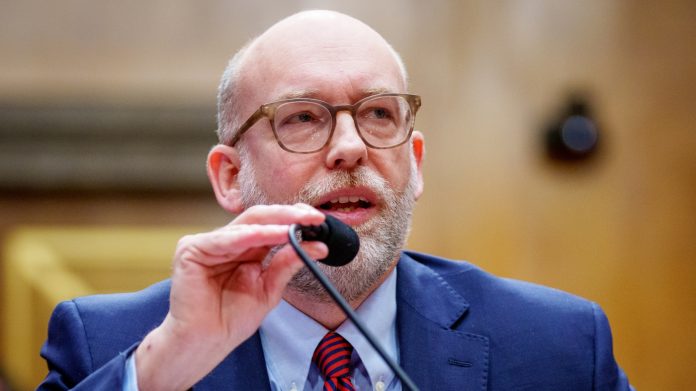
Russell Vought, seen here at a confirmation hearing on Capitol Hill last month, is now in charge at the country’s consumer finance watchdog. Vought is one of the architects of Project 2025, and was recently confirmed as director of the Office of Management and Budget.

Andrew Harnik/Getty Images


hide caption

toggle caption

Andrew Harnik/Getty Images

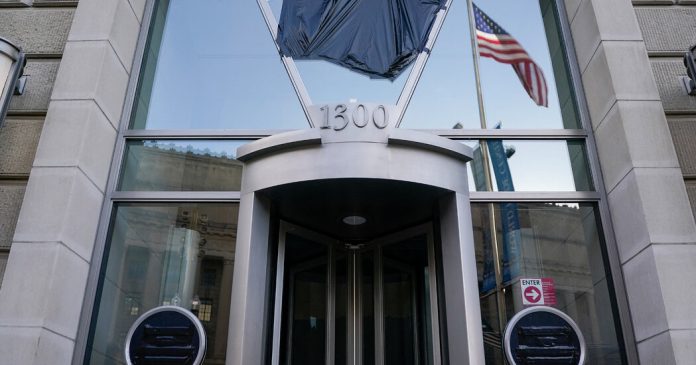
Russell Vought, an architect of Project 2025 and the new director at the Office of Management and Budget, is now also the acting leader of the Consumer Finance Protection Bureau, according to a source familiar with the situation. The source requested anonymity out of fear of retribution.

Senior executives at CFPB, the federal consumer finance watchdog, were informed Friday night that Vought was taking the helm as acting director of the bureau. He replaces Treasury Secretary Scott Bessent, who was named acting director of the bureau on Monday.

The move is the latest turn in a tumultuous week at the CFPB, where staff have been instructed to halt much of their work. The agency was instrumental in the Biden administration’s work to address deceptive or predatory business practices. The CFPB filed lawsuits against big banks and payment platforms, and made rules including capping overdraft fees and removing medical bills from credit reports.

As NPR reported Friday, members of Elon Musk’s Department of Government Efficiency team — which is not a true government department, but rather a group of staff tasked with ensuring President Trump’s priorities are enacted across the government — has gained access to internal computer systems that manage the agency’s human resources, procurement and finance systems.

Musk’s representatives have also taken control of CFPB’s website, which now shows an error message on its homepage. The rest of the site appears to be functioning normally. DOGE staffers also took control of the bureau’s social media accounts and deleted them.

Musk posted on his personal X account on Friday: “CFPB RIP,” though it is not clear there have been any reductions or changes to the agency’s staff yet. In November, Musk posted, “Delete CFPB.”

DOGE’s actions inside the bureau are stoking fears that Musk will try to virtually dismantle the agency to the extent possible, as he aims to do at the Department of Education and the U.S. Agency for International Development. The gutting of USAID was temporarily paused by a federal judge on Friday.

The union representing CFPB workers, NTEU 335, said Friday that Musk’s lieutenants entering the agency was “a clear attempt to attack union workers and defang the only agency that checks the greed of payment providers, as well as auto lenders like Tesla.” Musk — who Trump said Monday would be kept from working on areas where “there is a conflict or problem” — is CEO of Tesla and runs at least five other companies, some of which have lucrative contracts with the federal government.

The union also noted that the bureau collects and maintains vast amounts of sensitive information about individuals and businesses, including banks and other financial institutions. It expressed concern that “such legally-protected, sensitive data of businesses and individuals will be exposed and used in inappropriate ways.”

“For example, the CFPB has gathered a wealth of proprietary information from big tech payment platforms that could be exploited by someone with a conflict of interest to corner the payments industry,” the union said, pointing to a newly announced partnership between Musk’s X and Visa.

The CFPB has long been a target of criticism among Republicans, the banking sector, and some in Silicon Valley for its investigations, enforcement actions and fines in consumer protection cases.

The organization is an independent bureau within the Federal Reserve System. It is funded outside of the congressional appropriations process, and its funding comes from the Fed.

The bureau would on its face appear to be an unlikely target for cost-cutting, given its return on investment.

The budget for 2025 for CFPB is $823 million. Since its creation in 2011, the CFPB has returned $20.7 billion to consumers.

Flight passenger asks about entertainment center at extra seat, ignites debate

0

Join Fox News for access to this content

Plus special access to select articles and other premium content with your account – free of charge.

By entering your email and pushing continue, you are agreeing to Fox News’ Terms of Use and Privacy Policy, which includes our Notice of Financial Incentive.

Please enter a valid email address.

Some planes may have more than the usual amount of legroom — giving passengers an entire seat space of room due to placement near the exit door.

One flight passenger recently posted an interesting dilemma on the “r/delta” Reddit forum. The person shared that he or she was sitting in a window seat with no seat in front of them — allowing a two-row distance of extra space.

“Seat 29F on a 757 has no seat in front of it. It’s just 28D and 28E because of the exit door,” the person wrote. “The seat is great for extra legroom on flights where I’m not getting upgraded.”

FLIGHT ATTENDANT TAKES TO REDDIT FOR PASSENGER ‘PET PEEVES,’ SPARKS SOCIAL MEDIA OUTPOURING

The user went on, “The person in 28E used the under-seat storage on 27F and this person even used the entertainment system to display the flight tracker while she watched a movie on the seat directly in front of her.”

Fox News Digital reached out to both the Reddit user and Delta Air Lines for comment.

A flight passenger asked others about who should be using the entertainment center when sitting in a two-seat, exit-row chair on board a plane. (iStock)

“I had planned on throwing my bag underneath the seat in front of me and using my wireless adapter to connect the entertainment center to my headphones,” the person added. 

A photo shared with the post showed the fellow passenger looking at both monitors with her bag underneath the seat in front of the poster.

Not being able to use the monitor in front, the user then asked, “Who gets the space and the entertainment center for this seat?”

FLIGHT PASSENGER ASKS IF ‘SEAT SQUATTERS’ ARE BECOMING THE NEW NORM, TRIGGERING REACTIONS ON SOCIAL MEDIA

Reddit users took to the comments section to share thoughts and tips as well. 

“You get the space and TV on the seat directly in front of you,” declared one.

passengers

“That space is supposed to be yours. End of story.” (iStock)

Another agreed, adding, “It’s your space.”

“That looks like your monitor, honestly. They have one already,” commented a user.

One said, “That space is supposed to be yours. End of story.”

“That is your space. Ask them to move it. I am the most nonconfrontational person I know, and I have asked many people to do this,” suggested one user.

Another shared, “If you don’t want to ask them to move their bag, one thing you can do is place your bag in your foot space during the preflight checks.”

"That is your space. Ask them to move it," commented one user about the seat dilemma on board a plane.

“That is your space. Ask them to move it,” commented one user about the seat dilemma on board a plane. (iStock)

“When the FA [flight attendant] asks you to stow it, you can point to the bag that’s under the seat in front of you,” added the user. 

California-based etiquette expert Rosalinda Randall told Fox News Digital, “It would seem logical to use the screen and space underneath the seat in front of you.”

CLICK HERE TO SIGN UP FOR OUR LIFESTYLE NEWSLETTER

She shared that the Reddit user could call the flight attendant to settle the issue or “forget about it and store your belongings in the [overhead] bin.”

“In a non-accusatory manner, [the person could] say something like, ‘It’s a bit confusing, but that is my designated space.’ Or, ‘Are these yours? Sorry, but it looks like I’m going to need my space,'” Randall added. 

For more Lifestyle articles, visit foxnews.com/lifestyle

“You’ve got to have great eye vision to view the screen from a two-row distance. If it’s an older plane where the volume and channel buttons are on the armrest, then they couldn’t be using your screen,” said Randall.

plane window seat

“It would seem logical to use the screen and space underneath the seat in front of you,” shared an etiquette expert (not pictured).  (iStock)

She also said that once the plane was in the air, the user could simply reach the screen and select the preferred movie. 

“Safety and civility should always be our approach and main concern,” said Randall.

CLICK HERE TO GET THE FOX NEWS APP

Randall added, “In today’s easily sparked society, giving up a small space underneath a seat may be the better decision.” 

Here Is What to Know About U.S. Foreign Aid and the Trump Freeze

0

President Trump’s executive order freezing most U.S. foreign aid for 90 days has thrown into turmoil programs that fight starvation and deadly diseases, run clinical trials and seek to provide shelter for millions of displaced people across the globe.

The government’s lead agency for delivering humanitarian aid, the U.S. Agency for International Development, or U.S.A.I.D., has been hit the hardest. Mr. Trump has accused the agency of rampant corruption and fraud, without providing evidence.

The Trump administration ordered thousands of the agency’s workers to return to the United States from overseas; put all of the agency’s direct hires, including its roster of Foreign Service officers, on indefinite administrative leave; and shifted oversight of the agency to the State Department.

On Thursday, the Trump administration announced plans to gut the agency’s staff, reducing U.S.A.I.D.’s work force of more than 10,000 to perhaps a few hundred. On Friday, a judge temporarily blocked elements of the Trump administration’s plan to shut down the agency, though the aid freeze remains in effect.

In total, the United States spent nearly $72 billion on foreign assistance in 2023, which includes spending by U.S.A.I.D., the State Department and programs managed by agencies like the Peace Corps.

As a percentage of its economic output, the United States — which has the world’s largest economy — gives much less in foreign aid than other developed countries.

U.S.A.I.D. spent about $38 billion on health services, disaster relief, anti-poverty efforts and other programs in fiscal year 2023. That was less than 1 percent of the federal budget.

Mr. Trump’s freeze on U.S. foreign aid does not apply to weapons support for countries like Israel and Egypt, and emergency food assistance is also exempt.

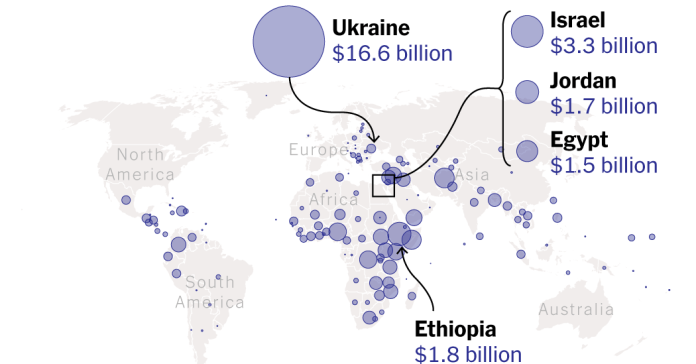
In 2023, the last year for which full data is available, Ukraine, which has been waging a war against Russia since Moscow’s full-scale invasion in February 2022, received $16.6 billion, the most U.S. assistance of any country or region. The bulk of that went to economic development, followed by humanitarian aid and security.

Israel — which was attacked by Hamas-led militants on Oct. 7, 2023, setting off a 16-month war in Gaza — received the second-highest amount of U.S. assistance: $3.3 billion in 2023, mainly for security.

Ethiopia, Somalia and Nigeria received more than $1 billion each in 2023, mostly for humanitarian aid.

In Latin America, Colombia was the top recipient of U.S. aid, $705 million, in 2023.

U.S. foreign aid can be structured as direct financial assistance to countries through nongovernmental organizations; military support; food and medical aid; or technical expertise.

Foreign aid can be a form of soft power, serving a country’s strategic interests, strengthening allies and helping to prevent conflicts.

In the case of U.S.A.I.D., money has gone toward humanitarian aid, development assistance and direct budget support in Ukraine, peace-building in Somalia, disease surveillance in Cambodia, vaccination programs in Nigeria, H.I.V. prevention in Uganda and maternal health assistance in Zambia. The agency has also helped to contain major outbreaks of Ebola.

Contrary to a claim by Mr. Trump, U.S. money has not been used to send condoms to Gaza for use by Hamas, health officials say. In a statement late last month, the International Medical Corps said that it had received more than $68 million from U.S.A.I.D. since October 2023 for its work in the enclave but that “no U.S. government funding was used to procure or distribute condoms.”

Instead, the group said, the money was used to operate two field hospitals, treat and diagnose malnutrition, deliver more than 5,000 babies and perform 11,000 surgeries.

For years, conservative critics have questioned the value of U.S. foreign aid programs. The Trump administration argues that the halt to foreign aid is necessary to examine whether U.S. funds are being wasted.

“Every dollar we spend, every program we fund and every policy we pursue must be justified with the answer to three simple questions,” Secretary of State Marco Rubio said in a recent statement. “Does it make America safer? Does it make America stronger? Does it make America more prosperous?”

On his Truth Social platform Friday, Mr. Trump wrote, “CLOSE IT DOWN!” He has asserted without evidence that the agency was “run by radical lunatics.”

Mr. Rubio, who previously spoke out in support of the agency, has taken aim at the organization, faulting its employees for “deciding that they’re somehow a global charity separate from the national interest.”

He has insisted, however, that the takeover was “not about getting rid of foreign aid.” He said during a recent Fox News interview, “We have rank insubordination” in the agency, adding that U.S.A.I.D. employees had been “completely uncooperative, so we had no choice but to take dramatic steps to bring this thing under control.”

As organizations across the globe reeled, the Trump administration switched gears. Mr. Rubio announced that “lifesaving humanitarian assistance” could continue but that the reprieve would be “temporary.”

But by then, hundreds of senior officials and workers who help distribute American aid had already been fired or put on leave, and many aid efforts remain paralyzed.

Dozens of clinical trials in South Asia, Africa and Latin America have been suspended. The freeze left people with experimental drugs and medical products in their bodies, cut them off from the researchers monitoring them and spread fear.

In South Africa, for example, the freeze shut down a U.S.A.I.D.-funded study of silicone rings inserted in women to prevent pregnancy and H.IV. infection.

About 2.4 million anti-malaria bed nets, manufactured to fulfill U.S.-funded orders and bound for countries across sub-Saharan Africa, were stuck in production facilities in Asia. Those contracts are frozen because the U.S.A.I.D. subcontractor that bought them is not allowed to talk to the manufacturer under the terms of the freeze.

In Uganda, a national anti-malaria program suspended spraying insecticide into village homes and halted shipments of bed nets for distribution to pregnant women and young children.

And in Syria, the executive order threatens a U.S. program supporting security forces inside a notorious camp, known as Al Hol, in the Syrian desert that holds tens of thousands of Islamic State members and their families, Syrian and U.S. officials said.

U.S.A.I.D. officials have been bracing for a drastic reduction to their ranks since contractors started being let go just days after the Trump administration’s stop-work order. But Democratic lawmakers say the moves to dismantle the agency or merge it with the State Department are illegal.

Two unions representing U.S.A.I.D. employees on Thursday filed a lawsuit against Mr. Trump, Mr. Rubio, Treasury Secretary Scott Bessent and the agencies they lead. The suit argued that the reduction in personnel and the cancellation of global aid contracts were unconstitutional and violated the separation of powers.

It sought an injunction to stop the firing and furloughing of employees and the dismantling of the agency. It argued that U.S.A.I.D. cannot be unwound without the previous approval of Congress.

“What we’re seeing is an unlawful seizure of this agency by the Trump administration in a plain violation of basic constitutional principles,” said Robin Thurston, the legal director for Democracy Forward, one of two advocacy organizations that filed the lawsuit on behalf of the American Foreign Service Association and American Federation of Government Employees. He added that the administration had “generated a global humanitarian crisis.”

On Friday afternoon, after a hearing, Judge Carl Nichols of the U.S. District Court for the District of Columbia said he would issue a temporary restraining order pausing the administrative leave of 2,200 U.S.A.I.D. employees and a plan to withdraw nearly all the agency’s overseas workers within 30 days.

Week in politics: Democrats respond to USAID cuts, federal workers weigh offer to resign

0

We look at where things stand with the 2 million federal workers weighing the Trump administrations offer to resign; massive cuts at USAID and how the Democrats are responding to these developments.

Israeli Prime Minister Benjamin Netanyahu backs Trump’s Middle East shift

0

Israeli Prime Minister Benjamin Netanyahu visited Washington this week, meeting with President Donald Trump and other U.S. officials to discuss the evolving relationship between the two nations. The visit marked a significant shift in U.S.-Israel relations, as the new administration swiftly implemented policies favoring Israel’s interests in the Middle East.

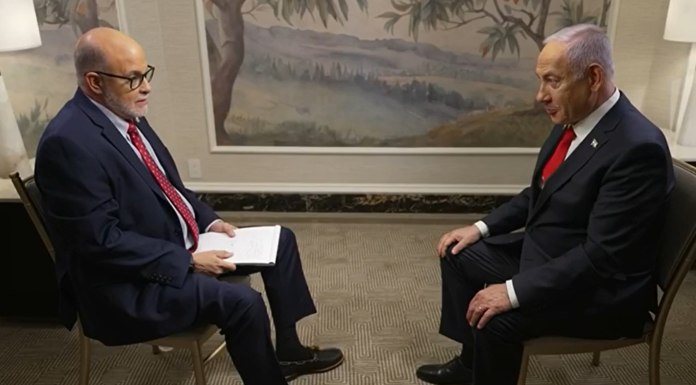
In an interview with “Life, Liberty & Levin” host Mark Levin that will air on Saturday night, Netanyahu praised Trump’s leadership and his impact on the U.S.-Israel alliance.

“I think President Trump is the greatest friend that Israel has ever had in the White House,” Netanyahu said. “He’s not only making a tremendous change in the Israeli-American alliance, strengthening it beyond anything we’ve seen up to now, but also he’s also a great leader for America and the world.”

Since returning to office less than a month ago, President Trump has made several high-profile moves affecting Israel and the Middle East. Before his inauguration, Trump issued a stern warning to Hamas, threatening “all hell to pay” if hostages held in Gaza were not released. A deal, brokered with the assistance of the Biden administration, followed shortly after.

MIDDLE EAST EXPERT SAYS ISRAEL AND THE US ARE BACK ON THE SAME PAGE — BUT THAT DOESN’T MEAN HAMAS IS DETERRED

“Life, Liberty & Levin” host Mark Levin interviews Israeli Prime Minister Benjamin Netanyahu. (“Life)

One of the most notable policy shifts came in late January when Trump lifted a hold on the delivery of 2,000-pound bombs to Israel. The Biden administration had previously paused the shipment over concerns about civilian casualties in Gaza. Netanyahu described Trump’s decision to lift the pause as “instantaneous.”

“In the first two weeks, he did everything that he promised to do,” Netanyahu said. “He went against antisemitism, went against the ICC. This corrupt so-called International Court that targets America, targets Israel, targets democracies.”

CLICK HERE FOR MORE COVERAGE OF MEDIA AND CULTURE

Earlier this week, President Trump signed an executive order imposing sanctions on the International Criminal Court (ICC) over its investigations into Israel. The ICC has issued an arrest warrant for Netanyahu, accusing him of committing war crimes during Israel’s military response in Gaza following the 2023 Hamas attacks. Neither the U.S. nor Israel recognizes the ICC’s authority.

BENJAMIN NETANYAHU PRAISES TRUMP’S ‘REMARKABLE IDEA’ ABOUT A US TAKEOVER OF GAZA

The conflict has resulted in tens of thousands of Palestinian deaths, and much of the Gaza Strip has been heavily damaged or destroyed.

Trump has also faced criticism from some Democrats over his plan to rebuild Gaza. During a joint press conference with Netanyahu on Tuesday, Trump outlined an ambitious proposal.

“The U.S. will take over the Gaza Strip, and we will do a job with it too,” Trump said. “We’ll own it and be responsible for dismantling all of the dangerous, unexplored bombs and other weapons on the site, level the site and get rid of the destroyed buildings, level it out, create an economic development that will supply unlimited numbers of jobs and housing for the people of the area.”

Netanyahu expressed his support for the plan and emphasized Israel’s commitment to working closely with the U.S. on future Middle East policy.

CLICK HERE TO GET THE FOX NEWS APP

“Israel has no better friend than America,” Netanyahu said. “And now, under President Trump’s leadership, America has no greater friend than Israel.”

“It’s a great beginning and a restart, a recalibration of our great alliance.”

The full interview with Prime Minister Netanyahu airs Saturday at 8pm on “Life, Liberty, & Levin.”

U.S.A.I.D. Workers Brace for the Worst

0

The thousands of people who work for the U.S. government’s main agency for humanitarian aid and disaster relief have been on the front lines of efforts to fight famine, contain virulent infectious diseases like H.I.V. and Ebola, and rebuild infrastructure in impoverished and war-torn countries.

On Friday evening, just hours before the vast majority of them were set to have been suspended with pay or laid off, a court issued a limited, temporary order against the Trump administration’s moves to shut down the agency.

The order was a temporary reprieve to approximately 2,700 direct hires of the U.S. Agency for International Development who were on administrative leave or set to be placed on leave by midnight Friday. For the past two weeks, they and the contractors who work for the agency had been in the throes of a collective panic as the Trump administration began to lay off staff and signaled it planned to decimate the agency.

But the U.S.A.I.D. work force, and the aid industry that relies in large part on the agency’s funding, is still acutely in limbo. On Saturday, U.S.A.I.D. informed employees affected by the order that employees already on administrative leave would be reinstated until the end Friday, Feb. 14, and that no one else would be suspended with pay during that period, according to a copy of the notice viewed by The New York Times. But those employees could still have to wait for weeks, months, or potentially even longer, for a verdict. The case, which was brought on behalf of unions representing the workers, is expected to go to the Supreme Court, and it is unclear whether the jobs will ever exist again.

The Trump administration’s announcement this week that U.S.A.I.D. would dismiss almost all of its contractors and that most Foreign Service officers and other direct hires would be put on indefinite administrative leave set off a panic around the globe, as Americans posted in missions abroad scrambled to dismantle and reassemble their lives.

The announcement gave Foreign Service officers just 30 days to depart their posts and return to the United States if they wanted the U.S. government to pay for their relocation, forcing nearly the entire diplomatic staff to plan the sort of swift exit that normally only takes place during coups and wars.

Many employees with children had to decide whether to pull them out of school immediately, or leave families behind until the end of the school year. Some with medical conditions, including late-stage and high-risk pregnancies, worried about the dangers traveling and the status of their health care. Several agonized over what to do about pets, because it was not possible to procure the paperwork necessary to enter the United States in just a few weeks.

The reductions at U.S.A.I.D. appear to have been driven largely by Elon Musk, the tech magnate President Trump deputized to make budget cuts across the government, and Pete Marocco, the State Department’s director of foreign aid, whom Mr. Rubio appointed this week to run the day-to-day business of U.S.A.I.D.

Secretary of State Marco Rubio, who has assumed overall authority of U.S.A.I.D., tried to tamp down the fears, encouraging people to apply for waivers to delay travel and arguing that the Trump administration was “not trying to be disruptive to people’s personal lives.”

But as stop-work orders and reports of massive cuts at the agency rippled across the global aid industry, and scores of nongovernmental organizations and consulting firms that relied on the agency’s funding laid off staff, the agency’s workers braced for its potential end.

One American posted to a U.S.A.I.D. mission in Africa said that he and his wife, a Foreign Service officer, had both been suspended.

“Two weeks ago we were two gainfully employed people with onward assignments, and now we’ve seen the entire industry decimated and we’re returning to the U.S. without jobs,” he said.

He, like many others, spoke on the condition of anonymity, as those still on the agency’s payroll have been instructed not to publicly discuss the changes underway. Employees fear that flouting the order could jeopardize whatever benefits they might still be eligible for, such as pensions and severance pay — though it was unclear if the Trump administration would honor such obligations.

On Thursday, a subset of U.S.A.I.D. employees began receiving notices that they had been deemed “essential,” meaning they would not be suspended or laid off — for now.

“This is your formal notification that you are expected to keep working, effective immediately, and until notified otherwise,” the emailed notification said, according to a copy reviewed by The New York Times.

It was not immediately clear how many employees had been deemed essential. On Thursday afternoon, senior U.S.A.I.D. leaders were told that the Trump administration planned to reduce the agency’s staff to about 290, according to three people informed directly about the details of the call. By Friday morning, however, senior agency officials were being told that the number of retained employees was 611, according to two people familiar with the internal guidance.

Some speculated that the number of people retained might climb slightly higher, as bureau and regional leaders fought to preserve as many positions as possible to continue the agency’s lifesaving work.

Either way, the cuts to a work force of more than 10,000 promised to be drastic.

“What is happening is devastating, it’s hard to put it into words, but it’s devastating,” said Maria Carrasco, who had worked for the aid agency or projects abroad it had funded for the last 25 years, she said, before being terminated with other contractors last week. “We are people who put our sweat and tears in to these organizations, because we believe in the ultimate goal of helping people. And now it’s been erased.”

The moves against the U.S.A.I.D. work force began in earnest on Jan. 28, four days after the stop-work orders were issued.

Samantha Cooper, a contractor whose employment was terminated, had been working in maternal and child health and nutrition at the aid agency, and was set to begin a new job this past Monday in the Office of H.I.V./AIDS. Within days, she went from being excited about an upcoming career milestone to straining to make ends meet.

“I’m having to file for unemployment, which doesn’t even cover rent; food stamps, which — that’s fine, it at least gets me groceries,” she said in a telephone interview. Her medical coverage ran out on Friday last week.

Ms. Cooper, who is based in Tulsa, Okla., said she felt luckier than most.

“I have co-workers that are going through I.V.F., and they’ve lost all their benefits; people going through cancer treatments and with parents on hospice — and they were the breadwinners,” she said. “I feel privileged to say this is only what I’m struggling with. I know there are so many others having to deal with that, and it is literally going to break them.”

That was the fear for one Foreign Service officer in Asia who discovered this week that an immediate family member needed to be evacuated for a life-threatening health condition, only to be told by superiors that amid the dissolution of U.S.A.I.D., there was no funding available for emergency medical travel. Their only option, the officer was told, would be to immediately return to the United States, where they have nowhere to live, and leave their belongings and pets behind.

Another Foreign Service officer working at a mission in Africa wrestled with how to break the news to her two young children.

She also worried that she and her spouse, who also works in development, would have to live off the savings they had hoped to put toward a house if they both soon found themselves out of work.

“It just feels like the entire sector is sinking, and so how am I going to find a job?” she said, speaking on the condition of anonymity, like others, for fear of retaliation. “All I know is development, all I know is public health — I’ve dedicated my life to this. What other skills do I have?”

The decimation of U.S.A.I.D. has set off a domino effect, as contractors, nongovernmental organizations and consulting firms that rely on funding from the agency for their projects also are forced to make cuts. At least 10,000 American jobs in the sector have already disappeared, according to InterAction, which represents a number of organizations specializing in foreign aid.

“It’s the evisceration of the sector,” Tom Hart, the president and chief executive officer of InterAction, said.

Employees of nongovernmental organizations and companies that rely on U.S.A.I.D. funding said they had effectively been blocked from accessing any funding through the agency’s accounting system, and in some cases, had months of expenses with no guarantee that the federal government would reimburse them.

Resonance, a development consulting firm that employed about 150 people around the world, is an example of a small company taking a big hit. The firm did about 75 percent of its business with U.S.A.I.D. before the contraction. It has bills going back to November that the agency has yet to cover, Steve Schmida, its co-founder, said in an interview.

“We’re being forced to carry a huge amount of cost with no clarity if and when we will get paid or reimbursed,” Mr. Schmida said, adding that he had to lay off almost 90 percent of his U.S.-based staff. He is going without pay for three months to help free up funds to keep his business afloat, he said.

But as news of the drastic staff reductions took hold, he was losing hope that the government would ever cover the funding his firm had been promised.

“It’s just been a catastrophe,” he said of the U.S.A.I.D. cuts, adding: “I think it’s dawning on everyone that this is over.”

Edward Wong contributed reporting from Bangkok and Chris Cameron from Washington.

Stress and uncertainty as federal health funding system sputters : NPR

0

Children play during aftercare for the Head Start program at Easterseals South Florida, an organization that gets about a third of its funding from the federal government on Wednesday, Jan. 29, in Miami.

Rebecca Blackwell/AP


hide caption

toggle caption

Rebecca Blackwell/AP

For more than a week, Paula Tomko of Central Virginia Health Services waited for federal funding from the Department of Health and Human Services. The organization runs 20 community health centers across the state.

“Normally we would put the request in one day and it would be in our bank account the next day,” she explains. On January 24, her organization submitted a request through Payment Management Services, a portal run by HHS.

But the funds never came. Many other organizations that receive federal funding through the same portal also found that they could not draw down reimbursements starting last week.

The timing of the system’s failures coincides with the Trump administration’s ordered freeze of federal grant funding, including a White House Office of Management and Budget memo issued on January 27, which was later blocked by a federal judge and rescinded by OMB.

“We’ve been doing this for over 50 years — we got started in 1970, and, and we’ve never had this issue,” she says. “We’re really uncertain as to exactly what that means.”

Her organization has enough reserves to make payroll for their 550 staff members at the moment, she says, but not for long.

“We’ve been honest with our staff, we’ve said, ‘Hey, this is a cash flow issue right now,'” she explained.

To be prudent, the organization is making small changes like limiting travel, and only stocking up on supplies for short term needs. Patients haven’t had their care interrupted yet.

But some health care centers in near Richmond, Va., did close and had to transfer patients to centers in its network when they weren’t able to access federal funds, according to VPM News.

Community health care centers provide primary and preventive care to millions of patients, many of them low-income, whether they are insured or not. In many parts of the country, they are the only health care centers offering primary care besides hospital emergency departments.

“People hear that the freeze was lifted, they assume we’re back to normal and we’re really not — we’re really not,” Tomko says. “We thought we had a contract, and we can’t access the funds that were contracted.”

Lack of communication 

A spokesperson for the Department of Health and Human Services, which runs the payment system, sent NPR a statement saying that “technical issues” caused an outage.

“Users may be experiencing lags due to the high volume of requests. HHS is working through the Program Support Center to help expedite resolution as quickly as possible,” the spokesperson wrote.

Community health centers across the country have been affected, but unevenly. Advocates for Community Health, which represents community health centers, wrote in a statement that clinics in Maine, Nebraska, Illinois, Michigan, along with Virginia, had experienced interruptions.

Some Head Start programs, which receive HHS grant funds as well, also reported problems.

“We are aware of 37 grant recipients serving approximately just under 15,000 children in 20 states across the country and DC and Puerto Rico that are still waiting [for funds],” says Tommy Sheridan, deputy director of the National Head Start Association.

Tomko of Central Virginia Health Services says grantees aren’t being given any guidance on how to navigate the problem, “whether it’s, delete your previous requests and do new ones, or do it every day in small amounts — there’s no guidance coming through.” This week, her organization canceled the request from January 24 and submitted a new one, unsure of whether that would help or hinder the problem.

A recorded message on the federal payment portal helpline says: “We have no information to share regarding the delay of payments at this time. Please continue to visit the website for updates.”

On Thursday, a group of Democratic Senators sent a letter to the acting Secretary of Health and Human Services asking for answers about the funding delays.

Navigating uncertainty in Head Start

For Head Start providers who haven’t been able to access the system they depend on, the last week has been “really emotional,” said Abbi Kruse, the executive director of The Playing Field, an early childhood center in Madison, Wis., that uses Head Start dollars to cover some of its programming.

“The recent thing was really just the uncertainty,” she said. If the funding delays had continued, she said, “it would really have a domino effect on our whole operation.”

Since last week, she said, she’s heard from families who were afraid of losing their childcare, and from teachers afraid of losing their jobs.

“A lot of our families are either homeless or they are at risk of becoming homeless, and even a few days off work can make a difference for them between being able to pay their rent and not being able to pay their rent,” she said.

Kruse added that maintaining The Playing Field’s revenue model is a difficult balance in the best of times, and that providers are already squeezed because of inflation.

“We just rely on so many different forms of funding to make sure that our program is accessible to low-income families,” she said. “It’s a rough time anyway. And so then adding on top of that, this federal money that’s always been stable, taking that away would have made things just — it would have felt really impossible to me to figure that out.”

On Friday, half of the funds that serve Kruse’s center were released, with the rest promised for Monday. At least four other Head Start grantees in Wisconsin were also facing delays; as of Friday, all had seen some resumption of funding, according to Jen Bailey of the Wisconsin Head Start Association.

Kruse said she is relieved that her program has seen its federal funds resume, but she remains on edge.

“What are the plans for Head Start? Who’s making those decisions? How are they making those decisions?” she said. “I feel relieved for today, but I still feel really uncertain about the future.”

Looming budget uncertainty

Karen Haring runs Libera, a community nonprofit in West Virginia that supports young women. This week, the organization broke ground on a new building they’re preparing to renovate as a community center with affordable housing for 8 young women.

Libera also had problems getting funding as usual through the HHS grant portal. Instead of funding arriving the next day after a request, as usual, it took more than a week.

The unexpected hurdles in accessing funds now make them worry about their future.

“The concern there is we have this building, it looks like the funding will come through and keep coming through for renovating the building, but what if we don’t have the staff to carry out the programs? What if we don’t have the staff to be able to run the building?” Haring asks.

Tomka in Virginia agrees that the threat of a government shutdown is hanging over every organization that receives these federal health grants. They’re using their reserves now to cover the grant funding delays.

“How long can we cover this and when do we have to tighten our belt even more and start impacting services?” she asks.

At some point, funding delays could really start to hit the patients and families that rely on these community centers.

Simmons-Duffin reported from Washington; van Wagtendonk reported from Madison, Wisc. NPR’s White House Correspondent Tamara Keith contributed to this report.


‘Real Time’ host Bill Maher did not rule out Trump’s plans for the Gaza Strip

0

“Real Time” host Bill Maher didn’t completely rule out President Donald Trump’s plans for the Gaza Strip, siding with the idea that the war-torn territory “could be something else” in the future. 

Trump made international headlines this week for saying the U.S. would “take over” and “level” Gaza after Israel ends its war with Hamas, displacing the Palestinian population to other Arab countries while developing what Trump called the “riviera of the Middle East” in order to bring stability in the region.

During his panel discussion, Maher told his guest Rep. Byron Donalds, R-Fla., that there was a “little daylight” between the two of them on the subject. 

JOURNALISTS SOUND ALARM OVER TRUMP’S ‘PREPOSTEROUS’ GAZA COMMENTS, WARN OF ‘ETHNIC CLEANSING’

“He said, ‘You know, it’s going to be the riviera-‘ okay, that’s a little ridiculous,” Maher said. “But you know, this idea that it could be Dubai instead of Haiti, which is really what it is. it’s just like Haiti, run by a criminal gang, by a terrorist mafia gang. That’s why it’s a hellhole, not just for the Israelis next door, but for the people who live there, who hate Hamas as well. And it could be something else.” 

“This is something I read in op-eds in The New York Times, 10, 15, 20 years ago. Gaza does not have to be that. It could be something closer to Dubai. So the fact that Donald Trump, in his childlike way, throws that idea out there, is not the worst thing in the world,” Maher continued.

“Real Time” host Bill Maher said President Trump’s idea about rebuilding the Gaza Strip is “not the worst thing in the world.” (Screenshot/HBO)

The liberal comedian went on to call out Trump’s comments being “all over the map,” including when he suggested the U.S. would be responsible for clearing out the explosives hidden in Gaza’s infrastructure, sarcastically asking “What could go wrong?” 

“And again, the kernel of an idea here is valid, but the idea, but introducing the notion of American troops, and also, wouldn’t this be kind of expensive for you America First people?” Maher asked Donalds.

Puck News’ Tara Palmeri interjected, “It’s like Donald Trump wants to turn Gaza into Atlantic City, but like, let’s not forget how he left Atlantic City.”

“I don’t know if I’d leave him to Gaza,” Palmeri told Maher. 

BILL MAHER LAMENTS THAT EVERYTHING IN GOVERMENT IS ‘BROKEN,’ BUT IS CONVINCED TRUMP ISN’T THE ANSWER

Netanyahu Trump press conference

U.S. President Donald Trump and Israeli Prime Minister Benjamin Netanyahu answer questions during a joint press conference in the East Room at the White House in Washington, U.S., February 4, 2025 ( REUTERS/Leah Millis)

Donalds pushed back, saying he’d rather have Trump call the shots with Gaza “than the Iranians.”

“Even the American troops piece that has been pulled back. That’s not the case. But you have to have some vision for what that part of the region should be,” Donalds said.  “So is it [Israeli] involvement? Yes. Could it be Saudi Arabia as well? Could be. It depends on what the other nations in that region want, but what nobody wants is an Iran that is dominating that region.”

“I agree with the notion that it’s good to open a window and let in some fresh air, because people do get locked into silly ideas that we then take as the group think,” Maher responded. “For example, Syrian Civil War, all those refugees, a million wound up in Germany. Saudi Arabia took none. And we all just pretend this makes sense? That no other Arab countries will take refugees who you say are your brethren?” 

CLICK HERE FOR THE LATEST MEDIA AND CULTURE NEWS

Byron Donalds

Rep. Byron Donalds, R-Fla., called out the “mislogic” from liberal leaders in the U.S. and Europe over their handling of Middle East turmoil. (Screenshot/HBO)

CLICK HERE TO GET THE FOX NEWS APP

“I personally think that’s actually the mislogic of a lot of liberal-leaning leaders in Europe and in America,” Donalds continued, “thinking that you can just take refugees from these parts of the world and not think through the detailed steps of what it is for those countries to rebuild.”

“And I’m not talking about nation building a la George W. Bush, I’m not talking about that, but you’ve got to have leadership in that region. There have to be peace accords in that region. And so when President Trump was leaving the first time, that was the premise of the Abraham accords. Have the Arab states with Israel actually work together in peace so you can actually develop a stable, political, religious, whatever they choose that to be, and an economic area so people can live in harmony and peace, period,” Donalds added.