Friday, November 13, 2026
Home Blog Page 252

How War Has Wreaked Havoc on Ukraine’s Classrooms

0

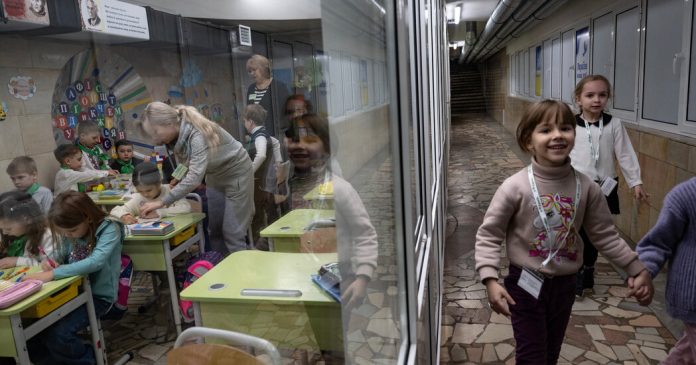
The students meet a day a week for lessons in a tiny underground classroom that teachers call the beehive, for the buzzing of all the children packed inside.

Holding classes above ground in this part of Ukraine, in the city of Balakliya near the front line, is considered too dangerous because of the ever-present threat of Russian missiles and drones. Children spend most of their time in online classes and take turns going to school underground.

“When they come, they often ask me, ‘Can we see our former classroom?’” said Inna Mandryka, a deputy principal. The teachers, she said, never imagined children longing for school so much.

Russia’s invasion of Ukraine was intended to undermine the country’s future in many ways, stamping out language and culture, destroying infrastructure and leveling whole cities with bombs in the country’s east.

Disruption to the education of Ukraine’s 3.7 million schoolchildren is one of the most serious challenges for the country. Classes have been repeatedly interrupted, leaving many students far behind academically, experts say. Children are also losing their soft skills, such as communication and conflict resolution, from being unable to interact enough with other students.

Providing classes of any kind has been a huge obstacle for the country since Russia’s full-scale invasion began in 2022.

Air raid alerts have regularly interrupted lessons for those attending school, sending children tramping through hallways to basements, often for hours. Most students study partly online and attend school in person for one or more days a week. In more dangerous parts of the country, closer to the front line, students attend classes in underground bomb shelters. Fourteen percent of children studying the Ukrainian curriculum do so entirely online, including about 300,000 joining lessons from abroad, according to the education ministry.

The limitations mean that many Ukrainian children still chat with their classmates only on computer screens.

“It makes it very difficult for children to feel connected,” said Emmanuelle Abrioux, the head of the education section at UNICEF in Ukraine.

At the Balakliya elementary school, children study four days online and one day in the underground classroom. By law, the school can accept only as many students as it can fit in its bomb shelter, leaving the children to study there on rotation.

At least 137 underground schools have been built in Ukraine, mainly in the east and south of the country, according to the education ministry.

Many Ukrainians also stay online by choice. Internally displaced people in the country, for instance, often prefer for their children to stay in their old schools online rather than attending schools in person near their new homes. The result has been a virtual community online for the ruined cities of eastern Ukraine.

Iryna, a special needs teacher, is from Sievierodonetsk (which Ukraine’s Parliament last year renamed Siverskodonetsk), a city occupied by Russia since June 2022, and later fled to Vinnytsia in central Ukraine. She asked to use only her first name, because her relatives live in an area under Russian occupation.

She continues to work with her old school, which now operates only online, and keeps her son enrolled there, too. She said it was comforting to hold onto a bit of their home after they fled.

The government is discouraging such practices as part of a broader plan to push for in-person schooling where possible. In July, the education ministry published a plan for 2025 aiming to bring at least 300,000 children back into schools and limit the number of those studying online.

The proposals stop short of closing the schools, like Iryna’s, that are operating online from exile, but teachers and parents worry that such a move may come later.

Even when schools are virtual, “the people there are real and familiar,” Iryna said, adding, “My colleagues are dear to me.”

She teaches children from all over Ukraine and around Europe, and still has one student in Sievierodonetsk. Fearing persecution, the student rarely joins the online lessons, she said, but the teachers send him tasks to complete. Her other students all appear onscreen, doing their best to duplicate what they did in person before the start of the full-scale invasion.

“Children need us here online, and we try our best to preserve what we have,” she said.

For those under Russian occupation, joining Ukrainian online schools is a big risk. The occupation authorities force them to attend local schools and study the Russian curriculum, residents of the occupied regions say.

Hanna, 35, a mother of one from Melitopol in the occupied part of the Zaporizhzhia region of southeastern Ukraine, said she had lived under occupation for a year and a half before fleeing to another Ukrainian city in August 2023. She said she did not want to provide her full name as she still has family in Melitopol who might be at risk.

In the first year of the occupation, she said, her 6-year-old son studied at a Ukrainian school remotely. Russian soldiers once searched their home, looking for weapons. “They saw that the child was young and didn’t force us to attend Russian school,” she said. But she kept his online classes in a Ukrainian school secret not only from Russian soldiers, but also from neighbors.

She said she was alarmed one day when, talking with other children at a playground, her son mentioned Ukrainian authors he had been studying in his online classes. “I quickly shouted at him, ‘Quiet! It’s not allowed to speak of this here,’” she said.

While online classes — which were first started during the Covid pandemic — have now become routine for many Ukrainian schoolchildren, some critics say that instruction remains bogged down in an old-fashioned educational system.

The government provides books but no guidance on how to make lessons interactive and more engaging for students, said Tymofiy Brik, the dean of the Kyiv School of Economics.

With online education, it is harder to maintain children’s interest than in classrooms, he said, so it is up to individual teachers to find ways of engaging their classes. “Some kids are luckier than others,” he said.

Still, Ms. Abrioux of UNICEF said that educators had learned some lessons about online learning during the pandemic that had helped with their planning when the war started.

“In a way, ironically, we’re quite fortunate to be in a situation where there was quite a lot of research done after the pandemic on the impact of school closures and disrupted education on children’s schooling,” she said.

In Ukraine, the children’s fund started several projects aimed at helping students catch up that included training teachers and paying them to provide after-school classes in person. The fund also supplies laptops to teachers and children who need them.

While such efforts have helped with online learning, many parents and children are impatient for in-person classes to start again in schools.

Svitlana Stepurenko, 34, and her 9- and 12-year-old daughters left Ukraine after Russian forces occupied Balakliya. They fled to Norway, where the children now study as they wait for the war to end so they can return to their old school.

The girls, like tens of thousands of other children in refugee families abroad, attend local schools and then log in to Ukrainian lessons online in the afternoon. Ms. Stepurenko worries that her children will find it difficult to catch up with their classmates in Ukraine.

“Even if it is nice here,” she said, “we miss home and want to go back to our school very much.”

House Republicans want to pass a budget bill that would support Trump's policies

0

House Republicans are racing to advance a budget bill that would allow the party to pass many of President Trump’s top policy priorities without the threat of a Senate filibuster from Democrats.

Joe Biden signs with Hollywood agency – 15 movie ideas we’d like to see

0

Join Fox News for access to this content

Plus special access to select articles and other premium content with your account – free of charge.

By entering your email and pushing continue, you are agreeing to Fox News’ Terms of Use and Privacy Policy, which includes our Notice of Financial Incentive.

Please enter a valid email address.

NEWYou can now listen to Fox News articles!

Former President Joe Biden just signed with Hollywood powerhouse Creative Artists Agency to helm projects for movies and TV, which is remarkable, because most people aren’t convinced the ex-president can even work the remote on his widescreen, let alone act in motion pictures.  

Biden apparently figured that if former President Barack Obama and actress Meghan Markle can create successful programming and reap nine-figure paydays, he could do likewise.  

Reports that a compliant Directors Guild of America and Sundance and Cannes film festivals have already nominated Dr. Jill Biden for Best Director Of Anything Ever appear to be exaggerated. 

CONSERVATIVE ACTIVIST ROBBY STARBUCK SAYS HIS FILM ‘THE WAR ON CHILDREN’ WAS ‘UNBANNED’ FROM AMAZON

News reports say that no titles have been announced, so I thought I’d helpfully offer 15 ideas (in reverse marketable order) that the ex-president can bring up at pitch meetings, as long as he can stay awake long enough. So here goes:  

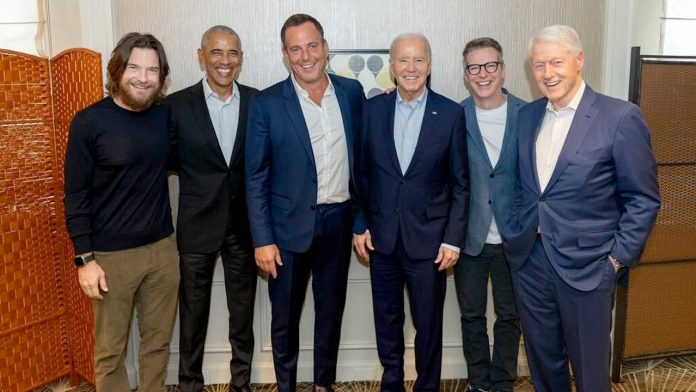
Former President Joe Biden is taking his act to Hollywood. FILE: Actor Sean Hayes poses with former Presidents Biden, Barack Obama and Bill Clinton, along with fellow actors Jason Bateman and Will Arnett. (seanhayes/Instagram)

15. “Weekend at Biden’s” – A high-energy comedy about a presidential spouse dragging what’s left of her husband through meetings with world leaders, Super Bowl winners and other alarmed White House visitors. 

14. “Guess Who’s Coming to Dinner and Won’t Leave” – a powerful drama about a vice president who comes to a presidential dinner, sneaks upstairs to the Lincoln Bedroom, and locks herself in until the following Inauguration Day.  

13. “Dude, Where’s My Country?” – A rollicking comedy about a president who accidentally misplaces his entire nation and travels the world, Anthony Bourdain-style, looking for it. 

12. “What’s My Line?” – A remake of the classic game show, but with a new twist. Four elegantly attired panelists try to remind the former president of the United States of what he actually did for a living. 

11. “Clueless Joe” – The story of a man who would rather smell the hair of women visitors to the White House than actually do anything policy-related. 

10. “Biden My Time” – A drama about an ex-president who figures that if Presidents Grover Cleveland and Donald Trump can have non-consecutive terms, why can’t he? How he plans to wait out the next four years and run for president again, at age 86, and reclaim what was rightfully his. 

9. “Last Amtrak to Dover” – A president bids farewell to his nation but surprises everyone by demanding that his helicopter land at Washington D.C.’s Union Station, so he can take his beloved Amtrak to Delaware one last time, and the story of the merry villagers on the train who are delayed for nine hours by security. 

8. “From Here to Obscurity” – a medical crime drama about a former President whose favorite downtown chain drug store closes due to organized shoplifting, and his one-man battle to reopen the store and save the jobs of four shelf stockers and 26 pharmacists. 

Hunter Biden Capitol Hill

Hunter Biden could have a Hollywood future if he follows his dad to the Left Coast. FILE: Hunter Biden, son of former President Joe Biden, speaks to members of the media outside the Capitol in Washington, DC, on Wednesday, Dec. 13, 2023. (Tierney L. Cross/Bloomberg via Getty Images)

7. “Mr. Biden Goes to Hollywood” – The story of an individual with no acting ability, average looks, a total inability to remember his lines, and a Q rating below sea level, who takes the movie industry by storm, whether they like it or not. 

6. “Orange Is the New Orange” – A fantasy in which the former president imagines his predecessor and successor (the same person) going to prison for a series of invented crimes and misdemeanors, followed by the world insisting on Biden receiving a second term in the White House. 

5. “All the President’s Mensheviks” – The shockingly implausible story of an American president held hostage by a group of far leftists who take over the government and turn the country into a borderless socialist state – oh, wait, that actually happened. Never mind. 

CLICK HERE FOR MORE FOX NEWS OPINION

4. “My Left Michael Foot” – A nostalgic look at how then-presidential candidate Joe Biden plagiarized the speeches of U.K. leftist politician Michael Foot, how that echoed charges of plagiarism while a student at Harvard Law School, and how it happened yet again in the run-up to the 2020 presidential campaign, and the endearing story of how the mainstream media couldn’t have cared less. 

Reports that a compliant Directors Guild of America and Sundance and Cannes film festivals have already nominated Dr. Jill Biden for Best Director Of Anything Ever appear to be exaggerated. 

3. “The Obama Drama” – The poignant story of a former president who favored his secretary of State over his vice president to run for president in 2016, and Biden’s secret joy and thirst for revenge when she lost to the Donald. 

2. “I Fell But I Got Back Up” – How a president used an obedient media to convince voters that the self-described “gaffe machine” who fell asleep at climate change events, fell onstage at a military graduation and called out for a congresswoman who sadly had perished in a car crash, was still a viable candidate for a second term. 

1. “Pardon Me, Dad” – the touching story of a recovering drug addict , tax-cheating felon begging his father to keep him out of prison. 

CLICK HERE TO GET THE FOX NEWS APP

US President Joe Biden and First Lady Jill Biden greet President-elect Donald Trump and Melania Trump

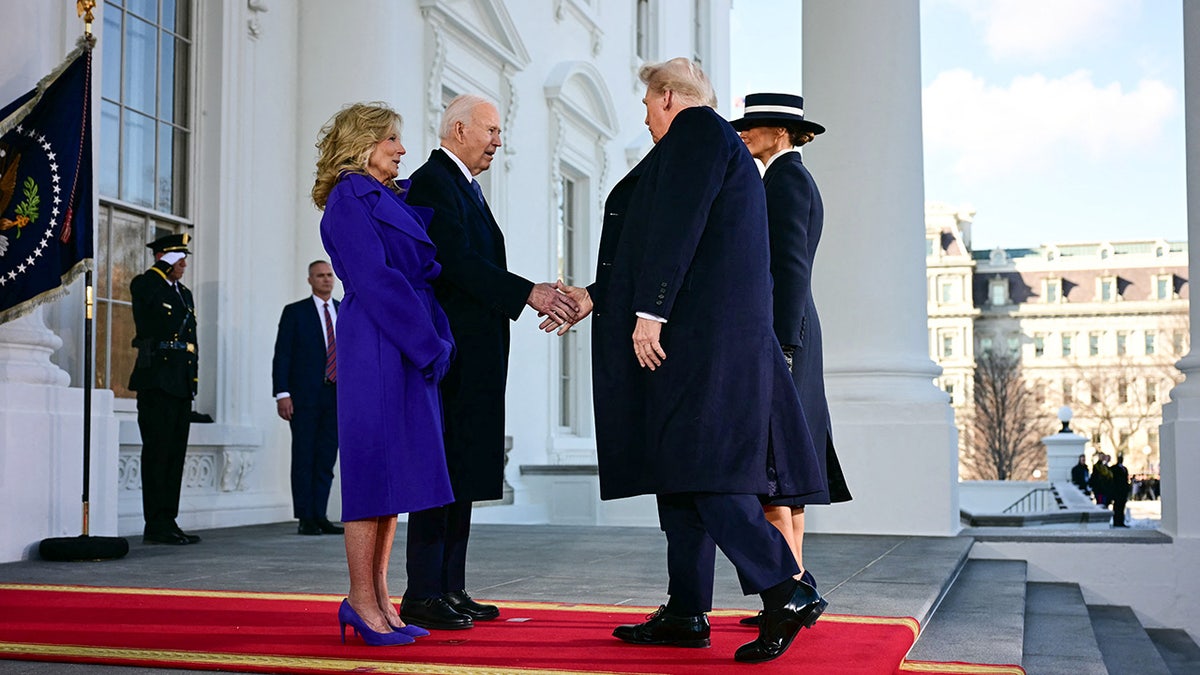
Former President Joe Biden has left the White House for … Hollywood and he’s looking for ways to bring in the cash. FILE: Outgoing President Biden and First Lady Jill Biden greet President-elect Donald Trump and Melania Trump as they arrive at the White House in Washington, DC, on January 20, 2025. (Jim Watson / AFP via Getty Images)

Actually, Mr. President, here’s what Hollywood is likely to say once they really think through whether America wants to hear from you again:   

Don’t call us. We’ll call you. 

CLICK HERE TO READ MORE FROM MICHAEL LEVIN

Trump and Musk Bring Vast Aid Machinery to a Halt in Africa

0

For decades, sub-Saharan Africa was a singular focus of American foreign aid. The continent received over $8 billion a year, money that was used to feed starving children, supply lifesaving drugs and provide wartime humanitarian assistance.

In a few short weeks, President Trump and the South African-born billionaire Elon Musk have burned much of that work to the ground, vowing to completely gut the U.S. Agency for International Aid.

“CLOSE IT DOWN!” Mr. Trump wrote on social media on Friday, accusing the agency of unspecified corruption and fraud.

A federal judge on Friday halted, for now, some elements of Mr. Trump’s attempt to shutter the agency. But the speed and shock of the administration’s actions have already led to confusion, fear and even paranoia at U.S.A.I.D. offices across Africa, a top recipient of agency funding. Workers were being fired or furloughed en masse.

As the true scale of the fallout comes into view, African governments are wondering how to fill gaping holes left in vital services, like health care and education, that until recent weeks were funded by the United States. Aid groups and United Nations bodies that feed the starving or house refugees have seen their budgets slashed in half, or worse.

By far the greatest price is being paid by ordinary Africans, millions of whom rely on American aid for their survival. But the consequences are also reverberating across an aid sector that, for better or worse, has been a pillar of Western engagement with Africa for over six decades. With the collapse of U.S.A.I.D., that entire model is badly shaken.

“This is dramatic and consequential, and it’s hard to imagine rowing it back,” said Murithi Mutiga, Africa program director at the International Crisis Group. Mr. Mutiga described the collapse of the agency as “part of the unraveling of the post Cold War order.”

“Once, the primacy of the West was assumed” in Africa, he said. “No more.”

Experts say the agency’s abrupt undoing will cost many lives by creating huge gaps in public services, especially in health care, where U.S.A.I.D. has poured much of its resources.

In Kenya alone, at least 40,000 health care workers will lose their jobs, U.S.A.I.D. officials say. On Friday, several U.N. agencies that depend on American funding began to furlough part of their staff. The United States also provides most of the funding for two large refugee camps in northern Kenya that house 700,000 people from at least 19 countries.

Ethiopia’s health ministry has fired 5,000 health care professionals who had been recruited under American funding, according to an official notification obtained by The New York Times.

“We are in disbelief,” said Medhanye Alem of the Center for Victims of Torture, which treats survivors of conflict-related trauma at nine centers in northern Ethiopia, all now closed.

Of over 10,000 U.S.A.I.D. employees worldwide, barely 300 will remain under changes conveyed to staff on Thursday night. Only 12 will remain in Africa.

The most pressing challenge for many governments is not to replace the American staff members or money, but to save American-built health systems that are rapidly crumbling to the ground, said Ken O. Opalo, a Kenyan political scientist at Georgetown University in Washington.

Kenya, for instance, has enough drugs to treat people with H.I.V. for over a year, Mr. Opalo said. “But the nurses and doctors to treat them are being let go, and the clinics are closing.”

Broader economic shocks are also likely in some of the world’s most fragile countries.

American aid accounts for 15 percent of economic output in South Sudan, 6 percent in Somalia and 4 percent in the Central African Republic, said Charlie Robertson, an economist who specializes in Africa. “We could see governance effectively cease in a few countries, unless others step up to replace the hole left by the U.S.,” he said.

Whether U.S.A.I.D. is truly dead may yet be determined by Congress and the U.S. courts, where supporters have filed a raft of legal challenges. But the Trump administration seems determined to move faster than its challengers.

As Mr. Musk and his team have commandeered the agency’s operations in Washington, shuttering its headquarters and sacking or suspending 94 percent of its staff, its vast aid machinery in Africa has shuddered to a halt.

In major hubs in Kenya, South Africa and Senegal, American aid officials were shocked to find themselves labeled “criminals” by Mr. Musk, then ordered to return to the United States, according to eight U.S.A.I.D. employees or contractors who all spoke on the condition of anonymity for fear of retaliation.

On Friday, the Trump administration gave all U.S.A.I.D. staff members 30 days to pack their bags and come home, causing turmoil among families now faced with the prospect of pulling children out of school on short notice. If the federal court that is now reviewing that directive does not overturn it, few will have jobs to return to.

Several U.S.A.I.D. officials noted that Google’s artificial intelligence system, Gemini, had been activated on their internal communications systems recently, and that internal video calls conducted on the Google platform were suddenly set to automatically record.

Officials said they worried that Mr. Musk’s team could use A.I. to monitor their conversations to ferret out dissenters, or to excerpt snippets of conversations that might be weaponized to discredit the agency.

Colleagues at the agency have turned to Signal, an encrypted messaging app, this week to share information unofficially. People are being driven by fear, one of them said.

In private, even senior U.S.A.I.D. officials agree that the agency needs an overhaul. In interviews, several recognized the need to streamline its bureaucracy, and even questioned an aid system that relies so heavily on American contractors and fosters a damaging culture of dependency among African governments.

Announcements by Marco Rubio, the secretary of state and acting head of U.S.A.I.D., that emergency food and lifesaving aid would be exempted from the administration’s cuts were initially welcomed by employees. But, officials said, it turned out to be largely a mirage. Despite the promise of waivers, many have found it impossible to obtain one.

Worst of all, many said, were the broadsides delivered by Mr. Musk and the White House portraying the agency as a rogue, criminal agency run by spendthrift officials pursuing their personal agendas. Such attacks were false and deeply hurtful to Americans who sought to relieve human suffering around the world, several people said.

In Nairobi, where U.S.A.I.D. has about 250 Kenyan and 50 American staff members, several Kenyans spoke at a tense town hall this week.

They worried that talk at the White House of widespread corruption inside the agency might cause other Kenyans to believe that they, too, had benefited from fraud, said an official who attended the meeting.

Like the Americans present at the town hall, the Kenyans worried they were about to be fired. But there was one major difference between the two groups, the official noted: While the Kenyans were anxious for their livelihoods, the Americans were worried about their country.

Identify any mystery caller for free with this phone number lookup tool

0

Got an unknown number that’s been driving you nuts? 

We totally get it. 

Those random calls on your cellphone can be seriously frustrating. And now you can fight back with a simple, free solution. In just a few easy clicks, you’ll go from feeling annoyed to being in total control, uncovering exactly who’s behind that mysterious phone number.

GET SECURITY ALERTS, EXPERT TIPS — SIGN UP FOR KURT’S NEWSLETTER — THE CYBERGUY REPORT HERE

A woman frustrated by mystery call coming in on her smartphone. (Kurt “CyberGuy” Knutsson)

Your step-by-step guide to phone number sleuthing

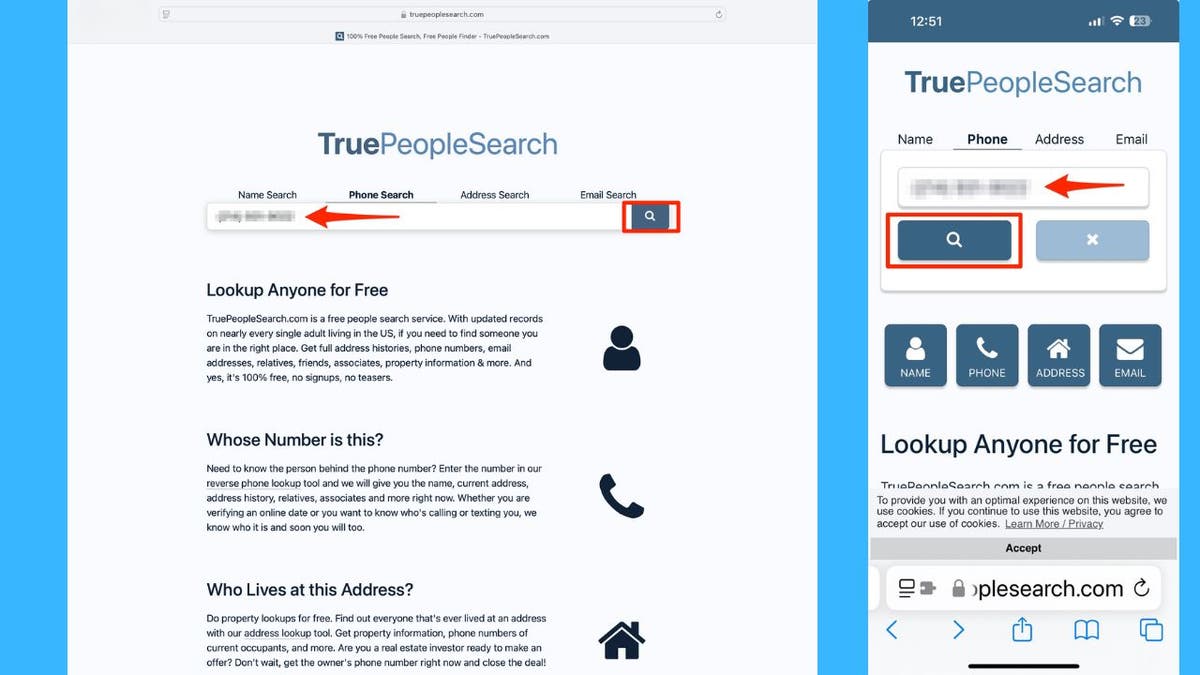
The TruePeopleSearch.com website works with both landline and cellphone numbers. It allows you to do a reverse phone lookup for any type of phone number, whether it’s a cellphone or a landline. It’s important to note that the availability and completeness of information can vary depending on the specific number and its associated public records. 

However, in most cases, with just a few simple steps, you’ll go from “Who the heck is calling me?” to “Aha! Now I know exactly who this is.” Note that you can also search by name, address and email, as well, but for our example, we’ll use a phone number. 

mystery number 2

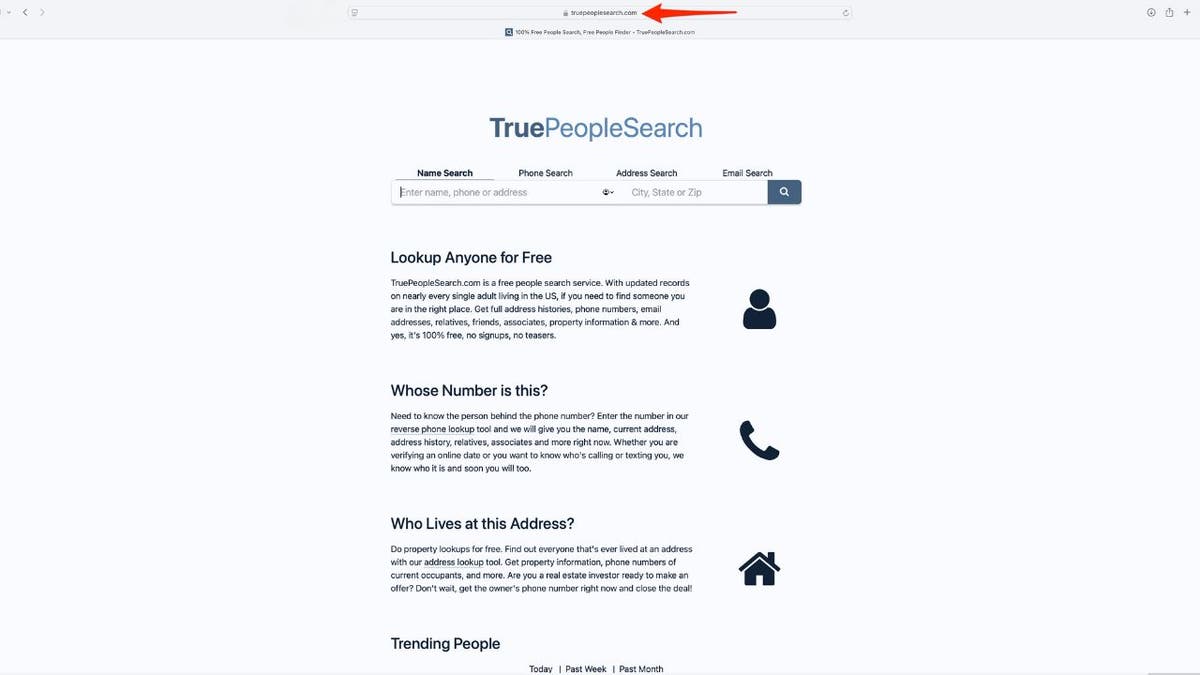
Reverse phone lookup website. (TruePeopleSearch)

AN ALARMING SPIKE IN SCAM CALLS ORIGINATING FROM ROBOCALLS

Step 1: Fire up your device and navigate to TruePeopleSearch.com

Grab your preferred device — be it a computer, smartphone or tablet. Any browser will do, so launch Chrome, Safari or whatever you’re comfortable with. Type in truepeoplesearch.com in your browser’s address bar. The layout might vary slightly depending on your device, but don’t worry — the functionality remains the same.

mystery number 3

Reverse phone lookup website. (TruePeopleSearch)

TOP 10 ROBOCALL HOTSPOTS IN AMERICA

Step 2: Initiate the phone search

  • On your smartphone, tap the phone icon.
mystery number 4

Reverse phone lookup website. (TruePeopleSearch)

  • On a computer? Click where it says “Phone Search.”
mystery number 5

Reverse phone lookup website. (TruePeopleSearch)

Step 3: Enter the mystery number

Now, type in that perplexing phone number that’s been nagging at you. Hit the search button and watch the magic unfold.

WHAT IS ARTIFICIAL INTELLIGENCE (AI)?

mystery number 6

Reverse phone lookup website. (TruePeopleSearch)

Step 4: Explore the results

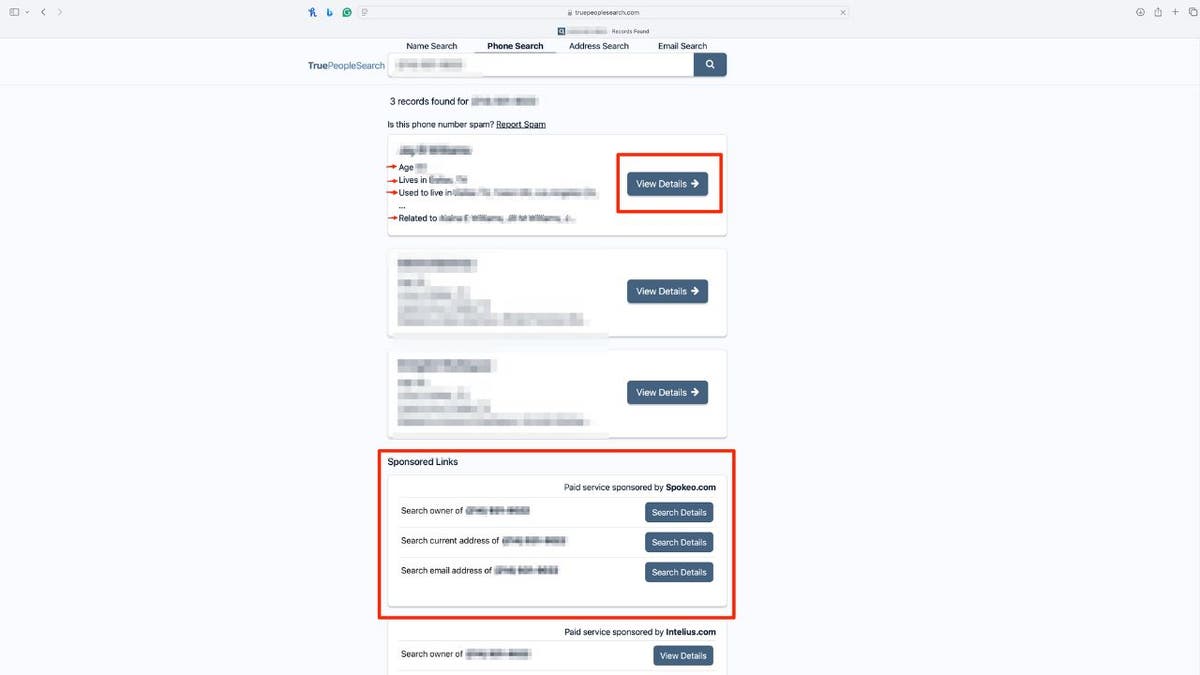
Prepare to be amazed by the wealth of information at your fingertips. Click the “View Details” button next to or under the actual search results, depending on your device. You might discover the person’s name, age, date of birth, current address or previous addresses, as well as email addresses, relatives, friends, associates and more. It’s astounding how much data a simple phone number can unlock.

GET FOX BUSINESS ON THE GO BY CLICKING HERE

Now, beware of Sponsored Links that might try to lure you into signing up for other services.

mystery number 7

Reverse phone lookup website. (TruePeopleSearch)

Disclaimer about TruePeopleSearch.com 

While TruePeopleSearch.com can be a helpful tool, not every phone number search will yield comprehensive results. The information available varies depending on several factors:

  • Some numbers may have limited or no publicly available data.
  • Information accuracy can depend on how recently the data was updated.
  • Certain privacy settings or legal restrictions may limit the information displayed.

Always use this service responsibly, respect individual privacy and understand that results may be incomplete or vary significantly between different phone numbers.

HOW TO REMOVE YOUR PRIVATE DATA FROM THE INTERNET 

Pro tip: Invest in personal data removal services

Try searching for your own phone number. You might be surprised at the amount of information that pops up. If you’re uncomfortable with the information available about you, consider investing in a personal data removal service to have that information taken down. While no service promises to remove all your data from the internet, having a removal service is great if you want to constantly monitor and automate the process of removing your information from hundreds of sites continuously over a longer period of time. Check out my top picks for data removal services here.

Kurt’s key takeaways

This free tool empowers you to take control of solving the mystery of who is calling you. No more wondering about unknown callers or potential spam. With just a few clicks, you can unmask the mystery and decide whether to answer, ignore or block that call.

How do you usually handle unknown callers? Have you ever used a reverse phone lookup tool before? Let us know by writing us at Cyberguy.com/Contact

CLICK HERE TO GET THE FOX NEWS APP

For more of my tech tips and security alerts, subscribe to my free CyberGuy Report Newsletter by heading to Cyberguy.com/Newsletter

Ask Kurt a question or let us know what stories you’d like us to cover.

Follow Kurt on his social channels for the latest tech tips and tricks:

Answers to the most-asked CyberGuy questions:

New from Kurt:

Copyright 2025 CyberGuy.com. All rights reserved.

Dark Comedy – The New York Times

0

There used to be a multiplex near my house that we called the “Babysitter 12” because it felt like, no matter the film on view, the theater was always full of people laughing, screaming, horsing around. I stopped going there after a while because while it was fun to be part of a boisterous crowd during, say, a Marvel movie, the constant din during more serious films grew distracting. The Babysitter 12 closed during the pandemic, when people’s living rooms became their theaters.

My colleague Marie Solis recently wrote a story for The Times about a “laugh epidemic” in movie theaters. People are chuckling aloud during violent, sexy and scary scenes in movies like “Anora,” “Babygirl” and “Nosferatu.” For some moviegoers, this behavior is appalling, disconsonant with what they think the appropriate response should be.

Marie puts forward some theories as to why some people are laughing at moments that others think require more gravity. Perhaps we became accustomed to watching movies at home and forgot our theater etiquette. There’s been such genre collapse in movies that it can be hard to tell what’s meant to be funny and what’s not — is “Babygirl” an erotic thriller or an erotic comedy? Maybe we’re uncomfortable with a scene so we laugh nervously, or we laugh to show we get a reference.

I saw a fairly serious movie about a violent relationship in the theater last summer and was surprised at how much laughter there was during tense scenes. I had the sense that groups of friends who’d been laughing and joking before the lights went down were having a hard time switching gears, that their laughter was almost like a glitch in their software as they went from the delight of a high-spirited night out to the sober nature of what they were watching onscreen.

I remembered the experience of the Babysitter 12, how part of the reason I stopped going was because I didn’t like myself when I felt that others were misbehaving. My inclination was to be the busybody who shushes strangers who are just having a good time. I like the rules of the Alamo Drafthouse theaters, where they declare that anyone who uses a cellphone or talks during the film will be expelled. (I have never seen this happen and imagine that the threat of such a sanction is enough to scare potential rowdy patrons straight.)

The point of going to the movies, though, is other people, as intrusive and perplexing as they might be. The reactions of other moviegoers to the movie is part of moviegoing. Yes, there are shows now designed to be streamed alone, at home, on a small screen. But when I’m at the theater, I want to be generous, to take in the fullness of the audience, the community. I want to let it all in, to subscribe to the view that one person Marie talked to put forth: that experiencing emotions not just about the film you’re watching, but also about your fellow audience members, is “what makes film-going really exciting.” You can’t get that in your living room.

Hip-Hop

More on Trump

  • Trump said he was revoking Joe Biden’s security clearances. He did so, he said, because Biden had rescinded his clearances after the Jan. 6 attack.

  • Experts believe Trump’s lawsuits against CBS and The Des Moines Register lack merit. But the suits have been effective at harassing the press — and there are probably more on the way.

  • No more paper: Trump vowed to reverse a Biden administration plan to phase out plastic straws from the federal government’s food service operations.

  • Trump said he would dismiss several board members from the Kennedy Center, the storied performing arts group in Washington, and install himself as chairman.

Other Big Stories

📺 Cobra Kai (Thursday) What is the sound of one hand tapping out? That not-quite-a-Zen koan fits “Cobra Kai,” a not remotely Zen show, which concludes its sixth and final season with five new episodes for Netflix. A maturation of the “Karate Kid” franchise, the show found the original movie’s characters (played now, as then, by Ralph Macchio and William Zabka) settled uncomfortably into Southern California midlife, and it quickly made them senseis of rival dojos. Now they’ll fight common enemies in a climactic worldwide karate tournament, in which teeth, lives, karate whites and dignity are all imperiled.

For more: Macchio spoke with The Times about what drew him back to the iconic role.

A pot of savory canned beans is a speedy winter staple, a satisfying go-to on a cold February night. In her cheesy green chile bean bake, Ali Slagle makes them even better by covering a skillet full of pinto beans, poblano and salsa verde with Monterey Jack. The mild dairy softens the bite of the green chiles and adds a gooey texture with cheese pulls galore. Serve it for dinner over rice or with soft tortillas. Or leave it in the skillet and plop it on the coffee table to serve as a Super Bowl-friendly appetizer with tortilla chips for scooping. No utensils required.

Travel: Go for cheap to the Caribbean.

Get on a streak: Accomplish your goals by making them a habit.

Egg safety: It’s unlikely that your dozen eggs are carrying bird flu.

Playlist: Listen to Doechii and other new songs on our critic’s playlist.

After the effort of cooking a meal and clearing a sink full of dishes, cleaning the sink itself may be the last thing you want to do. Unfortunately, it’s important: It kills pathogens from produce and raw meat, and it helps keep the kitchen from getting smelly. Luckily, cleaning your sink can be an easy, two-step process. Scrub off grime with a bit of dish soap on a brush or sponge and then rinse the sink down. Next, sanitize it with a spray containing bleach, making sure to cover the faucets and handles. Let the spray sit for the recommended time (or about 30 seconds if no time is specified on the bottle), rinse with water, and voilà. A truly clean sink. — Abigail Bailey

Who is Linda McMahon, Trump’s pick for education secretary? : NPR

0

Donald Trump’s nominee to lead the U.S. Education Department, Linda McMahon, seen here in December, has come out in support of school choice and “parental rights in education,” and in opposition to “political indoctrination in classrooms.”

Anna Moneymaker/Getty Images


hide caption

toggle caption

Anna Moneymaker/Getty Images

It’s common practice for U.S. secretaries of education to come from a background, in, well, education. That includes Betsy DeVos, President Donald Trump’s previous, headline-grabbing education secretary, who had a well-documented record when it came to schools.

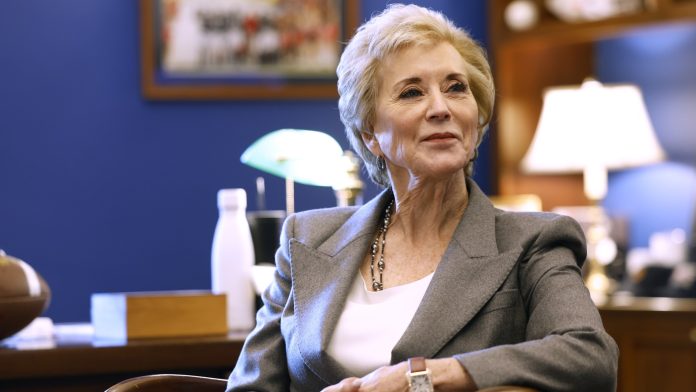
But Trump’s current nominee for that position, Linda McMahon, bucks the trend. McMahon has a limited background in education, and a long career as a business executive.

She led World Wrestling Entertainment (WWE), and served on Connecticut’s State Board of Education for about a year, before heading the U.S. Small Business Administration (SBA) for about two years during Trump’s first term. She left the federal government in 2019 to chair the pro-Trump Super PAC America First Action, and currently serves in leadership roles at the America First Policy Institute (AFPI), a think-tank staffed by veterans of Trump’s first White House team.

Up until recently, not much was known about McMahon’s policy positions on education. But in January, AFPI shared more about where she stands: McMahon supports “parental rights in education,” the expansion of school choice beyond district boundaries, career and technical education programs, and prioritizing “evidence-based learning” in core subjects like math and reading. She opposes “political indoctrination in classrooms,” and “one-size-fits-all education models.” More broadly, McMahon aims to uplift local control of schools and reduce “the Federal Education Bureaucracy.”

President Donald Trump participates in a cabinet meeting in 2018, during his first presidential term. At the time, Linda McMahon (right) was leading the U.S. Small Business Administration.

President Donald Trump participates in a cabinet meeting in 2018, during his first presidential term. At the time, Linda McMahon (right) was leading the U.S. Small Business Administration.

Evan Vucci/AP


hide caption

toggle caption

Evan Vucci/AP

If confirmed, Linda McMahon would oversee an agency the president has already moved to diminish. The administration has placed dozens of Education Department employees on paid administrative leave with little explanation. The White House has also confirmed the president’s plans to shutter department programs that are not protected by law and his plans to call on Congress to close the department entirely.

McMahon would also inherit an agency that has struggled, under Secretary Miguel Cardona, to launch big initiatives (from broad-based student loan forgiveness to the revamped Free Application for Federal Student Aid, or FAFSA) in the face of flat-funding from Congress.

To learn more about the person who may soon become the next education secretary, NPR spoke with several people who have either spent time with McMahon over the years or know her work. We also spoke with two former U.S. education secretaries for their views on the job’s necessary qualifications and their advice for leading the department. NPR requested an interview with Linda McMahon several times and did not get a response.

Many of McMahon’s former colleagues described her as a hard-working, energetic, clear-eyed leader who knows how to rely on a team of subject-matter experts to get any job done.

Her critics fear she is an unqualified choice for education secretary — one who helped build a scandal-ridden sports media empire in the WWE alongside her husband, Vince McMahon.

Decades leading WWE

Originally from North Carolina, Linda McMahon got her start as a business leader in the 1970s when she and her husband invested in a construction company. That venture ended in bankruptcy, according to a 2017 interview McMahon gave to CNBC. Their careers took a turn in the 1980s, when they took over a company that would become the multi-billion-dollar business now known as WWE. Today, it reaches nearly 90 million U.S. households.

“My husband and I built our business from scratch,” McMahon said at her SBA confirmation hearing in 2017. “Over decades of hard work and strategic growth, we built it into a publicly traded global enterprise … I am proud of our success—I know every bit of the hard work it took to create that success.”

The McMahon family, including Vince McMahon, often appeared in WWE broadcasts. But on-camera appearances from Linda – like this one from 2009 – were more rare.

The McMahon family, including Vince McMahon, often appeared in WWE broadcasts. But on-camera appearances from Linda – like this one from 2009 – were more rare.

Ethan Miller/Getty Images


hide caption

toggle caption

Ethan Miller/Getty Images

McMahon served as WWE’s president, and then its CEO, until she stepped down in 2009.

Journalist Dave Meltzer has spent decades reporting on the wrestling industry, including on Vince McMahon and WWE. He says Linda McMahon had little to do with the creative, public-facing side of WWE, known for its over-the-top plot lines in which wrestling personalities face off in often-bloody battles. Instead, he says McMahon was responsible for running business operations behind-the-scenes.

McMahon did make a few appearances on-camera, including in violent skits with members of her family, but otherwise, Meltzer says, it was Vince who fans got to know.

Under the McMahons’ leadership, WWE gained international renown, but also faced a series of scandals, including around steroid abuse and alleged sexual abuse of minors who worked for their organization.

“You can just imagine the stuff that happened in the wrestling business that she kept her mouth shut on,” says Dave Meltzer.

“I think that she will be very, very loyal. Like she’ll never be the one who turns on [Trump].”

Still, Meltzer warns against drawing too many conclusions about Linda McMahon based on the story of WWE.

“She got way too much credit for the growth of the WWE business and she got way too much blame for the product of WWE, which she had absolutely nothing to do with,” says Meltzer.

NPR reached out multiple times to Linda McMahon’s representatives for comment on the scandals surrounding WWE, and they did not respond.

A short stint on a state board of education

Linda McMahon’s limited education experience includes her appointment to the Connecticut State Board of Education in 2009, where she served for about a year.

During a hearing for that role, she told state lawmakers, “I’m not an educator but what you will have from me is my commitment of open-mindedness, my commitment, my passion to education, and I will do everything I can to bring sides together from the community, from the public, from business leaders, and hopefully, from legislators to make our education the best it can be.”

McMahon ran two unsuccessful campaigns for the U.S. Senate. Here she celebrates her 2012 Republican primary win in Stamford, Conn.

McMahon ran two unsuccessful campaigns for the U.S. Senate. Here she celebrates her 2012 Republican primary win in Stamford, Conn.

Jessica Hill/AP


hide caption

toggle caption

Jessica Hill/AP

Andy Fleischmann, a former chair of the Connecticut General Assembly’s Education Committee, served in the state’s legislature at the same time McMahon was appointed to the board. He says her appointment and confirmation process elicited discord between legislators. “It’s very unusual for there to be any opposition [to state board appointments],” he says.

Fleischman attributes that discord to McMahon’s past at WWE. In fact, in that confirmation hearing, he questioned McMahon about what he called the “disconnect” between McMahon’s values around education and the “wildly unreasonable things that happen on television through your organization every day.”

McMahon’s response: “I don’t think that has anything to do with my ability to have good administrative marketing skills, to understand how reading is important, to understand how the art of communication and knowing your audience and being able to get things accomplished – I don’t see that there necessarily has to be a connection with the product on television versus that.”

She also acknowledged WWE programming wasn’t “necessarily appropriate for all ages.”

Janet Finneran also remembers opposition and debate surrounding McMahon’s appointment. Finneran was vice chair of the state board of education during the year McMahon served. She says any concerns about McMahon’s qualifications were quelled once she began serving on the board.

“She always exhibited a tremendous amount of professionalism,” says Finneran. She says she was impressed with McMahon’s “knowledge of the material and…discussion of the material.”

NPR reviewed meeting minutes during McMahon’s tenure on the board and found that McMahon, along with other members of the board, tended to vote largely in agreement.

But Andy Fleischmann points out that McMahon only spent a year on the state board before resigning, and doesn’t have much education experience beyond that.

“I cannot think of another instance in my lifetime where someone was nominated to be U.S. secretary of education with so little background in any part of the field,” he says.

He worries McMahon’s nomination may not be getting the same level of scrutiny as other cabinet nominees. “The fact that it kind of slips into the background because there’s so many other controversies is, to me, really troubling and scary,” says Fleischmann.

As head of the SBA, she set high expectations

If McMahon is confirmed as U.S. education secretary, it will not be her first time working for the federal government. During his first presidency, Donald Trump tapped McMahon to lead the Small Business Administration, the agency tasked with supporting entrepreneurs and small businesses.

Barb Carson first joined the SBA during the Obama administration, and worked closely with McMahon over the two years she spent leading the agency. Carson remembers an early meeting with McMahon: Carson was sitting in a conference room, casually chatting with her colleagues, when McMahon stepped into the room and commanded their attention.

“She slapped the table and said, ‘There’s going to be one conversation in this room and it’s mine,’ and everybody straightened up.”

Connecticut Sen. Chris Murphy (right) introduces Linda McMahon at her 2017 Senate confirmation hearing for her nomination to the SBA. Sen. Richard Blumenthal, also of Connecticut, smiles on the left.

Connecticut Sen. Chris Murphy (right) introduces Linda McMahon at her 2017 Senate confirmation hearing for her nomination to the SBA. Sen. Richard Blumenthal, also of Connecticut, smiles on the left.

Alex Brandon/AP


hide caption

toggle caption

Alex Brandon/AP

McMahon set a tone of high expectations from the beginning, Carson recalls. “She said clearly and explicitly that she trusted us until we lost that trust and that we’d have a hard time getting it back.”

McMahon was the first SBA administrator Carson worked with who came from the private sector without experience in the federal government.

“Linda had to take the time to understand what was different about this sector… but was willing to spend the time it took to make the public sector efficient.”

Pradeep Belur served as chief of staff to McMahon at the SBA, and says McMahon spent her first 90 days on the job “listening to small businesses, listening to employees, listening to advocates to really understand what works and what needs to be fixed.”

Belur says while McMahon didn’t work directly in education, she did help expand the reach of an existing brick-and-mortar education program for women entrepreneurs by helping to take it online. The expanded program ultimately launched under McMahon’s successor, Jovita Carranza.

Both Carson and Belur praise McMahon’s ability to listen and learn from subject-matter experts—a skill they believe will serve her well at the Education Department.

What it’ll take to be Trump’s education secretary

It’s unclear what the U.S. Department of Education will look like after McMahon’s confirmation hearing. The Trump administration has put dozens of department employees on paid administrative leave. The White House has also confirmed plans to shrink, and potentially dismantle the agency.

NPR asked two former U.S. secretaries of education to weigh in on the job McMahon has ahead of her, especially given the fluid state of affairs at the department.

“Every secretary has the latitude to … add, subtract, to edit and put their mark on the department, and I know she will,” says Margaret Spellings, who served as education secretary under President George W. Bush.

“There are lots of ways to hurt vulnerable kids from the U.S. Department of Education, if that’s your goal,” says Arne Duncan, former education secretary under President Barack Obama. “And I just hope and pray that’s not [McMahon’s] motivation.”

The agency has a long list of congressionally-mandated responsibilities, including supporting schools in low-income communities (Title I), English language learners (Title III), students with disabilities (Individuals With Disabilities Education Act), and helping low-income undergraduates pay for college through Pell Grants.

Spellings says some downsizing could have its benefits.

“I’m not hearing anyone say, ‘We need to abolish Title I, we need to get rid of Pell Grants.’ So it’s a matter of who is best to manage those programs. Where should they live? How can they be most accountable to the taxpayers and citizens and students, in this case, of our country? And I think that’s a worthy discussion.”

But Duncan worries shrinking the department could mean losing a wealth of knowledge from career staffers.

“Their advice, their guidance was just extraordinarily helpful,” he says.

“The execution, the implementation of ideas, you sort of can’t do it without the career staff.”

For Spellings, McMahon’s background as a business executive and in the federal government has prepared her well for the top education job in the country. She says a background in education isn’t necessary to lead the department effectively.

“The Department of Education is not a school,” she says. “It’s a bank. It’s an advocate. It’s a relationship partner with states, localities, the Congress. It’s a policy shop.”

Duncan does have concerns about McMahon’s lack of education experience, but he notes, “there are people with far more experience in education who could be much more disastrous than she.”

Linda McMahon appears with fellow Trump nominees (left to right) Lee Zeldin, Kash Patel and Pete Hegseth on Jan. 20, the president’s second Inauguration Day.

Linda McMahon appears with fellow Trump nominees (left to right) Lee Zeldin, Kash Patel and Pete Hegseth on Jan. 20, the president’s second Inauguration Day.

Chip Somodevilla/AP via Pool Getty Images


hide caption

toggle caption

Chip Somodevilla/AP via Pool Getty Images

Spellings now serves as president and CEO of the Bipartisan Policy Center, a nonprofit think thank. In the spirit of her current role, she has hope that McMahon will work with Congress in a bipartisan way, especially around improving student achievement.

“If you’re concerned about a ‘woke agenda,’ what you really should be concerned about is do [kids] have the basic skills necessary to be successful? Can they read? Can they do math? Can they think critically? And so that’s a unifier [across party lines].”

Duncan now runs Chicago CRED, a nonprofit that aims to prevent gun violence. His hopes for unity are a little more cautious.

“Working in a bipartisan way on behalf of kids is always a possibility, and I always remain hopeful. But have the chances of that shrunk dramatically in the past two weeks? Of course.”

Ultimately, Duncan and Spellings both say, McMahon must let one goal guide her work if she is confirmed: to advocate for the country’s students.

Linda McMahon’s confirmation hearing has been scheduled for Feb. 13.

Digital story edited by: Nicole Cohen
Visual design and development by: Mhari Shaw

Judge blocks Trump from placing 2,200 USAID workers on leave

0

A federal judge on Friday ordered a temporary block on plans by the Trump administration to put 2,200 employees of the U.S. Agency for International Development on leave.

U.S. District Judge Carl Nichols, a Trump appointee, also agreed to block an order that would have given just 30 days for the thousands of overseas USAID workers the administration wanted to place on abrupt administrative leave to move their families back to the U.S. at the government’s expense.

Both actions by the administration would have exposed the workers and their families to unnecessary risk and expense, according to the judge.

This comes as President Donald Trump and Elon Musk, who leads the Department of Government Efficiency, seek to dismantle the agency.

TOP DEM STRATEGISTS WARN USAID FUNDING FIGHT IS A ‘TRAP’ FOR THE PARTY

Demonstrators and lawmakers rally against President Donald Trump and his ally Elon Musk as they disrupt the federal government, including dismantling the U.S. Agency for International Development on Capitol Hill in Washington, Wednesday, Feb. 5, 2025. (AP Photo/J. Scott Applewhite)

Nichols noted that staffers living overseas have said the administration had cut some workers off from government emails and other communication systems required to reach the U.S. government in case of a health or safety emergency.

USAID contractors in various regions, including the Middle East, even reported that “panic button” apps had been removed from their phones or disabled when the administration abruptly placed them on leave.

“Administrative leave in Syria is not the same as administrative leave in Bethesda,” the judge said.

USAID sign

An employee of U.S. Agency for International Development (USAID) who wished to remain anonymous protests outside the USAID headquarters on February 3, 2025, in Washington, D.C. (Getty Images)

The judge also pointed to workers stating difficulties that would arise from the 30-day timeline to return to the U.S., including that they had no home to return to in the U.S. after decades overseas and that they would be forced to pull children with special needs out of school in the middle of the school year.

Nichols ordered 500 USAID staffers who had already been placed on leave by the administration to be reinstated.

But the judge declined a request from two federal employee associations to grant a temporary block on an administration-imposed funding freeze that has shut down the agency and its work, pending more hearings on the workers’ lawsuit.

USAID STAFFERS STUNNED, ANGERED BY TRUMP ADMIN’S DOGE SHUTDOWN OF $40B AGENCY

USAID HQ

The American flag flying alone beside an empty flagpole that previously had the flag of USAID is pictured in the reflection of a window that previously had the sign and the seal of USAID, Friday, Feb. 7, 2025. (AP)

CLICK TO GET THE FOX NEWS APP

Nichols emphasized in the hearing earlier Friday that his order to pause the administration’s actions was not a decision on the employees’ request to block the administration’s efforts to quickly destroy the agency.

“CLOSE IT DOWN,” Trump said on Truth Social, referring to USAID, ahead of the judge’s ruling.

The Associated Press contributed to this report.

Hamas Expected to Release 3 More Israeli Hostages: Live Updates

0

Hamas released three more Israeli hostages on Saturday as part of an exchange for Palestinian prisoners, in a highly theatrical handover in which the men were made to give speeches effectively at gunpoint.

The hostage release is the fifth in a tense series of exchanges that are part of a 42-day cease-fire deal that went into effect last month pausing the fighting between Israel and Hamas. Hamas agreed to incrementally release 33 of the nearly 100 remaining hostages in exchange for more than 1,000 Palestinians jailed by Israel and a partial Israeli withdrawal.

Here’s a closer look at the Israelis released on Saturday:

Ohad Ben Ami

A painting of Raz Ben Ami and her husband Ohad Ben Ami.Credit…Avishag Shaar-Yashuv for The New York Times

Mr. Ben Ami, who was 54 when he was abducted from Kibbutz Be’eri in southern Israel, was the kibbutz’s accountant and is an avid cyclist. His wife, Raz Ben Ami, was also taken hostage but was released in the first cease-fire deal in November 2023. Mr. Ben Ami is a dual Israeli and German citizen.

“The only important thing is for Ohad to come back,” Raz Ben Ami told The New York Times in August, adding: “It’s still hard for me to imagine our life after this.”

Ella Ben Ami, one of the couple’s three daughters, was a vocal advocate for a cease-fire deal. She was critical of Prime Minister Benjamin Netanyahu’s decision to speak in Congress in July, saying he should not travel abroad until there was an agreement to free the hostages. A video posted on social media in August, showed Ms. Ben Ami near the border with Gaza calling her father’s name with a microphone in hand and saying she missed him.

In December, on Mr. Ben Ami’s second birthday in captivity, his family marked the day with a bike ride and a ceremony, according to his brother, Kobi, who told Israeli news media that around 200 people joined them as they rode along a bicycle path created to commemorate 11 cyclists killed on Oct. 7 and hostages, including Mr. Ben Ami. He said the family had not received any signs he was alive since he was captured.

Or Levy

Michael Levy, the brother of Or Levy, in Ganei Tikva, Israel, in December.Credit…Joyce Zhou/Reuters

Mr. Levy was 33 when he was taken hostage. His wife, Eynav Levy, died on Oct. 7. Their son, who was just two at the time, was with Ms. Levy’s mother while his parents went to the Nova music festival, an event held just a few miles from the Gaza border that was a key target of the assault.

Mr. Levy texted his mother during the attack, including from a shelter that was stormed by the militants. The Israeli military later informed the family that Ms. Levy’s body was found in the shelter and that Mr. Levy was being held in Gaza.

The couple both worked in tech and lived near Tel Aviv. Mr. Levy’s older brother, Michael Levy, spoke about his younger brother’s dire situation at an event in California in March, one of many trips he made around the world to press for a hostage deal. At the time, he said he had not received indications his brother was dead but was not very optimistic about a deal.

Eli Sharabi

Nira Herman Sharabi, wearing a T-shirt with the photos of her husband Eli Sharabi and his brother Yossi.Credit…Amir Cohen/Reuters

Mr. Sharabi was also abducted from Be’eri, and his wife and their two daughters were killed in the attack.

His brother Yossi was also taken as a hostage to Gaza, where he was killed in an Israeli airstrike, the Israeli military later told his family.

His brother, Sharon, said in December that news of progress on a cease-fire deal had prompted “new hope among the families of hostages that they might see their loved ones again — and at the same time, tension.”

“We lost four people,” he said. “We don’t intend to fill a fifth coffin.”

What does the ‘arbitrary and capricious’ standard mean in lawsuits? : NPR

0

The E. Barrett Prettyman U.S. Courthouse in Washington, D.C., in 2023.

Mandel Ngan/AFP via Getty Images


hide caption

toggle caption

Mandel Ngan/AFP via Getty Images

President Trump has signed a number of executive actions since taking office, taking aim at everything from immigration and the size of the federal workforce to gender politics and the economy.

Before the ink had dried, challengers took legal action to block many of these actions from taking effect.

Less than three weeks into the new administration, courts are already considering challenges to Trump’s declaration that the federal government will only recognize two genders, the Department of Homeland Security’s departure from a decades-old policy that encouraged Immigration and Customs Enforcement to avoid places of worship and the “Fork Directive” email offering federal employees the option to resign in exchange for full pay and benefits through September.

At the center of these challenges is the question of whether the president’s actions are directing federal agencies to violate a key standard established nearly 80 years ago in a law known as the Administrative Procedure Act.

The law was drawn up as a way to protect against agency overreach and actions that might be deemed “arbitrary and capricious.” Groups are using it to challenge presidential policies by targeting the administrative agencies tasked with carrying out Trump’s will.

Here’s how the law works.

What is the Administrative Procedure Act?

Enacted in 1946 on the heels of the New Deal’s expansion of governmental administration, the Administrative Procedure Act (APA) became both the foundation and a guardrail for all regulatory actions coming from the executive branch.

All Cabinet departments — like the Defense Department or the Treasury — as well as independent agencies, like the Securities and Exchange Commission, must comply with the APA in all policy actions or decisions.

The APA was signed by President Harry Truman and received bipartisan support after a decade-long effort by Republican and Democratic lawmakers.

Concerned with a burgeoning “administrative state” after the New Deal expanded the role of executive agencies, Republicans wanted judges to review and curb the executive branch’s growing influence.

Democrats saw administrative action as an efficient means for advancing public policy since it doesn’t need to go through Congress. They wanted to use the act as a road map directing agencies to set consistent, effective policies.

Why does the Administrative Procedure Act matter?

Presidents often enter office with a political agenda that touches on a number of issues. That agenda can become policy if a president is successful in pushing new laws through Congress.

Other times, a president may choose to set policy by issuing an executive action, which does not need to go through Congress to have legal force. However, the president cannot single-handedly turn ideas into actions. That is where executive agencies come in.

Most executive actions set a policy and then direct the responsible federal agencies to take steps to carry out that policy. For instance, declaring an emergency at the U.S.-Mexico border required a joint effort among the State Department, the Justice Department and the Department of Homeland Security, including some of its smaller agencies, like Customs and Border Protection.

If the president is the executive branch’s brain, these agencies are the limbs. Carrying out the president’s directive in an executive order requires these agencies to issue rules, policies and judgments that align with the president’s stated goals.

Everything executive agencies do to implement the president’s agenda must follow the APA.

Any time the Federal Communications Commission bans profanity from the airwaves, say, or whenever the Environmental Protection Agency issues a permit, the agency must comply with APA procedures.

This is one way to ensure the executive branch stays within its stated role, which Georgetown Law professor David Super told NPR’s Morning Edition is important to preserving the meaning of U.S. laws.

“Our Constitution says the president shall take care that the laws are faithfully executed,” said Super. If the president pushes policies that exceed our notions of what the executive can do, Super warns, “any president in the future can largely do whatever they want.”

Importantly, the APA also allows anyone harmed by an agency’s action to file a lawsuit stopping the agency from enforcing it. Federal courts then review the validity of the policy based on standards provided in the APA.

While not all of Trump’s executive actions have implicated the APA, this is a key area in which groups are hoping to successfully challenge some of Trump’s policies.

However, the use of this standard is not unique to those challenging the Trump administration. “Every president who has served since 1946,” notes Super, “at one point or another has run up against the arbitrary and capricious standard.”

What is an “arbitrary and capricious” agency action?

A core feature of the APA is protecting against “arbitrary and capricious” agency actions.

The goal for challengers is for judges to find an agency’s policy so absurd that it is considered arbitrary, canceling its enforcement. Asked what this means in practice, Super explained: “That means that there have to be [permissible] reasons for things that are done.”

“It’s fine if I decide that your business should be suspended because you’re selling dangerous foods, but it’s not fine if I say your business should be suspended because I don’t like you,” he said.

This standard is useful because it allows courts to invalidate a policy even when the agency has otherwise complied with the APA’s requirements, which include things like notifying the public of a proposed rule and inviting public commentary, or promptly explaining the denial of a grant application.

In other words, even if the agency followed all other APA rules in issuing an action, a court could still invalidate the action for being arbitrary.

However, an “arbitrary and capricious” review is not always an easy bar to meet. Judges must defer to an agency’s decisions and findings, unless they seem patently unreasonable.

While plaintiffs could challenge agency actions under standards with a higher bar, it is incredibly common to challenge agency actions as “arbitrary and capricious” because this standard is commonly used to evaluate agencies’ rule-making procedures and policy decisions.

When do courts tend to find that an agency action is arbitrary?

There are a number of reasons a court might strike down an “arbitrary” agency action. Some cases center on the evidence that agencies must provide to justify their actions. A court may find that the agency’s evidence or fact-finding was incomplete or lacked merit.

Other actions are struck down for a clear error in the agency’s judgment. Sometimes, a court is not satisfied that the agency considered every relevant alternative when formulating the policy.

The federal employees challenging the “Fork Directive” email couched this as a failure “to consider possible adverse consequences.”

When agencies have a certain way of doing things — then suddenly depart from those practices without any explanation — a court may consider that departure arbitrary. While agencies do not have an obligation to issue lengthy explanations of policy changes, they typically must do enough to acknowledge the change.

Similarly, the challengers in the ICE enforcement case assert that DHS was required to, but did not, explain its change after 30 years of congregants relying on places of worship as a refuge from ICE operations.

An action is also invalidated under the “arbitrary and capricious” standard when it is otherwise prohibited by law. In Doe v. McHenry, a case brought last week by incarcerated transgender women suing to prevent their transfer to a male federal prison, the plaintiffs argue that Trump’s “gender ideology” executive order is arbitrary in part because it violates their statutory rights.

Rarer are those agency actions that are blocked because a court is skeptical of policymakers’ motives. In 2019, the Supreme Court struck down an attempt by Trump’s Department of Commerce to include a citizenship question on the 2020 census, because, as Super highlights, Chief Justice John Roberts found the stated reasons for the agency’s action “disingenuous.”

How might this play out in the courts?

Some courts have already temporarily blocked some of Trump’s executive actions, and there may be more actions ahead. However, a temporary pause is not the final word on whether an action is lawful.

After an action is halted, it cannot be enforced while the federal courts determine its legality.

If a court does determine a policy is unlawful, the federal government may still appeal it. Many of these challenges are expected to reach the Supreme Court, which will have the final say on whether the action is truly arbitrary.