Friday, November 13, 2026
Home Blog Page 257

FOX Sports’ NFL rules analyst Mike Pereira weighs in on ref controversy ahead of Super Bowl LIX

0

The conspiracy about NFL referees helping the Kansas City Chiefs has been one of the main conversation topics leading up to Super Bowl LIX. 

FOX Sports rules analyst and former vice president of officiating for the NFL, Mike Pereira, joined “Fox & Friends” on Friday to weigh in on the discussion. 

“I mean I think I would say what [NFL Commissioner] Roger Goodell said, which I try not to use harsh words. I understand why they think that, because the numbers point that different and the iffy calls seem to have gone the Chiefs way, but to think that there is intent is really ridiculous and that’s the term that Roger used,” Pereira said. 

SIGN UP FOR TUBI AND STREAM SUPER BOWL LIX FOR FREE

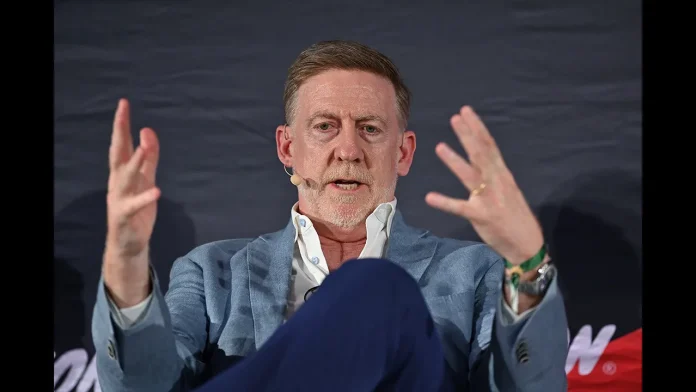
Fox Sports College and NFL rules expert Mike Pereira during a Fox Sports media party in advance of Super Bowl LIX. (Stephen Lew-Imagn Images)

“The officials are out just to manage the game, and they have to make decisions in one 26th of a second, and so they don’t have time to factor in who made the foul, what color the team is. And so really, I understand the concern but it really won’t affect the way they officiate this weekend.”

Pereira said the Chiefs were a great team and that they teach penalty prevention to their players. Their number of false starts is less, and penalties of that ilk the team works on eliminating. 

Pereira talked about how NFL teams will prepare for crews, but it is a little bit different to prepare for the Super Bowl crew. 

“You know this is different too, because teams do prepare for crews, but this is not a crew, this is an all-star crew. So they’ve come from seven different crews, so it’s kind of impossible to judge where they might lean,” Pereira said. 

HOW TO WATCH SUPER BOWL LIX BETWEEN CHIEFS, EAGLES STREAMED ON TUBI

Ron Torbert smiles on field

NFL referee Ron Torbert during the Cincinnati Bengals game against the Los Angeles Rams in Super Bowl LVI at SoFi Stadium. (Mark J. Rebilas-USA TODAY Sports)

Ron Torbert will be the head referee for Super Bowl LIX. He also was the lead referee for Super LVI, when the Los Angeles Rams beat the Cincinnati Bengals. 

The umpire is Mike Morton, Max Causey is the down judge, Mark Stewart is the line judge, Mearl Robison is the field judge, Boris Cheek the side judge, Jonah Monroe the back judge and Kevin Brown is the replay official. 

Cheek is the only other official with Super Bowl experience other than Torbert, as he has officiated in three other Super Bowls. 

With so many referees in the NFL, Pereira said it was hard to expect exact consistency across all calls. 

CLICK HERE FOR MORE SPORTS COVERAGE ON FOXNEWS.COM

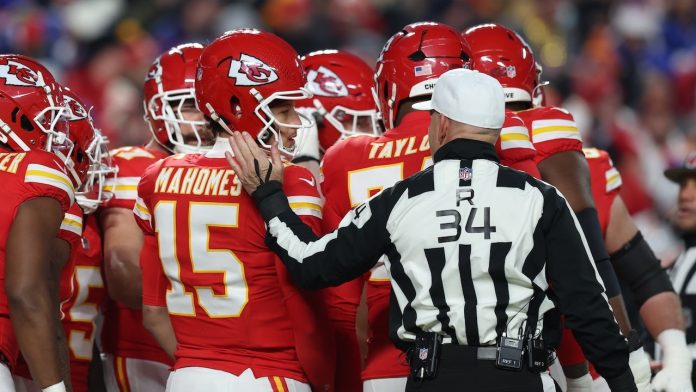
Referee Carl Cheffers puts his hand on the back of Kansas City Chiefs quarterback Patrick Mahomes, #15, in the first quarter of the AFC Championship game between the Buffalo Bills and Kansas City Chiefs on Jan. 26, 2025 at GEHA Field at Arrowhead Stadium in Kansas City, Missouri.

Referee Carl Cheffers puts his hand on the back of Kansas City Chiefs quarterback Patrick Mahomes, #15, in the first quarter of the AFC Championship game between the Buffalo Bills and Kansas City Chiefs on Jan. 26, 2025 at GEHA Field at Arrowhead Stadium in Kansas City, Missouri. (Scott Winters/Icon Sportswire)

“Look, the parity in terms of number of fouls called this year is closer than I think I’ve ever seen it before. But you have different, you have 128 people, they don’t have the same judgment. So it’s hard to teach consistency or to expect consistency all the way through.”

There is one thing Pereira wants to see from the officials in the big game.

“All I care is, you know what, is that they call in the fourth quarter the same way they call the way in the first quarter.”

With that being said, Pereira said he does not want to talk during the broadcast at all. 

CLICK HERE TO GET THE FOX NEWS APP

Tubi promo

Super Bowl LIX will be streamed on Tubi. (Tubi)

“I hope you don’t hear me, I hope you don’t see me! If I don’t mumble a word then that mean’s there is not a controversy,” Pereira said. 

The Kansas City Chiefs take on the Philadelphia Eagles in the Super Bowl on Sunday at 6:30 p.m. ET on FOX, where the officiating will be closely monitored. 

FOX’s Super Bowl coverage begins at 1 p.m. ET Sunday. Coverage can be streamed live on Tubi for the first time.

Follow Fox News Digital’s sports coverage on X, and subscribe to the Fox News Sports Huddle newsletter.

Grenfell Tower Was a Death Trap. Some Wanted It to Stand as a Warning.

0

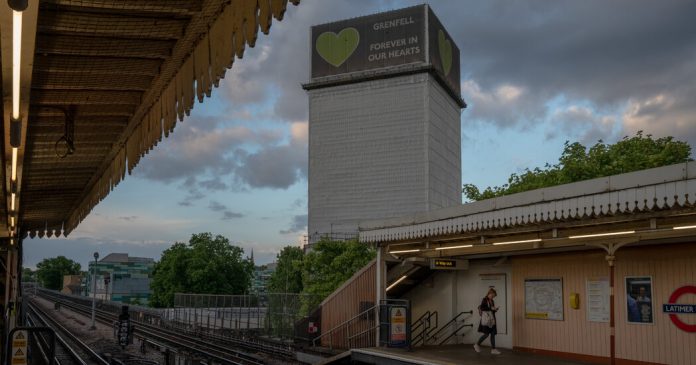
For nearly eight years, wrapped in white and crowned with green hearts, Grenfell Tower has stood as a tragic monument to the worst residential fire in the post-World War II history of Britain. On Friday, the government confirmed it would demolish the building, where 72 people died in a blaze that a public inquiry blamed on a lethal combination of negligence, cost-cutting and deregulation.

The decision, by the deputy prime minister, Angela Rayner, divided families of the victims when she told them of it on Wednesday, in advance of the official announcement. Some condemned the plan to tear down the building before justice had been meted out to those responsible for the disaster; others conceded the tower could not stand in its present state indefinitely.

The anguished debate over Grenfell Tower echoes those over the sites of other tragedies, such as the 9/11 attacks in New York City and Washington or the bombing of a federal building in Oklahoma City, where ruined structures become sacred ground, steeped in symbolism and memory.

Ms. Rayner said the demolition would be carried out methodically over two years behind the protective wrapping. Parts of the tower, and material from it, will be preserved so they can become part of a future memorial. The carefully worded statement, issued by the Ministry of Housing, Communities and Local Government, tried to navigate the emotional crosscurrents of the debate.

“The tower was the home of the 72 innocent people who lost their lives, and of survivors whose lives were forever changed,” the statement said. “It is clear from conversations it remains a sacred site. It is also clear that there is not a consensus about what should happen to it.”

The government might well have been alluding to the reaction after Ms. Rayner’s meeting with survivors and families of the victims when she informed them of the decision. One of the groups, Grenfell United, accused her of ignoring their views and claimed there was little support in the room for tearing it down.

Karim Mussilhy, whose uncle, Hesham Rahman, perished in the fire, said the government had short-circuited the debate by asserting — wrongly, he claimed — that there was no alternative to demolishing the building completely.

“There’s no reason the tower needs to come all the way down,” Mr. Mussilhy said. “There are parts of it that can remain forever.”

But another group, Grenfell Next of Kin, said the focus should be on a memorial rather than preserving the blackened remains of the building. “Do we wish the whole tower could stand forever? Yes. Is that an option? Not from a structural point of view,” the group said. “Do we need a way forward? Yes.”

Although the building had been reinforced after the fire with thousands of props, structural engineers warned that it would continue to deteriorate. The government said that preserving multiple floors did not make sense from an engineering point of view. Even preserving a smaller number of floors, it said, would raise issues of equity with the families of victims.

“It would not be fair to keep some floors of the building that are significant to some families, whilst not being able to do so for others and knowing that, for some, this would be deeply upsetting,” the statement said.

Some have argued that the building should be preserved because it is, in effect, a crime scene. The public inquiry concluded that the disaster was caused by unscrupulous manufacturers, who supplied cheap, flammable cladding, which turned the tower into an inferno after it caught fire in the early hours of June 14, 2017.

Its report also blamed the Conservative-led local council, which was eager to cut costs, as well as acquiescent contractors and the architecture firm that oversaw the 2015 renovation of the 24-floor building. Originally constructed in 1972, Grenfell Tower became a Brutalist landmark, near some of London’s most upscale neighborhoods.

In its statement, the government said it had consulted the police, the coroner’s office and the office of the public inquiry, all of which said they had what they needed to pursue investigations of the fire. The Metropolitan Police may not bring the first criminal charges in the case until 2027.

The treatment of sites where a tragic loss of life occurred has long been a fraught issue. After a truck bomb destroyed a federal building in Oklahoma City in 1995, there was a lively debate over about whether to preserve and display remnants of the ruined building as a monument to the 168 people killed there.

A small section of the building’s granite wall was preserved and integrated into a memorial. More symbolically, so was a segment of the chain-link fence that had surrounded the site for four years after the attack and became a repository for flowers, photos and other mementos left by visitors.

“These conversations are not about who’s right or who’s wrong,” said Edward T. Linenthal, an emeritus professor of history at Indiana University, who has advised memorial commissions on how to honor victims of terror attacks and mass shootings. “It’s about whose sensibilities you choose to honor, and why.”

In the case of Grenfell Tower, he said, the unresolved quest for justice adds another layer of complexity: While the fire was an accident not an attack, unlike in Oklahoma City or on Sept. 11, 2001, it has some of the same qualities.

“When there’s malfeasance of any kind involved — loose wiring, class issues, poor regulation by the authorities — that adds a sharpness to it,” Professor Linenthal said. “People died there who weren’t supposed to. Whatever they decide to do, it has to take time, and it has to be done carefully.”

Among the proposals for a memorial are a garden and a monument that would reach into the sky. Last month, the Grenfell Tower Memorial Commission named a short list of five candidates to submit designs. It hopes to choose a winning team by the end of the summer and submit a detailed plan by the end of 2026.

In its ruined state, with the green hearts and the phrase “Grenfell, Forever in Our Hearts,” stamped at the top of the wrapped building, Grenfell Tower has become a different kind of landmark — a symbol of social inequality and the costs of rampant deregulation. To some, it is even a source of solace.

“Being able to see the tower every day helps some people continue to feel close to those they lost,” the government said. “For others, it is a painful reminder of what happened and is having a daily impact on some members of the community.”

A new law connects young people leaving incarceration to Medicaid : Shots

0

The law went into effect Jan. 1 and says youth up to 21 or foster youth up to 26 should be connected to health care before or soon after they leave prisons, detention centers or jail.

Oona Zenda/KFF Health News


hide caption

toggle caption

Oona Zenda/KFF Health News

If you or someone you know is in crisis, call or text 988 to reach the Suicide and Crisis Lifeline.

Valentino Valdez was given his birth certificate, his Social Security card, a T-shirt, and khaki pants when he was released from a Texas prison in 2019 at the age of 21. But he didn’t have health insurance, mental health medications, or access to a doctor, he said.

Three years later, he landed in an inpatient hospital after expressing suicidal thoughts.

After more than a decade cycling through juvenile detention, foster care placements, and state prisons, Valdez realizes now that treatment for his mental health conditions would have made life on his own much easier.

“It’s not until you’re put in, like, everyday situations and you respond adversely and maladaptive,” he said, “you kind of realize that what you went through had an effect on you.”

“I was struggling with a lot of mental stuff,” said Valdez, now 27.

Lapses that lead back to jail

For years, people like Valdez have often been left to fend for themselves when seeking health care services after their release from jail, prison, or other carceral facilities. Despite this population’s high rate of mental health problems and substance use disorder, they often return to their communities with no coverage, which increases their chances of dying, or suffering a lapse that sends them back behind bars.

A new federal law aims to better connect incarcerated children and young adults who are eligible for Medicaid or the Children’s Health Insurance Program to services before their release. The goal is to help prevent them from developing a health crisis or reoffending as they work to reestablish themselves.

“This could change the trajectory of their lives,” said Alycia Castillo, associate director of policy for the Texas Civil Rights Project. Without that treatment, she said, many young people leaving custody struggle to reintegrate into schools or jobs, become dysregulated, and end up cycling in and out of detention facilities.

Medicaid has historically been prohibited from paying for health services for incarcerated people. So jails, prisons, and detention centers across the country have their own systems for providing health care, often funded by state and local budgets and not integrated with a public or private health system.

The new law is the first change to that prohibition since the Medicare and Medicaid Act’s inception in 1965, and it came in a spending bill signed by President Joe Biden in 2022. It took effect Jan. 1 this year, and requires all states to provide medical and dental screenings to Medicaid- and CHIP-eligible youths 30 days before or immediately after they leave a correctional facility. Youths must continue to receive case management services for 30 days after their release.

More than 60% of young people who are incarcerated are eligible for Medicaid or CHIP, according to a September 2024 report from the Center for Health Care Strategies. The new law applies to children and young adults up to age 21, or 26 for those who, like Valdez, were in foster care.

A challenge for states, building on a Trump 1.0 law

Putting the law into practice, however, will require significant changes to how the country’s thousands of correctional facilities provide health care to people returning to communities, and it could take months or even years for the facilities to be fully in compliance.

“It’s not going to be flipping a switch,” said Vikki Wachino, founder and executive director of the Health and Reentry Project, which has been helping states implement the law. “These connection points have never been made before,” said Wachino, a former deputy administrator of the Centers for Medicare & Medicaid Services.

The federal CMS under the Biden administration did not respond to a question about how the agency planned to enforce the law.

It’s also unclear whether the Trump administration will force states to comply. In 2018, President Trump signed legislation requiring states to enroll eligible youths in Medicaid when they leave incarceration, so they don’t experience a gap in health coverage. The law Biden signed built on that change by requiring facilities to provide health screenings and services to those youths, as well as ones eligible for CHIP.

Even though the number of juveniles incarcerated in the U.S. has dropped significantly over the past two decades, more than 64,000 children and young adults 20 and younger are incarcerated in state prisons, local and tribal jails, and juvenile facilities, according to estimates provided to KFF Health News by the Prison Policy Initiative, a nonprofit research organization that studies the harm of mass incarceration.

A ‘Neglected Part of the Health System’

The federal Bureau of Justice Statistics estimates that about a fifth of the country’s prison population spent time in foster care. Black youths are nearly five times as likely as white youths to be placed in juvenile facilities, according to the Sentencing Project, a nonprofit that advocates for reducing prison and jail populations.

Studies show that children who receive treatment for their health needs after release are less likely to reenter the juvenile justice system.

“Oftentimes what pulls kids and families into these systems is unmet needs,” said Joseph Ribsam, director of child welfare and juvenile justice policy at the Annie E. Casey Foundation and a former state youth services official. “It makes more sense for kids to have their health care tied to a health care system, not a carceral system.”

Yet many state and local facilities and state health agencies nationwide will have to make a lot of changes before incarcerated people can receive the services required in the law. The facilities and agencies must first create systems to identify eligible youths, find health care providers who accept Medicaid, bill the federal government, and share records and data, according to state Medicaid and corrections officials, as well as researchers following the changes.

In January, the federal government began handing out around $100 million in grants to help states implement the law, including to update technology.

Some state officials are flagging potential complications.

In Georgia, for example, the state juvenile justice system doesn’t have a way to bill Medicaid, said Michelle Staples-Horne, medical director for the Georgia Department of Juvenile Justice.

In South Dakota, suspending someone’s Medicaid or CHIP coverage while they are incarcerated instead of just ending it is a challenge, Kellie Wasko, the state’s secretary of corrections, said in a November webinar on the new law. That’s a technical change that’s difficult to operationalize, she said.

State Medicaid officials also acknowledged that they can’t force local officials to comply.

“We can build a ball field, but we can’t make people come and play ball,” said Patrick Beatty, deputy director and chief policy officer for the Ohio Department of Medicaid.

Barbed wire on top of chainlink fence. New York City, USA

Busà Photography/Moment RF/Getty Images

States should see the law as a way to address a “neglected part of the health system,” said Wachino, the former CMS official. By improving care for people transitioning out of incarceration, states may spend less money on emergency care and on corrections, she said.

“Any state that is dragging its feet is missing an opportunity here,” she said.

“Our System Is Making People Worse”

The Texas Department of Family Services took custody of Valdez when he was 8 because his mother’s history of seizures made her unable to care for him, according to records. Valdez said he ran away from foster care placements because of abuse or neglect.

A few years later, he entered the Texas juvenile justice system for the first time. Officials there would not comment on his case. But Valdez said that while he was shuffled between facilities, his antidepressant and antipsychotic medications would be abruptly stopped and his records rarely transferred. He never received therapy or other support to cope with his childhood experiences, which included sexual abuse, according to his medical records.

Valdez said his mental health deteriorated while he was in custody, from being put in isolation for long periods of time, the rough treatment of officials, fears of violence from other children, and the lack of adequate health care.

“I felt like an animal,” Valdez said.

In August, the U.S. Department of Justice released a report that claims the state exposes children in custody to excessive force and prolonged isolation, fails to protect them from sexual abuse, and fails to provide adequate mental health services. The Texas Juvenile Justice Department has said it is taking steps to improve safety at its facilities.

In 2024, 100% of children in Texas Juvenile Justice Department facilities needed specialized treatment, including for problems with mental health, substance use, or violent behavior, according to the department.

Too often, “our system is making people worse and failing to provide them with the continuity of care they need,” said Elizabeth Henneke, founder and CEO of the Lone Star Justice Alliance, a nonprofit law firm in Texas.

Valdez said trauma from state custody shadowed his life after release. He was quick to anger and violence and often felt hopeless. He was incarcerated again before he had a breakdown that led to his hospitalization in 2022. He was diagnosed with post-traumatic stress disorder and put on medication, according to his medical records.

“It helped me understand that I wasn’t going crazy and that there was a reason,” he said. “Ever since then, I’m not going to say it’s been easy, but it’s definitely been a bit more manageable.”

KFF Health News is a national newsroom that produces in-depth journalism about health issues and is one of the core operating programs at KFF — the independent source for health policy research, polling, and journalism.


NY Post editorial board says CBS needs to address ‘lefty-propaganda problem’

0

The New York Post’s editorial board declared that CBS News could start to fix it’s “lefty-propaganda problem” by cutting ties with “60 Minutes” executive producer Bill Owens. 

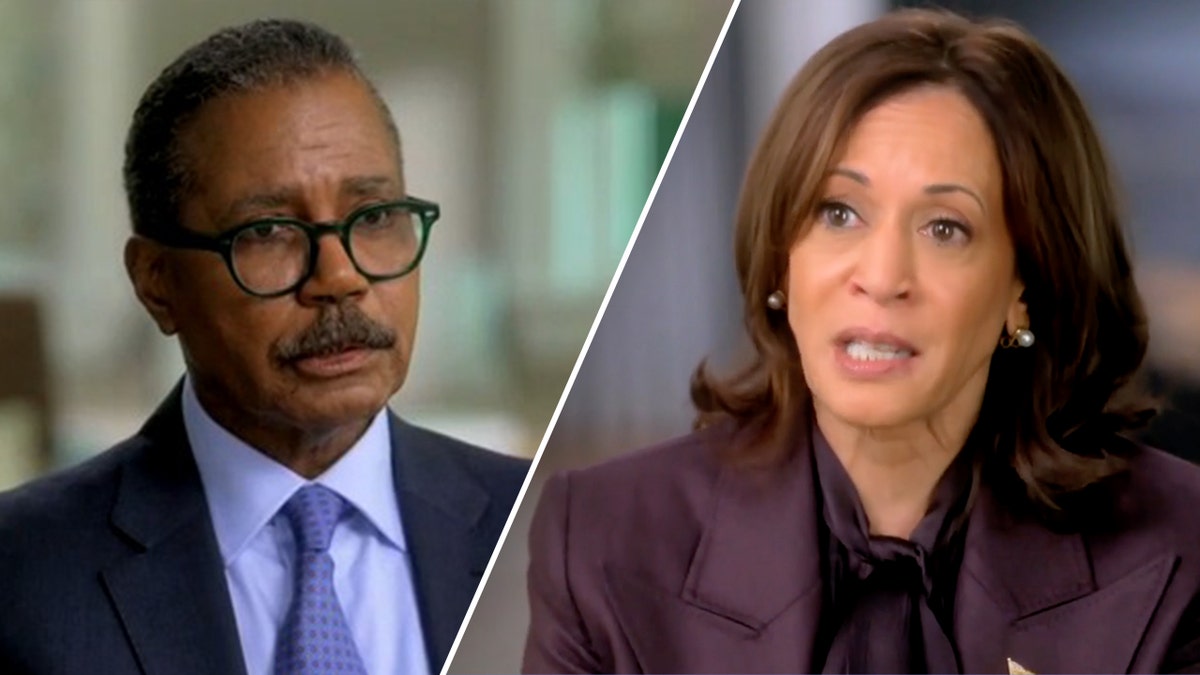
Earlier this week, Federal Communication Commission (FCC) Chairman Brendan Carr knocked CBS News’ conduct following the release of the network’s unedited transcript of its “60 Minutes” interview with then-Vice President Kamala Harris. 

It showed that CBS News had aired only the first half of her response to “60 Minutes” correspondent Bill Whitaker’s question about Israeli Prime Minister Benjamin Netanyahu not “listening” to the Biden administration in a preview clip that aired on “Face the Nation,” but aired only the second half of her response during the primetime special. 

In October, President Trump filed a $10 billion lawsuit against CBS News alleging election interference over its handling of the “60 Minutes” interview, accusing the network of aiding his Democratic rival through deceptive editing just days before the election. 

FCC RELEASES CBS NEWS’ RAW ‘60 MINUTES’ TRANSCRIPT FROM KAMALA HARRIS INTERVIEW

“60 Minutes” executive producer Bill Owens. 

The New York Post’s editorial board believes changes need to occur at CBS News as a result. 

“Like all too many legacy media operations, it needs to clear out the partisan rot. It can start by booting ‘60 Minutes’ head producer Bill Owens, who has made all too many bad calls,” the Post’s editorial board wrote. 

“Most obviously, to slice-and-dice the Harris interview, cutting down one word-salad answer after another into seemingly coherent responses,” the editorial board continued. “Owens told his staff that the interview editing was ‘perfectly fine’ and that ‘the company knows I will not apologize for anything we have done.’”

The Post editorial board said “hiding the true (incoherent!) nature of a favored presidential candidate” is “deception,” not journalism. 
“And viewers likely never would’ve never known about the deception if CBS hadn’t released her full response to one question in a promo,” the board added. 

‘60 MINUTES’ TRANSCRIPT AT CENTER OF TRUMP’S LAWSUIT AGAINST CBS IS VITAL TO INVESTIGATION, FCC CHAIR SAYS

The Donald Trump campaign released a scathing statement in response to a defiant "60 Minutes" comment about its controversial edit of its interview with Vice President Kamala Harris earlier this month, saying the show had essentially admitted to making her sound better and calling on the CBS show to release a full transcript of the interview.

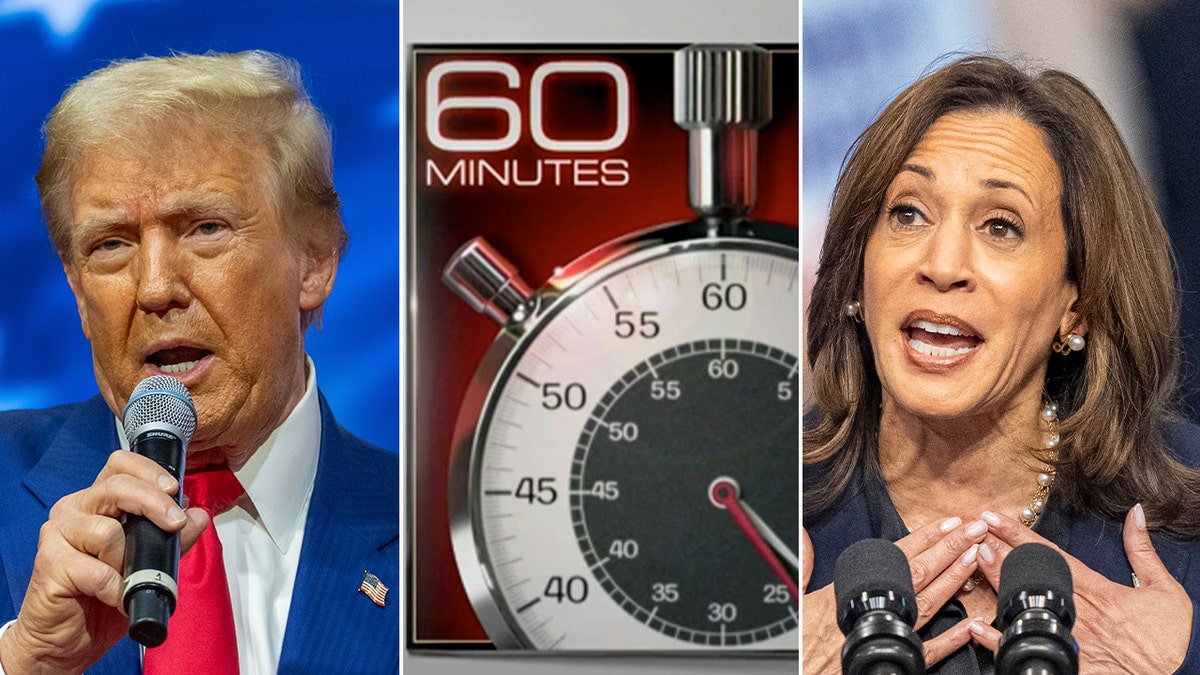
President Trump and others were not pleased with CBS News’ “60 Minutes” over the controversial edit of its interview with then-Vice President Kamala Harris. (Left: (Photo by Spencer Platt/Getty Images), Center: Screenshot/60Minutes, Right: (Photo by Andy Manis/Getty Images))

The Post’s editorial board feels whether the footage is “legit grounds for President Trump’s lawsuit over the deceptive editing is another matter,” but it is certainly a headache for CBS’ parent company as it seeks a merger with Skydance Media. 

“Owens also oversaw a badly biased ‘60 Minutes’ report on the Gaza war that not only advanced the lie that Israel was blocking aid, but withheld the extremist affiliations of the advocates it showed claiming Washington was ‘complicit,’ in helping the Jewish state (supposedly) violate international law,” the editorial board wrote. 

Earlier this year, the American Jewish Committee (AJC), the global advocacy organization for the Jewish people, slammed “60 Minutes” for a segment, “Dissent within the State Department over U.S. Role in Israel-Hamas War.” 

The group said “60 Minutes” played “directly into the hands of the enemies of the West who aim to show that support for Israel is not in the United States’ best interest.”

“This segment, the latest example of major news outlets recklessly reporting on Israel’s defensive war against Hamas, was shockingly one-sided, lacked factual accuracy, and relied heavily on misguided information,” the AJC wrote.

“Perhaps most egregiously, the segment made almost no mention of Hamas’ actions that started this war, placing Palestinian civilians in Gaza in harm’s way for years by embedding weapons and other terrorist infrastructure in civilian areas,” the Jewish advocacy group added. 

“The segment only briefly referred to Hamas’ massacre on October 7, 2023, described their fighters as “militants” rather than terrorists, and even went so far as to elevate the outlandish notion that, following Hamas’ October 7 attack, Israel should have sought to make peace with Hamas terrorists rather than act in self-defense.”

FCC CHAIR CALLS CBS NEWS’ CONDUCT ‘HARD TO EXPLAIN’ FOLLOWING RELEASE OF KAMALA HARRIS INTERVIEW TRANSCRIPT

Harris 60 Minutes

Bill Whitaker’s “60 Minutes” interview with Vice President Kamala Harris is at the center of a high-stakes lawsuit.  (Screenshots/CBS News)

Between the Harris interview and the Israel-Hamas segment, The New York Post has seen enough.

“Axing Bill Owens won’t magically restore CBS News’ reputation; Americans’ trust in mainstream media is at an all-time low for a lot of reasons. But ousting the shameless partisans from power is a necessary start,” the editorial board wrote. 

CBS News did not immediately respond to a request for comment. 

CLICK HERE TO GET THE FOX NEWS APP 

Fox News Digital’s Joseph A. Wulfsohn contributed to this report. 

Plane Crashes Into Street in Brazil Shortly After Takeoff

0

Two people were killed and six were injured by a plane crash in the middle of the street in São Paolo.

What does Trump mean when he invokes America’s ‘Manifest Destiny’? : NPR

0

A man takes a photo as he visits the Pioneer Mother Memorial as the sun sets Thursday, March 19, 2020, in Kansas City, Mo.

Charlie Riedel/AP


hide caption

toggle caption

Charlie Riedel/AP

Chances are you haven’t heard the term “manifest destiny” since high school history class. That is until President Trump’s inaugural address last month, when he used it to call for America to “plant the Stars and Stripes on the planet Mars.”

The 19th century term describes a belief in American exceptionalism and a divine right to expand into lands in North America where indigenous people and Mexicans lived. “It’s fascinating to see this term come back, because the whole concept of expanding the country, of course, is at the core of the American experience,” Michael O’Hanlon, a senior fellow at the Brookings Institution, says.

When Trump discusses the U.S. acquiring Greenland, making Canada the “51st state,” threatens to “take back” the Panama Canal and most recently suggested the U.S. would take over Gaza, he wipes the dust off other notions of American imperialism that haven’t been an overt part of U.S. aims since the days of Teddy Roosevelt.

Trump, O’Hanlon says, “has a long historical tradition to build upon.”

What is the origin of the term “manifest destiny”?

James K. Polk won the presidency in 1845 on an explicitly expansionist platform: acquire California and other land in the Southwest, annex the then-independent Republic of Texas and settle a dispute with Britain for control of the Oregon Territory. (Another Polk promise, by the way: reducing import tariffs).

James Knox Polk, eleventh President of the United States serving from 1845 to 1849.

James Knox Polk, eleventh President of the United States serving from 1845 to 1849.

National Archives/Getty Images/Hulton Archive


hide caption

toggle caption

National Archives/Getty Images/Hulton Archive

The term manifest destiny was coined by journalist John O’Sullivan that year in an essay praising the annexation of Texas and looking ahead to California — then part of Mexico — as being the next.

More generally, the term was a form of American exceptionalism that came to mean the inevitable east-to-west occupation of the North American continent, often expressed in messianic terms.

Although the term was created in the 19th century, it hearkens back to the first European settlers who believed their quest was divinely inspired, according to the Smithsonian American Art Museum.

“Manifest Destiny was meant as this notion that America was destined to control all of this territory… we have to have all of this land because we were exceptional,” said Susan D. Page, the first U.S. ambassador to South Sudan, who’s now a professor at the University of Michigan Law School.

Does the term describe Trump’s brand of diplomacy?

In part. “There are some surface-level parallels,” says Will Freeman, fellow for Latin America Studies at the Council on Foreign Relations. “It seems Trump and those around him are fairly serious about making this a time of U.S. territorial expansion.”

But when Trump talks about Canada, Greenland and Panama, he also taps into manifest destiny’s source code — the Monroe Doctrine, first espoused by President James Monroe in 1823 as a warning to European powers against interfering in the affairs of the Western Hemisphere. As Stewart Patrick, a senior fellow at the Carnegie Endowment for International Peace notes, Polk invoked the Monroe Doctrine as a justification first for annexing Texas — to prevent it from becoming “an ally or dependency of some foreign nation more powerful than [the United States],” in Polk’s words — and later for war with Mexico (1846-1848). In 1867, President Andrew Johnson similarly cited it as a rationale for purchasing Alaska.

“The Monroe Doctrine historically has been the United States’ way of relating to its own sphere … although it’s changed meaning over time,” Freeman says.

By the end of the 19th century, the Monroe Doctrine took on a more robust implication, Patrick notes. It was “understood to imply that the entire Western Hemisphere was an American preserve,” he writes.

Another historical parallel can be drawn with Trump’s aggressive use of tariffs and threats of them and the arrival in 1853 of a flotilla of U.S. warships in Tokyo Bay. The ships were meant to bully Japan into opening its ports to U.S. trade. The tactic came to be known as “gunboat diplomacy” and it would be reshaped by President Theodore Roosevelt into his “big stick” maxim of persuasion coupled with the threat of force to achieve goals on the international stage.

Theodore Roosevelt, the 26th President of the United States of America (1901-1909), in the uniform of a Lieutenant-Colonel of the Rough Riders, a volunteer cavalry unit which he led during the Spanish-American war.

Theodore Roosevelt, the 26th President of the United States of America (1901-1909), in the uniform of a Lieutenant-Colonel of the Rough Riders, a volunteer cavalry unit which he led during the Spanish-American war.

Hulton Archive/Getty Images/Hulton Archive


hide caption

toggle caption

Hulton Archive/Getty Images/Hulton Archive

“Trump seems to be reinventing ‘big stick diplomacy’ in the Americas for the 21st century, only without the ‘speak softly’ part,” says Freeman.

But in doing so, he says, Trump “will face constraints.”

“The United States does not have the unrivalled power in the hemisphere it was beginning to gain in the days of Teddy Roosevelt,” Freeman says. “Now there is China to compete with, and in most of South America, China’s economic weight is decisive.

“His ‘big stick’ will be most effective, ironically, in the countries he needs it least — those north of Panama which are already for the most part tightly integrated into the United States’ orbit,” he says.

It’s also worth noting that Trump has also long espoused isolationist rhetoric, calling for the U.S. to remove itself from world conflicts and accusing American military allies of not paying their fair share.

What would it mean if Trump followed through?

If Trump follows through on his expansionist rhetoric, the U.S. “would essentially become an international pariah,” O’Hanlon, of Brookings, says.

“If we use military force to seize the Panama Canal or Greenland… it would [put] us in the same category… as Vladimir Putin,” he says.

But having made the comments, backing off of them could also be difficult, Freeman says. When Trump says he’s going to slap 25% tariffs on Colombia, but then settles for a resumption of deportation flights, for example, “it’s kind of the boy who cried wolf,” Freeman says. “So I think that maybe what he’s able to get out of each of these, what he’s able to leverage out of each of these threats is going to probably decrease as leaders realize, ‘well, he doesn’t really mean what he says,’ but, you know, he’s also quite unpredictable.”

Being unpredictable can be its own long-term problem, according to Page, the former ambassador. As an example, she points to the North American Free Trade Agreement (NAFTA), and its successor, the United States-Mexico-Canada Agreement (USMCA) negotiated and signed during Trump’s first term.

“How can you threaten your two other partners with tariffs when you have a trade agreement with them?” she wonders. If Trump can do it, “that means that the next administration can then go against whatever those previous policies and agreements were.”

Harris dodges questions about political future, possible run for California governor

0

Former Vice President Kamala Harris is not giving any hints about her political future, despite speculation of a possible California gubernatorial bid in 2026.

Harris has mostly kept quiet since leaving Washington, D.C., last month after President Donald Trump’s inauguration, aside from a Jan. 20 visit to Altadena, California, to tour the Eaton wildfire damage.

On Thursday, the former vice president toured areas damaged by the Palisades Fire and spoke with displaced residents at a Red Cross shelter. When addressing reporters that same day, Harris made it clear that she is not ready to announce her next move just yet.

“I have been home for two weeks and three days,” Harris said. “My plans are to be in touch with my community, to be in touch with the leaders and figure out what I can do to support them.”

MAJOR CALIFORNIA DEMOCRAT PREDICTS KAMALA HARRIS WOULD BE ‘FIELD-CLEARING’ IF FORMER VP RUNS FOR GOVERNOR

When pressed by Fox 11 LA about her political future, Harris said she “would be here no matter what office I hold because it is the right thing to do.”

Former Vice President Kamala Harris, right, hugs County Supervisor Lindsey Horvath as she tours a fire damaged neighborhood with LA County officials. (Robert Gauthier/Los Angeles Times via Getty Images)

While the former vice president has not commented on President Donald Trump‘s response to the California wildfires, a Harris advisor told Fox 11 that the two former rivals have spoken multiple times behind the scenes.

After the Pacific Palisades visit, Harris and former second gentleman Doug Emhoff were spotted at the Los Angeles Lakers-Golden State Warriors NBA game at LA’s Crypto.com Arena on Thursday.

Kamala Harris Doug Emhoff Lakers Game

Former Vice-President Kamala Harris enjoys a game between the LA Lakers and Golden State Warriors at Crypto.com Arena on Thursday, Feb. 6, 2025 in Los Angeles. (Wally Skalij/Los Angeles Times via Getty Images)

Political insiders and Americans alike have speculated on Harris’ next moves after her crushing loss to Trump in November. During a desk drawer signing ceremony — a decadeslong tradition — Harris told staff that she would not “go quietly into the night,” and that their “work is not done.”

Late last month, New York Magazine reported that Harris was seeking advice from former Secretary of State Hillary Clinton, who also lost to Trump during her own White House bid.

Former Vice President Harris surveys damage from Palisades Fire

Former Vice President Kamala Harris tours a damaged neighborhood with LA County officials on Thursday, Feb. 6, 2025. (Robert Gauthier/Los Angeles Times via Getty Images)

CALIFORNIA GOVERNOR? ANOTHER WHITE HOUSE RUN? KAMALA HARRIS UNSURE OF NEXT STEPS AFTER LOSING ELECTION: REPORT

Prior to her time as vice president, Harris represented California in the U.S. Senate and served as the state’s attorney general. Her political experience in the state has led many to believe that she may seek the top spot. California Gov. Gavin Newsom’s time in office will end in 2026, and due to the state’s term limits, he is ineligible to run again.

Former VP Harris speaks with resident of fire-damaged area

Former Vice President Kamala Harris, left, is thanked by resident Jaimee Longo as she tours a fire-damaged neighborhood. (Robert Gauthier/Los Angeles Times via Getty Images)

CLICK HERE TO GET THE FOX NEWS APP

Amid speculation about a possible gubernatorial run, there are also those who wonder if Harris will try for the White House again. In 2019, Harris launched her first presidential bid, which ended with her in the number two slot alongside Biden.

Harris’ second presidential bid had an unusual start after Biden ended his re-election campaign in July 2024 and immediately endorsed his vice president. Harris’ campaign ended in a crushing defeat, as Trump won both the Electoral College and popular votes.

Congo Buries Its Dead After Rebel Assault

0

It was one of the deadliest battles in decades in the Democratic Republic of Congo.

After the city of Goma fell to a rebel group known as M23 last week, the International Red Cross said that civilians had paid a heavy price, and that the death toll was expected to go up as more bodies were found.

With the rebels said to be getting backing from another Central African county, Rwanda — the Rwandans deny this — there was fear that the conflict could grow into a broader war among the neighboring countries and their allies.

Millions have died in the past 30 years in Congo amid ethnic tensions and disputes over access to land and mineral resources. But rarely have so many been killed within just a few days, experts told Elian Peltier, a New York Times correspondent who traveled to Goma.

Republicans race to release plans to advance Trump policy agenda in Congress : NPR

0

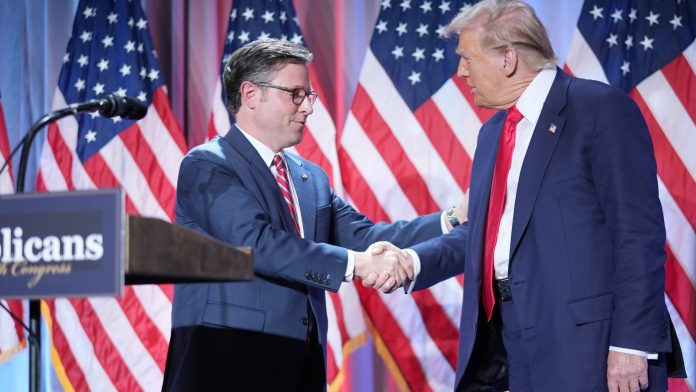
House Speaker Mike Johnson, R-La, is working with other top Republicans in the House to advance a budget bill that would allow Republicans to pass many of Trump’s top policy priorities without the threat of a filibuster from Senate Democrats.

Andrew Harnik/Getty Images/Getty Images North America


hide caption

toggle caption

Andrew Harnik/Getty Images/Getty Images North America

Republicans in Congress are working to finalize competing plans to advance some of President Trump’s top policy priorities.

House Speaker Mike Johnson, R-La., and other GOP leaders met late into the evening on Thursday following a roughly five-hour meeting at the White House that at times included Trump in hopes of releasing a broad budget framework on Friday. Republicans have been under intense pressure to move quickly on a legislative agenda but have so far been unable to agree on how to get that done.

Rep. Lisa McClain, R-Mich., told reporters lawmakers discussed options to include in the budget plan: an extension of the federal borrowing limit, an extension of tax cuts passed in 2017 under the first Trump administration and campaign promises like addressing the U.S.-Mexico border and eliminating taxes on tips.

“Tick, tock, we’re running out of time,” McClain said. “We’ve talked about this for how long?”

Republicans hope to use an element of the budget process, known as reconciliation, to pass policy priorities without the threat of a filibuster from Democrats in the Senate. Reconciliation rules require lawmakers to pass a budget resolution that includes budget-related impacts to be addressed.

McClain and others who attended the White House meeting returned to the Capitol on Thursday night to finalize that topline figure and framework.

McClain stopped short of describing many of those details, deferring to Johnson and Trump after the plans are finalized.

White House press secretary Karoline Leavitt, however, told reporters at the White House on Thursday that House Republicans were also discussing ideas like eliminating taxes on senior Social Security and overtime pay, adjusting the State and Local Tax deduction, eliminating special tax breaks for “billionaire sports team owners,” and closing the carried-interest tax deduction loophole and tax cuts for Made-in-America products.

“They’re talking about the budget and priorities from this administration — tax priorities,” she said.

Even if GOP House leaders are able to reach an agreement amongst themselves, the path to passing the bill will not be easy. Republicans have an extremely narrow House majority, meaning they will need virtually every Republican on board in order to pass a plan.

House Republicans may also face a competing proposal from their GOP counterparts in the Senate.

Senate Budget Committee Chairman Lindsay Graham, R-S.C., is expected to introduce a separate budget measure next week.

Sen. John Barrasso, R-Wyo, the number-two Republican in the Senate, told reporters Thursday evening that the Senate bill will include provisions covering energy, border and the military.

Barrasso will travel with a group of senators to meet with Trump in Florida on Friday.

“We want to go with urgency,” Barrasso said. “We want to make sure we get something done.”

NPR’s Elena Moore contributed to this report.

Trump admin appeals ruling blocking birthright citizenship order

0

The Trump Justice Department appealed a Thursday order blocking the president’s birthright citizenship order, hours after the ruling was issued. 

The Justice Department filed its appeal to the Ninth Circuit on Thursday evening. The move came shortly after U.S. District Judge John Coughenour extended a temporary restraining order he had previously issued. Coughenour notably scolded the Trump administration in the Washington courtroom, accusing the administration of ignoring the rule of law for political and personal gain. 

“It has become ever more apparent that, to our president, the rule of law is but an impediment to his policy goals. The rule of law is, according to him, something to navigate around or simply ignore, whether that be for political or personal gain,” Coughenour said while announcing his ruling.

FEDERAL JUDGE BLOCKS TRUMP BIRTHRIGHT CITIZENSHIP ORDER: ‘UNEQUIVOCAL CONSTITUTIONAL RIGHT’

The appeal will now go up to the Ninth Circuit, which covers Alaska, Arizona, California, Hawaii, Idaho, Montana, Nevada, Oregon, Washington and Guam. The Court of Appeals notably issues more progressive rulings with a higher reversal rate than other circuit courts. 

The Washington ruling came only a day after a Maryland federal judge also blocked Trump’s executive order. 

President Donald Trump issued the executive order, titled, “Protecting The Meaning And Value Of American Citizenship,” on Inauguration Day. (Getty)

U.S. District Judge Deborah Boardman, a former President Joe Biden appointee, noted the Washington ruling that had previously paused Trump’s order from going into effect. 

Boardman said citizenship is a “national concern that demands a uniform policy,” continuing on to say that no court has yet sided with the administration on the matter. 

TRUMP ADMIN HITS BACK AS ACLU LAUNCHES LAWSUIT ON BIRTHRIGHT CITIZENSHIP: ‘READY TO FACE THEM’

“Citizenship is a most precious right, expressly granted by the Fourteenth Amendment to the Constitution,” she wrote in her ruling.

Trump issued the executive order, titled, “Protecting The Meaning And Value Of American Citizenship,” on Inauguration Day. The order seeks to end birthright citizenship for children of illegal immigrants and was one of several orders he signed that day to overhaul U.S. immigration policy and border security.

President Donald Trump

The executive order seeks to end birthright citizenship for children of illegal immigrants and was one of several orders President Donald Trump signed to overhaul U.S. immigration policy and border security. (Getty Images)

Supporters and opponents of the order disagree over the meaning of the 14th Amendment, which states, “All persons born or naturalized in the United States, and subject to the jurisdiction thereof, are citizens of the United States and of the State wherein they reside.”

The primary disagreement is over the clause, “subject to the jurisdiction thereof.”

TRUMP’S HOUSE GOP ALLIES PUSH BIRTHRIGHT CITIZENSHIP BILL AFTER PROGRESSIVE FURY AT PRESIDENTIAL ORDER

Some legal experts argue that such a move is a constitutional change and cannot be made via executive order. Trump advisers and other conservative legal scholars have previously argued that the idea of giving birthright citizenship to children of illegal immigrants is based on a misreading of the amendment.

Ted Cruz, Katie Britt

The bill was introduced by Republican Sens. Lindsey Graham (SC), Katie Britt (AL), and Ted Cruz (TX), left. (Getty Images)

Senate Republicans recently introduced a bill that would reform U.S. law to end birthright citizenship in light of the executive order. The bill, titled, the “Birthright Citizenship Act of 2025,” would end the practice of automatically conferring citizenship status on people born in the U.S. of parents who are either illegal immigrants or who are in the country legally on a temporary basis.

The bill was introduced by Republican Sens. Lindsey Graham of South Carolina, Katie Britt of Alabama, and Ted Cruz of Texas.

CLICK HERE TO GET THE FOX NEWS APP

The bill’s sponsors said in a statement that the measure would address what they called “one of the biggest magnets for illegal immigration,” which they believe poses a weakness to national security.

Fox News Digital’s Louis Casiano, Adam Shaw and Peter Pinedo contributed to this report.