Friday, November 13, 2026
Home Blog Page 258

Plane Crashes Into Street in Brazil, Killing 2

0

A small plane crashed into a road in São Paulo, Brazil, around 7:20 a.m. local time Friday, killing both people on board and injuring several people on the ground, according to the city’s fire department.

Six people sustained minor injuries and were not in serious condition. One of them was a motorcyclist who was passing by. The other five were passengers on a bus that was struck by a part of the plane, according to Capt. Ronaldo Melo, a spokesman for São Paulo’s fire department.

Firefighters arrived on the scene just before 7:30 a.m., finding the plane and the bus on fire, Captain Melo said. “The fire was very aggressive,” he added. The bus passengers had all escaped the vehicle before the fire started, he said.

Videos on social media showed the remnants of the plane in flames, as well as a large, black plume of smoke rising into the air.

It’s unclear what caused the incident, but the plane appeared to have crashed shortly after taking off. It struck the Avenida Marques de São Vicente, a major road in the Barra Funda neighborhood, about four miles from the Campo de Marte Airport, where the plane took off.

The plane was on its way to Porto Alegre, nearly 700 miles south of São Paulo.

About three hours after the crash, the fire department had left the scene, Captain Melo said.

Trump wants to combat ‘gender ideology.’ But what does that mean? : NPR

0

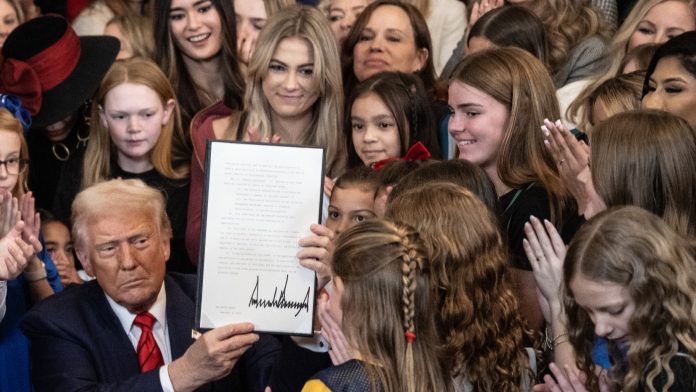
President Trump holds up the “No Men in Women’s Sports” executive order after signing it in the East Room of the White House in Washington, D.C., on Feb. 5. It became the latest in a series of executive orders focused on transgender rights, many of which also center on curbing “gender ideology.”

Andrew Caballero-Reynolds/AFP via Getty Images


hide caption

toggle caption

Andrew Caballero-Reynolds/AFP via Getty Images

On day one, newly inaugurated President Trump signed an order aimed at eliminating the idea of a “gender identity” separate from sex in the federal government. The order’s scope is broad — it rescinds a long list of Biden-era policies, changes “gender” to “sex” on government forms and calls to end funding for “gender ideology.”

That phrase, “gender ideology,” became one of Trump’s favorite slogans on the campaign trail last year.

“I will take historic action to defeat the toxic poison of gender ideology and reaffirm that God created two genders, male and female,” he said in an October campaign speech.

Now, in that order and in several that followed, the administration is trying to put a longtime political phrase into practice, trying to ensure that the government is not promoting or supporting what it calls “gender ideology.” That means first giving the slogan a definition.

And that definition is a paragraph long:

“”Gender ideology’ replaces the biological category of sex with an ever-shifting concept of self-assessed gender identity, permitting the false claim that males can identify as and thus become women and vice versa, and requiring all institutions of society to regard this false claim as true. Gender ideology includes the idea that there is a vast spectrum of genders that are disconnected from one’s sex. Gender ideology is internally inconsistent, in that it diminishes sex as an identifiable or useful category but nevertheless maintains that it is possible for a person to be born in the wrong sexed body.”

Opponents say that the definition — and therefore the order’s implementation across the government — are confusingly loose. To Harper Seldin, a senior staff attorney with the American Civil Liberties Union, an advocacy group focused on civil rights including transgender rights, that looseness is intentional.

“This is written in a way that is meant to be broad, but also with a specific goal, which is to push trans and non-binary people out of civic life,” he said.

To Jay Richards, director of the Richard and Helen DeVos Center at the conservative Heritage Foundation, the definition works.

“‘Gender ideology’ as it’s used in executive order is fairly general, but it’s not hard to tease out what’s meant by the term by actually looking at the effects and the emphases of the executive order itself,” he said.

‘Gender ideology’ as official policy

People gather to defend transgender rights in New York City on Feb. 3, 2025, protesting against President Trump's executive order signed Jan. 28 to restrict gender transition procedures for people under the age of 19.

People gather to defend transgender rights in New York City on Feb. 3, 2025, protesting against President Trump’s executive order signed Jan. 28 to restrict gender transition procedures for people under the age of 19.

Charly Triballeau/AFP via Getty Images


hide caption

toggle caption

Charly Triballeau/AFP via Getty Images

The term “gender ideology” existed well before Trump started using it. According to Factbase, which archives Trump’s public appearances, he first said the phrase publicly in 2022. Transgender and nonbinary people and their allies oppose the term “gender ideology,” as it implies a belief system rather than an identity.

“If we had an executive order that said ‘the left-handed ideology,’ people would understand immediately that that was not quite right,” said Seldin, at the ACLU. “Being left-handed is just a natural variation. Same with being transgender.”

Nearly 2 million American adults identify as transgender, according to a 2023 survey by KFF and the Washington Post, just under 1 percent of adults as a whole.

An administration memo giving directives on implementing the executive order has sparked further confusion, and even fear.

A mental health provider with the Department of Veterans Affairs spoke to NPR anonymously, for fear of retaliation. They said guidance at their job can shift from day to day about, for example, what statistics they can use in presentations.

They also pointed to a line in the memo saying employees whose jobs include quote “promoting gender ideology” should be put on paid leave.

“When we read that we were like, what does that mean? Is that any of us?” the provider said. “Or because of the way our profession looks at gender, is that all of us?”

Ultimately, the provider fears that if policy inhibits mental health care, suicide rates among transgender patients could rise.

A White House spokesperson, speaking on background to provide the administration’s general view, told NPR that they stand by the definition.

Focused on safety

The administration’s definition has a bigger impact than Trump’s initial action focusing on “gender ideology.” It also factors into orders aimed at removing that “ideology” from the military and K-12 schools.

Trump and his allies have long argued that all of this is about keeping women and girls safe.

“The concern is, especially with children and especially in private women’s spaces and in particular, I think, women’s prisons, the categories of gender ideology have started to dissolve the clear distinction between the biological sexes,” said Richards, at the Heritage Foundation.

He points to instances where women in prison have accused transgender women inmates of abuse, including rape. Government data has shown transgender inmates are at a higher risk of sexual victimization than other inmates.

The administration’s actions come amid a broader lack of clarity about the legal rights of transgender people in the United States.

For example, the Supreme Court has ruled that employers cannot fire workers for being transgender. But they have not spelled out further specifics — for example, about bathroom and locker room usage. To Seldin, that lack of clarity gives these orders more power.

“I think executive orders like this are giving folks permission to push the limits of what they can do,” he said.

A transgender woman working in intelligence for a defense contractor also spoke to NPR anonymously for fear of retaliation. She has been told that she’s soon losing access to her workplace’s women’s bathroom.

But Trump’s various executive orders have her wondering what else is coming. She pointed to the order about “gender ideology” in the military, which says that being transgender “conflicts with a soldier’s commitment to an honorable, truthful, and disciplined lifestyle.”

Should that logic extend beyond military members, she said, she fears losing her security clearance, and therefore her job. As a result, she’s moving into a friend’s basement.

“I don’t feel comfortable signing a new lease anywhere,” she said. “It’s very hard to focus and feel motivated to work for a government that seems like it could fire me at any moment.”

NFL legend Tom Brady fires back at ref-favoritism theory: ‘It’s all BS’

0

Tom Brady pushed back strongly on the notion of NFL officials’ favoritism toward the Kansas City Chiefs or any other team in the league on Friday, two days before Super Bowl LIX.

FOX’s NFL lead analyst appeared on “Fox & Friends” and was asked about the theory on social media about officials giving favorable calls to the Chiefs.

SIGN UP FOR TUBI AND STREAM SUPER BOWL LIX FOR FREE

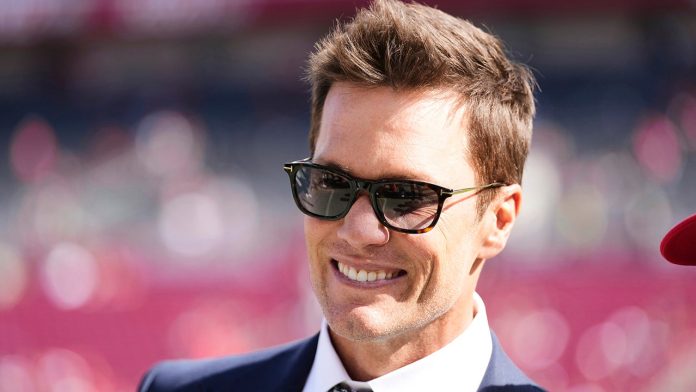
Former NFL quarterback Tom Brady makes an appearance on the field before an NFL football game between the New Orleans Saints and the Tampa Bay Buccaneers on Sunday, Jan 5, 2025 in Tampa, Florida. (AP Photo/Peter Joneleit, File)

“I think it’s just all BS. It’s just a bunch of noise,” he said. “These refs have very challenging jobs to do. I’m very happy Twitter didn’t exist during the Tuck Rule Game in 2001, let me say that. I would’ve been on the wrong end on a lot of those. But these refs are out there trying to do their very best. 

“They got to make decisions in a split second and they’re gonna call what they see and these guys are some of the most professional people on the field. They just want to do a good job like everyone else. And look, sometimes the calls go your way, sometimes they don’t. In the end, over the course of a 140-play game on both sides of the ball, the players have plenty of opportunities to go out there and make an impact in the game, winning or losing and that’s what I’m excited to see on Sunday night.”

HOW TO WATCH SUPER BOWL LIX BETWEEN CHIEFS, EAGLES STREAMED ON TUBI

Patrick Mahomes slides

Kansas City Chiefs quarterback Patrick Mahomes, #15, slides against Houston Texans linebacker Henry To’oTo’o, #39, during the fourth quarter of a 2025 AFC divisional round game at GEHA Field at Arrowhead Stadium in Kansas City, Missouri, on Jan. 18, 2025. (Denny Medley-Imagn Images)

The officiating topic has been talked about throughout the week as questionable calls seemingly took over two of the Chiefs’ playoff wins – against the Houston Texans and Buffalo Bills.

NFL Commissioner Roger Goodell slammed the idea during his pre-Super Bowl LIX press conference earlier in the week.

“This sort of reminds me a little bit of ‘the script,’ right? That I write a script and I have a script for the entire seasons,” he said. “I think a lot of those theories are things that happen in social media, and they get a new life. … Nobody wants it to be their theory.

CLICK HERE TO GET THE FOX NEWS APP

Tubi promo

Super Bowl LIX will be streamed on Tubi. (Tubi)

“I understand it. I think it reflects a lot of the fans’ passion. I think it’s also a reminder for us on how important officiating is. I think the men and women officiating the NFL are outstanding. They have the highest possible standards. That’s a ridiculous theory for anyone who might take it seriously, but at the end of the day, it’s something we always have to continue to work on, how we make our officiating better at all times.”

Follow Fox News Digital’s sports coverage on X, and subscribe to the Fox News Sports Huddle newsletter.

USAID Turmoil Threatens Key Aid Supplies to Gaza, Officials Say

0

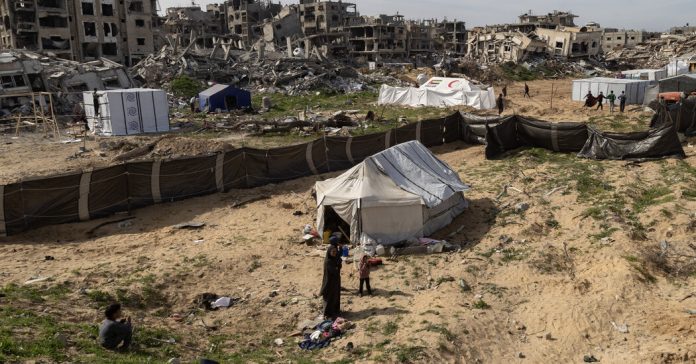
The Trump administration’s efforts to downsize the United States Agency for International Development have endangered the funding for food, tents and medical treatment for hundreds of thousands of Palestinians in Gaza, according to U.S. officials and workers for humanitarian groups funded by the agency.

Officials said that the threats to the aid supply chain risked destabilizing the fragile cease-fire agreement between Hamas and Israel, which is contingent on the weekly entry of 4,200 aid and commercial trucks to the territory.

With almost all U.S.A.I.D. staff set to be placed on administrative leave by Friday night, there will be only a handful of officials left to sign off on and audit hundreds of millions of dollars in outstanding payments to the agency’s partners on the ground in Gaza, raising alarm about how those groups will fund their operations.

Of more than 200 officials in the agency’s Mideast team, just 21 will remain in post to manage its entire regional portfolio, according to an internal agency email reviewed by The New York Times. The team that organizes emergency aid supplies in dozens of crisis zones around the world each year, of which Gaza was just one, is down to just 70 staff members from more than 1,000.

This is expected to slow or prevent the delivery of food packages to hundreds of thousands of Palestinians, as well as tents, mattresses, blankets, hygiene kits and medical treatment, according to three officials and an aid worker. All four people spoke on the condition of anonymity because they were not authorized to speak to the news media.

While the aid agency does not operate inside Gaza, it has provided roughly $1 billion in aid to international aid groups on the ground since the war began in October 2023 — about a third of the total aid response, according to the United Nations. Hundreds of millions of dollars have yet to be disbursed and now may never be transferred to United Nations agencies and other major aid organizations, three officials said.

“They’re making an already fragile cease-fire more fragile,” said Dave Harden, a former U.S.A.I.D. mission director for Gaza and the Israeli-occupied West Bank. “Lifesaving aid to Gaza is going to be disrupted.”

The State Department, which oversees the aid agency, declined to comment. The agency’s director in Jerusalem referred reporters to the U.S.A.I.D. press department, which did not respond to requests for comment. It was unclear if it was still operational.

The World Food Program, the International Organization for Migration and the International Medical Corps, all of which distribute aid or run projects in Gaza funded by U.S.A.I.D., also declined to comment.

Secretary of State Marco Rubio said in a television interview this week that the moves were “not about getting rid of foreign aid,” but an attempt to prevent “rank insubordination” by uncooperative workers.

The Trump administration says the agency wastes taxpayers’ money on costly and unfocused overseas programs that do little for the American people.

Mr. Rubio said that agency employees “take taxpayer money and they spend it as a global charity irrespective of whether it is in the national interest.”

Officials interviewed for this article said that the aid to Gaza was a clear example of how the agency’s work was helping to further President Trump’s stated foreign policy goals. He has repeatedly called for an extension of the cease-fire, which is partly dependent on the smooth flow of aid.

The virtual collapse of U.S.A.I.D. is expected to remove a key form of oversight over that aid delivery. The agency is set to lay off officials who monitor the distribution of supplies within the territory, three officials said, making it harder for the United States to assess who controls and receives the aid within areas run by Hamas.

It is also likely to sideline officials who previously coordinated between the Israeli military, the Egyptian government, the United Nations and private aid groups, helping various parties to troubleshoot problems in the supply chain and prevent soldiers from mistakenly firing on aid convoys. An Israeli official, speaking on the condition of anonymity to discuss a sensitive matter, confirmed the importance of the aid agency’s coordination role and said it was unclear which institution would step in to fill it.

Some aid and development programs in Gaza and the West Bank have already been halted or restricted after a freeze in January on most of U.S.A.I.D.’s programs and the firing or suspension of thousands of its workers. By the start of this week, more than half of the roughly 50 officials who work on the Gaza response in Jerusalem and Washington had already been placed on leave or had their contracts terminated.

They included a U.S.A.I.D. representative who worked from an Israeli military control room in Tel Aviv, helping to coordinate between the military and aid groups in Gaza, according to three U.S. officials.

The funding freezes have already suspended tens of millions of dollars earmarked for Gaza, including for water infrastructure, mobile hospital units and psychological support programs, according to one of the U.S. officials.

Among the groups affected was the International Medical Corps, a Los Angeles-based medical aid group funded by U.S.A.I.D. that runs two large field hospitals in Gaza. As a result, the group said in a statement that it may no longer be able to sustain an emergency room that treats up to 200 patients a day, an outpatient department that serves up to 2,000 people a day and a childbirth unit that delivers roughly 20 babies a day.

Anera, a Washington-based aid group, said in a statement that the freeze on a U.S.A.I.D. grant worth $50 million had forced it to suspend work on a program to restore Gaza’s decimated health services.

Tens of millions of dollars for West Bank and East Jerusalem projects have also been frozen, endangering key funds for several hospitals that President Biden pledged to sustain during a visit to the region in 2022.

Ronen Bergman contributed reporting from Tel Aviv.

Japan prime minister to press Trump on importance of alliance : NPR

0

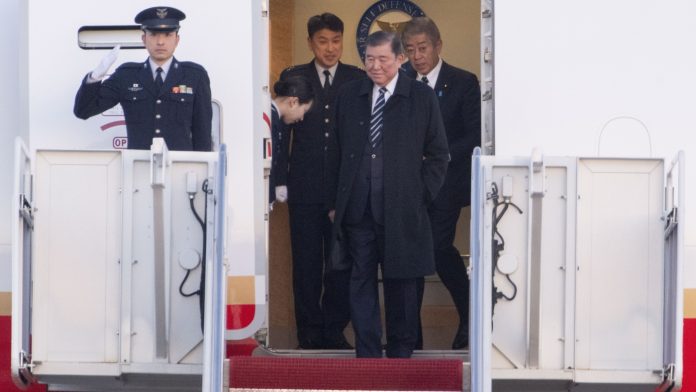
Japan’s Prime Minister Shigeru Ishiba arrives at Joint Base Andrews, Md., on Thursday.

Kevin Wolf/FR33460 AP


hide caption

toggle caption

Kevin Wolf/FR33460 AP

SEOUL — In his meeting with President Trump today, Japan’s Prime Minister Shigeru Ishiba faces a challenge to build personal chemistry with the leader of the country his people depend on for security and trade, while also overcoming Trump’s long-held concerns about being taken advantage of by allies.

Ishiba is the second foreign leader to meet with Trump in his second administration, after Israeli Prime Minister Benjamin Netanyahu.

Japan hopes that a candid exchange of views between the two leaders will help take the bilateral relationship to “new heights,” chief cabinet secretary and government spokesman Yoshimasa Hayashi said in announcing the visit this week.

Japanese media report that Ishiba spent last weekend huddled with his ministers, working out a game plan for the meeting. But Trump’s concerns, at least, are well known, as he’s been harping on them for more than three decades.

Trump has long felt that Japan and other wealthy allies take advantage of the U.S., racking up big trade surpluses, while paying too little for the cost of American military protection. He famously griped about this in a 1987 full-page advertisement he took out in three top U.S. newspapers.

Currying favor with Trump

On the trade surplus, Ishiba is expected to try to please Trump by offering to buy more U.S. liquified natural gas.

He is also expected to highlight Japan’s role as the largest direct foreign investor in the U.S. for the past five years, although President Biden’s rejection of Nippon Steel’s $14.9 billion acquisition of US Steel on national security grounds could dampen Japanese enthusiasm for investing in the U.S.

Ishiba can also point to Japan’s 2022 commitment to roughly double defense spending to 2% of GDP by 2027. Trump has long criticized the defense spending of U.S. allies, saying they don’t contribute enough and rely too much on American support.

But Trump is likely to want more, says Brad Glosserman, deputy director of the Tama University Center for Rule Making Strategies in Tokyo.

“My sense is that the United States is now going to be asking for 3% at a minimum and perhaps even more,” he says.

“That’s going to be extremely difficult for the Japanese to do, given the difficulties that they have at this moment. Again, because of a weak prime minister with competing national policy priorities,” such as trying to boost the country’s plunging birth rate.

Glosserman notes that Ishiba’s party is in the minority in Japan’s parliament, and defense hawks in his own party find him too moderate, and too conciliatory towards China.

It also remains to be seen whether Ishiba can develop a personal rapport with Trump. His predecessor, the late former Prime Minister Shinzo Abe, used golf games, sumo wrestling matches and Wagyu burgers to help to cultivate ties with Trump, as he successfully avoided a major tariff war with the U.S.

Ishiba has long called for a more equal alliance with the U.S. “I believe that having the Japan-U.S. relationship as equal as possible will enhance the sustainability of the alliance,” Ishiba told NPR in a 2023 interview.

“Japan has its own national interests, and the United States has its own national interests,” Ishiba commented to reporters following Trump’s inauguration. “I would like to establish a relationship of trust through sincere discussions on how we can make the most of our bilateral relationship for world peace and the global economy,” he added.

Japan considers its alliance with the U.S. as the cornerstone of its foreign policy and any Japanese leader must be seen to be an effective alliance manager. That means Japanese leaders try to get in the White House door as early as possible in a new U.S. administration, regardless of what outcomes can be assured, and before the new administration’s policies have become clear.

“This basic foundation doesn’t change,” says Yoshihide Soeya, professor emeritus at Keio University in Tokyo.

Japan’s unstated fears of U.S. abandonment

What neither Ishiba nor other Japanese officials will discuss publicly is their concern that the U.S. might move away from its commitment to the U.S.-Japan alliance.

“The Trump phenomenon is giving us a signal, a warning, that we should begin to think in a different sort of security paradigm,” Soeya says.

Soeya envisions a new paradigm that includes a “robust middle power network among our regional countries,” such as South Korea, Australia and New Zealand.

Japan showed its leadership of such a network when Trump pulled the U.S. out of the Trans-Pacific Partnership trade agreement in 2018, and Japan regrouped the 11 remaining members of the pact and forged ahead without the U.S., leaving it out of a deal which could have added billions of dollars to U.S. GDP through trade liberalization.

Brad Glosserman believes that “Japan again, has the opportunity to demonstrate leadership,” because Trump has said he will pull out of the 14-member Indo-Pacific Economic Framework established by the Biden administration.

What these powers cannot do without U.S. involvement, Yoshihide Soeya says, is rival China’s growing military might. Were the U.S. to completely retreat from Asia, Soeya says, Japan could find itself back in the sort of China-led Asian order that prevailed for much of the pre-modern era.

Soeya doesn’t think the U.S. will turn its back on Asia, but given the direction in which America-first nationalism and isolationism are currently heading, he says it might be wise for Japan to hedge its bets and look beyond its alliance with the U.S.

Chie Kobayashi contributed to this report in Tokyo.

Arizona grandmother indicted after epileptic teen kept in cage dies

0

The grandmother of a teenage girl with epilepsy who died after police said she had been locked in a makeshift cage for extended periods of time has been indicted by a grand jury in Arizona, the Maricopa County Attorney’s Office announced.

Virginia Lujan, 55, has been charged with child abuse and other crimes following the death last month of her granddaughter, who suffered from a rare form of epilepsy and had cognitive impairments causing her to function at the level of a 3-year-old.

Lujan called 911 on Jan. 20 to report that her granddaughter was unresponsive at her two-story townhouse in Tempe near U.S. 60 and Mill Avenue, prosecutors said. 

ARIZONA WOMAN CHARGED WITH MURDER OF RIDESHARE DRIVER AFTER ALLEGEDLY USING HIS CAR TO RUN HIM OVER: REPORT 

When officers arrived, they found the girl lying on the living room floor with marks and bruising on multiple parts of her body. She was transported to a hospital, where she died the following day.

Virginia Lujan, 55, has been charged with child abuse and other crimes after her granddaughter died after being unresponsive in her home.

“No child should ever have to endure suffering,” Ken McCoy, the city’s police chief, said the day after her death, per Fox 10.

“We are committed to uncovering the truth and seeking justice on her behalf. The tragic loss of a child is a profound reminder of our shared responsibility to protect the most vulnerable in our community.”

Police said that they discovered a bunk bed that had been adapted into a makeshift enclosure where the victim was kept for extended periods of time, along with grossly unsanitary conditions throughout the home. 

Police, according to Fox 10 Phoenix, described Lujan’s home as “disorderly and filthy,” with trash littering the home’s floors and dead insects such as cockroaches being seen in various parts of the home.

police presser tempe

The grandmother of a teenage girl with epilepsy who died after police said she had been locked in a makeshift cage for extended periods of time has been indicted by a grand jury in Arizona. Police speak at a press briefing the day after her death. (Fox 10 Phoenix)

When investigating where the girl had been kept, police discovered an elevated bed frame, similar to bunk beds inside, with the exception that there was no bed or mattress on the bottom, according to court documents cited by Fox 10.

Instead, the tall bed frame created a space underneath the top bunk.

A large rail, large enough to enclose the long right side of the bed and another rail with plastic baby gates attached to it were found by this bed. These items, together, were attached to the frame as walls for an enclosure or cage, the outlet reported.

These components were held together with plastic zip ties. Police also said there was human waste on the floor within the enclosure.

ARIZONA TEEN ARRESTED ON TERRORISM CHARGES IN ALLEGED PLOT AGAINST PHOENIX PRIDE FESTIVAL

The victim, according to investigators, was one of five children belonging to 33-year-old Jami Hodges, Lujan’s daughter. They ranged in age from 2 to 15 years. 

In 2021, Hodges transferred four of her five children’s guardianship to Lujan, and at the time of the victim’s death, she had moved in with her mother because of structural issues that forced her out of her former home, per Fox 10.

They lived in a cramped space inside her three-bedroom townhouse, police said.  

home arizona

The family lived in a “disorderly and filthy” three-bedroom townhouse, police said. (Fox 10 Phoenix)

Hodges and her 2-year-old daughter slept in the living room on the main floor while Lujan had her own bedroom on the second floor. The rest of the children shared the remaining two bedrooms, investigators wrote in the court documents.

They also wrote that none of Hodges’ children were enrolled in or attending school.

Hodges, according to police reports cited by Fox 10, said that when she returned home from the dentist earlier on Jan. 21, she noticed that the victim was “acting off” and that she saw a large rash or discoloration under the victim’s armpits and on the back of her legs. 

The girl later took a turn, and Tempe Police Department officers and crews with Tempe Fire Medical Rescue were called to the home at around 9 p.m.

Lujan told first responders that the victim had fallen a few days prior, investigators wrote. 

The victim was found covered in bruises on various parts of her body. The bruises were described as being in various stages of healing, while dried blood was found inside her right ear and her face appeared swollen.

Tempe Police Department vehicles

Tempe Police Department vehicles. Police from the department responded to the scene. (Caitlin O’Hara/Bloomberg via Getty Images)

CLICK HERE TO GET THE FOX NEWS APP

The victim was taken to the hospital and was declared dead hours later.

Hodges was arrested but was released pending charges.

Lujan is currently being held on a $500,000 secured appearance bond, per the Maricopa County Attorney’s Office.

She is also charged with tampering with physical evidence, tampering with a witness and three counts of contributing to the dependency of a child.

Trump Envoy Pushes Lebanon’s New Leaders to Isolate Hezbollah

0

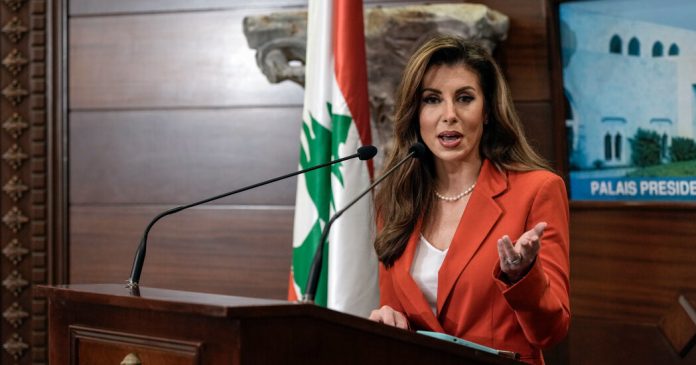
A Trump administration envoy to the Middle East pressed Lebanon’s new leaders on Friday to ensure that Hezbollah does not become part of the government, as it grapples with a fragile cease-fire and violence that could undermine its push for stability.

The United States deputy envoy to the Middle East, Morgan Ortagus, said at a news conference in Beirut after meeting Lebanon’s new president, Joseph Aoun, that Hezbollah had been “defeated” by Israel.

She added that the leadership of Lebanon was committed to ensuring that Hezbollah, a powerful Iran-backed militia, “is not a part of this government in any form.”

There was no immediate comment from Lebanese officials on her account. Lebanon’s new leaders will need to strike a balance with Hezbollah, which has long been the country’s dominant political force but has been battered by a 14-month war with Israel.

Washington has increased its pressure on Lebanon’s new leadership to try to undermine the group’s political stranglehold on the country.

Ms. Ortagus, a former State Department spokeswoman and the first senior U.S. official to visit Lebanon since Mr. Trump took office, also said that the Trump administration was placing pressure on Iran to stop funding its proxies in the Middle East, including Hezbollah.

Her remarks came after she met with Mr. Aoun, whose election by Lebanese lawmakers last month ended years of political gridlock.

Mr. Aoun has appointed a new prime minister, Nawaf Salam, but the new leadership has so far not formed a government. Senior government posts in Lebanon have traditionally been divided up among the country’s sectarian communities under a decades-old power sharing agreement.

The diplomatic pressure comes at a delicate time for Lebanon.

Under the terms of a 60-day cease-fire that ended the war between Israel and Hezbollah in November, Israeli troops were supposed to have withdrawn by now from Lebanon.

But they have not done so, and Israeli forces killed two dozen people, according to Lebanese officials, as thousands of people attempted to return to their homes near the border when the cease-fire expired last month. The Israeli military said that it had fired “warning shots in order to eliminate threats”

With the truce deal now extended until Feb. 18, many in Lebanon now fear the prospect of a sustained Israeli occupation of the country’s south.

With the deadline for the new cease-fire approaching, the Israeli military carried out a series of airstrikes overnight deep inside Lebanese territory.

The military said it had targeted Hezbollah military sites, and it accused the group of violating the terms of the cease-fire agreement. Both sides have repeatedly accused one another of violating the deal.

Lebanon’s state-run news agency reported attacks in southern and eastern Lebanon, which appeared to be some of the most intense since the war ended in November. There were no immediate reports of casualties.

Fighting also continued on Friday along the Lebanese-Syrian border, where skirmishes erupted a day earlier between Syrian forces and armed gunmen in Lebanon. Syria’s new rebel authorities said they were attempting to clamp down on cross-border smuggling networks, according to Syria’s state news agency, SANA.

GM and Disney scrub some DEI references from annual reports : NPR

0

AUSTIN, TEXAS: A GMC pickup truck is displayed for sale on a lot at a General Motors dealership in Austin, Texas. Last year, General Motors told investors in its annual report that “we are committed to fostering a culture of diversity, equity and inclusion.” But in its latest report, published last week, GM doesn’t mention diversity once. (Photo by Brandon Bell/Getty Images)

Brandon Bell/Getty Images/Getty Images North America


hide caption

toggle caption

Brandon Bell/Getty Images/Getty Images North America

Some big companies have been announcing the end of their diversity programs – but many others are quiet quitting.

At least a dozen of the largest U.S. companies have deleted some, or all, references to “diversity, equity, and inclusion” and “DEI” from their most recent annual reports to investors, an NPR analysis of regulatory filings has found.

A year ago, all of these companies made references to diversity and inclusion in their disclosures — but in their new reports, all of these companies have rewritten at least some of this language. In some cases, they no longer mention “diversity” at all.

Most of these companies have filed these annual reports in the past two weeks. That’s usually when their reports – which are meant to provide a comprehensive financial review of the past year and update investors on the current business environment – are filed. But these updates are also coming at a time when President Trump has ordered an end to DEI in the federal government — and for its contractors, which includes many private companies.

Companies are also under pressure from conservative critics who say DEI programs are themselves discriminatory against non-minorities.

The companies that have recently deleted or softened their DEI language include Disney, Google, GM, GE, Pepsi, Intel, PayPal, Chipotle, Comcast, 3M, Regeneron, and Philip Morris, according to the NPR analysis. Most companies have not disclosed the reasons for the changes, although some told NPR that they are re-evaluating some of their DEI programs as well as examining Trump’s executive orders.

Silently deleting DEI references

These changes come after Walmart, Target, Amazon, Meta, Ford, and other big companies have made headlines for ending or changing some diversity programs. Now NPR’s analysis finds that many more companies are quietly changing how they talk about DEI to investors.

For most companies, “it makes very little sense to issue a press release saying, ‘I’m going to stop’ — because that’s like waving a red flag to a bull,” says Shiva Rajgopal, a professor of accounting and auditing at Columbia University. “Whenever practices change, the folks who drop them silently are usually in the majority.”

Many companies are indeed being silent about these changes. Last year, for example, automaker General Motors devoted three paragraphs to a section that began: “At GM, we are committed to fostering a culture of diversity, equity and inclusion.”

But in its new 2024 report, filed last week, GM doesn’t mention “diversity” once. (The carmaker does, however, tout its “diverse EV lineup.”) GM, which is a federal contractor, did not respond to requests for comment.

Disney, meanwhile, shortened its “diversity, equity and inclusion” section in its most recent annual report, filed in November. Among other changes, it removed the previous year’s references to a website “for amplifying underrepresented voices” and highlighting “some of Disney’s DE&I commitments and actions.” A Disney spokesperson declined to comment.

And Pepsi eliminated almost all references to diversity, a year after telling investors that “our culture of diversity, equity and inclusion is a competitive advantage.” In its new report this week, Pepsi only mentions diversity in reference to a board committee focused on “sustainability, diversity, and public policy.” The company did not respond to a request for comment.

Slipping DEI changes into the fine print 

Publicly-traded companies are required to file annual reports and other investor disclosures with the Securities and Exchange Commission. Many companies end their financial years in late December or soon after, and file these reports starting in late January (although some companies are on different financial calendars).

These annual reports can run more than 100 pages long, and are typically written in dense, lawyered corporate-speak. So it’s relatively common for companies to use these filings to quietly disclose lawsuits or government investigations they are facing — or to slip in other information that they are required to tell investors but don’t wish to announce separately.

In this case, companies are eliminating information and rhetoric that has become politically toxic. There’s no regulatory requirement for companies to disclose their DEI goals or philosophy. Many companies voluntarily did so in the past, especially to please investors, employees, and customers — but now the political environment has changed.

“We have seen companies start to decide that the reward is not necessarily outweighed by the risk anymore,” says Becky Baker, an employment lawyer with Vinson & Elkins.

Some changes go beyond rhetoric

It isn’t the first time that companies have stealthily backtracked from their DEI pledges — or used their annual reports to quietly unveil the changes.

Last April, a Wall Street Journal analysis found that dozens of companies had “altered descriptions” of DEI initiatives in their annual reports. At the time, the Journal reported, “In general, companies say they aren’t cutting back on their programs or longer-term goals.”

But today, some companies are changing more than just their rhetoric. Google on Wednesday told employees that it was ending some diversity hiring targets and re-evaluating some DEI efforts that “raise risk, or that aren’t as impactful as we’d hoped,” the Journal reported.

The tech giant also removed references to diversity from its annual report filed that day. It even went so far as to rename a website focused on its DEI efforts: Last year, Google told investors that more information could be found at the website “diversity.google.” But now that website redirects to “about.google/belonging/.”

“We’re committed to creating a workplace where all our employees can succeed and have equal opportunities,” a Google spokesperson told NPR by email. She added that as a federal contractor, “our teams are also evaluating changes required following recent court decisions and executive orders on this topic.”

Other companies identified by NPR’s analysis have also deleted the specific diversity goals they had previously announced.

For example, Intel told investors in its 2023 annual report that it wanted women to account for 25% of its senior executives by the end of the decade.

“Diversity and inclusion are core elements of Intel’s values,” the tech giant said back then. But in its 2024 report filed last week, Intel deleted the goals. It also erased “diversity” from that sentence, and said instead that “inclusion is a core element of Intel’s values.”

Intel is also a federal contractor. A spokesperson declined to comment.

NPR reached out to all of the other companies discovered in the analysis to have deleted DEI language from their annual reports. PayPal and Philip Morris declined to comment. Chipotle, GE, Comcast, and Regeneron did not respond to requests for comment.

Trump is ramping up the pressure on companies

Some big companies were retreating from DEI before President Trump, a longtime critic of DEI, was re-elected. But now Trump has signed executive orders ending DEI in the federal government, calling them “illegal” as well as “radical and wasteful.”

One of the executive orders threatens to impose financial sanctions on contractors with “illegal” DEI programs. Trump also directed federal agencies to identify up to nine publicly traded companies or other large private institutions for “potential civil compliance investigations.”

These actions are adding to the pressure facing many private employers that have made public promises around diversity, equity, and inclusion. The stakes are especially high for those that – like Google, GM, and Intel – do business with the federal government and are directly affected by the executive orders.

The manufacturing conglomerate 3M, for example, is also a federal contractor. It recently renamed a section on “Diversity, equity, and inclusion,” in the part of its 2023 annual report that discussed its workforce, to just “Inclusion” in its 2024 report filed on Wednesday.

“We will continue to monitor and comply with any changes to our legal obligations as a federal government contractor,” a 3M spokesperson told NPR, adding that the company is “committed to maintaining a work environment where all our people are respected, supported, and encouraged to take individual initiative.”

Companies once embraced DEI, and pledged that creating a more diverse, inclusive workforce would help employees, customers, and the bottom line. But things have changed a lot since the Supreme Court in 2023 overturned affirmative action at colleges and universities. That ruling handed a new legal tool to critics of DEI.

Since then, right-wing politicians, lawyers, and other activists have been ramping up their pressure on companies that have embraced DEI — even before President Trump was re-elected. Anti-DEI activists are also introducing shareholder proposals to pressure various companies into ending their diversity pledges.

But not all companies are bowing to the pressure. Costco, for example, has stood up for its DEI efforts — and last month its shareholders overwhelmingly defeated an anti-DEI shareholder proposal.

The retailer filed its most recent annual report in October. A section on diversity, equity, and inclusion tweaks a few words, but is mostly unchanged from the previous year: “The commitment to ‘Take Care of Our Employees’ includes promoting diversity, equity and inclusion and creating an inclusive and respectful workplace,” Costco said in its latest annual report.

Google, Amazon, Meta, Comcast, and Ford are among NPR’s corporate funders.

Justice Dept. memo reveals seismic changes in how we treat illegal immigration

0

Join Fox News for access to this content

Plus special access to select articles and other premium content with your account – free of charge.

By entering your email and pushing continue, you are agreeing to Fox News’ Terms of Use and Privacy Policy, which includes our Notice of Financial Incentive.

Please enter a valid email address.

NEWYou can now listen to Fox News articles!

Amidst the tidal wave of executive orders, presidential appointments and policy announcements, it is easy to treat the interim policy memo from the acting deputy attorney general as just another ripple of nominal change that occurs when Democrats replace Republicans or Republicans replace Democrats. But it would be a serious oversight to miss the memo’s dramatic departure from status quo and even from the first Trump administration’s view of federal prosecutor responsibilities. 

With every party turnover at the White House, a philosophical tug-of-war resumes over whether federal prosecutors should be tough on crime or more “nuanced” in their approach to punishment. That memorandum battle started in 1989 when Attorney General Dick Thornburgh ordered prosecutors to pursue the “most serious and readily provable offense” and since then, the Republican AG’s consistently have encouraged seeking the death penalty and charging mandatory minimum sentencing statutes. This latest memo is certainly consistent with that approach. 

The heart of the memo is immigration enforcement. The memo emphasizes the need for the Department of Justice (DOJ) and the Department of Homeland Security (“DHS”) to attack cartels and transnational criminal organizations, to reduce violent crime committed by cartels, gangs and illegal aliens, and to shut down the cross-border flow of fentanyl.  

DEMS DELAY PATEL COMMITTEE VOTE, DERIDE TRUMP FBI PICK AS DANGER TO US SECURITY

Those targets track the President Donald Trump campaign’s points of emphasis and come as no surprise. Similarly, the return to the Thornburgh memo’s aggressive guidance for prosecutors to charge and pursue “the most serious and readily provable offense” signals an aversion to soft plea agreements and “charge bargaining,” where prosecutors low-ball the criminal conduct in a plea agreement to resolve the case. But then it gets interesting. 

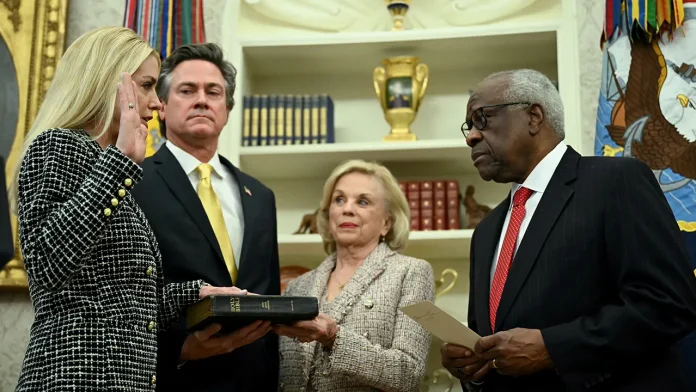
Pam Bondi is sworn in as US Attorney General by Supreme Court Justice Clarence Thomas as her partner John Wakefield and mother Patsy Bondi look on in the Oval Office of the White House in Washington, DC, on Feb. 5, 2025. (ANDREW CABALLERO-REYNOLDS/AFP via Getty Images)

The memo establishes that a prosecutor’s discretion to resolve a case with a softer plea is limited to “unusual facts.” It specifically mentions the appropriateness of pursuing the death penalty and mandatory minimum sentences in repeat offender drug and/or firearm cases. The interim attorney general then turns his attention to the “Faithful Execution of the Immigration Laws,” and the more measurable changes begin.  

For instance, in announcing the priority of pursuing immigration offenses, the memo specifically includes Title 8 U.S. Code § 1325, illegal entry by an alien. This is a six-month misdemeanor for simply being illegally inside the U.S., and federal prosecutors are likely to bristle at devoting inordinate time to a simple misdemeanor that could be pursued, well, millions of times across the nation.  

Historically, U.S. Attorney’s Offices (“USAOs”) with significant immigration issues rarely use the misdemeanor but instead prosecute cases of illegal re-entry after removal for a felony (or better, an “aggravated felony.”) These felony immigration charges can be used as leverage to flip gang members or at least serve as a real deterrent – adding years of federal imprisonment to the equation before the defendant is again deported to his or her country of origin. 

Rejecting potential immigration cases is no longer the simple prerogative of the local U.S. attorney. The memo requires the prosecutor to disclose declinations as urgent reports directly to the attorney general, within days or sometimes even hours of the decision. No U.S. attorney is going to be eager to repeatedly send “urgent” reports to the attorney general about his or her refusal to prosecute immigration cases. This practical deterrent enhances the power of the Department of Homeland Security – their cases are being prioritized in every way through this Memo. 

Similarly, federal programs targeting drugs and gangs (the Organized Crime Drug Enforcement Task Force, aka “OCDETF”) and Project Safe Neighborhood (“PSN”) which targets guns and gangs, now have to provide resources supporting immigration prosecutions. Making well-funded OCDETF units prioritize immigration offenses reflects a massive power shift away from DOJ and toward Secretary Kristi Noem’s DHS. 

Not only are the U.S. attorneys watching their investigators pivot to immigration prosecutions, but the memo tasks the USAOs with investigating incidents of resisting, obstructing or failing to comply with lawful immigration-related commands. In short, “sanctuary” advocates or even prosecutorial inaction are being considered fodder for potential criminal prosecutions.  

CLICK HERE FOR MORE FOX NEWS OPINION

Consistent with that aggressive approach, the memo fleetingly mentions the DOJ’s new creation of a Sanctuary Cities Enforcement Working Group, which presumably exists to take legal action against inconsistent policies or local practices that thwart immigration enforcement action. 

Like many government documents, this memo buries some juicy tidbits in the footnotes. Specifically, the memo rescinds earlier memos promulgated by democratic regimes in 2013, 2014, 2021, and former AG Merrick Garland’s memo from December 2022.  

The memo establishes that a prosecutor’s discretion to resolve a case with a softer plea is limited to “unusual facts.” It specifically mentions the appropriateness of pursuing the death penalty and mandatory minimum sentences in repeat offender drug and/or firearm cases. 

The Garland memo was essentially a repudiation of the Thornburgh approach – emphasizing a more individualized approach to prosecution and urging prosecutors to seek “sufficient, but not greater than necessary” punishment. Somehow, that permission slip for mercy was completely ignored in the January 6 prosecutions, as the government invariably asked for higher sentences than the already-severe bench was willing to mete out.  

But in many USAOs, the Garland memo’s flexibility, such as ignoring mandatory drug sentencing except in particularly aggravated circumstances and overtly permitting prosecutors to join the defense attorneys in calling the drug sentencing guidelines too high, gave a green light for local autonomy in plea bargaining. But, as they say, there’s a new sheriff in town. 

CLICK HERE TO GET THE FOX NEWS APP

It is true that the latest memo is framed as a DOJ interim policy. That could be read to suggest that newly confirmed Attorney General Bondi might consider a different approach. 

But Bondi’s first announcements as AG — including pausing federal funding for sanctuary cities, pursuing obstruction cases against jurisdictions thwarting immigration enforcement laws, and evaluating nongovernmental organization (“NGO”) support of illegal aliens for defunding or even prosecution — confirm that the policies and sentiment behind her predecessor’s memo are here to stay.

CLICK HERE TO READ MORE FROM JIM TRUSTY 

Khamenei of Iran Denounces Negotiation With U.S. but Seems to Leave Door Ajar

0

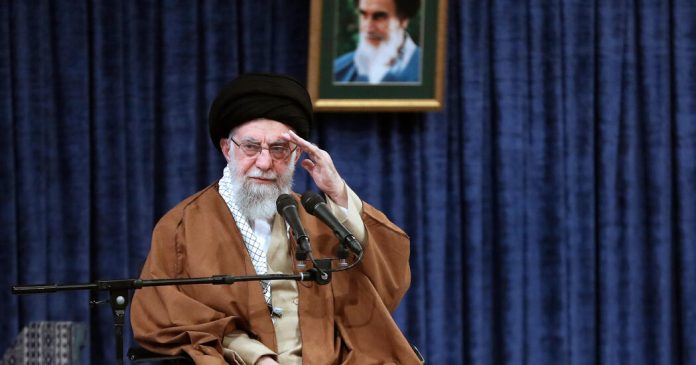
Ayatollah Ali Khamenei, Iran’s supreme leader, said negotiating with the United States was “unwise, unintelligent, and not honorable,” just days after President Trump said he was willing to revive negotiations with Tehran.

But Mr. Khamenei stopped short of ordering Iran’s government, which for months has sent signals that it is interested in negotiations, not to engage with Washington. And though Mr. Khamenei made an unusual gesture last year of openness to talks, he has generally taken a publicly hostile posture toward Washington even while quietly allowing Iranian officials to negotiate.

In comments on Friday, Mr. Khamenei argued that Iran’s previous experiences negotiating with the United States showed that Washington could easily renege on agreements. Under Mr. Trump’s previous administration, the United States unilaterally withdrew from a nuclear deal under which Iran would limit its enrichment and stockpiling of uranium in exchange for sanctions relief.

“Negotiating with America will solve no problem. The proof? Experience,” Mr. Khamenei said, according to Iran’s state news agency, IRNA, which said his comments came during a meeting with commanders and staff from the Iranian armed forces.

“The very same person who is now in office tore up the agreement,” Mr. Khamenei said. “One shall not negotiate with a government like this. Negotiating is unwise, unintelligent, not honorable.”

Ali Vaez, the Iran project director for the International Crisis Group, said on social media that the comments could simply be “in line” with Mr. Khamenei’s previous public approach. In 2011, he had publicly opposed negotiations with the Obama administration, even as he authorized negotiators to meet secretly with U.S. officials in Oman.

“If a true ban, it’s once again his stubbornness making him the antagonist in his own story.” Mr. Vaez said.

The leader’s comments seemed to undercut gestures last week from Iran’s reformist president, Masoud Pezeshkian, who told NBC News he was ready to negotiate with the United States, as long as they “respect our honor and wisdom and are conducted on an equal footing.”

Tehran is feeling weakened by its diminishing influence in the Middle East — including through Israel’s successful decimation of its Lebanese partner, Hezbollah, and the rebel ouster of its longtime ally in Syria, President Bashar al-Assad — which has raised concern that it would be even more inclined to turn to weapons-grade nuclear enrichment.

U.S. officials warned earlier this week that they believe that Iran was working to develop a faster, cruder approach to developing an atomic bomb.

In his comments on Friday, Mr. Khamenei brushed aside concerns that rejecting talks would further hurt Iran’s economy, arguing Iran must find domestic responses to the crisis.

“What resolves those problems is a domestic element,” he said.

Earlier this week, Mr. Trump himself seemed to indicate he was looking to revive negotiations, even as he signed an executive order that would return a “maximum pressure” policy that would seek to block Iranian oil exports, a critical source of revenue for the country.

“This one I’m torn about,” he told reporters as he signed the order. “Everyone wants me to sign it. I’ll do that,” he said, but added he was “unhappy to do it.”

On his social media site, the president this week vowed to negotiate a “verified nuclear peace agreement,” similar to the one he torpedoed in his previous administration. He said he wanted to start working toward a deal “immediately.”

“I want Iran to be a great and successful Country, but one that cannot have a Nuclear Weapon,” he wrote.

But Mr. Trump also threatened this week he would have Iran “obliterated” if its assassins killed him.

Mr. Khamenei’s remarks on Friday included an apparent response to that threat. “If they threaten us, we will threaten them,” he said. “If they actuate that threat, we will actuate ours. If they violate our nation’s security, we will violate their security.”