Thursday, November 12, 2026
Home Blog Page 26

Trump’s first 100 days in office; Mohsen Mahdawi : NPR

0

Good morning. You’re reading the Up First newsletter. Subscribe here to get it delivered to your inbox, and listen to the Up First podcast for all the news you need to start your day.

Today’s top stories

Over 1,400 NPR/PBS News/Marist poll respondents graded President Trump on how he has handled his first 100 days in office. Nearly half gave him a failing mark, and 23% awarded him an A.

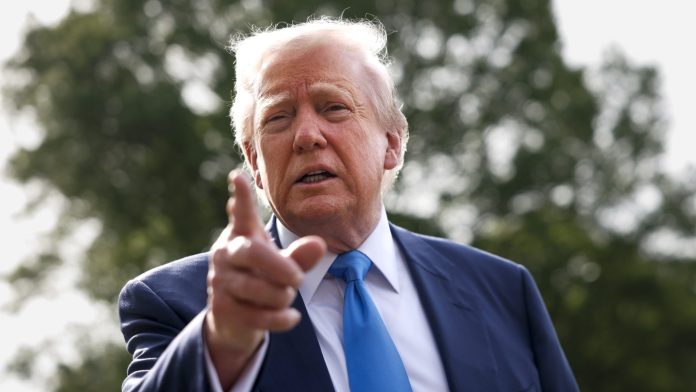
President Trump speaks to the media as he departs the White House on April 25 in Washington, D.C., for Rome to attend the funeral of Pope Francis.

Kevin Dietsch/Getty Images


hide caption

toggle caption

Kevin Dietsch/Getty Images

  • 🎧 NPR’s Domenico Montanaro tells Up First that the low marks appear to have much to do with tariffs and the economy. Trump’s 39% approval rating for his handling of the economy is his worst score ever, including during his first term. The majority of respondents disapprove of how Trump is handling most aspects of his job, including foreign policy and immigration. Montanaro says Trump’s approval rating could change. However, these are polarized times, and Montanaro doesn’t expect much to change many people’s minds.

Trump has moved aggressively to fulfill his promise of “retribution” in the first 100 days of his second term by taking action against over 100 people and institutions, according to an NPR review. He has used the government to target political opponents, news organizations, law firms, universities and more. Some of the harshest actions he has taken against people he has targeted include ordering multiple Justice Department investigations.

  • 🎧 Trump is also effectively telling investigators what he believes the outcomes of the investigations should be, NPR’s Tom Dreisbach says. The Trump administration uses over 10 agencies in various ways to get payback. Secret Service protection has been pulled for President Biden’s children, media companies that Trump dislikes, including NPR, face FCC investigations, and universities face investigation from the Department of Education unless they agree to sweeping government demands.

Detained Columbia University student Mohsen Mahdawi has given the media his first interview since being taken to Northwest State Correctional Facility in St. Albans, Vt. Morning Edition‘s Leila Fadel is the first journalist to speak with any of the students held there. The Trump administration is trying to deport them for advocating on behalf of Palestinian rights amid the Israel-Hamas war. Mahdawi, a green card holder, was detained at what he thought would be his naturalization interview, which is his final step to becoming an American citizen.

  • 🎧 Mahdawi tells Fadel that even though he knows he is facing a level of injustice, he still has faith that justice will prevail. Mahdawi has lived in the U.S. for 10 years and was on track to graduate next month with a bachelor’s degree. He grew up in a Palestinian refugee camp in the Israeli-occupied West Bank. He says living in the U.S. taught him to understand the concept of freedom of speech without retaliation. Mahdawi told Fadel he wants others to see he is “doing everything legally,” he has “prepared and studied for the Constitution,” and that he “respected the law.” He has not been charged with a crime. Just like most students in the facility, the government invoked a rarely used immigration act with court filings that allege their presence has adverse consequences for foreign policy.

Today’s listen

Violinist Esther Abrami realized when she was 25 that none of the hundreds of pieces she had played were composed by women. The results of her journey to change that are on her new album, Women.

Violinist Esther Abrami realized when she was 25 that none of the hundreds of pieces she had played were composed by women. The results of her journey to change that are on her new album, Women.

Hauskonzerte


hide caption

toggle caption

Hauskonzerte

Violinist Esther Abrami’s new album, Women, features music by female composers, spotlighting many names that are not often as recognized as their male counterparts. Abrami said that when she came out of university, it hit her that within all those years, none of the hundreds of pieces she learned had been written by women. This acknowledgement sparked her journey and research, which she says “was like opening the door of, like, a hidden treasure.” Her album features the world-premiere studio recording of Irish composer Ina Boyle’s Violin Concerto. The music also uncovers what women have to say from the Middle Ages to today, dipping into Brazilian dances and pop. Listen to snippets from the album and read the story here.

Picture show

Durham, N.C. - April 26th, 2025: Attendees watch and dance as New Dangerfield performs during the Biscuit and Banjos festival. (Cornell Watson for NPR)

Durham, N.C. – April 26th, 2025: Attendees watch and dance as New Dangerfield performs during the Biscuit and Banjos festival. (Cornell Watson for NPR)

Cornell Watson for NPR


hide caption

toggle caption

Cornell Watson for NPR

Biscuits & Banjos is a new music festival dedicated to reclaiming and exploring Black music. The festival, curated by Grammy-winning artist Rhiannon Giddens, took place this past weekend in Durham, N.C., and featured artists like Taj Mahal, Infinity Song and a Carolina Chocolate Drops reunion. The event also incorporated Durham’s Black history with a walking tour of Black Wall Street, panel discussions, square and line dancing, and a juke joint-themed party. Durham-based photojournalist Cornell Watson photographed the festival and shared his experience.

3 things to know before you go

A transfer truck arrives at a DHL facility in Ludwigsfelde near Berlin, Germany, in May 2022. The company said this week it would resume shipping packages over $800 to individual U.S. customers.

A transfer truck arrives at a DHL facility in Ludwigsfelde near Berlin, Germany, in May 2022. The company said this week it would resume shipping packages over $800 to individual U.S. customers.

Michael Sohn/AP


hide caption

toggle caption

Michael Sohn/AP

  1. The global shipping company DHL has resumed shipping packages over $800 in value to people in the U.S. The reversal comes one week after it said it was halting such shipments due to new U.S. customs regulations.
  2. The TAKE IT DOWN Act is now headed to Trump’s desk. The bill, which first lady Melania Trump backs, aims to implement strict penalties and guidelines for those who publish and promote revenge porn.
  3. The 2025 NEA Jazz Masters Tribute Concert celebrated its inductees on Saturday at the Kennedy Center. A prevailing theme throughout the event was jazz’s foundation in freedom and its push to transcendence.

This newsletter was edited by Suzanne Nuyen.

Marc Short, former chief of staff to VP Pence, discusses Trump's 100 days in office

0

NPR’s Steve Inskeep talks to Marc Short, former chief of staff to Vice President Mike Pence, about the differences in President Trump’s second-term agenda from his first term.

Massachusetts Gov. Maura Healey discusses Democratic efforts to resist Trump policies

0

Many Democrats feel anxious about the state of democracy and the economy. NPR asks Massachusetts Gov. Maura Healey about what Democrats are doing to fight back.

Trump’s 1st 100 days, by the numbers : NPR

0

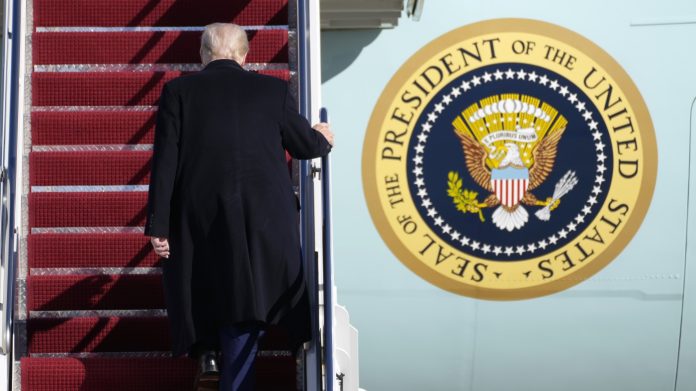
President Trump boards Air Force One in February. He hits the 100-day mark of his presidency this week.

Ben Curtis/AP


hide caption

toggle caption

Ben Curtis/AP

This week marks the 100th day of President Trump’s second term, a benchmark that’s widely considered the first impression of any administration.

The artificial yet enduring milestone has its roots in the presidency of Franklin Roosevelt. Within months of taking office in 1933, he signed dozens of bills and executive orders that helped alleviate the nation’s financial crisis and set the New Deal in motion.

Roosevelt’s first 100 days were so productive that presidents have been evaluated at that point ever since, for their early accomplishments as well as missteps. But there’s only so much the first 100 days can tell us.

“Look at Abraham Lincoln … the union literally collapsed during that period and he is today considered one of our greatest presidents,” Julian Zelizer, professor of history and public affairs at Princeton University, told NPR’s Here & Now in 2021.

While the first 100 days don’t necessarily determine the rest of a president’s term, they may foreshadow priorities, achievements and problems to come. And it can be a useful check-in point to see how a president’s early actions compare to his predecessors’ — and to his own campaign promises.

Trump has hit multiple records for his first 100 days in office, but the rapidity of his actions also highlights the fragility of relying on presidential action to cement core policies.

One hundred days in, here’s a look at where the second Trump administration stands on 10 key benchmarks.

Executive orders: 142

President Trump has signed 142 executive orders since Jan. 20, according to the Federal Register and American Presidency Project.

Trump hit the ground running, signing 37 executive orders in his first week in office alone (not including other executive actions like memorandum and proclamations). He issued his 100th order in late March, surpassing Roosevelt’s record of 99 in 100 days.

Most of Trump’s orders fall into several main categories, according to the American Presidency Project: shrinking the federal government, foreign policy and defense, immigration and border security, energy and natural resources, and tariffs.

Several of Trump’s executive orders — including those freezing foreign aid and banning transgender troops from military service — are temporarily blocked by courts as lawsuits play out. The Supreme Court will hear arguments in May about his order seeking to revoke birthright citizenship.

Biden orders reversed: over 100 

Executive orders can be overturned or modified by future presidents. Many of Trump’s early executive actions focused on undoing those of his predecessor, former President Joe Biden.

Within hours of his inauguration, Trump had rescinded 78 of Biden’s executive actions, largely related to climate change, the COVID-19 pandemic and diversity, equity and inclusion. He has since revoked additional Biden orders on voter registration and census apportionment, among others.

According to the American Presidency Project, as of mid-April, Trump had ordered 111 prior presidential orders revoked, all but five of those from the Biden years.

That’s notable because Biden was prolific in overturning orders from the first Trump administration — the project said at Biden’s 100-day mark in 2021 that “no recent president has reversed a predecessor’s orders as often as Biden has reversed Trump,” counting 76 such examples.

“Biden’s record-setting has been easily surpassed by Trump 2.0,” it writes, adding that the pattern of reversals points to the “fragility of relying on Presidential directives to institutionalize core policy objectives.”

Bills signed into law: 5 

It’s harder for a future president to overturn legislation as opposed to executive orders, meaning it’s one way to measure a president’s longer-term impact on the country.

Trump has signed just five bills into law, starting with the Laken Riley Act, which Congress passed just before he took office. The others were a stopgap funding bill and three Congressional Review Act resolutions overturning Biden-era rules.

He broke George W. Bush’s record low of seven in 2001, according to History.com.

In contrast, Trump signed 28 laws in the first 100 days of his first term in 2017. Biden signed 11 bills into law within his first 100 days, most notably his $1.9 trillion coronavirus relief package.

Lawsuits: Over 200 

Many of the Trump administration’s actions — not just executive orders — have been challenged in court, particularly those related to its crackdown on immigration and efforts to shrink the federal workforce.

Many are in limbo as rulings and appeals play out, making it difficult to supply a definitive case count.

A litigation tracker from Just Security counts 210 legal challenges, including four that are closed, while a LawFare database lists at least 258.

Approval rating: 42% 

Trump’s approval rating sits at 42%, down from 45% in March, according to a NPR/PBS NewsHour/Marist survey released Tuesday.

During his first term, Trump’s approval rating never rose higher than 44%. He left office in 2021 with an approval rate of 38%, according to a NPR/PBS NewsHour/Marist survey. Nearly half of respondents — 47% — said Trump would be remembered as one of the worst presidents in history.

Biden, in contrast, capped off his first 100 days with an approval rating of 53%, his highest since taking office.

But that support was entirely along partisan lines — 93% of Democrats approved of his performance, compared to just 12% of Republicans — and dwindled throughout his presidency. Biden left office with an approval rating of 42%, according to a January 2025 NPR/PBS News/Marist poll.

Pardons: 39, plus hundreds of Jan. 6 defendants 

Trump has issued pardons for 39 named individuals and entities since taking office, according to the Department of Justice.

One of Trump’s very first acts as president was to issue a “full, complete and unconditional pardon” to anyone convicted of offenses related to the storming of the U.S. Capitol on Jan. 6.

The move pardoned some 1,500 defendants, dozens of whom had prior criminal records.

That proclamation also commuted the sentences of 14 individuals charged in connection with Jan. 6 — all of whom were linked to the Oath Keepers and Proud Boys, extremist groups that planned elements of the attack.

That pardon came hours into Trump’s second term. In his first term, Trump did not issue a pardon until August 2017, about half a year after taking office. Biden issued his first pardon more than a year into his presidency, in April 2022.

Federal layoffs: Tens of thousands 

One hallmark of Trump’s second term has been his focus on streamlining the federal workforce by creating the Department of Government Efficiency (DOGE).

The Elon Musk-led White House office has effectively dismantled multiple agencies, granted itself access to multiple sensitive data systems and engineered the firings of tens of thousands of federal workers.

White House press secretary Karoline Leavitt said in February that 75,000 federal workers took the first of two “Fork in the Road” buyout offers.

But it’s hard to pinpoint just how many federal workers have left their jobs, either through layoffs or by choice.

Mass layoffs were conducted so haphazardly that some employees were later reinstated, or had their terminations reversed through various legal challenges. And, 100 days in, there’s little evidence to support officials’ claims that DOGE is saving agencies significant money, as NPR reports.

Immigration: 7,180 March border crossings

Trump’s crackdown on immigration has been another defining feature of his term so far, as he ramps up border enforcement and mass deportations.

U.S. Customs and Border Protection said the month of March recorded just 7,180 southwest border crossings, the lowest number in history and a dramatic drop compared to the monthly average of the previous four years, 155,000.

Southwest border crossings were already on a downward trend when Trump took office in January, having declined throughout 2024 after a surge in 2023.

Immigration was a major focus of Trump’s campaign, in which he vowed to carry out the largest deportation program in U.S. history. His administration has since arrested, detained and deported immigrants with and without legal status — though not without pushback, including from the Supreme Court.

Tariffs: average effective rate of 28% 

Trump has also threatened, enacted and delayed a series of tariffs on goods from countries worldwide, with the ensuing uncertainty jolting global markets and sparking fears of a recession at home.

The Trump administration enacted a baseline 10% tariff on all imported goods, and 25% tariffs on steel, aluminum, cars and car parts. It also put country-specific tariffs on China, Canada and Mexico, and has until early July to negotiate “reciprocal” tariffs with dozens of other countries.

As of mid-April, the Yale Budget Lab says, U.S. consumers face an average effective tariff rate of 28% — the highest it’s been since 1901.

Inflation: 2.4% in March 

On the campaign trail, Trump promised to “end inflation” starting on Day 1. It had been an issue throughout the Biden administration, reaching a 40-year high of 9% in June 2022, exacerbated by supply chain issues related to the COVID-19 pandemic and the Russia-Ukraine war.

One hundred days in, however, inflation remains an issue. The annual inflation rate dropped to 2.4% in March, hitting a six-month low. But economists warn that relief could be short-lived, as fallout from Trump’s trade war is expected to drive prices up in the coming months.

Nearly half give Trump an F for his first 100 days : NPR

0

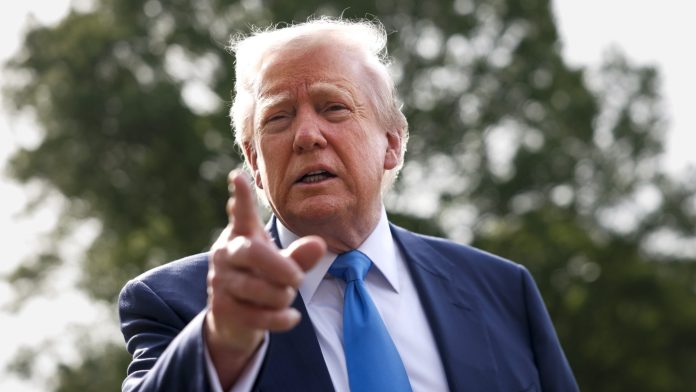
President Trump speaks to the media as he departs the White House on April 25 in Washington, D.C., for Rome to attend the funeral of Pope Francis.

Kevin Dietsch/Getty Images


hide caption

toggle caption

Kevin Dietsch/Getty Images

Twice as many people said President Trump deserves a grade of F rather than an A for how he’s handled his first 100 days in office, according to a new NPR/PBS News/Marist poll.

Forty-five percent said Trump deserves the failing mark, compared to 23% who would pass him with flying colors. It’s understandable that partisans would have strongly polarized views of the president, but it’s also notable that half of independents said he deserves an F, and only a slim majority of Republicans would give him an A.

The poll of 1,439 adults, conducted from April 21-23, finds Trump’s political standing in decline since he was sworn in for a second term. It’s driven by views of how he’s handling the economy and tariffs, but a slim majority now also disapproves of how he’s handling immigration, which had been a relative strength.

Trump’s overall approval rating is down to 42%, including just 36% among independents. For context, when looking at Gallup’s numbers back to Harry Truman, this would be the second-worst approval rating for any president at the 100-day mark in those 80 years. The lowest? First-term Trump by a point.

His economic numbers are even worse — just 39% approve of how Trump is handling the economy, his worst score ever, including during his first term.

Nearly two-thirds believe grocery prices will go up, almost 6-in-10 said placing tariffs on imports from other countries hurts the U.S. economy, and a strong majority said Trump bears responsibility for the current economic situation and it is not the result of an economy he inherited.

The survey has a margin of error of +/-3.3 percentage points, meaning results could be about 3 points lower or higher. It was conducted by phone (both cellphone and landline), text and online panels in both English and Spanish.

A majority disapproves of how Trump is handling almost all aspects of the job

Trump is down a net of 7 points in his approval rating from last month, with 53% now disapproving.

Reflecting the failing grade a plurality gave him, 45% strongly disapprove of how he’s handling the job.

And a majority disapproves of nearly all aspects his performance, from tariffs (58%) and the economy (55%) to foreign policy (53%) and immigration (52%).

Almost half also said they disapprove of how the administration has handled the case of Kilmar Abrego Garcia, the man who was deported to El Salvador despite a court order saying he should not be deported and the Supreme Court saying the administration should “facilitate” his return.

The administration says he is a gang member. A judge said the evidence supporting that is flimsy. Just 35% said they approve of how the administration has handled the case.

By a 51%-42% margin, respondents said they think Trump has put the country on the wrong path.

By a 49%-32% margin, they said Trump’s policies have negatively impacted them including two-thirds of Democrats and half of independents.

A lack of confidence in the economy

Arguably, nothing helped Trump win more in the 2024 presidential election than his promise to bring prices down and many Americans’ nostalgia for the pre-COVID economy.

But 64% now believe grocery prices will increase. That’s up from 57% last month.

When it comes to tariffs on imports from other countries, 57% said they will hurt the economy. Two-thirds of Republicans, on the other hand, said they believe they will help, so Trump’s base appears to be continuing to give him a long leash.

About 1-in-5 said they have changed their buying habits by speeding up some purchases because of the tariffs; 28% said they have delayed buying some things.

By a 60%-39% margin, respondents said this is Trump’s economy and not the result of something he inherited. That includes 61% of independents and a third of Republicans.

Most believe Trump is moving too fast and want him to obey court orders

An increasing majority — 61% — said Trump is rushing to make changes — up 5 points from last month — while about 4-in-10 think he’s doing what needs to be done.

The overwhelming majority — 85% — said Trump should follow court orders, even if he doesn’t like them.

Three-quarters of Democrats strongly agree with that sentiment, while only a quarter of Republicans do.

Elon Musk has grown more unpopular 

A majority — 54% — have an unfavorable opinion of the man, one of the world’s richest, who is leading the Trump administration’s government-cutting effort, DOGE, the informal Department of Government Efficiency.

That’s up four points from last month. Just 34% have a favorable opinion of Musk, down from 39% last month.

Similarly, 36% have a favorable opinion of DOGE more broadly.

Musk’s omnipresent role in the Trump administration may be coming to a close by the end of next month. That’s when his informal governmental advisory position expires — and amid a 71% drop in his company Tesla’s profits, Musk said last week he would be spending less time devoted to DOGE soon.

Congress approves a revenge porn bill backed by First Lady Melania Trump : NPR

0

In this Wednesday, Oct. 23, 2019, file photo first lady Melania Trump participates in a roundtable discussion on the opioid crisis, on Capitol Hill in Washington.

Cliff Owen/AP


hide caption

toggle caption

Cliff Owen/AP

A bill supported by Melania Trump that aims to implement strict penalties and guidelines for those who publish and promote revenge porn is on its way to President Trump’s desk.

More than 400 House representatives voted in favor of the TAKE IT DOWN Act, which doubles as an acronym that stands for: Tools to Address Known Exploitation by Immobilizing Technological Deepfakes on Websites and Networks.

The bill was introduced by Texas Sen. Ted Cruz in January, and approved by the Senate in February.

“Today’s bipartisan passage of the Take It Down Act is a powerful statement that we stand united in protecting the dignity, privacy, and safety of our children,” Melania Trump said Monday. “I am thankful to the Members of Congress — both in the House and Senate — who voted to protect the well-being of our youth.”

The act states that offenders will be subject to prison time, a fine or both, for publishing “intimate visual depictions” of people, both real and computer-generated, of adults or minors, without their consent or with harmful intent.

Public forums, including websites, apps and other online platforms, would have to incorporate a way for subjects of revenge porn to request that it be scrubbed. The platforms would then have 48 hours to remove the content.

“It protects young girls and young women, and it’s a huge bipartisan victory that we’re winning tonight,” Cruz said on ABC News Monday.

Melania Trump previously led an initiative focused on children. During President Trump’s first term, Melania Trump started the “BE BEST” initiative, encouraging children to “BE BEST in their individual paths,” while also teaching them the importance of social, emotional, and physical health,” according to an archive of The White House website.

The program mainly focused on “well-being, online safety, and opioid abuse,” the website says. In support of the initiative, Melania Trump collaborated with a task force to address sexual abuse allegations in the Native American community, met with tech companies to understand their protections for young users and advocated for an increase in addiction treatment centers to provide support for mothers and their children, according to the administration.

“Through this critical legislation and our continued focus with ‘Be Best,’ we are building a future where every child can thrive and achieve their full potential,” Melania Trump said Monday.

Trump is giving automakers a break on tariffs : NPR

0

Cars of German car maker Audi destined for export wait at the automotive terminal in Bremerhaven, Germany on April 22, 2025.

Focke Strangmann/Getty Images


hide caption

toggle caption

Focke Strangmann/Getty Images

President Trump has decided to give automakers a break on some of his tariffs, the latest retreat from a get-tough policy he has said is aimed at bringing manufacturing jobs to America and driving up government revenues.

The formal announcement is expected on Tuesday ahead of a Michigan rally marking Trump’s 100 days in office. Trump’s on-again, off-again tariffs have sparked whipsaw moves in financial markets, and most polls show Americans are concerned about Trump’s handling of the economy.

The move will ensure that the different types of tariffs charged by the administration don’t stack up on imports of foreign cars. The Wall Street Journal first reported the shift on Monday. An administration official confirmed the changes, speaking on condition of anonymity.

Importers of foreign auto parts will be able to get some reimbursement from the government for tariffs for the next two years.

The break will both reward domestic manufacturers while “providing runway” to those needing time to invest in domestic plants, Commerce Secretary Howard Lutnick said in a statement provided by the administration.

“President Trump is building an important partnership with both the domestic automakers and our great American workers,” Lutnick said in the statement.

Trump’s 25% tariffs on steel and aluminum imports kicked in last month, hurting the auto industry. That was followed by a 25% tariff on imported cars. Later this week, imported car parts will also be hit with a 25% tariff. (The tariff rules are different for cars imported from Mexico and Canada under the United States-Mexico-Canada Agreement.)

Automakers have complained the tariffs are too high, though the United Auto Workers has praised the auto tariffs because they say they will bring more manufacturing jobs back to the United States.

The administration has also slapped 10% across-the-board tariffs on imports, but abruptly paused higher country-by-country rates for 90 days — except for Chinese goods.

Trump thinks Hegseth will ‘get it together’ amid Pentagon staff chaos : NPR

0

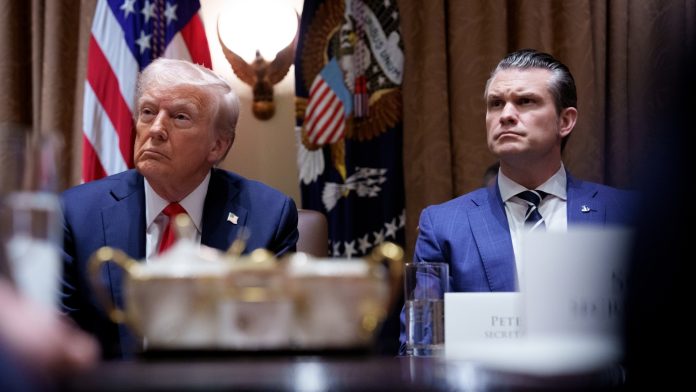
President Trump and Defense Secretary Pete Hegseth appear during a Cabinet meeting at the White House on Feb. 26.

Andrew Harnik/Getty Images


hide caption

toggle caption

Andrew Harnik/Getty Images

President Donald Trump said he spoke with his embattled Defense Secretary Pete Hegseth following reports he used the unsecure Signal chat to discuss classified information and fired some of his top aides, leaving the Pentagon embroiled in chaos.

“I think he’s gonna get it together,” Trump said of Hegseth, during an interview with The Atlantic magazine over the weekend. “I had a talk with him, a positive talk, but I had a talk with him.”

Meanwhile, one former senior staffer, Colin Carroll, who served as chief of staff to Deputy Defense Secretary Steve Feinberg, said in a lengthy interview with Megyn Kelly on Saturday there’s a “culture of fear and toxicity” in Hegseth’s office. “No one’s going to want to come into that environment.”

Carroll, along with Hegseth’s former top aides, Dan Caldwell and Darin Selnick, were fired amid accusations by the defense secretary that they leaked classified information to the press. Both Carroll and Caldwell strongly deny any leaks in separate interviews and on X,https://x.com/dandcaldwell/status/1913701312929149363and instead say they were fired because they had trouble working with Hegseth’s chief of staff Joe Kasper, who oversaw what they call a dysfunctional office. NPR has repeatedly contacted Kasper, who has not returned phone calls.

In her interview with Carroll, Kelly says she reached out to Kasper, who released a statement: “The idea that there was dysfunction is an argument of convenience, which in hindsight is being weaponized by a small group which is rallying against the president and the secretary in their own interests.” Kasper has since stepped down as chief of staff and will now serve as a “special government employee” working on science, technology and industry.

Meanwhile, Trump’s National Security Adviser Mike Waltz went on Fox News on Sunday to defend Hegseth. “He is leading the charge, and he has no tolerance for leaking,” Waltz said, calling any suggestions of chaos or dysfunction a “media narrative,” and that Trump officials “are going to power through.” Waltz, who took responsibility for creating a Signal chat group that inadvertently included a journalist last month, sidestepped a question about the departure of senior aides, including Kasper.

On Friday the Pentagon announced four new senior advisers had been promoted; they include Col. Ricky Buria, a former junior military assistant; Justin Fulcher, a member of the DOGE team embedded at the Pentagon, and Patrick Weaver, formerly a Department of Defense “special assistant.”

Sean Parnell, who had been the Pentagon’s chief spokesman, was promoted to assistant to the secretary of defense and senior adviser.

All those named have little experience at the Pentagon, and those jobs are often filled by those with years serving in the military, government or industry.

Parnell, a Pittsburgh native, served in the military for six years, ran unsuccessfully for the U.S. House in 2020, and the next year launched a short-lived campaign for the U.S. Senate. Fulcher, who Forbes magazine featured in its 30 under 30 list in 2017, came into the Pentagon as part of tech billionaire Elon Musk’s DOGE team. Forbes later featured him again in an article questioning his credentials as an entrepreneur. Weaver graduated from college in 2017, and served in the first Trump administration at the Department of Homeland Security.

Wilson, 26, had been deputy press secretary and will now be acting press secretary. Just last month, she was criticized by members of Congress and Jewish groups for online posts and past public commentary she made before joining the Trump administration.

It’s uncertain if those appointments will be permanent or placeholders. The White House has reached out to officials who served in the first Trump administration, searching for staff who will “right the ship,” at the Pentagon, according to one former Trump official who requested anonymity to describe internal administration deliberations. Another official has told NPR that the White House has begun the preliminary process of seeking a replacement for Hegseth.

Carroll in his interview with Megyn Kelly worries that the disruption at the upper reaches of the Pentagon could spell trouble in a crisis. “We have not had a major challenge at this point,” said Carroll, a Marine combat veteran and Naval Academy graduate. “So I don’t know how the department would function if we had like the fall of Kabul,” referring to the chaos when U.S. forces left the Afghan capital in August, 2021. “That’s my biggest fear.”

Carroll said he would like to return to the Pentagon and resume his work with Deputy Secretary Feinberg and worries about the programs he was working on without the needed staff. “The president’s agenda is at risk right now,” he said, pointing to the proposed Golden Dome missile defense system and shipbuilding, concerned there will be delays with the personnel shakeup.

A number of Democrats have called for Hegseth’s ouster, and on Sunday, Sen. Jeanne Shaheen, a member of the Senate Armed Services Committee, said on CBS that Hegseth has “created chaos” at the Pentagon.

“The fact is, Pete Hegseth was not qualified to take the job as secretary of defense, and he has shown that time and again,” Shaheen said Sunday on Face the Nation with Margaret Brennan.

One Republican, Rep. Don Bacon of Nebraska, a retired Air Force brigadier general, said he didn’t believe it was in his place to call for Hegseth’s resignation but was critical of the defense secretary’s Signal chats about an imminent attack on Yemen.

“I had concerns from the get-go because Pete Hegseth didn’t have a lot of experience,” Bacon, who now chairs the subcommittee on cyber issues, told reporters last week. “I like him on Fox. But does he have the experience to lead one of the largest organizations in the world? That’s a concern.”

Hegseth, 44, is a former Fox News host and National Guard major who served in Iraq and Afghanistan but had no experience in government when he was nominated by Trump to lead the Pentagon, which oversees some 3 million civilian and military employees and has a yearly budget of some $900 billion. Hegseth had less experience than any other defense secretary since the position was created in 1947. He also overcame allegations of sexual assault, public drunkenness and questions of financial mismanagement at two veterans’ groups he ran.

Hegseth addressed his lack of experience at his Senate Armed Services Committee confirmation hearing in January, saying he had “dust on his boots” from his combat deployments and vowed to be a “change agent” and “disruptor” at the Pentagon that was too focused on a “woke” ideology and diversity, equity and inclusion. He narrowly won Senate approval by a vote of 50-50, with Vice President Vance casting the necessary tie-breaking vote.

Hegseth immediately became a “disruptor” and faced some criticism for firing the chairman of the Joint Chiefs of Staff, Gen. CQ Brown, the second African American to hold the post, and Adm. Lisa Franchetti, the first female top officer in the Navy. He also ended minority and women’s student clubs at West Point and had books on race, gender and transgender issues removed from the Naval Academy library.

But within the last month, he’s faced scrutiny that he was relaying classified information to those without clearances. Hegseth was being given details – including timing, targets and ordnance for a March 15t strike on Houthi targets in Yemen – by Gen. Erik Kurilla, who oversees Middle East operations, and was communicating through a classified system. Hegseth in turn gave minute-by-minute updates to top White House officials through Signal, unaware that a reporter was mistakenly added to the chat.

Hegseth claimed the chats included only “media strategy,” but the reporter in the chat, Jeffrey Goldberg, provided a transcript of some of that information, which members of Congress and retired military officials said was clearly classified. And their concern was that an adversary could hack those unsecured communications and put pilots in danger.

Then last week, The New York Times reported that there was a second Signal chat with the same information that included Hegseth’s wife, brother and personal lawyer.

Meanwhile, Iraq and Afghanistan Veterans of America released the results of a survey of their membership about the Signal controversy.

In the survey, IAVA veterans overwhelmingly (86%) believe that there should be accountability for the leak of classified information over Signal by administration officials, including more than 3 out of 4 of IAVA veterans that identify as Republican. “It’s clear that IAVA veterans are taking note of the actions of the new Administration,” said IAVA’s CEO Allison Jaslow. “Most want to see accountability for the leak of classified information by Administration officials that made headlines recently, just as they know they’d be held accountable for the same.”

NPR disclosure: Katherine Maher, the CEO of NPR, chairs the board of the Signal Foundation.

Quil Lawrence contributed to this story.

DOGE team gain accounts on classified systems with nuclear secrets : NPR

0

Workers stand inside a special chamber at Lawrence Livermore National Laboratory. The chamber is used to test new conventional explosives used to detonate advanced nuclear weapons designs, and the data produced from such experiments is considered restricted.

Lawrence Livermore National Laboratory


hide caption

toggle caption

Lawrence Livermore National Laboratory

Two members of Elon Musk’s Department of Government Efficiency have been given accounts on classified networks that hold highly guarded details about America’s nuclear weapons, two independent sources tell NPR.

Luke Farritor, a 23-year-old former SpaceX intern and Adam Ramada, a Miami-based venture capitalist, have had accounts on the computer systems for at least two weeks, according to the sources who also have access to the networks. Prior to their work at DOGE, neither Farritor nor Ramada appear to have had experience with either nuclear weapons or handling classified information.

A spokesperson for the Department of Energy flatly denied that Farritor and Ramada had access to the networks.

“This reporting is false. No DOGE personnel have accessed these NNSA systems. The two DOGE individuals in question worked within the agency for several days and departed DOE in February,” the spokesperson told NPR in an e-mailed statement.

The two sources contacted by NPR declined to be identified publicly because they were not authorized to speak about the matter to the press. They were able to directly see Ramada and Farritor’s names in the directories of the networks. The network directories are visible to thousands of employees involved in nuclear weapons work at facilities and laboratories throughout the U.S., but the networks themselves can only be accessed on specific terminals in secure rooms designated for the handling of classified information.

The DOGE employees’ presence on the network would not by itself be enough for them to gain access to that secret information, as data even within the networks is carefully controlled on a need-to-know basis, according to several experts reached by NPR.

In February, CNN reported that DOGE employees, including Farritor, were seeking access to the secretive computer systems. At the time, Energy Secretary Chris Wright denied that they would be allowed on the networks.

“I’ve heard these rumors, ‘They’re like seeing our nuclear secrets.’ None of that is true at all; they don’t have security clearances,” Wright told CNBC.

Nuclear networks

The sources say that the networks in question are used by the National Nuclear Security Administration, the agency within the Department of Energy that oversees the nation’s vast nuclear stockpile, and the Department of Defense.

The first network, known as the NNSA Enterprise Secure Network, is used to transmit detailed “restricted data” about America’s nuclear weapons designs and the special nuclear materials used in the weapons, among other things. The network is used to transfer this extremely sensitive technical information between the NNSA, the nation’s nuclear weapons laboratories, and the production facilities that store, maintain and upgrade the nation’s nuclear arsenal.

The second network, known as the Secret Internet Protocol Router Network (SIPRNet), is used by the Department of Defense to communicate with the Department of Energy about nuclear weapons. SIPRNet is also used more broadly for sharing information classified at the secret level, information that “could potentially damage or harm national security if it were to get out,” explained a former career civil servant at the Department of Defense who requested anonymity to discuss classified systems.

Access to both networks would normally require a “Q” clearance, the highest level of security clearance at the Department of Energy. Obtaining a Q clearance is a lengthy process, but can be expedited in certain cases.

Although sources confirmed the presence of accounts, it remains unclear just how much access to classified data the two DOGE staffers actually have. Another source familiar with the matter, who spoke to NPR on condition of anonymity, due to sensitivities around the Department of Energy’s systems that hold classified information, said that the presence of DOGE officials on DOE’s classified systems would represent an escalation in DOGE’s recent privileges inside the agency, but those accounts would not give them carte blanche access to all files hosted on those systems.

They described the access as a “toehold” that would allow DOGE staffers to request information classified at the secret level. “They’re getting a little further in, it’s something to make note of,” they concluded. “It could lead to something bigger.”

DOGE employees might need access to classified information in order to discuss program details and future budget priorities, says Hans Kristensen, director of the Nuclear Information Project at the Federation of American Scientists, which tracks America’s nuclear program.

Although large portions of the nuclear weapons budget are ultimately unclassified, a lot of classified details likely go into setting those numbers. “I don’t think any of that would be open,” he says.

NNSA has already felt the effects of the Trump administration’s efforts to slash the government. In February, hundreds of workers were fired from the nuclear agency at the direction of DOGE. The decision was quickly reversed however, and ultimately fewer than 50 employees were dismissed, according to the agency.

News of the accounts comes amid growing concern about DOGE’s handling of data elsewhere in the government.

Earlier this month, NPR reported on a whistleblower at the National Labor Relations Board who had evidence that DOGE employees got high level access and may have copied and removed sensitive data from internal systems at their agency. The DOGE team asked that their activities not be logged on the system and then appeared to try and cover their tracks by turning off monitoring tools and deleting records of their access. Employees at the NLRB became concerned, particularly after detecting suspicious log-in attempts from an IP address in Russia using the newly created DOGE credentials.

It also comes during a controversy over Secretary of Defense Pete Hegseth’s use of the publicly available encrypted messaging app Signal to send sensitive details of a military strike on Houthi rebels in Yemen. Hegseth’s use of the app became public after the Editor-in-Chief of the Atlantic, Jeffrey Goldberg, was accidentally included on one chat. Last week, the New York Times reported about a second chat that included Hegseth’s wife, brother and personal lawyer.

NPR disclosure: Katherine Maher, the CEO of NPR, chairs the board of the Signal Foundation.

What has DOGE done in Trump’s first 100 days? : NPR

0

Elon Musk wielding a chainsaw at the Conservative Political Action Conference (CPAC) on Feb. 20, 2025 in Oxon Hill, Md.

Andrew Harnik/Getty Images


hide caption

toggle caption

Andrew Harnik/Getty Images

When President Trump returned to the White House in January, he promised to “restore competence and effectiveness” to the federal government by establishing a Department of Government Efficiency.

In the lead-up to his inauguration, DOGE evolved from a meme to an outside commission to a White House office given carte blanche to upend the executive branch in the name of combating perceived waste, fraud and abuse.

A small cadre of software engineers and others with connections to billionaire Elon Musk quickly fanned out across federal agencies, where they have encouraged the firing of tens of thousands of federal employees, overseen the effective dismantling of agencies, slashed spending on foreign food aid, medical research and basic office supplies and burrowed into multiple sensitive data systems.

Last week, Musk said he would spend less time on DOGE and focus on Tesla, as the 130-day clock on his appointment as a “special government employee” runs down. “The DOGE team has made a lot of progress in addressing waste and fraud,” he said.

In an interview with TIME last week, Trump called DOGE a “very big success.” “We found hundreds of billions of dollars of waste, fraud, and abuse,” he said. “It’s a scam. It’s illegal, in my opinion, so much of the stuff that we found, but I think DOGE has been a big success from that standpoint.”

Despite those claims, 100 days into Trump’s second term, DOGE has not delivered on its promised savings, efficiency or transparency in meaningful ways.

Musk’s vision of DOGE taking a chainsaw to government spending has hit repeated snags. An initial savings goal of $2 trillion was lowered to $1 trillion before being downgraded again recently to $150 billion — less than a tenth of Musk’s original promise. Even that number may be difficult to reach, given DOGE’s history of inaccurate and overstated claims combined with Trump’s desire to shield spending on Social Security and Medicare, which are major drivers of the federal budget.

Many of DOGE’s initiatives have been reversed or delayed after legal setbacks and backlash in the court of public opinion. Since Jan. 20, dozens of federal lawsuits have challenged DOGE’s activities or mentioned its actions, according to NPR’s review of district court dockets across the U.S.

Still, DOGE has already reshaped the federal government in significant ways — and is amassing unprecedented power over government data. With Trump’s blessing, Musk’s group has tried to grant itself virtually unfettered access to the most sensitive personal and financial systems the federal government maintains.

From a meme to the White House

DOGE’s very genesis was marked by inefficiency: A week after the November election, Trump announced the entity would be co-led by Musk, the billionaire CEO of Tesla and SpaceX, and Vivek Ramaswamy, a biotech entrepreneur and former Republican presidential candidate.

“Together, these two wonderful Americans will pave the way for my Administration to dismantle Government Bureaucracy, slash excess regulations, cut wasteful expenditures, and restructure Federal Agencies,” Trump wrote on his Truth Social platform.

Not only did DOGE have two leaders, they had competing visions of how to accomplish its goal. Ramaswamy pushed to work through the courts and Congress, WIRED and The Washington Post reported. But by Inauguration Day, Ramaswamy had left and Musk’s version prevailed: directly reshaping the federal bureaucracy through mass firings, similar to what he did when he bought Twitter in 2022, and by seizing control of technology across agencies.

While DOGE was originally described as operating outside the government — a sort of blue-ribbon commission that would make recommendations — an executive order Trump signed on his first day in office gave DOGE a home in the White House and a mandate for direct action.

Musk speaks alongside President Trump in the Oval Office on Feb. 11, 2025.

Musk speaks alongside President Trump in the Oval Office on Feb. 11, 2025.

Andrew Harnik/Getty Images


hide caption

toggle caption

Andrew Harnik/Getty Images

But the DOGE spelled out by Trump’s order and the DOGE that has embedded itself across and beyond the executive branch share few similarities, NPR’s reporting over the first 100 days of the administration has found.

Some agencies have upwards of a dozen DOGE-affiliated personnel, while others have just one or two. A small number of DOGE-linked staffers have been working at multiple federal agencies at the same time.

DOGE’s nebulous organizational structure extends beyond rank-and-file employees: Musk’s role as the de facto head of DOGE has been touted by the White House but downplayed by Justice Department lawyers when legally expedient. Still, Trump has repeatedly described Musk as leading DOGE, and the bulk of its work has been in service of Musk’s stated goal to dramatically slash the federal deficit by the Sep. 30 end of the fiscal year.

‘Savings’ claims were off from the start

There’s little evidence to support the claim that DOGE is saving agencies significant money or changing the fact that the federal government spends more money than it collects — mainly on non-discretionary programs like Medicaid and Social Security. In fact, as of March 31, government spending is up 10% from the same period last year while revenue is only up 3%, leading to a 23% increase in the deficit, according to Treasury Department data.

Even after Musk’s latest downward revision of DOGE’s savings goal to $150 billion, that number is unlikely to be reached.

On its website, DOGE claims $160 billion has been saved through canceling contracts, firing workers and other measures. As NPR has reported, that tracker is plagued with inaccuracies, errors, omissions and overstatements.

As of late April, out of $160 billion in claimed savings, DOGE’s “wall of receipts” has data to account to just $63 billion in purported claims.

The five contract cancellations with the most claimed savings, accounting for nearly $7.5 billion in the DOGE tracker, actually amount to just under $1 billion in potential savings. They include a contract that was never awarded, one that was already terminated and another that doesn’t appear to be canceled at all, as DOGE continues to use misleading math.

Cutting contracts and stopping spending

NPR’s reporting shows the contracts DOGE has terminated and spending it has frozen largely reflect policy disagreements with the Biden administration rather than waste, fraud or abuse. In some cases, DOGE targeted spending on the types of software modernization and efficiency efforts that its mandate claims to support. It eliminated 18F, a tech unit inside the General Services Administration that helped improve digital services across agencies, including developing the IRS’ free online tax-filing software.

According to the DOGE tracker, many of the contracts terminated would not actually result in any money saved.

Protesters gather on the National Mall for the "Hands-Off" protest against the Trump administration on April 5, 2025.

Protesters gather on the National Mall for the “Hands-Off” protest against the Trump administration on April 5, 2025.

Dominic Gwinn/AFP via Getty Images


hide caption

toggle caption

Dominic Gwinn/AFP via Getty Images

Federal employees say it appears little thought has been given to many of the cuts beyond trying to reach Musk’s savings target.

“They are roving in search of cuts they can put up on their wall to get that number up, whether it’s cutting staff, contracts, leases, grants, programs, offices, whatever,” said one General Services Administration worker who asked to remain anonymous for fear of retaliation from the Trump administration.

Reshaping the federal workforce

From the beginning, Trump and Musk zeroed in on federal workers, saying they want to “dismantle government bureaucracy” and root out what Trump calls “rogue bureaucrats.”

An opening salvo haphazardly targeted tens of thousands of workers still in probationary periods because they had recently been hired or promoted into new roles.

Some firings were so abrupt that agencies scrambled to bring back terminated staff, including those at the Department of Energy’s National Nuclear Security Administration who oversee the nation’s nuclear weapons stockpile. Others saw employees fired, then unfired, before being fired again.

While challenges to those terminations have worked their way through the legal system, some agencies have said court-ordered reinstatement caused “significant administrative burdens.” The Supreme Court and a federal appeals court paused those rulings this month, clearing the way for firings to continue.

Then there was the “fork in the road” resignation offer for federal employees to get paid through September without having to work, similar to a push Musk made after taking over Twitter. Some workers who accepted the offer have since been told they can’t actually take it.

A terminated federal worker leaves the offices of the U.S. Agency for International Development in Washington, D.C. on Feb. 28, 2025 after being laid off following Trump's order to cut funding to the agency. That decision that was driven by DOGE's work.

A terminated federal worker leaves the offices of the U.S. Agency for International Development in Washington, D.C. on Feb. 28, 2025 after being laid off following Trump’s order to cut funding to the agency. That decision that was driven by DOGE’s work.

Bryan Dozier/AFP via Getty Images


hide caption

toggle caption

Bryan Dozier/AFP via Getty Images

A Department of Agriculture employee, who spoke to NPR on condition of anonymity because they feared retaliation in their job, was approved to take the resignation offer and was supposed to go on administrative leave on May 1. On Apr. 23, the employee received an email notifying them their job was considered “mission critical” and asking them to “reconsider their enrollment.” They still plan to resign.

“At this point, it’s their loss after firing [probationary employees], rehiring, uncertainty, mental anguish, being kept in the dark about decisions that affect your livelihood,” the employee said. “It isn’t fair to Americans because we will all feel the effects of agencies that can’t run effectively, but that’s not my fault. It’s the fault of the decision makers.”

At some agencies, workers say the number of people who are leaving, between firings, buyouts and early retirements, is affecting the government’s ability to provide services to the public.

“People are dropping like flies in terms of those who are eligible for retirement,” said an employee at the Internal Revenue Service, to whom NPR granted anonymity because they fear retaliation from the Trump administration. “That makes a lot of work for everyone else, especially since they can’t hire. So many people can’t do their jobs because of the lack of people.”

“Extreme levels of fraud” — but no proof

Another Musk-driven initiative asked employees to send weekly emails to the Office of Personnel Management outlining five things they accomplished. Those emails sparked confusion among workers and Cabinet officials who gave conflicting guidance on whether their employees should comply. Musk and Trump claimed the email was meant to identify federal workers who don’t actually exist — an allegation for which they provided no evidence.

“We think there are a number of people on the government payroll who are dead, which is probably why they can’t respond, and some people who are not real people. Like, there are literally fictional individuals that are collecting paychecks,” Musk said in a February Cabinet meeting.

Musk has similarly claimed, without providing proof, that the Social Security system is plagued by “extreme levels of fraud,” including benefits checks going to dead people and recipients who are impossibly listed as well over 100 years old in the SSA database. His claims have been debunked by the Social Security Administration’s inspector general and its acting commissioner, Leland Dudek.

Nowhere to work and nothing to work with

Federal workers who still have jobs have been ordered back into offices, only to face shortages of desks, internet bandwidth, and even toilet paper. Dozens of workers across multiple agencies told NPR the return to office mandate has made them less productive and flies in the face of previous efforts to encourage telework, including under Trump’s first term, which the federal government estimates has saved hundreds of millions of dollars in reduced costs.

“The goal of remote work and telework was to bring down the taxpayer burden, to be more efficient,” said a Food and Drug Administration employee who asked to remain anonymous for retribution. The employee was assigned to an office with insufficient space. “This is not sustainable. They are going to have to get bigger spaces,” said the employee, who requested anonymity because they feared retribution for speaking publicly.

However, even as the administration has demanded workers return to the office, it’s also looking to shrink the federal government’s real estate footprint by up to 25%, an NPR analysis found. Some federal employees have been told the offices they are assigned to work in may close in the near future – and some planned closures have been reversed after public outcry.

A 2019 photo of the U.S. Department of Housing and Urban Development building in Washington, DC. The Trump administration has put the building up for sale as part of its effort to trim the federal government's real estate holdings.

A 2019 photo of the U.S. Department of Housing and Urban Development building in Washington, DC. The Trump administration has put the building up for sale as part of its effort to trim the federal government’s real estate holdings.

Alastair Pike/AFP via Getty Images


hide caption

toggle caption

Alastair Pike/AFP via Getty Images

Many workers say their ability to do their jobs is also being stymied by a freeze on government-issued payment cards, which has disrupted their ability to buy supplies and services, book travel, and carry out statutorily mandated work. Routine spending now has to be approved by leadership at some agencies, leading to long delays.

“We are literally jumping for joy over here in our local office because HQ/DOGE has approved our expenses to pump [a] vault toilet at one of our field offices,” said one worker at the Bureau of Land Management, who requested anonymity because they fear retaliation from the Trump administration. “It took weeks to get this approved when it was not an issue before.”

DOGE in court

While DOGE has changed how the federal government operates, its own work has largely been conducted in secret, with most of the information about its actions coming from court filings.

An NPR review of thousands of pages of filings in federal lawsuits over DOGE’s actions finds an alarming pattern across agencies, where DOGE has given conflicting information about what data it has accessed, who has that access and, most importantly, why.

In a case against the Office of Personnel Management, the Treasury Department and Education Department, a federal judge found agencies shared data with DOGE affiliates “who had no need to know the vast amount of sensitive personal information to which they were granted access.”

Another judge wrote that DOGE gaining broad access to Social Security data instead of a more narrow approach “is tantamount to hitting a fly with a sledgehammer.” In a different case, the court expressed concern that sensitive Treasury Department data was potentially shared outside of the agency, in violation of federal law.

In more than a dozen court cases alleging DOGE illegally accessed sensitive personal and financial data at agencies across the government, filings reveal evidence of DOGE staffers violating data-sharing rules and skirting required training.

Other court documents reveal that a small number of DOGE employees have essentially unlimited access to different federal systems that could be combined to create dossiers about American citizens and noncitizens in violation of privacy laws.

What is DOGE doing with government data?

Concerns about data abuse are not just hypothetical. This month, a whistleblower provided evidence that DOGE may have taken sensitive data from the National Labor Relations Board and hidden its tracks.

Democrats on the House Oversight Committee have alleged that other whistleblowers have evidence that DOGE is creating a master database of Americans’ private information.

Already, DOGE appears to be using its access to disparate datasets, including Social Security records, to advance baseless claims about noncitizen voting and massive fraud within government programs.

Its data access is also being used to further the Trump administration’s immigration policies: The Department of Homeland Security announced last week that DOGE helped overhaul an immigration database to serve as “a single, reliable source for verifying non-citizen status nationwide.”

As Musk steps back, DOGE’s work continues

It’s too early to say what the long-term impact of DOGE will have on the federal government. Trump’s order gives the temporary DOGE organization a deadline of July 4, 2026 to accomplish its goals.

What is certain is that DOGE has already reshaped the federal workforce: More than 100,000 federal workers have been fired or taken buyouts to leave the civil service so far, though ongoing court battles mean that number is likely to change in the coming months. Add in planned reduction-in-force efforts across agencies and close to 10% of the 2.5 million-person federal workforce could be gone by the end of the fiscal year.

Musk speaks during a cabinet meeting at the White House on March 24, 2025.

Musk speaks during a cabinet meeting at the White House on March 24, 2025.

Win McNamee/Getty Images


hide caption

toggle caption

Win McNamee/Getty Images

The layoffs are likely to have far-reaching ramifications in communities across the country: the federal government is the nation’s largest employer and more than 80% of its employees live outside of the Washington, D.C., metro area.

Legal and logistical challenges to DOGE’s efforts could still block some of its efforts. But in the meantime, changes are already underway that will be hard to unwind, from cutting off funding for scientific research to a reduced foreign policy influence as the U.S. cedes soft power to other countries. Additionally, a number of people who have worked at Musk’s companies are installed in key positions at agencies throughout the government.

As for Musk, he said he expects to still spend “a day or two a week” on government work.

“I’ll have to continue doing it for, I think, probably the remainder of the president’s term, just to make sure that the waste and fraud that we stop does not come roaring back, which will do if it has the chance,” he said.

Have information or evidence to share about DOGE’s access to data and other activities inside the federal government? Reach out to these authors through encrypted communications on Signal: Stephen Fowler is available at stphnfwlr.25 and Shannon Bond is available at shannonbond.01. Please use a nonwork device.