Friday, November 13, 2026
Home Blog Page 260

Orlando speedway mourns loss of 7-year-old drag racer Elienisse Díaz Rodriguez

0

A drag racing track in Orlando, Florida, is mourning the loss of a 7-year-old girl who died from injuries sustained in an accident over the weekend.

Elienisse Zoe Díaz Rodriguez died on Tuesday after an accident during a race at the Orlando Speed World Dragway on Sunday. Her family said on a GoFundMe account that she fought “for her life” for two days before she was declared brain-dead at 10:54 p.m. on Tuesday.

Orange County Fire Rescue received 911 reports of an accident between a car and a person at the Orlando Speed World track at 11:20 a.m. on Sunday.

Rodriguez was racing her Junior Dragster racecar when she lost control of it, striking a 34-year-old safety guide employee before crashing into a concrete wall, according to Florida Highway Patrol. The employee was taken to the hospital with non-life-threatening injuries.

DIRT TRACK RACING LEGEND KILLED IN TENNESSEE PLANE CRASH

Elienisse Zoe Díaz Rodriguez, 7, died on Tuesday after an accident at the Orlando Speed World Dragway in Florida over the weekend, according to the racetrack. (Orlando Speed World Dragway/Facebook)

In a post on Facebook, the Orlando speedway said it is “deeply heartbroken” by the “tragic incident,” offering “thoughts and prayers” to the little girl’s loved ones and the racing community, in general.

“Motorsports is built on passion, but moments like these remind us of the risks that come with what we love. While injuries can heal, the pain of loss is immeasurable,” the post said, in part. 

It concluded: “We stand together in support, mourning, and prayer during this difficult time. We extend our deepest condolences to those grieving and will continue to uplift them in our thoughts.”

Orlando Speed World Dragway

Orange County Fire Rescue responded to an accident between a racing car and a person at the Orlando Speed World track at 11:20 a.m. on Sunday. (Orlando Speed World Dragway/Facebook)

INDYCAR DRIVER GOES AIRBORNE IN SCARY CRASH AT INDIANAPOLIS 500 PRACTICE 

Rodriguez was a first-grade student at Eastland Christian School in Orlando, according to FOX 35, and was described as bright and beautiful by school officials.

“She was a bright light in our school community, and we are thankful for the time we had with her. Her beautiful smile will be deeply missed by all of us,” the school said in a statement. “We will hold Elienisse’s memory close to our hearts. Thank you for your understanding and support as we come together to mourn this loss and remember the joy she brought to all of us.”

Elienisse Zoe Diaz Rodriguez drag racer

The 7-year-old junior drag racer was declared brain-dead on Tuesday, two days after her accident at the Orlando Speed World Dragway. (Orlando Speed World Dragway/Facebook)

CLICK HERE TO GET THE FOX NEWS APP

As of early Friday morning, the GoFundMe account set up to help the family pay for funeral costs had more than $25,300 in donations.

Europe’s Trump Playbook: Offer Carrots but Warn That You Have a Big Stick

0

The European Union spent last year drawing up secret plans for what the bloc would do if President Trump made good on his threats of imposing higher tariffs on European goods and services.

Now, as those threats go from hypothetical to potentially imminent, its plans are coming into broad focus.

Hit specific, politically sensitive sectors — like products made in Republican states — with targeted tariffs meant to inflict maximum pain. Don’t escalate into a tit-for-tat competition if it’s avoidable. Do move quickly and decisively, potentially using new tactics that could hit service providers like big Silicon Valley technology firms.

It’s a rough playbook — described broadly by three diplomats who requested anonymity because the plans were still being discussed — that Europe would prefer not to use. The first goal is to avoid a trade war by offering to negotiate and dangling carrots, including more European purchases of American gas, which Mr. Trump has been pushing for. E.U. officials have warned that a trade war between the bloc and the United States would be a self-defeating disaster that would cost both sides and benefit geopolitical rivals like China and Russia.

But Mr. Trump has kept the continent in his cross hairs, saying this week that the bloc would “definitely” face tariffs and “pretty soon.” If appeasement fails, Europe is broadcasting that it is ready to hit back.

“We are prepared,” Ursula von der Leyen, the president of the European Commission, said during a news conference this week in Brussels, when asked whether she was ready to fend off tariff increases from the new U.S. administration.

The commission, the bloc’s executive arm, has remained tight-lipped about what products it might hit with higher tariffs even when it meets with ambassadors and other diplomats from E.U. countries, said the three diplomats, who were briefed on the broad ideas developed by the so-called Trump task force. The bloc has 27 member countries, and plans that are shared too widely are likely to leak, eliminating their strategic advantage.

But several guiding principles are increasingly clear, said two of the diplomats, the result both of work by the commission’s task force and of experience gleaned from Mr. Trump’s first term. The diplomats requested anonymity to discuss politically sensitive matters.

The first idea is that tariffs would most likely be targeted, whether that means placed on certain industries or geography-tied products. In 2018, for instance, Europe reacted to steel and aluminum tariffs by hitting American whiskey with a large tariff, which hurt Kentucky’s bourbon industry and, thus, a constituency critical to Mitch McConnell, a Kentucky Republican who was then the Senate majority leader.

A second idea is to stagger the response, kicking in or ratcheting up retaliation only if certain triggers are met or dates passed, two of the diplomats said. Moving deliberately provides more leverage, one diplomat said, and avoids an immediate and painful trade effect.

The third is that responses would not necessarily be tit-for-tat, according to all three diplomats. If Mr. Trump orders a 20 percent across-the-board tariff on Europe, that does not mean that Europe must respond with a 20 percent across-the-board tariff on the United States. The E.U. still wants to abide by global trade rules upheld by the World Trade Organization, which could suggest a more surgical approach.

One option on the table is the use of an “anti-coercion instrument,” a relatively new legal framework that would allow the bloc to rapidly target large American service providers — like big technology companies — with tariffs.

In force since 2023, the tool allows the E.U. to use “a wide range of possible countermeasures” like higher customs duties or import limits when another country harms European industry in an attempt to put pressure on the government and bring about political or policy change. The idea is to allow the bloc to respond to manipulative political pressure swiftly and sternly.

The Financial Times initially reported that the commission could use the tool to hit service providers, including large Silicon Valley technology companies, in response to American tariffs. Two of the diplomats confirmed that using the tool was being discussed, though far from a sure plan.

They said that moving forward with the tool might be too drastic of an option because Europe’s ultimate goal is not to inflame an all-out trade war.

For now, it is impossible for Europe to solidify a reaction plan. The simple reason: Nobody knows what Mr. Trump is going to do.

“They want to do a deal — I think they’re very uncertain still about what the true objectives are,” said Jörn Fleck, senior director with the Europe Center at the research group The Atlantic Council.

Also, E.U. leaders have at times struggled to get Washington on the phone. Marco Rubio, the secretary of state, has been invited to meet with foreign ministers but has not done so, though he has had a call with the bloc’s top diplomat, Kaja Kallas. Ms. von der Leyen has not met with Mr. Trump since the inauguration in January.

Even though Mr. Trump has not said what tariffs on Europe would look like, he has repeatedly said he wants Europe to buy more American cars and farm products, in addition to gas.

That has left Europe offering incentives in an effort to fend off the trade war before it begins. Officials have been clear that they are willing — even poised — to buy more American fuel. Officials are already trying to find a way to diversity their energy sources as the continent weans itself off Russian gas.

“We still get a lot of LNG from Russia, and why not replace it by American LNG,” Ms. von der Leyen said in the days after Mr. Trump was elected, referring to liquefied natural gas.

European officials have also said they are likely to buy more American defense products as they ramp up bloc-wide military spending. Higher military expenditures are, in part, a response to Mr. Trump, who has insisted that European nations spend more on NATO.

And when it comes to Greenland — an autonomous territory of Denmark, an E.U. member, that Mr. Trump wants to annex for its strategic importance — Europeans have emphasized that they are open to investing more in the island.

“I totally agree with the Americans that the High North, that the Arctic region, is becoming more and more important when we’re talking about defense and security and deterrence,” Mette Frederiksen, the prime minister of Denmark, said in Brussels this week. “And it is possible to find a way to ensure stronger footprints in Greenland.”

Above all, European leaders have been trying to remind America of how important the relationship between the E.U. and the United States is, both economically and for global peace.

Not only is the E.U., when treated as a bloc, America’s most important trading partner. It is also a major importer of American services, and, as officials have repeatedly emphasized in recent days, European companies employ millions of Americans.

“A lot is at stake for both sides,” Ms. von der Leyen said this week.

But she added that “we will always protect our own interests — however and whenever that is needed.”

Ana Swanson contributed reporting.

Sylvester Stallone putting money into artificial intelligence after ‘Godfather’ warning

0

Sylvester Stallone is the latest celebrity embracing artificial intelligence.

The “Rocky” star invested, along with several others, in Largo.ai, an AI-driven analytics platform for film, TV and advertising, raising $7.5 million in financing for the company.

“We are very happy to have a cinema legend like Sylvester Stallone supporting our journey. Stallone’s story in cinema and the disruption that he created is truly very inspiring for any entrepreneur like me and his support in the new era of cinema with AI by being a partner in Largo.ai is truly encouraging for us,” Largo.ai CEO and co-founder Sami Arpa told Fox News Digital in a statement.

Largo.ai currently works with more than 600 companies in film and TV, and has plans to expand its offerings with the launch of its Version 3, which will provide recommendations along with existing tools and generate early creative concepts, according to Deadline.

Sylvester Stallone, center, with Celine Udriot, COO of Largo.ai, and Sami Arpa, CEO & co-founder of Largo.ai. Stallone recently invested in the company. (Courtesy of Largo.ai)

WHAT IS ARTIFICIAL INTELLIGENCE (AI)?

The news of Stallone’s investment in the company came after he was announced as a “special ambassador” to Hollywood by President Donald Trump, along with Jon Voight and Mel Gibson.

In January, President Trump wrote on his Truth Social platform, “It is my honor to announce Jon Voight, Mel Gibson, and Sylvester Stallone, to be Special Ambassadors to a great but very troubled place, Hollywood, California.”

He continued, “They will serve as Special Envoys to me for the purpose of bringing Hollywood, which has lost much business over the last four years to Foreign Countries, BACK—BIGGER, BETTER, AND STRONGER THAN EVER BEFORE!” 

The “Rambo” star has been sharing some of the good and bad of AI on his social media recently.

Side by side photos of Sylvester Stallone, Mel Gibson, and Jon Voight

From left to right, Sylvester Stallone, Mel Gibson and Jon Voight were recently appointed as “special ambassadors” to Hollywood by President Donald Trump. (Getty Images)

TRUMP’S HOLLYWOOD ADVISORS SIGNAL ‘POLITICAL SHIFT’ IN TINSELTOWN: EXPERTS

Last month, Stallone shared stills from a fake “Godfather 4” trailer, writing in the caption, “What is going on? Lol this is definitely not to be taken seriously!” 

The creator of the fake “Godfather 4” video trailer sent a message to viewers explaining how it was made.

“Please note that this video is a concept trailer created solely for artistic and entertainment purposes. I have meticulously incorporated various effects, sound design, AI technologies, movie analytics, and other elements to bring my vision to life.”

This week, Stallone shared another image from another fake “Godfather” sequel. The poster shows the actor sitting behind a desk in a similar position to Marlon Brando in the original “Godfather,” with the fake title “The Godfather Part the Family Legacy” with the added text of “First Trailer.”

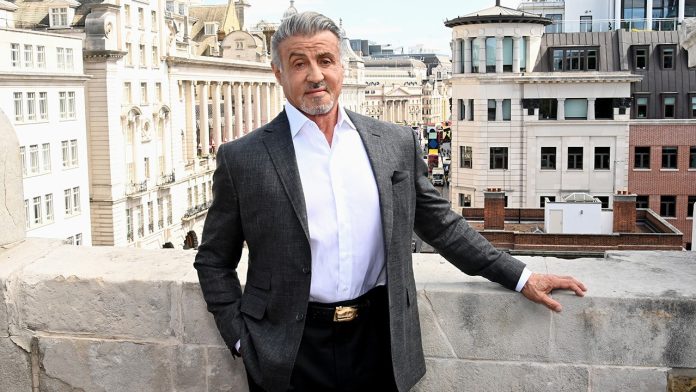
Sylvester Stallone in a dark suit and black pants poses for a photo

Sylvester Stallone debunked an AI-generated “Godfather 4” trailer on his social media, but he also shared a fake poster for a different fake sequel to the movie a few weeks later. (Dave J Hogan/Getty Images)

CLICK HERE TO SIGN UP FOR THE ENTERTAINMENT NEWSLETTER

“Not Real ! Just for fun!!” he wrote in the caption.

Stallone is the latest star to invest in AI technology. 

Last year, Jared Leto invested in two different AI companies, a generative AI startup called Captions, and Pika, a program that lets people generate short videos from written prompts, images or videos.

Ashton Kutcher and music manager Guy Oseary co-founded Sound Venture, which included companies OpenAI, Anthropic and Stability AI in its portfolio, per Variety.

Jared Leto and Ashton Kutcher

Jared Leto, left, and Ashton Kutcher have both invested in AI companies in the past few years. (Getty Images)

LIKE WHAT YOU’RE READING? CLICK HERE FOR MORE ENTERTAINMENT NEWS

Leonardo DiCaprio and Robert Downey Jr. have also invested in different AI companies with an environmental focus.

Downey Jr. did say in an interview last year he would “sue” if his likeness was recreated with AI.

AI has been a point of contention in Hollywood for the past two years, and several stars have spoken out against the technology.

In a recent interview with The Hollywood Reporter, Glenn Close questioned AI, asking “What is going to be truth? What is true is going to be a big question.”

Actress Glenn Close wears bold white suit.

Glenn Close wonders how artificial intelligence will affect Hollywood. (Lexie Moreland)

ASHTON KUTCHER DOUBLES DOWN ON AI COMMENTS AFTER FACING BACKLASH: ‘NEED TO BE PREPARED’ FOR WHAT’S COMING

When asked her interpretation of AI, Close said, “Depends on how it’s handled.” 

“I don’t want my image or my voice to be reconstructed,” she noted. “I mean, people need jobs. It’s a sad dilemma.”

CLICK HERE TO GET THE FOX NEWS APP

Nicolas Cage has also been a vocal opponent, warning an audience at the 25th Newport Beach Film Festival last October, “This technology wants to take your instrument. We are the instruments as film actors.” 

Friday Briefing

0

U.S. sanctions on the International Criminal Court.

Attorney General Pam Bondi vows to bring the DOJ back to its ‘core function’

0

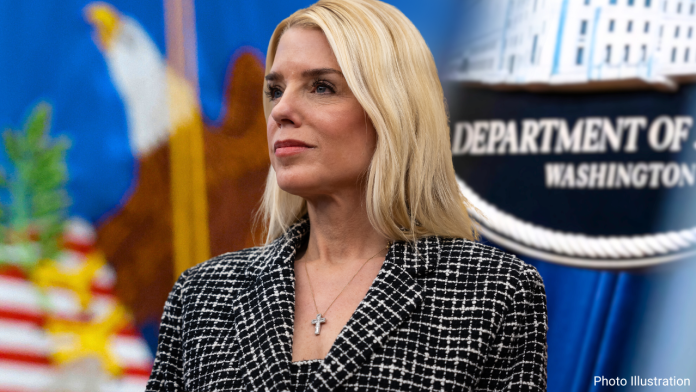
Attorney General Pam Bondi vowed to end the “weaponization” of government, the “two-tiered” system of justice and crack down on states and officials who attempt to interfere with the enforcement of immigration law.

“We’re going to get back to the core function of what our government, our law enforcement, was intended to do: prosecute violent criminals and get them off our streets,” she said Thursday on “Hannity” in her first interview since being sworn in as the 87th United States attorney general.

The Department of Justice (DOJ) filed a federal lawsuit Thursday against the state of Illinois, the city of Chicago, and their respective leaders, Gov. J.B. Pritzker and Mayor Brandon Johnson, for allegedly obstructing the federal government’s enforcement of immigration law.

US Immigration and Customs Enforcement (ICE) knocks on the door of an alleged suspect during an ICE Raid in Chicago, Illinois. (Photographer: Christopher Dilts/Bloomberg via Getty Images)

“Upon information and belief, the conduct of officials in Chicago and Illinois minimally enforcing — and oftentimes affirmatively thwarting — federal immigration laws over a period of years has resulted in countless criminals being released into Chicago who should have been held for immigration removal from the United States,” the lawsuit read in part.

ICE CRACKDOWN SEES 7,400 ILLEGAL MIGRANTS ARRESTED IN 9 DAYS

Bondi said officials were “choosing illegal aliens over the safety and security of their own citizens and the men and women of law enforcement who are out there trying to protect their citizens.”

“If you don’t comply with federal law, you’re going to be next,” she said.

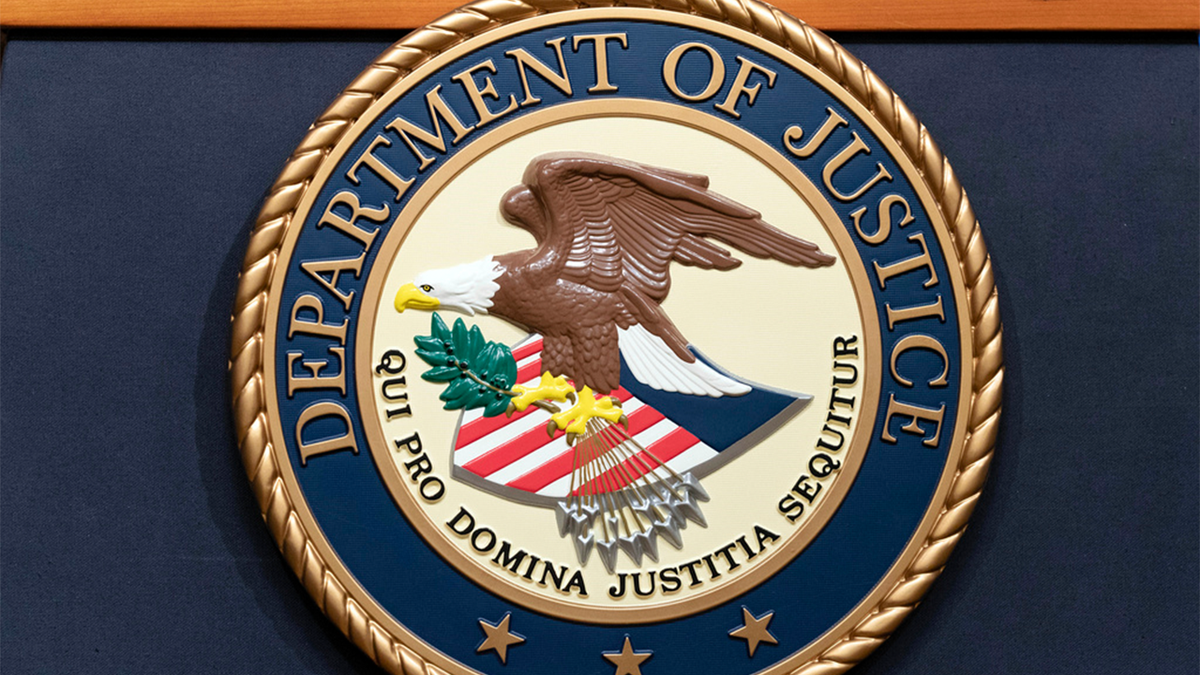
doj insignia

The Department of Justice seals is seen during a news conference at the DOJ office in Washington, May 16, 2023. (AP Photo/Jose Luis Magana)

The lawsuit comes one day after Bondi signed a memorandum pausing all federal funding to sanctuary cities until a review has been completed.

She told Fox News host Sean Hannity the DOJ will work with the Department of Homeland Security and other agencies to make sure gang members and drug dealers who break the law are prosecuted. 

JUSTICE DEPARTMENT FIRES MORE THAN A DOZEN KEY OFFICIALS ON FORMER SPECIAL COUNSEL JACK SMITH’S TEAM

The former Florida attorney general said the DOJ under President Donald Trump will be fair and integrity will be restored.

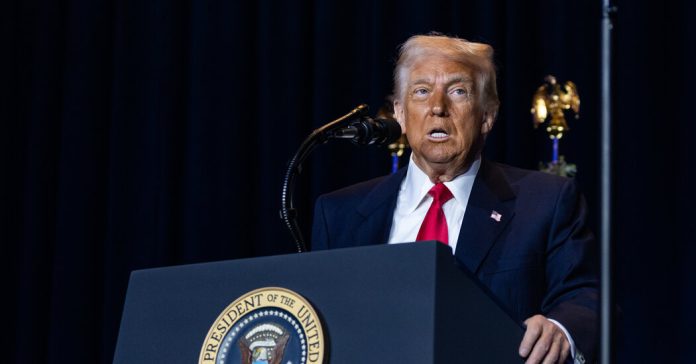
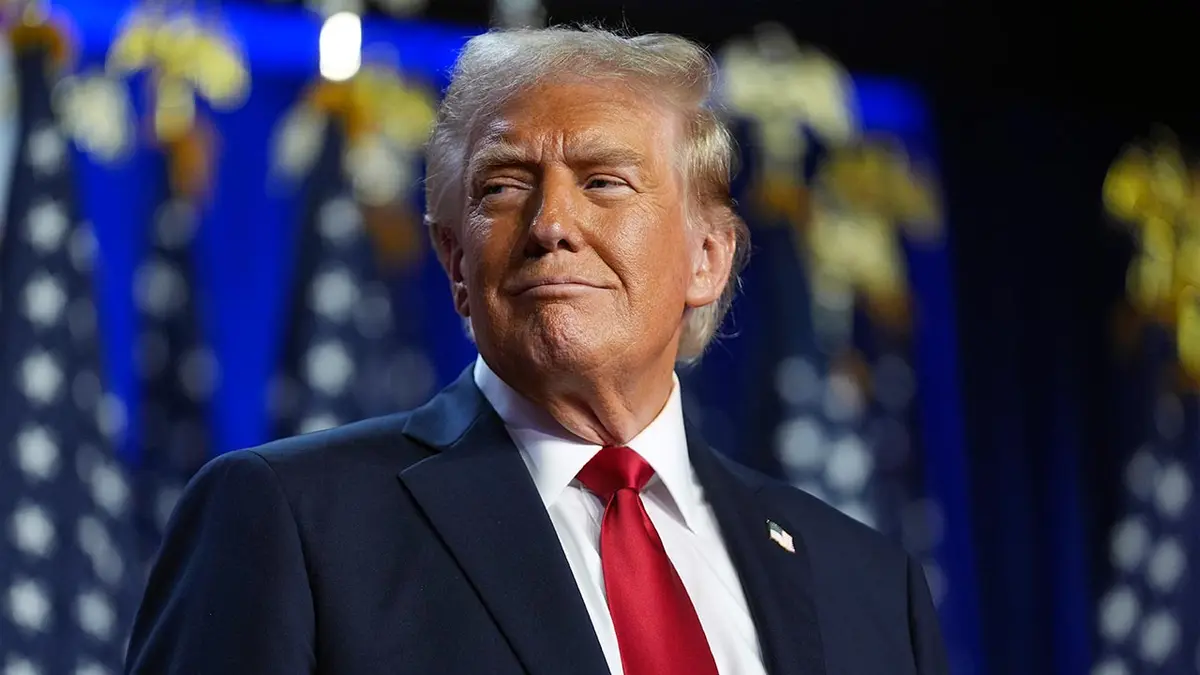
Donald Trump smiles in a navy suit and red tie

Republican presidential nominee former President Donald Trump arrives at an election night watch party at the Palm Beach Convention Center, Wednesday, Nov. 6, 2024, in West Palm Beach, Fla. (Evan Vucci/AP)

“You know, you have to follow the ethical standards of being a prosecutor and you have to follow the law,” Bondi explained. 

CLICK HERE TO GET THE FOX NEWS APP

“Weaponization ends, and it ended the day that Donald Trump took office, and the American people saw that crystal clear because they elected him by a landslide.” 

Philippines Plane Crash Kills U.S. Service Member and 3 Contractors

0

A small plane contracted by the Pentagon crashed in the southern Philippines on Thursday, killing all four people aboard, including a member of the U.S. military, officials said.

The plane, a Beechcraft King Air 300, crashed in the municipality of Ampatuan in Maguindanao del Sur Province on the southern island of Mindanao, the Philippine authorities said on Friday. It was on its way from Cebu Province to Cotabato City, the capital of a Muslim autonomous region on Mindanao.

The incident occurred during a “routine mission in support of U.S.-Philippine security cooperation activities,” U.S. Indo-Pacific Command said in a statement on Friday.

“The aircraft was providing intelligence, surveillance and reconnaissance support at the request of our Philippine allies,” the statement said. The names of those killed were being withheld until family members could be notified.

The Philippines is the oldest treaty ally of the United States in Asia. U.S. troops have been deployed for years at a military camp in Mindanao to help train Philippine soldiers fighting Muslim separatist militants. In 2017, U.S. Special Forces assisted the Philippine military as it fought Islamic State-linked militants in the southern city of Marawi.

Michigan sheriff who marched with protesters in 2020 launches gubernatorial bid

0

A high-profile sheriff in Michigan announced his bid to run for governor, replacing Democratic Gov. Gretchen Whitmer.

First elected sheriff of Michigan’s Genesee County in 2020, Chris Swanson’s announcement on Thursday marks his full leap into politics after speaking at the Democratic National Convention last August. The race is shaping up to be one of the most fiercely contested political battles of 2026.

Swanson first gained national attention in May 2020, just days after the police custody death of George Floyd in Minneapolis sparked nationwide protests against racial injustice. He famously took off his riot gear and marched alongside demonstrators after telling them: “I want to make this a parade, not a protest.”  

His bid comes as the Democratic Party seeks a new kind of candidate who can address top voter concerns such as immigration and public safety, issues Swanson plans to make central to his campaign.

NEWSOM CHANGES TONE ON TRUMP FROM CAMPAIGN RHETORIC WITH FEDERAL WILDFIRE RECOVERY FUNDS AT STAKE

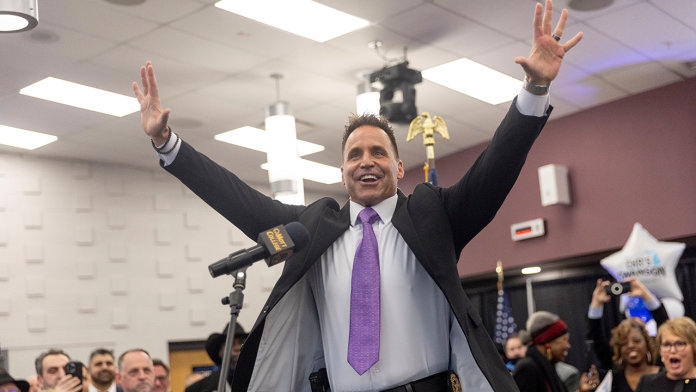
Genesee County Sheriff Chris Swanson announces his campaign to run for governor of Michigan in the 2026 election on Feb. 6, 2025, at Mott Community College in Flint, Michigan. (Jake May/The Flint Journal via AP)

Swanson formally announced his bid at Mott Community College, his alma mater, in Flint on Thursday night. He was joined by a packed house of more than 400 supporters from across the state. 

“When there’s a challenge, we will solve it. When there’s a crisis, we will bring calm. When there’s an opportunity, we will seize it,” Swanson said. “I believe everyone has value. Michigan has value. It’s why I’ve always tried to find ways to help and bring people together. I believe that together, we are tough enough to win for Michigan.”

OUT OF POWER: DEMOCRATS DISORIENTED IN FIGHT AGAINST TRUMP AGENDA

In entering the race, Swanson joins Secretary of State Jocelyn Benson in the Democratic primary, with Lt. Gov. Garlin Gilchrist II mulling a potential bid. On the Republican side, Aric Nesbitt, the top GOP state Senate leader, has announced his candidacy. U.S. Rep. John James ais lso considered to be a potential contender. Detroit’s once-Democratic Mayor Mike Duggan further shook up the race by entering as an independent.

Swanson has never won a race outside of Genesee County and he will be competing in the primary against Benson, who has won multiple statewide races and raised millions of dollars. Swanson remains largely unknown outside his county, which is about 70 miles northwest of Detroit.

chris swanson

Genesee County Sheriff Chris Swanson talks during a news conference, Jan. 28, 2025 in Flint, Michigan. (Jake May/The Flint Journal via AP)

The sheriff’s appeal as a non-traditional candidate could resonate in a battleground state like Michigan, where winning requires broad, cross-party support. In the 2024 election, Swanson was reelected with 65% of the vote in Genesee County — running nearly 14 percentage points ahead of Democratic presidential candidate Kamala Harris.

Swanson’s decision to remove his riot gear and march alongside protesters at a demonstration in Flint following Floyd’s May 2020 death sparked national attention and praise from prominent Democrats, including Whitmer and former President Barack Obama. 

He said this month that police had planned for a different response, but “as I was walking up, I thought, there’s got to be a better way.”

TRUMP EXECUTIVE ORDER TO DEPORT HAMAS SYMPATHIZERS ON CAMPUSES PROMPTS STUDENT NEWSPAPER TO DELETE NAMES

It also helped propel him to an appearance at the Democratic National Convention in August, where he wore his sheriff’s uniform and endorsed Harris in a brief speech.

The appearance was a rare show of law enforcement support for the then-vice president. Sheriffs in Michigan and across the country frequently aligned themselves with President Donald Trump during his tough-on-crime, anti-illegal immigration presidential campaign.

chris swanson

Genesee County Sheriff Chris Swanson is embraced as he announces his campaign to run for governor of Michigan in the 2026 election Thursday, Feb. 6, 2025, at Mott Community College in Flint, Mich. (Jake May/The Flint Journal via AP)

Swanson’s background could boost his appeal in a general election, especially as immigration remains a top voter concern. However, he may face challenges in the Democratic primary, where some in the party have made calls to “defund the police” and reform law enforcement.

“It’s time that we have a different type of candidate coming through the system, not just the next one up,” said Swanson. “People, I think, are hungry for something new and fresh. Certainly the party is. And I’m that person.”

CLICK HERE TO GET THE FOX NEWS APP

Swanson’s gubernatorial bid was first announced in The Associated Press. 

Fox News’ Paul Steinhauser and The Associated Press contributed to this report.

Why It Is So Difficult to Stop the Flow of Fentanyl Into the U.S.

0

When President Trump threatened to impose steep tariffs on Mexico, Canada and China, he blamed these three countries for enabling the flow of fentanyl into the United States and fueling what officials have called a national emergency.

President Claudia Sheinbaum of Mexico swiftly pushed back on Mr. Trump’s suggestions that her government colluded with drug traffickers, calling it “slander.” And she also put the blame on the United States, arguing that the fentanyl crisis stemmed from immense domestic demand for drugs, including fentanyl, and the illegal sale of U.S. guns to cartels.

Ms. Sheinbaum announced Monday that she had reached an agreement with Mr. Trump, who agreed to pause the tariffs as she promised to send 10,000 members of the National Guard to the U.S.-Mexico border to stop the trafficking of fentanyl.

But thwarting the transport of the deadly synthetic opioid into the United States poses significant challenges for both the United States and Mexico given the cartels’ immense resources, the ease with which fentanyl is produced and moved and the insatiable demand for narcotics among U.S. consumers, analysts and experts say.

Given these factors, it may be extremely difficult for Mexico to demonstrate that it is meeting Mr. Trump’s terms — particularly within the 30-day window he allotted to delay the imposition of tariffs.

For over a decade, most of Mexico’s efforts to tackle organized crime focused on targeting powerful leaders to weaken their grip on large swaths of territory.

But the strategy backfired. Engaging in direct confrontations and going after senior cartel members led to these groups splintering into smaller, disorganized and violent cells that caused even more bloodshed. While those actions were symbolic and put pressure on the criminal groups, analysts say, the strategy never focused on or intended to thwart the cartels’ production capabilities. Instead, its goal was to stem the violence disrupting communities.

Mexico’s previous president, Andrés Manuel López Obrador, came to office in 2018 promising a new approach: avoiding direct confrontation with the cartels in favor of addressing the root causes of criminality like corruption and poverty.

But his strategy, which he branded with the slogan “hugs, not bullets,” did little to tame the extraordinary levels of violence or diminish the ever-expanding power of cartels that traffic drugs across the U.S. border.

When Ms. Sheinbaum took office in October, she said she would continue Mr. López Obrador’s focus on the social causes of the violence, while also working to lower rates of impunity and build up the national guard. In her first few months, she has taken a tougher line on organized crime, ramping up operations that have led to large seizures of fentanyl and a slew of arrests.

But analysts still question whether this can truly have a big effect.

One of the most prolific producers of fentanyl in Mexico is the Sinaloa Cartel, which traffics most of the fentanyl entering the United States. Given its vast financial, logistical and operational resources, the group has been able dominate production “with an impressive ease,” said Alberto Capella, a security analyst and former police chief of the Mexican states of Quintana Roo and Morelos.

Mr. Capella added that even if Mexican authorities could seize every shipment of fentanyl before reaching the border, the root of the problem would not disappear.

“The problem is not the existence of Mexican cartels; it is the existence of a mass consumption and markets,” said Mr. Capella. “If the mass market of consumers prevails, it will immediately lead to the emergence of suppliers to satisfy this mass consumption, whether it is fentanyl or any other drug,” Mr. Capella added.

Given its robust chemical industry, China is the major supplier of the raw compounds, known as precursors, needed to produce synthetic drugs, including fentanyl and methamphetamines.

As the fentanyl crisis continued to take lives in the United States in recent years, the Biden administration sought more counter narcotics cooperation with President Xi Jinping of China to tackle the issue. Last year, China announced new regulations and tightened controls on the precursor chemicals, including increased government oversight on several chemicals used to make fentanyl.

Fentanyl deaths in the United States did drop in the last year. Yet Mr. Trump still issued a 10 percent tariff on all Chinese products on Tuesday, the result of an executive order issued over the weekend aimed at pressuring Beijing to further crack down on fentanyl and precursor shipments.

But even more regulations may not bring significant results.

Some of the chemicals used to manufacture fentanyl are very common and are used in the production of plastics, perfumes, pharmaceuticals and more, making broad restrictions difficult.

Criminal groups are also now coming up with new methods and risky ways to maintain fentanyl production and potency, and to circumvent regulations.

Sinaloa Cartel members are, for instance, experimenting on animals and people to come up with potent concoctions, including mixing their formulas with substances like animal tranquilizers to keep people hooked.

The group is also luring chemistry students and professors to synthesize the chemical compounds, with the goal of sidestepping the need to import those raw materials from China.

In the past five years, the amount of fentanyl crossing the border has increased tenfold, with Mexico being the source of almost all of the synthetic opioid seized by U.S. law enforcement in recent years.

Fentanyl is a potent and fast-acting drug that is highly addictive. It is 100 times more potent than morphine, which means a small quantity goes a long way: Two milligrams can kill you.

Because the synthetic opioid is so potent, it is shipped in small, compact packages that are easy to transport and hide, making them less detectable and harder to intercept. As opposed to other drugs like cocaine, marijuana and methamphetamine, which are regularly trafficked in tons, fentanyl is moved in kilos.

It takes only a small amount to make hundreds of thousands of laced pills. Even in small quantities, it is extremely profitable, meaning couriers can smuggle small amounts and make a considerable profit by hiding it in their vehicles, under their clothes or in backpacks.

Of the people smuggling synthetic opioids into the United States, most are not undocumented migrants traversing the desert, swimming across the Rio Grande or moving through secret tunnels, as Mr. Trump has suggested.

The largest known group of fentanyl smugglers are Americans coming through legal ports of entry. More than 80 percent of the people sentenced for fentanyl trafficking at the southern border are U.S. citizens, federal data shows.

The New York Times has found that cartels are recruiting thousands of Americans and turning them into fentanyl mules who can easily cross back and forth into the United States and carry the drug mostly in their private cars.

Almost all the fentanyl found at the southern border arrives in cars and just 8 percent of private vehicles that cross are scanned for drugs, according to Customs and Border Protection.

Whereas methamphetamine needs large laboratories and specialized equipment to produce, fentanyl can be made in small kitchens and makeshift labs using rudimentary cooking utensils.

New York Times reporters gained access last year to a fentanyl lab in the state of Sinaloa, where there is a turf war underway between rival factions of the Sinaloa cartel. They witnessed firsthand how the deadly opioid was made in a small kitchen using an immersion blender and cooking pans. In one single batch, the cooks were making 10 kilos, an amount that can reap a profit of up to $6.4 million dollars, according to U.S. prosecutors.

Cooks and operatives affiliated with the cartel have revealed in interviews that since the conflict erupted in September, Ms. Sheinbaum has deployed hundreds of soldiers to Culiacán, the capital of Sinaloa, to combat violence and fentanyl production. This escalation has led to increased arrests and the dismantling of laboratories, forcing them to frequently relocate out of fear of detention.

Still, fentanyl is so incredibly profitable that it is just too good to pass on, cooks and senior members of the Sinaloa Cartel have said, making it highly unlikely that they will stop producing what they consider a miracle product.

As one cook said: “This is what makes us rich.”

How DEI programs are changing under the Trump administration : NPR

0

The definitions and utility of Diversity, Equity and Inclusion programs are under scrutiny in the early days of the Trump Administration. We look at the broader impact of dismantling federal DEI.


JUANA SUMMERS, HOST:

Super Bowl Weekend is coming up, and the NFL is removing the words – end racism – from the end zone, replacing them with the words – choose love. As President Trump dismantles diversity, equity and inclusion practices, or DEI, at the federal level, organizations across the country are also shifting their approach to diversity.

Chenjerai Kumanyika is an assistant professor at the NYU School of Journalism. He’s part of a coalition of organizations that have filed a federal lawsuit against the Trump administration’s efforts to eliminate DEI programs. He is here to talk about the larger impact of these changes. Welcome to the program.

CHENJERAI KUMANYIKA: Happy to be here.

SUMMERS: So this has come up a lot recently as President Trump has been signing these executive orders to do away with DEI programs. But in this conversation, there’s a bit of confusion about exactly what we’re talking about, even among those who are trying to abide by these orders. An example, recently, a NSA museum covered over plaques that were honoring women and people of color, and then they later reversed course – they uncovered them. So I just want to start with the most basic of questions. What is DEI as we understand it across the federal government and the private sector?

KUMANYIKA: Well, DEI comes out of a, you know, long history of struggles really toward a robust democracy, with the understanding that for the majority of U.S. history, there were sometimes explicit laws, sometimes policies, certainly cultural norms, that blocked women, African Americans and all kinds of groups out of everything ranging from education, higher education, you know, and certainly positions in the government, federal government. And so it’s only been recently that you’ve even seen that reversed. So DEI, I think, broadly comes out of that history, and it’s a variety of efforts to try to address what that has meant. And, you know, we’re actually quite early in that project.

SUMMERS: President Trump makes the case that the United States should be a merit-based country in his opinion, and he’s also said that DEI programs, like those that we’re talking about, are themselves discriminatory. What do you say to that line of thinking?

KUMANYIKA: The problem with that line of thinking is that it assumes that – first of all, that DEI somehow doesn’t consider merit, which is ridiculous. And what I think we have to really acknowledge and to – like, even a sort of look at the broad strokes of American history will reveal that what you’ve basically had is a preferential treatment plan for white males for most of this country’s history that had absolutely nothing to do with merit.

SUMMERS: As many of us recall, after the murder of George Floyd back in 2020 and the racial justice protest that followed, there seemed to be this collective moment of focusing on workplace diversity. As you think about and look back at that, do you think that the embrace of diversity that we saw has met the expectations that were felt in that moment?

KUMANYIKA: You know, it is true that some of the efforts we’ve seen toward DEI were, you know, a little bit like corporations taking advantage of that to just promote themselves in certain ways. But we can’t lose focus on the fact that, especially in higher education, DEI is about giving everybody a fair shot. Everyone wants to, you know, have their families and children be educated. And, of course, education affects all kinds of people, right? It affects – I mean, what Trump is attacking – right? – actually is affecting things like cancer research, right? It’s affecting cancer and diabetes research, health interventions – right? – I mean, people’s ability to do all these things that higher education does.

SUMMERS: Yeah. I want to stick with that really granular way that you’re talking about this because I do think that in some ways, when we talk about DEI as an acronym or talk about it in the context of all of these executive actions, the fact that it does impact real people gets lost. It feels very theoretical. Can you say a little bit more about what is actually lost, in your opinion, if corporations and the federal government seek to eradicate these types of programs and practices?

KUMANYIKA: The way the federal government is using DEI right now, it’s kind of like a mechanism that goes across the different efforts. So if they can label anything as DEI, they can shut it down. But what’s actually being shut down? Again, I have colleagues who have been doing scientific research – research on health care and health care intervention in areas like cancer and diabetes. All these organizations, the – essentially, the way this is working is they’re saying, if you have any kind of language – this long list of language that I think was issued in the order related to the National Science Foundation that – grants that say things like advocacy, maybe even terms like trauma, all those things can be shut down. So that’s how DEI is being used, and it’s based on a myth of DEI. I also got to say it’s a specific attack on the free speech of students and professors, right?

SUMMERS: Say more about that.

KUMANYIKA: Well, you know, the way that you’re seeing these terms being put down, you know, taken off of websites – right? – and what people are allowed to say, how people – what people are allowed to say they’re advocating for and what people are allowed to advocate for – right? – I mean, these are ways to essentially say, you can’t actually be in public in your institution, in these kinds of institutions, advocating for equity, for women, for African Americans, certainly not for Palestinian liberation or an end to genocide. I mean, all these kinds of things, so this idea, this myth of DEI that they’re putting out, right?

I mean, again, let’s be clear. This inauguration started with a Nazi salute, so it’s not hard to connect the dots to a series of programs which sort of resurrect – I mean, you’re not even talking about resurrecting it, to be honest. You’re talking about bolstering the predominant hold that white males have on all these positions and all these areas of society and pushing back against my ability as an educator to even be able to sort of talk about these kinds of things in the classroom and raise the critical questions, have robust debates. All that’s being shut down.

SUMMERS: What is at risk if we’re in a moment where DEI in some places has sort of become this catch-all, this sort of target for any number of societal ills? What’s at risk here? What could be lost?

KUMANYIKA: I think that what we have to do, as higher educators, you know, as journalists, is educate people about exactly that – you know, the real effect. So once people really start to see what’s actually being affected here, they suddenly begin to wake up, and I think that – I mean, listen. This is one small – important, but small legal step we’re taking. I mean, right now – I mean, I’m just going to say it. Elon Musk has access to the Treasury, has access to all kinds of government agencies. One way I can frame it is like this. Elon Musk is one of the main people putting out these myths about DEI, these myths about higher education. You know, you can go online and see him being challenged, even, you know, by many people. And when you see him when he’s challenged, he can’t really define or back up his claims.

So I think there’s actually a lot at stake. I think there’s – inclusion is at stake in us achieving and making America into a more robust – and into a robust and inclusive democracy. That certainly is at stake. But there’s also something bigger at stake here. It’s – people are pointing to this myth of DEI so that you look away from other things that are going on, which are absolutely, I mean, in the realm of constitutional crises.

SUMMERS: Chenjerai Kumanyika is an assistant professor at the NYU School of Journalism. Thank you so much.

KUMANYIKA: Thank you so much.

(SOUNDBITE OF CURTIS MAYFIELD SONG, “GIVE ME YOUR LOVE (LOVE SONG)”)

Copyright © 2025 NPR. All rights reserved. Visit our website terms of use and permissions pages at www.npr.org for further information.

NPR transcripts are created on a rush deadline by an NPR contractor. This text may not be in its final form and may be updated or revised in the future. Accuracy and availability may vary. The authoritative record of NPR’s programming is the audio record.


Bills’ Josh Allen wins 1st career NFL MVP

0

Josh Allen finally has some hardware.

The Buffalo Bills quarterback was named the NFL’s Most Valuable Player for the first time on Thursday.

Fans wondered what Allen would do after the Bills traded Stefon Diggs in the offseason. Well, he clearly was just fine.

SIGN UP FOR TUBI AND STREAM SUPER BOWL LIX FOR FREE

Buffalo Bills quarterback Josh Allen (17) leaves the field after a game against the New York Jets at Highmark Stadium.  (Mark Konezny-Imagn Images)

Allen threw 28 touchdowns against a career-low six interceptions while also scoring a dozen touchdowns with his legs. Allen’s 77.4 QBR was the NFL’s best, which is more impressive considering he didn’t exactly have household names to throw to – Khalil Shakir led the team in targets (100), receptions (76), and yards (821). 

Allen got the benefit of a rather subpar division, clinching the AFC East on Dec. 1. But, it became very clear that as long as Allen is in the fold, the Bills will have a chance to compete.

Josh Allen throws

Buffalo Bills quarterback Josh Allen (17) passes against the Baltimore Ravens during the second quarter of an NFL divisional playoff football game, Sunday, Jan. 19, 2025, in Orchard Park, N.Y.  (AP Photo/Adrian Kraus)

HOW TO WATCH SUPER BOWL LIX BETWEEN CHIEFS, EAGLES STREAMED ON TUBI

He beat out Lamar Jackson narrowly – perhaps the AFC divisional round was foreshadowing of the MVP vote, as Allen’s Bills pulled out a narrow 27-25 win over Baltimore two and a half weeks ago.

Allen received 383 total voting points, while Jackson got 362. Allen got 27 of 50 first-place votes, while Jackson received the other 23 – Allen received 22 second-place votes to Jackson’s 26 (Saquon Barkley and Joe Burrow each received one), while Allen also got a third-place vote. Jackson actually recorded a fourth-place tally.

This comes despite Jackson actually receiving more First-team All-Pro votes than Allen – it’s the first time since 1987 (John Elway) that a First-team All-Pro did not win the MVP.

Allen is yet to get over the Kansas City Chiefs hump, losing to them for a fourth time in the playoffs in the AFC title game. However, a long-coveted MVP is finally on Allen’s resume.

Tubi promo

Super Bowl LIX will be streamed on Tubi. (Tubi)

CLICK HERE TO GET THE FOX NEWS APP

Allen also beat out Saquon Barkley, Joe Burrow, and Jared Goff.

Follow Fox News Digital’s sports coverage on X, and subscribe to the Fox News Sports Huddle newsletter.