Friday, November 13, 2026
Home Blog Page 261

Trump’s Gaza Plan Has Many Pitfalls, Hamas Among the Biggest

0

President Trump took the world aback with his declaration that the United States was going to “own” Gaza and move out the Palestinians there to build “the Riviera of the Middle East.” As unrealistic and bizarre as it may seem, Mr. Trump was pointing to a serious challenge: the future of Gaza as a secure, peaceful, even prosperous place.

A former French ambassador to Washington, Gérard Araud, put the dilemma neatly. “Trump’s proposal for Gaza is met with disbelief, opposition and sarcasm, but as he often does, in his brutal and clumsy way, he raises a real question: What to do when two million civilians find themselves in a field of ruins, full of explosives and corpses?”

That is an issue Israel’s prime minister, Benjamin Netanyahu, has always dodged. He has refused to engage on the question of who will rule Gaza after the conflict, largely because it would undermine his governing coalition, which depends on far-right parties that want to resettle Gaza with Israelis.

As outlandish and unworkable as Mr. Trump’s proposal on Tuesday may seem, it is “no less than an historic resetting of decades of received diplomatic wisdom,” said Chuck Freilich, a former Israeli deputy national security adviser. However unrealistic, he said, “it may force the sides to reconsider long-held positions, stir things up dramatically and lead to new openings.”

What Mr. Trump described — the forced relocation of two million Palestinians from Gaza to countries like Egypt and Jordan that are fiercely opposed to taking them — is not going to happen, said Lawrence Freedman, emeritus professor of war studies at King’s College London.

“Trump is a man who doesn’t want new military commitments, and now he wants to move two million people who don’t want to go to places that don’t want them,” he said. “But Trump picks up on a real problem, about how to reconstruct Gaza. The important thing with Trump is to pick out the real issues and deflect the stupid ones.”

In his news conference, Mr. Trump failed to discuss one of the biggest problems with his dream: Hamas, the armed Palestinian group devoted to the destruction of Israel. Hamas set off the war that has devastated Gaza and killed nearly 50,000 Palestinian civilians and combatants, with the Oct. 7, 2023, attack it led on Israel. Despite vowing to destroy Hamas and dismantle its control over Gaza, Israel has not achieved either goal, leading key far-right members of Mr. Netanyahu’s coalition to demand that the war continue after Phase 1 of the current cease-fire.

Mr. Trump has made it clear he does not want the fighting to begin again, but he also seems to have no answer to how to dislodge Hamas from Gaza, a precondition for getting help from many Arab governments to rebuild the enclave. The idea of American troops fighting and dying in Gaza seems implausible from a president who has wanted to pull them out of Afghanistan, Syria and Iraq. Keeping the peace to allow reconstruction and resettlement to take place would probably involve tens of thousands of American troops for perhaps a decade or more.

Trump officials were backtracking on some of his proposals on Wednesday, saying that any population transfer would be temporary.

But Hamas has made it clear it is going nowhere, and presumably it would fight American troops as it fought Israeli ones. As Basem Naim, a member of the group’s political bureau, said in a statement denouncing the Trump proposal, what Mr. Netanyahu failed to do with the support of President Joseph R. Biden Jr. — “to displace the residents of the Gaza Strip” in “carrying out genocide against our people” — “no new administration will succeed in implementing.”

Michael Milshtein, an Israeli analyst of Palestinian affairs, said that in discussions with Jordanian, Egyptian, Gulf Arab and Palestinian colleagues, “no one even wants to discuss this deal, because there will be no readiness of Hamas to evacuate Gaza, and I cannot find one Arab country or leader willing to accept the Palestinians.”

Even if nothing comes of Mr. Trump’s proposal, just floating it now is threatening the stability of Jordan and Egypt, two crucial allies in the Middle East with the longest history of diplomatic relations with Israel and, thus, is “strategically incomprehensible,” said Tom Phillips, a former British ambassador to Israel and Saudi Arabia.

Jordan already is more than half ethnic Palestinian, and for King Abdullah, who will meet with Mr. Trump next week, to accept more Palestinian refugees “would undermine the kingdom and be the end of the king,” Mr. Milshtein said, a judgment echoed by many. Already, many Jordanians are suspicious that there is “a Zionist conspiracy” to annex the occupied West Bank and create a Palestinian state out of Jordan, he and Mr. Phillips said.

Egypt may have more acreage and is in desperate need of American financial aid, but its president, Abdel Fattah el-Sisi, is a fierce opponent of Islamist radicalism, which he has tried to stamp out brutally in the Sinai, and of the Muslim Brotherhood, of which Hamas is a part. The notion that he would allow “hundreds of thousands of people supporting Hamas into Egypt” is unthinkable, Mr. Milshtein said.

Even at the height of the fighting, Mr. el-Sisi created a walled-off area near the border with Gaza in case Gazans were pressed into Egypt, to prevent them from going any farther. And Egypt, which considers itself the most important Arab country, would not want to be seen as being pushed around by Washington.

Christoph Heusgen, a former German ambassador to the United Nations who leads the Munich Security Conference, recalled that Jared Kushner, Mr. Trump’s son-in-law, talked of Gaza as great real estate last year, but then suggested resettling Gazans in Israel, in the Negev. Arab countries will simply refuse a population transfer, he said, “and the only other way is military force, and that’s genocide.” The Saudis are demanding a Palestinian state that Mr. Netanyahu opposes, and Mr. Trump “says he wants out of conflicts,” not to send American troops into another one, Mr. Heusgen said.

“It seems dead on arrival,” he said.

There has been serious diplomatic conversation, begun under Mr. Biden, of some sort of international grouping to oversee Gaza and its reconstruction that would involve officials from Saudi Arabia, Egypt, the United Arab Emirates and other countries under the aegis, at least, of the weak Palestinian Authority of Mahmoud Abbas. That presumes that Hamas will no longer be in control.

But Hamas has no intention of giving up its control or its aims, let alone disarming. It has expressed willingness to create an “administrative committee” to rule Gaza with other parties, including Arab countries and the Palestinian Authority, expanding on an Egyptian initiative. Such a committee is thought to be only a cosmetic cover that allows Hamas to retain control of security while reducing its responsibility for civilian governance.

Mr. Trump was silent on the future of an independent Palestinian state, which has become a crucial demand of Saudi Arabia after the destruction and death in Gaza. The Saudis were quick to oppose Mr. Trump’s plan in a statement overnight, and made it clear that any normalization with Israel, as Mr. Trump wants to promote, is dependent on concrete steps toward a viable independent Palestinian state, including Gaza. That is exactly the outcome that Mr. Netanyahu has vowed to prevent.

Simone Ledeen, former deputy assistant secretary of defense for the Middle East during the first Trump presidency, said Mr. Trump was setting out an initial negotiating stance. This is “a starting position,” she said. “It’s a negotiation — it’s the Middle East.”

Mr. Trump’s success in helping forge the 2020 Abraham Accords — bilateral agreements normalizing relations between Israel and some Gulf States — “hinged on setting aside the paradigm and recognizing that it’s broken,” Ms. Ledeen said, and now he is trying to reset the conversation. Mr. Trump spoke of American troops, she said, but “he’s left the door open for other parties to participate or take it over.”

Still, there remains enormous skepticism in the region about Washington’s ability to build statehood in the Middle East, after American failures in Iraq and Afghanistan, or about its willingness to stay the course over many years.

The Trump proposal also overshadowed the real and present problem in Gaza: whether Israel and Hamas will succeed in moving past this first phase of their cease-fire agreement to the much tougher second phase, which would involve Israeli concessions that Mr. Netanyahu has been so far unwilling to make. His coalition partners have vowed to bring down the government if he makes them and effectively ends the war with Hamas still standing.

Whether Mr. Trump, by his proposal, has helped Mr. Netanyahu assuage his partners remains to be seen — as well as whether Mr. Trump keeps the pressure on Mr. Netanyahu to make that deal regardless of the political cost.
Senate Democrats demand answers on health communications freeze : Shots

0

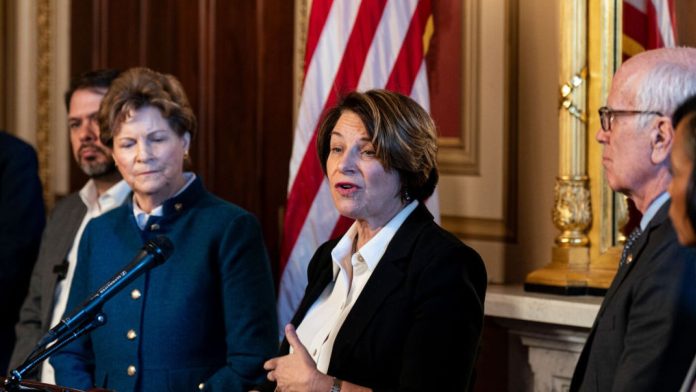
Senator Amy Klobuchar, a Democrat from Minnesota, was among a group of Democratic senators who wrote to the Department of Health and Human Services demanding answers on the agency’s communications pause.

Al Drago/Bloomberg/Getty Images


hide caption

toggle caption

Al Drago/Bloomberg/Getty Images

In a letter sent Wednesday night to Acting Secretary of Health and Human Services Dorothy Fink, a group of 34 Democratic senators called for the federal health agency to end its freeze on “external communications and funding.”

“We write to express our deep concern over the Administration’s recent decision to freeze external communications and suspend federal health funding at the Department of Health and Human Services (HHS),” the senators wrote. “The abrupt order has already disrupted patient care, public health oversight, halted medical research funding, and obstructed critical regulatory processes.”

Senators Amy Klobuchar, D-MN, and Bernie Sanders, I-VT, who is a ranking member of the Senate Health, Education, Labor, and Pensions Committee, led the group writing the letter. It was also signed by 32 other senate Democrats.

HHS issued a memo pausing almost all external communication on Jan. 21. It directed agency staff to refrain from most communications, such as issuing documents, guidance or notices, until such documents can be approved by “a presidential appointee.”

The memo said the pause was in place until Feb. 1. But that deadline has passed, the senators write, and “it remains unclear when these restrictions will be lifted.”

The letter goes on to note: “While limited exceptions exist for critical health, safety, or national security concerns, the freeze has already severely impeded essential public health and biomedical research functions.”

For example, the CDC failed to release its weekly publication, the Morbidity and Mortality Weekly Report, or MMWR, the weeks of Jan. 22 and Jan 29, marking the first time in decades the agency has not published the highly regarded mainstay of public health communication. This week’s MMWR did go out on Thursday.

When NPR asked HHS if the communications pause has been lifted, Andrew Nixon, director of communications, said via email that “there are several types of external communications that are no longer subject to the pause.”

“HHS has approved numerous communications related to critical health and safety needs and will continue to do so,” he added.

Yet as NPR reported, some pages and data sets scientists rely on are still not available and many scientists are concerned about what may still be missing or altered. At the National Institutes of Health, decisions on new grants have been delayed, new research is stalled and there’s a pause in recruiting new patients for any clinical studies at the agency.

The senators demand “a full accounting” by Feb. 10 of all communications that were postponed or cancelled including scientific reports and updates, public health advisories, grant decisions and more.

“The American people depend on HHS agencies to provide accurate, real-time information about disease outbreaks, medical research, and regulatory decisions,” they wrote.

The senators’ letter also references funding issues that may be linked to the federal funding freeze announced in a Jan. 27 memo issued by the Office of Management and Budget which froze most federal grants, loans and payments. The courts later blocked the order and it was since rescinded.

But the administration said that its efforts to review and rein in federal spending continue.

Some health clinics that rely on federal funds to provide care have not been able to get their funding in recent days, as PBS reported.

Another group of Democratic senators, led by senators Tim Kaine and Mark R. Warner, D-VA sent a separate letter to HHS Thursday raising concerns about this.

“Many grantees that rely on federal funding are still experiencing confusion and uncertainty, and have received little to no guidance from the Trump Administration about their funding,” the letter states.

It was signed by Kaine, Warner and 20 of their Democratic colleagues in the Senate.

“Despite a judge’s order blocking the funding freeze, we are troubled by reports that health centers are unable to access funding duly appropriated by Congress,” they wrote. “Health centers are receiving little communication regarding these cancellations and changes, and the communication they have received from HRSA has been unclear, directing actions that may conflict with current court orders.”

Colorado’s Deion Sanders explains aversion to coaching in NFL

0

Deion Sanders spent nearly a decade and a half playing in the NFL, winning two Super Bowls along the way. He was inducted into the Pro Football Hall of Fame in 2011. 

Former Dallas Cowboys quarterback and current NFL analyst Troy Aikman joined Sanders for a recent edition of Sanders’ show, “We Got Time Today,” which streams on Tubi. 

At one point during the wide-ranging conversation, the pair of former Cowboys stars discussed the possibility of Sanders one day returning to professional football.

SIGN UP FOR TUBI AND STREAM SUPER BOWL LIX FOR FREE

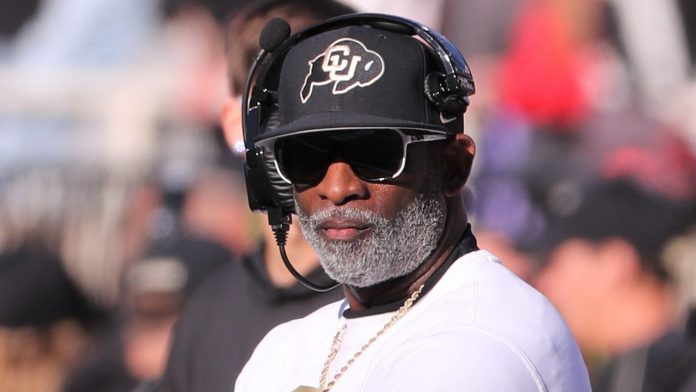
Colorado football coach Deion Sanders against Texas Tech in a Big 12 football game Nov. 9, 2024, at Jones AT&T Stadium. (Stephen Garcia/Avalanche-Journal/USA Today Network via Imagn Images)

Despite his familiarity with the pros, Sanders pointed to the NFL’s modern-day practice style when he revealed what would prevent him from taking a coaching job with any of the league’s 32 franchises. 

“That’s the way we practiced,” Sanders said. “I know it’s cute, but I couldn’t coach pro ball. The way they practice, the way they go about it, I couldn’t take it — as a man, and as a football enthusiast. I care about the game. … There’s no way I could allow that to happen on my watch. That would be tough.”

HOW TO WATCH SUPER BOWL LIX BETWEEN CHIEFS, EAGLES STREAMED ON TUBI

Sanders became a media star once he he ended his career. But in recent years, Sanders has focused on coaching at the collegiate level. After a successful three-season run at Jackson State, Sanders took the job at the University of Colorado. 

The Buffaloes improved under Sanders in 2024, and the success added fuel to the idea Sanders could soon leave college football for the NFL.

This isn’t the first time Sanders has dismissed the suggestion he would make the leap to the NFL. In 2022, he told “60 Minutes” he “couldn’t coach” at the pro level.

“I couldn’t coach pro ball,” he explained. “It’s not just about fame or money. It’s about the love of the game. The way things are done now, I couldn’t accept it. It would be hard for me to let that happen under my watch.”

Deion Sanders looks on

Colorado head coach Deion Sanders waves to the crowd before a game against North Dakota State Aug. 29, 2024, in Boulder, Colo.  (AP Photo/Jack Dempsey)

During an appearance on “Good Morning America” last month, Sanders was once again asked about his NFL coaching prospects.

“The only way I would consider is to coach my sons,” Sanders said. “Not son. Sons.”

The Cowboys parted ways with head coach Mike McCarthy in January. Cowboys owner Jerry Jones confirmed he had a conversation with Sanders during the franchise’s search for its next head coach. Dallas ultimately hired Brian Schottenheimer, but Aikman said it would “make a lot of sense” for Sanders to lead the Cowboys.

“I was asked a lot of questions about how do you think Deion would do?” Aikman recounted. “I said, ‘I think Deion would do great.’ There are a small handful of people that I know that I just simply would not bet against. And Deion is one of those handful of people. He’s proven it at every stop. He’d be successful in the NFL.”

CLICK HERE TO GET THE FOX NEWS APP

Tubi promo

Super Bowl LIX will be streamed on Tubi. (Tubi)

Aikman said he understood how Sanders could make more of an impact at the college level.

“You’re not impressing upon young men the way that you are in college, but to suggest that he wouldn’t be good at it or successful at it, I don’t think people really know Deion’s story. I think that, for Dallas, Deion would’ve been a really good fit because he would’ve commanded the room. 

“His personality is such that people would’ve known he was in charge. I think that’s important for any organization to know that the head coach is the one who’s calling the shots and he’s in charge.”

Aikman and Sanders played for the Cowboys when the team won the 1996 Super Bowl.

Sanders coached Heisman Trophy winner Travis Hunter and sons Shedeur Sanders and Shilo Sanders during his first two seasons at Colorado. He also coached the trio at Jackson State. All three are pursuing pro football careers, with Shedeur and Hunter expected to be first-round picks in April’s NFL Draft.

The Associated Press contributed to this report.

Follow Fox News Digital’s sports coverage on X, and subscribe to the Fox News Sports Huddle newsletter.

Trump’s Gaza Plan Reflects Broader Push for Annexation of Palestinian Land

0

President Trump’s statements on Tuesday about an American takeover of the Gaza Strip and displacing millions of Palestinians were immediately dismissed by many as reckless and half-baked pronouncements, a provocative threat that Mr. Trump was unlikely to enforce.

At the same time, his comments are the latest example of how government officials on the right in both the United States and Israel now speak publicly about a shared goal: the takeover of Palestinian land.

The question of whether the West Bank and the Gaza Strip — territories captured and occupied by Israel in 1967 — might become the foundation of a future Palestinian state has been at the center of decades of failed diplomacy, bedeviling American presidents, Palestinian leaders and Israeli prime ministers.

While the prospects for this future dimmed long ago, Mr. Trump’s election has newly emboldened right-wing ministers in Prime Minister Benjamin Netanyahu’s government, and some of Mr. Trump’s own appointees, to speak publicly about Israel’s right to fully take over the West Bank.

“It’s the most right-wing government that we’ve ever had in Israel — and there never was a U.S. administration that shared these views to this extent, either,” said Itamar Rabinovich, a former Israeli ambassador to Washington.

Days after Mr. Trump’s election, Bezalel Smotrich, Israel’s finance minister, whom Mr. Netanyahu has given broad authority over the West Bank, said Mr. Trump’s return to the White House meant that “the year 2025 will, with God’s help, be the year of sovereignty in Judea and Samaria,” using the biblical name for the territory that makes up the West Bank.

During his news conference with Mr. Netanyahu on Tuesday, Mr. Trump was asked directly whether he supported Israeli annexation of the West Bank. He declined to answer, saying that his administration would have an announcement in “four weeks.”

But he has already appointed at least two people to his administration — Elise Stefanik, his choice to serve as ambassador to the United Nations, and Mike Huckabee, who has been nominated by Mr. Trump to be ambassador to Israel — who hold views similar to Mr. Smotrich and his allies.

During her confirmation hearing, Ms. Stefanik was asked by Senator Chris Van Hollen, Democrat of Maryland, whether she shared Mr. Smotrich’s view that Israel had a biblical right to the entire West Bank.

She said she did.

In an interview, Mr. Van Hollen said that “there is a very dangerous alignment right now” between American and Israeli officials on the issue of Palestinian self-determination.

“Now we have someone in the White House who wants to greenlight the dreams of far-right extremists like Smotrich and Ben-Gvir,” he said, referring to Itamar Ben-Gvir, who recently resigned as Mr. Netanyahu’s national security minister over the cease-fire deal in Gaza.

On his first day in office, Mr. Trump signed an executive order reversing the Biden administration’s sanctions against a group of Israeli settlers responsible for violence and land grabs against Palestinians in the West Bank.

Israeli annexation of the West Bank is a goal shared by both ultranationalists in Israel and many evangelical Christians, including Mr. Huckabee, the former governor of Arkansas, who see the conflict in the Middle East — and the power struggle over the land itself — as a sign of the second coming of Jesus Christ.

Mr. Huckabee has said that “there’s no such thing as a West Bank.” He said that Israeli settlements in the territory, which are considered illegal under international law, are not settlements but “neighborhoods.”

“There’s no such thing as an occupation,” he said during a visit to the West Bank in 2017.

An American or Israeli takeover of Palestinian land would all but scuttle the chances of another diplomatic prize that Mr. Trump said he seeks: the normalization of diplomatic relations between Israel and Saudi Arabia. The Saudi government has said that Israel must take concrete steps toward an independent Palestinian state if there is any chance for the kingdom to officially recognize Israel.

Hours after Mr. Trump’s news conference, the Saudi foreign ministry issued a statement saying that “the establishment of the Palestinian state is a firm, unwavering position” of the kingdom.

With Mr. Trump’s ambitions for the region in possible conflict, Mr. Rabinovich, the former Israeli ambassador, said he thought the president could ultimately be persuaded to block an Israeli push toward West Bank annexation.

“If he wants a Saudi deal, then he won’t go along with annexation,” Mr. Rabinovich said.

Since returning to office in 2022, Mr. Netanyahu has become increasingly blunt about his opposition to Palestinian sovereignty. After years of equivocating on the issue, he boasted last year that “my insistence is what has prevented, over the years, the establishment of a Palestinian state that would have constituted an existential danger to Israel.”

As his coalition prepared to enter office in December 2022, it issued a declaration of the Jewish people’s “exclusive and inalienable right to all parts of the Land of Israel” and pledged to bolster Jewish settlement in all areas, including the occupied West Bank.

Since then, Mr. Netanyahu has made good on that pledge by granting Mr. Smotrich vast new powers over West Bank governance. Critics denounced the move — which gave Mr. Smotrich, a civilian, authority over matters previously overseen by the military — as a form of de facto annexation.

And Mr. Smotrich himself described the move last year as an attempt to seal Israel’s control over the territory without being accused of formally annexing it.

Analysts see Mr. Netanyahu’s most recent appointments to government as an effort to cement that opportunity. His new ambassador to Washington, Yechiel Leiter, is a West Bank settler who had been a spokesman for the settler movement.

Caroline Glick, an adviser to Mr. Netanyahu appointed in recent days who accompanied the prime minister to Washington this week, has long pushed for Israel to annex the West Bank and rejects Palestinian statehood.

And, even though he recently left Mr. Netanyahu’s government, Mr. Ben-Gvir remains an influential voice among the prime minister’s supporters. Shortly after Mr. Trump’s statements on Tuesday, Mr. Ben-Gvir took to social media to give his enthusiastic support.

“Donald, this looks like the beginning of a beautiful friendship,” he wrote.

USAID workers uncertain as lawsuit hits Trump administration over cuts : NPR

0

In this photo illustration, a message appears on the U.S. Agency for International Development (USAID) website on Feb. 5. The Trump administration issued a directive late Tuesday night that all USAID direct hire personnel will be placed on administrative leave globally Friday at midnight.

Justin Sullivan/Getty Images


hide caption

toggle caption

Justin Sullivan/Getty Images

Amid global fallout over the blockage in funding and staffing for the United States Agency for International Development, senior staff submitted a list to State Department leadership of around 600 people whose work around the world they deemed essential and could not be disrupted.

But Secretary of State Marco Rubio approved less than 300 for exclusion from a broad policy that will put a large percentage of the 13,000+ workforce on administrative leave by Friday at midnight.

That’s according to multiple sources who shared copies of internal emails describing the forthcoming decisions with NPR on the condition of anonymity.

“There is no bottom to this stupidity,” said one USAID staffer who asked to speak anonymously for fear of reprisal from the Trump administration.

“Might as well shut it all down. 290 people won’t be able to do anything,” said a USAID official, who requested anonymity because they are not authorized to speak to the press.

In the Middle East Bureau, in both Washington D.C. and overseas, only 21 employees will be actively working at the end of the day on Thursday. The Africa Bureau will retain 12 people, four in Washington and eight in different regional hubs.

The Global Health Bureau, currently staffed at 147 people, and whose strategic priorities are to prevent child and maternal deaths, control the HIV/AIDS epidemic and prevent the spread of infectious diseases, will be reduced to 77 people.

On Thursday evening, unions representing foreign service officers and federal employees at USAID sued the Trump administration to halt efforts to dismantle the agency and freeze foreign aid distribution.

“These actions have generated a global humanitarian crisis by abruptly halting the crucial work of USAID employees, grantees, and contractors. They have cost thousands of American jobs. And they have imperiled U.S. national security interests,” the lawsuit, filed in a Washington D.C. federal court, said.

The lawsuit argues only Congress can dissolve the agency and calls the Trump administration’s actions “unconstitutional and illegal.”

The unions are asking the court to block efforts to shut down USAID operations and put staff on leave, restore funding and reopen the agency’s offices.

Secretary of State Marco Rubio gives a joint news conference with Dominican Republic President Luis Abinader at the National Palace in Santo Domingo Feb 6.

Secretary of State Marco Rubio gives a joint news conference with Dominican Republic President Luis Abinader at the National Palace in Santo Domingo Feb 6.

Mark Schiefelbein/AFP via Getty Images


hide caption

toggle caption

Mark Schiefelbein/AFP via Getty Images

During a joint press conference with the president of the Dominican Republic, Rubio defended the Trump administration’s actions and reiterated that employees overseas have options, including extending beyond the 30-day window to return to the U.S., due to extenuating circumstances.

“We’re not trying to be disruptive to people’s personal lives,” Rubio said in Santo Domingo. “We’re not being punitive here. But this is the only way we’ve been able to get cooperation from USAID.”

“I’d have preferred not to do it this way,” he added. “When we tried to do it from the top down by getting cooperation from the central office and USAID, what we found instead are people trying to use the system to sneak through payments and push through payments despite the stop order. We found people that were uncooperative in terms of giving us information and access.”

Still, at least 1,400 USAID employees had already lost access to their federal email accounts by Tuesday, and were unsure of how they’d receive updates on the ongoing status of their employment, according to the USAID official who worried over the cuts.

Another USAID staffer who provided access to an internal email and commented on the “stupidity” of the disruptions to the agency said that during a virtual staff meeting on Monday, people started leaving one by one as their access was cut off.

“It was like from a horror film,” they said.

It’s unclear how locally hired non-American employees in USAID overseas bureaus will be impacted by the ongoing reduction in the active workforce. The current administrative leave program appeared not to apply to locally employed staff.

However, the same staffers who spoke to NPR about the emails explained that USAID’s foreign service officers are being instructed to focus only on their return home, while grant money is rapidly being eliminated. If local staff are removed, the staffers continued, they could be impacted in their home countries, like Ukrainians who might be conscripted into military service if they are no longer doing relief work with USAID.

Managers condemned the ongoing culling of the agency by the Trump administration in emails to employees on Thursday afternoon.

In a message to the Middle East team, a senior official in the Middle East Bureau wrote that the “risk to safety and security of staff and families, to USG property, to the life-saving programs and activities we implement is unacceptably high.”

“I counsel you to elevate your concerns directly to your Chiefs of Missions to alert them to the risks they are taking on with the manner in which this drawdown is being carried forward,” he continued, calling the reduction in force a “stunning and irresponsible approach to the drawdown”

Democratic members of Congress have said the White House does not have the legal authority to shut down USAID as an agency. However, by removing funding and shrinking active staff to the bare bones, the Trump administration could avoid Congressional oversight or an official action by Congress to close the agency.

In his remarks Thursday, Rubio emphasized that the Trump administration will still be issuing foreign assistance.

“The United States will be providing foreign aid,” he said. “But it is going to be foreign aid that makes sense and is aligned with our national interest.”

Patrick Mahomes’ mom talks about Trump’s expected visit to Super Bowl LIX

0

Randi Mahomes, the mother of Kansas City Chiefs star Patrick Mahomes, walked the carpet ahead of the NFL Honors in New Orleans Thursday night.

Mahomes will be in the stands at the Caesars Superdome to cheer on her son and the Chiefs as they compete for a historic third consecutive Super Bowl title.

President Donald Trump is expected to make an appearance as well. Should he attend, he would become the first sitting president at a Super Bowl. 

Mahomes backed Trump ahead of his presidential election victory over Kamala Harris.

SIGN UP FOR TUBI AND STREAM SUPER BOWL LIX FOR FREE

Kansas City Chiefs quarterback Patrick Mahomes celebrates with his mother, Randi Martin, during the Kansas City Chiefs’ Super Bowl parade in Kansas City, Mo., Feb. 15, 2023. (Denny Medley/USA Today Sports)

“I think for a president of our country, of the United States, I think it’s amazing,” she told Fox News Digital. “I think whoever the president is, to support the teams, to support America’s best sport. … I think it’s really neat for a president to be able to support it. You know what, let’s do it.”

The Chiefs’ star quarterback also reacted to the possibility of Trump attending the game while speaking to reporters Wednesday.

HOW TO WATCH SUPER BOWL LIX BETWEEN CHIEFS, EAGLES STREAMED ON TUBI

Donald Trump wins the 2024 presidential election

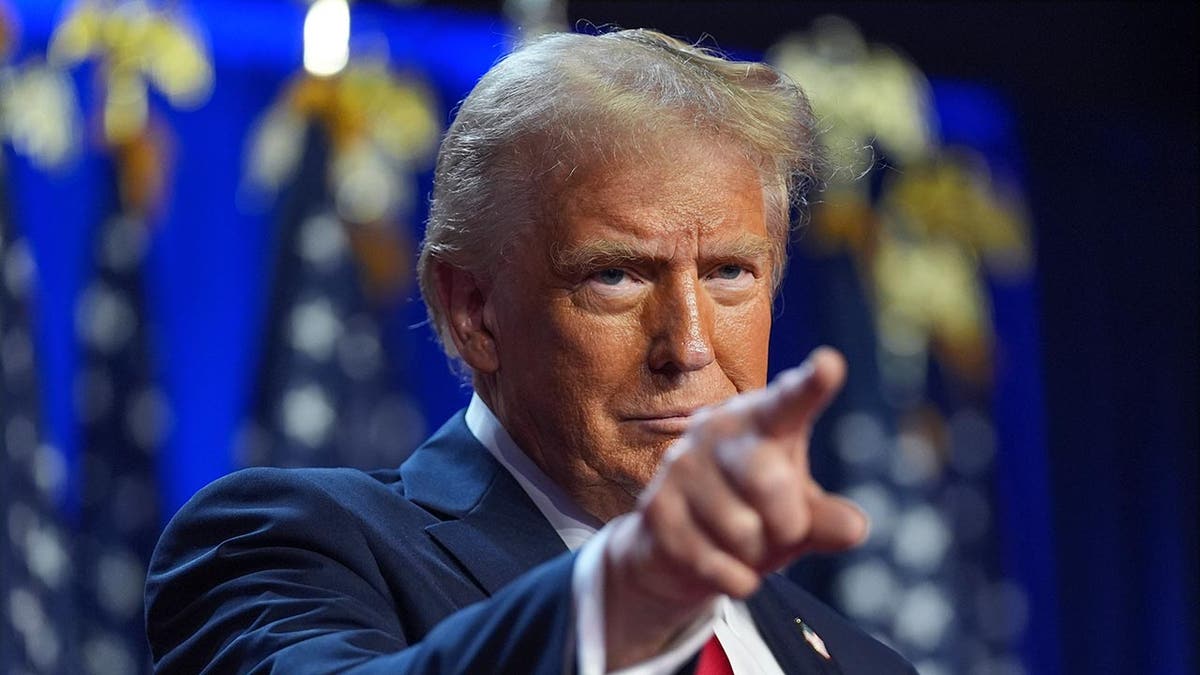
President Donald Trump  (Evan Vucci/AP)

“It’s always cool to be able to play in front of a sitting president,” Mahomes said. “Someone that is at the top position in our country.”

Trump also congratulated Patrick and Brittany Mahomes on the birth of their third child ahead of the game.

When the president was asked earlier in the week who he was pulling for, he played a little coy.

“I don’t want to say, but there’s a certain quarterback that seems to be a pretty good winner,” he said.

Tubi promo

Super Bowl LIX will be streamed on Tubi. (Tubi)

CLICK HERE TO GET THE FOX NEWS APP

FOX’s coverage of the Super Bowl begins at 1 p.m. ET with the game kicking off at 6:30 p.m. ET. The game can be streamed on Tubi for free.

Follow Fox News Digital’s sports coverage on X and subscribe to the Fox News Sports Huddle newsletter.

In Greenland, the Ice Doesn’t Just Flow, It Quivers and Quakes

0

When Andreas Fichtner unspooled a fiber-optic cable into a deep hole in Greenland’s ice, he wasn’t expecting to discover a whole new way that glaciers move. Even when the cable started sending back data, his first reaction was skeptical.

“Rubbish,” Dr. Fichtner, a professor of seismology and wave physics at the Swiss university ETH Zurich, remembers thinking. “Just some electronic noise.”

This was August 2022. The field season in Greenland was almost over. The cold, the altitude, the long hours — all of it was wearing on Dr. Fichtner and his fellow researchers. But they’d been saving one of their cables for one last experiment, one that would let them measure tiny movements deep within the vast river of ice as it flowed toward the sea.

What they found raises questions about scientists’ assumptions about how the ice sheets of Greenland and Antarctica are moving and adding to sea levels worldwide.

That last cable picked up cascades of tiny “ice quakes,” some of them reverberating hundreds of feet, Dr. Fichtner and his colleagues reported on Thursday in the journal Science.

These quakes seemed to start near impurities in the ice that were deposited by volcanic eruptions, Dr. Fichtner said. Where these particles sit, the ice is weaker, more prone to cracking. Along these cracks, the ice sticks and slips and quivers as it moves, creating tiny seismic disturbances.

This isn’t what scientists usually imagine is going on inside the deep piles of ice that cover Earth’s polar regions. Typically, they think of this ice as flowing like syrup: slowly, smoothly, fluidly.

But if the ice were really moving like a uniform mass of honey, then Dr. Fichtner’s cable would have picked up “complete silence,” he said. Instead, it recorded these “really, really curious events,” he said. “That was the surprise here.”

By sending laser pulses through fiber-optic cable and measuring how they scatter, scientists can reconstruct fine movements along the cable’s entire length. This has proved useful for monitoring seismic activity, deep-sea currents, glacial ice and more.

In Greenland, Dr. Fichtner and a colleague lowered a cable by hand nearly a mile down a borehole, one that other scientists had drilled to extract an ice core. There the cable lay for 14 hours, picking up vibrations.

If winding and unwinding a cable doesn’t sound especially challenging, let Dr. Fichtner be the first to inform you: It was “serious physical work.” The borehole was filled with a special kind of vegetable oil to keep it from closing up, so the cable was slow to sink and heavy to lift back out. Plus, the subzero cold made the cable brittle, meaning they had to handle it with utmost care.

When Dr. Fichtner started looking at the readings that came back, he had to convince himself they weren’t “rubbish.” What if they showed vibrations coming from within the cable itself? Or from cracks forming in the borehole wall?

In time, he and his team concluded that they’d recorded something intrinsic to the ice. Still, Dr. Fichtner acknowledged that only by making more measurements in more places can scientists really say how commonly these quakes occur within ice sheets.

Getting enough measurements is a constant challenge for polar scientists, said Hélène Seroussi, an engineering professor at Dartmouth College in New Hampshire who wasn’t involved in the new research. When oceanographers want to collect data, they can drop instruments into the deep sea in a matter of hours. Glacier researchers have to drill deep into the ice, which takes months, even years.

“That’s why we keep finding all these new principles and mechanisms that seem relatively fundamental,” Dr. Seroussi said. “Each time you have a new observation, a new ice core, a new way of measuring, you learn something new.”

Andy Aschwanden, a glaciologist at the University of Alaska Fairbanks, said Dr. Fichtner and his colleagues’ discovery offered an interesting glimpse into the intricacies of ice physics. But he said it was too early to know whether it can help scientists better predict how quickly the melting ice sheets will lift global sea levels. The ice still holds other mysteries that, if unraveled, are likely to improve the modeling much more, Dr. Aschwanden said.

The new findings could someday help scientists better understand the way ice sheets break apart at their edges, said Richard B. Alley, a professor of geosciences at the Pennsylvania State University.

Pre-existing flaws or damage in the ice can cause it to crack up rapidly once it flows off the land and out to sea, Dr. Alley said. It’s the same reason a fast-food ketchup packet is easy to open if you do it from the little notch, but very difficult if you try to tear it anywhere else, he said.

“All of us who study ice,” Dr. Alley said, “will be building on this new paper for a long time to come.”

NASA instructs employees to remove pronouns from all work communications : NPR

0

NASA has instructed employees, contractors and grantees to remove all pronouns from their signatures.

Celal Gunes/Anadolu Agency/Getty Images


hide caption

toggle caption

Celal Gunes/Anadolu Agency/Getty Images

NASA employees are being required to strip all pronouns from emails and other applications, according to an all-staff email seen by NPR.

The unsigned email came in response to several executive orders, including one called “Defending women from gender ideology and extremism and restoring biological truth to the federal government.” The order was signed by President Trump on the day he entered office, and among other things, calls on agencies to “end the Federal funding of gender ideology.”

“In response to the Executive Orders, NASA has disabled features in id.nasa.gov and Teams that allows users to add pronouns in their display name in Microsoft Outlook and Teams,” the email reads. “For users who have previously added pronouns to their display name, those pronouns will be automatically removed from the system this week.”

“In addition,” the email says, “NASA has adopted a uniform signature block for emails that are sent using any nasa.gov email address. All users (civil servants, contractors, and grantees) must modify their signature block to follow the appropriate signature block… the signature block should not include additional embellishment.”

The step to remove pronouns is the latest by the space agency to comply with the White House’s desire to restrict certain kinds of content within government systems. The outlet 404 media, an independent journalist-founded media website, has reported that NASA employees were required to “drop everything” and remove a list of words from public facing websites including “Indigenous people” and “Anything specifically targeting women (women in leadership, etc.).”

And NASA’s acting administrator had previously announced that the agency was ending all DEI programs because they “divided Americans by race, wasted taxpayer dollars, and resulted in shameful discrimination.”

NASA’s press office did not immediately respond to a request for comment.

Out of power: Democrats disoriented in fight against Trump agenda

0

It’s a new season for Congressional Democrats.

And that’s not always a good thing.

New seasons bring change. New players. New coaches. New approaches.

The problem is finding the right approach.

Especially when you’re on the outside looking in.

SPENDING SHOWDOWN: REPUBLICANS WILL NEED TO CORRAL VOTES – BUT THEY HAVEN’T ASKED, YET

Democrats are now the loyal opposition. Effectively locked out of power in Washington as Republicans control the executive branch and both bodies of Congress.

Democrats have lobbed entire landfills at President Trump since 2015. Some of it worked – a little bit. But certainly not enough to permanently sidetrack Mr. Trump. He executed one of the most extraordinary, improbable comebacks in world political history.

On the TV show “The Office,” secretary Pam Beesly noted that she only got ten vacation days a year.

“I try to hold off taking them for as long as possible,” said Beesly. “This year I got to the third week in January.”

Democrats are effectively stonewalled out of power, with both houses of Congress and the presidency having fallen to GOP leadership. (Reuters)

So far, Democrats are flailing as they try to challenge President Trump in his second term. So, they’re dusting off some old plays from a tired, dog-eared playbook.

Like Beesly, they waited as long as they could.

It took precisely 16 days before a Democrat threatened to impeach the President.

DEMOCRATS CALL FOR ARTICLES OF IMPEACHMENT AGAINST TRUMP AMID GAZA COMMENTS

Rep. Al Green, D-Tex., prepped the first articles of impeachment against President Trump in 2017. He didn’t do so until October of that year. But now, Green is ready to impeach the President.

“I did it before. I laid the foundation for impeachment. And it was done. Nobody knows more about it than I. And I know that it’s time for us to lay the foundation again. On some issues, it is better to stand alone than not stand at all,” said Green.

But two previous impeachments failed to suppress Mr. Trump. If nothing else, the impeachments may have emboldened him. Especially since despite the House impeaching him, he survived two Senate trials.

Al Green

Rep. Al Green, D-Texas, has once again announced his immediate intent to impeach the President. (Photo by Anna Moneymaker/Getty Images)

But Democratic leaders are leery of impeachment freelancing.

“This isn’t a focus of the Democratic Caucus,” said House Democratic Caucus Chairman Pete Aguilar, D-Calif. “We’ve laid out our strategy. Legislative. Litigation. Outreach. Communication. That continues to be the focus.”

Democrats are united in their opposition of President Trump. But finding a unifying, resonant message is another thing.

SOCIAL MEDIA, TEAM TRUMP REACT TO CORY BOOKER’S ‘MELTDOWN’ OVER ELON MUSK’S USAID CRACKDOWN

“In the United States Senate, we will not cooperate!” thundered Sen. Cory Booker, D-N.J. “We’ll cooperate with no appointments when it comes to the State Department!”

“There should be hundreds of thousands and millions of people descending on Washington, DC!” declared Sen. Ed Markey, D-Mass.

John Garamendi

Rep. John Garamendi, D-Calif., is one of many Democrats amplifying renewed calls to “resist” the new Trump administration. (Bill Clark/Roll Call/Getty Images)

“We must resist. We must be in the streets!” said Rep. John Garamendi, D-Calif.

Democrats used to have only one target. That was President Trump.

“They have no rudder. They have no vision. They have no clear leader,” observed House Speaker Mike Johnson, R-La. “The only message they have is anti-President Trump.”

THE SPEAKER’S LOBBY: A PALPABLY UNFAIR ACT

But opponents evolve.

The arch-enemy of Batman was always the Joker. But the Penguin, Riddler and Catwoman were worthy foes, too.

And so Democrats now have a new nemesis: Elon Musk.

Musk at Trump inauguration

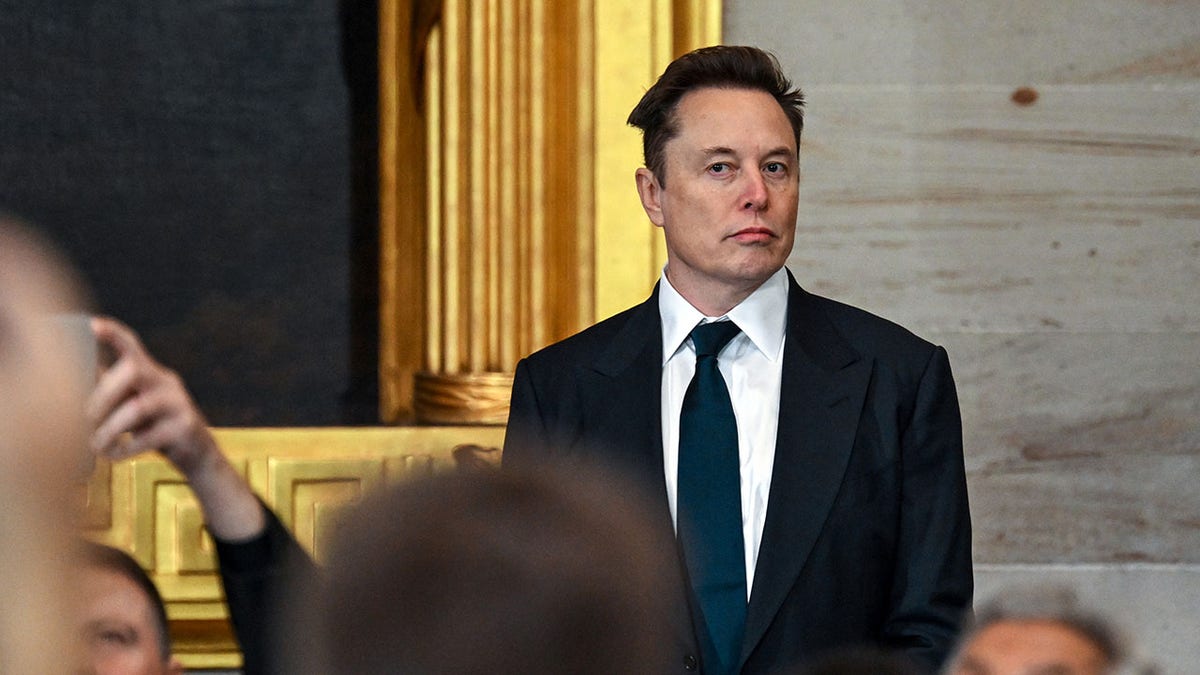
The President isn’t the only one in Democrats’ crosshairs this go-round – Elon Musk also shares the dubious honor. (Kenny Holston-Pool/Getty Images)

Democrats are peppering him with inflammatory rhetoric.

“A godless, lawless billionaire. You know who elected Elon? This is the American people. This is not your trashy Cybertruck that you can just dismantle, pick apart, and sell the pieces of,” said squad member Rep. Ayanna Pressley, D-Mass.

“God damn it. Shut down the Senate. We are at war. Any time, any time a person can pay $250 million into a campaign, and they’ve been given access to the Department of Treasury of the United States of America. We are at war,” said Rep. LaMonica McIver, D-N.J. “We will not take this sh*t from Donald Trump and Elon Musk.”

“What we not going to do is stand around while they pull this bullsh*t that they’re trying to pull right now,” excoriated Rep. Jasmine Crockett,. D-Tex., of Musk and DOGE. “You all know he likes to pal around with Putin, right? He’s trying to turn us into Russia.”

MUSK’S DOGE TAKES AIM AT ‘VIPER’S NEST’ FEDERAL AGENCY WITH GLOBAL FOOTPRINT

“He is a low down, dirty, no good person that along with Trump cannot be trusted,” said Rep. Maxine Waters, D-Calif. “We have got to tell Elon Musk, nobody elected your ass.”

White House spokeswoman Karoline Leavitt blasted Democrats for their incendiary language.

“President Trump was elected with a mandate from the American people to make this government more efficient. He campaigned across this country with Elon Musk vowing that Elon was going to head up the Department of Government Efficiency,” said Leavitt. “For Democrat officials to incite violence and encourage Americans to take to the streets is incredibly alarming. They should be held accountable for that rhetoric.”

John Fetterman and Donald Trump

Sen. John Fetterman, D-Pa., is one of very few congressional Democrats – if not the only one – to advise an excess of caution in his party’s expressions of steadfast defiance toward the Trump agenda. (Getty Images)

But at least one Democrat urges discipline for his colleagues when attacking the President – or Musk.

“There’s going to be a lot of balls coming down to the plate. And I’m only waiting for a strike when I’m going to start to swing,” said Sen. John Fetterman, D-Penn.

Democrats executed another gambit Wednesday. They kept the Senate in session all night to postpone the confirmation of Budget Director nominee Russ Vought. The Senate broke a filibuster earlier on Wednesday. But Vought is someone who would have great influence over DOGE and potentially efforts by the administration to withhold or contour spending. Since the Senate voted to end the filibuster around 1 pm et Wednesday, Democrats opted to burn all time available to them just to protest Vought and DOGE.

SENATE DEMOCRATS SPEAK ALL NIGHT AGAINST TRUMP OMB NOMINEE, DELAYING CONFIRMATION VOTE

“Russ Vought represents a very specific view of presidential power, which is essentially unitary executive,” said Sen. Brian Schatz, D-Hawaii, at 1:45 am et Thursday. “It’s this view that once you win, you’re basically a monarch.”

A cavalcade of Democrats seized the floor throughout the night. Sen. Peter Welch, D-Vt., at 5 am et. Sen. Elissa Slotkin, D-Mich., at 6 am et. Booker at 9 am et.

“Whatever the challenges, whatever the fear, is what I want to tell you right now is don’t normalize a president who is violating the separation of powers,” said Booker on the floor just after 10 am et. “Don’t normalize a president who is violating civil service laws. Don’t normalize a president who is ignoring the dictates of Congress and establishing agencies.”

Around the same time, Democrats on the Judiciary Committee requested, and received – under the rules – a one-week delay on the nomination of FBI Director nominee Kash Patel.

“Kash Patel has a goal. It’s to wreck the FBI,” said Welch.

Kash Patel

Democrats have managed to negotiate a one-week deal to delay the confirmation of Kash Patel, President Trump’s pick to head the FBI. (AP)

The Democrats’ maneuver chokes off Patel’s nomination from the Senate floor. But only for a week.

“It means that about 168 hours from right now, he’ll be confirmed by our committee,” said Senate Judiciary Committee Chairman Chuck Grassley, R-Iowa.

Democrats can’t do much but delay the inevitable. Republicans can confirm Patel on the floor if they stick together. The same with Vought. Vought is only the second nominee to score a partisan confirmation without Democratic assistance. The other was Defense Secretary Pete Hegseth.

“We are out of power. But we are not powerless,” said Schatz.

CLICK HERE TO GET THE FOX NEWS APP

But that power is low voltage. Measured in foot candles, not watts.

There are limits to their power. And Democrats are now feeling it.

Trump’s Gaza Takeover Plan May Sound Death Knell for the Two-State Solution

0

For decades, successive presidents in Washington have favored some version of a two-state solution for the Israeli-Palestinian conflict. What no one imagined until now was that the second state would be American, not Palestinian.

President Trump’s stunning plan to displace the entire Palestinian population of Gaza and have the United States take over the seaside enclave has not only convulsed the Middle East. It may have also all but written the obituary for the long-sought but maddeningly elusive goal of establishing a Palestinian state alongside Israel in peaceful coexistence.

Any vision of a Palestinian state has included Gaza as an integral part of it, along with the West Bank. In Mr. Trump’s vision, however, Gaza would become a U.S. territory transformed into a “Riviera of the Middle East.” It would not belong to the Palestinians anymore but would be open to anyone who wanted to live there. And for that matter, he signaled openness to Israeli annexation of parts of the West Bank, promising to reveal his position within four weeks.

The prospects for a Palestinian state had already dwindled in recent years, especially after the Hamas terrorist attack on Israel on Oct. 7, 2023, that killed 1,200 people and led to the Israeli retaliatory war in Gaza that has killed 47,000 combatants and civilians, according to Gaza health authorities. Neither Israeli nor Palestinian populations see the two-state scenario as a viable plan anymore, according to polls.

But the rest of the world, led until now by the United States, has continued to cling to the idea as official policy, if for no other reason than a lack of alternatives. And Saudi Arabia has insisted that a Palestinian state has to be part of any deal establishing diplomatic relations with Israel, a goal avidly pursued by both Mr. Trump and former President Joseph R. Biden Jr.

“If Trump thinks that somehow the U.S. owning Gaza and allowing Israel to annex parts of the West Bank facilitates a deal, he’s completely wrong about that,” said Jeremy Ben-Ami, president of J Street, a liberal, pro-Israel, Washington-based organization that promotes a negotiated peace in the Middle East. “There’s no way forward to a deal.”

But opponents of a Palestinian state feel emboldened at this point. While few took Mr. Biden’s continued insistence on the two-state solution all that seriously, they feel confident that Mr. Trump’s return to power means that there will never be a Palestinian state.

“It’s a dead issue,” said Morton A. Klein, national president of the Zionist Organization of America, which opposes the two-state solution. “I think most people think it’s a dead issue.” He added: “They had a state in Gaza. How did that work?”

Mr. Trump has long cast himself as the one person who could bring peace to the Middle East — just Thursday, he told an audience at the National Prayer Breakfast that he wanted to be remembered as “a peacemaker” — but he has never achieved his own aspiration. When he took office in 2017, he took on the mission of finally resolving the generations-old conflict between the Israelis and Palestinians, boldly predicting that it would be “not as difficult as people have thought over the years.”

But it turned out to be just as difficult as people have thought over the years. He assigned his son-in-law Jared Kushner to develop a plan that was released in 2020 that envisioned a Palestinian state of sorts, but one so truncated that the proposal was widely seen as tilted toward Israel. Under the plan, Israel would have been allowed to keep its settlements in the West Bank and full control of a unified Jerusalem as its capital, while the Palestinians would have been offered $50 billion in international investment.

The plan went nowhere, but Mr. Trump was able to score a consolation prize by presiding over the establishment of diplomatic relations between Israel and several Arab states, including Bahrain and the United Arab Emirates, in what was called the Abraham Accords.

Saudi Arabia declined to join at the time, but Mr. Biden came close to securing a deal until the Oct. 7 attack blew up the negotiations. Now back in office, Mr. Trump hopes to finalize such an agreement, which would help transform the region.

But he has made no recommitment to a two-state solution since returning to power and his newly designated ambassador to Israel, Mike Huckabee, all but ruled it out. “I’d be very surprised if he comes and says, ‘Let’s go out there and get a two-state solution,’” Mr. Huckabee said last month in an interview with Ami Magazine, a Jewish magazine based in New York.

Mr. Trump remained ambiguous about that this week. When he announced his plan to take “ownership” over Gaza at a White House news conference with Prime Minister Benjamin Netanyahu of Israel, he was asked if that meant he no longer supported the two-state solution. “It doesn’t mean anything about a two-state or a one-state or any other state,” he replied. “It means that we want to have — we want to give people a chance at life.”

Asked about that the next day on CBS News, Mr. Trump’s national security adviser, Mike Waltz said, “I certainly didn’t hear the president say it was the end of the two-state solution.” But neither he nor any other administration officials have explained how taking Gaza away from the Palestinians could be reconciled with establishing a state that would be acceptable to them.

The reaction to Mr. Trump’s Gaza plan was broadly negative outside Israel. In the past couple of days, António Guterres, the United Nations secretary general, as well as leaders from Saudi Arabia, Egypt, Jordan, Britain, France, Germany, Australia, Turkey, Canada, Japan, the European Union and others all restated support for the two-state solution. “There is only one solution and that is a two-state solution,” Foreign Minister Lars Lokke Rasmussen of Denmark told Danish media.

But at some point, that came across more as a diplomatic ritual of talking points than a realistic agenda. In Israel and the Palestinian territories, the notion of two states living side by side in peace has lost the broad support it once had.

In Israel, just 27 percent of people still backed a two-state solution in Gallup polling last summer, while 64 percent opposed it. That was a reversal from 2012, when 61 percent supported it and just 30 percent opposed it.

And that was almost identical to the views of Palestinians in the West Bank and East Jerusalem, where just 28 percent of those interviewed last summer supported such a plan, while 64 percent opposed it. That too represented a radical drop in enthusiasm from 2012, when 66 percent in those areas supported it compared with 32 percent who did not.

Yaakov Amidror, a former national security adviser to Mr. Netanyahu, said that the two-state solution as long conceived was dead.

“There is no way to rebuild Gaza,” he told Al Arabiya television. “The West Bank is another political issue to be discussed. But in Gaza, I don’t see two million Palestinians living in less than 400 square kilometers in which 80 percent of the buildings have been destroyed.”

Elliott Abrams, who has advised multiple Republican presidents on the Middle East, including Mr. Trump during his first term, said the reality is that a two-state solution has not been viable for quite some time even if world leaders refuse to accept that. While the president’s Gaza takeover plan may itself be untenable, Mr. Abrams said it focused on the plight of Palestinians living in an area devastated by war rather than lines on a map.

“Trump’s plan changed the subject from politics to what happens to the people,” Mr. Abrams said. “He spoke about how Gazans live now, and could live so much better in the future, and he did not demonize Gazans. So his plan is a reminder that the two-state solution is just foreign ministers shouting at each other, and it’s no solution at all.”

From the other side of the debate, Mr. Ben-Ami agreed that Mr. Trump had a point. “There is an element of truth underneath all this, which is that it’s really hard to conceive how you would rebuild with two million people still there,” he said.

He also agreed that “the concept of an old-fashioned two-state solution has actually been gone for a while.” But he held out hope that it would still be part of a broader, regionwide change driven by Arab rapprochement with Israel, led by Saudi Arabia. “It’s going to have to be part of that normalization deal,” Mr. Ben-Ami said. “We’ve been referring to it as a 23-state solution.”