Friday, November 13, 2026
Home Blog Page 265

For Europe’s Right, Trump Stirs Caution Alongside Celebration

0

Standing in the rotunda, Prime Minister Giorgia Meloni of Italy was a privileged guest at President Trump’s inauguration.

The only European leader to attend the event last month, Ms. Meloni shares many of Mr. Trump’s conservative, nationalist impulses. She is friendly with his billionaire adviser Elon Musk. Many of her supporters hope that the Italian leader’s special relationship with Mr. Trump will bolster Italy’s standing — and her own.

But even as Ms. Meloni joined a standing ovation for the new American president, it took only moments for Mr. Trump to remind her and others on Europe’s right that the unpredictable American president may be as much an adversary as an ally.

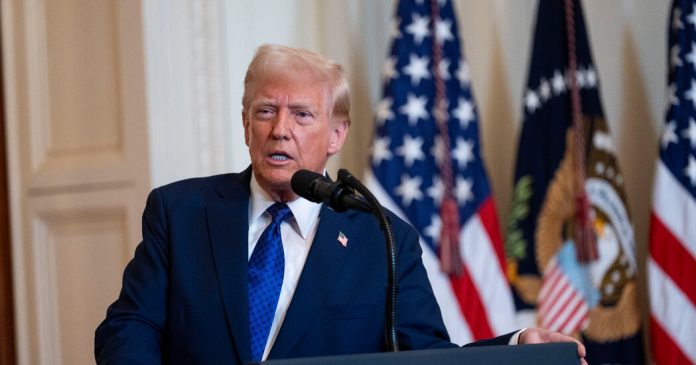
“I will, very simply, put America first,” Mr. Trump said in his inaugural address. “We will tariff and tax foreign countries to enrich our citizens.”

Since then, Mr. Trump has warned that he will “definitely” slap Europe with tariffs “pretty soon,” raising the same wariness that many Europeans feel among those on the right who would seem to be his natural allies.

While Mr. Trump promises to answer to no one as he prioritizes American interests, many nationalist parties in Europe pledge to do the same for their own countries. Mr. Trump’s threats go to the heart of their own agendas, and they could hurt the core constituencies on which nationalist parties have expanded their appeal.

Potential tensions around trade highlight some of the fundamental contradictions that could emerge from an international alliance of nationalists, with questions on whether their friendship can withstand a collision of competing interests. Leaders are also worried about a possible American disengagement from Europe’s security, and Mr. Trump’s threats to allies who do not meet military spending targets.

“To support a guy who might have negative effects on your country, that’s not a good strategy,” said Renaud Labaye, the general secretary of the far-right National Rally in France’s National Assembly.

Jordan Bardella, the president of the National Rally, said last month that he respected Mr. Trump and was inspired by how quickly he was filling planes with Colombian deportees and threatening the country with tariffs if they didn’t let them land.

But he also painted Mr. Trump as an existential threat to France and Europe. Any tariffs that Mr. Trump might put on French agriculture would hurt French farmers — whose support Mr. Bardella cannot afford to jeopardize.

“If we don’t defend our interests, we will disappear,” he said at a news conference last week.

That coolness differed from the National Rally’s reaction to Mr. Trump’s last election in 2017, when Marine Le Pen, the party’s former president, praised him effusively, and went to Trump Tower in New York hoping — unsuccessfully — to bump into him on the eve of his inauguration.

Mr. Labaye said that it was very useful for the National Rally to have Mr. Trump raise the anti-immigration agenda to a global level in 2017. Now, with nationalist parties surging in Europe, they no longer need President Trump’s services as much.

President Trump’s style could put off many French voters, Mr. Labaye added. “It’s not our culture — being over the top, trash-talking, speaking loud,” he said.

If anything, too much of an association with Mr. Trump could threaten the National Rally’s long and increasingly successful strategy to “undemonize” the party’s image and broaden its appeal among French voters.

“There is a radical aspect of Trumpism today,” said Maya Kandel, a researcher who studies the right in the United States and its links to Europe at the Sorbonne University in Paris. “They don’t know if they want to be part of it or if they want to stick with their normalization plan.”

Still, for as much as Mr. Trump has generated nervousness among his allies, his victory has also galvanized Europe’s right-wing parties, adding momentum to the conservative project they promote.

Some, like the Alternative for Germany, have openly embraced endorsements from Mr. Trump’s right-hand man, Mr. Musk, hoping to gain new stature and legitimacy.

The party, parts of which have been classified as extremist by German intelligence agencies, has seen only a modest bump in the polls following Mr. Musk’s endorsement, and it might not be related to his efforts. Recent polling shows that three-quarters of Germans see Mr. Musk’s attempts to influence German elections as “unacceptable.”

The same poll found that 71 percent of respondents in Germany and Britain, where Mr. Musk has also meddled in the political debate, hold a negative view of him.

For the moment, Mr. Trump’s biggest influence may be in the imitation of his tactics, as demonstrated by a gathering of far-right parties in Madrid this weekend under the banner, “Make Europe Great Again.”

The attendees are expected to include Prime Minister Viktor Orban of Hungary; France’s Ms. Le Pen; and Matteo Salvini, whose League party is part of Ms. Meloni’s governing coalition. They are certain to gush over Mr. Trump’s new presidency.

But beneath the confident veneer lurks the gnawing uncertainty over what Mr. Trump actually means for Europe.

Ms. Meloni’s allies hope she can mediate between the United States and Europe in trade negotiations. “We want to be a bridge,” Italy’s foreign minister, Antonio Tajani, told the newspaper Corriere della Sera on Monday.

Experts caution that if she tried to play the role of Trump-whisperer Ms. Meloni could also find herself squeezed between a notoriously capricious American president and the European Union, in case the relationship turns more adversarial than it already is.

In case of conflict, it would be hard for Ms. Meloni to side with Mr. Trump, said Jean-Pierre Darnis, a professor at Côte d’Azur University in Nice focusing on Italian foreign relations.

Italy is a founding member of the European Union, and it depends on the E.U. as its largest trading partner and for billions in post-pandemic recovery funds.

“It’s E.U. first,” said Mr. Darnis. “Then you deal with the U.S.”

Beniamino Irdi, a senior fellow with the Atlantic Council’s Transatlantic Security Initiative, said that no matter how much Ms. Meloni and Mr. Trump got along, political affinity could hardly sustain a relationship with someone like Mr. Trump, who has generally embraced a transactional approach to foreign relations.

Their relationship “can give Meloni some meter of advantage on the starting line,” Mr. Irdi said, “but it’s not enough.”

That may be especially true if Italy’s own interests are on the line.

According to a study by Prometeia, an Italian consulting firm, a 10 percent increase in American tariffs on Italian products would cost Italy from 4 to 7 billion euros.

Mr. Trump has threatened to retaliate against European countries who do not meet NATO’s spending commitments for their militaries. At 1.5 percent of its output spent on defense, Italy is far below the unofficial commitment of 2 percent — and even further below the 5 percent Mr. Trump now demands.

Ms. Meloni’s closeness to Mr. Musk has also exposed her to criticism by opponents who were quick to point out that the Italian leader has in the past railed against foreign actors meddling in other countries’ domestic politics.

Italy has also long been in talks with Mr. Musk’s SpaceX for a potential deal to provide secure communications for government and military officials through Starlink.

But when news about the Starlink talks emerged, the opposition accused Ms. Meloni of cozying up with Mr. Musk at the expense of a satellite initiative that the European Union was also building.

Ms. Meloni defended herself by saying that she was only exploring the possibility and that, for now, there was no alternative to Mr. Musk’s satellites.

At the same news conference, she also found herself facing multiple questions about her relationship with Mr. Musk and his interfering in the politics of other countries.

So far, Ms. Meloni has defended her allies.

“George Soros,” she said, referring to the billionaire American investor and longtime Democratic donor whose support of liberal causes has made him a boogeyman of the right. “That’s what I consider dangerous interference.”

Jim Tankersley contributed reporting from Berlin.
Trump’s resignation offer to federal employeees goes to court : NPR

0

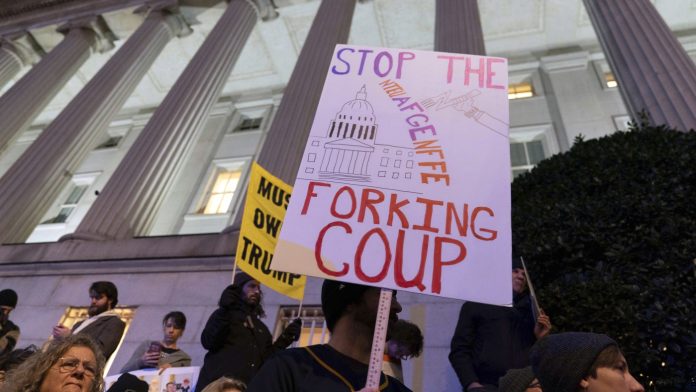
People protest during a rally against Elon Musk, seen as the architect of the “Fork in the Road” offer to federal employees, outside the Treasury Department in Washington, D.C. on Feb. 4, 2025.

Jose Luis Magana/AP


hide caption

toggle caption

Jose Luis Magana/AP

With just hours remaining for federal workers to decide whether to take the Trump administration’s offer to resign from their jobs now while keeping their pay and benefits through Sept. 30, a federal judge in Massachusetts will weigh a request from labor unions to issue a temporary restraining order and stay today’s deadline.

U.S. District Judge George A. O’Toole Jr., a Clinton appointee, will preside over a virtual hearing scheduled for 1 p.m. ET.

The lawsuit, filed by the legal group Democracy Forward on behalf of unions representing more than 800,000 civil servants, alleges that the Trump administration’s resignation offer is arbitrary and capricious as well as unlawful.

The unions argue that the offer fails to consider possible adverse consequences to the government’s ability to function; sets an arbitrarily short deadline; and is pretext for removing and replacing workers on an ideological basis, among other things.

The union is also challenging whether the U.S. Office of Personnel Management (OPM), which announced the offer through a Jan. 28 email titled “Fork in the Road,” exceeded its authority in promising pay and benefits through the end of September, pointing out that funding for most federal agencies expires on March 14, 2025.

The Antideficiency Act prohibits federal agencies from obligating any spending that has yet to be approved by Congress.

The resignation offer has gone out to more than 2 million civilian employees of the federal government, including employees of the National Security Agency and the Central Intelligence Agency. Earlier, OPM had excluded people in positions related to national security from the offer.

By late Wednesday, more than 40,000 employees, or roughly 2% of the federal workers eligible for the offer, had agreed to resign, according to an administration official who was not authorized to speak publicly about the matter. The administration expects the number to surge in the final hours before the deadline.

Meanwhile, confusion over whether the deal is legal and enforceable persists, and many federal employees remain wary.

“I don’t know anybody considering taking it who wasn’t already planning on retiring,” said David Casserly, a Labor Department employee of three and a half years, at a rally outside the Frances Perkins Building where the Labor Department is headquartered, on Wednesday.

The original “Fork” email warned employees who choose to stay that their jobs are not guaranteed. This week, leaders at some agencies warned of significant layoffs ahead.

Still, Casserly, who’s also a member of the American Federation of Government Employees, one of the unions suing the administration, said people are not intimidated.

“We have rights as federal employees, and we intend to exercise them to the fullest ability that we can,” he said.

Politico denies it’s a ‘beneficiary of government programs’ as questions swirl over receiving taxpayer funds

0

Politico leadership denied it’s a “beneficiary of government programs” after revelations of taxpayer funds being used to pay for its subscription service went viral.

“As surely many of you saw today, there was a spirited discussion at the White House and among officials connected to the Department of Government Efficiency on the subject of government subscriptions for journalism products, at POLITICO and other news organizations,” Politico’s CEO Goli Sheikholeslami and editor-in-chief John Harris jointly wrote to staff on Wednesday in a memo obtained by Fox News Digital. 

“This is a fine conversation to have, and we welcome it. The value of POLITICO subscriptions is validated daily in the marketplace. Some parts of today’s conversation, however, were confusing and left some people with false understandings. For this reason, we want you to hear from us on several points.”

WHITE HOUSE ANNOUNCES DOGE IS CANCELING PAYMENTS TO POLITICO

Politico was swept up in Elon Musk’s efforts to cut government spending as revelations that the news outlet received millions in federal funds went viral. (Screenshot/Politico,  (Photo by Samuel Corum/Getty Images) )

Sheikholeslami and Harris stressed Politico “has never been a beneficiary of government programs or subsidies—not one cent, ever, in 18 years” and touted that its subscription service Politico Pro “provides both private and public sector clients with granular, fact-based reporting, real-time intelligence, and tracking tools across key policy areas.”

“We are proud of the value our POLITICO Pro platform and policy journalism gives to all subscribers. As a practical matter, the overwhelming majority of our professional subscriptions under POLITICO Pro are in the private sector,” they wrote. 

The Politico chiefs later added, “We believe the work of a new administration—and the work being done by DOGE—is a hugely important story. In particular because of the ambition of the new administration to transform large sections of the government, our responsibility to cover this from every angle is urgent.”

Politico did not immediately respond to Fox News Digital’s request for comment.

EX-POLITICO REPORTERS REVEAL EDITORS QUASHED, SLOW-WALKED NEGATIVE BIDEN STORIES ‘WITH NO EXPLANATION’

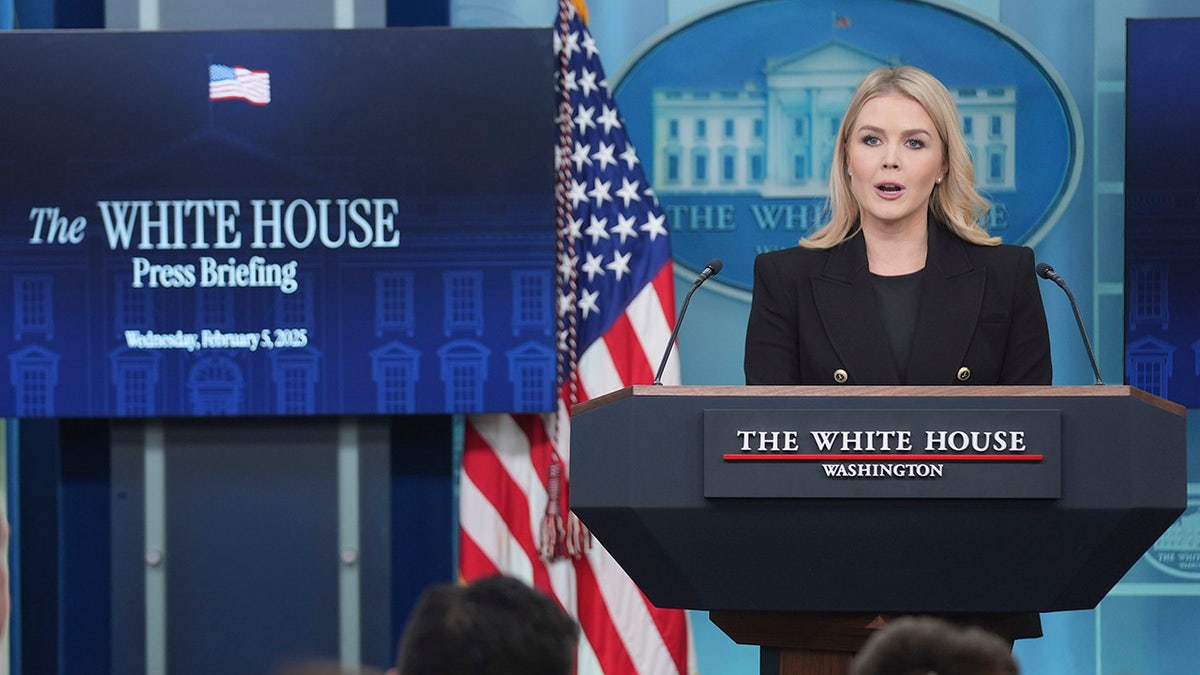
White House press secretary Karoline Leavitt vowed any government funding Politico had been receiving will end as President Donald Trump’s Department of Government Efficiency (DOGE) cracks down on spending. 

“I can confirm that the more than $8 million taxpayer dollars that have gone to, essentially, subsidizing subscriptions to Politico on the American taxpayers dime, will no longer be happening,” Leavitt said during Wednesday’s press briefing.

“The DOGE team is working on canceling those payments now,” she continued. “This is a whole government effort to assure that we are going line by line when it comes to the federal government’s books.”

Karoline Leavitt speaks at White House press briefing

White House press secretary Karoline Leavitt vowed that the Trump administration would cancel payments being made to Politico.  (AP/Evan Vucci)

There was speculation on social media that the $8 million in question all came from USAID, the agency currently being targeted by DOGE co-founder Elon Musk, but only $44,000 of it came from that agency. Base subscriptions are typically between $12,000 and $15,000 for three users. 

Politico received taxpayer funding for its costly subscription service from elsewhere in the federal government. The Department of Health and Human Services led the way, with $1.37 million followed by $1.35 million from the Department of the Interior, according to USAspending.gov. 

The Department of Energy paid Politico $1.29 million, the Department of Agriculture paid $552,024 and the Department of Commerce paid $485,572.  

TOP DEM STRATEGISTS WARN USAID FUNDING FIGHT IS A ‘TRAP’ FOR THE PARTY

Brazil Musk Investigation

Elon Musk, the world’s richest man in charge of Trump’s Department of Government Efficiency (DOGE), has announced plans to cut funding for USAID. 

CLICK HERE TO GET THE FOX NEWS APP

While Politico did receive smaller amounts of money for subscriptions from government agencies under prior administrations, it appears to have skyrocketed during the Biden administration, according to USAspending.gov. 

Japan’s Prime Minister Will Seek to Preserve Status Quo at Summit With Trump

0

As Japan’s prime minister prepares for his first meeting with President Trump, he is hoping to make a personal connection with the leader of the superpower on which his country depends both economically and militarily. But in the unpredictable Trump White House, even a simple meet-and-greet might be a risky gamble.

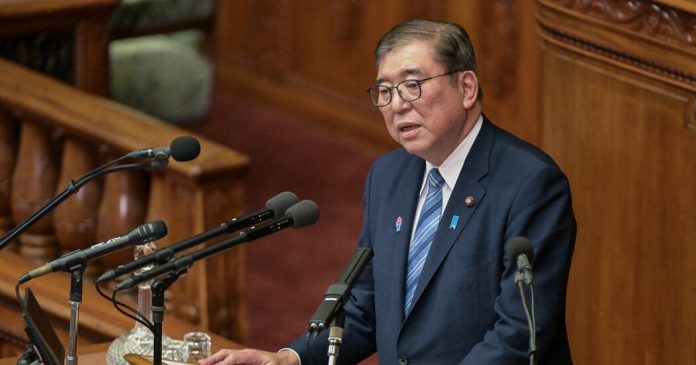
The summit between Mr. Trump and Japan’s prime minister, Shigeru Ishiba, which is scheduled for Friday, is the result of months of behind-the-scenes efforts by a wide range of Japanese: not just diplomats and lawmakers, but also one of the country’s richest investors and the widow of an assassinated former prime minister.

When he arrives at the White House, Mr. Ishiba will most likely seek reassurances that Mr. Trump won’t target Japan in a trade war or abandon America’s post-1945 security guarantees at a time when his nation faces a muscular China and a nuclear-armed North Korea.

In exchange, the Japanese prime minister is expected to come with concessions that could include promises to buy more American weapons or energy, invest in U.S.-based artificial intelligence and share more of the defense burden in the Asia-Pacific region.

“This summit will be the moment of truth,” said Narushige Michishita, a professor of security affairs at the National Graduate Institute for Policy Studies in Tokyo. “Does Mr. Trump view Japan as an indispensable partner in the Asia-Pacific, or are we just another counterpart across the bargaining table?”

So far, Japan’s name hasn’t come up when Mr. Trump has threatened to impose tariffs on many other major U.S. allies and trading partners. The two leaders seemed to get off to a good start when Mr. Ishiba called Mr. Trump in November to congratulate him on his election victory.

“It was my first time speaking to him, but he seemed friendly,” Mr. Ishiba told reporters. “I got the impression that he was someone I could speak honestly with.”

However, former diplomats say that asking the mercurial U.S. president to observe the status quo will be a tall order. These are still the early days in the administration of a transactional president who is eager to show results to his supporters.

“Ishiba is taking a risk,” said Glen Fukushima, a senior fellow at the Center for American Progress who was a U.S. trade diplomat. “The more time he spends with Trump, the more chance that Trump will make new demands.”

Then there’s the possibility of what some analysts now call a “Gaza surprise,” a reference to the summit this week between Mr. Trump and Prime Minister Benjamin Netanyahu of Israel, when the U.S. president blindsided the world by proposing a takeover of Palestinian territory.

Ahead of the Japanese-U.S. summit, Mr. Ishiba has prepared by gathering an informal “Trump strategy council” of top officials from across his government, who gamed out the possible demands that the president might make and how Japan should respond, according to Japanese news media.

Mr. Ishiba has also tried to learn from one of his predecessors, Shinzo Abe, a long-serving prime minister who was shot and killed in 2022 after leaving office. Mr. Abe used face-to-face meetings to build rapport with Mr. Trump during the first Trump administration.

One of Mr. Abe’s strategies was to come bearing gifts. When he became the first world leader to meet with the newly elected Mr. Trump in 2016 in Trump Tower, Mr. Abe presented his host with a gold-plated golf club. At a summit three years later, Mr. Abe brought a bigger present: a promise to buy 105 American F-35 fighter planes worth billions of dollars.

On Monday, Mr. Ishiba said he planned to talk with Mr. Trump about joint development of artificial intelligence. He made the comments after meeting with Sam Altman of OpenAI and Masayoshi Son, a Japanese tech investor who in December stood next to Mr. Trump to pledge $100 billion in investments to create 100,000 jobs in the United States.

Mr. Ishiba is also expected to emphasize major increases in security spending, which could lead to additional purchases of U.S.-made weapons. Japan plans to expand the size of its defense budget by 65 percent in the five years ending in 2027.

Still, Mr. Ishiba’s efforts to follow Mr. Abe’s playbook have not always gone well. After Mr. Trump’s re-election last year, Mr. Ishiba tried to meet him, only to be turned down on the grounds that the president-elect wasn’t meeting world leaders right away.

Japan turned to Mr. Abe’s widow, Akie Abe, who attended Mr. Trump’s inauguration ceremony as a guest of the first lady, Melania Trump. Mr. Trump referred to his personal tie with the deceased Mr. Abe when mentioning the coming summit with Mr. Ishiba.

“Prime Minister Shinzo Abe was a very close friend of mine,” Mr. Trump told reporters last Friday. “What happened to him was very sad, one of the saddest things that ever happened, but they’re coming to talk to me, so I’m looking forward to it.”

There have been concerns that Mr. Ishiba won’t be able to replicate Mr. Abe’s personal chemistry with Mr. Trump. While Mr. Abe was an avid golfer who played with Mr. Trump at a club in Japan, Mr. Ishiba favors interests like building plastic models.

Kiuko Notoya and Hisako Ueno contributed reporting.

CBS appears poised to settle Trump lawsuit over ’60 Minutes’ : NPR

0

In this photo illustration a CBS logo seen displayed on a smartphone in March 2020.

SOPA Images/LightRocket via Getty Images


hide caption

toggle caption

SOPA Images/LightRocket via Getty Images

The television news magazine 60 Minutes — the most storied and profitable show in the history of CBS News — currently finds itself as the avatar of President Trump’s onslaught against the media in the courts and the court of public opinion.

Despite brave talk from the news division, CBS’s parent company appears to be inching toward capitulation, as its controlling owner wants to drag CBS out of the headlines and wrap up a corporate sale.

Before becoming president, Trump sued CBS over 60 Minutes‘ interview with then-Vice President Kamala Harris shortly before the election. Now, Trump’s newly elevated Federal Communications Commission chairman, Brendan Carr, is using the levers of government to put pressure on the network.

On Monday, at Carr’s request, CBS News sent the raw footage and the full transcripts of the interview to the FCC. On Wednesday, the FCC posted it publicly. Carr announced the agency would proceed with a formal investigation, tweeting “The people will have a chance to weigh in.”

CBSpublished the videos and transcripts shortly after, along with a statement defending its journalism. It did not comment in response to NPR’s questions for this story.

Before Carr’s involvement, CBS had refused to release those materials, calling Trump’s demand for them an intrusion on its journalists’ First Amendment rights. Democratic Commissioner Anna M. Gomez called the FCC’s investigation part of “the administration’s focus on partisan culture wars” and urged her fellow commissioners to dismiss it.

“Now, more than ever, only a fearless press stands between an aggressive [White House] and the public,” former CBS News correspondent Marvin Kalb posted on a Facebook page for CBS alumni. “If news organizations such as CBS bend a knee before a president, then we have all taken a big step towards autocracy.”

The clash at CBS represents just the latest front in a multi-pronged assault on the press waged by the second Trump administration, using litigation, regulatory agencies, budget powers, executive prerogatives and sympathetic lawmakers on Capitol Hill.

The specifics hinge on an editorial choice made by the network. In previewing last fall’s interview with Harris on Face The Nation, CBS used a different portion of her answer to a question about Israel than it used in the lengthier broadcast on 60 Minutes. Trump and his conservative allies alleged that the network had edited the answer to mask her incompetence in an act of partisan bias. (Trump pulled out of an interview with the show, a tradition with presidential candidates.)

Last week, a CBS corporate statement said the network was legally required to comply with the request from the FCC chairman, although the network has challenged agency actions in the past. A CBS News spokesperson did not reply to NPR’s requests for comment, including to the question of why it could not have publicly posted the transcripts earlier on its own authority.

In its statement Wednesday, CBS said the difference reflected an editorial judgment made for two separate programs. The full transcripts show “the 60 Minutes broadcast was not doctored or deceitful,” CBS said in the statement.

“In reporting the news, journalists regularly edit interviews – for time, space or clarity,” CBS said. “In making these edits, 60 Minutes is always guided by the truth and what we believe will be most informative to the viewing public – all while working within the constraints of broadcast television.”

CBS’s parent company looks toward settlement — and a corporate sale

According to several people with knowledge of internal deliberations, the network’s corporate parent Paramount appears poised to settle Trump’s lawsuit, even though it is widely seen as lacking legal merit. (They asked for anonymity due to the sensitivity of the subject and the ongoing litigation.)

Inside the newsroom, 60 Minutes Executive Producer Bill Owens has insisted to the show’s staff he won’t make an apology, according to several colleagues. (The remarks were first reported by the New York Times.) Similarly, the president and chief executive of the news division, Wendy McMahon, has told associates she opposes any settlement. A review of the raw transcript shows Harris approaching a delicate and complicated issue warily, seeking to avoid any big headlines.

As FCC chairman, Carr has taken an expansive view of his regulatory powers to exert pressure on the media. In the case of CBS, he has significant leverage to do so: Carr and his agency are currently weighing whether to approve Skydance Media’s acquisition of Paramount, CBS’s parent company. Neither Carr nor the FCC responded to NPR’s requests for comment.

The agency’s power derives from regulating Paramount’s 27 local television stations; the transaction would involve the transfer of the licenses Paramount holds to Skydance to operate them on the public airwaves. The Justice Department or Federal Trade Commission could also intervene. Federal lawyers sought to block AT&T’s takeover of CNN’s parent company during Trump’s first term.

For all of the drama, however, the struggle over CBS cannot be viewed in isolation.

At the FCC, Carr’s Democratic predecessor dismissed claims involving all four major networks – CBS, ABC, NBC and Fox – shortly before leaving office. Beyond CBS, Carr has revived formal reviews involving the programming choices of ABC and NBC, though he notably did not reignite the complaint about Rupert Murdoch’s Fox station in Philadelphia linked to Fox News’ amplification of lies of election fraud in 2020.

A full-court press on the press 

More broadly, the president and his allies are seeking to pressure the media writ large, both to inhibit its ability to check the president and to punish it for coverage he views as unfavorable.

ABC News’ parent company, The Walt Disney Co., paid $15 million toward Trump’s future presidential library, plus another $1 million in legal costs, to settle Trump’s defamation suit over inaccurate remarks about him by anchor George Stephanopoulos. The social media giant Meta paid $25 million to settle Trump’s suit over sidelining him from Facebook after the January 2021 siege of the U.S. Capitol.

Washington Post owner Jeff Bezos and Los Angeles Times owner Patrick Soon-Shiong stopped their newspapers from endorsing Harris ahead of the 2024 election. They each cited the low esteem in which the media is held by the broader public. Both owners are billionaires with major business concerns before federal agencies; in Amazon founder Bezos’s case, they include contracts worth billions of dollars.

In Trump’s first term, he publicly criticized the possibility of Amazon receiving a multibillion-dollar cloud computing contract it expected to win from the Pentagon; when it went to Microsoft, Amazon sued and was ultimately given a share of it.

Bezos sat on the dais during Trump’s inauguration with other tech titans. Soon-Shiong has tweeted energetically in support of Trump and his nominee to oversee the Department of Health and Human Services, Robert F. Kennedy Jr., and has patents pending awaiting the review of federal officials.

Beyond CBS, Trump still has lawsuits pending against Gannett’s Des Moines Register for polling ahead of the election that inaccurately found Harris in the lead (Trump won Iowa decisively) and the committee that awards Pulitzer Prizes over awards given to coverage of the 2016 Trump campaign’s ties to the Russian regime.

“Each settlement weakens the democratic freedoms on which these media organizations depend,” Jameel Jaffer, executive director of the Knight First Amendment Institute at Columbia University, writes in the New York Times. “They create precedents — not legal ones, but precedents nonetheless — that will shape the way that judges and the public think about press freedom and its limits. They also damage the media institutions’ prestige and credibility.”

The challenges arrive in ways large and small.

Under new Secretary Pete Hegseth, a former Fox News host, the Defense Department tossed Politico, NPR, the New York Times and NBC News from their reserved press spaces at the Pentagon in favor of the conservative New York Post, the right-wing Breitbart and One America News Network and the liberal HuffPost, a site that, according to a spokesperson, hadn’t asked for a workspace. No press credentials were revoked; the dislodged outlets can still visit the Pentagon and report there.

Carr opened an inquiry into NPR and PBS, saying he was concerned their corporate underwriting spots had become virtually indistinguishable from commercials. The two public broadcasting giants said they were scrupulous to follow the law and guidance from the FCC itself over the decades. Carr used his announcement to urge lawmakers on Capitol Hill to review whether to fund public broadcasting at all.

A question to the White House press secretary

When Trump’s chief spokesperson was asked about government spending on news organizations at a news briefing on Wednesday, the question brought a smile to her lips.

“Coming out here, to the briefing room, I was made aware of the funding from the U.S. [Agency for International Development] to the media outlets, including Politico, who I know has a seat in this room,” White House Press Secretary Karoline Leavitt told reporters. “I can confirm that the more than 8 million taxpayer dollars that have gone essentially to subsidizing subscriptions to Politico on the public taxpayer’s dime will no longer be happening.”

Politico’s leaders said in a memo that myriad government agencies subscribe to Politico Pro, the fact-drenched paid research service drawn upon by policymakers and specialists in government and the private sector alike.

And it is doing so at a time when government officials are promising to slash the budgets of federal agencies performing independent research, pulling back on how much information is available to the public, and firing a slew of inspectors general, who provide Congress and the public with watchdog reports on what the government is doing out of view.

The question was posed to Leavitt by a new face in the press room: Brian Glenn, a national correspondent for the far-right Real America’s Voice network. He is also dating U.S. Rep. Marjorie Taylor Greene, a Georgia Republican and Trump backer.

Last week, Greene invited the chief executives of NPR and PBS to Capitol Hill for hearings on federal funding for the public broadcasters over what she said was their “blatantly ideological and partisan coverage.” The two public broadcasting chiefs said in separate statements that their networks offer independent, non-partisan news coverage and educational programming for the nation without cost.

“The opposition party is the media,” former Trump White House political strategist Steve Bannon told PBS’ Frontline back in 2019, during Trump’s first term in office. “And the media can only — because they’re dumb and they’re lazy — they can only focus on one thing at a time.”

“And all we have to do is flood the zone,” Bannon said. “Every day we hit them with three things, they’ll bite on one, and we’ll get all of our stuff done.”

Disclosure: This news analysis was reported and written by NPR Media Correspondent David Folkenflik and edited by Deputy Business Editor Emily Kopp and Managing Editor Gerry Holmes. Under NPR’s protocol for reporting on itself, no NPR corporate official or news executive reviewed this story before it was posted publicly.

Mexican troops begin arriving at southern border following deal with Trump

0

Join Fox News for access to this content

You have reached your maximum number of articles. Log in or create an account FREE of charge to continue reading.

By entering your email and pushing continue, you are agreeing to Fox News’ Terms of Use and Privacy Policy, which includes our Notice of Financial Incentive.

Please enter a valid email address.

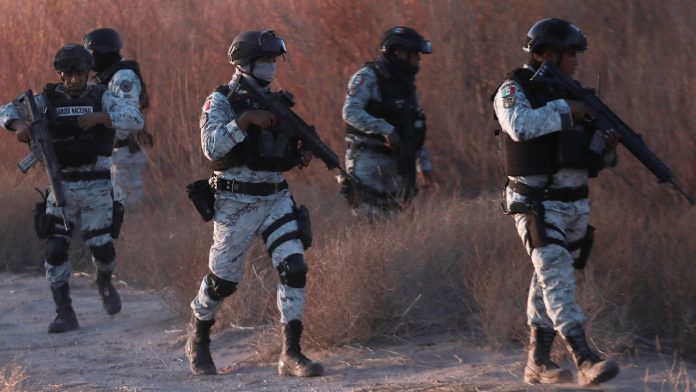
Mexico has started to deploy the 10,000 troops it promised it would send to its border with the United States in response to President Donald Trump’s tariff threats as his administration cracks down on border security.

Troops with the Mexican National Guard and Army were seen arriving at the border separating Ciudad Juárez and El Paso, Texas, on Wednesday, according to The Associated Press.

The two largest deployment sites are Ciudad Juárez and Tijuana, where at least 1,650 troops and 1,949 troops, respectively, are expected to be sent, according to the Mexican government via The AP.

MEXICO AGREES TO DEPLOY 10,000 TROOPS TO US BORDER IN EXCHANGE FOR TARIFF PAUSE

Mexico has started deploying National Guard and Army soldiers to its border with the United States in accordance with the 10,000 troops it promised to send to the border under a deal made with President Donald Trump to avoid a trade war. (AP Photo/Christian Chavez)

Mexican President Claudia Sheinbaum agreed to deploy troops to its northern border hours before Trump-approved tariffs on imports were set to go into effect in response to the drugs and illegal aliens flowing into the U.S. from Mexico.

“We need to protect Americans, and it is my duty as President to ensure the safety of all,” Trump wrote in a Truth Social post Saturday. “I made a promise on my Campaign to stop the flood of illegal aliens and drugs from pouring across our Borders, and Americans overwhelmingly voted in favor of it.”

Part of the deal Trump struck with Sheinbaum included his promise to combat the trafficking of American guns into Mexico that are fueling cartel violence.

Mexican National Guard member

A Mexican National Guard member patrols along the Mexico-US border in Ciudad Juárez on Feb. 5, 2025. (AP Photo/Christian Chavez)

TRUMP PAUSES TARIFFS ON MEXICO AFTER STRIKING DEAL WITH MEXICAN PRESIDENT

Mexican patrols were already working along the border near Tijuana on Wednesday, The AP said, and service members along the bushy outskirts of Ciudad Juárez could also be seen removing makeshift ladders and ropes tucked into trenches.

Mexican service members moving ladder

Mexican National Guard members carry a ladder they found while on patrol along the Mexico-US border in Ciudad Juárez on Feb. 5, 2025. (AP Photo/Christian Chavez)

“There will be permanent surveillance on the border,” National Guard leader José Luis Santos Iza told reporters as the first set of soldiers arrived. “This operation is primarily to prevent drug trafficking from Mexico to the United States, mainly fentanyl.”

CLICK HERE TO GET THE FOX NEWS APP

Secretary of State Marco Rubio, who is on a diplomatic trip through Latin America, thanked the Mexican government for sending the troops to the border, according to a statement from Mexico.

Mexican National Guard members line up at plane

At least 1,650 Mexican troops were deployed to Ciudad Juárez and 1,949 to Tijuana. (AP Photo/Martin Zetina)

The Associated Press contributed to this report.

What to Know About the Trump Family’s Deals in the Middle East

0

As President Trump pushes a new plan to take control of Gaza and clear out an area that once was home to an estimated two million residents, he is advocating bringing the United States much more deeply into a region where his family has a growing collection of real-estate and business interests.

There is no part of the world as crucial to the growth of various Trump family business ventures as the Middle East, including Saudi Arabia, Qatar, United Arab Emirates and Israel, when the full portfolio of Mr. Trump as well as Jared Kushner, his son-in-law, are included. Here is a look at the family’s interests in the region and Mr. Trump’s proposal for Gaza.

Mr. Trump declared on Tuesday that the United States should seize control of Gaza and permanently displace the entire Palestinian population of the devastated seaside enclave.

Mr. Trump suggested the resettlement of Palestinians would be akin to the New York real estate projects he built his career on. “If we could find the right piece of land, or numerous pieces of land, and build them some really nice places with plenty of money in the area, that’s for sure,” he said. “I think that would be a lot better than going back to Gaza.”

“Everybody I’ve spoken to loves the idea of the United States owning that piece of land,” Mr. Trump added, “developing and creating thousands of jobs with something that will be magnificent.”

Mr. Trump’s aides on Wednesday walked back some of his comments, with the White House press secretary, Karoline Leavitt, saying that “the president has not committed to putting boots on the ground in Gaza.”

The Middle East has in the past three years turned into the hottest spot for the Trump family in terms of new international real-estate deals. Most of these are so-called branding deals, which collectively earn the family tens of millions of dollars in fees in exchange for the right to use the name to help boost luxury condo, golf or hotel sales.

Recent agreements have been signed with a Saudi-based real estate company called Dar Al Arkan to build high-rise luxury apartments, golf courses or hotels in Oman, Saudi Arabia and Dubai.

“We are delighted to strengthen our ongoing relationship with the Trump Organization,” Ziad El Chaar, an executive with Dar Al Arkan’s subsidiary, said last year, in announcing one of the deals.

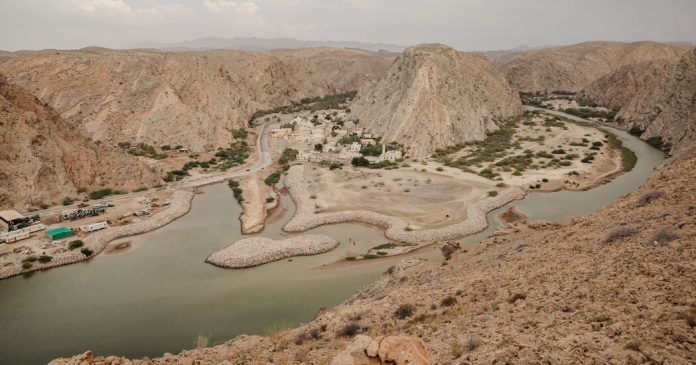
The project in Oman, which is the farthest along, involves the government of Oman itself, as it owns the land where the Trump golf course and hotel are being built.

Although the opening of the resort destination is still at least three years off, the Trump Organization has already raked in at least $7.5 million from the Oman deal, financial reports from the past two years show. Eric Trump and Donald Trump Jr. visited Oman this summer to check the project’s progress, visiting the site with Yousef Al Shelash, the chairman of Dar Al Arkan.

Dar Al Arkan itself has close ties with the Saudi royal family; the government there has been an important partner for the real estate company’s owners as they have built up their business.

The Trump family also examined a potential deal in Israel before the Oct. 7, 2023, attacks and remains interested in doing a project there, The Times previously reported. Mr. Trump’s son Eric Trump has said he intends to wait until the war ends before moving ahead.

Even before this recent burst of new Middle East deals, the Trump family already had an outpost in the region. Trump International Golf Club, Dubai, opened in 2017, shortly after Mr. Trump started his first term in the White House.

The partner in this Dubai club is DAMAC Properties, run by Hussain Sajwani, a billionaire real-estate executive who, Mr. Trump boasted in December, plans to invest billions of dollars in the United States to build data centers.

The Trump family also has been a key partner to LIV Golf, the upstart professional golf league financed by Saudi Arabia’s sovereign wealth fund. In April, for the fourth year in a row, the league is slated to hold one of its tournaments at the Trump National Doral near Miami.

LIV Golf pays the Trump family to host the tournament, which also drives thousands of customers to its restaurants and hotel rooms during the weekend event, scheduled for April of this year. Mr. Trump and his family own more than a dozen golf courses worldwide, all of which benefit from the media attention that the Saudi-backed tournament brings.

Mr. Trump has long sought to attract these kinds of tournaments to his golf courses, but had at least one major event canceled after a mob of his supporters attacked the Capitol on Jan. 6, 2021.

The president’s son-in-law, Mr. Kushner, runs a private equity firm called Affinity Partners that has raised $4.5 billion, mostly from sovereign wealth funds of the oil-rich nations of Saudi Arabia, Qatar and the United Arab Emirates, based on relationships he built as an adviser to Mr. Trump during his first term.

Mr. Kushner, who has said he does not plan to return to the White House, also has invested in at least two Israel-based businesses: Phoenix Holdings, an insurance company, and the car leasing division of Shlomo Holdings.

Mr. Kushner’s business partner at Shlomo Holdings is also a partial owner of Israel’s only domestic builder of warships. That puts him in business with executives who are also major shareholders in an Israeli military contractor whose vessels have been used in the war in Gaza, armed with American-made weapons.

It was Mr. Kushner who last year first floated the idea of considering Gaza as a potential real-estate development site. “Gaza’s waterfront property could be very valuable,” Mr. Kushner said last year during an event sponsored by Harvard’s Kennedy School of Government, suggesting that Israel “move the people out and then clean it up.”

As 'Fork' resignation deadline arrives, a federal judge will consider a stay

0

The Trump administration has given millions of federal employees until Thursday to decide whether to stay or go. Yet a lot of unanswered questions remain about the “deferred resignation” offer.

Students, professors praise Trump admin’s ‘necessary’ multi-agency antisemitism crackdown

0

The Trump administration’s multi-agency plan to “root out” antisemitism across U.S. college campuses received praise from students and professors as fear persists among the Jewish community.

“You see in schools like UC Berkeley, Portland or Harvard, Jewish students are being locked out of libraries, and they’re being harassed by other students,” high school junior Gregory Lyakhov said on “Fox & Friends First” Wednesday. “That’s not how I want my college experience to go, and that’s definitely not how it should be.”

Lyakhov, a Trump supporter, blamed the Biden administration for taking “no action” to address antisemitism and Hamas sympathizers terrorizing campuses during the former president’s term. 

TRUMP EDUCATION DEPT LAUNCHES PROBE INTO ‘EXPLOSION OF ANTISEMITISM’ AT 5 UNIVERSITIES

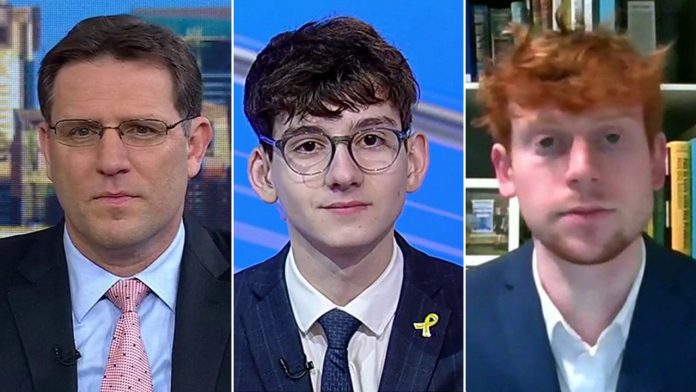
Columbia University professor Ran Kivetz (left), high school student Gregory Lyakhov (center) and University of Pennsylvania student Noah Rubin (right). (Fox News)

Noah Rubin, a student at the University of Pennsylvania, described witnessing “true violence” similar to what Lyakhov described.

“Jewish students are being intimidated. They’re being physically harassed. There are people breaking the laws, and… we’re not holding them accountable in the ways that we should be,” he told “America’s Newsroom.” 

“So I think that this executive order says we’re not going to tolerate this anymore, and it’s a very great first step.”

ISRAELI HARVARD STUDENT SPEAKS OUT ON ANTISEMITISM BEHIND LATEST SETTLEMENT

President Donald Trump signed an executive order on “Additional Measures to Combat Anti-Semitism” last week. The directive gives all federal agencies a 60-day window to identify civil and criminal authorities available to combat antisemitism and deport anti-Jewish activists who broke any laws. 

On Monday, the Justice Department issued a press release pursuant to the order, announcing the formation of a multi-agency taskforce to combat antisemitism.

Ran Kivetz, a professor at Columbia Business School, called the probe “absolutely necessary” while weighing in on the announcement on Wednesday.

“It’s a great step. Things have gotten better above ground, so the type of riots that we saw that went on consistently at Columbia University, those types of riots and violence and [the] takeover of buildings has come down below ground…

HARVARD SETTLES TWO LAWSUITS DEALING WITH ALLEGATIONS OF ANTISEMITISM

“…This task force, which is multiagency – it’s the Department of Justice, it’s the Department of Education, other agencies – that’s a great start, a great move,” he said.

Trump’s Education Department will probe five universities for alleged antisemitism – Columbia University, Northwestern University, Portland State University, UC Berkeley and the University of Minnesota, Twin-Cities.

“Too many universities have tolerated widespread antisemitic harassment and the illegal encampments that paralyzed campus life last year, driving Jewish life and religious expression underground. The Biden Administration’s toothless resolution agreements did shamefully little to hold those institutions accountable,” Craig Trainor, the acting assistant secretary for civil rights at the Education Department, said in a statement. 

CLICK HERE TO GET THE FOX NEWS APP

Congo Mourns Its Dead After Rebels Capture Key City of Goma

0

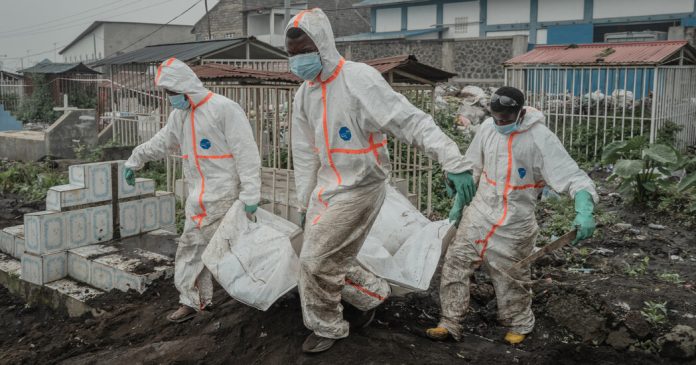
Mechanical diggers have spent days excavating the dark, volcanic earth of the city of Goma, preparing long trenches in which to bury the victims of one of the deadliest battles in decades in the Democratic Republic of Congo.

Humanitarian workers in hazmat suits and teenagers in flip-flops and dirty masks tended to the dead amid the overwhelming stench.

“We have days of mass burials ahead of us,” said Myriam Favier, head of the International Committee of the Red Cross in Goma.

Nearly 3,000 people were killed in Goma last week, according to early estimates provided by the U.N. peacekeeping operation in eastern Congo. The fighting between M23, a rebel group that the U.N. says is funded by Rwanda, and Congolese armed forces resulted in the rebels’ capture of Goma last week.

Millions have died in the past 30 years in Congo, where ethnic tensions and fighting over access to land and mineral resources have erupted into several wars. But rarely have so many been killed within just a few days, experts said.

Though most fighting has stopped in Goma in recent days, the city’s capture by M23 rebels has raised fears of a broader war between Congo, Rwanda and their respective allies.

The death toll is likely an underestimate, according to Vivian van de Perre, the deputy head of the U.N. peacekeeping force based in Goma.

Many bodies still have to be collected in areas of Goma that remain unreachable by humanitarian organizations. More than 2,800 additional Congolese have been wounded, nearly two thirds of them civilians, according to the International Committee of the Red Cross.

The ongoing conflict has already drawn in mercenaries from Eastern Europe and soldiers from allied countries such as Burundi and Uganda. U.N. peacekeepers who have been deployed in eastern Congo for a dozen years have been accused by both sides of not doing enough to end the fighting.

M23 launched its incursion into Goma on Jan. 26 and fully captured the city on Jan. 30, after a monthslong offensive. More than 700,000 people have been displaced.

In front of the city’s airport on Tuesday, dozens of volunteers and Red Cross workers interred victims in mass graves dug in an already overcrowded cemetery.

The land where bodies can be buried in Goma is limited, Ms. Favier said. The city is cornered by Rwanda on its eastern side, Lake Kivu on its southern shore, and camps for displaced people and M23-controlled territories in its eastern and northern areas.

Rwanda has denied backing M23, even as officials from the United Nations highlight how its army and intelligence services train, arm and command the rebels. Experts say that Rwanda seeks to exploit mineral resources in eastern Congo by using M23 as a proxy group.

Since capturing Goma, M23’s fighters have been patrolling the streets aboard vehicles seized from the Congolese army. They wear tactical gear and carry automatic rifles and sophisticated electronic devices that give them the look of a conventional military.

This week, rebel leaders threatened to attack a U.N. base where 2,000 Congolese have taken shelter if peacekeepers didn’t hand them over. Those being protected at the base include high-ranking Congolese military and intelligence officers, the city’s mayor and civil servants, according to U.N. officials.

On Wednesday, M23 broke a unilateral cease-fire it had declared days earlier and captured a village in Goma’s neighboring province of South Kivu.

Among the many victims buried this week was a celebrated local boxer, Jean de Dieu Balezi, known as Kibomango, who was killed by a stray bullet, according to his relatives. Mr. Balezi founded the Friendship Boxing Club, where he trained generations of young boxers who were child soldiers, recruited by armed groups like M23 in eastern Congo.

M23 has ordered locals to clean Goma’s streets, but they remain littered with military uniforms abandoned by Congolese soldiers.

“Wherever I sweep, I find these,” Anna Mapendo said as she showed dozens of bullets collected in her courtyard. Ms. Mapendo and her husband said that about 20 Congolese soldiers broke into their home last week to escape from M23 fighters who were attacking the airport, which sits behind their house.

Two of their sons were wounded by bullets when they were in their courtyard, Ms. Mapendo said. She had just returned from the hospital to bring them rice and cassava.

Désiré Mirimba, Ms. Mapendo’s husband, accused Congolese soldiers of looting their home as they fled the rebels. “We feel safe for now with the new ones,” Mr. Mirimba said, referring to M23. “But we know that it’s very precarious.”

In Goma on Wednesday, pockets of the city remained unreachable to humanitarian agencies that lost months of aid in looting last week. Medicine, bags of rice from the World Food Program and cans of cooking oil were on sale across the city.

The freeze on foreign aid announced by the Trump administration last week has raised alarm over the deteriorating situation in eastern Congo, which had already been one of the world’s largest humanitarian crises.

Caleb Kabanda contributed reporting from Goma and Justin Makangara from Kinshasa, Democratic Republic of Congo.