Friday, November 13, 2026
Home Blog Page 274

CIA offering buyouts to its entire workforce: report

0

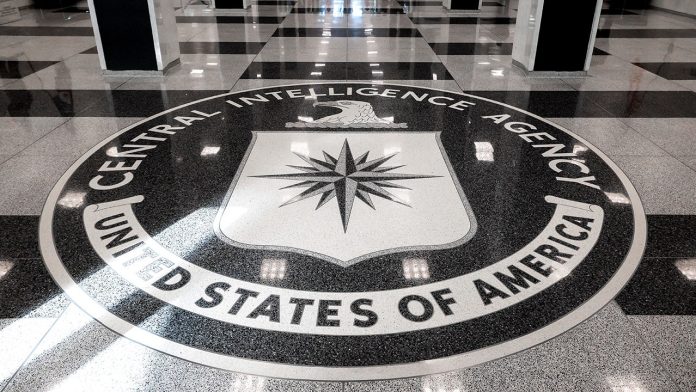
The Central Intelligence Agency, in what officials reportedly claimed was an effort to bring the agency in line with Trump’s agenda, offered buyouts to its entire staff on Tuesday.

WHITE HOUSE EXPECTING ‘SPIKE’ IN FEDERAL RESIGNATIONS AS AT LEAST 20K TAKE BUYOUTS

The seal of the Central Intelligence Agency is shown at the entrance of the CIA headquarters in McLean, Va. (REUTERS/Evelyn Hockstein)

The Wall Street Journal reported that the agency is the first to tell its employees they can quit and get eight months of pay and benefits.

CLICK HERE TO GET THE FOX NEWS APP

Last month, the Trump administration offered about 2 million federal employees buyouts to be paid through September, though the window to accept the offer closes on Thursday.

El Salvador’s Prisons Are Notorious. Will They House Trump’s Deportees?

0

A day after President Nayib Bukele of El Salvador offered to imprison convicted criminals from the United States, including U.S. citizens, the question of whether such a plan could actually be accepted and implemented was still unanswered.

Secretary of State Marco Rubio, who stopped in El Salvador while visiting Central America this week, said on Tuesday that the Trump administration would have to “study” the offer from Mr. Bukele to jail convicts from the United States, for a fee. “But it’s a very generous offer,” he said.

Mr. Rubio himself said it was unclear if the United States could legally send convicts, including Americans, to a foreign prison.

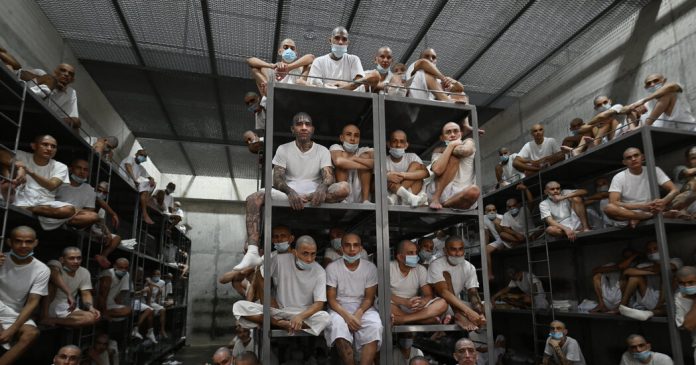
But the proposal has drawn attention to the prisons that Mr. Bukele has used in recent years to cripple the gangs that once ran rampant in El Salvador. They have become symbols of his strength and popularity, including with Mr. Trump — even as human rights groups say the crowded prisons are holding pens for tens of thousands of people rounded up in arrests that have ensnared innocents.

Analysts say it is unlikely such a plan would hold up in court, particularly where it concerns U.S. citizens.

But whether or not Mr. Bukele’s offer is ever actually acted on, analysts said it serves as a way for both nations’ governments to project a shared vision of a tough approach to lawbreakers.

“The announcement is a P.R. win,” said Gustavo Flores-Macías, a professor of government and public policy at Cornell University who specializes in Latin America. It allows Mr. Bukele to show he is all-in for Mr. Trump, and bolsters the Trump administration, “which is looking to dissuade undocumented migration by raising the stakes if apprehended.”

And yet, whatever its chances of being out into practice, Mr. Bukele’s announcement immediately sparked concern among human rights groups in the United States and beyond, which warned that the Bukele administration’s anti-gang crusade has come at the expense of human rights.

“While the gangs no longer constitute a threat, a system of terror and repression has emerged in the country,” said Ana María Méndez Dardón, the Central America director at the Washington Office for Latin America, a nonprofit human rights group.

At a hearing before the Inter-American Commission on Human Rights in July 2024, Alexandra Hill Tinoco, El Salvador’s foreign minister, said the country is “meeting all international standards” for prisoners and added that reports of human rights violations are “baseless accusations and far from our reality.”

El Salvador was once known as the hemisphere’s murder capital — with one of the highest homicide rates anywhere in the world.

But in 2022, Mr. Bukele declared a state of emergency to quell gang violence, and sent the military into the streets, arresting tens of thousands of people around the country, accusing them of gang ties or other crimes. More than 25,000 were imprisoned in the first weeks of Mr. Bukele’s crackdown.

Nearly three years later, the state of emergency has yet to be lifted.

In that time, the nation has undergone a remarkable transformation. Homicides have sharply decreased, and extortion payments that gangs demanded from businesses and residents also declined.

As a reminder of the government’s zero tolerance, tough-on-crime policies, photos and videos are often circulated that show scores of inmates, sometimes shirtless and clad only in boxers, bending over with their hands on their shaven heads.

Mr. Bukele earned adulation from leaders in the region and beyond, and most Salvadorans support him, not in spite of his strongman tactics but because of them.

In November, his approval rating was 91 percent, according to a CID Gallup poll, one of the highest in the world for a world leader — although support for him dwindled recently after his government reversed a landmark mining ban.

Still, Mr. Bukele’s approach eroded civil rights in the country, human rights experts say: Mass arbitrary arrests, extreme overcrowding at prisons, reports of torture and at least 261 prison deaths between 2022 and 2024 were documented by several groups.

Mr. Bukele’s prisons are not typical penitentiaries. El Salvador’s gangs once used jails as operational hubs to issue orders, extort businesses on the outside and recruit new members — something also seen inside prisons across Latin America.

That no longer seems to happen “because of the extreme measures taken to control prisoners,” according to a 2023 report by Insight Crime, an organized-crime research group.

The star of Mr. Bukele’s strategy is his so-called mega prison: the Terrorism Confinement Center, known as CECOT, a hulking detention center that opened in 2023 an hour outside the country’s capital, San Salvador. The facility is big enough to hold up to 40,000 inmates, some of them as young as 12.

The vast majority of the 85,000 Salvadorans apprehended under the 2022 state of emergency — which allows for mass arrests with no due process — have essentially disappeared into the prison system, where many have been held for years without trial and without their families even knowing if they are alive.

While the imposing CECOT has garnered international attention, most prisoners are held in other, smaller facilities where “they have been subjected to cruel and inhumane treatment,” said Noah Bullock, the executive director of the Salvadoran advocacy group Cristosal, which has interviewed hundreds of detainees arrested under the state of emergency.

Cristosal and Human Rights Watch have reported that inmates were being tortured and deprived of food. Many inmates’ fates were decided in mass trials with judges whose identities were kept secret.

The State Department said in a statement that Mr. Bukele offered to take undocumented migrants from any country, not just El Salvador, who have been convicted of crimes, including members of the MS-13 and the Tren de Aragua gangs.

And in what the State Department called “an extraordinary gesture, never before extended by any country,” it said Mr. Bukele had offered to house “dangerous American criminals, including U.S. citizens and legal residents.” Analysts say that such a move is likely to be challenged, even if it were to be embraced by the Trump administration.

“I do not think that it will stand up in the courts,” Mneesha Gellman, an associate professor of political science at Emerson College, said, citing multiple domestic and international laws that govern the treatment of both undocumented people in the United States and U.S. citizens.

However, the two governments could reach an agreement that would allow the United States to deport large numbers of people to El Salvador, including non-Salvadorans, Ms. Gellman said. The United States is eager to find places to deport migrants whose countries do not accept regular U.S. deportation flights, such as Cubans and Nicaraguans.

Whether in or out of prisons, migrants would find themselves extremely vulnerable in El Salvador.

“They would not have citizens’ rights in that country,” Ms. Gellman said, noting that migrants in El Salvador have reported experiencing abuses at the hands of criminal groups as well as state actors, such as the police and the military.

In 2019, El Salvador signed an agreement with the first Trump administration to receive non-Salvadoran migrants who had been detained in the United States after U.S. officials cut off some aid to El Salvador, accusing the country of not doing enough to curb illegal migration.

It also agreed to process asylum requests to keep migrants from heading north to the United States.

Known as a “safe third country” agreement, the deal was never implemented because of the coronavirus pandemic and was eventually terminated by the Biden administration. Mr. Bukele referred to it on Monday, saying his new proposal was “more important and of a much broader scope than the agreements made in 2019.”

Mr. Bukele has appeared eager to strengthen his ties to the Trump administration, and the latest offer “clearly helps to consolidate this relationship between the MAGA world and El Salvador,” said Manuel Meléndez Sánchez, a Salvadoran political scientist and researcher at Harvard University.

But relations between the two government have not always been close.

In 2022, Mr. Rubio criticized Mr. Bukele during a Senate hearing, accusing him of “very openly” mocking U.S. institutions.

During his presidential campaign, even Mr. Trump took an out-of-nowhere dig at Mr. Bukele, saying he was sending “all of his criminals, his drug dealers” to the United States, and adding: “He’s trying to convince everybody what a wonderful job he does in running the country — well, he doesn’t do a wonderful job.”

In addition to currying favor with the new administration, there is also a financial incentive in El Salvador’s offer, with its approach to prisons costly to maintain.

“There’s an expense that needs to be addressed. It’s not sustainable for the Salvadoran people to maintain 2 percent of its population in prisons indefinitely,” said Mr. Bullock.

Gabriel Labrador contributed reporting from San Salvador and Michael Crowley from San José, Costa Rica.

Pam Bondi is confirmed as attorney general : NPR

0

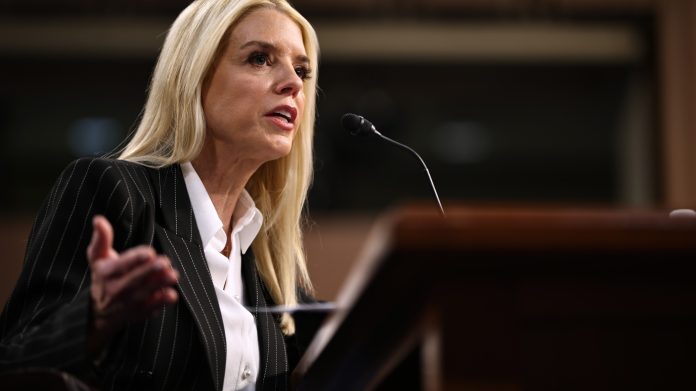
Pam Bondi testifies before the Senate Judiciary Committee during her confirmation hearing to be the next U.S. attorney general on Jan. 15.

Chip Somodevilla/Getty Images


hide caption

toggle caption

Chip Somodevilla/Getty Images

The Senate has voted to confirm Pam Bondi to serve as attorney general, elevating a longtime defender of President Trump to lead the Justice Department and oversee the more than 100,000 who work for it and its component agencies — including the FBI.

Bondi was confirmed Tuesday by a vote of 54 to 46.

She will arrive at the Justice Department after having served as a prosecutor in Tampa, Fla., for almost 20 years, and then the state’s attorney general — a position she held for eight years.

She enters the role of attorney general with deep ties to the president’s orbit. Bondi spoke on Trump’s behalf at the 2016 Republican National Convention, and was later one of his personal attorneys during his first impeachment trial. More recently, she led the legal arm of the America First Policy Institute, a think tank headed by former members of Trump’s first administration.

Before her nomination, Bondi publicly pushed false claims of fraud in the 2020 election, and has said Trump was unfairly prosecuted after leaving office in 2021. Because of this, during her confirmation hearing in January, she was repeatedly pressed by Democrats on the Senate Judiciary Committee about whether she would be able to lead the Justice Department free of influence from the White House.

Bondi pledged to be independent as the nation’s top prosecutor, telling senators that politics would not factor into her decision-making atop the Justice Department.

“Every case will be prosecuted based on the facts and the law that is applied in good faith — period. Politics have got to be taken out of the system,” she said.

Bondi also faced questions about whether she would prosecute the president’s perceived political enemies, including at the Justice Department, given remarks she made on Fox News in 2023.

“The Department of Justice, the prosecutors will be prosecuted. The bad ones,” she said at the time. “The investigators will be investigated because the deep state, last term for President Trump, they were hiding in the shadows but now they have a spotlight on them and they can all be investigated.”

Bondi sought to distance herself from those remarks during her confirmation hearing, emphasizing that the department must act independently. But when asked by Democrats on the committee if she would prosecute figures such as former Special Counsel Jack Smith, former Republican congresswoman Liz Cheney and former Attorney General Merrick Garland, Bondi said, “I am not going to answer hypotheticals.”

She also said during her hearing that her priorities as attorney general will be gangs, drugs, cartels, the border and foreign adversaries.

“I will fight every day to restore confidence and integrity to the Department of Justice and each of its components,” she said. “The partisanship, the weaponization will be gone. America will have one tier of justice for all.”

Bondi was nominated after Trump’s initial choice, former Fla. Rep. Matt Gaetz, withdrew his name from consideration and resigned from Congress after facing allegations of sexual misconduct and illegal drug use in a House report. Gaetz has consistently denied any wrongdoing.

Jets’ Quincy Williams, Jermaine Johnson excited to build sturdy foundation with Aaron Glenn: ‘Tired of losing’

0

Join Fox News for access to this content

Plus special access to select articles and other premium content with your account – free of charge.

By entering your email and pushing continue, you are agreeing to Fox News’ Terms of Use and Privacy Policy, which includes our Notice of Financial Incentive.

Please enter a valid email address.

Quincy Williams looked at his New York Jets teammate Jermaine Johnson on Tuesday on Radio Row in New Orleans for Super Bowl LIX and made a statement. 

“I’m tired of losing,” the Jets star linebacker said in an interview with Fox News Digital while discussing his partnership with Bounty. 

Johnson replied, “Oh man, I’m tired of losing.”

SIGN UP FOR TUBI AND STREAM SUPER BOWL LIX FOR FREE

New York Jets new head coach Aaron Glenn speaks during a press conference at the NFL football team’s training facility on Monday, Jan. 27, 2025, in Florham Park, N.J.  (AP Photo/Adam Hunger)

Since joining the Jets in 2021 after two seasons with the Jacksonville Jaguars, Williams has seen 23 Jets wins to 45 losses – a .338 win percentage. Johnson came in as a first-round pick in 2022, and though he only played two games this past year due to a torn Achilles, he has also seen his Jets under .500 in his three seasons with the club. 

That wasn’t supposed to be the case in 2023 when the team traded for Aaron Rodgers and had a roster many believed would break their decade-plus-long playoff drought. We all know how that played out after just four snaps into Week 1 that year. 

A 5-12 record, which saw head coach Robert Saleh ousted while the team continued to struggle, ultimately led to another new head coaching hire, and it’s someone the organization knows quite well in Aaron Glenn. 

HOW TO WATCH SUPER BOWL LIX BETWEEN CHIEFS, EAGLES STREAMED ON TUBI

A first-round pick by the organization in 1994, Glenn played cornerback for the Jets for eight of his 15 years in the league before getting into coaching. This will be his first head coaching gig, but Williams and Johnson expressed their excitement for having him in the building to lead them where they want to go. 

And that’s winning football games. 

“I’m excited to see the culture that he preaches, and also, the foundation that we’re going to build together. Because we have to have a strong foundation before we build anything up,” Williams explained. 

When it comes to that foundation, Glenn set the tone by saying, “We’re built for this s—” during his introductory press conference. 

Now, Williams and Johnson have heard it before with Saleh, whose motto was “All Gas, No Brakes,” which came from his own intro presser. 

Quincy Williams reacts on field

Quincy Williams #56 of the New York Jets stretches out his arms on the field prior to the start of the game against the New England Patriots at MetLife Stadium on September 19, 2024 in East Rutherford, New Jersey.  (Kathryn Riley/Getty Images)

But these Jets veterans know that players buying in, especially those senior leaders, are what will drive this team in the right direction moving into 2025. 

Johnson provided an anecdote to explain why culture and foundation in the locker room is so important to success. And no, his story doesn’t come from his time in the league, but rather his career at Independence Community College – a powerhouse junior college squad that was on the fourth season of Netflix’s popular show “Last Chance U.” 

“My first year [in JUCO], we had a bunch of no-names, me included,” he began. “Ain’t nobody knew me when I’m coming out of Minnesota going to junior college. We basically were the first team in school history, or 50 years, to win a bowl game and win the conference championship. Again, I get it, it’s junior college. But we had a bunch of no-names and nobody knew [us]. We didn’t have a bunch of DI players who came to play junior college – we had a bunch of grinders, right? And we got it done. 

“My junior college conference, in all of America, was the most competitive conference to play in. Alvin Kamara came from it, other notable guys came from that conference. Long story short, the next year, we had all these guys bounce back – this guy played at ‘Bama, this guy played at Auburn, this guy played at Florida State. And we’re on Netflix again. Obviously, this is the school to beat. Bro…we went 2-8. 

“So, I say that to say you can have the best, most talented roster in the world. You can have all the hype. If your culture and your foundation isn’t right, it doesn’t matter, and it will always be that way on all levels of football.”

Johnson didn’t say it directly, but that story has parallels with the Jets. A four-time MVP quarterback, offensive weapons galore including one that was traded for mid-season with a rapport with said quarterback, a top-three defense in yards allowed the last two season. Yet, the record is what it is despite the talent. 

So, yes, Johnson and Williams likely speak for their Jets brothers when they say they’re tired of losing. But they’re optimistic that Glenn and this new regime, which includes new general Darren Mougey, are the right group to take them forward. 

“I’m excited to start things new and start things with a great regime that I really feel like we have. And I already know the character of the guys in the locker room, so I know what they can do on the field. I’m excited to attack this season.” 

STAYING CLEAN WITH BOUNTY

Another Super Bowl means another Super Bowl party that many will be attending this year. That means there will be some delictable eats, and wings are usually on the menu no matter where you go for the “Big Game.”

Tubi promo

Super Bowl LIX will be streamed on Tubi. (Tubi)

CLICK HERE TO GET THE FOX NEWS APP

That’s what Johnson and Williams were munching on during the interview, and the former even dropped a wing, which spoke to the reason why they both partnered with Bounty. They needed a sturdy paper towel to clean it up. 

“You can have all the best food in the world, you can have the best party, but think about how messed up things can get with somebody’s hands all dirty, somebody spilled something. Look, what I’ve learned in life is, you may not be responsible for the mess, or you may be. Nevertheless, you need something to clean it up and do a good job. So, we got Bounty.”

Follow Fox News Digital’s sports coverage on X, and subscribe to the Fox News Sports Huddle newsletter.

Trump Signs Executive Order Calling for Review of U.S. Ties to U.N.

0

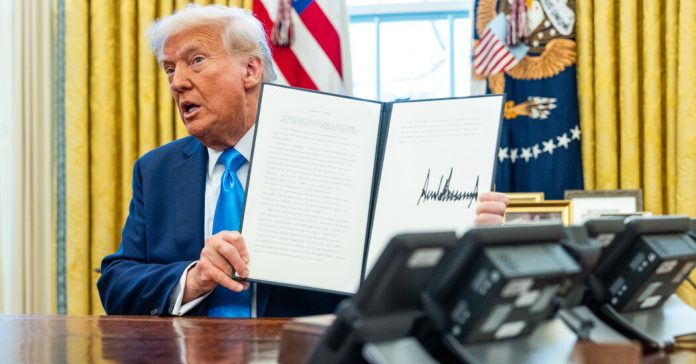
President Trump signed an executive order on Tuesday calling for a general review of U.S. funding and involvement in the United Nations, casting uncertainty on the leadership role the United States has played as the global body’s top donor.

“I’ve always felt that the U.N. has tremendous potential,” Mr. Trump said before signing the order in the Oval Office. “It’s not living up to that potential right now.”

Mr. Trump also withdrew the United States from the U.N.’s Human Rights Council and stopped funding the U.N. agency that aids Palestinians, UNRWA, which provides critical humanitarian assistance to millions of people in war-torn Gaza. Those moves were expected because Mr. Trump had withdrawn U.S. involvement from both organizations during his first term as president.

In addition, Mr. Trump’s order called for a review of U.S. involvement in UNESCO, which protects world heritage sites, on allegations that it had exhibited what the White House staff secretary, Will Scharf, called “anti-American bias.” In handing the order to Mr. Trump to sign, Mr. Scharf said it derived from “wild disparity and levels of funding among different countries” that Mr. Trump viewed as “deeply unfair to the U.S.”

In response to the executive order, Stéphane Dujarric, a U.N. spokesman, said U.S. support for the U.N. had advanced global security and that Secretary General António Guterres “looks forward to continuing his productive relationship with President Trump and the U.S. Government to strengthen that relationship in today’s turbulent world.”

The U.N. has been bracing for Mr. Trump’s second term, having already experienced a turbulent period during his first four years in office. Mr. Guterres managed the U.N.’s then-tense relations with Washington by mostly refraining from engaging in public spats with Mr. Trump.

On the first day of his second term, Mr. Trump pulled the United States out of the World Health Organization and the Paris climate agreement.

“Trump’s attacks on UNRWA and the U.N. Human Rights Council were widely expected,” said Richard Gowan, the U.N. director of the International Crisis Group, a conflict-resolution agency. “But the knock-on effects of the administration’s aid freeze,” he added, “are making U.N. officials increasingly nervous.”

In addition to hosting the U.N. headquarters in New York City, the United States is also the agency’s top donor, contributing about 22 percent of its overall budget, followed by China (15 percent) and Japan (8 percent). For 2024, the U.S. contribution was estimated at about $3.6 billion, which goes toward the agency’s administrative and peacekeeping budget.

The United States is also a major donor to various U.N. agencies and the world body’s annual global humanitarian appeal for money to help populations during conflicts and natural disasters. In 2022, the United States contributed about $18 billion to the U.N. across the board. Last year, it paid for 47 percent, or about $14 billion, of the agency’s global humanitarian efforts.

But Mr. Trump on Tuesday criticized the U.N. for what he described as its inability to resolve conflicts raging around the world — ones that he said his administration was trying to address. The U.N. has been widely rebuked for not fulfilling its mandate to mediate and uphold peace in parts of the world.

The U.N. Security Council — a 15-member body responsible for mediating and ending conflicts — has been accused of failing to act on the wars in Ukraine and Gaza because of tensions among its five veto-holding permanent members: Britain, China, France, Russia and the United States. In the case of Ukraine and Gaza, for example, both Russia and the United States have blocked multiple resolutions that attempted to bring an end to the wars.

Mr. Trump, without naming any country, said on Tuesday that the U.N. had not been “fair to countries that deserve fairness.” He most likely meant Israel. Elise Stefanik, Mr. Trump’s pick to be the U.S. ambassador to the U.N., said during her Senate confirmation hearing that the agency had an anti-Israel bias and accused it of antisemitism.

Mr. Trump also speculated, without evidence, that many countries would leave the U.N. if the organization did not change course. He added that the United States, as the top financial backer of the U.N., was not looking to take away money, but that it wanted to push the organization to operate more efficiently.

In practical terms, Mr. Trump’s decisions on UNRWA and U.N. Human Rights Council may not have much of an immediate effect.

The Biden administration stopped funding UNRWA after Israel accused the agency of being widely infiltrated by Hamas. Two U.N. investigations found that about nine of 13,000 of its staff members in Gaza were affiliated with the militant group, and they were fired.

As for the U.N. Human Rights Council, a spokesman said the United States was not currently among the Geneva-based council’s 47 voting members, therefore the decision to withdraw had little effect on the agency’s work. The council authorizes investigations, applies pressure to hold authoritarian governments accountable and debates violations in countries like Russia, Myanmar, Iran and North Korea.

The United States gave up its membership in the council at the end of 2024, under the Biden administration. But as an observer state, it was still entitled to participate in council deliberations and could still, if it chose to, play an influential role by speaking in debates and shaping the content of council resolutions.

A critical test of the Trump administration’s intentions will come later this year, when the United States is due to undergo a council review of its human rights record, a process in which every U.N. member state has taken part. A U.S. decision not to partake in the next review, set for November, would deal a severe blow to the council’s credibility and open the way to dictatorial states to similarly avoid scrutiny.

Rights groups said that a complete withdrawal means the United States would be absent in these discussions, a notion that they said sends the wrong message.

“President Trump’s performative decision to pull the U.S. out of the H.R.C. signals to the rest of the world that the U.S. is happy to completely cede important decisions about human rights violations happening across the globe to other countries,” said Amanda Klasing, the national director of Amnesty International USA.

Nick Cumming-Bruce contributed reporting.

Trump administration prepares to withdraw USAID staff overseas : NPR

0

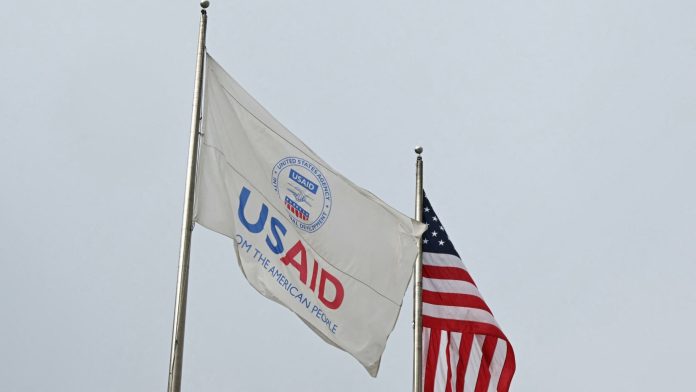
A USAID and American flag outside of United States Agency for International Development (USAID) headquarters in Washington, DC, on Feb. 3, 2025.

Mandel Ngan/AFP via Getty Images


hide caption

toggle caption

Mandel Ngan/AFP via Getty Images

The State Department has started the process to withdraw all United States Agency for International Development personnel stationed overseas by this weekend, according to three sources with knowledge of internal planning.

“We are being tasked to assist the department in recalling USAID employees to the United states by Saturday,” Seth Green, the Deputy Assistant Secretary of State for Global Operations, wrote in an email to State Department staff on Tuesday afternoon.

It continued: “I understand the feasibility concerns as well as the emotional toll this will take on those impacted as well as the team assisting. We’ve been asked to staff a 24/7 Coordination Support Team in the Ops Center’s Taskforce space beginning immediately.”

The email went on to say another State Department official would reach out to seek volunteers and coordinate scheduling.

The plan to recall overseas staff was described to NPR by current and former federal government officials who were not authorized to speak publicly and feared retribution.

The State Department did not immediately respond to a request for comment.

The order is the latest move made by the Trump administration in the last week to try to dismantle USAID.

On late Monday night, a memo went out to State Department employees asking that overseas missions provide the number of USAID employees and dependent family members at their locations.

About two-thirds of USAID’s 10,000 employees serve overseas in more than 60 country and regional missions, according to a January 2025 report by the Congressional Research Service.

The abrupt recall means employees would have just days to figure out where to go, how to arrange pet care, take children out of school, allow their spouses to make arrangements, and plan for their belongings to be sent behind them, for example. Meanwhile, withdrawing over a thousand foreign service officers and their families will likely be extremely costly, multiple diplomatic sources tell NPR.

“It will be logistically challenging, tremendously expensive and undignified,” said one USAID employee who was not authorized to speak publicly. “Many folks have kids in school, for example.”

“The last time we tried to do this was during COVID, and it was impossible to do that quickly,” said Susan Reichle, a retired senior USAID official.

In countries where USAID pays for the operational cost of the U.S. mission, such as Egypt and South Africa, the Trump administration’s funding freeze is already preventing use of USAID funds. That has led employees both within and outside USAID to fear that soon they’ll lose access to electricity, communications, security backups, trash pickups, medical evacuations, and other services.

President Trump delegated the cost-cutting team called DOGE, or the Department of Government Efficiency, and its leader Elon Musk to review USAID programs and downsize the agency, potentially moving it inside the State Department. Trump has accused the agency, which distributes billions of dollars in humanitarian aid worldwide, of corruption and fraud. He gave a list of global outreach programs he disagreed with as illustrations of those claims, without providing concrete evidence of misuse or illegal activity.

So far, a large number of USAID employees have been put on leave, restricting their access to their workspace and ordering them to stop all work. Hundreds of independent contractors have been laid off or furloughed. Guidance to employees has been inconsistent and unclear, stoking fear and chaos amongst staff worldwide.

“It’s just so stupid and dangerous,” one USAID employee told NPR. “We have [never] destroyed more goodwill and trust in such a short period of time.”

Now, the source insisted, vulnerable countries will be much more open to influence by U.S. adversaries like China and Russia.

Chiefs’ Andy Reid commits to another year of coaching ahead of Super Bowl rematch with Eagles: ‘I’ll be back’

0

Andy Reid has spent the past 26 years as an NFL coach. Next month, he’ll celebrate his 67th birthday.

Reid has built a Hall of Fame-worthy resume, but he will spend this week focusing on the present, not the future. 

He will be on the sideline in New Orleans Sunday when the Kansas City Chiefs and the Philadelphia Eagles face off in the Super Bowl. 

SIGN UP FOR TUBI AND STREAM SUPER BOWL LIX FOR FREE

Kansas City Chiefs head coach Andy Reid on the sideline against the Houston Texans during the first half of a 2025 AFC divisional round game at GEHA Field at Arrowhead Stadium.  (Denny Medley/Imagn Images)

Reid is a three-time Super Bowl-winning head coach and is the only head coach in NFL history who has recorded 100 wins with two different teams. He was the Philadelphia Eagles’ head coach from 1999-2012 and has coached the Chiefs since the 2013 season.

Reid will enter the 2025 regular season as the second-oldest coach in the league, behind only 73-year-old Pete Carroll. The Las Vegas Raiders hired Carroll earlier this month.

HOW TO WATCH SUPER BOWL LIX BETWEEN CHIEFS, EAGLES STREAMED ON TUBI

Given his age and accomplishments, some have raised questions about when Reid will decide to step away from football. Shortly after the Chiefs arrived in New Orleans for the big game, the longtime head coach addressed the speculation about his coaching future.

Andy Reid hoists trophy

Kansas City Chiefs head coach Andy Reid holds the Vince Lombardi Trophy after winning the 2024 Super Bowl against the San Francisco 49ers at Allegiant Stadium.  (Kirby Lee/USA Today Sports)

“Yes, I’ll be back,” Reid said.

Reid’s statement supports Chiefs owner Clark Hunt’s hopes the coach was not “remotely close” to calling it quits.

HOW TO WATCH SUPER BOWL LIX BETWEEN CHIEFS, EAGLES STREAMED ON TUBI

“I don’t have a sense that he’s remotely close to wanting to be done,” Hunt recently told reporters. “I think he’s always said he’ll know when the time is right, and I’m sure he’ll share with me before he shares with everyone else — at least, I hope so. I don’t sense he’s anywhere close to being done.”

Don Shula, Bill Belichick and George Halas make up the short list of coaches in NFL history to win 300 regular-season games. Reid is credited with 273 regular-season wins and 28 playoff wins.

CLICK HERE TO GET THE FOX NEWS APP

Tubi promo

Super Bowl LIX will be streamed on Tubi. (Tubi)

But Reid made it clear his plans to return next season were not made in an effort to surpass former New England Patriots head coach Bill Belichick on the coaching all-time wins list.

“That’s not part of it,” Reid said. “I just enjoy teaching. I don’t get caught up much in the stats or the records. I enjoy being around the guys. I enjoy football, the game. You can’t put in the hours we do and not enjoy it. I love the game.”

The Super Bowl kicks off at 6:30 p.m. ET Feb. 9 from the Caesars Superdome on FOX.

Follow Fox News Digital’s sports coverage on X, and subscribe to the Fox News Sports Huddle newsletter.


The Aga Khan IV, Wealthy Leader of the Ismaili Muslims, Dies at 88

0

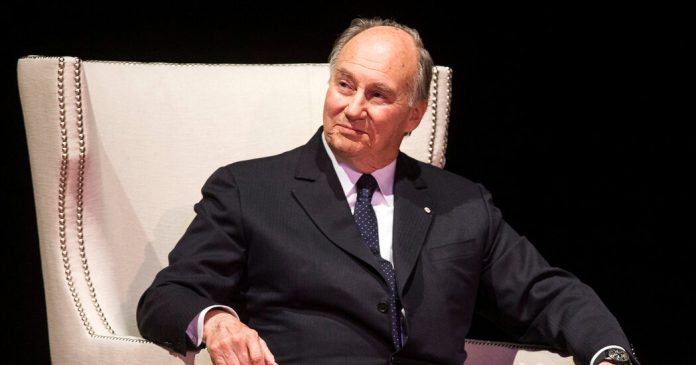
The Aga Khan IV, who as the leader of the world’s Ismaili Muslims fused entrepreneurship and philanthropy in becoming one of the world’s wealthiest hereditary rulers, died on Tuesday in Lisbon. He was 88.

His death was confirmed by his Aga Khan Development Network in a post on X, the social media site. No cause was given.

Urbane, cosmopolitan and often media-averse, the Aga Khan — born Prince Karim Al-Hussaini — rejected the notion that expanding his personal fortune would conflict with his charitable ventures. He said his ability to prosper complemented his duty to enhance the lives of Ismaili Muslims, a branch of the Shiite tradition of Islam with a following of 15 million people in 35 countries.

An imam, or leader of his faith, was “not expected to withdraw from everyday life,” he once said after becoming the Aga Khan. “On the contrary, he’s expected to protect his community and contribute to their quality of life. Therefore, the notion of the divide between faith and world is foreign to Islam.”

His projects included developing the island of Sardinia’s ritzy Costa Smeralda resort area, breeding thoroughbred racehorses and establishing health initiatives for the poor in the developing world.

He took issue with descriptions of his lifestyle as lavish, though he traveled on his own private jets and a luxury yacht, owned a private Caribbean island and shuttled among a variety of residences, including Aiglemont, a sprawling estate north of Paris that became the headquarters of his development network and a training center for his horses.

“The role and responsibility of an imam,” he said in a speech in 2006, “is both to interpret the faith to the community and also to do all within his means to improve the quality, and security, of their daily lives.”

Even though he had no inherited realm in the manner of other hereditary rulers, the Aga Khan’s fortune was variously estimated at $1 billion to $13 billion, drawn from investments, joint ventures and private holdings in luxury hotels, airlines, racehorses and newspapers, as well as from a kind of Quranic tithe levied on his followers.

Unusually, the Aga Khan — the name is often translated as a blend of Turkish and Persian meaning commanding chief — inherited his title from his grandfather the Aga Khan III, who bypassed his other descendants to name his grandson as his successor. With his assumption of the leadership as 49th imam of Ismaili Muslims, the Aga Khan IV took the reins of a Shia Muslim lineage that claimed descent from the Prophet Muhammad and imposed what he said were clear responsibilities on him.

At the time, he was a 20-year-old student of Islamic history at Harvard. In 1957, Queen Elizabeth II of Britain conferred on him the nonhereditary title of His Highness, a reflection of the close ties between the two dynasties, bonded in a shared fascination with fine horses.

In his will, his grandfather Sultan Mohamed Shah said he had chosen to skip a generation in part because the “fundamentally altered conditions in the world” — including advances in atomic science — required a “young man who has been brought up and developed during recent years and in the midst of the new age, and who brings a new outlook on life to his office.”

Indeed, the Aga Khan IV confronted several modern-day crises afflicting his followers, who are concentrated in Central Asia, Afghanistan, Pakistan, Iran and East Africa. Many of them faced upheavals, like the 1972 decision by the Ugandan dictator Idi Amin to expel Asians and the turmoil in Tajikistan following the collapse of the Soviet Union.

The Aga Khan was long known as a well-connected person. As such, he was able to persuade Prime Minister Pierre Elliot Trudeau of Canada, whom he had met in the 1960s, to permit thousands of Ismaili Muslims to emigrate to Canada when they were forced to leave Uganda.

His friendship with Mr. Trudeau reflected an ambiguous relationship with Canada, where he became an honorary citizen in 2010. In 2017, Mr. Trudeau’s son, Prime Minister Justin Trudeau, drew censure from Canada’s ethics commissioner after he and his family accepted the Aga Khan’s hospitality with an unannounced vacation at the prince’s private residence in the Bahamas.

The trip was deemed to represent a conflict of interest, because the Aga Khan Foundation had recently received $38 million worth of federal support from the Canadian authorities. For his part, the Aga Khan was officially exonerated.

Following the collapse of the Soviet Union, the Aga Khan’s followers in the mountainous Pamir region of Tajikistan were among those embroiled in a ruinous civil war in the 1990s against the government led by Emomali Rahmon. In response, the Aga Khan accelerated investments in power generation and a cellphone company in Tajikistan and later built health care, microfinance and other facilities, as well as the University of Central Asia in Khorog.

But the Aga Khan’s revered status among Ismaili Muslims, living mainly in Tajikistan’s Gorno-Badakhshan Autonomous Province, reportedly stirred resentments and resistance among the country’s secular leaders, who sought to block demonstrations of support for the Aga Khan.

Prince Karim Al-Hussaini was born in Geneva on Dec. 13, 1936. He was the eldest son of the noted playboy Prince Aly Khan and his first wife, Joan (Yarde-Buller) Khan, a descendant of British aristocracy. His younger brother, Amyn Aga Khan, was born the following year.

In 1949, their parents divorced, and Prince Aly went on to marry the American actress Rita Hayworth, with whom he had a daughter, Princess Yasmin Aga Khan.

Known in his youth as Prince Karim, the Aga Khan grew up in Nairobi, Kenya, before attending school at the exclusive Institut Le Rosey in Geneva. In his late 20s, he competed for pre-revolutionary Iran in skiing at the 1964 Olympics in Innsbruck, Austria.

He went on to Harvard, where he was studying Islamic history when he became Aga Khan IV on the death of his grandfather.

“It was a shock,” he said in an interview in 2013 with Vanity Fair magazine, “but I don’t think anyone in my situation would have been prepared.”

His new status, he said, meant that the course of his life was henceforth set on immutable coordinates. “I was an undergraduate who knew what his work for the rest of his life was going to be,” he said.

Some of his followers ascribed divine status to him, but he rejected such notions of godliness.

In 1969, he married Sally Croker Poole, a British model and former debutante who became Salima Aga Khan. The couple had three children, Princess Zahra, Prince Rahim and Prince Hussain, before they divorced in 1995. All three siblings went on to work in the Aga Khan’s organizations.

Three years later, the Aga Khan married Gabriele (Thyssen) zu Leiningen of Germany, who became Inaara Aga Khan. They had a son, Prince Aly Muhammad. The couple broke up a few years later and spent a decade negotiating a divorce settlement said to be worth about $60 million when adjusted for inflation.

He is survived by his children; his brother, Prince Amyn Muhammad; his half sister, Princess Yasmin; and four grandchildren.

Over the years, the Aga Khan’s business ventures were eclectic. He was a prime mover in the 1960s in building the resort of Porto Cervo, complete with a yacht club and polo tournaments, as part of the development of Sardinia’s northern Costa Smeralda as a playground for the superrich. He showed a liking for Maserati sports cars, but he also invested in the developing world in basic industries that made fishnets, plastic bags and matches.

In Uganda, following the overthrow of Idi Amin and the later rise of Yoweri Museveni, he joined private equity giants like the Blackstone Group in a $750 million hydroelectric scheme.

In 1960, Prince Aly, the Aga Khan’s father, died in a car crash at Suresnes, outside Paris, and his children inherited his lucrative equestrian empire, which included nine farms in Ireland and France. “The three of us found ourselves with this family tradition none of us knew the first thing about,” he told Vanity Fair in 2013.

Since then, the Aga Khan had owned, trained and bred many champion horses. In France, his filly Valyra won the prestigious Prix de Diane in 2012, to establish a new owners’ record of seven wins. In the 1980s, his stallion Shergar was abducted in Ireland and never seen again. (He refused to pay a ransom demand.)

“I’ve come to love it — it’s so exciting, a constant challenge,” he once said of the equestrian business. “Every time you sit down and breed, you are playing a game of chess with nature.”

What is the Department of Government Efficiency, or DOGE? : NPR

0

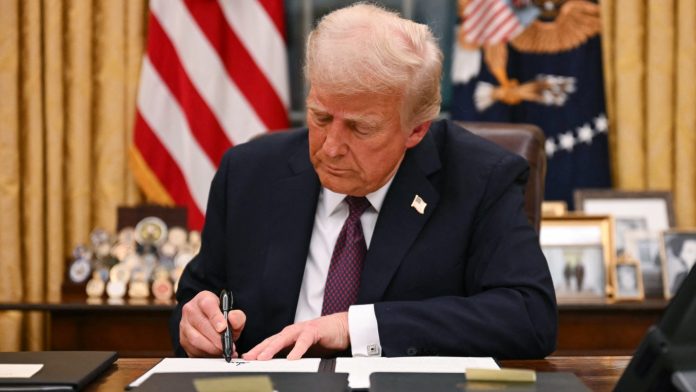
President Donald Trump signs an executive order on the Department of Government Efficiency, or DOGE, in the Oval Office on Jan. 20.

Jim Watson/AFP via Getty Images


hide caption

toggle caption

Jim Watson/AFP via Getty Images

An office empowered by President Trump to make major changes to the federal government is already moving quickly, but critics have questioned the legality of some of its actions.

The Department of Government Efficiency, or DOGE, was created by Trump via an executive order on his first day back in office. Trump put tech billionaire and adviser Elon Musk in charge and vowed to use the unit to cut government waste and slash federal regulations.

But DOGE is also drawing the ire of some Democrats and prompting multiple legal challenges.

Here’s what you need to know.

What is DOGE, exactly?

Trump didn’t create a new Cabinet-level department with DOGE, but rather renamed the previously existing United States Digital Service, which was created under former President Barack Obama.

That office launched in 2014 to improve the federal government’s digital capabilities following the rocky rollout of the HealthCare.gov website.

Trump’s order also moves the entity from the Office of Management and Budget to the Executive Office of the President, and directs it to modernize technology and software across the federal government.

Musk is in charge of the unit, and NPR has reported that several young engineers from Silicon Valley have joined his team.

Is it legal?

Some Democrats have condemned the wide latitude and access given to DOGE. On Monday, Senate Minority Leader Chuck Schumer said that “before our very eyes, an unelected shadow government is conducting a hostile takeover of the federal government.”

DOGE was the subject of a lawsuit filed on the day it was created by a group of organizations questioning the legality of the new entity, including the consumer advocacy group Public Citizen, the State Democracy Defenders Fund and the American Federation of Government Employees, a union representing around 800,000 government workers.

The plaintiffs argue that DOGE is a kind of advisory committee that should be subject to certain federal rules, including transparency requirements.

According to White House press secretary Karoline Leavitt, Musk is what’s known as a “special government employee,” a temporary appointment that allows him to work for 130 days per year. That means he’s subject to different ethics and disclosure rules than regular federal employees.

The White House did not immediately respond to a request seeking more information about DOGE.

What is DOGE working on?

Musk has said that DOGE is already working on shutting down USAID, the American government’s main humanitarian and development aid agency.

The decision to scrutinize the six-decade-old organization — which Musk said he made with Trump’s approval — was welcomed by some Republicans but received pushback from Democrats.

Rep. Jamie Raskin, a Democrat from Maryland, told NPR that the Trump administration would need Congressional approval to close down USAID.

DOGE also has access to a Treasury Department payment system the government uses to cut checks to everyone from Social Security beneficiaries to government contractors.

That move prompted another lawsuit from advocacy groups and unions alleging that DOGE’s access to the Treasury database violates federal privacy laws.

On Monday, Trump said Musk has “got access only to letting people go that he thinks are no good, if we agree with him.”

“Elon can’t do and won’t do anything without our approval. And we’ll give him the approval where appropriate, where not appropriate we won’t,” Trump said. “Where we think there’s a conflict or a problem, we won’t let him go near it.”

DOGE employees are also working with the Trump administration on potentially drastic cuts to the Department of Education, NPR has reported.

Stephen Fowler, Bobby Allyn and Shannon Bond contributed reporting.

LGBTQ+ advocates, families sue Trump admin for ending funding of transgender healthcare under 19

0

A group of seven families, as well as LGBTQ+ advocates and medical organizations, have filed a lawsuit against President Donald Trump and his administration over an executive order to ban federal funding for transgender healthcare for individuals under the age of 19.

The lawsuit was filed in Baltimore federal court and seeks an immediate injunction to delay the implementation of Trump’s executive order from last week.

“Over the past week, hospitals across the country have abruptly halted medical care for transgender people under nineteen, canceling appointments and turning away some patients who have waited years to receive medically necessary care for gender dysphoria,” the lawsuit reads. 

“This sudden shutdown in care was the direct and immediate result of an Executive Order that President Trump issued on January 28, 2025 — Protecting Children from Chemical and Surgical Mutilation — directing all federal agencies to ‘immediately take appropriate steps to ensure that institutions receiving Federal research or education grants end gender-affirming medical care for people under nineteen (the “Denial of Care Order”).”

TRUMP SIGNS EXECUTIVE ORDERS BANNING ‘RADICAL GENDER IDEOLOGY,’ DEI INITIATIVES IN THE MILITARY

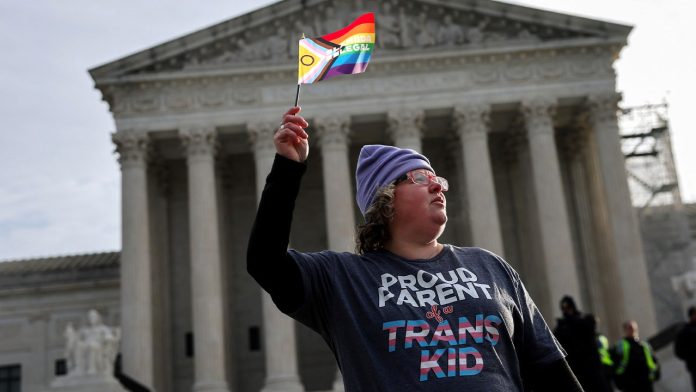
A transgender rights supporter takes part in a rally outside the U.S. Supreme Court, Dec. 4, 2024, in Washington, D.C. (Kevin Dietsch/Getty Images)

The denial of care order follows on the heels of another executive order Trump signed on Jan. 20, 2025, to defend women from gender ideology extremism and restore biological truth to the federal government.

The group of plaintiffs claims executive orders are unlawful and unconstitutional, saying the Constitution gives Congress the power of the purse.

“The president does not have unilateral power to withhold federal funds that have been previously authorized by Congress and signed into law, and the President does not have the power to impose his own conditions on the use of funds when Congress has not delegated to him the power to do so,” the lawsuit reads. “President Trump’s directives to cut off funding have had concrete and immediate effects. Hospitals across the country, including those that have provided medical care to the Transgender Plaintiffs, have ended the provision of ongoing and essential gender-affirming medical care to transgender patients under nineteen because of the Executive Orders.”

DEFENSE SECRETARY PETE HEGSETH SAYS ‘NO MORE DEI AT DEPARTMENT OF DEFENSE’: ‘NO EXCEPTIONS’

The lawsuit is the latest to come out of Trump’s recently signed executive orders relating to gender.

The executive orders, signed in late January, include a reinstatement of the ban on transgender troops in the military, a ban on federal funding for sex changes for minors and a directive requiring federal agencies to recognize only “two sexes,” male and female, in official standard of conduct.

“This ban betrays fundamental American values of equal opportunity and judging people on their merit,” Jennifer Levi, director of Transgender and Queer Rights at GLBTQ Legal Advocates & Defenders (GLAD Law), said in a statement about the trans military ban. 

CRACKING DOWN ON TRANS TROOPS: TRUMP ORDER NIXES PREFERRED PRONOUNS, RESTRICTS FACILITY USE

Transgender pride flag

A transgender pride flag. (Allison Dinner/AFP via Getty Images)

GLAD Law and the National Center for Lesbian Rights (NCLR) were among the first groups to file a federal lawsuit against the Trump administration for its military ban. The lawsuit, Talbott v. Trump, was brought forward on equal protection grounds by six active-duty service members and two individuals attempting to enlist, according to the groups’ announcement.

The plaintiffs include a Sailor of the Year honoree, a Bronze Star recipient and several who were awarded meritorious service medals. They were identified as U.S. Army Reservist Lt. Nicolas Talbott, Army Maj. Erica Vandal, Army Sgt. 1st Class Kate Cole, Army Capt. Gordon Herrero, Navy Ensign Dany Danridge, Air Force Master Sgt. Jamie Hash, and Koda Nature and Cael Neary. The latter two are civilians who are seeking to enlist in the military.

Another lawsuit, filed by a transgender inmate receiving taxpayer-funded medical treatment, is challenging Trump’s executive order that ends medical transgender treatments — such as hormones, sex changes and grooming accommodations — for federal prisoners.

CLICK HERE TO GET THE FOX NEWS APP

The unnamed inmate, who goes by “Maria Moe” in court documents and is represented by GLAD Law, NCLR and Lowenstein Sandler LLP, is claiming Trump and the Bureau of Prisons are violating the Fifth and Eighth amendments and claims to be “at imminent risk of losing access to the medical care she needs to treat her gender dysphoria.”

Fox News Digital’s Jamie Joseph contributed to this report.