Friday, November 13, 2026
Home Blog Page 275

West Bank? Call It Judea and Samaria, Some Republicans Say.

0

Donald J. Trump’s return to power as president has bolstered right-wing lawmakers in Israel and the United States who support Israeli annexation of the West Bank, an occupied territory long seen by Palestinians and the international community as part of an eventual Palestinian state.

On Friday, Republican lawmakers in the House and Senate introduced bills that would bar the use of the term “West Bank” in United States government documents and materials, replacing the phrase with “Judea and Samaria,” the biblical names for the region that are widely used in Israel and the administrative name used by the state to describe the area.

The linguistic proposition is aimed at strengthening and supporting Israel’s historical claim to territory that it captured from Jordan in the 1967 war and has occupied militarily ever since. And it comes as the Israeli military has been conducting intense raids in the area, which it says are intended to eradicate terrorism.

“The Jewish people’s legal and historic rights to Judea and Samaria goes back thousands of years,” Senator Tom Cotton, Republican of Arkansas, said in a statement about the legislation. He called for the United States to “stop using the politically charged term West Bank”; opponents of annexation say it is the term Judea and Samaria that reflects a political agenda.

Representative Claudia Tenney, Republican of New York, another sponsor of the bill, also announced the recent creation of a congressional group — the Friends of Judea and Samaria Caucus — to advance policies that support Israeli claims to that land. By introducing the bill and creating the caucus, “we are working to reaffirm Israel’s rightful claim to its territory,” she said in a statement.

The legislation, which Ms. Tenney first introduced last year, is being proposed again amid drastically changed dynamics in Washington, where Mr. Trump has made his strong support for Israel explicit. Republicans now control Congress, with slim majorities in the House and Senate. The president has indicated support for expansionist Israeli policies, and in his first term proposed Israeli annexation of a large part of the West Bank.

On Tuesday, Mr. Trump met with Prime Minister Benjamin Netanyahu of Israel in Washington, Mr. Trump’s first visit with a foreign leader since returning to the White House last month. Asked on Monday at a news briefing, in anticipation of that meeting, whether he supported annexing parts of the West Bank, the president declined to respond directly, but he did not dismiss the idea altogether either.

“It certainly is a small country in terms of land,” he said in reference to Israel. Mr. Trump used an analogy to illustrate his point: “My desk is the Middle East. And this pen, the top of the pen, that’s Israel. That’s not good, right? It’s a pretty big difference.”

Since Israel seized control of the West Bank, hundreds of thousands Israeli civilians have settled there with both tacit and explicit government approval, living under civil law while their Palestinian neighbors, kept stateless, are subject to military law and have fewer rights.

The growing number and size of the settlements have steadily eroded the land accessible to Palestinians. Expanding Israel’s hold over the West Bank is a stated goal of many lawmakers in Mr. Netanyahu’s far-right governing coalition, and many settlers hope Mr. Trump will support the project.

The international community largely views the Israeli settlements as illegal, and Palestinians have long argued that they are a creeping annexation, turning land needed for an independent state into an unmanageable patchwork.

In 2019, the previous Trump administration declared that the United States did not consider Israeli settlements in the West Bank illegal, reversing longstanding American policy under both Democrats and Republicans, and removing what had been seen as an important barrier to annexation. Last year, Antony J. Blinken, then secretary of state, said that Israeli settlements were inconsistent with international law and that the Biden administration opposed them.

Brad Brooks-Rubin, formerly a senior adviser in the State Department’s Office of Sanctions Coordination, argued in a recent post on Just Security, an online law forum, that the Trump administration’s revocation “provides a psychological and rhetorical victory” for the settlement movement and its allies, “especially in the United States.”

The move also heartened expansionist Israeli lawmakers. Israel’s far-right finance minister, Bezalel Smotrich, a settler himself and a vocal opponent of a Palestinian state, welcomed Mr. Trump’s reversal as an expression of the president’s “deep connection to the Jewish people and our historical right to our land.” On Sunday, as Mr. Netanyahu was headed to Washington, Mr. Smotrich called Mr. Trump “a lover of Israel” on social media and said, “We must strengthen our grip and sovereignty over the homeland in Judea and Samaria.”

Still, Republican support for the settler movement and changes to the language of the discussion surrounding their effort have some pro-Israel lobbyists in Washington worried about Israel’s long-term prospects for peace and improved relations with regional neighbors.

“What’s dangerous about this proposal isn’t what they want to call the land; it’s the proposal to affirm Israeli sovereignty over it,” said Jeremy Ben-Ami, president of the Jewish pro-peace advocacy group J Street. “That’s called annexation, which is not just illegal under international law, but the death knell for any hope of Israel normalizing relations with Saudi Arabia and the Sunni Arab world.”


New DNC chair Ken Martin says he's eager to push back against Trump's agenda

0

NPR’s Juana Summers talks to the newly elected chair of the Democratic National Committee, Ken Martin, about the future of the Democratic Party under a second Trump administration.

Immigration think tank cooks up scheme to force migrants to self-deport

0

An immigration think tank has proposed a unique method of aiding President Donald Trump’s deportation efforts, supplementing typical enforcement efforts by relying on “snitches” to limit the employment opportunities of illegal immigrants.

The Center for Immigration Studies (CIS) released a report detailing a plan to force “self-deportations” of illegal immigrants. The proposal suggests a minor amendment to the tax code aimed at punishing employers who hire illegal immigrants by allowing private citizens to sue businesses that do this, forcing them to comply with the E-Verify system and limiting the employment opportunities for migrants.

The proposal, authored by Ajay Gupta, acknowledges Trump’s enforcement efforts but argues the president will be “limited in scope” when it comes to traditional deportation methods, which could be supplemented by forcing many illegal migrants to leave the country voluntarily.

“Notwithstanding its ‘shock and awe,’ a forcible deportation drive is unlikely to make a dent in that vast population,” the report argues. “For this, the law against hiring these aliens would have to be strictly enforced.”

People board a U.S. military aircraft. The White House announced that “deportation flights have begun” in the U.S. (White House)

TRUMP ADMIN ENDS DEPORTATION PROTECTIONS FOR MASSIVE NUMBER OF VENEZUELANS AMID ILLEGAL IMMIGRATION CRACKDOWN

The report cites Britain’s 19th century plan to eradicate child labor as an example of the concept’s success, noting that the country was able to force compliance with labor laws even though it was limited by resources and budgetary constraints.

Britain’s effort relied on private enforcement of the law, the report notes, something the U.S. proposal would also do by allowing private citizens to sue employers of illegal immigrants.

“The proposal would impose a punitive tax on all who pay for the personal services or labor of unauthorized aliens and let private citizens sue to collect this tax,” the report argues. “The ubiquity of snitches, as compared to the distant possibility of government action, is likely to put the fear of God in employers. Most, if not all, would then willingly embrace E-Verify, a free online tool for verifying a prospective hire’s work-authorization status.”

According to the report, the result would make it much more difficult for illegal immigrants to obtain employment, which “should induce large numbers of unauthorized aliens to return home.”

The CIS proposal is not the first time such an idea has been floated in the U.S. Former Sen. Mitt Romney, R-Utah, advocated for a similar measure during his 2012 bid for president.

Trump and the RNC announce a $76 million fundraising haul in April

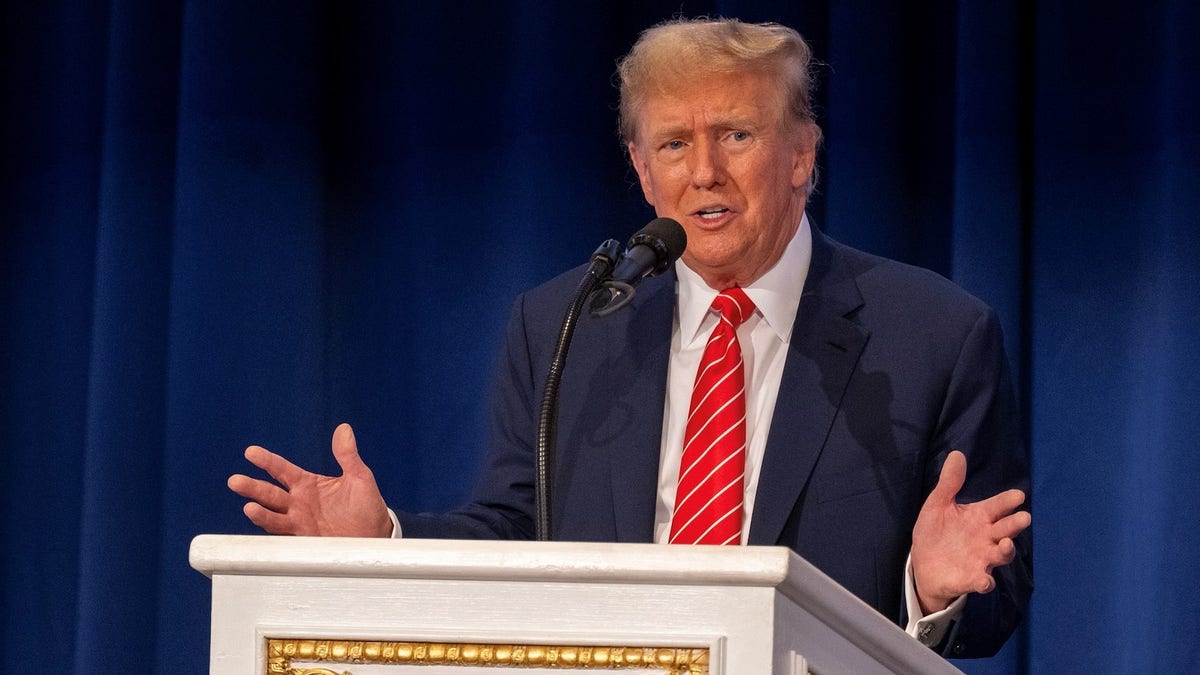
Donald Trump headlines a Republican National Committee spring donor retreat in Palm Beach, Fla., May 4, 2024. (Donald Trump 2024 campaign)

COLOMBIAN PRESIDENT URGES ILLEGAL IMMIGRANTS IN US TO RETURN HOME DAYS AFTER DIPLOMATIC SPAT 

“The answer is self-deportation, which is people decide they can do better by going home because they can’t find work here because they don’t have legal documentation to allow them to work here,” Romney said during a Republican primary debate in 2012.

Romney’s proposal was widely mocked at the time, including by Trump, who called the idea “maniacal” and “crazy,” according to a 2012 NewsMax report.

But Romney’s idea also had high-profile defenders, including Florida Sen. Marco Rubio, who now serves in Trump’s administration as secretary of state.

Republican Utah Sen. Mitt Romney

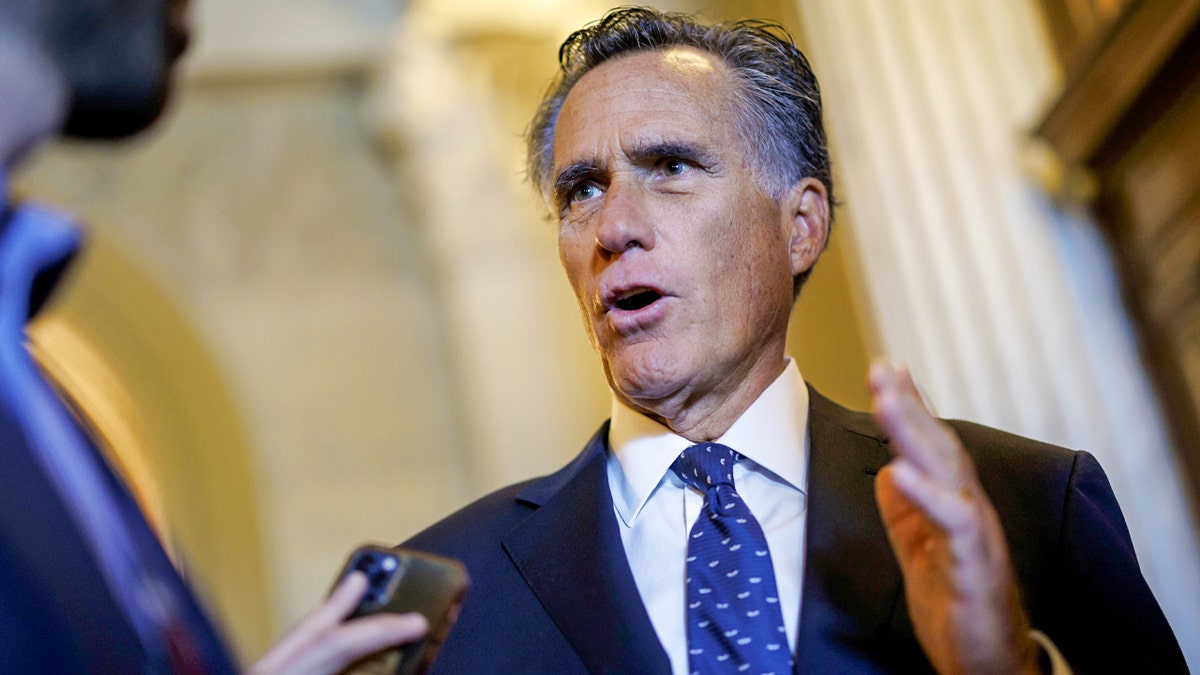
Sen. Mitt Romney, R-Utah, speaks to members of the press on Capitol Hill in Washington, D.C., June 1, 2023. (Ting Shen/Bloomberg via Getty Images)

CLICK HERE FOR MORE IMMIGRATION COVERAGE

“I’ve never understood self-deportation, in what the governor has presented, as a policy. It’s not a policy,” Rubio said a few months after Romney’s initial proposal, according to an ABC News Report. “I think it’s an observation of what people will do in a country that’s enforcing its immigration laws.”

According to the CIS report, a renewed push for self-deportation could be accomplished by amending current tax law through budget reconciliation, which would only require a simple majority vote in the Senate and potentially bypass Democratic efforts to block the legislation.

CLICK HERE TO GET THE FOX NEWS APP

“Republicans today have the legislative and executive authority to fully implement the proposal presented here. This implementation would require adding little more than some 650 words to a budget reconciliation bill. And its consequence would force all employers nationwide to comply with E-Verify,” the CIS report concluded. 

“If GOP lawmakers in control of both chambers of Congress refrain from even this undemanding legislative task, their electorate would be justified in concluding that they accord a higher priority to not placing even the slightest added burden on employers than they do on removing illegal aliens.”

Wednesday Briefing: China Hits Back Against U.S. Tariffs

0

China struck back yesterday against President Trump’s 10 percent tariffs on all Chinese products with tariffs of its own on U.S. coal and gas as well as restrictions on exports of some minerals.

China’s tariffs will not take effect until Feb. 10, according to the Chinese government, meaning there is still some time for negotiations. The White House press secretary said that a call between Trump and China’s leader, Xi Jinping, was being scheduled and would happen very soon. Here’s the latest.

Details: China’s tariffs would cover about $20 billion of U.S. exports, compared with Trump’s tariffs on more than $450 billion of Chinese goods, economists estimated. Chinese authorities also started an antitrust investigation into Google.

Context: As Trump alienates allies and partners with the threat of tariffs, his actions give Beijing an opening to strengthen its global standing.

Prime Minister Benjamin Netanyahu of Israel was set yesterday to become the first foreign leader to hold an in-person meeting with President Trump at the White House since his return to power.

The meeting was expected to focus on negotiations for the second phase of the cease-fire in Gaza, Iran’s efforts to build a nuclear weapon, arms shipments and a possible deal with Saudi Arabia. Follow our live coverage here.

Speaking to reporters before the meeting, Trump said that Palestinians had no choice but to leave Gaza after the devastation wrought by Israel’s war with Hamas. He said he wanted Egypt and Jordan to take them in.

West Bank violence: Two Israeli soldiers were killed in a shooting attack in the northern West Bank as Israel pressed ahead with a military operation there.


“We have seen a brutal act of violence,” Sweden’s prime minister, Ulf Kristersson, said in a televised address. “This is the worst mass shooting in Swedish history.”

Context: Shootings are rare in Swedish schools, but the country has been grappling with a steady surge in gun violence.


Two years after Sri Lankans cast out a strongman dynasty that destroyed the economy, a leftist movement is seizing a rare opportunity to rally more women into politics. Making up more than half of registered voters, women are slowly and steadily reshaping a political culture that allows them equal space.

Lives lived: Merle Louise Simon, the only person to play roles in the original Broadway productions of four Stephen Sondheim musicals, died at 90.

Russia’s invasion turned the Kyiv Symphony Orchestra’s players into refugees. As they try to build new lives in Germany, they face shifting views on migrants while an unending war continues back home.

Three years into the conflict, they continue to perform to highlight their homeland’s struggle. Always on their minds are faraway loved ones, fears about what might happen next and worries over how long they will be allowed to stay.

“It’s a whole soup of anxiety,” one violinist said. “At some point, you start to wonder, ‘Will we ever go home?’” Read their story here.

Americans bullish on economy and stock market with Trump in office: poll

0

Americans have renewed optimism in the country’s economic outlook now that President Donald Trump is back in office.

A majority of Americans, 53%, believe that the economy will grow in the next six months, while 61% believe that the stock market will also rise, according to the results of a Gallup poll released Monday.

The poll’s release comes shortly after Trump returned to the White House, with the survey conducted between Jan. 2 and 15, shortly before he took office. 

RUBIO SAYS ‘NO CHOICE’ BUT TO BRING USAID ‘UNDER CONTROL’ AFTER AGENCY TAKEOVER: ‘RANK INSUBORDINATION’

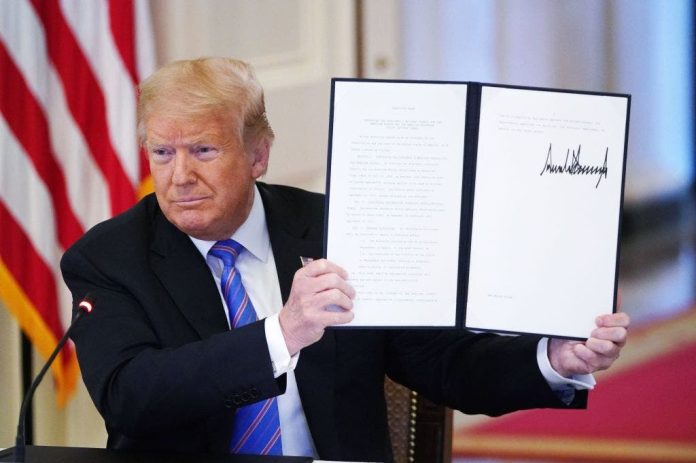
President Donald Trump holds up his executive order on “Continuing the President’s National Council for the American Worker and the American Workforce Policy Advisory Board” in the East Room of the White House on June 26, 2020. (Mandel Ngan/AFP via Getty Images)

While Americans are optimistic about economic growth, the survey found they were divided on unemployment, with 38% indicating they believe it will increase and 38% saying it will decrease. Meanwhile, 21% believe that unemployment will hold steady over the next six months.

Americans are also less bullish on inflation, with 52% indicating they expect it to rise in the next six months, though that figure is down significantly from close to 80% in previous versions of the Gallup poll.

Breaking the numbers down by partisan affiliation, Gallup found Republican respondents largely responsible for fueling the increase in economic optimism, with 78% of GOP respondents believing there will be economic growth over the next six months and 75% saying the stock market will rise.

Donald Trump speaking

President Donald Trump (Scott Olson/Getty Images)

USAID CLOSES HQ TO STAFFERS MONDAY AS MUSK SAYS TRUMP SUPPORTS SHUTTING AGENCY DOWN

Solid majorities of Independents felt the same, with 61% indicating they believe there will be economic growth over the next six months and 60% saying they believe the stock market will rise.

Democrats are less bullish, with only 21% indicating they believe there will be growth over the next six months. But a slim majority of Democrats, 51%, do anticipate a bump to the stock market over the same time period.

Trump and the RNC announce a $76 million fundraising haul in April

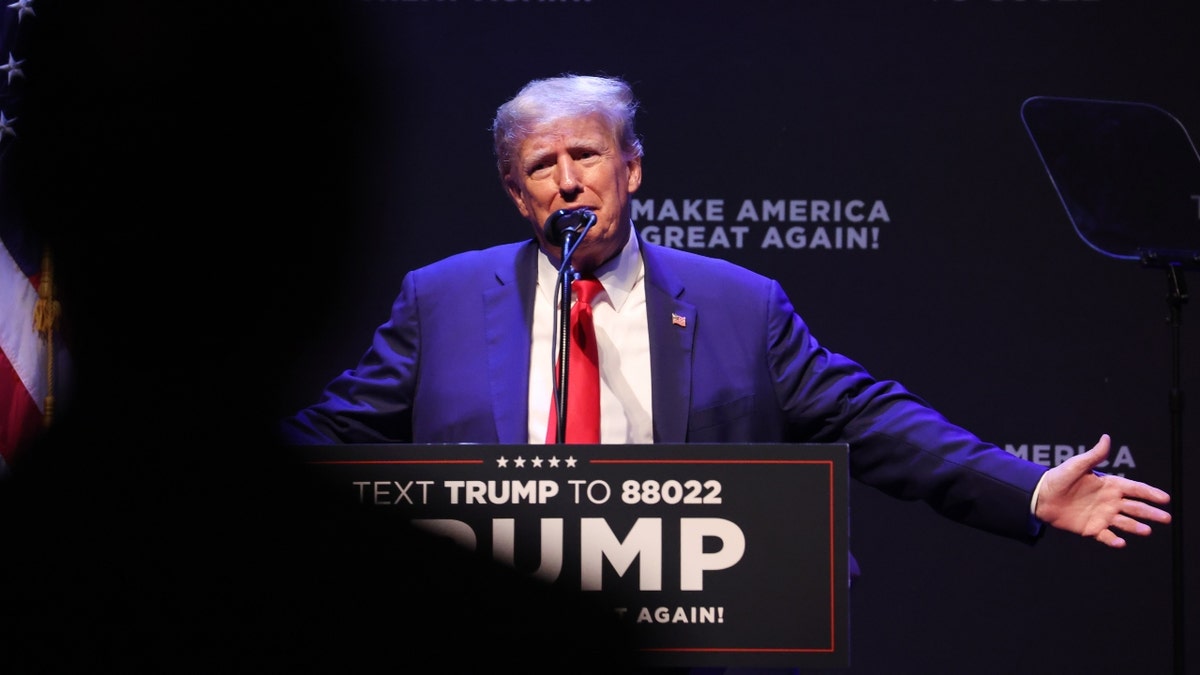
President Donald Trump headlines a Republican National Committee spring donor retreat, in Palm Beach, Florida on May 4, 2024. (Donald Trump 2024 campaign)

CLICK HERE TO GET THE FOX NEWS APP

“Americans are generally hopeful about the economy in the next six months. Part of this optimism stems from Republicans expecting things to improve under a Republican rather than Democratic president,” Gallup said in a news release. “But the broader improvements in Americans’ outlook may also reflect their confidence in Trump’s ability to handle the economy. During his first term, he received some of his strongest issue approval ratings on the economy, which were typically higher than those Biden received on the issue during his term.”

The poll, conducted Jan. 2-15, 2025, surveyed a random 1,005 adults living in the U.S. and has a margin of sampling error of plus or minus four percentage points.

Sweden Shooting: At Least 10 Killed at Adult Education Center

0

A shooting at an adult education campus in central Sweden on Tuesday left at least 10 people dead and injured an undisclosed number of others, in what the prime minister called the worst mass shooting in the country’s history.

The suspect was among the dead, the country’s justice minister, Gunnar Strommer, said. But the authorities released few other details, including the person’s identity and a possible motive.

“We do not think there is any terror motive behind this, but it is too early in the investigation to say,” Roberto Eid Forest, the head of the local police, said on Tuesday evening. “We think we have the perpetrator,” he added, “but we are not ruling out anything.”

The shooting occurred in Orebro, a city about 120 miles west of the capital, Stockholm. It came as Sweden, more commonly associated with high living standards, women’s rights and relatively welcoming asylum policies, has been grappling with a steadily swelling epidemic of gun violence and one of the highest per capita rates of gun violence in the European Union, police statistics show.

The gunfire erupted about 12:30 p.m. local time at the Risbergska educational center, which caters to about 2,000 students and offers classes for adults studying for a high school diploma, along with Swedish-language classes and vocational classes, its website says, in a city that has a large population of immigrants and asylum seekers.

Cellphone footage broadcast on local TV stations showed students cowering under desks and chairs, and others running from the building to emergency service vehicles. The authorities said late Tuesday that the number of people injured was still unclear.

“I was eating with colleagues when, all of a sudden, a lot of students came running, saying we have to leave,” the center’s principal, Ingela Back Gustafsson, told Sweden’s public broadcaster, SVT. “When we were out in the schoolyard, I heard a lot of shots nearby. We yelled, ‘Run, run.’ And we ran for our lives.”

The authorities launched a “major operation,” with police cars swarming the campus, throngs of armed specials forces officers spilling out of vehicles and officials locking down the campus, several schools in the area and even a restaurant as they searched for the shooter.

Police officers investigated several addresses in the city, the authorities said. In a statement, they did not rule out the possibility that the shooter might have worked with others. After several hours, the police evacuated the center’s classrooms, allowing dozens of students and children to leave.

Mr. Forest said that the shooter most likely had acted alone, was not affiliated with a gang and had not been known to the police.

The shooting sent shock waves across the Scandinavian country.

“We have seen a brutal act of violence,” Prime Minister Ulf Kristersson said in a televised address. “This is the worst mass shooting in Swedish history.”

Mr. Kristersson also said in a statement on social media: “It is a very painful day for all of Sweden. Being locked in a classroom, fearing for your life, is a nightmare that no one should have to experience.”

Shootings are rare in Swedish schools, but the country has seen an increase in violent crime in recent years. Its homicide rate has risen to among the highest in the European Union, the Swedish National Council for Crime Prevention said this year.

While Sweden has strict gun laws, with licenses usually limited to hunting rifles, criminologists have linked a rise in shootings to the illegal drug trade and stockpiles of firearms smuggled in from postwar Balkan countries, Eastern Europe and Turkey. Gangs are also known to groom and recruit children as young as 11 as contract killers, the police say.

The record for the highest number of shootings was set in 2022, with 391 episodes, police figures show.

In 2022, an 18-year-old student wielding an ax, a knife and a hammer killed two teachers in the southern city of Malmo. In 2015, Sweden was stunned when a 21-year-old man, armed with a sword, killed a teacher and a student at a school in the southwestern part of the country.

The mass shooting on Tuesday left Swedes reeling.

“We haven’t had these kinds of shootings in Sweden before,” Anders Svahn, a teacher at another school in Orebro, said by phone on Tuesday. “One is very touched and affected by this. I know people who work there.”

Last year, teachers and students at Mr. Svahn’s high school, which also offers adult education, practiced a shelter-in-place drill for the first time, he said.

“It’s a risk that has increased, but it’s not something you think about every day,” he added.

Classes at the Risbergska center are unlikely to take place on Wednesday, and it was not clear if other schools in the area would reopen.

Nooshi Dadgostar, the leader of the opposition Left Party, said on social media: “Shocked by the terrible news from Orebro. The violence our country is going through is an abyss we must find our way out of together.”

Researchers blame CA wildfires on climate change, pedal ‘alarmist’ non-peer reviewed studies: Experts

0

An international research group backed by billionaire Jeff Bezos and the progressive George Soros Foundation has made headlines in major news outlets recently for its study claiming that the LA wildfires were caused by “human-induced” climate change.

The World Weather Attribution (WWA) group, founded in 2014 by Dr. Friederike Otto and Dr. Geert Jan van Oldenborgh, has published many scientific studies built on the presupposition that climate change may affect, and even cause, extreme weather events. The group also receives funds from the Grantham Institute and the European Climate Foundation. 

On Jan. 28, the research group published what it called a “rapid attribution” study titled, “Climate change increased the likelihood of wildfire disaster in highly exposed Los Angeles area,” and was subsequently picked up by several major media outlets.

EDERAL AGENCIES SCRUB CLIMATE CHANGE FROM WEBSITES AMID TRUMP REBRANDING

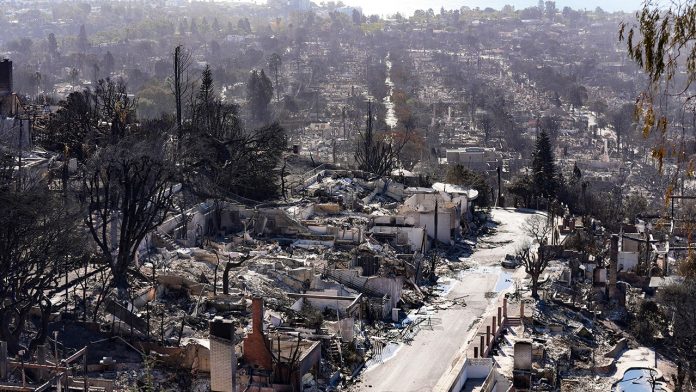
A general view of the burned residential areas as wildfires continue to wreak havoc, reaching their fifth day and leaving extensive damage in residential areas in Los Angeles, California, United States on January 12, 2025.  (Lokman Vural Elibol/Anadolu via Getty Images)

Some environmental critics are pushing back on the group’s rise to notoriety in the media and classified the group as “alarmist,” fueled by “leftist organizations that are driving the climate narrative.”

“They’re just trying to manipulate people, and it’s effective. It works. I’ve talked to people that are saying that this is caused by climate change, and it’s frustrating,” Jason Isaac, founder and CEO of the American Energy Institute – a nonprofit think tank group platforming environmental policies that “promote economic freedom” – told Fox News Digital in an interview. 

“There’s no peer review that’s been done on this data,” he added. “They rush out a flash study that supposedly found that global warming boosted fire weather conditions in the area by 35% and intensity by 6%. Well, what about the fires that happened in 1895? Who’s to blame for those? This is just a geography that’s sort of right for this situation to happen from time to time.”

Isaac added that California’s “poor management” is largely to blame and will “happen when they’re telling people they can’t clear their land.”

Isaac criticized California’s spending priorities, noting that while the state allocates tens of billions of dollars to its climate commitment – originally over $50 billion, later reduced to around $45 billion – it spent roughly $4.2 billion on fire prevention in the 2024-2025 fiscal year.

TRUMP ELIMINATING LNG PAUSE TO HAVE ‘QUICKEST EFFECT’ ON ENERGY INDUSTRY: RICK PERRY

Aftermath of the Los Angeles wildfires

A helicopter drops water on the Palisades Fire in Mandeville Canyon, Saturday, Jan. 11, 2025, in Los Angeles. (Etienne Laurent)

“You would think it would be a major priority for California, because of how susceptible they are to wildfires,” he said.

Former Trump EPA Transition Team Member, Steve Malloy, also told Fox News Digital that the WWA’s recent study was problematic, and dubbed it “pal-reviewed.” 

“There’s no peer review going on. It’s not science,” Malloy said. “You know, this whole attribution thing  is bogus. There’s no scientific foundation for it. It’s good propaganda, because they have the whole system organized where no one in the media asks any questions, they hide the origin and everything, and it makes for good headlines.”

Aftermath of the California wildfires

Sun rises over the Pacific Palisades neighborhood of west Los Angeles, in the aftermath of devastating wildfires in the Los Angeles area forcing people to evacuate, in California, U.S., January 9, 2025. (Maria Alejandra Cardona/Reuters)

Both Malloy and Isaac agreed that there will likely be an uptick in climate change-driven initiatives after President Donald Trump signed an executive order last month to axe the Biden-era U.S. climate commitments, which aimed to reduce emissions 61-66% by 2035. 

The WWA co-founder, Otto, has previously claimed in a 2022 UK magazine article that “Who ‘does science’ is a hugely important issue,” and that if “climate change is worked on exclusively by white men, it means that the questions asked are those that are relevant to white men.”

“But people most affected by climate change are not white men, so if all these other people are effectively excluded from the scientific process, the problems we have to face in climate change will not be properly addressed and you will not find solutions for how to best transform a society,” Otto wrote.

CLIMATE ACTIVISTS HIT WITH FELONY CHARGES AFTER DEFACING US CONSTITUTION’S DISPLAY CASE

Fireman wildfire

Firefighter spray water to bushfire. Tropical wildfires release carbon dioxide (CO2) emissions that contribute to climate change and global warming. (iStock)

According to the WWA’s FAQ page on its website, “rapid attribution studies are published before peer review in order to release the results soon after events have taken place” and adds that its studies are later published in peer-reviewed journals. 

“Scientific studies on extreme weather events, going through peer-review, are usually published months or even years after an event occurred, when the public has moved on and questions about responsibilities, rebuilding or relocating have been debated without taking scientific evidence on the influence of climate change into account,” the WWA website states. 

TRUMP MEETS WITH CALIFORNIA RESIDENTS, FIRE AND LAW ENFORCEMENT OFFICIALS TO SEE LA WILDFIRE DAMAGE FIRST HAND

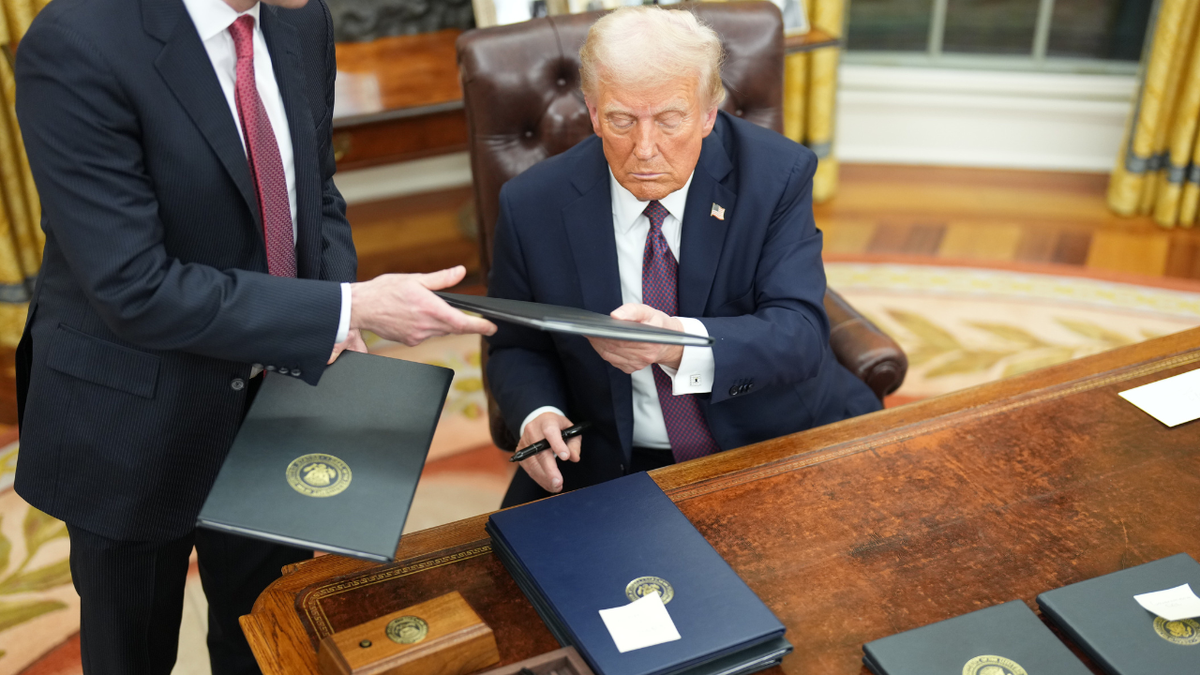
Washington , DC - January 20: President Donald Trump signs a series of executive orders at the White House on January 20, 2025, in Washington, DC. (Photo by Jabin Botsford /The Washington Post via Getty Images)

Washington , DC – January 20: President Donald Trump signs a series of executive orders at the White House on January 20, 2025, in Washington, DC. (Photo by Jabin Botsford /The Washington Post via Getty Images) (Getty)

On its website, WWA lists several papers included in peer-reviewed journals including in the Weather and Climate Extremes, Environmental Research: Climate and Natural Hazards and Earth System Sciences, among others.

WWA conducts its studies by analyzing real-world weather data from regional weather stations to determine how rare and intense an extreme weather event is, according to its website. Researchers then compare the likelihood of such events currently with their expected frequency before the widespread burning of fossil fuels in the late 1800s. 

WWA researchers occasionally face difficulties that prevent them from providing numerical results in their studies. These challenges may arise, its website states, if there isn’t enough reliable weather data available or if the computer models used for analysis are not well-suited to accurately simulate the specific weather event being studied.

“If a study does not have a conclusive result because of these challenges, that does not necessarily mean that climate change played no role in the weather event,” the WWA website states.

CLICK HERE TO GET THE FOX NEWS APP

WWA did not respond to repeated requests for comment from Fox News Digital.

How Canada and Mexico’s Leaders Took Different Routes to a Tariff Deal With Trump

0

Prime Minister Justin Trudeau of Canada went for a threat of immediate retaliation and a late-night emotional address that produced a cliffhanger compromise.

President Claudia Sheinbaum of Mexico opted for carrots over sticks, and backroom talks that led to an early deal.

In the end, when all was said and done on Monday, hours before what would have been the start of a North American trade war, both leaders negotiated reprieves from President Trump on his threat to impose tariffs on the United States’ two top trading partners.

And both had to provide relatively little in exchange.

The different routes Mr. Trudeau and Ms. Sheinbaum followed to the same outcome — a 30-day delay in U.S. tariffs in exchange for toughening their borders to stem the flow of drugs and unauthorized migrants into the United States — tell a tale of two different styles of leadership, and two countries with different relationships to the United States.

Mr. Trudeau had been preparing the ground for compromise — and retaliation — since November. Three days after Mr. Trump first issued his tariff threat on Nov. 25, the Canadian prime minister got on a plane to Mar-a-Lago to talk to him about averting what would amount to a fraternal trade war that would deeply hurt the Canadian economy.

By all accounts, that first meeting set the scene for Canada’s groundwork to directly address what Mr. Trump said he wanted: a safer northern border, with fewer unauthorized migrant crossings, and a tighter grip on fentanyl flowing across the border.

The parallel story of how Mexico’s leader got the same tariff delay for her country, with a few hours’ advantage over Canada, highlights Ms. Sheinbaum’s firm and composed leadership style, and her willingness to focus on partnership in her talks with Mr. Trump.

Even before being voted into office in June, Ms. Sheinbaum and her team had been preparing for the possibility that Mr. Trump would return to the White House. And since his victory in November, Ms. Sheinbaum has reiterated that she wasn’t concerned despite his threats of mass deportations and tariffs. The day after the U.S. elections, she promised to “establish communication and good relations.”

In Canada, the weeks since the meeting at Mar-a-Lago between Mr. Trudeau and Mr. Trump have been packed with developments that normally take months, or even years, to unfold. For starters, Mr. Trudeau, who has become increasingly unpopular at home, announced that he would resign. On March 9 his party, the Liberals, will elect a new leader and that person will become Canada’s next prime minister, at least until a federal election is called later this year.

Several of his top ministers said they would not run to replace him in order to focus on the looming tariff showdown. The foreign minister, Mélanie Joly, and the finance minister, Dominic LeBlanc, both close Trudeau allies and potential successors, instead threw themselves at lobbying key Republicans.

Mr. LeBlanc developed a “bromance” with Howard Lutnick, Mr. Trump’s pick to be commerce secretary. Ms. Joly visited the United States five times, lobbying senior Republicans and talking to Mr. Trump’s border czar, Thomas Homan.

She told them that Canada would take the lead in protecting the border so that the United States would not need to use too many resources.

“I said, we know that the southern border is a preoccupation for you, so we will put the resources at the northern border,” Ms. Joly said in an interview about her message to Republicans she met. “That way you can have your resources at the southern border.”

But Mr. Trudeau also made it clear that he would level retaliatory tariffs against the United States if Mr. Trump decided to go ahead with his threat. Government officials said that the outgoing Canadian leader believed it was vital to stand up for Canada in a more aggressive way, while simultaneously working to satisfy Mr. Trump’s demands.

Canada in December rolled out, and budgeted for, a multiyear $900 million plan to bolster its border protections. That included immediately deploying two Blackhawk helicopters, 60 U.S.-made drones and additional border guards.

On Saturday, after the White House had announced that Mr. Trump would go ahead with the tariffs, Mr. Trudeau addressed not just Canadians, but also made clear he was speaking directly to Americans, in an emotional late-night speech.

“We don’t want to be here,” Mr. Trudeau said, evoking the deep bonds between the two neighbors and close trading partners. “We didn’t ask for this.”

But, as he detailed his own retaliatory tariff plan, he added: “We will stand strong for Canada.”

In the end, it came down to the wire. Mr. Trudeau and Mr. Trump failed to reach a compromise in a Monday morning call. That prolonged the anxiety for a few hours, but, a second call in the late afternoon yielded a deal, with Mr. Trump agreeing to push tariffs back by a month.

The foundations of the eventual deal announced on Monday afternoon had been in place for weeks, but Canada also pledged to do more on the fentanyl front, appointing a “fentanyl czar” and committing fresh resources to combating organized crime and cartels.

In Mexico, Ms. Sheinbaum’s predecessor and mentor, Andrés Manuel López Obrador, had forged a close working relationship with Mr. Trump in the early years of his administration, despite similar circumstances: Mr. Trump’s repeated threats to impose tariffs on Mexico and make the country pay for a border wall. In an effort to stave off levies, Mr. Lopez Obrador agreed to bolster immigration enforcement, including deploying the National Guard.

Conditions, though, have changed since then. Mexico has eclipsed China as the largest trading partner in goods with the United States. And Mexico emerged as the top market worldwide for U.S. food and agriculture exports, with those imports surging to more than $29 billion.

But there is a key difference between Mr. López Obrador and Ms. Sheinbaum: While he at times adopted a confrontational tone toward the United States, she maintains a more measured and coolheaded demeanor.

Unlike Canada, which was clear both about its plans to retaliate with its own tariffs on U.S. goods and with its border plans to address Mr. Trump’s demands, Ms. Sheinbaum and her team were more tight-lipped.

After Mr. Trump ordered the tariffs on Saturday, Ms. Sheinbaum still bided her time, promising to reveal her “Plan B” response later — but she first asked that Mr. Trump respond to her request to form a working group of security and health officials from both countries.

Later that Saturday, Mr. Trudeau and Ms. Sheinbaum got on the phone to swap notes. A Canadian official with knowledge of the call said that they updated each other on their respective strategies, and acknowledged that they were slightly different approaches, but had the exact same goals.

On Monday morning, Ms Sheinbaum and Mr. Trump spoke on the phone, a call that yielded a faster outcome than the one Mr. Trump held with Mr. Trudeau. Shortly after, Ms. Sheinbaum posted on X that a compromise had been reached.

Addressing reporters later, Ms. Sheinbaum said the discussion had been “very respectful.” Mr. Trump described the call as “very friendly.”

She, too, secured a 30-day reprieve for Mexico in exchange for border and fentanyl measures, most of which, like in the case of Canada, had been part of existing plans.

“We have this month to work, to convince each other that this is the best way forward,” Ms. Sheinbaum said at her regular morning news conference after speaking to President Trump. Suggesting that she might be able hold off the penalties altogether, she said she had told her American counterpart: “We are going to deliver results. Good results for your people, good results for the Mexican people.”

As for Mr. Trudeau, when the 30-day reprieve lapses, he will be in his last week in office.

Greek island Santorini evacuated after earthquakes shake tourist destination

0

Hundreds of earthquakes that have rattled the Greek islands since last week have prompted the evacuation of thousands from the tourist hotspot Santorini.

Santorini Mayor Nikos Zorzos told The Associated Press that the tremors are a “seismic swarm” and could continue for weeks before eventually diminishing.

“This phenomenon may play out with small quakes or a single, slightly stronger one, followed by gradual subsidence,” Zorzos said, adding he was cautiously optimistic after speaking to seismologists.

More than 200 undersea earthquakes up to magnitude 5 have been recorded in the volcanic region since Friday.

EMERGENCY CREWS DEPLOYED ON SANTORINI AS EARTHQUAKE SWARM WORRIES GREEK EXPERTS

Tourists walk on the narrow streets of Fira after an earthquake swarm on the island of Santorini, southern Greece, on Monday, Feb. 3, 2025. (AP Photo/Petros Giannakouris)

Roughly 9,000 people have left Santorini since Sunday, with more emergency flights and ferries adding services to accommodate departures, the BBC reported.

People wait for ferry at port of Piraeus

People wait for the arrival of a regularly scheduled ferry to Athens’ port of Piraeus, after a spike in seismic activity raised concerns about a potentially powerful earthquake in Santorini, southern Greece, on Monday, Feb. 3, 2025. (AP Photo/Petros Giannakouris)

Santorini has canceled public events, restricted travel to the island and banned construction work in certain areas. The quakes have caused cracks in some older buildings, but no injuries have been reported. The island has a population of approximately 15,500 residents.

EARTHQUAKE OFF COAST OF MAINE SHAKES NORTHEAST

caldera at Firostefani

A woman from China looks on from a caldera at Firostefani while authorities are taking emergency measures in response to intense seismic activity on the popular Aegean Sea holiday island of Santorini, southern Greece, on Tuesday, Feb. 4, 2025.  (AP Photo/Petros Giannakouris)

Efthimios Lekkas, head of the state-run Earthquake Planning and Protection Organization, said the epicenter of the earthquakes in the Aegean was moving northward away from Santorini, and emphasized there was no connection to the area’s dormant volcanoes.

CLICK TO GET THE FOX NEWS APP

“This may last several days or several weeks. We are not able to predict the evolution of the sequence in time,” Lekkas told state-run television.

The Associated Press contributed to this report.

Greenland, Eyeing Trump, Bans Foreign Political Funding

0

Greenland’s Parliament banned foreign and anonymous political funding on Tuesday, in the semiautonomous island’s latest reaction to President Trump’s stated intentions to acquire it. Greenland’s lawmakers fast-tracked the law — an effort to protect against outside interference — before upcoming parliamentary elections.

The law is Greenland’s most aggressive effort yet to push back against Mr. Trump, who refused last month to rule out using military force to take the island. The law does not directly name him as a potential campaign contributor, but a proposal that laid out the law and its rationale made clear that his insistence inspired its authors.

“Given the geopolitical interest in Greenland and the current situation — where representatives of an allied great power have expressed interest in acquiring and controlling Greenland — the country is particularly vulnerable to attempts to influence its elections and political decision-making processes,” the proposal read.

The law was billed as an effort “to safeguard Greenland’s political integrity” in the proposal. Mute B. Egede, Greenland’s premier, proposed holding parliamentary elections on March 11.

Greenlanders were initially shocked and confused by Mr. Trump’s repeated desire that the United States take control of the territory. Donald Trump Jr., Mr. Trump’s son, briefly visited the island last month, which added to the speculation.

For the United States, Greenland sits in a strategic location: The island is home to an American military base and, as climate change melts the Arctic ice, commercial and naval competition is growing in the far north. Greenland also has enormous reserves of rare elements and other minerals used to make advanced technology.

“We need it for national security,” the president has said.

Greenland has long been tied to Denmark, first as a colony and then as a semiautonomous territory. Since 2009, it has had the right to declare independence after a referendum, but it still relies on Denmark for its defense, security and other international affairs.

Greenland’s mostly Inuit population has increasingly chafed against Copenhagen’s oversight. Greenland’s leadership has flatly and repeatedly rejected Mr. Trump’s advances.

“Greenland is ours,” Mr. Egede said in a statement late last year, as Mr. Trump eyed the island. “We are not for sale and will never be for sale.”

Denmark, too, has been rattled: Last week, it said it would increase its military spending in the North Atlantic by $2 billion.

The Nordic country does not want to set off a trade war with the United States. After an icy phone call with Mr. Trump, Prime Minister Mette Frederiksen of Denmark traveled across Europe last week to meet with European and NATO leaders to increase support, do damage control and discuss how to respond to Mr. Trump’s intense demands.

“Trump will not have Greenland,” said Lars Lokke Rasmussen, Denmark’s foreign minister and its prime minister during Mr. Trump’s first term.

Greenland’s Parliament, the Inatsisartut, does not need Denmark’s approval to pass the law. Its lawmakers moved exceptionally quickly — the bill was only introduced on Saturday.

“Given the current geopolitical situation and the upcoming Inatsisartut election, the need for such regulation is considered urgent,” the proposal read.

Other countries, including the United States, restrict or ban foreign political funding. Greenland previously did not limit or prohibit such contributions, according to the proposal.

The proposal notes that foreign powers have tried to influence other democratic elections around the world in recent years. The authors specifically pointed to the enormous amount of private political donations in the United States.

“The initiative is obviously urgent,” said Ulrik Pram Gad, a researcher at the Danish Institute for International Studies.

He said donations had not previously influenced Greenland’s politics and called the law “primarily a preventive measure.”

Greenland is also trying to ward against foreign interests by limiting real estate purchases.

On Monday, lawmakers approved new regulations that would restrict land purchases to Danish citizens or people who have been permanent residents of Greenland for at least two years. The rules are expected to take effect later this year.

Greenland has about 56,000 residents and is mostly covered in ice. It is opening up to the world — it has said that it is ready for business and recently opened a new international airport — but its tourism infrastructure is sparse.

Foreign campaign contributions — even those seen as tiny by American standards — could drastically change Greenland’s political structure: Parties have been mostly financed by public subsidies, while private contributions have “constituted an insignificant part” of its political financing, the proposal read.

“The perspectives of this potential threat are alarming,” it read. “Donations that would be modest on an international scale would be colossal in a Greenlandic election campaign.”

Political parties will no longer be allowed to receive foreign or anonymous contributions. Neither will local and youth branches of parties, lawmakers, aides and candidates.

The new law will also cap the amount of private political donations. A political party can receive only about $28,000 in private donations a year. Individual donors can only give about $2,800. The law also strengthens and broadens disclosure requirements, among other considerations.

“Disproportionately large private donations could weaken public confidence in the integrity of political processes,” the proposal read.