Friday, November 13, 2026
Home Blog Page 276

Heavy cannabis use could pose this threat to the brain

0

As cannabis is legalized in more states across the country, new research points to the negative side effects of partaking too much.

Researchers from the University of Colorado Anschutz Medical Campus looked into the impact of recent and lifetime cannabis use on brain function during cognitive tasks.

The study, published in the journal JAMA Open Network, is the “largest of its kind,” according to the university, using brain imaging technology to examine the effects of cannabis use on 1,000 young adults from 22 to 36 years old.

DAILY MARIJUANA SMOKERS FACE HIGHER RISK OF HEART ATTACK, STROKE, SAYS AMERICAN HEART ASSOCIATION STUDY

The cannabis users were tested on their “working memory,” which is the ability to retain and use information to perform tasks, like solving a math problem.

The researchers looked into the impact of recent and lifetime cannabis use on brain function during cognitive tasks. (LEONARDO MUNOZ/AFP via Getty Images)

Neural response was measured through seven cognitive tests – probing working memory, reward, emotion, language and motor skills – such as “tapping a finger to map brain control, relational assessment and theory of mind.” 

The results showed that 63% of heavy lifetime cannabis users demonstrated reduced brain activity while completing a working memory task.

Meanwhile, 68% of recent cannabis users exhibited a similar impact.

OLDER AMERICANS TURN TO MARIJUANA FOR BETTER SLEEP AND PAIN RELIEF: HERE’S WHAT TO KNOW

The researchers concluded that cannabis had a “statistically significant effect” on brain function during working memory tasks, but was less significant in other tasks.

There was reduced brain activity in areas involved in important cognitive functions like decision-making, memory, attention and emotional processing.

woman relaxes at home smoking a joint

“Heavy users” in the study included those who used cannabis more than 1,000 times over their lifetime.  (iStock)

Lead study author Joshua Gowin, PhD, assistant professor of radiology at the University of Colorado School of Medicine, stressed the importance of studying the effects of cannabis on health as it continues to “grow globally.”

“By doing so, we can provide a well-rounded understanding of both the benefits and risks of cannabis use, empowering people to make informed decisions and fully comprehend the potential consequences,” he said in a press release.

MARIJUANA USE LINKED TO INCREASED ASTHMA RISK IN YOUTH, STUDY SAYS: ‘WORRISOME’ HEALTH IMPLICATIONS

Refraining from cannabis use before a cognitive task could help improve performance, according to Gowin and his team.

“People need to be aware of their relationship with cannabis, since abstaining cold turkey could disrupt their cognition as well,” Gowin said. “For example, heavy users may need to be more cautious.”

Preparing cannabis

Larger studies are necessary to understand whether cannabis use directly changes brain function, a researcher suggested. (iStock)

“There are a lot of questions … regarding how cannabis impacts the brain,” he went on. 

“Large, long-term studies are needed to understand whether cannabis use directly changes brain function, how long these effects last and the impact on different age groups.”

CLICK HERE TO SIGN UP FOR OUR HEALTH NEWSLETTER

Neurosurgeon Dr. Paul Saphier, MD, pointed out that the overall study sample size is large, but that only about 8% of participants were reported as “heavy” users.

“While the study appears to be designed well … I’d like to see a larger sample size of heavy users compared to either moderate or non-users to draw any definitive data,” the doctor, who was not involved in the study, shared with Fox News Digital.

For more Health articles, visit www.foxnews.com/health

Saphier, founder of Coaxial Neurosurgical Specialists in New Jersey, noted that he is “not surprised” by the study findings.

“Heavy use of cannabis over one’s lifetime may ultimately lead to decreased cognitive/memory tasks,” he confirmed.

Close up of woman passing marijuana joint

A neurosurgeon confirmed that lifetime cannabis use can reduce brain function. (iStock)

“This also supports a relatively common and well-articulated lifestyle mantra of ‘everything in moderation,’ with the obvious exceptions of in-arguably deleterious activities/lifestyle choices.”

CLICK HERE TO GET THE FOX NEWS APP 

The neurosurgeon added that he looks forward to a “more well-rounded and higher enrollment study of heavy and moderate users, so I can offer more definitive data to my own patients.”
The Closed-Door Battle to Become IOC President

0

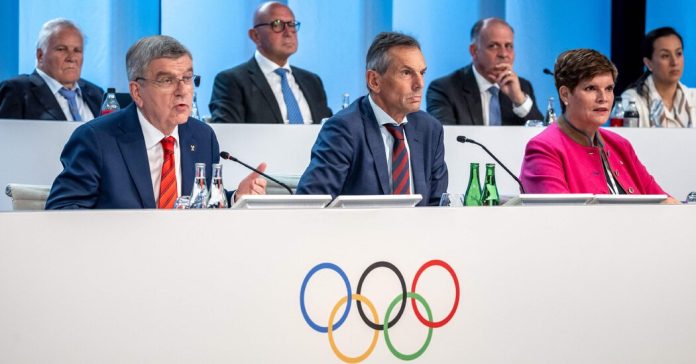
Late Wednesday night, members of the International Olympic Committee gathered for a dinner at the Olympic Museum on the banks of Lake Geneva. The next morning, they would see presentations from seven candidates vying to be their leader, a role that would by most measures be the most important in international sports.

At the closed-doors gathering, the outgoing president, Thomas Bach, ensured that the members present — the people who determine who will eventually lead the I.O.C. — were kept apart from the candidates. It was, he said perhaps jokingly, so they could enjoy their meals in peace.

It was a scene in keeping with the quirky and sometimes stifling rules of an election that will be decided when I.O.C. members vote in March at a resort in southern Greece.

The winner will assume leadership of the organization that controls the Olympics, an event that is as prestigious as it is expensive, and a diplomatic status higher than any other figure in the sports world. But many of the candidates have been critical of the thicket of rules and regulations surrounding the election that they say have hindered their ability to get their message across not only to I.O.C. members but also the wider world.

Candidates are barred from holding debates, voicing opposition regarding a rival’s vision for the I.O.C. or even receiving public endorsements from members.

“What we are looking at as candidates is to become the president of the largest sports movement in the world, and I think, in fairness, transparency and integrity, the world has a right to know who is running and what they stand for,” Prince Faisal bin Al Hussein, one of the candidates, said, in a strikingly direct statement in the protocol heavy world of the 130-year-old organization.

The institution draws its members from the world of sports and beyond, with federation heads rubbing shoulders with leaders from commerce, politics, show business and — like in the case of Prince Faisal — global royalty. Princess Anne, the younger sister of England’s King Charles III, heads the nominations committee for what has been described as the most exclusive club in the world. (There are currently 110 members.)

Prince Faisal is the only bona fide royal among the seven candidates vying for the presidency. But he’s joined by what counts as I.O.C. aristocracy in the form of the Spanish businessman Juan Antonio Samaranch, whose father led the organization for two decades through 2001 and shaped much of what it has become. Also running are four leaders of sports federations, including Sebastian Coe, the gold medal-winning Olympic runner-turned-head of international track and field. And for the first time there is a female candidate: Kirsty Coventry, an Olympic champion swimmer from Zimbabwe, who would also be the first person from Africa to lead the I.O.C.

For such a consequential election, much of it is taking place in the dark, away from any form of public (or private) debate.

The morning after the dinner at the museum, the candidates — all staying at the luxury Lausanne Palace, the longtime haunt of the I.O.C., which has a suite named for the elder Samaranch — were taken in black Mercedes minivans to the organization’s headquarters at intervals corresponding with the order in which they were to deliver 15-minute presentations. It was the first and only opportunity for them to speak to the entire membership. Officials had to hand over their cellphones, recordings were not permitted and members were not allowed to ask questions.

The scene and the secrecy prompted more than one official to fume at the process being more akin to a papal conclave, when the selection of a new pope after a secret vote by a gathering of cardinals is confirmed with white smoke emanating from the chimney of the Sistine Chapel.

After presenting his vision to the members who, like the Catholic cardinals, will vote in secret, Mr. Samaranch said in an interview that he would have loved to have had a recording of his speech. After all, he said, it was “the speech of my life.”

Still, sitting in a room bearing not only his father’s name but also a large portrait of him, Mr. Samaranch, a member of the I.O.C.’s top board since 2012, said he had not taken the time to challenge the rules of the election, most of which, he said, he disagreed with.

Under the regulations, contact time with voters is severely limited. In-person meetings, beyond the two days in Lausanne, are tightly controlled, with strict requirements to give advanced notice of any such contact to the I.O.C.’s ethics body. Phone calls are allowed.

“Nonsense,” said Morinari Watanabe, a long-shot candidate from Japan who leads global gymnastics, as the members were chauffeured away after the presentations. The next time they will all be together is on the eve of the vote.

Mr. Watanabe’s ideas include turning the Olympic Games into a 24-hour enterprise across five continents and renaming the I.O.C. Those are revolutionary thoughts for an organization whose approach to change can be glacial compared with the corporate world.

“The Olympic movement is a powerful movement,” said Mr. Coe, easily the most recognizable of the candidates beyond the clubby world of sports politics. “It should be the thought leadership in sport, it should be setting the tone and style, and, my goodness, there is nothing like the Olympic Games.”

The winner will control an organization that generates almost $8 billion per four-year Olympic cycle. But perhaps more important, the role is considered the top diplomat in sports, a bridge in an increasingly fractious world, with a prize in the Summer Olympics for which great powers vie. Vladimir V. Putin, Russia’s leader, was the first to call Thomas Bach after his election in 2013.

Most members refused to offer any insight into whom they were thinking of voting for, or even basic questions about what characteristics they would like to see in a candidate. Luis Mejia Oviedo, a delegate from the Dominican Republic, sitting in the oak-trimmed lobby of the Lausanne Palace, only smiled and offered a handshake as a response to each of three questions about the election.

Syed Shahid Ali, a Pakistani who has been an I.O.C. member for almost 30 years, said debate within the movement had slowly eroded, giving members little say in crucial decisions. That has been a regular critique of the organization under Mr. Bach, a former German fencer.

“The I.O.C. is an autonomous body but quite private in one sense,” Mr. Ali said as he watched an attendant open a door for Prince Albert II of Monaco to enter a chauffeur-driven Lexus and make his departure. “It controls world sport, so from that sense it’s not all that private. But from the inner workings of how it functions — that is quite private.”

Many of the candidates, including Mr. Samaranch and Ms. Coventry, are established members of the I.O.C.’s top board and have vowed to give members a greater voice again. That includes having a say in the organization’s most important choice: where the Olympics will take place. Under Mr. Bach, that choice has largely been taken away, with the members evaluating just one preferred candidate put forward by the I.O.C. leadership.

“They should have said it much earlier,” Mr. Ali said. “It shows lack of courage of convictions or the fact it might be an afterthought or it might be that it’s only applicable now you’re a candidate.”

With a largely inscrutable and diverse electorate, forecasting front-runners is a tricky task. There has been speculation that Ms. Coventry, who recently became a mother for the second time, has the backing of the incumbent Mr. Bach. “I think he’s being very fair to all of us,” Ms. Coventry told a news conference capped at 10 minutes per candidate after their pitches. “I don’t feel that he is out campaigning for me.”

For the winner, there will be a bulging to-do list, with a notable focus on the United States, where the biggest television contract requires updating after a decade; the national antidoping agency is in the midst of an increasingly acrimonious war with the global antidoping regulator; and the next Summer Olympics — in Los Angeles in 2028 — is being planned under a mercurial Trump administration.

“These are big challenges, they’ll be in my in-tray if I am successful,” Mr. Coe said.

With votes to be secured, candidates now face a race against time to press their case. Mr. Samaranch hoped to gather a few stragglers before they left for their homes, businesses and palaces around the world. Smiling and making a lasso-like gesture, he hoped to gather as many as he could for dinner.

Robert F. Kennedy Jr. clears a key hurdle on his way to be Trump’s health secretary : Shots

0

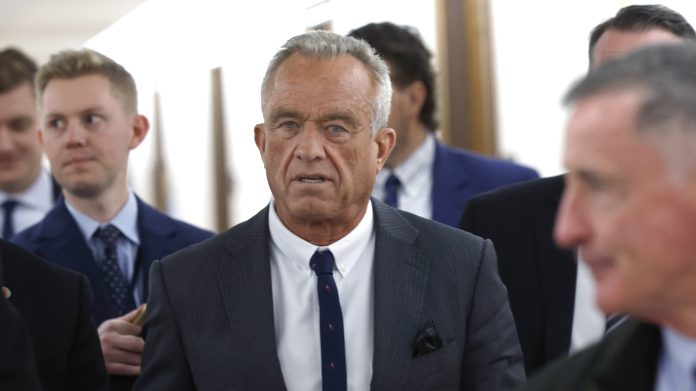
Robert F. Kennedy Jr., President Trump’s nominee to be Secretary of Health and Human Services, was on Capitol Hill in early January to meet with senators.

Kevin Dietsch/Getty Images


hide caption

toggle caption

Kevin Dietsch/Getty Images

Robert F. Kennedy Jr. appears likely to soon be taking the helm as Secretary of the Department of Health and Human Services. The Senate Finance committee voted along party lines, 14-13, to favorably report his nomination to the full Senate.

A vote to confirm him likely will happen in the coming days or perhaps next week.

President Trump has so far succeeded in installing most of his preferred cabinet picks despite slim Congressional majorities. Kennedy was one of his most contentious nominees.

Kennedy is a very unusual choice to run the nation’s health agencies, which include Medicare, the Food and Drug Administration, the National Institutes for Health, and more. A scion of the famous Democratic family, Kennedy spent years as an environmental advocate before pivoting to anti-vaccine work. That work built his reputation and fortune.

Senator Bill Cassidy, R.-La., cast a key vote in favor of Kennedy. A physician, Cassidy spoke in personal terms during hearings last week about his experiences with patients who suffered from lifelong health consequences because they were unvaccinated. He indicated on Thursday he was “struggling” with the decision, but ultimately voted in Kennedy’s favor.

Sen. Bill Cassidy, Republican of Louisiana, cast his Senate Finance Committee vote in favor of Robert F. Kennedy Jr, on Tuesday. Also a physician, Cassidy asked Kennedy tough questions about his conspiracy theories on vaccines last week.

Sen. Bill Cassidy, Republican of Louisiana, cast his Senate Finance Committee vote in favor of Robert F. Kennedy Jr, on Tuesday. Also a physician, Cassidy asked Kennedy tough questions about his conspiracy theories on vaccines last week.

Saul Loeb/AFP via Getty Images


hide caption

toggle caption

Saul Loeb/AFP via Getty Images

On social media Tuesday, Cassidy posted: “I’ve had very intense conversations with Bobby and the White House over the weekend and even this morning. I want to thank VP JD [Vance] specifically for his honest counsel,” he wrote. He added that he decided to vote in favor of Kennedy after receiving commitments from the Trump administration and “the opportunity to make progress on the issues we agree on like healthy foods and a pro-American agenda.”

Overcoming opposition from many sides

Democratic Senators stayed united in opposition to Kennedy, including his former law school classmate Sen. Sheldon Whitehouse, D.-R.I., and Sen. Bernie Sanders, I.-Vt., who has agreed with Kennedy in the past about problems with the food industry.

Since Trump announced Kennedy’s nomination, he’s faced fierce opposition from the left. An ad campaign from the left-leaning advocacy group Protect Our Care targeted select Republican senators and portrayed Kennedy as an anti-vaccine extremist. He also faced opposition from the right because of his past support of abortion access — former Vice President Mike Pence’s group Advancing American Freedom also ran ads against him. Thousands of physicians and scientists wrote letters opposing his nomination. Also, just before he was set to appear on Capitol Hill, his cousin Caroline Kennedy sent Senators a scathing letter about him, describing sordid acts and calling him a “predator.”

Republican Senators were very friendly to Kennedy and his ideas during hearings last week, including those who are fervently opposed to abortion rights. Also supporting him were “MAHA moms,” as Kennedy called them, who showed up in force in his confirmation hearings. The MAHA name refers to Kennedy’s “Make America Healthy Again” slogan.

As Cassidy explained during Thursday’s hearing in the HELP (Health, Education, Labor and Pensions) committee: “I’ve learned you got a tremendous following — my phone blows up with people who really follow you, and there are many who trust you more than they trust their own physician.”

A sudden alliance with Trump

Kennedy ended his own presidential bid as an Independent in August and threw his support behind Trump. In exchange, Trump agreed to let Kennedy “go wild on health” and execute his vision.

In his confirmation hearings, Kennedy frequently referenced “his generation” — he was born in 1954 — describing how Americans were healthier back then and in the decades since the country’s health had gone off track.

He frequently referenced data to support his arguments, but when confronted with data about the safety and efficacy of vaccines, Kennedy said he was unfamiliar with it. He said he was “pro-safety” and would change his position if he saw data that convinced him. Cassidy responded that he was skeptical that Kennedy would really change as a 71-year-old man.

Kennedy has frequently been called a conspiracy theorist, a label he denied during the hearings, although he doubled down on unproven claims including that Wi-Fi causes cancer and that AIDS is a different illness in Africa than in the West. An especially tense moment came when Kennedy suggested Black Americans should have a different vaccine schedule, a position Sen. Angela Alsobrooks, D-Md., called “dangerous.”

One issue that arose during the confirmation process was his financial conflicts of interests. As someone who has made a fortune by suing vaccine makers, he could financially benefit from ongoing litigation while in charge of the federal agencies that regulate those drugmakers. Kennedy wrote in subsequent filings that he would transfer those interests to his son. He also told lawmakers that he understood how the health agencies worked from having sued them many times over the years.

Tiger Woods announces death of his mother Kultida Woods

0

Tiger Woods on Tuesday announced that his mother, Kultida, has died. She was 78.

The legendary PGA Tour golfer made the announcement in post on X. He attached a statement and a picture of her in the post. He asked for privacy as he and his family grieved.

CLICK HERE FOR MORE SPORTS COVERAGE ON FOXNEWS.COM

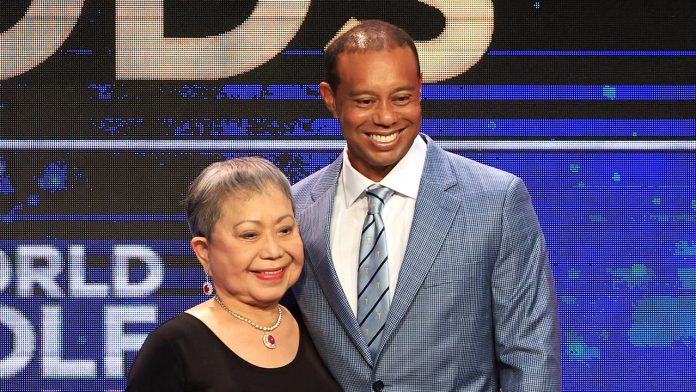
Tiger Woods and his mother Kultida Woods pose for photos prior to his induction at the World Golf Hall of Fame at the PGA Tour Global Home on March 9, 2022, in Ponte Vedra Beach, Florida. (Sam Greenwood/Getty Images)

“It is with heartfelt sadness that I want to share that my dear mother, Kultida Woods, passed away early this morning,” Woods wrote. “My Mom was a force of nature all her own, her spirit was simply undeniable. She was quick with the needle and a laugh. She was my biggest fan, greatest supporter, without her none of my personal achievements would have been possible. She was loved by so many, but especially by her two grandchildren, Sam and Charlie. 

“Thank you all for your support, prayers and privacy at this difficult time for me and my family. Love you Mom.”

PGA STAR JASON DAY WEARS SWEATS AT PEBBLE BEACH, SPARKING SOCIAL MEDIA STIR, JOHN FETTERMAN COMPARISONS 

Tiger Woods poses with family and President Donald Trump

From left, Erica Herman, Kultida Woods, Sam Alexis Woods, Charlie Axel Woods, Tiger Woods, President Donald Trump and first lady Melania Trump pose for photographs after Tiger Woods was presented with the Medal of Freedom at the White House, May 6, 2019. (Chip Somodevilla/Getty Images)

Tiger was Kultida and Earl Woods’ only child together. Tiger has a few half-siblings from his father’s first marriage. Kultida met Earl while he was on tour of duty in the military in Thailand. She was of Thai, Chinese and Dutch descent.

Kultida and Earl moved to Brooklyn, New York, after they were married, and then to Cypress, California, where Tiger was born.

ESPN noted that Tiger, whose real name is Eldrick, was named after his mother and father. The name Eldrick began with an E – in honor of Earl – and ended with a K – in honor of Kultida. 

Tiger Woods embraces mom, Kultida Woods

Tiger Woods hugs his mother Kultida Woods during a press conference at TPC Sawgrass Clubhouse, headquarters of the PGA Tour, in Ponte Vedra Beach, Florida, on Feb. 19, 2010. (Lori Moffett/Bloomberg via Getty Images)

CLICK HERE TO GET THE FOX NEWS APP

He was nicknamed Tiger after Earl’s lost comrade in Vietnam, Tiger Phong. The name stuck throughout his entire life.

Follow Fox News Digital’s sports coverage on X and subscribe to the Fox News Sports Huddle newsletter.

Teenager Known for Lifesaving Skills Is Killed in Shark Attack in Australia

0

A teenage girl died on Monday after being bitten by a shark while swimming at a popular beach in Queensland on Australia’s eastern coast, according to the authorities.

The teenager, Charlize Zmuda, had been in the water off Woorim Beach, a surf spot about 45 miles north of Brisbane, when she was attacked by the shark just before 5 p.m.

Paramedics rushed to treat Ms. Zmuda, 17, who had sustained “life-threatening upper body injuries,” the Queensland Ambulance Service said in a statement. She died on the beach from her injuries, according to the Queensland police.

It was unclear what kind of shark attacked Ms. Zmuda. The beach was closed until further notice, Surf Life Saving Queensland, the state’s aquatic rescue group, told the Australian Broadcasting Corporation. Queensland Police said in a statement that it would prepare a report for the coroner on the encounter.

Ms. Zmuda, a student, had grown up swimming in the area and was a skilled lifeguard, according to her family and Surf Life Saving Queensland. Ms. Zmuda had helped lead a patrol group and volunteered for a program teaching children ocean rescue skills, her family said. She was also musically talented, they said, and sang and played several instruments.

“She loved the beach, and it was truly was her happiest place on earth,” her family said in a statement shared with local media. “She loved four-wheel-driving up the beach, and anyone who went with her knew they would have to stop and pick up every piece of rubbish she saw along the way.”

The beach is one of many along the state’s coastline that has installed drumlines — an offshore system of shark population control that uses buoys and baits to catch sharks and then release them.

“A strong swimmer, a skilled lifesaver and someone who knew the ocean well — yet nothing could have prepared her, her family, or any of us for what happened,” a swim club she attended said in a social media tribute, calling her death a “cruel and unfathomable twist of fate.”

Dave Whimpey, the chief executive of Surf Life Saving Queensland, called it “shocking and confronting news,” in an interview with the A.B.C. Though such attacks were rare, he said, this one had a “huge impact on the lifesaving community right around Australia.”

Thousands of people attended a tribute for Ms. Zmuda on Tuesday, the day after she died. Her father, Steve Zmuda, said in an interview with the A.B.C. that they did not want the attack to discourage beachgoers. “It’s a big part of our lives,” he said.

Australia, like the United States, is a relative hot spot for shark attacks, though they are rare — and fatal attacks even rarer. In 2024, there were at least four shark encounters, according to the Taronga Conversation Society Australia, which tracks such events. In another fatal episode in December, a 40-year-old man died while spearfishing on an island off the Central Queensland coast. In July, a surfer survived an attack by a great white shark off the coast of New South Wales, but lost his leg.

For the past 10 years, there have been about 20 shark encounters each year where people are injured, the conservation society said.

Senators back Vivek Ramaswamy for Ohio governor ahead of expected gubernatorial bid

0

Entrepreneur and author Vivek Ramaswamy, who is expected to launch a gubernatorial bid in the Buckeye State, is racking up support from U.S. senators.

GOP Sens. Mike Lee of Utah and Marsha Blackburn of Tennessee both expressed their support for Ramaswamy in posts on Monday.

“If @VivekGRamaswamy runs for governor of Ohio (and I hope he does) he will not only win—he will transform Ohio for the better,” Lee declared in a tweet. “The results will benefit Ohioans—and Americans—for generations I’m honored to have worked with @VivekGRamaswamy, and I support him wholeheartedly.”

TOP JD VANCE POLITICAL ADVISORS TO STEER RAMASWAMY RUN FOR OHIO GOVERNOR

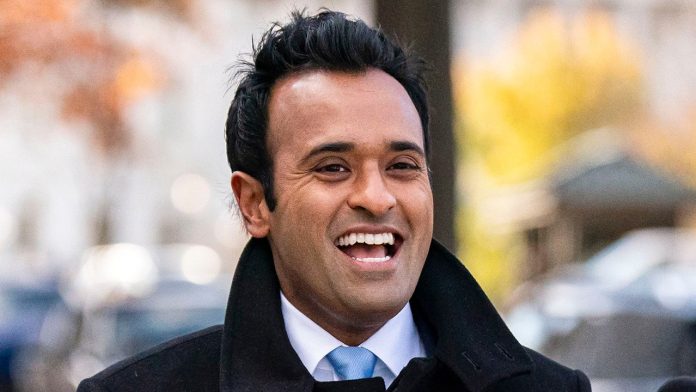
Vivek Ramaswamy arrives to meet with lawmakers on Capitol Hill in Washington, D.C., on Thursday, Dec. 5, 2024 (Al Drago/Bloomberg via Getty Images)

“It’s been such a pleasure getting to know @VivekGRamaswamy and work with him. He has a servant’s heart and a brilliant entrepreneurial mind. The people of Ohio would be well served by his leadership, and if he chooses to run, he’ll have my full support,” Blackburn noted in a post.

Ramaswamy retweeted each of the lawmakers’ posts, thanking them.

Sen. Rick Scott, R-Fla., a former Florida governor, endorsed Ramaswamy for Ohio governor last week.

“I’ve had the privilege of working closely with @VivekGRamaswamy and he is totally focused on trying to save our country. He is a business guy who understands what’s needed to grow jobs, make government efficient and help families prosper. He would be a fantastic Governor and I hope he runs for Governor of Ohio. If he runs, he has my full support and endorsement.” Scott noted in a tweet.

Ramaswamy retweeted Scott and thanked him.

MIKE LEE FLOATS ALLOWING PRIVATE PARTIES TO TARGET DRUG CARTELS FOR PROFIT

Ramaswamy has not yet made an announcement, but has been hinting about his plans.

During an appearance on “Jesse Watters Primetime,” Ramaswamy stated that he would seek elected office.

“Ohio was the epicenter of the Industrial Revolution. Toledo was the glass capital, Akron was the rubber capital, Youngstown & Cleveland led in steel, Dayton in computing, Cincinnati in consumer products. In 1950, 6 of the 15 wealthiest U.S. cities were in Ohio. There’s no reason we can’t be a frontier state again,” he declared in a tweet.

The Ohio gubernatorial race will take place in 2026.

VIVEK RAMASWAMY EXPOSES ‘NATIONAL SECURITY RISK’ AS STUDENTS FALL BEHIND IN SCHOOL

CLICK HERE TO GET THE FOX NEWS APP

Current Gov. Mike DeWine, a Republican who has held the role since early 2019, is not eligible to run again next year.

Last year, Trump announced Elon Musk and Ramaswamy as his picks to spearhead the Department of Government Efficiency (DOGE) effort, but on inauguration day, Ramaswamy noted in a post on X, “It was my honor to help support the creation of DOGE. I’m confident that Elon & team will succeed in streamlining government. I’ll have more to say very soon about my future plans in Ohio.”

Ramaswamy launched a White House bid in 2023, but dropped out and endorsed Trump in 2024.

Mexico Pledges to Send 10,000 Troops to U.S. Border: What to Know

0

As part of her deal with President Trump to stave off steep tariffs on Mexico for a month, President Claudia Sheinbaum pledged to send 10,000 additional members of the country’s National Guard to the border to “prevent drug trafficking from Mexico to the United States, particularly fentanyl.”

The deal is likely to put a lot of pressure on the National Guard, a force that is just a few years old and was recently put under the control of Mexico’s military.

Unlike in the United States, there is no dedicated border patrol in Mexico. Because immigration officers are barred from carrying guns, Mexico relies on the military and National Guard to police the border, said Jonathan Maza, a Mexico-based security analyst.

In recent years, Mexico has relied heavily on the National Guard to help curb illegal migration into the United States. In 2019, under pressure from Mr. Trump over migration, Andrés Manuel López Obrador, the country’s then-president and Ms. Sheinbaum’s mentor, sent National Guard troops to Mexico’s southern border with Guatemala.

Now that force, which has a total of about 130,000 members, is being asked to help more with stopping the flow of drugs north.

Ms. Sheinbaum said the 10,000 members would be pulled from other areas of the country, without providing specifics. She also would not say how much this would cost. The Mexican government said on Tuesday that the troops had already been redeployed to 18 cities and towns along the U.S. border.

If the National Guard is deployed to cities like Tijuana or Nuevo Laredo, places that have struggled with security and the flow of illicit drugs, Mr. Maza said, “it will help a lot to combat or stop or dissuade drug trafficking.” But he said it would be important for U.S. and Mexican officials to share more intelligence and information to stop the flow of drugs.

Ms. Sheinbaum highlighted on Monday the fact that both countries had vowed to work together to tackle not only drugs moving north but illegal guns flowing south, which have ended up in the hands of organized crime groups in Mexico.

She also said the National Guard would help with overall security at the border.

The National Guard was created in 2019 to fight crime, but last September, Mexican legislators amended the Constitution to put it under the military’s control. Critics have said the move gave the military, which has faced many allegations of human rights abuses, too much control over public security and civilian life.

Given the importance to Mexico of avoiding tariffs, Mr. Maza said, the National Guard can help show short- to medium-term results. But he warned that criminal groups adapt.

Cecilia Farfán-Méndez, a drug policy researcher at the Institute on Global Conflict and Cooperation at the University of California, San Diego, said that where the troops are deployed would be critical.

“If you’re only going to have them at the border, that doesn’t address the entire fentanyl production chain,” she said. “It’s not like production is all happening at the border, and we know that it happens in other parts of the country.”

Trump budget bill vote delayed amid House Republicans division on spending

0

A key vote to advance a massive conservative policy bill has been delayed, putting House Republicans behind in their ambitious schedule to enact President Donald Trump’s agenda.

The House Budget Committee had initially aimed to go through and approve the legislation this week, but a source familiar with planning told Fox News Digital that is no longer the case.

It comes after conservatives on the panel rejected multiple offers by House GOP leaders on where to set a baseline for cutting federal spending, urging senior Republicans to seek deeper cuts ahead of negotiations with the Senate.

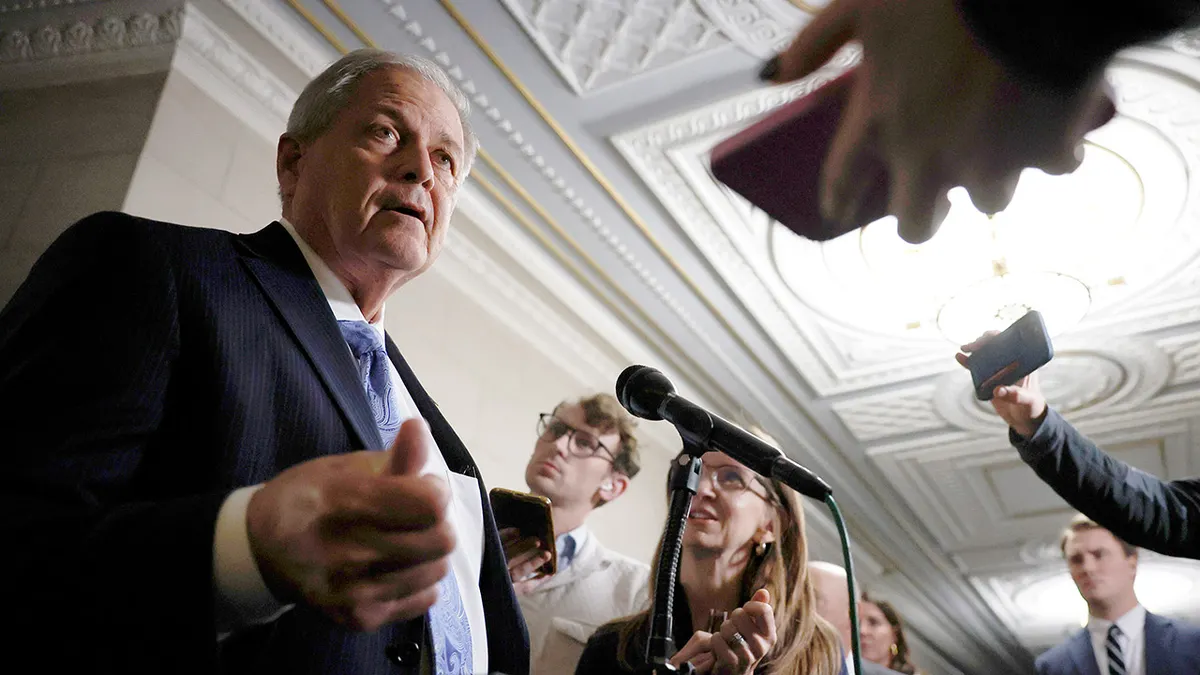
“I guess they want to get the resolution out. I do, too. I want to get it out of committee, have an up or down vote. But if you set that floor too low, that’s all that’s going to be achieved,” Rep. Ralph Norman, R-S.C., who sits on the House Budget Committee, told Fox News Digital on Monday. “I have no confidence that they would exceed whatever level we put in there.” 

SCOOP: KEY CONSERVATIVE CAUCUS DRAWS RED LINE ON HOUSE BUDGET PLAN

Speaker Mike Johnson is navigating a razor-thin House majority while trying to enact President Trump’s agenda. (Getty Images)

Norman is one of several members of the ultra-conservative House Freedom Caucus who sits on the budget committee. 

With just a razor-thin majority in the House – and by extension, on committees – Republicans can afford dissent from just one or two members to pass anything along party lines.

It’s a significant hurdle facing the GOP as they seek to use their House and Senate majorities to pass a sweeping conservative policy overhaul via the budget reconciliation process.

By lowering the threshold for Senate passage from 60 votes to 51 out of 100, the maneuver allows the party in power to skirt its opposition to advance its agenda – provided the items included relate to budgetary and other fiscal matters. The House of Representatives already has a simple majority threshold.

Republicans are hoping to use reconciliation to pass a broad swath of Trump’s policy goals, from more funding at the border to removing taxes on tipped and overtime wages.

Rep. Ralph Norman, R-S.C.

Rep. Ralph Norman is among the conservatives pushing for deeper spending cuts in reconciliation. (Chip Somodevilla/Getty Images)

But conservatives have also demanded that any reconciliation bill also reduce the national deficit by pairing new spending with extreme cuts in federal dollars going elsewhere.

The first step in the reconciliation process is getting the bill through Congress’ budget committees, which then directs other committees to find areas for cuts and policy changes under their specific jurisdictions. 

Speaker Mike Johnson, R-La., has said that guidelines for spending cuts would be a “floor” not a “ceiling.”

Fox News Digital was told that GOP leaders initially presented what amounted to a $300 billion floor for cuts, paired with $325 billion in new defense and border spending.

BLACK CAUCUS CHAIR ACCUSES TRUMP OF ‘PURGE’ OF ‘MINORITY’ FEDERAL WORKERS

Conservatives later rejected another offer that amounted to a rough total of $900 billion in spending cuts, with about $300 billion in new spending, Fox News Digital was told.

Norman said he wanted the floor set to $2 trillion or $3 trillion.

Rep. Ben Cline, R-Va., another Freedom Caucus member on the budget panel, said he was optimistic about reaching a deal, but that there were “a lot of conversations about starting the process from the most conservative position possible.”

Ben Cline

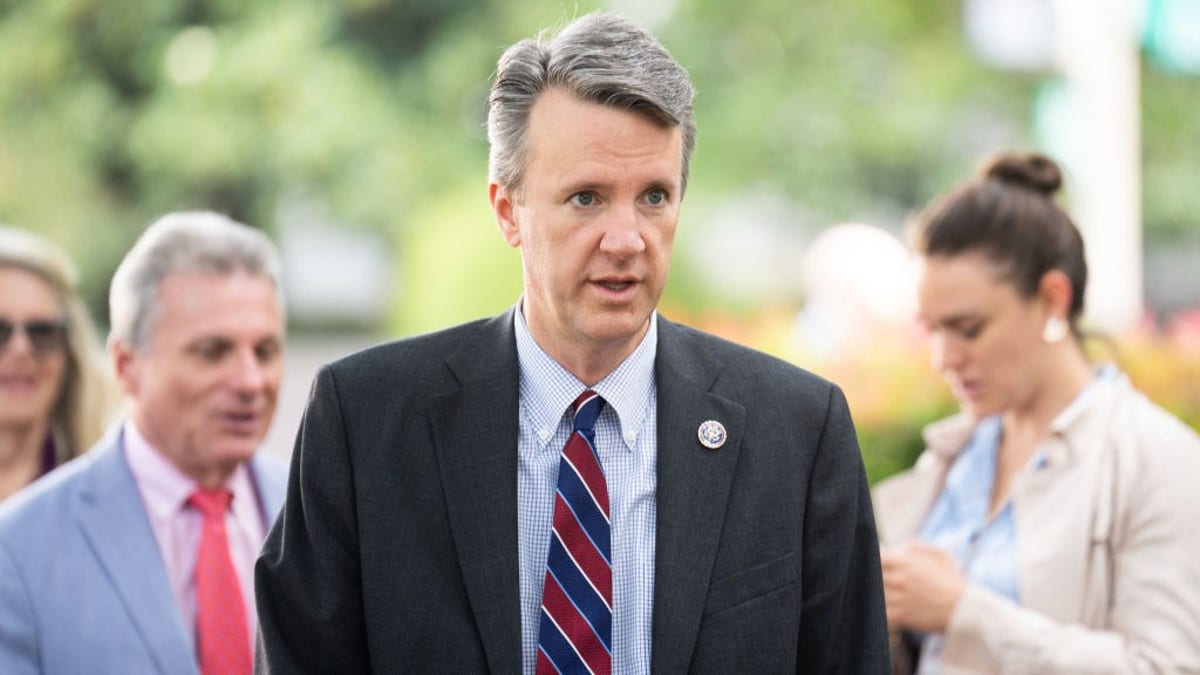
Rep. Ben Cline said he was optimistic about reaching a deal but that there were ‘a lot of conversations about starting the process from the most conservative position possible.’ (Bill Clark/CQ-Roll Call, Inc via Getty Images)

“The Senate is not as interested in fiscal responsibility, so we recognize the need to set parameters for authorizing committees that encourage that… from the beginning,” Cline said Monday.

CLICK HERE TO GET THE FOX NEWS APP

Johnson said he wanted the bill to advance through committee this week with a goal of passing an initial House version by the end of February.

Fox News Digital reached out to Johnson’s office for comment.

The speaker said on “Fox & Friends” Monday morning of reconciliation talks, “Republicans are working right now to negotiate what that looks like. We don’t want to blow a hole in the deficit by extending the Trump-era tax cuts, for example, but we’re definitely going to get that extended. So we got to find those savings.”

New Syrian Leader to Meet Erdogan in Turkey

0

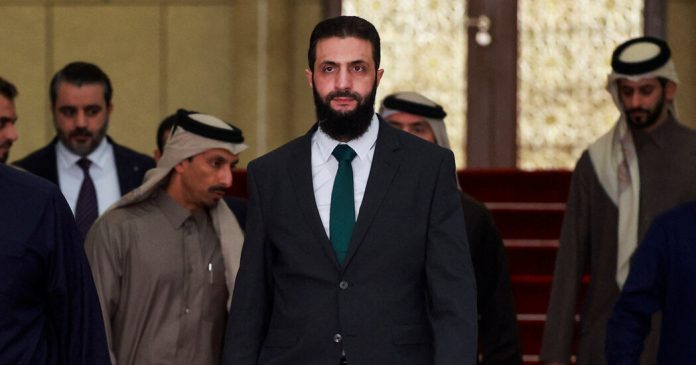
Syria’s interim president, Ahmed al-Shara, is expected to discuss the future of Syria-Turkey relations on Tuesday during a meeting with President Recep Tayyip Erdogan of Turkey.

The meeting in the Turkish capital, Ankara, will be Mr. Erdogan’s first with Mr. al-Shara, the rebel leader who led the opposition offensive that toppled Syria’s former autocratic leader, Bashar al-Assad, last month.

Both countries have a lot riding on the future of their relationship.

Turkey shares a long border with Syria, hosts more than three million Syrian refugees who fled during the country’s 13-year civil war and had chilly relations with Mr. al-Assad for years before Mr. Erdogan began speaking of mending ties not long before his ouster. Turkey worries that instability in Syria could cause more refugees to flee or prevent those already in Turkey from returning home.

Turkey also has military posts in northwestern Syria, directly backs Syrian armed groups near the border and considers a Kurdish-led militia in the northeast a grave national security threat.

For Mr. al-Shara, who was appointed interim president last week by a group of rebel leaders, Turkey could provide critical support as he faces the monumental tasks of unifying Syria, reviving its battered economy and transforming a constellation of militias into a national army.

Turkey has been interacting with armed groups that Mr. al-Shara has led since early in the war because they controlled significant territory along Turkey’s southern border, and Turkish officials were among the first to visit him in Damascus after Mr. al-Assad’s fall.

But Turkey, struggling to fix its own economy after years of populist spending and persistently high inflation, would struggle to provide Syria with the financing it needs to restart the economy and begin rebuilding communities that were reduced to rubble during the war.

So Mr. al-Shara has also worked to build ties with the United States, European countries and Gulf Arab leaders. Last week, Sheikh Tamim bin Hamad Al Thani, the emir of Qatar, became the first head of state to visit Mr. al-Shara in Damascus. And on Monday, Mr. al-Shara met in Saudi Arabia with Crown Prince Mohammed bin Salman, the kingdom’s de facto ruler. To what extent these leaders will help fund the new Syria remains to be seen.

Mr. al-Shara, a former member of Al Qaeda, announced a public break with the group years ago and now expresses more moderate Islamist views. He faces the additional hurdles of heavy sanctions imposed on Syria to punish the Assad regime and the fact that he and the militia he leads remain classified as terrorist by the United States and other countries.

Turkey, too, still classifies Mr. al-Shara’s militia, Hayat Tahrir al-Sham, as a terrorist organization.

Federal employees weigh new terms of Trump’s resignation offer : NPR

0

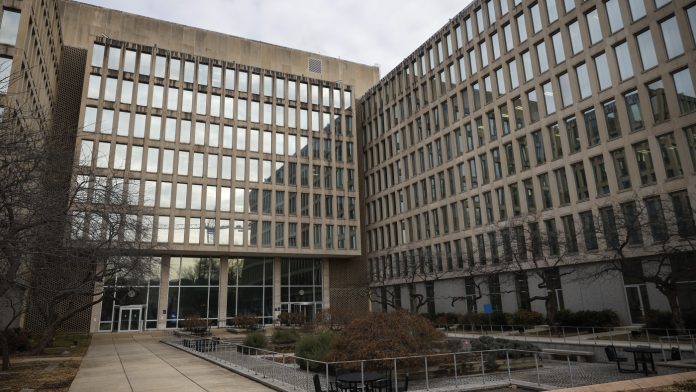
The headquarters of the U.S. Office of Personnel Management is seen on Feb. 3, 2025 in Washington, D.C.

Kevin Dietsch/Getty Images North America


hide caption

toggle caption

Kevin Dietsch/Getty Images North America

It’s been a week since nearly all 2.3 million civilian employees of the federal government were presented with an offer: Agree to resign from your job by Feb. 6 and keep your pay and benefits through the end of September.

Now, with the deadline to accept the offer nearing, federal agencies have sent out new terms and conditions in the form of a sample contract agreement that employees are told they can use to “memorialize” the deal. It’s unclear who from the government would sign the agreements, or whether the contracts would be legally binding.

Adding to the confusion, some of the sample contract language diverges from the first email, which came from the U.S. Office of Personnel Management (OPM) with the subject line “Fork in the Road,” and other guidance presented to date.

Employees who take the deal are expected to work through Feb. 28

For example, some of the sample contracts sent out state that employees who accept the “Fork” offer are agreeing to work through Feb. 28, to ensure a smooth transition of duties, and will be put on paid administrative leave no later than March 1.

It is the first mention of any such dates tied to the “Fork” offer.

The original email did not make clear that employees who resign would necessarily be put on administrative leave at all. An FAQ subsequently posted to OPM’s website and shared by agencies poses the question: “Am I expected to work at my government job during the deferred resignation period?” The answer provided is simply “No.”

Even memos sent out with the sample contract agreements summarize the deferred resignation offer as allowing eligible employees “to keep their government pay and benefits through September 30, 2025, without any expectation of performing work.”

An acknowledgment that agencies don’t have guaranteed funding past March

In a major departure from language shared earlier, the sample contract agreement that went out Monday to Environmental Protection Agency employees includes language that appears to acknowledge that federal agencies have no guaranteed funding past March 14, when the latest Congressional budget agreement expires.

“Subject to the availability of appropriations, employee shall remain on paid administrative leave up through and including September 30, 2025, or such earlier date on which Employee may choose to resign or otherwise separate from federal service,” the sample contract language reads.

Attorneys, federal employee unions, members of Congress and others have warned federal employees that the promise of pay and benefits beyond March 14 is not guaranteed.

“It’s important you know that, right now, the federal government is only funded through March 14, 2025,” wrote Washington Sen. Patty Murray, the top Democrat on the Senate Appropriations Committee, in an email. “At this point, there is no funding allocated to agencies to pay staff for this offer.”

Additional caveats added to the deal

Another caveat added in the sample contract agreements addresses the question of whether employees who accept deferred resignation can take another job before Sept. 30.

OPM’s FAQ tells employees: “Absolutely! We encourage you to find a job in the private sector as soon as you would like to do so. The way to greater American prosperity is encouraging people to move from lower productivity jobs in the public sector to higher productivity jobs in the private sector.”

New language makes clear that employees must comply with ethics rules, which at some agencies require prior approval for outside employment.

In another section, employees are asked to waive their right to “pursue through any judicial, administrative, or other process, any action against [AGENCY] that is based on, arising from, or related to Employee’s employment at [AGENCY] or the deferred resignation offer” – and to similarly waive any claim that might be brought on their behalf by a labor union or other entity.

Attorneys general warn of “misleading” offer

On Monday, Democratic attorneys general from a dozen states, including New York, Michigan, Arizona and California, issued a statement calling the deferred resignation offer “misleading.”

“President Trump’s so-called buyout offers are nothing more than the latest attack on federal workers and the services they provide. These supposed offers are not guaranteed,” wrote New York Attorney General Letitia James in a statement. “Federal employees should be cautious and follow the guidance of their unions to protect their rights.”

On Monday, the Trump administration pushed back against some of the criticism, arguing that union leaders and their attorneys are doing their members a disservice.

“This is a rare, generous opportunity — one that was thoroughly vetted and intentionally designed to support employees through restructuring,” said McLaurine Pinover, spokesperson for OPM. “Instead of spreading misinformation and using workers as political pawns, they should be making sure federal employees have the facts and freedom to make the best decision for themselves and their families.”