Friday, November 13, 2026
Home Blog Page 280

State Dept. Fires About 60 Contractors Working on Democracy and Human Rights

0

The State Department has fired about 60 contractors who work for its democracy, human rights and labor bureau, a division whose programs have often been criticized by authoritarian leaders, according to two U.S. officials and two former officials.

The dismissals deal a severe blow to the bureau, because the contractors were mostly technical or area experts whom senior officials relied on to do the day-to-day work of enacting the programs overseas.

The bureau has received about $150 million to $200 million of annual budget funding from Congress in recent years. But the bureau also handles and passes on money that Congress appropriates for other groups, including the National Endowment for Democracy.

Besides the contractors, the bureau has about 200 full-time staff employees. They mainly work out of Washington, where the programs are run from the State Department’s headquarters.

The bureau’s programs have often been focused on building up civil society and democratic practices in countries where the United States does not have missions and formal diplomatic ties, or where relations with an authoritarian government are especially tense. This includes Russia, China, Iran, North Korea, Venezuela and Cuba.

President Trump signed an executive order on Jan. 20 that has suspended any money or programs that can be deemed to be foreign aid or assistance.

Some of the bureau’s contractors have specific technical expertise. For example, at least one is an expert on virtual private networks, software that allows users to get around government internet blocks. China has the most effective internet censorship program in the world, called the Great Firewall.

The bureau has also worked on enacting policies aimed at pressuring China to relent on its forced labor of Uyghur Muslims, including the imposing of sanctions on U.S. companies that buy products that can be traced back to some form of forced labor.

Some Republican politicians have criticized the bureau in recent years, saying its democracy-promotion programs often end up supporting political parties or groups abroad that are opposed to conservative or far-right political figures in those countries.

However, Secretary of State Marco Rubio has long been a champion of policies that advance human rights and promote democratic practices. In the Senate, where he represented Florida, Mr. Rubio was a lead sponsor of the Uyghur Forced Labor Prevention Act, which had broad support from both parties in Congress. President Joseph R. Biden Jr. signed it into law in December 2021.

The State Department had no immediate comment when asked about the firings.

Foreign leaders who have criticized the bureau include Prime Minister Viktor Orban of Hungary, who has tried to suppress democratic practices in his country over many years. Mr. Orban is a favorite politician of conservative and far-right groups and politicians in the United States. Last December, he met with Mr. Trump and Elon Musk, the billionaire technology businessman who advises the president, at Mar-a-Lago, Mr. Trump’s home in Florida.

The firing of the contractors is similar to the drastic steps taken in recent days by the Trump administration, and by Mr. Musk in particular, to sharply reduce the work force of the United States Agency for International Development. Last week, the administration placed 60 senior officials from the agency on paid leave and issued orders that led to the firing of hundreds of contractors. Since then, administration officials have fired dozens more employees or put them on paid leave.

Karoun Demirjian contributed reporting.
White House defends resignation offer to federal employees : NPR

0

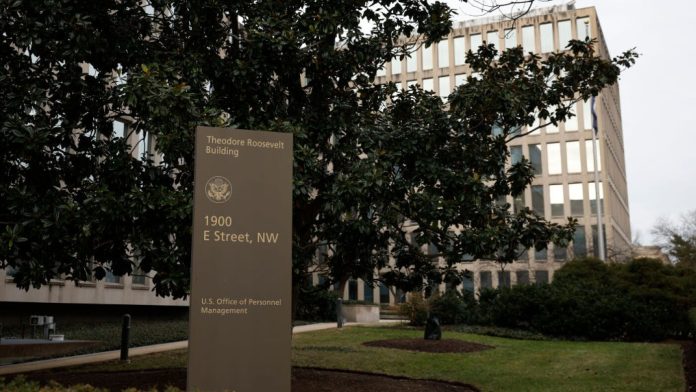
The Theodore Roosevelt Federal Building headquarters of the U.S. Office of Personnel Management is seen on Monday in Washington, D.C.

Kevin Dietsch/Getty Images


hide caption

toggle caption

Kevin Dietsch/Getty Images

The White House is pushing back against what it is calling “misinformation” by the federal employees union, which has urged government workers not to accept an offer from the Trump administration to resign from their jobs by Feb. 6 and go on leave with pay through the end of September.

In its first public response to the campaign, the Office of Personnel Management on Monday argued union leaders and their attorneys are doing their members a disservice.

“This is a rare, generous opportunity — one that was thoroughly vetted and intentionally designed to support employees through restructuring,” said McLaurine Pinover, spokesperson for OPM. “Instead of spreading misinformation and using workers as political pawns, they should be making sure federal employees have the facts and freedom to make the best decision for themselves and their families.”

The deferred resignation offer, which came in an email with the subject line “Fork in the Road,” comes as President Trump has pushed to overhaul the federal workforce.

“We’d love to have them leave,” Trump said last week when asked about the message. “We’re trying to reduce the government.”

Employment lawyers questioned whether such an offer was legal because Congress, not the White House, is responsible for authorizing workers’ pay.

“Federal employees should know that approved union contracts are enforceable by law, and the president does not have the authority to make unilateral changes to those agreements,” the American Federation of Government Employees advised members in a statement.

But the White House argues it went through extensive legal review to ensure fairness and compliance.

Administration officials say a large-scale reduction is already happening, and that many employees risk losing out on an opportunity for additional financial stability as agencies adjust their workforces.

The changes have sown fear in the federal workforce, and mixed messaging from the White House and various federal agencies has caused broad confusion over what happens next.

’60 Minutes’ producer defiant as CBS parent company mulls settling Trump lawsuit: ‘I will not apologize’

0

The executive producer of “60 Minutes” remains defiant and CBS News’ parent company mulls settling a lawsuit waged by President Donald Trump. 

Bill Owens, who has led the long-running program since 2019, took a tough stance against Trump during a Monday staff meeting, according to The New York Times.

“There have been reports in the media about a settlement and/or apology,” Owens reportedly said. “The company knows I will not apologize for anything we have done.”

‘60 MINUTES’ TRANSCRIPT AT CENTER OF TRUMP’S LAWSUIT AGAINST CBS IS VITAL TO INVESTIGATION, FCC CHAIR SAYS

“60 Minutes” executive producer Bill Owens is reportedly vowing “I will not apologize” as CBS News’ parent company Paramount mulls settling a lawsuit made by President Trump. (Piaras Ó Mídheach/Sportsfile for Collision via Getty Images)

CBS News is approaching a deadline set by Trump’s Federal Communication Commission chairman Brendan Carr to hand over the transcript of the Kamala Harris “60 Minutes” interview at the center of the controversy. 

“The edit is perfectly fine; let’s put that to bed so we can get on with our lives,” Owens said regarding the transcript, per the Times.

CBS News did not immediately respond to Fox News Digital‘s request for comment. 

TRUMP COULD BE ON THE VERGE OF LEGAL VICTORY AGAINST CBS AS SETTLEMENT SPECULATION HEATS UP

In October, Trump filed a $10 billion lawsuit against CBS News alleging election interference over its handling of the “60 Minutes” interview with Vice President Kamala Harris, accusing the network of aiding his Democratic rival through deceptive editing just days before the election. 

The lawsuit stems from an exchange Harris had with “60 Minutes” correspondent Bill Whitaker. In a preview clip that aired on “Face the Nation,” Harris was asked why it seemed like Israeli Prime Minister Benjamin Netanyahu wasn’t listening to the U.S. 

“Well, Bill, the work that we have done has resulted in a number of movements in that region by Israel that were very much prompted by, or a result of, many things, including our advocacy for what needs to happen in the region,” Harris responded in the “Face the Nation” clip. 

Harris 60 Minutes

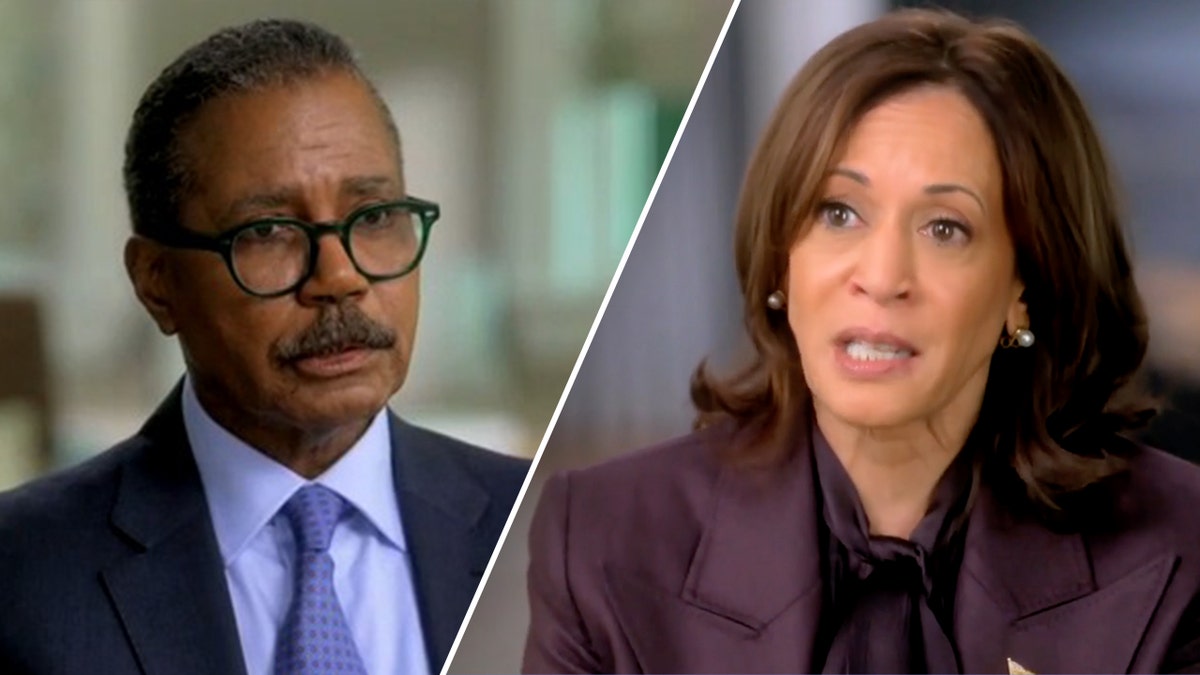
Bill Whitaker’s “60 Minutes” interview with Vice President Kamala Harris is at the center of a high-stakes lawsuit.  (Screenshots/CBS News)

Harris was mocked by conservatives for offering a lengthy “word salad” to Whitaker. But when that same question aired the following night in the primetime election special, a shorter, more focused answer from the vice president followed.

“We are not going to stop pursuing what is necessary for the United States to be clear about where we stand on the need for this war to end,” Harris said in the primetime special. 

Critics accused CBS News of editing Harris’ “word salad” answer to shield the vice president from further backlash, and there were calls for the network to release the full transcript after it only shared transcripts of what had aired. 

SEN. BERNIE SANDERS URGES CBS NEWS TO ‘STAND TALL’ AS NETWORK REPORTEDLY CONSIDERS SETTLING TRUMP LAWSUIT

“To paper over Kamala’s ‘word salad’ weakness, CBS used its national platform on 60 Minutes to cross the line from the exercise of judgment in reporting to deceitful, deceptive manipulation of news,” the lawsuit stated.

Trump attorneys argued the edits were done in an effort to “attempt to tip the scales in favor of the Democratic Party as the heated 2024 Presidential Election — which President Trump is leading — approaches its conclusion.”

“CBS’ partisan and unlawful acts of election and voter interference through malicious, deceptive, and substantial news distortion calculated to confuse, deceive, and mislead the public,” the lawsuit read. 

The Donald Trump campaign released a scathing statement in response to a defiant "60 Minutes" comment about its controversial edit of its interview with Vice President Kamala Harris earlier this month, saying the show had essentially admitted to making her sound better and calling on the CBS show to release a full transcript of the interview.

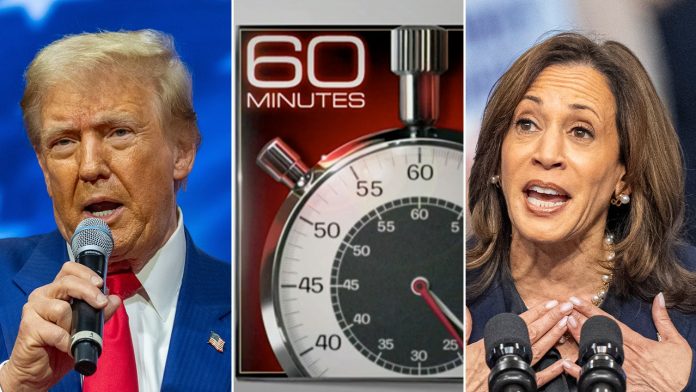
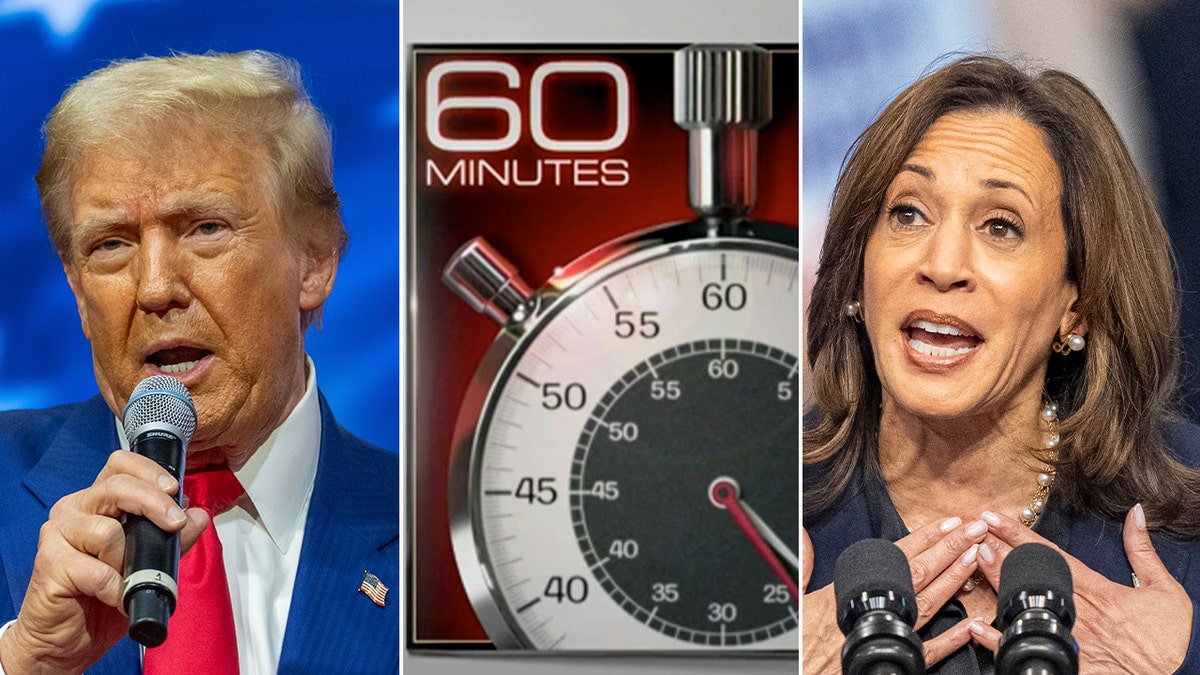
President Trump’s attorneys accused CBS News of election interference in order to quell then-Vice President Kamala Harris’ “word salad” in its “60 Minutes” interview. (Left: (Photo by Spencer Platt/Getty Images), Center: Screenshot/60Minutes, Right: (Photo by Andy Manis/Getty Images))

CLICK HERE TO GET THE FOX NEWS APP

CBS parent company Paramount Global is reportedly considering settling the suit ahead of a planned merger with Skydance Media in hopes of preventing potential retribution by Trump’s FCC, which has the authority to halt the multibillion-dollar transaction. Shari Redstone, Paramount’s controlling shareholder, is reportedly in favor of settling with the president. 

Rumors of a settlement comes just weeks after ABC News settled its defamation lawsuit filed by Trump, resulting in giving him $15 million and a written apology, followed by a $25 million settlement by Meta. 

Fox News’ Brian Flood contributed to this report.

Chris Wright Is Confirmed to Be Secretary of Energy

0

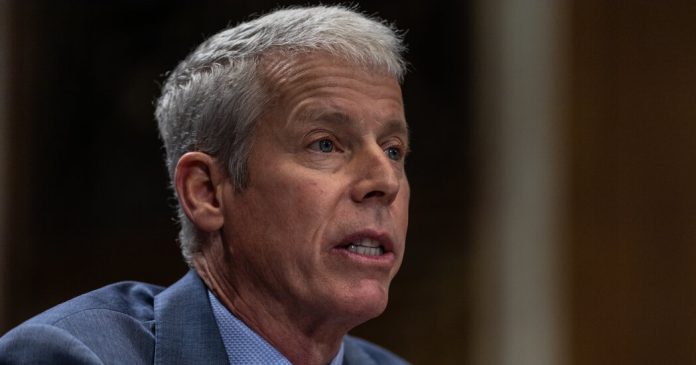
The Senate confirmed Chris Wright to lead the U.S. Department of Energy on Monday, putting the former oil executive in a key position to help shape President Trump’s energy policies.

Mr. Wright, the founder and chief executive of Liberty Energy, a fracking firm, was confirmed by a vote of 59 to 38, with support from all Republicans present and a smaller number of Democrats. He would be the 17th secretary of energy, a position that was created in 1977.

At his confirmation hearing, Mr. Wright said his top priority was to “unleash” domestic energy production, including liquefied natural gas and nuclear power. He also told Democrats that he believed climate change was a “global challenge that we need to solve” and that he would support the development of renewable energy like wind and solar power.

At the same time, Mr. Wright said he would “work tirelessly” to support Mr. Trump’s “bold” energy agenda. The president has frequently dismissed climate change as a hoax, disparaged wind and solar power and said he wants to expand the use of oil, gas and coal, the burning of which is driving climate change.

The Energy Department plays a central role in developing new energy technologies. The agency oversees a network of 17 national laboratories that conduct cutting-edge research as well as a powerful loan office that has backed dozens of low-carbon energy projects, including battery factories in Ohio and Tennessee and two giant nuclear reactors in Georgia.

Mr. Wright would also oversee approvals of liquefied gas export terminals, which the Biden administration tried to slow, angering industry groups. Mr. Trump has already ordered the Energy Department to restart reviews of proposed export facilities.

The Energy Department is a sprawling agency. About 80 percent of the department’s $52 billion annual budget goes toward maintaining the nation’s nuclear arsenal, cleaning up environmental messes from the Cold War and conducting research in areas like high-energy physics.

Under the Biden administration, the department aggressively supported new clean energy technologies such as advanced nuclear power, enhanced geothermal energy, green hydrogen fuels, next-generation batteries and more. Backed by new funding from Congress, it issued tens of billions in loans and grants to everything from firms making low-carbon cement to power companies building new transmission lines.

At his confirmation hearing, Mr. Wright mostly declined to go into details about how he would run the department.

Some conservative groups have urged Mr. Wright to reorient or even shutter the agency’s Loan Programs Office, which was given roughly $400 billion in loan authority by Congress to bring promising energy technologies to market. Under the Biden administration, the office finalized more than $60.6 billion in loans and loan guarantees to companies that were mining lithium, restarting a shuttered nuclear plant, converting wind and solar power into hydrogen fuels and more. It also issued $47 billion in conditional loans that have not been finalized.

As of Jan. 17, there were still 160 companies seeking more than $200 billion in loans and loan guarantees. But the loan office’s work has largely been paused since Mr. Trump took office, and it is unclear what will happen to those applications.

Most major environmental groups and many Democrats opposed Mr. Wright’s confirmation, saying that he downplayed the risks of a warming planet. In a social media post in 2023, Mr. Wright wrote, “There is no climate crisis, and we’re not in the midst of an energy transition, either.” On a podcast last year, he said that climate change would have “a slow-moving, modest impact two or three generations from now.”

On podcasts and in speeches, Mr. Wright has frequently made a moral case for fossil fuels, arguing that the world’s poorest people need access to oil, gas and coal to enjoy the benefits of modern life that rich nations take for granted.

Still, some Senate Democrats joined Republicans in voting to approve Mr. Wright’s nomination. They included Ruben Gallego of Arizona, Michael Bennet and John Hickenlooper of Colorado, Maggie Hassan and Jeanne Shaheen of New Hampshire, Ben Ray Luján and Martin Heinrich of New Mexico, as well as Angus King, an independent from Maine who normally caucuses with Democrats.

“While I do not agree with Mr. Wright on a number of issues, he has committed to working with us in good faith” on issues like investing in national labs and building out high-voltage power lines, Mr. Heinrich said last month.

Mr. Wright graduated from the Massachusetts Institute of Technology and did graduate work on solar energy at the University of California, Berkeley. In 1992, he founded Pinnacle Technologies, which created software to measure the motion of fluid beneath the Earth’s surface. The software helped bring about a commercial shale-gas revolution.

Mr. Wright started Liberty Energy in 2011, and the company has worked with others on geothermal energy and small, modular nuclear reactors.

Mr. Wright holds 2.6 million shares in the company, which were worth roughly $47 million based on Monday’s closing stock price. In a written statement to the Senate he promised to step down from Liberty Energy and divest his holdings within 90 days after being confirmed. According to his ethics agreement, he is scheduled to get paid his last bonus from the company in March.

Lisa Friedman contributed reporting.

Trump to withdraw U.S. from United Nations Human Rights Council : NPR

0

President Trump speaks to the press from the Brady Press Briefing Room at the White House on Jan. 30. On Tuesday, the president plans to sign on executive order pulling the U.S. out of the United Nations Human Rights Council.

Oliver Contreras/AFP via Getty Images


hide caption

toggle caption

Oliver Contreras/AFP via Getty Images

On Tuesday, President Trump will sign an executive order that will pull the U.S. out of the United Nations Human Rights Council, according to a White House official who was not authorized to speak publicly ahead of the announcement.

During his first term as president, Trump also cut ties with the UNHRC, an organization that U.S. leaders from both parties have long said has a bias against Israel.

The order will also cut future funding to the United Nations Relief and Works Agency, which provides aid to Palestinians. The Biden administration paused funding to UNRWA while the war between Israel and Hamas was ongoing, after accusations from Israel that some staffers from the agency had ties to Hamas. But an independent review found that there was no evidence to back that up. UNRWA is the main agency providing relief to Palestinians in Gaza.

The new executive order, first reported by Politico, will come the same day that Israeli leader Benjamin Netanyahu visits the White House, marking Trump’s first meeting with a foreign leader since being sworn in last month.

‘Authoritarian’: Furious NY House Republicans send warning to Dem leaders in war over Stefanik seat

0

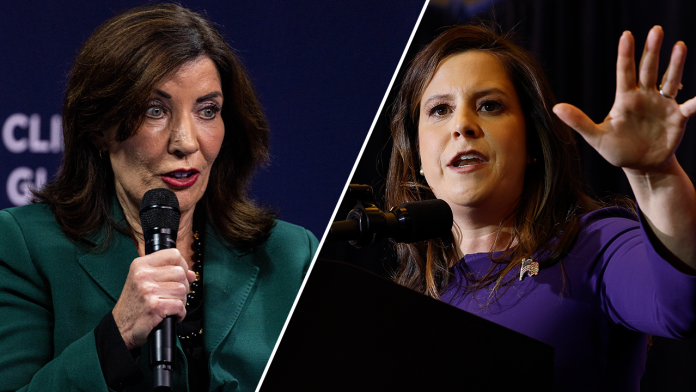
FIRST ON FOX: Republicans in New York’s congressional delegation are up in arms over reports that state Democrat leaders are considering legislative routes to delay the special election to replace Rep. Elise Stefanik, R-N.Y.

The six GOP lawmakers signaled they would seek intervention from the Department of Justice (DOJ) if the alleged legislative maneuver runs afoul of federal law.

“Your clear attempt at playing political games to limit Republican numbers in the House of Representatives is overreaching, corrupt, and undemocratic,” reads a letter led by Reps. Mike Lawler and Nick Langworthy.

“We demand you cease any and all such attempts to change this law, and in preparation of this conspiratory, corrupt act that clearly threatens the constitutional rights of American citizens, we will also be alerting the Department of Justice.”

BLACK CAUCUS CHAIR ACCUSES TRUMP OF ‘PURGE’ OF ‘MINORITY’ FEDERAL WORKERS

New York House Republicans are putting Gov. Kathy Hochul on notice after alleged efforts to delay the special election to replace Rep. Elise Stefanik. (Getty Images)

The letter was also signed by New York Republican Reps. Nicole Malliotakis, Nick LaLota, Andrew Garbarino and Claudia Tenney.

Their pressure on New York’s Democrat leaders is backed by House Speaker Mike Johnson, R-La., who told “Fox & Friends” on Monday morning, “This is open political corruption by state officials in New York.”

“They’re going to try to disenfranchise over 750,000 New Yorkers who live in that 21st District. It’s unconscionable,” he said.

New York lawmakers in the state Senate and Assembly met last week to discuss a rules change that could keep Stefanik’s seat empty until at least June, according to the New York Post.

Stefanik was tapped to be President Donald Trump’s U.S. ambassador to the United Nations and is expected to easily pass a Senate confirmation vote. She and National Security Advisor Mike Waltz’s departure from Congress leave the House with a razor-thin GOP majority, leaving no room for Republican dissent to pass any legislation without Democrat support.

The letter noted that Stefanik could be confirmed “as early as this week,” which would leave residents of New York’s 21st Congressional District without representation in the House until the seat is filled.

President Trump closeup shot

President Donald Trump picked Stefanik to be U.S. ambassador to the United Nations. (Getty Images)

The deep-red district is almost certainly going to stay in Republican control, as is the case with Waltz’s former Florida seat.

While Florida Gov. Ron DeSantis acted quickly to set special elections for April, New York Gov. Kathy Hochul has been silent.

Under current state law, Hochul has 10 days after Stefanik’s resignation to call a special election within a further 70 to 80 days.

But the rule change would reportedly consolidate the special elections date with the June primary race, allegedly in the name of saving resources and time.

GOP LAWMAKER CALLS FOR CONGRESSIONAL HEARING OVER DC PLANE CRASH

“Your claims that you’re doing this to be cost-effective or to promote equity are laughable and will do nothing more than leave every New Yorker in the 21st district with no representation in the House for additional months,” the GOP lawmakers wrote.

“Your scheme to alter the schedule for the special election is a serious abuse of power that is more alike to election processes in authoritarian countries than anything we see in the United States.”

They argued that any delay would run afoul of the Constitution’s clauses on filling House vacancies as well as Supreme Court precedent.

“Any delay or postponement in calling a special election to fill a vacancy in the House of Representatives is not just undemocratic, but it is unconstitutional as well,” they wrote. “It would be reminiscent of other failed efforts regarding New York’s elections in recent years, such as the unconstitutional attempts to gerrymander New York’s congressional districts.”

CLICK HERE TO GET THE FOX NEWS APP

The letter also cited a 2009 New York State Court of Appeals ruling that special elections to fill a vacancy should occur in the “shortest space of time reasonably possible.”

“The citizens of New York’s 21st Congressional District are constitutionally entitled to representation in the House and it is our hope that these reports have little basis in reality. If not, we strongly urge you to abandon this absurd, shameful scheme to deny representation for more than 750,000 New Yorkers and maintain current state election laws,” the lawmakers wrote.

Fox News Digital reached out to Hochul’s office as well as the offices of New York State Assembly Speaker Carl Heastie and state Senate Majority Leader Andrea Stewart-Cousins.

Mexico Managed to Stave off Trump’s Tariffs. Now What?

0

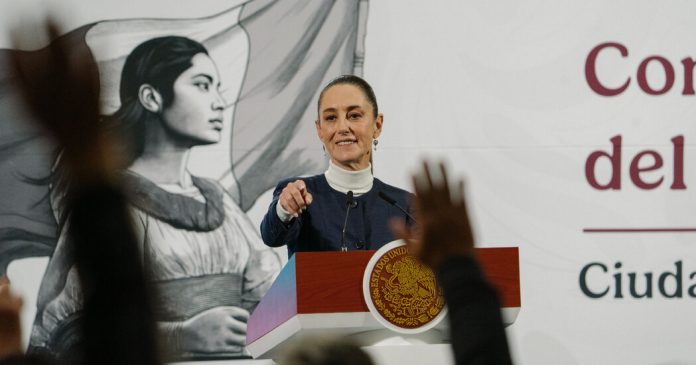
To broad relief across her country, President Claudia Sheinbaum of Mexico announced on Monday that she had forestalled a plan by the Trump administration to impose 25 percent tariffs on Mexican goods. Initially set to go into effect at the stroke of midnight, the tariffs have been delayed by a month, she said.

“We have this month to work, to convince each other that this is the best way forward,” Ms. Sheinbaum said at her regular morning news conference after speaking to President Trump. Suggesting that she might be able hold off the penalties altogether, she said she had told her American counterpart: “We are going to deliver results. Good results for your people, good results for the Mexican people.”

The announcement was seen as a victory for the Mexican government in dealing with Mr. Trump, who has set a new tone of aggression in the first weeks of his presidency. He has demanded that even some of the United States’ closest allies acquiesce to his demands or face consequences in the form of tariffs or perhaps even military force.

The deal, however, will force Mexico into a critical 30-day test during which it must not only continue its recent progress but also make still more headway on two of the country’s most enduring challenges: drug trafficking and migration.

Under the terms of the agreement, Mexico will post an additional 10,000 Mexican National Guardsmen on the border. In return, Ms. Sheinbaum said, the U.S. government will work to stop the flow of arms into Mexico.

In his own statement, Mr. Trump made no mention of a promise to help curb firearms trafficking, but he celebrated the deployment of Mexican troops.

While Mexico has spent the past year stepping up its immigration enforcement, which has already contributed to a drastic reduction in U.S. border crossings, the issue of drug trafficking is much more complicated. It will require Mexico to have “a very clear, very well-defined plan,” said Ildefonso Guajardo, a former economy minister who negotiated with the first Trump administration.

Mr. Trump and Thomas Homan, the administration’s border czar, have repeatedly laid blame for the fentanyl overdose crisis in the United States on Mexican cartels as well as on migrants they say move the drug across the border. Mr. Homan falsely told Fox News that Mexican cartels had “killed a quarter of a million Americans with fentanyl.”

Since 2019, Mexico has displaced China as the biggest supplier of fentanyl to the United States. Besides being extraordinarily potent, the drug is very easy to make — and even easier to smuggle across the border, hidden under clothes or in glove compartments. According to U.S. prosecutors, the Sinaloa Cartel spends only $800 on chemicals to produce a kilo that can net a profit of up to $640,000 in the United States.

Mexico has been the source of almost all of the fentanyl seized by U.S. law enforcement in recent years, and the amount crossing the border has increased tenfold in the past five years. But federal data shows it is brought in not by migrants but by American citizens recruited by cartel organizations. More than 80 percent of the people who have been sentenced for fentanyl trafficking at the southern border are U.S. citizens.

“All that makes it incredibly harder to go after and control the market,” said Jaime López-Aranda, a security analyst based in Mexico City.

Ms. Sheinbaum’s administration has already stepped up efforts to combat fentanyl since she took office in October, including the largest seizure of the drug — about 20 million doses — ever recorded in Mexico. Security forces regularly report advances on arrests and dismantled drug-production labs.

But experts question how much of a dent these efforts truly represent. “Mexico can keep carrying out symbolic actions like it has been doing lately,” Mr. López-Aranda said, “but there is little more it can do.”

Waging a full war on the cartels would likely backfire and set off more waves of violence across Mexico, analysts say. The country has experienced those consequences before.

Upon taking office in 2006, President Felipe Calderón declared a war on criminal groups. The idea was to eradicate them and loosen their grip on the country. But targeting cartel leaders and engaging in direct confrontations only led to these groups splintering into more violent, brutal cells, leading to one of Mexico’s bloodiest periods.

“What is even going to happen after we destroy all the labs?” said Mr. Guajardo. “These guys are just going to focus more on extortion, theft and killings. Mexico will be left to deal with the problem alone.”

Under the agreement announced on Monday, Mexico will also bolster security forces at the border. Unlike the United States, Mexico does not have a specific security force dedicated to patrolling the border, instead relying on a combination of the military and National Guard.

Experts questioned how effective a deployment of 10,000 additional troops would be at delivering Mexico’s promised results when it came to fentanyl.

“Ten thousand members perhaps sounds like a lot, but it’s all in the details,” said Cecilia Farfán-Méndez, a drug policy researcher at the Institute on Global Conflict and Cooperation at U.C. San Diego. “If you’re only going to have them at the border, that doesn’t address the entire fentanyl production chain.”

Aaron Reichlin-Melnick, a senior fellow at the American Immigration Council, noted that this is the third time in six years that Mexico has committed to sending a large deployment of National Guard to the U.S. border.

While Mexico’s forces will “try to achieve results at all costs,” a more effective strategy would be to have officials from both countries share more intelligence and information to stop the flow of drugs, said Jonathan Maza, a Mexican-based security analyst.

The lack of cooperation was something that American officials complained about during the administration of Ms. Sheinbaum’s predecessor, Andrés Manuel López Obrador.

Given the importance to Mexico of avoiding tariffs, Mr. Maza, said the National Guard may achieve results in the short and medium term. But, he warned, criminal groups are likely to adapt.

On curbing migration and illegal crossings at the border, Mexico may have a more straightforward path to success, having adopted several effective measures in the last year.

National Guard troops are deployed to immigration checkpoints from north to south, and migration officials have also instituted a policy of “decompression” in which migrants are bused from concentrated areas in the north farther south to keep pressure off the border. The Mexican authorities have used busing on occasion for years, but its expansion in 2024 highlighted the country’s toughening policies on migration.

Breaking up migrant caravans headed for the United States is another step Mexican officials have taken in recent years. When several emerged in the weeks leading up to Mr. Trump taking office, they were all disbanded.

Mexico’s tougher stance, paired with President Joseph R. Biden Jr.’s executive order last summer to essentially prevent undocumented migrants from receiving asylum at the border, contributed to a dramatic reduction in illegal immigration at the border in 2024. In December, U.S. Border Patrol officials recorded only 47,326 illegal crossings — a sharp drop from the record 249,740 documented a year earlier.

The Mexican authorities have also introduced bureaucratic hurdles for migrants and asylum seekers.

“Mexico’s strategy has exhausted and worn down migrants,” said Mauro Pérez Bravo, the former head of the National Migration Institute’s citizen council, which evaluates the country’s migration policies. “What it did was to emotionally and physically drain people to keep them from getting to the United States.”

In exchange for deploying troops to the border and stemming the flow of fentanyl and migrants into the United States, Ms. Sheinbaum said she secured Mr. Trump’s agreement to do more to prevent American-manufactured firearms from entering Mexico.

“These high-powered weapons that arrive illegally arm the criminal groups and give them firepower,” she said.

This is not the first time that Mexico has made that argument.

In 2021, the country sued several gun makers and one distributor, blaming them for the devastating, decades-long bloodshed from which Mexico has struggled to recover. The U.S. Supreme Court will decide this year whether Mexico may sue gun manufacturers in the United States. A recent analysis showed that nearly 9,000 gun dealers operate across cities in Arizona, California, New Mexico and Texas.

But in his own remarks, Mr. Trump did not make any mention of Ms. Sheinbaum’s request. It is unclear how his administration could actually fulfill such a commitment and what, if anything, Mexico would do should it fail to do so.

James Wagner, Paulina Villegas and Simon Romero contributed reporting.

The Trump administration wants to shut down USAID. Rep. Raskin vows to fight that

0

NPR’s Ailsa Chang speaks with Democratic Rep. Jamie Raskin of Maryland about the Trump administration’s move to effectively close down the United States Agency for International Development, or USAID.

I’m a tech expert: 10 AI prompts you’ll use all the time

0

It’s AI this and AI that everywhere you turn. ChatGPT and DeepSeek are dominating headlines, Google slaps AI results at the top of every search, and there are smarter options in the apps and services you use every day.

Freebie alert: I’m giving away my latest ebook, “50 Smart Ways to Use AI” (a $9.95 value). Hope it helps you!

I hear from folks all the time on my national radio show who have no idea where to start. That’s why you have me. AI isn’t going away, so let’s dive into a few things you need to know and prompts to get you started.

5-MINUTE CLEANUP FOR YOUR PHONE AND COMPUTER

First, get to know the tools of the trade

There are so many options. I recommend you start with one of the big names. They’re easy to use, intuitive and have free options. I’ve been most impressed with:

  • ChatGPT: It’s my go-to. Type in what you need and it can help you generate ideas, break down tasks, clean up your writing, fix your spreadsheets — whatever. Use it on the web or download it for iPhone or Android. You’ll need to create an account. The free tier works for most people. 
  • Perplexity: It’s built for research and learning, and it’s my go-to for questions like “How do black holes work?” or “Explain the Ninth Amendment.” 
  • DeepSeek: A newcomer out of China with a model that outperforms OpenAI’s ChatGPT, Meta’s Llama and Google Gemini. If you’re going to use it, make sure you’re doing so the secure, private way. Steps at the bottom.

Another AI tool worth checking out is Google NotebookLM. Upload audio, notes, documents or any other files, then you can search them, find citations (from your own docs) or even produce a snazzy podcast based on your files. 

A listener, Bob, told me after he heard about it on my radio show, he used NotebookLM to create training modules for his employees.

Needless to say, AI is here to stay — and it’s everywhere. Here’s how to make the most of it. (Thomas Trutschel/Photothek via Getty Images)

How to get the best results out of AI chatbots

In reality, using AI is as simple as using Google. Still, it doesn’t hurt to know a few things about how it works. You’ll spend less time feeling like you’re fighting the algorithms and get results you want more reliably.

“Priming” is the insider term for telling a chatbot exactly what you want from it. With ChatGPT or any other, the more constraints you give, the better your answer. You might say, “Limit your response to 250 words,” “Give me the list in bullet points” or “Format the results as a table.” 

Remember, AI can’t read your mind. Chatbots feed us the answers they think we want based on our prompts, how they’re trained and what they know about us. Here’s an easy way to give direction: Use “do” and “don’t” in your prompts. 

Say you’re cooking for friends, and some have allergies. Say, “Create a recipe for six people. Do include protein, fruits, vegetables and carbs. Don’t include dairy products, shellfish or nuts.” 

AI ISN’T GOING ANYWHERE: PROMPTS TO MAKE LIFE EASIER

10 AI prompts to try

  1. “How can I make this better?” Then, add in anything you’ve written. This prompt works wonders for polishing your work and pointing out improvements.
  2. “You’re an English professor. Find any typos or grammatical errors in my blog post.” Change up the persona you’re asking it to assume and the specific instructions based on what you need. You can use this formula for just about anything. Try, “You’re a life coach. Help me create a plan to achieve my goal of meditating every day for a month.”
  3. “Explain this like I’m 10.” AI is surprisingly good at making complex topics simple to understand. Use it for anything from a science lesson to finances.
  4. “Remember that … ” In ChatGPT, go to Settings > Personalization and toggle on Memory. The same thing is available on Google Gemini for Advanced (paid) subscribers. Tell it something like, “Remember, I’m a tea drinker, not a coffee drinker,” and it’ll save that info.
  5. “Analyze this information. Explain any trends or insights you find.” Plug in a list of numbers or any other data. Uploading a picture works, too.
  6. “What is missing?” This works for everything from your vacation packing list to an important work report. The more information you provide on what should be included, the better the answer you’ll get back.
  7. “Who are their competitors? You’re researching a new service for your business and don’t know who to compare it to, or maybe you’re looking for new sales prospects. Take the list with a grain of salt; some results could be outdated.
  8. “Give me five creative ideas for…” Stuck in a rut? Ask for new ideas for birthday gifts, business names or dinner recipes.
  9. “Summarize this in three sentences.” Try it for breaking down long articles, contracts or reports into takeaways. You can also ask for bullet points if your brain processes info better that way.
  10. “Explain both sides of this argument.” This works for politics, trends, personal dilemmas or anything else you can throw at a chatbot.

Want more? Get “50 Smart Ways to Use AI” free right now.

A man types on a keyboard of a laptop. Photo: Fabian Sommer/dpa

AI is a great way to brainstorm, expedite work, and even help you learn new things — however, it doesn’t come without flaws. ( Fabian Sommer/picture alliance via Getty Images)

Think of AI as your first step, not your last

AI is a fantastic tool to help you brainstorm, speed up your work and even teach you new things — but it’s not perfect. It doesn’t think for itself; it just predicts the next best response based on the data it’s been trained on.

AI tools can make mistakes, provide outdated information or totally miss the mark. Always double-check anything important, especially when it comes to work, finances or legal matters.

CLICK HERE TO GET THE FOX NEWS APP

Get tech-smarter on your schedule

Award-winning host Kim Komando is your secret weapon for navigating tech.

Copyright 2025, WestStar Multimedia Entertainment. All rights reserved.

Canada Gets 30-Day Tariff Delay as Trump and Trudeau Reach Border Deal

0

Canada secured a 30-day postponement in the application of U.S. tariffs on its exports just hours before they were scheduled to go into effect after a call between Prime Minister Justin Trudeau of Canada and President Donald J. Trump late Monday afternoon yielded a border deal that seemed to satisfy both sides.

Mr. Trudeau had earlier pledged to retaliate against U.S. tariffs by imposing tariffs against U.S. goods, too. In the end, he seemed to make modest concessions to Mr. Trump on the border policies, including having 10,000 “frontline” personnel stationed at the border.

“I just had a good call with President Trump,” Mr. Trudeau said in a social media post and laid out the terms of the agreement. “Proposed tariffs will be paused for at least 30 days while we work together.”

The deal brought relief and de-escalation into what had turned into a brewing trade war between the two close allies and top trading partners, although its 30-day horizon did indicate that more negotiations could take place down the line.

Specifically, Mr. Trudeau said that Canada would create a new position for a Fentanyl czar and redouble its efforts to tackle the opioid crisis — one that kills Canadians daily — by listing cartels and gangs as terrorist entities, like Mr. Trump has said he wants to do in the United States.

He also said that Canada would commit 200 million Canadian dollars to fresh intelligence-gathering efforts around the fentanyl and drug trade.

Mr. Trudeau also said that as part of the agreement with Mr. Trump, Canada would continue to implement a new border-tightening plan it had already announced weeks earlier.

That involves the expenditure of $1.3 billion Canadian dollars in fresh funds over the next several years, the deployment of new technology at the borders and the deployment of more border guards. Canada last month deployed two Blackhawk helicopters and 60 U.S.-made drones to the border to increase surveillance.