Friday, November 13, 2026
Home Blog Page 283

6 Bite of Fox recipes and the HexClad pieces for theperfect Super Bowl spread

0

Super Bowl snacks are the highlight of any watch party. Whether you are cooking for a crowd or just yourself, finding the right treats is the highlight of the evening, second to the game itself. To help you celebrate this year’s big game, here are five exciting Bite of Fox recipe ideas for your Super Bowl spread and everything you need to cook it with. From updated classics like walking nachos to clever charcuterie board ideas like this Bratwurst spread, there’s something for everyone.  

These Super Bowl recipes are easy to execute with HexClad’s durable cookware. The collection features hybrid pans made from stainless steel and nonstick technology. The brand’s patented laser-etched hexagon design ensures even heat distribution, allowing you to sear, sauté and simmer with precision and ease. With HexClad, you can achieve professional cooking results at home. HexClad is running a sale from Feb. 2 through Feb. 18. Put on your HexClad apron on and get ready to cook. You can also shop all your ingredients for your game-day recipes through Costco. Right now you can sign up for a gold star one-year membership and receive a $20 digital Costco gift card.

Here are six recipes for the perfect Super Bowl line-up:

Serve up nachos in a bag to amp up the fun and flavor.

Serve up nachos in a bag to amp up the fun and flavor. (Bite of Fox)

Nachos are a classic staple for any game day event, but these walking nachos are the perfect on-the-go snack. Top your tortilla chips with seared melty cheddar, spicy queso, and your favorite garnishes like sour cream, pico de gallo and fresh cilantro, ready to be served in the chip bag! Here are the ingredients, a step-by-step recipe and a video for making Walking Nachos. Hexclad’s 12-inch hybrid frying pan is perfect for searing your seasoned meat. Use this Damascus Steel Santoku Knife with a seven-inch blade to dice up a perfect pico de gallo.

COOK LIKE GORDON RAMSAY: ALL HEXCLAD POTS AND PANS ARE CURRENTLY ON SALE, UP TO 41% OFF

Try this updated take on the classic ham and cheese sandwich.

Try this updated take on the classic ham and cheese sandwich. (Bite of Fox)

Try this updated take on the classic ham and cheese sandwich for a crowd-pleaser. Use thin, pan-fried slices of mortadella topped with melted Swiss cheese and dressed with over-easy eggs. Serve this deliciousness up in toasted brioche buns for an out-of-this-world sandwich experience. Find the recipe and a step-by-step video for Fried Mortadella and Cheese sandwiches. The HexClad 10-inch hybrid frying pan is perfect for frying your mortadella to the perfect level of crispiness.

This party sub has a variety of meats and amazing flavors.

This party sub has a variety of meats and amazing flavors. (Bite of Fox)

Feed a crowd easily with this party sub topped with five different deli meats like roast beef, turkey and prosciutto, melded together and topped with two types of cheeses, fresh veggies and a tangy dressing. Find step-by-step instructions and everything you need to execute this fun party food on Bite of Fox. Use this beautiful HexClad walnut board to serve up this wonderful delight.

Turn up the heat with the jerk chicken wing recipe.

Turn up the heat with the jerk chicken wing recipe. (Bite of Fox)

Party wings are a staple of a Super Bowl menu. Scotch bonnet peppers are the standout ingredient for this jerk chicken wing recipe. Let your wings marinate in a blend of Scotch bonnet chilies, warm spices and fresh thyme for a fantastic heat your guests will want more of. Find the full recipe and step-by-step video instructions on Bite of Fox. The HexClad 10-inch hybrid frying pan is ideal for making the flavorful Worcestershire glaze that tops these wings. 

EAT HEALTHY IN THE NEW YEAR WITH THE HELP OF THESE 10 ITEMS

Set out a Brat board for your guests.

Set out a Brat board for your guests. (Bite of Fox)

With this Bratwurst board, Bite of Fox has a fresh take on trendy charcuterie boards. Build your board around a selection of cooked Bratwurst, hot Italian chicken sausage links and andouille sausages. Include your favorite condiments like whole grain mustard, sauerkraut, hot cherry peppers, dill pickles and whatever you need. Add some toasted buns and serve with the caramelized onions and roasted peppers. Here is the recipe and step-by-step video on how to assemble the perfect Bratwurst board.  Use this beautiful HexClad walnut board to present your creation.

For more deals, visit www.foxnews.com/category/deals

This mac and cheese delivers smoky, rich flavors.

This mac and cheese delivers smoky, rich flavors. (Bite of Fox)

This buffalo mac and cheese recipe stands out because it combines smoked gouda with cheddar cheese and hints of Frank’s hot sauce to deliver rich, comforting flavors. Use Cavatappi pasta to add texture to this delicious recipe, which you can follow with step-by-step video instructions at Bite of Fox. This HexClad set of mixing bowls and this hybrid, eight-quart stock pot are the perfect accessories to help you quickly execute this dish. The stainless steel bowls feature a patented vacuum-seal lid to store food from the counter to the fridge and keep your food fresh for up to three times longer. The hybrid technology for the HexClad stock pot allows for easy clean-up, durability and even heat distribution.

Who Will Govern Postwar Gaza? Four Competing Models Are Emerging.

0

Through nearly 16 months of war in Gaza, politicians and analysts debated competing proposals for the territory’s postwar governance, but no clear direction emerged while the fighting continued.

Now, as a fragile cease-fire holds and as Israel and Hamas prepare for negotiations to extend the truce, four rival models for Gaza’s future have begun to take shape.

Hamas, weakened but unbowed, still controls most of the territory and is trying to entrench that authority. Under the terms of the cease-fire, Israel is meant to withdraw gradually from Gaza, but its troops still occupy key parts of it. Right-wing Israeli leaders want their forces to expand that control, even if it means restarting the war.

A group of foreign security contractors offers another model. At Israel’s invitation, they are running a checkpoint on a crucial thoroughfare in northern Gaza, screening vehicles for weapons. Some Israeli officials say that activity could develop into international stewardship of a much wider area, involving Arab states instead of private contractors.

And in the south, representatives of the Palestinian Authority began over the weekend to staff a border crossing with Egypt, working with European security officials. The authority, which lost control of Gaza to Hamas in 2007, hopes that it could, in time, replicate those efforts across the entire territory.

For now, it’s unclear which template will emerge as the dominant model. The outcome will likely depend in large part on President Trump, who is set to discuss Gaza’s future on Tuesday in Washington with Prime Minister Benjamin Netanyahu of Israel. And Saudi Arabia could tilt the scales if it agrees for the first time to forge formal ties with Israel — in exchange for a particular governance structure in Gaza.

Here’s what the models entail and how likely they are to succeed.

When releasing hostages in recent weeks, Hamas has made a point of showing that it remains the dominant Palestinian force on the ground. Hundreds of masked Hamas militants have assembled at each release point, projecting the sense that the group, though battered by 16 months of war, is still in charge.

Hamas security officials have also re-emerged to assert a semblance of order across the territory, stopping and screening vehicles and trying to defuse unexploded ordnance. Municipal officials have also started shifting rubble.

For most Israelis, Hamas’s long-term presence is unpalatable. Some might accept it if Hamas agreed to release all the remaining hostages held in Gaza. Others, particularly on the Israeli right, want to resume the war, even if it costs the lives of some of those captives, to force Hamas out.

If Hamas does stay in power, it will be hard for the group to rebuild Gaza without foreign support. Because many foreign donors will most likely be wary of helping unless Hamas steps down, it is possible that the group might willingly cede power to an alternative Palestinian leadership, instead of continuing to preside over an ungovernable wasteland. In talks mediated by Egypt, Hamas’s envoys have said they could hand over administrative responsibilities to a committee of Palestinian technocrats, but it’s unlikely that the group would willingly disband its armed wing even if it stopped running Gaza’s civilian affairs.

When the cease-fire began last month, Israel retained control of a buffer zone along Gaza’s borders that is several hundred yards wide. To end the war and secure the release of all the hostages in Gaza, Israel eventually needs to evacuate this territory. But that is unthinkable to important members of Mr. Netanyahu’s coalition, meaning that he may extend Israel’s occupation, or even expand it, to avoid the collapse of his government.

To do that, however, Mr. Netanyahu would probably need the support of the Trump administration, which has signaled that it wants to see the cease-fire extended to allow for the release of every hostage. Returning to war would also scupper any short-term chance of a deal between Israel and Saudi Arabia — a major international achievement that Mr. Netanyahu has long coveted.

When Israeli troops withdrew last week from much of the Netzarim Corridor, a strategic area that connects northern and southern Gaza, they allowed a cohort of foreign security contractors to fill the void. Led by Egyptian security guards, the contractors screen northbound traffic for weapons, hoping to slow Hamas’s efforts to rearm its militants in northern Gaza. Two U.S. companies are involved in the process, but it is unclear what role they play on the ground.

For now, the process is a small-scale trial that lacks the formal involvement of Arab countries other than Egypt and Qatar, the two states mediating between Israel and Hamas. But some Israeli officials say that it could be expanded — both in terms of geography and responsibility — to encompass administrative roles across a wider area, backed publicly and financially by leading Arab states like Saudi Arabia and the United Arab Emirates.

Neither is likely to seek a formal role without the blessing of the Palestinian Authority.

The authority, which Hamas forced from Gaza in 2007, still runs part of the West Bank and is considered the only serious Palestinian alternative to Hamas. But Israeli leaders see the authority as corrupt and incompetent and have dismissed the idea of giving it a major role in Gaza, at least for now. The Israeli right also opposes empowering the authority, lest it emerge as a credible state-in-waiting.

That said, the authority’s representatives quietly began working in another part of Gaza over the weekend, suggesting that parts of the Israeli leadership may in practice be more flexible about the authority’s involvement.

Israel allowed officials from both the European Union and the Palestinian Authority to restart operations at the Rafah crossing — a checkpoint on the border between Gaza and Egypt. The crossing had been closed since Israel invaded the Rafah area last May.

Publicly, the Israeli government downplayed the authority’s involvement at the checkpoint, partly to avoid angering members of Mr. Netanyahu’s coalition.

But the operations at Rafah have fueled speculation that Mr. Netanyahu, under pressure from Mr. Trump and Arab leaders in the Gulf, might grudgingly tolerate a wider role for the authority, perhaps in partnership with foreign peacekeepers or contractors.

Grammy Award winners; Marco Rubio in Panama : NPR

0

Good morning. You’re reading the Up First newsletter. Subscribe here to get it delivered to your inbox, and listen to the Up First podcast for all the news you need to start your day.

Today’s top stories

The Trump administration has halted all programs funded by the U.S. Agency for International Development, which funds aid projects worldwide. USAID’s website went down sometime after 3 a.m. on Saturday. Within the past week, hundreds of employees and contractors have been laid off amid reports that President Trump is considering folding the agency into the State Department.

A USAID officer watches as a US military C-17 cargo plane taxis to a stop at Kathmandu’s international airport on May 3, 2015. International aid continues to pour into Nepal to help victims of a massive earthquake on April 25 killed at least 7,200 people and devastated vast swathes of one of Asia’s poorest countries.

Roberto Schmidt/AFP via Getty Images/AFP


hide caption

toggle caption

Roberto Schmidt/AFP via Getty Images/AFP

  • 🎧 Democrats have warned that Trump cannot shut down USAID without going through Congress, NPR’s Franco Ordoñez tells Up First. Elon Musk says Trump is supportive of the Department of Government Efficiency’s current efforts to close USAID. Reportedly, the Trump administration put two USAID security officials on administrative leave after workers at DOGE were denied access to confidential documents at USAID.

Israeli Prime Minister Benjamin Netanyahu is in Washington, D.C. He was invited to speak with Trump about negotiations on the second phase of the ceasefire in Gaza between Israel and Hamas, which is currently holding in its third week. This will be Trump’s first meeting with a foreign leader in his second term in office.

  • 🎧 Former President Joe Biden helped create the framework for the second phase of the deal, which is crucial in ending the war, NPR’s Kat Lonsdorf says. The possible deal could include the release of male Israeli soldiers who are being held hostage in Gaza in exchange for more Palestinian prisoners and detainees. Hamas has not released any male Israeli soldiers so far. Netanyahu is in a tricky political situation because far-right members of his government are threatening to leave if he doesn’t secure Hamas’ elimination as part of the deal.

Trump has started talks of retaking the Panama Canal as part of a new expansionist agenda that emerged after his election. Panama has controlled the U.S.-built canal for decades. Panamanian President José Raúl Mulino says this action is not up for discussion. However, Secretary of State Marco Rubio spent yesterday discussing it during a visit to the region.

  • 🎧 Rubio delivered a message that Trump has made a preliminary determination that China has too much influence over the canal, which he says violates international treaties, according to NPR’s Ari Shapiro. Unless there are immediate changes, the administration has expressed that the U.S. will do what it has to to protect its rights. A company based in Hong Kong does operate ports at either end of the canal, but Panama runs the canal itself. Shapiro says the U.S. is not backing down and Panama is not caving either. With 40% of all U.S. container traffic coming through the canal, the stakes are significant.

Today’s listen

Ela Minus album cover for DÍA

Ela Minus album cover for DÍA

Alvaro Arisó/Pitch Perfect PR


hide caption

toggle caption

Alvaro Arisó/Pitch Perfect PR

Colombian musician Ela Minus is trying to bring a more human touch to the largely electronic music scene, which can often be created without instruments. Minus tells Morning Edition she was very used to the sound of laptops and wanted to switch it up, so she found hardware synthesizers. A synthesizer is an instrument — separate from a computer — with piano keys. She used the synthesizers and inspiration from dance clubs to make the music on her new album DÍA. Listen to snippets of her album and learn why she chose to go this direction with her sound.

Picture show

Sabrina Carpenter

Sabrina Carpenter

Kevin Mazur/Getty Images


hide caption

toggle caption

Kevin Mazur/Getty Images

Last night’s Grammy Awards celebrated music’s biggest stars with a remarkable sweep of awards, some surprising losses and a message of unity. The show partnered with MusiCares to raise money to support wildlife relief efforts and aid music professionals impacted by the Los Angeles wildfires. Before the show started, many artists walked the red carpet donned in some memorable looks. Check out photos of these looks.

  • ➡️ Here’s the complete list of winners at the 67th Grammy Awards.
  • ➡️ Before they were Grammy winners, they were Tiny Desk performers. Watch some of their shows here.

3 things to know before you go

Tenor Chauncey Packer and Soprano Taylor J. White and members of Opera Lafayette, OperaCreole and Louisiana Philarmonic Orchetra rehearse Edmond Dede's opera "Morgiane" at St Louis Cathedral on Jan. 24.

Tenor Chauncey Packer and Soprano Taylor J. White and members of Opera Lafayette, OperaCreole and Louisiana Philarmonic Orchetra rehearse Edmond Dede’s opera “Morgiane” at St Louis Cathedral on Jan. 24.

Camille Farrah Lenain for NPR


hide caption

toggle caption

Camille Farrah Lenain for NPR

  1. Composer Edmond Dédé completed possibly the oldest opera by a Black musician in 1887 but never got to perform it. Now, the nearly forgotten Morgiane is premiering in Washington, D.C.
  2. In 2008, Cara Beth Rogers learned her brother died in a boating accident just weeks into her study abroad trip to Morocco. She soon found herself filled with overwhelming grief on a plane ride home. A stranger and unsung hero reached out to her midway through the flight in a way that made the journey a little more bearable.
  3. Researchers have found that texture can be just as important as taste when it comes to food preferences for fruit fly maggots.

This newsletter was edited by Suzanne Nuyen.

South Africa hits back at Trump’s claim that it is ‘confiscating land,’ as US aid to country threatened

0

Join Fox News for access to this content

Plus special access to select articles and other premium content with your account – free of charge.

By entering your email and pushing continue, you are agreeing to Fox News’ Terms of Use and Privacy Policy, which includes our Notice of Financial Incentive.

Please enter a valid email address.

JOHANNESBURG – President Donald Trump’s announcement that he plans to cut off all foreign aid to South Africa because he claimed it is “confiscating” land “and treating certain classes of people very badly” in “a massive human rights violation” has provoked strong reaction from the South African presidency and commentators. 

“The South African government has not confiscated any land”, South African President Cyril Ramaphosa responded in a statement, adding “We look forward to engaging with the Trump administration over our land reform policy and issues of bilateral interest. We are certain that out of those engagements, we will share a better and common understanding over these matters”. 

Last week, Ramaphosa signed a bill into law permitting national, provincial and local authorities to expropriate land – to take it -“for a public purpose or in the public interest,” and, the government stated “subject to just and equitable compensation being paid”. However, sources say no expropriation has happened yet.

SOUTH AFRICAN PRESIDENT SIGNS CONTROVERSIAL LAND SEIZURE BILL, ERODING PRIVATE PROPERTY RIGHTS 

South African President Cyril Ramaphosa, center left, waves as he walks past Indonesian President Joko Widodo, left, Chinese President Xi Jinping and Russian President Vladimir Putin, right, during a family photo session in front of the Osaka Castle at the G-20 Summit in Osaka, Japan, on June 28, 2019. (Tomohiro Ohsumi/AFP via Getty Images)

On his Truth Social Media platform, President Trump hit out at South Africa, posting “It is a bad situation that the Radical Left Media doesn’t want to so much as mention. A massive Human Rights VIOLATION, at a minimum, is happening for all to see. The United States won’t stand for it, we will act. Also, I will be cutting off all future funding to South Africa until a full investigation of this situation has been completed!” Trump later repeated his comments while speaking to the press on Sunday night at Joint Base Andrews in Maryland.

Pieter du Toit, assistant editor of South African media group News 24, posted on X “The U.S. President, clearly advised by Elon Musk, really has no idea what he’s talking about.” 

South African-born Musk is trying to expand his Starlink internet service into South Africa, but President Ramaphosa has reportedly told him he must sell off 30% of his company here to local broad-based so-called Black empowerment interests.

In response to the South African president’s statement, Musk fired back on X, asking Ramaphosa, “Why do you have openly racist ownership laws?”

INCOMING TRUMP ADMIN, CONGRESS SHOWDOWN LOOMS WITH SOUTH AFRICA OVER SUPPORT FOR RUSSIA, US FOES

South Africa election

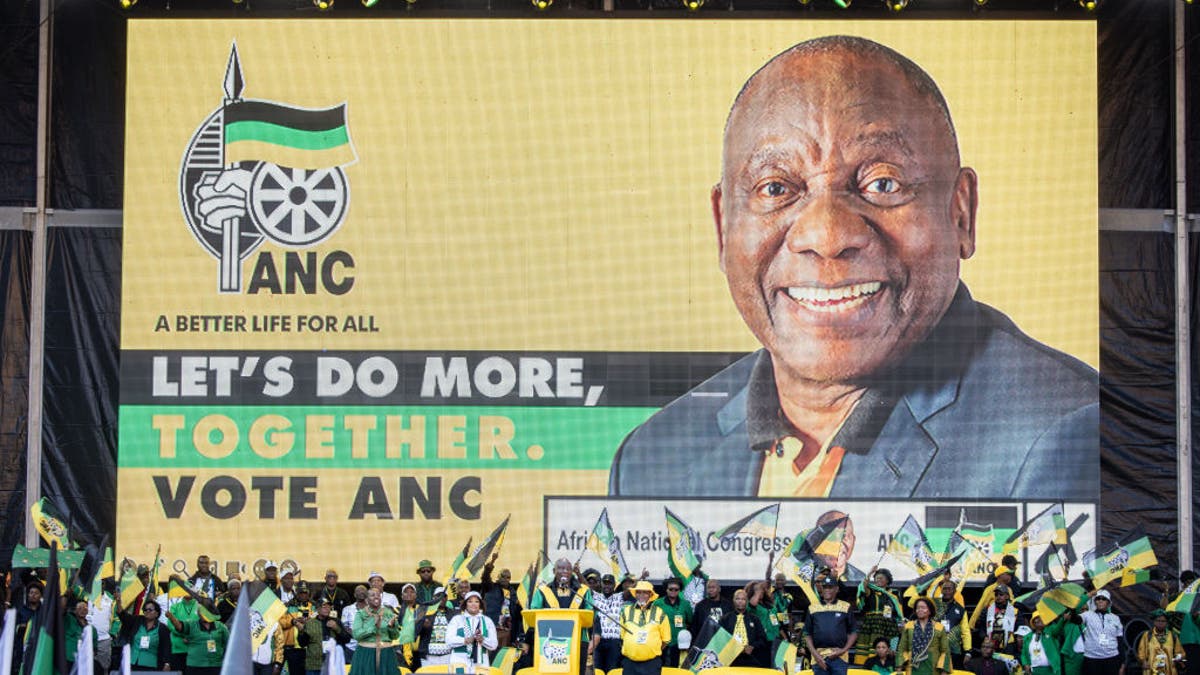
South African President Cyril Ramaphosa speaks to supporters during the ANC Siyanqoba Rally held at FNB Stadium on May 25, 2024 in Johannesburg. (Photo by Chris McGrath/Getty Images)

Analyst Frans Cronje told Fox News Digital that President Trump may be referring to the ongoing killing of farmers in South Africa when he posted that certain classes of people are being treated very badly.

“President Trump’s recent comments on land seizures in South Africa cannot be divorced from his past comments on violent attacks directed at the country’s farmers. Whilst these comments have often been dismissed as false, the latest South African data suggests that the country’s commercial farmers are six times more likely to be violently attacked in their homes than is the case for the general population.” 

Cronje said there may be agendas in play behind President Trump’s statements.

“Such seizures may also apply to the property of American investors in South Africa. Cronje is an adviser at the U.S. Yorktown Foundation for Freedom. He added “with regards to land specifically, the legislation could enable the mass seizure of land which has been an oft expressed objective of senior political figures in the country. To date, however, there have been no mass seizures, in part because there was no legislative means through which to achieve such seizures.” 

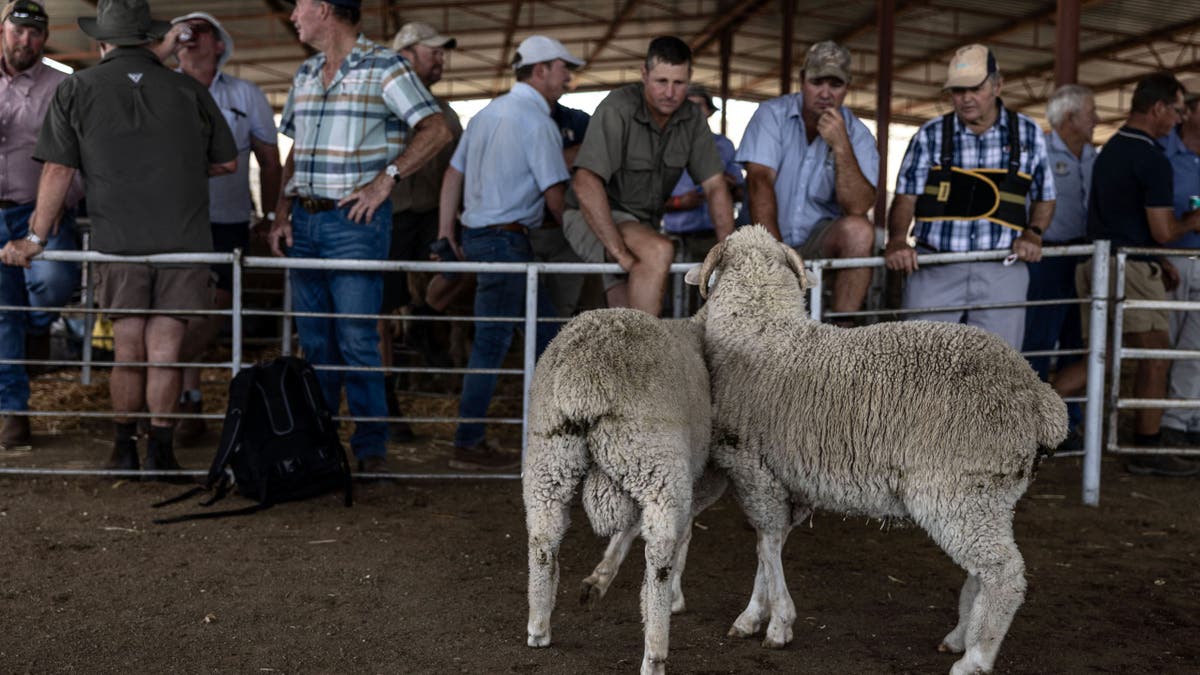
Farmers inspect show sheep at the Philippolis Show in Philippolis, South Africa, on Nov. 1, 2024.

Farmers inspect show sheep at the Philippolis Show in Philippolis, South Africa, on Nov. 1, 2024. (Photo by PAUL BOTES/AFP via Getty Images)

Now, with the bill having been signed into law, Cronje says that has changed. 

“The comments around property rights in South Africa must be read against broader and bipartisan US concern at developments in South Africa. In 2024 the US/South Africa Bilateral Relations Review Act was introduced (in Congress) amid concerns that the South African government’s relationships with Iran, Russia, and China threatened US national security interests.”

Cronje, who also advises corporations and government departments on economic and political trajectory, continued. “Last week, South Africa’s government, together with that of Cuba, Belize and four other countries supported the formation of the ‘Hague Group’ in an apparent move to shore up the standing of the International Criminal Court, amid the passage through Congress of the Illegitimate Court Counteraction Act that prescribes sanctions against any country that is seen to use the court to threaten US national security interests. South Africa has in recent years been prominent in employing both that court and the International Court of Justice in the Hague to press for action against Israel and Israeli leaders.”

CLICK HERE TO GET THE FOX NEWS APP 

split photo of Ramaphosa, trump

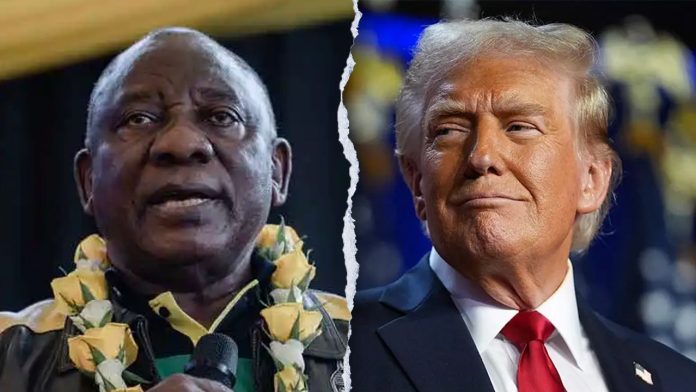
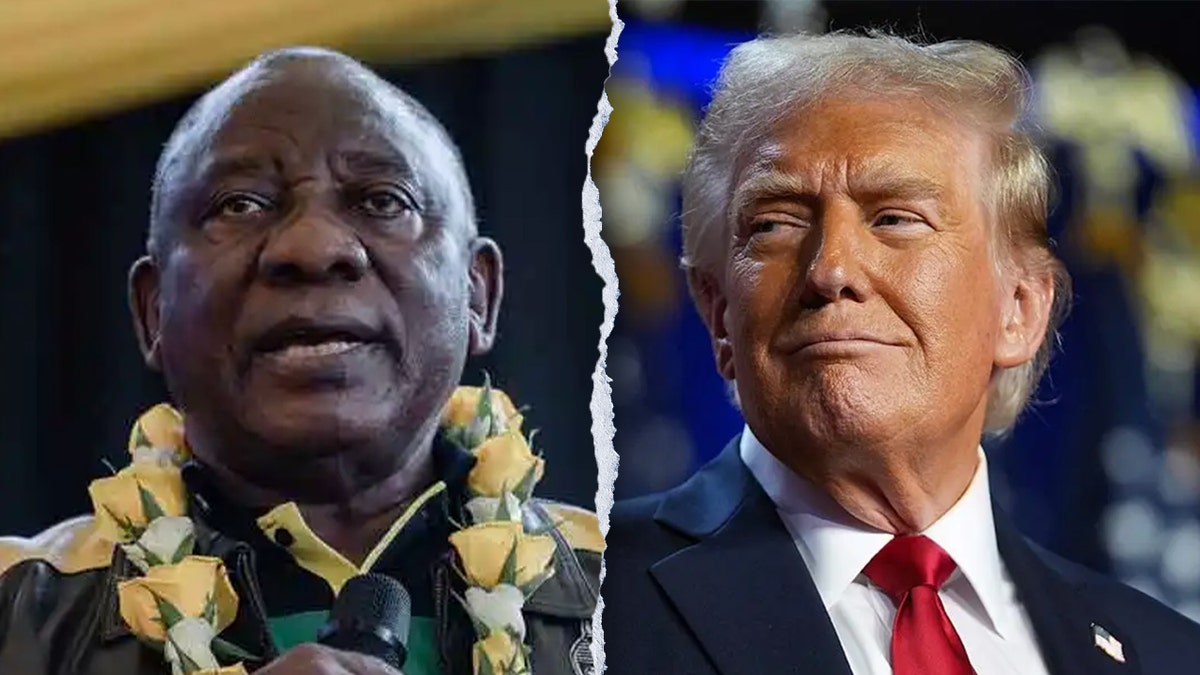
South African President Cyril Ramaphosa, left, and President Donald Trump. Trump has criticized South Africa’s new land expropriation law. (Evan Vucci/AP/RAJESH JANTILAL/AFP via Getty Images)

South Africa’s Ramaphosa played down the importance of U.S. aid, stating “with the exception of PEPFAR (The U.S. President’s Emergency Plan for AIDS Relief) Aid, which constitutes 17% of South Africa’s HIVAids program, there is no other significant funding that is provided by the United States in South Africa.” President George W. Bush introduced PEPFAR in 2003.

Analyst Justice Malala, also speaking on ENCA, said that, under the Trump administration, “the United States is going to upend South Africa in many ways.”

French Court Convicts Director Christophe Ruggia in #MeToo Case

0

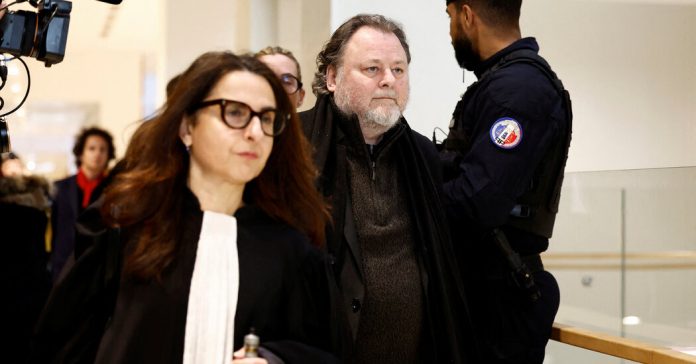
A French court convicted the director Christophe Ruggia on Monday of sexually assaulting the actress Adèle Haenel when she was a minor, handing him a four-year sentence — two years under house arrest and the rest suspended.

It was the first major case to examine an accusation of sexual misconduct in French cinema since the #MeToo movement, which emerged in 2017 and was met with a severe backlash in France.

Mr. Ruggia stood at attention as the judges explained the guilty verdict.

“You took advantage of the influence you had on the young actress Adèle Haenel,” the head judge, Gilles Fonrouge, said.

Ms. Haenel did not show any clear emotion when the verdict — which also ordered Mr. Ruggia to pay 50,000 euros, or about $51,300, in damages — was read out. When she left the Paris courthouse, women gathered outside applauded. A lawyer for Mr. Ruggia said that his client planned to appeal.

Mr. Ruggia cast Ms. Haenel in his 2002 film “The Devils,” about a relationship bordering on incest, when she was 12 and he was 36. After the filming finished, she continued to visit him regularly on Saturdays over three years at his apartment, where, she says, he touched her inappropriately and sexually harassed her.

When Ms. Haenel first revealed such accusations publicly in 2019, she was the first major French actress to speak out about her personal story of abuse since the #MeToo movement emerged. She was a rising star, praised for fierce yet sensitive performances that had earned her two Césars, the French equivalent of the Oscars.

Mr. Ruggia was a relatively unknown director, but in the insular world of French cinema, he had a prominent role in the French directors’ association and had a reputation for making films about social justice and for defending migrants and human rights.

The case stirred huge interest in the country. The courtroom was packed with Ms. Haenel’s supporters over a two-day trial in December.

During those two days, two conflicting versions of the past were presented. Ms. Haenel depicted the regular Saturday sessions in Mr. Ruggia’s Paris apartment, where he was meant to teach her the classics of French cinema, as a ruse to sexually assault her.

Mimicking his voice, she recounted how he would caress her thighs, kiss her on the neck while breathing heavily, put his hands under her T-shirt to touch her breasts and her belly, and under her pants to reach the edge of her intimate parts. She broke ties with him when she was 15 and, for years afterward, described experiencing shame and depression.

She said she was speaking in court to defend her former 12-year-old self and other child victims who were hushed into silence, calling it the “most important thing I’ve done in my life — trying to break the loneliness of children.”

“It makes you want to die, in fact, when no one speaks,” said Ms. Haenel, now 35, who often writhed with anger in the courtroom, her face overcome by tics and her feet banging on the floor.

“Shut up!” she screamed at the director at one point, rushing out of the courtroom.

Mr. Ruggia discounted Ms. Haenel’s account as “pure lies.” He said he had formed a deep bond with the young actress and her co-star, Vincent Rottiers, that extended long after filming. He acknowledged having kissed her on the head and grabbing her, but said it had been in a fatherly manner.

“These were affectionate gestures,” he said in court. Only on one occasion, he said, did her T-shirt roll up as she was bouncing around, exposing her chest. He said he had lowered it and asked her to sit on the armchair from then on.

Although he talked about her overpowering sexuality, and he wrote letters to her stating that his heart was broken after she cut ties with him, Mr. Ruggia said he had never been in love with Ms. Haenel.

“For me, Adèle was a kid, a preadolescent,” he said.

Mr. Ruggia argued that Ms. Haenel had been influenced by another director, with whom she later had a romantic relationship, and that she had been pushed to recast their own platonic relationship as inappropriate and grooming.

“I think she was radicalized,” he said, adding: “There needed to be a #MeToo in France, and it had to fall on me.”

Since the publication in 2019 of Ms. Haenel’s story in an extensively researched article in Mediapart, a French investigative site, Mr. Ruggia has been cast out from cinema. He has moved to Brittany in northwestern France to care for his mother and lives off welfare. He said during the court proceedings that he had been waiting years for the trial, “to see if I’m going to get my life back, if I’m going to be able to make films again or not.”

Since her disclosure, Ms. Haenel has also stopped working in cinema. She later explained in a public letter that she believed the industry protected sexual abusers and preferred that victims “disappear and die in silence.”

“I am canceling you from my world,” she wrote.

The trial’s subtext was how the justice system in France deals with perpetrators of sexual assault and their victims. Ms. Haenel initially told her story to a French investigative journalist and said she did not trust the justice system.

The judges asked Ms. Haenel repeatedly why she did not trust the justice system. The prosecutor, noting the packed courtroom, said in her closing statement: “Justice must also fight silence.”

Trump warns ‘abusive’ countries with midnight tariff deadline and more top headlines

0

Good morning and welcome to Fox News’ morning newsletter, Fox News First. And here’s what you need to know to start your day …

TOP 3

1. Trump warns ‘abusive’ countries with midnight deadline.

2. Hegseth heads to southern border with warning.

3. Musk rips ‘fraudulent’ taxpayer handouts.

MAJOR HEADLINES

ROCKING THE BOAT – Panama pledges major shift on canal deal with China after Secretary Rubio’s visit. Continue reading …

EXPIRATION DATE – Former Costco boss sugarcoats ‘woke’ fine print as scandal heats up. Continue reading …

PARTING SHOT – Mavericks star snubs team in farewell note to Dallas fans after blockbuster trade. Continue reading …

GRAMMYS FASHION – Taylor Swift, Sabrina Carpenter, Kelsea Ballerini turn heads on red carpet. Continue reading …

—

POLITICS

THAWING RELATIONS – Trump’s ‘denuclearization’ suggestion with Russia and China: How would it work? Continue reading …

SWIFT START – Busy week ahead for Trump, Cabinet picks. Continue reading …

‘BEYOND REPAIR’ – Trump ‘agreed’ on shutting down USAID, Elon Musk says. Continue reading …

‘EFFECTIVE IMMEDIATELY’ – Texas National Guard deputized to make immigration arrests. Continue reading …

Click here for more cartoons…
 

MEDIA

‘BEING ABUSED’ – Trump EO restricting sex-change procedures for minors in line with ‘do no harm,’ doctor says. Continue reading …

‘TOTAL TRASH’ – Newsweek profile of transgender killer feeling ‘happy to be alive’ trashed as ‘puff piece.’ Continue reading …

ALL THE STOPS – Terrorist sympathizer grad torches own school in commencement speech. Continue reading …

ICED OUT – Chicago leaders encourage residents to exercise ‘their rights’ in resisting Trump’s deportation policies. Continue reading …

OPINION

AARON GINN – ‘Experts’ fear China’s DeepSeek AI. Econ 101 says they shouldn’t worry. Continue reading …

LANCE IZUMI – Elon Musk needs H-1B workers because math education fails our students. Continue reading …

—


IN OTHER NEWS

THAT’S ‘AWKWARD’ – Justin Baldoni leaks Ryan Reynolds’ texts revealing bond before Blake Lively feud. Continue reading …

LASTING LEGACY – WWE legend Triple H reflects on surprise Hall of Fame announcement. Continue reading …

AMERICAN CULTURE QUIZ – Test yourself on aviation achievements, Super Bowl spreads and romantic reunions. Take the quiz here …

OFF COURSE – Golf fans fired up over PGA star’s outfit choice during tournament.  Continue reading …

HEART OF THE MATTER – Woman’s illness is finally caught by doctors. See video …


WATCH

DOUG BURGUM – Trump admin defends tariffs amid criticism of rising costs. See video …

DJ YOKLEY – East Palestine, Ohio resident slams Biden response to toxic train derailment. See video …


FOX WEATHER

What’s it looking like in your neighborhood? Continue reading…


FOLLOW FOX NEWS ON SOCIAL MEDIA

Facebook

Instagram

YouTube

Twitter

LinkedIn


SIGN UP FOR OUR NEWSLETTERS

Fox News First

Fox News Opinion

Fox News Lifestyle

Fox News Entertainment (FOX411)


DOWNLOAD OUR APPS

Fox News

Fox Business

Fox Weather

Fox Sports

Tubi


WATCH FOX NEWS ONLINE

Fox News Go

Thank you for making us your first choice in the morning! We’ll see you in your inbox first thing Tuesday.

Car Bomb in Syria Kills 15 Agricultural Workers

0

A car bomb killed 15 agricultural workers in northern Syria on Monday, the country’s civil defense force said, as ongoing violence threatens to undermine the new government’s push for stability.

There were no immediate claims of responsibility for the explosion, which took place in the city of Manbij, about 20 miles from the border with Turkey. Manbij has been a focal point of violence between armed groups, one backed by the United States and the other by Turkey. The blast on Monday was one of the deadliest such attacks since the fall of Bashar al-Assad in December.

The Turkish-backed fighters wrested control of the city in December from Kurdish-led forces, who are supported by the United States, and there has since been a spate of car bombings, according to the White Helmets, the Syrian civil defense force.

The agricultural workers were being transported in the back of a truck when a car bomb exploded alongside them on the outskirts of the city, which lies about 55 miles northeast of Aleppo, the White Helmets said in a statement.

Most of the dead were women. At least 15 other people were wounded, and the death toll was expected to rise, the force said.

Footage from the aftermath showed the charred and mangled remnants of a vehicle, and the truck carrying the workers was pierced with shrapnel.

The continued violence underscored the challenges faced by Syria’s new interim president, Ahmed al-Shara, who is attempting to navigate a critical juncture in the country’s history.

Mr. al-Shara, who was appointed last week, has pledged to create an inclusive transitional government. To that end, the new authorities have announced the dissolution of all armed factions in the rebel coalition that toppled Mr. Assad, the country’s longtime dictator.

It remains unclear, however, whether armed groups that have so far refused to give up their weapons — including the Kurdish-led forces who control most of northeastern Syria — will eventually accept that mandate.

Unifying Syria’s complex web of armed groups under a single umbrella, experts say, is among the most pressing challenges facing the new government.

How corporate America got DEI wrong : NPR

0

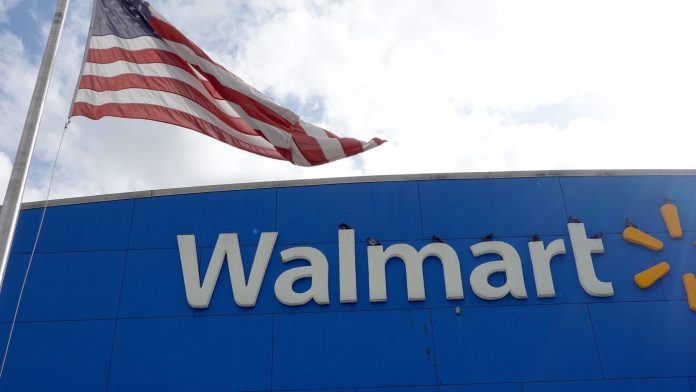
An American flag flies outside a Walmart store in Miami. In 2020, Walmart was one of many large U.S. companies that pledged to fight racism and increase internal diversity. But now it, Amazon, Facebook and many other companies are ending some of those programs.

Joe Raedle/Getty Images


hide caption

toggle caption

Joe Raedle/Getty Images

Five years ago, in the wake of George Floyd’s murder and the sweeping reckoning on racism it sparked, corporate America rushed to join in.

Big businesses started making big — and expensive — promises to fight racism and increase diversity. Walmart, the world’s largest company, spent $100 million on a new center on racial equity — and that was just one of many such investments.

All told, the country’s largest companies pledged almost $50 billion toward addressing racial inequality in the year after Floyd’s death, The Washington Post estimated in 2021. And their CEOs announced these promises with solemn rhetoric about their companies’ roles in fixing societal problems.

“We want to address systematic racism in society head-on and accelerate change,” Walmart CEO Doug McMillon said in June 2020.

But today, corporate America is rushing just as quickly in the other direction. Mounting political and legal attacks have turned DEI — “diversity, equity and inclusion” — from a corporate rallying cry to a politically-toxic football.

Many big companies had been backing away from their diversity promises even before President Trump was re-elected. After long criticizing DEI, Trump last month signed executive orders that will terminate what he calls “illegal” DEI programs and policies throughout the federal government. He called the programs “radical and wasteful” and discriminatory against non-minorities who, he says, are denied opportunities and recognition as a result.

Trump continued these criticisms last week, suggesting — apparently without evidence — that DEI programs at the Federal Aviation Administration were to blame for a deadly airliner crash.

It may seem that big companies are just adapting to political and legal pressure, but diversity experts also blame a more fundamental failure: Many businesses didn’t think through their pledges — or their costs — from the start, they say. So corporate America may have never gotten DEI right in the first place.

“What we’re seeing in the moment is the few companies who took it to heart … and the many who just wanted to sprinkle some DEI on top, especially after George Floyd,” says Portia Allen-Kyle, who runs the racial justice nonprofit Color of Change. “And that was never going to be a viable strategy.”

Allen-Kyle is pretty pessimistic these days about the future of DEI in corporate America, and the fallout for Black and other minority workers.

But some diversity experts see a silver lining from the scrutiny: They hope that companies that care about building fairer, more inclusive workplaces are rethinking their strategies — and may now finally have a chance to get it right.

How corporate America retreated from DEI

Conservative critics have long claimed that DEI is itself discriminatory. But these attacks picked up momentum in 2023, when the Supreme Court overturned affirmative action at colleges and universities, ending the consideration of race in college admissions.

President Trump signs an executive order in the Oval Office of the White House in Washington, D.C., on Jan. 20.

President Trump signs an executive order in the Oval Office of the White House in Washington, D.C., on Jan. 20.

Jim Watson/Pool/AFP via Getty Images


hide caption

toggle caption

Jim Watson/Pool/AFP via Getty Images

That ruling handed a powerful legal weapon to anti-DEI voices like Robby Starbuck, a social-media influencer who has successfully pressured several big companies to end diversity-focused programs. Starbuck has said he is focused on ending “wokeness” in corporate America, and has posted on X that his activism will give workers “a neutral workplace without feeling that divisive issues are being injected.”

Now President Trump’s efforts to end DEI in the federal government are expected to ripple into the private sector. Walmart, Meta, Amazon, and many others have already joined the retreat, ending many of their 2020-era pledges and programs. For example, Walmart in November said it won’t renew the funding for its racial equity center and that it will end some other diversity-focused programs.

“We remain committed to creating a culture where everyone can be successful, and ensuring we are a Walmart for everyone,” a company spokesperson tells NPR.

The other companies have said similar things. For example, in a note shared with NPR, Amazon executive Candi Castleberry told employees last year that “we remain dedicated to delivering inclusive experiences for customers, employees, and communities around the world.” (Meta did not respond to a request for comment.)

The “business case for diversity” is complicated

Under the political headlines, there’s a more subtle undercurrent at work.

When Floyd was murdered, many big companies were already promoting themselves as leaders in society, not just business. This widespread trend was known as “stakeholder capitalism”: Companies argued that they could do more to help workers, society, and the planet — while also making more money for investors.

But many experts saw this rhetoric as fundamentally flawed — and, it soon turned out, largely ineffective. Paying workers more inevitably costs money, and cuts into short-term profits; so does turning down business opportunities that could have a negative impact on the environment. Meanwhile, CEOs who take stands on social or environmental issues risk drawing the ire of politicians and customers who disagree.

“It is always going to be difficult, if you are a for-profit publicly traded company, to have your leader talk about anything other than maximizing profits,” says Sekou Bermiss, an associate professor of strategy and entrepreneurship at the University of North Carolina at Chapel Hill. “That is, in the U.S., the way we are wired.”

But when Floyd was murdered, big companies had raised the expectations of employees and customers that they would take a stand. And Bermiss argues that many rushed into promises without thinking through the costs — or what made the most sense for each individual business. Instead, some companies relied too much on the prospect of financial rewards for DEI programs, or what became known as “the business case for diversity.”

“It was being pitched as, ‘Diversity is always going to help the bottom line,’ Bermiss says. “But no one [who studies this] would ever say that.”

Indeed, although some analysts have made the business case for diversity, Bermiss’s research has found that when companies increase the diversity of their executive teams, they generally don’t see a financial impact — good or bad.

The “ethical case for diversity” is stronger 

Still, Bermiss and others point out that DEI policies can have significant business impacts, even if they’re not apparent in short-term financial results. Having a more diverse team can help create products that appeal to more consumers, or help employees feel more satisfied with their jobs.

Costco, for example, recently told investors that its DEI efforts “help bring originality and creativity to our merchandise offerings” and “enhance our capacity to attract and retain employees who will help our business succeed,” among other benefits.

The massive retailer, which also calls DEI part of its “code of ethics,” successfully brushed off an anti-DEI shareholder proposal last month. Meanwhile, JPMorgan Chase CEO Jamie Dimon, who runs the nation’s largest bank, has called DEI “good for business; it’s morally right; we’re quite good at it; we’re successful.”

In an aerial view, the Costco logo is displayed on the exterior of a Costco store in Richmond, California. The massive retailer successfully brushed off an anti-DEI shareholder proposal last month.

In an aerial view, the Costco logo is displayed on the exterior of a Costco store in Richmond, California. The massive retailer successfully brushed off an anti-DEI shareholder proposal last month.

Justin Sullivan/Getty Images


hide caption

toggle caption

Justin Sullivan/Getty Images

It probably helps that both JPMorgan Chase and Costco are financial powerhouses, whose profits and share prices keep their investors happy. But both companies are also framing their DEI policies as a matter of morality or ethics, rather than just profits.

That’s exactly how more companies should be thinking about DEI, according to Bermiss — if (and only if) they see it as valuable. Bermiss acknowledges that not all companies will want to continue pursuing greater diversity, equity, and inclusion. But he argues that if business leaders decide that pursuing such workplace goals is morally right and aligned with a company’s values, then they’ll be better able to stand up to criticisms or attacks.

And, as he adds, that’s firmer ground than hoping that “if we get two more Latinos on the board, our stock price will go up.”

Some DEI work will continue — by any other name

Despite the ongoing pressures, Costco and JPMorgan aren’t the only employers still spending money on DEI. In fact, some companies are ramping up: Paradigm, a tech consultancy that advises employers on diversity and inclusion, says it saw a 12 percentage-point increase last year in how many of its customers had dedicated DEI budgets.

Paradigm CEO Joelle Emerson says that even companies that are ending DEI programs may rebrand the work rather than abandoning it altogether. Corporate America’s diversity results have been “a mixed bag,” she adds, “in part because companies often spent too much time and energy on initiatives that didn’t have a measurable impact.”

Now she’s hoping that employers are taking the time to create more thoughtful — and effective — programs to increase fairness.

“I see this less as a rollback of DEI and more as sort of an evolution to the next phase of this work,” Emerson says.

Many of the companies ending DEI programs are scrubbing the now-politically-toxic acronym from their websites and corporate statements. But their public statements insist that they still want to make everyone feel included.

That could be a tricky balance, especially as the Trump Administration continues ramping up attacks on DEI — including efforts to uncover rebranded diversity efforts inside of federal agencies.

And it remains to be seen whether corporate America can really be more effective while softening its language — and goals — around diversity, equity, and inclusion. But Emerson, at least, is bullish.

“I’m actually pretty optimistic about the future of this work,” she says. “I’m not optimistic about the acronym DEI — nor do I particularly care.”

College commencement speaker tells audience to donate to UNRWA instead of university

0

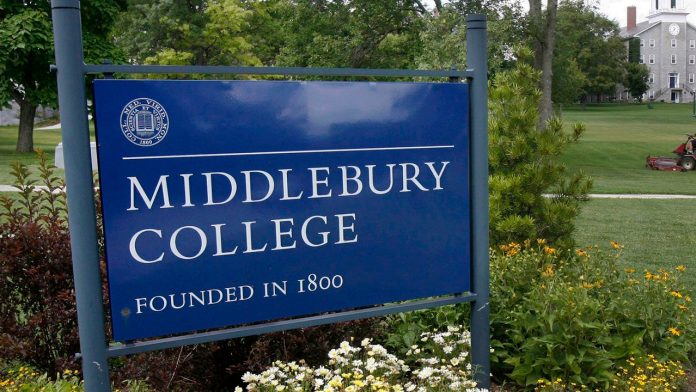
Middlebury College’s student commencement speaker encouraged her fellow graduates and alumni to pull their donations and instead support the people of Gaza during her speech.

Film, media, culture and environmental studies major Faith Wood was chosen among a committee of students to represent the graduating class on Saturday with a final address. She spoke to the class wearing a rainbow scarf and keffiyeh and largely mourned the state of Gazan cities.

She suggested holding the school accountable for what she claims is the school’s culpability in the suffering of Gaza through their pocketbooks. 

Middlebury College held a graduation ceremony on Saturday. (Toby Talbot / AP)

EX-VERMONT GOVERNOR SUES MIDDLEBURY COLLEGE FOR CHANGING NAME OF ITS CHAPEL BASED ON ‘GROSSLY DISTORTED CLAIM’

“Being an alum of Middlebury College gives you power in this world. Leveraging that collective power in this room can be that difference. First step, Middlebury. Then, in the world,” Wood said. “Here’s one thing you can do. Open up the pamphlets people have been handing out and pledge to donate any money you would have to Middlebury to the United Nations Relief and Works Agency.” 

She concluded, “Until Middlebury demonstrates its commitment to prioritizing education here and everywhere over profit through divestment from war profiteering, there is nothing as whole as a broken heart. Loving Middlebury means holding it and ourselves accountable to our promises. To love means to grow together. That is what it’s going to take.”

Earlier in her speech, Wood called out the school for standing “tall and pretty” while schools in Gaza are destroyed.

Graduate with cap and diploma

Senior Faith Wood represented her class during the commencement ceremony. (iStock)

“There is simply nothing we as students at one of the eleven NESCACs (New England Small College Athletic Conference) deserve that students of the eleven institutions of higher education in Gaza do not also deserve,” Wood said.

She also lamented the “heartbreaking” situation she and her fellow students find themselves in after President Donald Trump returned to office.

“We are literally graduating the same month a fascist has taken office. Within 11 days, he has pulled out of Paris Climate Agreement for the second time, denied the existence of trans people and unleashed a slew of ICE agents to arrest an average thousand people every single day since they began,” Wood said.

COLUMBIA UNIVERSITY STUDENT IN HANDCUFFS RIPS UP DIPLOMA ON COMMENCEMENT STAGE IN ACT OF PROTEST

Fox News Digital reached out to Middlebury College for a comment.

Filed complaint to DOE

Middlebury College faced a lawsuit last year over its alleged failure to protect Jewish students. (Getty/Evidence in filing from StandWithUs Center for Legal Justice )

Last year, Fox News Digital reported that the StandWithUs (SWU) organization filed a lawsuit against Middlebury College alleging that the school “failed egregiously to provide adequate protection for Jewish students seeking to remedy persistent antisemitic bigotry on campus.” Students at Middlebury also requested to remain anonymous on their comments out of fear of retaliation.

CLICK HERE TO GET THE FOX NEWS APP

LA Times owner boosts RFK Jr., as writer says paper altered op-ed : NPR

0

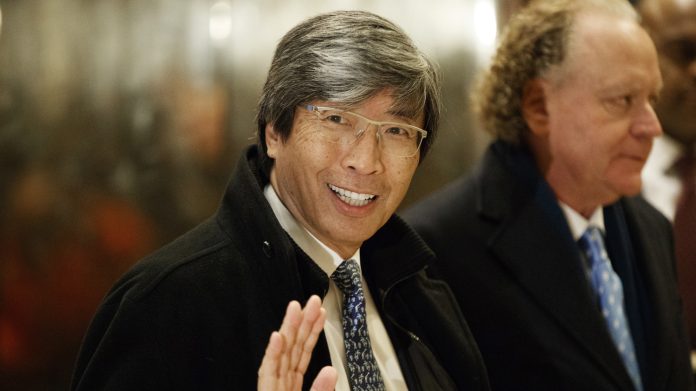
Los Angeles Times owner Dr. Patrick Soon-Shiong, a billionaire medical inventor, says it’s “cynical” to believe his support of Robert F. Kennedy Jr. or his decision to kill a planned endorsement of then-Vice President Kamala Harris stem from ulterior motives.

Evan Vucci/AP


hide caption

toggle caption

Evan Vucci/AP

Los Angeles Times owner Dr. Patrick Soon-Shiong, a billionaire medical inventor, says his business interests have nothing to do with his support of President Trump's nominee to oversee health matters or his decision to kill a planned endorsement of then-Vice President Kamala Harris last fall. He calls such questions "cynical."

Los Angeles Times owner Dr. Patrick Soon-Shiong, a billionaire medical inventor, says it’s “cynical” to believe his support of Robert F. Kennedy Jr. or his decision to kill a planned endorsement of then-Vice President Kamala Harris stem from ulterior motives.

Evan Vucci/AP

With trust in the news media at deep lows, Los Angeles Times owner Dr. Patrick Soon-Shiong is calling for a more tempered approach to covering political matters at his newspaper — even in the opinion section.

On social media, however, Soon-Shiong has posted repeatedly in support of President Trump’s pick to oversee the Department of Health and Human Services. That would be Robert F. Kennedy Jr., a vaccine skeptic who has spread false claims about public health.

“I truly believe [Kennedy] has the American public’s best interests at heart,” Soon-Shiong tweeted Tuesday in a post he pinned to the top of his account on X, formerly Twitter, for much of last week. It was one of 18 messages promoting Kennedy that Soon-Shiong — a billionaire surgeon and medical inventor — posted over the course of four days, which included Kennedy’s confirmation hearing on Capitol Hill.

Soon-Shiong attacked Sen. Elizabeth Warren, D-Mass., for “grandstanding,” writing that she was “why Americans are so tired about our politicians.” He echoed a characterization of Caroline Kennedy as “malicious” for criticizing her cousin.

Soon-Shiong dismissed accounts that Robert F. Kennedy Jr. worked to undermine support for vaccines in American Samoa right before a measles outbreak, calling them “misinformation.”

In 2019, under Soon-Shiong’s ownership, one of the paper’s columnists wrote that Kennedy had been “a walking health hazard” there.

The Los Angeles Times‘ current news coverage doesn’t reflect the tenor of Soon-Shiong’s posts, either, even though his X account identifies him as the paper’s executive chairman. It has no publisher.

On Friday, however, the author of an opinion piece on Kennedy said the L.A. Times had edited his draft in such a way that, when published, reflected favorably on Kennedy — something he did not intend.

The piece, featuring a photo of Kennedy, was entitled, “Trump’s healthcare disruption could pay off — if he pushes real reform.”

Robert F. Kennedy Jr., President Trump's nominee for secretary of Health and Human Services, testifies during his Senate Finance Committee confirmation hearing on Jan. 29 in Washington, D.C.

Robert F. Kennedy Jr., President Trump’s nominee for secretary of Health and Human Services, testifies during his Senate Finance Committee confirmation hearing on Jan. 29 in Washington, D.C.

Win McNamee/Getty Images/Getty Images North America


hide caption

toggle caption

Win McNamee/Getty Images/Getty Images North America

The author, Eric Reinhart, had initially proposed a very different headline: “RFK Jr.’s Wrecking Ball Won’t Fix Public Health.”

The final version also did not include the concluding passage of Reinhart’s original draft, which argued that Kennedy’s “egomaniacal disregard for scientific evidence… seeks to use the law itself to inflict preventable death” on millions of Americans.

The L.A. Times’ opinion editors gutted his piece by removing his caustic assessment of the nominee, says Reinhart, a Chicago-based social psychologist and physician who has previously written for the New York Times and The Nation magazine among other publications.

He tells NPR he does not begrudge the editing process in general. The editors struck from the same passage a tendentious connection between Kennedy and the man accused of killing UnitedHealthcare’s CEO. (Reinhart had argued that they were both a response to corruption in the health care system.) Reinhart says that editorial choice was reasonable, but deleting the critique of Kennedy altogether was not.

“You do not change the author’s fundamental intent, the fundamental argument of the author,” Reinhart tells NPR. “I literally did not find out about it until after it went to press.”

A former editor notes Soon-Shiong retweeted false claims

As published, Reinhart says, the opinion piece “could easily be turned by the owner of the paper to suggest that it is an endorsement of RFK and of Trump’s health care plans, which it is not.”

Indeed, Soon-Shiong did tweet it out, adding that Kennedy “is our best chance” for “real reform.” The next day, the paper published an op-ed arguing that Kennedy’s Democratic critics were hypocrites.

In a statement given to NPR by a spokesperson, the L.A. Times said its opinion editors work with op-ed contributors to edit pieces for length, clarity and accuracy, among other things. “No op-ed pieces are published, as edited, without the permission of the author,” the spokesperson said. “That includes the op-ed written by Eric Reinhart.” Reinhart says that he did not see the piece in its final incarnation before it ran.

Writing last week in the Columbia Journalism Review, former L.A. Times editor of the editorial pages Jim Newton noted that Soon-Shiong had retweeted false claims debunked by the paper itself as he castigated Los Angeles Mayor Karen Bass for her handling of the recent deadly wildfires there.

“He’s made himself into a joke,” Newton wrote. “Sadly, he risks dragging his paper down with him.”

Arrived as a financial savior of journalism

Soon-Shiong rescued the L.A. Times in 2018 from corporate owners who had cut it to the bone and invested money to revive it. The newsroom saw him then as a savior.

In recent months he has emerged with strong views that have been seen as a slap in the face by many of those who work for him. He has criticized how journalism works, how his own paper has operated and the media’s coverage of Trump.

“The nation is severely polarized,” Soon-Shiong told NPR in late December. “If you disagree with one side or the other, it is very aggressively discounted or ignored.”

There is a real opportunity for the L.A. Times to help heal the nation, he argued, by enabling “all voices to be heard, but to be heard in a sort of very factual, honest way.”

After leading the paper relatively quietly for over six years, Soon-Shiong set off sparks last fall with the decision to kill a presidential endorsement — already drafted — of then-Vice President Kamala Harris.

His editorials editor and several other opinion writers resigned. Nearly 20,000 people canceled their digital subscriptions in a matter of days — a record number for the paper, if a pittance compared to the 300,000 who canceled their Washington Post subscriptions when its owner, Jeff Bezos, made the same move.

Soon-Shiong openly and successfully campaigned for Trump-friendly CNN pundit Scott Jennings to join his editorial board and says others are in the works. Soon-Shiong also suggested an AI-generated “bias-o-meter” should appear next to every L.A. Times news article and opinion piece. (He appears now to be suggesting it will complement opinion pieces.)

Trump pressures the press

Both in and out of office, Trump has used the courts and the levers of government to pressure the media. ABC News agreed to pay his foundation $15 million to resolve one case that media law experts believed the network could win; Meta agreed to pay $25 million to settle another.

Meanwhile, CBS is giving the Federal Communications Commission the unedited transcript of a 60 Minutes interview after the chairman demanded it, while the network’s parent company is in talks to settle a Trump suit over the same interview, much to the dismay of journalists there. Legal observerssay the case is flimsy. The proposed acquisition of CBS parent Paramount comes before the FCC for review because it involves the transfer of the company’s local television stations.

Soon-Shiong made his fortunes as a medical innovator and has his own interests in front of federal regulators. He sought to play a role in advising Trump on health during the president’s first term and he has myriad patents up for review by government officials. He had patents approved in the waning days of the Biden administration and in the first days of Trump’s second term.

Soon-Shiong praised Trump’s response to the recent Southern California wildfires and affirmed Trump adviser and X owner Elon Musk’s laudatory tweets about Trump’s order of the release of water from California dams. The paper’s reporting suggested that was risky and harmful to the state’s farmers.

In his interview with NPR in December, Soon-Shiong dismissed the idea that he was trying to cozy up to Trump and the White House by making the decision to kill the endorsement or in his new approach to posting on social media, which included affirming comments about Trump and Kennedy.

“We have not, as a board, met with Kamala Harris”

“I got a call that we had a pre-packaged draft of endorsing Kamala Harris,” he recounted. “I said, ‘Well, that is surprising. We have not, as a board, met with Kamala Harris’…. I don’t think it is appropriate for us to make an endorsement as though we are an echo chamber for a candidate.” Soon-Shiong said he understood Trump’s outlook through conversations they had as he entered his first presidential term.

LA Times owner Patrick Soon-Shiong enters the clubhouse at Trump National Golf Club for a meeting with President-elect Doanld Trump on November 19, 2016 in Bedminster, New Jersey.

LA Times owner Patrick Soon-Shiong enters the clubhouse at Trump National Golf Club for a meeting with then-President-elect Donald Trump on November 19, 2016 in Bedminster, New Jersey.

DON EMMERT/AFP via Getty Images/AFP


hide caption

toggle caption

DON EMMERT/AFP via Getty Images/AFP

Soon-Shiong said, in order to be fair to both candidates, the paper should take two pages and, rather than make an endorsement, detail the “factual activities” of the two major nominees for readers to evaluate.

On social media posts, he has indicated the paper’s editorial support for Mayor Bass was a mistake.

Newspaper owners and publishers are typically involved in making or approving endorsements. Harris, however, was a known quantity to the Los Angeles Times and its readers; she had been previously elected to statewide office as California’s attorney general and as U.S. senator.

Even so, Soon-Shiong said it was of paramount importance to set out the dueling records — Harris in the Biden administration against Trump’s first term — and to meet face-to-face with candidates. In an earlier incarnation, the paper had been part of the state’s Republican establishment and had helped lift Richard Nixon to national prominence. In recent years, the paper’s editorial stance became more liberal.

Soon-Shiong conceded that the paper’s editorial board had not met with Biden before endorsing him in the 2020 race. He said he had been tied up in trying to combat Covid-19. At the paper, Soon-Shiong developed strong protocols urging masking, social distancing and vaccinations.

Trump was surrounded by tech titans during his inauguration, including Musk, Bezos, Meta CEO Mark Zuckerberg, Apple CEO Tim Cook and Google’s parent company chief Sundar Pichai. Soon-Shiong, who reportedly sought a top health position under Trump at the outset of his first term, tweeted a series of links to the paper’s live stream of the ceremony.

“The cynical argument assumes I have a bad relationship with President Trump and therefore I have to fix it,” Soon-Shiong said. “That’s the cynical view — exactly what I’m trying to stop.”